World

Tensions soar after attacks on police in north Kosovo

Tensions were high in northern Kosovo on Sunday after unknown attackers exchanged gunfire with the police and threw a stun grenade at EU law enforcers during the night.

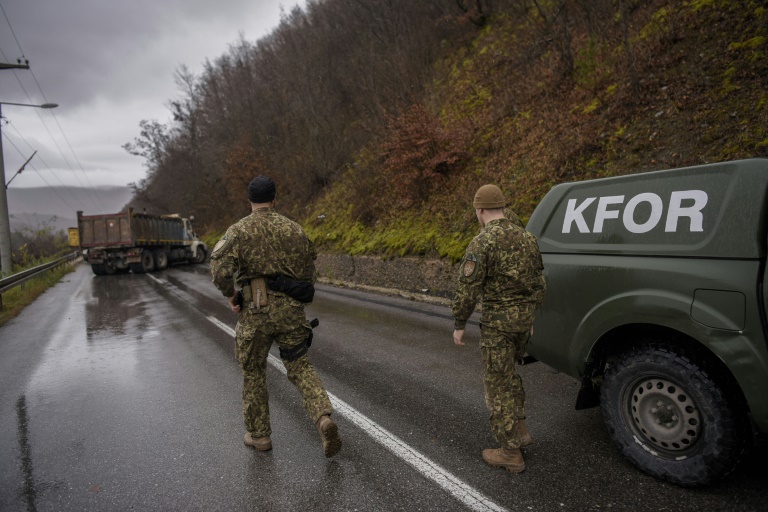
Hundreds of Serbs, outraged over the arrest of a former police officer, gathered again early in the morning at the roadblocks erected Saturday and which paralyse traffic on two border crossings from Kosovo towards Serbia.

Although Kosovo declared independence from Serbia in 2008, Belgrade does not recognise it and encourages the Serb-majority in northern Kosovo to defy Pristina’s authority.

Hours after the barricades went up, police said they suffered three successive firearm attacks on Saturday night on one of the roads leading to the border.

“The police units, in self-defence, were forced to respond with firearms to the criminal persons and groups, who were repelled and left in an unknown direction,” police said in a statement.

European Union police deployed in the region as part of the rule of law mission (EULEX) said they were also targeted with a stun grenade, but no officers were injured.

“This attack, as well as the attacks on Kosovo Police officers, are unacceptable,” EULEX said in a press release.

Tensions mounted after Kosovo scheduled local elections in the Serb-majority municipalities for December 18, with the main Serb political party saying it would stage a boycott.  

Explosions and shootings were heard earlier this week as election authorities tried to prepare the ground for the vote, while an ethnic Albanian policeman was wounded after law enforcers were deployed in the fragile region.  

Shortly after the roadblocks appeared, Kosovo President Vjosa Osmani decided to postpone the elections for April 23.

The embassies of France, Germany, Italy, the UK and the US — along with the local EU office — welcomed the  postponement, branding it a “constructive decision” which “advances efforts to promote a more secure situation in the north”. 

Pristina and Belgrade exchanged accusations over the latest round of incidents.

Serbian President Aleksandar Vucic said he will ask NATO peacekeepers to allow the deployment of Serbian military and police in Kosovo, although he said he believes there is “no chance of the request being approved”.

Kosovo Prime Minister Albin Kurti blamed Serbia for “threatening Kosovo with aggression”.  

“We do not want conflict, we want peace and progress, but we will respond to aggression with all the power we have,” Kurti warned on Facebook.   

Serbs make up around 120,000 of Kosovo’s roughly 1.8 million population, which is overwhelmingly ethnic Albanian.  
More Iranians at imminent risk of execution: rights groups

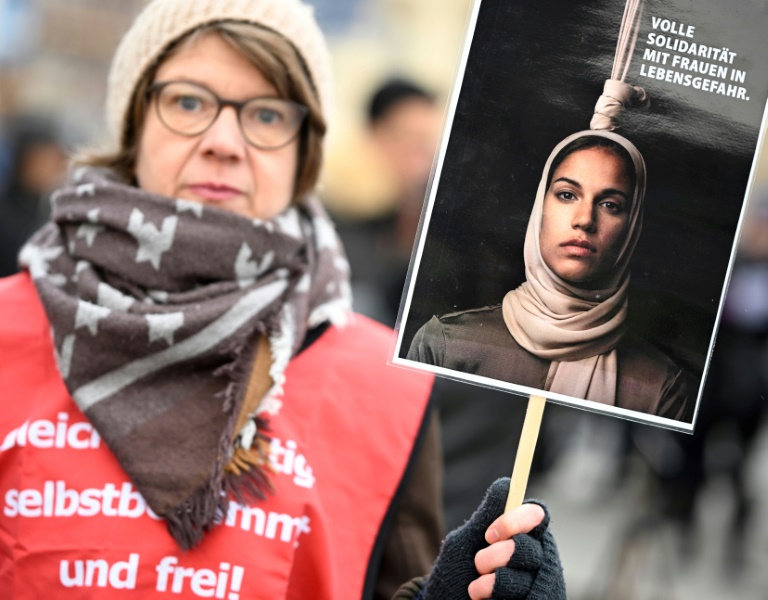
Several Iranians were on Sunday at risk of imminent execution over protests that have rocked the country’s clerical regime, rights groups warned, after an international backlash over Iran’s first hanging linked to the movement.

The almost three-month protest movement was sparked by the death of Mahsa Amini, who had been arrested by the Islamic republic’s morality police.

It is posing the biggest challenge to the regime since the shah’s ousting in 1979. 

Iran calls the protests “riots” and says they have been encouraged by its foreign foes.

Authorities are responding with a crackdown activists say aims to instill fear in the public.

Iran on Thursday executed Mohsen Shekari, 23, who had been convicted of attacking a member of the security forces. Rights groups said his legal process, which they described as a show trial, was marked by undue haste.

Iran’s judiciary has reported that 11 people received death sentences so far in connection with the protests, but campaigners say around a dozen others are facing charges that could see them also receive the death penalty.

Unless foreign governments “significantly increase” the diplomatic and economic costs to Iran, the world “is sending a green light to this carnage”, said Hadi Ghaemi, executive director of the New York-based Center for Human Rights in Iran (CHRI).

Amnesty International said Iran was now “preparing to execute” Mahan Sadrat, 22, just a month after his “grossly unfair” trial. He was convicted of drawing a knife in the protests, accusations he strongly denied in court.

On Saturday Sadrat was transferred from Greater Tehran Prison to Rajai Shahr prison in the nearby city of Karaj, “sparking concerns that his execution may be carried out imminently”, Amnesty said.

– ‘Show trial’ –

“Like all other death row prisoners, he was denied any access to his lawyer during the interrogations, proceedings and show trial,” said another group, Oslo-based Iran Human Rights.

Amnesty warned the life of another young man arrested over the protests, Sahand Nourmohammadzadeh, was also at risk “after a fast-tracked proceeding which did not resemble a trial”.

He was sentenced to death in November on accusations of “tearing down highway railings and setting fire to rubbish cans and tires”, the group said.

Among others given the same sentence is rapper Saman Seyedi, 24, from Iran’s Kurdish minority. His mother pleaded for his life on social media in a video where she stated “my son is an artist not a rioter.”

Another dissident rapper, Toomaj Salehi, who expressed support for anti-regime protests, is charged with “corruption on earth” and could face a death sentence, Iranian judicial authorities confirmed last month.

“We fear for the life of Iranian artists who have been indicted on charges carrying the death penalty,” United Nations experts said in a statement, referring to the cases of Sayedi and Salehi.

Amnesty and IHR have also raised the case of Hamid Gharehasanlou, a medical doctor sentenced to death. They say he was tortured in custody and his wife was coerced into giving evidence against him which she later sought to retract.

– ‘Boundless contempt’ –

“Protester executions can only be prevented by raising their political cost for the Islamic Republic,” IHR director Mahmood Amiry-Moghaddam said, calling for a “stronger than ever” international response.

The US, European Union members and UK strongly condemned the execution of Shekari. German Foreign Minister Annalena Baerbock said it showed a “boundless contempt for human life”.

Iran on Saturday and Friday again summoned the British and German ambassadors to protest their countries’ actions, marking the 15th time in less than three months Tehran has called in foreign envoys as the demonstrations continue.

Many activists want the foreign response to go further, extending even to severing diplomatic ties with Iran and expelling Tehran’s envoys from European capitals.

After the widespread international outrage at Shekari’s execution, Iran said it was exercising restraint, both in the response by security forces, and the “proportionality” of the judicial process.

Iran’s use of the death penalty is part of a crackdown that IHR says has left at least 458 people killed by the security forces.

According to the UN, at least 14,000 have been arrested.

Cash crops: Dutch use bitcoin mining to grow tulips

Tulips and bitcoin have both been associated with financial bubbles in their time, but in a giant greenhouse near Amsterdam the Dutch are trying to make them work together.

Engineer Bert de Groot inspects the six bitcoin miners as they perform complex sums to earn cryptocurrency, filling the air with a noisy whine along with a blast of warmth.

That warmth is now heating the hothouse where rows of tulips grow, cutting the farmers’ reliance on gas whose price has soared since Russia’s invasion of Ukraine.

The servers in turn are powered by solar energy from the roof, reducing the normally huge electricity costs for mining, and cutting the impact on the environment.

Meanwhile both the farmers and de Groot’s company, Bitcoin Brabant, are earning crypto, which is still attracting investors despite a recent crash in the market.

“We think with this way of heating our greenhouse but also earning some bitcoin we have a win-win situation,” flower farmer Danielle Koning, 37, told AFP.

The Netherlands’ love of tulips caused the first stock market crash in the 17th century when speculation bulb prices caused prices to soar, only to later collapse.

Now the Netherlands is the world’s biggest tulip producer and also the second biggest agricultural exporter overall after the United States, with much grown in greenhouses.

– ‘Improving the environment’ –

But the low-lying country is keenly aware of the effect of the agricultural industry on climate change, while farmers are struggling with high energy prices.

Mining for cryptocurrency meanwhile requires huge amounts of electricity to power computers, leading to an environmental impact amid global efforts to tackle climate change. 

De Groot, 35, who only started his business earlier this year and now has 17 clients including restaurants and warehouses, says this makes bitcoin and tulips a perfect fit.

“This operation is actually carbon negative, as are all the operations I basically build,” says the long-haired de Groot, sporting an orange polo shirt with his firm’s logo.

“We’re actually improving the environment.”

He is also selling tulips online for bitcoin via a business called Bitcoinbloem.

The collaboration started when Koning saw a Twitter video de Groot had made about bitcoin mining, and called him up.

Now there are six servers at their hothouse, whose exact location Koning asked to keep secret to avoid thieves targeting the 15,000-euro machines.

Koning’s company owns half of them and keeps the bitcoin they produce, while de Groot is allowed to keep his three servers there in exchange for monthly visits to clean dust and insects out of the servers’ fans.

With a 20 degree Celsius difference between the air entering the machine and leaving them, this provides the heat needed to grow the tulips, and to dry the bulbs that produce them.

– ‘No worries’ –

“The most important thing we get out of it is, we save on natural gas,” says Koning. “Secondly, well, we earn Bitcoin by running them in the greenhouse.”

Huge energy costs have driven some Dutch agricultural firms that often rely on greenhouses to stop growing this year, while others have even gone bankrupt, says Koning.

Meanwhile, the philosopher Nassim Nicholas Taleb, who developed the idea of the unpredictable but historic “black swan” event, has compared Bitcoin to the “Tulipmania” that engulfed the Netherlands nearly 400 years ago.

This saw prices for a single bulb rise to more than 100 times the average annual income at the time before the bubble burst in 1637, causing banks to fail and people to lose their life savings.

The cryptocurrency sector is currently reeling from the collapse of a major exchange — with Bitcoin currently worth around $16,300 per unit, down from a high of $68,000 in November 2021 — but De Groot isn’t worried.

“I have absolutely no worries about the long-term value proposition of an immutable monetary system,” he says.

“Bitcoin will last for ever.” 

Cash crops: Dutch use bitcoin mining to grow tulips

Tulips and bitcoin have both been associated with financial bubbles in their time, but in a giant greenhouse near Amsterdam the Dutch are trying to make them work together.

Engineer Bert de Groot inspects the six bitcoin miners as they perform complex sums to earn cryptocurrency, filling the air with a noisy whine along with a blast of warmth.

That warmth is now heating the hothouse where rows of tulips grow, cutting the farmers’ reliance on gas whose price has soared since Russia’s invasion of Ukraine.

The servers in turn are powered by solar energy from the roof, reducing the normally huge electricity costs for mining, and cutting the impact on the environment.

Meanwhile both the farmers and de Groot’s company, Bitcoin Brabant, are earning crypto, which is still attracting investors despite a recent crash in the market.

“We think with this way of heating our greenhouse but also earning some bitcoin we have a win-win situation,” flower farmer Danielle Koning, 37, told AFP.

The Netherlands’ love of tulips caused the first stock market crash in the 17th century when speculation bulb prices caused prices to soar, only to later collapse.

Now the Netherlands is the world’s biggest tulip producer and also the second biggest agricultural exporter overall after the United States, with much grown in greenhouses.

– ‘Improving the environment’ –

But the low-lying country is keenly aware of the effect of the agricultural industry on climate change, while farmers are struggling with high energy prices.

Mining for cryptocurrency meanwhile requires huge amounts of electricity to power computers, leading to an environmental impact amid global efforts to tackle climate change. 

De Groot, 35, who only started his business earlier this year and now has 17 clients including restaurants and warehouses, says this makes bitcoin and tulips a perfect fit.

“This operation is actually carbon negative, as are all the operations I basically build,” says the long-haired de Groot, sporting an orange polo shirt with his firm’s logo.

“We’re actually improving the environment.”

He is also selling tulips online for bitcoin via a business called Bitcoinbloem.

The collaboration started when Koning saw a Twitter video de Groot had made about bitcoin mining, and called him up.

Now there are six servers at their hothouse, whose exact location Koning asked to keep secret to avoid thieves targeting the 15,000-euro machines.

Koning’s company owns half of them and keeps the bitcoin they produce, while de Groot is allowed to keep his three servers there in exchange for monthly visits to clean dust and insects out of the servers’ fans.

With a 20 degree Celsius difference between the air entering the machine and leaving them, this provides the heat needed to grow the tulips, and to dry the bulbs that produce them.

– ‘No worries’ –

“The most important thing we get out of it is, we save on natural gas,” says Koning. “Secondly, well, we earn Bitcoin by running them in the greenhouse.”

Huge energy costs have driven some Dutch agricultural firms that often rely on greenhouses to stop growing this year, while others have even gone bankrupt, says Koning.

Meanwhile, the philosopher Nassim Nicholas Taleb, who developed the idea of the unpredictable but historic “black swan” event, has compared Bitcoin to the “Tulipmania” that engulfed the Netherlands nearly 400 years ago.

This saw prices for a single bulb rise to more than 100 times the average annual income at the time before the bubble burst in 1637, causing banks to fail and people to lose their life savings.

The cryptocurrency sector is currently reeling from the collapse of a major exchange — with Bitcoin currently worth around $16,300 per unit, down from a high of $68,000 in November 2021 — but De Groot isn’t worried.

“I have absolutely no worries about the long-term value proposition of an immutable monetary system,” he says.

“Bitcoin will last for ever.” 

Cash crops: Dutch use bitcoin mining to grow tulips

Tulips and bitcoin have both been associated with financial bubbles in their time, but in a giant greenhouse near Amsterdam the Dutch are trying to make them work together.

Engineer Bert de Groot inspects the six bitcoin miners as they perform complex sums to earn cryptocurrency, filling the air with a noisy whine along with a blast of warmth.

That warmth is now heating the hothouse where rows of tulips grow, cutting the farmers’ reliance on gas whose price has soared since Russia’s invasion of Ukraine.

The servers in turn are powered by solar energy from the roof, reducing the normally huge electricity costs for mining, and cutting the impact on the environment.

Meanwhile both the farmers and de Groot’s company, Bitcoin Brabant, are earning crypto, which is still attracting investors despite a recent crash in the market.

“We think with this way of heating our greenhouse but also earning some bitcoin we have a win-win situation,” flower farmer Danielle Koning, 37, told AFP.

The Netherlands’ love of tulips caused the first stock market crash in the 17th century when speculation bulb prices caused prices to soar, only to later collapse.

Now the Netherlands is the world’s biggest tulip producer and also the second biggest agricultural exporter overall after the United States, with much grown in greenhouses.

– ‘Improving the environment’ –

But the low-lying country is keenly aware of the effect of the agricultural industry on climate change, while farmers are struggling with high energy prices.

Mining for cryptocurrency meanwhile requires huge amounts of electricity to power computers, leading to an environmental impact amid global efforts to tackle climate change. 

De Groot, 35, who only started his business earlier this year and now has 17 clients including restaurants and warehouses, says this makes bitcoin and tulips a perfect fit.

“This operation is actually carbon negative, as are all the operations I basically build,” says the long-haired de Groot, sporting an orange polo shirt with his firm’s logo.

“We’re actually improving the environment.”

He is also selling tulips online for bitcoin via a business called Bitcoinbloem.

The collaboration started when Koning saw a Twitter video de Groot had made about bitcoin mining, and called him up.

Now there are six servers at their hothouse, whose exact location Koning asked to keep secret to avoid thieves targeting the 15,000-euro machines.

Koning’s company owns half of them and keeps the bitcoin they produce, while de Groot is allowed to keep his three servers there in exchange for monthly visits to clean dust and insects out of the servers’ fans.

With a 20 degree Celsius difference between the air entering the machine and leaving them, this provides the heat needed to grow the tulips, and to dry the bulbs that produce them.

– ‘No worries’ –

“The most important thing we get out of it is, we save on natural gas,” says Koning. “Secondly, well, we earn Bitcoin by running them in the greenhouse.”

Huge energy costs have driven some Dutch agricultural firms that often rely on greenhouses to stop growing this year, while others have even gone bankrupt, says Koning.

Meanwhile, the philosopher Nassim Nicholas Taleb, who developed the idea of the unpredictable but historic “black swan” event, has compared Bitcoin to the “Tulipmania” that engulfed the Netherlands nearly 400 years ago.

This saw prices for a single bulb rise to more than 100 times the average annual income at the time before the bubble burst in 1637, causing banks to fail and people to lose their life savings.

The cryptocurrency sector is currently reeling from the collapse of a major exchange — with Bitcoin currently worth around $16,300 per unit, down from a high of $68,000 in November 2021 — but De Groot isn’t worried.

“I have absolutely no worries about the long-term value proposition of an immutable monetary system,” he says.

“Bitcoin will last for ever.” 

Russia oil embargo, price cap disrupts tankers

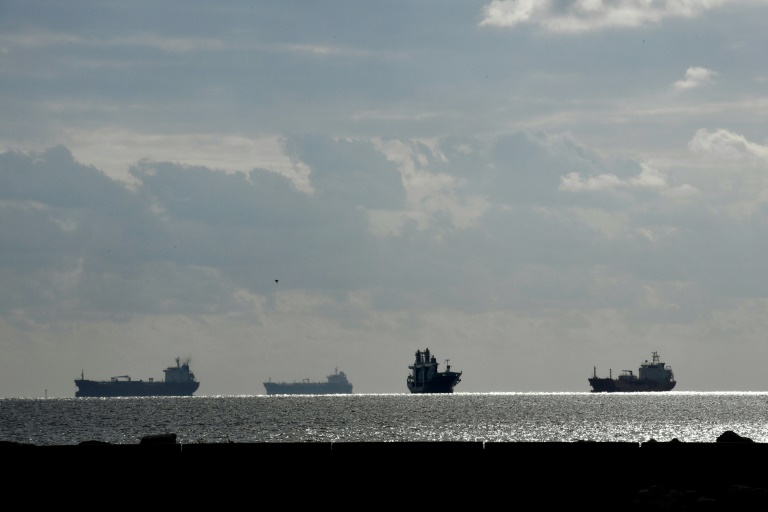
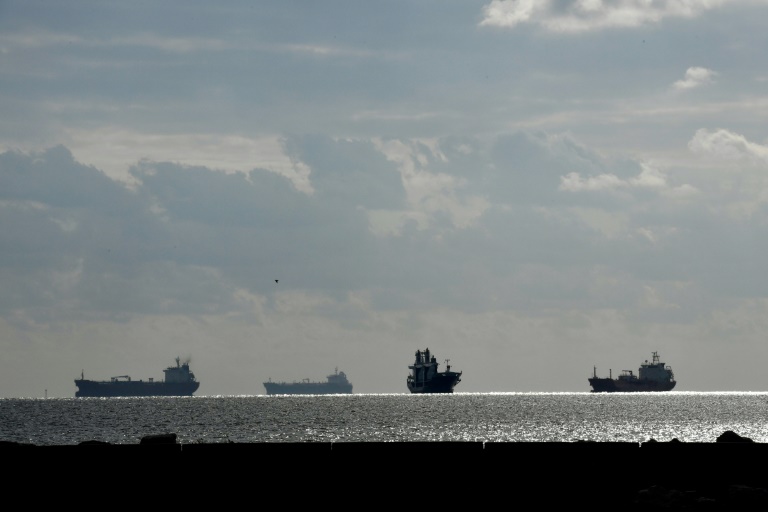
The European Union embargo on Russia’s oil and an international cap on the price of the country’s crude is disrupting the maritime transport sector.

The EU on Monday enforced an embargo on Russian crude shipments, the bloc’s latest sanction in retaliation for Moscow’s invasion of Ukraine.

This week also saw the start of a $60 cap on a barrel of Russian crude, agreed by Western nations.

– Tanker traffic jam –

Aimed at depriving Russia of key income, the measures have also slowed transportation of its oil by sea.

This is because Turkey has started to request proof of insurance from tankers loaded with Russian crude, slowing their passage through the Bosphorus and Dardanelles straits and onto international markets.

The Financial Times has reported that Russia has assembled a “shadow fleet” of more than 100 vessels seeking to circumnavigate the Western sanctions regime.

These ships are reportedly using non-Western insurers and selling oil at higher prices to countries that have not subscribed to the new sanctions.

A 1936 treaty guarantees the freedom of navigation to merchant vessels passing through Turkey’s two straits.

But it also gives Turkey the right to regulate security — a provision it is now using to make sure the oil ships are insured against spillage and other accidents.

The London P&I Club, a leading provider of maritime protection and indemnity insurance, claims “the Turkish government’s requirements go well beyond the general information that is contained in a confirmation of entry letter. 

“It requires… (confirmation) that cover will not be prejudiced under any circumstances, including where there is a sanctions breach on the part of the assured.”

Marcus Baker, global head of Marine & Cargo at insurance broker Marsh, said the price cap “adds another layer of complexity to an already pretty complex situation”.

He also told AFP: “The slowdown that might happen because of this added administrative burden may have the desired effect that the G7 wanted anyway.” 

The price ceiling was agreed by the Group of Seven rich countries, which includes Britain, Japan and the United States, as well as the EU and Australia.

Meanwhile as much as 95 percent of the P&I insurance market is run by insurers in the EU and Britain, who suddenly can no longer insure cargoes of Russia oil sold for more than $60 per barrel.

The market price of a barrel of Russian Urals crude is around $65, suggesting the cap may have only a limited impact in the short term.

President Vladimir Putin on Friday warned that Russia could reduce crude production in response to the price limit.

– Avoiding ban –

“Moscow is already working on circumventing the ban on insurance by providing its own insurance to potential clients through its state-controlled Russian National Reinsurance Company,” noted Edoardo Campanella, analyst at UniCredit Bank.

An executive at an oil shipping company, who wished to remain anonymous, said “it will take a week or two, I think at a minimum, to see how the market will function in light of the price cap”. 

They added: “There’s a general view that there is enough shipping capacity in what can be called a ‘Dark Fleet’ or a sanctions-indifferent fleet so that Russia can sell its oil without regard to the price cap. 

“This means to China, to India, potentially some to Brazil or other parts of the world. So it doesn’t have to comply with the price cap. So there’s enough capacity,” the executive told AFP.

burs-tu-emb/bcp/rl

Russia oil embargo, price cap disrupts tankers

The European Union embargo on Russia’s oil and an international cap on the price of the country’s crude is disrupting the maritime transport sector.

The EU on Monday enforced an embargo on Russian crude shipments, the bloc’s latest sanction in retaliation for Moscow’s invasion of Ukraine.

This week also saw the start of a $60 cap on a barrel of Russian crude, agreed by Western nations.

– Tanker traffic jam –

Aimed at depriving Russia of key income, the measures have also slowed transportation of its oil by sea.

This is because Turkey has started to request proof of insurance from tankers loaded with Russian crude, slowing their passage through the Bosphorus and Dardanelles straits and onto international markets.

The Financial Times has reported that Russia has assembled a “shadow fleet” of more than 100 vessels seeking to circumnavigate the Western sanctions regime.

These ships are reportedly using non-Western insurers and selling oil at higher prices to countries that have not subscribed to the new sanctions.

A 1936 treaty guarantees the freedom of navigation to merchant vessels passing through Turkey’s two straits.

But it also gives Turkey the right to regulate security — a provision it is now using to make sure the oil ships are insured against spillage and other accidents.

The London P&I Club, a leading provider of maritime protection and indemnity insurance, claims “the Turkish government’s requirements go well beyond the general information that is contained in a confirmation of entry letter. 

“It requires… (confirmation) that cover will not be prejudiced under any circumstances, including where there is a sanctions breach on the part of the assured.”

Marcus Baker, global head of Marine & Cargo at insurance broker Marsh, said the price cap “adds another layer of complexity to an already pretty complex situation”.

He also told AFP: “The slowdown that might happen because of this added administrative burden may have the desired effect that the G7 wanted anyway.” 

The price ceiling was agreed by the Group of Seven rich countries, which includes Britain, Japan and the United States, as well as the EU and Australia.

Meanwhile as much as 95 percent of the P&I insurance market is run by insurers in the EU and Britain, who suddenly can no longer insure cargoes of Russia oil sold for more than $60 per barrel.

The market price of a barrel of Russian Urals crude is around $65, suggesting the cap may have only a limited impact in the short term.

President Vladimir Putin on Friday warned that Russia could reduce crude production in response to the price limit.

– Avoiding ban –

“Moscow is already working on circumventing the ban on insurance by providing its own insurance to potential clients through its state-controlled Russian National Reinsurance Company,” noted Edoardo Campanella, analyst at UniCredit Bank.

An executive at an oil shipping company, who wished to remain anonymous, said “it will take a week or two, I think at a minimum, to see how the market will function in light of the price cap”. 

They added: “There’s a general view that there is enough shipping capacity in what can be called a ‘Dark Fleet’ or a sanctions-indifferent fleet so that Russia can sell its oil without regard to the price cap. 

“This means to China, to India, potentially some to Brazil or other parts of the world. So it doesn’t have to comply with the price cap. So there’s enough capacity,” the executive told AFP.

burs-tu-emb/bcp/rl

'Every one of them will be punished': Kherson hunts for traitors

“Hands in the air! Documents out!” shouted Ukrainian policemen as they levelled their guns at two suspected collaborators moments after they docked their boat near the city of Kherson.

The euphoria of Kherson’s liberation in November has proven to be short-lived. 

Just weeks after Russians retreated from the southern Ukrainian city, authorities are working to hunt down collaborators who aided Moscow during the occupation of Kherson.  

The two men held at gunpoint came from an island on the Dnipro River in the proverbial grey zone separating the Ukrainian-controlled western bank from the Russian-occupied east.

“Evacuations are only authorised at the port. It’s illegal here,” one of the police officers tells AFP. 

At the port, “officials in charge of ‘stabilisation measures’ check if people were involved” with the Russian occupiers, he adds. 

Since pushing out the Russians, the river is now the new, major frontline of the war in southern Ukraine.

A barrage of missiles halts the impromptu interrogation as the police and suspected collaborators duck for cover.  

– Smoke out collaborators –

The liberation of Kherson marked a major victory for Ukraine and an embarrassing failure for the Kremlin — in what was the latest in a string of setbacks that have seen Kyiv seize the initiative in the war.  

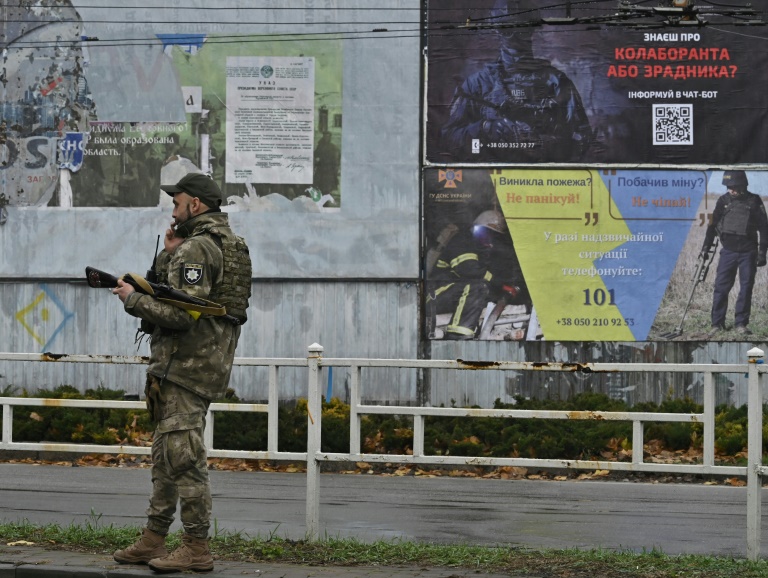
Even so, Kherson is far from tranquil as police keep tight control, with checkpoints surrounding the city and patrols roaming its streets. 

Throughout Kherson, officers inspect identification papers, question residents and search cars hoping to smoke out collaborators — some of whom they fear are still providing information to their old masters.

“Some people lived here for more than eight months, working for the Russian regime. But now we have information and documents about each of them,” regional governor Yaroslav Yanushevych tells AFP.

“Our police know all about them. Each and every one of them will be punished,” he adds. 

At a roundabout near a bridge leading to the waterfront’s industrial area, an old man approaches police officers screening drivers, hoping to find a place to fill two jugs with water.

“So, you say you’ve been living here, but you don’t know where the water points are?” a policeman fires back at the man.

To prove his identity, the man pulls a  well-worn photocopy of his ID from his pocket.

The questioning does not end there. 

At the city’s train station, AFP journalists saw policemen take the few civilians hoping to board a train into a separate room where they were quizzed by five officers.

– 130 arrested –

Following the city’s liberation, residents were quick to tear down billboards glorifying Russia and replace them with banners hailing the Ukrainian victory in Kherson.

Other signs calling for locals to help in the hunt for collaborators also began to pop up. 

“Send us information about the traitors here,” one of them reads, with a QR code linking potential informants to an app and a phone number. 

For the regional governor, the campaign “helps us identify them, know if they are on the territory we control”.

“We get most of our information from informal conversations with locals… We also analyse social media and monitor the internet,” Andriy Kovanyi, the head of public relations for Kherson regional police, tells AFP.   

To date, more than 130 people have been arrested in the region of Kherson for collaborating with the Russian occupiers, Deputy Interior Minister Yevhen Yenin says.

Many locals, who spoke to AFP, support the initiative. 

“It’s always good to help find a collaborator or a traitor. We need to help our armed forces catch the people who worked for Russia,” says Pavel, 40.  

The search for  collaborators comes as Russian forces on the opposite bank of the Dnipro continue to pummel the city with artillery and missile strikes — targeting Kherson energy infrastructure or residential areas and killing several civilians in recent weeks.

“Our houses get shelled too, and I think it’s because collaborators help to target our homes,” Iryna, 35, tells AFP.

Another resident, Vyacheslav, 47, argues that “all collaborators already fled to the other side” of the Dnipro.

“We are all patriots here!” he claims. 

'Everything increasing except wages': inflation batters Ethiopia

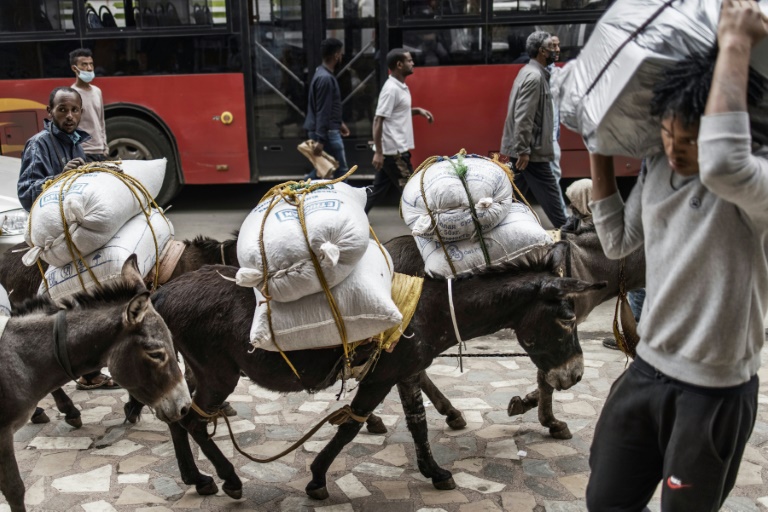
“Everything is increasing except our wages,” Ethiopian porter Zerihun told AFP, summing up the financial crisis facing the Horn of Africa nation as it reels from skyrocketing inflation and an economic slowdown.

After a decade of dynamic growth during the 2010s, Africa’s second most populous country has suffered multiple shocks, including the Covid-19 pandemic, a record drought, a two-year war in its northernmost region of Tigray and the global impact of the invasion of Ukraine.

Annual average inflation is expected to hit 30 percent in 2022 (compared to 26 percent last year), driven by an increase in food costs.

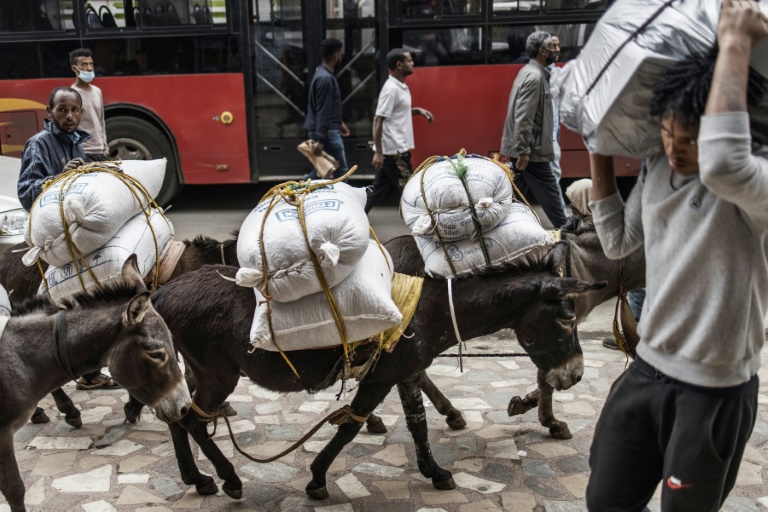
“Groceries, food, rent, all prices have gone up,” said Zerihun, a 30-year-old father of two working at the sprawling Merkato market in the capital Addis Ababa.

“Because of the cost of living, life is very difficult… life has become expensive,” said his colleague Sintayeh Tadelle, who has two sons aged 12 and six and “no savings”. 

Were it not for handouts from the Addis Ababa municipal government including uniforms, books and school meals, his family would struggle to survive, the 29-year-old porter told AFP.

The porters at Merkato, considered Africa’s largest open-air market, earn five birr (nine US cents) for loading or unloading a crate.

On average, a good day brings in than five dollars in wages. 

“The economy is slow, so there’s less work and my pay is less,” said Zerihun.

– ‘Very difficult’ – 

Packed with thousands of stalls stocking everything from clothing to industrial machinery, the busy lanes of Merkato teem with buyers, sellers, touts and day labourers.

But regulars say business has taken a sharp hit this year as inflation dampens customer appetite for spending.

“Business is very cold, not only here but in all sectors,” said Hamat Redi, manager of a shop selling televisions and washing machines.

A few doors down, shopkeeper Sisai Desalegn complained about a nationwide shortage of foreign currency, making it difficult for him to import the sound equipment and solar panels sold in his store.

“Because of the shortage, we are not getting enough foreign exchange from the bank to import goods,” he told AFP.

“We estimate that our business has lost 40 percent in two years,” Desalegn said, adding that the downturn has forced him to sell everything at the purchase price, putting profits out of reach.

As a result, he has reduced his daily expenses.

“It’s very difficult to make do with what you have,” he said, underlining that the war in Tigray meant his former customers — traders and farmers from the north — were no longer coming to the market.

The slowdown in trade with the north has also seen fewer trucks turning up at Merkato, meaning less work for porters like Zerihun and Sintayeh.

– Multiple causes – 

The conflict put pressure on government finances and hit key sectors such as agriculture and industry. 

It also scared away investors and foreign partners, contributing to a shortage of foreign currency in an importing nation.

A peace deal signed last month between the federal government and Tigrayan rebels has raised hopes of an economic recovery.

“I hope the peace agreement will make the situation better in the future,” said Zerihun.

But Ethiopia’s economy hit roadblocks before the war began in November 2020, with the Covid-19 pandemic triggering a sharp slowdown.

Growth, which averaged 9.7 percent between 2010 and 2018, fell to 6.1 percent in 2020 and is forecast to drop below four percent this year, according to the International Monetary Fund. 

The drought ravaging the Horn of Africa has weighed on agriculture — a key employer in the largely rural nation — and contributed to the explosion in food prices, with the conflict in Ukraine also affecting the cost of living.

The causes behind the crisis may be manifold and complex, but the impact is easy to see, according to Zerihun.

“Eventually, all this affects low-income people like us,” he said.

'Everything increasing except wages': inflation batters Ethiopia

“Everything is increasing except our wages,” Ethiopian porter Zerihun told AFP, summing up the financial crisis facing the Horn of Africa nation as it reels from skyrocketing inflation and an economic slowdown.

After a decade of dynamic growth during the 2010s, Africa’s second most populous country has suffered multiple shocks, including the Covid-19 pandemic, a record drought, a two-year war in its northernmost region of Tigray and the global impact of the invasion of Ukraine.

Annual average inflation is expected to hit 30 percent in 2022 (compared to 26 percent last year), driven by an increase in food costs.

“Groceries, food, rent, all prices have gone up,” said Zerihun, a 30-year-old father of two working at the sprawling Merkato market in the capital Addis Ababa.

“Because of the cost of living, life is very difficult… life has become expensive,” said his colleague Sintayeh Tadelle, who has two sons aged 12 and six and “no savings”. 

Were it not for handouts from the Addis Ababa municipal government including uniforms, books and school meals, his family would struggle to survive, the 29-year-old porter told AFP.

The porters at Merkato, considered Africa’s largest open-air market, earn five birr (nine US cents) for loading or unloading a crate.

On average, a good day brings in than five dollars in wages. 

“The economy is slow, so there’s less work and my pay is less,” said Zerihun.

– ‘Very difficult’ – 

Packed with thousands of stalls stocking everything from clothing to industrial machinery, the busy lanes of Merkato teem with buyers, sellers, touts and day labourers.

But regulars say business has taken a sharp hit this year as inflation dampens customer appetite for spending.

“Business is very cold, not only here but in all sectors,” said Hamat Redi, manager of a shop selling televisions and washing machines.

A few doors down, shopkeeper Sisai Desalegn complained about a nationwide shortage of foreign currency, making it difficult for him to import the sound equipment and solar panels sold in his store.

“Because of the shortage, we are not getting enough foreign exchange from the bank to import goods,” he told AFP.

“We estimate that our business has lost 40 percent in two years,” Desalegn said, adding that the downturn has forced him to sell everything at the purchase price, putting profits out of reach.

As a result, he has reduced his daily expenses.

“It’s very difficult to make do with what you have,” he said, underlining that the war in Tigray meant his former customers — traders and farmers from the north — were no longer coming to the market.

The slowdown in trade with the north has also seen fewer trucks turning up at Merkato, meaning less work for porters like Zerihun and Sintayeh.

– Multiple causes – 

The conflict put pressure on government finances and hit key sectors such as agriculture and industry. 

It also scared away investors and foreign partners, contributing to a shortage of foreign currency in an importing nation.

A peace deal signed last month between the federal government and Tigrayan rebels has raised hopes of an economic recovery.

“I hope the peace agreement will make the situation better in the future,” said Zerihun.

But Ethiopia’s economy hit roadblocks before the war began in November 2020, with the Covid-19 pandemic triggering a sharp slowdown.

Growth, which averaged 9.7 percent between 2010 and 2018, fell to 6.1 percent in 2020 and is forecast to drop below four percent this year, according to the International Monetary Fund. 

The drought ravaging the Horn of Africa has weighed on agriculture — a key employer in the largely rural nation — and contributed to the explosion in food prices, with the conflict in Ukraine also affecting the cost of living.

The causes behind the crisis may be manifold and complex, but the impact is easy to see, according to Zerihun.

“Eventually, all this affects low-income people like us,” he said.

Close Bitnami banner
Bitnami