World

Putin says 'agreement will have to be reached' to end Ukraine conflict

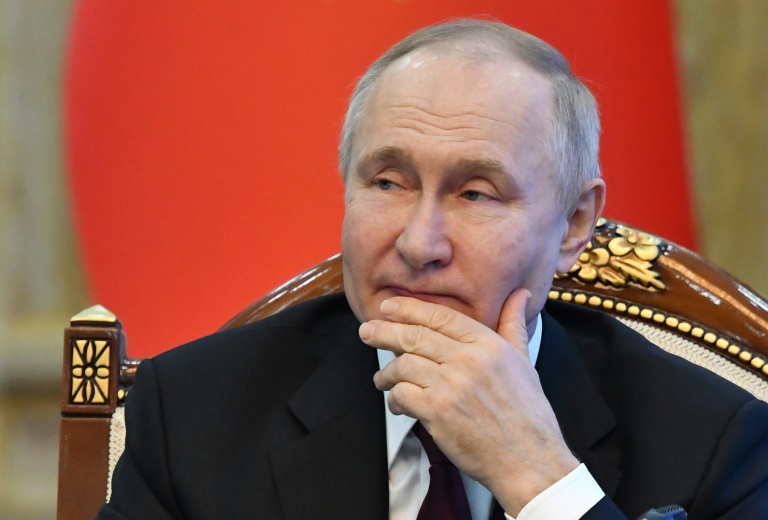
Russian President Vladimir Putin said on Friday that ultimately an agreement would need to be struck to end fighting in Ukraine, nine months after the Kremlin launched its “special military operation” there.

“Trust, of course, is almost at zero… but ultimately, in the end, an agreement will have to be reached,” Putin told a summit of regional leaders in the capital of Kyrgyzstan.

“I have said many times that we are ready for these agreements, and we are open (to them),” he added. 

Putin comments came in response to remarks from former German chancellor Angela Merkel about the Minsk agreements, negotiated with Paris and Berlin to end fighting between Russia and Ukraine.

Merkel told Die Zeit newspaper that the 2014 accords were an “attempt to give Ukraine time” and that Kyiv had used it “to become stronger”.

Putin in Bishkek said he was “disappointed” by Merkel’s comments, adding he “always assumed that the government of Germany was acting honestly”.

“After such statements, the question becomes: how can we agree? And is there anyone to agree with? What are the guarantees?” Putin said.

China's Xi promotes Mideast security, energy ties at Saudi summits

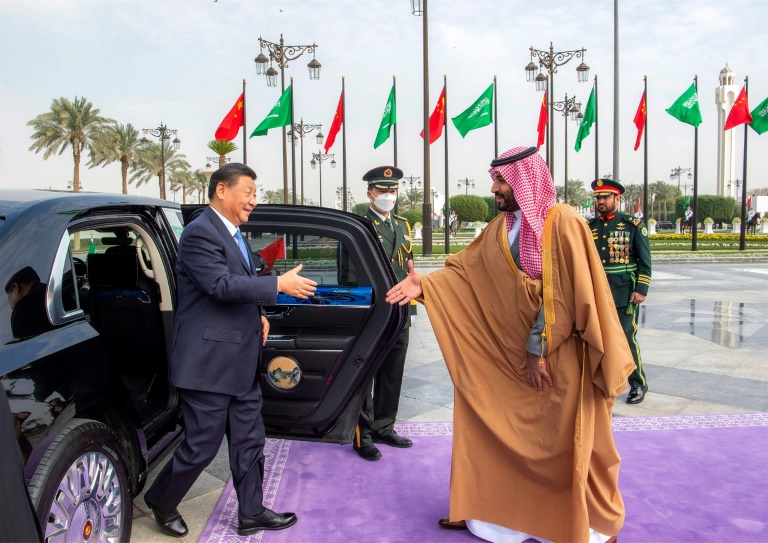
Chinese President Xi Jinping on Friday touted close security and energy ties with Gulf nations during summits in Saudi Arabia that have highlighted tensions with Washington.

On the third and final day of his visit, Xi attended a gathering of the six-member Gulf Cooperation Council and a broader China-Arab leaders’ meeting.

It was only Xi’s third journey outside China since the coronavirus pandemic began.

Friday’s talks followed bilateral sit-downs on Thursday with Saudi royals that yielded a joint statement stressing “the importance of stability” in oil markets — a point of friction with the United States, which has urged the Saudis to raise production.

“China will continue to firmly support the GCC countries in maintaining their own security… and build a collective security framework for the Gulf,” Xi said on Friday at the start of the China-GCC summit.

“China will continue to import large quantities of crude oil from GCC countries on an ongoing basis,” he said, also vowing to expand other areas of energy cooperation including liquefied natural gas imports.

Additionally, Xi said China would make full use of a Shanghai-based platform “to carry out RMB [yuan] settlement of oil and gas trade” — a move that, if Gulf countries participate, could weaken the global dominance of the US dollar.

Asked at a press conference, as the summits came to close Friday evening, if Riyadh would agree to such a scheme, Saudi Foreign Minister Prince Faisal bin Farhan said he had “nothing to add”.

Oil from Saudi Arabia alone accounted for 17 percent of China’s imports last year, and last month Qatar announced a 27-year natural gas deal with China.

– Rejecting ‘polarity’ – 

Xi’s visit comes amid persistent rancour between Saudi Arabia and the US, its long-time partner and security guarantor, over oil production, human rights issues and regional security. 

It follows US President Joe Biden’s trip to Jeddah in July, before midterm elections, when he failed to persuade the Saudis to pump more oil to reduce prices.

Xi’s arrival in the kingdom on Wednesday earned a rebuke from the White House, which warned of “the influence that China is trying to grow around the world”. 

Washington called Beijing’s objectives “not conducive to preserving the international rules-based order”.

Saudi officials have repeatedly stressed that they value deep ties with Washington but will not hesitate to explore relationships elsewhere.

“We are very much focused on cooperation with all parties and I think competition is a good thing,” Prince Faisal said on Friday, adding that Riyadh will also continue to have strong relations with the US “across the board”. 

“We will continue to work with all of our partners and we don’t see it as a zero-sum game by any means,” he added.

“We don’t believe in polarity.”

– Trade talks –

Crown Prince Mohammed bin Salman, Saudi Arabia’s 37-year-old de facto ruler, addressed both summits on Friday, promising “continuing Arab-Chinese cooperation to serve our common goals and aspirations of our peoples”.

The Gulf countries, strategic partners of Washington, are bolstering ties with China as part of an eastward turn that involves diversifying their fossil fuel-reliant economies. 

At the same time China, hit hard by its Covid lockdowns, is trying to revive its economy and widen its sphere of influence, notably through its Belt and Road Initiative which provides funding for infrastructure projects around the world. 

One area of focus for the China-GCC summit was a free trade agreement under discussion for nearly two decades. 

Drawing those negotiations to a close would be “a matter of prestige for Beijing”, said Robert Mogielnicki of the Arab Gulf States Institute in Washington.

“It’s not as simple for the GCC states, which seem to be more invested in advancing bilateral ties and are engaged in varying degrees of regional economic competition with their neighbouring member states.”  

No breakthrough was announced on Friday.

rcb/jsa

China's Xi promotes Mideast security, energy ties at Saudi summits

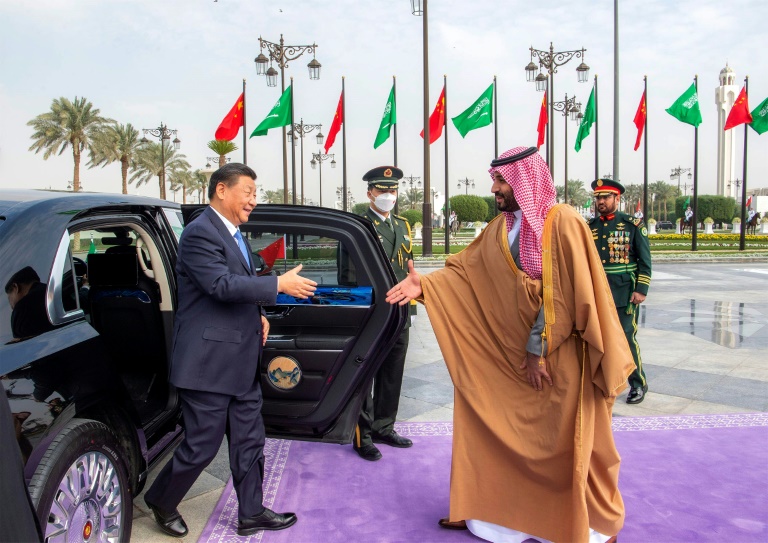
Chinese President Xi Jinping on Friday touted close security and energy ties with Gulf nations during summits in Saudi Arabia that have highlighted tensions with Washington.

On the third and final day of his visit, Xi attended a gathering of the six-member Gulf Cooperation Council and a broader China-Arab leaders’ meeting.

It was only Xi’s third journey outside China since the coronavirus pandemic began.

Friday’s talks followed bilateral sit-downs on Thursday with Saudi royals that yielded a joint statement stressing “the importance of stability” in oil markets — a point of friction with the United States, which has urged the Saudis to raise production.

“China will continue to firmly support the GCC countries in maintaining their own security… and build a collective security framework for the Gulf,” Xi said on Friday at the start of the China-GCC summit.

“China will continue to import large quantities of crude oil from GCC countries on an ongoing basis,” he said, also vowing to expand other areas of energy cooperation including liquefied natural gas imports.

Additionally, Xi said China would make full use of a Shanghai-based platform “to carry out RMB [yuan] settlement of oil and gas trade” — a move that, if Gulf countries participate, could weaken the global dominance of the US dollar.

Asked at a press conference, as the summits came to close Friday evening, if Riyadh would agree to such a scheme, Saudi Foreign Minister Prince Faisal bin Farhan said he had “nothing to add”.

Oil from Saudi Arabia alone accounted for 17 percent of China’s imports last year, and last month Qatar announced a 27-year natural gas deal with China.

– Rejecting ‘polarity’ – 

Xi’s visit comes amid persistent rancour between Saudi Arabia and the US, its long-time partner and security guarantor, over oil production, human rights issues and regional security. 

It follows US President Joe Biden’s trip to Jeddah in July, before midterm elections, when he failed to persuade the Saudis to pump more oil to reduce prices.

Xi’s arrival in the kingdom on Wednesday earned a rebuke from the White House, which warned of “the influence that China is trying to grow around the world”. 

Washington called Beijing’s objectives “not conducive to preserving the international rules-based order”.

Saudi officials have repeatedly stressed that they value deep ties with Washington but will not hesitate to explore relationships elsewhere.

“We are very much focused on cooperation with all parties and I think competition is a good thing,” Prince Faisal said on Friday, adding that Riyadh will also continue to have strong relations with the US “across the board”. 

“We will continue to work with all of our partners and we don’t see it as a zero-sum game by any means,” he added.

“We don’t believe in polarity.”

– Trade talks –

Crown Prince Mohammed bin Salman, Saudi Arabia’s 37-year-old de facto ruler, addressed both summits on Friday, promising “continuing Arab-Chinese cooperation to serve our common goals and aspirations of our peoples”.

The Gulf countries, strategic partners of Washington, are bolstering ties with China as part of an eastward turn that involves diversifying their fossil fuel-reliant economies. 

At the same time China, hit hard by its Covid lockdowns, is trying to revive its economy and widen its sphere of influence, notably through its Belt and Road Initiative which provides funding for infrastructure projects around the world. 

One area of focus for the China-GCC summit was a free trade agreement under discussion for nearly two decades. 

Drawing those negotiations to a close would be “a matter of prestige for Beijing”, said Robert Mogielnicki of the Arab Gulf States Institute in Washington.

“It’s not as simple for the GCC states, which seem to be more invested in advancing bilateral ties and are engaged in varying degrees of regional economic competition with their neighbouring member states.”  

No breakthrough was announced on Friday.

rcb/jsa

US basketball star Griner back home after Russia prisoner swap

American basketball star Brittney Griner was taken to a US Army base in Texas for a medical checkup on Friday after being released from a Russian prison in exchange for a notorious arms dealer known as the “Merchant of Death.”

Griner, who was arrested in Russia in February on drug charges, arrived overnight in San Antonio from Abu Dhabi, where the prisoner swap took place, and did not make any public statements.

Robert Whetstone, a spokesman for the Brooke Army Medical Center at Joint Base San Antonio-Fort Sam Houston, said the 32-year-old Griner, who is from Texas, was taken to the facility “as is standard protocol.”

“The US government is focused on ensuring that Brittney Griner and her family’s well-being are prioritized and that all assistance available be offered in an appropriate manner,” Whetstone said.

White House national security spokesman John Kirby told NBC that Griner was in “very good spirits when she got off the plane and appeared to be obviously in good health.”

Kirby said she would be given “all the access she needs to health care workers just to make sure that she is OK.”

Griner was exchanged in Abu Dhabi on Thursday for Viktor Bout, a 55-year-old Russian national who was serving a 25-year sentence in a US prison.

In footage released by Russian state media, Griner, shorn of her distinctive dreadlocks, and a relaxed and animated Bout crossed paths on the airport tarmac and headed towards the planes that would take them home.

Griner, a two-time Olympic gold medalist, WNBA champion and LGBTQ trailblazer, was arrested at a Moscow airport against a backdrop of soaring tensions over Ukraine.

– Putin says ‘compromises’ found –

Griner was accused of possessing vape cartridges with a small quantity of cannabis oil and sentenced in August to nine years in prison.

Bout, who was accused of arming rebels in some of the world’s bloodiest conflicts, was detained in a US sting operation in Thailand in 2008, sent to the United States and sentenced in 2012 to 25 years behind bars.

Bout told Kremlin-run media on Friday that Western countries were seeking to “destroy” Russia.

“The West believes that they did not finish us off in 1990, when the Soviet Union began to disintegrate,” Bout told state-run channel RT. “They think that they can just destroy us again and divide Russia.”

While Griner’s family and friends celebrated her release, another American held in Russia, former US Marine Paul Whelan, detained since 2018 and accused of spying, expressed disappointment he was not part of the swap.

The Griner family expressed solidarity with Whelan, saying in a statement: “We pray for Paul and for the swift and safe return of all wrongfully-detained Americans.” 

Russia President Vladimir Putin said Friday that other prisoner swaps with Washington were possible.

“This is the result of negotiations and the search for compromises,” Putin said. “In this case, compromises were found and we aren’t refusing to continue this work in the future.”

– ‘Joy and relief’ –

President Joe Biden announced Griner’s release on Thursday flanked by her wife, Cherelle Griner, and thanked the UAE for helping “facilitate” it.

WNBA commissioner Cathy Engelbert said there was a “collective wave of joy and relief” in the women’s professional league where Griner has been a star for a decade with the Phoenix Mercury.

At the time of her arrest, Griner had been playing for a professional team in Russia, as a number of WNBA players do in the off-season.

She pleaded guilty to the charges against her, but said she did not intend to break the law or use the banned substance in Russia.

Griner testified that she had permission from a US doctor to use medicinal cannabis to relieve pain from her many injuries.

The use of medical marijuana is not allowed in Russia.

The 2005 film “Lord of War” starring Nicolas Cage was based in part on Bout’s arms trafficking exploits, and he has been the subject of several books and TV shows.

Speaking to MSNBC, Kirby acknowledged concerns Bout could return to criminal activity.

“We’re going to make sure now that he’s a free man that we’re looking after our national security interests and we’re as vigilant as we can be,” he said.

Canada to hasten permitting for critical minerals mines

Canada will look to quickly ramp up production of critical minerals that are vital to its transition away from climate-harming fossil fuels, according to a new strategy unveiled Friday.

The 58-page document notes that Canada is home to vast untapped deposits of lithium, graphite, nickel, cobalt, copper and rare earth elements.

But under a current framework, it adds, it can take from five to 25 years to get new mines approved and operational.

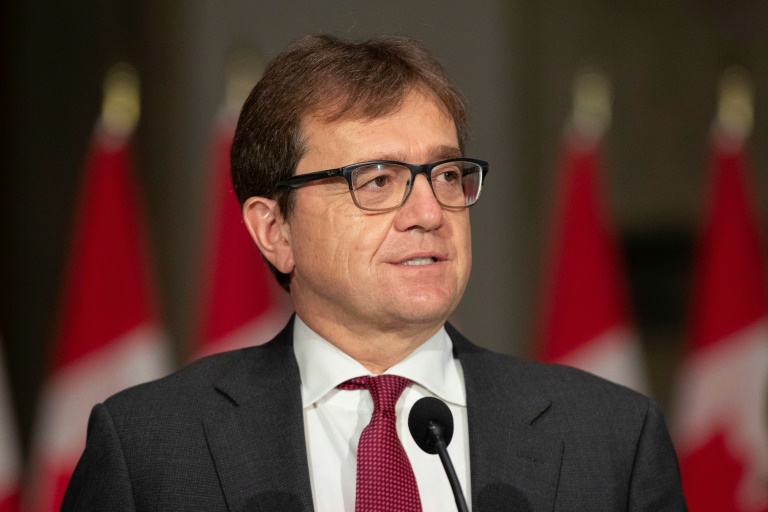
With global demand set to soar and China controlling much of existing supplies, Natural Resources Minister Jonathan Wilkinson said it is paramount for Canada and its allies “to establish and maintain resilient critical minerals value chains.”

The new strategy, he added, “sets out a course for Canada to become a global supplier of choice for critical minerals and the clean digital technologies they enable.”

Critical minerals are used, for example, in electric vehicle batteries, solar panels, wind turbines and semiconductors.

They are “the building blocks for the green and digital economy. There is no energy transition without critical minerals,” says the strategy document.

New mine proposals typically undergo a patchwork of rigorous environmental review and permitting process. Wilkinson vowed to streamline that process, including eliminating duplicate reviews at both the federal and provincial levels.

“We recognize that, although responsible regulations are vital, complex regulatory and permitting processes can hinder the economic competitiveness of the sector and increase investment risk for proponents,” says the document.

The new strategy is not backed by any new funding, but in its 2022 budget, the federal government earmarked Can$3.8 billion (US$2.8 billion) over eight years for the sector — including a 30 percent tax credit to spur exploration.

Ottawa also acknowledges in the document the need for new infrastructure such as roads and ports in order to access and exploit the deposits.

To counter China’s supremacy in critical minerals, Canada, the United States and its allies have committed to boosting extraction, processing and recycling of critical minerals.

In late October, Canada also tightened its investment rules to make it more difficult for foreign state-owned companies to buy into its critical minerals sector, following a backlash over Chinese investments in Canada.

Such deals, the government said at the time, would only be approved on “an exceptional basis.”

It has also recently ordered three Chinese resources companies to divest their stakes in Canadian critical minerals firms.

Canada to hasten permitting for critical minerals mines

Canada will look to quickly ramp up production of critical minerals that are vital to its transition away from climate-harming fossil fuels, according to a new strategy unveiled Friday.

The 58-page document notes that Canada is home to vast untapped deposits of lithium, graphite, nickel, cobalt, copper and rare earth elements.

But under a current framework, it adds, it can take from five to 25 years to get new mines approved and operational.

With global demand set to soar and China controlling much of existing supplies, Natural Resources Minister Jonathan Wilkinson said it is paramount for Canada and its allies “to establish and maintain resilient critical minerals value chains.”

The new strategy, he added, “sets out a course for Canada to become a global supplier of choice for critical minerals and the clean digital technologies they enable.”

Critical minerals are used, for example, in electric vehicle batteries, solar panels, wind turbines and semiconductors.

They are “the building blocks for the green and digital economy. There is no energy transition without critical minerals,” says the strategy document.

New mine proposals typically undergo a patchwork of rigorous environmental review and permitting process. Wilkinson vowed to streamline that process, including eliminating duplicate reviews at both the federal and provincial levels.

“We recognize that, although responsible regulations are vital, complex regulatory and permitting processes can hinder the economic competitiveness of the sector and increase investment risk for proponents,” says the document.

The new strategy is not backed by any new funding, but in its 2022 budget, the federal government earmarked Can$3.8 billion (US$2.8 billion) over eight years for the sector — including a 30 percent tax credit to spur exploration.

Ottawa also acknowledges in the document the need for new infrastructure such as roads and ports in order to access and exploit the deposits.

To counter China’s supremacy in critical minerals, Canada, the United States and its allies have committed to boosting extraction, processing and recycling of critical minerals.

In late October, Canada also tightened its investment rules to make it more difficult for foreign state-owned companies to buy into its critical minerals sector, following a backlash over Chinese investments in Canada.

Such deals, the government said at the time, would only be approved on “an exceptional basis.”

It has also recently ordered three Chinese resources companies to divest their stakes in Canadian critical minerals firms.

Brazil's Lula appoints former mayor as finance minister

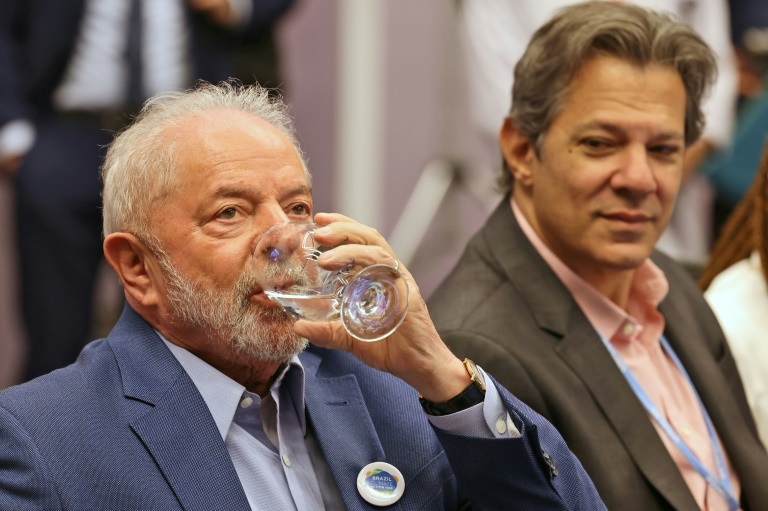
Brazil’s president-elect Luiz Inacio Lula da Silva on Friday named former Sao Paulo mayor Fernando Haddad, viewed unfavorably by many in the business community, as his finance minister.

Lula da Silva, who narrowly defeated incumbent Jair Bolsonaro in October elections, unveiled ministers in the key posts of foreign affairs, justice, defense, and chief of staff.

However, all eyes were on his pick for finance minister, with markets nervous over the incoming government’s commitment to fiscal discipline and the inflation-hit economy in fragile recovery.

“(I chose) comrade Fernando Haddad as Minister of Finance,” Lula said during a press conference in the capital Brasilia.

Haddad, 59, who served as education minister from 2005 to 2012, succeeds powerful liberal economy minister Paulo Guedes, an ally of far-right President Jair Bolsonaro.

After Lula’s new government takes office following his January 1 inauguration, the economy ministry will be dissolved and transformed into finance, industry and planning agencies.

When Haddad’s name started circulating for the role, markets reacted with unease, viewing him as too much on the left and fearing he would jeopardize the budgetary balance.

“He represents the heterodox economic policy” that Lula’s Workers’ Party (PT) defends, said Antonio Madeira of the MCM consultancy firm.

Madeira said that with Haddad in the finance ministry, he expects “an increase in spending” and “a more assertive state giving a significant role to public companies.”

Despite some of the reluctance towards Haddad, the Sao Paulo Stock Exchange’s Ibovespa index was up Friday by 0.5% after the names of the future ministers were announced.

Lula also tapped Mauro Vieira as foreign minister. 

Vieira is a 71-year-old career diplomat who has already served as foreign minister as well as ambassador to Argentina, the United States and the United Nations.

He is currently serving as ambassador to Croatia, which on Friday knocked Brazil out of the World Cup.

For the justice ministry, Lula appointed Flavio Dino, a former governor of the northeastern state of Maranhao.

Rui Costa, governor of the province of Bahia, was named to a ministry that falls between the roles of prime minister and chief of staff.

Jose Mucio Monteiro, a civilian, was named defense minister.

After appointing five white men to the key ministries, Lula promised that “in time, you will see more women than men here … as well as a number of Afro-Brazilians.”

“We will try and form a government in the image of Brazilian society.”

Lula, a former unionist who already served two terms as president between 2003 and 2010, said that he would announce the names of more ministers next week and he has “not yet decided the total number of ministers” he would have in his government.

One of the most highly anticipated posts is that of the environmental minister, who will play a crucial role as Brazil seeks to tackle deforestation in the Amazon.

Brazil's Lula appoints former mayor as finance minister

Brazil’s president-elect Luiz Inacio Lula da Silva on Friday named former Sao Paulo mayor Fernando Haddad, viewed unfavorably by many in the business community, as his finance minister.

Lula da Silva, who narrowly defeated incumbent Jair Bolsonaro in October elections, unveiled ministers in the key posts of foreign affairs, justice, defense, and chief of staff.

However, all eyes were on his pick for finance minister, with markets nervous over the incoming government’s commitment to fiscal discipline and the inflation-hit economy in fragile recovery.

“(I chose) comrade Fernando Haddad as Minister of Finance,” Lula said during a press conference in the capital Brasilia.

Haddad, 59, who served as education minister from 2005 to 2012, succeeds powerful liberal economy minister Paulo Guedes, an ally of far-right President Jair Bolsonaro.

After Lula’s new government takes office following his January 1 inauguration, the economy ministry will be dissolved and transformed into finance, industry and planning agencies.

When Haddad’s name started circulating for the role, markets reacted with unease, viewing him as too much on the left and fearing he would jeopardize the budgetary balance.

“He represents the heterodox economic policy” that Lula’s Workers’ Party (PT) defends, said Antonio Madeira of the MCM consultancy firm.

Madeira said that with Haddad in the finance ministry, he expects “an increase in spending” and “a more assertive state giving a significant role to public companies.”

Despite some of the reluctance towards Haddad, the Sao Paulo Stock Exchange’s Ibovespa index was up Friday by 0.5% after the names of the future ministers were announced.

Lula also tapped Mauro Vieira as foreign minister. 

Vieira is a 71-year-old career diplomat who has already served as foreign minister as well as ambassador to Argentina, the United States and the United Nations.

He is currently serving as ambassador to Croatia, which on Friday knocked Brazil out of the World Cup.

For the justice ministry, Lula appointed Flavio Dino, a former governor of the northeastern state of Maranhao.

Rui Costa, governor of the province of Bahia, was named to a ministry that falls between the roles of prime minister and chief of staff.

Jose Mucio Monteiro, a civilian, was named defense minister.

After appointing five white men to the key ministries, Lula promised that “in time, you will see more women than men here … as well as a number of Afro-Brazilians.”

“We will try and form a government in the image of Brazilian society.”

Lula, a former unionist who already served two terms as president between 2003 and 2010, said that he would announce the names of more ministers next week and he has “not yet decided the total number of ministers” he would have in his government.

One of the most highly anticipated posts is that of the environmental minister, who will play a crucial role as Brazil seeks to tackle deforestation in the Amazon.

Biden backs African Union spot in G20

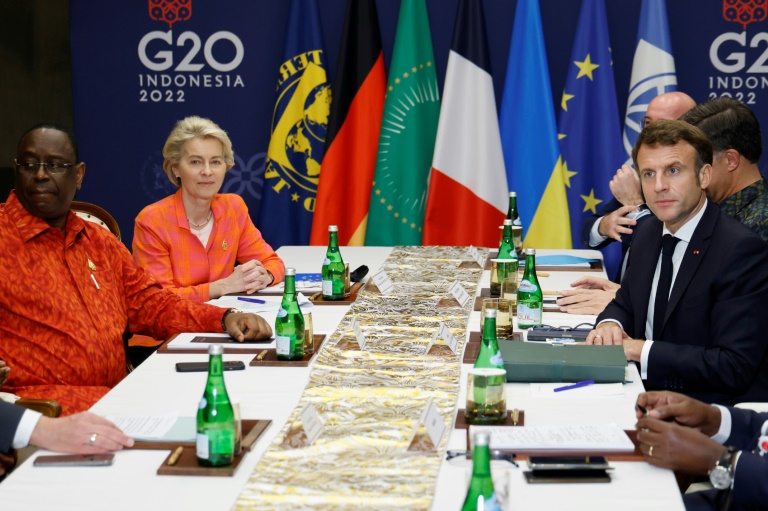
US President Joe Biden at a summit next week will back a permanent spot for the African Union in the Group of 20 major economies, seeking to elevate the continent’s role, the White House said Friday.

Biden will make the announcement during a three-day US-Africa Summit that opens Tuesday in Washington, where the administration will make a case for US commitment to the continent amid inroads by China and Russia.

“It’s past time Africa has permanent seats at the table in international organizations and initiatives,” said Judd Devermont, the senior director for African affairs at the National Security Council.

“We need more African voices in international conversations that concern the global economy, democracy and governance, climate change, health and security,” he said.

He said the United States would discuss the African Union’s role with India, the G20 president for 2023.

South Africa currently is the only African member of the G20, which was launched in its current form during the 2008 financial crisis as a way to bring together the world’s top economies. The European Union participates.

Biden’s pledge on the G20 comes after he threw his support behind expansion of the UN Security Council, including representation of Africa, during a speech to the world body in September.

While few expect quick changes at the Security Council, the stance pits the United States against China and especially Russia which are seen as opposed to any move to dilute their veto power.

The Biden administration has backed the African Union’s diplomatic role on the continent and sought warm ties with the bloc’s current chair, Senegalese President Macky Sall, who is expected at the Washington summit.

Host Indonesia invited Sall to take part in the latest G20 summit last month in Bali.

UK sentences head of Kurdish people-smuggling gang to 8 years' jail

The convicted ringleader of a “large-scale” Kurdish people-smuggling gang, who is currently on the run, was on Friday sentenced in absentia to eight years in prison, Britain’s National Crime Agency (NCA) said.

Tarik Namik, 45, of Oldham near Manchester, northwest England, headed a “sophisticated, lucrative criminal enterprise” bringing Kurdish migrants into the UK hidden in the back of lorries.

Working with people smugglers abroad, the organised crime group is suspected of smuggling at least 1,900 migrants, who were picked up in the Balkans, into France or Germany during a 50-day period.

The gang then offered different means of trying to enter Britain, where the migrants would claim asylum.

Kurdish criminal groups control the increasingly lucrative cross-Channel illegal migration routes using both lorries and, more recently, small boats, according to the NCA.

A surge in the small vessel crossings since 2017 has led to tens of thousands of migrants now arriving annually on England’s southeastern coast by boat, rather than stowed away in trucks.

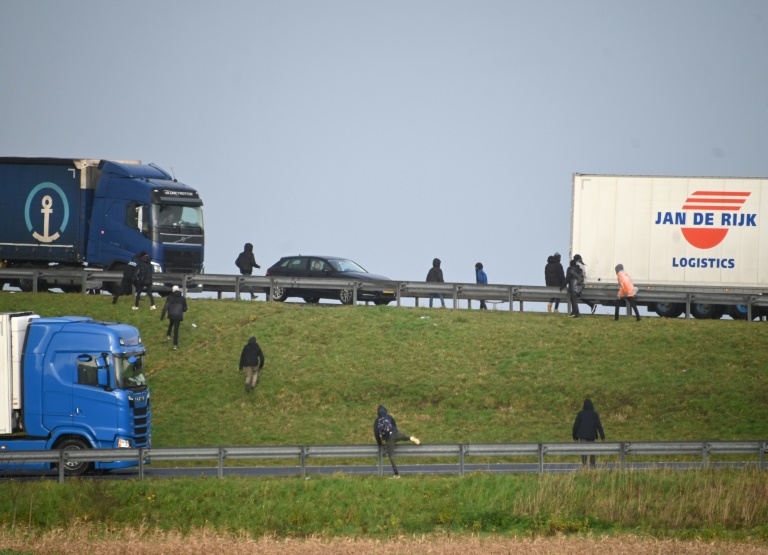
On Friday, AFP saw dozens of migrants, who had made the sea journey despite freezing winter conditions, being brought ashore in Kent by Border Force and lifeboat volunteers.

Stepped-up law enforcement is thought to be among the reasons for the shift from lorries to small boats. 

Alongside Namik, four other men — based in Manchester, Stoke-on-Trent and Nottingham — also received sentences ranging from nearly five years to 16 months for their role in the criminal scheme.

All five sentenced at Manchester Crown Court had admitted the charges against them at previous hearings.

However, Namik failed to attend court on Friday and was sentenced in his absence, the NCA said.

A warrant has been issued and the agency is “working with partners to secure his immediate arrest”, it added.

“The criminal group sought to subvert the UK asylum system for their own financial gain, putting vulnerable migrants — including young children — at great risk,” NCA Branch Commander Richard Harrison said.

The “prolific” enterprise utilised complicit lorry drivers, usually from Turkey, charging around 1,800 euros ($1,900) per migrant — typically from Iraq and Iran — to traverse mainland Europe.

The smugglers would then offer two separate means of getting to the UK, which would incur extra cost, according to the NCA.

The more expensive option would see individual migrants hidden within a lorry, sometimes within the wind deflector above the cab, and then met by an escort once in Britain.

The other method was to conceal larger numbers of migrants in the back of a truck driven by a complicit haulier. The group would be released once through border controls.

The NCA dismantled Namik’s operation in April 2018, when he and two of the others convicted were arrested by officers. Another was arrested in 2019.

Close Bitnami banner
Bitnami