World

Arab rivalries set aside for Morocco's World Cup run

The T-shirt on sale at Doha’s main market declares “Our blood is Arab”, and that is the mood buoying Morocco as it prepares to become on Saturday the first Arab nation to play a World Cup quarter-final.

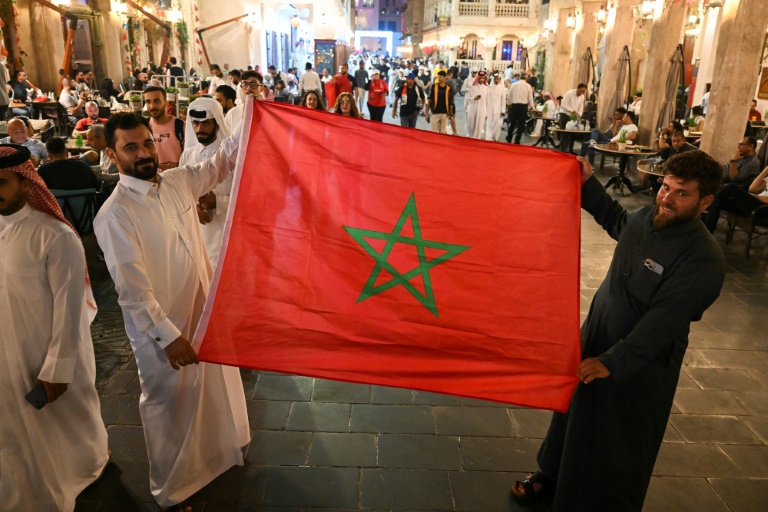
Regional rivalries are being forgotten. Morocco’s red flag with a green star is becoming a best-seller seen across Doha ahead of their clash with Portugal.

The flag — along with those of Qatar, Tunisia and Saudi Arabia — features on the “Our blood is Arab” T-shirt selling at Doha’s Souq Waqif market.

Organisers of the first World Cup in the Middle East have long portrayed the tournament as a chance to build up Arab fervour.

Omar Babiker, an Algerian, is dreaming of Morocco reaching the last four even though his country has strained ties with its neighbour.

After decades of mistrust over the disputed Western Sahara territory, Algeria severed diplomatic relations in 2021 over “hostile actions”.

But Oran businessman Babiker, who is in Doha with his son, echoed the feelings of many Arabs when he told AFP: “Politics is for politicians.

“I am with Morocco. Morocco is like Algeria. I hope they go a long way.”

Morocco’s run has inspired similar joy across the Arab world. Many leaders sent messages of congratulations to the team after they beat Spain on Tuesday.

Libyans set off fireworks in Tripoli despite their country’s conflict and economic crisis. 

In war-ravaged Syria, Mustafa Yassin, a dentist in the city of Idlib, honoured a Facebook pledge to treat 20 people for free if Morocco reached the quarter-finals.

Lebanon’s French-language L’Orient-Le Jour newspaper put the team on its front page, proclaiming: “Pride of the Arabs”.

– ‘Arab dream’ –

Moroccan student Osama al-Qabbani, 26, had been feeling far from home in Doha. But he said: “The huge number of Arabs who support Morocco makes me feel like I’m in Casablanca or Rabat.”

Egyptian teenager Mohi Khaled wrapped himself in a Moroccan flag bought for 25 riyals ($6.80) as he joined the intense hunt for a ticket to Saturday’s game. 

“Morocco represents a beautiful Arab dream that makes us all happy,” he said.

After defeating Spain on penalties to seal their entry into the quarter-finals, Morocco’s players have been praised on social media for celebrating with the Palestinian flag, another feature of festivities in Souq Waqif’s cafes.

Qatar, backing Palestinian claims to statehood, has refused to follow Gulf neighbours the United Arab Emirates and Bahrain by normalising ties with Israel.

In December 2020 Morocco also recognised Israel, though that hasn’t dented the pan-Arab sentiment supporting the team.

Arab pride did suffer at seeing hosts Qatar fall in the first round without a point from three games. Saudi Arabia beat Argentina, however, and Tunisia defeated France.

Pan-Arab celebrations have been prominent during the tournament. Despite Saudi Arabia’s role in a Gulf blockade of Qatar from 2017 to 2021, Qatar’s emir and Saudi’s de facto ruler draped themselves in each other’s colours at the tournament.

Many Qataris have adopted the Moroccan and Palestinian flags for the World Cup. Qatar fan Mohammed Fakhro, 52, said Morocco had “made up” for his team’s early exit.

Former Moroccan international Talal al-Karkouri said the public support has played a decisive role in Morocco’s results.

“The massive presence of the fans affected the opponent and pushed the players to get results,” he told AFP.

In a taste of what may greet Portugal on Saturday, two Portuguese fans were faced with chants of “Dima (always) Morocco, Fifa (Long live) Morocco” as they walked through waves of Moroccan red shirts at Souq Waqif.

The quarter-final would be like “playing Morocco on their home ground”, said Portuguese fan Fernando Lobo, 56.
UK defends new post-Brexit finance reforms

Britain on Friday launched a post-Brexit plan to relax curbs on its powerhouse City sector introduced after the 2008 financial crisis, denying the reforms will bring about new instability.

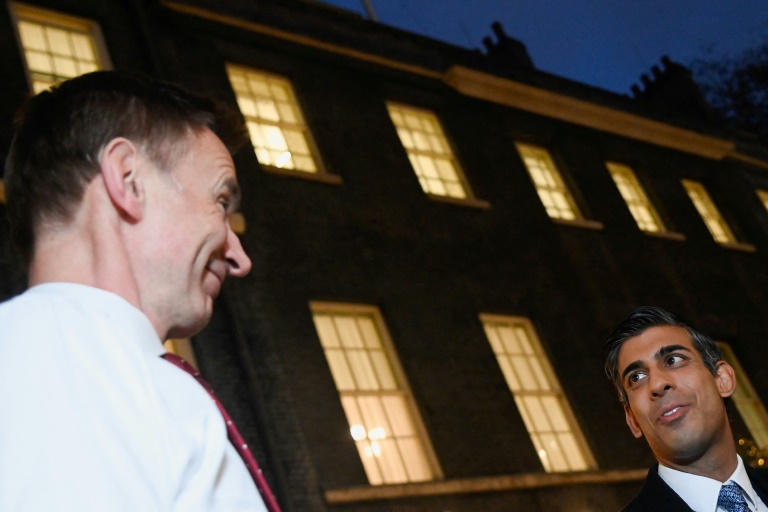
Prime Minister Rishi Sunak insisted the government was not being reckless in scrapping “ringfencing” of assets held by the biggest banks, to separate their retail arms from riskier investment operations.

“No, the UK has always had and always will have an incredibly respected and robust system of regulation for the financial services sector,” Sunak told reporters.

“But it’s also important to make sure the industry is competitive -– there are a million people employed in financial services and they’re not just in London, in the City.”

The ringfencing policy was introduced after the 2008 global financial crisis, to help banks survive another meltdown.

The so-called “Edinburgh reforms”, announced in the Scottish capital by finance minister Jeremy Hunt, also eased capital requirements for smaller lenders.

The government has already said it plans to lift a cap on bankers’ bonuses, and to require UK regulators to prioritise growth and competitiveness, alongside market stability.

It says the reforms have been enabled by Britain’s exit from the European Union.

Brexit is allowing the government to “reshape our regulatory regime and unleash the full potential” of the finance industry, said Hunt, who voted in 2016 to stay in the EU.

He stressed that “we have learned the lessons of that (2008) crash, we put in place some very important guardrails, which will remain”.

“But the banks have become much healthier financially since 2008,” the chancellor said, adding the reforms would help the City better compete with US and Asian markets.

Since Brexit, the City has slipped behind Paris and Amsterdam by some measures. At Brussels’ insistence, UK finance was not covered by Britain’s EU trade treaty.

– No Brexit dividend? –

And there is mounting concern about the everyday effects on people and businesses of increased costs and border delays.

Brexit has not helped tame red-hot inflation or cut soaring food bills, according to recent research from the London School of Economics.

“I think this whole idea that there is a massive dividend from Brexit (for finance) is flawed,” economics professor Steve Schifferes at City, University of London, told AFP.

The ringfencing reform “is the most controversial bit (and) the most unwise” aspect of the proposals, he added.

Fran Boait, executive director of the pro-consumer campaign group Positive Money, said the end to ringfencing was “extremely concerning”.

“Behind the spin, today’s announcements amount to wide-ranging deregulation that threatens to destabilise an increasingly fragile financial sector, with huge risks to the public and little benefit,” she said.

– ‘Race to the bottom’ –

The opposition Labour party, which is tipped in opinion polls to form the next government, also expressed unease.

But Miles Celic, chief executive of business lobby group TheCityUK, welcomed the “comprehensive” package.

“Boosting the industry’s competitiveness and securing the UK’s position as a world-leading international financial centre is an investment in the nation’s success and in communities across the country,” he said.

Under the reforms, the Treasury said it would axe “hundreds of pages of burdensome” EU-era rules that are deemed detrimental to economic growth and company investment.

“This will establish a smarter regulatory framework for the UK that, is agile, less costly and more responsive to emerging trends,” it said.

However, the government’s push to deregulate after Brexit has run into criticism that it intends a “race to the bottom”, depriving Britons of important protections enacted by the EU.

Kremlin critic Yashin jailed over Ukraine remarks

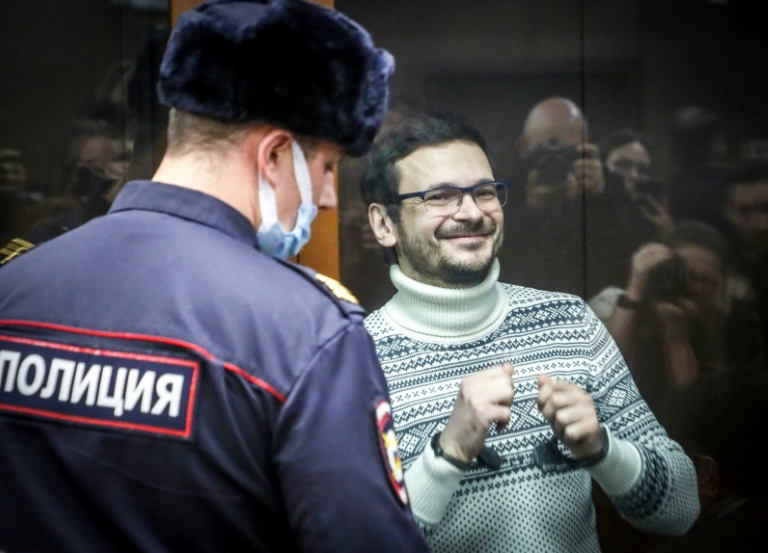
Russia on Friday sentenced opposition politician Ilya Yashin to eight and a half years in prison for spreading “false information” about Russia’s offensive in Ukraine, the highest-profile conviction under new legislation criminalising criticism of the assault.

The 39-year-old Moscow councillor is just the latest in a long line of Kremlin critics to have been sidelined in recent years in a crackdown that has intensified after President Vladimir Putin sent troops to Ukraine.

His supporters in the courtroom applauded Yashin, who smiled and waved to family despite being handcuffed, as the sentence was read out.

Judge Oksana Goryunova said Yashin had committed a crime by disseminating “knowingly false information about Russia’s armed forces” and sentenced him to eight years and six months in a penal colony.

In April, he had described the alleged murder of civilians in Bucha as a “massacre”, referring to a town near the Ukrainian capital Kyiv where civilians were found killed after Russian forces pulled back. 

He is being tried under new legislation that came into force after the start of Moscow’s military campaign in Ukraine to penalise what the authorities deem to be damaging or false information about the Russian military.

Aked about Yashin’s conviction on Friday, President Vladimir Putin said: “And who is he? A blogger?”

The Kremlin chief said that, as a lawyer by training, he could not comment on court rulings.

“I think its inadvisable to question the court’s decision,” Putin told reporters following a regional summit in the Kyrgyz capital Bishkek.

– ‘Shameless’ –

Yashin is an ally of jailed opposition leader Alexei Navalny and was close to Boris Nemtsov, an opposition politician assassinated near the Kremlin in 2015.

“Another shameless and lawless verdict from Putin will not silence Ilya and it should not intimidate Russia’s honest people,” Navalny said in a comment posted on Instagram after the verdict.

Navalny, 46, is serving a nine-year sentence on embezzlement charges that are widely seen as politically motivated. His political organisations have been outlawed.

Yashin refused to leave Russia even after Putin sent troops to Ukraine on February 24 and regularly condemned the Kremlin’s offensive in Ukraine to his 1.3 million subscribers on YouTube.

“Ilya was mentally prepared from the very start that he could be accused and convicted,” Yashin’s lawyer Maria Eismont told reporters after the verdict.

She praised his composure, saying it was “the result of a conscious choice of a person and citizen”.

During his closing statements this month, Yashin called on Putin to “immediately stop this madness”. 

“We need to recognise this policy towards Ukraine is wrong, to withdraw troops from its territory and move on to a diplomatic settlement of the conflict,” he said.

“I will not give up the truth even behind bars,” he added.

– ‘Bulldozing of critical voices’ –

Prosecutors previously argued that Yashin had “inflicted considerable damage to Russia” and “increased political tensions” amid Moscow’s military campaign in the pro-Western country.

Another hearing last month saw a brief scuffle between court employees and Yashin’s father when it appeared that guards had told Yashin’s mother to stop talking to her son.

A spokesman for EU foreign policy chief Josep Borrell called for the Russian authorities to release Yashin “immediately and unconditionally”.

“The bulldozing of critical voices continues,” spokesman Peter Stano said, describing the case “as politically motivated and unacceptable”.

Yashin was detained in June while walking through a Moscow park and accused of spreading “fake” information about the Russian army.

Tens of thousands of Russians — including many independent journalists — left the country after the beginning of the conflict. The exodus worsened when the Kremlin in September said it would be drafting thousands of men into the army.

Another Moscow councillor, Alexei Gorinov, was sentenced to seven years in prison in July for speaking out against the Ukraine offensive. 

Stock markets mixed on renewed US Fed rate fears

Global stocks diverged on Friday after hotter-than-expected US wholesale prices renewed concerns that the Federal Reserve will stick to aggressive policies against inflation.

Investors have been poring over economic data as they try to guess whether the US central bank will shift to a softer approach to interest rate hikes or maintain its hawkish stance at a regular meeting next week.

China’s easing of its zero-Covid restrictions, which have hammed the world’s second biggest economy, have been welcomed by the markets this week.

Investors also tracked news that China’s consumer inflation slowed further in November, falling below two percent and providing authorities room to unveil fresh stimulus measures.

Hong Kong shares closed sharply higher Friday, building on big gains for the week while Chinese mainland markets were also higher.

European markets were up in afternoon trading.

But Wall Street opened lower as US government data showed the producer price index (PPI) — a gauge of inflation — rose by 0.3 percent in November, slightly higher than forecast by analysts.

“The numbers themselves weren’t mean so to speak. They were simply less friendly than what market participants had hoped they would be,” said Briefing.com analyst Patrick O’Hare.

The reading will raise concerns that key consumer price data due next week may not be “as friendly as expected either, which in turn will keep the market on edge about the Fed’s monetary policy path,” he said.

The Fed has raised rates by 0.75 percentage points in four straight meetings in efforts to tame four-decade high inflation.

The central bank is widely expected to slow the pace to 0.50 percentage points at its final meeting of the year next week.

But investors are concerned that a strong jobs market and other data might convince the Fed to keep tightening monetary policy longer than had been hoped.

The European Central Bank and the Bank of England also have rate decisions due next week after also hiking their rates sharply this year.

“The hotter-than-expected PPI print called into question the ‘peak inflation’ narrative, although traders know that it is too late for the Fed to change its mind about a 50 (basis points) hike next week,” said Fawad Razaqzada, market analyst at Forex.com and City Index.

Elsewhere, oil prices jumped by more than one percent as Russian President Vladimir Putin threatened to cut production after Western nations imposed a $60 price cap on Russian crude.

– Key figures around 1450 GMT –

New York – Dow: DOWN 0.3 percent at 33,693.79 points

London – FTSE 100: UP 0.2 percent at 7,484.25

Frankfurt – DAX: UP 0.5 percent at 14,333.84

Paris – CAC 40: UP 0.3 percent at 6,664.75

EURO STOXX 50: UP 0.3 percent at 3,933.79

Tokyo – Nikkei 225: UP 1.2 percent at 27,901.01 (close)

Hong Kong – Hang Seng Index: UP 2.3 percent at 19,900.87 (close)

Shanghai – Composite: UP 0.3 percent at 3,206.95 (close)

Euro/dollar: DOWN at $1.0534 from $1.0560 on Thursday

Dollar/yen: DOWN at 136.44 yen from 136.61 yen

Pound/dollar: UP at $1.2262 from $1.2239

Euro/pound: DOWN at 85.89 pence from 86.24 pence

Brent North Sea crude: UP 1.2 percent at $77.08 per barrel

West Texas Intermediate: UP 1.4 percent at $72.44 per barrel

Iran hit with sanctions over first protester execution

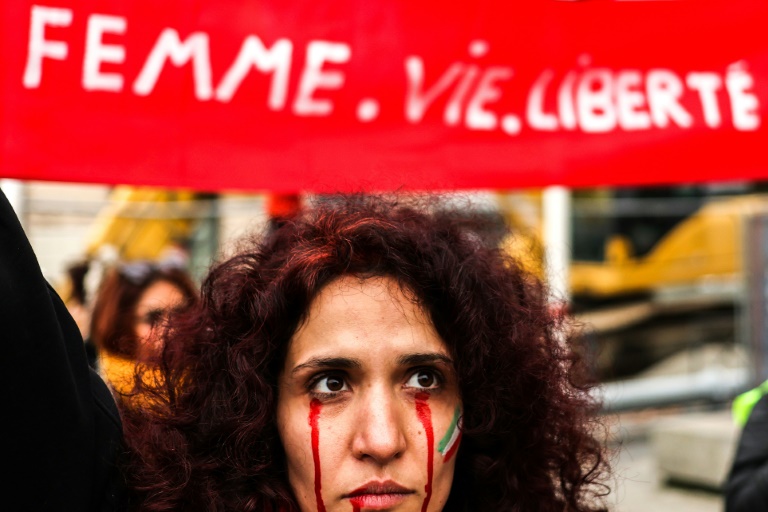
Iran was slapped with new sanctions Friday and activists called for fresh protests after the Islamic republic carried out its first execution over demonstrations that have shaken the regime for nearly three months.

Mohsen Shekari, 23, was hanged Thursday after being convicted of “moharebeh” — or “enmity against God” — after what rights groups denounced as a show trial.

The judiciary said Shekari was arrested after blocking a Tehran street and wounding a member of the Basij, a paramilitary force linked to Iran’s powerful Islamic Revolutionary Guard Corps.

Iran said it was exercising “utmost restraint” in the face of the protests that flared over the September 16 death of Mahsa Amini, a 22-year-old Iranian Kurd, after her arrest for an alleged breach of the country’s strict dress code for women.

Britain announced sanctions against 30 targets, including officials in Iran whom it accused of pursuing “egregious sentences” against protesters.

Canada imposed sanctions on 22 senior members of Iran’s judiciary, prison system and police as well top aides to supreme leader Ayatollah Ali Khamenei.

European diplomats said the EU was also set to impose more punitive measures on Iran over the crackdown that has killed at least 458 people, including more than 60 children, according to Oslo-based group Iran Human Rights (IHR).

Amnesty International said it was “horrified” by Shekari’s execution, which followed a “grossly unfair sham trial”.

IHR director Mahmood Amiry-Moghaddam said “Shekari was executed after a hasty and unfair trial without a lawyer”.

The families of political prisoners put to death in mass executions in 1988 joined in the condemnation.

“Mohsen’s execution is a reminder of the loss of our loved ones, who… just like Mohsen, were tried in minutes-long sham trials and, in the absence of lawyers and without having a chance to defend themselves, were sentenced to death,” they said in a statement published by US-based Human Rights Activists News Agency.

– Calls for more protests –

Shekari’s body was buried 24 hours after his execution in the presence of a few family members and security forces in Tehran’s Behesht-e Zahra cemetery, the 1500tasvir social media monitor reported.

Overnight, protesters took to the street where he was arrested, shouting, “They took away our Mohsen and brought back his body,” in a video shared by 1500tasvir.

Elsewhere, chants of “Death to the dictator” and “Death to Sepahi” were heard at a demonstration in Tehran’s Chitgar district, in reference to Khamenei and Revolutionary Guards.

1500tasvir said Shekari’s execution happened with such haste that his family had still been waiting to hear the outcome of his appeal.

It posted harrowing footage of what it said was the moment his family learnt the news outside their Tehran home, with a woman doubled up in pain and grief, repeatedly screaming his name. 

Hamed Esmaeilion, an Iranian-Canadian activist who has organised mass protests in Berlin, Paris and other cities, said more demonstrations would be held at the weekend.

“Regardless of belief and ideology, let’s join these gatherings in protest against the brutal execution of #MohsenShekari,” he tweeted.

– ‘Chilling effect’ –

UN rights chief Volker Turk described the execution as “very troubling and clearly designed to send a chilling effect to the rest of the protesters”.

Western governments, which had already imposed waves of sanctions against Iran over the protest crackdown, also expressed anger.

Washington called Shekari’s execution “a grim escalation” and vowed to hold the Iranian regime to account for violence “against its own people.”

Germany summoned the Iranian ambassador, a diplomatic source said, without providing further details.

Iran has defended its response to the protests and accused the West of hypocrisy.

“In countering riots, Iran has shown utmost restraint and, unlike many Western regimes… Iran has employed proportionate and standard anti-riot methods,” its foreign ministry said.

“The same is true for the judicial process: restraint and proportionality,” it tweeted late Thursday, adding: “Public security is a red line.”

According to Amnesty, Iran executes more people annually than any nation other than China.

IHR this week warned the Islamic republic had already executed more than 500 people in 2022, a sharp jump on last year.

At least a dozen other people are currently at risk of execution after being sentenced to hang in connection with the protests, human rights groups warned.

burs-str-dv/ami

China's Xi promises security, energy cooperation at Saudi summits

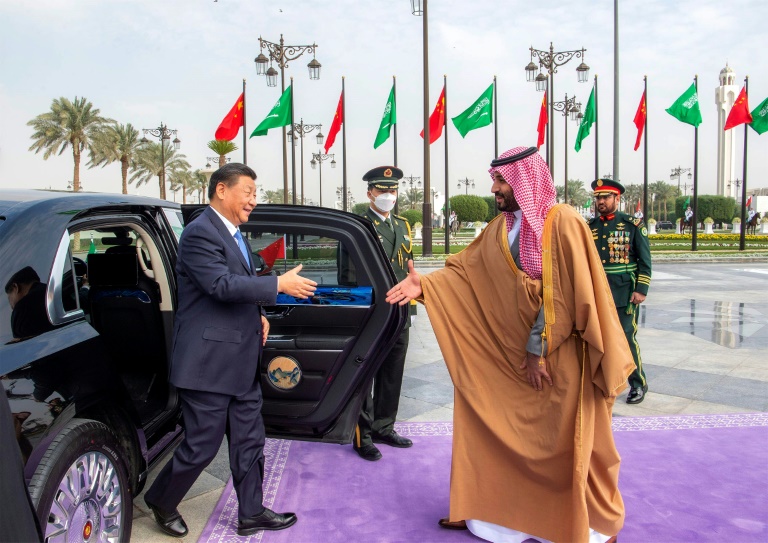
Chinese President Xi Jinping on Friday touted close security and energy ties with Gulf nations during summit meetings in Saudi Arabia that have highlighted tensions with Washington.

On the third and final day of his visit, Xi attended summits of the six-member Gulf Cooperation Council and a broader China-Arab leaders’ meeting.

This is only Xi’s third journey outside China since the coronavirus pandemic began.

The discussions came one day after bilateral sit-downs with Saudi royals yielded a joint statement stressing “the importance of stability” in oil markets — a point of friction with the United States. Washington has urged the Saudis to raise production.

“China will continue to firmly support the GCC countries in maintaining their own security… and build a collective security framework for the Gulf,” Xi said at the start of the China-GCC summit.

“China will continue to import large quantities of crude oil from GCC countries on an ongoing basis,” he said, also vowing to expand other areas of energy cooperation including liquefied natural gas imports.

Oil from Saudi Arabia alone accounted for 17 percent of China’s imports last year, and last month Qatar announced a 27-year natural gas deal with China.

Earlier on Friday, a joint Chinese-Saudi statement spoke of “focusing on emissions rather than sources” in tackling climate change, the approach championed by the resource-rich Gulf monarchies. 

Forty-six bilateral agreements and memorandums of understanding were announced on everything from housing to Chinese language teaching. Both sides are seeking economic and strategic benefits by deepening cooperation. 

However, few details were released despite a Saudi state media report on Thursday that about $30 billion in deals would be signed during Xi’s visit. 

Riyadh and Beijing stressed “deepening relations within the framework of the comprehensive strategic partnership between the two countries, and reaching new and promising horizons”, the statement said. 

Xi’s visit comes during tensions between Saudi Arabia and the United States, its long-time partner and security guarantor, over oil production, human rights issues and regional security. 

It follows US President Joe Biden’s trip to Jeddah in July, before midterm elections, when he failed to persuade the Saudis to pump more oil to calm prices.

– ‘Prestige’ trade deals –

Crown Prince Mohammed bin Salman, Saudi Arabia’s 37-year-old de facto ruler, addressed both summits on Friday, promising “continuing Arab-Chinese cooperation to serve our common goals and aspirations of our peoples”.

The Gulf countries, strategic partners of Washington, are bolstering ties with China as part of an eastward turn that involves diversifying their fossil fuel-reliant economies. 

At the same time China, hit hard by its Covid lockdowns, is trying to revive its economy and widen its sphere of influence, notably through its Belt and Road Initiative which provides funding for infrastructure projects around the world. 

Officials provided few details about the agenda for Friday’s talks, but one potential area of focus was a China-GCC free trade agreement under discussion for nearly two decades. 

Drawing those negotiations to a close would be “a matter of prestige for Beijing,” said Robert Mogielnicki of the Arab Gulf States Institute in Washington.

“It’s not as simple for the GCC states, which seem to be more invested in advancing bilateral ties and are engaged in varying degrees of regional economic competition with their neighbouring member states.”  

A breakthrough on the trade pact could help Saudi Arabia, the Middle East’s biggest economy, diversify its economy in line with the Vision 2030 reform agenda championed by Prince Mohammed. 

Beijing’s foreign ministry has described Xi’s trip as the “largest-scale diplomatic activity between China and the Arab world” since the People’s Republic of China was founded. 

The visit earned a rebuke from the White House, which warned of “the influence that China is trying to grow around the world”. 

Washington called Beijing’s objectives “not conducive to preserving the international rules-based order”.

China's Xi promises security, energy cooperation at Saudi summits

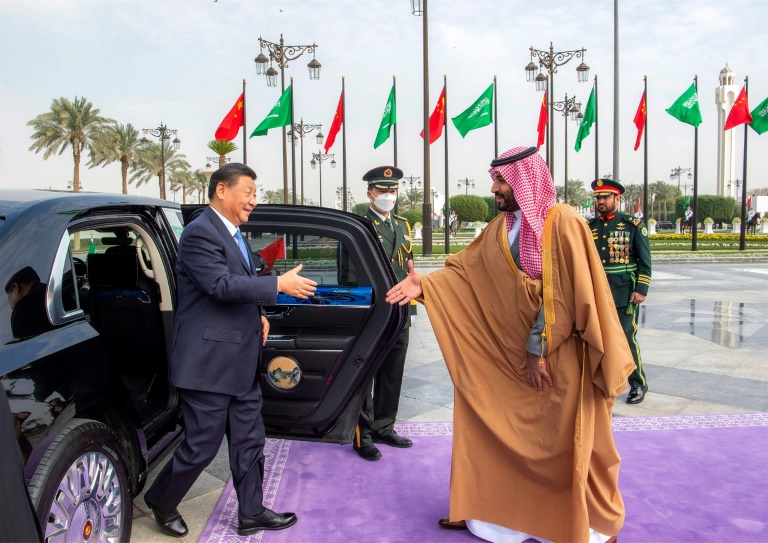
Chinese President Xi Jinping on Friday touted close security and energy ties with Gulf nations during summit meetings in Saudi Arabia that have highlighted tensions with Washington.

On the third and final day of his visit, Xi attended summits of the six-member Gulf Cooperation Council and a broader China-Arab leaders’ meeting.

This is only Xi’s third journey outside China since the coronavirus pandemic began.

The discussions came one day after bilateral sit-downs with Saudi royals yielded a joint statement stressing “the importance of stability” in oil markets — a point of friction with the United States. Washington has urged the Saudis to raise production.

“China will continue to firmly support the GCC countries in maintaining their own security… and build a collective security framework for the Gulf,” Xi said at the start of the China-GCC summit.

“China will continue to import large quantities of crude oil from GCC countries on an ongoing basis,” he said, also vowing to expand other areas of energy cooperation including liquefied natural gas imports.

Oil from Saudi Arabia alone accounted for 17 percent of China’s imports last year, and last month Qatar announced a 27-year natural gas deal with China.

Earlier on Friday, a joint Chinese-Saudi statement spoke of “focusing on emissions rather than sources” in tackling climate change, the approach championed by the resource-rich Gulf monarchies. 

Forty-six bilateral agreements and memorandums of understanding were announced on everything from housing to Chinese language teaching. Both sides are seeking economic and strategic benefits by deepening cooperation. 

However, few details were released despite a Saudi state media report on Thursday that about $30 billion in deals would be signed during Xi’s visit. 

Riyadh and Beijing stressed “deepening relations within the framework of the comprehensive strategic partnership between the two countries, and reaching new and promising horizons”, the statement said. 

Xi’s visit comes during tensions between Saudi Arabia and the United States, its long-time partner and security guarantor, over oil production, human rights issues and regional security. 

It follows US President Joe Biden’s trip to Jeddah in July, before midterm elections, when he failed to persuade the Saudis to pump more oil to calm prices.

– ‘Prestige’ trade deals –

Crown Prince Mohammed bin Salman, Saudi Arabia’s 37-year-old de facto ruler, addressed both summits on Friday, promising “continuing Arab-Chinese cooperation to serve our common goals and aspirations of our peoples”.

The Gulf countries, strategic partners of Washington, are bolstering ties with China as part of an eastward turn that involves diversifying their fossil fuel-reliant economies. 

At the same time China, hit hard by its Covid lockdowns, is trying to revive its economy and widen its sphere of influence, notably through its Belt and Road Initiative which provides funding for infrastructure projects around the world. 

Officials provided few details about the agenda for Friday’s talks, but one potential area of focus was a China-GCC free trade agreement under discussion for nearly two decades. 

Drawing those negotiations to a close would be “a matter of prestige for Beijing,” said Robert Mogielnicki of the Arab Gulf States Institute in Washington.

“It’s not as simple for the GCC states, which seem to be more invested in advancing bilateral ties and are engaged in varying degrees of regional economic competition with their neighbouring member states.”  

A breakthrough on the trade pact could help Saudi Arabia, the Middle East’s biggest economy, diversify its economy in line with the Vision 2030 reform agenda championed by Prince Mohammed. 

Beijing’s foreign ministry has described Xi’s trip as the “largest-scale diplomatic activity between China and the Arab world” since the People’s Republic of China was founded. 

The visit earned a rebuke from the White House, which warned of “the influence that China is trying to grow around the world”. 

Washington called Beijing’s objectives “not conducive to preserving the international rules-based order”.

US basketball star Griner back home after Russia prisoner swap

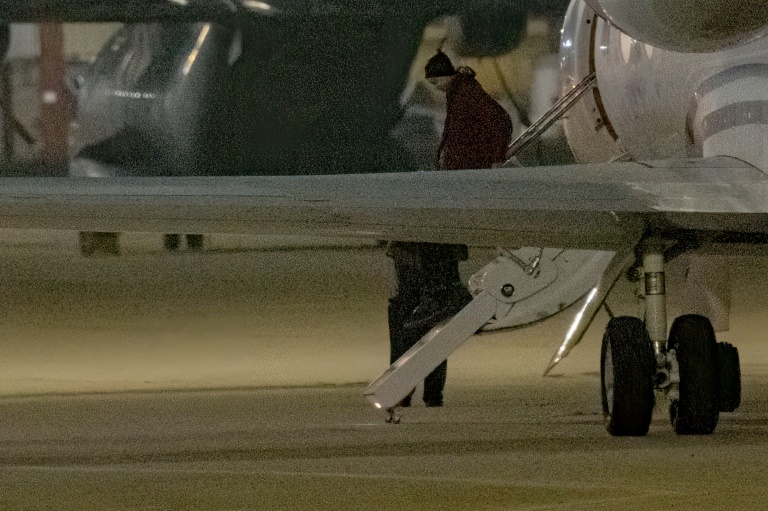
American basketball star Brittney Griner arrived in the United States Friday morning after being released from a Russian prison in exchange for an arms dealer known as the “Merchant of Death.”

Griner, 32, who was arrested in Russia in February on drug charges, was seen by an AFP reporter walking across a runway after her plane landed in San Antonio, Texas.

White House national security spokesman John Kirby told NBC that Griner was in “very good spirits when she got off the plane and appeared to be obviously in good health.”

Griner will now be taken to a nearby military facility to make sure she has “all the access she needs to health care workers just to make sure that she is OK,” Kirby said.

Griner was exchanged in Abu Dhabi on Thursday for Viktor Bout, a 55-year-old Russian national who was serving a 25-year sentence in a US prison.

In footage released by Russian state media, Griner, shorn of her distinctive dreadlocks, and a relaxed and animated Bout crossed paths on the airport tarmac and headed towards the planes that would take them home.

– Putin says ‘compromises’ found –

Griner, a two-time Olympic gold medalist, WNBA champion and LGBTQ trailblazer, was arrested at a Moscow airport against a backdrop of soaring tensions over Ukraine.

She was accused of possessing vape cartridges with a small quantity of cannabis oil and sentenced in August to nine years in prison.

Bout, who was accused of arming rebels in some of the world’s bloodiest conflicts, was detained in a US sting operation in Thailand in 2008, extradited to the United States and sentenced in 2012 to 25 years behind bars.

While Griner’s family and friends celebrated her release, another American held in Russia, former US Marine Paul Whelan, detained since 2018 and accused of spying, was not part of Thursday’s exchange.

Russia President Vladimir Putin said Friday that other prisoner swaps with Washington were possible.

“This is the result of negotiations and the search for compromises. In this case, compromises were found and we aren’t refusing to continue this work in the future,” Putin told reporters during a press conference in Kyrgyzstan.

– ‘Joy and relief’ –

President Joe Biden announced Griner’s release on Thursday flanked by her wife, Cherelle Griner.

WNBA commissioner Cathy Engelbert said there was a “collective wave of joy and relief” in the women’s professional league where Griner has been a star for a decade with the Phoenix Mercury.

Biden thanked the United Arab Emirates for helping “facilitate” Griner’s release and the UAE issued a joint statement with Saudi Arabia saying it was the result of “mediation efforts” by leaders of the two Arab nations.

White House Press Secretary Karine Jean-Pierre said, however, that “the only countries that negotiated this deal were the United States and Russia.”

At the time of her arrest, Griner had been playing for a professional team in Russia, as a number of WNBA players do in the off-season.

She pleaded guilty to the charges against her, but said she did not intend to break the law or use the banned substance in Russia.

Griner testified that she had permission from a US doctor to use medicinal cannabis to relieve pain from her many injuries.

The use of medical marijuana is not allowed in Russia.

The 2005 film “Lord of War” starring Nicolas Cage was based in part on Bout’s arms trafficking, and he has been the subject of several books and TV shows.

Speaking on MSNBC Friday morning, Kirby acknowledged concerns that Bout could return to criminal activity.

“We’re going to make sure now that he’s a free man that we’re looking after our national security interests and we’re as vigilant as we can be,” Kirby said.

In Moscow, Kremlin spokesman Dmitry Peskov told the Izvestia newspaper that ties with Washington “continue to remain in a sad state.”

Speaking to state-run channel RT on Friday, Bout said that Western countries were seeking to “destroy” and “divide” Russia.

“The West believes that they did not finish us off in 1990, when the Soviet Union began to disintegrate,” he said.

burs-md/bgs/md

Barcelona-Marseille pipeline: an ambitious but risky project

A planned underwater hydrogen pipeline connecting Barcelona and Marseille is a risky project, but one that is key for the European Union’s energy independence.

From the roadmap to the cost and the timeline, here is what we know about this ambitious initiative, which was officially launched on Friday by the leaders of Spain, France and Portugal and has won the backing of the EU. 

– What is it? –

Dubbed “H2Med” or “BarMar”, the pipeline will transport green hydrogen between Spain, France and the rest of Europe.

Green hydrogen is made from water via electrolysis in a process that uses renewable energy.

Announced in October, the H2Med is an alternative to the defunct 2003 MidCat project which was to have carried gas across the Pyrenees from Spain to France but was dropped in 2019 over profitability issues and objections from Paris and environmentalists.

As well as the submarine pipeline, the project includes another connection between the northeastern Portuguese town of Celorico da Beira and the northwestern Spanish town of Zamora.

– What are its goals? –

When it becomes operational, H2Med is expected to carry two million tonnes of hydrogen per year, or 10 percent of European consumption.

The idea is to boost the decarbonisation of European industry, giving it large-scale access to clean energy provided by Spain and Portugal, which are hoping to become world leaders in green hydrogen thanks to their numerous wind and solar power farms.

The three nations had said it would initially carry gas to help reduce Europe’s dependence on Russian energy — a logical assumption given Spain and Portugal’s huge capacity to turn liquefied natural gas (LNG) that arrives in tankers back into gas form.

But they later said H2Med would only be used for carrying green hydrogen, a key condition for being declared a project of “common interest” which could unlock European funding for up to 50 percent of the costs. 

– Why Barcelona and Marseille? –

Its backers say it is “the most direct and efficient way of linking the peninsula with central Europe”.

Barcelona is an energy hub in Spain, and Marseille is a key point in the French network and a gateway to the Rhone Valley, northern Italy and Germany — industrial regions that could become big consumers of green hydrogen.

– What route will it take? –

The route has not yet been decided but the roadmap lays out three options, with the “optimal” choice being one that stretches 455 kilometres (283 miles) at a maximum depth of 2,600 metres.

Although not the shortest route, it would benefit from having a “more gentle slope” upwards, the roadmaps says. 

– When will it be ready, how much will it cost? 

Operational by 2030, the pipeline will cost around 2.5 billion euros ($2.6 billion). Construction is expected to begin in 2025 and take 54 months. 

The connection between Spain and Portugal should cost another 350 million euros. 

– What are the obstacles? –

“An offshore hydrogen pipeline at this depth and distance has never been done before,” said Gonzalo Escribano, an energy expert at Madrid’s Real Instituto Elcano think tank. 

The innovative project faces certain technical challenges. 

One of the main problems is that hydrogen is made up of small molecules which can escape through the joints and cause corrosion, said Jose Ignacio Linares, a professor at Madrid’s Pontificia Comillas University and an engineer by training.

But such problems could be overcome by “installing a membrane inside (the pipeline), a kind of plastic that prevents the hydrogen from escaping,” he said.

– What’s the outlook? –

The biggest risk is its economic viability, experts say.

“It is not clear when the green hydrogen market is going to take off and whether Spain will be in a position to produce enough to export it,” said Escribano.

But Linares said its construction would take so long “that we can’t afford to wait”. 

“If we do, we’ll end up with a huge volume of hydrogen that we won’t be able to export.”

French tanks join NATO defensive line in Romania

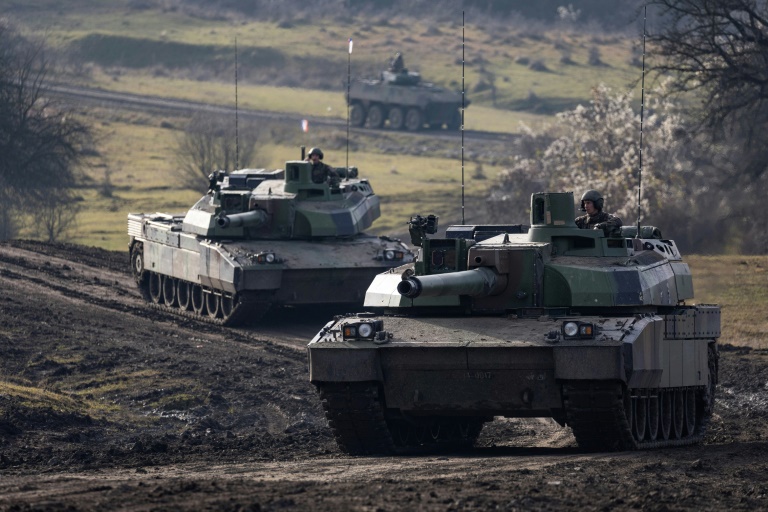
Freshly arrived at Cincu army training camp, 120mm cannons loaded on French tanks are already booming out across the muddy firing range as NATO bolsters its forces in Romania, a member country bordering Ukraine.

“The Ukrainian crisis shows that what’s going on in the east can threaten all of Europe. We’re showing that NATO is present, united and ready for anything,” says Alexandre de Feligonde, a French colonel leading a battalion of troops from different countries in central Romania.

As lead nation for the alliance’s “Enhanced Forward Presence” deployment in Romania, France has just sent around 20 armoured personnel carriers and 13 Leclerc tanks.

The menacing 56-tonne battle tanks can fire six shells a minute at ranges of up to 6,000 metres (3.7 miles) — even on the move.

Development on the Leclerc was begun during the Cold War, when NATO was tooling up for “high-intensity” conflict with its Warsaw Pact opposite numbers led by the Soviet Union.

Alliance members’ return to preparations for such a war, after years fighting totally different conflicts in the Middle East and Africa, have been stepped up since Russia invaded Ukraine in February.

French tanks were previously deployed to Estonia and Lithuania, NATO members bordering Russia, but the sudden attack has turned Romania into a new front-line state.

The French-led battalion now numbers around 700 men. Most are French and around 80 are Dutch.

Facilities are being built to host the target number of 1,200.

– 5,000 NATO soldiers –

As well as flying the NATO flag on the alliance’s southeastern flank, the deployment aims to get the different armies working better together.

“We have to train together to be credible” as a combined fighting force, de Feligonde says, watching from a hill as the tanks fire salvoes of shells in a joint exercise with the Dutch and Romanians.

“There is a language barrier with the French but we have the same procedures. It is easier than I thought,” said Lieutenant Wietse of the Dutch force.

Romania currently hosts around 5,000 foreign troops, the largest contingent anywhere in NATO’s southeastern region.

Some are based at the Black Sea airfield of Constanta, around 400 kilometres (250 miles) as the crow flies from the Crimean Peninsula, which Russia illegally annexed from Ukraine in 2014.

One corner of the base bristles with light armoured vehicles, and Chinook and Apache helicopters belonging to a brigade of the US 101st Airborne Division.

Further north, just 100 kilometres from the Ukrainian border, French troops arrived earlier this year to beef up air defences.

– ‘Ready if needed’ –

On the Capu Midia training grounds, a French medium-range anti-aircraft system known as MAMBA has been set up at the end of a bumpy road leading across the fields.

The missile battery is there to protect the strategically vital Constanta port region.

“We have air defence systems but we don’t have enough to protect the whole NATO border” in Romania, says Romanian Lieutenant-Colonel Calin.

The combined radar and missiles of the MAMBA cover a 100-kilometre radius against “a huge range of airborne threats — short-range ballistic missiles, fighter jets, helicopters, drones, even salvoes of cruise missiles”, says Major Christophe, operations chief of the French detachment.

So far no alerts have been sounded in Romanian airspace since fighting erupted in Ukraine, although Russian missiles have flown over nearby Moldova.

If Russia were to attack Romania, “we could open fire within seconds” of a NATO decision backed by Bucharest, Christophe says.

“Nato is monitoring anything that happens in the Black Sea,” says Italian officer Michele Morelli, whose aircraft carry out “air policing” for Romania from the Constanta base.

The colonel’s four Eurofighter planes can be scrambled within 15 minutes.

“We are monitoring Russian activity, making sure they know we are here,” Morelli says.

“We have been flying a lot along the Romanian borders in the past few months. As much as we are aware of the (Russians’) presence, they are aware of ours. We don’t plan to use weapons but we are ready to use them if needed,” he adds.

Close Bitnami banner
Bitnami