World

Vladimir Putin's critics: dead, jailed, exiled

Opposition politician Ilya Yashin, who was jailed for more than eight years on Friday for criticising Russia’s military intervention in Ukraine, is the latest in a long line of Kremlin critics slapped with heavy jail terms. 

Others have been killed, narrowly escaped death or been exiled. Here are Putin’s best-known critics and where they are now: 

– Dead –

Boris Nemtsov, a Kremlin critic and a former deputy prime minister, was shot dead in 2015 as he walked home across a Moscow bridge near the Kremlin.

Five Chechen men were convicted of killing Nemtsov but the mastermind of the murder was never found.

Nemtsov’s allies have pointed the finger of blame at the Kremlin and at Chechen leader Ramzan Kadyrov, who has denied the accusation. 

Nemtsov, a charismatic speaker, had criticised Putin’s annexation of Crimea from Ukraine in 2014 and regularly taken part in opposition protests. He was 55 at the time of his death. 

Nearly a decade earlier, in 2006, the killing of journalist Anna Politkovskaya outside her Moscow home shocked the world. 

Politkovskaya, a reporter at Novaya Gazeta, Russia’s top independent newspaper, was a fierce critic of the Kremlin’s tactics in Chechnya. 

The newspaper’s editor, Dmitry Muratov, dedicated his Nobel Peace Prize this year to Politkovskaya and other Russian journalists killed for their work. 

– Jailed –

Russia’s main opposition politician, Alexei Navalny, was poisoned with Novichok, a Soviet-made nerve agent, on a trip to Siberia in 2020. 

He underwent treatment in Germany and returned to Russia in January 2021, where he was arrested on landing at a Moscow airport. 

The 46-year-old is serving a nine-year sentence on embezzlement charges that his supporters call punishment for challenging the Kremlin.

From prison, Navalny has denounced Putin’s Ukraine offensive, calling it a “tragedy” and a “crime against my country.” 

Vladimir Kara-Murza, an opposition politician, was arrested in April for spreading “fake” information about the Russian army. 

He was later charged with high treason and faces up to 20 years in prison. Kara-Murza, 41, says he has been poisoned twice.  

In August, Yevgeny Roizman, the former mayor of Yekaterinburg, was detained for his criticism of Russia’s assault on Ukraine. 

After his arrest sparked protests, the 60-year-old opposition politician was released from custody to await trial on charges of “discrediting” the Russian army.


– Exiled –

Some of Putin’s high-profile critics have been abroad for years. 

They include former oil tycoon Mikhail Khodorkovsky, who spent a decade in prison after challenging the Russian leader early in his rule.

Khodorkovsky lives in London and has financed media projects critical of the Kremlin. 

Many of Navalny’s prominent allies fled Russia after his organisations were banned as “extremist” last year.

But the decision in February to send troops into Ukraine, which ushered in an unprecedented crackdown at home, proved to be a final nail in the coffin for Russia’s opposition movement. 

Russians opposed to Moscow’s attack on Ukraine are now scattered around the world. Many have fled to Europe and Israel.

TV presenter and entertainer Maxim Galkin, the husband of Russian pop icon Alla Pugacheva, has become an unlikely leading voice against the Ukraine offensive on social media.

Based in Israel, the 46-year-old show star regularly uses Instagram to denounce the Russian army’s offensive.   

– ‘Foreign agents’ –

Despite a rare intervention by Pugacheva — who is widely considered untouchable — Galkin has been branded a “foreign agent”. 

The epithet, which has Stalinist-era overtones, has been used by authorities to mount administrative pressure on critics.

Putin recently toughened the draconian 2012 “foreign agent” law.

Many journalists and Russia’s main independent media outlets have been branded “foreign agents”, making it much harder to operate.

All main independent media organisations in Russia have been shut down or suspended operations.

Other popular figures who have spoken out against Moscow’s Ukraine offensive — such as hugely popular rappers Oxxxymiron and Noize MC, and exiled science fiction writer Dmitry Glukhovsky — have also been labelled “foreign agents”.
Hydrogen pipeline between Spain and France to be ready 'by 2030'

An ambitious underwater pipeline to bring green hydrogen from the Iberian Peninsula to the rest of Europe will be completed by 2030 and will cost some 2.5 billion euros, the leaders of France, Spain and Portugal said Friday.

The H2Med project comes as Europe is scrambling to reduce its dependence on Russian energy following Moscow’s invasion of Ukraine.

It is also seen as helping Europe transition away from fossil fuels to cleaner energy.

The pipeline between Barcelona and Marseille — also known as BarMar — will carry two million tonnes of hydrogen per year, or 10 percent of European consumption, once it goes online, said Spanish Prime Minister Pedro Sanchez.

“It is going to be the first major hydrogen corridor in the European Union,” Sanchez said.

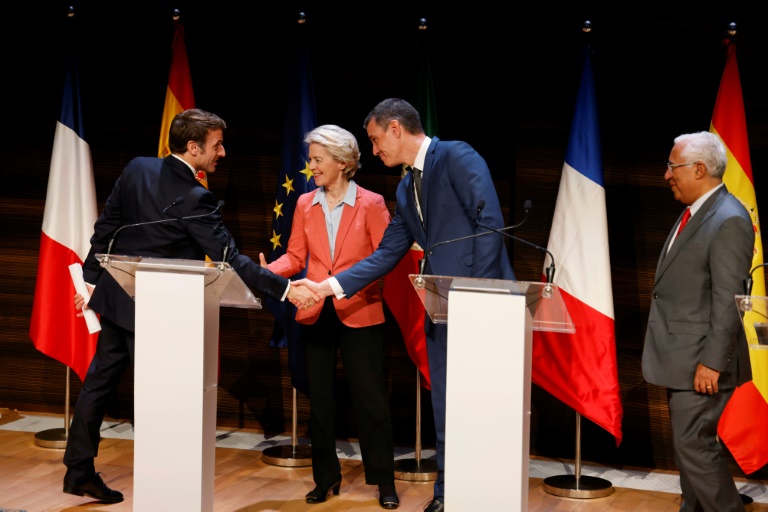
The project will cost around 2.5 billion euros ($2.6 billion), he said at a joint press conference with French President Emmanuel Macron and Portuguese Prime Minister Antonio Costa.

The three leaders formally signed off on the plans in the presence of EU Commission chief Ursula Von der Leyen on the sidelines of a regional EU summit.

Following the talks, they released a roadmap and timeline for completing H2Med which they hope will be partially covered by European funds. 

The pipeline under the Mediterranean Sea will carry green hydrogen, which is made from water via electrolysis in a process using renewable energy.

The roadmap detailed three options for the route of the pipeline, with the preferred one stretching 455 kilometres (282 miles) at a maximum depth of 2,600 metres. 

Construction would begin in 2025 and last four years and eight months, it said.

– Cleaner energy –

H2Med aims to boost the decarbonisation of European industry, giving it large-scale access to clean energy from Spain and Portugal, which are hoping to become world leaders in green hydrogen thanks to their numerous wind and solar power farms.

“The focus of H2 demand is on sectors that are difficult to decarbonise, such as industry and transport,” the roadmap said. 

“The cost of H2 transmission by pipeline over long distances is 2 to 4 times lower than transmitting electricity over high-voltage lines,” it said. 

Announced at an EU summit in October, the pipeline offers an alternative to the defunct 2003 MidCat pipeline project which was to have carried gas across the Pyrenees from Spain to France. 

It was abandoned in 2019 over profitability issues and objections from Paris and environmentalists.

Initially, the idea was for the pipeline to carry gas from the Iberian peninsula to central Europe, given Spain and Portugal’s huge capacity for turning liquefied natural gas (LNG) that arrives in tankers back into gas form. 

But Portuguese Prime minister Antonio Costa stressed that the pipeline would only carry green hydrogen.

The meeting took place just before a EuroMed 9 summit which groups Croatia, Cyprus, France, Greece, Italy, Malta, Portugal, Slovenia and Spain

Spain’s Sanchez had planned to hold bilateral talks with Italy’s new far-right Prime Minister Giorgia Meloni, but she pulled out due to illness early on Friday, Rome said. 

Japan, UK, Italy to develop next-generation fighter jet

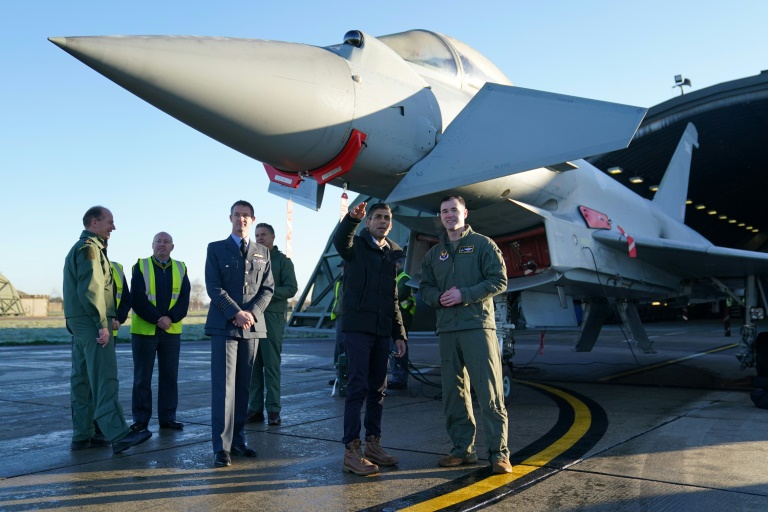
Britain, Italy and Japan said Friday they will jointly develop a future fighter jet in a project that UK Prime Minister Rishi Sunak said would guarantee national security and safeguard thousands of jobs.

The three nations held out the prospect of cooperation with European and US allies, which are developing their own “sixth-generation” planes, vowing to maintain “interoperability” among all the allies against threats from the likes of China and Russia.

The new “Global Combat Air Programme” is slated to produce its first jets by 2035, merging the three nations’ costly existing research into new aerial war technology, from stealth capacity to high-tech sensors.

“We’re one of the few countries in the world that has the capability to build technologically advanced fighter aircraft,” Sunak told reporters on a visit to a Royal Air Force base in eastern England.

“That’s important because it means we can keep the country safe from the new threats that we face,” he said.

“It also adds billions to our economy and supports tens of thousands of jobs across the country. But it’s also good for our international reputation.” 

The announcement was accompanied by a set of images showing an artist’s impression of the sleek new jets flying past Mount Fuji and over London and Rome.

In a joint statement, the three countries said the project would “accelerate our advanced military capability and technological advantage” at a time when “threats and aggression are increasing” worldwide.

The objective is to develop by 2035 a twin-engine stealth aircraft that could be operated with or without a crew, that would be impervious to radar and boast features such as laser-directed weapons and a virtual cockpit.

For the current “fifth generation” of fighters, the three nations are relying on US-made F-35s. 

But officials in Tokyo stressed that Japan was not turning its back on its close military alliance with Washington.

In a separate joint statement with Japan’s defence ministry, the US Department of Defense said it supported the project.

“We have begun important collaboration through a series of discussions on autonomous systems capabilities, which could complement Japan’s next fighter programme among other platforms,” the US-Japan statement said.

For Britain and Italy, the new jet codenamed Tempest would replace the Eurofighter Typhoon developed with other European allies including Germany and Spain.

For the next generation, Germany and Spain have joined France in their own project, while the United States has separate plans in development, as do China and Russia.

– Pressure from China –

Japan’s prior project to build a next-generation fighter plane, named F-X, was reportedly expected to cost more than five trillion yen (around $40 billion).

Friday’s announcement comes with Tokyo poised to make the largest overhaul to its security strategy in decades.

The government plans to ramp up defence spending — a controversial move in a nation whose constitution limits military capacity to ostensibly self-protective measures.

But the war in Ukraine, repeated missile launches from North Korea and growing pressure from China have helped build support for a bigger budget.

Japan’s Nikkei business daily said that companies Mitsubishi Heavy Industries, BAE Systems and Leonardo would oversee the new project, which is Tokyo’s second joint development after its SM-3 missile made with Washington.

Other companies expected to be in the mix are British jet maker Rolls-Royce, Italy’s Avio Aero and IHI Corp. of Japan.

The Global Combat Air Programme is the latest high-profile example of allied countries collaborating on an ad-hoc basis to develop defence equipment.

Such moves proved controversial last year when the United States snatched a lucrative contract to supply Australia with submarines from France and launched a new US-UK-Australia alliance in the Pacific, dubbed AUKUS.

After a meeting between US and Australian ministers this week in Washington, the two countries said they would welcome Japanese troops into three-way rotations, vowing a united front in the face of China’s rapid military advances.

burs-jit/phz/rl

Japan, UK, Italy to develop next-generation fighter jet

Britain, Italy and Japan said Friday they will jointly develop a future fighter jet in a project that UK Prime Minister Rishi Sunak said would guarantee national security and safeguard thousands of jobs.

The three nations held out the prospect of cooperation with European and US allies, which are developing their own “sixth-generation” planes, vowing to maintain “interoperability” among all the allies against threats from the likes of China and Russia.

The new “Global Combat Air Programme” is slated to produce its first jets by 2035, merging the three nations’ costly existing research into new aerial war technology, from stealth capacity to high-tech sensors.

“We’re one of the few countries in the world that has the capability to build technologically advanced fighter aircraft,” Sunak told reporters on a visit to a Royal Air Force base in eastern England.

“That’s important because it means we can keep the country safe from the new threats that we face,” he said.

“It also adds billions to our economy and supports tens of thousands of jobs across the country. But it’s also good for our international reputation.” 

The announcement was accompanied by a set of images showing an artist’s impression of the sleek new jets flying past Mount Fuji and over London and Rome.

In a joint statement, the three countries said the project would “accelerate our advanced military capability and technological advantage” at a time when “threats and aggression are increasing” worldwide.

The objective is to develop by 2035 a twin-engine stealth aircraft that could be operated with or without a crew, that would be impervious to radar and boast features such as laser-directed weapons and a virtual cockpit.

For the current “fifth generation” of fighters, the three nations are relying on US-made F-35s. 

But officials in Tokyo stressed that Japan was not turning its back on its close military alliance with Washington.

In a separate joint statement with Japan’s defence ministry, the US Department of Defense said it supported the project.

“We have begun important collaboration through a series of discussions on autonomous systems capabilities, which could complement Japan’s next fighter programme among other platforms,” the US-Japan statement said.

For Britain and Italy, the new jet codenamed Tempest would replace the Eurofighter Typhoon developed with other European allies including Germany and Spain.

For the next generation, Germany and Spain have joined France in their own project, while the United States has separate plans in development, as do China and Russia.

– Pressure from China –

Japan’s prior project to build a next-generation fighter plane, named F-X, was reportedly expected to cost more than five trillion yen (around $40 billion).

Friday’s announcement comes with Tokyo poised to make the largest overhaul to its security strategy in decades.

The government plans to ramp up defence spending — a controversial move in a nation whose constitution limits military capacity to ostensibly self-protective measures.

But the war in Ukraine, repeated missile launches from North Korea and growing pressure from China have helped build support for a bigger budget.

Japan’s Nikkei business daily said that companies Mitsubishi Heavy Industries, BAE Systems and Leonardo would oversee the new project, which is Tokyo’s second joint development after its SM-3 missile made with Washington.

Other companies expected to be in the mix are British jet maker Rolls-Royce, Italy’s Avio Aero and IHI Corp. of Japan.

The Global Combat Air Programme is the latest high-profile example of allied countries collaborating on an ad-hoc basis to develop defence equipment.

Such moves proved controversial last year when the United States snatched a lucrative contract to supply Australia with submarines from France and launched a new US-UK-Australia alliance in the Pacific, dubbed AUKUS.

After a meeting between US and Australian ministers this week in Washington, the two countries said they would welcome Japanese troops into three-way rotations, vowing a united front in the face of China’s rapid military advances.

burs-jit/phz/rl

Equities boosted by China news before rate calls

Global stocks rose Friday on China’s slowing inflation and economic reopening, alongside hopes of less aggressive interest rate hikes next week.

Sentiment brightened on China’s decision to shift away from its nearly three-year zero-Covid strategy of lockdowns and mass testing that slammed the economy.

After widespread protests across the country, leaders have decided to loosen their grip, fanning excitement that growth will pick up as activity returns to normal.

Investors were meanwhile hopeful that central banks in the United States, eurozone and UK will next week ease the pace of interest rate hikes despite inflation remaining at the highest levels in decades.

“Sentiment has been supported by China dropping its Zero Covid policy — and optimism that the sharp central bank policy tightening will become less aggressive,” City Index analyst Fawad Razaqzada told AFP.

“These factors have already been slowly priced in over the past few weeks… (which) means there is a risk we might see the markets drop, as the focus turns to worries over economic growth.”

Markets also rose on news that China’s consumer inflation slowed further in November, falling below two percent and providing authorities room to unveil fresh stimulus measures. 

– US inflation in sights –

Traders were setting their sights also on the release of two key US inflation reports ahead of the Federal Reserve’s final policy meeting of the year.

In light of data signalling that almost a year of interest rate hikes was beginning to impact prices, the US central bank is widely expected to announce a 50 basis point lift at the gathering, compared with the previous four straight 75-point increases.

But there remains some concern that the world’s top economy remains resilient and the jobs market too strong, meaning the Fed might have to keep tightening monetary policy longer than had been hoped.

That uncertainty has weighed on US markets, which have endured a tough December so far, and analysts warned of further pain.

The dollar dropped on Friday, having surged to record or multi-decade highs earlier this year owing to the Fed’s hawkish tilt and its use as a safe-haven hedge against volatility.

Oil prices rebounded slightly but remains down more than 10 percent this week as recession expectations weigh on the demand outlook.

– Key figures around 1200 GMT –

London – FTSE 100: UP 0.1 percent at 7,478.55 points

Frankfurt – DAX: UP 0.6 percent at 14,353.18

Paris – CAC 40: UP 0.3 percent at 6,667.93

EURO STOXX 50: UP 0.4 percent at 3,937.91

Tokyo – Nikkei 225: UP 1.2 percent at 27,901.01 (close)

Hong Kong – Hang Seng Index: UP 2.3 percent at 19,900.87 (close)

Shanghai – Composite: UP 0.3 percent at 3,206.95 (close)

New York – Dow: UP 0.6 percent at 33,781.48 (close)

Euro/dollar: DOWN at $1.0559 from $1.0560 on Thursday

Dollar/yen: DOWN at 135.88 yen from 136.61 yen

Pound/dollar: UP at $1.2267 from $1.2239

Euro/pound: DOWN at 86.08 pence from 86.24 pence

Brent North Sea crude: UP 0.1 percent at $76.24 per barrel

West Texas Intermediate: UP 0.6 percent at $71.91 per barrel

Iran hit with new sanctions over first protester execution

Iran was slapped with fresh sanctions Friday after carrying out its first execution over demonstrations that have shaken the regime for nearly three months, as activists called for fresh protests.

Mohsen Shekari, 23, was hanged Thursday after being found guilty of “moharebeh”, or “enmity against God”, following what rights groups denounced as a show trial, sparking international outcry and warnings that more hangings were imminent.

The judiciary said Shekari was arrested after blocking a Tehran street and striking a member of the Basij paramilitary force linked to the powerful Islamic Revolutionary Guard Corps with a machete — a wound that required 13 stitches.

The Islamic republic said late Thursday it was exercising “utmost restraint” in the face of the protests that flared over the September 16 death of Mahsa Amini, after her arrest for an alleged breach of the country’s strict dress code for women.

Britain on Friday announced wide-ranging sanctions against 30 targets worldwide, including officials in Iran whom it accused of pursuing “egregious sentences” against protesters.

European diplomats said the EU was also set to impose more sanctions on Iran for drone supplies to Russia and the protest crackdown.

The sanctions are expected to be formally signed off by foreign ministers meeting in Brussels on Monday. 

Amnesty International said Thursday it was “horrified” by Shekari’s execution, which followed a “grossly unfair sham trial”.

Mahmood Amiry-Moghaddam, director of Oslo-based group Iran Human Rights (IHR), said “Shekari was executed after a hasty and unfair trial without a lawyer”.

– Calls for more protests –

Shekari’s body was buried 24 hours after his execution in the presence of a few family members and security forces in Tehran’s Behesht-e Zahra cemetery, the 1500tasvir social media monitor reported.

Overnight, protesters took to the street where he was first arrested, shouting, “They took away our Mohsen and brought back his body,” in a video shared by 1500tasvir.

Elsewhere, chants of “Death to the dictator” and “Death to Sepah” were heard at a demonstration in Tehran’s Chitgar district, in reference to supreme leader Ayatollah Ali Khamenei and Iran’s Revolutionary Guards.

1500tasvir said Shekari’s execution happened with such haste that his family had still been waiting to hear the outcome of his appeal.

It posted harrowing footage of what it said was the moment his family learnt the news outside their home in Tehran, with a woman doubled up in pain and grief, repeatedly screaming the name “Mohsen!”

Hamed Esmaeilion, an Iranian-Canadian activist who has organised mass protests in Berlin, Paris and other cities, said more demonstrations would be held at the weekend.

“Regardless of belief and ideology, let’s join these gatherings in protest against the brutal execution of #MohsenShekari,” he tweeted.

– ‘Contempt for human life’ –

UN rights chief Volker Turk described the execution as “very troubling and clearly designed to send a chilling effect to the rest of the protesters”.

Western governments, which had already imposed waves of sanctions against Iran over the protest crackdown, also expressed anger.

Washington called Shekari’s execution “a grim escalation” and vowed to hold the Iranian regime to account for violence “against its own people.”

Germany summoned the Iranian ambassador, a diplomatic source said, without providing further details.

“The threat of execution will not suffocate the will for freedom,” German Foreign Minister Annalena Baerbock tweeted, criticising a “perfidious summary trial”.

“The Iranian regime’s contempt for human life is boundless,” Baerbock added.

Iran has defended its response to the protests and accused the West of hypocrisy.

“In countering riots, Iran has shown utmost restraint and, unlike many Western regimes… Iran has employed proportionate and standard anti-riot methods,” its foreign ministry said.

“The same is true for the judicial process: restraint and proportionality,” it tweeted late Thursday, adding: “Public security is a red line.”

According to rights group Amnesty International, Iran executes more people annually than any nation other than China.

IHR, which says the security forces have killed at least 458 people in the protest crackdown, this week warned Iran had already executed more than 500 people in 2022, a sharp jump on last year’s figure.

At least a dozen other people are currently at risk of execution after being sentenced to hang in connection with the protests, human rights groups warned.

burs-str-dv/lg

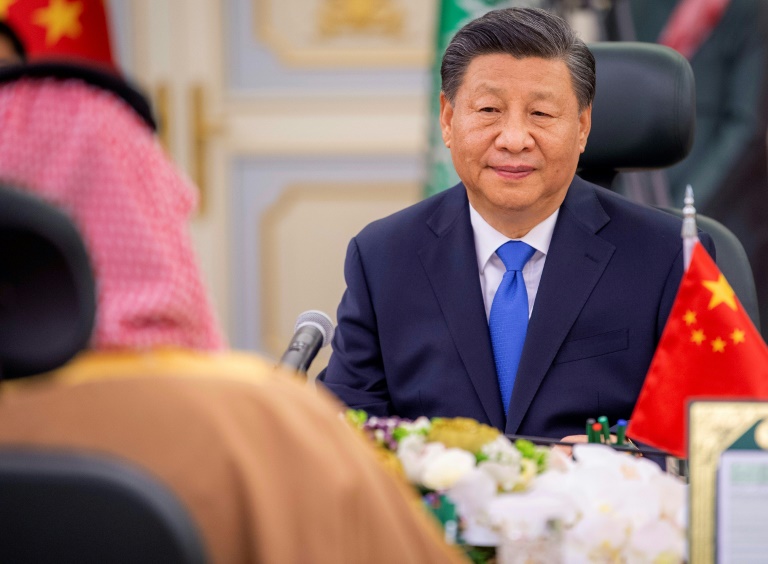
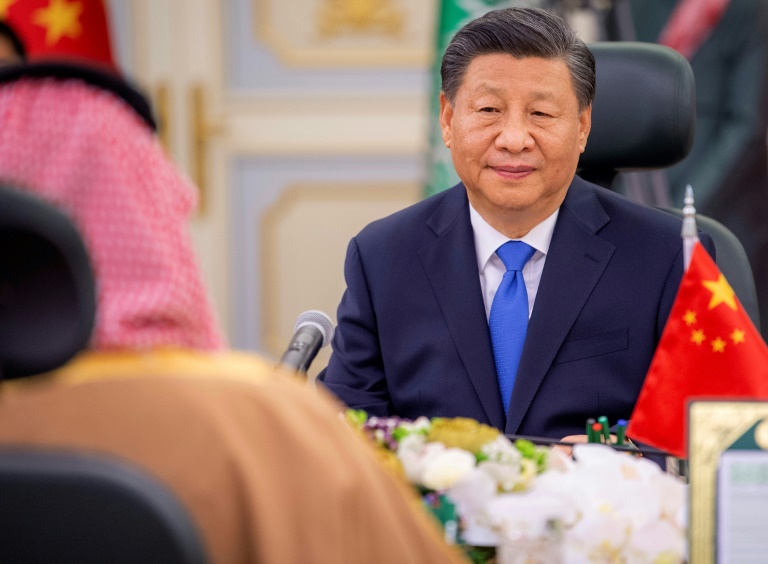
China's Xi to hold Arab summits on Saudi trip

Chinese President Xi Jinping will meet Arab leaders at summits in Riyadh on Friday after striking a series of agreements with Saudi Arabia, strengthening ties as the top oil exporter quarrels with Washington.

The leader of the world’s second biggest economy will sit down with regional rulers on the third and final day of his trip, only his third journey outside China since the coronavirus pandemic began.

After talks with King Salman and his 37-year-old son Crown Prince Mohammed bin Salman, the de facto ruler, the two sides stressed “the importance of stability” in oil markets — a point of friction with the United States, which has urged the Saudis to raise production.

In a joint statement, they also spoke of “focusing on emissions rather than sources” in tackling climate change, the approach championed by the resource-rich Gulf monarchies. 

Forty-six agreements and memorandums of understanding were announced on everything from housing to Chinese language teaching. Both sides are seeking economic and strategic benefits by deepening cooperation.

However, few details were released despite a Saudi state media report on Thursday that about $30 billion in deals would be signed during Xi’s visit.

The two sides “stressed the importance of continuing joint action in all fields, deepening relations within the framework of the comprehensive strategic partnership between the two countries, and reaching new and promising horizons”, the statement said.

Xi’s visit comes at a time of tension between Saudi Arabia and the United States, its long-time partner and security guarantor, over oil production, human rights issues and regional security.

It follows US President Joe Biden’s trip to Jeddah in July, before mid-term elections, when he failed to persuade the Saudis to pump more oil to calm prices.

– ‘Prestige’ trade deals –

State television showed leaders from the six-country, resource-rich Gulf Cooperation Council — including the Qatari emir and Bahraini king — arriving at the conference venue in Riyadh on Friday.

Prince Mohammed addressed the group, briefly reiterating the kingdom’s positions on regional issues such as the war in Yemen. They met privately, to be joined later by Xi and his delegation.

A broader China-Arab summit will follow the China-GCC talks.

The Gulf countries, strategic partners of Washington, are bolstering ties with China as part of an eastward turn that involves diversifying their fossil fuel-reliant economies.

At the same time China, hit hard by its Covid lockdowns, is trying to revive its economy and widen its sphere of influence, notably through its Belt and Road Initiative which provides funding for infrastructure projects around the world.

Officials have provided few details about Friday’s agenda, but one potential area is a China-GCC free trade agreement that has been under discussion for nearly two decades. 

“China will want to draw the lengthy negotiations to a close, as FTAs with major trading blocs is a matter of prestige for Beijing,” said Robert Mogielnicki of the Arab Gulf States Institute in Washington.

“It’s not as simple for the GCC states, which seem to be more invested in advancing bilateral ties and are engaged in varying degrees of regional economic competition with their neighbouring member states.” 

A breakthrough on the trade pact could help Saudi Arabia, the Middle East’s biggest economy, diversify its economy in line with the Vision 2030 reform agenda championed by Prince Mohammed. 

China’s foreign ministry has described Xi’s trip as the “largest-scale diplomatic activity between China and the Arab world” since the People’s Republic of China was founded.

The visit has already earned a rebuke from the White House, which warned of “the influence that China is trying to grow around the world”. Washington called Beijing’s objectives “not conducive to preserving the international rules-based order”.

China's Xi to hold Arab summits on Saudi trip

Chinese President Xi Jinping will meet Arab leaders at summits in Riyadh on Friday after striking a series of agreements with Saudi Arabia, strengthening ties as the top oil exporter quarrels with Washington.

The leader of the world’s second biggest economy will sit down with regional rulers on the third and final day of his trip, only his third journey outside China since the coronavirus pandemic began.

After talks with King Salman and his 37-year-old son Crown Prince Mohammed bin Salman, the de facto ruler, the two sides stressed “the importance of stability” in oil markets — a point of friction with the United States, which has urged the Saudis to raise production.

In a joint statement, they also spoke of “focusing on emissions rather than sources” in tackling climate change, the approach championed by the resource-rich Gulf monarchies. 

Forty-six agreements and memorandums of understanding were announced on everything from housing to Chinese language teaching. Both sides are seeking economic and strategic benefits by deepening cooperation.

However, few details were released despite a Saudi state media report on Thursday that about $30 billion in deals would be signed during Xi’s visit.

The two sides “stressed the importance of continuing joint action in all fields, deepening relations within the framework of the comprehensive strategic partnership between the two countries, and reaching new and promising horizons”, the statement said.

Xi’s visit comes at a time of tension between Saudi Arabia and the United States, its long-time partner and security guarantor, over oil production, human rights issues and regional security.

It follows US President Joe Biden’s trip to Jeddah in July, before mid-term elections, when he failed to persuade the Saudis to pump more oil to calm prices.

– ‘Prestige’ trade deals –

State television showed leaders from the six-country, resource-rich Gulf Cooperation Council — including the Qatari emir and Bahraini king — arriving at the conference venue in Riyadh on Friday.

Prince Mohammed addressed the group, briefly reiterating the kingdom’s positions on regional issues such as the war in Yemen. They met privately, to be joined later by Xi and his delegation.

A broader China-Arab summit will follow the China-GCC talks.

The Gulf countries, strategic partners of Washington, are bolstering ties with China as part of an eastward turn that involves diversifying their fossil fuel-reliant economies.

At the same time China, hit hard by its Covid lockdowns, is trying to revive its economy and widen its sphere of influence, notably through its Belt and Road Initiative which provides funding for infrastructure projects around the world.

Officials have provided few details about Friday’s agenda, but one potential area is a China-GCC free trade agreement that has been under discussion for nearly two decades. 

“China will want to draw the lengthy negotiations to a close, as FTAs with major trading blocs is a matter of prestige for Beijing,” said Robert Mogielnicki of the Arab Gulf States Institute in Washington.

“It’s not as simple for the GCC states, which seem to be more invested in advancing bilateral ties and are engaged in varying degrees of regional economic competition with their neighbouring member states.” 

A breakthrough on the trade pact could help Saudi Arabia, the Middle East’s biggest economy, diversify its economy in line with the Vision 2030 reform agenda championed by Prince Mohammed. 

China’s foreign ministry has described Xi’s trip as the “largest-scale diplomatic activity between China and the Arab world” since the People’s Republic of China was founded.

The visit has already earned a rebuke from the White House, which warned of “the influence that China is trying to grow around the world”. Washington called Beijing’s objectives “not conducive to preserving the international rules-based order”.

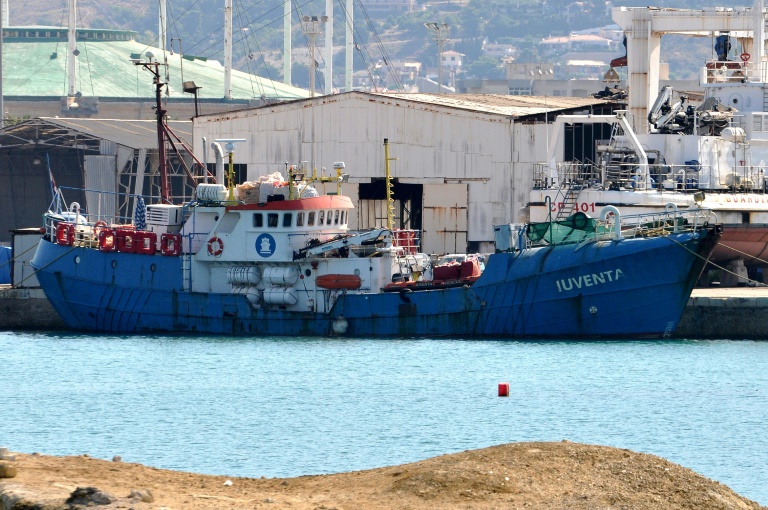
Italy ordered to restore migrant charity rescue vessel

An Italian court has ordered the state to restore a German charity vessel seized in 2017 over migrant rescues in the Mediterranean, a lawyer told AFP Friday.

The Iuventa, owned by non-governmental organisation Jugend Rettet, was impounded and left to rot while prosecutors prepared a case currently in the pre-trial stage.

Twenty-one suspects, including crew members of Jugend Rettet, Doctors Without Borders (MSF) and Save the Children rescue ships, are accused of colluding with people traffickers.

Trapani judge Samuele Corso is currently examining whether or not to proceed to trial after a five-year investigation slammed by critics as a politically motivated bid to stop sea rescues.

On Friday, Corso ruled port authorities must “see to all maintenance works necessary to restore and maintain the condition of the (Iuventa) vessel as it was at the time of the seizure”.

The cost to the state is an estimated 100,000 euros ($105,000), defence lawyer Nicola Canestrini said.

“Whether the court’s decision can be implemented at all remains questionable given the poor condition of the vessel,” Jugend Rettet said in a statement.

“Within one year, the Iuventa rescued more than 14,000 people from distress at sea. Since its seizure, more than 10,000 people have died in the central Mediterranean,” it added.

Italy has long been a point of destination for seaborne migration from Africa to Europe, with a record 180,000 arrivals in 2016, dropping to 120,000 in 2017.

It has registered nearly 97,000 arrivals so far this year, according to the interior ministry.

US basketball star Griner arrives home after Russia prisoner swap

American basketball star Brittney Griner arrived in the United States Friday morning after she was released from a Russian prison in exchange for an arms dealer known as the “Merchant of Death.”

Griner, 32, who was arrested in Russia in February on drug charges, was seen by an AFP reporter walking across a runway after her plane landed in San Antonio, Texas.

She was expected to be transferred to a nearby military facility for medical checks, US media reported.

Griner was exchanged in Abu Dhabi on Thursday for Viktor Bout, a 55-year-old Russian national who was serving a 25-year sentence in a US prison.

In footage released by Russian state media, Griner, shorn of her distinctive dreadlocks, and a relaxed and animated Bout could be seen crossing paths on the airport tarmac and heading towards the planes that would take them home.

President Joe Biden said on Thursday that he had spoken to her and that she was in “good spirits” after suffering “needless trauma.”

Griner, a two-time Olympic gold medalist, WNBA champion and LGBTQ trailblazer, was arrested at a Moscow airport against a backdrop of soaring tensions over Ukraine.

She was accused of possessing vape cartridges with a small quantity of cannabis oil and sentenced in August to nine years in prison.

Bout, who was accused of arming rebels in some of the world’s bloodiest conflicts, was detained in a US sting operation in Thailand in 2008, extradited to the United States and sentenced in 2012 to 25 years behind bars.

He landed in Russia on Thursday, state television said. “Don’t worry, everything is OK, I love you very much,” he told his mother Raisa.

While Griner’s family and friends celebrated her release, another American held in Russia, former US Marine Paul Whelan, detained since 2018 and accused of spying, was not part of Thursday’s exchange.

He told CNN he was “greatly disappointed.”

“I don’t understand why I’m still sitting here,” Whelan told CNN in a phone call from a Russian penal colony.

Biden pledged to obtain Whelan’s freedom, saying “we will never give up.”

“Sadly, for totally illegitimate reasons, Russia is treating Paul’s case different than Brittney’s,” he said.

As for Griner’s release, Biden said: “This is a day we’ve worked toward for a long time. It took painstaking and intense negotiations.”

– ‘Family is whole’ –

Biden announced Griner’s release on Thursday flanked by her wife, Cherelle Griner, Vice President Kamala Harris and Secretary of State Antony Blinken.

“I’m just standing here, overwhelmed with emotions,” Cherelle Griner said.

“Today my family is whole, but as you all are aware there’s so many other families who are not whole.”

The Griner family thanked President Biden and his administration in a statement, and said they “pray for Paul and for the swift and safe return of all wrongfully-detained Americans.”

WNBA commissioner Cathy Engelbert said there was a “collective wave of joy and relief” in the women’s professional league where Griner has been a star for a decade with the Phoenix Mercury.

Biden thanked the United Arab Emirates for helping “facilitate” Griner’s release and the UAE issued a joint statement with Saudi Arabia saying it was the result of “mediation efforts” by leaders of the two Arab nations.

White House Press Secretary Karine Jean-Pierre said, however, there was “no mediation involved” and “the only countries that negotiated this deal were the United States and Russia.”

– ‘Rescue our compatriot’ –

At the time of her arrest, Griner had been playing for a professional team in Russia, as a number of WNBA players do in the off-season.

She pleaded guilty to the charges against her, but said she did not intend to break the law or use the banned substance in Russia.

Griner testified that she had permission from a US doctor to use medicinal cannabis to relieve pain from her many injuries.

The use of medical marijuana is not allowed in Russia.

The Russian foreign ministry said it had been negotiating with Washington to secure Bout’s release “for a long time” and that initially the United States had “refused dialogue” on including him in any swap.

“Nevertheless, the Russian Federation continued to actively work to rescue our compatriot,” it said.

The 2005 film “Lord of War” starring Nicolas Cage was based in part on Bout’s arms trafficking, and he has been the subject of several books and TV shows.

Russia’s ambassador to the United States, Anatoly Antonov, told Bout in a video message that he was aware that the arms dealer had been subjected to “powerful physical and moral pressure” while in prison, Russian news agency TASS reported.

Asked about Bout’s release, a senior US defense official said “there is a concern that he would return to doing the same kind of work that he’s done in the past.”

Moscow said on Friday that ties with Washington remained in “crisis”.

“It is probably wrong to draw any hypothetical conclusions that this could be a step towards overcoming the crisis that we currently have in bilateral relations,” Kremlin spokesman Dmitry Peskov told the Izvestia newspaper.

Ties “continue to remain in a sad state.”

Close Bitnami banner
Bitnami