World

Tanks, guns and 'dragon's teeth' guard S Korea frontier island

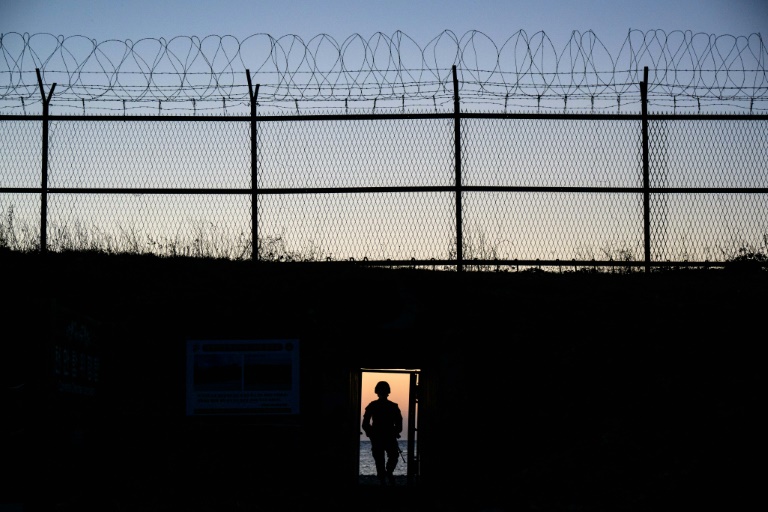
It is South Korea’s westernmost territory, soldiers outnumber residents, and you can see North Korea from almost every barbed wire-lined beach: welcome to Baekryeong Island, a community on the front line.

Far closer to the North Korean mainland than it is to the South, Baekryeong is a fortress: tanks are parked at the sides of roads, there are guard posts on every hill, and the picturesque beaches are covered in dragon’s teeth — concrete pyramid-shaped fortifications — to deter invasion.

Seoul was awarded control over the approximately 45-square-kilometre (17-square-mile) island at the end of Korean War hostilities in the 1950s, but its 5,000 or so residents — plus an even higher number of soldiers — live under constant low-level threat.

The island has long been a potential military flashpoint: North Korea’s Kim claimed in 2013 that he could “rain down a sea of fire” on Baekryeong, and then staged amphibious mock invasion drills in 2017.

“Sometimes I have dreams about the North Koreans invading, especially with what is happening in the news,” said 64-year-old Baekryeong native Kim Keum-sook, referring to the record-breaking blitz of missile launches by Kim this year.

The island is of immense strategic importance for Seoul, as it helps determine control over vital Yellow Sea shipping lanes, without which its Incheon harbour would be cut off from the world. 

When she was growing up on Baekryeong, located two kilometres from the de facto maritime border and just 14 kilometres from the North Korean mainland, Kim was regularly evacuated during periods of high tension.

“I’m still afraid,” she said, although her husband, Choi Won-mo, 65, also an island native, said that they were “as well defended as can be.”

– Defend at all cost – 

South Korea’s “marines, air force, navy and army are all in Baekryeong, always on high alert,” Choi said.

The flashpoint maritime border has seen intermittent skirmishes, including an exchange of warning shots in the waters around Baekryeong in October after a North Korean vessel crossed the Northern Limit Line.

Choi said such events were a “common occurrence” but after 70 years in limbo people have learnt to live with constant tension — the Korean War ended with an armistice, leaving the two sides technically still at war.

The worst such incident came in March 2010 just one kilometre off the island when a South Korean warship was sunk by what Seoul said was a North Korean torpedo, killing the 46 seamen on board. 

Now, South Korean troops conduct regular artillery exercises on the beach.

“Just look at all the troops and weapons here, the government is committed to defending Baekryeong island at all costs,” said Lee Chung-dong, a 71-year-old fisherman who lived there for half a century.

“It’s because they know that if Baekryeong falls, so will Incheon.”

– Tourist destination –

Despite the dangers — the ferry to the island takes a roundabout route to make it less vulnerable to North Korean attack — Baekryeong is a niche tourist destination.

Hundreds of mostly domestic tourists visit each week, drawn by both the proximity to the North, and also the natural beauty of the location.

One of its most jarring attractions is a cliff formation known as Dumujin, described in the writings of one Joseon Dynasty scholar as “the last masterpiece of an old god.” 

Another is Sagot beach with its hard quartz-sand floor making it a natural airstrip, a purpose it fulfilled during the Korean War. 

“Baekryeong’s beauty lies in its natural landscape,” said Kim Yong-sung, 50, who was visiting with some co-workers.

“I do sense some danger being so close to the border, but since this has always been the case, it’s not going to stop me from enjoying the beauty here.”

The island’s ancient geological features hold a lesson for those worried about its frontline position, said Kim Chang-hee, 75, a park guide.

“This island is over 10 million years old –- older than the dinosaurs,” she said. “Korea has only been divided for 70 years. One day, this too will be a distant memory.”
Central America's biggest mine faces closure over tax spat

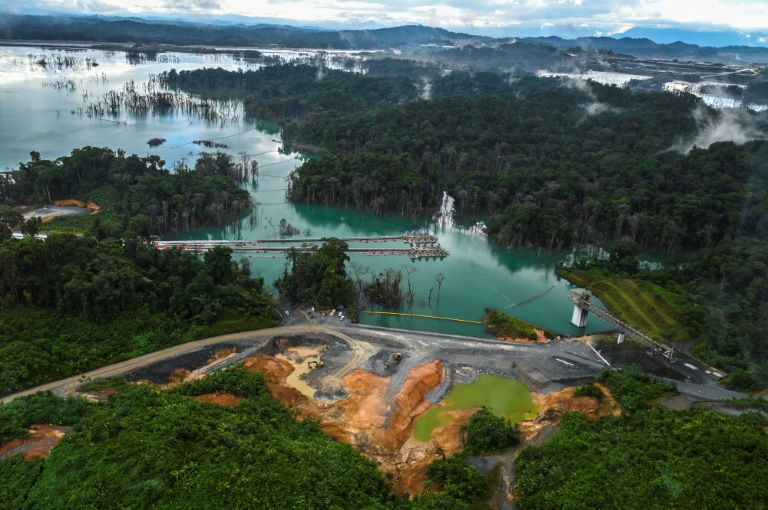
Rising up through the lush vegetation of Panama’s Caribbean coast, a 125-meter chimney serves as a beacon for helicopters approaching the largest mine in Central America, which faces closure next week over a contract dispute.

Gigantic 400-tonne trucks slowly wind around the stepped slopes of a massive gash in the earth one kilometer wide, the ochre and grey of the copper mine standing in stark contrast to the verdant jungle surrounding it.

The activity could grind to an expensive halt in a matter of days.

Canadian mining giant First Quantum Minerals has until next Wednesday to sign a new contract with the government, which is demanding the company multiply the taxes it pays by 10.

If the parties do not agree, the disagreement could halt the work of a mining project considered the largest private investment in Panama’s history, contributing four percent of the country’s GDP and 75 percent of export revenues.

“We have been given a deadline to sign the new contract by December 14, to accept the new terms,” First Quantum’s manager in Panama, Keith Green, who is Scottish, told AFP.

“We intend to reach an agreement, but negotiations are a bit deadlocked,” he added.

First Quantum, one of the largest copper miners in the world, began commercial copper production at the site in Donoso in 2019, through its subsidiary Minera Panama.

It has spent $10 billion on earthworks, construction buildings to house more than 7,000 employees, the purchase of heavy machinery, a power plant, a port for deep-draft merchant ships, access roads, and re-forestation plans.

– ‘Fair income’ –

President Laurentino Cortizo in January announced plans to toughen the conditions of the mining license, with a new contract that would oblige the mining company to pay “at least” $375 million to Panama annually — ten times what it is currently paying.

“Panama has the inalienable right to receive fair income from the extraction of its mineral resources, because the copper is Panamanian,” he said.

This mine is “the biggest in Central America,” producing 300,000 tons of copper concentrate per year, said Green.

The deposit, discovered in 1968, lies on the Caribbean coast, 240 kilometers by road from the capital Panama City.

The company, listed on the Toronto Stock Exchange, built the Punta Rincon International Port next to the mine to transport the copper by ship, due to a lack of roads connecting the Colon port, 40 kilometers (25 miles) away.

Despite the uncertainty over the mine’s future, activity has not slowed and the company has continued to invest in the site.

A new 200-tonne drilling rig — as tall as a three-story building — was inaugurated in a ceremony on Tuesday, causing heavy air traffic.

Helicopter pilot Oldemar Arauz explains that most officials visiting the mine prefer the one-hour air trip to the four-hour drive on a narrow road from the capital.

The drilling rig, made in the United States by the Swedish company Epiroc, cost $6 million, and was transported to the mine in 10 trucks. 

“Latin America has 200 of these drills, 50 in Chile and now three in Panama,” said Epiroc’s Latin America manager Hans Traub.

The drill was assembled by Chilean engineer Alex Gonzalez, who previously worked in Chuquicamata, the world’s largest open pit copper mine, situated in the Atacama desert, which has been operating since 1915.

Central America does not have the same mining tradition seen further south. Mining is illegal in Costa Rica and El Salvador, and while there is much potential for growth in Panama, the industry’s future is now hanging in the balance.

Central America's biggest mine faces closure over tax spat

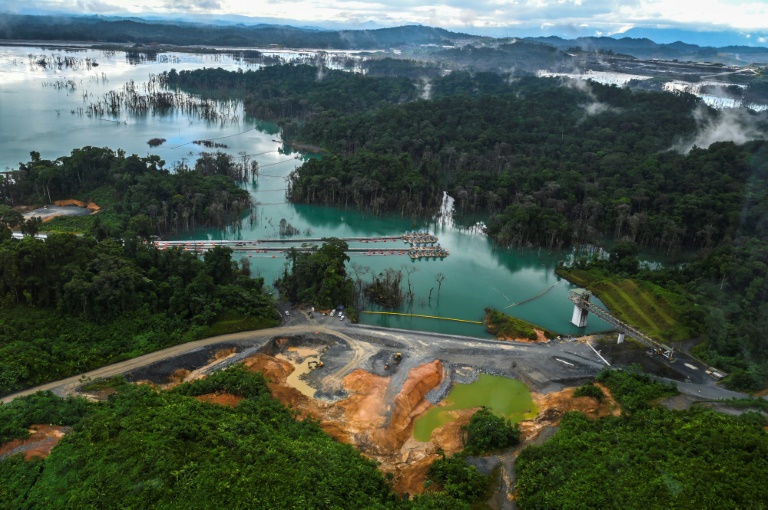
Rising up through the lush vegetation of Panama’s Caribbean coast, a 125-meter chimney serves as a beacon for helicopters approaching the largest mine in Central America, which faces closure next week over a contract dispute.

Gigantic 400-tonne trucks slowly wind around the stepped slopes of a massive gash in the earth one kilometer wide, the ochre and grey of the copper mine standing in stark contrast to the verdant jungle surrounding it.

The activity could grind to an expensive halt in a matter of days.

Canadian mining giant First Quantum Minerals has until next Wednesday to sign a new contract with the government, which is demanding the company multiply the taxes it pays by 10.

If the parties do not agree, the disagreement could halt the work of a mining project considered the largest private investment in Panama’s history, contributing four percent of the country’s GDP and 75 percent of export revenues.

“We have been given a deadline to sign the new contract by December 14, to accept the new terms,” First Quantum’s manager in Panama, Keith Green, who is Scottish, told AFP.

“We intend to reach an agreement, but negotiations are a bit deadlocked,” he added.

First Quantum, one of the largest copper miners in the world, began commercial copper production at the site in Donoso in 2019, through its subsidiary Minera Panama.

It has spent $10 billion on earthworks, construction buildings to house more than 7,000 employees, the purchase of heavy machinery, a power plant, a port for deep-draft merchant ships, access roads, and re-forestation plans.

– ‘Fair income’ –

President Laurentino Cortizo in January announced plans to toughen the conditions of the mining license, with a new contract that would oblige the mining company to pay “at least” $375 million to Panama annually — ten times what it is currently paying.

“Panama has the inalienable right to receive fair income from the extraction of its mineral resources, because the copper is Panamanian,” he said.

This mine is “the biggest in Central America,” producing 300,000 tons of copper concentrate per year, said Green.

The deposit, discovered in 1968, lies on the Caribbean coast, 240 kilometers by road from the capital Panama City.

The company, listed on the Toronto Stock Exchange, built the Punta Rincon International Port next to the mine to transport the copper by ship, due to a lack of roads connecting the Colon port, 40 kilometers (25 miles) away.

Despite the uncertainty over the mine’s future, activity has not slowed and the company has continued to invest in the site.

A new 200-tonne drilling rig — as tall as a three-story building — was inaugurated in a ceremony on Tuesday, causing heavy air traffic.

Helicopter pilot Oldemar Arauz explains that most officials visiting the mine prefer the one-hour air trip to the four-hour drive on a narrow road from the capital.

The drilling rig, made in the United States by the Swedish company Epiroc, cost $6 million, and was transported to the mine in 10 trucks. 

“Latin America has 200 of these drills, 50 in Chile and now three in Panama,” said Epiroc’s Latin America manager Hans Traub.

The drill was assembled by Chilean engineer Alex Gonzalez, who previously worked in Chuquicamata, the world’s largest open pit copper mine, situated in the Atacama desert, which has been operating since 1915.

Central America does not have the same mining tradition seen further south. Mining is illegal in Costa Rica and El Salvador, and while there is much potential for growth in Panama, the industry’s future is now hanging in the balance.

Iran triggers outrage with first hanging over protests

Iran carried out its first known execution Thursday over the protests that have shaken the regime since September, sparking an international outcry and warnings from rights groups that more hangings are imminent.

Mohsen Shekari, 23, had been convicted and sentenced to death for blocking a street and wounding a paramilitary during the early phase of the protests, after a legal process denounced as a show trial by rights groups.

At least a dozen other people are currently at risk of execution after being sentenced to hang in connection with the protests, human rights groups warned.

Demonstrations have swept Iran for nearly three months since Iranian Kurdish woman Mahsa Amini, 22, died in custody after her arrest by the morality police in Tehran for an alleged breach of the country’s strict hijab dress code for women.

The protests, described by the authorities as “riots”, are posing the biggest challenge to the Islamic republic since it was established following the ouster of the shah in 1979.

“Mohsen Shekari, a rioter who blocked Sattar Khan Street in Tehran on September 25 and wounded one of the security guards with a machete, was executed this morning,” the judiciary’s Mizan Online website said.

Amnesty International said it was “horrified” by the execution, which followed Shekari’s condemnation in a “grossly unfair sham trial”.

“His execution exposes the inhumanity of Iran’s so-called justice system”, where many others face “the same fate,” the group added.

Mahmood Amiry-Moghaddam, director of Oslo-based group Iran Human Rights (IHR), urged a strong international reaction otherwise “we will face mass execution of protesters”.

“Mohsen Shekari was executed after a hasty and unfair trial without a lawyer,” he said.

Iran’s Fars news agency carried a video report of Shekari talking about the attack while in detention, which IHR described as a “forced confession” with his face “visibly injured”.

– ‘Boundless contempt’ –

Western governments echoed the anger of the rights groups.

Washington called Shekari’s execution “a grim escalation” and vowed to hold the Iranian regime to account for violence “against its own people.”

In Rome, Prime Minister Giorgia Meloni expressed indignation at “this unacceptable repression” which, she said, will not quash the protesters’ demands.

German Foreign Minister Annalena Baerbock had a similar message. “The threat of execution will not suffocate the will for freedom,” she tweeted after what she called a “perfidious summary trial”.

“The Iranian regime’s contempt for human life is boundless,” Baerbock said.

Germany also summoned the Iranian ambassador, a diplomatic source said later on Thursday, but did not provide any further details about the summoning.

UK Foreign Secretary James Cleverly expressed outrage and urged the world not to ignore “the abhorrent violence committed by the Iranian regime against its own people.”

The office of the UN High Commissioner for Human Rights said “we deplore (the) hanging of” Shekari.

The revolutionary court in Tehran heard Shekari had been arrested after striking the member of the Basij paramilitary force in the shoulder with the blade. The injury required 13 stitches, Mizan Online said.

The Basij is a state-sanctioned volunteer force that is linked to Iran’s powerful Islamic Revolutionary Guard Corps.

The court convicted Shekari of “moharebeh” — or waging “war against God” under Iran’s Islamic sharia law — on November 1, said Mizan.

It added that he appealed but the supreme court upheld the ruling on November 20.

According to Amnesty, Iran executes more people annually than any nation other than China. 

IHR this week said Iran had already executed more than 500 people in 2022, a sharp jump on last year’s figure.

The 1500tasvir protest monitor said on social media that the execution of Shekari had happened with such haste that his family had still been waiting to hear the outcome of the appeal.

It posted harrowing footage of what it said was the moment his family found out the news outside their home in Tehran, with a woman doubled up in pain and grief, repeatedly screaming the word “Mohsen!”

– ‘Imminent danger’ –

The largely peaceful protest movement has been marked by actions including removing and burning headscarves in the streets, chanting anti-government slogans and confronting the security forces.

In a relatively new tactic, protest supporters staged three days of nationwide strikes up to Wednesday which closed down shops in major cities, according to rights groups.

The security forces have responded with a crackdown that has killed at least 458 people, including 63 children, according to an updated death toll issued by IHR on Wednesday.

A court on Tuesday sentenced five more people to death by hanging for killing a Basij member, bringing to 11 the number sentenced to death in connection with the protests.

Freedom of expression group Article 19 said urgent action was needed “as the lives of others on death row in relation to the uprising are in imminent danger”.

burs-sk-dv-sjw/raz/dhc

Recession in US 'not inevitable': Yellen

A recession in the US is “not inevitable,” Treasury Secretary Janet Yellen said Thursday, adding that she believes the world’s biggest economy is on the right track in lowering inflation.

Her comments come on the heels of a forceful campaign by the US central bank to cool demand this year, walking a tightrope between lowering consumer costs while trying not to tip the economy into a downturn.

For now, many economists expect the US could experience a downturn next year.

On “whether or not we can avoid a recession, I believe the answer is yes,” she told reporters during a visit to the Bureau of Engraving and Printing’s currency facility in Fort Worth, Texas.

Supply chain bottlenecks are starting to ease and new apartment rents have “essentially peaked,” with the labor market cooling slightly as well, Yellen said.

“Without seeing significant net nationwide layoffs, I believe we’re on the right track in terms of lowering inflation and a recession’s not inevitable,” she added.

As businesses tone down their growth expectations and hiring plans, the number of people leaving their jobs has also dipped a little, she said.

Last week, Federal Reserve Chair Jerome Powell added it remains “very plausible” for the US to reach a soft landing, referring to a scenario where unemployment rises but the economy avoids a severe recession.

On Thursday, Yellen said that the United States has been “listening very carefully” to allies and trying to understand their concerns on Washington’s push to spur climate-friendly technologies in America.

“I think the objective that Congress had was to make sure we have supply chains that are secure, and to try to include our allies in them,” she said.

Asked if she had plans to visit China following President Joe Biden’s meeting with his Chinese counterpart Xi Jinping, Yellen said she had no definite plans yet but was “certainly open to it.”

In Netflix series, Harry slams press, family, over 'feeding frenzy'

Prince Harry slammed the media “feeding frenzy” over his relationship with Meghan in an explosive Netflix docuseries launched Thursday and criticised Britain’s royal family for failing to protect her and his mother Diana.

The family has been braced for the first three episodes of the six-part series “Harry & Meghan”.

While it was largely spared during the first episodes, it was still on the end of accusations of “unconscious” racial bias and that it did not help Meghan or Diana after her 1992 separation from Harry’s father Charles, who is now king.

“To see another woman in my life who I love go through this feeding frenzy, that’s hard,” said Harry. “It is basically the hunter versus the prey.”

And speaking of his mother, who died in a Paris car crash in 1997, Harry, 38, said: “The moment that she divorced, the moment she left the institution, then she was by herself… she was completely exposed to this.” 

Meghan also took aim at the family for failing to counter negative press reports about her.

“It was horrible, but I continued to hold the line, like say nothing,” she said.

– The race element –

Her husband said the family ignored racist undertones in the reports.

“As far as a lot of the family were concerned, everything that she was being put through, they’d been put through as well. So it was almost like a rite of passage,” he said.

“I said the difference here is the race element.”

Harry went on to claim there was a “huge level of unconscious bias” within the family, and the documentary referenced a racist brooch worn by Princess Michael of Kent to an event that Meghan attended in 2017.

Harry reiterated feeling “ashamed” about being photographed wearing a Nazi uniform to a fancy-dress party in 2005, calling it “probably one of the biggest mistakes of my life”.

– ‘War’ –

The documentary is lifting the lid on events that prompted the pair to quit royal life and move to the United States in 2020.

Several British newspapers said the couple had declared “war” on the royal family, which said Thursday that no family members had been approached to comment for the docuseries.

The first parts trace the couple’s budding love story and their attempts to keep it a secret.

“When I got to meet ‘M’ I was terrified of her being driven away by the media, the same media that had driven so many other people away from me,” said Harry.

“I knew that the only way that this could possibly work is by keeping it quiet for as long as possible.”

The early episodes also focus on Harry’s childhood and difficult teen years, often with paparazzi in tow.

He describes how he found refuge in frequent trips to Africa.

“I have a second family out there, a group of friends that literally brought me up,” he said.

And in what appeared to be a dig at his older brother Prince William and wife Catherine, he said: “With many people in the family, especially the men, there can be a temptation or an urge to marry someone who would fit in the mould.”

The final three parts are due to be released on December 15.

– Fans divided –

Royal fans outside Buckingham Palace were divided on the need for Harry and Meghan to make the series.

“It’s just not the right thing to do,” said Mary Rose, 68, from Worksop in northeast England. “He (Harry) was so close to his brother at one time and now he’s alienated himself from his family.”

But Fflur Jones, a 26-year-old nurse from Wales, said: “I think they’re really brave for what they’ve done.”

“Speaking out, especially against family, is really difficult. So fair play to them for doing that.”

In the central English city of Nottingham, the first place Harry and Meghan visited as a royal couple in 2017, Alex Smith, 29, was also not impressed with their stance, blaming “headstrong” Meghan.

“I think it’s more her,” she said. “I think he’s (Harry)… under the thumb,” she added.

Netflix showcased the first trailer last week, as William made his first trip to the United States as heir to the throne, prompting accusations of sabotage.

The timing could barely have been worse for William after Buckingham Palace sacked one of his godmothers as a courtier for using racially charged language to a black British woman during a reception.

For some, the incident reinforced incendiary claims by mixed-race Meghan, 41, that racism within the royal household was one of the reasons for leaving.

The docuseries airs three months since the death of Harry’s grandmother Queen Elizabeth II, and a month before the long-awaited publication of his memoirs, “Spare”.

bur-jj/raz

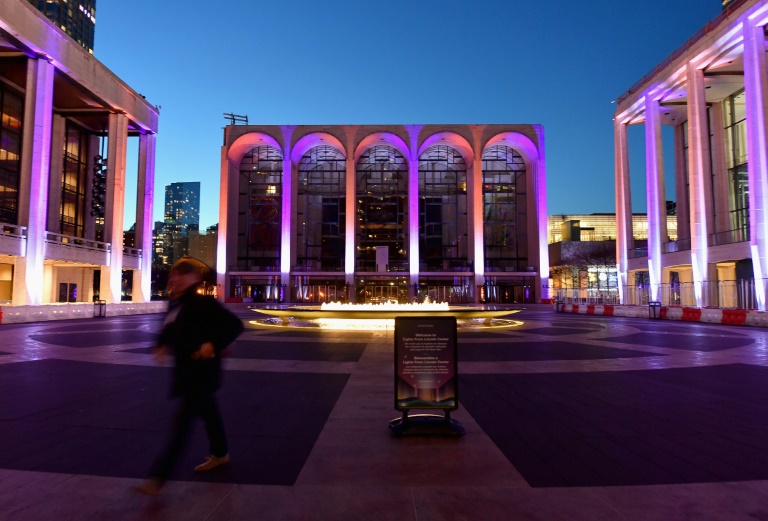
Met Opera in NY reports crippling cyberattack

The Metropolitan Opera said Thursday that a cyberattack had prevented its website, box office and call center in NY from functioning.

The prestigious institution said its “network issues” had begun on Tuesday.

All performances are taking place as scheduled, the Met said, but new ticket orders, exchanges and refunds were not immediately possible.

The organization provided no explanation or details about the attack, and a spokesperson for the Manhattan-based company did not immediately respond to an AFP query.

The specialist outlet OperaWire, citing a letter to company members from General Manager Peter Gelb, said an investigation into the attack was ongoing.

“Unfortunately, we’ve experienced a cyberattack that has temporarily impacted our network systems,” the letter read. 

“We launched an immediate investigation into the nature and scope of the incident. While web experts work to resolve the situation, our systems are down.”

Gelb said the Met was also temporarily unable to process paychecks.

Cyberattacks have plagued  companies and governmental offices in the US and elsewhere for years.

The US House of Representatives on Thursday passed a mammoth national defense spending bill that includes tens of millions of dollars to help bolster cybersecurity efforts. The measure still requires Senate approval.

Putin vows more strikes on Ukraine energy infrastructure

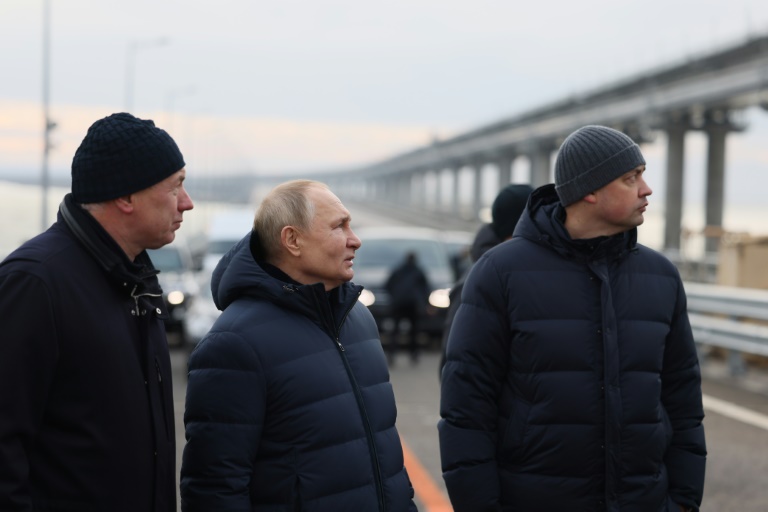
President Vladimir Putin vowed Thursday to keep battering Ukraine’s energy grid despite an outcry against the systematic attacks that have plunged millions into the cold and dark as winter sets in.

He instead blamed Ukraine for initiating a trend of attacking civilian infrastructure, pointing to a blast on a key bridge between the Russian mainland and the annexed Crimean peninsula that he recently visited. 

“There’s a lot of noise about our strikes on the energy infrastructure of a neighbouring country. This will not interfere with our combat missions,” Putin said at a military awards ceremony in the Kremlin.

Weeks of Russian missile barrages across Ukraine have crippled key infrastructure at a critical time, as temperatures drop ahead of long winter months that already have brought suffering to Ukrainians lacking water, heating and gas. 

He presented the strikes as a response to the explosion in October on the Kerch bridge and also accused Kyiv of blowing up power lines from the Kursk nuclear power plant and for not supplying water to Donetsk in eastern Ukraine.

“Yes, we do that,” Putin said of the strikes on the Ukraine grid. “But who started it?”

Ukrainian energy operator Ukrenergo said Thursday that it was still reeling from the latest bout of strikes that came this week and was suffering a “significant deficit”. 

– ‘Risks’ for Crimea –

“The situation is complicated by weather conditions,” it added, saying snow, frost and wind were putting pressure on infrastructure.

Putin’s promise to keep attacking the grid came as the Kremlin conceded that the Crimean peninsula was vulnerable to Ukrainian attacks after officials said they had shot down a drone near a key naval base.

“There are certainly risks because the Ukrainian side continues its policy of organising terrorist attacks,” Kremlin spokesman Dmitry Peskov told reporters.

“But, on the other hand, information we get indicates that effective countermeasures are being taken,” he added.

The Moscow-appointed governor of Crimea Sergei Aksyonov said last month that Russia was strengthening fortifications on the peninsula in the wake of attacks.

And the governors of two Russian regions bordering Ukraine have said they inspected the construction of defence lines days after Ukrainian drones struck key military airfields.

In the latest incident over Crimea on Thursday, Russia said it had shot down a drone over the Black Sea near Sevastopol, the largest city on the Crimean peninsula that hosts a key Russian naval base.

“As per usual our military carried out its work well,” said the governor of the Sevastopol administrative region, Mikhail Razvozhayev. 

The peninsula was annexed by Russia in 2014 after a so-called referendum that Ukraine and the West never recognised. Moscow said in September it had annexed four more regions of Ukraine, despite not having full control over them.

– ‘Nationalist ideology’  –

There have been several explosions at or near Russian military installations in Crimea since February, including a coordinated drone attack on a key Russian naval port at Sevastopol. 

The shooting down of the drone on Thursday came after a series of attacks deep in Russia — including the Engels airfield, a strategic bomber military base — for which Ukraine has not claimed responsibility.

Separately, the Russian security services (FSB) arrested two people accused of spying for Ukraine on Crimea and accused them of “treason”, the agency’s press service said Thursday. 

The FSB “halted the illegal activities of two Russian citizens suspected of committing high treason in the form of spying in the interests of the Security Service of Ukraine,” it said in a statement.

One of those detained is “a supporter of Ukrainian nationalist ideology and was recruited by the Ukrainian secret services in 2016,” the statement said.

He is suspected of “transferring data on the location of Russia’s defence ministry facilities to a foreign security agency, which could be used against Russia’s security.”

– Pope’s tears –

The Kremlin hit out at Time magazine’s decision a day earlier to name Ukraine President Volodymyr Zelensky as “Person of the Year”, saying it reflected “Russophobic” trends in Western countries.

The Politico news website also named Zelensky as the “Most Influential” person in Europe.

And during a ceremony in Rome Thursday, Pope Francis was briefly reduced to tears as he prayed for the people of Ukraine.

He had to pause for a moment, his body shaking with emotion, before he could finish his prayer. The crowd around him broke into applause.

One of Turkey’s most influential marine biologists, Bayram Ozturk, pleaded for the creation of an “ecological corridor” to save dolphins and other sea creatures from destruction during the conflict.

His Marine Research Foundation has organised a conference in Istanbul on Friday where Ozturk will exchange ideas with colleagues from the Black Sea’s other lateral states.

US sues to block Microsoft's blockbuster buyout of gaming giant Activision

The US Federal Trade Commission on Thursday sued to block Microsoft’s $69 billion buyout of gaming giant Activision Blizzard, maker of the blockbuster “Call of Duty” title, over concerns that it would stifle competition.

The lawsuit marks one of the biggest ever interventions by the US government to stop consolidation in the tech industry and raises significant doubts on the future of the transaction.

“Today we seek to stop Microsoft from gaining control over a leading independent game studio and using it to harm competition in multiple dynamic and fast-growing gaming markets,” said Holly Vedova, director of the FTC’s Bureau of Competition.

The move by Washington follows an intervention by the European Union, which opened an in-depth probe into the transaction over its concerns that the deal would see Activision Blizzard’s popular games become exclusive to Microsoft, the maker of the Xbox console.

Britain has also announced an “in-depth investigation” into Microsoft’s planned takeover of Activision, which also produces mobile game “Candy Crush.”

In January, Microsoft — which also makes its own games to be played on PCs and mobile devices — announced the takeover that would create the world’s third-biggest gaming company by revenue.

The FTC said Microsoft had a proven history of buying up smaller gaming companies only to make the games exclusive to Microsoft — and thus inaccessible to rivals such as Nintendo or Sony.

This would be a significant change for Activision that currently has a strategy of offering their games on a variety of platforms.

Microsoft had earlier this week made moves to satisfy concerns by announcing that it would bring the “Call of Duty” franchise to Nintendo Switch, a rival of Xbox. This followed an earlier decision to make “Call of Duty” available on Sony’s PlayStation.

– ‘Deal will close’ –

“We continue to believe that this deal will expand competition and create more opportunities for gamers and game developers,” said Microsoft President Brad Smith in a statement.

“While we believe in giving peace a chance, we have complete confidence in our case and welcome the opportunity to present our case in court.”

Bobby Kotick, the head of Activision Blizzard, told company staff that though the lawsuit “sounds alarming…I want to reinforce my confidence that this deal will close.”

The allegations “don’t align with the facts, and we believe we’ll win this challenge,” he said.

The FTC is led by Lina Khan, who had been an advocate of breaking up the biggest tech firms before she was nominated by President Joe Biden to the job.

Last year, the FTC refiled a lawsuit accusing Facebook of maintaining an illegal monopoly in social networking, reviving the case two months after it was dismissed by a federal judge.

That lawsuit, which could take years to go through the courts without a settlement, called for the court to order “divestiture of assets,” including WhatsApp and Instagram, to restore competition.

A separate US antitrust action has been filed against Google, and Apple and Amazon are also in the crosshairs of antitrust enforcers.

Israel's Netanyahu requests more time to form government

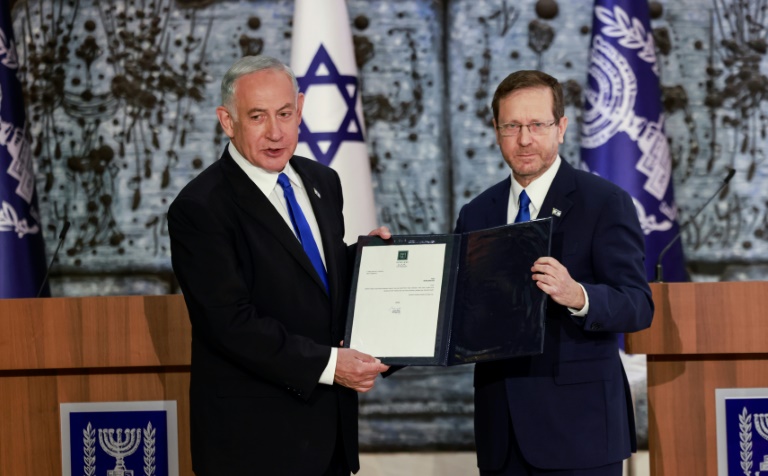
Israel’s prime-minister designate Benjamin Netanyahu asked Thursday for a two-week extension in forming a coalition government with his ultra-Orthodox and extreme-right allies, days before the initial time frame elapses.

The November 1 election put former premier Netanyahu in a position to form a stable, right-wing government, ending an unprecedented period of political deadlock that forced five elections in less than four years. 

President Isaac Herzog on November 13 tapped Netanyahu to form a government with the backing of factions representing 64 out of 120 lawmakers in Israel’s parliament.

Netanyahu’s 28-day mandate expires at midnight (2200 GMT) Sunday, but late Thursday he asked Herzog for more time to finalise deals with two parties.

“We are in the midst of negotiations and have made much progress, but judging by the pace of things, I will need all the extension days provided by law in order to form a government,” Netanyahu said in a letter released by his office.

By law, the president can grant up to 14 additional days for negotiations.

Netanyahu’s right-wing Likud party has already signed coalition deals with three controversial extreme-right parties — Religious Zionism, Jewish Power and the virulently anti-LGBTQ one-man Noam.

Likud announced early Thursday a deal with a fourth party, Shas, that gave the ultra-Orthodox Jewish party five ministerial positions.

But the agreement with Shas and another ultra-Orthodox bloc, United Torah Judaism, are provisional, not binding coalition agreements.

Additional pacts will be required before a government is announced, the parties have said.

“There are still issues that have not been resolved regarding the allocation of positions,” Netanyahu wrote in his letter to Herzog, noting the premature nature of the Shas and United Torah Judaism agreements.

While some Israeli political analysts had forecast Netanyahu would move to announce a government days after receiving the mandate, coalition talks have proved complex.

Netanyahu was forced to give sensitive portfolios to controversial figures, including extremist Jewish Power leader Itamar Ben Gvir, who is known for anti-Arab rhetoric and is set to be national security minister in charge of border police in the occupied West Bank.

And Netanyahu’s allocation of portfolios to members of his own party has also yet to be finalised.

Another complication is that Shas leader Aryeh Deri has been convicted of tax offences, which, according to Israel’s attorney general, bars him from serving in cabinet.

Israel’s parliament, where Netanyahu and his allies now control a majority, may seek to pass legislation allowing Deri to serve in cabinet before firming up a coalition deal.

Under the provisional Shas-Likud agreement, Deri will be both interior minister and health minister in Netanyahu’s next government, in addition to being named deputy prime minister.

Close Bitnami banner
Bitnami