World

Japan, UK, Italy to develop next-generation fighter jet

Japan, Britain and Italy said Friday they will jointly develop a next-generation fighter jet in a project that holds scope for future cooperation with allies including the United States.

The new jet, to be ready by 2035, is expected to merge the nations’ current research into cutting-edge air combat technology, from stealth capacity to high-tech sensors.

In a joint statement, the three countries said the “ambitious endeavour” would “accelerate our advanced military capability and technological advantage” at a time when “threats and aggression are increasing” worldwide.

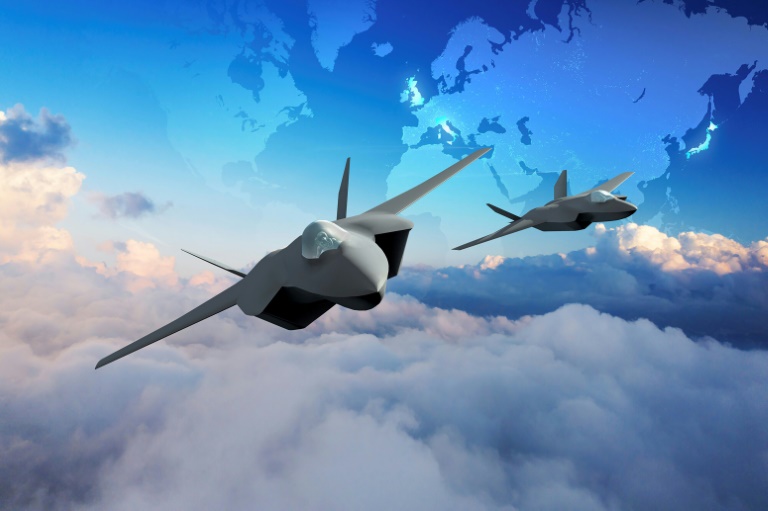
Their announcement was accompanied by a set of images showing an artist’s impression of the sleek new jets flying past Mount Fuji and over London and Rome.

They did not give a cost estimate, but the three countries are already pouring billions of dollars into fighter jet development, efforts that will come together under the joint project, called the Global Combat Air Programme.

“We share (an) ambition for this aircraft to be the centrepiece of a wider combat air system that will function across multiple domains,” the statement said.

That includes “future interoperability with the United States, with NATO and with our partners” in Europe, Asia and worldwide, it explained.

The US Department of Defence said it supported the project in a separate joint statement with Japan’s defence ministry.

“We have begun important collaboration through a series of discussions on autonomous systems capabilities, which could complement Japan’s next fighter program among other platforms,” the US-Japan statement said.

Britain had already been working with Italy on a future fighter jet project called Tempest, launched to great fanfare in 2018.

The objective was to develop by 2035 a twin-engined stealth aircraft that could be operated manned or unmanned, could not be detected by radar, and would boast features such as laser-directed weapons and a virtual cockpit.

– Pressure from China –

Japan’s prior project to build a next-generation fighter plane, named F-X, was reportedly expected to cost more than five trillion yen (around $40 billion).

Friday’s announcement comes with Tokyo poised to make the largest overhaul to its security strategy in decades.

The government plans to ramp up defence spending — a controversial move in a nation whose constitution limits military capacity to ostensibly self-protective measures.

But the war in Ukraine, repeated missile launches from North Korea and growing pressure from China have helped build support for a bigger budget.

Japan’s Nikkei business daily said that companies Mitsubishi Heavy Industries, BAE Systems and Leonardo would oversee the new project, which is Tokyo’s second joint development after its SM-3 missile made with Washington.

The Global Combat Air Programme is the latest high-profile example of allied countries collaborating on an ad-hoc basis to develop defence equipment.

Such moves proved controversial last year when the United States snatched a lucrative contract to supply Australia with submarines from France and launched a new US-UK-Australia alliance in the Pacific, dubbed AUKUS.

Later Friday, Australia’s defence and foreign ministers are due to meet their Japanese counterparts in Tokyo for security talks.

After a meeting between US and Australian ministers this week in Washington, the two countries said they would welcome Japanese troops into three-way rotations, vowing a united front in the face of China’s rapid military advances.
Headscarf debate heats up ahead of Turkish vote

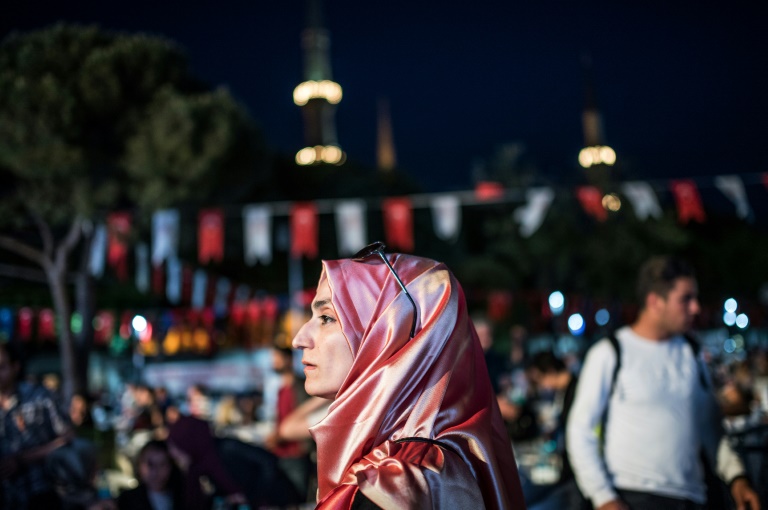
Turkey’s Islamic-rooted ruling party will submit a constitutional amendment to parliament next week enshrining women’s right to wear headscarves at work and in daily life, reviving a hugely divisive issue in the officially secular state.

The highly-politicised decision by President Recep Tayyip Erdogan’s AKP party comes six months before the next election — and one that promises to be a tight race.

The overwhelmingly Muslim-majority country’s founder Mustafa Kemal Ataturk had sought to settle the issue when he built contemporary Turkey out of the Ottoman Empire’s ashes a century ago.

But headscarves still polarise Turks, exemplified in popular culture by the hit Netflix series “Ethos” in 2020.

“It’s all the rage now: every show has to have a veiled woman,” sighed an urbane psychiatrist while flipping through television channels with a remote in her hand.

Erdogan’s 20-year stint as prime minister and president saw him champion the rights of conservative Muslims — including veiled women — after decades of more secular rule.

But it was his likely presidential rival from Ataturk’s secular CHP party who appeared to push Erdogan to mull constitutional changes that could be up for a referendum.

Kemal Kilicdaroglu — trying to woo Erdogan’s core supporters and strip away some of the AKP’s vote — accused the president of trying to “hold veiled women hostage”.

He conceded the CHP had “made mistakes in the past” by imposing headscarf curbs and now wanted to write women’s right to cover themselves in schools and at work into law.

– Lifting restrictions –

Erdogan immediately went on the offensive.

“Is there discrimination against veiled or unveiled women in schools or in public service? No!” Erdogan said.

“We were the ones who achieved this.”

Discouraged in the name of modernity when the modern Turkish republic rose from the Ottoman Empire’s ashes in 1923, headscarves were gradually banned from schools and offices.

The AKP began to change that in 2008, lifting the ban at universities, colleges, and then in the civil service, parliament and the police.

Turkish women overwhelmingly hailed these measures, said historian Berrin Sonmez, who is also an ardent defender of women’s rights.

“Those who view the headscarf as a religious symbol that contradicts the principles of secularism should understand that (their thinking) is discriminatory,” Sonmez said.

“Prohibited or compulsory, the headscarf violates women’s rights only if the rules for wearing it are imposed by the state,” said Sonmez, who is veiled.

Weighed down by criticism from some feminists, veiled women would benefit from guarantees to safely stay covered up while going to school or work, Sonmez said.

In the absence of more recent studies, she cited a 2012 survey showing 65 percent of Turkish women wearing a headscarf.

She estimated that half of them do so today.

“Kilicdaroglu’s draft law is an important way of standing up to Erdogan,” said Sonmez, who opposes the president.

– ‘Ideal woman’ –

Fervent supporters of the women’s revolt movement convulsing neighbouring Iran, Turkish feminists largely view Erdogan’s headscarf efforts as a bid to secure the support of the most conservative fringes.

“Both the secularists’ ban on the headscarf and Erdogan’s ‘democratisation package’ that lifted it were launched in the name of emancipating women,” Gonul Tol, Turkey programme director at the US-based Middle East Institute, wrote in an online report.

“In reality, however, they both sought to impose their own version of the ideal woman on society,” she said.

The ban’s lifting “was emblematic of Erdogan’s broader Islamist populist agenda”.

Tol suggested that the 68-year-old leader “never truly intended to liberate” women as he largely views them as “mothers or wives, not as individuals”.

“The key to truly liberating women is to empower them as individuals and legislate women’s right to choose.”

The debate rages on both sides.

One Turkish website, whose title translates as “You will never walk alone”, is aimed to women who are forced to wear a headscarf and now want to take it off.

On the opposite end of the spectrum, the AKP has publicly backed a series of demonstrations supporting the “defence of the family” at the expense of LGBTQ rights.

Almost all the women at those rallies appear veiled.

China makes first delivery of homegrown passenger jet

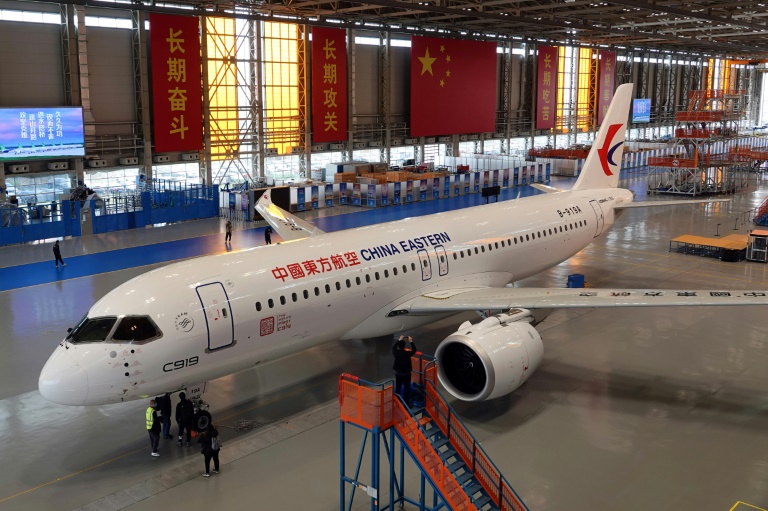
China on Friday announced the first delivery of its new domestically produced passenger jet, with the aircraft expected to make its commercial debut early next year.

Beijing hopes the C919 commercial jetliner will challenge foreign models like the Boeing 737 MAX and the Airbus A320, though most of its parts are sourced from abroad.

The first model of the narrow-body jet, which seats 164 passengers, was formally handed over to China Eastern Airlines during a ceremony at an airport in Shanghai, state media reported.

The move marked “an important milestone” in the journey of China’s aircraft industry, state broadcaster CCTV said.

Footage broadcast Friday by CCTV showed the jet bearing the China Eastern insignia standing on a rainswept airfield and gave a glimpse inside the aircraft’s cabin.

The state-owned Commercial Aircraft Corp of China (COMAC) passed the airline a “commemorative key to the world’s first C919,” CCTV reported.

COMAC said at an airshow last month that it had secured orders for 300 C919s, but did not clarify whether the orders were fully confirmed and gave no details about the value of the deals or delivery dates.

But if the orders go through, they would take the number of known deals for the C919 to over 1,100, based on figures from previous COMAC statements.

Domestic media previously reported that four aircraft were expected to be delivered to China Eastern –- the country’s second-largest carrier by passenger numbers –- by the end of the year before going into operation in the first quarter of 2023.

China sealed a deal for Airbus jets worth $17 billion earlier this year, and the company began producing its A321 model in the northeastern city of Tianjin last month.

The Boeing 737 MAX has been grounded in China since 2019 after two fatal crashes, though the aerospace giant said in July that it may be approved for delivery by Chinese regulators this year.

But lingering US-China trade tensions and China’s worst commercial air disaster earlier this year involving a Boeing 737-800 have slowed progress.

China makes first delivery of homegrown passenger jet

China on Friday announced the first delivery of its new domestically produced passenger jet, with the aircraft expected to make its commercial debut early next year.

Beijing hopes the C919 commercial jetliner will challenge foreign models like the Boeing 737 MAX and the Airbus A320, though most of its parts are sourced from abroad.

The first model of the narrow-body jet, which seats 164 passengers, was formally handed over to China Eastern Airlines during a ceremony at an airport in Shanghai, state media reported.

The move marked “an important milestone” in the journey of China’s aircraft industry, state broadcaster CCTV said.

Footage broadcast Friday by CCTV showed the jet bearing the China Eastern insignia standing on a rainswept airfield and gave a glimpse inside the aircraft’s cabin.

The state-owned Commercial Aircraft Corp of China (COMAC) passed the airline a “commemorative key to the world’s first C919,” CCTV reported.

COMAC said at an airshow last month that it had secured orders for 300 C919s, but did not clarify whether the orders were fully confirmed and gave no details about the value of the deals or delivery dates.

But if the orders go through, they would take the number of known deals for the C919 to over 1,100, based on figures from previous COMAC statements.

Domestic media previously reported that four aircraft were expected to be delivered to China Eastern –- the country’s second-largest carrier by passenger numbers –- by the end of the year before going into operation in the first quarter of 2023.

China sealed a deal for Airbus jets worth $17 billion earlier this year, and the company began producing its A321 model in the northeastern city of Tianjin last month.

The Boeing 737 MAX has been grounded in China since 2019 after two fatal crashes, though the aerospace giant said in July that it may be approved for delivery by Chinese regulators this year.

But lingering US-China trade tensions and China’s worst commercial air disaster earlier this year involving a Boeing 737-800 have slowed progress.

US currency to bear signatures of two women for first time

Most people don’t have to worry if their signature is sloppy — but if it’s your name on the US dollar bill, it’s best to practice, says US Treasury Secretary Janet Yellen.

“It’s customary that Treasury secretaries provide their signature to be featured on our nation’s currency,” said Yellen, the first woman to hold the office, at a ceremony unveiling new notes bearing her name.

“You’d think this would be a straightforward process, but the founding fathers did not account for what seems to be a common attribute for Treasury secretaries: terrible handwriting.”

Yellen had previously remarked in a TV interview that two of her predecessors, Tim Geithner and Jack Lew, had signatures “so illegible that people made fun of them.”

Geithner “famously had to change his signature in order to make it legible,” she joked Thursday.

“I’ll admit: I spent some quality time practicing my signature,” she added.

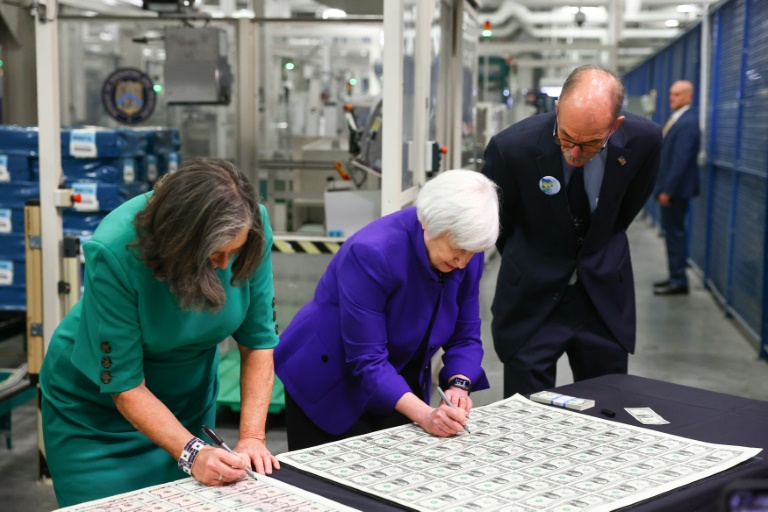
In addition to the first female Treasury secretary’s name appearing on them, the new notes unveiled Thursday will also be historic for including two women’s signatures: that of Yellen and US Treasurer Lynn Malerba.

“Today is not about me or a new signature on our currency. It’s about our collective work to create a stronger and more inclusive economy,” Yellen said in a speech at the Fort Worth, Texas money printing facility.

The notes are set for delivery to the US Federal Reserve this month and will be in circulation starting in early 2023, according to the Treasury Department.

Currently, women represent about 62 percent of the Treasury workforce and hold positions of power, she said.

But much more still needs to be done, Yellen added.

“I hope that today is a reminder of the road we’ve traveled on equity and inclusion. And I hope it motivates us to continue to move forward,” she said.

Malerba’s signature also marks the first time US currency will feature the signature of a Native American woman.

“This moment is history,” said Malerba.

The first notes bearing Yellen and Malerba’s signature coming into circulation will be $1 and $5 bills.

Apart from the site in Texas, the only other greenback printing facility is in the US capital Washington.

Playing with paradise: Defunct Bali golf course another Trump fiasco

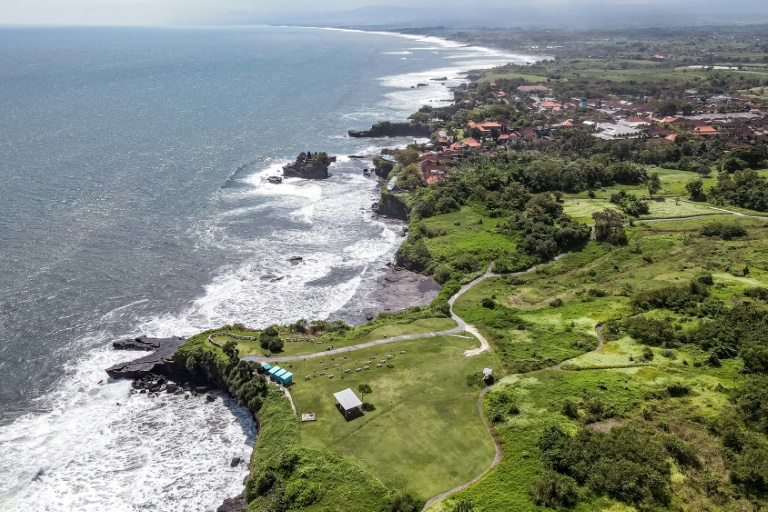
Beer bottles and broken plastic chairs litter the fairways of a derelict golf course on the Indonesian holiday island of Bali, where laid-off workers lament the unfulfilled promises of a Donald Trump “dream project”.

Nearly a decade ago, the real estate mogul and future US president signed a deal to license his name to a six-star holiday destination intended to displace the Nirwana Golf Resort, one of the world’s best.

But today, the once-thriving golf course is filled with weeds — another failed project for Trump, whose six casino and hotel bankruptcies spanning two decades have run up billions of dollars in debt and impacted thousands of lives.

“There was no clarity about our future. We heard that we would be re-recruited but it has never happened,” said Ditta Dwi, a 26-year-old former caddy who was forced to take a waitressing job while awaiting a reopening that never came.

The Trump Organization and Indonesian developer MNC Group shut the resort in 2017 and laid off hundreds of workers after partnering to rebrand the Nirwana, which boasts idyllic views of the Indian Ocean.

The planned redevelopment — Trump’s first venture into Southeast Asia’s biggest economy — was dubbed a “dream project” by his son Donald Trump Jr on a 2019 visit to Jakarta.

But Trump’s deal to license his name to the new resort and help operate it — first struck in 2015 — has turned out to be a pipe dream for Indonesian workers.

Five years after sending staff home, the hotel sits demolished and its course defunct, its forlorn fairways the domain of a solitary security guard who wheels around on a cart, warding off tourists.

The derelict, overgrown and empty site is a far cry from the luxury image Trump long maintained for his real estate interests before setting his sights on the White House.

But the property magnate, who recently announced he will seek the presidency again in 2024, is no stranger to colossal flops.

Six times between 1991 and 2009, his casino and hotel projects fell into bankruptcy. 

The first to fail, the Trump Taj Mahal in the beachside gambling mecca of Atlantic City, New Jersey, threatened Trump’s personal fortune. To cover some of the casino’s debts, he had to sell off his yacht, private jet and half his shares.

– ‘Postponed’ –

MNC chief and Trump ally Hary Tanoesoedibjo — who bought the Nirwana in 2013 — has previously cited lower consumer spending during the Covid-19 pandemic in explaining delays, but the project’s troubles predate the outbreak.

Edwin Darmasetiawan, director of MNC’s property arm, refused to confirm how many Indonesians were sacked when the development was abruptly sidelined.

He said “financial matters” had caused the years-long delays and said he hoped it would still be developed within two years, even though no work has begun.

“I don’t see this project as a failure, but as postponed,” he told AFP.

“We have another project in Lido, now we are focusing on that,” he said, referring to a planned mega resort city of the same name south of Jakarta.

The project in West Java, which will include a Trump golf course and resort, has courted controversy over builders allegedly exhuming Islamic ancestral graves without locals’ permission.

The Trump Organization did not respond to a request for comment about the Bali resort. 

Many Balinese workers have lost opportunities due to the billionaires’ decision to let the plot stagnate.

While hotel workers were compensated after losing their jobs, about 150 caddies on temporary contracts received no money when they were suddenly released.

“It was hard. The time I lost my job as a caddy was difficult. Many people were angry,” said Dwi.

She earned a 1.3 million rupiah ($86) monthly salary, but tips from wealthy golfers meant she could earn as much as 15 million rupiah in a good month. Now she makes the same salary, but no tips.

– ‘Moving on’ –

Yet the hotel and golf workers whose livelihoods were sliced into the rough are trying to forgive and forget.

Dwi, the former caddy, told AFP that getting her old job back now seemed “impossible”.

“I have just let it go. I’m moving on,” she said.

Pita Dewi, who worked at the hotel’s spa for 18 years and now runs her parents’ cafe, said Trump’s shutdown of the resort had left her fearing for her future.

“I got stressed thinking about how I would earn money, because I have children,” she said. 

“I was 48 years old, how could I get another job?”

But in typical Balinese fashion, optimistic locals who believe staunchly in forgiveness are quick to throw away any negative feelings towards the larger-than-life tycoon.

“We have to continue our life,” Dewi said.

“If we hated him, would that make him give us money?”

Playing with paradise: Defunct Bali golf course another Trump fiasco

Beer bottles and broken plastic chairs litter the fairways of a derelict golf course on the Indonesian holiday island of Bali, where laid-off workers lament the unfulfilled promises of a Donald Trump “dream project”.

Nearly a decade ago, the real estate mogul and future US president signed a deal to license his name to a six-star holiday destination intended to displace the Nirwana Golf Resort, one of the world’s best.

But today, the once-thriving golf course is filled with weeds — another failed project for Trump, whose six casino and hotel bankruptcies spanning two decades have run up billions of dollars in debt and impacted thousands of lives.

“There was no clarity about our future. We heard that we would be re-recruited but it has never happened,” said Ditta Dwi, a 26-year-old former caddy who was forced to take a waitressing job while awaiting a reopening that never came.

The Trump Organization and Indonesian developer MNC Group shut the resort in 2017 and laid off hundreds of workers after partnering to rebrand the Nirwana, which boasts idyllic views of the Indian Ocean.

The planned redevelopment — Trump’s first venture into Southeast Asia’s biggest economy — was dubbed a “dream project” by his son Donald Trump Jr on a 2019 visit to Jakarta.

But Trump’s deal to license his name to the new resort and help operate it — first struck in 2015 — has turned out to be a pipe dream for Indonesian workers.

Five years after sending staff home, the hotel sits demolished and its course defunct, its forlorn fairways the domain of a solitary security guard who wheels around on a cart, warding off tourists.

The derelict, overgrown and empty site is a far cry from the luxury image Trump long maintained for his real estate interests before setting his sights on the White House.

But the property magnate, who recently announced he will seek the presidency again in 2024, is no stranger to colossal flops.

Six times between 1991 and 2009, his casino and hotel projects fell into bankruptcy. 

The first to fail, the Trump Taj Mahal in the beachside gambling mecca of Atlantic City, New Jersey, threatened Trump’s personal fortune. To cover some of the casino’s debts, he had to sell off his yacht, private jet and half his shares.

– ‘Postponed’ –

MNC chief and Trump ally Hary Tanoesoedibjo — who bought the Nirwana in 2013 — has previously cited lower consumer spending during the Covid-19 pandemic in explaining delays, but the project’s troubles predate the outbreak.

Edwin Darmasetiawan, director of MNC’s property arm, refused to confirm how many Indonesians were sacked when the development was abruptly sidelined.

He said “financial matters” had caused the years-long delays and said he hoped it would still be developed within two years, even though no work has begun.

“I don’t see this project as a failure, but as postponed,” he told AFP.

“We have another project in Lido, now we are focusing on that,” he said, referring to a planned mega resort city of the same name south of Jakarta.

The project in West Java, which will include a Trump golf course and resort, has courted controversy over builders allegedly exhuming Islamic ancestral graves without locals’ permission.

The Trump Organization did not respond to a request for comment about the Bali resort. 

Many Balinese workers have lost opportunities due to the billionaires’ decision to let the plot stagnate.

While hotel workers were compensated after losing their jobs, about 150 caddies on temporary contracts received no money when they were suddenly released.

“It was hard. The time I lost my job as a caddy was difficult. Many people were angry,” said Dwi.

She earned a 1.3 million rupiah ($86) monthly salary, but tips from wealthy golfers meant she could earn as much as 15 million rupiah in a good month. Now she makes the same salary, but no tips.

– ‘Moving on’ –

Yet the hotel and golf workers whose livelihoods were sliced into the rough are trying to forgive and forget.

Dwi, the former caddy, told AFP that getting her old job back now seemed “impossible”.

“I have just let it go. I’m moving on,” she said.

Pita Dewi, who worked at the hotel’s spa for 18 years and now runs her parents’ cafe, said Trump’s shutdown of the resort had left her fearing for her future.

“I got stressed thinking about how I would earn money, because I have children,” she said. 

“I was 48 years old, how could I get another job?”

But in typical Balinese fashion, optimistic locals who believe staunchly in forgiveness are quick to throw away any negative feelings towards the larger-than-life tycoon.

“We have to continue our life,” Dewi said.

“If we hated him, would that make him give us money?”

Griner heads home after release from Russia in prisoner swap

American basketball star Brittney Griner was headed back to the United States on Thursday after being released from a Russian prison in exchange for an arms dealer known as the “Merchant of Death.”

Griner, 32, who was arrested in Russia in February on drug charges, and Viktor Bout, 55, who was serving a 25-year sentence in a US prison, were exchanged at an airport in Abu Dhabi.

In footage released by Russian state media, Griner, shorn of her distinctive dreadlocks, and a relaxed and animated Bout could be seen crossing paths on the airport tarmac and heading towards the planes that would take them home.

President Joe Biden announced Griner’s release early Thursday in an address to the nation at the White House. “She is safe. She is on a plane. She is on her way home,” he said.

The president said he had spoken to her and she was in “good spirits” after suffering “needless trauma.”

Griner, a two-time Olympic gold medalist, WNBA champion and LGBT trailblazer, was arrested at a Moscow airport nine months ago against a backdrop of soaring tensions over Ukraine.

She was accused of possession of vape cartridges with a small quantity of cannabis oil and sentenced in August to nine years in prison.

Bout, who was accused of arming rebels in some of the world’s bloodiest conflicts, was detained in a US sting operation in Thailand in 2008, extradited to the United States and sentenced in 2012 to 25 years behind bars.

He landed in Russia Thursday, state television said. “Don’t worry, everything is OK, I love you very much,” he told his mother Raisa.

While Griner’s family and friends celebrated her release, another American held in Russia, Paul Whelan, a former US Marine detained since 2018 and accused of spying, was not part of Thursday’s exchange and he told CNN he was “greatly disappointed.”

“I don’t understand why I’m still sitting here,” Whelan told the US television network in a phone call from the Russian penal colony where he is imprisoned.

Biden pledged to obtain Whelan’s freedom, saying “we will never give up.”

“Sadly, for totally illegitimate reasons, Russia is treating Paul’s case different than Brittney’s,” he said.

As for Griner’s release, Biden said “this is a day we’ve worked toward for a long time. It took painstaking and intense negotiations.”

– ‘Family is whole’ –

Biden made the announcement flanked by Griner’s wife, Cherelle Griner, Vice President Kamala Harris and Secretary of State Antony Blinken.

“I’m just standing here, overwhelmed with emotions,” Cherelle Griner said.

She acknowledged Whelan’s fate, saying: “Today my family is whole, but as you all are aware there’s so many other families who are not whole.”

In a statement late Thursday, the Griner family thanked President Biden and his administration again, and said they “pray for Paul and for the swift and safe return of all wrongfully-detained Americans.”

“We ask that you respect our privacy as we embark on this road to healing,” they added. 

WNBA commissioner Cathy Engelbert said there was a “collective wave of joy and relief” in the women’s professional league where the 6’9″ (2.06 meter) Griner has been a star for a decade with the Phoenix Mercury.

Biden thanked the United Arab Emirates for helping “facilitate” Griner’s release and the UAE issued a joint statement with Saudi Arabia saying it was the result of “mediation efforts” by leaders of the two Arab nations.

White House Press Secretary Karine Jean-Pierre said, however, there was “no mediation involved” and “the only countries that negotiated this deal were the United States and Russia.”

– ‘Rescue our compatriot’ –

At the time of her arrest, Griner had been playing for a professional team in Russia, as a number of WNBA players do in the off-season.

She pleaded guilty to the charges against her, but said she did not intend to break the law or use the banned substance in Russia.

Griner testified that she had permission from a US doctor to use medicinal cannabis to relieve pain from her many injuries.

The use of medical marijuana is not allowed in Russia.

The Russian foreign ministry said it had been negotiating with Washington to secure Bout’s release “for a long time” and that initially the United States had “refused dialogue” on including him in any swap.

“Nevertheless, the Russian Federation continued to actively work to rescue our compatriot,” it said. “The Russian citizen has been returned to his homeland.”

The 2005 film “Lord of War” starring Nicolas Cage was based in part on Bout’s arms trafficking exploits and he has been the subject of several books and TV shows.

Russia’s ambassador to the United States, Anatoly Antonov, told Bout in a video message that he was aware that the arms dealer had been subjected to “powerful physical and moral pressure” while in prison, Russian news agency TASS reported.

“And you endured it with dignity,” the ambassador added, saying Moscow was “genuinely delighted by the fact that Russia’s efforts for your release have eventually succeeded.”

Asked about Bout’s release, a senior US defense official said “there is a concern that he would return to doing the same kind of work that he’s done in the past.”

Asian markets mixed with focus on US inflation data, Fed meeting

Asian markets were mixed Friday as optimism about China’s economic reopening continues to face off against concerns about rising interest rates and a possible recession.

With few Thursday catalysts to work with, traders were setting their sights on the release of two key US inflation reports — on Friday and Monday — and the Federal Reserve’s final policy meeting of the year.

In light of data signalling almost a year of interest rate hikes was beginning to impact prices, the US central bank is widely expected to announce a 50 basis point lift at the gathering, compared with the previous four straight 75-point increases.

But there remains some concern that the world’s top economy remains resilient and the jobs market too strong, meaning the Fed might have to keep tightening monetary policy longer than had been hoped.

That uncertainty has weighed on US markets, which have endured a tough December so far, and analysts warned of further pain.

“We think the worst is yet to come,” Gary Schlossberg, at Wells Fargo Investment Institute, told Bloomberg Television.

“We’re looking for a moderate recession next year, which means a moderate decline in corporate profits is our target for the year.”

The mood was slightly better in Asia, particularly Hong Kong, where investor sentiment has been buoyed by China’s decision to shift away from its nearly three-year zero-Covid strategy of lockdowns and mass testing that has battered the economy.

After widespread protests across the country, leaders have decided to loosen their grip, fanning excitement that growth will pick up as activity returns to normal.

A pledge to help the embattled property sector, which accounts for a huge part of the economy, was also providing a lift.

“The process will likely be gradual and bumpy over the year ahead, due to low immunisation of the population and unpreparedness of the health system to deal with a possible further surge in cases,” Silvia Dall’Angelo, at Federated Hermes, said in a note.

“Reopening should gain traction in the second half of next year. At that stage, the Chinese recovery will likely accelerate, as the removal of restrictions will allow fiscal and monetary stimulus to be effective.”

And JPMorgan strategist Marko Kolanovic added that he “remains positive on China, due to favorable monetary conditions as well as an eventual full reopening and end of Covid”.

Hong Kong rose in early trade, along with Tokyo, Sydney, Seoul, Singapore and Taipei, though Shanghai, Wellington, Manila and Jakarta edged down.

Oil prices rose after another big drop, with both main contracts down more than 10 percent this week as expectations for a recession in the United States and elsewhere weighed on demand expectations.

– Key figures around 0230 GMT –

Tokyo – Nikkei 225: UP 1.4 percent at 27,946.21 (break)

Hong Kong – Hang Seng Index: UP 0.3 percent at 19,498.04

Shanghai – Composite: DOWN 0.2 percent at 3,189.58

Euro/dollar: UP at $1.0570 from $1.0560 on Thursday

Dollar/yen: DOWN at 136.29 yen from 136.61 yen

Pound/dollar: UP at $1.2255 from $1.2239

Euro/pound: DOWN at 86.22 pence from 86.24 pence

West Texas Intermediate: UP 1.0 percent at $72.16 per barrel

Brent North Sea crude: UP 0.9 percent at $76.82 per barrel

Bangladesh opposition says top leaders taken by police

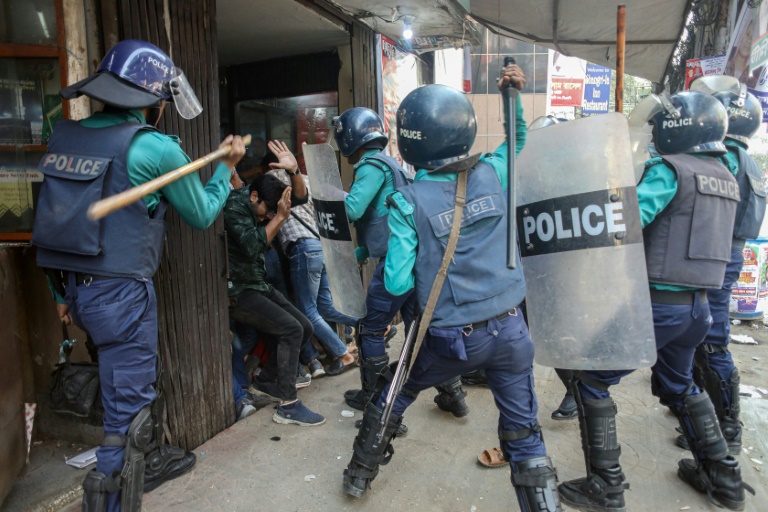
The two top leaders of Bangladesh’s main opposition party were taken from their homes by police in the early hours Friday, a party spokesman said, a day before a planned rally was to call for the prime minister’s resignation.

Protests sparked by power cuts and fuel price hikes have erupted across the country in recent months, demanding that Prime Minister Sheikh Hasina step down in favour of fresh elections under a caretaker government.

Friday’s police action comes two days after security forces in the capital Dhaka fired rubber bullets and tear gas into a crowd of thousands of Bangladesh Nationalist Party (BNP) supporters preparing for the December 10 rally, leaving at least one dead and scores wounded.

BNP general secretary Mirza Fakhrul Islam Alamgir and Mirza Abbas, a former minister and member of the party’s top decision-making body, were taken from their homes at about 3 am on Friday (1900 GMT Thursday), Zahiruddin Swapan, head of the BNP’s media wing, told AFP.

“They were plainclothes policemen. Alamgir knew their identity. They told him he was being taken away on the order of the high command,” Swapan said, adding the party did not know where the two had been taken.

Police could not be immediately reached for comment.

Tensions have been high in the capital ahead of the planned Saturday rally, which the BNP said would draw hundreds of thousands of supporters from all over the country.

Police have insisted they would not allow a demonstration in front of the party office, which they called a “crime scene” after claiming to have found Molotov cocktails at the location.

But a defiant Alamgir on Thursday told a press briefing the party planned to push forward with the event.  

BNP spokesman Swapan said police had arrested “around 2,000” party activists and supporters in a bid to scuttle the December 10 rally.

Independent observers have said the past two general elections, in which the BNP was decimated, were rigged by Hasina’s government.

Fifteen Western embassies issued a joint statement late Tuesday calling for the country to allow free expression, peaceful assembly and fair elections. 

The UN a day later said Bangladesh must uphold its commitments to free expression, media freedom and peaceful assembly.

Addressing Wednesday’s violence, Amnesty International’s Yamini Mishra said the incident showed “that the Bangladesh authorities have very little regard for the sanctity of human life and sends a chilling message that those who dare to exercise their human rights will face dire consequences”.

Close Bitnami banner
Bitnami