World

US basketball star Griner swapped for Russian arms dealer

American basketball star Brittney Griner was headed home on Thursday after being freed from a Russian prison in a swap for Viktor Bout, the notorious arms dealer known as the “Merchant of Death.”

President Joe Biden announced Griner’s release in an address to the nation and Moscow confirmed she had been exchanged in Abu Dhabi for Bout, who was serving a 25-year prison sentence in the United States.

“She is safe. She is on a plane. She is on her way home,” Biden said, adding that he had spoken to Griner and she was in “good spirits” after a “terrible ordeal.”

The 32-year-old Griner, a two-time Olympic gold medalist, WNBA champion and LGBT trailblazer, was arrested on drug charges at a Moscow airport in February against a backdrop of soaring tensions over Ukraine.

Another American held in Russia, Paul Whelan, a former US Marine detained in 2018 and accused of spying, was not part of the prisoner exchange and he told CNN he was “greatly disappointed.”

“I don’t understand why I’m still sitting here,” Whelan told the US television network in a phone call from the Russian penal colony where he is imprisoned.

Biden pledged to continue to seek Whelan’s freedom, saying “we will never give up.”

“Sadly, for totally illegitimate reasons, Russia is treating Paul’s case different than Brittney’s,” he said.

Griner was accused of possession of vape cartridges with a small quantity of cannabis oil and sentenced in August to nine years in prison.

Biden said Griner’s release was the result of “painstaking and intense negotiations” and she would need time to recover from “needless trauma” after being “wrongfully detained.”

– ‘Family is whole’ –

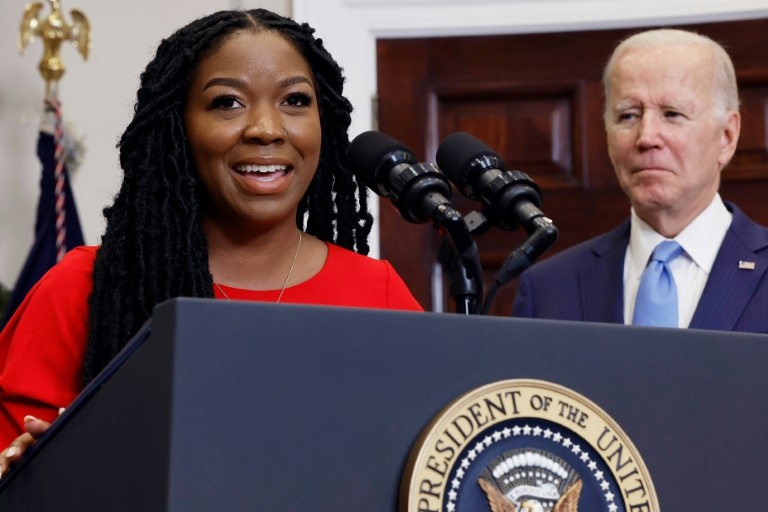
Biden made the announcement at the White House flanked by Griner’s wife, Cherelle Griner, Vice President Kamala Harris and Secretary of State Antony Blinken.

“I’m just standing here, overwhelmed with emotions,” Cherelle Griner said, describing her wife’s imprisonment as “one of the darkest moments of my life.”

She also acknowledged Whelan’s fate, saying: “Today my family is whole, but as you all are aware there’s so many other families who are not whole.”

WNBA commissioner Cathy Engelbert welcomed Griner’s freedom saying there was a “collective wave of joy and relief” in the women’s professional league where the 6’9″ (2.06 meter) Griner has been a star for a decade.

Former president Barack Obama tweeted “kudos to @POTUS and his administration for the difficult diplomatic work involved to make it happen.”

Biden publicly thanked the United Arab Emirates for helping “facilitate” Griner’s release and the UAE issued a joint statement with Saudi Arabia saying it was the result of “mediation efforts” by leaders of the two Arab nations.

Griner and Bout were flown to Abu Dhabi by private planes, the statement said, and were exchanged “in the presence of specialists from the United Arab Emirates and Saudi Arabia.”

Biden said Griner was expected back in the United States within 24 hours.

– ‘Rescue our compatriot’ –

At the time of her arrest, Griner had been in Russia to play for the professional Yekaterinburg team, during her off-season from the Phoenix Mercury.

She pleaded guilty to the charges against her, but said she did not intend to break the law or use the banned substance in Russia.

Griner testified that she had permission from a US doctor to use medicinal cannabis to relieve pain from her many injuries.

The use of medical marijuana is not allowed in Russia.

The Russian foreign ministry said it had been negotiating with Washington to secure Bout’s release “for a long time” and that initially the United States had “refused dialogue” on including him in any swap.

“Nevertheless, the Russian Federation continued to actively work to rescue our compatriot,” it said. “The Russian citizen has been returned to his homeland.”

The 55-year-old Bout, who was accused of arming rebels in some of the world’s bloodiest conflicts, was arrested in a US sting operation in Thailand in 2008, extradited to the United States and sentenced in 2012 to 25 years in prison.

The 2005 film “Lord of War” starring Nicolas Cage was based in part on Bout’s arms trafficking exploits and he has been the subject of several books and TV shows.

Asked about Bout’s release, a senior US defense official said “there is a concern that he would return to doing the same kind of work that he’s done in the past.”
Far-right prince at centre of German coup plot

A German prince, known for his desire to revive the country’s monarchy and rejected by his own family as a “mad old man”, has emerged as a central figure in an alleged coup plot.

Prince Heinrich XIII Reuss, descendant of a noble family with a history dating back over eight centuries, was supposed to be installed as Germany’s new leader if the bizarre plan had succeeded, officials say.

But he was arrested, along with other alleged plotters including a right-wing ex-MP and former soldiers, in a massive nationwide operation by thousands of German security forces Wednesday. 

The group are alleged members of the “Citizens of the Reich” (“Reichsbuerger”), an ideological movement grouping far-right extremists and conspiracy enthusiasts.

The suspected seditionists are said to have planned to storm parliament and had sketched out details of their new government.

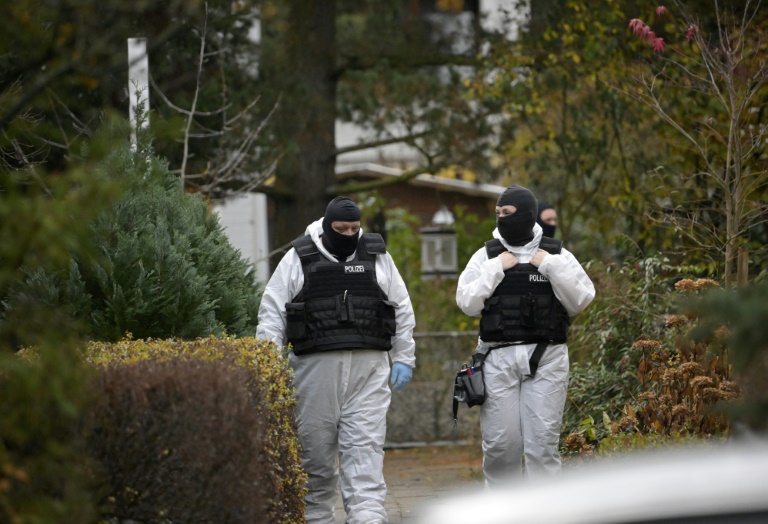
Heinrich XIII, a real estate businessman, was arrested at his residence in Frankfurt and led out by police wearing masks. 

At the same time, his castle in Bad Lobenstein in the eastern region of Thuringia — where his aristocratic family had once ruled over a swathe of land — was also searched. 

It was at this grand residence where the prince allegedly plotted with others to overthrow the government.

The 71-year-old had made little attempt to hide his extreme views, which chimed with the “Reichsbuerger” movement’s belief in the continued existence of the pre-World War I German Reich, or empire, under a monarchy.

In a rambling speech to a conference in Zurich in 2019, he lamented the abdication of the German emperor in 1918, and insisted the modern-day German republic was illegitimate. 

He referred to the “so-called Federal Republic of Germany” and said the country was “being controlled based on administrative structures installed by the Allies after World War II”, who had also written the constitution.

– ‘Black sheep’ –

Other descendants of the noble family have starkly different views however, and have long been trying to distance themselves from him.

The prince is “unfortunately a mad old man,” the family’s current head, Prince Heinrich XIV Reuss, told AFP, adding they had cut ties with him 14 years earlier. 

“There is no contact with this black sheep of the family.”

The head of the house, who is based in Austria, said he was “very shocked” to hear of his relative’s alleged involvement in the plan to overthrow the government. 

“It is very bad for the family’s reputation, no question,” he added. 

On Thursday, federal police chief Holger Muench said the far-right group behind the plan was heavily armed and posed a real threat.

Those arrested included “a dangerous mix of people with irrational convictions, some with a lot of money and others in possession of weapons”, he told the ARD broadcaster.

Weapons including crossbows, rifles and ammunitions were uncovered during Wednesday’s raids, he said. Twenty-five were arrested in the raids while more are under investigation for their links to the group.

Still, views differed as to how serious the plot really was. 

A comment piece in the Sueddeutsche Zeitung daily warned it would be naive to dismiss the group as “loonies”.

It noted the plotters included “teachers, doctors, business people… They are people who should actually be pillars of democracy”.

The Frankfurter Allgemeine Zeitung daily, however, cautioned against “getting too carried away”, as nothing suggested the plot would have succeeded.

sr/sea/raz

Israel troops kill 4 Palestinians in West Bank unrest

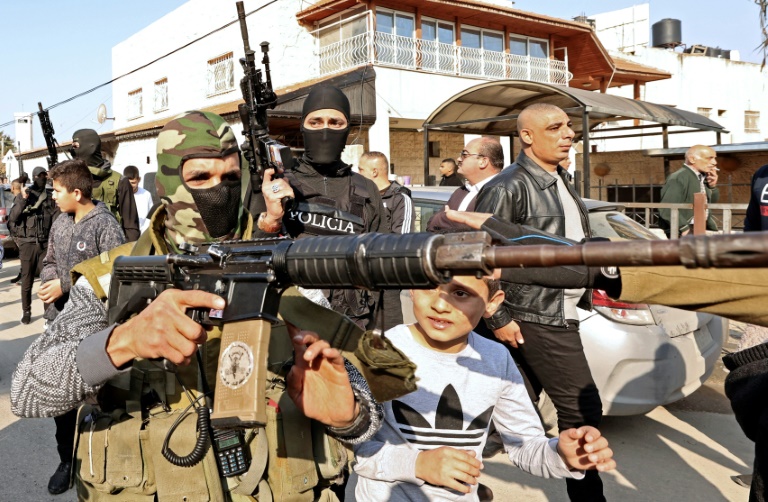
Israeli troops on Thursday killed three Palestinians during a firefight in a West Bank city, and another in a separate incident, Palestinian officials said.

The gunfire came during the latest in scores of near-daily raids the army has carried out through much of this year in the occupied West Bank following a series of deadly attacks on Israelis.

The surging violence has sparked global alarm.

Israeli forces said no troops were hurt in the exchange of fire with militants in the city of Jenin, a stronghold of hardline factions.

The Palestinian health ministry said three people were killed “by bullets from the Israeli occupation during its aggression in Jenin at dawn”.

Troops entered to detain people “suspected of involvement in terrorist activity”, the Israeli military said.

“The soldiers operated while being targeted with direct fire and responded with live fire,” the army said in a statement.

The Islamic Jihad militant group said its fighters engaged in “fierce clashes” with Israeli forces in the northern West Bank city.

Mahmud al-Saadi, head of the Palestinian Red Crescent in Jenin, told AFP an ambulance crew came under fire “from a building where Israeli snipers were present” while it was evacuating a wounded person.

The Israeli military told AFP it was “not aware” of such allegations.

Jenin’s Ibn Sina hospital identified the dead as Atta Shalabi, Sidqi Zakarneh and Tariq Damej.

Palestinians carried the bodies of those killed through the streets for their funeral procession.

The Israeli army said it had carried out multiple operations across the West Bank overnight Wednesday-Thursday to arrest wanted suspects in cities including Bethlehem and Ramallah.

Later on Thursday, Israeli troops fired at Palestinians who “hurled rocks and paint bottles at cars” on a road northwest of Ramallah, the army said.

The Palestinian health ministry said one person was killed, and a Palestinian security source named him as Deyaa Erhimi, 16, from the nearby village of Beit Rima.

Two others were wounded in the incident and transferred to hospital, the ministry added.

– International alarm –

A surge in bloodshed this year has seen 26 Israelis and at least 150 Palestinians killed across Israel and the West Bank.

The toll includes more than 40 Palestinians killed during Israeli operations in the Jenin area, among them children as young as 12 and veteran Palestinian-American journalist Shireen Abu Akleh as well as militants.

Palestinian prime minister Mohammad Shtayyeh called on the international community “to protect our people” amid ongoing “Palestinian bloodshed”.

The European Union said Saturday it was “greatly concerned about the increasing level of violence”.

A US State Department spokesman has also called “for all parties to do everything in their power to de-escalate the situation”.

Also last week, the United Nations envoy for Middle East peace, Tor Wennesland, warned the situation in the territory was “reaching a boiling point”. 

In the West Bank town of Silwad, Palestinians gathered for the funeral of Muhajid Mahmoud Hamed, 32, killed by Israeli troops on Wednesday, after what the army said was a drive-by shooting targeting a military post.

Israel has occupied the West Bank, including annexed east Jerusalem, since the Six-Day War of 1967.

Hamas, the Palestinian militant group which rules the Gaza Strip, called “on the masses of our people in the West Bank and the revolutionary youth to escalate the resistance” against the Israeli occupation.

Gaza was hit by three days of fighting between Israel and Islamic Jihad militants in August in which 49 Palestinians were killed.

Kazakhstan moves to reel in crypto mining

Kazakhstan, one of the world’s leading locations for cryptocurrency mining, has moved to reel in the power-hungry industry that has often burdened the ageing energy grid of the Central Asian country.

The ex-Soviet country’s lower house of parliament on Wednesday passed legislation which introduced a tax and a mandatory license for companies mining cryptocurrencies among other measures, state news agency Kazinform reported. 

In recent months, Kazakhstan, the region’s largest economy, has looked to promote the expansion of cryptocurrency mining while cracking down on illegal mining farms.

“The goal of the bill is to eliminate illegal mining and create an adequate legal environment for legal entrepreneurs,” lawmaker Yekaterina Smyshlyayeva, who introduced the bill, told AFP on Thursday. 

She added that this activity is a “capital intensive business and the risks are very high”.

“Miners will only be able to buy electricity from the general electricity network in the event of a surplus,” she said Wednesday as quoted by Kazinform. 

According to data from the University of Cambridge, Kazakhstan was the world’s third-largest miner of cryptocurrency as of January 2022, behind the United States and China. 

Mining for cryptocurrency, such as bitcoin, requires powerful computers to solve complex mathematical puzzles, resulting in the consumption of huge amounts of electricity.

Kazakhstan has many benefits for the industry, including some of the cheapest electricity in the world and a cold climate favourable for cooling computers. 

It has also seen an influx of miners from neighbouring China, where the mining of cryptocurrency is officially banned. 

Kazakhstan’s energy system dates back to the Soviet era and, despite investments, remains dilapidated and regularly experiences energy deficits.

In March, the Kazakh government announced the closure of some 100 illegal mining farms, including those belonging to the brother of the former president Nursultan Nazarbayev. 

Canada's Alberta province passes bill to ignore federal law

Canada’s Alberta province passed a bill Thursday that allows its government to ignore federal laws it deems harmful — pointing to, for example, measures to curb its oil industry’s emissions.

Canada is among the world’s top oil producers and much of that output comes from the oil sands in northern Alberta.

The so-called Sovereignty Act is the latest volley in a long-festering feud between Alberta and the national government, which in 2018 imposed a carbon tax and other climate measures to curb CO2 pollution.

Several provinces, including Alberta, fought unsuccessfully all the way to the Supreme Court against the levy, which is set to rise from Can$50 (US$37) per tonne of CO2 emissions to Can$170 in 2030.

Alberta’s newly minted United Conservative Party leader and premier, Danielle Smith, has said the Sovereignty Act could also be used to push back against federal gun control measures.

“The way our country works is that we are a federation of sovereign, independent jurisdictions,” Smith told her legislature during a late-night sitting that stretched past 1:00 am Thursday.

Provinces “have a right to exercise our sovereign powers in our own areas of jurisdiction,” she said.

Before the vote, the most controversial provision of the bill — which would have given Smith’s cabinet sweeping powers to rewrite laws as it saw fit and bypass the legislature — was stripped out.

The opposition New Democratic Party (NDP) said the bill remains an unconstitutional “hot mess” that circumvents the democratic process and risks putting a chill on investing in the province.

Indigenous leaders also expressed concern over its uncertain impact.

With an election in Alberta less than six months away and the province’s NDP vowing to repeal the bill if they win, Prime Minister Justin Trudeau sought to avoid being dragged into a grudge match.

“The Alberta government is trying to push back at the federal government,” he told reporters in Ottawa.

Rather than arguing with them, Trudeau said his liberal administration would seek to “work as constructively as possible” on federal priorities such as jobs, child care, dental care and help for renters.

China's Xi, Saudi royals ink deals during high-stakes visit

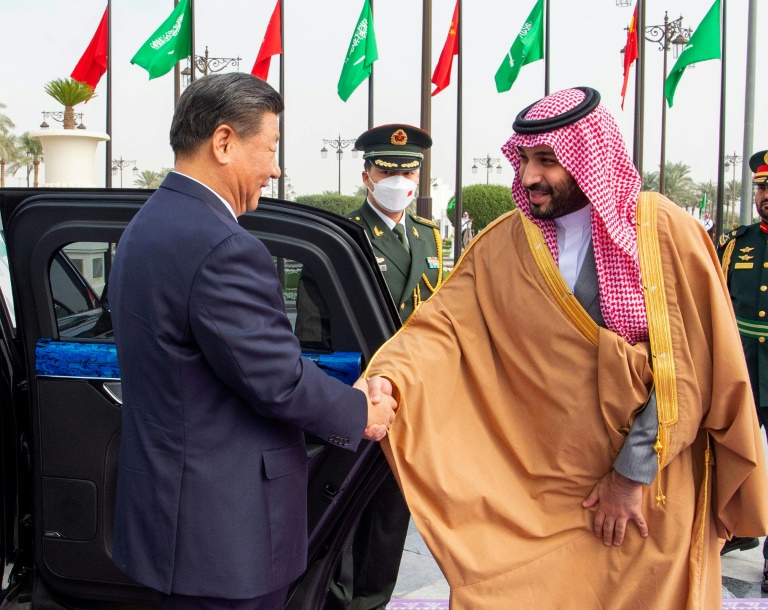
Chinese President Xi Jinping and Saudi Arabia’s powerful crown prince met Thursday on an Arab outreach visit that has earned a rebuke from Washington, reaching deals in areas including energy and infrastructure. 

Agreements worth about $30 billion were to be signed, Saudi state media said, as China seeks to shore up its Covid-hit economy and as the Saudis, long-term US allies, push to diversify their economic and political alliances.

Xi and Crown Prince Mohammed bin Salman, the 37-year-old de facto ruler of the world’s biggest oil exporter, met at Yamamah Palace in Riyadh, flanked by high-ranking officials wearing face masks, footage aired on state television showed.

They oversaw the signing of energy agreements on hydrogen as well as a plan to “harmonise” Saudi Arabia’s ambitious economic reform agenda, Vision 2030, with China’s trillion-dollar Belt and Road Initiative, the official Saudi Press Agency said. 

The signed deals also covered a petrochemicals project, housing development and the teaching of the Chinese language, SPA said, though it did not detail their substance or monetary value.

Earlier, state television showed Xi being greeted by Prince Mohammed before the two men stood side-by-side as a brass band played their countries’ national anthems. 

They then chatted while walking into the palace, which is the king’s official residence and seat of the royal court. 

Xi also met with Prince Mohammed’s father, 86-year-old King Salman, signing a comprehensive strategic partnership agreement first reached during Xi’s last visit in 2016, state media reported. 

They “agreed to hold a heads of state meeting between the two countries in turn every two years”, Chinese state media said.

“I am very pleased to visit Saudi Arabia again after six years. I still remember the scenes from my last visit,” Xi said in remarks carried by Chinese state broadcaster CCTV.

“The Chinese side views the Saudi side as an important force in a multipolar world and attaches high importance to developing a comprehensive strategic partnership with Saudi Arabia.”

He said Beijing was ready to expand its crude oil trade with Riyadh and would “list Saudi Arabia as a destination country for outbound tourism organised by Chinese citizens”.

– ‘Raising pace’ of cooperation –

Upon his arrival on Wednesday, Xi said bilateral ties with Saudi Arabia had grown “by leaps and bounds” in recent years. 

This “has not only enriched both countries’ peoples but promoted regional peace, security, prosperity and development,” Xi said, according to CCTV.

The crown prince sees China as a critical partner in his sweeping Vision 2030 agenda, seeking the involvement of Chinese firms in ambitious mega-projects meant to diversify the economy away from fossil fuels.

Saudi investment minister Khalid al-Falih said this week’s visit “will contribute to raising the pace of economic and investment cooperation between the two countries”, offering Chinese companies and investors “rewarding returns”, according to SPA.

Earlier on Thursday, Saudi state media announced 34 investment agreements in sectors including green hydrogen, information technology, transport and construction.

State broadcaster Al-Ekhbariya said another 20 agreements worth 110 billion riyals ($29.3 billion) were due to be signed.

– Arab outreach –

Arab leaders began Thursday to converge on the Saudi capital ahead of summit meetings with Xi, who will hold separate talks with the six-member Gulf Cooperation Council before leaving on Friday.

China, the top consumer of Saudi oil, has been strengthening ties with a region that has long relied on the United States for military protection but which has voiced concerns the American presence could be downgraded.

Egyptian President Abdel Fattah al-Sisi, Palestinian president Mahmud Abbas and Sudan’s de facto leader Abdel Fattah al-Burhan had all arrived by Thursday afternoon, according to the Saudi foreign ministry.

Qatari Emir Sheikh Tamim bin Hamad Al-Thani, Tunisian President Kais Saied, Iraqi Prime Minister Mohammed Shia al-Sudani, Moroccan Prime Minister Aziz Akhannouch and Lebanese caretaker Prime Minister Najib Mikati have also confirmed their attendance.

Beijing’s foreign ministry this week described Xi’s trip as the “largest-scale diplomatic activity between China and the Arab world” since the People’s Republic of China was founded.

It has not escaped the attention of the White House, which warned of “the influence that China is trying to grow around the world”, calling its objectives “not conducive to preserving the international rules based order”. 

Washington has long been a close partner of Riyadh, but the relationship is currently roiled by disagreements on energy policy, US security guarantees and human rights. 

Xi is making his third journey overseas since the Covid pandemic prompted China to shut its borders and embark on a series of lockdowns, putting the brakes on its giant economy.

His visit follows US President Joe Biden’s trip in July, when he greeted Prince Mohammed with a fist-bump at the start of a vain attempt to convince the Saudis to raise oil production.

Peru's new president under pressure after predecessor's arrest

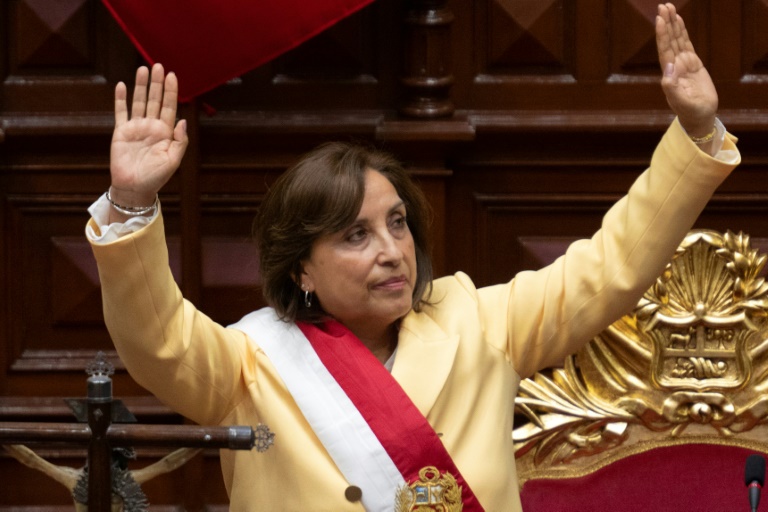
Peru’s new President Dina Boluarte was under pressure Thursday to quell the political turmoil rocking the country, a day after the dramatic arrest of her predecessor, who stands accused of attempting a coup.

The South American country’s first-ever woman leader asked the opposition for a truce as she prepared to form a government, as doubt hung over her ability to survive the firestorm ignited by Pedro Castillo.

The prosecutor’s office said it had carried out a dawn raid on the presidency and some ministerial offices in Lima, in search of evidence against Castillo, who is being investigated for “rebellion and conspiracy” a day after he tried to dissolve parliament and rule by decree.

Castillo’s efforts were quickly stamped out by lawmakers who voted him out of office in a dizzying day of high drama, by the end of which he was in jail and his former vice president Boluarte had emerged as the new head of state.

In another twist, Mexico’s President Andres Manuel Lopez Obrador revealed Thursday that Castillo had called his office to request asylum in his country’s embassy, which he planned to grant, but the leftist was arrested before he could arrive there.

Boluarte took the oath of office shortly after the impeachment vote, vowing to serve out the rest of Castillo’s term, until July 2026.

She called for “national unity” and urged lawmakers to put aside their ideological differences, in a tacit reference to the confrontation between Castillo’s leftist government and the right-wing dominated Congress.

The 60-year-old lawyer must now form her first ministerial cabinet, which will be an early indication of whether she is likely to survive in office.

Her initial appointments will signal the support she can muster for her government. If she is unable to rule, calls will grow for her resignation or the calling of early elections.

The United States praised Peru for ensuring “democratic stability” despite the tumult.

A State Department spokesperson said the country would “continue to support Peru under the unity government President Boluarte pledged to form.” 

– Dizzying hours –

The dramatic events in Peru are the latest in a long line of political crises for the country, where impeachment proceedings are common, and which is now on its sixth president since 2016.

Castillo’s 17-month rule was overshadowed by multiple cabinet reshuffles, six investigations against him and his family, mass protests demanding his removal, and a power struggle with the opposition-backed Congress.

The current crisis began as the former rural school teacher on Wednesday faced his third impeachment attempt since unexpectedly wresting power from Peru’s traditional political elite.

In a televised address, the 53-year-old announced he was dissolving the opposition-dominated Congress, imposing a curfew and would rule by decree for at least nine months.

As criticism poured in over the speech, lawmakers defiantly gathered to approve the impeachment motion.

By Wednesday night, Castillo had been transferred to a police facility in east Lima, where graft-convicted former president Alberto Fujimori — himself removed by Congress in 2000 — is serving out his sentence.

Hundreds of Castillo’s supporters protested outside the Lima police headquarters after his impeachment, clashing with police who fired tear gas to quash the demonstrations.

“Shut Congress, nest of rats,” read one of their signs.

Meanwhile, those opposed to the former president burned t-shirts bearing his image.

The European Union expressed its support for the “political, democratic and peaceful solution adopted by the Peruvian institutions.”

UN Secretary-General Antonio Guterres called on all parties to “uphold the rule of law, as well as to remain calm and refrain from inflaming tensions.”

– ‘She is alone’ –

Without her own political party in Congress, Boluarte faces an uphill battle to stay in power.

“She has no party in Congress, she is alone,” Peru’s former president Ollanta Humala told local television Wednesday night.

“She does not have the tools to govern, she should call for an early election,” added Humala, who served from 2011 to 2016.  

“Today’s truce will last a month or maybe more, but then the country’s big problems will come to the fore.”

But right-wing political heavyweight Keiko Fujimori, the daughter of ex-president Fujimori, said her party would support the new president.   

“Let’s hope that the president appoints a broad-based cabinet, a very good cabinet and we must all do everything possible to make it work well,” she tweeted.

Markets jostled by recession fears, China optimism

Wall Street stocks staged a relief rally and Hong Kong soared on Thursday, but elsewhere equity trading was held back by recession fears.

Oil prices, meanwhile, added to recent sharp losses.

Equity markets had been rising ahead of US jobs figures last week, boosted by a surprise drop in inflation and comments from Federal Reserve boss Jerome Powell that the bank was likely to raise rates at a slower pace.

But robust jobs figures and a jump in wages, plus data on Monday showing a forecast-busting jump in activity in the US services sector last month, raised the prospect that the Fed will not back down from sharp rate increases when it meets next week.

That sent stocks slumping, with even China’s relaxing of Covid testing and quarantine restrictions, setting up the prospect of a rebound in activity in the world’s second-largest economy, unable to turn sentiment.

Following several days of losses, Wall Street moved higher on Thursday, with the Dow up 0.6 percent in late morning trading.

“What we have today, then, is a little rebound spirit — an assumption that the stock market is due for a bounce after behaving so poorly in more recent action…” said market analyst Patrick O’Hare at Briefing.com.

European stocks spent the afternoon wobbling between gains and losses. Frankfurt ended the day flat, while London and Paris shed 0.2 percent.

“The risk-off sentiment… remains hard to kick into touch as concerns about recession stay front and centre,” noted Susannah Streeter, senior investment and markets analyst at Hargreaves Lansdown.

“The evil twins of recession and persistently higher inflation are lurking, keeping investors on edge.”

Analysts pointed out that two-year US Treasury yields were much higher than those of 10-year bonds, which is usually considered a clear indication of a looming recession.

This week also saw the heads of some of Wall Street’s biggest banks warn of a downturn.

– China Covid shift –

The fear of a US recession is playing off against China’s shift away from its zero-Covid strategy of lockdowns and mass testing.

After widespread protests last month against the strict measures and calls for more political freedoms, authorities have scaled back many of them and on Wednesday announced a nationwide loosening of restrictions.

While there are worries that the more liberal approach will spark a surge in infections, it has helped fan a rally in Hong Kong where Chinese tech firms and property developers are listed.

The Hang Seng Index closed up more than three percent Thursday.

“Developments in China have a big role to play, although as we’re seeing once again, Covid-related moves are almost exclusively impacting stocks in domestic markets,” said Craig Erlam, senior analyst at OANDA trading group. 

“We can see that again overnight, with reports of looser mask and isolation requirements in Hong Kong lifting the Hang Seng and making it the clear outperformer in the region, while most other indices tread water.”

Joshua Mahony, senior market analyst at online trading platform IG, said “to a large extent this week highlights how traders have to somehow weigh up the benefits of a gradual Chinese reopening with the fears of an impending economic contraction in the year ahead.”

– Key figures around 1630 GMT –

New York – Dow: UP 0.6 percent at 33,799.15 points

EURO STOXX 50: FLAT at 3,921.27

London – FTSE 100: DOWN 0.2 percent at 7,472.17 (close)

Frankfurt – DAX: FLAT at 14,264.56 (close)

Paris – CAC 40: DOWN 0.2 percent at 6,647.31 (close)

Tokyo – Nikkei 225: DOWN 0.4 percent at 27,574.43 (close)

Hong Kong – Hang Seng Index: UP 3.4 percent at 19,450.23 (close)

Shanghai – Composite: DOWN 0.1 percent at 3,197.35 (close)

Euro/dollar: UP at $1.0548 from $1.0510 on Wednesday

Dollar/yen: UP at 136.58 yen from 136.57 yen

Pound/dollar: UP at $1.2221 from $1.2209

Euro/pound: UP at 86.29 pence from 86.05 pence

Brent North Sea crude: DOWN 1.0 percent at $76.38 per barrel

West Texas Intermediate: DOWN 0.4 percent at $71.74 per barrel

Ex-Wirecard CEO in the dock over 'unparalleled' fraud

Wirecard’s ex-CEO Markus Braun and two former executives went on trial in Munich on Thursday charged with fraud over their involvement in Germany’s biggest-ever accounting scandal.

The mammoth court case comes two and a half years after digital payments firm Wirecard collapsed in spectacular fashion after admitting that 1.9 billion euros ($2 billion) missing from its accounts did not actually exist.

Chancellor Olaf Scholz, who was finance minister at the time of Wirecard’s implosion, described the scandal as “unparalleled” in Germany’s post-war history.

The first day of the keenly anticipated trial, held in a high-security courtroom inside the sprawling Stadelheim prison complex, mainly consisted of the prosecution reading out the 90-page indictment.

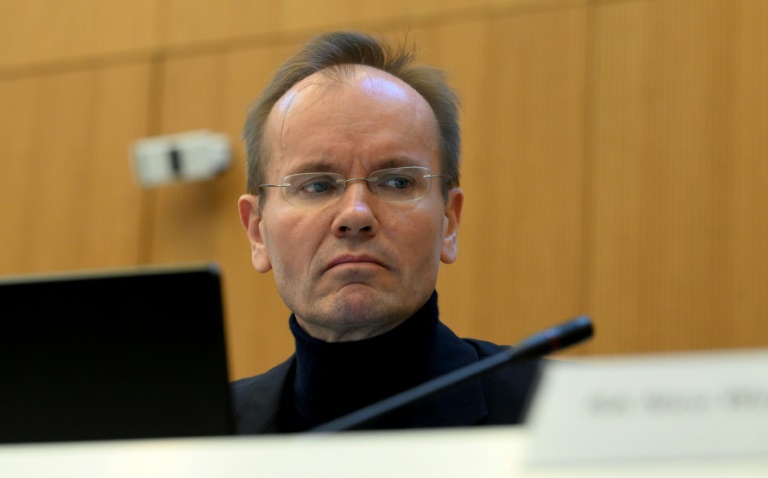
Austrian-born Braun, in custody since July 2020, appeared in the dock wearing his trademark dark turtleneck under a suit jacket. 

The 53-year-old spoke only to confirm his personal details and appeared to be following the proceedings intently.

– Fugitive COO –

Braun has been charged with commercial gang fraud, breach of trust, false accounting and market manipulation.

He denies the allegations and claims to be a victim of the fraud, painting Wirecard’s fugitive former chief operating officer Jan Marsalek as the mastermind.

Marsalek, a shadowy figure with ties to foreign intelligence services, was reported earlier this year to be hiding out in Russia.

Braun’s co-defendants are ex-accounting boss Stephan von Erffa and Oliver Bellenhaus, the former head of Wirecard’s Dubai subsidiary.

Bellenhaus has admitted wrongdoing and will act as a key witness for the prosecution.

If found guilty, the trio risk lengthy prison sentences.

But Bellenhaus’s lawyer, Florian Eder, told reporters he expected “a significantly reduced sentence” for his client given his cooperation with authorities.

The complex trial is expected to last well into 2024.

– Fake transactions –

The prosecution’s case centres around the claim that Wirecard executives inflated the company’s earnings, starting at least as far back as 2015, by inventing revenue streams from transactions with a web of partner companies.

These so-called Third Party Acquirer (TPA) companies in Dubai, the Philippines and Singapore accounted for a huge chunk of Wirecard’s sales and profits according to its books.

But “all the accused knew” that the revenues from these TPA businesses “didn’t exist”, the indictment said, adding that the defendants used forged documents to hide the trickery.

The goal was “to increase the company’s financial strength and make it more attractive to investors and customers”, prosecutors alleged.

Braun’s defence lawyer, Alfred Dierlamm, is expected to argue on Monday that the business dealings with partner companies were real.

But the commissions resulting from those transactions were not transferred into the correct Wirecard accounts. Instead, the defence will claim, the funds were secretly diverted to tax havens without Braun’s knowledge.

– FT investigation –

Founded in 1999 as an outfit processing credit card payments for porn and gambling websites, Wirecard rose to become a respectable player in the booming “fintech” (financial technology) sector.

It joined Germany’s blue-chip DAX index in 2018 and at its peak was valued at more than 24 billion euros, outweighing giant Deutsche Bank.

Despite occasional speculation of wrongdoing at the company, Wirecard continued its meteoric rise.

But its troubles began in earnest in 2019 when the Financial Times published a series of explosive articles detailing accounting irregularities.

The scam finally unravelled when long-time auditor EY uncovered a 1.9-billion-euro hole in its accounts in June 2020.

The cash, which made up a quarter of Wirecard’s balance sheet, was meant to be sitting in trustee accounts at two banks in the Philippines.

But the Philippines’ central bank has said the cash never entered its monetary system and both Asian banks, BDO and BPI, denied having a relationship with Wirecard.

Wirecard’s share price tanked and it filed for insolvency soon after, leaving behind three billion euros in debt that creditors are unlikely to recover.

The company’s downfall sent shockwaves through Germany and prompted an overhaul of finance watchdog Bafin, heavily criticised for ignoring early warnings about Wirecard.

Ex-Wirecard CEO in the dock over 'unparalleled' fraud

Wirecard’s ex-CEO Markus Braun and two former executives went on trial in Munich on Thursday charged with fraud over their involvement in Germany’s biggest-ever accounting scandal.

The mammoth court case comes two and a half years after digital payments firm Wirecard collapsed in spectacular fashion after admitting that 1.9 billion euros ($2 billion) missing from its accounts did not actually exist.

Chancellor Olaf Scholz, who was finance minister at the time of Wirecard’s implosion, described the scandal as “unparalleled” in Germany’s post-war history.

The first day of the keenly anticipated trial, held in a high-security courtroom inside the sprawling Stadelheim prison complex, mainly consisted of the prosecution reading out the 90-page indictment.

Austrian-born Braun, in custody since July 2020, appeared in the dock wearing his trademark dark turtleneck under a suit jacket. 

The 53-year-old spoke only to confirm his personal details and appeared to be following the proceedings intently.

– Fugitive COO –

Braun has been charged with commercial gang fraud, breach of trust, false accounting and market manipulation.

He denies the allegations and claims to be a victim of the fraud, painting Wirecard’s fugitive former chief operating officer Jan Marsalek as the mastermind.

Marsalek, a shadowy figure with ties to foreign intelligence services, was reported earlier this year to be hiding out in Russia.

Braun’s co-defendants are ex-accounting boss Stephan von Erffa and Oliver Bellenhaus, the former head of Wirecard’s Dubai subsidiary.

Bellenhaus has admitted wrongdoing and will act as a key witness for the prosecution.

If found guilty, the trio risk lengthy prison sentences.

But Bellenhaus’s lawyer, Florian Eder, told reporters he expected “a significantly reduced sentence” for his client given his cooperation with authorities.

The complex trial is expected to last well into 2024.

– Fake transactions –

The prosecution’s case centres around the claim that Wirecard executives inflated the company’s earnings, starting at least as far back as 2015, by inventing revenue streams from transactions with a web of partner companies.

These so-called Third Party Acquirer (TPA) companies in Dubai, the Philippines and Singapore accounted for a huge chunk of Wirecard’s sales and profits according to its books.

But “all the accused knew” that the revenues from these TPA businesses “didn’t exist”, the indictment said, adding that the defendants used forged documents to hide the trickery.

The goal was “to increase the company’s financial strength and make it more attractive to investors and customers”, prosecutors alleged.

Braun’s defence lawyer, Alfred Dierlamm, is expected to argue on Monday that the business dealings with partner companies were real.

But the commissions resulting from those transactions were not transferred into the correct Wirecard accounts. Instead, the defence will claim, the funds were secretly diverted to tax havens without Braun’s knowledge.

– FT investigation –

Founded in 1999 as an outfit processing credit card payments for porn and gambling websites, Wirecard rose to become a respectable player in the booming “fintech” (financial technology) sector.

It joined Germany’s blue-chip DAX index in 2018 and at its peak was valued at more than 24 billion euros, outweighing giant Deutsche Bank.

Despite occasional speculation of wrongdoing at the company, Wirecard continued its meteoric rise.

But its troubles began in earnest in 2019 when the Financial Times published a series of explosive articles detailing accounting irregularities.

The scam finally unravelled when long-time auditor EY uncovered a 1.9-billion-euro hole in its accounts in June 2020.

The cash, which made up a quarter of Wirecard’s balance sheet, was meant to be sitting in trustee accounts at two banks in the Philippines.

But the Philippines’ central bank has said the cash never entered its monetary system and both Asian banks, BDO and BPI, denied having a relationship with Wirecard.

Wirecard’s share price tanked and it filed for insolvency soon after, leaving behind three billion euros in debt that creditors are unlikely to recover.

The company’s downfall sent shockwaves through Germany and prompted an overhaul of finance watchdog Bafin, heavily criticised for ignoring early warnings about Wirecard.

Close Bitnami banner
Bitnami