World

US Congress passes landmark bill to protect same-sex marriage

The US Congress on Thursday passed landmark legislation to protect same-sex marriage under federal law, and President Joe Biden has vowed to quickly sign the measure.

The vote in the House of Representatives saw 39 Republicans join a united Democratic majority in a rare show of bipartisanship, provoking loud cheers on the floor less than 10 days after the Senate passed the same bill.

“Today this chamber proudly stands with the forces of freedom,” outgoing House Democratic Speaker Nancy Pelosi said shortly before the vote.

The conservative-led Supreme Court in June had overturned longstanding abortion rights, prompting lawmakers of both parties to move quickly to prevent the court from taking away same-sex marriage rights, as some feared it might do.

The House, which had earlier approved similar legislation, needed Thursday’s vote to reconcile minor differences with the Senate’s version.

Biden has dubbed marriage equality one of his legislative priorities and has said he will “promptly and proudly” sign the bill into law.

Democrats and others saluted the historic vote.

“I began my career fighting for LGBTQ communities,” Pelosi tweeted on Thursday, “and now, one of the final bills that I will sign as Speaker will ensure the federal government never again stands in the way of marrying the person you love.”

The new legislation, known as the Respect for Marriage Act, does not require states to legalize same-sex marriage but does require them to recognize a marriage so long as it was valid in the state where it was performed.

– ‘Wrong way to go’ –

It repeals previous legislation defining marriage as a union between a man and a woman, and also protects interracial couples by requiring states to recognize legal marriages without regard to “sex, race, ethnicity or national origin.” 

Public acceptance of same-sex marriage has grown dramatically in recent decades, with polls now showing a strong majority of Americans supporting it.

But some conservatives and the religious right remain opposed.

“I think this is the wrong way to go,” conservative Republican Jim Jordan said shortly before the vote.

House Democrats had worked with urgency to get the bill passed while they still control Congress. Republicans won a narrow majority in the chamber in midterm elections in November and will take control there in January, while Democrats retain narrow control of the Senate. 

The Supreme Court in a 2015 decision legalized same-sex marriages. Hundreds of thousands of couples have married since then.
UK turns to army as crippling strikes loom

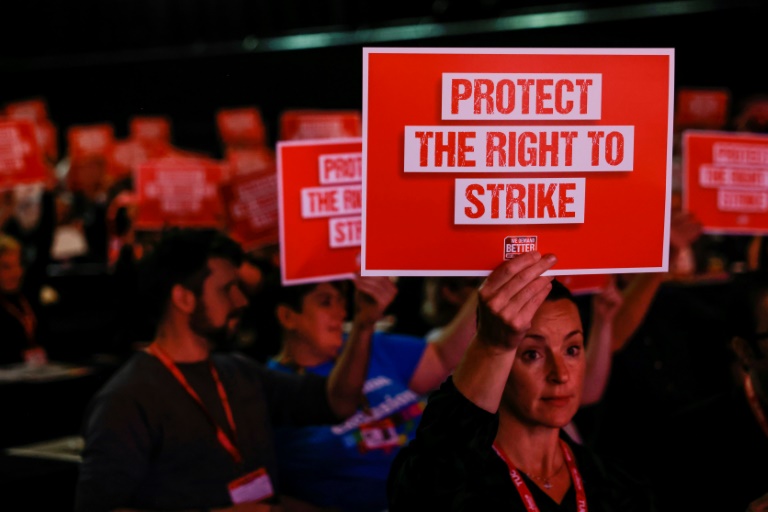
Britain’s government said Thursday it was preparing to enlist the army to cover ambulances and border security ahead of a wave of strikes this month by workers demanding higher wages.

Interior minister Suella Braverman warned the public against flying over Christmas, after passport control officers voted to walk out.

“If they go ahead with those strikes there will be undeniable, serious disruption caused to many thousands of people who have holiday plans,” Braverman told reporters.

The Border Force agency is training 2,000 soldiers to back up its personnel, officials said.

The Ministry of Defence is also in talks with the National Health Service, Downing Street said, after ambulance drivers voted to join nurses in striking this month.

The passport control staff and ambulance drivers have joined many sectors who have opted for strike action this year as decades-high inflation erodes the value of earnings.

– ‘Rolling strikes’ –

“These sorts of rolling strikes will cause disruption for everyone,” Prime Minister Rishi Sunak’s spokesman told reporters, reiterating the government’s opposition to inflation-busting pay deals.

“And that does also include our military personnel who will be required, unfortunately, to have to step in and backfill some of these vital roles that we need to help keep the country moving.”

Sunak on Wednesday hinted that ministers were preparing new legislation to outlaw strikes in critical sectors.

Currently, only Britain’s police, military and prison guards are barred by law from striking.

“What we’re looking at is, are there other areas that we should include in that?” Education Secretary Gillian Keegan told BBC radio Thursday.

“Health would be one to look at and other areas of critical infrastructure,” she added.

The government has yet to look at banning strikes by teachers, who have gone on strike in Scotland and are being balloted in England and Wales, she said.

– ‘Christmas chaos’ –

Ahead of a new wave of train strikes beginning next week, rail union leaders said the government had blocked a deal to end their long-running dispute over pay and other conditions.

“Rail workers and the industry have been put in an impossible position by the Tory government,” Frank Ward, interim general secretary at transport union TSSA, said Thursday.

“Christmas chaos and disruption across our railways are now unfortunately guaranteed, and come gift wrapped from Rishi Sunak and his anti-worker Conservative government’s agenda.”

The government is pushing through a law to require a minimum service on the railways and has refused to rule out expanding that bill to encompass other public sectors.

But Britain faces a winter of discontent as strikes multiply in the face of spiralling consumer prices. Many travellers will struggle to get home for Christmas as transport staff walk out.

Airports, buses, railways and roads face potential gridlock as a result of strikes, which will also hit Eurostar services.

And Britons face chronic delays to Christmas cards and parcels as walkouts continue to blight postal operator Royal Mail.

Nurses will also walk out next week for the first time in their union’s 106-year history.

– Cost-of-living crisis –

British inflation stands above 11 percent, the highest level in more than 40 years.

“I don’t think those going on strike want strikes and disruption,” Keir Starmer, the leader of Britain’s main opposition Labour party, said Thursday.

“They are facing a very real cost-of-living crisis, they are struggling to pay their bills,” he told business leaders.

The Financial Times estimates that more than one million working days will be lost to industrial action in December.

Analysts however talked down the overall economic impact.

“While the strikes feel quite widespread, in practice only a small share of the workforce will be on strike at the same time,” noted Paul Dales at research consultancy Capital Economics.

He conceded however that “any hit” to economic activity “is not helpful when the economy is probably already in recession”.

burs-bcp/rfj/jj

Lebanon detainees stuck in limbo as judges' strike drags on

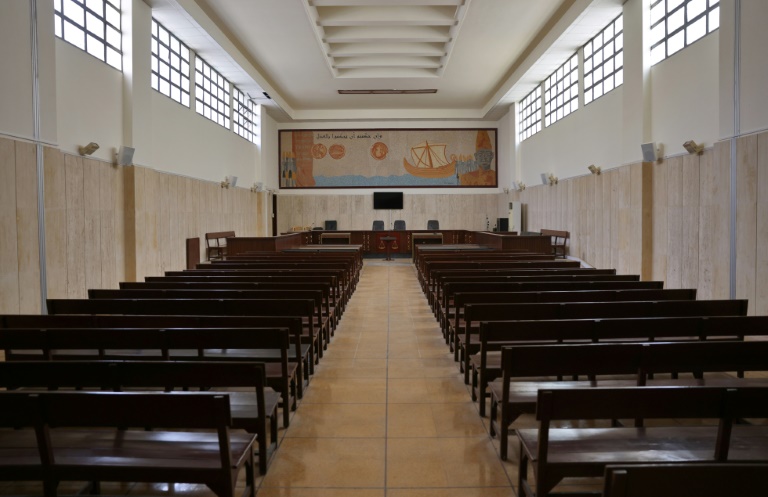
Taxi driver Youssef Daher has languished for months in prison without charge, one of scores stuck after Lebanese judges launched an open-ended strike in August to demand better wages in a collapsed economy.

Judges have suspended their work as rampant inflation eats away at their salaries, paralysing the judiciary and leaving detainees in limbo — the latest outcome of Lebanon’s years-long financial crisis.

From his jail cell in the northern city of Tripoli, Daher sends daily messages to his lawyer asking him whether judges have ended what is already the longest strike for their profession in Lebanese history.

“My family lost their sole breadwinner and must now rely on aid to survive,” he told AFP.

Daher has not seen his wife and three children since he was arrested eight months ago because they cannot afford transportation to get to the prison, he said.

Security forces arrested Daher after he gave a ride to a passenger accused of kidnapping — unbeknownst to him, he said.

Authorities did not press charges against Daher after questioning, so his lawyer requested his release. Then judges began their strike.

His request has been pending ever since.

Bureaucracy and rampant corruption have long delayed verdicts and judicial proceedings in Lebanon, where 8,000 people are estimated to be jailed, most of them awaiting a verdict.

But now, underfunded public institutions have taken a hit after the country’s economy went into free-fall in 2019, with basic state services like renewing passports or completing a real estate transaction often taking months to complete.

– ‘A decent life’ –

Although judges’ salaries are expected to triple as part of Lebanon’s 2022 budget, their wages are currently worth only around $160 on average due to soaring inflation.

“How can a judge live with his family on such a salary?” one striker asked, adding that some of his colleagues with chronic illnesses could no longer afford medication.

“Judges were forced to launch this strike because their financial situation has become unbearable,” he said.

Judges who spoke to AFP said they also wanted better working conditions as they had been forced to toil without electricity or running water and buy their own office supplies like pens and paper.

Lebanon’s state electricity provider produces an hour of daily power on average, forcing residents to rely on private generators that public institutions often cannot afford.

The judges’ strike has compounded an already bleak reality for detainees, many of whom spend months or years awaiting a verdict.

Lawyer Jocelyn al-Rai said her client, a Syrian youth, was arrested two months ago on drug trafficking charges without a warrant and has yet to face questioning, because the public prosecutor’s office has stopped working.

Despite the strike, certain courts continue to function. 

In Beirut on Thursday, a criminal court sentenced Hassan Dekko, a man known as the “Captagon King”, to seven years in prison with hard labour for producing and trafficking the stimulant, a judicial source said. Dekko had been arrested in April last year.

Yet the judges’ strike is also contributing to overcrowding in the already cramped prisons, stretching detention facilities that have seen increasing numbers of escape attempts, a source at the Palace of Justice in the Beirut suburb of Baabda told AFP.

“About 350 people used to be released from prison every month… that number has now been reduced to about 25,” said the source, adding that most are released after “mediators intervene with the judge handling the case”.

About 13 inmates who completed their sentences two and a half months ago have been stuck in the Palace of Justice’s cells because criminal courts have not met to sign off their release, he added.

A judicial source who declined to be named said detainees were bearing the brunt of the strike’s knock-on effects.

“Judges have a right to a decent life,” he said, but “detainees are also suffering from injustice, even those whose only crime was stealing a loaf of bread”.

Putin vows more strikes on Ukraine energy infrastructure

President Vladimir Putin vowed Thursday to keep battering Ukraine’s energy grid despite an outcry against the systematic attacks that have plunged millions into the cold and dark as winter sets in.

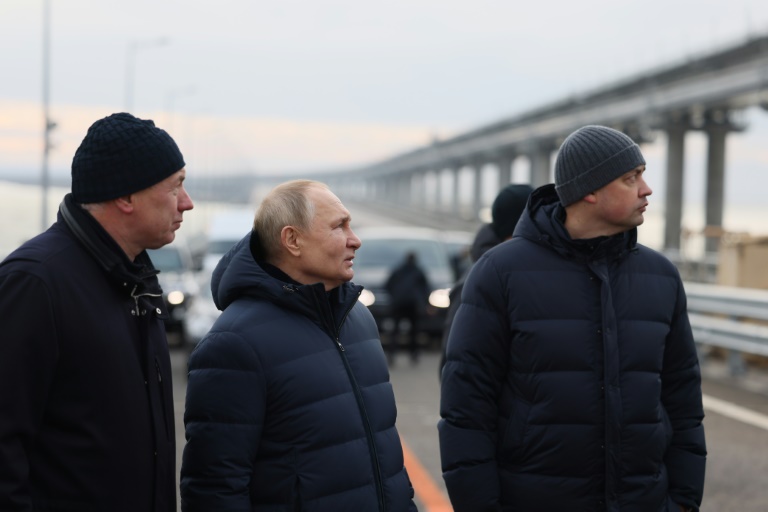
He instead blamed Ukraine for initiating a trend of attacking civilian infrastructure, pointing to a blast on a key bridge between the Russian mainland and the annexed Crimean peninsula that he recently visited. 

“There’s a lot of noise about our strikes on the energy infrastructure of a neighbouring country. This will not interfere with our combat missions,” Putin said at a military awards ceremony in the Kremlin.

Weeks of Russian missile barrages across Ukraine have crippled key infrastructure at a critical time, as temperatures drop ahead of long winter months that already have brought suffering to Ukrainians lacking water, heating and gas. 

He presented the strikes as a response to the explosion in October on the Kerch bridge and also accused Kyiv of blowing up power lines from the Kursk nuclear power plant and for not supplying water to Donetsk in eastern Ukraine.

“Yes, we do that,” Putin said of the strikes on the Ukraine grid. “But who started it?”

Ukrainian energy operator Ukrenergo said Thursday that it was still reeling from the latest bout of strikes that came this week and was suffering a “significant deficit”. 

– ‘Risks’ for Crimea –

“The situation is complicated by weather conditions,” it added, saying snow, frost and wind were putting pressure on infrastructure.

Putin’s promise to keep attacking the grid came as the Kremlin conceded that the Crimean peninsula was vulnerable to Ukrainian attacks after officials said they had shot down a drone near a key naval base.

“There are certainly risks because the Ukrainian side continues its policy of organising terrorist attacks,” Kremlin spokesman Dmitry Peskov told reporters.

“But, on the other hand, information we get indicates that effective countermeasures are being taken,” he added.

The Moscow-appointed governor of Crimea Sergei Aksyonov said last month that Russia was strengthening fortifications on the peninsula in the wake of attacks.

And the governors of two Russian regions bordering Ukraine have said they inspected the construction of defence lines days after Ukrainian drones struck key military airfields.

In the latest incident over Crimea on Thursday, Russia said it had shot down a drone over the Black Sea near Sevastopol, the largest city on the Crimean peninsula that hosts a key Russian naval base.

“As per usual our military carried out its work well,” said the governor of the Sevastopol administrative region, Mikhail Razvozhayev. 

The peninsula was annexed by Russia in 2014 after a so-called referendum that Ukraine and the West never recognised. Moscow said in September it had annexed four more regions of Ukraine, despite not having full control over them.

– ‘Nationalist ideology’  –

Russia used Crimea as one of its launching pads for the military intervention in Ukraine on February 24 and it has been regularly attacked by drones.

There have been several explosions at or near Russian military installations in Crimea since February, including a coordinated drone attack on a key Russian naval port at Sevastopol. 

The shooting down of the drone on Thursday came after a series of attacks deep in Russia — including the Engels airfield, a strategic bomber military base — for which Ukraine has not claimed responsibility.

Separately, the Russian security services (FSB) arrested two people accused of spying for Ukraine on Crimea and accused them of “treason”, the agency’s press service said Thursday. 

The FSB “halted the illegal activities of two Russian citizens suspected of committing high treason in the form of spying in the interests of the Security Service of Ukraine,” it said in a statement.

One of those detained is “a supporter of Ukrainian nationalist ideology and was recruited by the Ukrainian secret services in 2016,” the statement said.

He is suspected of “transferring data on the location of Russia’s defence ministry facilities to a foreign security agency, which could be used against Russia’s security.”

The attacks on the Ukrainian grid come after a series of battlefield setbacks for Russia culminating in its retreat from Kherson last month.

The fighting now has shifted east particularly to the east Ukraine city of Bakhmut and Kyiv said Thursday that 11 Ukrainians had been killed by fighting a day earlier.

China's Xi meets Saudi crown prince on high-stakes visit

Chinese President Xi Jinping and Saudi Arabia’s powerful crown prince met Thursday on an Arab outreach visit that has earned a rebuke from Washington, reaching deals in areas including energy and infrastructure. 

Agreements worth about $30 billion were being signed on Thursday, Saudi state media said, as China seeks to shore up its Covid-hit economy and as the Saudis, long-term US allies, push to diversify their economic and political alliances. 

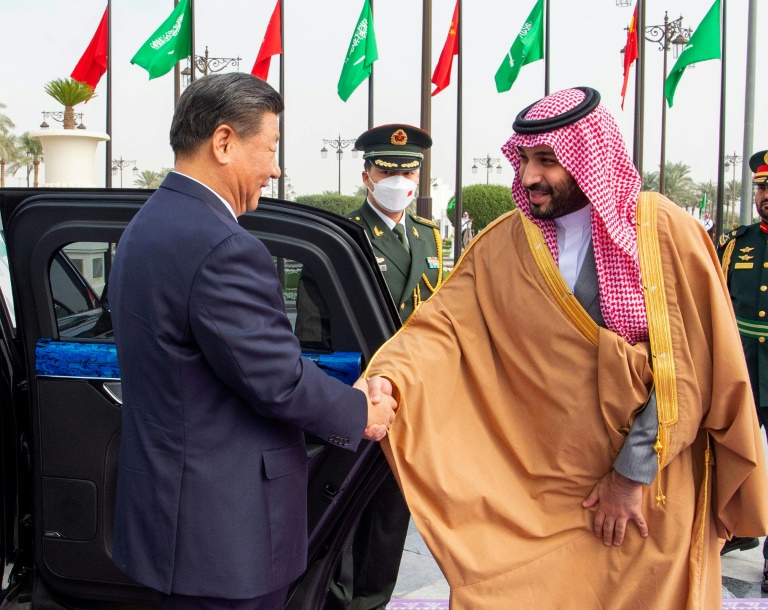
Xi and Crown Prince Mohammed bin Salman, the 37-year-old de facto ruler of the world’s biggest oil exporter, met at Yamamah Palace in Riyadh, flanked by high-ranking officials wearing face masks, footage aired on state television showed.

They oversaw the signing of energy agreements on hydrogen as well as a plan to “harmonise” Saudi Arabia’s ambitious economic reform agenda, Vision 2030, with China’s trillion-dollar Belt and Road Initiative, the official Saudi Press Agency said. 

The signed deals also covered a petrochemicals project, housing development and the teaching of the Chinese language, SPA said, though it did not detail their substance or monetary value.

Earlier, state television showed Xi being greeted with a handshake by Prince Mohammed before the two men stood side-by-side as a brass band played their countries’ national anthems. 

They then chatted while walking into the palace, which is the king’s official residence and seat of the royal court. 

Xi also met with Prince Mohammed’s father, 86-year-old King Salman, signing a comprehensive strategic partnership agreement first reached during Xi’s last visit in 2016, state media reported. 

They “agreed to hold a heads of state meeting between the two countries in turn every two years”, Chinese state media said.

“I am very pleased to visit Saudi Arabia again after six years. I still remember the scenes from my last visit,” Xi said in remarks carried by Chinese state broadcaster CCTV.

“The Chinese side views the Saudi side as an important force in a multipolar world and attaches high importance to developing a comprehensive strategic partnership with Saudi Arabia.”

– ‘Raising pace’ of cooperation –

Upon his arrival on Wednesday, Xi said bilateral ties with Saudi Arabia had grown “by leaps and bounds” in recent years. 

This “has not only enriched both countries’ peoples but promoted regional peace, security, prosperity and development,” Xi said, according to CCTV.

The crown prince sees China as a critical partner in his sweeping Vision 2030 agenda, seeking the involvement of Chinese firms in ambitious mega-projects meant to diversify the economy away from fossil fuels. 

Saudi investment minister Khalid al-Falih said this week’s visit “will contribute to raising the pace of economic and investment cooperation between the two countries”, offering Chinese companies and investors “rewarding returns”, according to SPA.

Earlier on Thursday, Saudi state media announced 34 investment agreements in sectors including green hydrogen, information technology, transport and construction.

State broadcaster Al-Ekhbariya said another 20 agreements worth 110 billion riyals ($29.3 billion) were due to be signed.

– Arab outreach –

Arab leaders began Thursday to converge on the Saudi capital ahead of summit meetings with Xi, the leader of the world’s number-two economy, who will hold separate talks with the six-member Gulf Cooperation Council before leaving on Friday.

China, the top consumer of Saudi oil, has been strengthening ties with a region that has long relied on the United States for military protection but which has voiced concerns the American presence could be downgraded.

Egyptian President Abdel Fattah al-Sisi, Palestinian president Mahmud Abbas and Sudan’s de facto leader Abdel Fattah al-Burhan had all arrived by Thursday afternoon, according to the Saudi foreign ministry.

Tunisian President Kais Saied, Iraqi Prime Minister Mohammed Shia al-Sudani, Moroccan Prime Minister Aziz Akhannouch and Lebanese caretaker Prime Minister Najib Mikati have also confirmed their attendance.

Beijing’s foreign ministry this week described Xi’s trip as the “largest-scale diplomatic activity between China and the Arab world” since the People’s Republic of China was founded. 

It has not escaped the attention of the White House, which warned of “the influence that China is trying to grow around the world”, calling its objectives “not conducive to preserving the international rules based order”. 

Washington has long been a close partner of Riyadh, but the relationship is currently roiled by disagreements on energy policy, US security guarantees and human rights. 

Xi is making his third journey overseas since the Covid pandemic prompted China to shut its borders and embark on a series of lockdowns, putting the brakes on its giant economy.

His visit follows US President Joe Biden’s trip in July, when he greeted Prince Mohammed with a fist-bump at the start of a vain attempt to convince the Saudis to raise oil production.

EU welcomes Croatia into Schengen, blocks Bulgaria, Romania

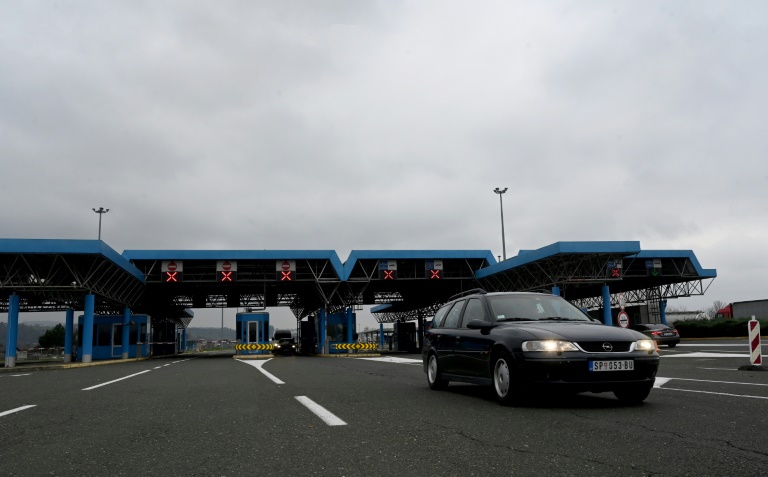
The EU on Thursday approved Croatia as the newest member of the border check-free Schengen zone from next month, but Austria and the Netherlands blocked Romania and Bulgaria from joining.

Croatia’s accession from January 1 will make it the 27th member of Schengen, which would then comprise 23 of the EU’s 27 countries, plus Switzerland, Norway, Liechtenstein and Iceland.

The outcome was bitter news for Bulgaria and Romania, the EU’s two poorest nations ,which have been trying for a decade to join Schengen and whose bids were linked together, unlike Croatia’s.

Decisions on enlarging Schengen have to be taken unanimously, but Austria applied its veto, fearing that having Bulgaria and Romania in the Schengen area would increase already high inflows of asylum-seekers.

The Netherlands was equally intent on keeping Bulgaria out, which impacted Romania’s twinned bid.

“Despite the disappointment that we will see from these two member states, we have a firm decision and readiness to continue” to get into Schengen, said Bulgarian Interior Minister Ivan Demerdzhiev.

“I’m also disappointed” by the outcome for Bulgaria and Romania, EU home affairs commissioner Ylva Johansson told journalists.

The two nations “deserve to be full members of Schengen” and further efforts will be made to get them there within the next two years, she added.

She congratulated Croatia on its accession.

– Illegal crossings –

Croatian border police say they are ready to link with other Schengen countries from January 1, but technical preparations mean that the country’s airport will only be able to follow from March 26.

Going into Thursday’s meeting, Austria’s Interior Minister Gerhard Karner said he would apply his country’s veto on Bulgaria and Romania.

“I think it is wrong that a system that does not work in many places should be enlarged,” he said.

Austria has recorded “over 100,000 illegal border crossings this year”, he added.

The Schengen zone allows people travelling between its member countries to cross generally without having to show a passport, ID card or visa.

Interior ministers are often wary of how it allows individuals to enter other EU countries when they do not have the right to do so. 

Yet it is often touted as an example of the EU’s cherished freedom of movement principle, and has tangible benefits for participating countries, particularly boosting tourism.

German Interior Minister Nancy Faeser said: “I cannot yet understand the vote of my Austrian colleague”.

– Talks with UK –

Migration across Europe is a hot political issue.

That is also true for former EU member Britain, which, like EU member Ireland, was never part of Schengen.

Britain’s conservative government is trying to reduce the number of asylum-seekers and irregular migrants arriving in small boats from the continent.

Just before the EU ministers’ meeting, the interior ministers of Britain, France, Germany, Britain and the Netherlands met to discuss that issue.

French Interior Minister Gerald Darmanin said they had agreed to boost information-sharing on people-smugglers and law enforcement cooperation.

Britain agreed in those talks to set up a working arrangement with Frontex, the EU’s border agency, “to contain illegal migration”, its Home Office said.

The EU is also dealing with a new right-wing government in Italy that is rejecting boatloads of migrants rescued in the Mediterranean.

Europe overall has taken a harder stance against migration after a massive inflow of asylum-seekers in 2015-2016, when hundreds of thousands of Syrians fled the war in their country. 

But reforms demanded by frontline EU states receiving the inflows — Italy, Spain, Malta and Greece — have stalled.

Some other EU countries — including Austria, the Netherlands, Hungary and Poland — are reluctant to share hosting duties on a systematic scale.

The European Commission has stepped up efforts to make source countries of irregular migrants take back their deported citizens — especially those with a high proportion trying to enter Europe for economic reasons rather than persecution.

Viktor Bout: 'Merchant of death' arms smuggler

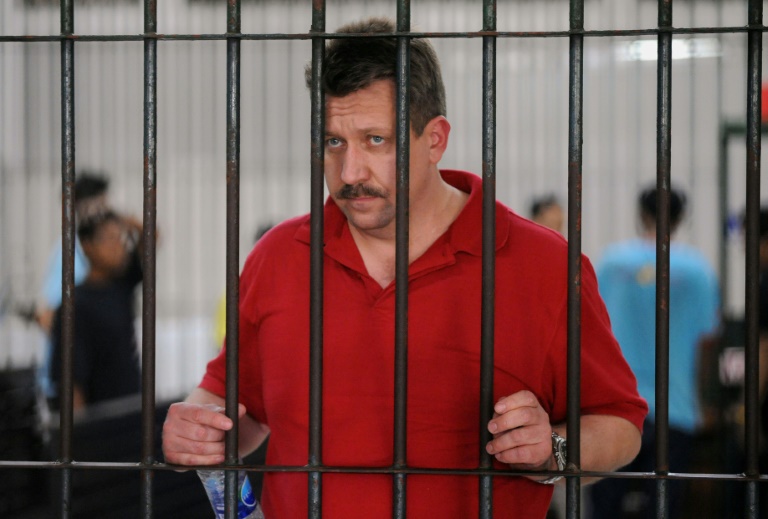
Former Soviet air force pilot Viktor Bout, who was swapped for US basketball star Brittney Griner on Thursday, fuelled some of the world’s bloodiest conflicts by trafficking weapons across several continents.

In a career spanning two decades, and which stopped when he was sentenced to 25 years in a US prison in 2012, the 55-year-old Russian allegedly stoked violence from Sierra Leone to Afghanistan by bartering deals for planes and guns.

The mustachioed Bout, who is thought to speak six languages, travelled under various false names including “Boris” and “Vadim Markovich Aminov”.

His notoriety inspired the Hollywood film “Lord of War”, starring Nicolas Cage, in which the anti-hero escaped justice.

Expectations of a prisoner swap grew in recent months, after Russian leader Vladimir Putin and US President Joe Biden discussed his fate during a summit in Geneva in 2021.

CIA Director William Burns met with Sergei Naryshkin, head of Russia’s SVR intelligence service, to discuss the swap involving Bout in Ankara last month, in what appeared to be the highest-level talks between Moscow and Washington since Russia sent troops to Ukraine in February.

– Sting operation –

Despite sanctions from the United States and United Nations, Bout had been trading weapons until he was caught in a sting operation in 2008 that was worthy of the silver screen.

The Russian was arrested at the five-star Sofitel hotel in Bangkok while negotiating with US agents posing as guerrillas from the Revolutionary Armed Forces of Colombia (FARC).

His appearances at court in Thailand, wearing a bullet-proof vest and shackles while flanked by armed police commandos, and the often tearful responses of his wife, Alla Bout, added to the drama of the case.

After a two-year legal battle, a Thai appeals court ruled in 2010 that he could be extradited to the United States, which accused him of running a “massive weapons-trafficking business” and terrorism.

Bout finally stood trial in the United States after he was flown out of Bangkok on a US government jet shortly after the Thai cabinet approved his extradition. 

In 2012, a US judge sentenced Bout to 25 years in prison for conspiring to sell a massive arsenal to anti-American guerrillas in Colombia.

Bout maintained his innocence from the day he was picked up in the Thai capital after allegedly agreeing to supply surface-to-air missiles in a series of covert meetings that also took him to Denmark and Romania.

US prosecutors claim he agreed to the sale with the understanding that the weapons were to be used to attack United States helicopters.

– ‘Unique creature’ –

Former British foreign office minister Peter Hain dubbed him the “Merchant of Death”, while Amnesty International has alleged that at one time he operated a fleet of more than 50 planes ferrying weapons around Africa.

Prosecutors in the United States said the arms he sold or brokered fuelled conflicts and supported regimes in Afghanistan, Angola, the Democratic Republic of the Congo, Liberia, Rwanda, Sierra Leone and Sudan.

But Bout maintains that he has always run a legitimate air cargo business, and rejected claims of involvement with Al-Qaeda.

His detention enraged Russia, which called attempts at extradition politically motivated.

Born in Tajikistan’s capital Dushanbe in 1967 when it was still under Soviet rule, Bout studied languages — including English, French and Portuguese — at Moscow’s military institute for foreign languages before joining the air force.

Journalist Douglas Farah, who co-authored a book on Bout, has called him “a unique creature” born of the end of Communism and the rise of unbridled capitalism in the early 1990s.

He has repeatedly denied suggestions that he was a former KGB agent and that he bought weaponry, aircraft and helicopters at throwaway rates at the fall of the Soviet Union to supply to conflict zones.

burs/jmm

Lebanon detainees stuck in limbo as judges' strike drags on

Taxi driver Youssef Daher has languished for months in prison without charge, one of scores stuck after Lebanese judges launched an open-ended strike in August to demand better wages in a collapsed economy.

Judges have suspended their work as rampant inflation eats away at their salaries, paralysing the judiciary and leaving detainees in limbo — the latest outcome of Lebanon’s years-long financial crisis.

From his jail cell in the northern city of Tripoli, Daher sends daily messages to his lawyer asking him whether judges have ended what is already the longest strike for their profession in Lebanese history.

“My family lost their sole breadwinner and must now rely on aid to survive,” he told AFP.

Daher has not seen his wife and three children since he was arrested eight months ago because they cannot afford transportation to get to the prison, he said.

Security forces arrested Daher after he gave a ride to a passenger accused of kidnapping — unbeknownst to him, he said.

Authorities did not press charges against Daher after questioning, so his lawyer requested his release. Then judges began their strike.

His request has been pending ever since.

Bureaucracy and rampant corruption have long delayed verdicts and judicial proceedings in Lebanon, where 8,000 people are estimated to be jailed, most of them awaiting a verdict.

But now, underfunded public institutions have taken a hit after the country’s economy went into free-fall in 2019, with basic state services like renewing passports or completing a real estate transaction often taking months to complete.

– ‘A decent life’ –

Although judges’ salaries are expected to triple as part of Lebanon’s 2022 budget, their wages are currently worth only around $160 on average due to soaring inflation.

“How can a judge live with his family on such a salary?” one striker asked, adding that some of his colleagues with chronic illnesses could no longer afford medication.

“Judges were forced to launch this strike because their financial situation has become unbearable,” he said.

Judges who spoke to AFP said they also wanted better working conditions as they had been forced to toil without electricity or running water and buy their own office supplies like pens and paper.

Lebanon’s state electricity provider produces an hour of daily power on average, forcing residents to rely on private generators that public institutions often cannot afford.

The judges’ strike has compounded an already bleak reality for detainees, many of whom spend months or years awaiting a verdict.

Lawyer Jocelyn al-Rai said her client, a Syrian youth, was arrested two months ago on drug trafficking charges without a warrant and has yet to face questioning, because the public prosecutor’s office has stopped working.

The strike is also contributing to overcrowding in the already cramped prisons, stretching detention facilities that have seen increasing numbers of escape attempts, a source at the Palace of Justice in the Beirut suburb of Baabda told AFP.

“About 350 people used to be released from prison every month… that number has now been reduced to about 25,” said the source, adding that most are released after “mediators intervene with the judge handling the case”.

About 13 inmates who completed their sentences two and a half months ago have been stuck in the Palace of Justice’s cells because criminal courts have not met to sign off their release, he added.

A judicial source who declined to be named said detainees were bearing the brunt of the strike’s knock-on effects.

“Judges have a right to a decent life,” he said, but “detainees are also suffering from injustice, even those whose only crime was stealing a loaf of bread”.

Markets jostled by recession fears, China optimism

Wall Street stocks attempted to stage a relief rally and Hong Kong soared on Thursday, but elsewhere equity trading was still dominated by recession fears.

Oil prices, meanwhile, rebounded slightly from recent sharp losses.

Equity markets had been rising ahead of US jobs figures last week, boosted by a surprise drop in inflation and comments from Federal Reserve boss Jerome Powell that the bank was likely to raise rates at a slower pace.

But robust jobs figures and a jump in wages, plus data on Monday showing a forecast-busting jump in activity in the US services sector last month, raised the prospect that the Fed will not back down from sharp rate increases when it meets next week.

Following several days of losses, Wall Street opened to the upside, with the Dow rising 0.4 percent.

“What we have today, then, is a little rebound spirit — an assumption that the stock market is due for a bounce after behaving so poorly in more recent action…” said market analyst Patrick O’Hare at Briefing.com.

European stocks tried to rally before Wall Street opened, but failed to hold onto gains. London was flat, while both Frankfurt and Paris were down 0.2 percent as trading got underway in New York.

“The risk-off sentiment… remains hard to kick into touch as concerns about recession stay front and centre,” noted Susannah Streeter, senior investment and markets analyst at Hargreaves Lansdown.

“The evil twins of recession and persistently higher inflation are lurking, keeping investors on edge.”

Analysts pointed out that two-year US Treasury yields were much higher than those of 10-year bonds, which is usually considered a clear indication of a looming recession.

This week also saw the heads of some of Wall Street’s biggest banks warn of a downturn.

– China Covid shift –

The fear of a US recession is playing off against China’s shift away from its zero-Covid strategy of lockdowns and mass testing that has been blamed for clattering the world’s number two economy.

After widespread protests last month against the strict measures and calls for more political freedoms, authorities have scaled back many of them and on Wednesday announced a nationwide loosening of restrictions.

While there are worries that the more liberal approach will spark a surge in infections, it has helped fan a rally in Hong Kong where Chinese tech firms and property developers are listed.

The Hang Seng Index closed up more than three percent Thursday.

“Developments in China have a big role to play, although as we’re seeing once again, Covid-related moves are almost exclusively impacting stocks in domestic markets,” said Craig Erlam, senior analyst at OANDA trading group. 

“We can see that again overnight, with reports of looser mask and isolation requirements in Hong Kong lifting the Hang Seng and making it the clear outperformer in the region, while most other indices tread water.”

– Key figures around 1430 GMT –

New York – Dow: UP 0.4 percent at 33,715.24 points

London – FTSE 100: FLAT at 7,487.53 

Frankfurt – DAX: DOWN 0.2 percent at 14,231.57

Paris – CAC 40: DOWN 0.2 percent at 6,646.81

EURO STOXX 50: DOWN 0.2 percent at 3,913.49

Tokyo – Nikkei 225: DOWN 0.4 percent at 27,574.43 (close)

Hong Kong – Hang Seng Index: UP 3.4 percent at 19,450.23 (close)

Shanghai – Composite: DOWN 0.1 percent at 3,197.35 (close)

Euro/dollar: UP at $1.0531 from $1.0510 on Wednesday

Dollar/yen: UP at 136.62 yen from 136.57 yen

Pound/dollar: UP at $1.2212 from $1.2209

Euro/pound: UP at 86.21 pence from 86.05 pence

Brent North Sea crude: UP 1.6 percent at $78.40 per barrel

West Texas Intermediate: UP 2.8 percent at $74.04 per barrel

Peru's new president under pressure after predecessor's arrest

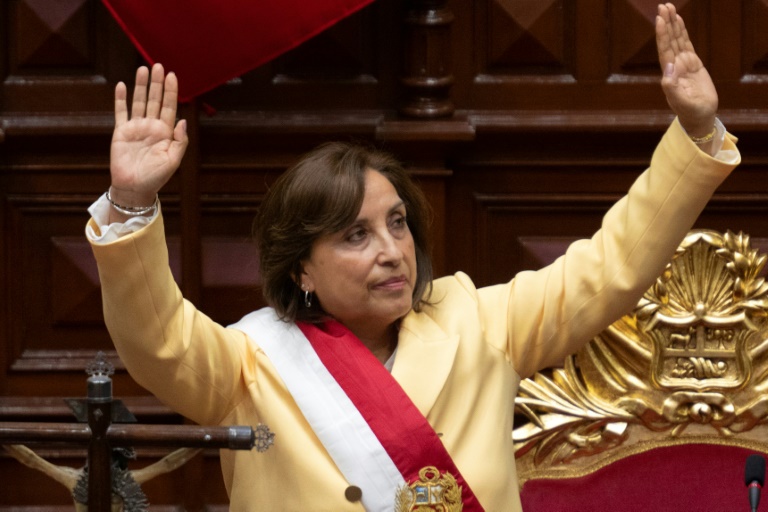
Peru’s new President Dina Boluarte was under pressure Thursday to calm the political turmoil in the country, a day after the dramatic arrest of her predecessor, who stands accused of attempting a coup.

The South American country’s first-ever woman leader asked the opposition for a truce as she prepared to form a government, as doubt hung over her ability to survive the political firestorm ignited by Pedro Castillo.

Castillo on Wednesday tried to dissolve parliament and rule by decree, but his efforts were quickly stamped out by lawmakers who voted him out of office in a dizzying day of high drama, by the end of which former vice president Boluarte had emerged as the country’s new head of state.

She took the oath of office within two hours of the impeachment vote, donning the presidential sash in front of Congress and vowing to serve out the rest of Castillo’s term, until July 2026.

In her first words as president, she called for “national unity” and urged lawmakers to put aside their ideological differences, in a tacit reference to the confrontation between Castillo’s leftist government and the right-wing dominated Congress.

The 60-year-old lawyer must now form her first ministerial cabinet, which will be an early indication of whether she is likely to survive in office.

Her initial appointments will signal the support she can muster for her government. If she is unable to rule, calls will grow for her resignation or the calling of early elections.

– Dizzying hours –

Earlier in the day, Castillo had faced his third impeachment attempt since the former rural schoolteacher unexpectedly won power from Peru’s traditional political elite 18 months ago.

In a televised address, the 53-year-old announced he was dissolving the opposition-dominated Congress, imposing a curfew and would rule by decree for at least nine months.

As criticism poured in over the speech, lawmakers defiantly gathered earlier than planned to debate the impeachment motion and approved it with 101 votes out of 130 lawmakers.

Castillo had left the presidential palace after the vote with the intention of seeking asylum in Mexico’s embassy before he was arrested, according to a police report published by local media.

By Wednesday night, Castillo had been transferred to a police facility in east Lima, where graft-convicted former president Alberto Fujimori — himself removed by Congress in 2000 — is serving out his sentence.

Authorities said he was staging a power grab.

Hundreds of Castillo’s supporters protested outside the Lima police headquarters after his impeachment, clashing with police who fired teargas to quash the demonstrations.

“Shut Congress, nest of rats,” read one of their signs.

Meanwhile, those opposed to the former president burned t-shirts bearing his image.

“We are tired of this corrupt government that was stealing from day one,” said 51-year-old Johana Salazar.

The European Union expressed its support for the “political, democratic and peaceful solution adopted by the Peruvian institutions,” and urged “all actors to a dialogue that ensures stability,” according to a statement.

UN Secretary-General Antonio Guterres “calls on the parties involved to uphold the rule of law, as well as to remain calm and refrain from inflaming tensions,” his spokesman said in a statement.

– ‘She is alone’ –

Without her own political party in Congress, Boluarte is facing an uphill battle to stay in power.

“She has no party in Congress, she is alone,” Peru’s former president Ollanta Humala told local television on Wednesday night.

“She does not have the tools to govern, she should call for an early election,” added Humala, who was in office from 2011 to 2016.  

“Today’s truce will last a month or maybe more, but then the country’s big problems will come to the fore.”

But right-wing political heavyweight Keiko Fujimori, the daughter of ex-president Fujimori, said her party would support the new president.   

“Let’s hope that the president appoints a broad-based cabinet, a very good cabinet and we must all do everything possible to make it work well,” she tweeted.

Close Bitnami banner
Bitnami