World

Peru gets new president after predecessor's arrest

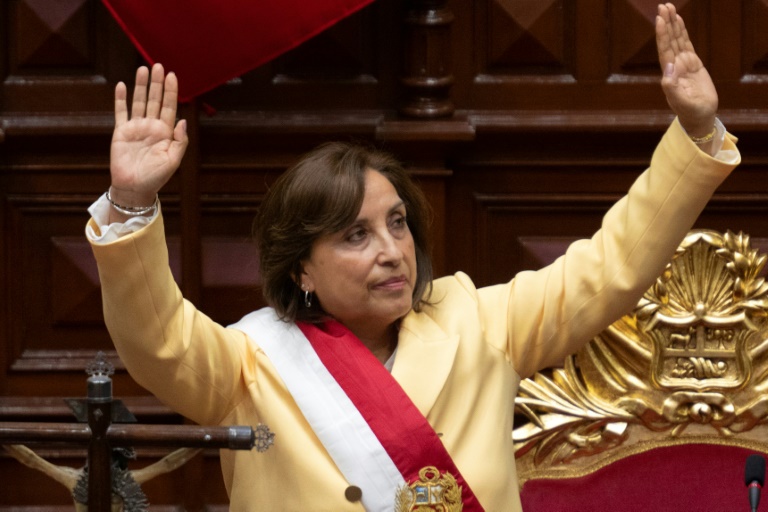
Peru’s new President Dina Boluarte was scrambling to form a government on Thursday, a day after the country was thrown into political chaos by the dramatic arrest of her predecessor following a failed coup.

The South American country’s first ever female leader asked the opposition for a truce as she tried to end the turmoil sparked by Pedro Castillo, who had attempted to dissolve parliament and rule by decree.

Castillo’s power grab was quickly stamped out by lawmakers who voted him out of office in a dizzying day of high drama, by the end of which former vice-president Boluarte had emerged as the country’s new head of state.

She took the oath of office within two hours of the impeachment vote, donning the presidential sash in front of Congress and vowing to serve out the rest of Castillo’s term, until July 2026.

In her first words as president, she called for “national unity” and urged lawmakers to put aside their ideological differences, in a tacit reference to the confrontation between Castillo’s leftist government and the right-wing dominated Congress.

The 60-year-old lawyer must now form her first ministerial cabinet, which will be an early indication of whether she is likely to survive.

Her initial appointments will signal the support she can muster for her government. If she is unable to rule, calls will grow for her resignation or the calling of early elections.

– Dizzying hours –

Earlier in the day Castillo had faced his third impeachment attempt since the former rural schoolteacher unexpectedly won power from Peru’s traditional political elite 18 months ago.

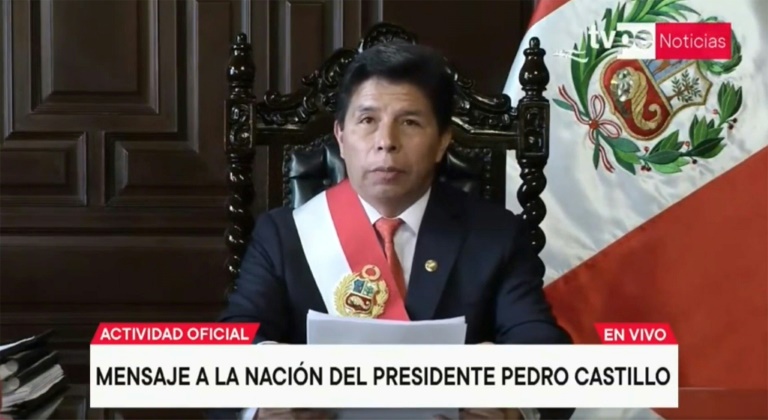
In a televised address, the 53-year-old announced he was dissolving the opposition-dominated Congress, imposing a curfew and would rule by decree for at least nine months.

As criticism poured in over the speech, lawmakers defiantly gathered earlier than planned to debate the impeachment motion and approved it with 101 votes out of a total of 130 lawmakers.

Castillo had left the presidential palace after the vote with the intention of seeking asylum in Mexico’s embassy before he was arrested, according to a police report published by local media.

By Wednesday night, Castillo had been transferred to a police facility in east Lima, where graft-convicted former president Alberto Fujimori — himself removed by Congress in 2000 — is serving out his sentence.

Authorities said they had caught him red-handed staging a power grab.

Hundreds of protesters, some of whom supported the former president and others who opposed him, took to Lima’s streets after his impeachment.

“We are tired of this corrupt government that was stealing from day one,” said 51-year-old Johana Salazar.

– ‘She is alone’ –

Without her own political party in Congress, Boluarte is facing an uphill battle to stay in power.

“She has no party in Congress, she is alone,” Peru’s former president Ollanta Humala told local television on Wednesday night.

“She does not have the tools to govern, she should call for an early election,” added Humala, who was in office from 2011 to 2016.  

“Today’s truce will last a month or maybe more, but then the country’s big problems will come to the fore.”

But right-wing political heavyweight Keiko Fujimori, the daughter of ex-president Fujimori, said her party would support the new president.   

“Let’s hope that the president appoints a broad-based cabinet, a very good cabinet and we must all do everything possible to make it work well,” she tweeted.
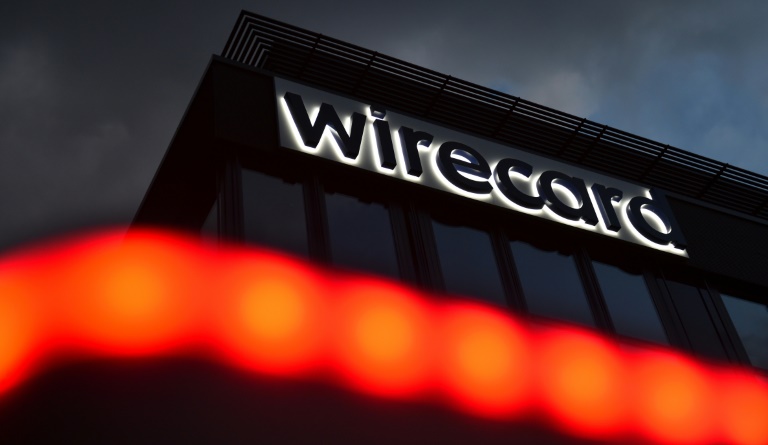
Huge Wirecard fraud trial opens in Germany

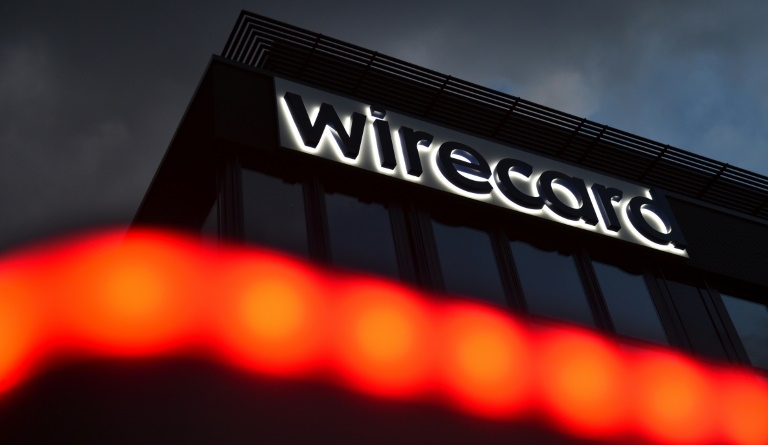
Germany’s mammoth Wirecard fraud trial opened on Thursday, with ex-CEO Markus Braun and two former executives in the dock over their roles in the country’s biggest-ever accounting scandal.

The trial in Munich comes two and a half years after digital payments firm Wirecard collapsed in spectacular fashion after admitting that 1.9 billion euros ($2 billion) missing from its accounts didn’t actually exist.

Chancellor Olaf Scholz, who was finance minister at the time of Wirecard’s implosion, described the scandal as “unparalleled” in Germany’s post-war history.

The first day of the high-profile trial, held in a high-security courtroom inside Munich’s sprawling Stadelheim prison complex, will mainly consist of prosecutors reading out the 90-page indictment.

Notably absent from the trial will be Wirecard’s former chief operating officer Jan Marsalek, a shadowy figure with ties to foreign intelligence agencies.

Marsalek evaded arrest in 2020 by staging a daring escape from Austria by private jet. He was reported earlier this year to be hiding out in Russia.

Wirecard’s veteran CEO Braun, in custody since July 2020, faces charges of commercial gang fraud, breach of trust, accounting fraud and market manipulation.

The 53-year-old denies the allegations and claims to be a victim of the fraud, painting Marsalek as the mastermind.

His co-accused are ex-accounting boss Stephan von Erffa and Oliver Bellenhaus, the former head of Wirecard’s Dubai subsidiary.

Bellenhaus has admitted wrongdoing and will act as a key witness for the prosecution.

If found guilty, the trio risk lengthy prison sentences.

The court has scheduled 100 trial dates for the complex case.

– Fake transactions –

The prosecution’s case centres around the claim that Wirecard executives inflated the company’s earnings, starting at least as far back as 2015, by inventing revenue streams from transactions with a web of partner companies.

These so-called Third Party Acquirer (TPA) companies in Dubai, the Philippines and Singapore accounted for a huge chunk of Wirecard’s sales and profits according to its books.

But “all the accused knew” that the revenues from these TPA businesses “didn’t exist”, the indictment reads, adding that the defendants used forged documents to hide the trickery.

The goal was “to increase the company’s financial strength and make it more attractive to investors and customers”, prosecutors allege.

Founded in 1999 as an outfit processing credit card payments for porn and gambling websites, Wirecard rose to become a respectable player in the booming “fintech” (financial technology) sector.

A favourite with investors, it entered Germany’s blue-chip DAX index in 2018 and at its peak was valued at more than 24 billion euros, outweighing giant Deutsche Bank.

Despite occasional speculation of wrongdoing at the company, Wirecard continued its meteoric rise.

– FT investigation –

But its troubles began in earnest in 2019 when the Financial Times published a series of explosive articles detailing accounting irregularities.

The scam finally unravelled when long-time auditor EY uncovered a 1.9-billion-euro hole in its accounts in June 2020.

The cash, which made up a quarter of Wirecard’s balance sheet, was meant to be sitting in trustee accounts at two banks in the Philippines.

But the Philippines’ central bank has said the cash never entered its monetary system and both Asian banks, BDO and BPI, denied having a relationship with Wirecard.

Wirecard’s share price tanked and it filed for insolvency soon after, leaving behind three billion euros in debt that creditors are unlikely to recover.

The company’s downfall sent shockwaves through Germany and prompted an overhaul of finance watchdog Bafin, which was heavily criticised for ignoring early warnings about Wirecard.

Many people simply “didn’t want to believe that fraudsters were at work” at a company long hailed as a German champion, said Volker Bruehl, a professor at the Center for Financial Studies in Frankfurt.

“The Wirecard scandal has damaged Germany’s reputation as a financial centre.”

Huge Wirecard fraud trial opens in Germany

Germany’s mammoth Wirecard fraud trial opened on Thursday, with ex-CEO Markus Braun and two former executives in the dock over their roles in the country’s biggest-ever accounting scandal.

The trial in Munich comes two and a half years after digital payments firm Wirecard collapsed in spectacular fashion after admitting that 1.9 billion euros ($2 billion) missing from its accounts didn’t actually exist.

Chancellor Olaf Scholz, who was finance minister at the time of Wirecard’s implosion, described the scandal as “unparalleled” in Germany’s post-war history.

The first day of the high-profile trial, held in a high-security courtroom inside Munich’s sprawling Stadelheim prison complex, will mainly consist of prosecutors reading out the 90-page indictment.

Notably absent from the trial will be Wirecard’s former chief operating officer Jan Marsalek, a shadowy figure with ties to foreign intelligence agencies.

Marsalek evaded arrest in 2020 by staging a daring escape from Austria by private jet. He was reported earlier this year to be hiding out in Russia.

Wirecard’s veteran CEO Braun, in custody since July 2020, faces charges of commercial gang fraud, breach of trust, accounting fraud and market manipulation.

The 53-year-old denies the allegations and claims to be a victim of the fraud, painting Marsalek as the mastermind.

His co-accused are ex-accounting boss Stephan von Erffa and Oliver Bellenhaus, the former head of Wirecard’s Dubai subsidiary.

Bellenhaus has admitted wrongdoing and will act as a key witness for the prosecution.

If found guilty, the trio risk lengthy prison sentences.

The court has scheduled 100 trial dates for the complex case.

– Fake transactions –

The prosecution’s case centres around the claim that Wirecard executives inflated the company’s earnings, starting at least as far back as 2015, by inventing revenue streams from transactions with a web of partner companies.

These so-called Third Party Acquirer (TPA) companies in Dubai, the Philippines and Singapore accounted for a huge chunk of Wirecard’s sales and profits according to its books.

But “all the accused knew” that the revenues from these TPA businesses “didn’t exist”, the indictment reads, adding that the defendants used forged documents to hide the trickery.

The goal was “to increase the company’s financial strength and make it more attractive to investors and customers”, prosecutors allege.

Founded in 1999 as an outfit processing credit card payments for porn and gambling websites, Wirecard rose to become a respectable player in the booming “fintech” (financial technology) sector.

A favourite with investors, it entered Germany’s blue-chip DAX index in 2018 and at its peak was valued at more than 24 billion euros, outweighing giant Deutsche Bank.

Despite occasional speculation of wrongdoing at the company, Wirecard continued its meteoric rise.

– FT investigation –

But its troubles began in earnest in 2019 when the Financial Times published a series of explosive articles detailing accounting irregularities.

The scam finally unravelled when long-time auditor EY uncovered a 1.9-billion-euro hole in its accounts in June 2020.

The cash, which made up a quarter of Wirecard’s balance sheet, was meant to be sitting in trustee accounts at two banks in the Philippines.

But the Philippines’ central bank has said the cash never entered its monetary system and both Asian banks, BDO and BPI, denied having a relationship with Wirecard.

Wirecard’s share price tanked and it filed for insolvency soon after, leaving behind three billion euros in debt that creditors are unlikely to recover.

The company’s downfall sent shockwaves through Germany and prompted an overhaul of finance watchdog Bafin, which was heavily criticised for ignoring early warnings about Wirecard.

Many people simply “didn’t want to believe that fraudsters were at work” at a company long hailed as a German champion, said Volker Bruehl, a professor at the Center for Financial Studies in Frankfurt.

“The Wirecard scandal has damaged Germany’s reputation as a financial centre.”

Putin says nuclear tensions 'rising' but Moscow won't deploy first

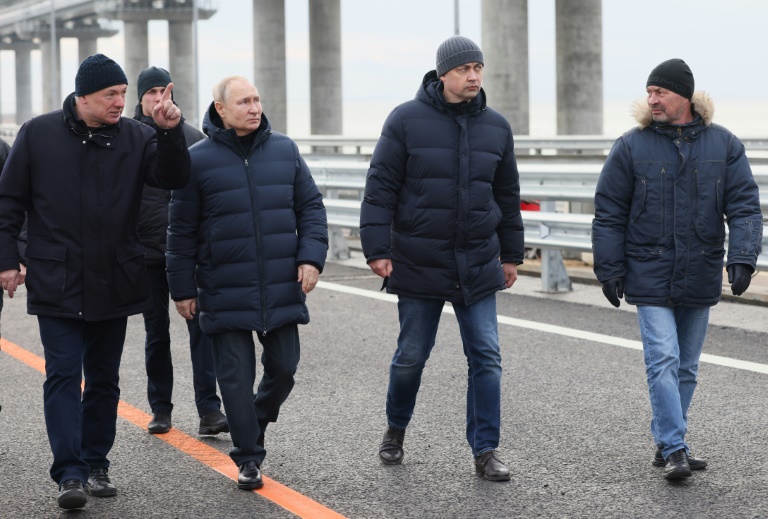
Russian President Vladimir Putin said Wednesday that nuclear tensions were rising, though he insisted “we have not gone crazy” and Moscow would not be the first to deploy atomic weapons in the Ukraine conflict.

Speaking more than nine months after his forces launched their military operation, Putin warned the conflict could be “lengthy”.

Russian forces have missed most of their key military goals since February, raising fears that the battlefield stalemate could see Russia resort to its nuclear arsenal to achieve a breakthrough. 

“We have not gone crazy, we are aware of what nuclear weapons are,” Putin said Wednesday at a meeting of his human rights council. 

“We are not going to brandish them like a razor while running around the world.”

But he acknowledged the growing tensions, saying “such a threat is rising. Why make a secret out of it here?” 

He added, however, that Russia would use a nuclear weapon only in response to an enemy strike. 

“When we are struck, we strike back,” Putin said, stressing that Moscow’s strategy was based on a “so-called retaliatory strike” policy.

“But if we aren’t the first to use it under any circumstances, then we will not be the second to use them either, because the possibilities of using them in the event of a nuclear strike against our territory are very limited,” he said.

His comments drew an immediate rebuke from the US.

“We think any loose talk of nuclear weapons is absolutely irresponsible,” US State Department spokesman Ned Price told reporters.

“It is dangerous, and it goes against the spirit of that statement that has been at the core of the nuclear non-proliferation regime since the Cold War,” he said.

German Chancellor Olaf Scholz, however, declared that the risk of nuclear weapons being used in the Ukraine conflict has lessened thanks to international pressure heaped on Russia. 

“One thing has changed for the time being: Russia has stopped threatening to use nuclear weapons,” Scholz said in an interview with Germany’s Funke media group, saying it was “in response to the international community marking a red line”.

“The priority now is for Russia to end the war immediately and withdraw its troops,” he added. 

– Azov Sea –

Intense shelling continued along the front in eastern Ukraine, with President Volodymyr Zelensky announcing that strikes in Donetsk region’s Kurakhove killed 10 civilians on Wednesday. 

“The Russian army carried out a very brutal, absolutely deliberate strike at Kurakhove, precisely at civilians,” the president — who was named Time Magazine’s “Person of the Year” earlier in the day — said during his nightly address.

The shelling in Kurakhove comes a day after Ukrainian artillery strikes killed six people in the Donetsk region’s capital city of the same name, according to the Moscow-installed mayor.

Moscow had expected the fighting to last just days, but more than nine months after its forces entered Ukraine, Putin said its military operation could be a “lengthy process”. 

But he praised the announced annexation of four Ukrainian territories following September referendums held by Moscow proxies — denounced in the West as a sham.

“New territories appeared — well, this is still a significant result for Russia,” Putin said, referring to Donetsk, Lugansk, Kherson and Zaporizhzhia regions. 

He also made special reference to Russia’s gaining control of all the land along the Azov Sea.

“The Azov Sea has become an internal sea to the Russian Federation, that’s a serious thing,” he noted. 

Despite its best efforts, Russian troops at no point have entirely controlled any of the annexed territories and were even forced out from the capital of Kherson after a months-long Ukraine counter-offensive.

Amid domestic fears of a new callup — which triggered an exodus of Russians abroad in September to avoid an emergency draft — Putin said “there is no need” for a new mobilisation. 

“Out of 300,000 of our mobilised fighters, our men, defenders of the fatherland, 150,000 are in the area of operations,” including 77,000 in combat units, he said. 

– Person of the Year –

Meanwhile, Zelensky basked in unwavering support from the West as Time chose him as its most important global figure for 2022 — a title Putin himself received in 2007.

“In the weeks after Russian bombs began falling on Feb. 24, his decision not to flee Kyiv but to stay and rally support was fateful,” said Time editor-in-chief Edward Felsenthal.

“Whether the battle for Ukraine fills one with hope or with fear, Volodymyr Zelensky galvanized the world in a way we haven’t seen in decades.”

Markets mixed as recession fears dampen China optimism

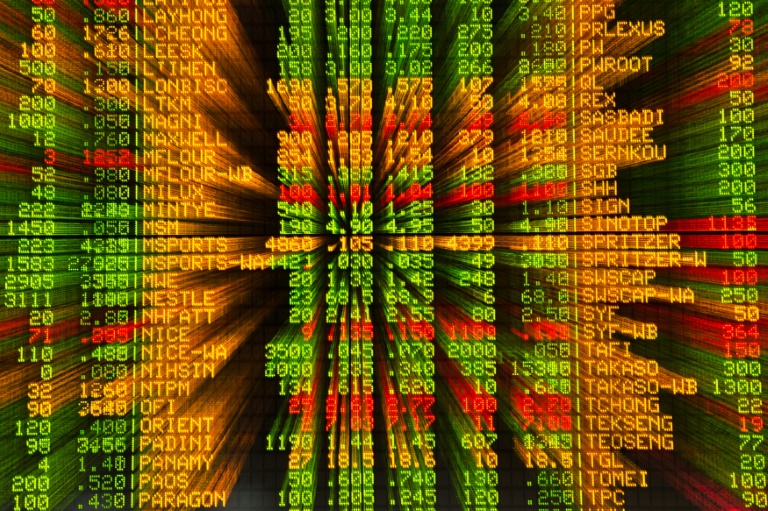
Asian and European markets were mixed Thursday as sentiment was pulled in opposite directions by worries about a US recession and China’s shift away from strict Covid restrictions.

A rally across equities at the start of the month has been hobbled this week by growing concerns that the Federal Reserve’s drive to rein inflation back from 40-year highs will spark a downturn and skittle company profits.

The US central bank has ramped up interest rates through 2022, including bumper increases of 75 basis points at its past four meetings.

And while data for October showed inflation appeared to be coming down — lifting hopes the Fed could take its foot off the pedal — forecast-busting figures on jobs creation and services sector activity suggested officials still had work to do to cool prices.

Analysts pointed out that two-year Treasury yields were much higher than those of 10-year bonds, which is usually considered a clear indication of a looming recession.

This week also saw the heads of some of Wall Street’s biggest banks warn of a downturn.

After sinking on Friday and Monday, New York’s three main indexes suffered another disappointing day Tuesday with the S&P 500 down for a fifth straight day and the Dow the best performer after ending barely changed.

The losses continued in Asia with Tokyo, Sydney, Seoul, Taipei, Bangkok and Jakarta all in the red.

Traders are now steeling themselves for the release next week of crucial inflation figures and the Fed’s final policy meeting of the year, which will be pored over for an idea about its intentions for 2023.

– Good news, bad news –

“The good news is that the market sees more than a reasonable chance of the Fed reversing gears next year, mainly in response to a downturn,” said Stephen Innes at SPI Asset Management.

“But the bad news is we are likely to fall into recession thanks in no small part to the lagged impact of the most aggressive Fed tightening campaign since (former Fed boss) Paul Volcker” in the 1980s.

The fear of a US recession is playing off against China’s shift away from its zero-Covid strategy of lockdowns and mass testing that has been blamed for clattering the world’s number two economy.

After widespread protests last month against the strict measures and calls for more political freedoms, authorities have scaled back many of them and on Wednesday announced a nationwide loosening of restrictions.

While there are worries that the more liberal approach will spark a surge in infections, it has helped fan a rally across markets, particularly in Hong Kong where Chinese tech firms and property developers are listed.

The Hang Seng Index has soared more than 30 percent since the end of October, and while it stumbled Wednesday, it rose more than three percent Thursday helped by reports leaders were planning to further ease Covid rules in the city.

There were also gains in Singapore, Mumbai and Wellington, but Shanghai ended slightly lower.

London dipped at the open but Paris and Frankfurt rose.

On oil markets both main contracts bounced after suffering hefty selling over the previous four days as demand concerns caused by a possible recession offset China’s reopening.

A jump in US gasoline stockpiles added to the downbeat mood among traders, with WTI sitting at its lowest levels of the year and Brent at its weakest since January.

– Key figures around 0820 GMT –

Tokyo – Nikkei 225: DOWN 0.4 percent at 27,574.43 (close)

Hong Kong – Hang Seng Index: UP 3.4 percent at 19,450.23 (close)

Shanghai – Composite: DOWN 0.1 percent at 3,197.35 (close)

London – FTSE 100: DOWN 0.2 percent at 7,477.55

Euro/dollar: UP at $1.0522 from $1.0510 on Wednesday

Dollar/yen: UP at 136.78 yen from 136.57 yen

Pound/dollar: DOWN at $1.2200 from $1.2209

Euro/pound: UP at 86.23 pence from 86.05 pence

West Texas Intermediate: UP 0.8 percent at $72.60 per barrel

Brent North Sea crude: UP 0.7 percent at $77.70 per barrel

New York – Dow: FLAT at 33,597.92 (close)

Surveillance, hacking: whistleblower recalls Wirecard nightmare

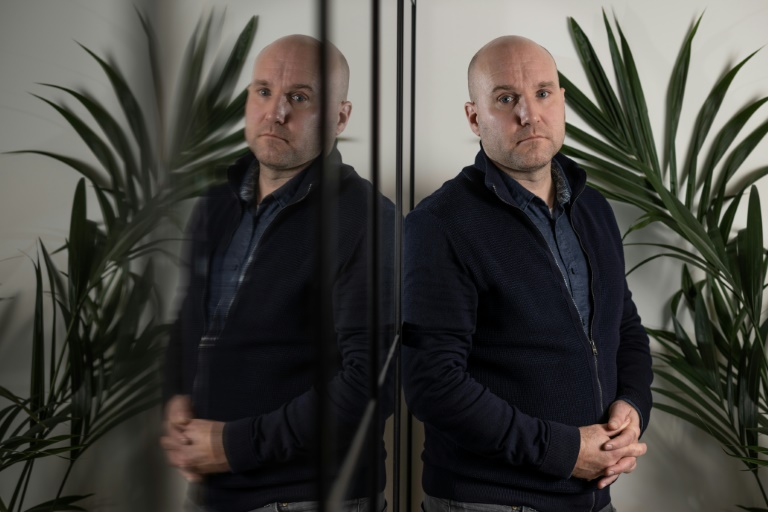
When short seller Matthew Earl anonymously co-authored a report detailing explosive allegations of wrongdoing at German fintech champion Wirecard, his life was turned upside down. 

Within months of the research’s publication in 2016, the London-based investor says the company tracked him down, placed him under surveillance, and began trying to hack into his emails. 

Followed and photographed, he became so fearful for his family’s safety that people picking up his children from school needed to use a special password. 

“It was incredibly stressful — you didn’t know what their intentions were,” Earl, now managing partner of hedge fund ShadowFall, told AFP.

“The problem is that as an individual, you don’t really have the resources to deter that.”

In contrast, Wirecard had “the resources of a small nation” to target their critics, he added. 

Rather than triggering investigations into Wirecard, Earl’s report led to German authorities launching a probe into him for alleged market manipulation.

Ultimately however, Earl and a handful of others who sought to blow the whistle on Wirecard’s wrongdoings were vindicated when the firm collapsed in 2020 after admitting to a huge hole in its accounts.

They will be paying close attention when ex-CEO Markus Braun goes on trial in Munich Thursday over the biggest fraud scandal in post-war Germany.

Braun, who will stand trial alongside two other former Wirecard executives accused of fraud and account rigging, denies wrongdoing.

“I will be following the trial with great interest,” Earl said during a recent interview.

– ‘Homegrown champion’ –

The 101-page report by Earl and another investor Fraser Perring, put out by a little-known outfit called Zatarra Research, linked Wirecard to money-laundering related to processing payments for gambling websites, as well as fraud.

The report initially caused Wirecard’s share price to fall. 

But the firm furiously denied any wrongdoing, and soon afterwards Earl was targeted.

“Ultimately, they had their liberty at stake — so you’re going to do quite a lot to protect your liberty,” the 43-year-old said.

Germany’s market regulator Bafin lodged a complaint against Earl, and prosecutors in Munich, close to where Wirecard was founded, then began investigating.

With scepticism from Earl and other critics silenced, the following years saw the company’s star rise. 

Wirecard’s shares soared, it joined the blue-chip DAX index, and was held up by German politicians as a rare tech star from a country better known for older industrial giants in sectors like car making and chemicals.

This desire to defend a modern-day success story blinded authorities in Europe’s top economy to multiple warning signs over years, critics say. 

“Wirecard was essentially their answer to the titans of Silicon Valley, it was a homegrown champion,” said Earl.

– ‘More open-minded’ –

The scandal finally unravelled when the Financial Times published a series of articles about accounting irregularities at Wirecard’s Asian units. 

The company also sought to shut down investigations by the FT, which reported on the scandal for several years.

But in June 2020, Wirecard admitted that 1.9 billion euros ($2 billion) meant to be held in two Philippine accounts likely didn’t exist, precipitating the firm’s implosion.

When Wirecard finally collapsed, it was a huge relief for Earl. 

After being targeted following his report’s publication, he had largely kept quiet publicly about Wirecard, although he continued to warn about its problems in private. 

Munich prosecutors had already shelved their investigations into him, and in 2019 he gave evidence as a witness to help in their probe into Wirecard. 

He also gave evidence to a German parliamentary inquiry into the mammoth scandal, where he received an apology. 

The fraud rocked Germany’s business and political establishments, and led to an overhaul of Bafin. 

Among other things, the watchdog has strengthened its procedures for whistleblowers, and has been receiving a steadily growing number of tip-offs in recent years.

After facing such a difficult time, Earl hopes that lessons can be drawn from the scandal. 

Authorities should be “more open-minded in terms of critics of companies, be they short sellers or journalists,” he said. 

Peru president ousted and arrested after bid to dissolve Congress

Peru’s leftist president Pedro Castillo was ousted by lawmakers and arrested Wednesday after trying to dissolve the South American country’s Congress in a move widely condemned as an attempted coup.

The dizzying series of events in a country long prone to political upheaval resulted in even more history, with Vice President Dina Boluarte later becoming Peru’s first woman president.

The day of high drama began with Castillo facing his third impeachment attempt since the former rural school teacher unexpectedly won power from Peru’s traditional political elite 18 months ago.

In a televised address, the 53-year-old announced he was dissolving the opposition-dominated Congress, installing a curfew, and would rule by decree for at least nine months.

As criticism poured in over the speech, lawmakers defiantly gathered earlier than planned to debate the impeachment motion and approved it with 101 votes out of a total of 130 lawmakers.

Castillo left the presidential palace after the vote with the intention of seeking asylum in Mexico’s embassy before he was arrested, according to a police report published by local press.

After his arrest was officially announced, a source in the attorney general’s office told AFP that Castillo was being investigated for “rebellion.”

Boluarte took the oath of office within two hours of the impeachment vote, donning the presidential sash in front of Congress.

During the ceremony, she said “there was an attempted coup by Mr Pedro Castillo that did not receive any support in the democratic institutions or out in the streets.”

She said she intends to serve out the rest of Castillo’s term, until July 2026.

A 60-year-old lawyer and mother, Boluarte had become one of the Castillo government’s best-known faces due to her position as Minister of Development and Social Inclusion, a post she held simultaneously with the vice presidency up until two weeks ago, when Castillo reshuffled his cabinet a fifth time.

– Political outsider –

Castillo was transferred later Wednesday to a police facility in east Lima, where graft-convicted former president Alberto Fujimori — himself removed by Congress in 2000 — is serving out his sentence.

Peru is no stranger to political instability: it is now on its sixth president since 2016 and during one five-day period in 2020 had three different presidents.

Against that chaotic backdrop, Castillo came out of seemingly nowhere to narrowly win the June 2021 runoff election against right-wing Keiko Fujimori, the daughter of the convicted former president who herself faced charges of corruption.

Born in a small village where he worked as a teacher for 24 years, Castillo was largely unknown until he led a national strike in 2017 that forced the government to agree to pay rise demands.

After his election, allegations against Castillo quickly flooded in.

He is facing investigations into alleged wrongdoing ranging from graft and obstruction of justice to plagiarizing his university thesis.

Castillo and his lawyers have long argued the probes are part of a plot to unseat him.

Searching for more evidence in its corruption probe, investigators from the public prosecutor’s office entered the government palace Wednesday night to search the presidential chambers.

– ‘Now former president’ –

Hundreds of protesters for and against Castillo gathered in front of Congress Wednesday.

“We are tired of this corrupt government that was stealing from day one,” said 51-year-old Johana Salazar.

Ricardo Palomino, 50, a systems engineer, said Castillo’s attempt to dissolve parliament was “totally unacceptable and unconstitutional. It went against everything and these are the consequences.”

But retired soldier Manuel Gaviria, 59, told AFP he had shown up “to denounce the fact that our president has been kidnapped by the national police, that he has been detained with premeditation and treachery by Congress.”

Ahead of the impeachment, the United States demanded Castillo “reverse his decision,” and said after the vote that it no longer considered him to be the president.

“My understanding is that, given the action of the Congress, he is now former president Castillo,” State Department spokesman Ned Price told reporters, saying lawmakers took “corrective action” in line with democratic rules.

Latin American governments voiced deep concern and appealed for respect for democracy, but there were also hints of support for Castillo from fellow leftist leaders.

Mexican President Andres Manuel Lopez Obrador, one of Castillo’s staunchest allies, blamed “economic and political elites” for creating a hostile environment since the beginning of his “legitimate presidency.”

The government of Gustavo Petro, Colombia’s first left-wing president, called for dialogue involving “all political actors,” adding that “democracy requires the recognition of the popular will expressed both in the elections for president and for Congress.”

Brazil was more critical of Castillo, calling his attempt to dissolve Congress a “violation” of democracy and the rule of law.

China's capital adjusts to life with Covid after policy reversal

The Chinese capital showed tentative signs of a return to normal Thursday after a sudden reversal of a hardline pandemic policy that hammered the world’s second-biggest economy and ignited rare protests.

Beijing’s National Health Commission (NHC) on Wednesday announced a nationwide loosening of its zero-Covid restrictions, reducing the scope of mandatory testing, allowing some positive cases to quarantine at home, and ending large-scale lockdowns.

A major relaxation of President Xi Jinping’s flagship pandemic policy, the country’s top health body said the shift in tactics was intended to help the country “keep abreast of the changing times”.

In the capital, where a surge in cases had forced many to stay at home and kept businesses and schools shut, traffic was back to about half its usual intensity on Thursday, an AFP journalist said.

Under the new guidelines, the frequency and scope of PCR testing — long a tedious mainstay of life — have been reduced.

But while the number of testing stands around Beijing has decreased, those that remain are still busy, with many workplaces continuing to require negative tests.

“I’ve come for a test because someone in my office has tested positive. I hope I haven’t caught Covid,” 28-year-old Chen Min, wrapped in a down jacket, told AFP.

Others said they had come to be tested because they work in the hotel and catering industry, where testing remains obligatory.

Zhang Lan, a food delivery driver, said he needed to be tested because “it’s a request from the company” to avoid contaminating customers.

At a nearby shopping centre, businesses were open but crowds were sparse, with guards checking visitors’ health codes though no longer requiring negative Covid tests.

– ‘Very quiet’ –

“It’s very quiet. I think people are still afraid to go out,” the manager of a Starbucks said.

China is now steeling for a wave of infections expected to follow the relaxation of the rules — with one previous estimate suggesting more than a million people could die.

At one fever clinic in Beijing’s Chaoyang district, an AFP reporter saw lines that snaked around the block.

And in another part of the capital, AFP saw a steady stream of customers going into a local pharmacy for cold and fever medicine. 

“But we’re out of stock of this type of medicine. We don’t even have any Vitamin C left,” Sun Qing, an employee, said.

She added that, over the past few days, people had been buying up the drugs in anticipation of a policy easing.

“Some of them unfortunately took much more than they needed. It could be enough for a year!” she exclaimed. 

Indonesia sex laws 'nail in coffin' for LGBTQ rights

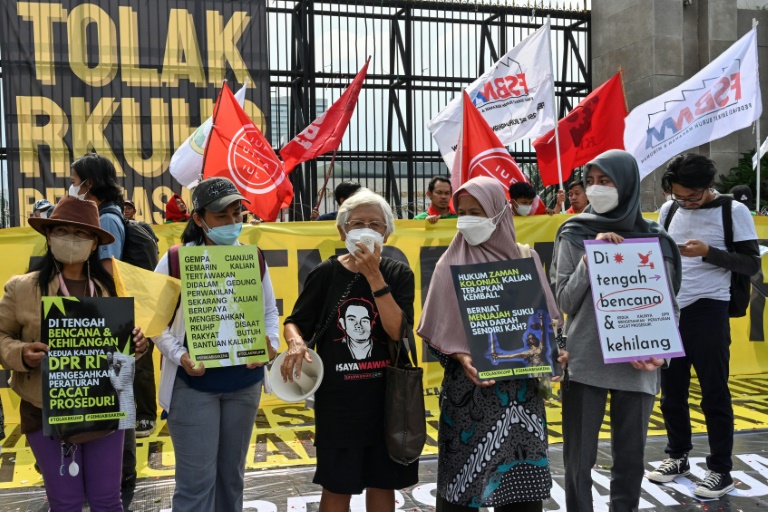
Indonesia’s legislation banning sex outside marriage represents a major new threat to the LGBTQ community’s rights in the conservative country, where same-sex unions are not recognised.

“It’s another nail in the coffin at the moment. A big nail,” Dede Oetomo, an activist with the LGBTQ rights group GAYa NUSANTARA, told AFP.

Once enacted, the legislation approved Tuesday in parliament would punish sex outside marriage with one year in prison, while unmarried people living together could face six months in jail.

The reforms make it riskier for gay couples to live together openly in a country where they already face widespread discrimination and anti-LGBTQ regulations, according to activists.

“Before the new criminal code, it was already bad. People can be searched even in their private residences. Although it was not systematic, but it can happen,” Oetomo said.

Indonesia is the world’s most populous Muslim country, and its constitution recognises six religions.

Homosexuality is not illegal in the Southeast Asian nation — except in the police, military and in Islamic law-abiding Aceh province — but rights groups say the legislative changes pose an inherent risk to LGBTQ people.

“Many LGBTQ couples have been living together under the radar, as same-sex marriage isn’t allowed here,” said Robby Nasution, a 30-year-old freelancer who lives with his partner in Bali.

“With the new law, this means that another right has been taken away from the community.”

Kai Mata, a musician and activist, said LGBTQ communities were “bracing ourselves for impact and backlash” from the legislation, which stood “against our rights to exist”.

The amendments still need to be approved by President Joko Widodo before they come into force.

– ‘Living in fear’ –

Albert Aries from Indonesia’s Law and Human Rights Ministry defended the amendments before the vote and said they would protect the country’s marriage institutions. 

Sex outside marriage could only be reported by a spouse, parents or children, drastically limiting the scope of the amendment, he said.

But Andreas Harsono from Human Rights Watch said LGBTQ people were “living in fear” in a society that was becoming “more and more conservative”.

“If they are reported by a member of their family, their life can be ruined,” he told AFP.

There are already dozens of national and local regulations that affect LGBTQ people, and some have been arrested on charges of lewd conduct under anti-pornography laws.

Last month, two Indonesian soldiers were given a seven-month jail term for having gay sex, which the military deems “inappropriate behaviour”.

At least 15 members of the police and military have been fired in recent years for having gay sex, according to Amnesty International in 2020.

Last year in Aceh province, two men were sentenced to nearly 80 lashings each for having sex.

“Of course, I feel this country is not safe for me,” said Gusti Arirang, 29, a musician who identifies as pansexual.

“I’m not pessimistic about Indonesia’s future progress as I am trying to stay strong. But now I have more concerns and am more cautious.”

Royals brace as 'Harry & Meghan' airs on Netflix

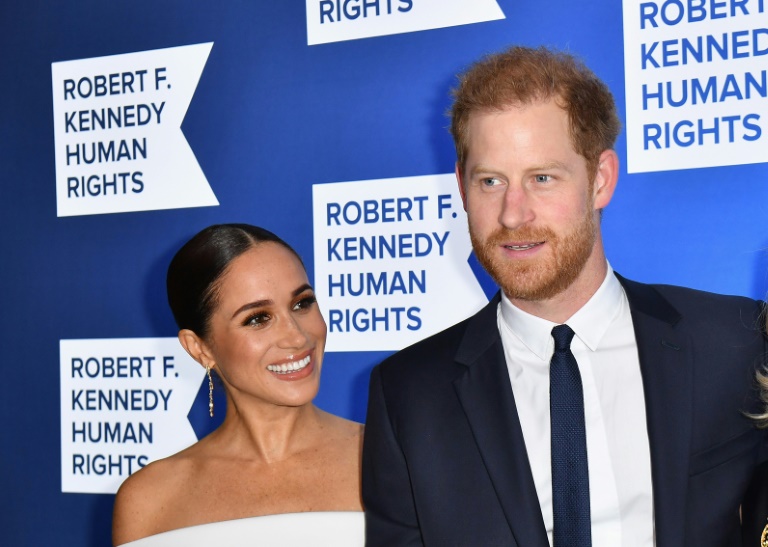
The first three episodes of a docuseries on Prince Harry and his wife Meghan air on Thursday, with expectations of more damaging claims about British royal family life.

The six-part fly-on-the-wall documentary, “Harry and Meghan”, promises to lift the lid on events that prompted the pair to quit royal life and move to the United States in 2020.

Trailers aired in the run-up to the much-hyped Netflix release suggest it will further deepen the couple’s rift with Harry’s family since their acrimonious departure dubbed “Megxit”.

One British newspaper said the royal family were viewing the series as a “declaration of war” on the back of the content of promotional clips.

In one, Harry, 38, appears to accuse some within the royal household of leaking and planting stories about the couple in the British press, calling it “a dirty game”.

“No one sees what’s going on behind closed doors,” the prince says. “We know the full truth,” he adds in another clip.

“When the stakes are this high, doesn’t it make sense to hear our story from us?” Meghan chips in.

The first three episodes of what the US streaming giant vows will be “an unprecedented and in-depth documentary series” will be available from 0800 GMT.

The final three parts are released on December 15. 

“It’s seriously threatening… the royal family,” commentator Richard Fitzwilliams told AFP of the docuseries, branding it “a form of revenge”.

“It could be explosive,” he said, adding: “It’s very difficult to know what the royal family can do about it.”

– Diana –

Netflix showcased the first trailer last week, just as Harry’s brother William made his first trip to the US as Prince of Wales and heir to the throne, prompting accusations of sabotage.

The timing could barely have been worse for William after Buckingham Palace sacked one of his godmothers as a courtier for using racially charged language to a black British woman at a reception.

For some, the incident reinforced incendiary claims by Meghan, 41, a mixed-race former television actor, that racism within the royal household was one of the reasons for leaving.

The docuseries also appears set to draw parallels between her alleged treatment and that of Harry’s mother Princess Diana, who died in a Paris car crash in 1997 while trying to shake off paparazzi photographers.

In the years before her death, Diana had opened up about the torment she felt after marrying into the hidebound British monarchy.

“I was terrified, I didn’t want history to repeat itself,” Harry says in one trailer, adding: “I had to do everything I could to protect my family.”

Meghan notes that she “realised they (Buckingham Palace) are never going to protect you”.

The docuseries airs three months exactly since the death of Harry’s grandmother Queen Elizabeth II, and a month before the long-awaited publication of his memoirs, “Spare”.

As well as the potential for further reputational damage to the monarchy, it is also likely to fuel fresh hostilities with William.

The siblings, who were close after their mother’s death, have grown increasingly estranged over recent years.

Although both attended the queen’s state funeral in September, relations were noticeably frosty as they failed to even make eye contact.

Close Bitnami banner
Bitnami