World

French Holocaust denier rejects extradition move from Scotland

A prominent French Holocaust denier, who fled the country after being convicted under anti-Nazi laws, does not consent to be extradited to France, an Edinburgh court heard Thursday.

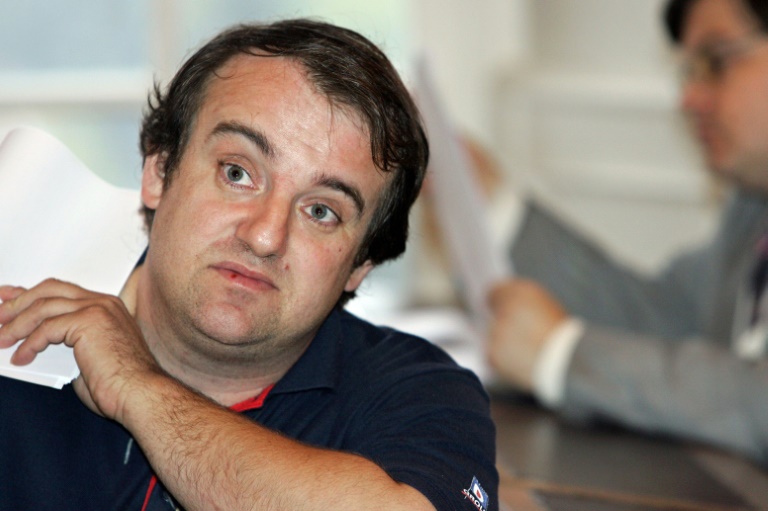
Vincent Reynouard, 53, who was excused from attending his preliminary extradition hearing at Edinburgh Sheriff Court, was arrested in the fishing town of Anstruther, just north of the Scottish capital, in November.

“Mr Reynouard does not consent to extradition to France,” his lawyer, who asked not to be named, told the court.

“I was instructed at about 6:00 pm (1800 GMT) last night and I do require some time to consider the matter.

“There is a matter that is, I think, of legal significance that I need more time to consider.”

Sheriff Norman McFadyen agreed to continue the case until January 12. A full extradition hearing is due to take place in February.

Reynouard had reportedly been living in Anstruther under a false name.

He had been sought by France’s central office for combating crimes against humanity, known by its initials OCLCH.

Holocaust denial has been a criminal offence in France since 1990, and Reynouard has been convicted on numerous occasions.

As a student in 1991, he was convicted for distributing revisionist literature.

In 2001, he was suspended as a school maths teacher for printing and distributing Holocaust-denying pamphlets and setting homework involving counting concentration camp victims.

In 2007, while working as a chemical engineer, Reynouard was sentenced to one year in prison and fined 10,000 euros for Holocaust denial after writing a pamphlet claiming the death of six million Jews during World War II was “impossible”.

He was handed a four-month prison sentence in France in November 2020 and a further six-month term in January 2021 concerning a series of anti-Semitic posts on social media.

In August 2020, a memorial in the village of Oradour-sur-Glane, the site of the worst Nazi atrocity in France, was defaced with slogans including the words “Reynouard is right”.

He had questioned the massacre in several videos posted online.

Reynouard first appeared in court in Scotland after his arrest last month and remains in custody.
US basketball star Griner freed in Russian prisoner swap

Basketball star Brittney Griner is “safe” and headed home to the United States after being freed from a Russian prison ordeal in a swap for the notorious arms dealer Viktor Bout, the two countries announced on Thursday.

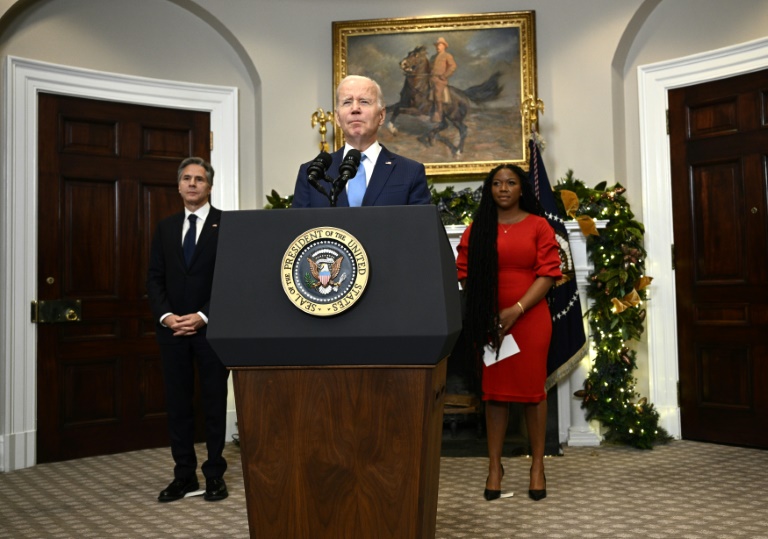
President Joe Biden delivered an early-morning address to the nation to announce the breakthrough, and said he had spoken to Griner just “moments ago.”

“She is safe. She is on a plane. She is on her way home,” Biden said, adding that she should be back in the United States within 24 hours.

The Olympic legend and LGBT trailblazer, who was being held in a remote penal colony, was arrested at a Moscow airport in February and handed nine years in prison in August for possessing vape cartridges with a small quantity of cannabis oil.

Biden said she would need time to recover from “needless trauma” after time spent in Russia’s IK-2 penal colony, a facility in the town of Yavas in the central region of Mordovia.

Reporting that Griner was in “good spirits” Biden said she deserved “space, privacy and time with her loved ones to recover and heal from her time being wrongfully detained.”

Biden was flanked by Griner’s wife Cherelle Griner as well as Vice President Kamala Harris and Secretary of State Antony Blinken.

“I’m just standing here, overwhelmed with emotions,” Cherelle Griner said, describing the ordeal of her wife’s imprisonment as “one of the darkest moments of my life.”

– ‘Family is whole’ –

Moscow confirmed it had exchanged Griner for Bout, who was serving a 25-year sentence in the United States.

“On December 8, 2022, at the Abu Dhabi airport, the exchange of Russian citizen Viktor Bout for US citizen Brittney Griner… was successfully completed,” the Russian foreign ministry said in a statement.

According to Biden, the United Arab Emirates facilitated Griner’s release. She transited through the country en route back to the United States, where she was expected within 24 hours.

Despite the heightened mood, Biden also conceded that the United States had not yet succeeded in freeing Paul Whelan, a retired US Marine arrested in December 2018 and accused of spying. 

Cherelle Griner acknowledged his fate, saying: “Today my family is whole, but as you all are aware there’s so many other families who are not whole.”

When Griner was arrested, the two-time Olympic basketball gold medalist and Women’s NBA champion had been in Russia to play for the professional Yekaterinburg team, during her off-season from the Phoenix Mercury.

She pleaded guilty to the charges, but said she did not intend to break the law or use the banned substance in Russia.

Griner had testified that she had permission from a US doctor to use medicinal cannabis to relieve pain from her many injuries, and had never failed a drug test.

The use of medical marijuana is not allowed in Russia.

Moscow said it had been negotiating with Washington to secure Bout’s release “for a long time” and that initially the US had “refused dialogue” on including him in any swap.

“Nevertheless, the Russian Federation continued to actively work to rescue our compatriot. The Russian citizen has been returned to his homeland,” the defense ministry said.

Bout was sentenced in 2012 to 25 years in a US jail after he was accused of arming rebels in some of the world’s bloodiest conflicts. 

UK turns to army as crippling strikes loom

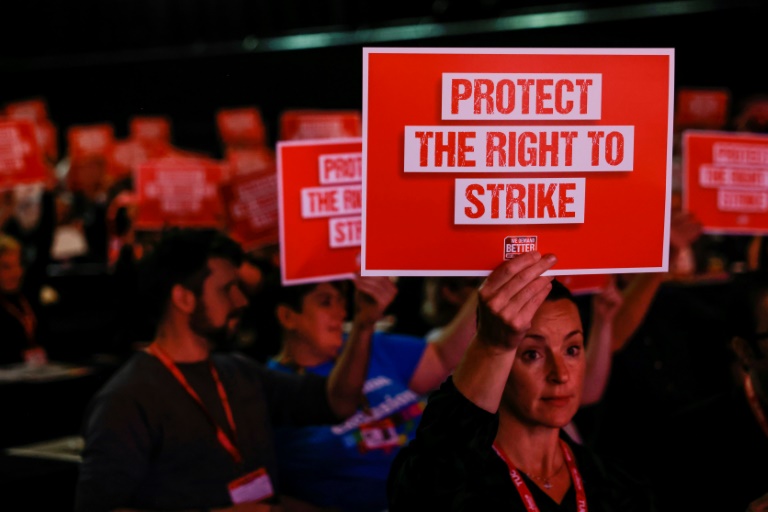
Britain on Thursday said it was preparing to enlist the army to cover ambulances and border security before a wave of strikes this month as workers demand higher wages.

Home Secretary Suella Braverman warned the public against flying over Christmas, after passport control officers voted to walk out, joining many sectors which have gone on strike this year as decades-high inflation erodes the value of earnings.

“If they go ahead with those strikes there will be undeniable, serious disruption caused to many thousands of people who have holiday plans,” she told reporters.

The Border Force agency is training 2,000 soldiers to back up its personnel, officials said.

The Ministry of Defence is also in talks with the National Health Service, Downing Street said, after ambulance drivers voted to join nurses in going on strike this month.

“These sorts of rolling strikes will cause disruption for everyone,” Prime Minister Rishi Sunak’s spokesman told reporters, reiterating the government’s refusal to countenance inflation-busting pay deals.

“And that does also include our military personnel who will be required, unfortunately, to have to step in and backfill some of these vital roles that we need to help keep the country moving.” 

Sunak on Wednesday hinted that ministers were preparing new legislation to outlaw strikes in critical sectors.

Currently, only Britain’s police, military and prison guards are barred by law from striking.

“What we’re looking at is, are there other areas that we should include in that?” Education Secretary Gillian Keegan told BBC radio Thursday.

“Health would be one to look at and other areas of critical infrastructure,” she said, while adding that the government had yet to look at banning strikes by teachers, who have gone on strike in Scotland.

– ‘Christmas chaos’ –

Ahead of a new wave of train strikes beginning next week, rail union leaders claimed the government blocked a deal to end their long-running dispute over pay and other conditions.

“Rail workers and the industry have been put in an impossible position by the Tory government,” Frank Ward, interim general secretary at transport union TSSA, said Thursday. 

“Christmas chaos and disruption across our railways are now unfortunately guaranteed, and come gift wrapped from Rishi Sunak and his anti-worker Conservative government’s agenda.”

The government is pushing through a law to require a “minimum service” on the railways and has refused to rule out expanding that bill to encompass other public sectors.

The biggest UK strikes in 2022 have involved tens of thousands of railway and postal workers.

British inflation stands above 11 percent, the highest level in more than 40 years.

“I don’t think those going on strike want strikes and disruption,” Keir Starmer, the leader of Britain’s main opposition Labour party, said Thursday.

“They are facing a very real cost of living crisis, they are struggling to pay their bills,” he told business leaders.

Ex-Wirecard CEO in the dock over 'unparalleled' fraud

Wirecard’s ex-CEO Markus Braun and two former executives went on trial in Munich on Thursday charged with fraud over their involvement in Germany’s biggest-ever accounting scandal.

The trial in Munich comes two and a half years after digital payments firm Wirecard collapsed in spectacular fashion after admitting that 1.9 billion euros ($2 billion) missing from its accounts did not actually exist.

Chancellor Olaf Scholz, who was finance minister at the time of Wirecard’s implosion, described the scandal as “unparalleled” in Germany’s post-war history.

The keenly anticipated trial is being held in a high-security courtroom inside Munich’s sprawling Stadelheim prison complex.

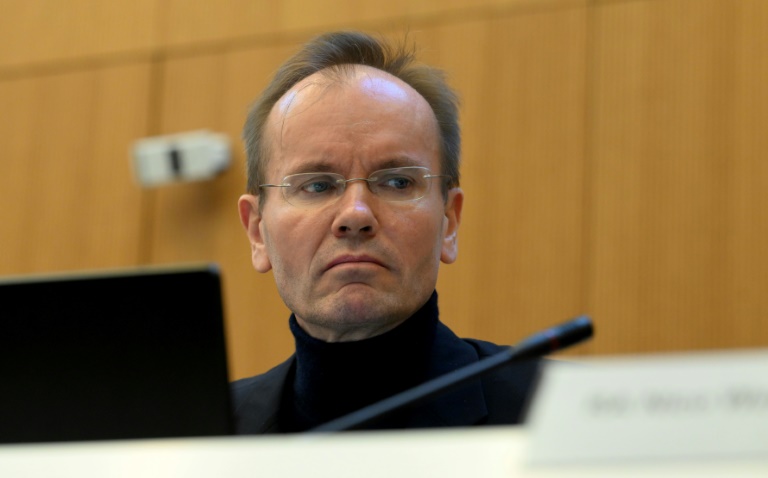
Austrian-born Braun, who has been in custody since July 2020, appeared in court wearing his trademark black turtleneck under a suit jacket. 

The 53-year-old spoke only to confirm his personal details, and appeared to listen intently as prosecutors then read out the 90-page indictment. 

His lawyer is due to give a statement later in the day.

– Fugitive COO –

Braun faces charges of commercial gang fraud, breach of trust, false accounting and market manipulation.

He denies the allegations and claims to be a victim of the fraud, painting Wirecard’s fugitive former chief operating officer Jan Marsalek as the mastermind.

Marsalek, a shadowy figure with ties to foreign intelligence services, evaded arrest in 2020 by staging a daring escape from Austria by private jet. 

He was reported earlier this year to be hiding out in Russia.

Braun’s co-defendants are ex-accounting boss Stephan von Erffa and Oliver Bellenhaus, the former head of Wirecard’s Dubai subsidiary.

Bellenhaus has admitted wrongdoing and will act as a key witness for the prosecution.

If found guilty, the trio risk lengthy prison sentences.

But Bellenhaus’s lawyer, Florian Eder, told reporters he expected “a significantly reduced sentence” for his client given his cooperation with authorities.

The court has scheduled 100 trial dates for the complex case.

– Fake transactions –

The prosecution’s case centres around the claim that Wirecard executives inflated the company’s earnings, starting at least as far back as 2015, by inventing revenue streams from transactions with a web of partner companies.

These so-called Third Party Acquirer (TPA) companies in Dubai, the Philippines and Singapore accounted for a huge chunk of Wirecard’s sales and profits according to its books.

But “all the accused knew” that the revenues from these TPA businesses “didn’t exist”, the indictment reads, adding that the defendants used forged documents to hide the trickery.

The goal was “to increase the company’s financial strength and make it more attractive to investors and customers”, prosecutors allege.

Founded in 1999 as an outfit processing credit card payments for porn and gambling websites, Wirecard rose to become a respectable player in the booming “fintech” (financial technology) sector.

A favourite with investors, it entered Germany’s blue-chip DAX index in 2018 and at its peak was valued at more than 24 billion euros, outweighing giant Deutsche Bank.

Despite occasional speculation of wrongdoing at the company, Wirecard continued its meteoric rise.

– FT investigation –

But its troubles began in earnest in 2019 when the Financial Times published a series of explosive articles detailing accounting irregularities.

The scam finally unravelled when long-time auditor EY uncovered a 1.9-billion-euro hole in its accounts in June 2020.

The cash, which made up a quarter of Wirecard’s balance sheet, was meant to be sitting in trustee accounts at two banks in the Philippines.

But the Philippines’ central bank has said the cash never entered its monetary system and both Asian banks, BDO and BPI, denied having a relationship with Wirecard.

Wirecard’s share price tanked and it filed for insolvency soon after, leaving behind three billion euros in debt that creditors are unlikely to recover.

The company’s downfall sent shockwaves through Germany and prompted an overhaul of finance watchdog Bafin, which was heavily criticised for ignoring early warnings about Wirecard.

“The Wirecard scandal has damaged Germany’s reputation as a financial centre,” said Volker Bruehl, a professor at the Center for Financial Studies in Frankfurt.

Ex-Wirecard CEO in the dock over 'unparalleled' fraud

Wirecard’s ex-CEO Markus Braun and two former executives went on trial in Munich on Thursday charged with fraud over their involvement in Germany’s biggest-ever accounting scandal.

The trial in Munich comes two and a half years after digital payments firm Wirecard collapsed in spectacular fashion after admitting that 1.9 billion euros ($2 billion) missing from its accounts did not actually exist.

Chancellor Olaf Scholz, who was finance minister at the time of Wirecard’s implosion, described the scandal as “unparalleled” in Germany’s post-war history.

The keenly anticipated trial is being held in a high-security courtroom inside Munich’s sprawling Stadelheim prison complex.

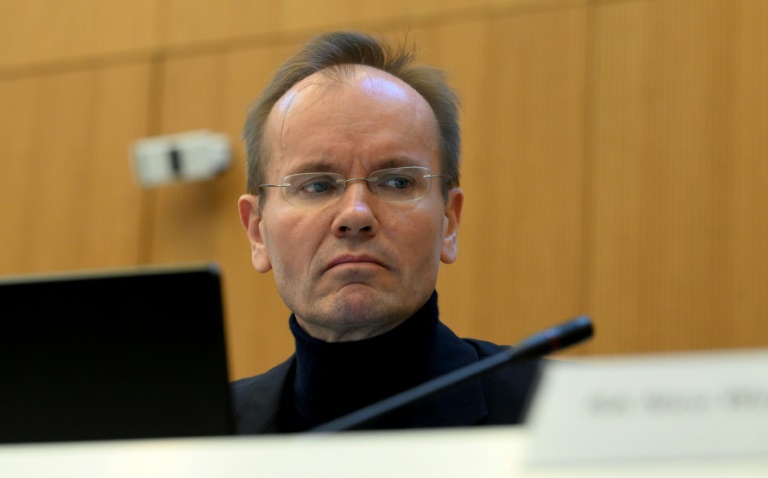
Austrian-born Braun, who has been in custody since July 2020, appeared in court wearing his trademark black turtleneck under a suit jacket. 

The 53-year-old spoke only to confirm his personal details, and appeared to listen intently as prosecutors then read out the 90-page indictment. 

His lawyer is due to give a statement later in the day.

– Fugitive COO –

Braun faces charges of commercial gang fraud, breach of trust, false accounting and market manipulation.

He denies the allegations and claims to be a victim of the fraud, painting Wirecard’s fugitive former chief operating officer Jan Marsalek as the mastermind.

Marsalek, a shadowy figure with ties to foreign intelligence services, evaded arrest in 2020 by staging a daring escape from Austria by private jet. 

He was reported earlier this year to be hiding out in Russia.

Braun’s co-defendants are ex-accounting boss Stephan von Erffa and Oliver Bellenhaus, the former head of Wirecard’s Dubai subsidiary.

Bellenhaus has admitted wrongdoing and will act as a key witness for the prosecution.

If found guilty, the trio risk lengthy prison sentences.

But Bellenhaus’s lawyer, Florian Eder, told reporters he expected “a significantly reduced sentence” for his client given his cooperation with authorities.

The court has scheduled 100 trial dates for the complex case.

– Fake transactions –

The prosecution’s case centres around the claim that Wirecard executives inflated the company’s earnings, starting at least as far back as 2015, by inventing revenue streams from transactions with a web of partner companies.

These so-called Third Party Acquirer (TPA) companies in Dubai, the Philippines and Singapore accounted for a huge chunk of Wirecard’s sales and profits according to its books.

But “all the accused knew” that the revenues from these TPA businesses “didn’t exist”, the indictment reads, adding that the defendants used forged documents to hide the trickery.

The goal was “to increase the company’s financial strength and make it more attractive to investors and customers”, prosecutors allege.

Founded in 1999 as an outfit processing credit card payments for porn and gambling websites, Wirecard rose to become a respectable player in the booming “fintech” (financial technology) sector.

A favourite with investors, it entered Germany’s blue-chip DAX index in 2018 and at its peak was valued at more than 24 billion euros, outweighing giant Deutsche Bank.

Despite occasional speculation of wrongdoing at the company, Wirecard continued its meteoric rise.

– FT investigation –

But its troubles began in earnest in 2019 when the Financial Times published a series of explosive articles detailing accounting irregularities.

The scam finally unravelled when long-time auditor EY uncovered a 1.9-billion-euro hole in its accounts in June 2020.

The cash, which made up a quarter of Wirecard’s balance sheet, was meant to be sitting in trustee accounts at two banks in the Philippines.

But the Philippines’ central bank has said the cash never entered its monetary system and both Asian banks, BDO and BPI, denied having a relationship with Wirecard.

Wirecard’s share price tanked and it filed for insolvency soon after, leaving behind three billion euros in debt that creditors are unlikely to recover.

The company’s downfall sent shockwaves through Germany and prompted an overhaul of finance watchdog Bafin, which was heavily criticised for ignoring early warnings about Wirecard.

“The Wirecard scandal has damaged Germany’s reputation as a financial centre,” said Volker Bruehl, a professor at the Center for Financial Studies in Frankfurt.

King Charles coins enter UK circulation

The first coins bearing the likeness of Britain’s King Charles III entered circulation Thursday, The Royal Mint announced.

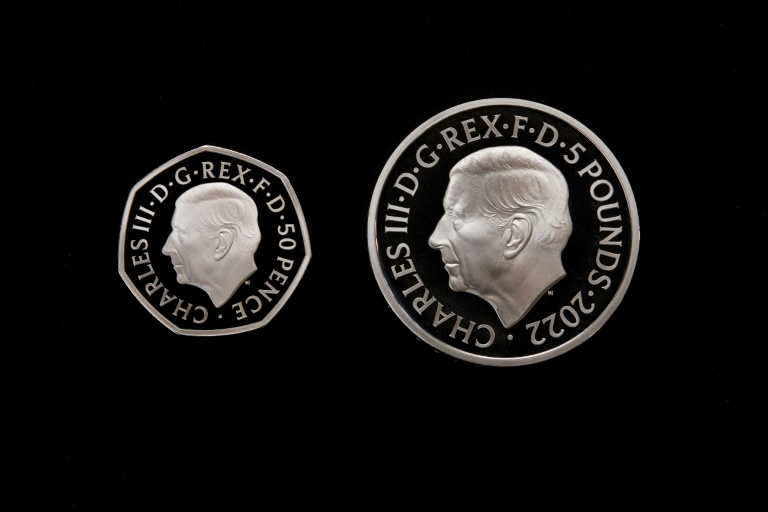
The new 50 pence (60 US cent) piece features an effigy of Charles, who became king after the death of his mother Queen Elizabeth II in September.

The Royal Mint, official producer of UK banknotes and coins, is initially releasing 4.9 million of the coins via transactions made at the country’s postal offices.

Millions more will eventually enter use, with Charles’s head featuring on all denominations.

The effigy is the work of British sculptor Martin Jennings and was personally approved by the king.

Charles’s head faces left, in line with a tradition that the new monarch looks the opposite way to their predecessor.

The reverse side celebrates the life and legacy of Elizabeth, using the coin design for her coronation in 1953.

The coronation of Charles takes place on May 6.

In Netflix series, Harry slams press, family, over 'feeding frenzy'

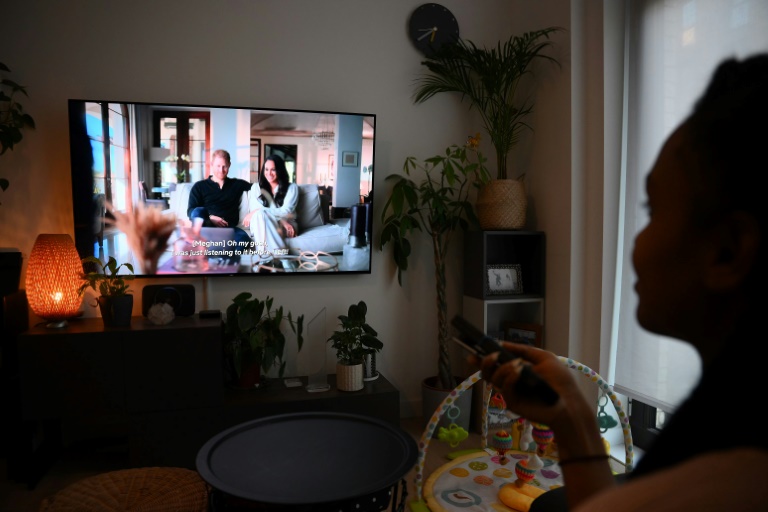
Prince Harry slammed the media “feeding frenzy” over his relationship with Meghan in an explosive Netflix docuseries aired Thursday and criticised Britain’s royal family for failing to protect her and his mother Diana.

The family has been braced for the first three episodes of the six-part series “Meghan & Harry”.

It was largely spared during the first episodes but was still on the end of accusations of “unconscious” racial bias and that it did not help Meghan or Diana after her 1992 separation from Harry’s father Charles, who is now king.

“To see another woman in my life who I love go through this feeding frenzy, that’s hard,” said Harry. “It is basically the hunter versus the prey.”

“The moment that she divorced, the moment she left the institution, then she was by herself… she was completely exposed to this,” Harry, 38, said of his mother, who died in a Paris car crash in 1997.

Meghan also took aim at the family for failing to counter negative press reports about her, saying “it was horrible, but I continued to hold the line, like say nothing”.

Her husband said the family ignored racist undertones in the reports.

“As far as a lot of the family were concerned, everything that she was being put through, they’d been put through as well. So it was almost like a rite of passage,” he said.

“I said the difference here is the race element.”

Harry went on to claim there was a “huge level of unconscious bias” within the family, with the documentary referencing a racist brooch worn by Princess Michael of Kent to an event that Meghan attended in 2017.

Harry reiterated feeling “ashamed” about being photographed wearing a Nazi uniform to a fancy-dress party in 2005, calling it “probably one of the biggest mistakes of my life”.

– ‘Explosive’ –

The documentary is lifting the lid on events that prompted the pair to quit royal life and move to the United States in 2020.

Several British newspapers said the couple had declared “war” on the royal family, which said Thursday that no family members had been approached to comment for the docuseries.

The first parts trace the budding love story, interspersed with personal photographs and videos of the early courtship, and their attempts to keep it a secret.

“When I got to meet ‘M’ I was terrified of her being driven away by the media, the same media that had driven so many other people away from me,” said Harry.

“I knew that the only way that this could possibly work is by keeping it quiet for as long as possible.”

The early episodes also focus on Harry’s childhood and difficult teen years, often with paparazzi in tow.

He describes how he found refuge in frequent trips to Africa, and in an apparent barb at his blood family, said: “I have a second family out there, a group of friends that literally brought me up.”

In another seeming dig at his older brother Prince William and wife Catherine, he said: “with many people in the family, especially the men, there can be a temptation or an urge to marry someone who would fit in the mould.”

But the most serious revelations about royal life and the breakdown of his relationship with William appear to be saved for the final three parts, due to be released on December 15. 

In reaction to Thursday’s episodes, journalist Piers Morgan, a frequent critic of the couple, accused of them of hypocrisy.

“‘It’s amazing what people will do when they’re offered a huge amount of money — hand over photographs to create a story’ — Prince Harry, who was paid £90 million by Netflix to hand over photos & create a story,” he tweeted. 

“This is so funny.”

– Racism claims –

Netflix showcased the first trailer last week just as William made his first trip to the US as heir to the throne, prompting accusations of sabotage.

The timing could barely have been worse for William after Buckingham Palace sacked one of his godmothers as a courtier for using racially charged language to a black British woman at a reception.

For some, the incident reinforced incendiary claims by mixed-race Meghan, 41, that racism within the royal household was one of the reasons for leaving.

The docuseries airs three months exactly since the death of Harry’s grandmother Queen Elizabeth II, and a month before the long-awaited publication of his memoirs, “Spare”.

Markets mostly fall as recession fears dampen China optimism

Hong Kong soared but other stock markets mostly fell Thursday as investors weighed worries about a US recession against China’s shift away from strict Covid restrictions.

Oil prices rebounded slightly from recent sharp losses.

“The risk-off sentiment… remains hard to kick into touch as concerns about recession stay front and centre,” noted Susannah Streeter, senior investment and markets analyst at Hargreaves Lansdown. 

“The evil twins of recession and persistently higher inflation are lurking, keeping investors on edge.”

Analysts pointed out that two-year US Treasury yields were much higher than those of 10-year bonds, which is usually considered a clear indication of a looming recession.

This week also saw the heads of some of Wall Street’s biggest banks warn of a downturn.

Traders are now steeling themselves for the release next week of crucial inflation figures and the Fed’s final policy meeting of the year, which will be pored over for an idea about its intentions in 2023.

The fear of a US recession is playing off against China’s shift away from its zero-Covid strategy of lockdowns and mass testing that has been blamed for clattering the world’s number two economy.

After widespread protests last month against the strict measures and calls for more political freedoms, authorities have scaled back many of them and on Wednesday announced a nationwide loosening of restrictions.

While there are worries that the more liberal approach will spark a surge in infections, it has helped fan a rally across markets, particularly in Hong Kong where Chinese tech firms and property developers are listed.

The Hang Seng Index closed up more than three percent Thursday.

“Developments in China have a big role to play, although as we’re seeing once again, Covid-related moves are almost exclusively impacting stocks in domestic markets,” said Craig Erlam, senior analyst at OANDA trading group. 

“We can see that again overnight, with reports of looser mask and isolation requirements in Hong Kong lifting the Hang Seng and making it the clear outperformer in the region, while most other indices tread water.”

– Key figures around 1200 GMT –

London – FTSE 100: FLAT at 7,488.65 points

Frankfurt – DAX: DOWN 0.3 percent at 14,217.20

Paris – CAC 40: DOWN 0.1 percent at 6,650.95

EURO STOXX 50: DOWN 0.2 percent at 3,912.11

Tokyo – Nikkei 225: DOWN 0.4 percent at 27,574.43 (close)

Hong Kong – Hang Seng Index: UP 3.4 percent at 19,450.23 (close)

Shanghai – Composite: DOWN 0.1 percent at 3,197.35 (close)

New York – Dow: FLAT at 33,597.92 (close)

Euro/dollar: UP at $1.0512 from $1.0510 on Wednesday

Dollar/yen: UP at 136.77 yen from 136.57 yen

Pound/dollar: DOWN at $1.2176 from $1.2209

Euro/pound: UP at 86.34 pence from 86.05 pence

Brent North Sea crude: UP 1.0 percent at $77.95 per barrel

West Texas Intermediate: UP 1.0 percent at $72.76 per barrel

Peru gets new president after predecessor's arrest

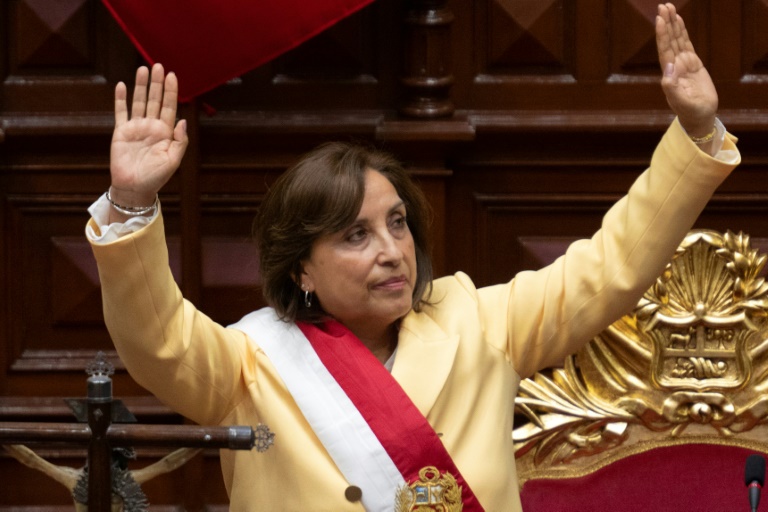
Peru’s new President Dina Boluarte was on Thursday facing pressure to form a government, a day after the country was thrown into political chaos by the dramatic arrest of her predecessor who stands accused of attempting a coup.

The South American country’s first-ever woman leader asked the opposition for a truce as she tried to end the turmoil sparked by Pedro Castillo, who had attempted to dissolve parliament and rule by decree.

Castillo’s efforts were quickly stamped out by lawmakers who voted him out of office in a dizzying day of high drama, by the end of which former vice-president Boluarte had emerged as the country’s new head of state.

She took the oath of office within two hours of the impeachment vote, donning the presidential sash in front of Congress and vowing to serve out the rest of Castillo’s term, until July 2026.

In her first words as president, she called for “national unity” and urged lawmakers to put aside their ideological differences, in a tacit reference to the confrontation between Castillo’s leftist government and the right-wing dominated Congress.

The 60-year-old lawyer must now form her first ministerial cabinet, which will be an early indication of whether she is likely to survive in office.

Her initial appointments will signal the support she can muster for her government. If she is unable to rule, calls will grow for her resignation or the calling of early elections.

– Dizzying hours –

Earlier in the day, Castillo had faced his third impeachment attempt since the former rural schoolteacher unexpectedly won power from Peru’s traditional political elite 18 months ago.

In a televised address, the 53-year-old announced he was dissolving the opposition-dominated Congress, imposing a curfew and would rule by decree for at least nine months.

As criticism poured in over the speech, lawmakers defiantly gathered earlier than planned to debate the impeachment motion and approved it with 101 votes out of a total of 130 lawmakers.

Castillo had left the presidential palace after the vote with the intention of seeking asylum in Mexico’s embassy before he was arrested, according to a police report published by local media.

By Wednesday night, Castillo had been transferred to a police facility in east Lima, where graft-convicted former president Alberto Fujimori — himself removed by Congress in 2000 — is serving out his sentence.

Authorities said he was staging a power grab.

Hundreds of protesters, some of whom supported the former president and others who opposed him, took to Lima’s streets after his impeachment.

“We are tired of this corrupt government that was stealing from day one,” said 51-year-old Johana Salazar.

The European Union expressed its support for the “political, democratic and peaceful solution adopted by the Peruvian institutions,” and urged “all actors to a dialogue that ensures stability,” according to a statement.

UN Secretary-General Antonio Guterres “calls on the parties involved to uphold the rule of law, as well as to remain calm and refrain from inflaming tensions,” his spokesman said in a statement.

– ‘She is alone’ –

Without her own political party in Congress, Boluarte is facing an uphill battle to stay in power.

“She has no party in Congress, she is alone,” Peru’s former president Ollanta Humala told local television on Wednesday night.

“She does not have the tools to govern, she should call for an early election,” added Humala, who was in office from 2011 to 2016.  

“Today’s truce will last a month or maybe more, but then the country’s big problems will come to the fore.”

But right-wing political heavyweight Keiko Fujimori, the daughter of ex-president Fujimori, said her party would support the new president.   

“Let’s hope that the president appoints a broad-based cabinet, a very good cabinet and we must all do everything possible to make it work well,” she tweeted.

China's Xi meets Saudi crown prince on high-stakes visit

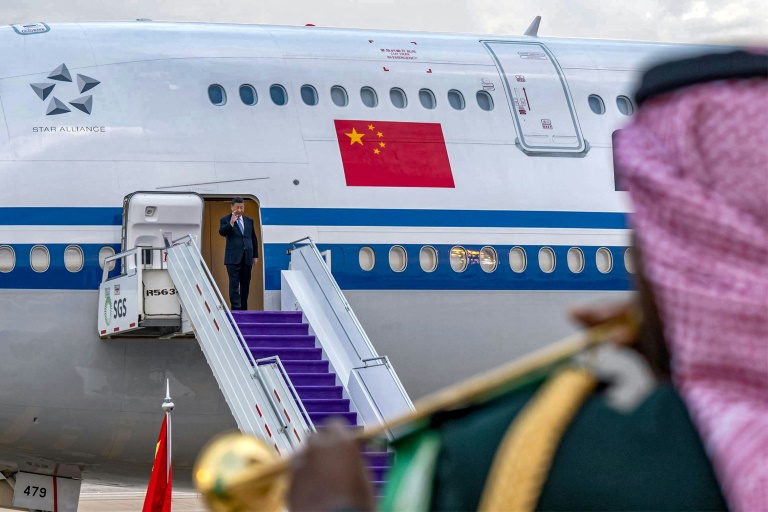
Chinese President Xi Jinping met Saudi Arabia’s powerful crown prince on Thursday on an Arab outreach visit that will yield billions of dollars in deals and has earned a rebuke from Washington. 

About $30 billion in agreements will be signed on Thursday, Saudi state media said, as China seeks to shore up its Covid-hit economy and as the Saudis, long-term US allies, push to diversify their economic and political alliances. 

Xi, who flew in on Wednesday, was greeted with a handshake by 37-year-old Crown Prince Mohammed bin Salman, de facto ruler of the world’s biggest oil exporter, at Yamamah Palace. 

The two men stood side-by-side as a brass band played their national anthems, then chatted as they walked into the palace, which is the king’s official residence and seat of the royal court. 

Arab leaders also began to converge on the Saudi capital ahead of a summit with Xi, the leader of the world’s number-two economy, who will hold separate talks with the six-member Gulf Cooperation Council before leaving on Friday.

China, the top consumer of Saudi oil, has been strengthening its ties with a region that has long relied on the United States for military protection but which has voiced concerns the American presence could be downgraded.

After Xi’s arrival on Wednesday, with formation jets flying overhead, Saudi state media announced 34 investment agreements in sectors including green hydrogen, information technology, transport and construction.

The official Saudi Press Agency did not provide details but said two-way trade totalled 304 billion Saudi riyals ($80 billion) in 2021 and 103 billion Saudi riyals ($27 billion) in the third quarter of 2022. 

State broadcaster Al Ekhbariya said another 20 agreements worth 110 billion riyals ($29.3 billion) were due to be signed on Thursday.

Riyadh-based diplomats said Thursday was expected to be devoted to meetings including with King Salman, the 86-year-old monarch, and his son, Prince Mohammed.

– ‘Raising pace’ of cooperation –

The crown prince sees China as a critical partner in his sweeping Vision 2030 agenda, seeking the involvement of Chinese firms in ambitious mega-projects meant to diversify the economy away from fossil fuels. 

Key Saudi projects include the futuristic $500 billion megacity NEOM, a so-called cognitive city that will depend heavily on facial recognition and surveillance technology. 

Saudi investment minister Khalid al-Falih said this week’s visit “will contribute to raising the pace of economic and investment cooperation between the two countries”, offering Chinese companies and investors “rewarding returns”, according to SPA. 

Xi may also hold bilateral talks before the summit meetings with other Arab leaders who have arrived in Saudi Arabia ahead of Friday’s summits, Riyadh-based diplomats said. 

Egyptian President Abdel Fattah al-Sisi, Tunisian President Kais Saied, Palestinian president Mahmud Abbas and Sudan’s de facto leader Abdel Fattah al-Burhan were all flying in on Thursday.

Iraqi Prime Minister Mohammed Shia al-Sudani, Moroccan Prime Minister Aziz Akhannouch and Lebanese caretaker Prime Minister Najib Mikati have also confirmed their attendance.

China’s foreign ministry this week described Xi’s trip as the “largest-scale diplomatic activity between China and the Arab world” since the People’s Republic of China was founded. 

It has not escaped the attention of the White House, which warned of “the influence that China is trying to grow around the world”, calling its objectives “not conducive to preserving the international rules based order”. 

Washington has long been a close partner of Riyadh, but the relationship is currently roiled by disagreements on energy policy, US security guarantees and human rights. 

Xi is making just his third journey overseas since the Covid pandemic prompted China to shut its borders and embark on a series of lockdowns, putting the brakes on its giant economy.

His visit follows US President Joe Biden’s trip in July, when he greeted Prince Mohammed with a fist-bump at the start of a vain attempt to convince the Saudis to raise oil production.

Close Bitnami banner
Bitnami