World

Peru president ousted and arrested after bid to dissolve Congress

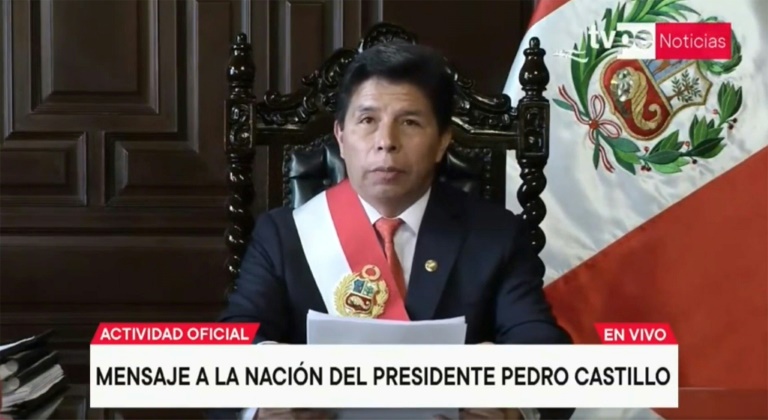
Peru’s leftist president Pedro Castillo was ousted by lawmakers and arrested Wednesday in a dizzying series of events in a country long prone to political upheaval.

Dina Boluarte, a 60-year-old lawyer who had been vice president, was sworn in as Peru’s first female president just hours after Castillo tried to dissolve Congress in a move criticized as an attempted coup.

The day of high drama began with Castillo facing his third impeachment attempt since the former rural school teacher unexpectedly won power from Peru’s traditional political elite in an election 18 months ago.

In a televised address to the nation, the 53-year-old announced that he was dissolving the opposition-dominated Congress, installing a curfew, and would rule by decree.

As criticism poured in over the address, lawmakers defiantly gathered earlier than planned to debate the impeachment motion and approved it, with 101 votes out of a total of 130 lawmakers.

Castillo was impeached for his “moral incapacity” to exercise power, after a litany of crises including six investigations against him, five cabinet reshuffles and large protests.

The constitution allows impeachment proceedings to be brought against a president based on alleged political rather than legal wrongdoing — making impeachments commonplace in Peru.

Castillo was arrested on Wednesday evening, said Marita Barreto, coordinator of a team of prosecutors who deal with government corruption.

A source in the attorney general’s office told AFP he was being investigated for rebellion.

Castillo became the third president since 2018 to be sacked under the “moral incapacity” provision in the constitution.

Within two hours, Boluarte took the oath of office in front of Congress to serve out the rest of Castillo’s term, until July 2026.

Peru is no stranger to political instability: it had three different presidents in five days in 2020, and is now on its sixth president since 2016.

– Political outsider –

After the impeachment vote, Castillo had left the presidential palace with a bodyguard, heading to the Lima police headquarters before his arrest was officially announced.

His supporters criticized their leader’s ousting.

“I want to denounce the fact that our president has been kidnapped by the national police, that he has been detained with premeditation and treachery by Congress,” said retired soldier Manuel Gaviria, 59.

But in her swearing-in ceremony before lawmakers, donning the presidential sash, Boluarte said “there was an attempted coup by Mr. Pedro Castillo that did not receive any support in the democratic institutions or out in the streets.” 

Castillo came out of seemingly nowhere to win 50.12 percent of votes in a June 2021 runoff election against right-wing Keiko Fujimori, the corruption-charged daughter of graft-convicted ex-president Alberto Fujimori.

The ousted president was born in a small village where he worked as a teacher for 24 years, and was largely unknown until he led a national strike in 2017 that forced the then-government to agree to pay rise demands.

Castillo sought to portray himself as a humble servant of the people, traveling on horseback for much of his presidential campaign, and promising to end corruption.

However allegations against him quickly flooded in.

Investigations he faces range from alleged graft and obstruction of justice to plagiarizing his university thesis.

In October, Peru’s attorney general also filed a constitutional complaint accusing Castillo of heading a criminal organization involving his family and allies.

Castillo and his lawyers long argued the investigations against him were part of a plot to unseat him.

“This intolerable situation cannot continue,” he said earlier Wednesday as he announced a plan to convene a new Congress to draft an updated constitution within nine months.

– ‘Now former president’ –

Hundreds of protesters gathered in front of Congress ahead of the vote.

“We are tired of this corrupt government that was stealing from day one,” said 51-year-old Johana Salazar.

Ricardo Palomino, 50, a systems engineer, said Castillo’s attempt to dissolve parliament was “totally unacceptable and unconstitutional. It went against everything and these are the consequences.”

Ahead of the impeachment, the United States demanded Castillo “reverse his decision,” and said after the vote that it no longer considered him to be the president.

“My understanding is that, given the action of the Congress, he is now former president Castillo,” State Department spokesman Ned Price told reporters, saying lawmakers took “corrective action” in line with democratic rules.

Latin American governments voiced deep concern and appealed for respect for democracy, but there were also hints of support for Castillo from fellow leftist leaders.

Mexican President Andres Manuel Lopez Obrador, one of Castillo’s staunchest allies, blamed “economic and political elites” for a hostile environment since the beginning of his “legitimate presidency.”

The government of Gustavo Petro, Colombia’s first left-wing president, called for dialogue involving “all political actors,” adding that “democracy requires the recognition of the popular will expressed both in the elections for president and for Congress.”

Brazil was more critical of Castillo’s actions, calling his attempt to dissolve Congress a “violation” of democracy and the rule of law.
Ramesh 'Sunny' Balwani gets prison time for Theranos fraud

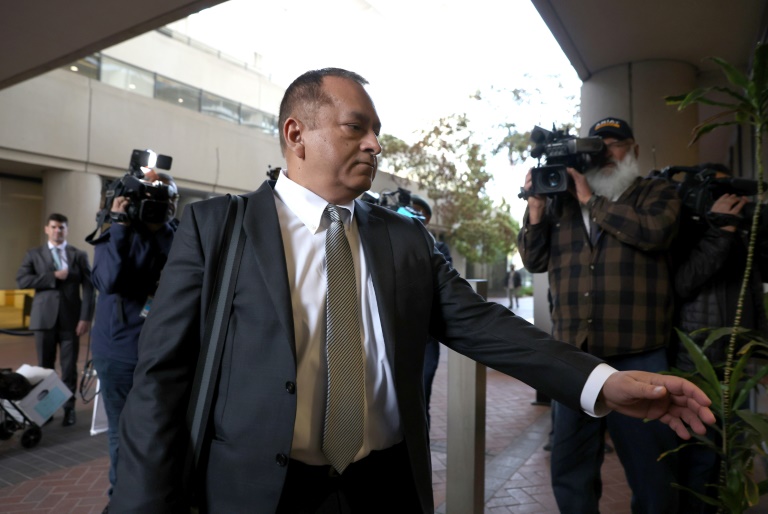
A judge on Thursday sentenced a top aide and ex-boyfriend of fallen Theranos founder Elizabeth Holmes to prison for duping people into trusting the failed blood testing startup.

US District Court Judge Edward Davila sentenced Ramesh “Sunny” Balwani to nearly 13 years in prison, then 3 years of supervised release for his role in what prosecutors argued was a massive fraud perpetuated on Theranos investors and patients.

Balwani is supposed to surrender to be taken into custody on March 15.

Fallen US biotech star Holmes, whose fraud trial was separate from that of Balwani, has asked an appeals court to overturn her conviction and a resulting sentence of more than 11 years in prison.

Holmes’s appeal said she is challenging the prison sentence handed down in November, as well as “any and all adverse rulings incorporated in, antecedent to, or ancillary to the judgment.”

She was convicted on four felony fraud counts in January for persuading investors that she had developed a revolutionary medical device before the company flamed out after an investigation by The Wall Street Journal.

Jurors found Balwani guilty on all 12 fraud counts filed by federal prosecutors, according to the court.

Holmes and Balwani are rare examples of tech executives facing charges over a young company not living up to its hype, in a sector littered with the carcasses of failed startups that once promised untold riches.

Holmes, who is pregnant, will not have to surrender until April of next year, as per an order by Davila, who presided over both trials in a courtroom in San Jose, California. 

The 38-year-old became a star of Silicon Valley when she said her start-up was perfecting an easy-to-use test kit that could carry out a wide range of medical diagnostics with just a few drops of blood.

During her trial, Holmes described Balwani as a controlling force at Theranos.

Her trial shined a spotlight on the blurred line between the hustle that characterizes the industry and outright criminal dishonesty.

US prosecutor Robert Leach told jurors in a federal courthouse in San Jose that 57-year-old Balwani piloted the firm alongside Holmes and that the pair were “partners in everything, including their crime.”

But Holmes and Balwani each rejected the accusation in court, countering that they truly believed in the potential of Theranos in what was failure, not fraud.

Balwani, nearly two decades Holmes’s senior, was brought in to help steer the company she founded in 2003 at just 19 years of age.

Prosecutors alleged Holmes and Balwani were aware the technology did not work as advertised, but continued to promote it as revolutionary to patients and the investors who pumped money into the company.

As Theranos soared, it attracted luminaries such as Rupert Murdoch and Henry Kissinger, but a series of reports casting doubt on the firm’s claims from Murdoch’s own Wall Street Journal set the company’s collapse in motion.

TikTok hit by US lawsuits over child safety, security fears

TikTok was hit Wednesday with a pair of lawsuits from the US state of Indiana, which accused it of making false claims about the Chinese-owned app’s safety for children.

The legal salvo came as problems are mounting for TikTok in the United States, with multiple accusations that the extremely popular app is a national security threat and a conduit for spying by China.

“The TikTok app is a malicious and menacing threat unleashed on unsuspecting Indiana consumers by a Chinese company that knows full well the harms it inflicts on users,” said Attorney General Todd Rokita in a statement.

The lawsuit said TikTok algorithms served up “abundant content depicting alcohol, tobacco, and drugs; sexual content, nudity, and suggestive themes” to users as young as 13.

The state also sued TikTok for allegedly deceiving customers into believing that “reams of highly sensitive data and personal information” were protected from the Chinese government.

In a statement, a TikTok spokesperson did not comment specifically on the case but said “the safety, privacy and security of our community is our top priority.”

“We build youth well-being into our policies, limit features by age, empower parents with tools and resources, and continue to invest in new ways to enjoy content based on age-appropriateness or family comfort,” the company said.

TikTok is facing a growing front of opposition in the United States, with several states and the US military banning its use on government devices.

Texas on Wednesday became the latest state to do so, calling for “aggressive action” against TikTok.

The highly popular app is often singled out for its alleged connections to the Beijing government with fears that China is able to use TikTok’s data to track and coerce users around the world.

TikTok is currently in negotiations with the US government to resolve national security concerns, hoping to maintain operations in one of its biggest markets.

TikTok said it was “confident that we’re on a path…to fully satisfy all reasonable US national security concerns.”

The spectacular success of TikTok has seen rival sites such as Meta-owned Instagram or Snapchat struggle to keep up, with once soaring ad revenues taking a hit.

But Federal Bureau of Investigation Director Christopher Wray told lawmakers last month that he is “extremely concerned” about security risks linked to TikTok.

Pedro Castillo, Peru's 'first poor president,' ousted on corruption charges

When he was elected president of Peru last year, rural school teacher Pedro Castillo was the first leader of the Andean nation in decades with no ties to the elites.

Hailed as a mold-breaker, the far-left trade unionist did, however, fit a disturbing pattern for Peru’s leaders as Congress ousted him Wednesday in an impeachment vote amid corruption allegations against Castillo. 

Castillo, 53, was largely unknown until he led a national strike five years ago that forced the then-government to agree to pay rise demands.

He was born to peasants in the tiny village of Puna in the Cajamarca region, where he worked as a teacher for 24 years.

He grew up helping his parents with farm work, and as a child, had to walk several miles to school.

“This is the first time that this country will be governed by a peasant, someone who belongs to the oppressed classes,” he said on the day of his investiture, for which he donned the trademark white sombrero of his beloved Cajamarca, and a black, Andean suit.

For less formal occasions, Castillo liked to don a poncho and shoes made of recycled tires. 

He traveled on horseback for much of his presidential campaign, as he gave voice to the frustration of struggling Peruvians and cast himself as a man of the people.

“No more poor people in a rich country,” he said, as he campaigned for the Peru Libre (Free Peru) party.

He said he would renounce his presidential salary and continue living on his teacher earnings, and described himself as “a man of work, a man of faith, a man of hope.”

Nevertheless, Castillo has been locked in a power struggle with Congress since the attorney general filed a complaint accusing him of heading a criminal organization involving his family and allies that hands out public contracts in exchange for money.

And on Wednesday he became the third Peruvian president since 2018 to be sacked under the “moral incapacity” provision of the constitution. 

Castillo made a last-minute bid to stave off his impeachment on corruption charges by attempting to dissolve Congress and rule by decree, but lawmakers voted to remove him anyway. 

– Surprise victory –

Castillo defeated right-wing candidate Keiko Fujimori in 2021, promising radical change to improve the lot of Peruvians contending with a recession worsened by the coronavirus pandemic, rising unemployment and poverty.

At the time, he promised “a country without corruption.”

A Catholic who was vehemently opposed to gay marriage, elective abortion and euthanasia, he frequently quoted from the Bible to drive home his points. In his two-story brick home in the hamlet of Chugur in Cajamarca hangs a picture of Jesus surrounded by sheep and a caption, in English, that reads “Jehovah is my shepherd.”

– A ‘humble man’ –

Castillo burst onto the national scene five years ago when he led thousands of teachers on a near 80-day strike to demand a pay rise.

It left 3.5 million public school pupils without classes to attend, and compelled then-president Pedro Pablo Kuczynski, who initially refused to negotiate, to relent.

In a bid to delegitimize the protest, then-interior minister Carlos Basombrio claimed its leaders were linked to Movadef, the political wing of the defeated Shining Path Maoist guerrilla group, considered a terrorist organization by Lima.

Castillo, who had participated in armed “peasant patrols,” or ronderos, that resisted Shining Path incursions at the height of Peru’s internal conflict from 1980 to 2000, vehemently rejected these allegations.

Near his house, Castillo has a one-hectare farm where he grows corn and sweet potatoes and raises chickens and cows.

When he met his predecessor, interim President Francisco Sagasti, at the government palace during the transition, he jokingly asked where he would fit all his farm animals.

He suggested at the time that the official presidential residence, Pizarro Palace, should be turned into a museum. 

“I believe we have to break with the colonial symbols,” he said, adding he would return to his schoolteacher’s job when his term was due to end in 2026.

Stock markets slide as recession worries weigh on investors

Major stock markets were hit by more selling Wednesday on growing recession fears, with Chinese trade data adding to the gloomy outlook and US oil prices finishing at another 2022 low.

Drops in Asia and Europe followed steep losses on Wall Street Tuesday after the heads of leading US banks warned about tough times in the coming year.

On Wednesday, two of the three major US indices finished lower following a choppy session.

Analysts described the market movements as reflecting hesitancy, ahead of closely-watched consumer price data next week and a Federal Reserve decision on monetary policy.

“Buyers remained a reluctant bunch amid lingering angst about global growth prospects,” said a Briefing.com note, adding that there was likely nervousness ahead of news events with potential to “spark outsized reaction.”

US oil benchmark West Texas Intermediate dropped 3.0 percent to end the day at $72.01 a barrel after US Energy Information Administration data showed a jump in gasoline stockpiles, indicating ebbing consumption in the world’s biggest economy.

The WTI also closed at a 2022 low on Monday, while international benchmark Brent slipped to a level not seen since January.

Analysts note that conditions in the oil market have loosened compared with earlier this year, adding to oversupply worries at a time when more economists are warning of a recession.

The pullback in oil prices also comes amid trader disappointment at a recent decision by OPEC oil exporters not to cut output, and as market watchers expect a price cap on Russian crude to have little impact on output.

– China easing on Covid –

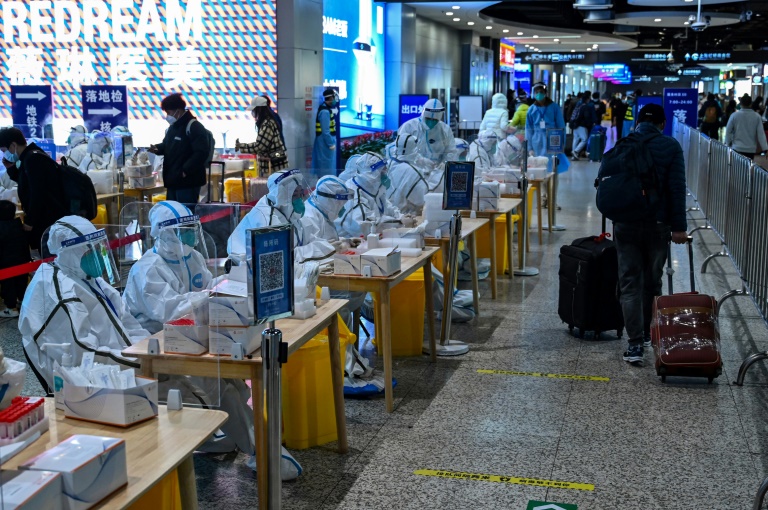
Recession worries have countered optimism at China’s easing of its restrictive Covid-19 policies.

On Wednesday, officials announced a nationwide loosening of restrictions, including a reduction in mandatory PCR tests and allowing of some positive cases to quarantine at home.

In a sign of the impact that zero-Covid policies have had, data released the same day showed imports and exports plunged far more than expected in November.

But while the country edges back to normality, Zhiwei Zhang of Pinpoint Asset Management warned that this will take time.

“The zero-Covid policy has been loosened, but mobility has not recovered much on the national level,” he said. 

“I expect exports will stay weak in the next few months as China goes through a bumpy reopening process.”

– Key figures around 2140 GMT –

New York – Dow: FLAT at 33,597.92 (close)

New York – S&P 500: DOWN 0.2 percent at 3,933.92 (close)

New York – Nasdaq: DOWN 0.5 percent at 10,958.55 (close)

London – FTSE 100: DOWN 0.4 at 7,489.19 (close)

Frankfurt – DAX: DOWN 0.6 percent at 14,261.19 (close)

Paris – CAC 40: DOWN 0.4 percent at 6,660.59 (close)

EURO STOXX 50: DOWN 0.5 percent at 3,920.90 (close)

Tokyo – Nikkei 225: DOWN 0.7 percent at 27,686.40 (close)

Hong Kong – Hang Seng Index: DOWN 3.2 percent at 18,814.82 (close)

Shanghai – Composite: DOWN 0.4 percent at 3,199.62 (close)

Euro/dollar: UP at $1.0510 from $1.0467 on Tuesday

Dollar/yen: DOWN at 136.57 yen from 137.00 yen

Pound/dollar: UP at $1.2209 from $1.2133

Euro/pound: DOWN at 86.05 pence from 86.27 pence

Brent North Sea crude: DOWN 2.7 percent at $77.17 per barrel

West Texas Intermediate: DOWN 3.0 percent at $72.01 per barrel

burs-jmb/bys

Ukraine conflict intrudes on UN biodiversity summit

The Ukraine conflict cast a shadow over a high-stakes UN summit on biodiversity in Montreal on Wednesday, as Western nations slammed the environmental destruction brought about by Russia’s invasion.

The broadsides by the European Union and New Zealand — which spoke on behalf of other countries, including the United States — came after Ukrainian President Volodymyr Zelensky accused Moscow of “ecocide” and of devastating his country’s dolphin population.

Russia fired back that the meeting was an inappropriate forum and accused its critics of attempting to sabotage a new global deal for nature.

“The war brings about pollution and long-term environmental degradation, destroying protected areas and natural habitats,” Ladislav Miko, an EU representative at the meeting, known as COP15, said.

“While the war rages on, it blocks much needed action on nature conservation and restoration,” he added.

New Zealand’s Rosemary Paterson, speaking for the JUSCANZ group that includes Japan, Australia and the United States, added: “The widespread environmental destruction and transboundary harm caused by Russia’s military aggression against Ukraine cannot go unnoticed in this forum.”

Invoking a right-of-reply, Russian delegate Denis Rebrikov said: “We resolutely refute allegations against us as being outside the scope of this COP on biodiversity.”

He added that conflicts of the recent past — such as those in Iraq, Libya, Afghanistan and Syria — were not brought up at environmental summits, despite the harms done to ecosystems.

“It’s hard to avoid the impression that these countries are deliberately trying to sabotage the adoption of a global framework” on biodiversity, added Rebrikov.

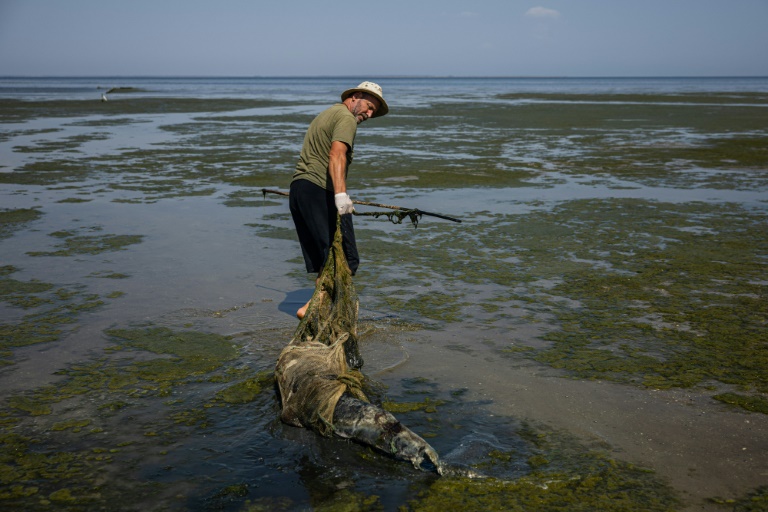
Earlier in the day, President Zelensky of Ukraine said tens of thousands of dead dolphins had washed up on the Black Sea and accused Russia of “ecocide.” Ukrainian scientists have blamed military sonar used by Russian warships for the disaster.

Delegates from across the world have gathered from December 7 to 19 in Canada to try to hammer out a new deal for nature: a 10-year framework aimed at saving the planet’s forests, oceans and species before it’s too late. 

Draft targets include a cornerstone pledge to protect 30 percent of the world’s land and seas by 2030, eliminating harmful fishing and agriculture subsidies and tackling invasive species and reducing pesticides.

CORRECTION: An earlier version of this story quoted the wrong person in paragraph four, after the UN provided the wrong name. The quote is from Ladislav Miko, not Hugo Schally. 

Apple beefs up iCloud data defense against snooping

Apple on Wednesday said it is beefing up defense of data that users store in the cloud, a move that could thwart authorities as well as hackers.

The iPhone maker’s Advanced Data Protection plan extends something called end-to-end encryption beyond its iMessage service to photos and other data backed up to its iCloud storage service.

Apple said the move was urgent given an alarming increase in data breaches that had seen 1.1 billion personal records exposed across the globe in 2021, according to company research.

“Advanced Data Protection is Apple’s highest level of cloud data security,” said Ivan Krstić, Apple’s head of Security Engineering and Architecture.

It gives “users the choice to protect the vast majority of their most sensitive iCloud data with end-to-end encryption so that it can only be decrypted on their trusted devices,” he added.

Apple told the Wall Street Journal that with the heightened security, it would no longer be able to hand over iMessage history and other files, even when legally requested to do so by investigators.

The move will potentially rekindle a long period of standoffs involving technology firms and law enforcement.

Apple notably resisted a legal effort to weaken iPhone encryption to allow authorities to read messages from a suspect in a 2015 bombing in San Bernardino, California.

Police officials worldwide say encryption can protect criminals, terrorists and pornographers even when authorities have a legal warrant for an investigation.

Civil rights and privacy advocates, along with cybersecurity professionals, however, advocate encrypting data to protect against wrongful snooping by authorities as well as hackers.

“We constantly identify and mitigate emerging threats to (user) personal data on device and in the cloud,” Apple senior vice president of software engineering Craig Federighi said in a post. 

Under the new setting, Apple said only iCloud Mail, Contacts, and Calendar would remain unencrypted because of the need to operate with other systems.

The new level of security will be available in the United States by the end of this month and be rolled out globally next year, Apple said.

Apple has championed data privacy as a way to differentiate itself from tech giants Meta and Google, which closely track online activity by users to boost advertising revenue.

Germany foils bizarre coup plot by far-right group

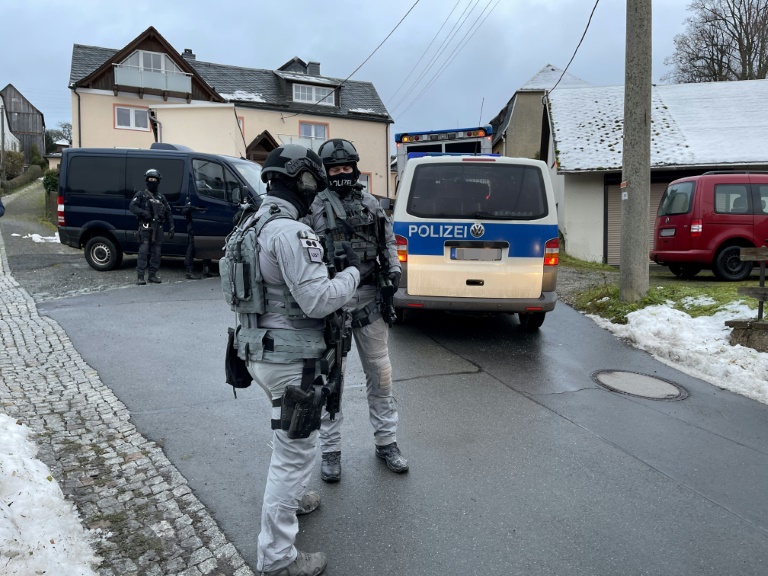
A prince, an ex-MP and former soldiers were arrested Wednesday in raids led by the German police against members of a far-right “terror group” that allegedly planned to attack parliament and overthrow the government.

The group had organised a “council” to take charge after the putsch, as well as a “military arm that would build a new German army”, chief federal prosecutor Peter Frank told journalists.

“Some members of the terrorist organisation also considered using force to enter the German Bundestag (parliament),” Frank said.

He later told the ARD broadcaster that the group’s preparations were “already at an advanced stage”, though no concrete date had been set. 

“We are sure that it would have come to a strike,” he said. 

President Frank-Walter Steinmeier told public radio MDR he was “deeply concerned” by the alleged plot, describing it as a “new level”.

Around 3,000 officers including elite anti-terror units took part in the early morning raids searching more than 130 properties, in what German media described as one of the country’s largest-ever police actions against extremists.

The raids targeted alleged members of the “Citizens of the Reich” (Reichsbuerger) movement, federal prosecutors said in a statement.

Prosecutors in Karlsruhe, southern Germany, said they had arrested 25 people, including one in Austria and another in Italy, and identified a further 27 people as suspected members or supporters of the network.

– Prince and politician –

Those arrested are accused of having formed a group that “had set itself the goal of overcoming the existing state order in Germany and replacing it with their own kind of state”, they said.

“The accused are united by a deep rejection of state institutions and the free, democratic basic order of the Federal Republic of Germany,” they said.

The suspects were aware that their plan “could only be realised by using military means and violence against state representatives”, prosecutors said.

They allegedly planned to appoint one of the arrested suspects, identified by local media as aristocrat and businessman Prince Heinrich XIII Reuss, as Germany’s new leader after the coup.

Heinrich XIII had already sought to make contact with Russian officials to discuss Germany’s “new state order” after the coup, prosecutors said.

There was however “no indication that the contact persons responded positively to his request”, they said.

A Russian woman named only as Vitalia B., who was among those arrested on Wednesday, is suspected of having facilitated those contacts, prosecutors added.

Birgit Malsack-Winkemann, a former member of parliament for the far-right AfD party and Berlin judge, was also arrested. 

The ex-MP had been tapped by the group to take over as justice minister after the planned coup, chief prosecutor Frank said.

– ‘Into the abyss’ –

Other suspected members include current and former members of the German army in the “low single digits”, a spokesman for the defence ministry said at a regular press conference.

One of those arrested was an active soldier in the KSK special forces, who worked in a “support” role, the spokesman said. 

“A former officer of the special units of the German army” was likewise held near Perugia, Italy, the local police said in a statement.

The Reichsbuerger movement includes far-right extremists, conspiracy theorists and gun enthusiasts who reject the legitimacy of the modern German republic.

Its followers generally believe in the continued existence of the pre-World War I German Reich, or empire, under a monarchy and several groups have declared their own states.

Long dismissed as malcontents and oddballs, the Reichsbuerger have become increasingly radicalised in recent years and are seen as a growing security threat.

The investigation gave “a look into the abyss” of far-right terror from the movement, Interior Minister Nancy Faeser said in a statement.

According to prosecutors, the terror cell suspects believe in Reichsbuerger and QAnon conspiracy theories and are “strongly convinced” that Germany is run by a “deep state” that needs to be toppled.

As part of the preparations for the coup, members of the alleged terror cell acquired weapons, organised shooting practice and tried to recruit new followers, particularly among the military and police, according to prosecutors.

Germany considers far-right terrorism the biggest threat to its security following a spate of attacks in recent years.

In April, police foiled a plot by a far-right group to kidnap the health minister. 

No convictions sought in French court over 2009 Rio-Paris crash

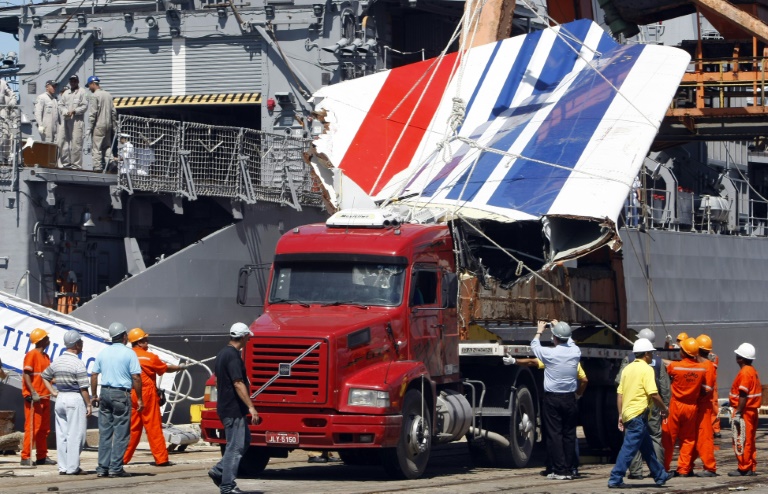
French prosecutors said Wednesday it was “impossible” to convict Air France and plane maker Airbus over the 2009 crash of a Rio-Paris flight, enraging victims’ families after an eight-week trial.

In an unusual conclusion to proceedings, prosecutors said they could not recommend a guilty verdict for the two companies which have been charged with involuntary manslaughter over the air disaster.

Their guilt “appears to us to be impossible to prove,” prosecutor Pierre Arnaudin told the court in Paris. 

“We know that this view will most likely be difficult to hear for the civil plaintiffs, but we are not in a position to demand the conviction of Air France and Airbus,” he added.

The decision not to seek a conviction by prosecutors does not mean that the three-person team of judges overseeing the trial has to follow their advice. 

The two France-based companies went on trial in October to determine their responsibility for the worst aviation disaster in Air France’s history, which left 228 dead on board flight AF447.

Both denied the involuntary manslaughter charges that carry a maximum fine of 225,000 euros ($236,000).

Prosecutors initially dropped charges against the companies in 2019 in a decision that also infuriated victims’ families.

A Paris appeals court overturned this decision in 2021 and ordered the trial to go ahead. 

“We have a prosecutor who is supposed to defend the people who in the end is defending the multinational Airbus,” Daniele Lamy, the head of the Entraide et Solidarite AF447 association, told reporters on Wednesday.

She denounced a “trial skewed against the pilots”.

“I’m ashamed to be French,” one furious civil plaintiff said as they left the court on Wednesday. “What’s the justice system for?” asked another.

– Pilot error – 

At the heart of hearings in Paris has been the role of defective so-called Pitot tubes, which are used to measure the flight speed of aircraft.

The court heard how a malfunction with the tubes, which became blocked with ice crystals during a mid-Atlantic storm, caused alarms to sound in the cockpit of the Airbus A330 and the autopilot system to switch off.

Technical experts have highlighted how, after the instrument failure, the pilots put the plane into a climb that caused the aircraft to lose upward lift from the air moving under its wings, thus losing altitude.

“For us, what led the crew to react in the way they did remains a mystery in most respects,” Air France representative Pascal Weil, a former test pilot, told the court on November 10. 

Airbus has also blamed pilot error as the main cause for the crash during proceedings.

But lawyers for victims’ families have emphasised how both companies were aware of the Pitot tube problem before the crash, and that the pilots were not trained to deal with a high-altitude emergency of this nature.

The court heard how 17 different incidents of defective Pitot tubes on Airbus aircraft were reported in the year before the crash, with Airbus and Air France previously warning their clients and pilots about the issue.

Air France’s reaction was “too slow and insufficient,” Thibault de Montbrial, a lawyer representing German victims, told the court on December 1.

He said at the time that the association he represented — HIOP — “feared for a long time … that there was a form of state interest in putting a lid over this case.”

Francois Saint-Pierre, Air France defence counsel, lamented the “discredit” he maintained civil plaintiffs had brought upon Air France and Airbus in describing proceedings as a “parody of justice.” He insisted there had been a “model trial.”

He added that Air France had, unlike Airbus, “never criticised the pilots.”

He said it “remains a mystery” quite what happened on the fateful flight. What caused the crash was “something imponderable and totally unforeseeable.”

– ‘Stall, stall’ –

Chief prosecutor Marie Duffourc acknowledged on Wednesday that the legal proceedings had been “far too long”, meaning the “suffering has been endlessly rekindled over these last 13 years.”

The model of Pitot tube used on the doomed Airbus plane, manufactured by French company Thales, was replaced on aircraft worldwide after the accident.

The crash also prompted an overhaul of training protocols across the industry, in particular to prepare pilots to handle the intense stress of unforeseen circumstances.

On October 17, lawyers and victims’ families were allowed to listen to the chilling in-flight voice recording of the pilots’ final minutes for the first time.

“We’ve lost our speeds,” one pilot is heard saying before a recorded warning sounds — “stall, stall, stall” — and the aircraft begins to plunge towards the Atlantic Ocean.  

It took nearly two years to recover the “black box” flight recorders which were found nearly 4,000 metres below sea level.

No convictions sought in French court over 2009 Rio-Paris crash

French prosecutors said Wednesday it was “impossible” to convict Air France and plane maker Airbus over the 2009 crash of a Rio-Paris flight, enraging victims’ families after an eight-week trial.

In an unusual conclusion to proceedings, prosecutors said they could not recommend a guilty verdict for the two companies which have been charged with involuntary manslaughter over the air disaster.

Their guilt “appears to us to be impossible to prove,” prosecutor Pierre Arnaudin told the court in Paris. 

“We know that this view will most likely be difficult to hear for the civil plaintiffs, but we are not in a position to demand the conviction of Air France and Airbus,” he added.

The decision not to seek a conviction by prosecutors does not mean that the three-person team of judges overseeing the trial has to follow their advice. 

The two France-based companies went on trial in October to determine their responsibility for the worst aviation disaster in Air France’s history, which left 228 dead on board flight AF447.

Both denied the involuntary manslaughter charges that carry a maximum fine of 225,000 euros ($236,000).

Prosecutors initially dropped charges against the companies in 2019 in a decision that also infuriated victims’ families.

A Paris appeals court overturned this decision in 2021 and ordered the trial to go ahead. 

“We have a prosecutor who is supposed to defend the people who in the end is defending the multinational Airbus,” Daniele Lamy, the head of the Entraide et Solidarite AF447 association, told reporters on Wednesday.

She denounced a “trial skewed against the pilots”.

“I’m ashamed to be French,” one furious civil plaintiff said as they left the court on Wednesday. “What’s the justice system for?” asked another.

– Pilot error – 

At the heart of hearings in Paris has been the role of defective so-called Pitot tubes, which are used to measure the flight speed of aircraft.

The court heard how a malfunction with the tubes, which became blocked with ice crystals during a mid-Atlantic storm, caused alarms to sound in the cockpit of the Airbus A330 and the autopilot system to switch off.

Technical experts have highlighted how that, after the instrument failure, the pilots put the plane into a climb that caused the aircraft to lose upward lift from the air moving under its wings, thus losing altitude.

“For us, what led the crew to react in the way they did remains a mystery in most respects,” Air France representative Pascal Weil, a former test pilot, told the court on November 10. 

Airbus has also blamed pilot error as the main cause for the crash during proceedings.

But lawyers for victims’ families have emphasised how both companies were aware of the Pitot tube problem before the crash, and that the pilots were not trained to deal with a high-altitude emergency of this nature.

The court heard how 17 different incidents of defective Pitot tubes on Airbus aircraft were reported in the year before the crash, with Airbus and Air France previously warning their clients and pilots about the issue.

Air France’s reaction was “too slow and insufficient,” Thibault de Montbrial, a lawyer representing German victims, told the court on December 1.

He said at the time that the association he represented — HIOP — “feared for a long time … that there was a form of state interest in putting a lid over this case.”

– ‘Stall, stall’ –

Chief prosecutor Marie Duffourc acknowledged on Wednesday that the legal proceedings had been “far too long”, meaning the “suffering has been endlessly rekindled over these last 13 years.”

The model of Pitot tube used on the doomed Airbus plane, manufactured by French company Thales, was replaced on aircraft worldwide after the accident.

The crash also prompted an overhaul of training protocols across the industry, in particular to prepare pilots to handle the intense stress of unforeseen circumstances.

On October 17, lawyers and victims’ families were allowed to listen to the chilling in-flight voice recording of the pilots’ final minutes for the first time.

“We’ve lost our speeds,” one pilot is heard before a recorded warning sounds — “stall, stall, stall” — and the aircraft begins to plunge towards the Atlantic Ocean.  

It took nearly two years to recover the “black box” flight recorders which were found nearly 4,000 metres below sea level.

Close Bitnami banner
Bitnami