World

Elon Musk briefly loses top spot on Forbes billionaire list

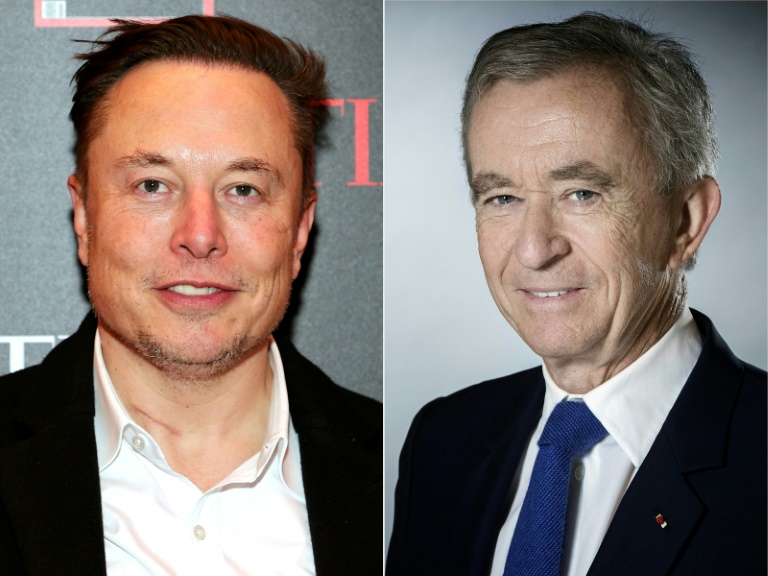
Tesla owner Elon Musk briefly lost the top spot on Forbes’ billionaire list Wednesday to Bernard Arnault, whose family owns the world’s leading luxury group, LVMH.

With US tech stocks sliding as interest rates and recession fears rise, Musk’s fortune briefly fell below that of the Arnault family. 

But around 1730 GMT Musk was back on top at $184.9 billion, followed by Arnault and his family at $184.7 billion.

Indian businessman Gautam Adani was in third place at $134.8 billion, with Amazon founder Jeff Bezos fourth at $111.3 billion.

Arnault had also topped the Forbes list for several hours in 2021.

His LVMH group, with includes dozens of brands including Louis Vuitton, Givenchy, and Kenzo, has continued to post strong revenue and profit growth despite the latest global economic headwinds.

Musk’s fortune is primarily tied to the share price of Tesla, and the entrepreneur has been at the centre of controversy after having taken over Twitter in late October.

The other major wealth ranking compiled by financial data provider Bloomberg also has Musk and Arnault running nearly neck-and-neck.

According to Bloomberg’s ranking, calculated after US markets closed on Tuesday, had Musk in the lead at $178.9 billion, followed by Arnault at $165.1 billion.

Peru president dissolves Congress, vows to rule by decree

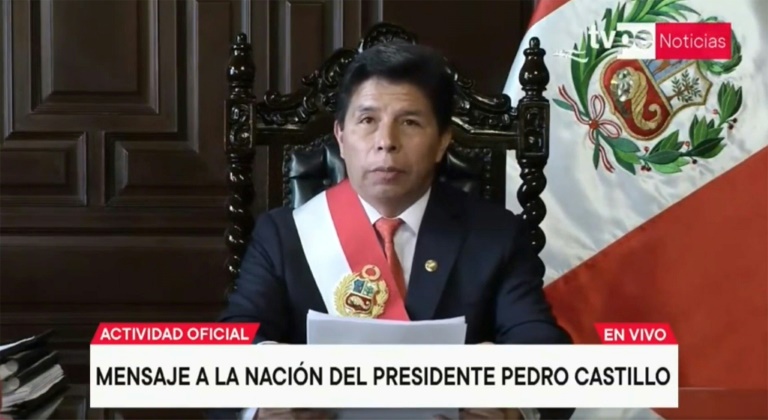
Peru’s President Pedro Castillo on Wednesday dissolved Congress and said he would rule by decree, in a move slammed as a “coup” just hours before a debate was due over his impeachment.

The former school teacher, who unexpectedly took power from Peru’s traditional political elite, has faced non-stop crises, with repeated cabinet reshuffles, multiple corruption investigations and protests since he was elected in July last year.

“This intolerable situation cannot continue,” the 53-year-old said in a televised address to the nation, wearing a blue suit and presidential sash.

He announced he was “temporarily dissolving Congress… and installing an exceptional emergency government.” 

He said he would convene a new Congress “as soon as possible to draft a new Constitution within a period of no more than nine months.”

“From this date and until the new Congress is established, the country will be governed by decree law. A national curfew is decreed as of today from 10:00pm to 4:00am.” 

Castillo also declared the “reorganization of the justice system, the judiciary powers of the public ministry, the national board of justice and the constitutional court.”

The announcement came hours before the opposition-dominated Congress was to debate its third impeachment motion against Castillo since he came to power.

“Today, there has been 20th century-style coup. It is a coup destined to fail, Peru wants to live in a democracy. This coup d’etat has no legal basis,” the president of the Constitutional Court, Francisco Morales, told the RPP radio station.

– A ‘self-coup’ –

Peru’s attorney general Patricia Benavides expressed her “emphatic rejection” of “any violation of the constitutional order,” and urged the president to “respect the Constitution, the rule of law, and democracy, that has cost us so much.” 

Castillo’s announcement comes more than 30 years after then-president Alberto Fujimori suspended the constitution and dissolved Congress in April 1992.

“President Pedro Castillo has carried out a coup. He has violated Article 117 of the Peruvian Constitution and has become illegal. This is a self-coup,” political analyst Augusto Alvarez told AFP. 

The opposition had sought to impeach Castillo for moral incapacity, a constitutional provision that has seen two presidents sacked since 2018.

Castillo avoided impeachment in a similar debate in March, but he has remained under fire.

He recently appointed his fifth prime minister and cabinet since his election, while thousands took to the streets in November to demand his removal from office.

Castillo is also under investigation in six corruption cases, including accusations against his family and political entourage.

“I have never stolen from my country, I am not corrupt,” he said Tuesday.

– ‘No room for a truce’ –

Castillo, 53, had been locked in a power struggle with Congress since the attorney general filed a complaint accusing Castillo of heading a criminal organization involving his family and allies that hands out public contracts in exchange for money.

While serving his five-year term that ends in 2026, Castillo cannot be criminally tried and prosecutors had called for him to be “suspended,” an unprecedented move which Congress was evaluating.

In October, Castillo requested mediation by the Organization of American States (OAS).

The body visited the country in November and called for a “100-day political truce,” which fell on deaf ears.

“There is no room for a truce, nobody wants to talk with a president like Pedro Castillo, who does not project confidence,” analyst Alvarez said earlier.

Impeachment proceedings are relatively common in Peru because its constitution allows one to be brought against a president based on the more subjective premise of political rather than legal wrongdoing.

It has created much political instability: In November 2020, Peru had three presidents within one week.

The OAS’s human rights commission last year raised concerns about the “moral incapacity” constitutional provision, saying it had been distorted due to “a lack of objective definition.” 

Putin warns of 'lengthy' Ukraine conflict

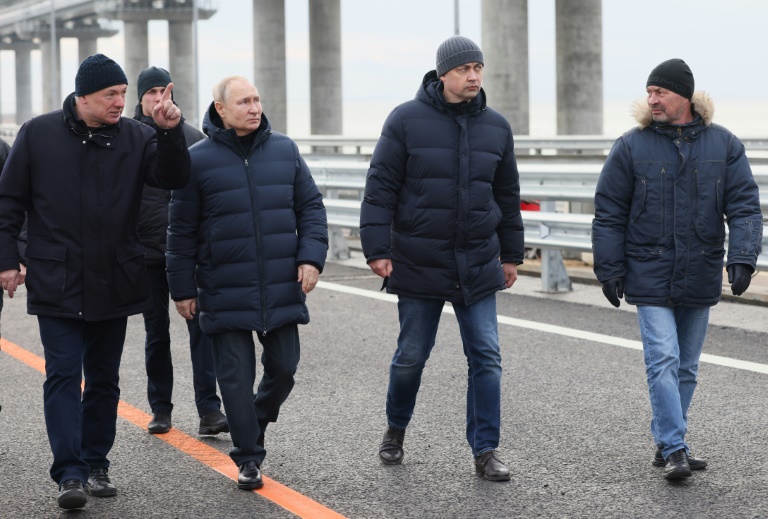
Russian President Vladimir Putin warned on Wednesday of a long military intervention in Ukraine but said Moscow would not use nuclear weapons first.

His comments came after Ukrainian President Volodymyr Zelensky said fresh Russian strikes on a market and filling station had killed six people and wounded several more in the frontline region of Donetsk.

With the one-year mark of the conflict approaching, Russian forces have missed most of their key military goals including toppling the Ukrainian government, capturing the Donbas region and annexing four territories.

Putin’s own menacing language, and the battlefield stalemate, have raised fears Russia could resort to its nuclear arsenal to achieve a military breakthrough.

On Wednesday, Putin warned that the threat of nuclear war was growing.

“Such a threat is rising. Why make a secret out of it here?” he said at a meeting of his human rights council.

He added however that Russia would use a nuclear weapon only in response to an enemy strike.

“When we are struck, we strike back,” he said, stressing that Moscow’s strategy was based on “so-called retaliatory strike” policy.

Moscow had expected fighting to last just days before Ukraine’s capitulation, but on Wednesday Putin warned results could be a long time coming.

“As for the long process of (seeing) results of the special military operation, of course, this is a lengthy process,” Putin said.

But he praised the announced annexation of four Ukrainian territories into Russia after Moscow proxies held referendums — denounced in the West as a sham — and announced their integration in September.

“New territories appeared — well, this is still a significant result for Russia and this is a serious issue,” Putin said.

The Russian leader formalised the annexation of the four southern and eastern territories — Donetsk, Lugansk, Kherson and Zaporizhzhia — at a ceremony in the Kremlin in September.

– Russian shelling on market – 

But Russian troops at no point entirely controlled any of the territories and last month were forced out from the capital of the southern Kherson region after a months-long Ukraine counter-offensive.

In September Putin announced Russia was mobilising hundreds of thousands of people to bolster Moscow’s struggling forces after a series of battlefield setbacks, particularly in the Kharkiv region in northeast Ukraine.

On Wednesday he said half the Russians called up for military service in September had been deployed to Ukraine.

“Out of 300,000 of our mobilised fighters, our men, defenders of the fatherland, 150,000 are in the area of operations,” said Putin, adding that about 77,000 were in combat units.

Since the capture of Kherson city, fighting in Ukraine has focused on the industrial Donbas region, where Russian forces have been pushing to capture the frontline city of Bakhmut.

Zelensky — after visiting the region this week — said Wednesday that Russian forces had killed six civilians and injured several in a recent bout of shelling. 

“Terrorists attacked the peaceful city of Kurakhove,” he said in a statement on social media.

“A market, a bus station, gas stations, and residential buildings came under fire. At least six civilians were killed, five were wounded.” 

The Donetsk region has been partially controlled by Russian forces since 2014, when Moscow-backed separatists wrested control of the Donbas near the Russian border and Moscow annexed the Crimean peninsula.

Snipers and icy water: Ukrainians risk Dnipro river crossings

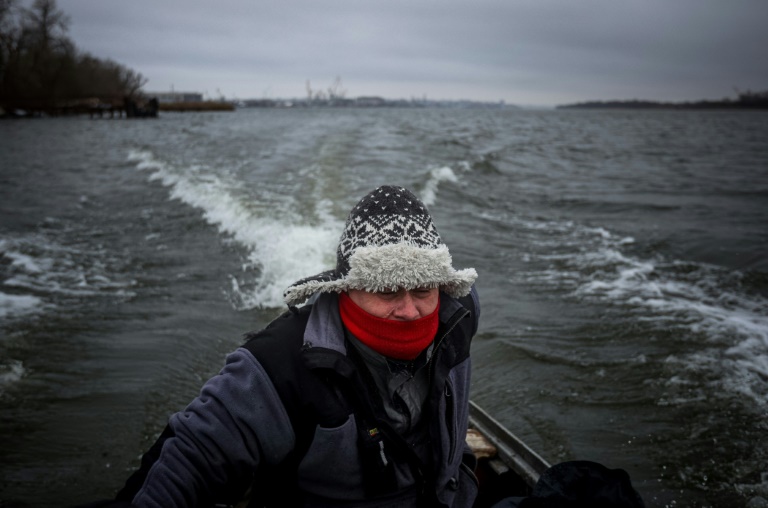
Gunning the engine of his ageing skiff, Oleksiy Kovbasyuk races away from Kherson towards an island in the Dnipro river, where stranded Ukrainians are desperate for help — or to escape.

Russian troops retreated from the southern city of Kherson last month to the other side of the Dnipro, but their snipers and artillery are still trained along the broad river, rendering it a new frontline.

Forty-seven-year-old Kovbasyuk’s concern is that vulnerable residents isolated on the islands between — a grey zone where Ukrainians either desperate for a ride out or for more supplies need his help.  

“Some of these people haven’t left their dacha since Kherson was liberated. They need some bread,” Kovbasyuk, wrapped in a hat and red scarf against the cold, told AFP journalists on his boat.

The crossing, with snow falling, is short but perilous.

“I got two bullet holes in my boat… right after Russian solders fled to the other side,” the construction worker said.

Russian shelling missed his boat by just meters last week at the regularly targeted industrial waterfront south of Kherson city, where his boat was stored.

– Shelling ‘every night’ –

His destination one day this week was Potemkin island — eight kilometres (five miles) long and four kilometres wide — just downstream from Kherson city.

The patch of land surrounded by icy currents has been caught up in intense shelling. Out of the several hundred small summer homes on the island, only a handful are still inhabited.

Still Kovbasyuk is set on bringing food to those who want to stay and on evacuating others to the newly-liberated right bank.

Icy winds buffet the boat and freezing water splashes over its side for 40 minutes until Kovbasyuk arrives and meets Oleksandr Sokolyk, a 64-year-old pensioner, also shuttling people to the mainland.

“Oleksiy, brother! I’m so happy to see you!” says the pensioner, hugging his friend on a pontoon next to a dacha.

The island was once an oasis of calm just a short trip away from Kherson.

But that was before the Russian invasion in February and Kherson’s easy capture by Moscow’s forces shortly after. 

Then fighting escalated in September as Ukrainian troops were clawing back territory. Now there is relentless crossfire over the river.

“The situation seems better now in Kherson. They have electricity. We haven’t had any power here for a week,” says Sokolyk.

“And we spend every night under shelling. Left to right, right to left, just flying over us”.

– ‘I was lucky’ –

Olga Shpinyova, in an elegant purple hat and winter coat is leaving the island to stay with her sister in Kherson.

“It will be better there than in my own flat in a building without water, heating or electricity,” she said, her dog Tosha and two small bags in hand.

She told AFP she had decided to leave the island after urgent pleas from her daughter and a near miss — when her home was shelled.

“I was lucky to be at my daughter’s house at the time. It saved my life. My daughter called and said ‘You have to leave!'” Shpinyova told AFP.

Authorities announced civilian evacuations by ferry between December 3 and 5 but these never materialised. 

“We can’t organise regular transport on the river. The occupiers wouldn’t let us,” the regional governor Yaroslav Yanushevych told AFP.

“Unfortunately, we can’t guarantee the security of the people” crossing, he said.

On the return journey to Kherson with three people boarded, a missile fell right in front of Sokolyk’s boat.

“I have no idea where it came from,” he told AFP in shock.

Mexico lawmakers block president's electoral reform, advance 'Plan B'

Mexican lawmakers blocked divisive electoral reforms proposed by President Andres Manuel Lopez Obrador that sparked mass street protests, but advanced less radical changes on Wednesday.

The rejection by the lower house of Congress late Tuesday was a blow to Lopez Obrador, who needed support from at least two-thirds of lawmakers to change the constitution.

Instead he sought to push through watered-down reforms, including a reduction in the budget of the National Electoral Institute (INE), the independent body that organizes the country’s elections.

Lopez Obrador’s so-called “Plan B,” which required approval by a simple majority of lawmakers, was passed in the Chamber of Deputies by 261 votes in favor and 216 against.

The opposition Institutional Revolutionary Party branded the changes a “betrayal of Mexico.”

The proposals must still be approved by the upper house, the Senate, where the ruling party and its allies also have a majority.

Last month, tens of thousands of demonstrators marched in Mexico City demanding a halt to the proposed reforms, which they see as an attack on one of the country’s most important democratic institutions.

Lopez Obrador alleges that the INE endorsed fraud when he ran unsuccessfully for the presidency in 2006 and 2012, before winning in 2018.

Under his initial plan, the INE would have been replaced by a new body with members chosen by voters instead of lawmakers.

The number of seats in the lower house of Congress would have been reduced from 500 to 300, and those in the Senate from 128 to 96.

New York-based advocacy group Human Rights Watch warned before the vote that the changes “could seriously undermine electoral authorities’ independence, putting free, fair elections at risk.”

“President Lopez Obrador’s proposed changes to the electoral system would make it much easier for whichever party holds power to co-opt the country’s electoral institutions to stay in power,” said HRW researcher Tyler Mattiace.

“Given Mexico’s long history of one-party rule maintained through questionable elections, it is extremely problematic that legislators would consider a highly regressive proposal that would weaken the independence of the elections authority.”

Lopez Obrador, who has an approval rating of nearly 60 percent but is barred by the constitution from running for a second term, insists that his reform plan sought to “strengthen democracy.”

He dismissed the opposition protest against his proposal, and two weeks later led hundreds of thousands of his supporters on a march through Mexico City in a show of political strength.

Stock markets slide as recession worries weigh on investors

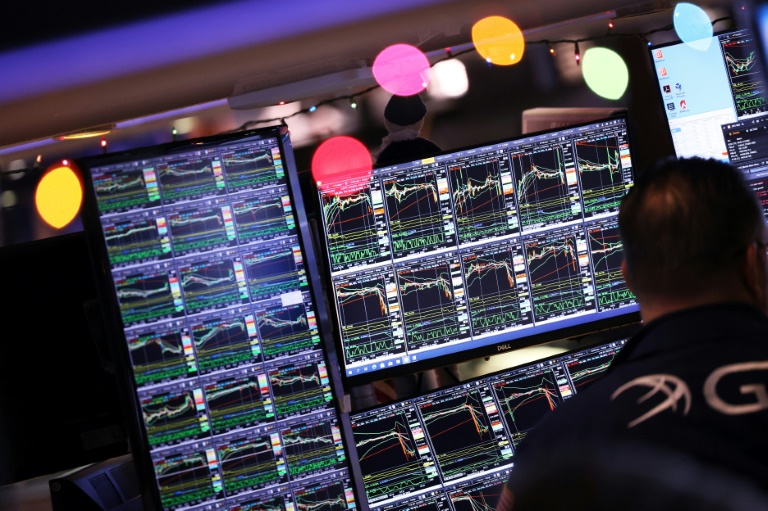
Major stock markets were hit by more selling Wednesday on growing fears that Federal Reserve monetary tightening will tip the US economy into recession, with Chinese trade data adding to the gloomy outlook.

Drops in Asia and Europe followed steep losses on Wall Street Tuesday after the heads of leading US banks warned of tough times ahead in 2023. 

JPMorgan Chase chief Jamie Dimon tipped a “mild to hard recession” and Goldman Sachs’ David Solomon said jobs and pay would be hit, while Morgan Stanley and Bank of America were also uneasy about the outlook.

The comments added to the downbeat mood that has coursed through trading floors at the start of the week, after forecast-beating reports on jobs and the giant US services sector fanned worries the Fed would have to push interest rates higher than hoped.

Markets had been rising healthily after a weaker-than-expected inflation reading for October suggested the almost year-long tightening campaign was finally affecting prices.

“Any hopes that the Fed would turn more dovish in the months ahead have been dashed significantly as the vast US services industry is where sticky inflation hangs out,” said SPI Asset Management’s Stephen Innes.

He added that the latest readings suggest rates would go above five percent before the Fed stops hiking, while several observers have suggested they will not be reduced until 2024.

“It would appear the recovery in stocks — bear-market rally, or otherwise — has run out of steam, and investors are left wondering whether what follows next is another test of the lows or simply a correction of that impressive two-month surge,” said market analyst Craig Erlam at trading platform OANDA.

Major Asian and European markets ended the day down.

On Wall Street, bargain-hunting sent the main indices higher at moments, but they were all lower as European markets closed.

– China easing on Covid –

The sombre outlook overshadowed China’s moves to wind back some of its harsh Covid rules that traders hope will kickstart the world’s number two economy, which has been battered this year by months of lockdowns and other containment measures.

In a sign of the impact the zero-Covid strategy has had, data Wednesday showed that imports and exports plunged far more than expected in November.

On Wednesday, officials announced a nationwide loosening of restrictions, including a reduction in mandatory PCR tests and allowing some positive cases to quarantine at home.

But while the country edges back to normality, Zhiwei Zhang, of Pinpoint Asset Management, warned that it would take time.

“The zero-Covid policy has been loosened, but mobility has not recovered much on the national level,” he said. 

“I expect exports will stay weak in the next few months as China goes through a bumpy reopening process.”

Other observers said the recent rally fuelled by the reopening may have gone too far and traders were now taking a step back as they contemplate a likely spike in infections in the country.

Oil prices remained stuck at lows not seen for around a year as demand expectations tumble.

Brent on Tuesday sank below $80 for the first time since January, and fell further on Wednesday. 

“Brent crude oil prices hit their lowest levels this year earlier today as rising recession risks outweighed any optimism over a reopening of the Chinese economy,” said market analyst Michael Hewson at CMC Markets.

– Key figures around 1630 GMT –

New York – Dow: DOWN 0.2 percent at 33,542.92 points

EURO STOXX 50: DOWN 0.5 percent at 3,920.90

London – FTSE 100: DOWN 0.4 at 7,489.19 (close)

Frankfurt – DAX: DOWN 0.6 percent at 14,261.19 (close)

Paris – CAC 40: DOWN 0.4 percent at 6,660.59 (close)

Tokyo – Nikkei 225: DOWN 0.7 percent at 27,686.40 (close)

Hong Kong – Hang Seng Index: DOWN 3.2 percent at 18,814.82 (close)

Shanghai – Composite: DOWN 0.4 percent at 3,199.62 (close)

Euro/dollar: UP at $1.0513 from $1.0470 on Tuesday

Dollar/yen: DOWN at 136.77 yen from 137.04 yen

Pound/dollar: UP at $1.2195 from $1.2133

Euro/pound: DOWN at 86.17 pence from 86.26 pence

Brent North Sea crude: DOWN 1.3 percent at $78.36 per barrel

West Texas Intermediate: DOWN 1.6 percent at $73.05 per barrel

burs-rl/rox

Germany foils bizarre coup plot by far-right group

A prince, an ex-MP and former soldiers were arrested Wednesday in raids led by the German police against members of a far-right “terror group” that allegedly planned to attack parliament and overthrow the government.

The group had organised a “council” to take charge after the putsch, as well as a “military arm that would build a new German army”, chief federal prosecutor Peter Frank said at a press conference.

“Some members of the terrorist organisation also considered using force to enter the German Bundestag (parliament),” Frank said. 

President Frank-Walter Steinmeier told public radio MDR he was “deeply concerned” by the alleged plot, describing it as a “new level”.

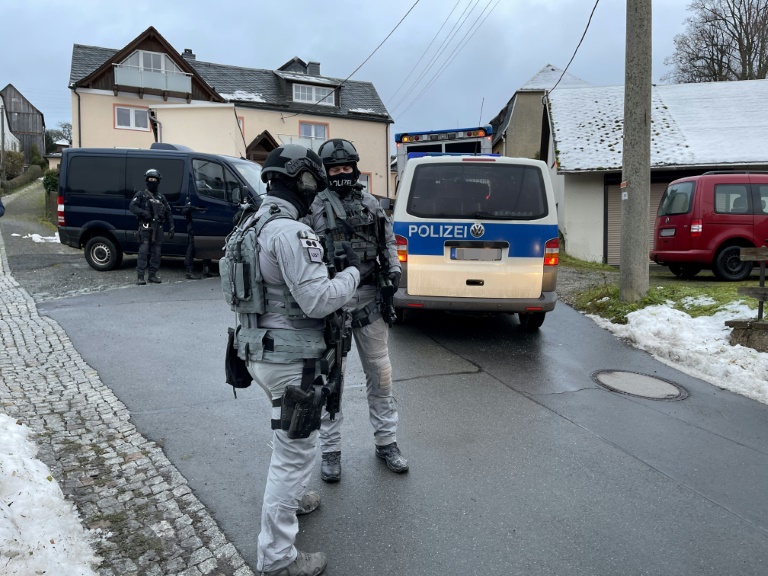
Around 3,000 officers including elite anti-terror units took part in the early morning raids and searched more than 130 properties, in what German media described as one of the country’s largest ever police actions against extremists.

The raids targeted alleged members of the “Citizens of the Reich” (Reichsbuerger) movement, federal prosecutors said in a statement.

The prosecutors in Karlsruhe, southern Germany, said they had arrested 25 people, including one in Austria and another in Italy, and identified a further 27 people as suspected members or supporters of the network.

Those arrested are accused of having formed a group that “had set itself the goal of overcoming the existing state order in Germany and replacing it with their own kind of state”, they said.

“The accused are united by a deep rejection of state institutions and the free, democratic basic order of the Federal Republic of Germany,” they said.

– Prince and politician –

The suspects were aware that their plan “could only be realised by using military means and violence against state representatives”, prosecutors said.

They allegedly planned to appoint one of the arrested suspects, identified by local media as aristocrat and businessman Prince Heinrich XIII Reuss, as Germany’s new leader after the coup.

Heinrich XIII had already sought to make contact with Russian officials to discuss Germany’s “new state order” after the coup, prosecutors said.

There was however “no indication that the contact persons responded positively to his request”, they said.

A Russian woman named only as Vitalia B., who was among those arrested on Wednesday, is suspected of having facilitated those contacts, prosecutors added.

Birgit Malsack-Winkemann, a former member of parliament for the far-right AfD party and Berlin judge, was also among those arrested. 

The ex-MP had been tapped by the group to take over as justice minister after the planned coup, chief prosecutor Frank said.

Other suspected members include current and former members of the German army in the “low single digits”, a spokesman for the defence ministry said at a regular press conference. 

One of those arrested was an active soldier in the KSK special forces, who worked in a “support” role, the spokesman said. 

“A former officer of the special units of the German army” was likewise held near Perugia, Italy, the local police said in a statement.

– ‘Into the abyss’ –

The Reichsbuerger movement includes far-right extremists, conspiracy theorists and gun enthusiasts who reject the legitimacy of the modern German republic.

Its followers generally believe in the continued existence of the pre-World War I German Reich, or empire, under a monarchy and several groups have declared their own states.

Long dismissed as malcontents and oddballs, the Reichsbuerger have become increasingly radicalised in recent years and are seen as a growing security threat.

The investigation gave “a look into the abyss” of far-right terror from the movement, Interior Minister Nancy Faeser said in a statement.

According to prosecutors, the terror cell suspects believe in Reichsbuerger and QAnon conspiracy theories and are “strongly convinced” that Germany is run by a “deep state” that needs to be toppled.

As part of the preparations for the coup, members of the alleged terror cell acquired weapons, organised shooting practice and tried to recruit new followers, particularly among the military and police, according to prosecutors.

Germany considers far-right terrorism the biggest threat to its security following a spate of attacks in recent years.

In April, police foiled a plot by a far-right group to kidnap the health minister. 

China's Xi arrives in Saudi Arabia for energy-focused visit

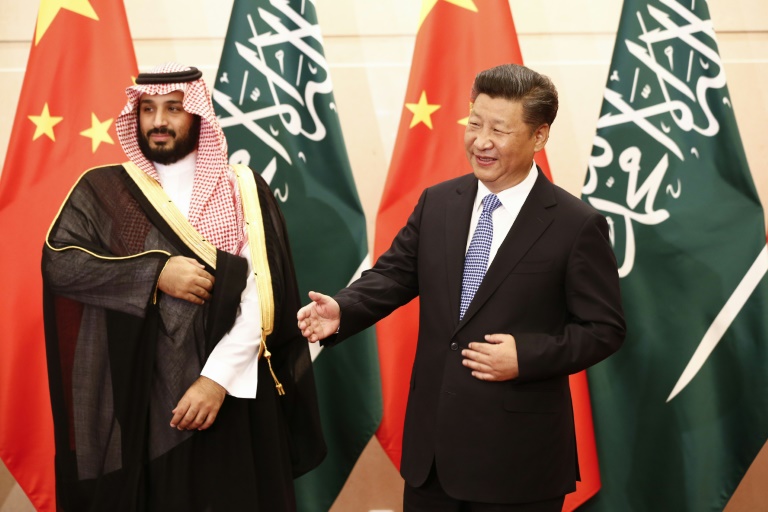
Chinese President Xi Jinping touched down in Saudi Arabia on Wednesday for a visit that is likely to focus on energy ties as Washington warned of Beijing’s growing influence.

Xi, recently reanointed as leader of the world’s second biggest economy, arrived in the capital Riyadh, Chinese and Saudi state media said, for a three-day visit that will include talks with Saudi and other Arab leaders.

Saudi Foreign Minister Prince Faisal bin Farhan and Riyadh Governor Prince Faisal bin Bandar were among those who welcomed Xi at the airport, where a ceremonial purple carpet was laid out from the steps of the plane. 

China is Saudi Arabia’s top oil customer, and both sides appear keen to expand their relationship at a time of economic turmoil and geopolitical realignment.

The trip — only Xi’s third overseas since the coronavirus pandemic began, and his first to the world’s top oil exporter since 2016 — comes after US President Joe Biden’s visit in July, when he pleaded in vain for higher oil production.

It will feature bilateral meetings with Saudi King Salman and Crown Prince Mohammed bin Salman, the de facto ruler, as well as a summit with the six-member Gulf Cooperation Council and a wider China-Arab summit.

Asked about the Xi visit, White House National Security Council spokesman John Kirby told reporters on Wednesday that Saudi Arabia remains a crucial US ally, but warned of “the influence that China is trying to grow around the world.”

“We believe that many of the things they’re trying to pursue and the manner in which they’re trying to pursue it are not conducive to preserving the international rules based order,” Kirby said, adding that Washington did not expect nations to choose between the two powers.

– Washington tensions –

Saudi Energy Minister Prince Abdulaziz bin Salman on Wednesday said that “Saudi Arabia will remain China’s credible and reliable partner” in the global oil market.

Bilateral “relations… are witnessing a qualitative leap,” the official Saudi Press Agency (SPA) quoted him as saying.

He said the two countries will endeavour to boost cooperation in energy supply chains by establishing a “regional centre” in Saudi Arabia for Chinese factories, according to SPA. 

SPA said the kingdom accounted for more than 20 percent of Chinese investment in the Arab world between 2005 and 2020, the largest share of any nation in the region.  

Oil markets are key to the bilateral talks, especially given the substantial market turbulence seen since Russia invaded Ukraine in February.

The G7 and European Union on Friday agreed to a $60-per-barrel price cap on Russian oil in an attempt to deny the Kremlin war resources, injecting further market uncertainty.

On Sunday, the OPEC+ oil cartel led jointly by Saudi Arabia and Russia opted to keep in place production cuts of two million barrels per day approved in October.

Washington said those cuts amounted to “aligning with Russia” on the war in Ukraine. 

The US has been engaged in what is often described as an oil-for-security partnership with Saudi Arabia since the tail-end of World War II.

While the Biden administration has smarted over the production cuts, Riyadh has at times accused the US of failing to hold up the security end of the bargain, notably after strikes in September 2019 claimed by Yemen’s Huthi rebels temporarily halved the kingdom’s crude output.

– Deals in pipeline –

Saudi and Chinese officials have provided scant information about the agenda of the bilateral talks, although Ali Shihabi, a Saudi analyst close to the government, said he expected “a number of agreements to be signed”.

Chinese foreign ministry spokeswoman Mao Ning said on Wednesday that Xi’s programme represents the “largest-scale diplomatic activity between China and the Arab world” since the People’s Republic of China was founded. 

Analysts say potential deals seeing Chinese firms become more deeply involved in mega-projects central to Prince Mohammed’s vision of economic diversification will likely be key talking points.

Key Saudi projects include the futuristic $500 billion megacity NEOM, a so-called cognitive city that will depend heavily on facial recognition and surveillance technology.

If the Saudis are “looking to extract more security guarantees from the US… signalling that they have the opportunity of strengthening ties with China is something that suits them well,” said Torbjorn Soltvedt, of the risk intelligence firm Verisk Maplecroft.

Canada central bank hikes key rate to 4.25%, hints at pause

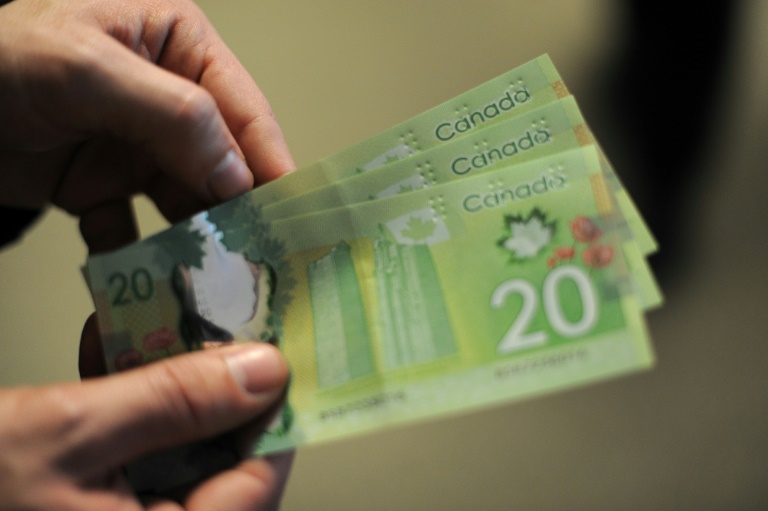
Canada’s central bank on Wednesday hiked its key lending rate by 50 basis points to 4.25 percent, saying its aggressive moves to rein in inflation were working but that the economy was still too hot.

This is the highest interest rate in 15 years, after having started 2022 with a record low of just 0.25 percent.

The Bank of Canada said economic growth was stronger than expected in the third quarter, bolstered by robust commodity exports.

But in a statement hinting that this was likely to be its last rate hike for now, it said “there is growing evidence that tighter monetary policy is restraining domestic demand.”

It pointed to consumption slowing as the year’s end approaches, a pullback in the housing market and other data that suggested “growth will essentially stall through the end of this year and the first half of next year.”

Desjardins analyst Royce Mendes noted that the size of the rate increase was “more hawkish than what was anticipated.”

Most economists had predicted the bank would announce a 25 basis point increase.

The bank, Mendes concluded in a research note, “continued to worry about inflation becoming entrenched and that’s what this rate hike is really about.”

“Policymakers,” he added, “seem a little less sure about what comes next.”

Looking ahead, the bank said its governing council would be “considering whether the policy interest rate needs to rise further to bring supply and demand back into balance and return inflation to target.”

The language was far softer than in previous notices that warned bluntly of more interest rate increases to come.

Analysts said this amounted to “a pivot” in the bank’s position, which was expected to be made clearer at its next meeting in January.

Inflation remained at 6.9 percent in October, with many of the goods and services Canadians regularly buy having increased in price. But it was down from an 8.1 percent peak in June.

Although “price pressures may be losing momentum,” the bank said inflation “is still too high and short-term inflation expectations remain elevated.”

The bank will need to assess whether its seven rate hikes this year have slowed demand as hoped, how supply challenges are resolving, and whether all of this is impacting inflation.

It is mandated to try to keep a lid on inflation — at around 2.0 percent.

Canada central bank hikes key lending rate 50 basis points to 4.25%

Canada’s central bank on Wednesday hiked its key lending rate by 50 basis points to 4.25 percent, saying its aggressive moves to rein in inflation were working but that the economy was still too hot.

The Bank of Canada said economic growth was stronger than expected in the third quarter, bolstered by robust commodity exports.

But in a statement hinting that this was likely to be its last rate hike for now, it said “there is growing evidence that tighter monetary policy is restraining domestic demand.”

It pointed to consumption slowing as the year’s end approaches, a pullback in the housing market and other data that suggested “growth will essentially stall through the end of this year and the first half of next year.”

Looking ahead, the bank said its governing council would be “considering whether the policy interest rate needs to rise further to bring supply and demand back into balance and return inflation to target.”

The language was softer than in previous notices that warned bluntly of more interest rate increases to come.

Inflation remained at 6.9 percent in October, with many of the goods and services Canadians regularly buy having increased in price.

Although “price pressures may be losing momentum,” the bank said inflation “is still too high and short-term inflation expectations remain elevated.”

The bank will need to assess whether its seven rate hikes this year have slowed demand as hoped, how supply challenges are resolving, and whether all of this is impacting inflation.

The bank is mandated to try to keep inflation at about 2.0 percent.

Close Bitnami banner
Bitnami