World

Avatar's James Cameron on art, AI and outrage

From “Terminator” to “Titanic” to “Avatar”, director James Cameron has pushed Hollywood’s technical wizardry to new limits, but human emotion must always come first, he told AFP. 

In an era when special effects are much more accessible to filmmakers, and studios are willing to regularly spend hundreds of millions of dollars on blockbusters, it is the artistic talent that makes the difference, Cameron said during a visit to Paris.

Whether he can still strike the balance will be tested as the world finally gets to see “Avatar: The Way of Water” next week — a sequel to his groundbreaking extraterrestrial epic that has been 13 years in the making. 

“Anybody could buy a paintbrush. Not everybody can paint a picture,” the Canadian director said. “The technology doesn’t create art. Artists create art — that’s important.” 

It was originally hoped that a first sequel would be out in 2014, but Cameron’s gargantuan ambitions led to repeated delays. 

He does not come across like the sort of megalomaniac director of Hollywood lore — describing his sets as “a big hippie commune with a bunch of really great artists.” 

But these hippies are armed with some powerful computers. 

“We had over 3,200 shots, which is a lot to maintain high quality, high quality control,” Cameron said.

“We brought in machine deep learning and plugged AI into various stages of the process to assist us… not to take the place of the actors at all but actually to be more truthful to what they had done,” he said.

– ‘Connection to nature’ –

The challenge was managing to draw emotion out of performances that were largely shot in front of green screens, and where most of the scenery and props would only appear later in the effects booths. 

“The heart, the soul, the emotion, the conflict, creativity… all that happens first, and then all the technical work begins,” he said.

Cameron has always justified the vast sums he has asked of studios — “Titanic” was both the most expensive and most profitable film of all time following its release in 1997, only to be topped by “Avatar” in 2009 — and he feels that responsibility “every day”. 

“I can’t be whimsical or impulsive, I have to be very focused and dedicated to creating something that’s both pleasing to me artistically, and that I think will be pleasing to the public and commercial enough to make some money,” he said. 

“It can’t be too intellectual, but I can make it satisfying to me by putting in secondary and tertiary levels of meaning that I know are there.”

Clearly, much of the impulse of the Avatar series is drawing attention to humanity’s impact on nature, but the sequel also focuses on Cameron’s aquatic interests. 

Long fascinated by the sea, from 1989’s “The Abyss” to “Titanic”, Cameron became a deep ocean explorer for National Geographic in the 2000s and was the first solo human to visit the deepest underwater trench, the Mariana Trough, in a purpose-built submarine.

He sees “Avatar” as “awakening that thing in all of us, that connection to nature. 

“The movie asks you to feel something for nature… It’s about maybe feeling a sense of outrage,” Cameron said. 

“These Navi characters… they don’t look like us, they’re blue, they’ve got the ears and tails. But they represent the better angels of our nature. 

“Maybe for 10 minutes after the movie’s over, you see the world a little differently,” he added.
French foie gras in short supply, forcing farmers to adapt

Foie gras pate, the consummate delicacy of French holiday tables, might be harder to find this year and certainly pricier due to a bird flu outbreak that ravaged farms across the west and south last winter.

After millions of ducks and geese were culled to halt the epidemic, some farmers say they are having to take an unprecedented step — using females to produce the luxury treat.

The taste is the same, but female livers are much smaller and harder to work with, and the impact on a producer’s bottom line is inescapable.

“It was double or nothing, but either we just sat and waited — which is not in our nature — or we try to offer a product that respects our consumers,” said Benjamin Constant in Samatan, southwest France.

President of the foie gras marketing board for the Gers department, Constant warned that it was only a stop-gap measure, especially for higher-quality fresh foie gras.

Most livers have veins that must be removed, but those of female livers are much bigger and require more effort to extract, which puts off clients seeking the smooth texture of fresh foie gras that is either seared in a pan, or used to make pate.

“A significant amount cannot be sold fresh, which penalises the producers who sell at public markets,” Constant said.

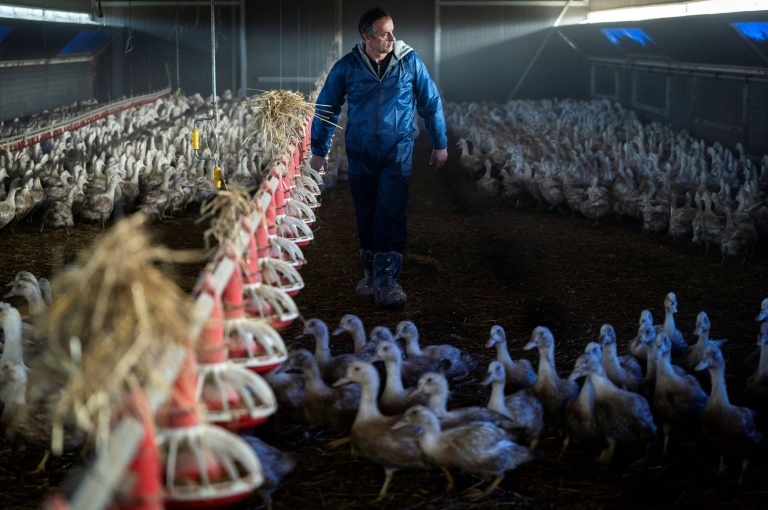
Jacques Candelon, who has been raising ducks in the rolling plains of nearby Sarrant since 1998, said this is the first year the majority of his 26,000 birds are females, which are usually reserved to produce meat for export.

“80 percent are females — it was either that or nothing,” the 52-year-old told AFP at his farm, dressed head to toe in protective gear to prevent any contamination of his animals.

– Bigger stretch –

Animal rights activists have long denounced the force-feeding of ducks and geese to make foie gras, calling it an unnecessary cruelty despite producers’ claims of introducing measures to make the process more humane.

France remains the world’s largest producer and consumer, usually raising some 30 million ducks alone each year, even though some French cities have banned it from official functions.

But two brutal bird flu outbreaks in recent years decimated flocks as authorities imposed culls, with just 21 million ducks raised in 2021, a number expected to plunge to 15 million for 2022, according to the CIFOG producers’ association.

More problematic was the impact on breeding farms, which found themselves with only scant numbers of male chicks to offer producers this year.

Labeyrie, the brand that dominates sales among mass retailers, expects a shortage of 30 to 40 percent this holiday season, by far the most important time of the year for the sector. 

Spiralling energy and feed prices, fallout from Russia’s invasion of Ukraine, will also make foie gras more of a stretch for family budgets.

“There will be enough for the holidays but in limited quantities,” CIFOG director Marie-Pierre Pe told AFP in September. “We’re hoping that people are going to be reasonable and will share what little there is.”

– ‘Big effort’ –

Old habits die hard, however, and at the bustling weekly duck market at Samatan, a foie gras bastion near Toulouse in the heart of Gers, much of the crowd wanted only the pale, plump male livers.

“Females are much, much smaller and after force-feeding, the livers are smaller and less attractive visually,” said Didier Villate, a veterinarian who has overseen the Samatan market for over 40 years.

Next to a tray of glistening male livers, many of the female livers had red blotches with thick dark veins, “which is unfortunately something we find quite often” even though it doesn’t change the taste or texture, Villate said.

“Clients are surprised, so we have to make a big effort to explain to consumers that there is no danger — It’s purely visual, you can buy and eat them just the same,” he said.

But male or female, prices have spiked to between 55 and 60 euros a kilogramme ($26 to $29 a pound), or “15 to 20 euros more than normal,” said Constant, calling 2022 “catastrophic for the sector.”

For Gilberte Bru, who like dozens of others rushed in at the market’s opening whistle to stock up for the holidays, the decision was easy — she picked the male livers.

“Yes, because they are bigger,” she said.

Mozambique ex-president's son, ex-spy bosses jailed for 12 years for graft

A Mozambican court on Wednesday sentenced two ex-spy bosses and the son of a former president to 12 years each for their part in a corruption scandal in which the government sought to conceal huge debts, triggering financial havoc.

The former head of security and intelligence, Gregorio Leao; the head of the economic intelligence division, Antonio do Rosario; and ex-president Armando Guebuza’s son, Ndambi Guebuza, were among 19 defendants accused in the country’s biggest graft scandal.

Eight defendants were acquitted while the rest were handed terms ranging between 10 and 12 years in a verdict that took the judge a week to read out.

“The crimes committed have brought consequences whose effects will last for generations,” said Judge Efigenio Baptista, addressing a packed courtroom located in the grounds of a high-security jail in the capital Maputo. 

The scandal arose after state-owned companies in the impoverished country illicitly borrowed $2 billion (1.9 billion euros) in 2013 and 2014 from international banks to buy a tuna-fishing fleet and surveillance vessels. 

The government masked the loans from parliament and the public. 

When the “hidden debt” finally surfaced in 2016, the International Monetary Fund (IMF) and other donors cut off financial support, triggering a sovereign debt default and currency collapse. 

An independent audit found $500 million of the loans had been diverted. The money remains unaccounted for.

– ‘Desire for luxury’ –

Handing down the sentences Baptista said the scam had “aggravated the impoverishment of thousands of Mozambicans.” 

“The country became famous for the worst reasons,” he said. “As high officials of the state they should have been (its) guardians.”

Leao and do Rosario were found guilty of embezzlement and abuse of power, while Guebuza was convicted for embezzlement, money laundering and criminal association, among other charges. 

Former president Guebuza, who had been in office when the loans were contracted, testified at the trial, but was not seen in court on Wednesday.  

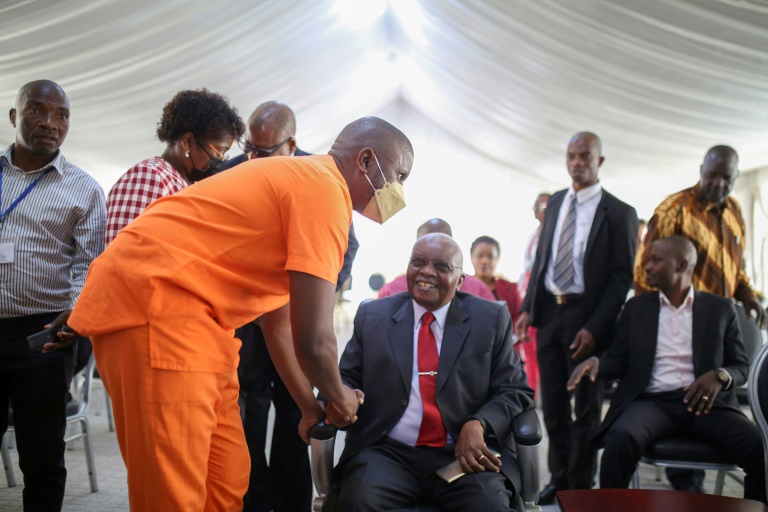
Wearing a black sweater over an orange prisoner jumpsuit, his son stood up as the judge handed out the verdict.

During the proceedings, Baptista said Ndambi Guebuza acted deliberately “to exert influence on his father” and get the government to approve the purchase of the vessels. 

He took a $33-million bribe that went to satisfy his “desire for luxury” the judge said, listing some of the assets the former president’s son acquired with the money. 

They included luxury cars and a 10-million rand ($590,000) mansion in neighbouring South Africa.

Besides being sentence to jail, the younger Guebuza was ordered to pay a fine of 162,000 meticais ($2,500). 

Former presidential advisor Renato Matusse was also sentenced to 12 years in jail. 

– Global scale –

The trial started in August last year and ran until March. It was broadcast live on local TV and radio stations. 

Dozens of people, including anti-corruption activists and civil campaigners, sat in the courtroom, a makeshift facility set up in a white marquee to accommodate defendants, their lawyers and other parties. 

The debt scandal exposed corruption on a global scale and sparked legal cases across three continents. Swiss bank Credit Suisse was fined $475 million last year over its part in issuing the loans.

Former finance minister Manuel Chang — who signed off the loans — has been held in South Africa since 2018, pending extradition to the US for allegedly using the US financial system to carry out the fraudulent scheme.

When the loans were taken out, Mozambique’s star was rising after two decades of democratic and market-led reforms and the discovery of huge gas reserves off its Indian Ocean coast.

But the scandal — which involved money equivalent to about to 12 percent of the gross domestic product of one of the poorest countries in the world — tipped the nation into the worst economic crisis in its history. 

In March, the IMF awarded $456 million in credit to Mozambique, the first such aid awarded since the scandal erupted. 

The funds are to help support economic recovery and policies to reduce public debt.

Germany busts far-right cell plotting to 'overthrow state'

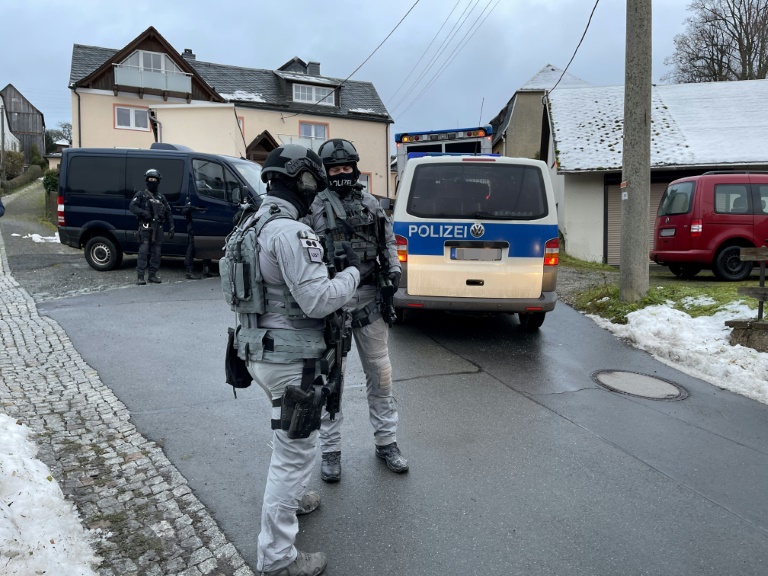
German police staged nationwide raids on Wednesday and arrested 25 people suspected of belonging to a far-right “terror cell” plotting to overthrow the government and attack parliament.

Around 3,000 officers including elite anti-terror units took part in the early morning raids and searched more than 130 properties, in what German media described as one of the country’s largest police actions ever against extremists.

The raids targeted alleged members of the “Citizens of the Reich” (Reichsbuerger) movement suspected of “having made concrete preparations to violently force their way into the German parliament with a small armed group”, federal prosecutors said in a statement.

Those arrested are accused of having formed “a terrorist group by the end of November 2021 at the latest, which had set itself the goal of overcoming the existing state order in Germany and replacing it with their own kind of state”, they said.

Two of the 25 arrests were made abroad, in Austria and Italy.

The prosecutors in Karlsruhe said they had identified a further 27 people as suspected members or supporters of the terror network.

“The accused are united by a deep rejection of state institutions and the free, democratic basic order of the Federal Republic of Germany,” they said.

– ‘Into the abyss’ –

The Reichsbuerger movement includes neo-Nazis, conspiracy theorists and gun enthusiasts who reject the legitimacy of the modern German republic.

Its followers generally believe in the continued existence of the pre-World War I German Reich, or empire, under a monarchy and several groups have declared their own states.

Long dismissed as malcontents and oddballs, the Reichsbuerger have become increasingly radicalised in recent years and are seen as a growing security threat.

The investigation gave “a look into the abyss” of far-right terror from the movement, Interior Minister Nancy Faeser said in a statement.

According to prosecutors, the terror cell suspects believe in Reichsbuerger and QAnon conspiracy theories and are “strongly convinced” that Germany is run by a “deep state” that needs to be toppled.

The suspects were aware that their plan “could only be realised by using military means and violence against state representatives,” prosecutors said.

They allegedly planned to appoint one of the arrested suspects, identified by local media as aristocrat and businessman Prince Heinrich XIII Reuss, as Germany’s new leader after the coup.

Heinrich XIII had already sought to make contact with Russian officials to discuss Germany’s “new state order” after the coup, prosecutors said.

There was however “no indication that the contact persons responded positively to his request.”

A Russian woman named only as Vitalia B., who was among those arrested on Wednesday, is suspected of having facilitated those contacts, prosecutors added.

The Russian embassy in Berlin said it did “not maintain contacts with representatives of terrorist groups or other illegal entities”, according to a statement carried by Russian news agencies.

– Defend democracy –

As part of the preparations for the coup, members of the alleged terror cell acquired weapons, organised shooting practice and tried to recruit new followers, particularly among the military and police, according to prosecutors.

Former soldiers are believed to be among the members of the recently established terror group, they said.

An ex-MP for the far-right AfD party, , was also among those accused of being part of the plot, according to German media reports. 

Justice Minister Marco Buschmann praised on Twitter the dismantling of the “suspected terror cell”, saying it showed that Germany was able to defend its democracy.

Germany’s domestic intelligence service estimates that the Reichsbuerger scene consists of around 20,000 people.

Of those, more than 2,000 are deemed potentially violent.

Germany considers far-right terrorism the biggest threat to its security following a spate of attacks in recent years.

In April, police foiled a plot by a far-right group to kidnap the health minister. 

The group was affiliated with the Reichsbuerger movement and the so-called “Querdenker” (Lateral Thinkers) group that opposed the government’s coronavirus-related shutdowns.

EU starts WTO action against China over Lithuania, patents

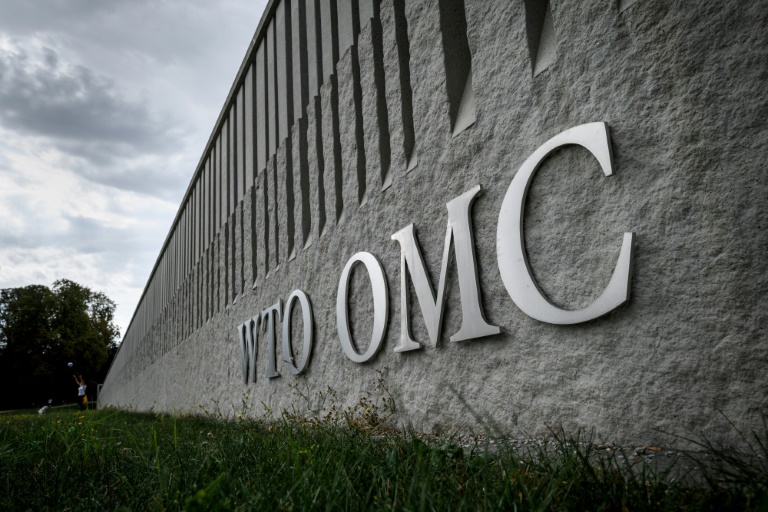
The EU on Wednesday escalated disputes with China to the WTO, requesting panels be assembled to hear two cases, one over trade restrictions on Lithuania and the other on legal recourses for EU patent holders.

“In both cases, the Chinese measures are highly damaging to European businesses” and, in the Lithuania case, “impact the functioning of the EU internal market,” the European Commission said in a statement.

China is the European Union’s biggest trading partner, and the litigation burdens the World Trade Organization with a thorny challenge at a time its dispute settlement system is badly weakened. 

The Lithuania case is over trade restrictions China has been applying to that EU member country because of Lithuania’s strengthening ties with Taiwan, which China views as part of its territory.

Beijing has denied taking coercive measures against Lithuania.

But Lithuanian exports to China have dropped 80 percent over the past year, ever since Chinese authorities started rejecting many Lithuanian imports.

The commission said that Chinese claims made in February that bans on Lithuanian alcohol, beef, dairy products, logs, peat and wheat were on health grounds were not justified.

Consultations with China early this year failed to address that issue, the commission said.

On the patents matter, the European Union is challenging decisions made by Chinese courts in August 2020 that barred EU owners of high-tech patents from turning to EU courts to protect their intellectual property.

The commission said that “Chinese manufacturers requested these anti-suit injunctions to pressure patent right holders to grant them cheaper access to European technology”.

– ‘Litigation stage’ –

An EU official briefing details to journalists on condition of anonymity said: “By requesting a panel, we’re essentially taking these two cases to the litigation stage.”

He added that “one of the reasons that we’re taking this course of action is because we see that they (Chinese authorities) take their WTO obligations seriously and we see that they have a good record of compliance”.

The WTO’s dispute settlement body will discuss the EU’s request for the panels on December 20. China can oppose it, but the EU can then renew its request, and the panels would then be established on January 30 next year.

A panel is the first WTO port of call for countries wanting to have a dispute adjudicated. They are typically composed of three experts but can have five in some cases. 

The commission said the panels’ deliberations could last up to a year and a half.

The WTO’s dispute settlement system, however, is in a fragile state after the United States, under then president Donald Trump, in 2019 blocked the appointment of new judges to the body’s appeals tribunal.

Current US President Joe Biden has not lifted the block, insisting that the WTO must reform to be more efficient.

To ensure disputes can still be appealed, 16 WTO member countries in 2020 set up a separate and temporary appeal system called the Multiparty Interim Appeal Arbitration Arrangement (MPIA), to which China is a party.

The United States is seeking to get the European Union onside with its harsher stance against China, over trade, human rights and Beijing’s increasingly assertive military posture.

Washington has pledged to give Taiwan the military means to defend itself in the event of a Chinese invasion. 

It has also barred Chinese telecom and tech companies from US networks.

The EU official briefing journalists said the United States, as well as Australia, Britain, Canada, Japan and Taiwan had sought to join the consultation phase of its disputes with China, but Beijing refused.

Those countries can ask to join the panels phase of the dispute as third parties, however, and China does not have the power to stop them.

“We would expect a reasonable number of WTO members to come in as third parties,” the official said.

Killer of S.African anti-apartheid hero Hani freed on parole

South Africa on Wednesday released on parole Janusz Walus, a far-right Polish immigrant who in 1993 shot dead anti-apartheid hero Chris Hani, after a postponement due to an attack inside prison.

Justice and Correctional Services Minister Ronald Lamola “has placed offender… Walus on parole under strict conditions with effect from Wednesday,” the government said in a statement. 

A spokesman confirmed that this meant Walus had been released, in line with a decision by the Constitutional Court.

“He will serve two years under community corrections in line with the parole regime upon which he is released,” the statement said.

Last month’s court decision sparked fierce protests from the ruling African National Congress (ANC) and its ally in the struggle against apartheid, the South African Communist Party, which Hani had led.

Walus was being held at the Kgosi Mampuru II Correctional Centre in Pretoria prior to the court’s announcement.

But a week after the ruling, he was stabbed by another inmate while queueing for food. His release, which should have taken effect by December 1, was delayed while he received treatment.

Walus shot dead Hani, a hugely popular figure and fierce opponent of white rule, in his driveway just as negotiations to end apartheid were entering their final phase. 

The murder almost plunged South Africa into a race war. 

“There is no question that offender Walus is a polarising figure in our budding constitutional democracy, and that his release has understandably re-opened wounds,” the ministry said.

His “actions sought to derail the democratic project at its most critical, formative stage,” it declared.

Walus immigrated to South Africa from then-communist Poland in 1981 at the height of the white-minority apartheid rule.

He and his accomplice Clive Derby-Lewis, who supplied the gun, were arrested soon after the attack.

The pair were sentenced to death but the punishment was later communited to life imprisonment after the death penalty was abolished by South Africa Africa’s post-apartheid government.

Derby-Lewis was released in 2015 on medical parole after 22 years in jail. He died of lung cancer in 2016, aged 80.

The home affairs ministry has said Walus will serve his parole in South Africa and not be allowed to return to Poland given the “heinous crime committed.” 

The long road to bring Iraq's IS jihadists to justice

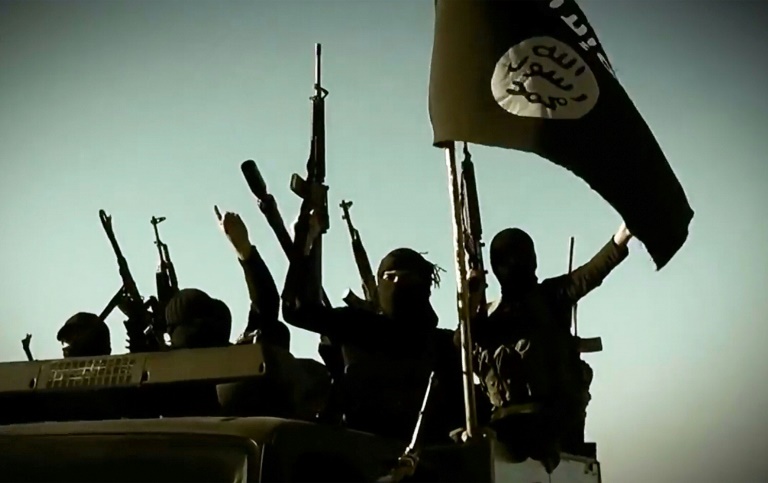
The horrors of the Islamic State group’s rule over northern Iraq may be in the past, but efforts to bring the jihadists to justice are still gathering pace.

“A lot of work remains to be done,” said the UN’s chief investigator Christian Ritscher, who is looking into a slew of IS atrocities, from murder, torture and mass rape to slavery and genocide.

Five years after the group’s defeat in Iraq, with many thousands of their members in Iraqi jails, work is ongoing to probe their crimes, said Ritscher, who heads the dedicated UN investigative team UNITAD seeking to promote accountability. 

In a Baghdad interview, the German former prosecutor described the grim task — undertaken with the cooperation of Iraqi authorities — as “challenging” and diverse in scope. 

“We have just opened an investigation into the destruction of the cultural heritage of Iraq by IS — the destruction of mausoleums, churches, cultural sites, museums,” Ritscher told AFP.

A future investigation will focus on crimes committed in Mosul, a major city in Iraq’s north which IS occupied from 2014 until 2017, he added.

Iraq declared victory over IS on December 9, 2017, but the group kept its grip on territory in neighbouring Syria until March 2019, when it was defeated by US-backed, Kurdish-led forces.

The rise of IS and its self-proclaimed “caliphate” appeared meteoric. Its seizure of Mosul helped it to briefly hold roughly one-third of Iraqi territory, and for a time there were real fears of a major attack on the capital Baghdad.

Abuses against civilians, minorities and opponents became a hallmark of the group, whose ranks swelled with the arrival of thousands of foreign nationals.

The list of IS crimes is long, Ritscher said, and includes “genocide, crimes against humanity, war crimes”. 

– International justice –

UNITAD has supported local authorities that uncover mass graves and is working to prepare evidence for “any jurisdiction in the world that needs it… even within several decades”, Ritscher said. 

“In 20 or 30 years, the perpetrators of international crimes will still be able to be judged. There is no limitation period. This could be done in Canada, the Netherlands, Malaysia, and of course in Iraq.” 

In its latest report, presented to the UN Security Council on Monday, UNITAD highlighted IS’s production of chemical and biological weapons. 

The programme included “the development, testing, weaponisation and deployment of a range of chemical agents”, according to the report.

UNITAD also investigated the Speicher massacre — when up to 1,700 “predominantly Shiite” Iraqi army cadets were abducted from a base and executed in June 2014. 

Other atrocities examined were the deaths of hundreds of detainees from Badush prison, near Mosul, and crimes against the Yazidis, a religious minority many of whose men were executed and whose women were abducted for sexual slavery. 

In 2021, a German court sentenced former IS member Taha al-Jumailly, who had let a five-year-old Yazidi girl in chains die of thirst, to life in prison for genocide and crimes against humanity — the first verdict of its kind worldwide. 

The landmark trial was held under the principle of universal jurisdiction, which holds that any national court can prosecute such crimes no matter where they were committed.

“Maybe in the future there will be a tribunal on IS crimes,” Ritscher said, adding that the idea is subject to “ongoing discussions”. 

– ‘Fair trials’ –

Iraqi authorities do not release statistics on IS captives, but in 2018 the UN estimated more than 12,000 Iraqi and foreign “combatants” were being held in its prisons. 

Richter insisted UNITAD can only contribute to “fair trials”, where there is no room for “torture or any element contravening human rights”.

Previously, Iraq has been admonished over hundreds of so-called “speedy trials”, with human rights groups flagging confessions obtained under torture, ineffective legal representation and verdicts delivered after rushed hearings.

Iraq’s courts have handed down hundreds of death sentences and life imprisonment terms.

They have also sentenced several hundred foreign IS members, including women, to prison or even death, but no foreigners have been executed.

Ritscher said trials must be “fair and evidence-based, including witnesses who can testify in court, victims who can tell the whole story and tell the court what happened to them”.

“This is what we are aiming for, not trials based on confessions,” he added.

He expressed hope that the work could help achieve reconciliation in Iraq, a country where many years of war and insurgency have ripped apart the diverse social fabric.

“Reconciliation is always a result of investigations and of fair trials where the victims have a voice and can tell their story,” Ritscher said.

Hunger, cholera stalk displacement camps near east DR Congo city

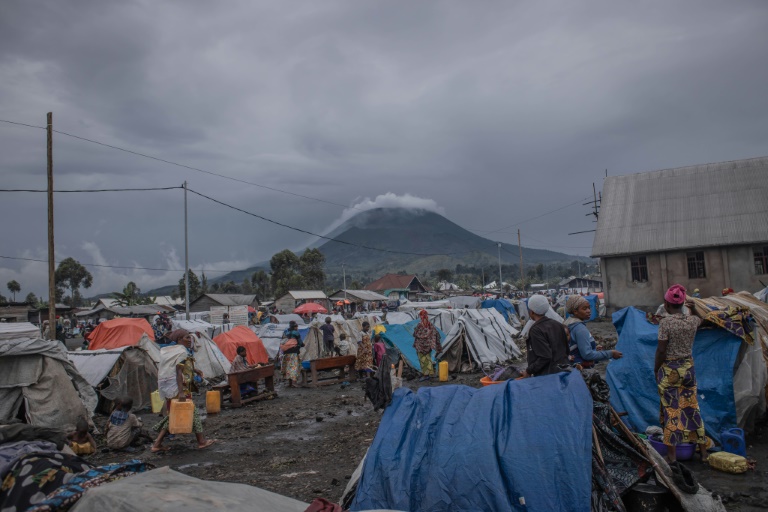
Thousands of tiny makeshift shelters hug the road leading north out of Goma, a symptom of the vast humanitarian crisis gripping DR Congo’s turbulent east.

Since late October, many tens of thousands of people have flocked towards the relative safety of the city, fleeing the advance of the M23 rebel group.

The most vulnerable have settled near the roadside, packed inside tents cobbled together from sticks and tarpaulin on fields of lava spouted from the looming volcano Mount Nyiragongo.

Despite aid efforts, all of the displaced people interviewed by AFP complained of hunger, and several described having to fight for food. Cholera, a consequence of poor hygiene, has also broken out.

“I don’t know where to find food,” said Suzanne Niramivumbi Kavakura, a small 90-year-old woman, wrapped in a colourful shawl and headscarf. 

Sitting outside her hutch-like shelter, she recounted how she fled her native Rugari, in North Kivu province, as fighting approached six weeks ago. 

Kavakura’s grandchildren found her on the road and they fled south together to Kanyaruchinya, a hillside area overlooking Goma which is now thronged with displaced people and serried rows of tents.

Precise numbers are hard to come by, but according to International Organisation for Migration (IOM) figures from late November, over 140,000 people are camping in the Nyiragongo area north of the city of two million, or sleeping in churches and schools.

Pelagie Ngayabaseka, a 54-old woman with her infant grandchild swaddled to her back, said there wasn’t enough food to go around.

“If you don’t have the strength to fight, you won’t get anything,” she said, as dozens of young children crowded around her.

– ‘Exponential dimensions’ –

The M23, a predominantly Congolese Tutsi rebel group, lay dormant for years.

But it took up arms again late last year and in June seized Bunagana, a strategic town on the border with Uganda. 

After a brief period of calm, the rebels went on the offensive again in October, capturing swathes of North Kivu province and forcing hundreds of thousands to flee.

“The scale (of the humanitarian crisis) completely changed after this offensive,” said Anne-Sylvie Linder, head of the International Committee of the Red Cross in North Kivu.

Fighting in the province displaced about 370,000 people by November 28, according to the IOM, compared to about 90,000 in late October.

Conditions in camps such as Kanyaruchinya are shocking, Linder added, explaining that aid organisations are struggling to respond to the massive movement of people. 

Among myriad other problems, there is little fresh water in Kanyaruchinya and the rocky lava field makes digging adequate latrines impossible. 

Most of the displaced people sleep with just a blanket laid over the rocks. Regular downpours due to the Democratic Republic of Congo’s rainy season make conditions all the more wretched. 

Cholera has also recently broken out, with 21 confirmed cases as of Monday, according to a humanitarian official who requested anonymity. 

“Cases have tripled every week for three weeks,” said Marie-Pierre Poirier, UNICEF’s west and central Africa director, during a visit to Kanyaruchinya the same day.

The growing numbers of displaced people is a problem taking on “exponential dimensions,” she warned.

– ‘We need to go home’ –

Theo Musekura, the president of a displaced people’s committee, said about 50 people had already died of illnesses such as cholera, malaria and diarrhoea.

A local hospital offers treatment, but “there are too many people,” he said. 

Eighty percent of the displaced people in Kanyaruchinya are Congolese Hutus from the Rutshuru area of North Kivu, Musekura estimated.

“They fled because when the M23 comes, they kill people,” the 48-year-old said matter-of-factly.

The danger remains close by. Kanyaruchinya lies several kilometres (miles) from the front line, which has been quiet in recent weeks.

Standing in drizzle by the roadside in Kibati — just north of Kanyaruchinya and about 10 kilometres (six miles) from the front — Adela Mufasano said she and her children needed to go home.

“The kids sleep on the rocks,” the 54-year-old said. “When the rain comes, it’s a catastrophe”.

Andre Bahati Musarumu, watching men play cards in front of a tent in Kanyaruchinya, also said he wanted the situation to end. 

“We want to go home to look for food,” said the 60-year-old, who fled with eight children.

“The government needs to decide between negotiation and war.”

China announces nationwide loosening of Covid restrictions

China announced Wednesday a nationwide loosening of its hardline Covid restrictions that had hammered the world’s second biggest economy and ignited rare protests against the ruling Communist Party.

The new rules are a major relaxation of President Xi Jinping’s signature zero-Covid policy, three years into the pandemic and long after the rest of the world had largely learnt to live with the virus.

However, with vaccination rates remaining low among China’s elderly and a health system still regarded as ill-prepared for a wave of infections, Xi has not abandoned travel curbs and heavy testing completely.

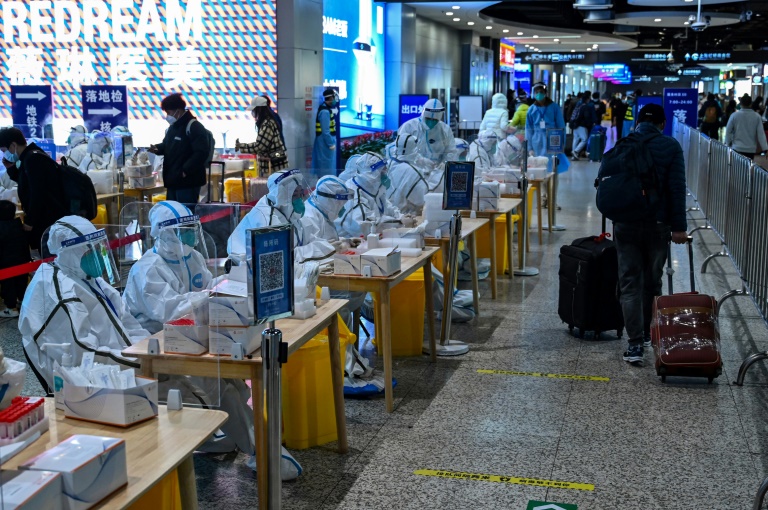
Under the new guidelines announced by the National Health Commission, the frequency and scope of PCR testing — long a tedious mainstay of life in zero-Covid China — will be reduced.

Lockdowns — a major source of public anger — will also be limited to as small a scope as is feasible, and authorities are required to free areas that show no positive cases after five days.

People with non-severe Covid infections can isolate at home instead of centralised government facilities.

And people will no longer be required to show a green health code on their phone to enter public buildings and spaces, except for “nursing homes, medical institutions, kindergartens, middle and high schools”.

China will also accelerate vaccination of the elderly, the health commission said, long seen as a major obstacle to the relaxation of zero-Covid.

Beijing said the new rules would serve to “correct pronounced problems faced by pandemic prevention and control currently”.

Past policy had “received strong response from the public”, National Health Commission expert Li Bin told a press conference Wednesday.

– ‘It’s about time’ –

Until recently, Xi and the Chinese propaganda apparatus had hailed zero-Covid as a triumph of communist rule that had kept deaths low compared with democratic countries such as the United States.

But rare demonstrations against the strategy broke out across China late last month, with people railing against the restrictions.

The protests expanded into calls for more political freedoms, with some even calling for Xi to resign, turning into the most widespread opposition to communist rule since the 1989 democracy uprising that the military crushed.

All the while, a stream of data showed the massive impacts of zero-Covid on China’s economy — with spill on effects for the world.

The government released data just before Wednesday’s announcement stating imports in November had fallen 10.6 percent year-on-year, the biggest drop since May 2020. Exports fell 8.7 percent over the same period.

Authorities quickly cracked down on the demonstrations, sending security forces into the streets and deploying its high-tech surveillance system against protesters.

However they also began easing restrictions, with some Chinese cities tentatively rolling back mass testing and curbs on movement.

And once dominated by coverage of the dangers of the virus and scenes of pandemic chaos abroad, China’s state-run media dramatically shifted tone to support a moving away from zero-Covid.

There were immediate signs of relief in China following Wednesday’s announcement.

“It’s about time to open up, it’s been three years already, we should open up fully,” one Beijing resident who asked to remain anonymous told AFP.

“People need to work and eat, you can’t just tell people not to leave their homes anymore,” they added.

“If people are worried now, they should stay home and avoid coming out, other people need to work and get on with life.”

Others were more nervous about an outbreak.

“We are very worried, now we fully open up, the government doesn’t care anymore, what should we do if the epidemic situation becomes more serious?” migrant worker Meng Qingcheng, 60, told AFP.

“It will make it harder for us to find a job,” he added. “We are also afraid, we don’t want to be infected.”

Searches on the country’s biggest travel app, Ctrip, for flight tickets ahead of Chinese New Year hit a three-year-high, state-run media outlet The Paper reported.

Analysts at Japanese firm Nomura said they projected China’s GDP would rebound next year in the wake of the relaxations.

But, they warned, China “does not appear to be well prepared for a massive wave of Covid infections”.

“It may have to pay for its procrastination on embracing a ‘living with Covid’ approach,” they said in an email.

China announces nationwide loosening of Covid restrictions

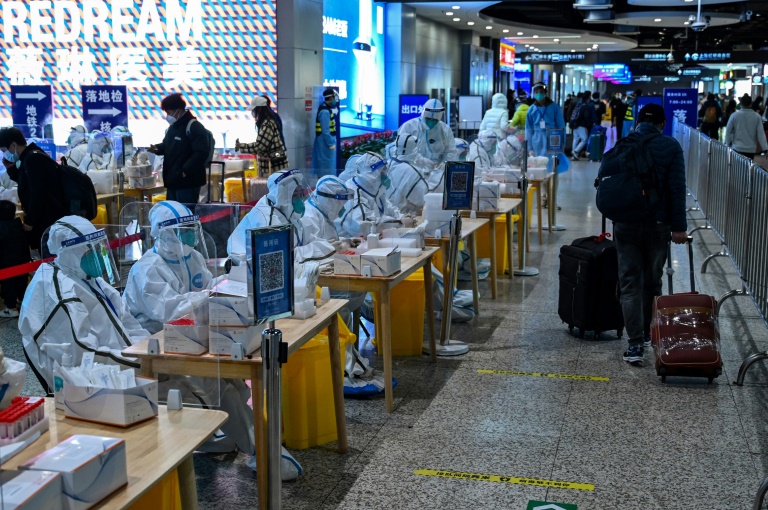
China announced Wednesday a nationwide loosening of its hardline Covid restrictions that had hammered the world’s second biggest economy and ignited rare protests against the ruling Communist Party.

The new rules are a major relaxation of President Xi Jinping’s signature zero-Covid policy, three years into the pandemic and long after the rest of the world had largely learnt to live with the virus.

However, with vaccination rates remaining low among China’s elderly and a health system still regarded as ill-prepared for a wave of infections, Xi has not abandoned travel curbs and heavy testing completely.

Under the new guidelines announced by the National Health Commission, the frequency and scope of PCR testing — long a tedious mainstay of life in zero-Covid China — will be reduced.

Lockdowns — a major source of public anger — will also be limited to as small a scope as is feasible, and authorities are required to free areas that show no positive cases after five days.

People with non-severe Covid infections can isolate at home instead of centralised government facilities.

And people will no longer be required to show a green health code on their phone to enter public buildings and spaces, except for “nursing homes, medical institutions, kindergartens, middle and high schools”.

China will also accelerate vaccination of the elderly, the health commission said, long seen as a major obstacle to the relaxation of zero-Covid.

Beijing said the new rules would serve to “correct pronounced problems faced by pandemic prevention and control currently”.

Past policy had “received strong response from the public”, National Health Commission expert Li Bin told a press conference Wednesday.

– ‘It’s about time’ –

Until recently, Xi and the Chinese propaganda apparatus had hailed zero-Covid as a triumph of communist rule that had kept deaths low compared with democratic countries such as the United States.

But rare demonstrations against the strategy broke out across China late last month, with people railing against the restrictions.

The protests expanded into calls for more political freedoms, with some even calling for Xi to resign, turning into the most widespread opposition to communist rule since the 1989 democracy uprising that the military crushed.

All the while, a stream of data showed the massive impacts of zero-Covid on China’s economy — with spill on effects for the world.

The government released data just before Wednesday’s announcement stating imports in November had fallen 10.6 percent year-on-year, the biggest drop since May 2020. Exports fell 8.7 percent over the same period.

Authorities quickly cracked down on the demonstrations, sending security forces into the streets and deploying its high-tech surveillance system against protesters.

However they also began easing restrictions, with some Chinese cities tentatively rolling back mass testing and curbs on movement.

And once dominated by coverage of the dangers of the virus and scenes of pandemic chaos abroad, China’s state-run media dramatically shifted tone to support a moving away from zero-Covid.

There were immediate signs of relief in China following Wednesday’s announcement.

“It’s about time to open up, it’s been three years already, we should open up fully,” one Beijing resident who asked to remain anonymous told AFP.

“People need to work and eat, you can’t just tell people not to leave their homes anymore,” they added.

“If people are worried now, they should stay home and avoid coming out, other people need to work and get on with life.”

Others were more nervous about an outbreak.

“We are very worried, now we fully open up, the government doesn’t care anymore, what should we do if the epidemic situation becomes more serious?” migrant worker Meng Qingcheng, 60, told AFP.

“It will make it harder for us to find a job,” he added. “We are also afraid, we don’t want to be infected.”

Searches on the country’s biggest travel app, Ctrip, for flight tickets ahead of Chinese New Year hit a three-year-high, state-run media outlet The Paper reported.

Analysts at Japanese firm Nomura said they projected China’s GDP would rebound next year in the wake of the relaxations.

But, they warned, China “does not appear to be well prepared for a massive wave of Covid infections”.

“It may have to pay for its procrastination on embracing a ‘living with Covid’ approach,” they said in an email.

Close Bitnami banner
Bitnami