World

E-cigarette maker Juul reaches settlement with 10,000 plaintiffs

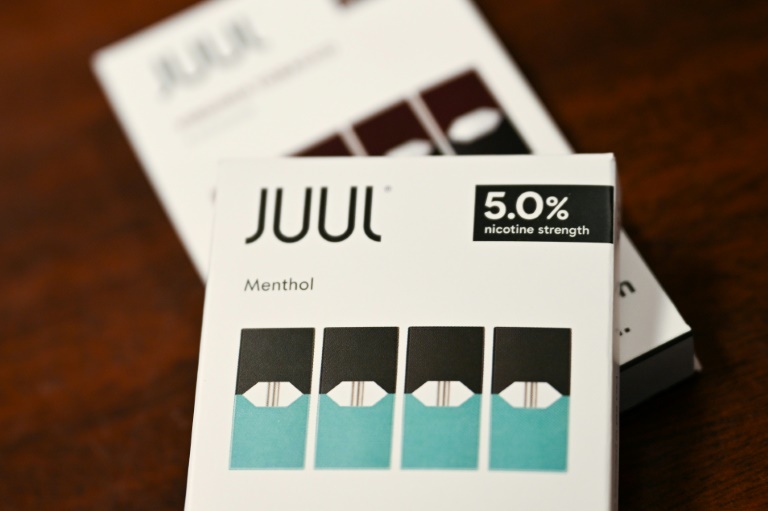
US e-cigarette manufacturer Juul Labs said on Tuesday it had reached a settlement with about 10,000 plaintiffs in California after the company was accused of marketing its products to teenagers.

The vaping giant did not disclose the amount of the settlements, which it said were related to more than 5,000 cases, but said the agreements “represent a major step toward strengthening Juul Labs’ operations and securing the company’s path forward.”

The complaints had been filed for personal injury, with some in consumer class action lawsuits, and others filed by government entities or Native American tribes.

Juul is battling to stay afloat after the US Food and Drug Administration found the company had failed to address safety concerns and ordered all its products off the market in the United States.

The company has appealed the decision but announced last month it had been forced to lay off around 400 employees and cut its operating budget by up to 40 percent.

Juul said in November it had secured financing from early investors to maintain its operations.

Webb telescope promises new age of the stars

The James Webb Space Telescope lit up 2022 with dazzling images of the early universe after the Big Bang, heralding a new era of astronomy and untold revelations about the cosmos in years to come. 

The most powerful observatory sent into space succeeds the Hubble telescope, which is still operating, and began transmitting its first cosmic images in July.

“It essentially behaves better than expected in almost every area,” said Massimo Stiavelli, head of the Webb mission office at the Space Telescope Science Institute, in Baltimore.

Already scientists say the Webb telescope, now orbiting the sun at a million miles (1.6 million kilometres) from Earth, should last 20 years, twice its guaranteed lifetime.

“The instruments are more efficient, the optics are sharper and more stable. We have more fuel and we use less fuel,” said Stiavelli.

Stability is vital for the clarity of the images.

“Our requirement was similar to that of Hubble, in terms of pointing accuracy. And we ended up being seven times better,” the mission office chief added. 

Public appetite for the discoveries has been fed by the colouring of the telescope’s images.

Light from the most distant galaxies has been stretched from the visible spectrum, viewable by the naked eye, to infrared — which Webb is equipped to observe with unprecedented resolution.

This enables the telescope to detect the faintest glimmers from the distant universe at an unprecedented resolution, to see through the veil of dust that masks the emergence of stars in a nebula and to analyse the atmosphere of exoplanets, which orbit stars outside our solar system.

– 18 petals –

“The first year (of observation) is a way to test out the tool for the small rocky planets in the habitable zone that could potentially be like Earth,” said Lisa Kaltenegger, associate professor in Astronomy at Cornell University.

“And the tests are beautiful. They’re spectacular.”

Webb blasted off aboard an Ariane 5 rocket at the end of 2021 crowning a 30-year project at the US space agency NASA.

It took 10,000 people and 10 billion dollars to put the 6.2-tonne observatory into space.

En route to final orbit, Webb deployed a five-layer sunshield the size of a tennis court followed by a 6.5 metre primary mirror made up of 18 hexagonal, gold-coated segments or petals.

Once calibrated to less than a millionth of a metre, the 18 petals began to collect the light pulsing stars.

Last July 12, the first images underlined Webb’s capabilities unveiling thousands of galaxies, some dating back close to the birth of the Universe, and a star nursery in the Carina nebula.

Jupiter has been captured in incredible detail which is expected to help understand the workings of the giant gas planet.

– ‘Too many’ galaxies –

The blue, orange and grey tones of the images from the “Pillars of Creation”, giant dust columns where stars are born, proved captivating.

Scientists saw the revelations as a way of rethinking their models of star formation.

Researchers using the new observatory have found the furthest galaxies ever observed, one of which existed just 350 millions years after the Big Bang some 13.8 billion years ago.

The galaxies appear with extreme luminosity and may have started forming 100 million years earlier than theories predicted.

“In the distant Universe, we have an excess of galaxies compared to models,” David Elbaz, scientific director for astrophysics at France’s Alternative Energies and Atomic Energy Commission, told AFP.

Another surprise has been that where Hubble essentially observed irregular shaped galaxies, the precision of the Webb telescope produces magnificent spiral galaxies similar to our own.

This has led to musings over a potential universal model which could be one of the keys to star formation.

Webb also opened up a profusion of clusters of millions of stars leading, which could be the potential missing link between the first stars and the first galaxies.

In the field of exoplanets, Webb honed in on a faraway gas giant called WASP-96 b, which was discovered in 2014.

Nearly 1,150 light-years from Earth, WASP-96 b is about half the mass of Jupiter and zips around its star in just 3.4 days

Webb provided the first confirmation that carbon dioxide is present in the atmosphere of Wasp 39-b.

But for Stiavelli, “Some of the big things either haven’t been observed yet, or haven’t been revealed yet.”

Heat will stay on in Europe this winter, but after?

Europe is likely to scrape through this winter without cutting off gas customers despite reduced Russian supplies, but even adjusting to colder homes and paying more may not be enough in coming years, analysts say.

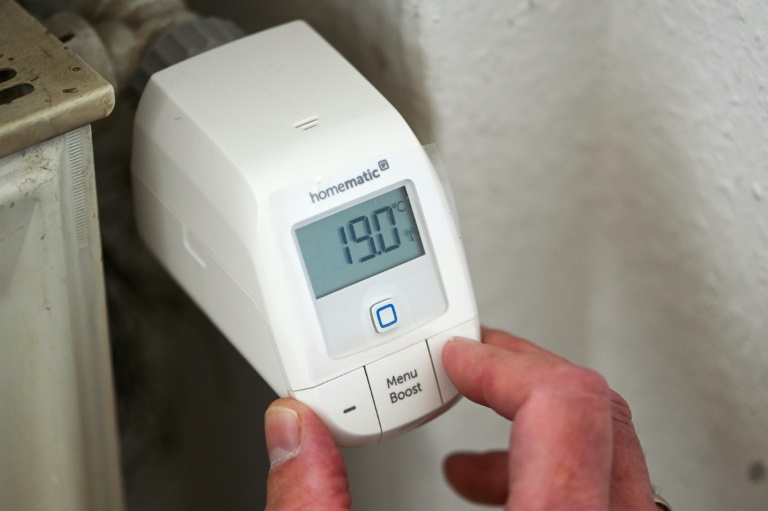
“I like a hot house, I have to admit… I really used a lot of gas,” said Sofie de Rous, who until this year kept her home on the Belgian coast at a toasty 21 degrees Celsius (70F).

But like millions of other Europeans, the 41-year-old employee at an architectural firm has had to turn down the thermostat after energy prices surged following Russia’s invasion of Ukraine in February.

Russia’s progressive reduction of gas supplies to Europe via pipeline triggered a bidding war for liquefied natural gas (LNG), sending prices sharply higher.

If certain countries like France and Spain froze prices for consumers, others like Belgium let suppliers more or less pass along the higher costs.

“I was a little panicked in the beginning,” said de Rous, who saw the gas bill to heat her 90-square-metre (970-square-foot) house in Oostduinkerke jump from 120 euros ($126) per month to 330 euros.

She has lowered her thermostat to 18 degrees and is looking into installing double-pane windows and a solar panel.

Like de Rous, the lack of concern about energy consumption of a whole generation of Europeans ended abruptly in 2022, and everyone is mindful of where their thermostat is set.

If previously natural gas was cheap and plentiful, it is now scarce and expensive.

The European wholesale reference price used to fluctuate little, hovering around 20 euros per megawatt hour. This year, it shot as high as 300 euros before dropping back to around 100 euros.

“It’s the most chaotic time I’ve witnessed in all of those years,” Graham Freedman, a European gas analyst at energy consultancy Wood Mackenzie, told AFP.

– Big drops in consumption –

Sky-high energy prices have caused numerous factories, particularly in Germany’s chemicals sector which was highly dependent upon cheap Russian gas, to halt operations.

But European nations were able to fill their gas reservoirs and no one has been cut off yet.

“Until February, the very idea of Europe without Russian energy was seen as impossible,” said Simone Tagliapietra, a senior fellow at the Bruegel think tank in Brussels.

“What was impossible became possible.”

A warm autumn that allowed many consumers to put off turning on their heating also helped put Europe in better position for the winter.

Overall, the reduction in EU gas consumption by consumers and industry was around 25 percent in October compared to the 2019-2021 average for the month, according to calculations by Bruegel.

In Germany, where half the households use gas for heat, data shows consumption down by 20 to 35 percent depending on the week.

“That’s much more than anyone expected,” said Lion Hirth, a professor of energy policy at the Hertie School in Berlin.

“And that’s completely contradictory to the talk that we’ve been hearing from doomsday talkers saying, people just don’t respond. People just keep heating. People don’t change their behaviour. People don’t respond to prices.”

In the space of several months Russia has lost its top gas customer, Europe, with purchases passing from 191 billion cubic metres in 2019 to 90 billion this year. 

Wood Mackenzie forecasts deliveries will fall to 38 billion cubic metres next year.

The EU has been able to import large quantities of LNG, but only by outbidding South Asian nations like Pakistan and India.

This has pushed these nations to increase their dependence on coal — negatively impacting global efforts to curb climate change.

– In 2023? –

Europe’s ability to import LNG has been limited by a lack of infrastructure. 

While France and Spain each had several terminals to unload LNG from tankers and convert it back into gas at the start of the Ukraine conflict, Germany didn’t have one.

And while construction of more LNG terminals is under way, in 2023, unlike at the beginning of this year, Europe will mostly have to do without Russian gas to fill its reservoirs.

This could set up an even fiercer bidding war between European and Asian nations for supplies.

“The key factor is most certainly going to be: what is the weather going to be like this winter,” said Laura Page, a gas analyst at commodity data firm Kpler.

“If we have a cold winter in Asia, and we have a cold winter in Europe… this fight will intensify.”

The problem is that LNG supplies are limited.

“There isn’t enough gas in the world at the moment to actually cope with that loss of supply from Russia,” said Wood Mackenzie’s Freedman.

New LNG projects to boost supply won’t be able to come on line before 2025, meaning Europeans will have to get used to living with homes heated to just 18 degrees.

Heat will stay on in Europe this winter, but after?

Europe is likely to scrape through this winter without cutting off gas customers despite reduced Russian supplies, but even adjusting to colder homes and paying more may not be enough in coming years, analysts say.

“I like a hot house, I have to admit… I really used a lot of gas,” said Sofie de Rous, who until this year kept her home on the Belgian coast at a toasty 21 degrees Celsius (70F).

But like millions of other Europeans, the 41-year-old employee at an architectural firm has had to turn down the thermostat after energy prices surged following Russia’s invasion of Ukraine in February.

Russia’s progressive reduction of gas supplies to Europe via pipeline triggered a bidding war for liquefied natural gas (LNG), sending prices sharply higher.

If certain countries like France and Spain froze prices for consumers, others like Belgium let suppliers more or less pass along the higher costs.

“I was a little panicked in the beginning,” said de Rous, who saw the gas bill to heat her 90-square-metre (970-square-foot) house in Oostduinkerke jump from 120 euros ($126) per month to 330 euros.

She has lowered her thermostat to 18 degrees and is looking into installing double-pane windows and a solar panel.

Like de Rous, the lack of concern about energy consumption of a whole generation of Europeans ended abruptly in 2022, and everyone is mindful of where their thermostat is set.

If previously natural gas was cheap and plentiful, it is now scarce and expensive.

The European wholesale reference price used to fluctuate little, hovering around 20 euros per megawatt hour. This year, it shot as high as 300 euros before dropping back to around 100 euros.

“It’s the most chaotic time I’ve witnessed in all of those years,” Graham Freedman, a European gas analyst at energy consultancy Wood Mackenzie, told AFP.

– Big drops in consumption –

Sky-high energy prices have caused numerous factories, particularly in Germany’s chemicals sector which was highly dependent upon cheap Russian gas, to halt operations.

But European nations were able to fill their gas reservoirs and no one has been cut off yet.

“Until February, the very idea of Europe without Russian energy was seen as impossible,” said Simone Tagliapietra, a senior fellow at the Bruegel think tank in Brussels.

“What was impossible became possible.”

A warm autumn that allowed many consumers to put off turning on their heating also helped put Europe in better position for the winter.

Overall, the reduction in EU gas consumption by consumers and industry was around 25 percent in October compared to the 2019-2021 average for the month, according to calculations by Bruegel.

In Germany, where half the households use gas for heat, data shows consumption down by 20 to 35 percent depending on the week.

“That’s much more than anyone expected,” said Lion Hirth, a professor of energy policy at the Hertie School in Berlin.

“And that’s completely contradictory to the talk that we’ve been hearing from doomsday talkers saying, people just don’t respond. People just keep heating. People don’t change their behaviour. People don’t respond to prices.”

In the space of several months Russia has lost its top gas customer, Europe, with purchases passing from 191 billion cubic metres in 2019 to 90 billion this year. 

Wood Mackenzie forecasts deliveries will fall to 38 billion cubic metres next year.

The EU has been able to import large quantities of LNG, but only by outbidding South Asian nations like Pakistan and India.

This has pushed these nations to increase their dependence on coal — negatively impacting global efforts to curb climate change.

– In 2023? –

Europe’s ability to import LNG has been limited by a lack of infrastructure. 

While France and Spain each had several terminals to unload LNG from tankers and convert it back into gas at the start of the Ukraine conflict, Germany didn’t have one.

And while construction of more LNG terminals is under way, in 2023, unlike at the beginning of this year, Europe will mostly have to do without Russian gas to fill its reservoirs.

This could set up an even fiercer bidding war between European and Asian nations for supplies.

“The key factor is most certainly going to be: what is the weather going to be like this winter,” said Laura Page, a gas analyst at commodity data firm Kpler.

“If we have a cold winter in Asia, and we have a cold winter in Europe… this fight will intensify.”

The problem is that LNG supplies are limited.

“There isn’t enough gas in the world at the moment to actually cope with that loss of supply from Russia,” said Wood Mackenzie’s Freedman.

New LNG projects to boost supply won’t be able to come on line before 2025, meaning Europeans will have to get used to living with homes heated to just 18 degrees.

China's November imports, exports plunge owing to Covid rules

China’s imports and exports plunged in November to levels not seen since early 2020, as strict Covid restrictions hit the economy hard, according to official figures released Wednesday. 

Beijing’s strict zero-Covid policy of snap lockdowns, travel curbs and daily mass testing has left businesses reeling, disrupted supply chains and dampened consumption. 

November imports fell 10.6 percent year-on-year, the biggest collapse since May 2020. 

Exports fell by 8.7 percent year-on-year, the biggest drop since February 2020, when the country was mired in the early stages of the pandemic. 

The threat of recession in the United States and Europe, coupled with soaring energy prices, is weakening demand for Chinese products. 

After nationwide anti-lockdown protests last week, the government has signalled a shift in messaging and local authorities have begun easing some restrictions — which may brighten the outlook in the coming months.   

But travel between provinces remains complicated and an economic recovery may take time, with health measures highly variable across the country. 

China’s factory activity shrank for a second straight month in November, official data last week showed, as large swathes of the country were hit by lockdowns and transport disruptions.

The Purchasing Managers’ Index — a key gauge of manufacturing in the world’s second-biggest economy — came in at 48.0, down from October’s 49.2 and well below the 50-point mark separating growth from contraction, according to the National Bureau of Statistics.

Chinese leaders have set an annual economic growth target of about 5.5 percent, but many observers think the country will struggle to hit it, despite announcing a better-than-expected 3.9 percent expansion in the third quarter.

World economy faces more pain in 2023 after a gloomy year

This was supposed to be the comeback year for the world economy following the Covid pandemic.

Instead, 2022 was marked by a new war, record inflation and climate-linked disasters. It was a “polycrisis” year, a term popularised by historian Adam Tooze.

Get ready for more gloom in 2023.

“The number of crises has increased since the start of the century,” said Roel Beetsma, professor of macroeconomics at the University of Amsterdam

“Since World War Two we have never seen such a complicated situation,” he told AFP.

After the Covid-induced economic crisis of 2020, consumer prices began to rise in 2021 as countries emerged from lockdowns or other restrictions.

Central bankers insisted that high inflation would only be temporary as economies returned to normal. But Russia’s invasion of Ukraine in late February sent energy and food prices soaring.

Many countries are now grappling with cost-of-living crises because wages are not keeping up with inflation, forcing households to make difficult choices in their spending.

“Everything has become more expensive, from cream to wine and electricity,” said Nicole Eisermann from her stand at the Frankfurt Christmas market.

Central banks played catch-up. They started to raise interest rates this year in an effort to tame galloping inflation — at the risk of tipping countries into deep recessions, since higher borrowing costs mean slower economic activity.

Inflation has finally started to slow down in the United States and the eurozone. 

– Careful spending –

Consumer prices in the Group of 20 developed and emerging nations are expected to reach eight percent in the fourth quarter before falling to 5.5 percent next year, according to the Organisation for Economic Cooperation and Development.

The OECD encourages governments to provide aid to bring relief to households.

In the 27-nation European Union, 674 billion euros ($704 billion) have been earmarked so far to shield consumers from high energy prices, according to the Bruegel think tank.

Germany, Europe’s biggest economy and the most dependent on Russia energy supplies, accounts for 264 billion euros of that total.

One in two Germans say they now only spend on essential items, according to a survey by EY consultancy.

“I am very careful but I have a lot of children and grandchildren,” said Guenther Blum, a shopper at the Frankfurt Christmas market.

Rising interest rates have also hurt consumers and businesses, though US Federal Reserve chairman Jerome Powell signalled last week that the pace of hikes could ease “as soon as” December.

He warned, however, that policy will probably have to remain tight for some time to restore price stability.

For her part, European Central Bank president Christine Lagarde sent a clear signal that the ECB would maintain its tightening policy, saying that eurozone inflation had yet to peak.

Economists expect Germany and another major eurozone economy, Italy, to fall into recession. Britain’s economy is already shrinking. Rating agency S&P Global foresees stagnation for the eurozone in 2023.

But the International Monetary Fund still expects the world economy to expand in 2023, with growth of 2.7 percent. The OECD is forecasting 2.2-percent growth.

The coronavirus pandemic, meanwhile, remains a wildcard for the global economy.

China’s zero-Covid policy restrained growth in the world’s second biggest economy, but the authorities have started to relax restrictions following nationwide protests.

– Climate costs –

But for Beetsma, the biggest crisis is climate change, which is “happening in slow motion”.

Natural and man-made catastrophes have caused $268 billion in economic losses so far in 2022, according to reinsurance giant Swiss Re. Hurricane Ian alone cost an estimated insured loss of $50-65 billion.

Floods in Pakistan resulted in $30 billion in damage and economic loss this year.

Governments agreed at United Nations climate talks (COP27) in Egypt in November to create a fund to cover the losses suffered by vulnerable developing countries devastated by natural disasters.

But the COP27 summit ended without new commitments to phase out the use of fossil fuels, despite the need to cut greenhouse gas emissions and slow global warming.

“It is not an acute crisis but a very long-term crisis, protracted,” Beetsma said. “If we don’t do enough this will hit us in unprecedented scale.”

World economy faces more pain in 2023 after a gloomy year

This was supposed to be the comeback year for the world economy following the Covid pandemic.

Instead, 2022 was marked by a new war, record inflation and climate-linked disasters. It was a “polycrisis” year, a term popularised by historian Adam Tooze.

Get ready for more gloom in 2023.

“The number of crises has increased since the start of the century,” said Roel Beetsma, professor of macroeconomics at the University of Amsterdam

“Since World War Two we have never seen such a complicated situation,” he told AFP.

After the Covid-induced economic crisis of 2020, consumer prices began to rise in 2021 as countries emerged from lockdowns or other restrictions.

Central bankers insisted that high inflation would only be temporary as economies returned to normal. But Russia’s invasion of Ukraine in late February sent energy and food prices soaring.

Many countries are now grappling with cost-of-living crises because wages are not keeping up with inflation, forcing households to make difficult choices in their spending.

“Everything has become more expensive, from cream to wine and electricity,” said Nicole Eisermann from her stand at the Frankfurt Christmas market.

Central banks played catch-up. They started to raise interest rates this year in an effort to tame galloping inflation — at the risk of tipping countries into deep recessions, since higher borrowing costs mean slower economic activity.

Inflation has finally started to slow down in the United States and the eurozone. 

– Careful spending –

Consumer prices in the Group of 20 developed and emerging nations are expected to reach eight percent in the fourth quarter before falling to 5.5 percent next year, according to the Organisation for Economic Cooperation and Development.

The OECD encourages governments to provide aid to bring relief to households.

In the 27-nation European Union, 674 billion euros ($704 billion) have been earmarked so far to shield consumers from high energy prices, according to the Bruegel think tank.

Germany, Europe’s biggest economy and the most dependent on Russia energy supplies, accounts for 264 billion euros of that total.

One in two Germans say they now only spend on essential items, according to a survey by EY consultancy.

“I am very careful but I have a lot of children and grandchildren,” said Guenther Blum, a shopper at the Frankfurt Christmas market.

Rising interest rates have also hurt consumers and businesses, though US Federal Reserve chairman Jerome Powell signalled last week that the pace of hikes could ease “as soon as” December.

He warned, however, that policy will probably have to remain tight for some time to restore price stability.

For her part, European Central Bank president Christine Lagarde sent a clear signal that the ECB would maintain its tightening policy, saying that eurozone inflation had yet to peak.

Economists expect Germany and another major eurozone economy, Italy, to fall into recession. Britain’s economy is already shrinking. Rating agency S&P Global foresees stagnation for the eurozone in 2023.

But the International Monetary Fund still expects the world economy to expand in 2023, with growth of 2.7 percent. The OECD is forecasting 2.2-percent growth.

The coronavirus pandemic, meanwhile, remains a wildcard for the global economy.

China’s zero-Covid policy restrained growth in the world’s second biggest economy, but the authorities have started to relax restrictions following nationwide protests.

– Climate costs –

But for Beetsma, the biggest crisis is climate change, which is “happening in slow motion”.

Natural and man-made catastrophes have caused $268 billion in economic losses so far in 2022, according to reinsurance giant Swiss Re. Hurricane Ian alone cost an estimated insured loss of $50-65 billion.

Floods in Pakistan resulted in $30 billion in damage and economic loss this year.

Governments agreed at United Nations climate talks (COP27) in Egypt in November to create a fund to cover the losses suffered by vulnerable developing countries devastated by natural disasters.

But the COP27 summit ended without new commitments to phase out the use of fossil fuels, despite the need to cut greenhouse gas emissions and slow global warming.

“It is not an acute crisis but a very long-term crisis, protracted,” Beetsma said. “If we don’t do enough this will hit us in unprecedented scale.”

As AI rises, lawmakers try to catch up

From “intelligent” vacuum cleaners and driverless cars to advanced techniques for diagnosing diseases, artificial intelligence has burrowed its way into every arena of modern life.

Its promoters reckon it is revolutionising human experience, but critics stress that the technology risks putting machines in charge of life-changing decisions.

Regulators in Europe and North America are worried.

The European Union is likely to pass legislation next year — the AI Act — aimed at reining in the age of the algorithm.

The United States recently published a blueprint for an AI Bill of Rights and Canada is also mulling legislation.

Looming large in the debates has been China’s use of biometric data, facial recognition and other technology to build a powerful system of control.

Gry Hasselbalch, a Danish academic who advises the EU on the controversial technology, argued that the West was also in danger of creating “totalitarian infrastructures”.

“I see that as a huge threat, no matter the benefits,” she told AFP.

But before regulators can act, they face the daunting task of defining what AI actually is.

– ‘Mug’s game’ –

Suresh Venkatasubramanian of Brown University, who co-authored the AI Bill of Rights, said trying to define AI was “a mug’s game”.

Any technology that affects people’s rights should be within the scope of the bill, he tweeted.

The 27-nation EU is taking the more tortuous route of attempting to define the sprawling field.

Its draft law lists the kinds of approaches defined as AI, and it includes pretty much any computer system that involves automation.

The problem stems from the changing use of the term AI.

For decades, it described attempts to create machines that simulated human thinking.

But funding largely dried up for this research — known as symbolic AI — in the early 2000s.

The rise of the Silicon Valley titans saw AI reborn as a catch-all label for their number-crunching programs and the algorithms they generated.

This automation allowed them to target users with advertising and content, helping them to make hundreds of billions of dollars.

“AI was a way for them to make more use of this surveillance data and to mystify what was happening,” Meredith Whittaker, a former Google worker who co-founded New York University’s AI Now Institute, told AFP.

So the EU and US have both concluded that any definition of AI needs to be as broad as possible.

– ‘Too challenging’ –

But from that point, the two Western powerhouses have largely gone their separate ways.

The EU’s draft AI Act runs to more than 100 pages.

Among its most eye-catching proposals are the complete prohibition of certain “high-risk” technologies — the kind of biometric surveillance tools used in China.

It also drastically limits the use of AI tools by migration officials, police and judges.

Hasselbach said some technologies were “simply too challenging to fundamental rights”.

The AI Bill of Rights, on the other hand, is a brief set of principles framed in aspirational language, with exhortations like “you should be protected from unsafe or ineffective systems”.

The bill was issued by the White House and relies on existing law.

Experts reckon no dedicated AI legislation is likely in the United States until 2024 at the earliest because Congress is deadlocked.

– ‘Flesh wound’ –

Opinions differ on the merits of each approach.

“We desperately need regulation,” Gary Marcus of New York University told AFP.

He points out that “large language models” — the AI behind chatbots, translation tools, predictive text software and much else — can be used to generate harmful disinformation.

Whittaker questioned the value of laws aimed at tackling AI rather than the “surveillance business models” that underpin it.

“If you’re not addressing that at a fundamental level, I think you’re putting a band-aid over a flesh wound,” she said.

But other experts have broadly welcomed the US approach.

AI was a better target for regulators than the more abstract concept of privacy, said Sean McGregor, a researcher who chronicles tech failures for the AI Incident Database.

But he said there could be a risk of over-regulation. 

“The authorities that exist can regulate AI,” he told AFP, pointing to the likes of the US Federal Trade Commission and the housing regulator HUD.

But where experts broadly agree is the need to remove the hype and mysticism that surrounds AI technology.

“It’s not magical,” McGregor said, likening AI to a highly sophisticated Excel spreadsheet.

Falsehoods plague elections as voters tackle Trumpian tactics

From the United States to Brazil and Israel, a barrage of election-related misinformation hammered voters around the world in 2022, but many pushed back against the conspiracy-laden Trumpian tactic of sowing distrust in the democratic process.

A tsunami of falsehoods flooded Twitter, Facebook, TikTok and YouTube — from “deep fake” videos to doctored photos seeking to manipulate voters — with pro-democracy activists accusing the platforms of doing too little to combat the menace.

Candidates around the world borrowed from Donald Trump’s playbook in peddling unfounded allegations of election fraud, but in countries such as the United States and Brazil many voters appeared to reject the narrative.

Defying widespread predictions of a Republican “red wave” in the November midterms, several of Trump’s handpicked candidates lost in close-fought races, with observers saying their continued refusal to accept the 2020 election result may have put off voters.

Republican leaders and supporters “seem to be coming to terms with the way that embracing conspiracy theories has led to poor candidate selection, inefficient voter mobilization, voter cynicism, and a host of other ills,” Mike Caulfield, a research scientist at the Center for an Informed Public at the University of Washington, told AFP.

“Many will try to wean their supporters off election fraud conspiracy theories… It’s going to be a very tough problem to solve.”

Likewise, the Brazilian election, which led to a tense runoff in late October after an inconclusive first round, was awash in disinformation as far-right incumbent Jair Bolsonaro echoed Trump’s election fraud claims without evidence.

His leftist rival Luiz Inacio Lula da Silva ultimately won the runoff and polls showed the public’s confidence in the voting process remained strong.

But analysts caution that many voters still believe Bolsonaro’s claim, and the country’s fight against disinformation remains far from over.

– ‘Misleading’ narratives –

Candidates in Israel’s November polls also increasingly followed Trump’s playbook, with Benjamin Netanyahu’s party, Likud, starting a “stop the steal” campaign as soon as the election was announced.

“Likud was pushing (the) conspiracy that the elections are rigged, that the central election committee of Israel is controlled by (the) deep state,” said Achiya Schatz, head of disinformation watchdog group FakeReporter. 

Netanyahu went on to win, and the veteran right-winger’s claims of a corrupt vote faded away as he stood poised to reclaim power after 14 months in opposition. 

Trump was also a major presence in Hungarian politics, with the former US president personally endorsing far-right Prime Minister Viktor Orban ahead of April elections that were rife with disinformation.

Orban’s party Fidesz “took maximum advantage of its media dominance… to spread factually incorrect or otherwise misleading allegations and narratives about its political opponents,” according to a study from Hungarian think tank Political Capital.

Just ahead of the vote Orban, who has nurtured close relations with Russian President Vladimir Putin, alleged that his rivals “made a pact with the Ukrainians” to offer them weapons and support in the event of an opposition victory.

He offered no evidence and Fidesz roared back to power with a parliamentary majority.

– ‘Powerful tool’ –

Across the world, misinformation and disinformation typically spike around elections, eroding public trust in democratic institutions and sometimes unleashing chaos as nefarious state or non-state actors try to manipulate the results.

In presidential polls in the Philippines in May, the volume of election-related disinformation spiked to “unprecedented” levels, said Rachel Khan, from the fact-checking alliance Tsek.ph.

An increase in fact-checking operations compared with previous elections could not tame the disinformation — primarily focused on the two frontrunners, Ferdinand Marcos, who went on to win by a landslide, and Leni Robredo.

“We can see that in terms of election results we had very little impact,” Khan said, of the alliance’s work. “I think the problem really is media literacy. Even those who claim that they can distinguish disinformation actually cannot.”

In Kenya, presidential rivals William Ruto and Raila Odinga are both alleged to have hired so-called digital “warriors” tasked with spreading election-related disinformation.

The falsehoods began spreading almost a year before the August vote, with fact-checkers noting an increase in the use of “deep fake” videos with manipulated content.

While Kenya’s supreme court upheld Ruto’s victory, many Odinga supporters believe the election was rigged.

And as Nigeria gears up for elections early next year, similar tactics are visible online — deep fakes and photoshopped images to smear political opponents.

In the United States, meanwhile, analysts warn disinformation about election integrity could flare again as the 2024 presidential race picks up steam — with Trump vying to reclaim the White House.

“Disinformation is a powerful tool,” Pamela Smith, president of the nonpartisan nonprofit Verified Voting, told AFP. “And those who only approve of elections that go their way will keep using it.”

burs-ac/ec/kma

After year of climate disasters, world off-track to curb warming

Catastrophic floods, crop-wilting droughts and record heatwaves this year have shown that climate change warnings are increasingly becoming reality and this is “just the beginning”, experts say, as international efforts to cut planet-heating emissions founder.

The year did see some important climate progress, with major new legislation particularly in the United States and Europe as well as a deal at the UN climate talks to help vulnerable countries cope with an increasing onslaught of devastating climate impacts. 

But the goal of keeping warming within a safer limit of 1.5 degrees Celsius since the pre-industrial era appears increasingly in peril, with carbon dioxide emissions from fossil fuels — the main driver of global heating — on track to reach an all-time high in 2022.

United Nations chief Antonio Guterres warned world leaders at a climate summit in Egypt in November that humanity faces a stark choice between working together in the battle against global warming or “collective suicide”. 

They opted to put off the most important decisions for another time, observers say. 

This year UN climate science experts issued their strongest warning yet of the dangers facing people and planet, with a landmark report on climate impacts in February dubbed an “atlas of human suffering”.

Since then a series of extreme events has illustrated the accelerating dangers of climate change, at barely 1.2C of warming.  

Record heatwaves damaged crops from China to Europe, while drought has brought millions to the point of starvation in the Horn of Africa.

Floods super-charged by climate change engulfed Pakistan, affecting 33 million people and causing some $30 billion in damage and economic losses.

“The year 2022 will be one of the hottest years on earth, with all the phenomena that go with higher temperatures,” said climate scientist Robert Vautard, head of France’s Pierre-Simon Laplace Institute.

“Unfortunately, this is just the beginning.”

This year is on track to be the fifth or sixth warmest ever recorded despite the impact, since 2020, of La Nina — a periodic and naturally occurring phenomenon in the Pacific that cools the atmosphere. 

When this phenomenon reverses, potentially within months, the world will likely climb to a “new level” in warming, said Vautard.

– Still polluting –

Economy-battering climate extremes, which amplified the energy price surges for many countries as a result of Russia’s invasion of Ukraine, provided the backdrop to last month’s high-stakes UN climate talks in Egypt. 

The negotiations did make history, with wealthy polluters agreeing to a fund to pay for climate damage increasingly unleashed on poorer countries. 

Pakistani climate minister Sherry Rehman called the move a “down payment on the longer investment in our joint futures”. 

But vulnerable nations and campaigners said the Egypt conference failed to deliver on the emissions reductions needed to curb climate losses and damages in the future.

“COP27 tackled the consequences of climate change, but not the cause — fossil fuels,” said Harjeet Singh of Climate Action Network.

To keep the 1.5C limit in play, planet-heating emissions need to be slashed 45 percent by 2030, and be cut to net zero by mid-century. 

At 2021 UN talks in Glasgow, nations were urged to ramp up their emissions reduction commitments.

But only around 30 countries have heeded that call, leaving the world on track to hot up by about 2.5C.  

– ‘Emergency room’ –

Guterres decried the failure of the climate talks to address the drastic emissions cuts needed, adding: “Our planet is still in the emergency room.” 

He has also urged nations to urgently address the other main existential crisis facing humanity and the planet — the loss of biodiversity — which is the subject of a crunch meeting in Montreal from December 7 to 19.  

Nature has been gravely damaged by human activity and the UN talks are tasked with outlining a roadmap for protecting the land and ocean ecosystems that provide Earth’s life support.

A series of potentially crucial climate milestones will then stretch through next year.

These will include spring meetings of the International Monetary Fund and World Bank, following “a formal request to look at the international financial system and to review the role of international financial institutions” from the Egypt climate talks, said Laurence Tubiana, who leads the European Climate Foundation. 

The next UN climate meeting in November 2023 — held in fossil fuel exporter the United Arab Emirates — will see the publication of a “global stocktake” of progress on the 2015 Paris Agreement goal to limit warming to well below 2C, and preferably 1.5C. 

Tubiana, a key architect of the Paris deal, said the talks in Dubai will likely be dominated by discussion of the oil and gas industry and its financial contribution. 

The issue is likely to create “great tension”, she predicted.

Close Bitnami banner
Bitnami