World

Zelensky, Ukraine's comic turned war-time leader

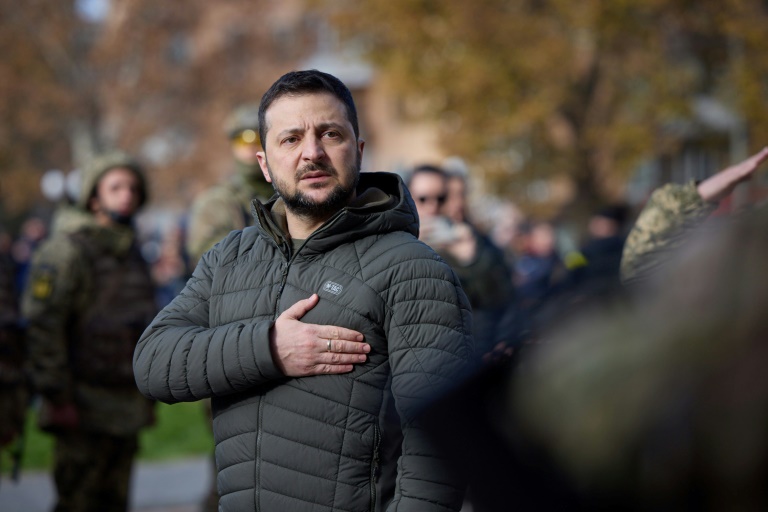
Dark circles under his eyes, his beard closely cropped and dressed ubiquitously in khaki, President Volodymyr Zelensky is the face of Ukraine’s determination to expel Russian troops.

War has proved transformative for the 44-year-old former comedian, catapulting him from embattled leader of a struggling European outlier to a global household name and standard-bearer of opposition to Russian leader Vladimir Putin.

Yet his larger-than-life persona and seeming popularity could not have appeared more unlikely when the world rang in 2022.

As the champagne corks popped at New Year parties, Zelensky faced growing malaise at home. The novelty of a celebrity-turned-president was fading.

The electorate was struggling with living costs, corruption and fledgling social services. They were tiring of a populist who promised his presidency would be a panacea to the country’s problems.

Fighting in the eastern Donbas region against Russian-backed separatists was worsening — despite his vows to bring peace. His rivals sensed weakness. Doubts were growing in Kyiv that he was the right man for the job.

Everything changed the moment that Putin ordered his army into Ukraine on February 24, hours after a bombastic fireworks display lit up the Kremlin. 

“Before the war many treated Ukraine as a failed state and Zelensky as a weak and not totally competent leader,” said Volodymyr Fesenko, a Ukrainian political analyst.

– ‘We’re all here’ –

“The war radically changed people’s attitude towards Zelensky in a positive way. But he himself has also changed,” Fesenko told AFP.

The Russian invasion was a historic moment in a region embroiled by revolutions and conflicts over the three decades since the collapse of the Soviet Union.

“There were rumours Zelensky would flee. There was a feeling he was weak, that he wouldn’t be able to withstand the pressures of war and that he wasn’t capable of being a war-time leader,” Fesenko added.

But Zelensky stayed.

In the war’s chaotic opening hours — with Russian tanks gunning for the capital — he calmly posted a video filmed outside government buildings in Kyiv with his closest aides in the frame.

“We’re all here, defending our independence and our country,” he said, looking directly into the camera.

In the months since — against a backdrop of credible allegations of Russian war crimes, the deaths of thousands and displacement of millions — Zelensky has made nightly addresses to the nation, 286 in total, promising them victory.

They have reason to hope. His appeals to the West for military and financial support, at times echoing the words of Winston Churchill, have seen Ukraine first halt Russia’s advance and then recapture swathes of territory.

Zelensky has made the case by presenting his country as the front line of a broader conflict and telling European leaders that Russia won’t stop at Ukraine.

– Blunt –

“Its ambitions are focused on the vast space from Warsaw to Sofia, from Prague to Tallinn,” he told Czech lawmakers in June.

Zelensky was born in 1978 in the southern industrial city of Kryviy Rig in the heart of a mainly Russian-speaking region.

A year after Putin annexed the Crimean peninsula from Ukraine in 2014 and threw Russian military weight behind the separatists, Zelensky the actor took the lead part in a television show that propelled him to national stardom.

“Servant of the People” sees a naive and foul-mouthed history teacher become president after his rant to a colleague against corruption goes viral.

After announcing a real bid for office, Zelensky sailed to victory in 2019 elections with a showman’s campaign and as “an ordinary guy, come to break the system,” dislodging the same businessman incumbent he had voted for years earlier.

Like then, Zelensky’s background as a performer plays in his favour, said Sergiy Leshchenko, a former journalist and Ukrainian politician.

“He doesn’t use politically correct or diplomatic language. He says bluntly what Ukraine needs to survive in the war,” Leshchenko told AFP.

After Russian forces were accused in September of bombarding civilians in Zaporizhzhia, Zelensky called the forces responsible “bloodthirsty scum” and Russia a “terrorist state”.

Moscow describes Zelensky variously as a neo-Nazi, the leader of a country responsible for genocide and a drug addict.

– ‘War fatigue’ –

“The Orthodox church should proclaim that Zelensky is officially the coming of the Antichrist,” pro-Kremlin political pundit Arayak Stepanian said recently on state TV.

His wife, Olena Zelenska, has said that their two children rarely see their father, who lives at the office. 

Yet only rarely does the public glimpse his fatigue.

One iconic moment came in April when he visited Bucha, a town near Kyiv where Ukrainians dressed in civilian clothes were found shot dead and with their hands tied behind their backs after Russia retreated.

The images show him crestfallen, with dark circles under his eyes, his face drawn and despondent — and at least in this image — lost for words.

After Bucha, Zelensky announced a policy reversal that Kyiv would no longer negotiate with Russia so long as Putin, whom he met face-to-face in 2019, was in power or as long as Russian troops remained in Ukraine.

This all-in approach has won Zelensky accolades but it also charts for Ukraine a long course ahead in a war of attrition that has no end in sight.

“He has to keep up the energy for resistance in Ukrainian society and maintain and even strengthen support from the West,” Fesenko, the analyst, told AFP.

“War fatigue is a very serious challenge.”
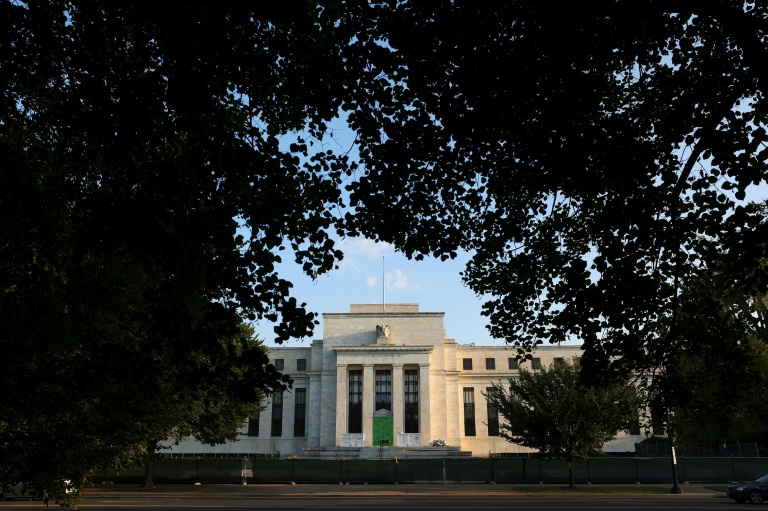
Asian markets swing as Fed worries offset China Covid easing

Asian markets were mixed Tuesday as fresh fears that the US Federal Reserve will push interest rates higher than hoped played off against growing optimism over China’s economic reopening.

After a strong start to the week in the region, traders tracked a big drop on Wall Street that came on the back of data showing a forecast-busting jump in activity in the US services sector last month.

The news — combined with Friday’s bigger-than-expected print on November jobs — dented optimism that the Fed’s monetary tightening campaign was finally paying off, which would give it room to take a less hawkish approach into the new year.

Markets had been running higher ahead of the jobs figures after a surprise drop in inflation and comments from Fed boss Jerome Powell that the bank would likely raise rates at a slower pace.

“Outstanding news from the vast services-based US economy is devastating for market participants keen to see evidence of the US economic disintegration,” said SPI Asset Management’s Stephen Innes.

“Coming as it did on the heels of Friday’s jobs report, which indicated that the rumours of the US economic demise were greatly exaggerated, the market immediately moved into ‘good news is bad’ mode, which saw investors ride roughshod over the dovish pivot camp.”

Bets have increased on borrowing costs going higher than five percent next year — from the current 3.75 to 4.0 percent — before the bank takes a break, with no cuts seen until 2024.

All three main indexes on Wall Street lost more than one percent and Asia fluctuated in early trade.

Hong Kong swung between gains and losses, having soared around 15 percent over the past week on China’s easing of strict Covid containment measures.

Shanghai inched up along with Tokyo and Manila. But Sydney, Seoul, Singapore, Wellington, Taipei and Jakarta were in the red.

The dollar dipped slightly but held most of the gains made Monday after the services data release.

The mood in Asia remains largely positive owing to the prospect of China rolling back some of the harsh measures that have been in place for almost three years and have hammered the giant economy.

But analysts said the country would not likely see a complete end to the zero-Covid policy for several months.

Oil prices climbed around one percent Tuesday, having dropped heavily the two previous days, on expectations that a reopening will boost demand in the world’s biggest importer of the commodity.

– Key figures around 0230 GMT –

Tokyo – Nikkei 225: UP 0.3 percent at 27,902.11 (break)

Hong Kong – Hang Seng Index: DOWN 0.1 percent at 19,495.73

Shanghai – Composite: UP 0.3 percent at 3,220.21

Euro/dollar: UP at $1.0511 from $1.0495 on Monday

Dollar/yen: DOWN at 136.58 yen from 136.78 yen

Pound/dollar: UP at $1.2211 from $1.2186

Euro/pound: UP at 86.08 pence from 86.06 pence

West Texas Intermediate: UP 1.0 percent at $77.72 per barrel

Brent North Sea crude: UP 1.0 percent at $83.50 per barrel

New York – Dow: DOWN 1.4  percent at 33,947.10 (close)

London – FTSE 100: UP 0.2 percent at 7,567.54 (close)

Ukraine races to restore power grid post-Russia strikes as winter comes

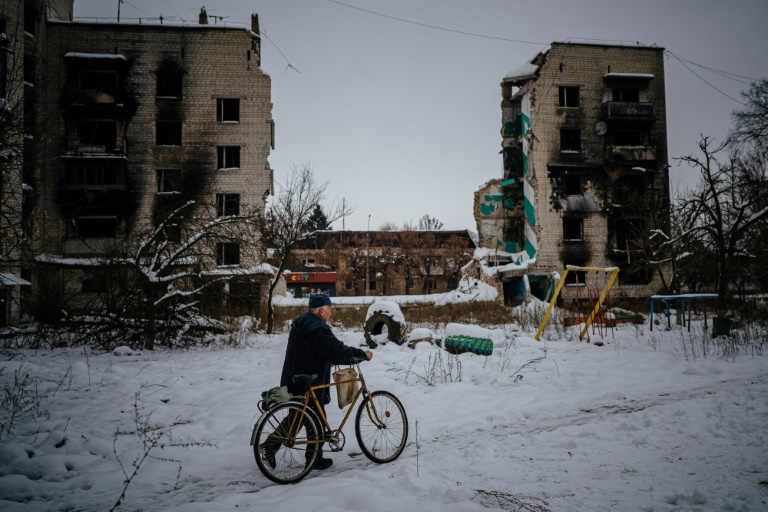
Ukraine worked to restore power on Tuesday after Russia’s latest wave of missile strikes caused power disruptions across the country, right as winter frost builds and temperatures plunge.

Out of the 70 missiles launched by Moscow, “most” were shot down, President Volodymyr Zelensky said, but the barrage still hit Ukraine’s already battered infrastructure. 

Fresh power cuts were announced in all regions “due to the consequences of shelling,” national electricity provider Ukrenergo said on Telegram.

The head of Ukrenergo said he had “no doubt that Russian military consulted with Russian power engineers during this attack”, judging by where the missiles landed. 

“The time that Russians chose for this attack was connected with their desire to inflict as much damage as possible,” Volodymyr Kudrytskyi told a Ukrainian news programme, explaining the attacks were launched as the country enters a “peak frost” period.

“Our repairmen will be working on the energy system restoration.”

Nearly half of Ukraine’s energy system has already been damaged after months of strikes on power infrastructure, leaving people in the cold and dark for hours at a time as outdoor temperatures drop below zero degrees Celsius (32 degrees Fahrenheit).

As missiles rained down on Kyiv, UN rights chief Volker Turk — who arrived over the weekend on a four-day visit — had to move his meetings with activists into an underground shelter. 

Zelensky announced in his nightly address that four were killed in Russia’s strikes.

But “our people never give up,” the president said in a video statement. 

Moscow in turn blamed Ukraine for drone attacks in Russia’s Saratov and Ryazan regions which caused explosions at two of its airfields and killed three soldiers.

At the same time, it confirmed a “massive attack on Ukrainian military command systems and related defence, communications, energy and military facilities”.

– Moscow vows to keep fighting –

The attacks come just after Russia shrugged off a Western-imposed price cap on its oil exports, warning the move would not impact its military campaign in Ukraine.

The $60-per-barrel cap agreed by the European Union, G7 and Australia aims to restrict Russia’s revenue while making sure Moscow keeps supplying the global market.

“Russia’s economy has all the necessary potential to fully meet the needs and requirements of the special military operation,” Kremlin spokesman Dmitry Peskov told reporters, using Moscow’s term for its Ukraine offensive.

“These measures will not affect this,” he said.

Russia “will not recognise” the measures, which amounted to “a step towards destabilising the global energy markets”, he added.

The market price of a barrel of Russian Urals crude is currently around $65 dollars, just slightly higher than the $60 cap — suggesting the measure may have only a limited impact in the short term.

The cap is the latest in a number of measures spearheaded by Western countries and introduced against Russia — the world’s second-largest crude oil exporter — after Moscow sent troops into Ukraine over nine months ago.

It comes on top of an EU embargo on seaborne deliveries of Russian crude oil that came into force on Monday.

The embargo will prevent maritime shipments of Russian crude to the European Union, which account for two-thirds of the bloc’s oil imports from Russia, potentially depriving Moscow of billions of euros.

Kyiv had initially welcomed the price ceiling, but later said it would not do enough damage to Russia’s economy. 

Meanwhile, Russian state media released footage of President Vladimir Putin driving a Mercedes car across the Crimea bridge — the closest the 70-year-old leader has come to the frontline in Ukraine.

The bridge connects the annexed peninsula to the Russian mainland, and was damaged in a blast in October.

– ‘Impossible to prepare’ –

The G7 nations — Britain, Canada, France, Germany, Italy, Japan and the United States — along with Australia have said they are prepared to adjust the price ceiling of oil if necessary.

In recent months, gas prices have skyrocketed since Moscow halted deliveries to the EU in suspected retaliation for Western sanctions and the bloc struggled to find alternative energy suppliers.

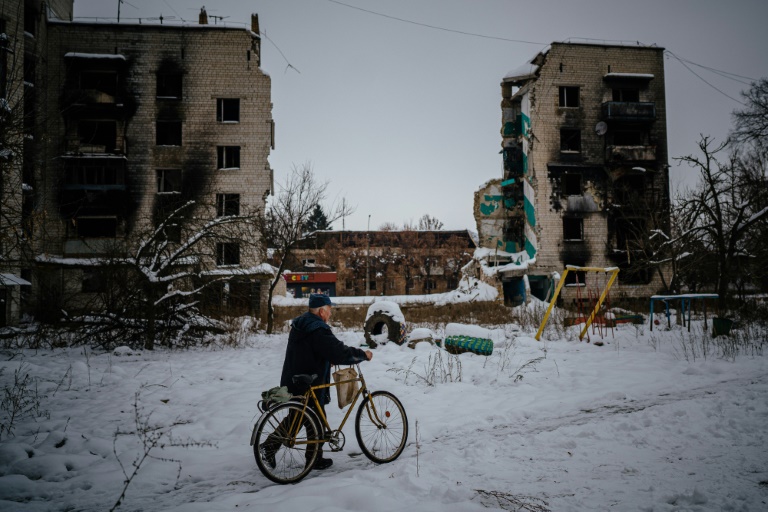
In the Ukrainian town of Borodianka, outside Kyiv, where snow has already coated the ground, locals recently gathered around wood-fired stoves inside tents to keep warm and cook food during the blackouts. 

“We are totally dependent on electricity… One day we had no electricity for 16 hours,” Irina, who had come to the tent with her child, told AFP. 

Volunteer Oleg said it was hard to say how Ukraine would manage in the coming winter months. 

“It is impossible to prepare for this winter because no one has lived in these conditions before,” he said. 

Ukraine races to restore power grid post-Russia strikes as winter comes

Ukraine worked to restore power on Tuesday after Russia’s latest wave of missile strikes caused power disruptions across the country, right as winter frost builds and temperatures plunge.

Out of the 70 missiles launched by Moscow, “most” were shot down, President Volodymyr Zelensky said, but the barrage still hit Ukraine’s already battered infrastructure. 

Fresh power cuts were announced in all regions “due to the consequences of shelling,” national electricity provider Ukrenergo said on Telegram.

The head of Ukrenergo said he had “no doubt that Russian military consulted with Russian power engineers during this attack”, judging by where the missiles landed. 

“The time that Russians chose for this attack was connected with their desire to inflict as much damage as possible,” Volodymyr Kudrytskyi told a Ukrainian news programme, explaining the attacks were launched as the country enters a “peak frost” period.

“Our repairmen will be working on the energy system restoration.”

Nearly half of Ukraine’s energy system has already been damaged after months of strikes on power infrastructure, leaving people in the cold and dark for hours at a time as outdoor temperatures drop below zero degrees Celsius (32 degrees Fahrenheit).

As missiles rained down on Kyiv, UN rights chief Volker Turk — who arrived over the weekend on a four-day visit — had to move his meetings with activists into an underground shelter. 

Zelensky announced in his nightly address that four were killed in Russia’s strikes.

But “our people never give up,” the president said in a video statement. 

Moscow in turn blamed Ukraine for drone attacks in Russia’s Saratov and Ryazan regions which caused explosions at two of its airfields and killed three soldiers.

At the same time, it confirmed a “massive attack on Ukrainian military command systems and related defence, communications, energy and military facilities”.

– Moscow vows to keep fighting –

The attacks come just after Russia shrugged off a Western-imposed price cap on its oil exports, warning the move would not impact its military campaign in Ukraine.

The $60-per-barrel cap agreed by the European Union, G7 and Australia aims to restrict Russia’s revenue while making sure Moscow keeps supplying the global market.

“Russia’s economy has all the necessary potential to fully meet the needs and requirements of the special military operation,” Kremlin spokesman Dmitry Peskov told reporters, using Moscow’s term for its Ukraine offensive.

“These measures will not affect this,” he said.

Russia “will not recognise” the measures, which amounted to “a step towards destabilising the global energy markets”, he added.

The market price of a barrel of Russian Urals crude is currently around $65 dollars, just slightly higher than the $60 cap — suggesting the measure may have only a limited impact in the short term.

The cap is the latest in a number of measures spearheaded by Western countries and introduced against Russia — the world’s second-largest crude oil exporter — after Moscow sent troops into Ukraine over nine months ago.

It comes on top of an EU embargo on seaborne deliveries of Russian crude oil that came into force on Monday.

The embargo will prevent maritime shipments of Russian crude to the European Union, which account for two-thirds of the bloc’s oil imports from Russia, potentially depriving Moscow of billions of euros.

Kyiv had initially welcomed the price ceiling, but later said it would not do enough damage to Russia’s economy. 

Meanwhile, Russian state media released footage of President Vladimir Putin driving a Mercedes car across the Crimea bridge — the closest the 70-year-old leader has come to the frontline in Ukraine.

The bridge connects the annexed peninsula to the Russian mainland, and was damaged in a blast in October.

– ‘Impossible to prepare’ –

The G7 nations — Britain, Canada, France, Germany, Italy, Japan and the United States — along with Australia have said they are prepared to adjust the price ceiling of oil if necessary.

In recent months, gas prices have skyrocketed since Moscow halted deliveries to the EU in suspected retaliation for Western sanctions and the bloc struggled to find alternative energy suppliers.

In the Ukrainian town of Borodianka, outside Kyiv, where snow has already coated the ground, locals recently gathered around wood-fired stoves inside tents to keep warm and cook food during the blackouts. 

“We are totally dependent on electricity… One day we had no electricity for 16 hours,” Irina, who had come to the tent with her child, told AFP. 

Volunteer Oleg said it was hard to say how Ukraine would manage in the coming winter months. 

“It is impossible to prepare for this winter because no one has lived in these conditions before,” he said. 

Ireland marks 100 years since founding of Irish Free State

One hundred years ago on Tuesday, Ireland gained statehood in the midst of a bitter civil war.

But it was not as a republic, as revolutionary leaders had hoped. Instead, a new era began under the ambiguous label of the Irish Free State.

On December 6, 1922, Irish lawmakers gathered to take an oath of allegiance to King George V as a dominion of the British Empire.

It was one in a string of compromises made in the Anglo-Irish Treaty of 1921 that concluded Ireland’s three-year war of independence. 

Not least among the accommodations made to the imperial power was provision for the continued partition of six, majority Protestant counties in the UK-ruled jurisdiction of Northern Ireland.

Debates in the Irish parliament that day — among those lawmakers who had not boycotted it entirely — stressed allegiance to the king was given under duress.

A day after the free state was born, lawmaker Sean Hales was assassinated by gunmen opposed to the treaty as he left lunch at a central Dublin hotel.

In swift and brutal reprisal, the new Irish government executed four anti-treaty prisoners by firing squad without charge or justification.

Irish writer James Joyce captured the mood of many in the nation when he wrote in his novel “Ulysses”, published in the same year, that history was “a nightmare from which I am trying to awake”.

-‘Decade of centenaries’-

The island of Ireland has been reckoning with its turbulent early 20th century history over the last decade — beginning in 2012 with the commemoration of the opposing reactions in Belfast and Dublin to the prospect of limited devolved governance known as “Home Rule” in 1912.

The “Decade of Centenaries” saw events in Dublin in 2016 for the 1916 Easter Rising — an armed insurrection by Irish republicans against British rule.

It was marked as a moment of intense national pride in the now republic.

But as the decade has gone on, old divisions about the creation of modern Ireland have resurfaced and which have marked its history ever since.

Last year, Irish President Michael D. Higgins was accused of snubbing an invitation to attend a church service to mark the centenary of the creation of Northern Ireland. 

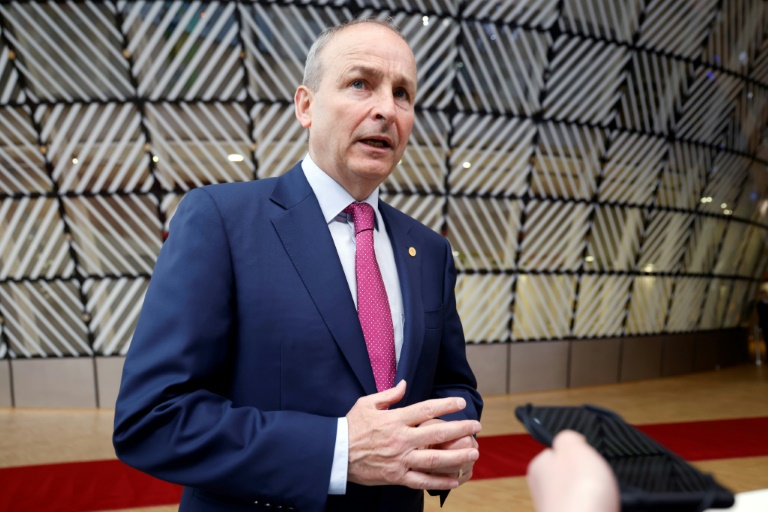
And Irish Prime Minister Micheal Martin said last week that the compromised status gained by Ireland in 1922, and the loss of “a significant part of the population of the island” in Northern Ireland, remained “divisive”. 

“There was a sense of a lost idealism for the type of state which had been fought for,” he told a government-backed conference at University College Dublin (UCD).

– Britain’s shadow –

A recent Irish Times poll highlighted the continued schism. In the republic, 66 percent would vote for a united Ireland.

In Northern Ireland, however, 50 percent would vote against while 19 percent were undecided. 

The UCD conference laid bare the warts and all legacy of the free state, which lasted 15 years until the passing of a new constitution.

Panels referenced the independent state’s entrenchment of Catholic and patriarchal values that eroded women’s rights.

Its failure to grapple with forces that would perpetuate mass emigration from Ireland during the 20th century was also highlighted.

“The parents of Ireland (were) wondering, are their children going to have a future in Ireland,” said Irish historian Diarmaid Ferriter.

“We do need to think about those who felt they had no stake in the country.”

On the plus side, the conference also discussed the 1922 constitution’s delivery of an enduring democracy in Ireland and early successes to give the state a voice on the world stage.

Ireland’s decision to join the European Union 50 years ago — perhaps more than any other development in the last century — allowed Ireland to finally step out of Britain’s shadow, said Brigid Laffan, an Irish political scientist at the European University Institute.

If that ended the UK and Ireland’s “asymmetric relationship”, Brexit also further upended the status quo of the last century, she added.

“What Brexit has done to all of this as it has disturbed territorial politics in the UK and between the two parts of the island,” Laffan said.

“The future is much more open because of Brexit than it would have been without.”

Shunned over war, Russians holiday on Venezuelan resort island

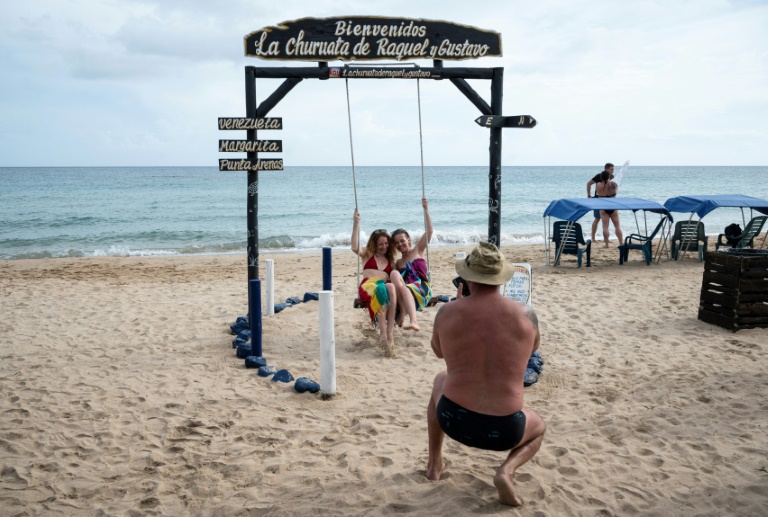
Shuttled between tourist spots, posing for pictures on beautiful beaches, and dancing awkwardly to merengue: Russian tourists have found a friendly holiday destination on a Venezuelan island far from the motherland and its war with Ukraine.

Isla de Margarita is a tropical gem with white-sand shores and turquoise waters. However, years of political and economic turmoil in Venezuela have frightened off most tourists, with Western nations sternly warning citizens not to travel there.

For thousands of Russians seeking sun-soaked holidays, but faced with visa and flight restrictions over the Ukraine war, it is a match made in Caribbean heaven.

“There aren’t many destinations available to Russia right now. It’s hard to find places to go on holiday,” says Ekaterina Dolgova, 39, who sells medical supplies.

Out of a group of Russian tourists on a recent guided tour of the island, she is the only one willing to say anything about the brutal conflict in which Ukrainians are under constant Russian attack and enduring freezing temperatures, many without water or electricity, thousands of miles away.

“A war is by far the worst thing,” she said briefly. Some fear repercussions if they speak out, while others support President Vladimir Putin’s war efforts.

– Russian translation –

In the past two months, some 3,000 Russian tourists have taken advantage of a new direct flight between Moscow and Isla de Margarita with Russia’s Norwind Airlines. 

The route re-opened on October 2 after a seven-month interruption due to the war, and was modified to avoid flying over air spaces restricted by sanctions.

A 14-hour flight from Moscow, Isla de Margarita is also seen as an affordable option. Tourist Sergei Katch said he paid $3,500 for a 12-day package to the island.

A sign reading “welcome” in Russian greets the tourists at the island’s international airport. Everything is organized, from island tours to Russian translation services. 

The travelers don’t leave their hotel without a guide.

Dolgova said she decided to travel to Venezuela after ruling out Egypt, which she had already visited twice, and where she says the treatment of Russians has changed since the start of the war.

– ‘Secret weapon’ –

President Nicolas Maduro sees tourism as a secret weapon to revitalize an economy showing timid signs of recovery after years of hyperinflation and a currency in free fall.

He has signed a deal with Russia, a strong ally, to receive some 100,000 tourists by December 31. 

This surge in tourism has had a direct impact on the island’s economy, said Viviana Vethencourt, president of the Chamber of Tourism for the Nueva Esparta state, which covers Isla de Margarita and two other islands. 

She says there are no statistics, but improvements are slowly showing.

For saleswoman Nacarid, who sells jewelry and beachwear, “things sell, but not like before,” when the island bustled with visitors from Europe and the United States.

“They are hagglers,” she complains, as one of the Russian tourists convinces her to halve the price of an item.

Dimitri Bobkov, 31, a university professor, tries to dance to the sound of merengue booming from the radio as the tour group stops at a gas station. He has visited the tomb of socialist icon Hugo Chavez and played football with children in a slum.

“Here, I like the people, the food, the nature, the climate,” said Bobkov. “I will probably remember this for the rest of my life.”

ba/fb/dw

Argentina braces for graft verdict against VP Kirchner

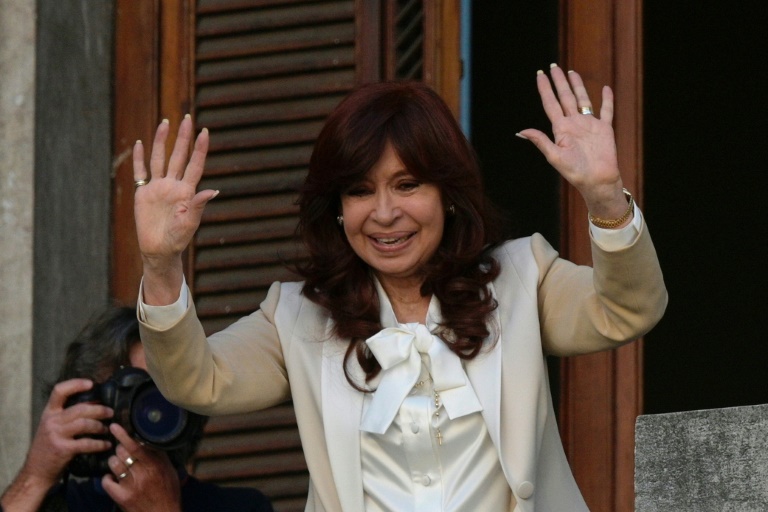
A court on Tuesday will deliver a verdict in a divisive corruption trial of Argentina’s Vice President Cristina Kirchner, who is likely to avoid jail even if found guilty due to congressional immunity.

Kirchner is accused of fraudulently awarding public works contracts in her stronghold in Patagonia as president between 2007 and 2015, and prosecutors have requested a 12-year prison sentence and lifetime ban from politics.

The 69-year-old leftist has been at the center of Argentine politics for two decades, drawing love and hatred in equal measure. She says the trial is a political witchhunt and the result a foregone conclusion.

“Obviously, there will be a conviction,” she told the Brazilian daily Folha de Sao Paulo in an interview on Monday.

The verdict will be read during a hearing that starts at 9:30am local time (1530 GMT). Defendants will follow the outcome by videoconference, a court source told AFP.

“The verdict will have a strong political impact,” said political analyst Rosendo Fraga of the University of Buenos Aires. However, if found guilty, “the chances of her being arrested for the sentence are non-existent.”

Kirchner is charged alongside 12 others for alleged involvement in the illicit attribution of public works contracts in the southern Santa Cruz province in favor of businessman Lazaro Baez.

The period investigated includes Kirchner’s eight years in office and the preceding four years when her late husband Nestor Kirchner, who died in 2010, was president.

The public prosecutor denounced what he called “a system of institutional corruption” and “probably the largest corruption operation” in the country, with “systematic irregularities in 51 calls for tenders” over twelve years.

However, to Kirchner, the charges are all a lie made up by her political enemies.

“This court has been a true firing squad,” the veteran politician said during her final address to the court, accusing prosecutors of having “dedicated themselves to disrespecting and insulting me.”

As vice president, Kirchner is head of the country’s Senate and enjoys  immunity as a lawmaker. Argentina holds general elections in 2023, and she can still run for any elective office.

However, her star has faded in recent years, and her future in politics is uncertain. 

Even if Kirchner is convicted, years of potential appeals lie ahead in a process that Fraga said could take up to six years or more.

All eyes will be on potential protests if she is found guilty.

When prosecutors announced they were seeking a 12-year jail term in late August, mass daily demonstrations took place outside her Kirchner’s apartment building in the upmarket suburb of Recoleta.

During one of these protests on September 1, a man shoved a revolver in her face and pulled the trigger — but the gun did not fire.

Four people have been charged with involvement in the attack.

NASA's Orion spaceship slingshots around Moon, heads for home

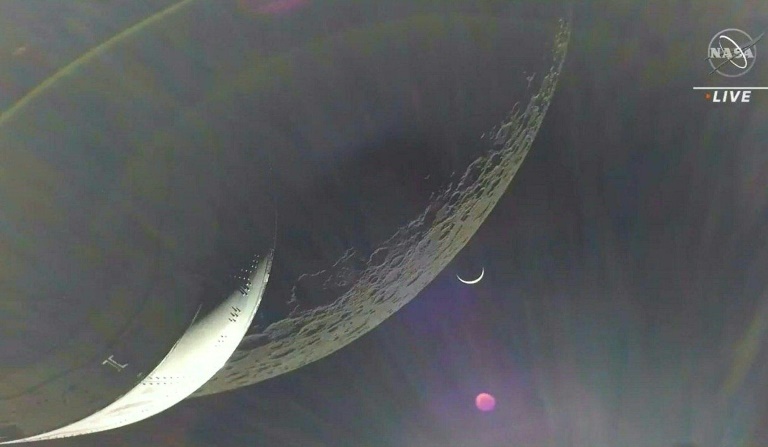
NASA’s Orion spaceship made a close pass of the Moon and used a gravity assist to whip itself back towards Earth on Monday, marking the start of the return journey for the Artemis-1 mission.

At its nearest point, the uncrewed capsule flew less than 80 miles (130 kilometers) from the surface, testing maneuvers that will be used during later Artemis missions that return humans to the rocky celestial body.

Communication with the capsule was interrupted for 30 minutes when it was behind the far side of the Moon — an area more cratered than the near side and first seen by humans during the Apollo era, although they didn’t land there.

The European Service Module, which powers the capsule, fired its main engine for over three minutes to put the gumdrop-shaped Orion on course for home.

“We couldn’t be more pleased about how the spacecraft is performing,” Debbie Korth, Orion Program deputy manager, said later.

As spectacular footage flashed on their screens once communication was restored, she told a news conference, “everybody in the room, we just kind of had to stop and pause, and just really look — Wow, we’re saying goodbye to the moon.”

Monday’s was the last major maneuver of the mission, which began when NASA’s mega Moon rocket SLS blasted off from Florida on November 16. From start to finish, the journey should last 25 and a half days.

Orion will now make only slight course corrections until it splashes down in the Pacific Ocean off San Diego on Sunday, December 11 at 9:40 am local time (1740 GMT). It will then be recovered and hoisted aboard a US Navy ship.

Earlier in the mission, Orion spent about six days in “distant retrograde orbit” around the Moon, meaning at high altitude and traveling opposite the direction the Moon revolves around Earth.

A week ago, Orion broke the distance record for a habitable capsule, venturing 280,000 miles (450,000 kilometers) from our planet.

Once it returns to Earth, Orion will have traveled more than 1.4 million miles, said Mike Sarafin, the Artemis mission manager.

Re-entry into Earth’s atmosphere will present a harsh test for the spacecraft’s heat shield, which will need to withstand temperatures of around 5,000 degrees Fahrenheit (2,800degrees Celsius) -– or about half the surface of the Sun.

Under the Artemis program — named for the sister of Apollo in Greek mythology — the United States is seeking to build a lasting presence on the Moon in preparation for an onward voyage to Mars.

Artemis 2 will involve a crewed journey to the Moon, once again without landing. 

The first woman and next man are to land on the lunar south pole during Artemis 3, which is set for no sooner than 2025, though likely significantly later given timeline delays.

Brazil thrill to earn World Cup quarter-final against Croatia

Brazil hit top gear with Neymar back in the line-up to brush aside South Korea 4-1 on Monday and ease into the quarter-finals of the World Cup where they will face Croatia.

Neymar had been sidelined for two matches but with the world’s most expensive player restored to their side, Brazil’s yellow shirts poured forward at Stadium 974 to dismantle the Korean side.

Vinicius Junior opened the scoring inside seven minutes before Neymar added another from the penalty spot to move to 76 goals for his country, leaving him just one away from equalling Pele’s all-time record tally.

The ailing Pele watched from his hospital bed in Sao Paulo where the 82-year-old was admitted last Tuesday amid ongoing treatment for colon cancer, he told the “Selecao” in an Instagram post before the game.

He will have enjoyed Richarlison’s dazzling goal to make it 3-0 before Lucas Paqueta added another before half-time, all celebrated with dance routines as Brazil’s supporters roared their approval.

Paik Seung-ho pulled one back for the Koreans when the Brazilians took their foot off the pedal, but their thoughts had already turned to Friday’s quarter-final clash with 2018 runners-up Croatia.

It was the first time that Brazil had scored four goals in a World Cup knockout game since 1998 and the performance rapped out a warning to their rivals that they have a sixth title in their sights.

– Livakovic Croatia’s hero –

Goalkeeper Dominik Livakovic was the hero for Croatia in the day’s other last-16 tie, saving three penalties in the shootout as his side beat Japan to reach the last eight.

Japan had already beaten European heavyweights Germany and Spain in Qatar and they looked on track to take down 2018 runners-up Croatia when Daizen Maeda put them ahead just before half-time.

But Ivan Perisic brought Croatia level in the 55th minute with an impressive header from Dejan Lovren’s cross and a hard-fought match became the first of this World Cup to go into extra time.

When neither side could break the deadlock, the tie also produced the first penalty shootout of Qatar 2022.

It continued a remarkable pattern — seven of Croatia’s past eight knockout games at major tournaments have gone to extra time, the only exception being their defeat in the final by France in Russia four years ago.

In nail-biting tension, Livakovic saved the first Japan two spot-kicks before stopping Maya Yoshida’s effort, then Mario Pasalic struck the winning penalty to send Croatia through.

Livakovic, the hero of the hour, said: “I don’t think they were difficult penalties to save, they weren’t perfect penalties, and thank God for that.”

Croatia captain Luka Modric said: “It seems that we can’t do it without a drama.

“We are more than happy to reach the quarter-finals. It was a very difficult game against a very tough team.”

Japan forward Ritsu Doan gave a frank assessment of his country’s performance: “No matter how well we fought today, we didn’t change history.”

Three-quarters of the quarter-final line-up is now set, with Argentina facing the Netherlands on Friday, the same day Brazil play Croatia.

England face the daunting prospect of taking on holders France on Saturday.

Spain will be looking to book their place in the last eight when they face a dangerous Morocco on Tuesday, while Cristiano Ronaldo’s Spain play Switzerland.

US stocks slide on Fed worries as Asian bourses rally

US stocks fell Monday on worries the Federal Reserve will prolong aggressive policies to counter inflation, while Asian bourses rallied on signs China is pivoting from its zero-tolerance Covid policies.

A survey of US services industry companies showed stronger-than-expected activity in November, following Friday’s employment report which also topped estimates.

The latest economic reports show “some pretty considerable resilience,” said Art Hogan, analyst at B. Riley Financial.

While markets continue to bet on a more modest Fed interest rate hike later this month, traders now see the US central bank lifting its rates to a higher “terminal” level when the cycle of increases is complete, Hogan said.

Major US indices ended decisively in the red following a mixed day in Europe.

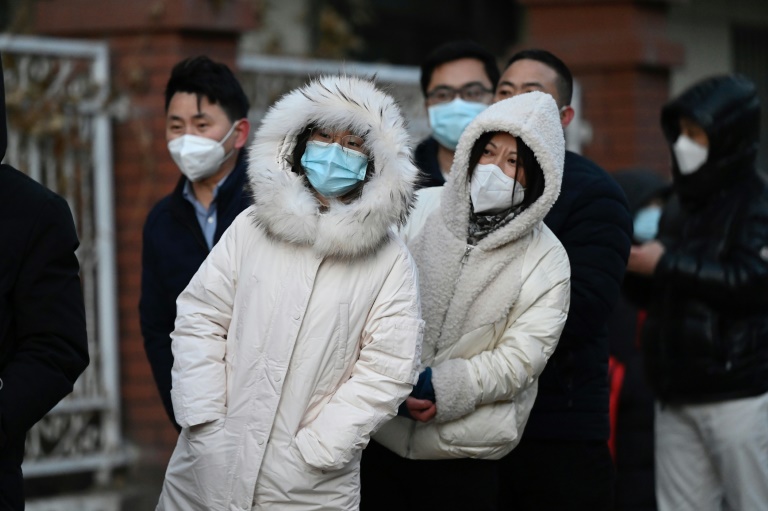
Earlier, equity markets in Asia bounced as officials in Beijing and throughout China began easing some pandemic restrictions. Commuters in the Chinese capital were no longer required to show a negative virus test taken within 48 hours to use public transport.

The shift comes after Chinese authorities moved to contain rare public protests over prolonged Covid-19 restrictions.

China’s vast security apparatus has acted swiftly to smother the rallies, deploying a heavy police presence while boosting online censorship and surveillance of the population.

Chinese state media, which previously focused on highlighting the dangers of Covid-19, shifted tone as measures were relaxed.

Authoritative business news outlet Yicai on Sunday quoted an unnamed health expert arguing that officials should dial down strict virus rules.

Anticipation of a recovery in Chinese economic activity initially boosted oil prices on Monday, but crude later pulled back as markets appeared to bet that more restrictive US monetary policy could limit petroleum demand.

The entry into force of a price cap on Russian crude agreed by the EU, G7 and Australia came into force and the weekend decision by OPEC and its Russia-led allies to maintain oil output levels also supported prices.

“From the OPEC+ perspective, it can’t be easy to make reliable forecasts against that (Russia) backdrop and the constantly evolving Covid situation in China, which currently looks far more promising from a demand perspective,” said Craig Erlam, senior market analyst at OANDA trading group.

– Key figures around 2130 GMT –

New York – Dow: DOWN 1.4  percent at 33,947.10 (close)

New York – S&P 500: DOWN 1.8 percent at 3,998.84 (close)

New York – Nasdaq: DOWN 1.9 percent at 11,239.94 (close)

London – FTSE 100: UP 0.2 percent at 7,567.54 (close)

Frankfurt – DAX: DOWN 0.6 percent at 14,447.61 (close)

Paris – CAC 40: DOWN 0.7 percent at 6,696.96 (close)

EURO STOXX 50: DOWN 0.5 percent at 3,956.53 (close)

Tokyo – Nikkei 225: UP 0.2 percent at 27,820.40 (close)

Hong Kong – Hang Seng Index: UP 4.5 percent at 19,518.29 (close)

Shanghai – Composite: UP 1.8 percent at 3,211.81 (close)

Euro/dollar: DOWN at $1.0495 from $1.0535 on Friday

Dollar/yen: UP at 136.78 yen from 134.31 yen

Pound/dollar: DOWN at $1.2186 from $1.2280

Euro/pound: UP at 86.06 pence from 85.79 pence

Brent North Sea crude: DOWN 3.4 percent at $82.68 per barrel

West Texas Intermediate: DOWN 3.8 percent at $76.93 per barrel

burs-jmb/bys

Close Bitnami banner
Bitnami