World

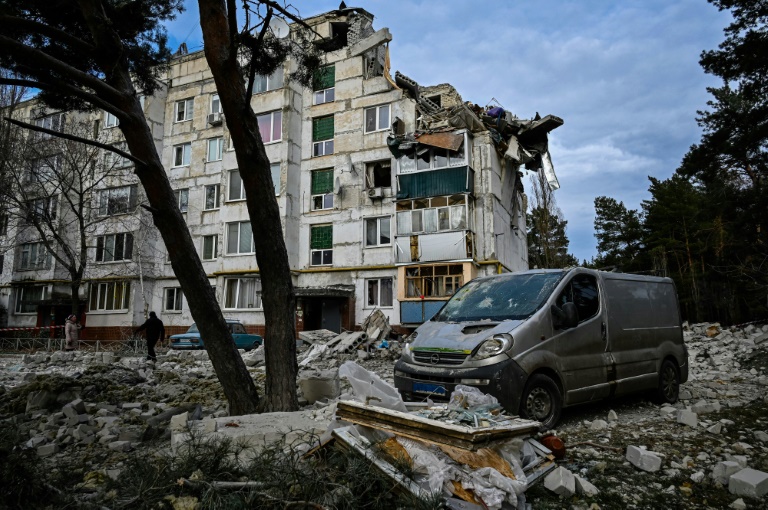
Ukraine races to restore power grid after Russia strikes

Ukraine worked to restore power on Tuesday after Russia’s latest wave of missile strikes caused power disruptions across the country, right as winter frost builds and temperatures plunge.

Out of the 70 missiles launched by Moscow, “most” were shot down, President Volodymyr Zelensky said, but the barrage still hit Ukraine’s already battered infrastructure. 

Fresh power cuts were announced in all regions “due to the consequences of shelling,” national electricity provider Ukrenergo said on Telegram.

The head of Ukrenergo said he had “no doubt that Russian military consulted with Russian power engineers during this attack”, judging by where the missiles landed. 

“The time that Russians chose for this attack was connected with their desire to inflict as much damage as possible,” Volodymyr Kudrytskyi told a Ukrainian news programme, explaining the attacks were launched as the country enters a “peak frost” period.

“Our repairmen will be working on the energy system restoration.”

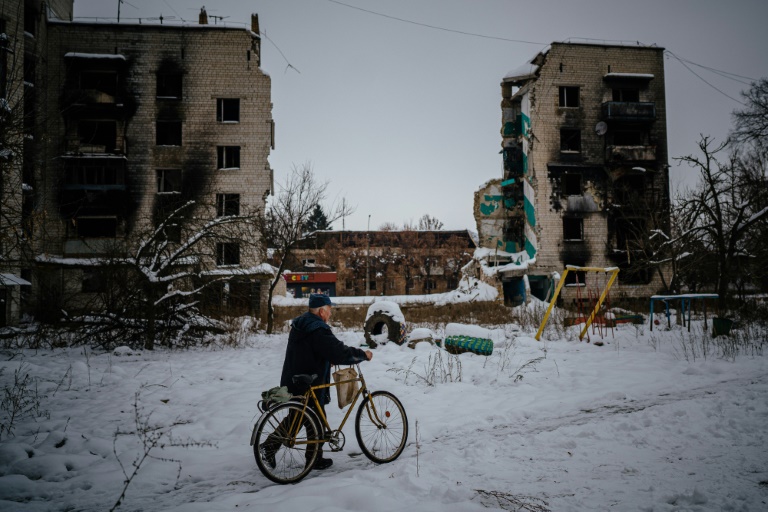
Nearly half of Ukraine’s energy system has already been damaged after months of strikes on power infrastructure, leaving people in the cold and dark for hours at a time as outdoor temperatures drop below zero degrees Celsius (32 degrees Fahrenheit).

As missiles rained down on Kyiv, UN rights chief Volker Turk — who arrived over the weekend on a four-day visit — had to move his meetings with activists into an underground shelter. 

Zelensky announced in his nightly address that four were killed in Russia’s strikes.

But “our people never give up,” the president said in a video statement. 

Across the border in Russia’s Kursk region on Tuesday, an airfield saw a “drone attack”, said local governor Roman Starovoyt, without specifying where the drone originated. 

“As a result of a drone attack in the area of the Kursk airfield, an oil storage tank caught fire,” he said on social media, adding that there were no casualties. 

Tuesday’s incident comes a day after Moscow accused its neighbour of carrying out deadly drone strikes on two other airfields.

Russia also confirmed a “massive attack on Ukrainian military command systems and related defence, communications, energy and military facilities”.

– Moscow vows to keep fighting –

The latest violence comes just after Russia shrugged off a Western-imposed price cap on its oil exports, warning the move would not impact its military campaign in Ukraine.

The $60-per-barrel cap agreed by the European Union, G7 and Australia aims to restrict Russia’s revenue while making sure Moscow keeps supplying the global market.

“Russia’s economy has all the necessary potential to fully meet the needs and requirements of the special military operation,” Kremlin spokesman Dmitry Peskov told reporters, using Moscow’s term for its Ukraine offensive.

“These measures will not affect this,” he said.

Russia “will not recognise” the measures, which amounted to “a step towards destabilising the global energy markets”, he added.

The market price of a barrel of Russian Urals crude is currently around $65 dollars, just slightly higher than the $60 cap — suggesting the measure may have only a limited impact in the short term.

The cap is the latest in a number of measures spearheaded by Western countries and introduced against Russia — the world’s second-largest crude oil exporter — after Moscow sent troops into Ukraine over nine months ago.

It comes on top of an EU embargo on seaborne deliveries of Russian crude oil that came into force on Monday.

The embargo will prevent maritime shipments of Russian crude to the European Union, which account for two-thirds of the bloc’s oil imports from Russia, potentially depriving Moscow of billions of euros.

Kyiv had initially welcomed the price ceiling, but later said it would not do enough damage to Russia’s economy. 

Meanwhile, Russian state media released footage of President Vladimir Putin driving a Mercedes car across the Crimea bridge — the closest the 70-year-old leader has come to the frontline in Ukraine.

The bridge connects the annexed peninsula to the Russian mainland, and was damaged in a blast in October.

– ‘Impossible to prepare’ –

The G7 nations — Britain, Canada, France, Germany, Italy, Japan and the United States — along with Australia have said they are prepared to adjust the price ceiling of oil if necessary.

In recent months, gas prices have skyrocketed since Moscow halted deliveries to the EU in suspected retaliation for Western sanctions and the bloc struggled to find alternative energy suppliers.

In the Ukrainian town of Borodianka, outside Kyiv, where snow has already coated the ground, locals recently gathered around wood-fired stoves inside tents to keep warm and cook food during the blackouts. 

“We are totally dependent on electricity… One day we had no electricity for 16 hours,” Irina, who had come to the tent with her child, told AFP. 

Volunteer Oleg said it was hard to say how Ukraine would manage in the coming winter months. 

“It is impossible to prepare for this winter because no one has lived in these conditions before,” he said. 
Energy crisis fuels renewables boom: IEA

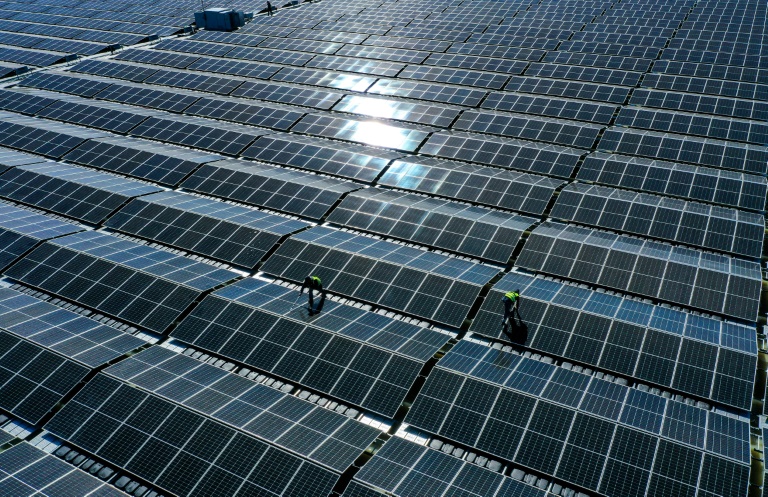
The energy crisis is fuelling an acceleration of the rollout of renewable power, raising hopes for efforts to meet ambitious targets against global warming, the International Energy Agency said Tuesday.

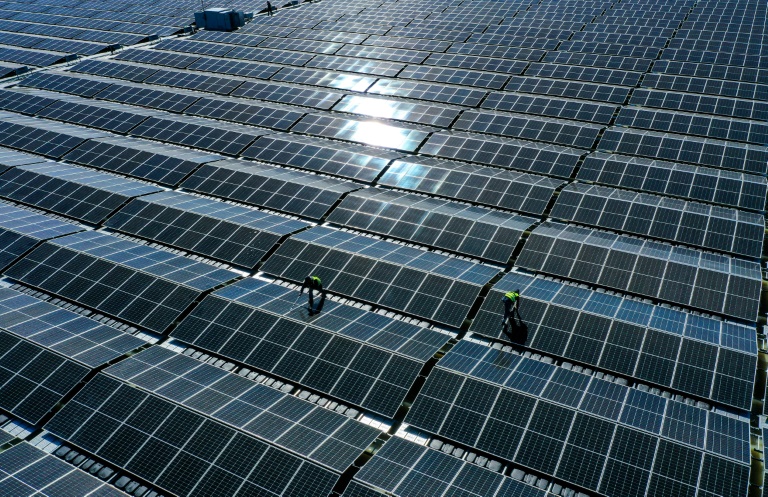
Total renewables capacity worldwide is set to almost double in the next five years and overtake coal as the largest source of electricity generation by 2025, the IEA said in a report.

The 2,400-gigawatt growth between 2022-2027 is almost a third higher than last year’s IEA forecast, according to the Paris-based agency, which advises developed nations.

This would help “keep alive the possibility of limiting global warming to 1.5 (degrees Celsius)”, the IEA said, referring to the preferrable target set in the 2015 Paris Agreement to prevent a climate catastrophe.

The invasion of Ukraine by major oil and gas exporter Russia has triggered an energy crunch and prompted countries in Europe, which were highly dependent on Russian deliveries, to diversify their supplies.

“Renewables were already expanding quickly, but the global energy crisis has kicked them into an extraordinary new phase of even faster growth as countries seek to capitalise on their energy security benefits,” said IEA executive director Fatih Birol.

“The world is set to add as much renewable power in the next five years as it did in the previous 20 years,” Birol said in a statement.

“This is a clear example of how the current energy crisis can be a historic turning point towards a cleaner and more secure future world energy system.”

The amount of renewable power capacity added in Europe between 2022-2027 is forecast to be twice as high as in the previous five-year period, the IEA said.

EU nations could deploy wind and solar power even faster if they were to quickly streamline the process for receiving permits, the report said.

The IEA’s revised forecast is also driven by new policies and market reforms being implemented more quickly than previously planned.

China is expected to account for almost half of new global renewable power capacity additions in the next five years, the report said.

Energy crisis fuels renewables boom: IEA

The energy crisis is fuelling an acceleration of the rollout of renewable power, raising hopes for efforts to meet ambitious targets against global warming, the International Energy Agency said Tuesday.

Total renewables capacity worldwide is set to almost double in the next five years and overtake coal as the largest source of electricity generation by 2025, the IEA said in a report.

The 2,400-gigawatt growth between 2022-2027 is almost a third higher than last year’s IEA forecast, according to the Paris-based agency, which advises developed nations.

This would help “keep alive the possibility of limiting global warming to 1.5 (degrees Celsius)”, the IEA said, referring to the preferrable target set in the 2015 Paris Agreement to prevent a climate catastrophe.

The invasion of Ukraine by major oil and gas exporter Russia has triggered an energy crunch and prompted countries in Europe, which were highly dependent on Russian deliveries, to diversify their supplies.

“Renewables were already expanding quickly, but the global energy crisis has kicked them into an extraordinary new phase of even faster growth as countries seek to capitalise on their energy security benefits,” said IEA executive director Fatih Birol.

“The world is set to add as much renewable power in the next five years as it did in the previous 20 years,” Birol said in a statement.

“This is a clear example of how the current energy crisis can be a historic turning point towards a cleaner and more secure future world energy system.”

The amount of renewable power capacity added in Europe between 2022-2027 is forecast to be twice as high as in the previous five-year period, the IEA said.

EU nations could deploy wind and solar power even faster if they were to quickly streamline the process for receiving permits, the report said.

The IEA’s revised forecast is also driven by new policies and market reforms being implemented more quickly than previously planned.

China is expected to account for almost half of new global renewable power capacity additions in the next five years, the report said.

Georgia runoff Senate vote a new test for Biden

Choosing between a pastor and a former football star, voters in Georgia will decide Tuesday on a seat in the US Senate in an election with high stakes for Joe Biden’s presidency.

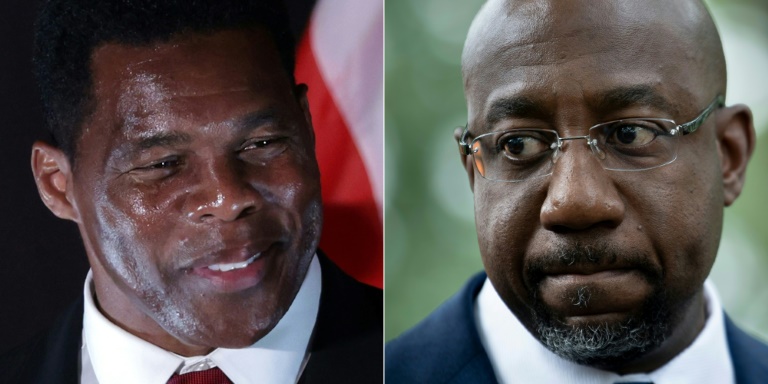
Democratic senator Raphael Warnock and his Republican challenger Herschel Walker, who is backed by former president Donald Trump, will clash in a hotly contested runoff after neither of the African American candidates earned more than 50 percent in the November 8 midterm election.

With Warnock, 53, and Walker, 60, running neck and neck, Biden has urged Georgians to turn out and vote Democrat. “It really is critical,” the president has said.

Even though Democrats have already retained control over the Senate in last month’s vote, albeit just barely, this election is nonetheless decisive for Biden.

Republicans see the Georgia Senate seat as a chance to boost their ability to block Biden’s policies, having won back control of the House of Representatives.

With 700 days to go before the 2024 presidential election, Republicans hope to stymie Biden’s momentum, after his party performed much better than expected in November.

For Democrats, on the other hand, a Warnock victory would help consolidate their paper-thin Senate majority and allow them to wield greater influence in key congressional committees.

It would also significantly curb the power of centrist Democratic senator Joe Manchin, who has already blocked several major Biden initiatives in the first two years of his term.

– Top guns to the rescue –

Determined to win the race, Democrats have called on their top guns: former president Barack Obama, the most charismatic leader in the Democratic Party, campaigned in Atlanta last week.

And in yet another sign of how high the stakes are, some 400 million dollars have already been spent in this campaign, making the Georgia race the most expensive in all of the midterms.

Some 1.9 million people have already voted early, many of them likely Democratic voters, while Republicans are expected to turn out in force on Tuesday.

With the two candidates running head to head, according to most recent polls, the outcome is hard to predict.

Historically a Republican state, Georgia took America by surprise when voters chose Biden over Trump in the 2020 elections and then sent two Democrats to the Senate two months later in another runoff.

– Polar opposites –

This time, while both of the candidates are natives of Georgia, the men are polar opposites.

Born the eleventh of 12 children to a former soldier and preacher father and a mother who worked in the cotton fields, Warnock, 53, grew up in poverty.

Even after his election, Warnock remained as senior pastor in an Atlanta church where slain civil rights icon Martin Luther King Jr once preached. Warnock holds a doctorate in theology.

Walker is a latecomer to politics with his 2022 Senate run.

The 60-year-old conservative is considered one of the best players in the history of American college football — a near-religious institution in the South — and holds several records.

Walker, who is staunchly anti-abortion, even in cases of rape, has been the subject of several recent scandals, having been accused of paying for abortions of two women he had relationships with.

Former Chinese leader Hu in first public appearance since dramatic Congress exit

Former Chinese leader Hu Jintao was seen in public for the first time since he was dramatically escorted out of a top Communist Party meeting, when he paid respects to his late predecessor Jiang Zemin on Monday.

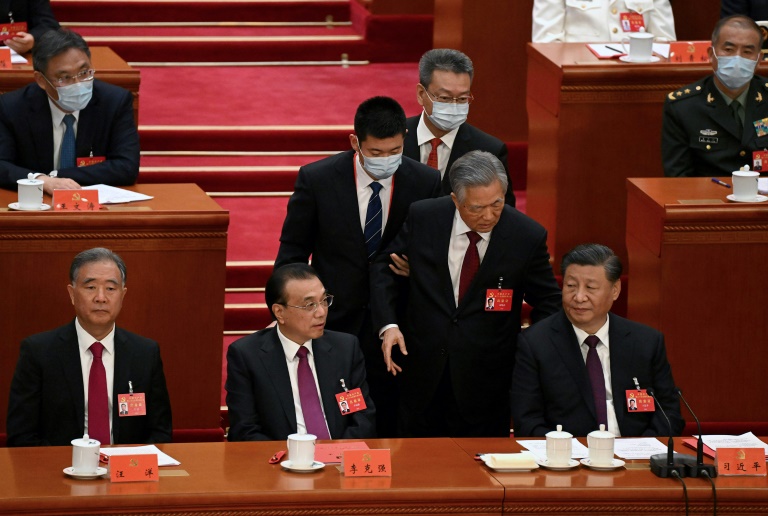
In October, Hu was lifted out of his chair and led out of the closing ceremony of the Party Congress, a highly unusual incident that disrupted the carefully choreographed event at which Xi Jinping was handed a historic third term as leader. 

Chinese state media later said Hu had been feeling unwell, but his obvious reluctance to leave the hall prompted speculation over whether political factors were at play.

On Monday morning Hu appeared with other top leaders at the Chinese People’s Liberation Army General Hospital in Beijing to pay their final respects to Jiang before his cremation, footage from state broadcaster CCTV showed. 

The frail 79-year-old is seen standing next to Xi, an attendant at his shoulder, as the officials bow three times before Jiang’s body.  

Later, Hu is seen walking unsteadily with the help of the same attendant as the cadres walk around the funereal display and talk to Jiang’s widow.

At the October Congress, Xi was anointed general secretary of the party for another five-year period, breaking the precedent of stepping down after two terms followed by Hu and Jiang.

Some believed the unexpected removal of Hu was meant to send a strong political signal to those in the party that might oppose Xi’s coronation. 

A Hu protege, Hu Chunhua, had been tipped by some to be named to the Politburo Standing Committee, the apex of power in China. 

But Xi sidelined him and has filled his inner circle with close allies. 

Xi has promoted a narrative that he has rectified huge problems that beset China and the party during the tenures of Hu and his predecessors, such as graft and the unequal distribution of wealth.

China’s censors scrubbed references to Hu’s removal from Congress from the internet after the incident took place.

Emmy-winning 'Cheers' star Kirstie Alley dies at 71

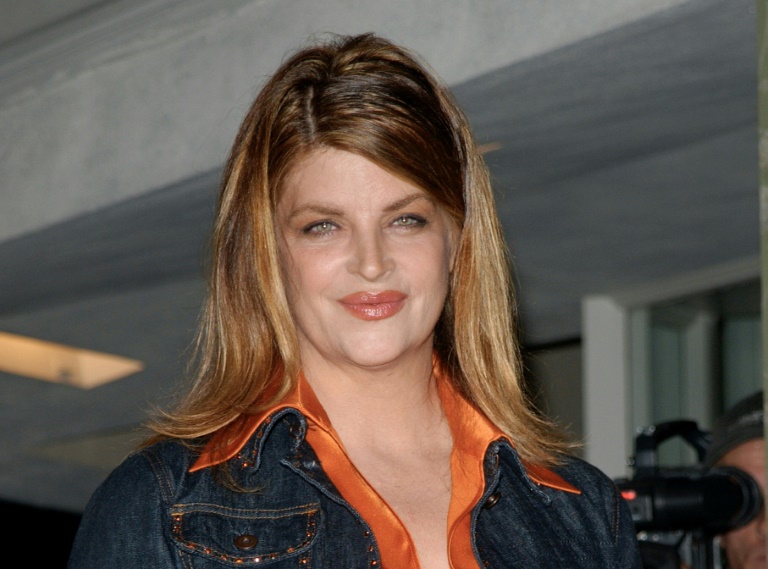
Kirstie Alley, the two-time Emmy-winning actor who starred in the hit television sitcom “Cheers”, died Monday after a battle with cancer, her family said. She was 71.

“We are sad to inform you that our incredible, fierce and loving mother has passed away after a battle with cancer, only recently discovered,” her children Lillie Price Stevenson and William True Stevenson said in a statement on Twitter.

“Our mother’s zest and passion for life, her children, grandchildren and her many animals, not to mention her eternal joy of creating, were unparalleled and leave us inspired to live life to the fullest just as she did.”

Alley rose to prominence for her role as Rebecca Howe in the NBC sitcom “Cheers” about a Boston bar, for which she received an Emmy for best lead actress in a comedy series in 1991.

She received a second Emmy for her role in the television film “David’s Mother.”

Alley also starred in the 1989 romantic comedy film “Look Who’s Talking” — as well as its two sequels — alongside John Travolta.

Travolta paid tribute to the actor Monday night, posting a photograph of a young Alley on Instagram.

“Kirstie was one of the most special relationships I’ve ever had,” Travolta said.

“I love you Kirstie. I know we will see each other again.”

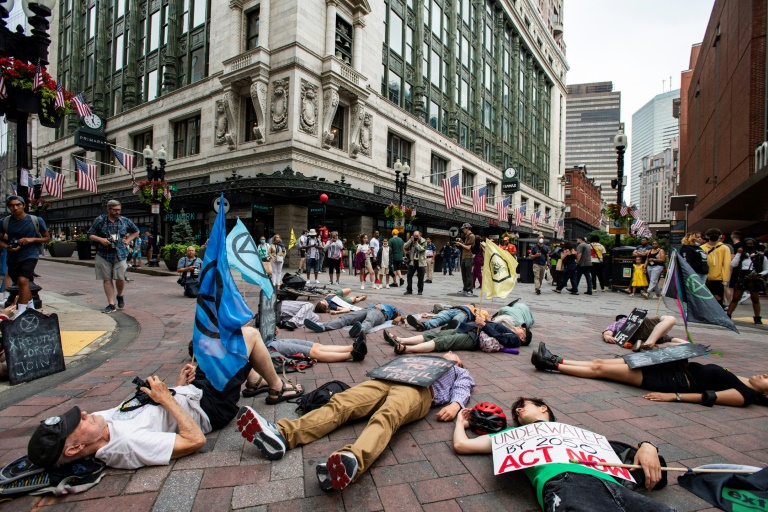
The end is nigh? Climate, nuclear crises spark fears of worst

For thousands of years, predictions of apocalypse have borne little fruit. But with dangers rising from nuclear war and climate change, does the planet need to at least begin contemplating the worst?

When the world rang in 2022, few would have expected the year to feature the US president speaking of the risk of doomsday, following Russia’s threats to go nuclear in its invasion of Ukraine.

“We have not faced the prospect of Armageddon since Kennedy and the Cuban missile crisis” in 1962, Joe Biden said in October.

And on the year that humanity welcomed its eighth billion member, UN Secretary-General Antonio Guterres warned that the planet was on a “highway to climate hell.”

In extremes widely attributed to climate change, floods submerged one-third of Pakistan, China sweat under an unprecedented 70-day heatwave and crops failed in the Horn of Africa, all while the world lagged behind on the UN-blessed goal of checking warming at 1.5 degrees Celsius (2.7 degrees Fahrenheit) above pre-industrial levels.

– Biggest risk yet of nuclear war? –

The Global Challenges Foundation, a Swedish group that assesses catastrophic risks, warned in an annual report that the threat of nuclear weapons use was the greatest since 1945 when the United States destroyed Hiroshima and Nagasaki in history’s only atomic attacks.

The report warned that an all-out exchange of nuclear weapons, besides causing an enormous loss of life, would trigger clouds of dust that would obscure the sun, reducing the capacity to grow food and ushering in “a period of chaos and violence, during which most of the surviving world population would die from hunger.”

Kennette Benedict, a lecturer at the University of Chicago who led the report’s nuclear section, said risks were even greater than during the Cuban Missile Crisis as Russian President Vladimir Putin appeared less restrained by advisors.

While any Russian nuclear strike would likely involve small “tactical” weapons, experts fear a quick escalation if the United States responds.

“Then we’re in a completely different ballgame,” said Benedict, a senior advisor to the Bulletin of the Atomic Scientists, which in January will unveil its latest assessment of the “doomsday clock” set since 2021 at 100 seconds to midnight.

Amid the focus on Ukraine, US intelligence believes North Korea is ready for a seventh nuclear test, diplomacy has been at a standstill on Iran’s contested nuclear work and tensions between India and Pakistan have remained at a low boil.

But Benedict also faulted the Biden administration’s nuclear posture review which reserved the right for the United States to use nuclear weapons in “extreme circumstances.”

“I think there’s been a kind of steady erosion of the ability to manage nuclear weapons,” she said.

– Charting worst-case climate risks –

UN experts estimated ahead of November talks in Egypt that the world was on track to warming of 2.1 to 2.9 C — but some outside analysts put the figure well higher, with greenhouse gas emissions in 2021 again hitting a record despite pushes to renewable energy.

Luke Kemp, a Cambridge University expert on existential risks, said the possibility of higher warming was getting insufficient attention, which he blamed on the consensus culture of the UN’s Intergovernmental Panel on Climate Change and scientists’ fears of being branded alarmist.

“There has been a strong incentive to err on the side of least drama,” he said.

“What we really need are more complex assessments of how risks would cascade around the world.”

Climate change could cause ripple effects on food, with multiple breadbasket regions failing, fueling hunger and eventually political unrest and conflict.

Kemp warned against extrapolating from a single year or event. But a research paper he co-authored noted that even a two-degree temperature rise would put the Earth in territory uncharted since the Ice Age.

Using a medium-high scenario on emissions and population growth, it found that two billion people by 2070 could live in areas with a mean temperature of 29 C (84.2 F), straining water resources — including between nuclear-armed India and Pakistan.

– Cases for optimism –

The year, however, was not all grim. Vaccinations helped much of the world turn the page on Covid-19, which the World Health Organization estimated in May contributed to the deaths of 14.9 million people in 2020 and 2021.

The world has seen previous warnings of worst-case scenarios, from Thomas Malthus predicting in the 18th century that food production would not keep up with population growth to the 1968 US bestseller “The Population Bomb.”

One of the most prominent current-day critics of pessimism is Harvard professor Steven Pinker, who has argued that violence has declined massively in the modern era.

Speaking after the Ukraine invasion, Pinker acknowledged Putin had brought back interstate war. But he said a failed invasion could also reinforce the positive trends.

Drawing a parallel, he said, “After the biblical Israelites abandoned human sacrifice, they kept having to take measures to prevent backsliding.”

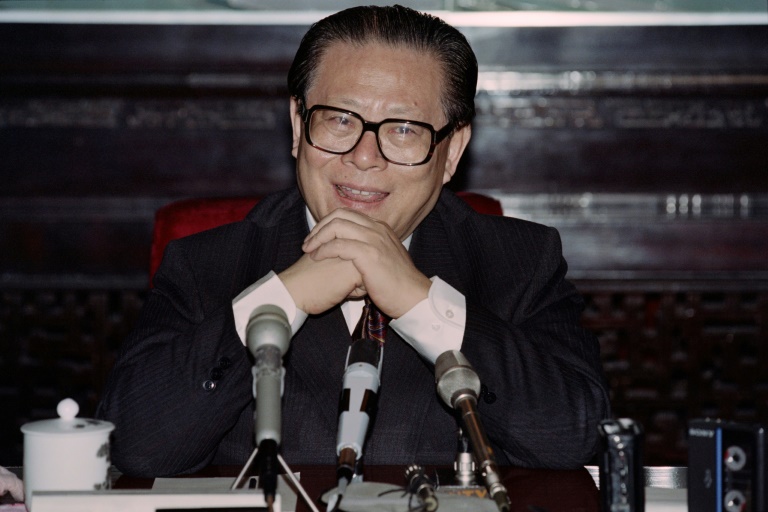
China's ruling party lauds late leader Jiang Zemin

Sirens wailed across China as the Communist Party eulogised late leader Jiang Zemin Tuesday, hailing him as a patriot who “dedicated his life” to the country. 

China’s rulers orchestrated a day of mourning across the country, with security services ensuring there were no large gatherings on the streets following rare protests in recent weeks.

Jiang died in Shanghai last Wednesday at the age of 96 and left a mixed legacy, taking power in the aftermath of the 1989 Tiananmen Square crackdown and leading China towards its emergence as a powerhouse on the global stage.

A public memorial service attended by China’s political elite began at 10:00 am (0200 GMT) in Beijing’s Great Hall of the People, bedecked with a giant portrait of the late leader as well as slogans lauding him and a massive flower display.

“He dedicated his whole life and energy to the Chinese people, dedicated his life to fighting for national independence, people’s liberation, national prosperity, and people’s happiness,” President Xi Jinping told assembled party faithful at the hall.

“The CPC Central Committee calls on the whole Party, the army and the people of all ethnic groups in China to turn grief into strength,” Xi added.

Looking frail and distraught, Jiang’s wife Wang Yeping sat in a wheelchair in the front row.

A nationwide “three-minute silence” was held as sirens sounded.

In Jiang’s hometown of Yangzhou, around 100 people gathered in front of his former residence to observe the silence after which they were swiftly dispersed by police.

Flags across the country were at half-mast as were those at Chinese government buildings overseas.

Stock markets in Shanghai and Shenzhen suspended trading for three minutes, as did the Chinese Gold and Silver Exchange in Hong Kong.

Hong Kong’s bourse suspended the display of data on external screens at its offices while senior executives observed the silence.

And in the semi-autonomous city’s harbour, hundreds of vessels honked for three minutes, while officials and government employees observed three minutes of silence.

Public entertainment in mainland China was also suspended on Tuesday, with some online games such as the popular League of Legends announcing a day’s pause.

– Mixed legacy –

Jiang leaves a controversial legacy. 

State media has hailed him as a great communist revolutionary, highlighting his part in quelling “serious political turmoil”.

But his rule also saw the repression of political opposition and religious minorities, as well as a tolerance for the widespread corruption that accompanied China’s economic rise.

Jiang died of leukaemia and multiple organ failure after medical treatments failed, according to state media. 

His body was cremated Monday in Beijing at a ceremony attended by President Xi and other top leaders, Xinhua said.

Former leader Hu Jintao — who was escorted out of a top Communist Party meeting in October in an imbroglio that grabbed global attention — also reportedly attended in his first public appearance since the incident.

– Nostalgia –

The anti-Covid lockdown protests that flared up in China last week were the most widespread public demonstrations in the country since rallies calling for political reform in 1989.

And despite Jiang’s role in helping to crush the 1989 rallies, his death has prompted nostalgia among some Chinese for a time seen as more liberal and tolerant of dissent.

“The Jiang era, while not the most prosperous era, was a more tolerant one,” one user on the Twitter-like Weibo wrote following his death.

“I have heard many criticisms of him, but the fact that he allowed critical voices to exist shows how he is worthy of praise,” wrote another.

In retirement, Jiang had become the subject of light-hearted memes among millennial and Gen Z Chinese fans, who called themselves “toad worshippers” in reference to his frog-like countenance and quirky mannerisms.

More than half a million commenters flooded CCTV’s post announcing his death on Weibo within an hour, many referring to him as “Grandpa Jiang”.

After the announcement, the websites of state media and government-owned businesses turned black-and-white, as did apps such as Alipay, Taobao and even McDonald’s China.

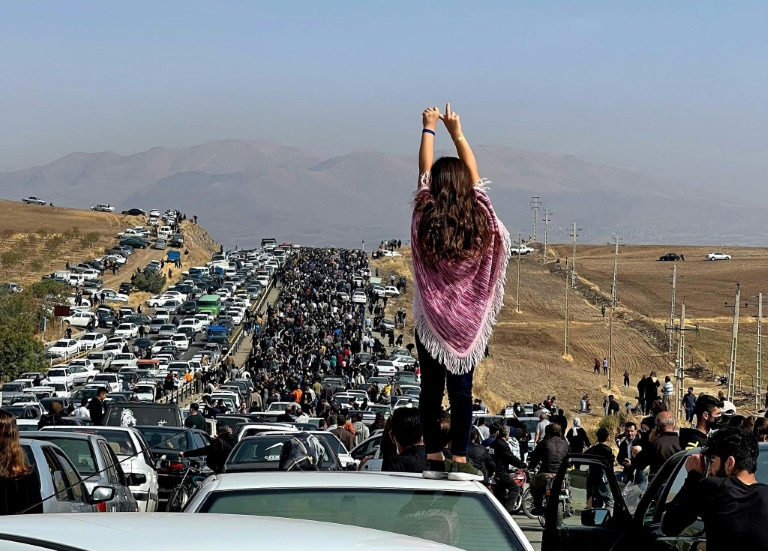
Iran protests: regime challenged by push for change

Almost three months of protests in Iran have left the clerical regime facing an existential challenge by shattering taboos and shaking its ideological pillars in a push for change that shows no sign of retreating. 

The demonstrations, which erupted in mid-September following the death of Mahsa Amini who had been arrested by the Tehran morality police, are a reflection of pent-up public anger over economic shortcomings and social restrictions, analysts say.

While there have been protests in Iran before, this movement is unprecedented due to the duration, its spread across provinces, social classes and ethnic groups and readiness to openly call for the end of the clerical regime.

Banners of supreme leader Ayatollah Ali Khamenei have been set alight, women have openly walked down streets without headscarves, and demonstrators have at times sought to challenge the security forces.

Iran, for its part, accuses hostile foreign powers of stoking what it labels “riots”, chiefly its arch-foes the United States, Israel and their allies, but also exiled Kurdish Iranian opposition groups in Iraq whom it has targeted in repeated missile and drone strikes.

In an apparent response to the protests, Iran’s prosecutor general said Saturday that the morality police had been abolished. Activists received the declaration with scepticism, given the continued legal obligation for women to wear a headscarf.

French President Emmanuel Macron, after holding a landmark meeting with exiled Iranian dissidents last month, described the movement as a “revolution” by a generation of “young women and men who have never known anything other than this regime”.

“It was very obvious from the beginning that the protests were not about reform or the morality police, but were targeting the entire regime,” said Shadi Sadr, founder of the London-based Justice for Iran group that campaigns for accountability for rights violations.

“What is happening is a fundamental challenge to the regime,” she told AFP. “They know they are facing a real threat from protesters.” 

– ‘Never more vulnerable’ –

“The mood in Iran is revolutionary,” said Kasra Aarabi, Iran programme lead at the Tony Blair Institute for Global Change, arguing there had been a growing trend of anti-regime dissent for the past half decade. 

“While they can try to suppress the protesters they cannot suppress the revolutionary mood,” he told AFP.

The Islamic republic has ruled Iran, first under revolutionary founder Ayatollah Ruhollah Khomeini and then his successor Khamenei, since ousting the more West-leaning and secular shah in 1979.

It swiftly imposed policies including sharia law and compulsory headscarves for women in public.

Rights groups accuse the regime of committing gross human rights abuses ever since, including extra-judicial killings and abductions abroad and holding foreign nationals hostage at home.

It now carries out more executions than any country other than China, according to Amnesty International. 

Norway-based group Iran Human Rights says the country has executed more than 500 people this year alone.

The Islamic republic remains at odds with Western powers over its nuclear programme, and has also spread its influence throughout the Middle East, notably through Shiite allies in Lebanon and Iraq.

Iran has been an active participant in the civil war in Syria, and backs rebels in Yemen.

International condemnation of the crackdown has — for now — buried any expectation of reviving the 2015 deal on the Iranian nuclear programme that the United States walked out of in 2018.

The regime is also active in Russia’s invasion of Ukraine, tightening relations with Moscow and supplying Russian forces with cheap and plentiful drones, which have been used to attack Kyiv and other cities.

Yet it is at home that the Islamic republic is now facing its greatest threat. 

“Never before in its 43-year history has the regime appeared more vulnerable,” Iran scholar Karim Sadjadpour, senior fellow at the Carnegie Endowment for International Peace, told the US journal Foreign Affairs.

– ‘Machinery of repression’ –

In response to the challenge posed by the protests, the authorities have mobilised what Amnesty International has described as their “well-honed machinery of repression” with a fierce crackdown that has combined the use of live fire with mass arrests.

At least 448 people, including 60 minors aged under 18, have been killed by security forces, according to IHR.

More than half of the deaths have come in areas populated by Kurdish and Baluch ethnic minorities where the protests have been particularly intense, the rights group noted.

At least 14,000 people have been arrested, according to the UN, including several prominent figures such as the rapper Toomaj Salehi who could face the death penalty if convicted.

Iran’s judiciary has already sentenced six people to death over the protests, in what IHR calls “show trials without access to their lawyers and due process”. 

It says 26 people, including three minors, are facing charges that could see them hanged.

Sadr warned it would be rash to predict the regime was on the verge of falling.

“Dismantling a regime like the Islamic republic is a very difficult task. There are pieces needed that are missing for this to succeed,” she said, pointing to a need for greater organisation among protesters and a stronger international response.

– ‘We will win’ –

Unlike when Khomeini challenged the shah from exile in the late 1970s, there is no single leader to the protest movement. 

But Aarabi said the protesters were drawing inspiration from several figures, all representing different constituencies. Most are deemed such a menace by the authorities that they have been locked up.

“These protests are not leaderless,” he said, adding the demonstrators believe “they are in the middle of a revolution and there is no going back”.

Such figures include the freedom of expression campaigner Hossein Ronaghi, who was released in November only after a two-month hunger strike, the prominent dissident Majid Tavakoli who remains in prison, and veteran women’s rights activist Fatemeh Sepehri.

“I continue to fight with the intensity of passion and hope and vitality inside Iran,” the rights campaigner Narges Mohammadi, who was in detention even before the protests, said in a message from Tehran’s Evin prison.

“And I am sure that we will win,” she said in the message relayed by her family to the European parliament. 

Invasion of Ukraine revives nuclear warfare nightmare

Banished from public consciousness for decades, the nightmare of nuclear warfare has surged back to prominence with Russia’s invasion of Ukraine, highlighting the erosion of the Cold War global security architecture.

With Moscow on the back foot in its offensive, the military stalemate has raised fears Russia could resort to its nuclear arsenal to achieve a military breakthrough.

Russia, along with Britain, China, France and the United States, are the five recognised nuclear weapons powers and permanent UN Security Council members.

“It’s the first time a nuclear power has used its status to wage a conventional war under the shadow cast by nuclear weapons,” said Camille Grand, a former NATO deputy secretary-general.

“One might have imagined that rogue states would adopt such an attitude, but suddenly it’s one of the two major nuclear powers, a member of the UN Security Council,” he told AFP, insisting the actual use of the weapons remains “improbable”.

For now, the moral and strategic nuclear “taboo” that emerged after the US bombings of Hiroshima and Nagasaki at the end of World War II in 1945 still holds.

But rhetoric has escalated massively.

Russian TV broadcasts, since the invasion of Ukraine, have repeatedly discussed nuclear strikes on Western cities like Paris or New York.

One former Russian diplomat, asking not to be named, warned that if President Vladimir Putin felt Russia’s existence threatened, “he will press the button”.

The year’s events have been a harsh wake-up call for Europe, which spent decades in a state of relative relaxation in terms of nuclear security, enjoying the so-called Cold War “peace dividend”.

Across the Atlantic, President Joe Biden warned in October of a potential “Armageddon” hanging over the world.

– Disarmament ‘in ruins’ –

“The most spectacular event of the past half century is one that did not occur,” Nobel-winning economist and strategy expert Thomas Schelling wrote in 2007.

But the framework that kept world leaders’ fingers off the button after 1945 had been crumbling for years before Putin’s order to invade.

In 2002, the United States quit the critical Anti-Ballistic Missile Treaty it had signed with the Soviet Union in 1972, which maintained the nuclear balance of power.

Other important agreements fell away in the years that followed, including the Intermediate-Range Nuclear Forces (INF) Treaty that Washington dropped in 2019, blaming Russia for not complying.

“Regarding disarmament, it’s all in ruins, apart from New Start,” Grand said, referring to the Obama-era agreement with Russia to reduce numbers of warheads, missiles, bombers and launchers.

– ‘Very dangerous crisis’ –

India, North Korea and Pakistan, along with the five recognised powers, also have nuclear weapons, while Israel is widely assumed to do so while having never officially acknowledged it.

North Korea sharply stepped up missile testing this year, continuing its pursuit of an independent nuclear deterrent that began when it quit the Non-Proliferation Treaty (NPT) in 2003.

Washington, Seoul and Tokyo all believe a seventh nuclear weapons test by Pyongyang is imminent.

The isolated dictatorship announced in September a new nuclear doctrine, making clear that it would never give up the weapons and that they could be used preemptively.

“We’re going to see a very dangerous crisis in Asia,” Chung Min Lee, a researcher at the Carnegie Endowment for International Peace, recently told a Paris conference.

Non-nuclear countries in the region fear that the protection provided by the US nuclear umbrella is fraying.

“If you imagine extended deterrence as a water balloon, today the water balloon has some critical holes and water is seeping out,” he added.

China’s nuclear arsenal is also growing, with Pentagon estimates putting it at 1,000 warheads — roughly on par with US bombs — within a decade.

And in the Middle East, the struggle to revive the 2015 nuclear deal with Iran, hobbled by its brutal repression of recent protests at home, has revived fears that Tehran could soon be a “threshold state” on the brink of building a bomb.

– Proliferation fears –

In August, a UN conference on the future of the NPT saw a joint declaration by 191 countries blocked at the last moment by Russia.

One French diplomat reported “extraordinarily aggressive nuclear rhetoric” from Moscow and “disdain” for the treaty.

“We saw a break in Russia’s attitude, which had historically been in support of the NPT,” the diplomat added.

China was “very vocal”, offering a “very crude denunciation” of the US-UK-Australia AUKUS Pacific alliance that will deliver nuclear-powered submarines to Canberra, the diplomat said.

Beijing claimed that the alliance risked further nuclear proliferation, while failing to “lift doubts about the opacity of its own nuclear doctrine or the speed at which its arsenal is growing”.

The invasion of a state that willingly gave up nuclear weapons, Ukraine, by its nuclear-armed neighbour has increased fears of proliferation.

“Today, countries like Japan or South Korea might legitimately ask whether” they need a bomb of their own, said Jean-Louis Lozier, a former head of France’s nuclear forces.

“The same is true in the Middle East of Saudi Arabia, Turkey and Egypt,” he added.

Close Bitnami banner
Bitnami