World

Stocks retreat on interest rate worries

US stocks fell on Monday as resilient economic data fuelled concerns that the Federal Reserve may not be able to relent on interest rate hikes.

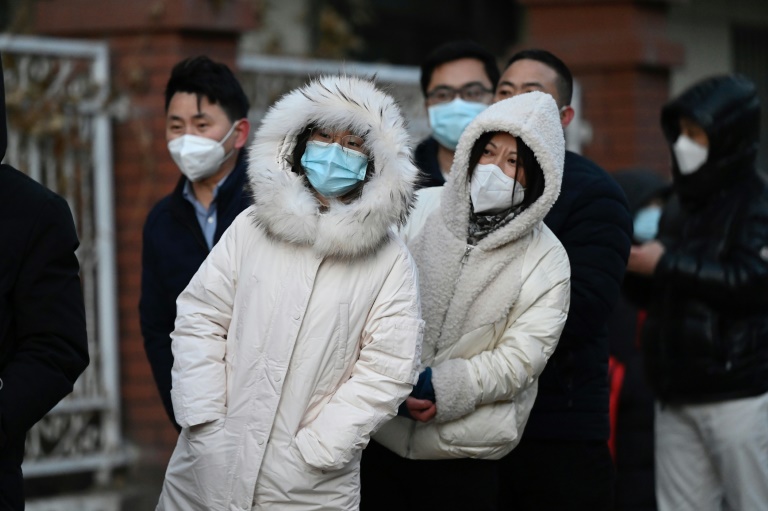
Meanwhile, world oil prices rallied more than three percent at one point on more easing of strict Covid containment measures in China which should boost demand, before turning lower as the US dollar pushed higher.

Optimism about the world’s second largest economy reopening for business didn’t carry over to European and US equity markets, where investors remain concerned that the US economy is continuing to overheat.

Friday’s jobs figures showing that the labour market is continuing to create new jobs at a strong pace was joined Monday by data showing that growth in the dominant services sector picked up last month.

That means the Fed still had plenty of work to do to get inflation down to its two-percent target, and upended investors hopes that it might be able to soon stop raising interest rates.

“If incoming data continues to remain favourable, then inflation is likely to persist longer and that may encourage the Fed to be even more reluctant to pause its hiking early in the first half of 2023,” said market analyst Fawad Razaqzada at City Index and FOREX.com.

Investors expect the Fed to hike interest rates 0.5 percentage points next week and had been hoping it might wait a bit to evaluate the impact.

The Dow was down 0.8 percent in late morning trading. 

In Europe, both Frankfurt and Paris ended the day lower, while London squeaked out a marginal gain as metals and mining firms were boosted by the China news.

– Oil jumps, then slides  –

Oil prices jumped as higher demand is expected from China after businesses reopened and testing requirements were relaxed in Beijing and other cities as the country tentatively eases out of a strict zero-Covid policy that sparked nationwide protests.

The entry into force of a price cap on Russian crude agreed by the EU, G7 and Australia came into force and the weekend decision by OPEC and its Russia-led allies to maintain oil output levels also supported prices.

“Uncertainty is coming in waves in energy markets as the choppy tides of supply and demand push up the oil price but keep a lid on big gains,” noted Susannah Streeter, senior investment and markets analyst at Hargreaves Lansdown.

The $60-per-barrel price cap aims to restrict Russia’s revenue while making sure Moscow keeps supplying the global market.

“There are expectations that there will be less crude available to buy as the $60 cap on Russia oil takes effect,” Streeter added.

The Kremlin on Monday insisted the cap would not affect Moscow’s military campaign in Ukraine.

“From the OPEC+ perspective, it can’t be easy to make reliable forecasts against that (Russia) backdrop and the constantly evolving Covid situation in China, which currently looks far more promising from a demand perspective,” said Craig Erlam, senior market analyst at OANDA trading group. 

The uncertainty was highlighted as crude gave up its gains as the day wore on and then turned lower. 

But those gains faded as the dollar rose against its main rivals, making purchases of dollar-denominated oil more expensive for consumers.

– Key figures around 1630 GMT –

New York – Dow: DOWN 0.8 percent at 34,161.25 points

EURO STOXX 50: DOWN 0.5 percent at 3,956.53

London – FTSE 100: UP 0.2 percent at 7,567.54 (close)

Frankfurt – DAX: DOWN 0.6 percent at 14,447.61 (close)

Paris – CAC 40: DOWN 0.7 percent at 6,696.96 (close)

Tokyo – Nikkei 225: UP 0.2 percent at 27,820.40 (close)

Hong Kong – Hang Seng Index: UP 4.5 percent at 19,518.29 (close)

Shanghai – Composite: UP 1.8 percent at 3,211.81 (close)

Euro/dollar: DOWN at $1.0514 from $1.0531 on Friday

Dollar/yen: UP at 136.43 yen from 134.27 yen

Pound/dollar: DOWN at $1.2188 from $1.2296

Euro/pound: UP at 86.24 pence from 85.73 pence

Brent North Sea crude: DOWN 0.7 percent at $85.01 per barrel

West Texas Intermediate: DOWN 0.9 percent at $79.26 per barrel

burs-rl/kjm
ANC says will oppose any parliament bid to oust Ramaphosa

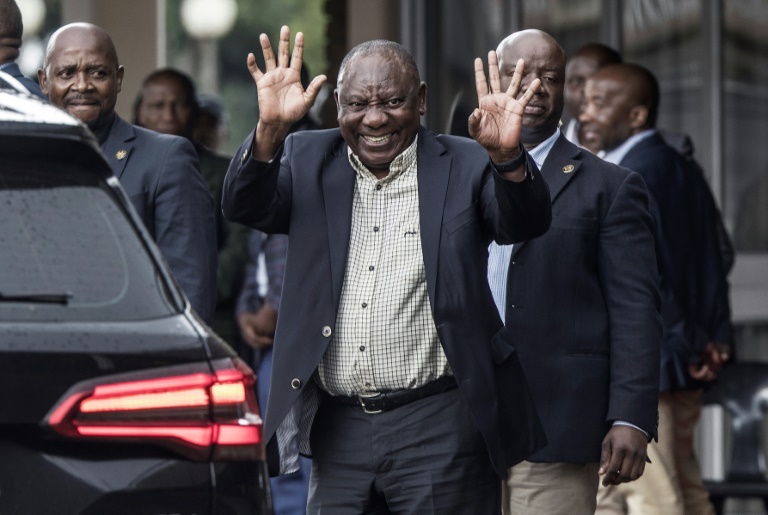
South Africa’s ruling party on Monday warned it would not back any motion at an upcoming parliamentary debate that would lead to a vote for removing President Cyril Ramaphosa, under fire over a burglary scandal.

“Should parliament proceed tomorrow, the ANC will not support that vote,” African National Congress interim secretary-general Paul Mashatile told reporters after day-long talks among party leaders.

Parliament on Tuesday is set to debate a damning report by an independent panel probing allegations that Ramaphosa concealed a huge cash theft at his farm.

The three investigators questioned the source of the cash and said Ramaphosa “may have committed” serious violations and misconduct.

Tuesday’s sitting is a step that could lead to a vote on whether to impeach — remove — Ramaphosa from office.

To initiate an impeachment vote would require a simple majority in the National Assembly, where the ANC has 230 out of 400 seats. The impeachment vote itself would need a two-thirds majority to succeed.

Mashatile said “after a long debate” the ANC’s National Executive Committee resolved to vote “against the adoption of the report,” as the president had now launched a legal bid to annul its findings.

That means “the president continues with his duties as president of the ANC and the republic,” it said.

He said the ANC however agreed that Ramaphosa must “be held accountable” by the party and that investigations underway by the police and other organs should continue.

But the “president did not offer to resign nor did the NEC ask him to resign,” he added.

Earlier Monday, Ramaphosa filed a petition to the Constitutional Court seeking to have the investigative report “reviewed, declared unlawful and set aside,” according to papers made available to the media by his spokesman.

Ramaphosa also asked for any possible impeachment process to be blocked, saying “any steps taken by the National Assembly pursuant to the report are equally unlawful and invalid.”

Chile on alert as active volcano rumbles, spits fire

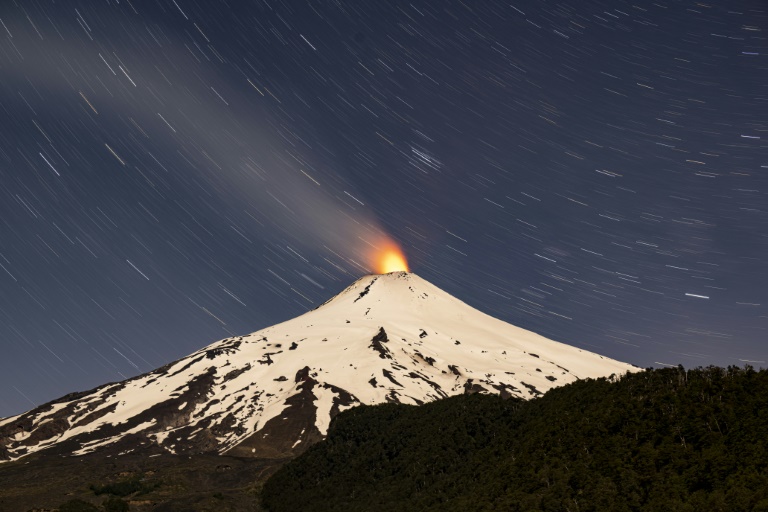
Chile’s snow-capped Villarrica volcano has been shaken by earthquakes and is belching fire, placing authorities on alert for a possible eruption in a picturesque area beloved by tourists.

Since October, the 2,847-meter (9,300-foot)-high Villarrica has been the site of gas explosions and seismic events, with pillars of fire up to 220 meters high shooting out of its lava lake.

Alvaro Amigo, the head of the National Volcanic Surveillance Network, told AFP that “while we cannot predict when the volcano will erupt, the conditions are in place,” according to daily assessments of activity at the site.

The glacier-clad volcano overlooks the city of Pucon, with a population of around 28,000 people who live just 15 kilometers (10 miles) from the peak.

The region’s lakes and lush forests are a popular tourist draw and some 10,000 visitors climb Villarrica each summer, according to official figures.

“The thing about Villarrica is the risk, because many people are living in areas that are highly exposed” to potential damage from the volcano, said geophysicist Cristian Farias.

He warned that residents had forgotten the hazards of “what Villarrica can do.”

Amigo said the volcano was dangerous because its eruptions often cause perilous volcanic rock and mud flows “and because it has a large population and infrastructure around it.”

Experts compare the current level of activity to that seen before the previous eruption in 2015, when an explosion of lava, gas and ash shot up 1.5 kilometers into the air, causing no damage before the volcano quieted down again. 

Villarrica’s last major eruption was in 1984. 

The National Geology and Mining Service issued a yellow alert in November in four towns close to the peak, meaning no one can come within 500 meters of the crater. The body has also put in place emergency evacuation plans and real-time monitoring of volcanic activity.

A yellow alert is the step before an orange alert, which indicates imminent eruption.

Mining Minister Marcela Hernando said the idea was to reassure citizens that technology and experts are constantly keeping an eye on Chile’s 45 “most important volcanoes.”

At least 27 killed in Colombia landslide: president

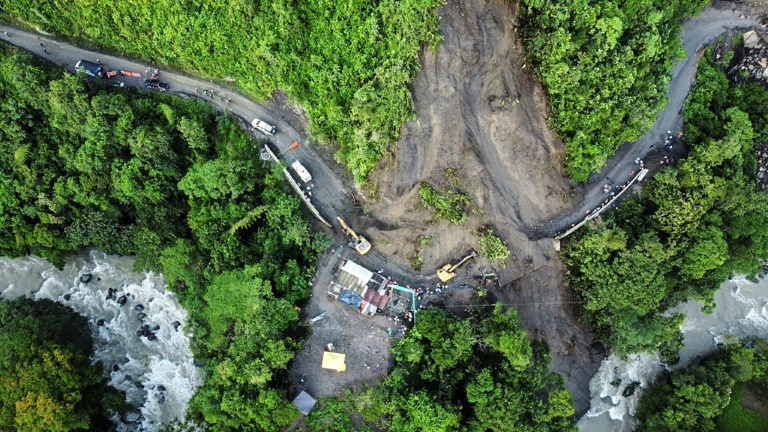
At least 27 people were killed when a landslide engulfed a road in northwest Colombia, trapping people in a bus and other vehicles, said President Gustavo Petro on Monday.

“It is with sadness that I must announce that, so far, 27 people, including three minors, have lost their lives in the tragedy” that struck on Sunday in a remote area of the Pueblo Rico municipality, Petro wrote on Twitter.

On Sunday evening, the president reported three dead, as dozens of rescue workers searched for survivors.

One survivor said the driver of the bus managed to dodge the worst of the landslide.

“Part of it was coming down and the bus was a little bit back from that. The bus driver was backing up when it all came crashing down,” Andres Ibarguen told radio station Lloro Stereo.

The bus had set out from the city of Cali with 25 passengers, civil defense officials said.

The rainy season that began in August is Colombia’s worst in 40 years, according to the government, causing accidents that have left more than 270 people dead.

Sudan's military, civilian factions sign deal seeking to end crisis

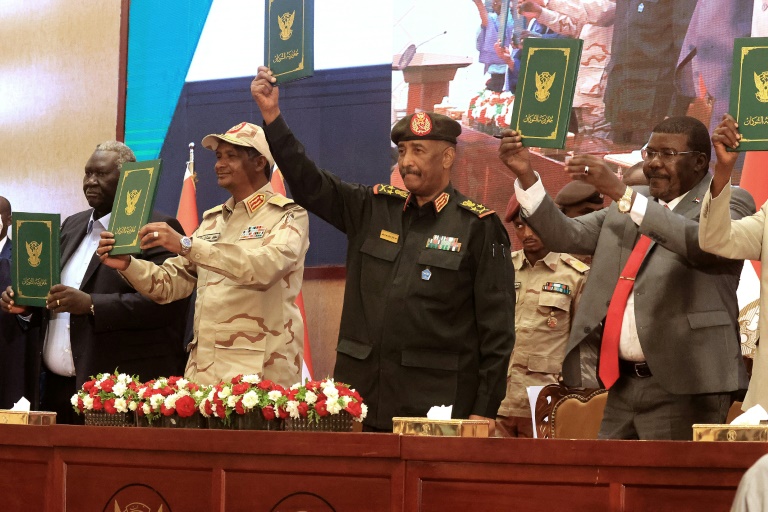
Sudan’s military and civilian leaders signed Monday an initial deal aimed at ending a deep crisis caused by last year’s military coup, prompting sceptical protesters to cry betrayal.

Army chief Abdel Fattah al-Burhan seized power in October 2021, derailing a rocky transition to civilian rule that began after the 2019 ouster of veteran autocrat Omar al-Bashir. 

The past year has seen near-weekly protests and a crackdown that pro-democracy medics say has killed at least 121, a spiralling economic crisis exacerbated by donors slashing funding, and a resurgence of ethnic violence in several remote regions.

Divisions among civilian groups have deepened since the coup, with some urging a deal with the military while others insist on “no partnership, no negotiation”.

The deal was signed by Burhan, paramilitary commander Mohamed Hamdan Dagalo and multiple civilian groups, most notably the Forces for Freedom and Change (FFC) — the main civilian faction that was ousted in the coup.  

As the key players put pens to paper, hundreds of citizens rallied in Khartoum to protest against the deal, setting fire to tyres, erecting barricades and facing down water cannons.

“The settlement is betrayal” and the FFC “sold our blood,” demonstrators cried. 

“We reject this deal as it overlooked street demands for justice for the people killed since the coup,” said protester Mohamed Ali.

If the deal plays out as planned, the civilian signatories will agree on a prime minister who will steer the country through a 24-month transition.

– Thorny issues ahead –

UN special representative Volker Perthes said the signing was “a culmination of the sustained efforts of Sudanese stakeholders over the past year to find a solution to the political crisis and restore constitutional order”.

The initial deal was described as “welcome” by the United States and European Union in a joint statement from the “Friends of Sudan” group, which also included Britain, Canada, France, Germany, Japan, Norway and Saudi Arabia.

UN High Commissoner for Human Rights Volker Turk hailed the accord as an “important first step toward a political agreement.” 

During the signing ceremony, Dagalo reiterated the military’s purported commitment to exit the political scene, saying “it is essential to build a sustainable democratic regime”. 

Other signatories included the Islamist Popular Congress Party, a faction of the Democratic Unionist Party and some ex-rebel groups who signed a 2020 peace deal.

The agreement — based on a proposal by the Sudanese Bar Association — was negotiated in the presence of officials from the UN, Western diplomats as well as Saudi Arabia and the United Arab Emirates, according to the FFC. 

Perthes urged Sudanese factions to “immediately” start the second phase to resolve the outstanding issues and reach a comprehensive deal. 

However, that part is far thornier, with observers questioning whether the military would be willing to give up economic interests — as stipulated — and wider powers that it views as its privileged domain.

Phase one of the deal “is a very low level commitment on Burhan’s part… allowing him to survive” politically, said Kholood Khair founder of the Confluence Advisory, a Khartoum-based think-tank.

But the signatories will likely face “a real political crisis as they start talking in earnest about security sector reforms, transitional justice (and) financial accountability,” she added. 

Monday’s signing comes months after Burhan pledged that the military would step aside and make way for factions to agree on a civilian government. 

Some of the former rebels who signed peace deals with Sudan in 2020 also voiced their opposition to Monday’s agreement.

Mohamed Zakaraia, spokesman for the ex-rebel Justice and Equality Movement, told AFP that it “will bring about dire consequences and further complicate the political scene”.

'A dirty game': Netflix teases new clips of Harry and Meghan series

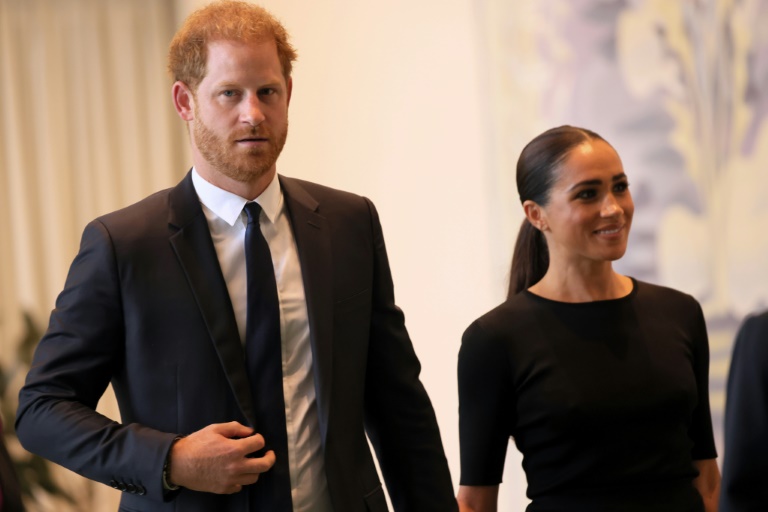
A new Netflix trailer released Monday for an upcoming six-part docuseries on Prince Harry and wife Meghan risked further deepening their feud with his family, with the royal calling life within it a “dirty game”.

The British royal family is bracing for a potentially highly damaging account of the couple’s grievances that led them to quit frontline duties and move to the United States.

In the clips, posted on Twitter, Harry accuses the family of using the press to undermine them while one of the couple’s supporters calls it a tale of “hatred” and “race”.  

The trailer opens with happy footage from the couple’s courtship, engagement and wedding, before Harry says “everything changed.”

“There’s a hierarchy of the family,” the former British army captain goes on to say of the institution. 

“There’s leaking and there’s also planting of stories.

“It’s a dirty game,” he concludes.

Volume one of the series will be aired on Thursday, with the second instalment arriving on the streaming service next week.

Netflix released the first trailer last week, coinciding with Harry’s brother William’s first trip to the US as Prince of Wales and heir to the throne.

That minute-long teaser featured intimate photographs of the couple, interspersed with a clip of Harry saying: “No one sees what’s going on behind closed doors” and images of Meghan wiping her eyes.

The second trailer suggests that more direct accusations will be levelled against the family, along with criticisms about how it treats women who marry into it.

Clips of Princess Diana are accompanied by audio of her son Harry highlighting “the pain and suffering of women marrying into this institution, the feeding frenzy”.

Meghan then appears to accuse the family of failing to protect her, before Harry says “I was terrified, I didn’t want history to repeat itself.”

Diana died in 1997 in a high-speed car crash as her vehicle was followed by paparazzi.

The prince signs off with the message “no one knows the full truth, we know the full truth.”

The family is also braced for more revelations from Harry’s autobiography “Spare”, which is due out in January.

The timing could barely be worse for the family after William was last week forced to part ways with one of his godmothers after she used racially charged language to a black British woman at a palace reception.

Harry and Meghan, a mixed-race former television actor, cited racism in the royal household as one of the reasons for their acrimonious departure almost three years ago.

Russia hits Ukraine grid in latest fatal barrage

Ukraine was targeted on Monday by a new wave of fatal Russian missiles, the latest attack to disrupt power across the country and pile pressure on its embattled critical infrastructure as temperatures plunge.

The attacks came just after Moscow shrugged off a Western-imposed price cap on its oil exports, warning that the move would not disrupt its military campaign in Ukraine.

Russian state-run media at the same time released footage of President Vladimir Putin driving a Mercedes car across the Crimea bridge that connects the annexed peninsula to the Russian mainland and was damaged in blast last month.

The head of the central Zaporizhzhia region, Oleksandr Starukh, said that Russian missiles had left two people dead. Officials in regions in the east and south announced disruptions to water, electrical and heating services.

“There are already strikes on energy infrastructure facilities and subsequently emergency power outages,” the national electricity provider Ukrenergo said in a statement.

Officials in the eastern region of Sumy and the southern regions of Odessa and Mykolaiv said residents were being subjected to disruptions in water, power or heating supplies as a result of the strikes.

Nearly half the country’s energy system has been damaged after months of systemic strikes on power infrastructure. Ukrainians have frequently been left in the cold and dark for hours at a time when the outdoor temperature has dropped below zero. 

“Charge power banks. Prepare reserves of water. And heads of enterprises of all forms of ownership: let people go home,” said the head of Kryvyi Rig military administration, Oleksandr Vilkul.

– Moscow vows to keep fighting –

The $60-per-barrel price cap agreed by the European Union, G7 and Australia aims to restrict Russia’s revenue while making sure Moscow keeps supplying the global market.

“Russia’s economy has all the necessary potential to fully meet the needs and requirements of the special military operation,” Kremlin spokesman Dmitry Peskov told reporters, using Moscow’s term for the Ukraine offensive.

“These measures will not affect this,” he said.

Russia “will not recognise” the measures, which amounted to “a step towards destabilising the global energy markets” and would “change” oil prices, he added.

The cap is the latest in a number of measures spearheaded by Western countries and introduced against Russia — the world’s second-largest crude oil exporter — after Moscow sent troops into Ukraine over nine months ago.

The measure comes on top of an EU embargo on seaborne deliveries of Russian crude oil that came into force on Monday.

The embargo will prevent maritime shipments of Russian crude to the European Union, which account for two thirds of the bloc’s oil imports from Russia, potentially depriving Moscow of billions of euros.

The oil price cap aims to ensure that when Russia sells its crude to non-EU countries, who are not bound by the embargo, it is not sold at a price higher than $60 a barrel.

The market price of a barrel of Russian Urals crude is currently around $65 dollars, just slightly higher than the $60 cap agreed, suggesting the measure may have only a limited impact in the short term.

Kyiv, after initially welcoming the price ceiling, later said it would not do enough damage to Russia’s economy. 

– ‘Impossible to prepare’ –

Ukraine’s President Volodymyr Zelensky this weekend described the move as “weak”.

He added that Russia had already caused “huge losses” by “deliberately destabilising” the global energy market.

The G7 nations — Britain, Canada, France, Germany, Italy, Japan and the United States — along with Australia have already said they are prepared to adjust the price ceiling if necessary.

In recent months, gas prices have skyrocketed since Moscow halted deliveries to the EU in suspected retaliation for Western sanctions and the bloc struggled to find alternative energy suppliers. 

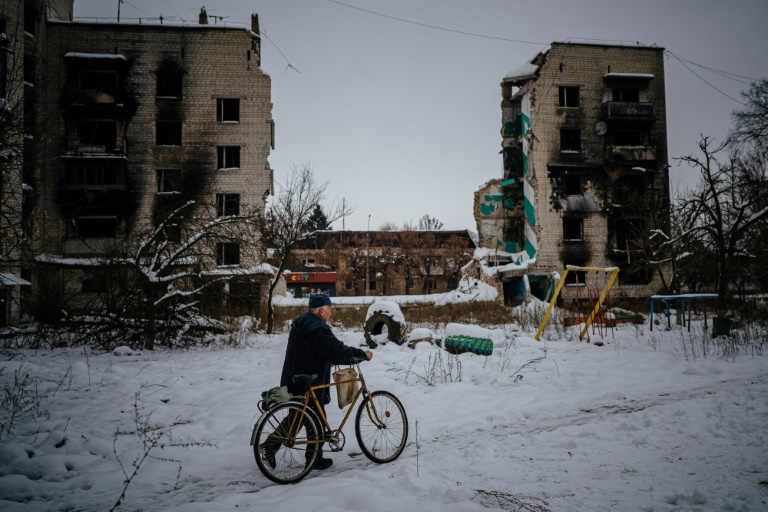
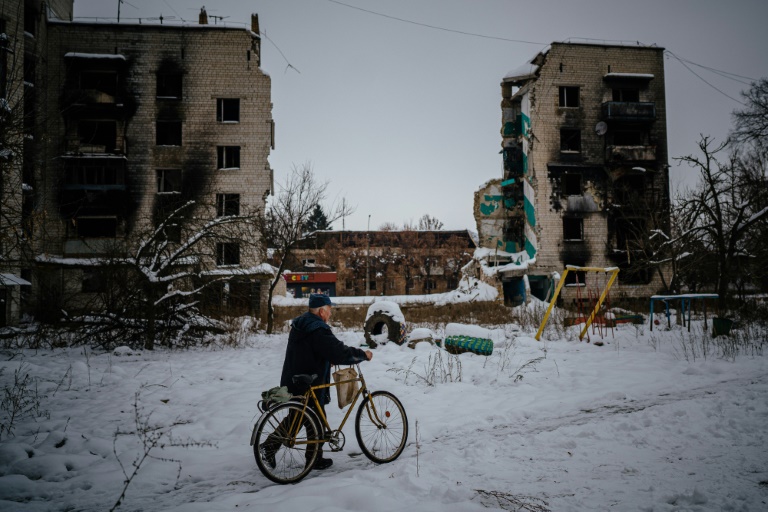
In the Ukrainian town of Borodianka outside the capital, Kyiv, where snow has already coated the ground, locals recently gathered around old wood-fired stoves inside tents to keep warm and cook food during the blackouts.

“We are totally dependent on electricity… One day we had no electricity for 16 hours,” Irina, who had come to the tent with her child, told AFP. 

Volunteer Oleg said it was hard to say how Ukraine would manage in the coming winter months. 

“It is impossible to prepare for this winter because no-one has lived in these conditions before,” he said. 

Russia hits Ukraine grid in latest fatal barrage

Ukraine was targeted on Monday by a new wave of fatal Russian missiles, the latest attack to disrupt power across the country and pile pressure on its embattled critical infrastructure as temperatures plunge.

The attacks came just after Moscow shrugged off a Western-imposed price cap on its oil exports, warning that the move would not disrupt its military campaign in Ukraine.

Russian state-run media at the same time released footage of President Vladimir Putin driving a Mercedes car across the Crimea bridge that connects the annexed peninsula to the Russian mainland and was damaged in blast last month.

The head of the central Zaporizhzhia region, Oleksandr Starukh, said that Russian missiles had left two people dead. Officials in regions in the east and south announced disruptions to water, electrical and heating services.

“There are already strikes on energy infrastructure facilities and subsequently emergency power outages,” the national electricity provider Ukrenergo said in a statement.

Officials in the eastern region of Sumy and the southern regions of Odessa and Mykolaiv said residents were being subjected to disruptions in water, power or heating supplies as a result of the strikes.

Nearly half the country’s energy system has been damaged after months of systemic strikes on power infrastructure. Ukrainians have frequently been left in the cold and dark for hours at a time when the outdoor temperature has dropped below zero. 

“Charge power banks. Prepare reserves of water. And heads of enterprises of all forms of ownership: let people go home,” said the head of Kryvyi Rig military administration, Oleksandr Vilkul.

– Moscow vows to keep fighting –

The $60-per-barrel price cap agreed by the European Union, G7 and Australia aims to restrict Russia’s revenue while making sure Moscow keeps supplying the global market.

“Russia’s economy has all the necessary potential to fully meet the needs and requirements of the special military operation,” Kremlin spokesman Dmitry Peskov told reporters, using Moscow’s term for the Ukraine offensive.

“These measures will not affect this,” he said.

Russia “will not recognise” the measures, which amounted to “a step towards destabilising the global energy markets” and would “change” oil prices, he added.

The cap is the latest in a number of measures spearheaded by Western countries and introduced against Russia — the world’s second-largest crude oil exporter — after Moscow sent troops into Ukraine over nine months ago.

The measure comes on top of an EU embargo on seaborne deliveries of Russian crude oil that came into force on Monday.

The embargo will prevent maritime shipments of Russian crude to the European Union, which account for two thirds of the bloc’s oil imports from Russia, potentially depriving Moscow of billions of euros.

The oil price cap aims to ensure that when Russia sells its crude to non-EU countries, who are not bound by the embargo, it is not sold at a price higher than $60 a barrel.

The market price of a barrel of Russian Urals crude is currently around $65 dollars, just slightly higher than the $60 cap agreed, suggesting the measure may have only a limited impact in the short term.

Kyiv, after initially welcoming the price ceiling, later said it would not do enough damage to Russia’s economy. 

– ‘Impossible to prepare’ –

Ukraine’s President Volodymyr Zelensky this weekend described the move as “weak”.

He added that Russia had already caused “huge losses” by “deliberately destabilising” the global energy market.

The G7 nations — Britain, Canada, France, Germany, Italy, Japan and the United States — along with Australia have already said they are prepared to adjust the price ceiling if necessary.

In recent months, gas prices have skyrocketed since Moscow halted deliveries to the EU in suspected retaliation for Western sanctions and the bloc struggled to find alternative energy suppliers. 

In the Ukrainian town of Borodianka outside the capital, Kyiv, where snow has already coated the ground, locals recently gathered around old wood-fired stoves inside tents to keep warm and cook food during the blackouts.

“We are totally dependent on electricity… One day we had no electricity for 16 hours,” Irina, who had come to the tent with her child, told AFP. 

Volunteer Oleg said it was hard to say how Ukraine would manage in the coming winter months. 

“It is impossible to prepare for this winter because no-one has lived in these conditions before,” he said. 

Apple faces critics over its privacy policies

Apple presents itself as a white knight on the subject of privacy, but critics say its own advertising ambitions are built on anti-competitive practices. 

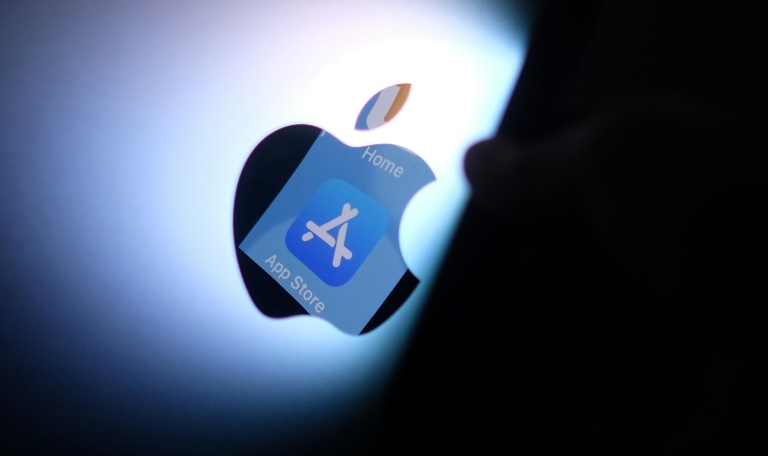
Two developers going by the name ‘Mysk’ claimed last month that Apple was tracking users’ every tap on the App Store, with no way of disabling the function. 

A class action lawsuit was subsequently filed in California, claiming that Apple’s “promises regarding privacy are utterly false”. 

The company has not commented and did not respond to questions from AFP. 

But Apple has made protection of user privacy central to its image, and long opposed ads on its platforms. 

It threw a spanner in the works of the surveillance capitalism system last year when it gave users the power to easily block apps from collecting data on them. 

That move was a nightmare for many apps — from giants like Facebook to small start-ups — who use that data to sell targeted ads. 

Meta, which owns Facebook and Instagram, warned in early 2022 that the change could shave $10 billion of its revenue for the year, and it has no doubt played a part in its tanking share price (down 38 percent on the year) and decision to axe 11,000 staff last month. 

Meta CEO Mark Zuckerberg said last week that Apple’s approach was a “conflict of interest” since it was designed to undermine rivals. 

“It’s problematic for one company to be able to control what app experiences end up on a device,” he said. “(The) vast majority of profits in mobile ecosystem go towards Apple.”

– European cases –

The first legal pushback against Apple was launched in France, where an association of online advertisers and content publishers filed a complaint with the Competition Authority.  

The judges dismissed the idea that Apple’s rules were inherently anti-competitive, but are still investigating whether Apple is applying those rules more favourably for its own apps compared to others. 

French app developers have also lodged a case with privacy watchdog CNIL (the National Commission for Technology and Freedoms). 

Similar cases have since been launched in Germany and Poland. 

Apple refuses to say how much it makes from advertising on its App Store. 

Analysts at Wedbush Securities estimate it is $4.5 billion annually, and this could rise to $30 billion if it starts putting ads on its Maps and Apple TV apps, rivalling the big players of Google, Meta and Amazon. 

For advertisers, waiting for a legal response is painful. 

“It’s not going fast enough considering the very strong impacts on competition,” said Nicolas Rieul, president of France’s Digital Alliance, which represents online marketers. 

Defendant slams security at Brussels attacks trial

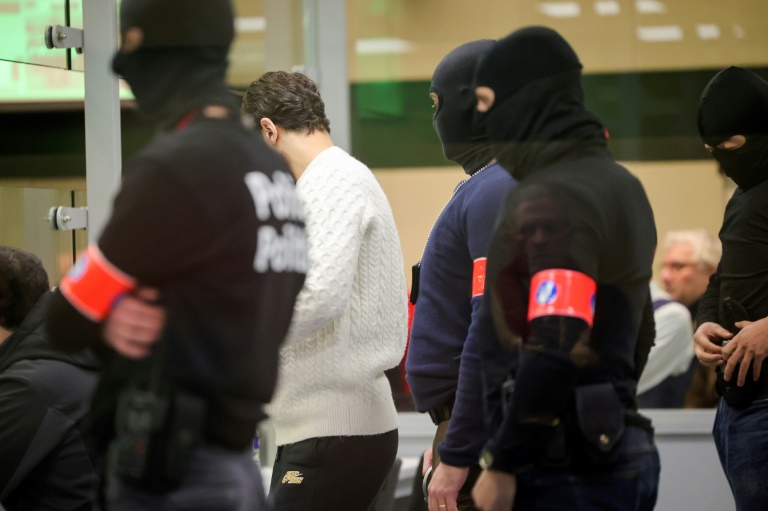
A defendant on trial over the 2016 bombings in Brussels on Monday charged in court that the suspects were being “humiliated” by draconian security measures and threatened to remain silent unless conditions improved.

Ten men are on trial accused of directing or aiding suicide attacks on Brussels airport and a metro station near EU headquarters that killed 32 people, and which were claimed by the Islamic State (IS) extremist group.

Mohamed Abrini, a Belgian-Moroccan who decided against blowing himself up at the airport, asked to speak after the presiding judge said Belgium’s largest-ever criminal trial should not be “state vengeance”.

Evidential hearings began on Monday after jury selection kicked off last week.

“We are being humiliated!” Abrini told the court. “I have been subjected to vengeance for seven years,” he added.

He described the conditions of his transfer to the court as “pitiful,” marked by strip searches, blindfolds, and “deafening satanic music.”

He warned: “Things must change, otherwise I will stay silent until the end of the trial.”

Defence lawyers also criticised security conditions for the defendants.

“Every morning they examine the folds of my client’s anus. Is that dignified? What is going to come out of my client’s anus? A revolver?” said Jonathan De Taye, a lawyer representing another defendant, Ali El Haddad Asufi.

He asked that the justice ministry ease the measures.

The defendants are due to take the stand starting on December 19 and victims’ testimony is expected to begin mid-January.

Hundreds of travellers and transport staff were maimed in the March 22, 2016 attacks and six years on many victims, relatives and rescuers remain traumatised.

Investigators believe that the same Belgium-based cell also carried out the November 13, 2015 Paris attacks, which was also claimed by IS and which killed 130 people.

Five of the nine defendants in the dock in Belgium have already been convicted separately in France, including prime suspect Abdeslam Salah. 

He is serving life without parole in France and faces a further sentence in Belgium.

A tenth man is being tried in absentia, believed to have been killed in Syria.

Close Bitnami banner
Bitnami