World

Oil jumps on China easing Covid restrictions, Russia price cap

World oil prices rallied Monday after more easing of strict Covid containment measures in China and as a price cap on Russian crude agreed by the EU, G7 and Australia came into force.

Main contracts Brent North Sea crude and WTI advanced more than two percent, also after OPEC and its Russia-led allies decided at a weekend meeting to maintain oil output levels.

European and US stock markets traded mostly lower after Friday’s forecast-busting US jobs report that dented hopes that the Federal Reserve would take a softer approach to hiking interest rates in its battle against sky-high inflation.

In currency trading, the dollar was mixed against its main rivals while China’s yuan was among the best performers, breaking below the seven per dollar level for the first time in almost three months.

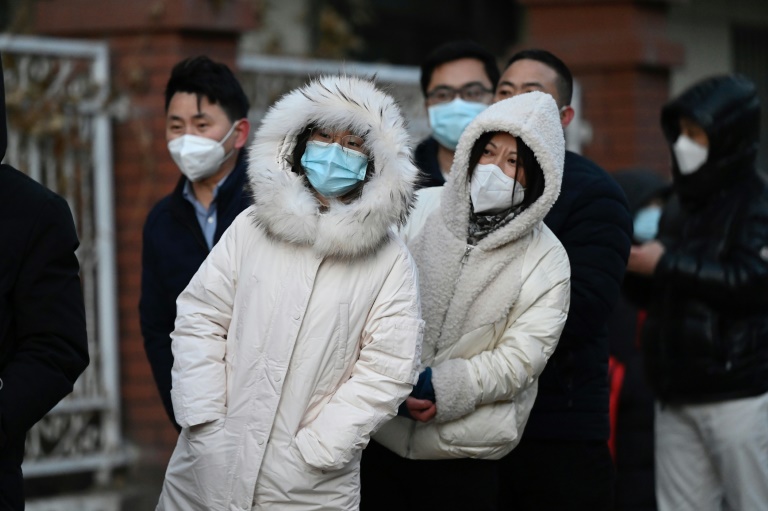
Higher oil demand is expected from China after businesses reopened and testing requirements were relaxed in Beijing and other cities as the country tentatively eases out of a strict zero-Covid policy that sparked nationwide protests.

It has also seen major cities including Shanghai locked down for months, a decision blamed for a sharp slowdown in economic growth this year that sent shudders through financial markets.

“Uncertainty is coming in waves in energy markets as the choppy tides of supply and demand push up the oil price but keep a lid on big gains,” noted Susannah Streeter, senior investment and markets analyst at Hargreaves Lansdown.

“There are expectations that there will be less crude available to buy as the $60 cap on Russia oil takes effect.”

– Russia shrugs it off –

The Kremlin on Monday insisted the cap would not affect Moscow’s military campaign in Ukraine.

The $60-per-barrel price cap aims to restrict Russia’s revenue while making sure Moscow keeps supplying the global market.

“From the OPEC+ perspective, it can’t be easy to make reliable forecasts against that (Russia) backdrop and the constantly evolving Covid situation in China, which currently looks far more promising from a demand perspective,” said Craig Erlam, senior market analyst at OANDA trading group. 

Major oil-producing countries led by Saudi Arabia and Russia on Sunday agreed to maintain their current output levels in a climate of uncertainty.

The prospect of China, the world’s number-two economy, kicking back into gear helped traders overcome data on Friday showing far more jobs than expected were created in the United States in November.

A big jump in wages added to concerns that the economy remained hot, meaning the Fed still had plenty of work to do to get inflation down to its two percent target.

– Key figures around 1430 GMT –

Brent North Sea crude: UP 2.6 percent at $87.81 per barrel

West Texas Intermediate: UP 2.8 percent at $82.25 per barrel

London – FTSE 100: UP 0.4 percent at 7,586.67 points

Frankfurt – DAX: DOWN 0.7 percent at 14,432.17

Paris – CAC 40: DOWN 0.7 percent at 6,694.95

EURO STOXX 50: DOWN 0.5 percent at 3,957.89

New York – Dow: DOWN 0.6 percent at 34,208.87

Tokyo – Nikkei 225: UP 0.2 percent at 27,820.40 (close)

Hong Kong – Hang Seng Index: UP 4.5 percent at 19,518.29 (close)

Shanghai – Composite: UP 1.8 percent at 3,211.81 (close)

Euro/dollar: UP at $1.0562 from $1.0531 on Friday

Dollar/yen: UP at 135.82 yen from 134.27 yen

Pound/dollar: DOWN at $1.2248 from $1.2296

Euro/pound: UP at 86.19 pence from 85.73 pence

burs-rl/lth
Guinea trial adjourned after ex-dictator pleads ill health

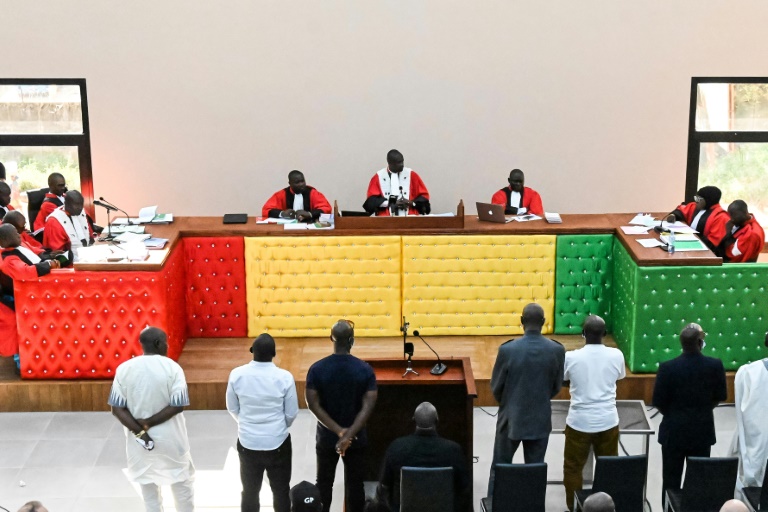
Proceedings in a trial over a 2009 massacre in Guinea were adjourned for a week on Monday after former dictator Moussa Dadis Camara said he was too ill to give testimony.

Survivors of the bloodbath and relatives of the dead had been eagerly awaiting the moment when Camara would take the stand.

But the former military ruler, who appeared at the bar in civilian clothes and walking with some difficulty, said he was unwell.

“With all the respect that I have for your distinguished tribunal, I have already informed the director of the penitentiary, the head doctor of the penitentiary, (that) I have been ill for some time,” Camara said.

He said he felt “completely weak, from malaria I caught”.

“I’m not above the law but quite sincerely I absolutely think that I can’t (testify) right now.”

Camara and 10 other former military and government officials are accused over the killing of 156 people and the rape of at least 109 women by pro-junta forces at a political rally in a Conakry stadium in September 2009.

They face charges ranging from murder to sexual violence, kidnappings, arson and looting. Camara himself is charged with “personal criminal responsibility and command responsibility.”

Chief judge Ibrahima Sory Tounkara said, “The court cannot force you to say or do something that you do not wish to do… If you say that you cannot give testimony, the court acknowledges this.”  

“You have a week, Mr. Camara,” he said, adjourning the trial until December 12.

Camara, at the time an unknown captain in the army, seized power in December 2008 shortly after the death of Guinea’s second post-independence president, General Lansana Conte, who had ruled for 24 years.

In December 2009, Camara was wounded in the head in an attempted assassination and headed to Morocco for medical treatment. 

He fled into exile in Burkina Faso, where he was indicted in July 2015 by Guinean magistrates for his alleged role in the stadium massacre.

The 58-year-old former strongman was detained on September 27, a day before the long-awaited trial began in a purpose-built court in the capital Conakry.

UK warns British Museum over Parthenon Marbles

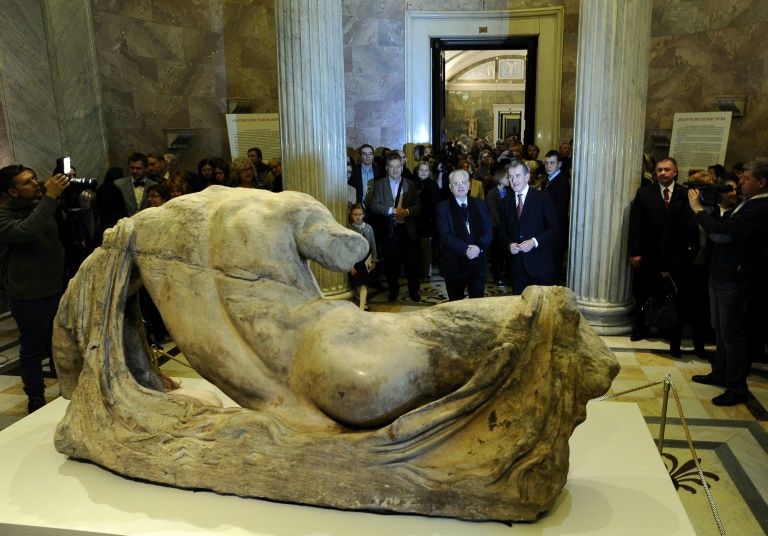
The UK government Monday stressed the British Museum is legally forbidden from breaking up its vast collection, after a report said it could possibly hand the Parthenon Marbles back to Greece.

The ancient sculptures were taken from the Parthenon temple in Athens in the early 19th century by British diplomat Thomas Bruce, the earl of Elgin.

Secret talks have been taking place between museum chair George Osborne — who is a former UK finance minister — and Greek Prime Minister Kyriakos Mitsotakis for a year, the newspaper Ta Nea reported in Athens on Saturday.

The talks about the marbles’ “possible return” are in an “advanced stage”, it said.

The British Museum’s trustees are free to talk to whom they want, Prime Minister Rishi Sunak’s official spokesman told reporters in response.

But he stressed: “We have no plans to change the law, which prevents removing objects from the museum’s collections, the British Museum’s collections, apart from certain circumstances. 

“Our position on that hasn’t changed,” the spokesman said.

Under the 1963 British Museum Act, which updated previous legislation, the museum can only sell or give away items from its collection under three limited conditions.

They include if the trustees decide that “the object is unfit to be retained in the collections of the Museum and can be disposed of without detriment to the interests of students”.

Sunak’s spokesman refused to say if the museum might be able to seek a special licence from the government to break up the so-called Elgin Marbles collection.

The British Museum says its entire collection stretches to more than eight million objects, and only about 80,000 of them are on public display at any one time. 

They include many items now considered by other countries as loot taken by builders of the British Empire, and the government has long been wary of setting a precedent with the marbles.

In a statement on Saturday, the museum said: “We operate within the law and we’re not going to dismantle our great collection, as it tells a unique story of our common humanity”.

But it also said it wanted “a new Parthenon partnership with Greece”.

Britain insists the marbles were legally taken by Lord Elgin when he directed workers to strip entire friezes from the Parthenon.

Elgin sold the marbles to the government, which in 1817 passed them on to the British Museum. Greece maintains they were stolen and has long campaigned for their return.

Nigeria train resumes eight months after deadly attack

Nigeria on Monday resumed a train service linking the capital with a northern city, eight months after it was suspended following one of the country’s most high-profile attacks.

Gunmen with explosives on March 28 blew up the tracks and assaulted the train travelling between Abuja and Kaduna and opened fire, killing eight people, wounding 26 and taking an unspecified number of passengers hostage.

The hostages were released in batches following negotiations with their captors who were believed to have collected huge ransoms from their families. 

An AFP reporter at the railway station in Abuja on Monday said the train departed the nation’s capital at around 10:00 am (0900 GMT) for the two-hour journey to Kaduna.

Passengers were few — only occupying one-third of the train’s capacity — but excited that the service was back after eight months.

They were equally worried about security.

“I was just waiting for the commencement of this train service again, so I was so happy to be here today,” said passenger Ganiyat Adesina, a 50-year-old university professor.

She had arrived early at the station to beat the gridlock on the road.

“Just like 30 minutes after my arrival, we saw a team of military men with two armoured tanks and other vehicles — about five of them parading all these places,” she added.

“This is what I’m actually expecting the federal government to do.”

She said moving between Abuja and Kaduna had been “very stressful for people and for myself, I have to even stop going to Kaduna for the last eight months”.

Ayodeji Othman was happy “the train services are resuming and it’s been a very long time that we’ve been waiting for this.”

The 30-year-old passenger told AFP he had not travelled to Kaduna since the attack “because of the road condition as well as the security issues on the road, kidnapping and every other thing”.

Police said they had deployed personnel and equipment to protect the passengers and secure the tracks.

The Nigerian Railway Corporation — operators of the train — had planned to restart the Abuja-Kaduna service much earlier, but the families of the hostages insisted on their release first.

They were also concerned about the safety of passengers on the route.

– Security challenges –

The Abuja highway has been repeatedly attacked by gunmen who kidnap passengers, forcing travellers to opt for the train.

President Muhammadu Buhari, who steps down after a February election, sees the development of the railway as key to his infrastructure programmes.

The Kaduna train attack was one of several major incidents this year underscoring the challenge facing Nigeria’s overstretched security forces.

The military is battling a 13-year jihadist insurgency in the northeast, criminal militias in the northwest and separatist tensions in the country’s southeast.

The security challenge is a major issue for Buhari’s successor ahead of the presidential ballot. 

Ghana offers local debt swap as part of IMF talks

Ghana asked investors to exchange around $9 billion in domestic debt for new bonds on Monday to ease a crunch in payments as the government negotiates an IMF bailout during its worse economic crisis in decades.

The West African state is in talks for up to $3 billion in credit from the International Monetary Fund (IMF) to help shore up its public finances.

Inflation is running at more than 40 percent and the national currency, the cedi, has lost 50 percent in value this year, helping to push up debt by $6 billion in 2022.

As part of IMF negotiations, Ghana’s government is seeking to make its debt more sustainable after facing warnings about the risks of default.

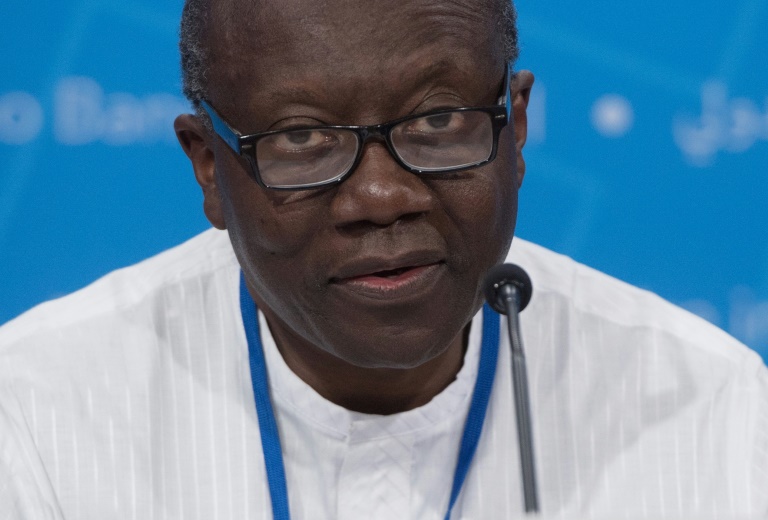
Finance Minister Kenneth Ofori-Atta said the debt exchange starting Monday would seek to exchange around 137 billion cedis or $9.7 billion in current debt for four new bonds maturing between 2027 and 2037.

“This is a key requirement to allow Ghana’s economy to recover as fast as possible from this crisis. This is also a key requirement to secure IMF support,” he told a press briefing.

A foreign debt restructuring programme would be presented later, he said.

Current debt servicing payments are absorbing more than half of the government’s revenues and 70 percent of its tax revenues, pressuring government spending.

With the debt operation and IMF deal to be concluded soon, the minister said he expected the economy to stabilise next year and inflation to return to single digits.

Ghana, a top cocoa and gold producer, has oil and gas reserves but its debt payments are high and its revenues weak. Like the rest of Africa, it has been hit by economic fallout from the global pandemic and the Ukraine war. 

Ofori-Atta said the government had worked to minimise the swap impact on investors holding government bonds, especially small investors and other vulnerable groups. 

There will be no “haircuts” on the bonds’ principal, he said.

The minister said the government recognised banks and financial institutions hold a large amount of local government debt, but regulatory agencies and the central bank would help ease the impact on them.

“The alternative would be a far worse economic crisis with protracted closure from international markets including imported goods and services and further domestic economic instability,” he said.

President Nana Akufo-Addo and his economic team have come under growing pressure over the crisis, after the government earlier this year did a U-turn and said it would go to the IMF for help.

Lawmakers have moved to censure Ofori-Atta over his economic performance and parliament is still reviewing that motion.

Last month, Akufo-Addo fired the government’s junior finance minister, Charles Adu Boahen, over corruption allegations after he appeared in a documentary on illegal gold mining.

Russia says oil price cap will not stop Ukraine offensive

Russia shrugged off a Western-imposed price cap on its oil exports on Monday, warning that it would not disrupt its military campaign in Ukraine.

The $60-per-barrel price cap agreed by the European Union, G7 and Australia aims to restrict Russia’s revenue while making sure Moscow keeps supplying the global market.

“Russia’s economy has all the necessary potential to fully meet the needs and requirements of the special military operation,” Kremlin spokesman Dmitry Peskov told reporters, using Moscow’s term for the Ukraine offensive.

“These measures will not affect this,” he said.

Russia, he added, “will not recognise” the measures, adding that they amounted “a step towards destabilising the global energy markets” and that they would “change” oil prices.

The cap is the latest in a number of measures spearheaded by Western countries and introduced against Russia — the world’s second-largest crude oil exporter — after Moscow sent troops into Ukraine over nine months ago.

The measure comes on top of an EU embargo on seaborne deliveries of Russian crude oil that came into force on Monday.

The embargo will prevent seaborne shipments of Russian crude oil to the European Union, which account for two thirds of the bloc’s oil imports from Russia, potentially depriving Russia of billions of euros.

– Not enough –

The market price of a barrel of Russian Urals crude is currently around $65 dollars, just slightly higher than the $60 cap agreed, suggesting the measure may have only a limited impact in the short term.

Kyiv, after initially welcoming the price ceiling, later warned it would not do enough damage to Russia’s economy. 

Ukraine’s President Volodymyr Zelensky this weekend described the move as “weak”.

He added that Russia had already caused “huge losses” by “deliberately destabilising” the global energy market.

The G7 nations — Canada, France, Germany, Italy, Japan, Britain and the United States — along with Australia have already said they are prepared to adjust the price ceiling if necessary.

In recent months, gas prices have skyrocketed since Moscow halted deliveries to Europe in suspected retaliation for Western sanctions and the bloc struggled to find alternative energy suppliers. 

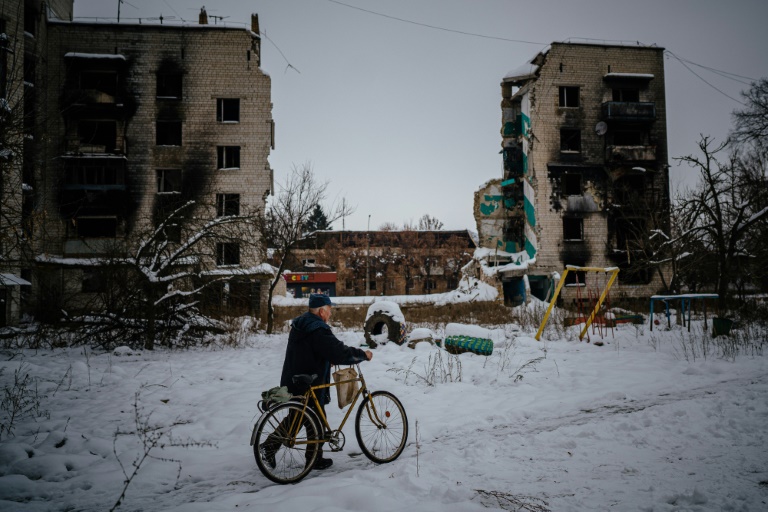
Ukraine too is suffering an energy crisis following weeks of systematic Russian strikes on its energy grid, which have led to emergency power cuts.

Nearly half of the country’s energy system has been damaged and Ukrainians are frequently left in the cold and dark for hours at a time with temperatures outside dropping below freezing. 

In the town of Borodianka outside the capital Kyiv, where snow has already coated the ground, locals gather around old wood-fired stoves inside tents to keep warm and cook food during the blackouts.

“We are totally dependent on electricity …  one day we had no electricity for 16 hours,” Irina, who had come to the tent with her child, told AFP. 

Volunteer Oleg said it was hard to say how Ukraine would manage in the coming winter months. 

“It is impossible to prepare for this winter because no one has lived in these conditions before,” he said. 

Oil jumps on China easing of Covid restrictions, Russia price cap

World oil prices rallied Monday after more easing of strict Covid containment measures in China and as a price cap on Russian crude agreed by the EU, G7 and Australia came into force.

Main contracts Brent North Sea crude and WTI advanced more than 2.5 percent, also after OPEC and its Russia-led allies decided at a weekend meeting to maintain oil output levels.

Stock markets traded mixed after Friday’s forecast-busting US jobs report that dented hopes that the Federal Reserve would take a softer approach to hiking interest rates in its battle against sky-high inflation.

In currency trading, the dollar was mixed against its main rivals while China’s yuan was among the best performers, breaking below the seven per dollar level for the first time in almost three months.

Higher oil demand is expected from China after businesses reopened and testing requirements were relaxed in Beijing and other cities as the country tentatively eases out of a strict zero-Covid policy that sparked nationwide protests.

It has also seen major cities including Shanghai locked down for months, a decision blamed for a sharp slowdown in economic growth this year that sent shudders through financial markets.

“Uncertainty is coming in waves in energy markets as the choppy tides of supply and demand push up the oil price but keep a lid on big gains,” noted Susannah Streeter, senior investment and markets analyst at Hargreaves Lansdown.

“There are expectations that there will be less crude available to buy as the $60 cap on Russia oil takes effect.”

The Kremlin on Monday insisted the cap would not affect Moscow’s military campaign in Ukraine.

The $60-per-barrel price cap aims to restrict Russia’s revenue while making sure Moscow keeps supplying the global market.

“From the OPEC+ perspective, it can’t be easy to make reliable forecasts against that (Russia) backdrop and the constantly evolving Covid situation in China, which currently looks far more promising from a demand perspective,” said Craig Erlam, senior market analyst at Oanda trading group. 

Major oil-producing countries led by Saudi Arabia and Russia on Sunday agreed to maintain their current output levels in a climate of uncertainty.

The prospect of China, the world’s number-two economy, kicking back into gear helped traders overcome data on Friday showing far more jobs than expected were created in the United States in November.

A big jump in wages added to concerns that the economy remained hot, meaning the Fed still had plenty of work to do to get inflation down to its two percent target.

– Key figures around 1200 GMT –

Brent North Sea crude: UP 2.6 percent at $87.83 per barrel

West Texas Intermediate: UP 2.8 percent at $82.22 per barrel

London – FTSE 100: UP 0.3 percent at 7,576.49 points

Frankfurt – DAX: DOWN 0.5 percent at 14,462.21

Paris – CAC 40: DOWN 0.3 percent at 6,719.84

EURO STOXX 50: DOWN 0.2 percent at 3,969.40

Tokyo – Nikkei 225: UP 0.2 percent at 27,820.40 (close)

Hong Kong – Hang Seng Index: UP 4.5 percent at 19,518.29 (close)

Shanghai – Composite: UP 1.8 percent at 3,211.81 (close)

New York – Dow: UP 0.1 percent at 34,429.88 (close)

Euro/dollar: UP at $1.0570 from $1.0531 on Friday

Dollar/yen: UP at 135.20 yen from 134.27 yen

Pound/dollar: DOWN at $1.2284 from $1.2296

Euro/pound: UP at 86.00 pence from 85.73 pence

burs-bcp/rl

Taiwanese iPhone maker seeks to restore production after protests

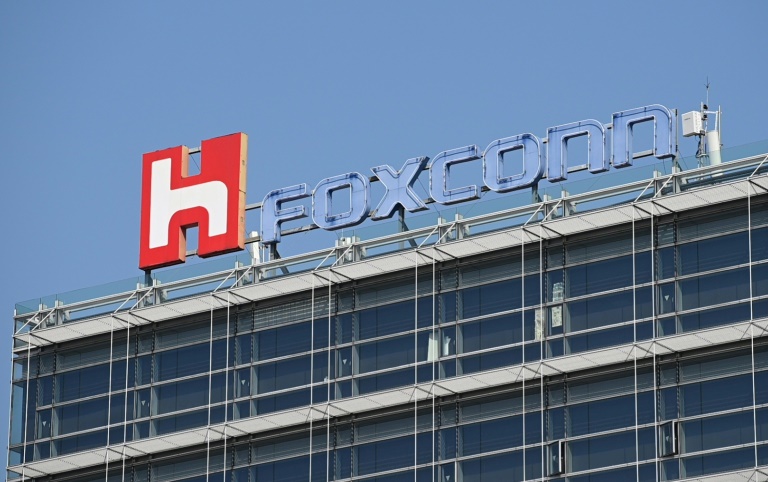
Taiwanese tech giant and key Apple supplier Foxconn said Monday it was hiring new workers and moving towards “restoring production capacity to normal” following violent clashes at its central China plant last month.

Foxconn, also known by its official name Hon Hai Precision Industry, is the world’s biggest contract electronics manufacturer and assembles gadgets for many international brands.

Most of its factories are in China including the eastern city of Zhengzhou, where lockdowns were imposed last month as part of Beijing’s zero-Covid policy after a spike in infections.

Violent protests by workers subsequently erupted over salaries and conditions at the plant, which Foxconn later blamed on a “technical error” in its payment systems.

Hundreds of workers marched in Zhengzhou — dubbed “iPhone City” as the home of the world’s biggest factory for the smartphone — with some clashing with riot police and health personnel in hazmat suits.

Foxconn said in a statement Monday that it was working with the local government to ensure safe production and “making every effort to protect” the rights and interests of employees.

“At present, the overall epidemic situation has been brought under control, with November the most affected period,” it said.

It reported revenue in that month fell 11.4 percent on-year and 29 percent from October.

“In addition to re-allocating production capacity to different factories, we have also started to recruit new employees, and are gradually moving towards the direction of restoring production capacity to normal.”

The company said the outlook for the final three months of the year was expected to be “roughly in line with market consensus” but did not give figures.

Foxconn earlier said it was revising down its outlook for the last quarter. Some analysts have predicted sales could drop as much as 20 percent.

Testing requirements were relaxed in Beijing and other Chinese cities including Zhengzhou on Monday as the country tentatively eases out of its zero-Covid policy, which has sparked protests across the nation.

Iran judiciary seals businesses of football legend Daei: media

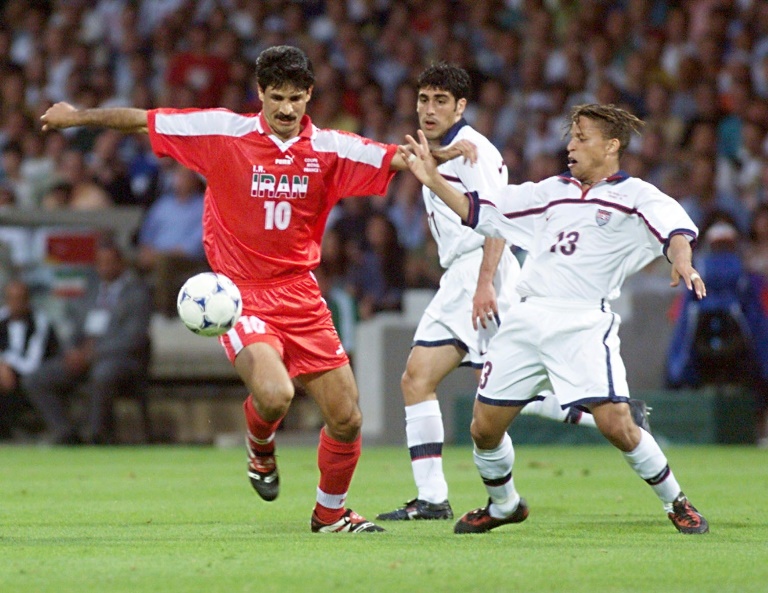
Iran has sealed a jewellery shop and restaurant belonging to football legend Ali Daei, after he backed protesters’ calls for strikes this week, local media reported on Monday.

Daei’s 109 goals at international level were long unsurpassed until Cristiano Ronaldo overtook him.

ISNA news agency, citing the judiciary’s media centre, reported that the ex-player’s shop and restaurant in Tehran’s fashionable north end had been ordered shut.

“Following the cooperation with anti-revolutionary groups in cyberspace to disrupt peace and business of the market, a judicial order was issued to seal Noor Jewellery Gallery,” ISNA reported.

It said a restaurant linked to Daei had also been ordered shut but gave no details about it.

Last week Daei said he had been targeted by threats after backing the protests triggered by the death of Mahsa Amini.

Amini, a 22-year-old Iranian of Kurdish origin, died in custody on September 16, three days after her arrest by the morality police for an alleged violation of the country’s strict dress code for women.

The protests have continued for almost three months. There have been hundreds of deaths and thousands of arrests, including of footballers and other celebrities.

Daei played in Iran’s legendary 2-1 World Cup victory against the United States in 1998.

He said he decided not to go to the current World Cup in Qatar due to the Iranian authorities’ deadly crackdown on the protests.

Daei also played in the German Bundesliga, including with Bayern Munich.

S.Africa's ruling ANC debates embattled president's future

The top leaders of South Africa’s ruling party went into talks on Monday to discuss the fate of embattled President Cyril Ramaphosa on the eve of a parliamentary vote that could lead to his impeachment.

Ramaphosa insisted at the weekend that he would not resign after a special panel reported on an alleged coverup of a cash robbery at his farm, but his political future remains uncertain.  

On Monday morning the president arrived at the venue where the African National Congress’ highest body — the National Executive Committee (NEC) — was meeting to discuss the crisis. He left shortly afterwards, smiling and waving to the media.

ANC spokesman Pule Mabe said the president was recused from the meeting, in line with standard practice for a person under discussion. 

“We convened the meeting because we want to seek the wisdom of the collective,” said Mabe.

Forged by Nelson Mandela into the weapon that led the fight against apartheid, the ANC has been deeply divided by the affair, but after a pendulum swing a majority now seems be backing the president.

The country marked the ninth anniversary of Mandela’s death on Monday.

“In remembering him we are going to make sure that the (NEC meeting) concludes being united,” said Mabe.

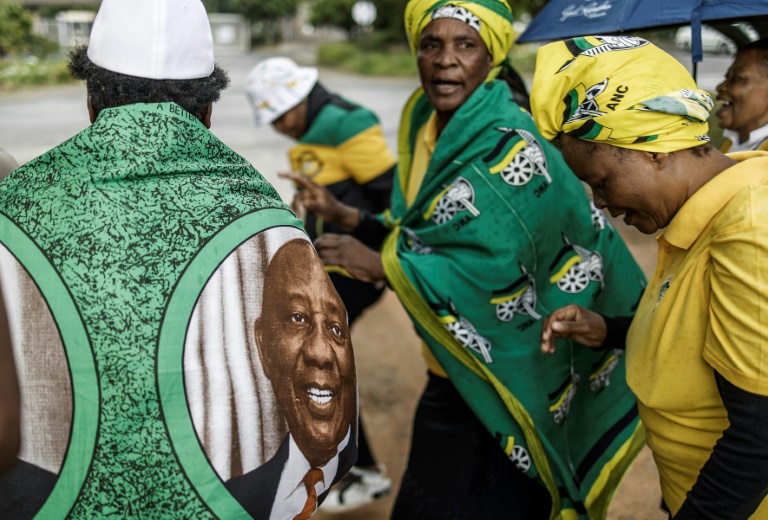
A small group of demonstrators, some supporting the president, others calling for him to go, gathered outside the meeting in the Johannesburg area of Nasrec.

“The right thing is to tell Cyril Ramaphosa that he must step down,” said ANC member Carl Niehaus, 63, a former spokesman to Mandela and critic of his successor.

He wore an ANC T-shirt and holding a framed sign reading “Ramaphosa must go”. 

But Ramaphosa supporter Maropeng Serakwana, 40, warned against any leap to judgement.

Ramaphosa “must be treated fairly like any other citizen in this country,” he said. 

The bombshell report was submitted last week to parliament, which will debate it on Tuesday — a step that could lead to a vote on forcing Ramaphosa from office.

For him to be forced out, two-thirds of the assembly must vote in favour of the removal motion. The ANC has 230 out of 400 seats.

– ‘Phala Phala’ – 

The scandal has become known as the Phala Phala affair, named after Ramaphosa’s farm in the northeast of the country.

It began in June, when South Africa’s former spy boss filed a complaint with the police alleging that Ramaphosa had concealed the theft of a huge haul of cash from the farm.

He accused the president of having organised for the robbers to be kidnapped and bribed into silence.

Ramaphosa, in submissions to the three-person investigative panel, denied any wrongdoing.

He said the cash — more than half a million dollars, stashed beneath sofa cushions — was payment for buffaloes bought by a Sudanese businessman. 

But his explanations did not convince the panel, which raised questions about the source of the cash and said he “may have committed” serious violations and misconduct.

A police inquiry is ongoing, but he has not so far been charged with any crime.

The scandal comes at the worst possible time for Ramaphosa. 

On December 16, he will contest elections for the ANC presidency — a position that also holds the key to staying on as the nation’s president.

A former mine union president who made a fortune in business in post-apartheid era, Ramaphosa came to office in 2018 riding on a graft-free image after the corruption-tainted presidency of Jacob Zuma.

– ‘Flawed’ report –

In his weekly newsletter on Monday, Ramaphosa did not address the scandal directly, but flaunted the government’s anti-corruption work.

“Now that we see that progress is being made, we must do everything we can to ensure that this work continues unhindered,” he wrote.

His spokesman, Vincent Magwenya, on Saturday said Ramaphosa would not resign on the basis of a “flawed” report and would contest the document in court.

Julius Malema, an ex-ANC youth leader and now opposition Economic Freedom Fighters president called for Ramaphosa to “be arrested — he committed crime, he committed corruption.”

But the ANC’s overwhelming majority in the National Assembly means that it is not even certain that parliament will vote to launch the procedure of removal.

As well as Ramaphosa, some legal experts have outlined flaws in the report.

They argue that without recourse to the ongoing criminal investigation, the document is based largely on hearsay, Ramaphosa’s statements and the initial complaint lodged by an opponent of the president.

Close Bitnami banner
Bitnami