World

Chinese cities relax testing rules as zero-Covid policy eases

Businesses reopened and testing requirements were relaxed in Beijing and other Chinese cities on Monday as the country tentatively eases out of a strict zero-Covid policy that sparked nationwide protests.

Local authorities across China have begun a slow rollback of the restrictions that have governed daily life for years, encouraged by the central government’s orders for a new approach to fighting the coronavirus.

In the capital Beijing, where many businesses have fully reopened, commuters from Monday were no longer required to show a negative virus test taken within 48 hours to use public transport.

Financial hub Shanghai — which underwent a brutal two-month lockdown this year — extended this measure to most public places except medical institutions, schools, restaurants and bars, nursing homes and indoor entertainment venues, starting from Tuesday. 

The city had already exempted parks and tourist attractions from the testing requirement a day earlier and what the latest rule change encompassed was unclear.

Neighbouring Hangzhou ended regular mass testing for its 10 million people, except those living in or visiting nursing homes, schools and kindergartens.

The testing requirement for public transport had been scrapped on Sunday in the central city of Wuhan, where the coronavirus was first detected in late 2019, as well as in Shandong province.

And Zhengzhou — home to the world’s largest iPhone factory — on Sunday said people would be allowed to enter public places, take public transport and enter their residential compounds without a 48-hour negative test result too.

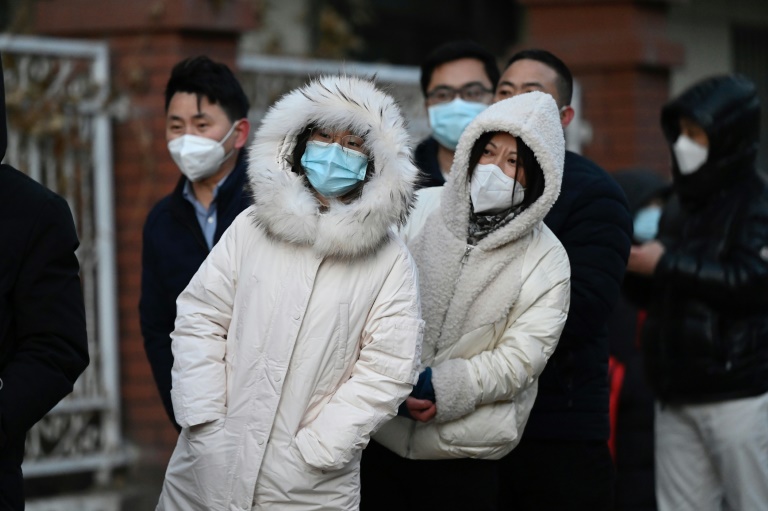
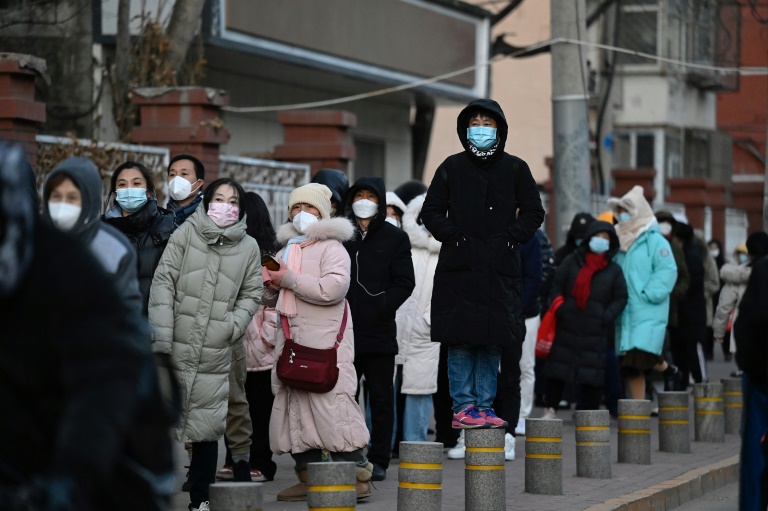
But as officials have dismantled testing facilities, long queues have appeared around those that remain, forcing residents to wait in cold temperatures to get tests that remain obligatory across much of China.

“Students can’t go to school without a 24-hour negative test,” wrote a user on China’s Twitter-like Weibo.

“What’s the point in closing testing booths before dropping the need to show test results completely?” another asked.

In the northwestern city of Urumqi, where a fire that killed 10 people became the catalyst for the recent anti-lockdown protests, supermarkets, hotels, restaurants and ski resorts reopened on Monday.

The city of more than four million in the far-western Xinjiang region endured one of China’s longest lockdowns, with some areas shut from August until November.

– Student protests –

The demonstrations last week were the largest in decades as public anger at prolonged virus restrictions boiled over, with many university campuses involved.

China’s vast security apparatus has moved swiftly to smother the rallies, deploying a heavy police presence while boosting online censorship and surveillance of the population.

But sporadic localised clashes have continued to flare up.

Hundreds of students at Wuhan University in central China staged a protest Sunday evening, according to footage on social media and an attendee.

At least 300 protested in front of the university’s main administrative building, but there was no violence, only students chanting slogans together, an anonymous witness told AFP.

Students were unhappy with the university’s examination arrangements and school holiday dates, he said. 

The university announced Sunday that it would gradually resume in-person teaching and “optimise campus epidemic control measures” from Monday, but students and staff could not leave campus without approval.

– Dialing it down –

Chinese state media, which previously focused on highlighting the dangers of Covid-19, has shifted tone as measures have been relaxed.

Authoritative business news outlet Yicai on Sunday quoted an unnamed health expert arguing that officials should dial down strict virus rules.

“Most infected people are asymptomatic… and the fatality rate is very low,” the expert said.

China’s central National Health Commission (NHC) categorises infectious diseases based on how fatal and infectious they are.

Since January 2020, it has managed Covid under Category A protocols, giving local governments the power to enforce snap lockdowns and put patients and their close contacts into quarantine.

That approach was now “obviously not in line with science” given the changing circumstances, the expert told Yicai, calling for a “downgrade”.

Chinese authorities on Monday reported 29,724 new domestic Covid cases.
How Paris cinemas are surviving

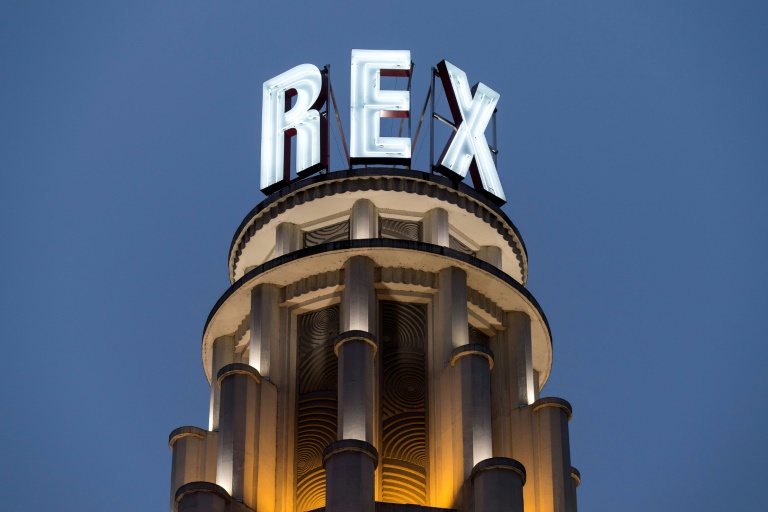
Spinning once again, the sign above France’s biggest cinema, the Grand Rex, is testament to how well Paris venues have weathered the twin threats of streaming and the pandemic.

The 2,700-seat Art Deco venue reopened last week after a major facelift to mark its 90th birthday. 

It has reason to be hopeful: ticket sales in France are down just 10 percent on pre-Covid levels, compared to almost a third in the United States. 

That is partly due to the country’s long-standing love affair with its cinemas, immortalised in 1960s New Wave classic “Breathless”, in which Jean-Paul Belmondo and Jean Seberg duck in and out of theatres along the Champs Elysees. 

Paris is thought to have the highest density of screens in the world, and the atmosphere has influenced generations of filmmakers. 

“I went to old cinemas in the Latin Quarter to watch retrospectives, screenings of old films from Hollywood, France or Japan,” director Damien Chazelle (“La La Land”) told AFP recently.  

“The first time I saw ‘Metropolis’ by Fritz Lang was here. I’ll never forget it!” 

– Diversification –

Paris authorities say there are 398 screens across 75 venues — up eight percent on 2000 — and down just slightly from 411 in 2019. 

Survival requires some creativity. 

To coax viewers off their sofas, the Grand Rex has been offering “event” screenings such as manga previews and film marathons that cater to the biggest fans. 

Its history has made it a popular choice for premieres, with Steven Spielberg next on the agenda for the launch of “The Fabelmans”.

It also requires diversification. The Rex moonlights as a nightclub, escape game venue — and most importantly as a concert hall, featuring everyone from Madonna to Bob Dylan. 

“If we had to survive on the cinema alone, we would have closed the doors long ago,” said manager Alexandre Hellmann. He added that that 71 bigger halls have opened during the Rex’s lifetime but none have lasted.

– ‘Evolution’ –

While the overall picture is positive, the map of Paris cinemas is evolving. 

Next year will see the reopening of the Japanese-style La Pagode, another mythic venue. 

And in 2024, the Pathe Palace, billed as the most beautiful cinema in the world, will open next to the Paris Opera. 

But this shift is coming at the expense of other historic areas. 

Rising rents are threatening many cinemas, particularly on the Champs Elysees, where the renowned Marignan will soon shut for good.

“It was THE cinema district in Paris but it is disappearing, due particularly to the exorbitant rents,” said Michel Gomez, who leads the city’s “Mission Cinema” to support the industry. 

“It’s hard to see cinemas close but cinema in Paris is a living fabric. It follows the sociological and geographical evolution of the city,” he said. 

UK's Labour vows to abolish House of Lords

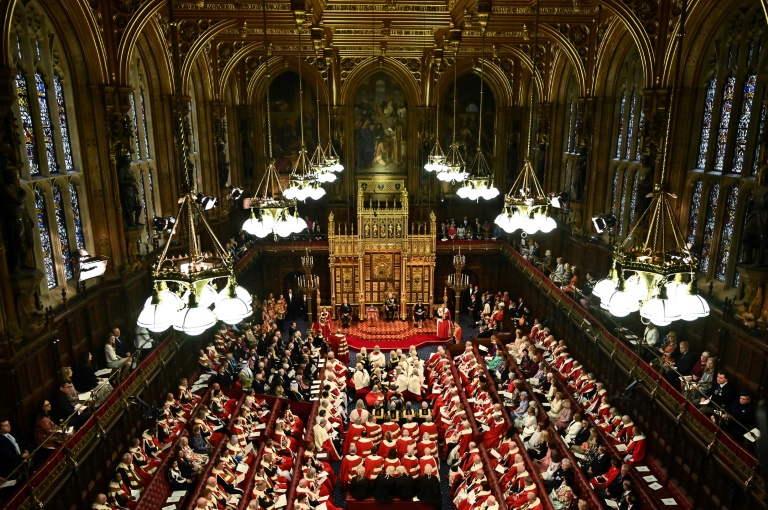
Britain’s opposition Labour party vowed on Monday to scrap the unelected and “indefensible” House of Lords as part of a constitutional revamp to redistribute economic growth after Brexit.

Labour looks set to take power in the next election, due by January 2025, streaking far ahead of the governing Conservatives in opinion polls after a tumultuous period politically and economically. 

Labour leader Keir Starmer promised “the biggest ever transfer of power from (the UK parliament in) Westminster to the British people”, arguing that many voters in 2016 opted to quit the European Union because of a sense of lack of democratic control.

The party’s blueprint for reform, drafted by former prime minister Gordon Brown, envisions new devolution to the UK’s regions and countries including Scotland, where the nationalist government is pressing for a new referendum on independence.

Brown, who led the successful 2014 campaign for his fellow Scots to stay in the United Kingdom, proposed greater devolution, with the Edinburgh parliament included in international agreements that involve Scottish areas.

Addressing an audience in Leeds, northern England, Starmer said a “failure of economic growth over the past 12 years” under Conservative rule was caused in part by the UK failing as a whole to power growth, relying too much on London and southeast England.

The blueprint is not yet Labour policy. It now goes to a public consultation, with agreed changes set to be incorporated into the party’s next election manifesto. 

Starmer said he hoped to push through the eventual reforms within the first five years of a Labour government, possibly including the redeployment of 50,000 civil service jobs out of London.

Tackling widespread public disgust with perceived malpractice in parliament, the proposals would clamp down on MPs holding second jobs and create a new anti-corruption commissioner.

The 40-point plan’s centrepiece is to scrap the upper house of parliament in its current guise — which is a mixture of political appointees, hereditary peers and Church of England bishops.

“I think the House of Lords is indefensible. Anybody who looks at the House of Lords would struggle to say that it should be kept,” Starmer told BBC television.

“So we want to abolish the House of Lords and replace it with an elected chamber that has a really strong mission.” 

Brown proposed a new assembly comprising members drawn from the UK’s regions and countries — a “smaller, more representative and democratic” chamber, although details will be left to the consultation.

Vodafone CEO to step down after four years at helm

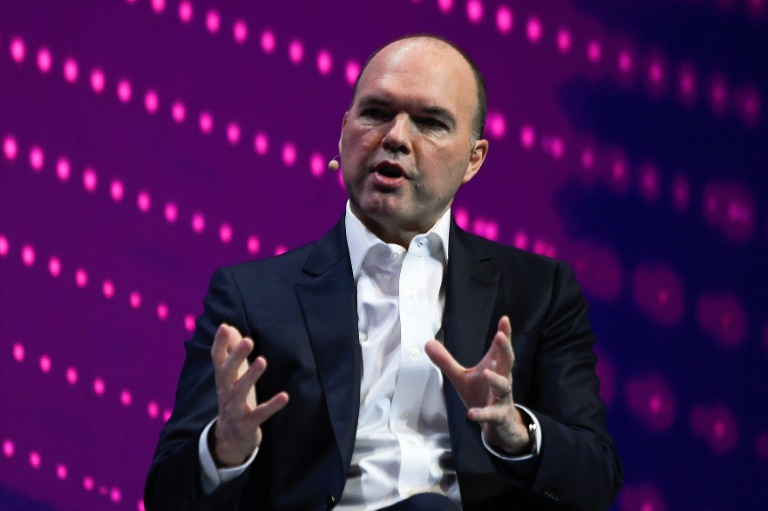
Vodafone chief executive Nick Read is stepping down, the British telecoms group said Monday, after a four-year tenure marked by a steep fall in the company’s share price.

Read will leave his role at the end of December following more than 20 years at the group, a statement said.

He will be replaced on an interim basis by Vodafone’s chief financial officer Margherita Della Valle, who will continue her current role while Vodafone seeks out a permanent replacement.

His surprise resignation comes after Vodafone recently announced flat earnings for its first half and follows a near 20-percent drop in its share price this year.

“I agreed with the board that now is the right moment to hand over to a new leader who can build on Vodafone’s strengths and capture the significant opportunities ahead,” Read said in the statement.

He departs with Vodafone in talks over merging its UK operations with rival Three UK, owned by Hong Kong-based CK Hutchison.

Vodafone believes a combination would accelerate the rollout of 5G telecoms technology in the UK, which has been partly hampered by Britain banning Chinese giant Huawei from involvement in the technology offering faster downloads than 4G.

Vodafone’s share price was flat at 91 pence following Monday’s announcement.

“With the shares languishing at their lowest levels in more than 20 years it is hard to describe departing Vodafone CEO Nick Read’s tenure as anything other than a disappointment,” noted Russ Mould, investment director at AJ Bell.

“Read’s final set of results last month did him absolutely no favours, as Vodafone downgraded full-year guidance.”

He also came under pressure from major activist investor Cevian Capital, which recently slashed its stake in Vodafone.

However, Read “helped to steer the telecoms giant through the challenges of the pandemic, aiding connectivity when individuals and households were forced to stay home during strict lockdowns”, said Victoria Scholar, head of investment at Interactive Investor.

Head of UK broadcaster Sky News resigns after 17 years

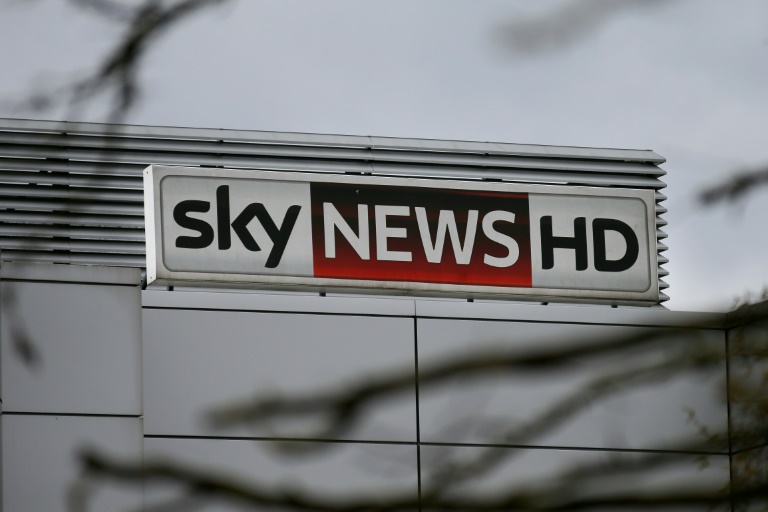
The head of Sky News will step down after 17 years, having steered the broadcaster through a tumultuous period in British political history and journalism’s digital revolution.

“Being the Head of Sky News is one of the most exhilarating jobs in journalism,” John Ryley said in a statement released late on Sunday.

“Nonetheless, after almost 40 years in the news business, 28 of which have been at Sky including 17 lucky years at the helm, I have decided, as of next year, to stop and leave Sky News behind.”

Ryley took over in 2006, when the broadcaster was known almost entirely for its news channel and oversaw its transformation into a multimedia platform.

Around 10 million Britons watch the television channel each month, but the outlet is increasingly focusing on applications such as TikTok to reach a younger online audience.

Ryley was at the helm during Britain’s seismic vote to leave the European Union, its subsequent political upheaval and the Covid 19 pandemic.

Turkey inflation slows for first time since 2021

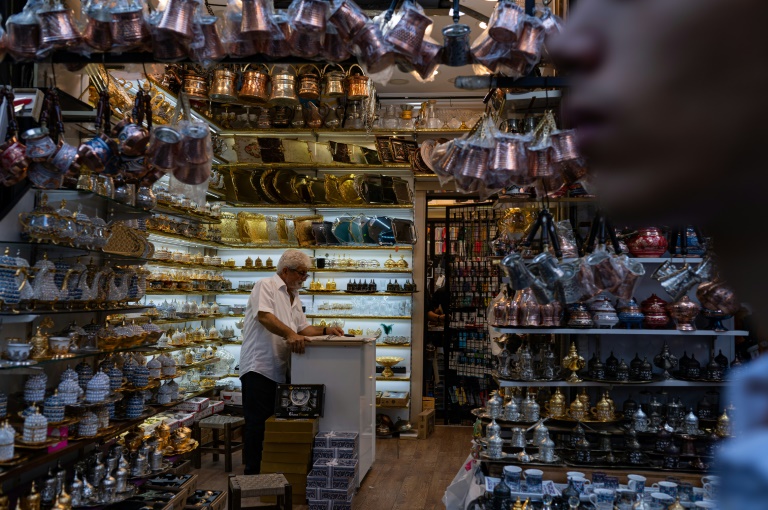
Turkey’s inflation slowed in November for the first time since May 2021, official data showed on Monday, delivering a boost to President Recep Tayyip Erdogan ahead of next year’s election.

The rate slowed to 84.39 percent, according to state statistics agency TUIK, down from 85.51 percent in October.

Turkey’s inflation has risen steadily since reaching a low of 16.6 percent in May 2021.

The emerging market’s troubled economy has turned into a major stumbling block on Erdogan’s path to a third decade in power in a presidential poll due by next June.

Erdogan’s approval rating began to suffer when he set off on an unusual economic experiment last year that tried to bring down chronically high consumer prices by lowering borrowing costs.

Conventional economic theory embraced by almost every other big nation pursues the exact opposite approach.

Turkey’s lira began to drop in value almost immediately, as consumers rushed to buy up dollars and gold to try and protect their savings.

The price of imports such as oil and gas soared, creating an inflationary spiral that the nominally independent central bank fed further by continuing to lower interest rates.

Erdogan has maintained that his unwavering focus on economic growth at all costs — achieved through cheap lending and state support — will eventually pay off.

“We will witness the rapid descent of inflation soon and we will see together that the dirty scenarios built on this trouble are torn and thrown away,” he repeated over the weekend.

Erdogan has blamed inflation on outside factors such as the global spike in food and energy prices caused by Russia’s invasion of Ukraine.

– Election strategy –

Erdogan’s much-criticised economic team hailed Monday’s announcement as vindication of their approach.

“As we have previously stated in various media, we have entered a downward trend in inflation, leaving the peak behind, unless there is an unexpected global development,” Finance Minister Nureddin Nebati tweeted.

Most economists believe that Turkey’s inflation rate will continue to slow but remain elevated for many months to come, unless Erdogan radically changes his approach.

An accompanying inflow of funding from the Kremlin and Turkey’s former rivals in the Middle East, which Erdogan secured through a major diplomatic reversal this year, will help the government prop up the lira, economists believe.

Erdogan’s strategy aims at “keeping the lira relatively strong this side of elections with foreign money”, Timothy Ash of BlueBay Asset Management said in a tweet.

“But that will destroy competitiveness with massive real appreciation.”

Yet many also question Turkey’s official statistics, which are produced by an agency whose leader has been replaced by Erdogan twice in the past year.

According to a respected monthly study released by independent economists from Turkey’s ENAG research institute, the annual rate of consumer price increases reached 170.70 percent in November.

A separate poll earlier this year showed the overwhelming major of Turks believing the ENAG figures over ones released by the government.

Turkey inflation slows for first time since 2021

Turkey’s inflation slowed in November for the first time since May 2021, official data showed on Monday, delivering a boost to President Recep Tayyip Erdogan ahead of next year’s election.

The rate slowed to 84.39 percent, according to state statistics agency TUIK, down from 85.51 percent in October.

Turkey’s inflation has risen steadily since reaching a low of 16.6 percent in May 2021.

The emerging market’s troubled economy has turned into a major stumbling block on Erdogan’s path to a third decade in power in a presidential poll due by next June.

Erdogan’s approval rating began to suffer when he set off on an unusual economic experiment last year that tried to bring down chronically high consumer prices by lowering borrowing costs.

Conventional economic theory embraced by almost every other big nation pursues the exact opposite approach.

Turkey’s lira began to drop in value almost immediately, as consumers rushed to buy up dollars and gold to try and protect their savings.

The price of imports such as oil and gas soared, creating an inflationary spiral that the nominally independent central bank fed further by continuing to lower interest rates.

Erdogan has maintained that his unwavering focus on economic growth at all costs — achieved through cheap lending and state support — will eventually pay off.

“We will witness the rapid descent of inflation soon and we will see together that the dirty scenarios built on this trouble are torn and thrown away,” he repeated over the weekend.

Erdogan has blamed inflation on outside factors such as the global spike in food and energy prices caused by Russia’s invasion of Ukraine.

– Election strategy –

Erdogan’s much-criticised economic team hailed Monday’s announcement as vindication of their approach.

“As we have previously stated in various media, we have entered a downward trend in inflation, leaving the peak behind, unless there is an unexpected global development,” Finance Minister Nureddin Nebati tweeted.

Most economists believe that Turkey’s inflation rate will continue to slow but remain elevated for many months to come, unless Erdogan radically changes his approach.

An accompanying inflow of funding from the Kremlin and Turkey’s former rivals in the Middle East, which Erdogan secured through a major diplomatic reversal this year, will help the government prop up the lira, economists believe.

Erdogan’s strategy aims at “keeping the lira relatively strong this side of elections with foreign money”, Timothy Ash of BlueBay Asset Management said in a tweet.

“But that will destroy competitiveness with massive real appreciation.”

Yet many also question Turkey’s official statistics, which are produced by an agency whose leader has been replaced by Erdogan twice in the past year.

According to a respected monthly study released by independent economists from Turkey’s ENAG research institute, the annual rate of consumer price increases reached 170.70 percent in November.

A separate poll earlier this year showed the overwhelming major of Turks believing the ENAG figures over ones released by the government.

Putin ally joins tech giant Yandex

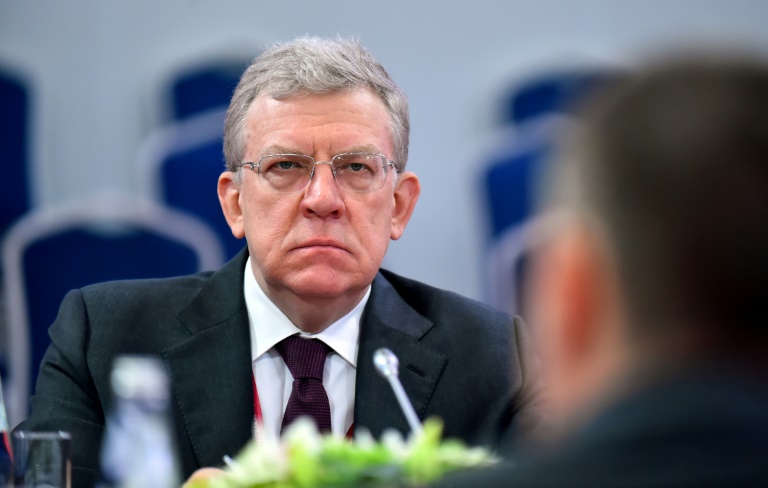
A long-time ally of President Vladimir Putin, Alexei Kudrin, said Monday he will be joining Yandex as the Kremlin seeks to tighten its grip on Russia’s top technology giant. 

The announcement from the former finance minister comes after months of instability at the internet company, with employees fleeing due to the military offensive in Ukraine and its founder hit by Western sanctions.

Russia’s top internet company and most popular search engine is being divided into Russian and international businesses because of Western penalties.

Analysts say that the move will cement government control over what was once seen as one of Russia’s top success stories.

Last week Kudrin announced he was stepping down as head of Russia’s Audit Chamber to focus on private initiatives with “significant impact on people”. 

“I accepted an offer from Yandex to become a corporate development adviser,” Kudrin said on Monday.

He added that in his role he will work to “ensure the long-term and sustainable development of the company on all markets, including international ones”. 

Kudrin is expected to oversee the operations of the restructured company, while its founder, Arkady Volozh, who was hit by EU sanctions in June, will develop a number of Yandex businesses outside Russia.

In recent years Russian authorities have steadily ramped up control over the internet — once considered the last bastion of free speech.

All major media organisations are already either state-owned or closely toe the Kremlin line.

– Staff exodus –

In August, Yandex sold its news feed Yandex News to state-affiliated rival VK, the owner of Russia’s largest social network.

“The state has decided to speed up the creation of purely Russian services and increasingly limit the access of Russians to foreign services,” economist Sergei Khestanov told AFP, referring to the authorities’s growing control over the internet in Russia.

He said that with Kudrin at the helm of Yandex authorities could create an internet “firewall” to shield the government from criticism.

In March, Russia banned Facebook and Instagram for “extremist activity” as part of efforts to clamp down on social media during Moscow’s assault on Ukraine.

Moscow’s military intervention in Ukraine triggered an exodus of Russians from the country, including many from Yandex and the IT sector.

Brussels describes Yandex as “promoting state media and narratives in its search results.”

The EU said that Volozh, 58, was “supporting, materially or financially” the Russian government in its assault on Ukraine.

When the sanctions were announced Volozh immediately stepped down as CEO and resigned from the board of directors to avoid the firm also being hit by sanctions.

The Bell, a respected Russian-language media outlet, reported earlier that Volozh turned to Kudrin for help in securing Putin’s support for the restructuring plan.

– ‘Too close to Putin’ –

Kudrin served as finance minister between 2000 and 2011 and was famously fired by then-president Dmitry Medvedev for insubordination in 2011 and later appointed chairman of the Audit Chamber.

The 62-year-old was seen as one of the government’s most prominent liberals in the earlier years of Putin’s rule and he supported opposition protests against widespread claims of election fraud in 2011-2012.

For Kudrin, Yandex offers an opportunity to distance himself from the government after Putin sent troops to Ukraine, said Tatiana Stanovaya, founder of the R.Politik political analysis firm.

“He has nowhere to go,” Stanovaya told AFP before the announcement was made. 

“He is too close to Putin. His departure would be seen as an act of betrayal.”

The Bell, citing sources, reported that Kudrin will have to “guarantee” to the Kremlin that Yandex and its technologies remain Russia-based.

But at the same time, the sources said, he will have to make sure that the company does not become another state-run behemoth, like technologies conglomerate Rostec.

Last month, Yandex confirmed plans to overhaul “the group’s ownership and governance in light of the current geopolitical environment.”

The company said this could include developing some of its services — including self-driving technologies, cloud computing and data labelling — “independently from Russia.”

W.African leaders agree to create regional force

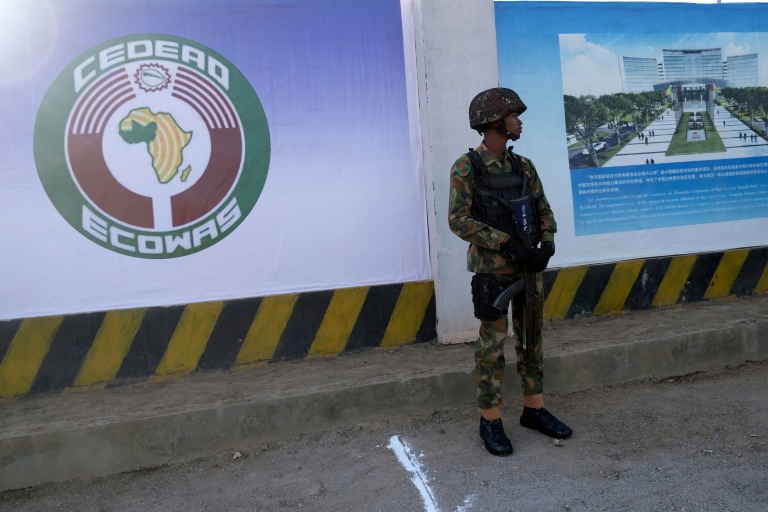
West African leaders agreed on Sunday to create a regional force to intervene against jihadism and in the event of coups, a senior official said.

Leaders of the Economic Community of West African States had decided to act to “take care of our own security in the region”, Omar Alieu Touray, president of the ECOWAS commission, told journalists at a summit in Nigeria.

They are “determined to establish a regional force that will intervene in the event of need, whether this is in the area of security, terrorism and restore constitutional order in member countries,” he added.

Mali, Guinea and Burkina Faso have all been hit by military coups in the last two years.

Several countries in the region are also suffering from the spread of jihadism, including Mali, Burkina Faso and Niger, and southwards to the Gulf of Guinea. 

National armies, largely powerless against the jihadist forces operating across borders, have been cooperating with external actors such as the UN, France and Russia.

But Touray said this decision would “restructure our security architecture”.

The modalities of the planned regional force will be considered by defence chiefs in the second half of January, 2023, Touray said.

The funding of the force must also be decided, but the ECOWAS official stressed that such an operation could not be solely dependent on voluntary contributions.

– Pressure on Mali –

Addressing another regional problem, the West African leaders told Mali’s ruling junta to release 46 Ivorian troops it has held since July.

“We ask the Malian authorities to release the Ivorian soldiers by January 1, 2023 at the latest,” said Touray, at the Abuja summit.

The Gambian diplomat said the West African bloc reserved the right to act if the soldiers were not released by January 1.

If Mali fails to do so, ECOWAS will impose sanctions, a West African diplomat told AFP.

Togolese President Faure Gnassingbe, who has been mediating between Mali and Ivory Coast on the issue, will travel to Mali to “demand” the release of the soldiers, the diplomat added.

The Ivorian troops were arrested on July 10 on their arrival at the airport in Mali’s capital Bamako.

Ivory Coast says the troops were sent to provide backup for the UN peacekeeping mission in Mali, MINUSMA, and are being unfairly detained. 

Mali says the troops are mercenaries and has placed them in custody on charges of attempting to harm state security. 

ECOWAS had decided at an extraordinary summit in September to send a high-level delegation to Mali to try to resolve the crisis. But no progress was reported from this mission.

– Coup-hit nations –

The West African leaders, concerned about instability and contagion, have been pressing for months for the quickest possible return to civilian rule in the three countries which have undergone coups in recent years.

Mali and Burkina Faso have both been severely shaken by the spread of jihadism.

All three countries have been suspended from the decision-making bodies of ECOWAS.

Leaders of the military juntas have pledged, under pressure, to step down after two years, allowing for a transition period during which they all say they want to “rebuild” their state.

ECOWAS has been looking to see what progress each nation has been making towards restoring constitutional order.

In Mali, “it is essential that constitutional order returns within the planned timeframe”, said Touray.

If Mali’s military meets the announced deadline of March 2024 — after months of confrontation with ECOWAS and a severe trade and financial embargo that has now been lifted — the “transition” will in fact have lasted three and a half years.

Touray urged the junta in Guinea to involve all parties and civil society in dialogue “immediately” on the process of restoring civilian rule.

The main political parties and much of civil society there have been boycotting the authorities’ offer of dialogue.

As for Burkina Faso, Touray expressed ECOWAS’s “serious concerns” about the security situation and the humanitarian crisis there, while pledging support for the country. 

Stocks rise as China eases more Covid measures

Most stocks rose on Monday as traders welcomed more easing of strict Covid containment measures in China that have hammered the world’s number-two economy.

The moves helped offset a forecast-busting US jobs report that dented hopes that the Federal Reserve will take a softer approach to hiking interest rates in its battle against inflation.

Investor sentiment has picked up considerably in recent weeks on indications the US central bank will slow down its monetary tightening as price rises appear to be slowing and the economy weakens.

That has come as Chinese leaders take a more pragmatic approach to fighting Covid after recent protests across the country that also called for more political freedoms.

The harsh zero-Covid strategy — which saw major cities including Shanghai locked down for months — has been blamed for a sharp slowdown in economic growth this year and sent shudders through markets.

The move to reopening helped fuel “market optimism about the tailwinds of a likely acceleration in growth in 2023 for China-sensitive assets”, said SPI Asset Management’s Stephen Innes.

“Although there have been several local changes to Covid policies, China has yet to shift away from the zero-Covid policy officially. Instead, they are trying to balance the expected reopening surge in Omicron cases against minimising economic and social costs.”

The brighter outlook lifted Asian markets with Hong Kong leading the way, jumping more than four percent while Shanghai put on more than one percent.

There were also gains in Tokyo, Sydney, Wellington, Singapore, Taipei and Manila.

London opened marginally higher, though Paris and Frankfurt inched down.

The prospect of the world’s number-two economy kicking back into gear helped traders overcome data on Friday showing far more jobs than expected were created in the United States in November.

A big jump in wages added to concerns that the economy remained hot, meaning the Fed still had plenty of work to do to get inflation down to its two percent target.

“If next week’s consumer price index data stays hot… then our forecast for the Fed funds rate to be raised by 50 basis points each in December and February to hit 4.75-5.00 percent may prove too low,” said Mansoor Mohi-uddin, of Bank of Singapore.

“If the Fed instead needs to keep hiking well into 2023 then the near-term outlook for risk assets will remain challenging for investors.”

Still, the dollar remained under pressure against its main peers as investors lower their expectations for US borrowing costs.

China’s yuan was among the best performers, breaking below the seven per dollar level for the first time in almost three months.

The reopening of China also lifted oil prices as demand expectations improved, while a decision by OPEC and top producers to not lift output also boosted the commodity.

Still, Innes added: “One major obstacle to prompt oil prices is that a widespread official reopening is unlikely to occur until spring. So, demand could remain exceptionally soft, including in the initial stages of a broader reopening of the economy.”

– Key figures around 0820 GMT –

Tokyo – Nikkei 225: UP 0.2 percent at 27,820.40 (close)

Hong Kong – Hang Seng Index: UP 4.5 percent at 19,518.29 (close)

Shanghai – Composite: UP 1.8 percent at 3,211.81 (close)

London – FTSE 100: FLAT at 7,556.74

Euro/dollar: UP at $1.0545 from $1.0531 on Friday

Dollar/yen: UP at 134.90 yen from 134.27 yen

Pound/dollar: UP at $1.2300 from $1.2296

Euro/pound: UP at 85.79 pence from 85.73 pence

West Texas Intermediate: UP 0.7 percent at $80.50 per barrel

Brent North Sea crude: UP 0.6 percent at $86.04 per barrel

New York – Dow: UP 0.1 percent at 34,429.88 (close)

Close Bitnami banner
Bitnami