World

'He'll come home': Pele's daughters reassure fans of ill football icon

Brazilian football superstar Pele’s daughters told his fans Sunday that their father’s health was not at serious risk, saying they are confident he will return home when he recovers from a respiratory infection.

The 82-year-old has been hospitalized in Sao Paulo since Tuesday amid ongoing treatments for colon cancer, which was first diagnosed in September 2021.

Pele “is sick, he is elderly, but at this point he is hospitalized for a lung infection,” Kely Arantes Nascimento told the TV channel Globo.

“And when he gets better, he’ll come home,” she said. 

“We are not saying goodbye in the hospital,” she insisted, explaining that the respiratory illness was the result of a Covid-19 infection the sporting icon had contracted three weeks ago. 

Her sister, Flavia Arantes Nascimento, denied reports from the daily Folha de S.Paulo and ESPN Brazil that Pele was no longer responding to chemotherapy and was now receiving only “palliative care.”

She told the news channel that her father was not in the intensive care unit, but a regular ward, and that the family was “tired of receiving condolences” and that the cancer treatment is “delivering results.” 

“It’s really unfair that they’re saying he’s at the terminal stage. It’s not that, believe us,” she said. 

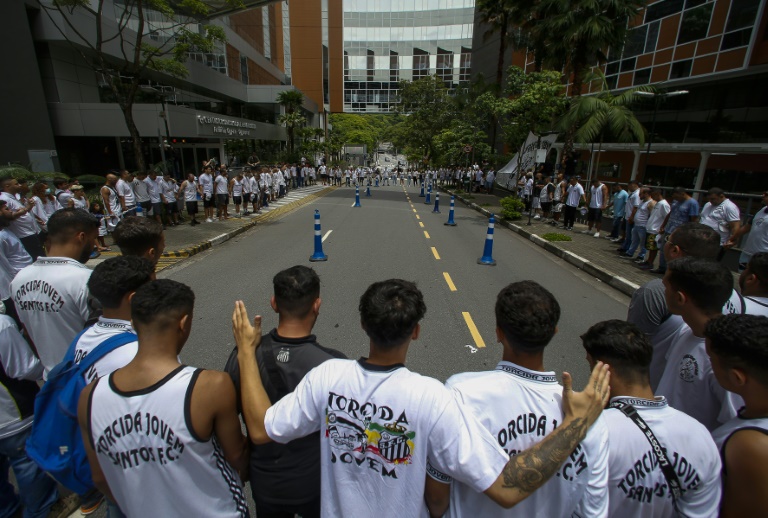
Earlier Sunday, fans of Pele — born Edson Arantes do Nascimento — congregated outside the Sao Paulo hospital where the three-time world champion is staying.

More than 100 devotees prayed for the recovery of the man widely regarded as the greatest footballer of all time. 

“We are a spiritual force” praying for the sporting idol as he wages “one of the toughest battles of his life,” one fan, Marcos Bispo dos Santos, told AFP.

Doctors at Sao Paulo’s Albert Einstein Hospital said Saturday that Pele remained “stable.” 

Pele “has had a good response to care without any worsening in the clinical picture in the last 24 hours,” they said in a statement. 

The star later struck an optimistic note in an Instagram post, saying, “My friends, I want to keep everyone calm and positive. I’m strong, with a lot of hope and I follow my treatment as usual.”

On Sunday, his fans stood mostly in silence outside the clinic in the Morumbi neighborhood of western Sao Paulo, holding a banner bearing an image of a youthful Pele and marked “Torcida Joven” (“Young Fans”).

“Long live the king!” said several posters pasted on walls near entrances to the hospital.

Around noon, the fans formed a circle and held hands as they recited an “Our Father.”

S.African leader braces to head off impeachment threat

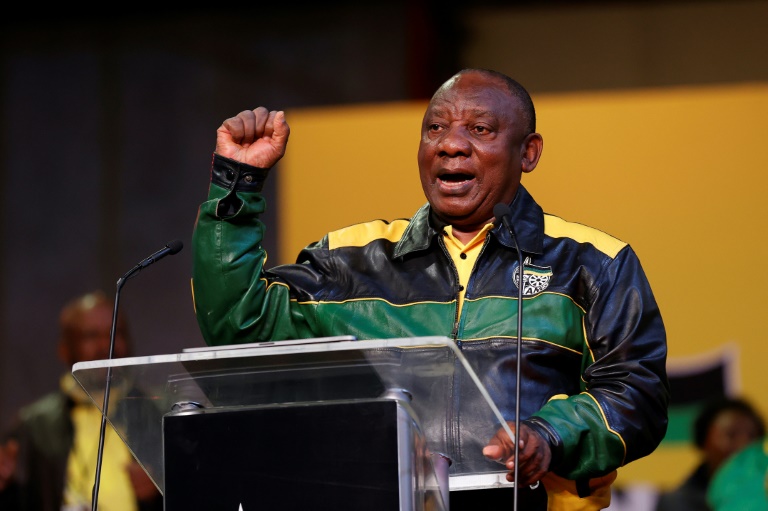
Cyril Ramaphosa may have insisted over the weekend he will not resign, but the South African president still faces a parliamentary vote Tuesday that could lead to his impeachment.

The ruling African National Congress (ANC) will meet Monday to discuss Ramaphosa’s fate after a parliamentary panel’s report last week said he might have acted illegally in covering up a burglary at his farm.

Despite deep divisions inside the party, there appears to be a majority backing the president.

There was pressure last week from some quarters for Ramaphosa to quit or be forced from office over what has become known as the Phala Phala affair, after the farm at the centre of the controversy.

But Ramaphosa looked relaxed and cheerful Sunday as he spoke to journalists outside a conference centre where some ANC delegates were already discussing the case against him.

With a smile, he explained he had been excluded from the meeting, agreeing that, in the circumstances, it was best for him not to take part.

He has been accused of having covered up the burglary of more than half a million dollars in cash from his farm in northeastern South Africa.

Last week’s report said the president “may have committed” serious violations and misconduct.

– Parliamentary scrutiny –

The president has been under fire since June, when a former spy boss filed a complaint with the police alleging that Ramaphosa had hidden the February 2020 burglary from the authorities.

He accused the president of having organised for the robbers to be kidnapped and bribed into silence.

Ramaphosa said a vast sum of cash stashed at the farm was payment for buffaloes bought by a Sudanese businessman. A police inquiry is ongoing, but he has not so far been charged with any crime.

And while Ramaphosa insists he is innocent of any wrongdoing his explanations did not convince the parliamentary panel, which consists of three lawyers who were appointed by parliament.

On Monday, the ANC’s highest body — the National Executive Committee (NEC) — meets to discuss the matter.

On Tuesday the report will go before parliament to be examined and there will be a vote on whether to launch an impeachment process against the president.

In South Africa, impeachment means removal from office.

The scandal, with its colourful details of more than half a million dollars in cash being hidden under sofa cushions, comes at the worst possible time for Ramaphosa. 

On December 16, he will contest elections for the ANC presidency — a position that also holds the key to staying on as the nation’s president.

– ‘Flawed’ report –

On Saturday Ramaphosa’s spokesman said the president would challenge the parliamentary report in court.

“President Ramaphosa is not resigning based on a flawed report, neither is he stepping aside,” said Vincent Magwenya.

“It is in the long-term interest… of our constitutional democracy, well beyond the Ramaphosa presidency, that such a clearly flawed report is challenged, especially when it’s being used as a point of reference to remove a sitting head of state,” he added.

A majority is needed to trigger the impeachment procedure — and if it is launched, it would take a two-thirds majority to remove the president from office.

Despite its divisions, the ANC has a comfortable majority in parliament.

“Ultimately the decision on impeachment would be a political one in parliament,” said a judicial source who requested anonymity.

US Presidents Bill Clinton and Donald Trump had “survived their impeachment processes because the necessary majorities couldn’t be found by their challengers”, the source pointed out.

Nor is it even certain that parliament will vote to launch the procedure.

As well as Ramaphosa, some legal experts have outlined flaws in the report.

They argue that without recourse to the ongoing criminal investigation it is based largely on hearsay, Ramaphosa’s statements, and the initial complaint lodged by an opponent of the president.

Chinese cities relax testing rules as zero-Covid policy eases

Businesses reopened and testing requirements were relaxed in Beijing and other Chinese cities on Monday as the country tentatively eases out of a strict zero-Covid policy that sparked nationwide protests.

Local authorities across China have begun a slow rollback of the restrictions that have governed daily life for years, encouraged by the central government’s orders for a new approach to fighting the coronavirus.

In the capital Beijing, where many businesses have fully reopened, commuters from Monday were no longer required to show a negative virus test taken within 48 hours to use public transport.

Financial hub Shanghai — which underwent a brutal two-month lockdown this year — was under the same rules, with residents able to enter outdoor venues such as parks and tourist attractions without a recent test.

Neighbouring Hangzhou went a step further, ending regular mass testing for its 10 million people, except for those living in or visiting nursing homes, schools and kindergartens.

In the northwestern city of Urumqi, where a fire that killed 10 people became the catalyst for the recent anti-lockdown protests, supermarkets, hotels, restaurants and ski resorts reopened on Monday.

The city of more than four million in the far-western Xinjiang region endured one of China’s longest lockdowns, with some areas shut from August until November.

Authorities in Wuhan, where the coronavirus was first detected in late 2019, and Shandong scrapped the testing requirement for public transport on Sunday.

And Zhengzhou — home to the world’s largest iPhone factory — on Sunday said people will be allowed to enter public places, take public transport and enter their residential compounds without a 48-hour negative test result.

The World Health Organization has cheered China’s loosening of its zero-Covid policy, which came after hundreds took to the streets across the country to call for greater political freedoms and an end to lockdowns.

While some Covid rules have been relaxed, China’s vast security apparatus has moved swiftly to smother further rallies, boosting online censorship and surveillance of the population.

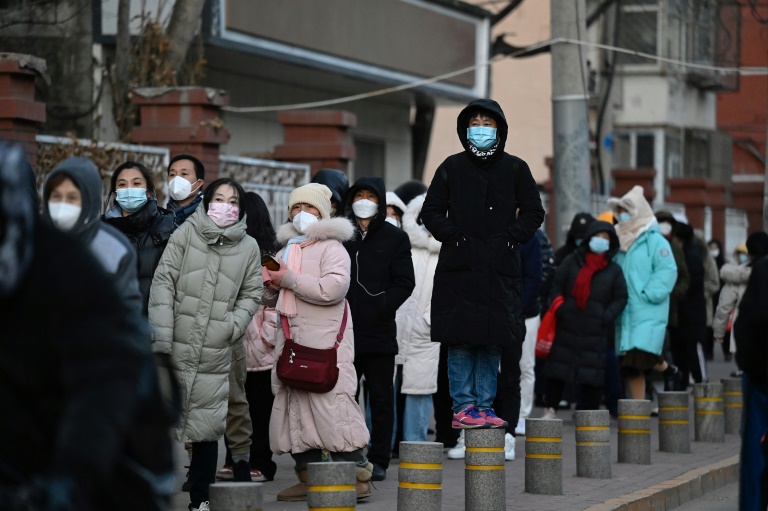
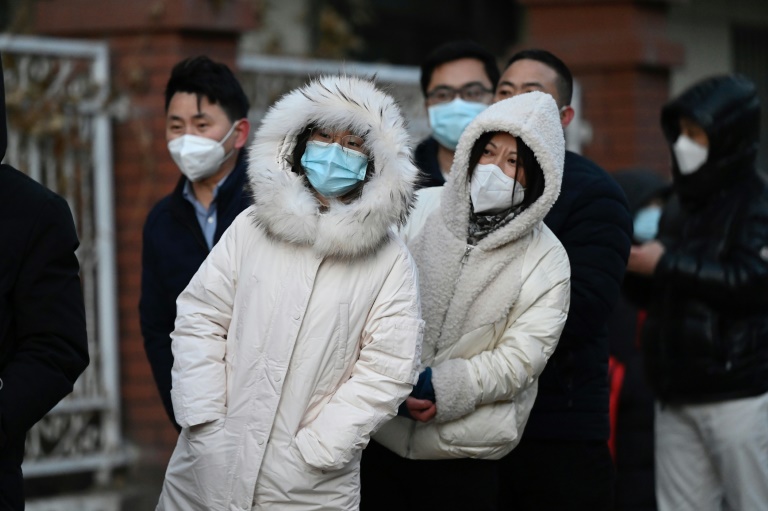
And as officials have dismantled testing facilities, long queues have appeared around those that remain, forcing residents to wait in cold temperatures to get tests that remain obligatory across much of China.

“Students can’t go to school without a 24-hour negative test,” wrote a user on China’s Twitter-like Weibo.

“What’s the point in closing testing booths before dropping the need to show test results completely?” another asked.

Chinese authorities on Monday reported 29,724 new domestic Covid cases.

2022: a year of living dangerously

From the Russian invasion of Ukraine to the overturning of abortion laws in the United States, here is a roundup of the biggest events to mark 2022.

– War in Ukraine –

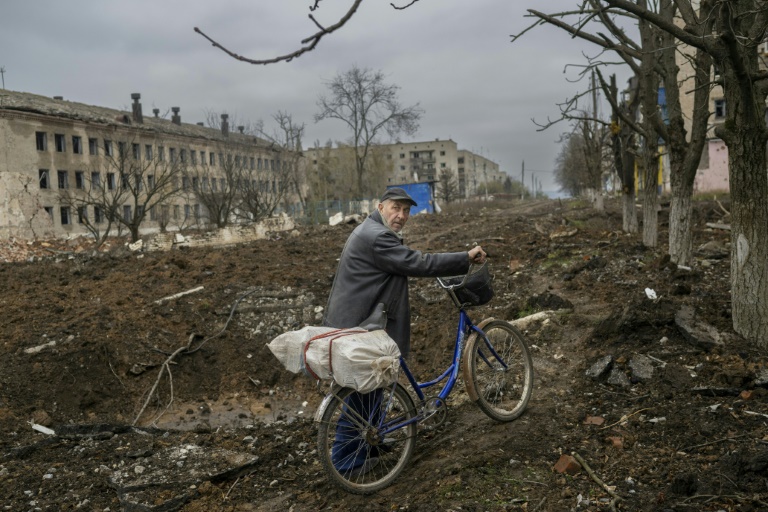
Russian President Vladimir Putin launches the biggest invasion in Europe since World War II when he sends troops into Ukraine on February 24 to “demilitarise and de-Nazify” the country, causing millions of Ukrainians to flee abroad.

The West imposes unprecedented sanctions on Moscow and sends billions of dollars in aid to Ukraine, which repels Putin’s bid to capture the capital, Kyiv, and topple the government of President Volodymyr Zelensky. 

In the south, however, Russian forces capture most of Ukraine’s Black Sea coastline, including the port of Mariupol, which is destroyed in a three-month siege.

In April, Russian forces are accused of massacring scores of civilians in the Kyiv suburb of Bucha.

By September, Ukrainian forces are regaining ground in the northeast and south. Putin hastily annexes four Russian-controlled regions, a move condemned as illegal by the United Nations.

In November, Ukrainian forces chalk up their biggest victory yet when Russian forces retreat from the southern port of Kherson, ending an eight-month occupation. 

– Nightmare on Downing Street –

Britain gets its fifth conservative prime minister in six years. 

Rishi Sunak takes office in October after his tax-cutting predecessor Liz Truss self-combusts in just 44 days — the shortest-ever tenure for a British leader.

Truss’s lightning fall from grace, sparked by a disastrous mini budget, caps a tumultuous 2022 in Britain. The year is marked by the death of its longest-serving monarch, Queen Elizabeth II, at the age of 96 and the forced resignation of Brexiteer premier Boris Johnson after a series of scandals.

– US abortion shock –

The US Supreme Court causes global shockwaves in June when it overturns its landmark 1973 “Roe v Wade” decision enshrining access to abortions nationwide.

Following the ruling, abortion bans are brought in by Republicans in 16 US states, home to 26.5 million women.

The issue impacts November’s midterms. 

There are smaller than expected gains for Donald Trump loyalists in the Republican camp, as US voters in several states side with candidates advocating access to abortion. Trump nonetheless announces he will stand again for president in 2024.

– Xi cements control –

President Xi Jinping cements his control at the helm of China after winning a historic third term in November as leader the world’s second-largest economy.

But the Chinese lose patience with the snap lockdowns, mass testing and curbs on movement occasioned by his signature zero-Covid strategy. 

Thousands of people take part in several days of protests against the restrictions in Beijing, Guangzhou, Shanghai, Urumqi, Wuhan and other cities. Some even dare to call for Xi’s resignation.

Xi’s increasingly unchecked power also causes alarm in Taiwan, after China stages massive military exercises around the island.

– Heatwave after heatwave –

Europe swelters through the hottest summer in its recorded history, with the mercury topping 40 degrees Celsius (104 degrees Fahrenheit) for the first time in Britain. 

Parts of the Arctic and Antarctic, China and the US also experience record temperatures.

Extreme weather events linked to climate change continue to wreak havoc in developing countries.

Flooding in Pakistan affects vast swathes of the country, Nigeria suffers its worst floods in a decade and parts of drought-hit Somalia face the threat of famine.

At the United Nations climate summit in Egypt (COP27), developing nations finally succeed in getting wealthy polluters to agree to pay into a “loss and damage” fund to compensate poorer countries for climate damage. 

– Inflation bites –

The invasion of Ukraine and resulting sanctions on Russia create an energy crisis of a magnitude unseen in half a century, with costs for gas and electricity soaring globally.

Britain sees its energy bills double over the space of a year. Soaring energy prices are also a factor in Sri Lanka’s cost-of-living crisis, which in August forces then-president Gotabaya Rajapaksa to flee abroad.

Inflation soars globally, prompting central banks to aggressively hike interest rates, raising fears of another major debt crisis.

– Far-right on the march –

The far-right makes unprecedented gains in Europe. 

Voters in Italy elect their most right-wing leader since World War II in post-Fascist firebrand Giorgia Meloni.

The anti-immigration Sweden Democrats are the big winners of a general election that brings conservatives to power in that country.

In France, a surge by both the far right and hard left strips centre-right President Emmanuel Macron of his parliamentary majority.

But in Latin America, the right is in decline. 

Veteran left-winger Luiz Inacio Lula da Silva makes a stunning comeback in Brazil, ousting far-right incumbent Jair Bolsonaro. Left-wing leaders also come to power in Colombia and Honduras.

– Iran’s great unveiling –

In Iran, the death of 22-year-old Mahsa Amini following her arrest for alleged violations of the country’s Islamic dress code sparks the biggest protests in years. 

On the street and on social media women and girls defiantly remove their headscarves in an unprecedented challenge to the country’s clerical leadership.

Iran seeks to quell the protests by sentencing some of the protesters to death.

Over 300 people have been killed in the unrest, the authorities said on November 29.

– Peace in Ethiopia –

After two years of conflict that have killed untold numbers of civilians and led to near-famine conditions in Tigray, Ethiopia’s government and Tigrayan rebels agree on a landmark peace deal.

The agreement allows critical humanitarian aid to resume to the northern region.

– World Cup in the desert –

Controversy mars the run-up to the Middle East’s first football World Cup.

Some fans boycott the tournament in Qatar over concerns about human rights and the high number of deaths among migrant workers involved in constructing eight new stadiums.

The decision by the conservative Islamic kingdom to ban alcohol from the stadiums also leaves a bitter taste but as the tournament progresses, the attention shifts to the on-pitch drama.

From DeSantis to Jabeur: 10 people who will make the news in 2023

From Florida governor Ron DeSantis to Tunisian tennis star Ons Jabeur and Britain’s Prince Harry, here are 10 people who are expected to make headlines in 2023.

– Ron DeSantis –

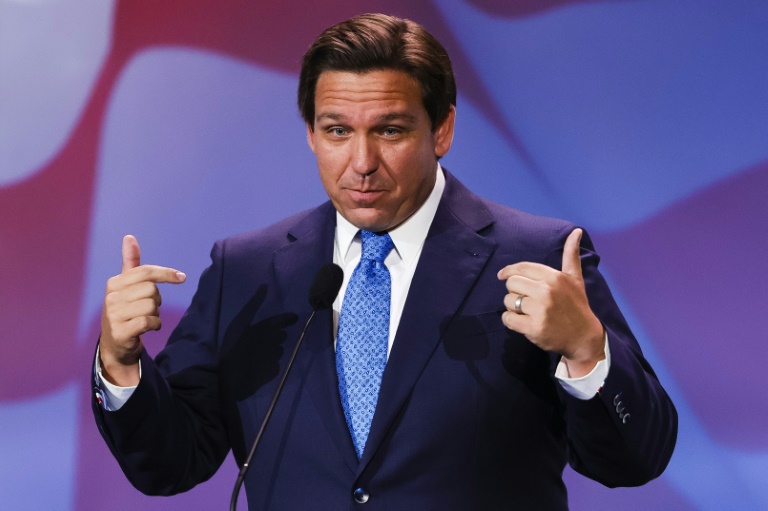
Will Donald Trump’s former apprentice, popular Florida governor Ron DeSantis, turn on his one-time master by challenging him for the Republican nomination for president? 

Trump is already gearing up for a potential battle with his MAGA (Make America Great Again) disciple, whose stock has soared among Republicans.

DeSantis won a landslide re-election in November’s midterms, in which Trump loyalists fared badly. The property mogul has coined a nickname for the self-styled anti-woke warrior: “Ron de Sanctimonious”. 

– Kristalina Georgieva –

The 69-year-old head of the International Monetary Fund will have her work cut out in 2023 to try to head off a new global debt crisis triggered by escalating inflation and interest rates.

Since Russia invaded Ukraine in February, driving up global food and energy prices, the Washington-based fund has provided around $90 billion in support to 16 countries. Her message to countries that may need digging out is: act early.

– Prince Harry –

Britain’s royal family is bracing for more potentially damaging revelations as Prince Harry prepares to release his highly anticipated memoir “Spare”, just four months after the death of Queen Elizabeth II.

Harry has promised an “unflinching” account of life inside The Firm in the book, which will hit the shelves on January 10.

The 38-year-old self-exiled royal and his wife Meghan are already divisive figures in Britain following their tell-all Oprah Winfrey interview in 2021, in which they accused unnamed senior royals of racism.

– Bob Iger –

Disney’s longtime CEO has been called back from retirement to try and work his old magic on the struggling entertainment company, which is burning through cash in its quest to attract streaming customers to Disney+.

But the 71-year-old faces a tall order to return Disney to the glory days of his 2005-2020 tenure. 

He will also have to negotiate the aftermath of Disney’s row with Ron DeSantis. The Florida governor terminated the self-governing status of Disney World in Orlando after it criticised his “Don’t Say Gay” law banning the teaching of LGBTQ issues in schools.

– Ons Jabeur –

Tunisia’s tennis heroine, who became in 2022 the first Arab woman to reach a Wimbledon final, will attempt to win her first Grand Slam title in 2023. 

The 28-year-old world number two, dubbed the “Minister of Happiness” in her homeland for her cheerful disposition and multiple successes, has already three WTA titles to her name.

– Sydney McLaughlin –


US hurdler Sydney McLaughlin, who smashed her own world record in 2022 after winning two Olympic golds (400m hurdles and 4x400m hurdle relay) the previous year in Tokyo, has attracted huge followings for a much overlooked sport. 

The 23-year-old athlete, billed as a once-in-a-lifetime talent, has hinted she could change discipline to the 400m flat. 

She will be one of the most closely watched performers at the world athletics championships in Budapest in August.

– Peter Obi –

The man to watch in Nigeria’s presidential election in February is 61-year-old former governor Peter Obi. 

He has galvanised the youth vote by campaigning as an alternative to the two parties that have dominated power since the end of military rule in 1999. 

The Labour Party candidate, who is promising a “new Nigeria”, has mobilised a small army of young urbanites known as “Obi-dients”, who tout his prudent eight-year management of the finances of Anambra state as proof of his leadership ability.

– Margot Robbie –

Australian actress Margot Robbie, 32, nearly broke the internet when the first pictures of her and Ryan Gosling playing iconic doll duo Barbie and Ken in Greta Gerwig’s film about the Mattel toys were released in June.

Gerwig’s feminist “Barbie” is one of the most keenly awaited releases of 2023, along with Damien Chazelle’s “Babylon”. 

The latter also features “I, Tonya” star Robbie, this time as an unhinged, drugged-up anti-Barbie, in a tale about the wild ways of 1920s Hollywood.

– Tsai Ing-wen –

Taiwan’s pro-democracy president, 66, sparked China’s fury — and huge retaliatory military drills — in 2022 by hosting US House speaker Nancy Pelosi for a visit to the island, which Beijing views as part of its territory and has vowed to retake, by force if necessary. 

Her showdown with Xi Jinping looks set to continue in 2023. Washington is warning that China’s most powerful leader since Mao could seek to seize Taiwan “much faster” than previously thought.

Tsai has compared Beijing’s plans for Taiwan to Moscow’s invasion of Ukraine and insists there will be “no compromise” on the territory’s democratic way of life. 

– Victor Wembanyama –

Such is the excitement around France’s 18-year-old basketball prodigy, who is widely expected to be the first pick in next year’s NBA draft, the association has begun streaming Victor Wembanyama’s games with French club Boulogne-Levallois Metropolitans 92.

Four-time NBA champion LeBron James is among the admirers of the willowy 2.2-metre-tall Frenchman, saying he has a “generational talent” that borders on “alien”.

burs-cb/gil/dhc

Records that tumbled in 2022

From roasting temperatures to rocketing energy prices and millions of refugees fleeing Ukraine, 2022 was a year of extremes.

AFP looks back at some of the records smashed:

– Food and energy prices –

Russia’s invasion of Ukraine in February caused a massive jump in energy and food costs, with the UN Food and Agriculture Organization’s Food Price Index hitting a historic peak in March and the cost of gas in Europe reaching record highs.

The eurozone annual inflation climbed steadily to 10.6 percent in October, the biggest increase since the index began in 1997.

– Refugees –

The war also triggered the biggest wave of refugees in Europe since the end of World War II. More than 7 million Ukrainians fled to other European countries and a further 6.9 million were displaced internally, according to the UN refugee agency UNHCR.

Globally, the number of displaced people exceeded 100 million for the first time.

– Burning up –

Europe sweated through its hottest summer on record, with records tumbling in many countries, including England where the mercury topped 40 degrees Celsius (104 degrees Fahrenheit) for the first time. Forest fires linked to the hotter, drier conditions also guzzled more land than ever before in Europe — over 600,000 hectares.

– Hail of missiles –

North Korea fired a record number of missiles into the Sea of Japan in response to large-scale joint military exercises staged by South Korea and the United States.

A particularly intense peak saw 23 missiles fired in 24 hours on November 2. 

– Farewell Queen –

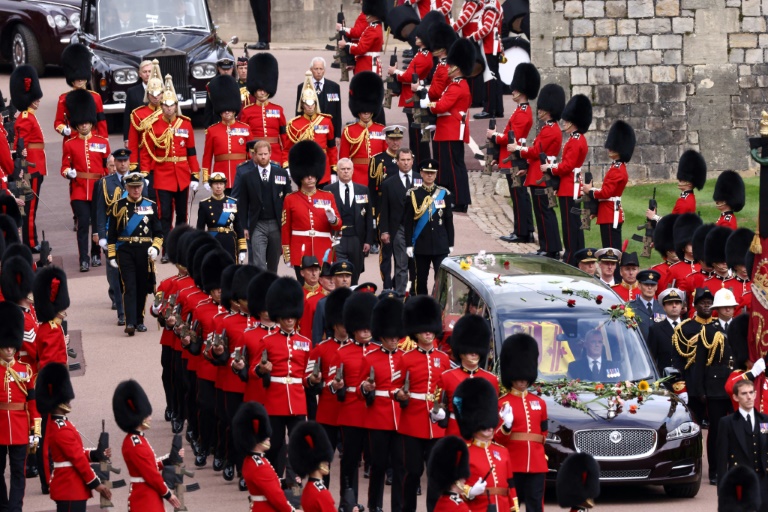
After 70 years on the throne, Britain’s longest-serving monarch, Queen Elizabeth II, passed away on September 8, aged 96.

Before her massive state funeral, an estimated quarter of a million people queued round the clock to view the coffin as it lay in state. 

– Musk mayhem –

It was a big year for Elon Musk, the world’s richest man whose fortune was estimated by Forbes at close to $200 billion at the start of December.

The CEO of Tesla and SpaceX added Twitter to his portfolio for $44 billion and swiftly caused controversy, by firing half the staff and unbanning people who had been thrown off the platform, including Donald Trump.

– New artistic heights –

The art collection of Microsoft co-founder Paul Allen, which included works by Cezanne, Klimt and Van Gogh, was sold by Christie’s for $1.62 billion, the biggest amount ever for an art auction.

Marilyn Monroe was a big hitter too, with one of her photo portraits by Andy Warhol selling for $195 million, making it the most expensive 20th century artwork.

– Tennis titans –

When Rafael Nadal won the French Open for the 14th time, the Spanish ace raised his own record of Grand Slam titles to 22, ahead of Novak Djokovic (21) and Roger Federer (20).

It was also a year of farewells with two of the sport’s greatest players calling time on their glittering careers: Federer and Serena Williams, who has 23 Grand Slams to her name.

– Jet-setting Swift –

The 10th album by the US megastar, “Midnights”, caused such a frenzy that Spotify broke down as more fans sought to listen to it over a single day than any other album.

Ten of its tracks were listed in the top ten Billboard Hot 100, also a first.

Less glorious for Swift was her topping the list for the “worst private jet CO2 emission offenders” among celebrities for her extensive private jet use.

In August when she was awarded the unenviable prize, she had already clocked up 170 flights in her private jet.

– Eight billion humans –

In November the world’s population — which numbered 2.5 billion in 1950 — exceeded eight billion, according to the UN.

Chinese cities relax testing rules as zero-Covid policy eases

Businesses reopened and testing requirements were relaxed in Beijing and other Chinese cities on Monday as the country tentatively eases out of a strict zero-Covid policy that sparked nationwide protests.

Local authorities across China have begun a slow rollback of the restrictions that have governed daily life for years, encouraged by the central government’s orders for a new approach to fighting the coronavirus.

In the capital Beijing, where many businesses have fully reopened, commuters from Monday were no longer required to show a negative virus test taken within 48 hours to use public transport.

Financial hub Shanghai — which underwent a brutal two-month lockdown this year — was under the same rules, with residents able to enter outdoor venues such as parks and tourist attractions without a recent test.

Neighbouring Hangzhou went a step further, ending regular mass testing for its 10 million people, except for those living in or visiting nursing homes, schools and kindergartens.

In the northwestern city of Urumqi, where a fire that killed 10 people became the catalyst for the recent anti-lockdown protests, supermarkets, hotels, restaurants and ski resorts reopened on Monday.

The city of more than four million in the far-western Xinjiang region endured one of China’s longest lockdowns, with some areas shut from August until November.

Authorities in Wuhan, where the coronavirus was first detected in late 2019, and Shandong scrapped the testing requirement for public transport on Sunday.

And Zhengzhou — home to the world’s largest iPhone factory — on Sunday said people will be allowed to enter public places, take public transport and enter their residential compounds without a 48-hour negative test result.

The World Health Organization has cheered China’s loosening of its zero-Covid policy, which came after hundreds took to the streets across the country to call for greater political freedoms and an end to lockdowns.

While some Covid rules have been relaxed, China’s vast security apparatus has moved swiftly to smother further rallies, boosting online censorship and surveillance of the population.

And as officials have dismantled testing facilities, long queues have appeared around those that remain, forcing residents to wait in cold temperatures to get tests that remain obligatory across much of China.

“Students can’t go to school without a 24-hour negative test,” wrote a user on China’s Twitter-like Weibo.

“What’s the point in closing testing booths before dropping the need to show test results completely?” another asked.

Chinese authorities on Monday reported 29,724 new domestic Covid cases.

Tunisians dream of moving to Germany as crisis bites

Germany is becoming a key destination for disillusioned young Tunisians despite a language barrier and the North African nation’s long history of ties with France.  

Europe’s biggest economy, with its low birth rate, is crying out for labour, and many Tunisians, exhausted by years of economic crisis, see an opportunity for a legal path to emigration. 

Numbers are still small but rising fast. Germany granted 5,474 work permits to Tunisians from January to October — up from 4,462 in the whole of last year and more than double the numbers for 2020.

The trend has been stimulated by the fact Germany has no quota restrictions for countries of origin and increasingly recognises foreign diplomas.

Germany “has a huge need for workers, not just in the health and IT sectors but also in hospitality, building, laying fibre-optic cables or driving heavy goods vehicles,” said Narjess Rahmani, a Berlin-based Tunisian who heads the immigration agency “Get In Germany”.

Some employers offer contracts to help ease the visa process and even pay for six months of language tuition to help their future workers.

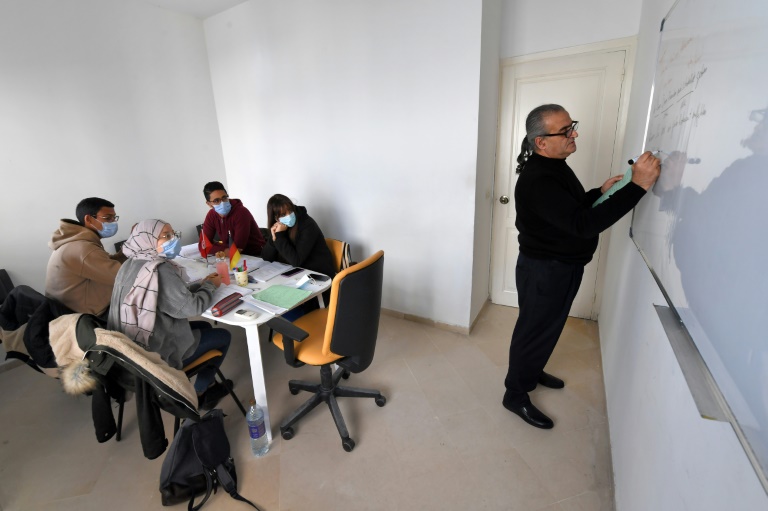
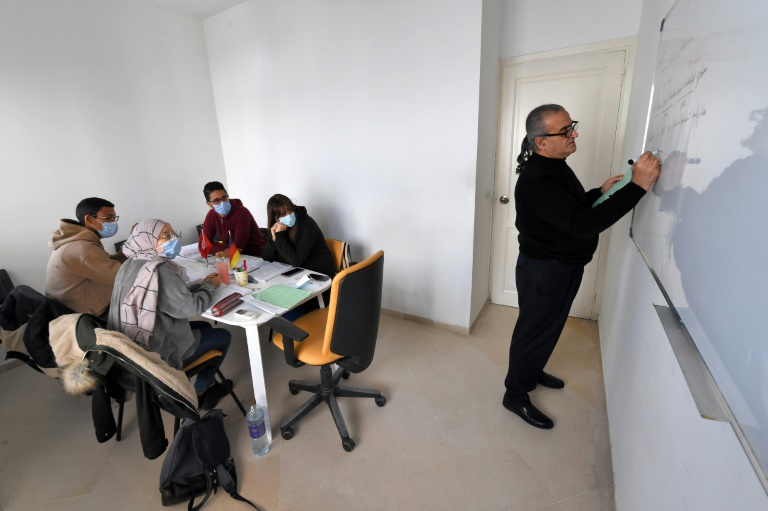
Yeft Benazzouz, who runs a language school in Tunis, said demand for German classes has risen sharply since 2020. 

“Before, I had groups of one or two people,” he said. “Now it’s gone up to six or seven.”

Yeft also teaches basic German cultural norms, including the line of advice that “puenktlich ist schon spaet” — “being on time is already late”. 

– High prices, few jobs –

Tunisia’s history as a French colony means its people are used to foreign languages, Rahmani said. “We are also very open to other cultures, through tourism and the cultural mix throughout our history.”

The language school’s students are often highly qualified, thanks to one of the Arab world’s most reputable education systems, but cursed by unemployment affecting 30 percent among young graduates.

Hydraulic engineer Nermine Madssia, 25, who wears a hijab, said she had chosen Germany over France, citing Islamophobia. 

She said she hoped to get “respect, consideration and a decent salary”, in contrast to Tunisia where the average pay is just 1,000 dinars (around 300 euros and dollars) per month. 

Even highly sought-after IT technicians can expect to earn a maximum of 2,000 dinars early in their careers.

Like many who hope to leave Tunisia, Nermine has had help from her parents in financing German lessons and the visa application.

“With the increase in the cost of living, a salary isn’t enough to start and support a family,” she said.

Inflation topped 9.0 percent year-on-year in October and Tunisia has endured years of economic crisis, pre-dating even the 2011 revolution that toppled dictator Zine El Abidine Ben Ali. 

With sluggish growth, vast public debt and many sectors closed off to new entrants, jobs are sparse, exacerbated by the Covid pandemic and fallout from the Ukraine war.

– Dangerous sea crossings –

President Kais Saied’s 2021 power grab, which has placed Tunisia’s decade-long democratic transition in doubt, has done little to improve economic confidence.

One in every two young people wants to leave, says the Tunisian Forum for Economic and Social Rights group.

Some leave legally — including more than 40,000 engineers and 3,300 doctors in the past five years — while many thousands more attempt dangerous journeys to Italy in makeshift boats, some drowning on the way.

Among the legal departees is Elyes Jelassi, 28, who packed a bottle of olive oil and some spices into his suitcase as he prepared for Germany.

As his family gathered in the town of Korba to wish him goodbye, he said he had never wanted to leave. 

But “after three years of studies and internships in several hospitals, I decided not to make a career in Tunisia,” he said.

Jelassi already has a job contract as a senior nurse in the German city of Wiesbaden, with free accommodation for the first six months. 

As well as a good salary, he said he expects to find better working conditions than in Tunisia, where the health system has been crippled by the pandemic and years of neglect.

“Our hospitals suffer from a lack of equipment, which causes conflict with patients,” he said. “It’s really stressful.”

He chose Germany over Canada, France or the Gulf because he already has friends there and will easily be able to further his studies. 

But he probably won’t stay there forever.

“I’d like to come back when I’m 50,” he said.

Tunisians dream of moving to Germany as crisis bites

Germany is becoming a key destination for disillusioned young Tunisians despite a language barrier and the North African nation’s long history of ties with France.  

Europe’s biggest economy, with its low birth rate, is crying out for labour, and many Tunisians, exhausted by years of economic crisis, see an opportunity for a legal path to emigration. 

Numbers are still small but rising fast. Germany granted 5,474 work permits to Tunisians from January to October — up from 4,462 in the whole of last year and more than double the numbers for 2020.

The trend has been stimulated by the fact Germany has no quota restrictions for countries of origin and increasingly recognises foreign diplomas.

Germany “has a huge need for workers, not just in the health and IT sectors but also in hospitality, building, laying fibre-optic cables or driving heavy goods vehicles,” said Narjess Rahmani, a Berlin-based Tunisian who heads the immigration agency “Get In Germany”.

Some employers offer contracts to help ease the visa process and even pay for six months of language tuition to help their future workers.

Yeft Benazzouz, who runs a language school in Tunis, said demand for German classes has risen sharply since 2020. 

“Before, I had groups of one or two people,” he said. “Now it’s gone up to six or seven.”

Yeft also teaches basic German cultural norms, including the line of advice that “puenktlich ist schon spaet” — “being on time is already late”. 

– High prices, few jobs –

Tunisia’s history as a French colony means its people are used to foreign languages, Rahmani said. “We are also very open to other cultures, through tourism and the cultural mix throughout our history.”

The language school’s students are often highly qualified, thanks to one of the Arab world’s most reputable education systems, but cursed by unemployment affecting 30 percent among young graduates.

Hydraulic engineer Nermine Madssia, 25, who wears a hijab, said she had chosen Germany over France, citing Islamophobia. 

She said she hoped to get “respect, consideration and a decent salary”, in contrast to Tunisia where the average pay is just 1,000 dinars (around 300 euros and dollars) per month. 

Even highly sought-after IT technicians can expect to earn a maximum of 2,000 dinars early in their careers.

Like many who hope to leave Tunisia, Nermine has had help from her parents in financing German lessons and the visa application.

“With the increase in the cost of living, a salary isn’t enough to start and support a family,” she said.

Inflation topped 9.0 percent year-on-year in October and Tunisia has endured years of economic crisis, pre-dating even the 2011 revolution that toppled dictator Zine El Abidine Ben Ali. 

With sluggish growth, vast public debt and many sectors closed off to new entrants, jobs are sparse, exacerbated by the Covid pandemic and fallout from the Ukraine war.

– Dangerous sea crossings –

President Kais Saied’s 2021 power grab, which has placed Tunisia’s decade-long democratic transition in doubt, has done little to improve economic confidence.

One in every two young people wants to leave, says the Tunisian Forum for Economic and Social Rights group.

Some leave legally — including more than 40,000 engineers and 3,300 doctors in the past five years — while many thousands more attempt dangerous journeys to Italy in makeshift boats, some drowning on the way.

Among the legal departees is Elyes Jelassi, 28, who packed a bottle of olive oil and some spices into his suitcase as he prepared for Germany.

As his family gathered in the town of Korba to wish him goodbye, he said he had never wanted to leave. 

But “after three years of studies and internships in several hospitals, I decided not to make a career in Tunisia,” he said.

Jelassi already has a job contract as a senior nurse in the German city of Wiesbaden, with free accommodation for the first six months. 

As well as a good salary, he said he expects to find better working conditions than in Tunisia, where the health system has been crippled by the pandemic and years of neglect.

“Our hospitals suffer from a lack of equipment, which causes conflict with patients,” he said. “It’s really stressful.”

He chose Germany over Canada, France or the Gulf because he already has friends there and will easily be able to further his studies. 

But he probably won’t stay there forever.

“I’d like to come back when I’m 50,” he said.

Asian stocks up, dollar down as China eases more Covid measures

Asian stocks rose and the dollar weakened further as traders welcomed more easing of strict Covid containment measures in China that have hammered the world’s number-two economy.

The moves helped offset a forecast-busting US jobs report that dented hopes that the Federal Reserve will take a softer approach to hiking interest rates in its battle against inflation.

Investor sentiment has picked up considerably in recent weeks on indications the US central bank will slow down its monetary tightening as price rises appear to be slowing and the economy weakens.

That has come as Chinese leaders take a more pragmatic approach to fighting Covid after recent protests across the country that also called for more political freedoms.

The harsh zero-Covid strategy — which saw major cities including Beijing and Shanghai face lockdowns for months — has been blamed for a sharp slowdown in economic growth this year and sent shudders through markets.

The move to reopening helped fuel “market optimism about the tailwinds of a likely acceleration in growth in 2023 for China-sensitive assets”, said SPI Asset Management’s Stephen Innes.

“Although there have been several local changes to Covid policies, China has yet to shift away from the zero-Covid policy officially. Instead, they are trying to balance the expected reopening surge in Omicron cases against minimising economic and social costs.”

The brighter outlook lifted Asian markets with Hong Kong leading the way, jumping more than three percent while Shanghai put on more than one percent.

There were also gains in Tokyo, Sydney, Seoul, Singapore, Taipei and Manila.

The prospect of the world’s number-two economy kicking back into gear helped traders overcome data on Friday showing far more jobs than expected were created in the United States in November.

A big jump in wages added to concerns that the economy remained hot, meaning the Fed still had plenty of work to do to get inflation down to its two percent target.

“If next week’s consumer price index data stays hot… then our forecast for the Fed funds rate to be raised by 50 basis points each in December and February to hit 4.75-5.00 percent may prove too low,” said Mansoor Mohi-uddin, of Bank of Singapore.

“If the Fed instead needs to keep hiking well into 2023 then the near-term outlook for risk assets will remain challenging for investors.”

Still, the dollar remained under pressure against its main peers as investors lower their expectations for US borrowing costs.

The reopening of China also lifted oil prices as demand expectations improve, while a decision by OPEC and top producers to not lift output also boosted the commodity.

– Key figures around 0230 GMT –

Tokyo – Nikkei 225: UP 0.1 percent at 27,808.74 (break)

Hong Kong – Hang Seng Index: UP 3.6 percent at 19,349.17

Shanghai – Composite: UP 1.1 percent at 3,189.66

Euro/dollar: UP at $1.0564 from $1.0531 on Friday

Dollar/yen: DOWN at 134.25 yen from 134.27 yen

Pound/dollar: UP at $1.2324 from $1.2296

Euro/pound: UP at 85.75 pence from 85.73 pence

West Texas Intermediate: UP 2.0 percent at $81.55 per barrel

Brent North Sea crude: UP 2.0 percent at $87.31 per barrel

New York – Dow: UP 0.1 percent at 34,429.88 (close)

London – FTSE 100: FLAT at 7,556.23 (close)

Close Bitnami banner
Bitnami