World

Peru slaughters more than 37,000 poultry after bird flu outbreak

Peruvian authorities have culled at least 37,000 birds on a chicken farm due to bird flu, officials said Thursday.

After previously affecting wildlife in several areas nationwide, this outbreak took place at a farm in Huacho, north of Lima, the national agricultural health agency SENASA said Thursday. 

“They have all been slaughtered; this infectious focus has already ended on a small farm in Huacho (north of Lima), with a population of approximately 37,000 birds,” said Jorge Mantilla, head of SENASA’s disease control, quoted by state news agency Andina. 

Killing infected birds is part of the protocol to control avian flu outbreaks. 

“The aim is to prevent the disease, which is highly lethal in birds, from spreading to other locations,” said veterinarian Mantilla.

Some 14,000 seabirds, mostly pelicans, have died from bird flu in the country in recent weeks. 

In addition to the slaughter of the poultry in Huacho, another cull took place in the city of Lambayeque, in northern Peru, where some 700 birds were slaughtered to prevent the spread of the virus. 

The Peruvian Poultry Association ruled out that the outbreak puts “the consumption of birds and eggs” in the country at risk.   

Peru declared a 90-day national health emergency on Wednesday after confirming cases of H5N1 avian influenza in farm-raised poultry. 

According to SENASA, the disease is being transmitted from “wild birds that come from North America” and reach Patagonia. 

The first outbreak of avian influenza in the Americas occurred in Canada last year, and in January 2022 the virus was detected in the United States, affecting poultry production, according to Peruvian authorities. 

Avian flu is a disease that has no cure or treatment and causes high mortality in wild and domestic birds such as ducks, chickens and turkeys, among others.   

Peru slaughters more than 37,000 poultry after bird flu outbreak

Peruvian authorities have culled at least 37,000 birds on a chicken farm due to bird flu, officials said Thursday.

After previously affecting wildlife in several areas nationwide, this outbreak took place at a farm in Huacho, north of Lima, the national agricultural health agency SENASA said Thursday. 

“They have all been slaughtered; this infectious focus has already ended on a small farm in Huacho (north of Lima), with a population of approximately 37,000 birds,” said Jorge Mantilla, head of SENASA’s disease control, quoted by state news agency Andina. 

Killing infected birds is part of the protocol to control avian flu outbreaks. 

“The aim is to prevent the disease, which is highly lethal in birds, from spreading to other locations,” said veterinarian Mantilla.

Some 14,000 seabirds, mostly pelicans, have died from bird flu in the country in recent weeks. 

In addition to the slaughter of the poultry in Huacho, another cull took place in the city of Lambayeque, in northern Peru, where some 700 birds were slaughtered to prevent the spread of the virus. 

The Peruvian Poultry Association ruled out that the outbreak puts “the consumption of birds and eggs” in the country at risk.   

Peru declared a 90-day national health emergency on Wednesday after confirming cases of H5N1 avian influenza in farm-raised poultry. 

According to SENASA, the disease is being transmitted from “wild birds that come from North America” and reach Patagonia. 

The first outbreak of avian influenza in the Americas occurred in Canada last year, and in January 2022 the virus was detected in the United States, affecting poultry production, according to Peruvian authorities. 

Avian flu is a disease that has no cure or treatment and causes high mortality in wild and domestic birds such as ducks, chickens and turkeys, among others.   

Brussels attacks trial stirs painful memories

Many hundreds of those who survived the 2016 jihadist attacks on Brussels’ metro and airport were left maimed, traumatised or bereaved.

As the trial begins for defendants accused of plotting Belgium’s worst peacetime massacre — which left 32 dead — some will take the chance to have their accounts heard.

Here are some of their stories, as told to AFP:  

– The airport worker –

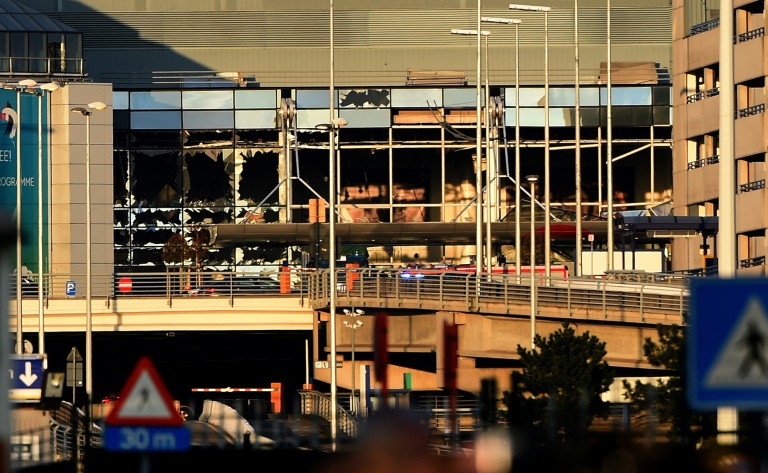
Philippe Vandenberghe was working in the staff area of Brussels’ Zaventem airport on March 22, 2016, when two suicide bombers detonated their devices in the terminal.   

The 51-year-old computer technician has a first aid certificate and immediately set out to help.

“A chance to save lives is the most important thing that can happen,” he said. “I intervened on 18 different people, I’m sure I saved one, probably two or three.” 

The ceiling had collapsed, debris littered the floor and the smoke was still dense. 

He moved cautiously. Some victims had limbs torn off. Two children lay next to a lifeless body — “probably their mother”. 

He tried and failed to give her CPR.

Vandenberghe worked for an hour, pressing blood-drenched baggage carts into service as gurneys to move the dead and dying to the first aid post. 

Eventually, a colleague took him home “in a state of shock”.

A doctor would prescribe him painkillers but his post-traumatic stress disorder was not diagnosed until after he had endured months of sleepless nights.

After being treated in a specialised clinic, he left his airport job in 2019.

“My life was completely destroyed, I lost my friends, my hobbies, my job,” said Vandenberghe, who is now a Red Cross volunteer and hopes to become an ambulance driver.

– Not the same mum –

Danielle Iwens was working at a check-in desk near the site of the blast. Today, the 58-year-old is one of many victims with permanent hearing damage.

“60 percent less in the left ear,” she told AFP.

Today, Iwens still struggles to concentrate and has poor memory. She avoids loud noises and crowds.

“I no longer go to concerts. Never to fireworks, and in restaurants I always sit near an exit,” she said. “I am no longer the same mother, nor the same friend”. 

The attacks worsened the symptoms of her Parkinson’s disease.

Iwens lost a work colleague in the blast and left her job with an airport logistics contractor in 2022, retiring early at the urging of her doctors. 

“The stress and anxiety was too much for my body,” she said.

Like many others, she had a difficult battle with insurers to cover the cost of her care. 

“We rebuilt the airport in six months, and people’s lives have been waiting for six years,” she said.

– The haunted cop –

Christian De Coninck thought he had seen enough in a 40-year police career to armour him against more horror. The Brussels metro blast taught him otherwise.

He arrived at the scene in his role as a police spokesman, to brief journalists on the tragedy unfolding under Brussels’ busy European quarter.

“It was a disaster… things that no one should see. And then that stench coming out of the station,” he said.

De Coninck, now 62-years-old, and retired was confronted by “dozens of people lying on the sidewalk, leaning against the wall”. 

The dead and wounded had been pried from a mangled metro carriage or found on the smoke-filled platform.

After responding to reporters’ questions at the scene, he went with the Brussels mayor to meet the wounded being treated at a makeshift aid station in the foyer of a hotel.

Even though some were saved, the images of the injured were imprinted on his mind.    

“When I entered I saw a person sitting in an armchair, with a bandaged head, haggard eyes, really lifeless. His look still haunts me,” he told AFP.

“There was also a young man, who could not be revived, dead at my feet”. 

De Coninck was diagnosed with PTSD a year later, but his colleagues had already seen his behaviour change, become more aggressive.

After consulting a psychiatrist, he left the force.

In crowded camps, Rohingya refugees embrace family planning

Rohingya cleric Abdur Rashid still believes children are divine gifts, but life in a Bangladeshi refugee camp with six little mouths to feed has left him and his wife unwilling to accept another heavenly blessing.

Earlier this year, his wife Nosmin asked doctors to fit her with a contraceptive implant, a decision that cultural norms among the persecuted and largely Muslim minority would have rendered unthinkable a few years ago. 

But since fleeing a military crackdown in Myanmar five years ago, life in the overcrowded refugee settlements of their reluctant hosts has prompted the couple and many other families to limit the size of their households.

Roughly two-thirds of Rohingya couples are now using some form of birth control — up from virtually none five years ago, according to figures from the UN refugee agency.  

“Children are blessings from God and he’s the one who arranges necessities for them — but we have been stuck in this squalid camp for years now,” Rashid told AFP.

“I prefer not to bring in any more life in the face of this hardship.”

Islam takes no uniform view of birth control — a practice endorsed by some Muslim communities and abhorred by others. 

A few short years ago, many Rohingya believed birth control was against the tenets of their faith. 

That taboo has withered, with Rashid among hundreds of religious leaders within the refugee community delivering sermons in mosques in support of contraceptive use.

He and others have volunteered for a dedicated public health campaign that aid workers and Bangladeshi authorities say has brought a sweeping change in attitudes towards family planning.

Around 190,000 family planning visits were made in the first six months of the year from among the million or so Rohingya refugees living in the Bangladesh camps, including many women seeking abortions. 

“Eventually, I may want one more baby. But not right now,” said mother-of-two Noorjahan Begum, 25.

Begum spoke to AFP after walking through the day to her nearest clinic, carrying her six-month-old son, to ask doctors to terminate her latest pregnancy. 

Dependent on humanitarian aid to survive, Begum said she lacked the resources to adequately feed and shelter another baby.

“God willing, I will take permanent birth control measures after my third child,” she added.

Family planning has a fraught history for the Rohingya, about 750,000 of whom fled their homes in Myanmar five years ago after a crackdown by security forces now subject to a UN genocide investigation.

Before that exodus, the Rohingya were subject to decades of discriminatory policies by Myanmar authorities who considered them illegal immigrants from Bangladesh, despite their long-established presence.  

Myanmar’s government denied them citizenship and prevented them from moving freely in an effort to confine the population to a remote corner of the country. 

It also attempted to forbid Rohingya women from having more than two children and made a written pledge to that effect a condition of issuing marriage licences to Rohingya couples.

– ‘Make their lives harder’ –

Since 2017, Bangladesh has struggled to support its immense refugee population, for whom the prospects of a wholesale return to Myanmar or resettlement elsewhere are vanishingly remote.

Efforts to ease overcrowding in the camps have seen thousands of refugees moved to a flood-prone island — a policy criticised by rights groups, which said many had been relocated against their will.

Bangladesh has also been unnerved by resentment and protests from those living close to the camps, where refugees outnumber the local population two-to-one.

Yet public health experts say the most enthusiastic backers of the family planning campaign have been the refugees themselves. 

“When they came here, almost every Rohingya we met had never heard of condoms or birth control pills,” local family planning office chief Pintu Kanti Bhattacharjee told AFP. 

“Now they welcome it. They understand too many children can make their lives harder.”

US company turns air pollution into fuel, bottles and dresses

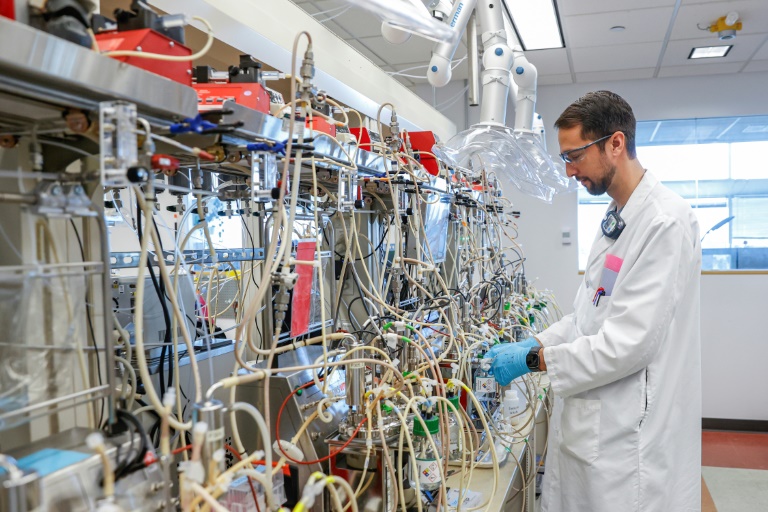
At LanzaTech’s lab in the Chicago suburbs, a beige liquid bubbles away in dozens of glass vats.

The concoction includes billions of hungry bacteria, specialized to feed on polluted air — the first step in a recycling system that converts greenhouse gases into usable products.

Thanks to licensing agreements, LanzaTech’s novel microorganisms are already being put to commercial use by three Chinese factories, converting waste emissions into ethanol.

That ethanol is then used as a chemical building block for consumer items such as plastic bottles, athletic wear and even dresses, via tie-ins with major brands such as Zara and L’Oreal.

“I wouldn’t have thought that 14 years later, we would have a cocktail dress on the market that’s made out of steel emissions,” said microbiologist Michael Kopke, who joined LanzaTech a year after its founding.

LanzaTech is the only American company among 15 finalists for the Earthshot Prize, an award for contributions to environmentalism launched by Britain’s Prince William and broadcaster David Attenborough. Five winners will be announced Friday.

To date, LanzaTech says it has kept 200,000 metric tons of carbon dioxide out of the atmosphere, while producing 50 million gallons (190 million liters) of ethanol.

That’s a small drop in the bucket when it comes to the actual quantities needed to combat climate change, Kopke concedes.

But having spent 15 years developing the methodology and proving its large-scale feasibility, the company is now seeking to ramp up its ambition and multiply the number of participating factories.

“We really want to get to a point where we only use above ground carbon, and keep that in circulation,” says Kopke — in other words, avoid extracting new oil and gas.

– Industry partnerships –

LanzaTech, which employs about 200 people, compares its carbon recycling technology to a brewery — but instead of taking sugar and yeast to make beer, it uses carbon pollution and bacteria to make ethanol.

The bacteria used in their process was identified decades ago in rabbit droppings.

The company placed it in industrial conditions to optimize it in those settings, “almost like an athlete that we trained,” said Kopke.

Bacteria are sent out in the form of a freeze-dried powder to corporate clients in China, which have giant versions of the vats back in Chicago, several meters high.

The corporate clients that built these facilities will then reap the rewards of the sale of ethanol — as well as the positive PR from offsetting pollution from their main businesses.

The clients in China are a steel plant and two ferroalloy plants. Six other sites are under construction, including one in Belgium for an ArcelorMittal plant, and in India with the Indian Oil Company.

Because the bacteria can ingest CO2, carbon monoxide and hydrogen, the process is extremely flexible, explains Zara Summers, LanzaTech’s vice president of science.

“We can take garbage, we can take biomass, we can take off gas from an industrial plant,” said Summers, who spent ten years working for ExxonMobil.

Products already on the shelves include a line of dresses at Zara. Sold at around $90, they are made of polyester, 20 percent of which comes from captured gas.

“In the future, I think the vision is there is no such thing as waste, because carbon can be reused again,” said Summers.

– Sustainable aviation fuel –

LanzaTech has also founded a separate company, LanzaJet, to use the ethanol to create “sustainable aviation fuel” or SAF.

Increasing global SAF production is a huge challenge for the fuel-heavy aviation sector, which is seeking to green itself.

LanzaJet is aiming to achieve one billion gallons of SAF production in the United States per year by 2030.

Unlike bioethanol produced from wheat, beets or corn, fuel created from greenhouse gas emissions doesn’t require the use of agricultural land.

For LanzaTech, the next challenge is to commercialize bacteria that will produce chemicals other than ethanol. 

In particular, they have their sights set on directly producing ethylene, “one of the most widely used chemicals in the world,” per Kopke — thus saving energy associated with having to first convert ethanol into ethylene.

Colombia police sexually abused at least 28 during protests: Amnesty

At least 28 people were sexually abused by police during Colombia’s mass anti-government protests last year, Amnesty International said Thursday.

Having received hundreds of reports of gender-based violence during that upheaval, the international rights NGO documented 28 cases in seven cities, including the South American country’s capital Bogota.

The cases detailed in Amnesty’s 68-page report, entitled “The police does not care for me: Sexual violence and other gender-based violence in the 2021 National Strike,” occurred between April 28 and June 30, 2021.

During that time, hundreds of thousands of people enduring economic strife caused by the pandemic took to the streets to protest against a proposed tax hike by then-President Ivan Duque (2018-2022), which he ultimately withdrew.

Police brutally cracked down on the unprecedented youth-led social uprising, with the UN reporting at least 46 deaths and accusing security personnel of serious human rights violations.

Erika Guevara, Amnesty’s director for the Americas, said at a Bogota event presenting the report that “state violence faced by the population… was part of a generalized pattern against the protesters.”

The Amnesty report details multiple instances of police, after deploying tear gas and other dispersal measures on peaceful gatherings, taking women aside and assaulting them.

The report also describes police insinuating to detained male protesters that they would be punished through sexual violence, before placing them in rooms where they were sexually assaulted.

“The common factor in all cases is the intention behind this use of violence: the perpetrators sought to punish the victims for contravening social gender norms and going out onto the streets to claim their rights,” the report says.

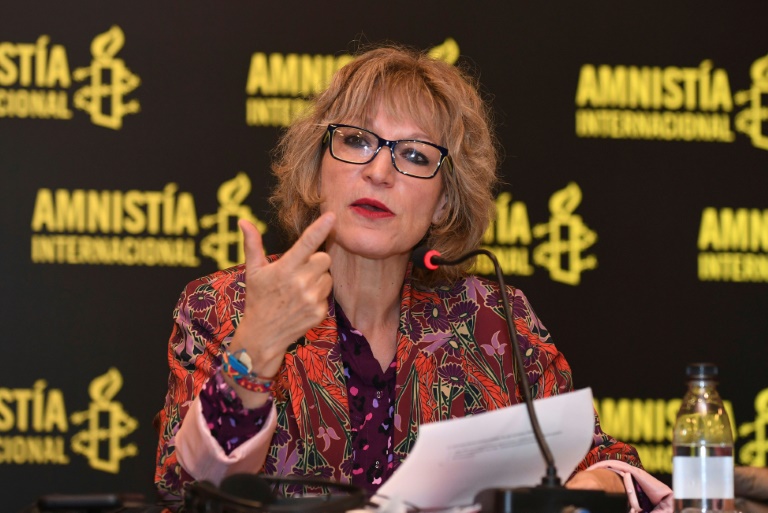
Deploring the lack of convictions for the sexual violence, Amnesty secretary general Agnes Callamard said: “The violence of the street translated into the violence in the judicial system translated into the violence of the system altogether.”

'I like Hitler': Kanye doubles down in wild Infowars stream

Kanye West declared his “love” of Nazis and admiration for Adolf Hitler on Thursday, sparking outrage as another commercial partner announced it was splitting from the troubled superstar.

In an extraordinary hours-long appearance on Infowars, the show fronted by conspiracy theorist Alex Jones, West — now known as Ye — wore a black mask completely covering his face, as he ranted about sin, pornography and the devil.

“I like Hitler,” West said several times.

Even though West hid his face — the mask had neither eye nor mouth slits — there seemed no doubt it was him. Jones addressed him as West as they spoke, Infowars billed the interview as being with West, and at one point Jones took West’s cellphone and posted a tweet on his account that appeared in real time.

West, who has hinted he is running for US president in 2024, has spoken openly about his struggles with mental illness, but his erratic behavior has continued to raise concerns.

The rapper-businessman has seen his commercial relationships crumble after a series of anti-Semitic comments, as the one-time titan of fashion and music appears to have entered a disturbing spiral.

In his lengthy appearance on the Infowars livestream, West opened the throttle, drawing shocked laughter and even disagreement from far-right host Jones.

“I see good things about Hitler also,” he told Jones.

“This guy… invented highways, invented the very microphone that I used as a musician, you can’t say out loud that this person ever did anything good, and I’m done with that.”

Hitler did not invent either of those things.

“I’m done with the classification, every human being has something of value that they brought to the table, especially Hitler.

“I like Hitler.”

– ‘I love Nazis’ –

Jones, a serial provocateur who has been ordered to pay hundreds of millions of dollars in damages for claiming one of America’s deadliest school shootings was a “hoax,” interjected that “the Nazis were thugs and did really bad things.”

West did not back down.

“But they did good things too. We gotta stop dissing the Nazis all the time… I love Nazis,” West said.

Hours after the astonishing performance, social media platform Parler, a favorite of conservatives for its hands-off approach to moderation, said a deal for West to buy the outfit was off.

“Parlement Technologies would like to confirm that the company has mutually agreed with Ye to terminate the intent of sale of Parler,” the network said on Twitter. 

“This decision was made in the interest of both parties in mid-November.”

In October, German sportswear giant Adidas severed its lucrative tie-up with West after the star made anti-Semitic statements, including threatening to “go death con 3 on JEWISH PEOPLE,” using a misspelled reference to US military readiness.

Paris fashion house Balenciaga and US clothing retailer Gap have also ended ties with West, who appeared at a Paris fashion show wearing a shirt with the slogan “White Lives Matter,” a rebuke to the Black Lives Matter racial equality movement.

– Fuentes –

West appeared on the Jones program with Nick Fuentes, the same white supremacist with whom West had dinner last week with Donald Trump at the former president’s Florida estate, in a meeting that provoked outrage.

Thursday’s livestream sparked immediate condemnation from the Republican Jewish Coalition, which dubbed the three men “a disgusting triumvirate of conspiracy theorists, Holocaust deniers, and anti-Semites.”

“Given his praise of Hitler, it can’t be overstated that Kanye West is a vile, repellent bigot who has targeted the Jewish community with threats and Nazi-style defamation,” a statement from the group said.

“Conservatives who have mistakenly indulged Kanye West must make it clear that he is a pariah. Enough is enough.”

US Congress approves bill to avert major freight rail strike

The US Congress passed legislation Thursday to avert a freight rail strike that could have been devastating for the economy, intervening to break an impasse between workers and management as the holiday season approaches.

The bill, overwhelmingly approved by the Senate Thursday after passing with a bipartisan majority in the House of Representatives a day earlier, effectively forces hold-out unions to accept a deal on higher wages, to which a majority of unions already agreed.

After the 80-15 Senate vote, the measure now heads to President Joe Biden for his signature.

Under a 1926 law, Congress is empowered to resolve disputes between railroads and labor unions as part of its power to regulate commerce.

“Working together, we have spared this country a Christmas catastrophe in our grocery stores, in our workplaces, and in our communities,” said Biden in a statement after the vote.

While he expressed “reluctance” to override union ratification procedures, “in this case, the consequences of a shutdown were just too great,” he added.

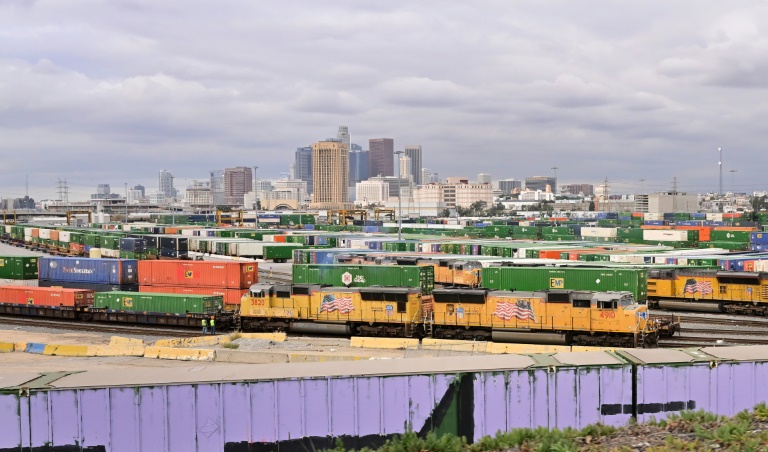
A strike would have seen almost 7,000 freight trains come to a halt, costing more than $2 billion a day, according to the American Association of Railroads.

Biden’s administration had taken a hands-on approach to the long-running deadlock over a contract between organized labor and railroads, with cabinet secretaries in September taking part in all-night negotiations alongside union leaders and rail executives.

After the lengthy session, leaders from both sides announced a tentative agreement.

But since then, members of eight of the 12 rail unions approved the deal, while four voted it down.

While the House earlier backed a separate measure to add mandated paid sick time to the agreement, addressing a major sticking point identified by unions, this did not pass in the Senate on Thursday.

The Senate also failed to approve an amendment for a cooling-off period between workers and management.

But Biden told reporters Thursday that he “negotiated a contract no one else could negotiate.”

“We’re going to avoid the rail strike, keep the rails running, keep things moving,” he added, at a news conference with French President Emmanuel Macron.

– ‘Horrific’ –

But Sean O’Brien, general president of the Teamsters union, said in a tweet that it was “horrific” there were not 60 senators willing to fight for rail workers’ basic rights, referring to the outcome on the sick days measure.

Meanwhile, the Brotherhood of Railroad Signalmen added that “the actions of many today demonstrated they are for the corporate class,” despite elected members of Congress campaigning on supporting workers.

“The dereliction of duty and inability to hold corporations accountable for a lack of good faith to their employees will not be forgotten,” the union said in a statement.

The agreement includes a 24 percent pay increase for workers. However, critics in organized labor had slammed a lack of guaranteed paid sick leave, an omission seen as evidence of “unchecked corporate greed,” as one leading union put it.

The failure of the agreement to win universal approval among unions had set the stage for a potential strike on December 9.

And the prospect of rail paralysis presented a major political risk for Biden, whose administration is already grappling with decades-high inflation and risks of a slowing economy.

A freight freeze would also have impacted passenger service because some passenger trains run on tracks owned by freight companies.

“I made it really clear. I’m going to continue to fight for paid leave for not only rail workers, but for all American workers,” Biden said Thursday.

While noting “significant” gains in the agreement, the Association of American Railroads conceded in a statement that there remains “more to be done” to address workers’ work-life balance concerns.

The National Retail Federation said it was “grateful for the swift action in Congress this week” to implement the tentative agreement, and that a nationwide rail strike would have had “devastating” economic consequences.

US Congress approves bill to avert major freight rail strike

The US Congress passed legislation Thursday to avert a freight rail strike that could have been devastating for the economy, intervening to break an impasse between workers and management as the holiday season approaches.

The bill, overwhelmingly approved by the Senate Thursday after passing with a bipartisan majority in the House of Representatives a day earlier, effectively forces hold-out unions to accept a deal on higher wages, to which a majority of unions already agreed.

After the 80-15 Senate vote, the measure now heads to President Joe Biden for his signature.

Under a 1926 law, Congress is empowered to resolve disputes between railroads and labor unions as part of its power to regulate commerce.

“Working together, we have spared this country a Christmas catastrophe in our grocery stores, in our workplaces, and in our communities,” said Biden in a statement after the vote.

While he expressed “reluctance” to override union ratification procedures, “in this case, the consequences of a shutdown were just too great,” he added.

A strike would have seen almost 7,000 freight trains come to a halt, costing more than $2 billion a day, according to the American Association of Railroads.

Biden’s administration had taken a hands-on approach to the long-running deadlock over a contract between organized labor and railroads, with cabinet secretaries in September taking part in all-night negotiations alongside union leaders and rail executives.

After the lengthy session, leaders from both sides announced a tentative agreement.

But since then, members of eight of the 12 rail unions approved the deal, while four voted it down.

While the House earlier backed a separate measure to add mandated paid sick time to the agreement, addressing a major sticking point identified by unions, this did not pass in the Senate on Thursday.

The Senate also failed to approve an amendment for a cooling-off period between workers and management.

But Biden told reporters Thursday that he “negotiated a contract no one else could negotiate.”

“We’re going to avoid the rail strike, keep the rails running, keep things moving,” he added, at a news conference with French President Emmanuel Macron.

– ‘Horrific’ –

But Sean O’Brien, general president of the Teamsters union, said in a tweet that it was “horrific” there were not 60 senators willing to fight for rail workers’ basic rights, referring to the outcome on the sick days measure.

Meanwhile, the Brotherhood of Railroad Signalmen added that “the actions of many today demonstrated they are for the corporate class,” despite elected members of Congress campaigning on supporting workers.

“The dereliction of duty and inability to hold corporations accountable for a lack of good faith to their employees will not be forgotten,” the union said in a statement.

The agreement includes a 24 percent pay increase for workers. However, critics in organized labor had slammed a lack of guaranteed paid sick leave, an omission seen as evidence of “unchecked corporate greed,” as one leading union put it.

The failure of the agreement to win universal approval among unions had set the stage for a potential strike on December 9.

And the prospect of rail paralysis presented a major political risk for Biden, whose administration is already grappling with decades-high inflation and risks of a slowing economy.

A freight freeze would also have impacted passenger service because some passenger trains run on tracks owned by freight companies.

“I made it really clear. I’m going to continue to fight for paid leave for not only rail workers, but for all American workers,” Biden said Thursday.

While noting “significant” gains in the agreement, the Association of American Railroads conceded in a statement that there remains “more to be done” to address workers’ work-life balance concerns.

The National Retail Federation said it was “grateful for the swift action in Congress this week” to implement the tentative agreement, and that a nationwide rail strike would have had “devastating” economic consequences.

US, France vow to settle spat over green industry subsidies

President Joe Biden said Thursday US support for green industry was not intended to be at Europe’s expense as he and French leader Emmanuel Macron pledged to surmount a serious transatlantic trade dispute.

Speaking after summit talks at the White House, both stressed cooperation amid European Union concern that Biden’s landmark Inflation Reduction Act (IRA) was anti-competitive and would cost European jobs, especially in the energy and auto sectors.

“We agreed to discuss practical steps to coordinate and align our approaches so that we can strengthen and secure the supply chains, manufacturing and innovation on both sides of the Atlantic,” Biden said in a joint news conference.

Biden said he would not apologize for the $430 billion IRA passed in August that largely focuses investments and investment support on climate and social spending. 

But he said the IRA was never intended to disadvantage any US allies.

Instead, it aimed at strengthening industrial supply chains together with partners like Europe to protect against the kind of economic vulnerabilities that surfaced during the Covid-19 pandemic and the war in Ukraine.

“The essence of it is, we’re going to make sure that the United States continues — and just as I hope Europe will be able to continue — not to have to rely on anybody else’s supply chain,” Biden said.

“We are our own supply chain. And we share that with Europe and all of our allies, and they will in fact have the opportunity to do the same thing,” Biden said.

He admitted the legislation is so large and complicated that it unavoidably has “glitches” that need to be worked out.

“My point is, we’re back in business, Europe is back in business. And we’re going to continue to create manufacturing jobs in America, but not at the expense of Europe,” he pledged.

– ‘Resynchronize’ –

Macron acknowledged that the IRA goal of creating jobs and advancing the transition to green energy was “a common objective” shared by Europe.

He said that the IRA’s subsidies for US industry threatened to hurt European businesses, and that a central issue of his talks with Biden was how to “resynchronize” and work together with similar strategies.

After meetings with Biden and members of the US Congress, Macron said he felt that they had the same intent.

“We want to succeed together — not against each other,” Macron said.

“We Europeans need to move faster and stronger to have the same ambition.”

But the two gave no sign of whether they agreed on specific measures.

In early November, EU Internal Market Commissioner Thierry Breton threatened to appeal to the World Trade Organization and consider “retaliatory measures” if the United States did not reverse its subsidies.

The two sides will address specific issues in a meeting on December 5 of the  EU-US Trade and Technology Council.

Close Bitnami banner
Bitnami