World

LGBTQ groups seek legal ban on Swiss conversion therapy

LGBTQ organisations in Switzerland are concerned that without swift action, the country could become a haven for conversion therapy, which is banned in neighbouring France and Germany.

Swiss lawmakers will start debating a motion calling for a ban on Monday, a year after the government pledged to take up the issue of conversion therapy.

Designed to change sexual orientation in favour of heterosexuality, the practice is mainly performed in religious settings.

In Germany and France, “attempts at conversion are already banned, and initiatives to ban them throughout the European Union are under way,” said Pink Cross, the Swiss national umbrella organisation of gay and bisexual men.

“We absolutely have to prevent Switzerland from becoming a refuge for ‘gay healers’.”

Political and civil society representatives have pointed to the arrival in Zurich of the Bruderschaft des Weges (Brotherhood of the Way) association, following the change of law in Germany.

The group, which did not respond to questions from AFP, says on its website that it rejects “any form of conversion treatment” and “does not offer any form of therapy”.

It says it is a “community of men who experience conflict in their sexuality” and “for reasons of our Christian faith, we therefore do not want to live our sexuality”.

– Community pressure –

Across Europe, France, Germany, Greece and Malta have banned conversion therapies, while moves are being considered in Britain, Spain and Belgium.

According to Philippe Gilbert, of the Intercantonal Centre for Information on Beliefs, no religious structures in Switzerland are using the term ‘conversion therapy’.

“We hear the term ‘accompaniment’. There is a wide spectrum of practices: prayer groups, laying on of hands, exorcism in certain cases, but also weekend meetings between men to discover one’s true masculinity,” he told AFP.

“This doesn’t mean that within certain religious communities or para-ecclesial structures there is not some level of violence towards individuals, who may face suggestions or even pressure to work on their sexual orientation.”

Treatments such as electroshock therapy are not conducted in Switzerland, but LGBTQ groups insist an outright ban is needed to send a signal.

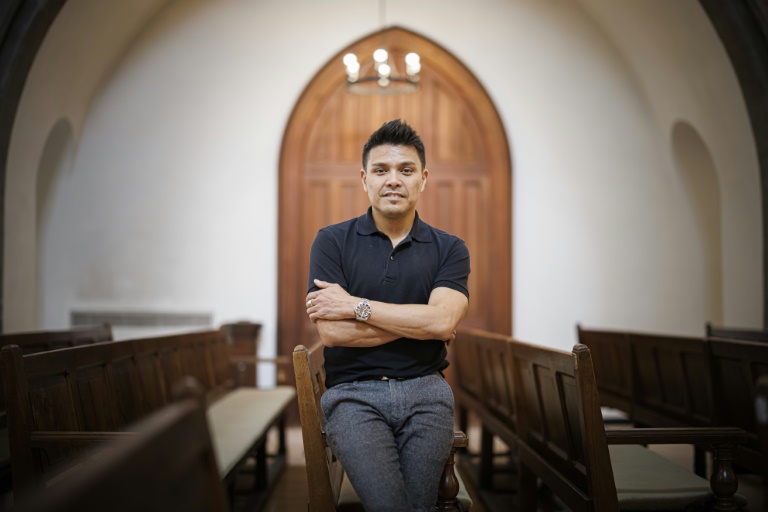
Adrian Stiefel, 45, founder of the LGBTQ branch of the Protestant Church of Geneva, stressed the importance of “raising awareness” in society.

“It’s a problem rooted in mostly religious communities that condemn homosexuality and that, because of this community pressure, really leave the individual with no freedom of choice,” he told AFP.

Having grown up in Geneva in an evangelical environment, for a long time he attempted to “cure” his sexual orientation through group prayer with pastors and meetings with “so-called cured” former gay men.

Aged 19, he underwent a week of “therapy” in the United States with a psychiatrist pastor, combining “psychotherapy with a form of exorcism”.

– ‘I feel the violence now’ –

Stiefel said these practices are often done “in a very benevolent support framework”, making it difficult to realise that they are “not normal”.

Also raised in an evangelical environment, Isaac de Oliveira, 25, a history student in Lausanne, went through a “pastoral accompaniment” to “evolve towards heterosexuality”, while growing up in the rural Wallis region in southwest Switzerland.

At 18, he started attending a seminar by the Torrents de Vie association, with weekly meetings for nearly a year, which included praise and prayers.

“I have a brain that has been modified over the years to pursue an ideal that I am not,” he told AFP.

“I feel the violence now; it was camouflaged behind love that was conditional.”

Conversion therapies are not solely the prerogative of evangelical circles, although they are regularly singled out in the media, according to various observers.

The Swiss Evangelical Network is opposed to conversion “therapies” but thinks legislation is the wrong option. It stresses the right to “sexual self-determination” and the importance of “ecclesial and pastoral accompaniment” when sexuality “generates an inner conflict”.

“We are touching on the bases of religious freedom by wanting to ban too much,” Stephane Klopfenstein, pastor and deputy director of the Swiss Evangelical Network, told AFP.

US, South Korea and Japan impose fresh sanctions on North Korea

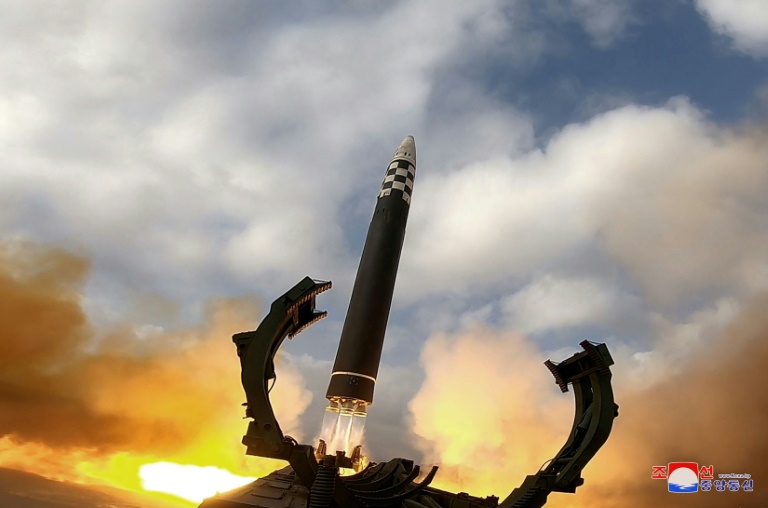
The United States, Japan and South Korea have imposed fresh sanctions on North Korean individuals and entities in response to Pyongyang’s recent slew of missile tests.

Washington’s action, announced Thursday, blocks any assets of three North Korean officials in the United States, a largely symbolic step against an isolated country that has defied international pressure over its weapons programs.

The US Treasury Department also threatened sanctions against anyone who conducts transactions with Jon Il Ho, Yu Jin and Kim Su Gil, who were identified as directly involved in weapons development.

The recent North Korean missile launches, including the test of an intercontinental ballistic missile with the range to hit the US mainland, “pose grave security risks to the region and entire world,” Secretary of State Antony Blinken said in a statement.

The sanctions “underscore our sustained resolve to promote accountability in response to Pyongyang’s pace, scale and scope of ballistic missile launches.”

Blinken added that the action was taken in coordination with US allies South Korea and Japan, and noted that the European Union issued similar designations of the three in April.

Tokyo and Seoul on Friday also announced new sanctions.

South Korea said it would target eight individuals, including a Taiwanese and a Singaporean national.

They have “contributed to North Korea’s nuclear and missile development and evasion of (pre-existing) sanctions”, the South Korean foreign ministry said in a statement.

All are already subject to US sanctions, the ministry added, and South Korea’s new restrictions are expected to “alert the domestic and international community of the risks of transactions with these entities”.

And Japan said that in response to Pyongyang’s “provocative acts”, it was freezing the assets of three North Korean groups — Korea Haegumgang Trading Corp, Korea Namgang Trading Corp and Lazarus Group — and one person, Kim Su Il.

The United States has voiced frustration that China, North Korea’s closest ally, and Russia have blocked efforts at the UN Security Council to impose tougher sanctions.

Ukraine war shows Europe 'not strong enough': Finnish PM

Finnish Prime Minister Sanna Marin on Friday offered a “brutally honest” assessment of Europe’s capabilities in the wake of Russia’s war on Ukraine, stating bluntly that “we’re not strong enough” to stand up to Moscow alone.

Visiting Australia, the leader of the pending NATO member said Vladimir Putin’s invasion and occupation of neighbouring Ukraine had exposed both European weaknesses and strategic blunders in dealing with Russia. 

“I must be very honest, brutally honest with you, Europe isn’t strong enough right now. We would be in trouble without the United States,” she told Sydney’s Lowy Institute think tank. 

Marin insisted Ukraine must be given “whatever it takes” to win the war, adding that the United States had been pivotal in supplying Kyiv with the weapons, finance and humanitarian aid necessary to blunt Russia’s advance. 

“We have to make sure that we are also building those capabilities when it comes to European defence, the European defence industry, and making sure that we could cope in different kinds of situations,” she said. 

Finland won independence from Russia almost 105 years ago and inflicted heavy casualties on an invading Soviet army soon after despite being hugely outgunned. 

The 37-year-old Finnish leader decried European Union policies that had stressed the importance of engagement with Putin and said the bloc should have listened to member states who were part of the Soviet Union until it collapsed. 

Since joining the European Union in 2004, countries such as Estonia and Poland have urged fellow EU members to take a tougher line on Putin, a stance tempered by France, Germany, Italy and Greece — which favoured closer economic ties with Moscow. 

“We should have listened to our Baltic and Polish friends much sooner,” Marin said. 

“For a long time, Europe was building a strategy towards Russia to closen our economic ties, to buy energy from Russia… we thought that this would prevent a war.”

Marin added that this approach had been “proven entirely wrong”. 

“They don’t care about economic ties, they don’t care about the sanctions. They don’t care about any of that.” 

Biden, Macron pledge US-French alliance on Ukraine, democracy

US President Joe Biden and French President Emmanuel Macron emerged from White House talks Thursday pledging to close ranks in helping Ukraine and pressuring Russia’s Vladimir Putin to make peace.

Following lengthy Oval Office talks they also signaled they’d calmed the waters on a burgeoning US-EU trade dispute.

Addressing a joint press conference on the second day of Macron’s rare state visit to Washington, both leaders emphasized their desire to forge a powerful transatlantic alliance supporting democracy — and facing down Russia and China.

On Ukraine, Biden said, “We reaffirm that France and the United States together, with all our NATO allies and the European Union and the G7, stand as strong as ever against Russia’s brutal war.”

The US leader also said that he would be ready to meet with Putin but only “if he is looking for a way to end the war.”

It was Biden’s strongest suggestion so far that he would be prepared to sit down with Putin, but Macron said they both agreed “we will never urge the Ukrainians to make a compromise that will not be acceptable for them.”

– Trade dispute –

The state visit — the first such formal occasion since Biden took office in January 2021 — symbolized how Washington and Paris have buried last year’s bitter spat over the way Australia pulled out of a French submarine deal in favor of acquiring US nuclear subs instead.

At a lavish, late dinner under a glass pavilion on the White House South Lawn, Biden concluded his toast by saying, “Vive la France!” or “long live France.”

In his toast, Macron quoted from the US Constitution and said both countries had often fought together to protect democracy. Referring to election deniers trying to overturn polls in the United States, he said that it was time to stand “shoulder to shoulder” again.

The occasion had seemed to be at threat of being overshadowed by a dispute over US subsidies for the emerging green technology economy. However, both leaders signaled they had managed at least to defuse the row following one hour and 45 minute talks in the Oval Office in the morning.

“We agreed to discuss practical steps to coordinate and align our approaches so that we can strengthen and secure the supply chains, manufacturing and innovation on both sides of the Atlantic,” Biden told their joint news conference.

“We agreed to resynchronize our approaches,” echoed Macron.

The issue revolves around Biden’s signature policy, the Inflation Reduction Act or IRA, which is set to pour billions of dollars into environmentally friendly industries, with strong backing for US-based manufacturers.

European Union governments have been crying foul, threatening to launch a trade war by subsidizing their own green economy sector.

Biden stressed that there would be “tweaks” so that European companies were not unfairly treated. 

“We’re going to continue to create manufacturing jobs in America but not at the expense of Europe,” Biden said.

On China, another area where Europe and the United States have not always been entirely on the same page, the leaders said in a joint statement they “will continue to coordinate on our concerns regarding China’s challenge to the rules-based international order, including respect for human rights, and to work together with China on important global issues like climate change.”

– 21 gun salute –

The day began with a full military honor guard for Macron, including service members from the marines, army, air force and even a detachment of soldiers in 18th-century Revolutionary War garb. Artillery fired off a 21-gun salute, sending puffs of white smoke into the clear, chilly December sky.

Standing on a red-carpeted podium with Macron, Biden said “France is our oldest ally, our unwavering partner in freedom’s cause.”

Between the two leaders, the mutual appreciation was on ample display as they exchanged hugs, hand clasps and compliments throughout the day.

More than 12 hours later, the state visit climaxed with the kind of banquet that has not been seen in Washington since the Covid-19 pandemic shut down the US capital’s typically busy schmoozing scene.

Guests, who included comedian Stephen Colbert, singer John Legend and fashion guru Anna Wintour, were entertained by Grammy-award-winning US musician Jon Batiste.

Their menu kicked off with butter-poached Maine lobster, paired with caviar, delicata squash raviolo and tarragon sauce, then a main course of beef and triple-cooked butter potatoes. The feast rounded off with US cheeses, and finally orange chiffon cake, roasted pears with citrus sauce and creme fraiche ice cream.

Washing all that down were three different wines — all from US vineyards.

bur-sms/des

US, South Korea and Japan impose fresh sanctions on North Korea

The United States, Japan and South Korea have imposed fresh sanctions on North Korean individuals and entities in response to Pyongyang’s recent slew of missile tests.

Washington’s action, announced Thursday, blocks any assets of three North Korean officials in the United States, a largely symbolic step against an isolated country that has defied international pressure over its weapons programs.

The US Treasury Department also threatened sanctions against anyone who conducts transactions with Jon Il Ho, Yu Jin and Kim Su Gil, who were identified as directly involved in weapons development.

The recent North Korean missile launches, including the test of an intercontinental ballistic missile with the range to hit the US mainland, “pose grave security risks to the region and entire world,” Secretary of State Antony Blinken said in a statement.

The sanctions “underscore our sustained resolve to promote accountability in response to Pyongyang’s pace, scale and scope of ballistic missile launches.”

Blinken added that the action was taken in coordination with US allies South Korea and Japan, and noted that the European Union issued similar designations of the three in April.

Tokyo and Seoul on Friday also announced new sanctions.

South Korea said it would target eight individuals, including a Taiwanese and a Singaporean national.

They have “contributed to North Korea’s nuclear and missile development and evasion of (pre-existing) sanctions”, the South Korean foreign ministry said in a statement.

All are already subject to US sanctions, the ministry added, and South Korea’s new restrictions are expected to “alert the domestic and international community of the risks of transactions with these entities”.

And Japan said that in response to Pyongyang’s “provocative acts”, it was freezing the assets of three North Korean groups — Korea Haegumgang Trading Corp, Korea Namgang Trading Corp and Lazarus Group — and one person, Kim Su Il.

The United States has voiced frustration that China, North Korea’s closest ally, and Russia have blocked efforts at the UN Security Council to impose tougher sanctions.

Japanese cannibal who walked free dies age 73

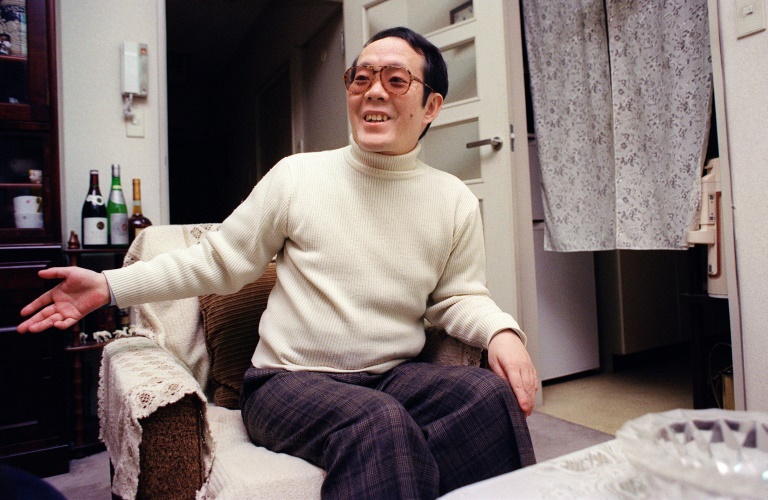
Issei Sagawa, a Japanese murderer known as the “Kobe Cannibal” who killed and ate a Dutch student but was never jailed, has died aged 73.

Sagawa died of pneumonia on November 24 and was given a funeral attended only by relatives, with no public ceremony planned, his younger brother and a friend said in a statement.

The statement was issued by the publisher of a 2019 memoir written by Sagawa’s brother.

In 1981, Sagawa was studying in Paris when he invited Dutch student Renee Hartevelt to his home.

He shot her in the neck, raped her, then consumed parts of her body over the course of three days.

He then attempted to dispose of her remains in the Bois de Boulogne park, where he was arrested.

Psychiatric experts deemed Sagawa unfit to face trial, and he was initially held in a mental institution in France before being deported to Japan.

There, he was ruled sane by Japanese authorities, but as the charges against him in France had been dropped, he was allowed to walk free.

Sagawa made no secret of his crime and capitalised on his notoriety, including with a novel-like memoir titled “In the Fog” in which he reminisced about the murder in vivid detail.

He also recounted details of the incident and his ongoing obsession with cannibalism in interviews and a 2017 documentary, “Caniba”.

Speaking to media outlet Vice, he said he had been “obsessed with cannibalism”.

“My desire to eat a woman had changed into an obligation.”

Tesla hoping its electric Semi will be heavy duty 'game changer'

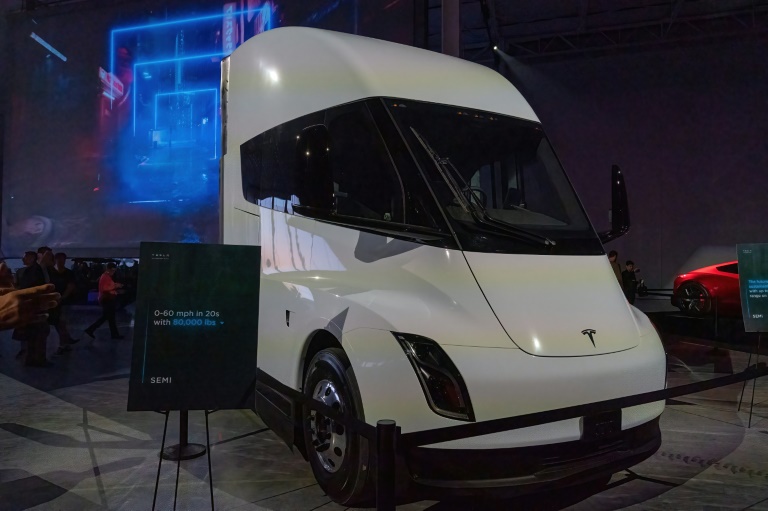
US automaker Tesla on Thursday delivered its first battery-powered heavy duty truck, dubbed “Semi,” and built to tackle long hauls with the handling of a sporty sedan.

“That thing looks like it came from the future,” Telsa chief Elon Musk said while handing over the keys to PepsiCo executives at the vehicle maker’s Nevada manufacturing plant.

With its sleek design, the Semi has been highly anticipated since Musk unveiled a prototype in 2017, but the launch of full-scale production was delayed well past the initial 2019 expectation.

“The sheer amount of drama between five years ago and now is insane,” Musk told a small audience invited to the factory for an event marking the occasion.

“A lot has happened in the world. But, here we are. It’s real.”

In the meantime, other manufacturers have entered the market, from traditional truck makers such as Daimler, Volvo and China’s BYD, to startups like US company Nikola.

The competition has also begun to roll out their deliveries, and have many orders of their own waiting to fill.

However, the truck that “the market has been waiting for… is the one from Tesla,” says Dave Mullaney, a transportation specialist with sustainability think tank RMI.

Legacy manufacturers have primarily converted their diesel-designed trucks to electric.

Tesla’s Semi, on the other hand, “was designed to be electric from the very first design,” says Mullaney.

If the vehicle lives up to expectations, “it’s going to be a huge difference,” he adds.

Musk reiterated the claim Thursday that a Semi had driven 500 miles (800 kilometers) with a total weight of nearly 82,000 pounds (more than 37 metric tons).

The range of electric vehicles currently on offer is only between 250 to 300 miles.

“You have all the power you need to get the job done,” Musk said of the Tesla Semi.

“This is a game changer.”

– Climate conscious hauling –

The use of electric light duty vehicles for short-haul deliveries has been steadily growing, but new regulations are pushing manufacturers and transporters to speed up the transition and build out long-haul capabilities.

The most populous US state, California, has passed a law phasing out combustion engine trucks, which has since been followed by other states.

The European Union is also expected to debate similar standards in the coming months.

And on the PR front, companies are also facing pressure to take more environmentally conscious actions.

They “want to be on the right side of history,” says Marie Cheron of the Europe-based association Transport & Environment.

Those who do not commit to a decarbonization strategy, some of whom say they are waiting for technologies to improve, “are falling behind,” she says.

While making up a scant portion of vehicles on the road, diesel-powered semi trucks account for about a fifth of climate-harming emissions spewed by traffic, according to Musk.

“So from a health standpoint, particularly in cities, this is a huge impact,” Musk said of the shift to electric semis.

Mike Roeth, director of the North American Council for Freight Efficiency, says that another motivation to transition is that drivers who have been able to test them, “love the electric trucks a lot.”

“They’re very quiet, they don’t have the smells of the exhaust, and they are comfortable to drive.”

– Cost considerations –

For the adoption of electric trucks to accelerate, their range must truly live up to promises and batteries ideally would shrink, several analysts told AFP.

The charging infrastructure must also be built out to handle multiple trucks powering up simultaneously and have storage capacity to work during power outages.

The biggest factor, however, will be the price. The Semi price was not disclosed at the Tesla event.

RMI’s Mullaney says that an electric truck currently costs about 70 percent more to buy than a diesel truck, but in terms of fuel and maintenance, it’s cheaper.

With the first delivery accomplished, Wedbush Securities analyst Dan Ives says that Tesla must now “prove they can produce at scale, they need to execute.”

In late October, Musk said that Tesla is aiming to build 50,000 Semis by 2024.

Ives says Musk’s attention is unfortunately focused on his newest acquisition, Twitter, and “the circus show there takes away a monumental moment in Tesla history.”

Tesla hoping its electric Semi will be heavy duty 'game changer'

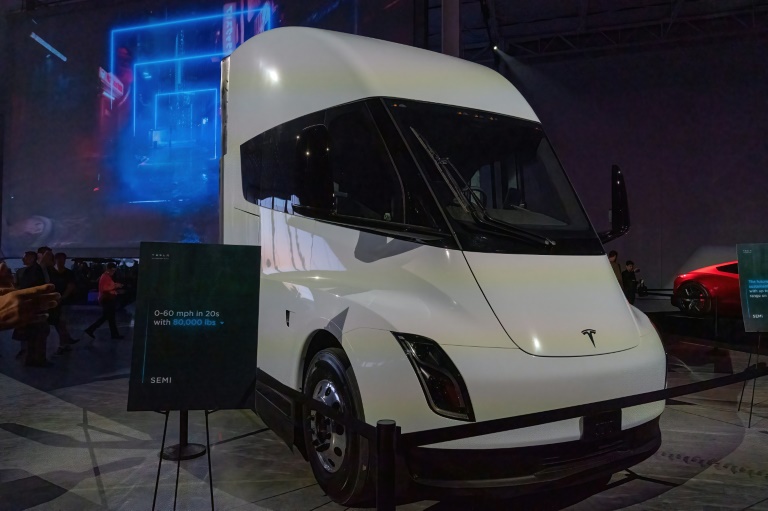
US automaker Tesla on Thursday delivered its first battery-powered heavy duty truck, dubbed “Semi,” and built to tackle long hauls with the handling of a sporty sedan.

“That thing looks like it came from the future,” Telsa chief Elon Musk said while handing over the keys to PepsiCo executives at the vehicle maker’s Nevada manufacturing plant.

With its sleek design, the Semi has been highly anticipated since Musk unveiled a prototype in 2017, but the launch of full-scale production was delayed well past the initial 2019 expectation.

“The sheer amount of drama between five years ago and now is insane,” Musk told a small audience invited to the factory for an event marking the occasion.

“A lot has happened in the world. But, here we are. It’s real.”

In the meantime, other manufacturers have entered the market, from traditional truck makers such as Daimler, Volvo and China’s BYD, to startups like US company Nikola.

The competition has also begun to roll out their deliveries, and have many orders of their own waiting to fill.

However, the truck that “the market has been waiting for… is the one from Tesla,” says Dave Mullaney, a transportation specialist with sustainability think tank RMI.

Legacy manufacturers have primarily converted their diesel-designed trucks to electric.

Tesla’s Semi, on the other hand, “was designed to be electric from the very first design,” says Mullaney.

If the vehicle lives up to expectations, “it’s going to be a huge difference,” he adds.

Musk reiterated the claim Thursday that a Semi had driven 500 miles (800 kilometers) with a total weight of nearly 82,000 pounds (more than 37 metric tons).

The range of electric vehicles currently on offer is only between 250 to 300 miles.

“You have all the power you need to get the job done,” Musk said of the Tesla Semi.

“This is a game changer.”

– Climate conscious hauling –

The use of electric light duty vehicles for short-haul deliveries has been steadily growing, but new regulations are pushing manufacturers and transporters to speed up the transition and build out long-haul capabilities.

The most populous US state, California, has passed a law phasing out combustion engine trucks, which has since been followed by other states.

The European Union is also expected to debate similar standards in the coming months.

And on the PR front, companies are also facing pressure to take more environmentally conscious actions.

They “want to be on the right side of history,” says Marie Cheron of the Europe-based association Transport & Environment.

Those who do not commit to a decarbonization strategy, some of whom say they are waiting for technologies to improve, “are falling behind,” she says.

While making up a scant portion of vehicles on the road, diesel-powered semi trucks account for about a fifth of climate-harming emissions spewed by traffic, according to Musk.

“So from a health standpoint, particularly in cities, this is a huge impact,” Musk said of the shift to electric semis.

Mike Roeth, director of the North American Council for Freight Efficiency, says that another motivation to transition is that drivers who have been able to test them, “love the electric trucks a lot.”

“They’re very quiet, they don’t have the smells of the exhaust, and they are comfortable to drive.”

– Cost considerations –

For the adoption of electric trucks to accelerate, their range must truly live up to promises and batteries ideally would shrink, several analysts told AFP.

The charging infrastructure must also be built out to handle multiple trucks powering up simultaneously and have storage capacity to work during power outages.

The biggest factor, however, will be the price. The Semi price was not disclosed at the Tesla event.

RMI’s Mullaney says that an electric truck currently costs about 70 percent more to buy than a diesel truck, but in terms of fuel and maintenance, it’s cheaper.

With the first delivery accomplished, Wedbush Securities analyst Dan Ives says that Tesla must now “prove they can produce at scale, they need to execute.”

In late October, Musk said that Tesla is aiming to build 50,000 Semis by 2024.

Ives says Musk’s attention is unfortunately focused on his newest acquisition, Twitter, and “the circus show there takes away a monumental moment in Tesla history.”

Hair transplant fad turns deadly in India

All that balding Indian television executive Athar Rasheed wanted was to look handsome and get married. But the 30-year-old’s seemingly harmless hair transplant went fatally wrong. 

Women have been judged on their appearance for millennia, but in an increasingly materialistic Indian society, men are also feeling pressure to look young and presentable for fear of losing their social standing.

More and more prematurely balding men are opting for hair transplants as disposable incomes rise and an emphasis on personal appearance becomes stronger.

But in a weakly regulated sector, the procedure — sometimes performed by amateurs self-trained on YouTube — can have deadly results.

Rasheed was the sole breadwinner for his family and aspired to a better life — owning a house and getting his two sisters married.

But he developed sepsis after undergoing a hair transplant at a clinic in Delhi last year, his distraught mother Asiya Begum, 62, told AFP.

The swelling spread from his head and he suffered terrible agonies.

“My son died a very painful death. His kidneys stopped functioning and then all his other organs collapsed,” she said, breaking down.

Armed with photographs showing Rasheed’s bloated face and black rashes that broke out all over his body in his final hours, the family lodged a police complaint.

Four people, including the two men who performed the surgery, have been arrested and are awaiting trial.  

“I remember my son every day and die a slow death,” she said, sitting in her modest one-room rented flat in a rundown neighbourhood of the capital.

“I lost my son but I don’t want any other mother to lose their child because of fraudulent practices of a few people,” she said.

– Confidence booster –

When performed by a skilled surgeon, a hair transplant can be a life-changing and confidence-boosting experience, especially for young Indian men looking for personal and professional growth.

Harish Iyer, a social commentator and equal rights activist, said men have started focusing more on their grooming as lifestyles change.

“The need to exhibit youth and vitality is echoed by all genders,” Iyer told AFP.

“The pressure was always on women to look a certain way and find acceptance, but the needle is now changing.” 

But at the same time, specialists say increasingly sedentary lifestyles, smoking, improper diet and stress can result in early hair loss. 

A hair transplantation procedure involves removing follicles from a dense area of hair, such as the back of the head, and then implanting them on the affected area of the scalp.

Doctor Mayank Singh performs up to 15 surgeries a month at his upscale clinic in a posh New Delhi neighbourhood.

Most of his patients are aged 25 to 35 and looking to either get married or climb the professional ladder, especially in jobs where appearances matter.

The procedure costs some 350,000 rupees ($4,300), a considerable sum in a country where millions live on less than two dollars a day.

Seedy clinics manned by untrained personnel perform the surgery at a fraction of the cost.

– YouTube workshops –

Singh, who is also the secretary of the Association of Hair Restoration Surgeons of India, said quacks were bringing the industry a bad name.

“People have this myth that this is a minor procedure, whereas the duration of the surgery is pretty long, running into some six to eight hours,” said Singh.

“It involves a lot of local anaesthesia that has to be administered over time. If someone does not have the knowledge about what we need to do, then it can become an unsafe procedure.”

Alarmed by the mushrooming number of clinics offering often subpar service at discounted prices, India’s National Medical Commission issued a warning in September.

“Watching in workshops or on YouTube or similar platforms is not adequate training to start aesthetic procedures including hair transplantation,” it said.

Only properly trained doctors should perform such procedures, it added.

Singh, a plastic surgeon, said it was imperative that the guidelines were strictly adhered to.

He has a long list of happy customers, including doctor Lakshmi Narayanan, who for years avoided going to social gatherings because of his baldness.

“My hair loss started when I was just 18. I used to avoid taking pictures of myself or even looking in the mirror,” Narayanan, now 29, told AFP.

“But not anymore. I can interact confidently with people now and I am looking for a life partner.”

Fed rate hopes weigh on dollar, stocks fall ahead of US jobs data

The dollar struggled to recover on Friday from its recent sell-off as traders grew confident the Federal Reserve will slow its pace of interest rate hikes, while an equities rally sputtered ahead of key US jobs data.

Another positive inflation data release out of the United States added to expectations that the US central bank will take a lighter approach to lifting borrowing costs at its December meeting.

The personal consumption expenditures price index data came a day after Fed boss Jerome Powell indicated that the days of 75 percentage-point rate increases were gone as officials pore over the impact of tightening on the economy.

A report showing factory activity shrinking in November added to the sense that the Fed moves were kicking in.

The developments gave forex traders another reason to shift out of the dollar, pushing it down against its major peers — having surged this year on the back of hawkish Fed policy.

The greenback was under particular pressure from the yen Thursday, having hit a three-decade high in October, while sterling and the yuan were also well up from the record lows touched recently.

The US unit was unable to break higher on Friday.

However, several Fed officials including Powell have lined up to warn that rates will continue to rise and stay elevated, with the possibility of no cut until 2024.

While the mood on trading floors has become much lighter, equity investors took a step back from their latest buying spree as they awaited the release of the closely watched non-farm payrolls report later Friday.

The figures will provide the most recent snapshot of how the world’s top economy is faring in light of the higher rates and four-decade-high inflation.

“Stocks are grinding a touch lower in Asia after a directionless US session, which sees local traders book some profits ahead of the non-farm payroll report,” said SPI Asset Management’s Stephen Innes.

“A strong report could still reinforce the Fed’s hawkish ambitions. So traders are jockeying for position ahead of the moderately high-risk event.”

Tokyo, Sydney, Seoul, Singapore, Taipei, Wellington, Manila and Jakarta all fell.

However, Hong Kong and Shanghai were again the standout performers, boosted by hopes that China is edging towards a pivot from its draconian Covid-zero strategy that has locked down tens of millions and strangled the giant economy.

The move came after widespread protests across the country earlier in the week against almost three years of heavy-handed containment measures and calls for more political freedoms, which have rattled the leadership of Xi Jinping.

– Key figures around 0230 GMT –

Tokyo – Nikkei 225: DOWN 1.9 percent at 27,679.84 (break)

Hong Kong – Hang Seng Index: UP 0.5 percent at 18,822.49

Shanghai – Composite: UP 0.1 percent at 3,167.57

Euro/dollar: DOWN at $1.0514 from $1.0529 on Thursday

Dollar/yen: DOWN at 135.10 yen from 135.34 yen

Pound/dollar: DOWN at $1.2240 from $1.2251

Euro/pound: DOWN at 85.90 pence from 85.91 pence

West Texas Intermediate: UP 0.2 percent at $81.39 per barrel

Brent North Sea crude: UP 0.3 percent at $87.12 per barrel

New York – Dow: DOWN 0.6 percent at 34,395.01 (close)

London – FTSE 100: DOWN 0.2 percent at 7,558.49 (close)

Close Bitnami banner
Bitnami