World

Chile and Bolivia agree on river row, UN court says

Chile and Bolivia have agreed on the status of a disputed cross-border river, the International Court of Justice said on Thursday, adding that judges were not required to rule on the climate-fuelled row.

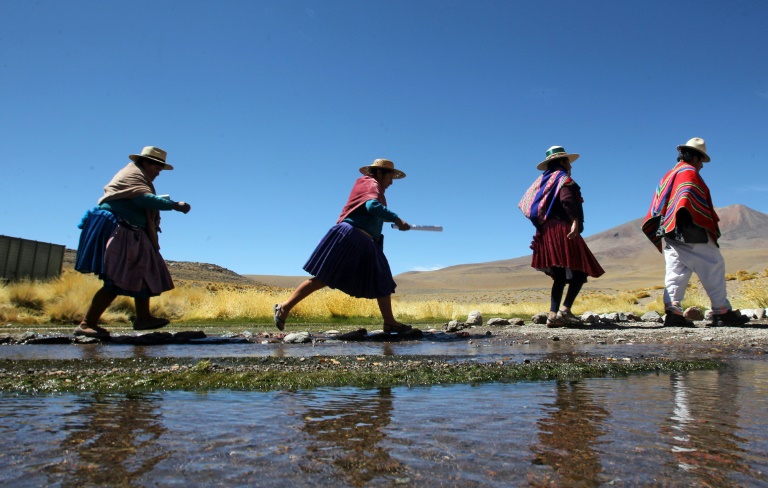
The fractious South American neighbours had been battling at the UN’s top court since 2016 over the Silala River, which flows for five miles (eight kilometres) from Bolivia’s high-altitude wetlands into Chile’s Atacama desert.

Drought-stricken Chile and landlocked Bolivia both claimed victory after the court’s decision, but said it would help them move on and concentrate on preserving scarce water supplies.

The Hague-based ICJ said that there was “no doubt the Silala is an international watercourse” as Chile had argued when it first filed the case in 2016, and that “both parties now agree”.

Judges said they were “not called upon to give a decision” on the core issues that Chile and Bolivia had been arguing about for six years because their positions had largely converged.

The two countries have had no diplomatic relations since 1978, and have been rowing over access to the Pacific Ocean for nearly 150 years.

Santiago had asked the ICJ — which rules on disputes between UN member states — to formally declare the Silala an international waterway and give it equal rights to the river.

La Paz had insisted that the waters flow artificially into Chile due to a system of canals built to collect water from springs, and had demanded its neighbour pay compensation.

Back in 2018 in a separate case, the court sank Bolivia’s bid to gain access to the Pacific, which it lost to Chile in the 1879-1884 War of the Pacific.

Former Bolivian president Evo Morales had previously sought to use the river dispute as a bargaining chip in its fight for a route to the ocean, threatening to reduce the flow of the Silala into Chile and impose fees for its use.

– Troubled waters –

The two countries broke off ties 44 years ago when Bolivia’s last attempt to negotiate a passage to the Pacific broke down in acrimony.

Chilean President Gabriel Boric said his country could “rest easy” with the court’s decision and that the dispute was resolved “in accordance with Chile’s claims.

“Today, after this ruling, we can focus on what unites us and not on what separates us,” Boric said in a speech at the La Moneda presidential palace in Santiago.

Chile’s ICJ representative Ximena Fuentes said the feuding neighbours could now “turn the page” and deepen cooperation on water resources.

Bolivia said the river row was now “concluded”.

“Based on the ruling, Bolivia will exercise the rights it has over the Silala waters,” Bolivian Foreign Minister Rogelio Mayta said in a statement.

During the last hearings on the Silala case in April, Chile’s Fuentes said that faced with the consequences of climate change and freshwater becoming scarcer, “countries are called upon to cooperate.”

Chile is currently in a 13-year “Mega Drought” that is the longest in at least 1,000 years and threatens the country’s freshwater resources.

In Bolivia, the Pantanal — the world’s largest wetlands which also span Brazil and Paraguay — is experiencing its worst drought in 47 years.
Chile and Bolivia agree on river row, UN court says

Chile and Bolivia have agreed on the status of a disputed cross-border river, the International Court of Justice said on Thursday, adding that judges were not required to rule on the climate-fuelled row.

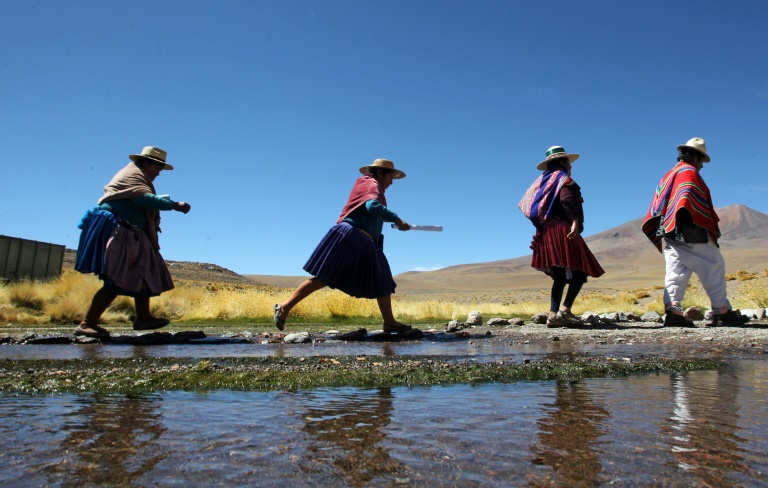
The fractious South American neighbours had been battling at the UN’s top court since 2016 over the Silala River, which flows for five miles (eight kilometres) from Bolivia’s high-altitude wetlands into Chile’s Atacama desert.

Drought-stricken Chile and landlocked Bolivia both claimed victory after the court’s decision, but said it would help them move on and concentrate on preserving scarce water supplies.

The Hague-based ICJ said that there was “no doubt the Silala is an international watercourse” as Chile had argued when it first filed the case in 2016, and that “both parties now agree”.

Judges said they were “not called upon to give a decision” on the core issues that Chile and Bolivia had been arguing about for six years because their positions had largely converged.

The two countries have had no diplomatic relations since 1978, and have been rowing over access to the Pacific Ocean for nearly 150 years.

Santiago had asked the ICJ — which rules on disputes between UN member states — to formally declare the Silala an international waterway and give it equal rights to the river.

La Paz had insisted that the waters flow artificially into Chile due to a system of canals built to collect water from springs, and had demanded its neighbour pay compensation.

Back in 2018 in a separate case, the court sank Bolivia’s bid to gain access to the Pacific, which it lost to Chile in the 1879-1884 War of the Pacific.

Former Bolivian president Evo Morales had previously sought to use the river dispute as a bargaining chip in its fight for a route to the ocean, threatening to reduce the flow of the Silala into Chile and impose fees for its use.

– Troubled waters –

The two countries broke off ties 44 years ago when Bolivia’s last attempt to negotiate a passage to the Pacific broke down in acrimony.

Chilean President Gabriel Boric said his country could “rest easy” with the court’s decision and that the dispute was resolved “in accordance with Chile’s claims.

“Today, after this ruling, we can focus on what unites us and not on what separates us,” Boric said in a speech at the La Moneda presidential palace in Santiago.

Chile’s ICJ representative Ximena Fuentes said the feuding neighbours could now “turn the page” and deepen cooperation on water resources.

Bolivia said the river row was now “concluded”.

“Based on the ruling, Bolivia will exercise the rights it has over the Silala waters,” Bolivian Foreign Minister Rogelio Mayta said in a statement.

During the last hearings on the Silala case in April, Chile’s Fuentes said that faced with the consequences of climate change and freshwater becoming scarcer, “countries are called upon to cooperate.”

Chile is currently in a 13-year “Mega Drought” that is the longest in at least 1,000 years and threatens the country’s freshwater resources.

In Bolivia, the Pantanal — the world’s largest wetlands which also span Brazil and Paraguay — is experiencing its worst drought in 47 years.
Equities slow after gains on Fed rate optimism

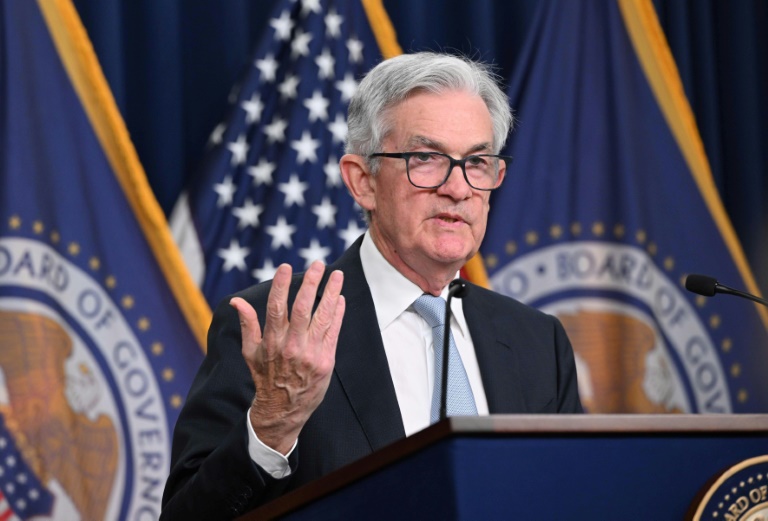
Stocks diverged Thursday after Federal Reserve boss Jerome Powell signalled a moderation in interest rate hikes, as fears over the health of the global economy persist.

Asian and European equities mainly tacked higher as investors eyed news that eurozone unemployment plumbed to a record-low 6.5 percent in October.

But on Wall Street, the three main indices were down in mid-afternoon trading after a slew of mixed data from the United States, as markets balance recession concerns with relief over inflation slowing down.

One survey showed the US manufacturing sector contracted in November for the first time since mid-2020 when the country struggled with the coronavirus pandemic.

“Manufacturing clearly is struggling in the wake of significantly higher borrowing costs,” said Kieran Clancy, senior US economist at Pantheon Macroeconomics.

Another release meanwhile showed a closely-watched measure of US inflation edged down in October.

“The mood has been enhanced by the reaction to Fed chairman Powell’s comments on the potential for a dialling down of the pace of rate hikes when the FOMC (Fed policy) next meets in just under a fortnight’s time,” said Michael Hewson of CMC Markets.

“However the gains are being tempered by concerns over the extent of some of the economic data weakness being seen today,” he added.

Oil prices climbed before this weekend’s OPEC output meeting of key crude producing nations.

– ‘Moderate’ pace –

In a much-anticipated speech Wednesday, Powell said the full effects of the Fed’s belt-tightening had yet to be felt but that it “makes sense to moderate the pace of our rate increases as we approach the level of restraint that will be sufficient to bring inflation down”.

He signalled the US central bank’s December gathering would likely see officials lift borrowing costs by 50 basis points.

The Fed has yanked up rates by a bumper 75 points at each of the last four meetings.

However, Powell did say policy would need to remain tight “for some time” to restore price stability, echoing comments from other Fed officials who suggested there might not be any cuts until 2024.

Analysts said the reaction to Powell’s remarks — which had been expected to be his most dovish in some time — highlighted a sense of relief among investors that a long-hoped-for pivot was on the cards.

On Thursday, the Fed’s preferred inflation measure — the personal consumption expenditures (PCE) price index — rose six percent from a year ago in October, down from a larger jump the month before.

– Asian gains –

In Asia, Hong Kong extended gains into a third day, with tech giants including Alibaba and Tencent tracking massive gains in their US-listed stock, while Shanghai was also up.

Equities were also helped by signs that China is edging towards a more pragmatic approach to fighting the coronavirus, having hammered the economy this year with its strict zero-Covid strategy of lockdowns and mass testing.

After widespread unrest against the measures — and calls for more political freedoms — authorities have announced moves aimed at loosening some restrictions.

The dollar sank, having soared across the board this year as Fed monetary policy diverged more and more from other central banks.

– Key figures around 1645 GMT –

New York – Dow: DOWN 0.9 percent at 34,276.35 points

EURO STOXX 50: UP 0.5 percent at 3,984.50

London – FTSE 100: DOWN 0.2 percent at 7,558.49 (close)

Frankfurt – DAX: UP 0.6 percent at 14,490.30 (close)

Paris – CAC 40: UP 0.2 percent at 6,753.97 (close)

Tokyo – Nikkei 225: UP 0.9 percent at 28,226.08 (close)

Hong Kong – Hang Seng Index: UP 0.8 percent at 18,736.44 (close)

Shanghai – Composite: UP 0.5 percent at 3,165.47 (close)

Euro/dollar: UP at $1.0498 from $1.0406 on Wednesday

Dollar/yen: DOWN at 135.60 yen from 138.07 yen

Pound/dollar: UP at $1.2248 from $1.2058

Euro/pound: DOWN at 85.69 pence from 86.30 pence

Brent North Sea crude: UP 1.2 percent at $88.00 per barrel

West Texas Intermediate: UP 1.9 percent at $82.07 per barrel

burs-raz/kjm

S.Africa's Ramaphosa in talks with ANC as impeachment pressure builds

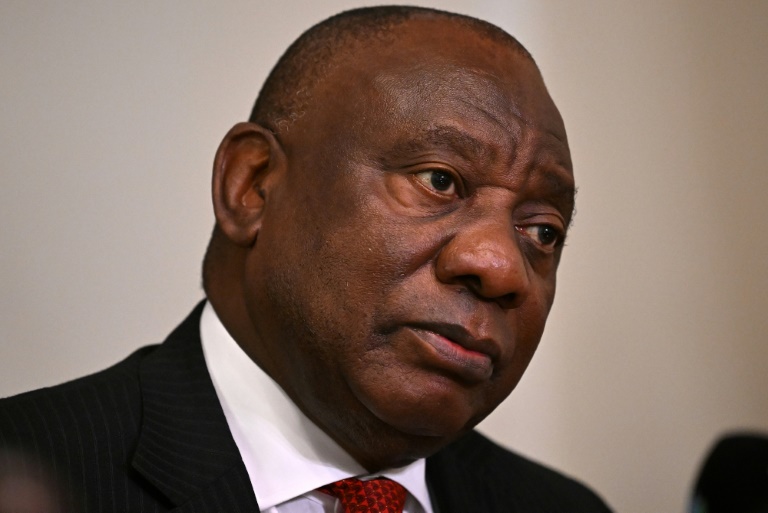
President Cyril Ramaphosa was in talks with South Africa’s ruling party late Thursday as pressure mounted for him to quit or be forced from office over a cash burglary at his farm that he allegedly covered up.

Ramaphosa “is looking at a number of options and… consulting with a number of role players” in the African National Congress (ANC), presidential spokesman Vincent Magwenya told journalists.

The talks were unfolding on the eve of an emergency session of the party’s decision-making body to discuss the escalating crisis. 

The national currency, the rand, fell nearly three percent earlier as Ramaphosa cancelled a scheduled question-and-answer session in parliament following publication of a report into the scandal.

Opposition politicians and critics of Ramaphosa fired a volley of demands that he resign.

“The President has to step aside now and answer to the case,” said senior cabinet minister Nkosazana Dlamini-Zuma, who ran unsuccessfully against Ramaphosa as ANC leader in 2017.

“His best course of action remains immediate resignation,” said the leftist opposition Economic Freedom Fighters (EFF).

Ramaphosa has been under fire since June, when South Africa’s former spy boss filed a complaint with the police.

It alleged Ramaphosa had hidden a burglary at his farm at Phala Phala in northeastern South Africa from the authorities.

Instead, he allegedly organised for the robbers to be kidnapped and bribed into silence.

The vast sum stashed at the farm has cast a dark shadow over Ramaphosa’s bid to portray himself as graft-free after the corruption-stained era of Jacob Zuma.

– Impeachment risk –

A three-person inquiry on Wednesday submitted a report to parliament in which it concluded Ramaphosa “may have committed” serious violations and misconduct.

The report will be examined by parliament on December 6.

That debate could open the way to a vote on impeaching Ramaphosa — a term that in South Africa means to remove from office.

Ramaphosa, in his submission to the panel, steadfastly denied any wrongdoing and warned of the “interest of the stability of government and that of the country.”

But the scandal, complete with details of more than half-a-million dollars stashed beneath cushions at the farm, has come at the worst possible moment for him.

On December 16, he contests elections for the presidency of the ANC — a position that also holds the key to staying on as national president.

The ANC’s National Executive Committee is due to hold urgent talks on Friday, party spokesman Pule Mabe said..

Ramaphosa took office at the helm of Africa’s most industrialised economy in 2018 on a promise to root out corruption.

He now risks becoming the third ANC leader forced out since the party came to power after the end of apartheid in 1994.

Impeachment, in South Africa, means the removal of the president. 

Section 89 of the constitution empowers the National Assembly to remove a sitting president provided the vote is supported by at least two-thirds of lawmakers. 

Serious violation of the constitution, serious misconduct or inability to perform the functions of office are the permitted grounds for an impeachment motion.

Ramaphosa’s predecessor Zuma survived four impeachment votes until his own party, the ANC, forced him to resign over graft in 2018.

The ANC also forced Thabo Mbeki out of office in 2008 in the middle of a power struggle.

– Cash in sofa –

The South African public has been riveted by details from in the investigation, particularly over $580,000 in cash that was stolen from beneath sofa cushions at his ranch.

The sum was payment made by a Sudanese citizen who had bought buffaloes, Ramaphosa said.

Farm staff initially locked the money in an office safe, he said. 

But a manager then decided that the “safest place” to store it would be under the cushions of a sofa inside Ramaphosa’s residence at the farm, he said. 

Ramaphosa told the inquiry that the accusations against him were “without any merit” and asked it not to take the matter “any further.”

But the panel concluded that Ramaphosa had failed to report the theft directly to police.

He had acted in a way inconsistent with holding office and exposed himself to a conflict between his official responsibilities and his private business, it said.

Release of S.Africa's anti-apartheid hero killer delayed

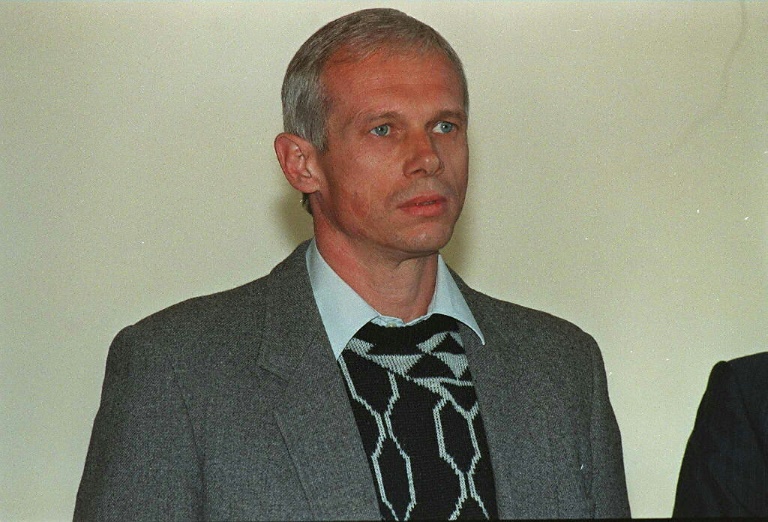
The scheduled release from prison of the killer of South African anti-apartheid hero Chris Hani has been postponed until he has recovered from stab wounds he received this week, the authorities said Thursday.

Janusz Walus, a far-right immigrant from Poland who shot Hani dead in 1993, had been due to be released by Thursday after he was granted parole by the country’s top court.

The decision sparked fierce protests from the ruling African National Congress (ANC) and its ally in the struggle against apartheid, the South African Communist Party (SACP).

“By agreement between his legal representatives and the state attorney, the matter of Mr Walus’ parole will only be finalized after he has received the necessary medical clearance from medical team,” justice ministry spokesman Chrispin Phiri said in a statement. 

Walus is being held at the Kgosi Mampuru II Correctional Centre in Pretoria.

He was attacked by another inmate earlier this week while queueing for food.

Hani, a hugely popular figure and fierce opponent of white rule, was killed in his driveway just as negotiations to end apartheid were entering their final phase. 

The murder almost plunged South Africa into a race war. 

Walus was quickly arrested after the killing and handed the death sentence — a punishment that was commuted to life imprisonment after the death penalty was abolished in post-apartheid South Africa.

The Constitutional Court on November 21 granted Walus parole and gave the prison service 10 days in which to release him.

Walus “was convicted of (a) very serious crime… cold-blooded murder,” Chief Justice Raymond Zondo said.

He “seemed to have been intent on derailing the attainment of democracy by this country,” Zondo said. 

Even so, he said, the law entitled Walus to parole.

The SACP, which Hani used to head, has petitioned the court to go back on its ruling.

EU chief hails 'pragmatic spirit' of UK talks on post-Brexit issues

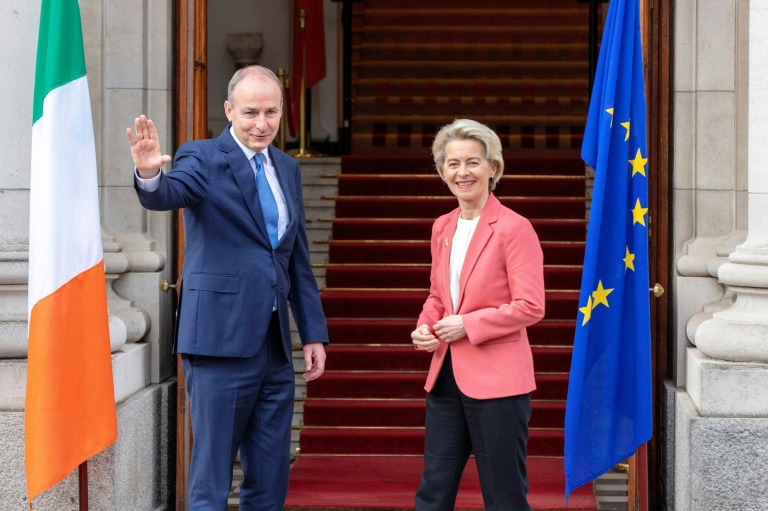
Ursula von der Leyen on Thursday hailed a “more pragmatic spirit” in talks between the UK and the European Union aimed at resolving post-Brexit trade problems in Northern Ireland.

The EU chief told Irish lawmakers in Dublin that the EU was “listening closely” to all voices in British-run Northern Ireland amid the ongoing frictions over the UK’s departure from the bloc.

London and Brussels have been negotiating through this year as they try to ease the tensions over new Northern Irish trade arrangements, which treat the province differently from the rest of the UK.

EU-UK relations were strained during former British prime minister Boris Johnson’s tenure, after he introduced legislation to unilaterally overhaul the so-called Northern Ireland protocol he had agreed with the bloc in January 2020.

Although that draft law is progressing through parliament, the tone of ongoing diplomacy appears to have improved since Rishi Sunak became prime minister on October 25.

“I’m glad that today our talks with London are marked by a new, more pragmatic spirit,” von der Leyen said during a wide-ranging 25-minute speech that lauded Ireland’s place “at the heart of Europe”.

“By applying common sense and focusing on the issues that really matter in Northern Ireland, I believe we can make progress in resolving the practical issues surrounding the protocol.”

But she warned the consequences of “the kind of Brexit chosen by the UK cannot be removed entirely”, and that the bloc’s single market must continue to function in Ireland.

“If both sides are sensitive to this careful balance, a workable solution is within reach,” she added, noting her contacts with Sunak had been “encouraging”.

– ‘No hard border’ –

The protocol was signed separately from the trade and cooperation deal that cemented the UK’s formal departure from the European Union in January 2021.

But its implementation has proven a flashpoint for disagreement between the bloc, member state Ireland and the UK — and even threatens a possible EU-UK trade war if London’s unilateral overhaul legislation passes.

The deal kept Northern Ireland in the European single market and customs union, stipulating checks on goods moving from the rest of the UK to Northern Ireland.

That was designed to prevent a “hard” border between Ireland and Northern Ireland — a key plank of the 1998 Good Friday Agreement that largely ended three decades of conflict.

However, it has enraged hardline unionists, including the Democratic Unionist Party (DUP), leading to their boycott of the devolved assembly in Belfast since February.

Von der Leyen sought to reassure Dublin that the bloc would continue to “stand by the Good Friday Agreement”, insisting “there can be no hard border on the island of Ireland”.

Irish prime minister Micheal Martin, who last month noted “a window of opportunity” existed to end the dispute following face-to-face talks with Sunak, thanked the EU for its “unswerving solidarity” during Brexit.

“Like you, we want to see a new and vital partnership with United Kingdom… which will be achieved if we can resolve the issues relating to the protocol,” he told parliament.

“With the right political will, I believe that we can achieve that.”

SpaceX again postpones Japanese moon lander launch

SpaceX on Wednesday postponed the launch of the world’s first private lander to the Moon, a mission undertaken by Japanese firm ispace.

A Falcon 9 rocket was scheduled to blast off at 3:37 am (0837 GMT) on Thursday from Cape Canaveral in the US state of Florida, but SpaceX said further checks on the vehicle had led to a delay. 

“After further inspections of the launch vehicle and data review, we’re standing down from tomorrow’s launch of @ispace_inc’s HAKUTO-R Mission 1; a new target launch date will be shared once confirmed,” the firm tweeted.

Until now, only the United States, Russia and China have managed to put a robot on the lunar surface.

The mission by ispace is the first of a program called Hakuto-R. 

The lander would touch down around April 2023 on the visible side of the Moon, in the Atlas crater, according to a company statement.

The delay came after the launch had already been postponed by a day due to the need for additional pre-flight checks, SpaceX and ispace said on Wednesday.

Measuring just over 2 by 2.5 meters, the lander carries on board a 10-kilogram rover named Rashid, built by the United Arab Emirates. 

The oil-rich country is a newcomer to the space race but counts recent successes including sending a probe into Mars’ orbit last year. If it succeeds, Rashid will be the Arab world’s first Moon mission.

“We have achieved so much in the six short years since we first began conceptualizing this project in 2016,” said ispace CEO Takeshi Hakamada.

Hakuto was one of five finalists in the international Google Lunar XPrize competition, a challenge to land a rover on the Moon before a 2018 deadline, which ended without a winner. But some of the projects are still ongoing.

Another finalist, from the Israeli organization SpaceIL, failed in April 2019 to become the first privately-funded mission to achieve the feat, after crashing into the surface while attempting to land.

ispace, which has just 200 employees, says it “aims to extend the sphere of human life into space and create a sustainable world by providing high-frequency, low-cost transportation services to the Moon.”

burs-aha/rma

SpaceX again postpones Japanese moon lander launch

SpaceX on Wednesday postponed the launch of the world’s first private lander to the Moon, a mission undertaken by Japanese firm ispace.

A Falcon 9 rocket was scheduled to blast off at 3:37 am (0837 GMT) on Thursday from Cape Canaveral in the US state of Florida, but SpaceX said further checks on the vehicle had led to a delay. 

“After further inspections of the launch vehicle and data review, we’re standing down from tomorrow’s launch of @ispace_inc’s HAKUTO-R Mission 1; a new target launch date will be shared once confirmed,” the firm tweeted.

Until now, only the United States, Russia and China have managed to put a robot on the lunar surface.

The mission by ispace is the first of a program called Hakuto-R. 

The lander would touch down around April 2023 on the visible side of the Moon, in the Atlas crater, according to a company statement.

The delay came after the launch had already been postponed by a day due to the need for additional pre-flight checks, SpaceX and ispace said on Wednesday.

Measuring just over 2 by 2.5 meters, the lander carries on board a 10-kilogram rover named Rashid, built by the United Arab Emirates. 

The oil-rich country is a newcomer to the space race but counts recent successes including sending a probe into Mars’ orbit last year. If it succeeds, Rashid will be the Arab world’s first Moon mission.

“We have achieved so much in the six short years since we first began conceptualizing this project in 2016,” said ispace CEO Takeshi Hakamada.

Hakuto was one of five finalists in the international Google Lunar XPrize competition, a challenge to land a rover on the Moon before a 2018 deadline, which ended without a winner. But some of the projects are still ongoing.

Another finalist, from the Israeli organization SpaceIL, failed in April 2019 to become the first privately-funded mission to achieve the feat, after crashing into the surface while attempting to land.

ispace, which has just 200 employees, says it “aims to extend the sphere of human life into space and create a sustainable world by providing high-frequency, low-cost transportation services to the Moon.”

burs-aha/rma

Pope to visit DR Congo, S. Sudan in early 2023

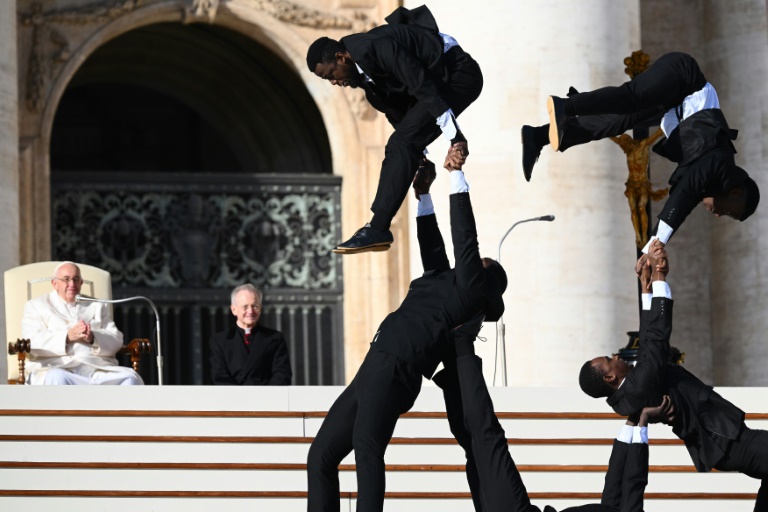
Pope Francis will visit the Democratic Republic of Congo and South Sudan early next year, a trip previously postponed due to problems with his knee, the Vatican said Thursday.

The 85-year-old pontiff will visit Kinshasa during his trip to DRC from January 31 to February 3, before heading to Juba in South Sudan from February 3 to 5.

On the second leg, he will be joined by the Archbishop of Canterbury, Justin Welby, and the Moderator of the General Assembly of the Church of Scotland, Iain Greenshields. 

It will be the pontiff’s fifth visit to the African continent since being elected head of the worldwide Catholic church in 2013. 

The trip was initially planned for July this year but was postponed “at the request of his doctors”, the Vatican said at the time, as the pope underwent treatment for knee pain.

There had also been concerns about security in visiting two countries plagued by violence, according to Italian media reports.

– Commitment to peace –

South Sudan, the world’s newest nation, has suffered from chronic instability since independence in 2011, including a brutal five-year civil war.

The Vatican has been directly involved in efforts to end the conflict, with Pope Francis himself kissing the feet of rival leaders Salva Kiir and Riek Machar in an extraordinary moment in 2019.

It was at the same retreat that he agreed to go to South Sudan with the archbishop and the moderator.

The Church of Scotland said that during the visit to Juba, the three men would “meet local church representatives, civil war victims living in a displaced persons camp and lead a large open-air prayer vigil for peace”.

“The purpose of the visit is to renew a commitment to peace and reconciliation and stand in solidarity with millions of ordinary people who are suffering profoundly from continued armed conflict, violence, floods and famine,” it said.

Archbishop of Canterbury Welby said the three religious leaders “share a deep desire to stand in solidarity with the people of South Sudan”.

– Programme reduced –

The DRC, which Pope John Paul II visited in 1985, is struggling to contain dozens of armed groups in the east of the vast nation.

The pope — who in recent months has used a wheelchair — had initially planned to visit Goma, in the war-torn east of DRC, but this stop has been removed from the new programme.

Carlos Ndaka, auxiliary bishop of Kinshasa, told AFP he welcomed the visit of pope “with great joy”.

However, “it hurts us very much that for security reasons the pope cannot go to Goma, for a visit to comfort our brothers who suffer because of the war”, he said.

Instead, the pontiff will meet with victims from the east in Kinshasa. 

About 40 percent of the estimated 100 million inhabitants of DRC are Catholic. Another 35 percent are Protestant or affiliated to Christian revivalist churches, nine percent are Muslim, and 10 percent follow the Kimbanguist Congolese church.

The country has a secular government, but religion is omnipresent in most people’s lives and the Catholic Church has at times played a leading role in local politics.

The pope’s trip will be the 40th abroad of his papacy.

China signals zero-Covid relaxation after protests

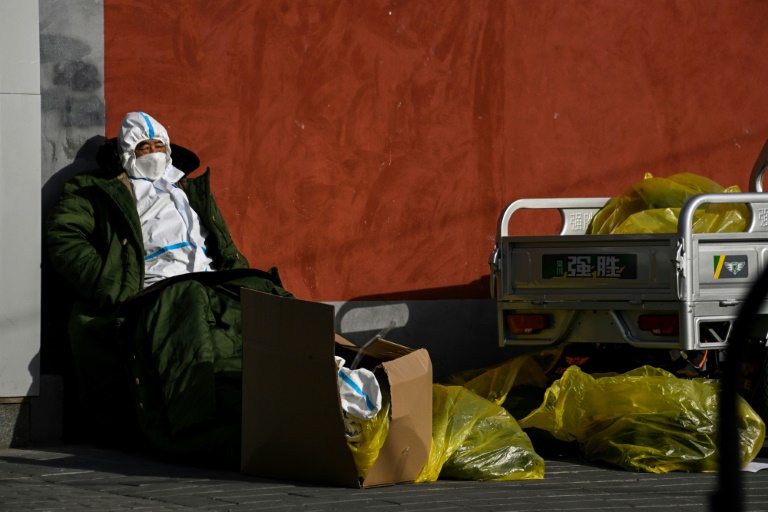
China’s top Covid official and multiple cities have signalled a possible relaxing of the country’s strict zero-tolerance approach to the virus, after nationwide protests calling for an end to lockdowns and greater political freedom.

Anger over China’s zero-Covid policy — which involves mass lockdowns, constant testing and quarantines even for people who are not infected — has sparked protests in major cities, including Beijing, Shanghai and Guangzhou.

But while authorities have called for a “crackdown” in the wake of the demonstrations, they have also begun hinting that a relaxation of the hardline virus strategy could be in the works.

Speaking at the National Health Commission Wednesday, Vice Premier Sun Chunlan said the Omicron variant was weakening and vaccination rates were improving, according to the state-run Xinhua news agency.

Sun — a central figure behind Beijing’s pandemic response — said this “new situation” required “new tasks”.

She made no mention of the zero-Covid policy in her latest remarks, suggesting an approach that has disrupted the economy and daily life might soon be relaxed.

The comments came as the Chinese capital said it would scale back daily testing requirements — a tedious mainstay of life under zero-Covid.

The elderly, those who work from home, students and teachers in online education and others who do not leave home frequently are now exempt from daily tests, Xu Hejian, a spokesman for the Beijing Municipal Government, said Wednesday.

Beijing residents still require a negative Covid test taken within 48 hours to enter public places such as cafes, restaurants and shopping malls, however.

And a report by the state-owned Southern Metropolis Daily Thursday said that local officials in Beijing and Guangzhou were planning to allow some positive Covid cases to quarantine at home instead of at state-run facilities. 

The report was later deleted, and AFP requests for confirmation from local authorities in those cities went unanswered.

– ‘Living with Covid’ –

Southern manufacturing hub Guangzhou — the site of dramatic Tuesday night clashes between police and protesters — also announced an end to daily mass testing for those who do not need to leave home frequently, including the elderly and infants.

On Thursday, Haizhu district, where recent protests took place, went a step further, saying only those in certain sectors including medical staff, pharmacists, sanitary and delivery workers require daily tests. 

Officials the previous day also partially lifted a weeks-long lockdown, despite seeing record virus cases, easing restrictions to varying degrees in all of its 11 districts, including Haizhu.

The central city of Chongqing also said Wednesday that close contacts of Covid cases who met certain conditions would be allowed to quarantine at home — a departure from rules that required them to be sent to central isolation facilities.

Sun’s remarks — as well as relaxations of rules by local authorities — “could signal that China is beginning to consider the end of its stringent zero-Covid policy,” ANZ Research analysts said.

“We believe that Chinese authorities are shifting to a ‘living with Covid’ stance, as reflected in new rules that allow people to do ‘home isolation’ instead of being ferried away to quarantine facilities.” 

The country reported 35,800 domestic covid cases on Thursday, most of them asymptomatic.

– ‘Sign of weakness’ –

As China reaches the third anniversary of the pandemic first being detected in the central city of Wuhan, its hardline approach to the virus has stoked unrest not seen since the 1989 pro-democracy protests.

A deadly fire last week in Urumqi, the capital of the northwestern region of Xinjiang, was the catalyst for the outrage, with people blaming Covid curbs for trapping victims inside the burning building.

But demonstrators have also demanded wider political reforms, with some even calling for President Xi Jinping to stand down.

China’s strict control of information and continued travel curbs have made verifying protester numbers across the vast country very challenging.

However, the widespread rallies seen over the weekend are exceptionally rare in China.

The 1989 pro-democracy protests ended in bloodshed when the military moved in, most famously in Beijing’s Tiananmen Square and surrounding areas.

The death on Wednesday of former Chinese leader Jiang Zemin — who came to power just after Tiananmen and played a key role in the suppression of the demonstrations — spurred comparisons between the two protest movements.

Wang Dan, who was jailed and then exiled after the Tiananmen pro-democracy movement was crushed, told reporters in Japan on Thursday that China’s recent string of protests proved that younger Chinese are not politically apathetic.

“The first feeling that came to my mind when I witnessed the incredible protests across China was the spirit of 1989 has come again, after 33 years,” Wang said speaking in Tokyo.

“So this is a big significance of this movement, it reveals the truth. The truth is that it’s not a harmonious society… there’s already a lot of conflict between society and the government.”

Close Bitnami banner
Bitnami