World

Biden, Macron pledge 'unwavering' alliance, but trade dispute looms

President Joe Biden greeted President Emmanuel Macron at the White House on Thursday with full-scale military honors and a pledge to uphold the “unwavering” US-French alliance ahead of talks on Ukraine, China and a looming trade dispute.

Service members from the marines, army, air force and even a detachment of soldiers in 18th century Revolutionary War garb paraded in front of the White House. Artillery fired off a 21-gun salute, sending puffs of white smoke into the clear, chilly December sky.

Standing on a red-carpeted podium with Macron, Biden said “France is our oldest ally, our unwavering partner in freedom’s cause.”

Like Biden, Macron noted that the two countries had stood side by side through many wars. Referring to the Western alliance helping Ukraine to confront the Russian invasion, Macron said “we need to become brothers in arms once more.”

The two presidents then met in the Oval Office for discussions on Ukraine, handling the rise of China and European fears that Biden’s economic policies will lead to a trade war.

Biden and Macron were then to give a joint press conference before winding up the day with a lavish dinner featuring French favorites of wine and cheese — but in both cases American-made.

– Subsidies dispute –

The visit symbolizes how Washington and Paris have buried last year’s bitter spat over the way Australia pulled out of a French submarine deal in favor of acquiring US nuclear subs instead.

However, Macron has made clear, in unusually blunt language, that he is not just in Washington for the niceties.

On his first day of the visit Wednesday, when he toured NASA headquarters, Arlington National Cemetery and met US lawmakers, the French leader surprised his hosts with a bitter attack on Biden’s signature policy to boost the US green economy, saying it would “kill” European jobs.

On Thursday, right before arriving at the White House, he repeated his criticism in an ABC television interview where he said Biden’s policy would remove “a level playing field.”

The legislation, called the Inflation Reduction Act or IRA, is set to pour billions of dollars into environmentally friendly industries, with strong backing for US-based manufacturers. The White House touts the IRA as a groundbreaking effort to reignite US manufacturing and promote renewable technologies.

However, European Union governments are crying foul, threatening to launch a trade war by subsidizing their own green economy sector.

“The consequence of the IRA is that you will perhaps fix your issue but you will increase my problem. I’m sorry to be so straightforward,” Macron said on Wednesday, warning Biden could “split the West.”

The White House responded by insisting that European companies have nothing to fear from the IRA.

US advances in the clean energy economy will help Europeans too, White House Press Secretary Karine Jean-Pierre said. The IRA “presents significant opportunities for European firms as well as benefits to EU energy security. This is not a zero-sum game.”

– Menu and music –

Aside from the trade dispute fireworks, most of the visit revolves around kindling the long, if often slightly prickly US-French diplomatic friendship.

On Wednesday evening, Macron and his wife Brigitte joined Biden and First Lady Jill Biden at an upscale Washington Italian restaurant.

The state dinner at the White House will return grand-scale entertainment to Washington in a way not seen since the Covid-19 pandemic shut down the capital’s typically busy schmoozing scene.

Grammy-award-winning American musician Jon Batiste will perform at the banquet, which the White House said will kick off with butter-poached Maine lobster, paired with caviar, delicata squash raviolo and tarragon sauce.

The main course features beef and triple-cooked butter potatoes, before leading to the cheese course of award-winning US brands, and finally orange chiffon cake, roasted pears with citrus sauce and creme fraiche ice cream.

Washing all that down will be three different wines — all from US vineyards.

– China high on agenda –

Trade tensions, however, are only part of the uncomfortable flip side to the red carpet occasion.

Another gripe in Europe is the high cost of US liquid natural gas exports — which have surged to help compensate for canceled Russian deliveries.

There is also divergence on how to deal with the rise of superpower China. The question — with Washington pursuing a more hawkish tone and EU powers trying to find a middle ground — is unlikely to see much progress.

“Europe has since 2018 its own, unique strategy for relations with China,” tweeted French embassy spokesman Pascal Confavreux in Washington.

White House National Security Council spokesman John Kirby said China will be “very high on the agenda” this week but stressed that both countries share a broad approach.

“We believe that not only France, but every other member of the G7 — frankly, our NATO allies too — see the threats and challenges posed by China in the same way.”

Key US inflation index ticks down in October: official data

A closely-watched measure of US inflation edged down in October, government data showed Thursday, with costs of goods easing while incomes grew and spending remained resilient.

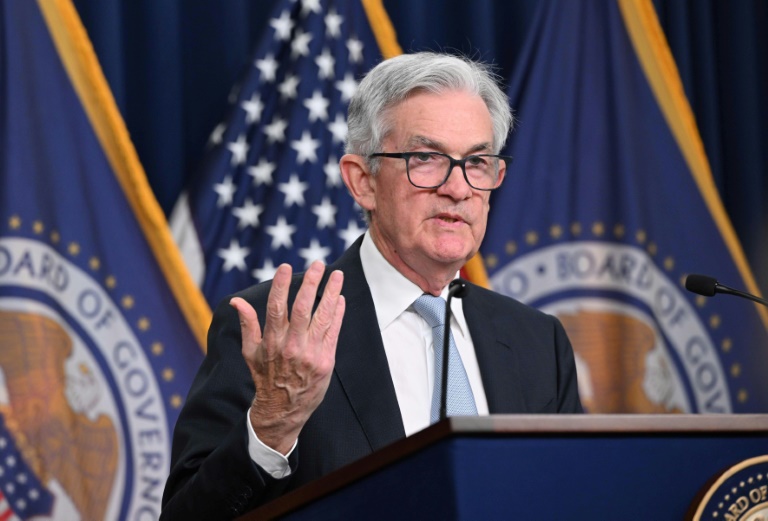
The latest figures are welcome news a day after Federal Reserve Chair Jerome Powell signaled it could soon be time to moderate an aggressive campaign to cool the economy, although he maintains that inflation “remains far too high” for now.

The personal consumption expenditures (PCE) price index — the Fed’s preferred inflation measure — rose 6.0 percent from a year ago in October, down from a larger jump the month before, Commerce Department figures showed.

The central bank focuses on the PCE price index as it reflects consumers’ actual spending, including shifts to less pricey items, unlike the more well-known consumer price index.

“We are seeing initial signs that we are making progress in tackling inflation,” President Joe Biden said in a statement after the data release.

This is good news for Americans, Biden added, though he cautioned that “it will take time to bring inflation back to normal” and there could be “setbacks along the way.”

On a monthly basis, the PCE index held steady at 0.3 percent.

While there was an uptick in prices of goods like gasoline and other energy products, this was partly offset by “widespread decreases in prices for durable goods,” the Commerce Department said.

Excluding the volatile food and energy segments, the PCE price index rose 5.0 percent in October, year over year, also easing from before.

As families struggle with surging costs, worsened by logistics problems and fallout from Russia’s invasion of Ukraine, the Fed embarked on a forceful effort to cool demand.

It raised the benchmark lending rate six times this year, including four steep rate hikes, with effects now trickling through the world’s biggest economy.

The latest data could lead to some reprieve, but economist Rubeela Farooqi of High Frequency Economics warned Thursday that inflation measures “remain well above target and support a move up in rates into restrictive territory.”

Compared with a year ago, food prices remained 11.6 percent higher and energy costs were 18.4 percent more.

Meanwhile, household spending picked up in October by 0.8 percent, led by expenditure on new motor vehicles and gas, along with food services and accommodations.

“Household spending has remained resilient in the face of a 40-year high in inflation and rising borrowing costs. However, some softening can be expected going forward, as the Fed hikes rates” further, said Farooqi.

World equities extend gains on Fed rate optimism

Global stocks mostly rose Thursday as Federal Reserve boss Jerome Powell flagged a moderation in interest rate hikes, while China signalled a softer approach to fighting Covid.

Asian and European equities tacked higher as investors also eyed news that eurozone unemployment plumbed to a record-low 6.5 percent in October.

On Wall Street, the Dow was down but the Nasdaq and S&P 500 rose after a closely-watched measure of US inflation edged down in October, data showed Thursday, in news likely to bring more relief following Powell’s comments.

Oil prices climbed before this weekend’s OPEC output meeting of key crude producing nations.

– ‘Positive news’ –

“Powell… signalled a potential slowing of interest rate hikes,” noted equity analyst Matt Britzman at UK stockbroker Hargreaves Lansdown.

“Markets have been clinging to every scrap of positive news lately and this was a continuation of that trend.”

In a much-anticipated speech Wednesday, Powell said the full effects of the Fed’s belt-tightening had yet to be felt but that it “makes sense to moderate the pace of our rate increases as we approach the level of restraint that will be sufficient to bring inflation down”.

He signalled the US central bank’s December gathering would likely see officials lift borrowing costs by 50 basis points.

The Fed has yanked up rates by a bumper 75 points at each of the last four meetings.

However, Powell did say policy would need to remain tight “for some time” to restore price stability, echoing comments from other Fed officials who suggested there might not be any cuts until 2024.

Analysts said the reaction to Powell’s remarks — which had been expected to be his most dovish in some time — highlighted a sense of relief among investors that a long-hoped-for pivot was on the cards.

On Thursday, the Fed’s preferred inflation measure — the personal consumption expenditures (PCE) price index — rose six percent from a year ago in October, down from a larger jump the month before.

– Santa Rally on cards? –

“For the first time in an age it feels like Powell is telling markets what they want to hear,” said AJ Bell investment director Russ Mould.

“The message that an easing in the pace of rate hikes could come before the end of the year was just what investors were looking for and raises the prospect of a Santa Rally heading into Christmas.”

The main US indices had surged in response on Wednesday, with the Nasdaq leading the way as rate-sensitive tech firms rocketed.

Hong Kong extended gains into a third day, with tech giants including Alibaba and Tencent tracking massive gains in their US-listed stock, while Shanghai was also up.

Equities were also helped by signs that China is edging towards a more pragmatic approach to fighting the coronavirus, having hammered the economy this year with its strict zero-Covid strategy of lockdowns and mass testing.

“We shouldn’t be naive to the fact that a move away from the (Covid-zero) policy won’t be easy and there’ll be plenty of setbacks. But it’s certainly a step in the right direction,” said OANDA’s Craig Erlam.

After widespread unrest against the measures — and calls for more political freedoms — authorities have announced moves aimed at loosening some restrictions.

The dollar sank, having soared across the board this year as Fed monetary policy diverged more and more from other central banks.

– Key figures around 1430 GMT –

London – FTSE 100: FLAT at 7,569.10 points

Frankfurt – DAX: UP 0.9 percent at 14,526.68

Paris – CAC 40: UP 0.4 percent at 6,764.67

EURO STOXX 50: UP 0.7 percent at 3,991.82

New York – Dow: DOWN 0.1 percent at 34,538.59

Tokyo – Nikkei 225: UP 0.9 percent at 28,226.08 (close)

Hong Kong – Hang Seng Index: UP 0.8 percent at 18,736.44 (close)

Shanghai – Composite: UP 0.5 percent at 3,165.47 (close)

Euro/dollar: UP at $1.0509 from $1.0406 on Wednesday

Dollar/yen: DOWN at 136.16 yen from 138.07 yen

Pound/dollar: UP at $1.2264 from $1.2058

Euro/pound: DOWN at 85.68 pence from 86.30 pence

Brent North Sea crude: UP 2.0 percent at $88.75 per barrel

West Texas Intermediate: UP 2.6 percent at $82.63 per barrel

burs-raz/lth

Spanish PM, US embassy targeted in wave of letter bombs

Spanish police were investigating Thursday a series of letter bombs sent to targets including the prime minister and the US embassy, similar to one which went off at the Ukrainian embassy, hurting a staff member.

The interior ministry revealed that an envelope with “pyrotechnic material” had arrived at Prime Minister Pedro Sanchez’s official residence on November 24. It was destroyed in a controlled explosion.

Spain’s High court meanwhile announced it had broadened an initial investigation over the Ukraine embassy letter bomb to cover the all the other incidents.

Both announcements came a day after the security officer at Ukraine’s embassy in Madrid suffered a light injury to one hand while opening a letter bomb addressed to the Ukrainian ambassador, an incident that prompted Kyiv to boost security at its embassies worldwide.

That letter, like the others discovered, arrived by regular mail.

Later in the evening, a second “suspicious postal shipment” was intercepted at the headquarters of military equipment firm Instalaza in the northeastern city of Zaragoza, the interior ministry said.

Instalaza makes the grenade launchers that Spain donates to Ukraine.

Then on Thursday morning letter bombs arrived and at the defence ministry; and at an air base in Torrejon de Ardoz, just outside Madrid, from where weapons donated by Spain are sent to Ukraine.

“The characteristics of the envelopes, as well as their content, are similar in the five cases,” Spain’s Secretary of State of Security, Rafael Perez, told journalists.

“There are signs that indicate that the letters came from Spanish territory, but I insist we must be prudent…we are at the beginning of the investigation.”

A few hours after he spoke the interior ministry said another letter “with similar characteristics as the others” had been intercepted at the US embassy in Madrid.

– ‘Terrorist methods’ –

Ukraine’s ambassador to Spain, Serhii Pohoreltsev, appeared to blame Russia for the letter bomb at its embassy.

“We are well aware of the terrorist methods of the aggressor country,” he said during an interview late Wednesday with Spanish public television.

“Russia’s methods and attacks require us to be ready for any kind of incident, provocation or attack,” he added.

But in a statement Thursday, Russia’s embassy in Spain said: “Any threat or terrorist act, especially those that target a diplomatic mission, is to be totally condemned.”

The letter to the defence ministry was addressed to Defence Minister Margarita Robles. The one sent to the air base was meant for a European Union satellite centre located there.

That centre supports the bloc’s foreign and security policy by gathering information from satellite imagery, according to its website.

After scanning the envelope that arrived at the air base by X-ray, security officers determined it contained “a mechanism”, the ministry statement said. Police were still analysing the envelope.

Ukraine’s Foreign Minister Dmytro Kuleba ordered the strengthening of security at all of their embassies, the country’s foreign ministry spokesperson said Wednesday after the letter bomb went off at the embassy in Madrid.

Spain’s interior minister said it had ordered increased security measures at all embassies and consulates in the country, as well as “other sites that require special protection”.

Security had already been boosted in February after the start of Russia’s invasion of Ukraine.

In addition to sending arms to help Ukraine, Spain is training Ukrainian troops as part of a European Union programme and providing humanitarian aid.

Impeachment pressure builds on S.Africa's Ramaphosa

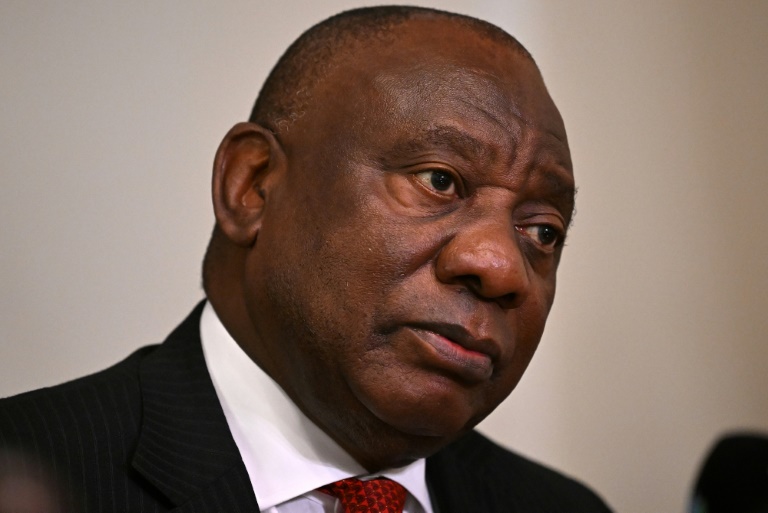
Pressure mounted Thursday for President Cyril Ramaphosa to quit or face removal from office over a cash burglary at his farm that he allegedly covered up.

As the ruling African National Congress (ANC) announced it would convene emergency talks on Friday, a source close to Ramaphosa told AFP that the embattled president “is having a look at all the options.” 

Ramaphosa cancelled a scheduled questions-and-answered session in parliament on Thursday.

The national currency, the rand, fell nearly three percent as the crisis escalated.

Opposition politicians and critics of Ramaphosa fired a volley of demands that he resign.

“The President has to step aside now and answer to the case,” said senior cabinet minister Nkosazana Dlamini-Zuma, who ran unsuccessfully against Ramaphosa as ANC leader in 2017.

“His best course of action remains immediate resignation,” said the leftist opposition Economic Freedom Fighters (EFF).

South Africa’s largest opposition party, the Democratic Alliance, called for an early election, saying the country faces a “seismic shift.”

Ramaphosa has been under fire since June, when South Africa’s former spy boss filed a complaint with the police.

It alleged that Ramaphosa had hidden a burglary at his farm at Phala Phala in northeastern South Africa from the authorities.

Instead, he allegedly organised for the robbers to be kidnapped and bribed into silence.

The vast sum stashed at the farm has cast a dark shadow over Ramaphosa’s bid to portray himself as graft-free after the corruption-stained era of Jacob Zuma.

– Impeachment risk –

A three-person inquiry on Wednesday submitted a report to parliament in which it concluded Ramaphosa “may have committed” serious violations and misconduct.

The report will be examined by parliament on December 6.

That debate could open the way to a vote on impeaching Ramaphosa — a term that in South Africa means to remove from office.

Ramaphosa, in his submission to the panel, steadfastly denied any wrongdoing and warned of the “interest of the stability of government and that of the country.”

But the scandal, complete with details of more than half a million dollars stashed beneath cushions at the farm, has come at the worst possible moment for him.

On December 16, he contests elections for the presidency of the ANC — a position that also holds the key to staying on as national president.

The embattled leader’s spokesman had earlier told AFP Ramaphosa was “likely” to give an address Thursday, but gave no details.

The ANC’s National Executive Committee — the party’s decision-making body — is due to hold urgent talks on Friday, party spokesman Pule Mabe told reporters.

Ramaphosa took office at the helm of Africa’s most industrialised economy in 2018 on a promise to root out corruption.

He now risks becoming the third ANC leader forced out since the party came to power after the end of apartheid in 1994.

Impeachment, in South Africa, means the removal of the president. 

Section 89 of the constitution empowers the National Assembly to remove a sitting president provided the vote is supported by at least two-thirds of lawmakers. 

Serious violation of the constitution, serious misconduct or inability to perform the functions of office are the permitted grounds for an impeachment motion.

Ramaphosa’s predecessor Zuma survived four impeachment votes until his own party, the ANC, forced him to resign over graft in 2018.

The ANC also forced Thabo Mbeki out of office in 2008 in the middle of a power struggle.

– Cash in sofa –

The South African public has been riveted by details from in the investigation, particularly over $580,000 in cash that was stolen from beneath sofa cushions at his ranch.

The sum was payment made by a Sudanese citizen who had bought buffaloes, Ramaphosa said.

Farm staff initially locked the money in an office safe, he said. 

But a manager then decided that the “safest place” to store it would be under the cushions of a sofa inside farm Ramaphosa’s residence, he said. 

Ramaphosa told the inquiry that the accusations against him were “without any merit” and asked it not to take the matter “any further.”

But the panel concluded that Ramaphosa did not report the theft directly to police.

He had acted in a way inconsistent with holding office and exposed himself to a conflict between his official responsibilities and his private business, it said.

Former leader Jiang's body arrives in Beijing as China mourns

The body of former Chinese leader Jiang Zemin arrived in Beijing Thursday ahead of a public memorial service, Chinese state media said, as hundreds of people gathered in his hometown to pay their respects. 

A special flight carrying Jiang’s remains from Shanghai, where he died on Wednesday of leukaemia and multiple organ failure, was met at the airport by President Xi Jinping, footage from state broadcaster CCTV showed. 

In matching black armbands with a white flower pinned to their jackets, Xi and other top leaders bowed in coordination as Jiang was brought down the plane steps, his trademark heavy-rimmed glasses clearly visible through a glass coffin. 

After being loaded into a ribbon-bedecked bus by goose-stepping soldiers, the body was taken to a hall in Beijing where it was draped with a Communist flag and surrounded by a vast flower arrangement, CCTV footage showed.

The broadcaster announced that a public memorial service would be held on Tuesday morning in Beijing’s Great Hall of the People, and broadcast live.

“All regions and departments must organise the majority of party members, cadres, and the masses to listen and watch,” it said, adding a nationwide three-minute silence would be held, together with three minutes of sirens wailing.

– ‘Patriotic and positive’ –

Hundreds of people gathered on Thursday evening in Jiang’s hometown, the eastern city of Yangzhou, to pay their respects, leaving a thick pile of bouquets around the perimeter of his former residence.

A roadside flower seller said she had “lost count” of the number of chrysanthemums — Chinese funeral flowers — she had sold on Thursday.

AFP reporters witnessed people queuing to lay them against the grey stone wall of the traditional house, with some bowing and saying brief prayers.

Security personnel at the site politely but firmly moved groups of mourners quickly down the narrow alley past the historic building in an apparent attempt to avoid people gathering.

China has been rocked this week by anti-Covid lockdown protests that are the most widespread public demonstrations since rallies calling for political reform in 1989.

Jiang’s role in crushing those protests and repressing other political activism, as well as the flourishing corruption and inequality during his tenure, means he leaves a mixed legacy. 

But many welcomed his humorous public persona as a breath of fresh air after decades of staid communist leadership. 

“He was a great, patriotic and positive leader,” Li Yaling, a woman in her late 60s, told AFP in Yangzhou. “We admired him greatly, and feel loss and nostalgia now he’s gone.”

“He was a very good leader,” a middle-aged man named Yan said. “He made a great contribution to improving the lives of people in Yangzhou, particularly through building new infrastructure. As national leader, he kept up reform and opening and helped grow the economy.”

In retirement, Jiang became the subject of light-hearted memes among millennial and Gen Z Chinese fans, who called themselves “toad worshippers” in thrall to his frog-like countenance and quirky mannerisms.

More than half a million commenters flooded state broadcaster CCTV’s post on the Twitter-like platform Weibo within an hour of his death being announced, many referring to him as “Grandpa Jiang”.

The websites of state media and government-owned businesses turned black-and-white, as did apps such as Alipay, Taobao and even McDonald’s China.

– ‘Easygoing and humorous’ –

In semi-autonomous Hong Kong, mourners who turned up early on Thursday at Beijing’s Liaison Office hoping to pay tribute were turned away because the office wasn’t ready.

A Hong Kong woman surnamed Chan, 50, told AFP she decided to go because she found Jiang “very easygoing and humorous”.

A mainland Chinese student queuing behind Chan was surprised.

“I didn’t expect any local Hong Kongers to commemorate him,” he said, without giving his name.

Edward, 26, a mainland Chinese student in Hong Kong, said Jiang was “the most open and educated leader”.

“He made the market economy part of the mainstream in China … without that there would be no hope for democracy,” he said.

Hundreds of people also queued to lay chrysanthemums outside the Liaison Office later on Thursday, one of the city’s coldest days this year.

An AFP reporter saw more than a dozen people distributing flowers, some of which arrived in a van, to crowds waiting a few blocks from the office.

Some of them held name lists and directed groups of people to join the queue.

mz-mjw-reb-su/mca

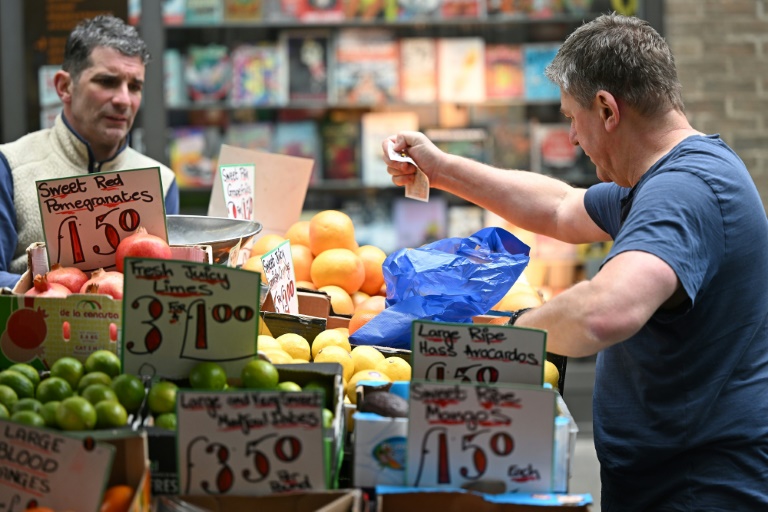
Brexit ramps up UK food bills by £6 bn: study

Britain’s exit from the European Union added almost £6 billion to consumers’ food bills, hitting the poor the hardest and further stoking red-hot inflation, a study said Thursday.

Brexit increased household food bills by an average £210 in the two years to the end of 2021, according to findings from the London School of Economics.

Food prices were pushed higher by the rising cost of extra checks and requirements on EU imports, the LSE noted in the report.

The LSE judged that Brexit started ramping up food bills from late 2019 onwards, as firms anticipated higher costs and adjusted prices accordingly.

Products increased in price by six percent over the two-year period, it added.

The hike disproportionately hit the poor because those on low incomes spend a greater share of their pay on food than richer people.

“In leaving the EU, the UK swapped a deep trade relationship with few impediments to trade for one where a wide range of checks, forms and steps are required before goods can cross the border,” said Bristol University professor and study co-author Richard Davies.

“Firms faced higher costs and passed most of these onto consumers.”

Britain has been gripped by a worsening cost-of-living crisis this year as inflation surged to multi-decade peaks, sparking a wave of strikes across the economy as pay fails to keep pace.

Consumer prices have also been propelled by rocketing energy bills after key producer Russia’s invasion of Ukraine, and by rebounding demand as the Covid pandemic recedes.

“The UK inflation rate rose above 11 percent in 2022, the highest rate in 40 years,” added Davies.

“Many factors, affecting both supply and demand for goods and services, are involved.

“One factor in this high inflation has been the rise in non-tariff barriers for trade with the EU.”

Britain withdrew from the European single market and customs union at the start of 2021, after voting narrowly in favour in a 2016 referendum.

However, London then clinched a post-Brexit Trade and Cooperation Agreement with Brussels which maintained largely tariff-free trade with the EU’s remaining 27 members.

Yet companies still faced a sharp increase in costs, red tape and border delays.

Disasters cost $268 billion in 2022: Swiss Re

Natural and man-made catastrophes have caused $268 billion of economic losses so far in 2022, chiefly driven by Hurricane Ian and other extreme weather disasters, reinsurance giant Swiss Re estimated Thursday.

Insured losses covered $122 billion — less than half — of the total economic losses to date this year, said the Zurich-based group, which acts as an insurer for insurers.

“Hurricane Ian and other extreme weather events such as the winter storms in Europe, flooding in Australia and South Africa as well as hailstorms in France and in the United States resulted in an estimated $115 billion of natural catastrophe insured losses this year to date,” Swiss Re said in a statement.

There were $7 billion of insured losses from man-made disasters.

It is the second consecutive year in which total insured losses from natural catastrophes topped $100 billion, with the figure hitting $121 billion last year.

“Urban development, wealth accumulation in disaster-prone areas, inflation and climate change are key factors at play, turning extreme weather into ever rising natural catastrophe losses,” explained Martin Bertogg, Swiss Re’s head of catastrophe perils.

“When Hurricane Andrew struck 30 years ago, a $20 billion loss event had never occurred before; now there have been seven such hurricanes in just the past six years.”

Hurricane Ian is by far the largest loss-causing event in 2022, with an estimated insured loss of $50-65 billion, said Swiss Re.

It estimated that Hurricane Ian caused the second-costliest insured loss ever, after Hurricane Katrina in 2005.

– Neighbourhoods flattened –

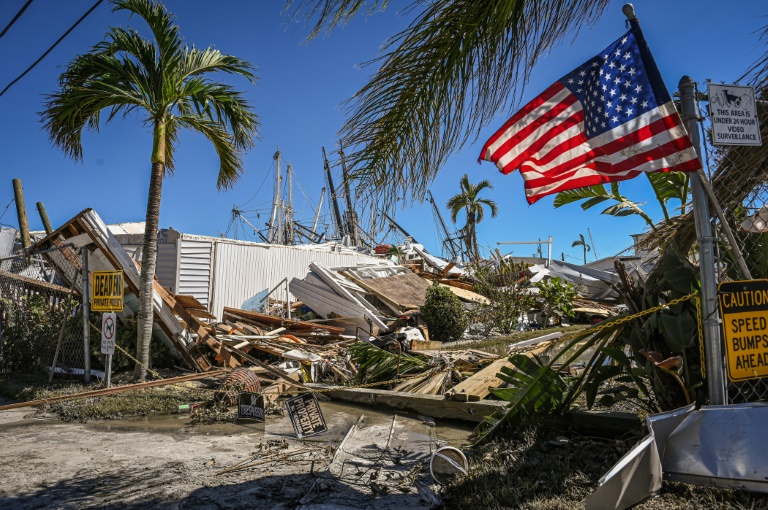
Ian, a category four hurricane, caused more than 150 deaths, almost all in Florida, where it made landfall on September 28.

One of the most powerful storms ever to hit the United States, it flattened whole neighbourhoods and knocked out power for millions of people. Storm surges and immense downpours left even inland neighbourhoods submerged.

“This highlights the threat potential of a single hurricane hitting a densely populated coastline,” Swiss Re said.

The reinsurer added that so-called secondary natural disasters such as floods and hailstorms — as opposed to major disasters such as earthquakes and hurricanes — caused more than $50 billion of insured losses.

The storms in Europe in February prompted estimated insured losses of over $3.7 billion, putting winter storms back on the insurance industry’s agenda, Swiss Re said.

France experienced the most severe hailstorms ever observed in the European spring and summer, with insured market losses reaching an estimated five billion euros ($5.3 billion), said Swiss Re.

And in Australia in February and March, torrential summer rains led to widespread flooding that, at an estimated $4 billion, became the country’s costliest-ever natural catastrophe.

– ‘Vast’ protection gap –

Swiss Re highlighted how the insurance and reinsurance industry covered roughly only 45 percent of the economic losses so far this year.

“The protection gap remains vast,” said Thierry Leger, the group’s chief underwriting officer.

Of the estimated $268 billion total economic losses for property damage so far this year, $260 billion are from natural catastrophes and $8 billion from man-made disasters, such as industrial accidents.

The $268 billion figure is down 12 percent from $303 billion last year, but above the $219 billion average over the previous 10 years.

At $115 billion, total insured losses from natural catastrophes were down five percent from the $121 billion in 2021, but well above the previous 10-year average of $81 billion.

Disasters cost $268 billion in 2022: Swiss Re

Natural and man-made catastrophes have caused $268 billion of economic losses so far in 2022, chiefly driven by Hurricane Ian and other extreme weather disasters, reinsurance giant Swiss Re estimated Thursday.

Insured losses covered $122 billion — less than half — of the total economic losses to date this year, said the Zurich-based group, which acts as an insurer for insurers.

“Hurricane Ian and other extreme weather events such as the winter storms in Europe, flooding in Australia and South Africa as well as hailstorms in France and in the United States resulted in an estimated $115 billion of natural catastrophe insured losses this year to date,” Swiss Re said in a statement.

There were $7 billion of insured losses from man-made disasters.

It is the second consecutive year in which total insured losses from natural catastrophes topped $100 billion, with the figure hitting $121 billion last year.

“Urban development, wealth accumulation in disaster-prone areas, inflation and climate change are key factors at play, turning extreme weather into ever rising natural catastrophe losses,” explained Martin Bertogg, Swiss Re’s head of catastrophe perils.

“When Hurricane Andrew struck 30 years ago, a $20 billion loss event had never occurred before; now there have been seven such hurricanes in just the past six years.”

Hurricane Ian is by far the largest loss-causing event in 2022, with an estimated insured loss of $50-65 billion, said Swiss Re.

It estimated that Hurricane Ian caused the second-costliest insured loss ever, after Hurricane Katrina in 2005.

– Neighbourhoods flattened –

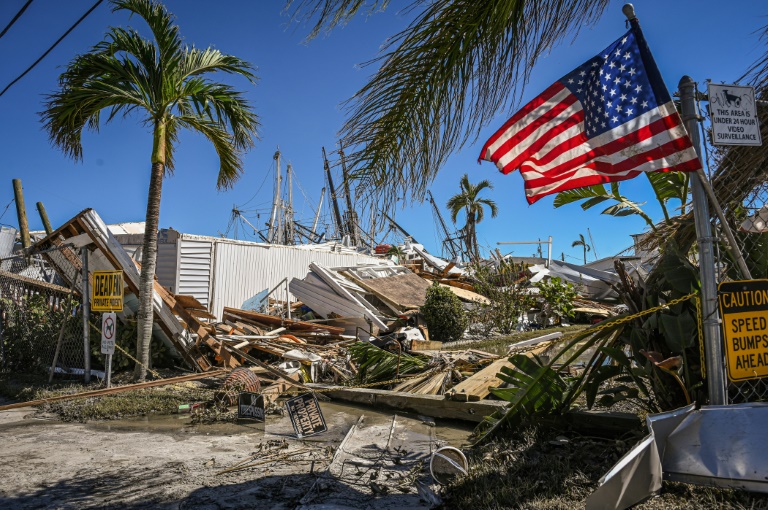
Ian, a category four hurricane, caused more than 150 deaths, almost all in Florida, where it made landfall on September 28.

One of the most powerful storms ever to hit the United States, it flattened whole neighbourhoods and knocked out power for millions of people. Storm surges and immense downpours left even inland neighbourhoods submerged.

“This highlights the threat potential of a single hurricane hitting a densely populated coastline,” Swiss Re said.

The reinsurer added that so-called secondary natural disasters such as floods and hailstorms — as opposed to major disasters such as earthquakes and hurricanes — caused more than $50 billion of insured losses.

The storms in Europe in February prompted estimated insured losses of over $3.7 billion, putting winter storms back on the insurance industry’s agenda, Swiss Re said.

France experienced the most severe hailstorms ever observed in the European spring and summer, with insured market losses reaching an estimated five billion euros ($5.3 billion), said Swiss Re.

And in Australia in February and March, torrential summer rains led to widespread flooding that, at an estimated $4 billion, became the country’s costliest-ever natural catastrophe.

– ‘Vast’ protection gap –

Swiss Re highlighted how the insurance and reinsurance industry covered roughly only 45 percent of the economic losses so far this year.

“The protection gap remains vast,” said Thierry Leger, the group’s chief underwriting officer.

Of the estimated $268 billion total economic losses for property damage so far this year, $260 billion are from natural catastrophes and $8 billion from man-made disasters, such as industrial accidents.

The $268 billion figure is down 12 percent from $303 billion last year, but above the $219 billion average over the previous 10 years.

At $115 billion, total insured losses from natural catastrophes were down five percent from the $121 billion in 2021, but well above the previous 10-year average of $81 billion.

How bringing back lost species revives ecosystems

Scientists often study the grim impacts of losing wildlife to hunting, habitat destruction and climate change. But what happens when endangered animals are brought back from the brink?

Research has shown restoring so-called “keystone” species — those with an outsized impact on their environment — is vital for the health of ecosystems, and can come with unexpected benefits for humans.

Here are some notable examples from North America. 

– Wolves –

Few species evoke the American wild as much as wolves. 

Though revered by Indigenous communities, European colonists who arrived in the 1600s embarked on widespread extermination campaigns through hunting and trapping.

By the mid-20th century, fewer than a thousand gray wolves were left in the contiguous United States, down from at least a quarter million before colonization.

Extinction was averted in the 1970s when lawmakers passed the Endangered Species Act, helping revive the apex predator in parts of its former range.

Then, in the mid-1990s, the government took wolves from Canada and reintroduced them to Yellowstone National Park.

This generated a wealth of data that scientists are still working to understand.

The new arrivals kept elk numbers down, preventing them from over-browsing vegetation that provides material for birds to build nests and beavers to build dams — a phenomenon known as a trophic cascade.

The recovered vegetation helped stop soil erosion into rivers, changing their course by reducing meandering.

While building their dams, the beavers also create deep ponds that juvenile fish and frogs need to survive.

When they embark on hunts, wolves focus on weak and diseased prey, ensuring survival of the fittest.

A recent paper even found that wolves brought back in the midwestern state of Wisconsin kept deer away from roads, reducing collisions with cars.

Amaroq Weiss, a biologist and senior wolf advocate for the Center for Biological Diversity compared ecosystems to tapestries, “and when we take out some of the threads, we weaken that tapestry,” she told AFP.

It’s thought there are now more than 6,000 gray wolves in the contiguous United States. The main threat is legalized hunting in some states.

– Buffalo –

The story of the American buffalo — also known as bison — is inextricably linked to the dark history of the early United States.

From an estimated 30 million, their number plummeted to just hundreds by the late 19th century as the US government sought to wipe out plains tribe Indians whose way of life depended on the animal.

“It was an intentional genocide to remove the buffalo, to the remove the Indians and force them onto reservations,” Cody Considine of The Nature Conservancy (TNC) told AFP.

Buffalo, he explained, are an integral part of TNC’s efforts to re-establish prairies in the Nachusa Grasslands of Illinois.

The buffalo, who were introduced there in 2014 and now number around a hundred, favor eating grass over flowering plants and legumes, which in turn allows a variety of birds, insects and amphibians to flourish.

“Some of these species without that grazing simply just disappear off the landscape due to the high competition of the grasses,” added Considine.

As they forage, bisons’ hooves kick up and aerate the soil, further aiding in plant growth as well as seed dispersion. 

TNC currently manages some 6,500 buffalo, and is creating a pilot program with tribal partners that involves transferring excess animals to Indigenous communities, as part of broader efforts to revive America’s national mammal. 

Some 20,000 buffalo are now thought to roam in “conservation herds,” though none are truly free roaming, added Considine.

– Sea otters –

As the dominant predator of marine nearshore environments, sea otters play a hugely important role in their ecosystem.

Historically they spanned from Baja California up the West Coast up to Alaska, Russia and northern Japan, but hunting for fur in the 1700s and 1800s decimated their numbers, which were once up to 300,000. 

They were thought for a while to have been completely exterminated off California, but a small surviving population of around 50 helped them partially recover to some 3,000 today.

Jess Fujii, sea otter program manager at the Monterey Bay Aquarium, told AFP that research during the 1970s in the Aleutian Islands showed the otters maintained the balance of kelp forest by keeping a check on the sea urchins that graze on them.

In the last decade, more complex interactions have come to light. These include the downstream benefits of otters for eelgrass habitats in California estuaries. 

Here, the sea otters controlled the population of crabs, which meant there were more sea slugs who were able to graze algae, keeping the eelgrass healthy.

Eelgrass is considered a “nursery of the sea” for juvenile fish, and it also reduces erosion, which can factor in coastal floods.

“Kelp and eelgrass are often considered good ways to sequester carbon which can help mitigate the ongoing impacts of climate change,” stressed Fujii, a prime example of how destruction of nature can worsen planetary warming.

Close Bitnami banner
Bitnami