World

Crunch UN biodiversity meeting seeks to save 'planet in crisis'

Delegates from nearly 200 countries meet in Montreal next week to hammer out a new global biodiversity deal to protect ecosystems and species from further human destruction.

The meeting follows crucial climate change talks in Egypt in November, where leaders failed to forge any breakthroughs on scaling down fossil fuels and slashing planet-warming emissions.

Observers are hoping the COP15 biodiversity talks in Montreal will deliver a landmark deal to protect nature and reverse the damage humans have done to forests, wetlands, waterways and the millions of species that live in them.

Around 50 percent of the global economy is dependent on nature, but scientists warn that humanity needs to drastically — and urgently — rethink its relationship with the natural world as fears of a sixth era of mass extinction grow. 

“Our planet is in crisis,” said Elizabeth Maruma Mrema, the head of the UN Convention on Biological Diversity (CBD), at a briefing ahead of the talks, adding that a global agreement on biodiversity was “crucial to ensure that the future of humankind on planet Earth is sustained”. 

So far, humanity has proven woeful at this, with one million species at risk of extinction. 

The so-called post-2020 biodiversity framework, delayed by two years because of the pandemic, will map out an official plan for nature until mid-century for most countries, with the exception of the United States, which has not signed up. 

It will include key targets to be met by 2030. 

But it comes after countries failed to meet a single one of the targets set for the previous decade. 

With new rules affecting key economic sectors — including agriculture, forestry and fishing — and covering everything from intellectual property to pollution and pesticides, delegates are grappling with an array of sticking points.   

So far, only two out of the 22 targets in the new deal have been agreed upon.

“We have to admit that success is not guaranteed,” an EU source close to the talks said. “We have a very difficult situation ahead of us.”

– Finance fight – 

While China currently chairs COP15, it is not hosting this year’s meeting because of the ongoing pandemic. 

Instead, it will be held from December 7 to 19 in Montreal, home of the CBD, which oversees the negotiations. 

Canada’s Prime Minister Justin Trudeau is the only world leader attending. Chinese President Xi Jinping has not said he will join, and neither side has invited other leaders to come, with time quickly running out. 

Observers fear the leaders’ absence sucks the momentum out of the negotiations and could scupper an ambitious final deal. 

Divisions have already emerged on the key issue of financing, with wealthy countries under pressure to funnel more money to developing nations for conservation.

A group of developing nations, including Brazil, South Africa and Indonesia, this year called for rich countries to provide at least $100 billion annually –- rising to $700 billion a year by 2030 — for biodiversity.

But many Western nations are reluctant to create a distinct fund for nature.

Currently, most biodiversity funds for the developing world come from existing funding mechanisms, which often also include climate finance. 

On Thursday, the UN Environment Programme said investments for nature-based solutions must increase to $384 billion per year by 2025, more than double the current figure of $154 billion per year.

Another fight is brewing over the issue of “biopiracy”, with many mainly African countries accusing wealthy nations of pillaging the natural world for ingredients and formulas used in cosmetics and medicines, without sharing the benefits with the communities from which they came. 

– Indigenous rights – 

One cornerstone target that has received broad support is the 30 by 30 target — a pledge to protect 30 percent of land and seas by 2030. Only 17 percent of land and about seven percent of oceans were protected in 2020.

So far, more than 100 countries formally support the goal, according to the EU-backed High Ambition Coalition which tracks the target.

The new goal will rely heavily on the involvement of indigenous peoples, who steward land that is home to around 80 percent of Earth’s remaining biodiversity, according to a landmark UN report on climate change impacts this year.

“It’s not going to work if indigenous peoples are not fully included,” Jennifer Tauli Corpuz of the non-profit Nia Tero told AFP. 

“We completely lose the integrity of the document”, added Corpuz, who is part of the indigenous caucus to the talks. 

Other items in the framework: elimination or redirection of hundreds of millions of dollars in harmful government subsidies; promoting sustainable farming and fishing, reducing pesticides; tackling invasive species and reforestation.

But implementation is perhaps the most crucial agenda item to ensure the pledges made are actually carried out by governments.  

“We need goals and targets that are measurable and they need to be related to clear indicators,” the EU source said, calling for “robust monitoring, planning, reporting and review”. 

Crunch UN biodiversity meeting seeks to save 'planet in crisis'

Delegates from nearly 200 countries meet in Montreal next week to hammer out a new global biodiversity deal to protect ecosystems and species from further human destruction.

The meeting follows crucial climate change talks in Egypt in November, where leaders failed to forge any breakthroughs on scaling down fossil fuels and slashing planet-warming emissions.

Observers are hoping the COP15 biodiversity talks in Montreal will deliver a landmark deal to protect nature and reverse the damage humans have done to forests, wetlands, waterways and the millions of species that live in them.

Around 50 percent of the global economy is dependent on nature, but scientists warn that humanity needs to drastically — and urgently — rethink its relationship with the natural world as fears of a sixth era of mass extinction grow. 

“Our planet is in crisis,” said Elizabeth Maruma Mrema, the head of the UN Convention on Biological Diversity (CBD), at a briefing ahead of the talks, adding that a global agreement on biodiversity was “crucial to ensure that the future of humankind on planet Earth is sustained”. 

So far, humanity has proven woeful at this, with one million species at risk of extinction. 

The so-called post-2020 biodiversity framework, delayed by two years because of the pandemic, will map out an official plan for nature until mid-century for most countries, with the exception of the United States, which has not signed up. 

It will include key targets to be met by 2030. 

But it comes after countries failed to meet a single one of the targets set for the previous decade. 

With new rules affecting key economic sectors — including agriculture, forestry and fishing — and covering everything from intellectual property to pollution and pesticides, delegates are grappling with an array of sticking points.   

So far, only two out of the 22 targets in the new deal have been agreed upon.

“We have to admit that success is not guaranteed,” an EU source close to the talks said. “We have a very difficult situation ahead of us.”

– Finance fight – 

While China currently chairs COP15, it is not hosting this year’s meeting because of the ongoing pandemic. 

Instead, it will be held from December 7 to 19 in Montreal, home of the CBD, which oversees the negotiations. 

Canada’s Prime Minister Justin Trudeau is the only world leader attending. Chinese President Xi Jinping has not said he will join, and neither side has invited other leaders to come, with time quickly running out. 

Observers fear the leaders’ absence sucks the momentum out of the negotiations and could scupper an ambitious final deal. 

Divisions have already emerged on the key issue of financing, with wealthy countries under pressure to funnel more money to developing nations for conservation.

A group of developing nations, including Brazil, South Africa and Indonesia, this year called for rich countries to provide at least $100 billion annually –- rising to $700 billion a year by 2030 — for biodiversity.

But many Western nations are reluctant to create a distinct fund for nature.

Currently, most biodiversity funds for the developing world come from existing funding mechanisms, which often also include climate finance. 

On Thursday, the UN Environment Programme said investments for nature-based solutions must increase to $384 billion per year by 2025, more than double the current figure of $154 billion per year.

Another fight is brewing over the issue of “biopiracy”, with many mainly African countries accusing wealthy nations of pillaging the natural world for ingredients and formulas used in cosmetics and medicines, without sharing the benefits with the communities from which they came. 

– Indigenous rights – 

One cornerstone target that has received broad support is the 30 by 30 target — a pledge to protect 30 percent of land and seas by 2030. Only 17 percent of land and about seven percent of oceans were protected in 2020.

So far, more than 100 countries formally support the goal, according to the EU-backed High Ambition Coalition which tracks the target.

The new goal will rely heavily on the involvement of indigenous peoples, who steward land that is home to around 80 percent of Earth’s remaining biodiversity, according to a landmark UN report on climate change impacts this year.

“It’s not going to work if indigenous peoples are not fully included,” Jennifer Tauli Corpuz of the non-profit Nia Tero told AFP. 

“We completely lose the integrity of the document”, added Corpuz, who is part of the indigenous caucus to the talks. 

Other items in the framework: elimination or redirection of hundreds of millions of dollars in harmful government subsidies; promoting sustainable farming and fishing, reducing pesticides; tackling invasive species and reforestation.

But implementation is perhaps the most crucial agenda item to ensure the pledges made are actually carried out by governments.  

“We need goals and targets that are measurable and they need to be related to clear indicators,” the EU source said, calling for “robust monitoring, planning, reporting and review”. 
Two Palestinian fighters killed in Israel West Bank raid

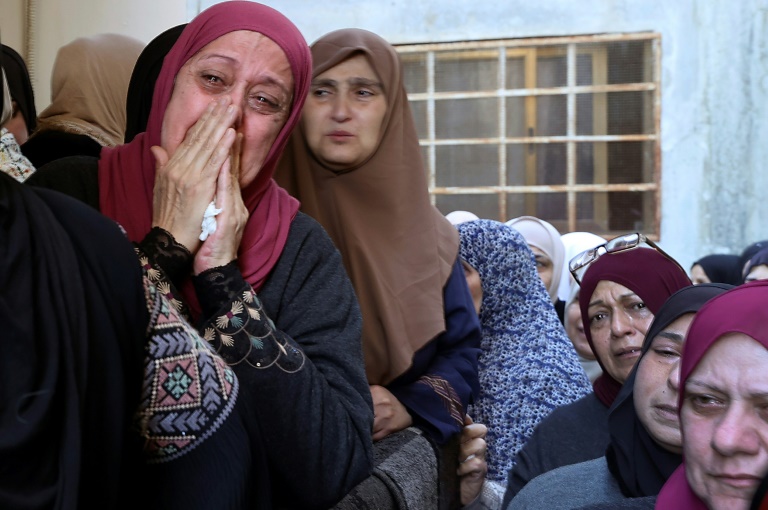
Israeli forces shot dead two Palestinian militants on Thursday during an arrest raid that sparked gun battles in a West Bank stronghold of hardline factions, said Palestinian officials and Israel’s army.

Muhammad Ayman al-Saadi, 26, and Naim Jamal Zubaidi, 27, were “killed by the Israeli occupation bullets at dawn today during its aggression on Jenin camp,” a Palestinian health ministry statement said.

Israel’s army and Prime Minister Yair Lapid identified both Saadi and Zubaidi as top militants and confirmed their deaths in the operation, Israel’s latest in the West Bank.

Deadly violence has surged in the territory since March, when Israel launched near daily raids following a series of deadly attacks targeting Israelis.

The army called Saadi “a high ranking operative in the Islamic Jihad terrorist organisation,” while Lapid described Zubaidi as “a senior member of the Al-Aqsa (Martyrs) Brigade,” the armed wing of Palestinian president Mahmud Abbas’s Fatah movement. 

Palestinian sources familiar with Islamic Jihad who requested anonymity confirmed Saadi was a member of the group.

Zubaidi belonged to a prominent Jenin family whose relatives have been targeted by Israeli forces over alleged militant ties. 

Jenin is a stronghold of militant factions in the West Bank, a territory occupied by Israel since the Six-Day War of 1967.  

The army said it had entered the town of Wadi Bruqin where “three wanted individuals suspected of involvement in terrorist activities were apprehended”. 

“During the operation, armed suspects shot at the security forces, who responded with live fire,” the army said in a statement.

Lapid praised the raids as “a direct continuation of our uncompromising policy on the fight against terrorism”, charging that both Palestinians killed Tuesday “planned and carried out attacks on Israeli territory.”

– Islamic Jihad threats –

Islamic Jihad has a large presence in the West Bank, but also in the Israeli-blockaded Gaza Strip, where in August Israel carried out a three-day “pre-emptive operation” it said was necessary to thwart planned Islamic Jihad attacks inside Israel. 

Militants retaliated with rocket fire against Israeli air and artillery strikes. The violence killed 49 Palestinians, including fighters and children. 

Following Thursday’s raid, Islamic Jihad warned Israel “will pay dearly”, and it praised those killed in Jenin. 

The group also fired three rockets that landed in the Mediterranean Sea on Thursday, security sources in Gaza told AFP. 

Palestinian prime minister Mohammad Shtayyeh condemned the latest Israeli raid and called for “urgent” action to ease spiralling tensions in the West Bank.

On Monday, the United Nations envoy for Middle East peace, Tor Wennesland, warned the situation in the territory was “reaching a boiling point”. 

Israeli forces have made more than 3,000 arrests across the West Bank this year as part of their operation that began following the attacks against Israeli civilians, the army said this week. 

More than 140 Palestinians and at least 26 Israelis have been killed so far this year across the West Bank, Israel and the contested city of Jerusalem.

An estimated 475,000 Jewish settlers now live in the West Bank, alongside about 2.9 million Palestinians, in communities considered illegal under international law. 

Musk vows interface implants in human brains within six months

Tech billionaire Elon Musk said on Wednesday one of his companies would in six months be able to implant a device into a human brain that would allow communication with a computer.

The interface, produced by Musk’s start-up Neuralink, would allow the user to communicate directly with computers through their thoughts, he said.

“We’ve submitted I think most of our paperwork to the FDA (US Food and Drug Administration) and we think probably in about six months we should be able to have our first Neuralink in a human,” he said in a company presentation.

“We’ve been working hard to be ready for our first human (implant), and obviously we want to be extremely careful and certain that it will work well before putting a device in a human,” he said.

Musk — who bought Twitter last month and also owns SpaceX, Tesla and several other companies — has been known to make ambitious predictions about his companies, with several not becoming reality.

In July 2019, he vowed that Neuralink would be able to perform its first tests on humans in 2020.

The prototypes, which are the size of a coin, have been implanted in the skulls of monkeys.

At the Neuralink presentation, the company showed several monkeys “playing” basic video games or moving a cursor on a screen through their Neuralink implant.

Musk said the company would try to use the implants to restore vision and mobility in humans.

“We would initially enable someone who has almost no ability to operate their muscles… and enable them to operate their phone faster than someone who has working hands,” he said.

“As miraculous as it may sound, we are confident that it is possible to restore full body functionality to someone who has a severed spinal cord,” he said.

Beyond the potential to treat neurological diseases, Musk’s ultimate goal is to ensure that humans are not intellectually overwhelmed by artificial intelligence, he said.

Other companies working on similar systems include Synchron, which announced in July that it had implanted the first brain-machine interface in the United States. 

Sudan's Rastas fear new crackdown but vow to fight on

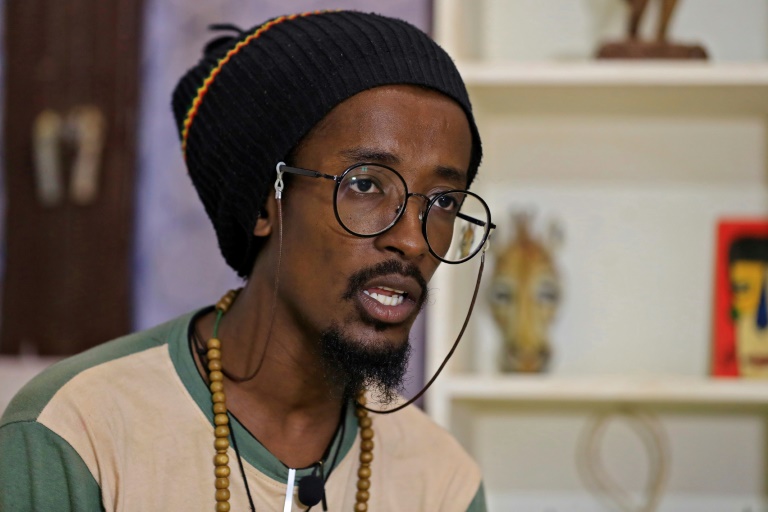
With his long dreadlocks and slouchy beanie, Abdallah Ahmed has always known his choice of lifestyle means trouble in Sudan, where long-oppressed Rastafarians say they are being targeted anew. 

Ahmed, 31, has for years been enamoured of the Rastafari tradition which emerged in Jamaica last century and for him represents “telling the truth, being courageous, fighting for rights”.

The number of Rastafarians in Sudan is unknown, and the community had largely lived underground under the autocratic rule of Omar al-Bashir, who was ousted in April 2019 following mass protests against his regime.

“We were very enthused after Bashir’s fall,” said Ahmed, a long-time Bob Marley fan also known as “Maxman”, at an art exhibition where he performed reggae music with his band.

“Musicians and artists flourished,” said Ahmed, donning brightly coloured head and wrist bands.

But a brief whiff of freedom did not last as a post-Bashir transition to civilian rule was upended last year when army chief Abdel Fattah al-Burhan led a military coup.

Rastafarianism considers former Ethiopian emperor Haile Selassie to be its Messiah, but like many followers in Sudan, Ahmed told AFP that he saw it “not as a religion”.

“It’s a lifestyle, and it’s me.”

Under Bashir, community members were regularly harassed, had their heads shaved and faced persecution under stringent public order laws restricting how people dress or behave in public.

Ahmed said he had been arrested for drug possession in 2017 while performing music in public, and was flogged 20 times.

Followers of the Rastafari tradition have always been “easy targets” for security forces due to their looks, said Ahmed, who was also frisked by security personnel during a Khartoum protest in November and faced charges of “causing public disturbance”.

“It, however, never stopped us from growing our hair,” he added. “Some of us died while holding on to their personal lifestyle.”

– ‘Rasta never dies’ –

The killings of several Sudanese Rastafarians in mass anti-coup demonstrations since Burhan’s takeover last year have given rise to a popular protest slogan: “The Rasta never dies”.

At least 121 people have been killed in the crackdown on protests since the October 2021 coup, according to pro-democracy medics. 

Noting the “peacefulness and spontaneity” of the demonstrations, 35-year-old film-maker Afraa Saad told AFP “this made us believe they were being especially targeted”.

“I believe the slogan emerged to say that their good reputation will last.”

As a woman, Saad said, she has faced greater scrutiny than male Rastafarians since she first embraced the tradition during the height of the anti-Bashir demonstrations.

“The most persistent objection is: why would a girl wear dreadlocks when there are other more acceptable hairstyles,” she said, noting a “prevalent stereotype” tying dreadlocks with drug use and “unbecoming behaviour”.

Saad sees her lifestyle choice as part of Sudanese women’s uphill battle against strict policing of social mores since the Bashir regime.

Women were at the forefront of the mass protests against the longtime autocrat’s rule, voicing their anger at decades of discrimination that severely restricted their role in society.

“I simply don’t heed to this,” Saad said. “This is my identity and it’s who I am.”

For some in Sudan, wearing dreadlocks, listening to reggae music or having a Rasta-like lifestyle is merely an act of defiance.

Saleh Abdalla, 26, who wears his hair in short dreadlocks, said it was his way of protesting the October 2021 military coup. 

“We are refusing all violations that take place on behalf of authorities,” he told AFP during one anti-coup demonstration in the capital Khartoum last month.

“I will keep the Rasta (dreadlocks) until the regime falls.”

China protests explode 'harmonious society myth': Tiananmen leader

Demonstrations in China sparked by tough anti-Covid policies explode the “myth” of a “harmonious society” and reveal deep discontent with Beijing’s rulers, a leader of the Tiananmen Square protests said on Thursday.

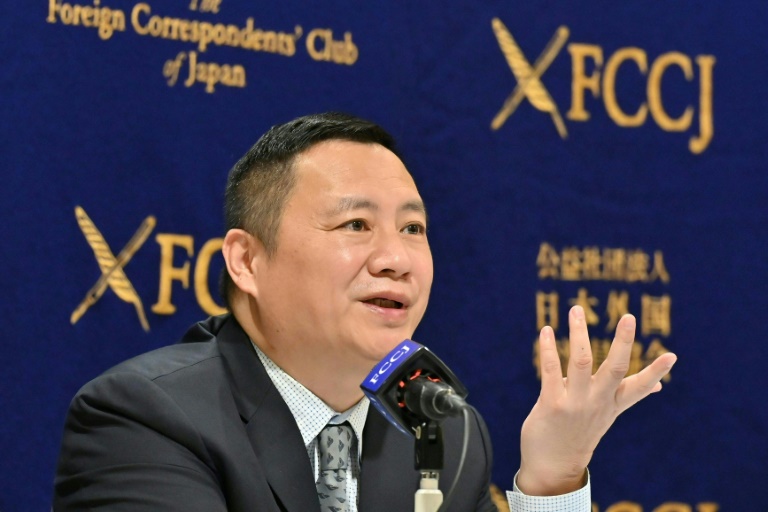
Wang Dan, who was jailed and then exiled after the 1989 Tiananmen pro-democracy movement was crushed, told reporters in Japan that the string of protests also proved that younger Chinese are not politically apathetic.

“In the past 30 years there’s a myth that the younger generation or middle class were really satisfied about the government, but these protests show us the truth,” he said, speaking in Tokyo.

“So this is a big significance of this movement, it reveals the truth. The truth is that it’s not a harmonious society… there’s already a lot of conflict between society and the government.”

Wang said he believed the unrest would continue, and could signal a new “protest era.”

Anger over China’s zero-Covid policy — which involves mass lockdowns, constant testing and quarantines even for people who are not infected — has sparked protests in major cities including Beijing, Shanghai and Guangzhou.

But demonstrators have also demanded wider political reforms, with some even calling for President Xi Jinping to stand down.

“The first feeling that came to my mind when I witnessed the incredible protests across China was the spirit of 1989 has come again, after 33 years,” Wang said.

“Watching videos of Chinese university students chanting ‘give me liberty or give me death’ has brought me tears and hopes,” he said. 

Wang was a 20-year-old student during the Tiananmen movement, which ended with the government setting tanks and troops on peaceful protesters. 

He was placed on the government’s most wanted list and was imprisoned before going into exile in the United States. 

But he described those protesting today as “more brave” than his generation because in the late 1980s the political climate was less severe.

“This time it’s quite different. The environment is very bad,” he said, calling the protests a “heavy blow” to Xi’s reputation, weeks into his historic third term.

“That’s why I think maybe, maybe eventually he will decide to crack down because he cannot afford to lose face.”

China signals zero-Covid relaxation after protests

China’s top Covid official and multiple cities have signalled a possible relaxing of the country’s strict zero-tolerance approach to the virus, after nationwide protests calling for an end to lockdowns and greater political freedom.

Anger over China’s zero-Covid policy — which involves mass lockdowns, constant testing and quarantines even for people who are not infected — has sparked protests in major cities, including Beijing, Shanghai and Guangzhou.

But while authorities have called for a “crackdown” in the wake of the demonstrations, they have also begun hinting that a relaxation of the hardline virus strategy could be in the works.

Speaking at the National Health Commission Wednesday, Vice Premier Sun Chunlan said the Omicron variant was weakening and vaccination rates were improving, according to the state-run Xinhua news agency.

Sun — a central figure behind Beijing’s pandemic response — said this “new situation” required “new tasks”.

She made no mention of the zero-Covid policy in her latest remarks, suggesting an approach that has disrupted the economy and daily life might soon be relaxed.

The comments came as the Chinese capital said it would scale back daily testing requirements — a tedious mainstay of life under zero-Covid.

The elderly, those who work from home, students and teachers in online education and others who do not leave home frequently are now exempt from daily tests, Xu Hejian, a spokesman for the Beijing Municipal Government, said Wednesday.

Beijing residents still require a negative Covid test taken within 48 hours to enter public places such as cafes, restaurants and shopping malls, however.

And a report by the state-owned Southern Metropolis Daily Thursday said that local officials in Beijing and Guangzhou were planning to allow some positive Covid cases to quarantine at home instead of at state-run facilities. 

The report was later deleted, and AFP requests for confirmation from local authorities in those cities went unanswered.

– ‘Living with Covid’ –

Southern manufacturing-hub Guangzhou — the site of dramatic Tuesday night clashes between police and protesters — also announced an end to daily mass testing for those who do not need to leave home frequently, including the elderly and infants.

On Thursday, Haizhu district, where recent protests took place, went a step further, saying only those in certain sectors including medical staff, pharmacists, sanitary and delivery workers require daily tests. 

Officials the previous day also partially lifted a weeks-long lockdown, despite seeing record virus cases, easing restrictions to varying degrees in all of its 11 districts, including Haizhu.

The central city of Chongqing also said Wednesday that close contacts of Covid cases who met certain conditions would be allowed to quarantine at home — a departure from rules that required them to be sent to central isolation facilities.

Sun’s remarks — as well as relaxations of rules by local authorities — “could signal that China is beginning to consider the end of its stringent zero-Covid policy,” ANZ Research analysts said.

“We believe that Chinese authorities are shifting to a ‘living with Covid’ stance, as reflected in new rules that allow people to do ‘home isolation’ instead of being ferried away to quarantine facilities.” 

The country reported 35,800 domestic covid cases on Thursday, most of them asymptomatic.

– ‘Sign of weakness’ –

As China reaches the third anniversary of the pandemic first being detected in the central city of Wuhan, its hardline approach to the virus has stoked unrest not seen since the 1989 pro-democracy protests.

A deadly fire last week in Urumqi, the capital of the northwestern region of Xinjiang, was the catalyst for the outrage, with people blaming Covid curbs for trapping victims inside the burning building.

But demonstrators have also demanded wider political reforms, with some even calling for President Xi Jinping to stand down.

China’s strict control of information and continued travel curbs have made verifying protester numbers across the vast country very challenging.

However, the widespread rallies seen over the weekend are exceptionally rare in China.

The 1989 pro-democracy protests ended in bloodshed when the military moved in, most famously in Beijing’s Tiananmen Square and surrounding areas.

The death on Wednesday of former Chinese leader Jiang Zemin — who came to power just after Tiananmen — saw the ruling Communist Party emphasise his role in that crackdown.

Asked about the protests in an interview with NBC News, United States Secretary of State Antony Blinken said that people in every country should be able to “make known their frustration” through peaceful protests.

“In any country where we see that happening and then we see the government take massive repressive action to stop it, that’s not a sign of strength, that’s a sign of weakness,” he said.

S.Africa's ruling ANC calls urgent talks as pressure grows on Ramaphosa

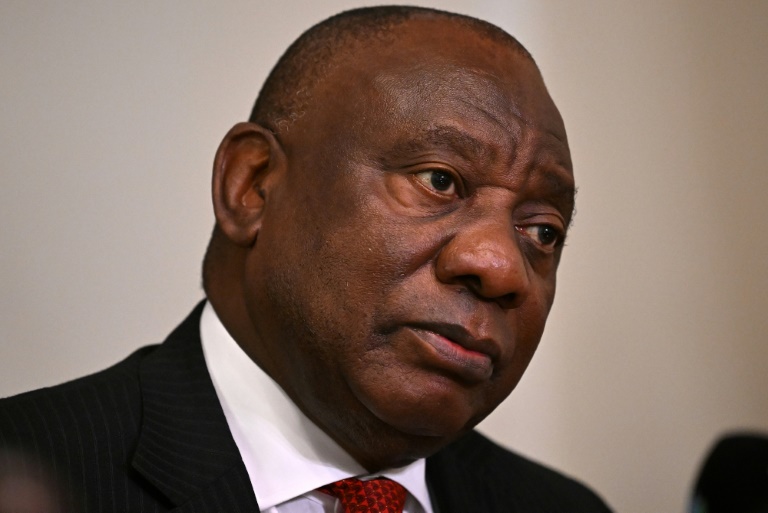
South Africa’s ruling ANC party will hold emergency talks Thursday, the day after a report into scandal-hit President Cyril Ramaphosa paved the way for his possible impeachment.

Pressure has mounted on the president after a special panel probing a burglary scandal at Ramaphosa’s farm concluded that there was enough evidence to warrant a parliamentary debate on whether he should be removed.

The report established that “the president may have committed… serious violations” of parts of the constitution and anti-corruption laws.

Following the report, his party’s National Executive Committee will hold urgent talks today at 7pm (1700 GMT) to discuss the farm theft scandal, an ANC official told AFP.

Coming two weeks before the ANC holds its crucial conference — where it is due to elect new leadership — the report has dealt a serious blow to Ramaphosa’s re-election bid.

The president has also cancelled a scheduled question-and-answer session in parliament Thursday afternoon, his office said.

The president’s written request to cancel said that “implications for the stability of the country required that the President take the time to carefully consider the contents of the report and the next course of action to be taken”, parliamentary authorities said.

The three-person panel set up in September to probe the alleged cover-up of a theft at Ramaphosa’s farmhouse said that the information it gathered shows that Ramaphosa possibly committed serious violations and misconduct.

These include not reporting the theft directly to police, acting in a way inconsistent with holding office and exposing himself to a clash between his official responsibilities and his private business.

Ramaphosa reiterated his denial of any wrongdoing and that he is “giving consideration to the report and an announcement will be made in due course”.

Deputy President David Mabuza, who was scheduled to address an international AIDS day commemoration event, has also cancelled his appearance and sent the health minister in his place.

The opposition has called on Ramaphosa to leave office immediately.

Asia extends stocks rally as dollar drops on Fed rate optimism

Asian stocks extended a global rally Thursday and the dollar sank after Federal Reserve boss Jerome Powell flagged a rate hike slowdown and China signalled a softer approach to fighting Covid.

A growing sense of hope that months of sharp monetary tightening around the world is finally reining inflation back from its decades-long highs sent equities surging in November, even as policymakers warned more work had to be done.

And in a much-anticipated speech Wednesday, Powell said the full effects of the Fed’s belt-tightening had yet to be felt but that it “makes sense to moderate the pace of our rate increases as we approach the level of restraint that will be sufficient to bring inflation down”.

He signalled the US central bank’s December gathering would likely see officials lift borrowing costs by 50 basis points, having pushed them up by a bumper 75 points at the past four meetings.

However, Powell did say policy would need to remain tight “for some time” to restore price stability, echoing comments from other Fed officials who suggested there might not be any cuts until 2024.

Analysts said the reaction to Powell’s remarks — which had been expected to be his most dovish in some time — highlighted a sense of relief among investors that a long-hoped-for pivot was on the cards.

All three main indexes on Wall Street surged, with the Nasdaq leading the way as rate-sensitive tech firms rocketed.

The gains extended November’s rally and helped claw back more of the hefty losses suffered for much of 2022.

Investors were “putting those nasty thoughts of a bear market to bed as the December Santa Rally springs alive”, said Stephen Innes at SPI Asset Management.

“Indeed investors are revelling in the afterglow of moderating Fed signals. And with the Fed done with jumbo hikes, it’s seemingly enough to mark the bottom in the bear market and could lead to a sustainable rally.”

He added that bets on rates topping five percent were fading and the advance in markets could push into the new year, with another slowdown in November inflation potentially fuelling a bull rally — when a market rises 20 percent from its recent low. 

“Still,” he warned, “inflation will need to play along.”

– China Covid hope –

In another sign of hope, data earlier showed that eurozone inflation eased for the first time in 17 months in November.

Hong Kong extended its rally into a third day, with tech giants including Alibaba and Tencent tracking massive gains in their US-listed stock, while Shanghai was also up.

Those rallies were also helped by signs that China is edging towards a more pragmatic approach to fighting the coronavirus, having hammered the economy this year with its strict zero-Covid strategy of lockdowns and mass testing.

After widespread unrest against the measures — and calls for more political freedoms — authorities have announced moves aimed at loosening some restrictions.

On Wednesday, Vice Premier Sun Chunlan, who heads China’s Covid campaign, told the National Health Commission that the fight was entering a new phase as Omicron weakens and more people are vaccinated.

Bloomberg News also noted that she did not refer to “dynamic Covid-zero”, the term used to explain Beijing’s strategy. 

“While we shouldn’t expect a dramatic shift in policy from the leadership, particularly before the March Congress, any modest softening in its Covid-zero policy will and should be welcomed,” said OANDA’s Craig Erlam. 

“The approach has been extremely damaging to growth and confidence and the protests highlight how public opinion towards it is changing.”

Among other markets, Tokyo, Sydney and Taipei added more than one percent while Singapore, Seoul, Wellington, Mumbai and Bangkok were also in positive territory.

London, Paris and Frankfurt rose at the open.

The dollar suffered another sell-off, tanking more than one percent to briefly hit as low as 135.84 yen Thursday, a level not seen since August.

The greenback’s losses come after it soared across the board this year as Fed monetary policy diverged more and more from other central banks.

– Key figures around 0820 GMT –

Tokyo – Nikkei 225: UP 0.9 percent at 28,226.08 (close)

Hong Kong – Hang Seng Index: UP 0.8 percent at 18,736.44 (close)

Shanghai – Composite: UP 0.5 percent at 3,165.47 (close)

London – FTSE 100: Up 0.3 percent at 7,598.35

Dollar/yen: DOWN at 136.28 yen from 138.03 yen on Wednesday

Euro/dollar: UP at $1.0424 from $1.0408 on Wednesday

Pound/dollar: UP at $1.2100 from $1.2052

Euro/pound: DOWN at 86.20 pence from 86.34 pence

West Texas Intermediate: DOWN 0.6 percent at $80.05 per barrel

Brent North Sea crude: DOWN 0.6 percent at $86.46 per barrel

New York – Dow: UP 2.2 percent at 34,589.77 (close)

El Salvador journalists sue NSO Group in US over alleged Pegasus attacks

Salvadoran digital newspaper El Faro’s employees filed a lawsuit in a US federal court on Wednesday against NSO Group, alleging the Israeli firm’s controversial Pegasus software was used to spy on them.

The lawsuit was filed in California by 13 El Faro journalists and two administrative staff, represented by lawyers from the Knight First Amendment Institute at Columbia University.

Pegasus was used to breach the phones of at least 22 people associated with El Faro, including the plaintiffs, compromising their communications and data, according to the complaint — a copy of which was released by the Knight Institute.

“Their devices were accessed remotely and surreptitiously, their communications and activities monitored, and their personal data accessed and stolen,” it alleges.

“The attacks have compromised Plaintiffs’ safety as well as the safety of their colleagues, sources, and family members.”

These alleged activities violated the US Computer Fraud and Abuse Act (CFAA), according to the lawsuit.

The Pegasus spyware infiltrates mobile phones to extract data or to activate a camera or microphone to spy on their owners.

NSO Group claims it is only sold to government agencies to target criminals and terrorists, with the green light of Israeli authorities.

The company has been criticized by global rights groups for privacy violations around the world and is facing lawsuits from major tech firms such as Apple and Microsoft.

US authorities put NSO Group on a blacklist last year, with the Commerce Department saying the firm’s tools “enabled foreign governments to conduct transnational repression.”

The El Salvador government has denied it was behind the surveillance of El Faro staff.

“Unfortunately we have had to look for a court in another country, because there is no possibility that in El Salvador we can obtain justice,” El Faro’s director, Carlos Dada, said in a statement.

“One of the main demands of this lawsuit is that the federal court require NSO Group to identify, return and delete all information obtained through these attacks,” El Faro said. 

“The court is also requested to prohibit NSO Group from re-executing Pegasus against the members of this media and that the same federal court issue an order against NSO Group so that it can disclose the client who was behind the espionage.”

Close Bitnami banner
Bitnami