World

How bringing back lost species revives ecosystems

Scientists often study the grim impacts of losing wildlife to hunting, habitat destruction and climate change. But what happens when endangered animals are brought back from the brink?

Research has shown restoring so-called “keystone” species — those with an outsized impact on their environment — is vital for the health of ecosystems, and can come with unexpected benefits for humans.

Here are some notable examples from North America. 

– Wolves –

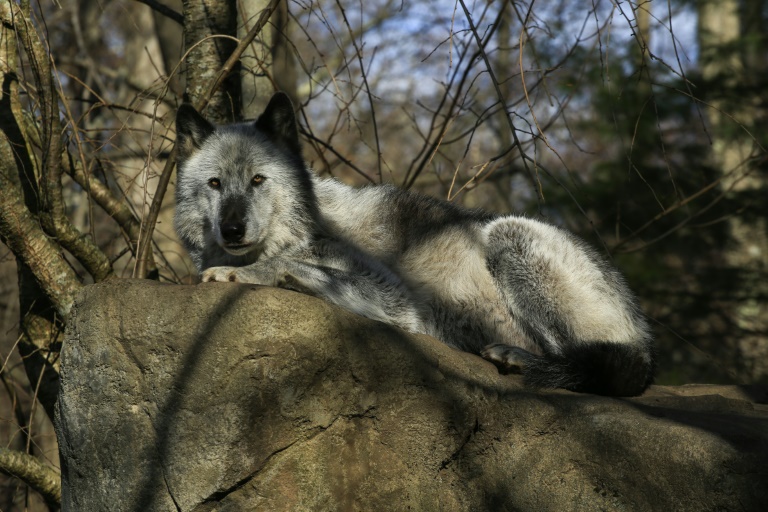
Few species evoke the American wild as much as wolves. 

Though revered by Indigenous communities, European colonists who arrived in the 1600s embarked on widespread extermination campaigns through hunting and trapping.

By the mid-20th century, fewer than a thousand gray wolves were left in the contiguous United States, down from at least a quarter million before colonization.

Extinction was averted in the 1970s when lawmakers passed the Endangered Species Act, helping revive the apex predator in parts of its former range.

Then, in the mid-1990s, the government took wolves from Canada and reintroduced them to Yellowstone National Park.

This generated a wealth of data that scientists are still working to understand.

The new arrivals kept elk numbers down, preventing them from over-browsing vegetation that provides material for birds to build nests and beavers to build dams — a phenomenon known as a trophic cascade.

The recovered vegetation helped stop soil erosion into rivers, changing their course by reducing meandering.

While building their dams, the beavers also create deep ponds that juvenile fish and frogs need to survive.

When they embark on hunts, wolves focus on weak and diseased prey, ensuring survival of the fittest.

A recent paper even found that wolves brought back in the midwestern state of Wisconsin kept deer away from roads, reducing collisions with cars.

Amaroq Weiss, a biologist and senior wolf advocate for the Center for Biological Diversity compared ecosystems to tapestries, “and when we take out some of the threads, we weaken that tapestry,” she told AFP.

It’s thought there are now more than 6,000 gray wolves in the contiguous United States. The main threat is legalized hunting in some states.

– Buffalo –

The story of the American buffalo — also known as bison — is inextricably linked to the dark history of the early United States.

From an estimated 30 million, their number plummeted to just hundreds by the late 19th century as the US government sought to wipe out plains tribe Indians whose way of life depended on the animal.

“It was an intentional genocide to remove the buffalo, to the remove the Indians and force them onto reservations,” Cody Considine of The Nature Conservancy (TNC) told AFP.

Buffalo, he explained, are an integral part of TNC’s efforts to re-establish prairies in the Nachusa Grasslands of Illinois.

The buffalo, who were introduced there in 2014 and now number around a hundred, favor eating grass over flowering plants and legumes, which in turn allows a variety of birds, insects and amphibians to flourish.

“Some of these species without that grazing simply just disappear off the landscape due to the high competition of the grasses,” added Considine.

As they forage, bisons’ hooves kick up and aerate the soil, further aiding in plant growth as well as seed dispersion. 

TNC currently manages some 6,500 buffalo, and is creating a pilot program with tribal partners that involves transferring excess animals to Indigenous communities, as part of broader efforts to revive America’s national mammal. 

Some 20,000 buffalo are now thought to roam in “conservation herds,” though none are truly free roaming, added Considine.

– Sea otters –

As the dominant predator of marine nearshore environments, sea otters play a hugely important role in their ecosystem.

Historically they spanned from Baja California up the West Coast up to Alaska, Russia and northern Japan, but hunting for fur in the 1700s and 1800s decimated their numbers, which were once up to 300,000. 

They were thought for a while to have been completely exterminated off California, but a small surviving population of around 50 helped them partially recover to some 3,000 today.

Jess Fujii, sea otter program manager at the Monterey Bay Aquarium, told AFP that research during the 1970s in the Aleutian Islands showed the otters maintained the balance of kelp forest by keeping a check on the sea urchins that graze on them.

In the last decade, more complex interactions have come to light. These include the downstream benefits of otters for eelgrass habitats in California estuaries. 

Here, the sea otters controlled the population of crabs, which meant there were more sea slugs who were able to graze algae, keeping the eelgrass healthy.

Eelgrass is considered a “nursery of the sea” for juvenile fish, and it also reduces erosion, which can factor in coastal floods.

“Kelp and eelgrass are often considered good ways to sequester carbon which can help mitigate the ongoing impacts of climate change,” stressed Fujii, a prime example of how destruction of nature can worsen planetary warming.


How bringing back lost species revives ecosystems

Scientists often study the grim impacts of losing wildlife to hunting, habitat destruction and climate change. But what happens when endangered animals are brought back from the brink?

Research has shown restoring so-called “keystone” species — those with an outsized impact on their environment — is vital for the health of ecosystems, and can come with unexpected benefits for humans.

Here are some notable examples from North America. 

– Wolves –

Few species evoke the American wild as much as wolves. 

Though revered by Indigenous communities, European colonists who arrived in the 1600s embarked on widespread extermination campaigns through hunting and trapping.

By the mid-20th century, fewer than a thousand gray wolves were left in the contiguous United States, down from at least a quarter million before colonization.

Extinction was averted in the 1970s when lawmakers passed the Endangered Species Act, helping revive the apex predator in parts of its former range.

Then, in the mid-1990s, the government took wolves from Canada and reintroduced them to Yellowstone National Park.

This generated a wealth of data that scientists are still working to understand.

The new arrivals kept elk numbers down, preventing them from over-browsing vegetation that provides material for birds to build nests and beavers to build dams — a phenomenon known as a trophic cascade.

The recovered vegetation helped stop soil erosion into rivers, changing their course by reducing meandering.

While building their dams, the beavers also create deep ponds that juvenile fish and frogs need to survive.

When they embark on hunts, wolves focus on weak and diseased prey, ensuring survival of the fittest.

A recent paper even found that wolves brought back in the midwestern state of Wisconsin kept deer away from roads, reducing collisions with cars.

Amaroq Weiss, a biologist and senior wolf advocate for the Center for Biological Diversity compared ecosystems to tapestries, “and when we take out some of the threads, we weaken that tapestry,” she told AFP.

It’s thought there are now more than 6,000 gray wolves in the contiguous United States. The main threat is legalized hunting in some states.

– Buffalo –

The story of the American buffalo — also known as bison — is inextricably linked to the dark history of the early United States.

From an estimated 30 million, their number plummeted to just hundreds by the late 19th century as the US government sought to wipe out plains tribe Indians whose way of life depended on the animal.

“It was an intentional genocide to remove the buffalo, to the remove the Indians and force them onto reservations,” Cody Considine of The Nature Conservancy (TNC) told AFP.

Buffalo, he explained, are an integral part of TNC’s efforts to re-establish prairies in the Nachusa Grasslands of Illinois.

The buffalo, who were introduced there in 2014 and now number around a hundred, favor eating grass over flowering plants and legumes, which in turn allows a variety of birds, insects and amphibians to flourish.

“Some of these species without that grazing simply just disappear off the landscape due to the high competition of the grasses,” added Considine.

As they forage, bisons’ hooves kick up and aerate the soil, further aiding in plant growth as well as seed dispersion. 

TNC currently manages some 6,500 buffalo, and is creating a pilot program with tribal partners that involves transferring excess animals to Indigenous communities, as part of broader efforts to revive America’s national mammal. 

Some 20,000 buffalo are now thought to roam in “conservation herds,” though none are truly free roaming, added Considine.

– Sea otters –

As the dominant predator of marine nearshore environments, sea otters play a hugely important role in their ecosystem.

Historically they spanned from Baja California up the West Coast up to Alaska, Russia and northern Japan, but hunting for fur in the 1700s and 1800s decimated their numbers, which were once up to 300,000. 

They were thought for a while to have been completely exterminated off California, but a small surviving population of around 50 helped them partially recover to some 3,000 today.

Jess Fujii, sea otter program manager at the Monterey Bay Aquarium, told AFP that research during the 1970s in the Aleutian Islands showed the otters maintained the balance of kelp forest by keeping a check on the sea urchins that graze on them.

In the last decade, more complex interactions have come to light. These include the downstream benefits of otters for eelgrass habitats in California estuaries. 

Here, the sea otters controlled the population of crabs, which meant there were more sea slugs who were able to graze algae, keeping the eelgrass healthy.

Eelgrass is considered a “nursery of the sea” for juvenile fish, and it also reduces erosion, which can factor in coastal floods.

“Kelp and eelgrass are often considered good ways to sequester carbon which can help mitigate the ongoing impacts of climate change,” stressed Fujii, a prime example of how destruction of nature can worsen planetary warming.

How bringing back lost species revives ecosystems

Scientists often study the grim impacts of losing wildlife to hunting, habitat destruction and climate change. But what happens when endangered animals are brought back from the brink?

Research has shown restoring so-called “keystone” species — those with an outsized impact on their environment — is vital for the health of ecosystems, and can come with unexpected benefits for humans.

Here are some notable examples from North America. 

– Wolves –

Few species evoke the American wild as much as wolves. 

Though revered by Indigenous communities, European colonists who arrived in the 1600s embarked on widespread extermination campaigns through hunting and trapping.

By the mid-20th century, fewer than a thousand gray wolves were left in the contiguous United States, down from at least a quarter million before colonization.

Extinction was averted in the 1970s when lawmakers passed the Endangered Species Act, helping revive the apex predator in parts of its former range.

Then, in the mid-1990s, the government took wolves from Canada and reintroduced them to Yellowstone National Park.

This generated a wealth of data that scientists are still working to understand.

The new arrivals kept elk numbers down, preventing them from over-browsing vegetation that provides material for birds to build nests and beavers to build dams — a phenomenon known as a trophic cascade.

The recovered vegetation helped stop soil erosion into rivers, changing their course by reducing meandering.

While building their dams, the beavers also create deep ponds that juvenile fish and frogs need to survive.

When they embark on hunts, wolves focus on weak and diseased prey, ensuring survival of the fittest.

A recent paper even found that wolves brought back in the midwestern state of Wisconsin kept deer away from roads, reducing collisions with cars.

Amaroq Weiss, a biologist and senior wolf advocate for the Center for Biological Diversity compared ecosystems to tapestries, “and when we take out some of the threads, we weaken that tapestry,” she told AFP.

It’s thought there are now more than 6,000 gray wolves in the contiguous United States. The main threat is legalized hunting in some states.

– Buffalo –

The story of the American buffalo — also known as bison — is inextricably linked to the dark history of the early United States.

From an estimated 30 million, their number plummeted to just hundreds by the late 19th century as the US government sought to wipe out plains tribe Indians whose way of life depended on the animal.

“It was an intentional genocide to remove the buffalo, to the remove the Indians and force them onto reservations,” Cody Considine of The Nature Conservancy (TNC) told AFP.

Buffalo, he explained, are an integral part of TNC’s efforts to re-establish prairies in the Nachusa Grasslands of Illinois.

The buffalo, who were introduced there in 2014 and now number around a hundred, favor eating grass over flowering plants and legumes, which in turn allows a variety of birds, insects and amphibians to flourish.

“Some of these species without that grazing simply just disappear off the landscape due to the high competition of the grasses,” added Considine.

As they forage, bisons’ hooves kick up and aerate the soil, further aiding in plant growth as well as seed dispersion. 

TNC currently manages some 6,500 buffalo, and is creating a pilot program with tribal partners that involves transferring excess animals to Indigenous communities, as part of broader efforts to revive America’s national mammal. 

Some 20,000 buffalo are now thought to roam in “conservation herds,” though none are truly free roaming, added Considine.

– Sea otters –

As the dominant predator of marine nearshore environments, sea otters play a hugely important role in their ecosystem.

Historically they spanned from Baja California up the West Coast up to Alaska, Russia and northern Japan, but hunting for fur in the 1700s and 1800s decimated their numbers, which were once up to 300,000. 

They were thought for a while to have been completely exterminated off California, but a small surviving population of around 50 helped them partially recover to some 3,000 today.

Jess Fujii, sea otter program manager at the Monterey Bay Aquarium, told AFP that research during the 1970s in the Aleutian Islands showed the otters maintained the balance of kelp forest by keeping a check on the sea urchins that graze on them.

In the last decade, more complex interactions have come to light. These include the downstream benefits of otters for eelgrass habitats in California estuaries. 

Here, the sea otters controlled the population of crabs, which meant there were more sea slugs who were able to graze algae, keeping the eelgrass healthy.

Eelgrass is considered a “nursery of the sea” for juvenile fish, and it also reduces erosion, which can factor in coastal floods.

“Kelp and eelgrass are often considered good ways to sequester carbon which can help mitigate the ongoing impacts of climate change,” stressed Fujii, a prime example of how destruction of nature can worsen planetary warming.
Pope to visit DR Congo, S. Sudan in early 2023

Pope Francis will visit the Democratic Republic of Congo and South Sudan early next year, a trip previously postponed due to problems with his knee, the Vatican said Thursday.

The 85-year-old pontiff will visit Kinshasa during his trip to DRC from January 31 to February 3.

He will then be joined by the Archbishop of Canterbury, Justin Welby, and the Moderator of the General Assembly of the Church of Scotland, Iain Greenshields, in heading to Juba in South Sudan from February 3-5. 

It will be the pontiff’s fifth visit to the African continent since being elected head of the worldwide Catholic church in 2013. 

The pope’s trip to the two countries, both plagued by violence, had initially been planned for July this year.

It was postponed “at the request of his doctors”, the Vatican said at the time, as the pope underwent treatment for knee pain.

There had also been concerns about security on the trip, according to Italian media reports.

– Chronic instability –

The Church of Scotland said that during the visit to Juba, the pope, the archbishop and Greenshields, would “meet local church representatives, civil war victims living in a displaced persons camp and lead a large open-air prayer vigil for peace.”

“The purpose of the visit is to renew a commitment to peace and reconciliation and stand in solidarity with millions of ordinary people who are suffering profoundly from continued armed conflict, violence, floods and famine,” the Church of Scotland said.

The pope — who in recent months has used a wheelchair — had initially planned to visit Goma, in the war-torn east of DRC, but this stop has been removed from the new programme.

South Sudan, the world’s newest nation, has suffered from chronic instability since independence in 2011, including a brutal five-year civil war.

The DRC, which Pope John Paul II visited in 1985, is struggling to contain dozens of armed groups in the east of the vast nation.

About 40 percent of the estimated 90 million inhabitants of DRC are Catholic. Another 35 percent are Protestant or affiliated to Christian revivalist churches, nine percent are Muslim, and 10 percent follow the Kimbanguist Congolese church.

The country has a secular government, but religion is omnipresent in most people’s lives and the Catholic Church has at times played a leading role in local politics.

The pope’s trip will be the 40th abroad of his papacy.

World equities extend gains on Fed rate optimism

Global stocks rose further Thursday as Federal Reserve boss Jerome Powell flagged a moderation in interest rate hikes, while China signalled a softer approach to fighting Covid.

Asian and European equities tacked higher as investors also eyed news that eurozone unemployment plumbed to a record-low 6.5 percent in October.

Oil prices climbed before this weekend’s OPEC output meeting of key crude producing nations.

– ‘Positive news’ –

“Powell … signalled a potential slowing of interest rate hikes,” noted equity analyst Matt Britzman at UK stockbroker Hargreaves Lansdown.

“Markets have been clinging to every scrap of positive news lately and this was a continuation of that trend.”

In a much-anticipated speech Wednesday, Powell said the full effects of the Fed’s belt-tightening had yet to be felt but that it “makes sense to moderate the pace of our rate increases as we approach the level of restraint that will be sufficient to bring inflation down”.

He signalled the US central bank’s December gathering would likely see officials lift borrowing costs by 50 basis points.

The Fed has yanked up rates by a bumper 75 points at each of the last four meetings.

However, Powell did say policy would need to remain tight “for some time” to restore price stability, echoing comments from other Fed officials who suggested there might not be any cuts until 2024.

Analysts said the reaction to Powell’s remarks — which had been expected to be his most dovish in some time — highlighted a sense of relief among investors that a long-hoped-for pivot was on the cards.

– Santa Rally on cards? –

“For the first time in an age it feels like Powell is telling markets what they want to hear,” said AJ Bell investment director Russ Mould.

“The message that an easing in the pace of rate hikes could come before the end of the year was just what investors were looking for and raises the prospect of a Santa Rally heading into Christmas.”

All three main indexes on Wall Street surged in response on Wednesday, with the Nasdaq leading the way as rate-sensitive tech firms rocketed.

Hong Kong extended gains into a third day, with tech giants including Alibaba and Tencent tracking massive gains in their US-listed stock, while Shanghai was also up.

Equities were also helped by signs that China is edging towards a more pragmatic approach to fighting the coronavirus, having hammered the economy this year with its strict zero-Covid strategy of lockdowns and mass testing.

After widespread unrest against the measures — and calls for more political freedoms — authorities have announced moves aimed at loosening some restrictions.

The dollar sank, having soared across the board this year as Fed monetary policy diverged more and more from other central banks.

– Key figures around 1115 GMT –

London – FTSE 100: UP 0.1 percent at 7,578.14 points

Frankfurt – DAX: UP 0.7 percent at 14,496.76

Paris – CAC 40: UP 0.2 percent at 6,748.44

EURO STOXX 50: UP 0.6 percent at 3,986.56

Tokyo – Nikkei 225: UP 0.9 percent at 28,226.08 (close)

Hong Kong – Hang Seng Index: UP 0.8 percent at 18,736.44 (close)

Shanghai – Composite: UP 0.5 percent at 3,165.47 (close)

New York – Dow: UP 2.2 percent at 34,589.77 (close)

Euro/dollar: UP at $1.0442 from $1.0406 on Wednesday

Dollar/yen: DOWN at 136.34 yen from 138.07 yen

Pound/dollar: UP at $1.2150 from $1.2058

Euro/pound: DOWN at 85.94 pence from 86.30 pence

Brent North Sea crude: UP 0.6 percent at $87.45 per barrel

West Texas Intermediate: UP 0.7 percent at $81.11 per barrel

burs-rfj/lth

Spain PM got letter similar to one which exploded at Ukraine embassy

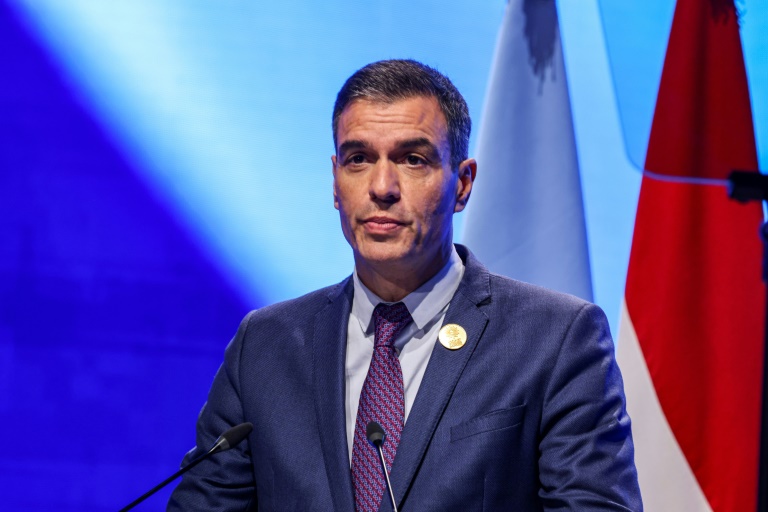
The Spanish prime minister received a booby-trapped letter last week which was “similar” to one which exploded Wednesday at Ukraine’s embassy in Madrid, lightly injuring an employee, officials said Thursday.

Security staff carried out a “controlled explosion” of the mailed item, whose “content was similar” to that found in other letters sent to the Ukrainian embassy, an air force base, the defence ministry and a military equipment firm. 

The envelope, “containing pyrotechnic material” and addressed to Socialist Prime Minister Pedro Sanchez, arrived by regular mail on November 24, the interior ministry said in a statement.

On Wednesday the security officer at Ukraine’s embassy in Madrid lightly injured his hand while opening a letter bomb addressed to the Ukrainian ambassador, prompting Kyiv to boost security at its embassies worldwide.

Spain’s High Court has opened a probe for a possible case of terrorism.

Later in the evening, a second “suspicious postal shipment” was intercepted at the headquarters of military equipment firm Instalaza in the northeastern city of Zaragoza, the interior ministry said.

Experts carried out a controlled explosion of that mailed item as well.

Instalaza makes the grenade launchers that Spain donates to Ukraine.

Earlier Thursday, security forces also detected a “suspect envelope” at an air base in Torrejon de Ardoz outside of Madrid which is regularly used to send weapons donated by Spain to Ukraine.

Police were called to the base “to secure the area and investigators are analysing this envelope” which was addressed to the base’s satellite centre, the interior ministry said.

“Both the characteristics of the envelopes and their content are similar in the four cases,” it said in a statement, adding police had informed the National Court of the four incidents.

A fifth envelope with “explosive” arrived at the defence ministry in Madrid on Thursday morning, a defence ministry source told AFP. 

Experts blew up the package at the ministry, the source added.

– ‘Terrorist methods’ –

Ukraine’s ambassador to Spain, Serhii Pohoreltsev, appeared to blame Russia for the letter bomb that arrived at the embassy.

“We are well aware of the terrorist methods of the aggressor country,” he said during an interview late Wednesday with Spanish public television.

“Russia’s methods and attacks require us to be ready for any kind of incident, provocation or attack,” he added.

Ukrainian Foreign Minister Dmytro Kuleba ordered the strengthening of security at all Ukrainian embassies, the country’s foreign ministry spokesperson said Wednesday after the letter bomb went off at the embassy in Madrid.

Russia invaded Ukraine in February in what it calls a “special military operation”, which Kyiv and the West describe as an unprovoked land grab.

In addition to sending arms to help Ukraine, Spain is training Ukrainian troops as part of a European Union programme.

Engineering giant to repay S.Africa over 'criminal conduct' at utility

Swedish-Swiss engineering giant ABB, which helped construct a huge power plant near Johannesburg, will pay reparations to South Africa over “criminal conduct” at the struggling power utility Eskom, prosecutors said Thursday.

“ABB has acknowledged liability and taken responsibility for the alleged criminal conduct of its employees involving contracts with Eskom,” the National Prosecuting Authority (NPA) said in a statement.

It said it had finalised a settlement agreement with Asea Brown Boveri (ABB) to pay over more 2.5 billion rand ($144,000) in “punitive reparations” to South Africa.

In 2020, ABB returned 1.6 million rand ($92,000) it received for the construction of the coal-fired Kusile power station, commissioned by Eskom in 2007. 

Construction of the plant, the fourth largest coal-fired generator in the world, has been fraught with allegations of graft. 

The NPA said the latest development showed its determination to “deal with corruption through prosecuting perpetrators and recovering the stolen money.”

“This settlement represents a bold and innovative step towards accountability… particularly in the form of restitution for the serious crimes committed at Eskom, during the state capture (corruption) period,” said the NPA.

The deal was negotiated with partner countries including Italy, Germany, the United States and Switzerland.

In October eight people, including the former CEO of Eskom, Matshela Koko, were arrested on corruption charges linked to a multi-million-dollar contract with the Swedish-Swiss firm.

Eurozone unemployment drops to record low

Unemployment in the eurozone has dropped to a record low, at 6.5 percent in October, the EU’s Eurostat statistics office said Thursday.

The reading — the lowest since Eurostat started compiling jobless figures in April 1998 — was an indicator that the economies of the 19 EU nations using the euro had bounced back after the Covid pandemic.

The seasonally adjusted unemployment rate was markedly less than the 7.3 percent recorded a year ago.

Eurostat estimated that, for the entire 27-nation European Union, 12.95 million adults were unemployed in October — or 6.0 percent of the active population — with 10.87 million of them in the eurozone. 

While all OECD economies, with the exception of former EU member Britain, have recovered to their pre-pandemic size, global headwinds are stalling the recovery.

The eurozone is likely to tip towards recession within weeks, according to the European Commission.

Inflation is running hot, despite falling back in the latest reading on Wednesday, at 10 percent — above the European Central Bank’s two-percent target — largely because of high energy prices spurred by the fallout of Russia’s war in Ukraine.

Business activity has been declining for five straight months, according to a PMI survey published by S&P Global, although the rate of decline slowed in November.

The ECB will pore over the latest indicators as it walks a tight rope between raising interest rates to combat inflation and the risk of tipping the economy into a deep recession.

An analysis note from ING bank said the unemployment data showed “the labour market remains resilient despite the slowing economy”.

It added that it expected the ECB to remain “on high alert in its fight against inflation”.

Younger people had the highest unemployment rate in the EU and its eurozone, at 15.1 percent and 15.0 percent respectively, according to Eurostat. That was an increase over a year ago.

In the eurozone’s biggest economy, Germany, the unemployment rate was 3.0 percent, down from 3.3 percent in October 2021.

In the second biggest, France, it was 7.1 percent, down from 7.6 percent a year earlier.

The Czech Republic, which is not in the eurozone, had the lowest unemployment rate in the EU, at 2.1 percent, while eurozone member Spain was the highest, with 12.5 percent.

Coup allegations a bid to eliminate me, says Sao Tome opponent

One of Sao Tome’s leading opposition figures says accusations that he sought to mount a coup in the tiny African state were a “sham” and a bid to destroy him.

Four people were killed last Friday when the military thwarted an attempt to seize power, according to the authorities.

Opposition leader and former parliamentary speaker Delfim Neves was arrested afterwards, and accused by Prime Minister Patrice Trovoada of having staged the attempted putsch.

“All this is just a sham, a show… aimed at physically eliminating people who can be politically troublesome, which includes me,” Neves said at a press conference on Wednesday.

Neves was released on bail on Tuesday, his lawyer and STP-Presse said.

The justice ministry and public prosecutor’s office did not reply to an AFP request on Wednesday to say whether Neves had been charged, and if so for what.

Sao Tome and Principe is a Portuguese-speaking archipelago off central Africa that has a strong reputation for democracy and stability.

– Unclear –

Key details about what happened on Friday and the following days remain murky.

Trovoada on Friday said that four people had been arrested after a six-hour gun battle at army headquarters. 

Four people had died and the detainees had identified Neves and a mercenary named Arlecio Costa as the “sponsors” of the operation, he said.

The authorities then arrested Neves and Costa, Trovoado said.

But two days later, the armed forces chief of staff said, without elaborating, that three of the four detainees had died of wounds sustained in an “explosion” and Costa had died after he “jumped from a vehicle.”

“They killed the living proof” of what had happened, Neves said at the press conference, referring to Costa and the three dead detainees.

“The accuser (the fourth detainee) was left alive to say that Delfim Neves was one of the ringleaders behind this plot,” he charged.

He added, “If people hadn’t mobilised quickly to get me out of the barracks at 5.30 a.m., Delfim Neves would have been dead the following day as well.”

Costa once served in a notorious South African mercenary outfit, the Buffalo Battalion, which was disbanded at the end of apartheid in 1993. He had been previously accused of an attempted coup in Sao Tome in 2009.

– Inquiry –

The government has announced it will launch investigations into the attempted coup and the death of the four.

The European Union on Tuesday added to pressure for transparency, saying the probe should “shed light on the facts… in line with human rights and democratic values.”

Neves lost his position as speaker on November 11 when the new National Assembly was installed following elections in September.

The vote was won with an absolute majority by Trovoada’s centre-right Independent Democratic Action (ADI) party. He returned to the top job for a third time.

The ADI is one of two major parties that have vied to run the nation since independence from Portugal in 1975, along with the Movement for the Liberation of Sao Tome and Principe-Social Democratic Party (MLSTP-PSD).

Neves last year also failed in an attempt to be elected president, a largely symbolic job, losing to the ADI’s Carlos Vila Nova.

He arrived in third place and alleged “massive electoral fraud” had taken place.

Impeachment pressure builds on S.Africa's Ramaphosa

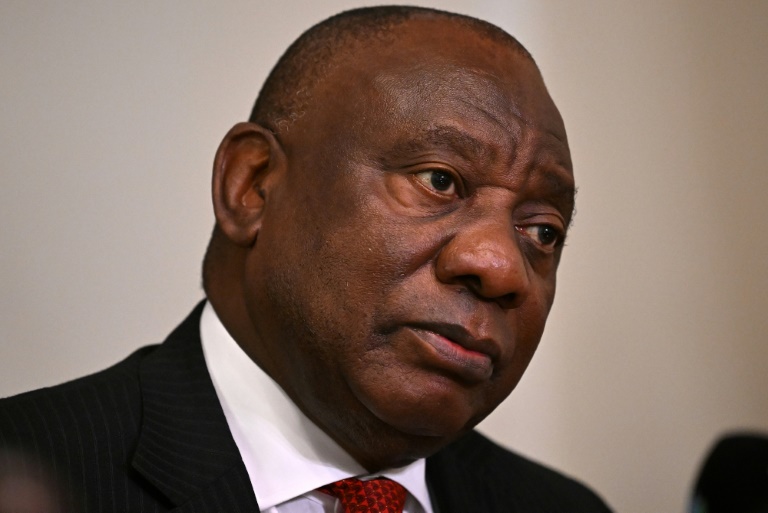
South Africa’s ruling ANC party was due to convene emergency talks on Thursday as pressure mounts for President Cyril Ramaphosa to quit or face impeachment over a burglary that he is accused of concealing at his farm.

An independent panel set up by parliament concluded on Wednesday that Ramaphosa “may have committed… serious violations” of the constitution and anti-corruption laws.

There was enough evidence to warrant a parliamentary debate on whether the president should be removed from office, dealing a serious blow to Ramaphosa’s bid in two-weeks’ time to be re-elected head of the African National Congress (ANC).

Ramaphosa took office at the helm of Africa’s biggest economy in 2018 on a promise to root out corruption. He now risks becoming the third ANC leader forced out since the party came to power after the end of apartheid in 1994.

South African lawmakers are to examine the findings of the panel, which they appointed, on December 6 and adopt a resolution, through a simple majority vote, on whether to impeach Ramaphosa or not.

This could lead to a vote to remove the president. To be successful, any such vote would require the approval by two-thirds of assembly members.

The ANC’s National Executive Committee — the party’s decision-making body — is due to hold urgent talks at 7:00 pm (1700 GMT) to discuss the findings of the farm theft scandal, an ANC official told AFP.

Ramaphosa separately cancelled a scheduled appearance before parliament in which he was supposed to answer questions on Thursday.

– ‘Resignation’ –

His office informed parliament that: “Implications for the stability of the country required that the president take the time to carefully consider the contents of the report and the next course of action”.

Ramaphosa has been deluged with calls to step down from within the ANC and the political opposition.

“The President has to step aside now and answer to the case,” cabinet minister Nkosazana Dlamini-Zuma, who ran unsuccessfully against Ramaphosa as ANC leader in 2017, tweeted late Wednesday.

“His best course of action remains immediate resignation,” said the leftist opposition Economic Freedom Fighters (EFF).

South Africa’s largest opposition party, the Democratic Alliance, called for an early election saying the country faces a “seismic shift”.

The scandal erupted in June after South Africa’s former national spy boss alleged to police that Ramaphosa had hidden a burglary at his Phala Phala farm in northeastern South Africa from the authorities.

Instead, he allegedly organised for the robbers to be kidnapped and bribed into silence.

The president flatly denies this and laid out his position to the panel.

– Cash stuffed in sofa –

Ramaphosa said $580,000 in cash was stolen from beneath sofa cushions at his ranch. 

The sum was payment made by a Sudanese citizen who had bought buffaloes.

Staff at the farm initially locked the money in an office safe, Ramaphosa said. 

But the lodge manager then decided that the “safest place” to store it would be under the cushions of a sofa inside Ramaphosa’s residence at the farm, he said. 

Ramaphosa told the inquiry that the accusations against him were “without any merit” and asked it not to take the matter “any further”.

But his request was rebuffed.

The panel concluded that Ramaphosa did not report the theft directly to police, acting in a way inconsistent with holding office and exposing himself to a clash between his official responsibilities and his private business.

Ramaphosa swept to power after the corruption-stained era of his former boss, Jacob Zuma. His predecessor Zuma survived four impeachment votes until his own party forced him to resign over graft in 2018.

The ANC also forced Thabo Mbeki out of office in 2008 in the middle of a power struggle.

Close Bitnami banner
Bitnami