World

China signals zero-Covid relaxation after protests

China’s top Covid official has signalled a possible relaxing of the country’s strict zero-tolerance approach to the virus, after nationwide protests calling for an end to lockdowns and greater political freedom.

Anger over China’s zero-Covid policy — which involves mass lockdowns, constant testing and quarantines even for people who are not infected — has sparked protests in major cities including Beijing, Shanghai and Guangzhou.

But while authorities have called for a “crackdown” in the wake of the demonstrations, they have also begun hinting that a relaxation of the hardline virus strategy could be in the works.

Speaking at the National Health Commission Wednesday, Vice Premier Sun Chunlan said the Omicron variant was weakening and vaccination rates were improving, according to the state-run Xinhua news agency.

Sun — a central figure behind Beijing’s pandemic response — said this “new situation” required “new tasks”.

She made no mention of the zero-Covid policy in her latest remarks, suggesting an approach that has disrupted the economy and daily life might soon be relaxed.

The comments came as the southern manufacturing-hub Guangzhou — the site of dramatic Tuesday night clashes between police and protesters — said it had partially lifted a weeks-long lockdown, despite seeing record virus cases.

Officials on Wednesday eased restrictions to varying degrees in all of the city’s 11 districts, including Haizhu, where recent protests took place.

With the exception of a number of designated “high-risk” neighbourhoods, the Guangzhou health commission said, “the rest will be managed as low-risk areas.”

The central city of Chongqing also said Wednesday close contacts of Covid cases who met certain conditions would be allowed to quarantine at home — a departure from rules that required them to be sent to central isolation facilities.

Sun’s remarks — as well as relaxations of rules by local authorities — “could signal that China is beginning to consider the end of its stringent zero-Covid policy,” analysts said.

“We believe that Chinese authorities are shifting to a ‘living with Covid’ stance, as reflected in new rules that allow people to do ‘home isolation’ instead of being ferried away to quarantine facilities,” ANZ Research analysts said in a note.

– ‘Sign of weakness’ –

As China reaches the third anniversary of the pandemic first being detected in the central city of Wuhan, its hardline approach to the virus has stoked unrest not seen since the 1989 pro-democracy protests.

A deadly fire last week in Urumqi, the capital of the northwestern region of Xinjiang, was the catalyst for the outrage, with people blaming Covid curbs for trapping victims inside the burning building.

But demonstrators have also demanded wider political reforms, with some even calling for President Xi Jinping to stand down.

China’s strict control of information and continued travel curbs have made verifying protester numbers across the vast country very challenging.

However, the widespread rallies seen over the weekend are exceptionally rare in China.

The 1989 pro-democracy protests ended in bloodshed when the military moved in, most famously in Beijing’s Tiananmen Square and surrounding areas.

The death on Wednesday of former Chinese leader Jiang Zemin — who came to power just after Tiananmen — saw the ruling Communist Party emphasise his role in that crackdown.

US Secretary of State Antony Blinken, asked about the protests in an interview with NBC News, said that people in every country should be able to “make known their frustration” through peaceful protests.

“In any country where we see that happening and then we see the government take massive repressive action to stop it, that’s not a sign of strength, that’s a sign of weakness,” he said.


Musk says Twitter clash with Apple a 'misunderstanding'

Twitter owner Elon Musk said he met with Apple chief Tim Cook on Wednesday and “resolved the misunderstanding” that prompted him to declare war on the iPhone maker’s App Store.

“Among other things, we resolved the misunderstanding about Twitter potentially being removed from the App Store,” Musk tweeted.

“Tim was clear that Apple never considered doing so.”

Musk also tweeted a video clip of “Apple’s beautiful HQ” in Cupertino, California, noting that he had had a “good conversation” with Cook.

Apple did not reply to AFP requests for comment.

The world’s richest person opened fire on the planet’s most valuable company early this week over fees and rules at the App Store, saying Apple had threatened to oust his recently acquired social media platform.

The billionaire CEO had tweeted that Apple “threatened to withhold Twitter from its App Store, but won’t tell us why.”

Apple, which has not issued a public statement on the matter, typically tells developers if fixes need to be implemented in apps to conform to App Store policies.

Analysts told AFP the clash may have came down to money, with Musk irked that the App Store takes a commission on transactions such as subscriptions.

Musk has delayed the relaunch of the Twitter Blue subscription tier intended to have users pay for perks such as account verification check marks.

Twitter rolled out Blue early in November, but pulled the plug after impersonators paid for check marks to appear legitimate in what former head of safety and security Yoel Roth referred to as “a disaster.”

Both Apple and Google also require social networking services on their app stores to have effective systems for moderating harmful or abusive content.

But since taking over Twitter last month, Musk has cut around half of Twitter’s workforce, including many employees tasked with fighting disinformation, while an unknown number of others have quit.

He has also reinstated previously banned accounts, including that of former president Donald Trump.

Describing himself as a “free speech absolutist,” Musk believes that all content permitted by law should be allowed on Twitter, and has described his actions as a “revolution against online censorship in America.”

Musk says Twitter clash with Apple a 'misunderstanding'

Twitter owner Elon Musk said he met with Apple chief Tim Cook on Wednesday and “resolved the misunderstanding” that prompted him to declare war on the iPhone maker’s App Store.

“Among other things, we resolved the misunderstanding about Twitter potentially being removed from the App Store,” Musk tweeted.

“Tim was clear that Apple never considered doing so.”

Musk also tweeted a video clip of “Apple’s beautiful HQ” in Cupertino, California, noting that he had had a “good conversation” with Cook.

Apple did not reply to AFP requests for comment.

The world’s richest person opened fire on the planet’s most valuable company early this week over fees and rules at the App Store, saying Apple had threatened to oust his recently acquired social media platform.

The billionaire CEO had tweeted that Apple “threatened to withhold Twitter from its App Store, but won’t tell us why.”

Apple, which has not issued a public statement on the matter, typically tells developers if fixes need to be implemented in apps to conform to App Store policies.

Analysts told AFP the clash may have came down to money, with Musk irked that the App Store takes a commission on transactions such as subscriptions.

Musk has delayed the relaunch of the Twitter Blue subscription tier intended to have users pay for perks such as account verification check marks.

Twitter rolled out Blue early in November, but pulled the plug after impersonators paid for check marks to appear legitimate in what former head of safety and security Yoel Roth referred to as “a disaster.”

Both Apple and Google also require social networking services on their app stores to have effective systems for moderating harmful or abusive content.

But since taking over Twitter last month, Musk has cut around half of Twitter’s workforce, including many employees tasked with fighting disinformation, while an unknown number of others have quit.

He has also reinstated previously banned accounts, including that of former president Donald Trump.

Describing himself as a “free speech absolutist,” Musk believes that all content permitted by law should be allowed on Twitter, and has described his actions as a “revolution against online censorship in America.”

How bringing back lost species revives ecosystems

Scientists often study the grim impacts of losing wildlife to hunting, habitat destruction and climate change. But what happens when endangered animals are brought back from the brink?

Research has shown restoring so-called “keystone” species — those with an outsized impact on their environment — is vital for the health of ecosystems, and can come with unexpected benefits for humans.

Here are some notable examples from North America. 

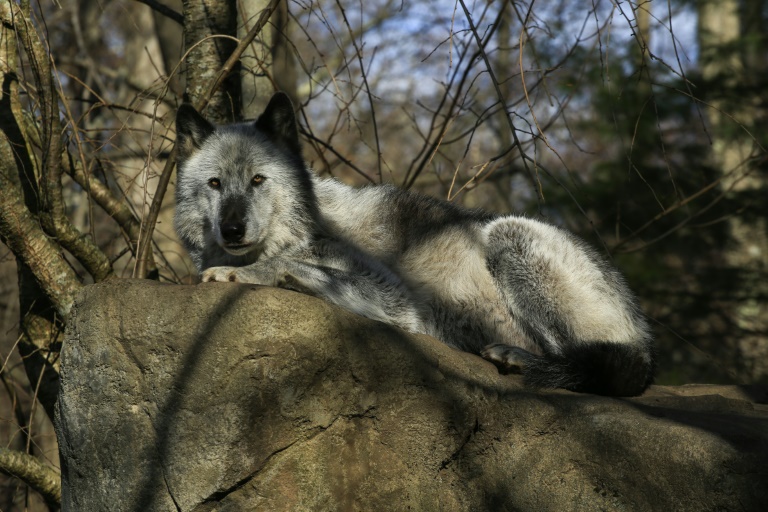
– Wolves –

Few species evoke the American wild as much as wolves. 

Though revered by Indigenous communities, European colonists who arrived in the 1600s embarked on widespread extermination campaigns through hunting and trapping.

By the mid-20th century, fewer than a thousand gray wolves were left in the continental United States, down from at least a quarter million before colonization.

Extinction was averted in the 1970s when lawmakers passed the Endangered Species Act, helping revive the apex predator in parts of its former range.

Then, in the mid-1990s, the government took wolves from Canada and reintroduced them to Yellowstone National Park.

This generated a wealth of data that scientists are still working to understand.

The new arrivals kept elk numbers down, preventing them from over-browsing vegetation that provides material for birds to build nests and beavers to build dams — a phenomenon known as a trophic cascade.

The recovered vegetation helped stop soil erosion into rivers, changing their course by reducing meandering.

While building their dams, the beavers also create deep ponds that juvenile fish and frogs need to survive.

When they embark on hunts, wolves focus on weak and diseased prey, ensuring survival of the fittest.

A recent paper even found that wolves brought back in the midwestern state of Wisconsin kept deer away from roads, reducing collisions with cars.

Amaroq Weiss, a biologist and senior wolf advocate for the Center for Biological Diversity compared ecosystems to tapestries, “and when we take out some of the threads, we weaken that tapestry,” she told AFP.

It’s thought there are now more than 6,000 gray wolves in the US. The main threat is legalized hunting in some states.

– Buffalo –

The story of the American buffalo — also known as bison — is inextricably linked to the dark history of the early United States.

From an estimated 30 million, their number plummeted to just hundreds by the late 19th century as the US government sought to wipe out plains tribe Indians whose way of life depended on the animal.

“It was an intentional genocide to remove the buffalo, to the remove the Indians and force them onto reservations,” Cody Considine of The Nature Conservancy (TNC) told AFP.

Buffalo, he explained, are an integral part of TNC’s efforts to re-establish prairies in the Nachusa Grasslands of Illinois.

The buffalo, who were introduced there in 2014 and now number around a hundred, favor eating grass over flowering plants and legumes, which in turn allows a variety of birds, insects and amphibians to flourish.

“Some of these species without that grazing simply just disappear off the landscape due to the high competition of the grasses,” added Considine.

As they forage, bisons’ hooves kick up and aerate the soil, further aiding in plant growth as well as seed dispersion. 

TNC currently manages some 6,500 buffalo, and is creating a pilot program with tribal partners that involves transferring excess animals to Indigenous communities, as part of broader efforts to revive America’s national mammal. 

Some 20,000 buffalo are now thought to roam in “conservation herds,” though none are truly free roaming, added Considine.

– Sea otters –

As the dominant predator of marine nearshore environments, sea otters play a hugely important role in their ecosystem.

Historically they spanned from Baja California up the West Coast up to Alaska, Russia and northern Japan, but hunting in the 1700s and 1800s decimated their numbers, which were once up to 300,000. 

They were thought for a while to have been completely exterminated off California, but a small surviving population of around 50 helped them partially recover to some 3,000 today.

Jess Fujii, sea otter program manager at the Monterey Bay Aquarium, told AFP that research during the 1970s in the Aleutian Islands showed the otters maintained the balance of kelp forest by keeping a check on the sea urchins that graze on them.

In the last decade, more complex interactions have come to light. These include the downstream benefits of otters for eelgrass habitats in California estuaries. 

Here, the sea otters controlled the population of crabs, which meant there were more sea slugs who were able to graze algae, keeping the eelgrass healthy.

Eelgrass is considered a “nursery of the sea” for juvenile fish, and it also reduces erosion, which can factor in coastal floods.

“Kelp and eelgrass are often considered good ways to sequester carbon which can help mitigate the ongoing impacts of climate change,” stressed Fujii, a prime example of how destruction of nature can worsen planetary warming.

How bringing back lost species revives ecosystems

Scientists often study the grim impacts of losing wildlife to hunting, habitat destruction and climate change. But what happens when endangered animals are brought back from the brink?

Research has shown restoring so-called “keystone” species — those with an outsized impact on their environment — is vital for the health of ecosystems, and can come with unexpected benefits for humans.

Here are some notable examples from North America. 

– Wolves –

Few species evoke the American wild as much as wolves. 

Though revered by Indigenous communities, European colonists who arrived in the 1600s embarked on widespread extermination campaigns through hunting and trapping.

By the mid-20th century, fewer than a thousand gray wolves were left in the continental United States, down from at least a quarter million before colonization.

Extinction was averted in the 1970s when lawmakers passed the Endangered Species Act, helping revive the apex predator in parts of its former range.

Then, in the mid-1990s, the government took wolves from Canada and reintroduced them to Yellowstone National Park.

This generated a wealth of data that scientists are still working to understand.

The new arrivals kept elk numbers down, preventing them from over-browsing vegetation that provides material for birds to build nests and beavers to build dams — a phenomenon known as a trophic cascade.

The recovered vegetation helped stop soil erosion into rivers, changing their course by reducing meandering.

While building their dams, the beavers also create deep ponds that juvenile fish and frogs need to survive.

When they embark on hunts, wolves focus on weak and diseased prey, ensuring survival of the fittest.

A recent paper even found that wolves brought back in the midwestern state of Wisconsin kept deer away from roads, reducing collisions with cars.

Amaroq Weiss, a biologist and senior wolf advocate for the Center for Biological Diversity compared ecosystems to tapestries, “and when we take out some of the threads, we weaken that tapestry,” she told AFP.

It’s thought there are now more than 6,000 gray wolves in the US. The main threat is legalized hunting in some states.

– Buffalo –

The story of the American buffalo — also known as bison — is inextricably linked to the dark history of the early United States.

From an estimated 30 million, their number plummeted to just hundreds by the late 19th century as the US government sought to wipe out plains tribe Indians whose way of life depended on the animal.

“It was an intentional genocide to remove the buffalo, to the remove the Indians and force them onto reservations,” Cody Considine of The Nature Conservancy (TNC) told AFP.

Buffalo, he explained, are an integral part of TNC’s efforts to re-establish prairies in the Nachusa Grasslands of Illinois.

The buffalo, who were introduced there in 2014 and now number around a hundred, favor eating grass over flowering plants and legumes, which in turn allows a variety of birds, insects and amphibians to flourish.

“Some of these species without that grazing simply just disappear off the landscape due to the high competition of the grasses,” added Considine.

As they forage, bisons’ hooves kick up and aerate the soil, further aiding in plant growth as well as seed dispersion. 

TNC currently manages some 6,500 buffalo, and is creating a pilot program with tribal partners that involves transferring excess animals to Indigenous communities, as part of broader efforts to revive America’s national mammal. 

Some 20,000 buffalo are now thought to roam in “conservation herds,” though none are truly free roaming, added Considine.

– Sea otters –

As the dominant predator of marine nearshore environments, sea otters play a hugely important role in their ecosystem.

Historically they spanned from Baja California up the West Coast up to Alaska, Russia and northern Japan, but hunting in the 1700s and 1800s decimated their numbers, which were once up to 300,000. 

They were thought for a while to have been completely exterminated off California, but a small surviving population of around 50 helped them partially recover to some 3,000 today.

Jess Fujii, sea otter program manager at the Monterey Bay Aquarium, told AFP that research during the 1970s in the Aleutian Islands showed the otters maintained the balance of kelp forest by keeping a check on the sea urchins that graze on them.

In the last decade, more complex interactions have come to light. These include the downstream benefits of otters for eelgrass habitats in California estuaries. 

Here, the sea otters controlled the population of crabs, which meant there were more sea slugs who were able to graze algae, keeping the eelgrass healthy.

Eelgrass is considered a “nursery of the sea” for juvenile fish, and it also reduces erosion, which can factor in coastal floods.

“Kelp and eelgrass are often considered good ways to sequester carbon which can help mitigate the ongoing impacts of climate change,” stressed Fujii, a prime example of how destruction of nature can worsen planetary warming.

French fishing ban unites fishermen, biodiversity activists

A local fishing ban off the southern French coast has won praise from environmentalists and fishermen alike, a rare example of biodiversity protection dovetailing with business interests.

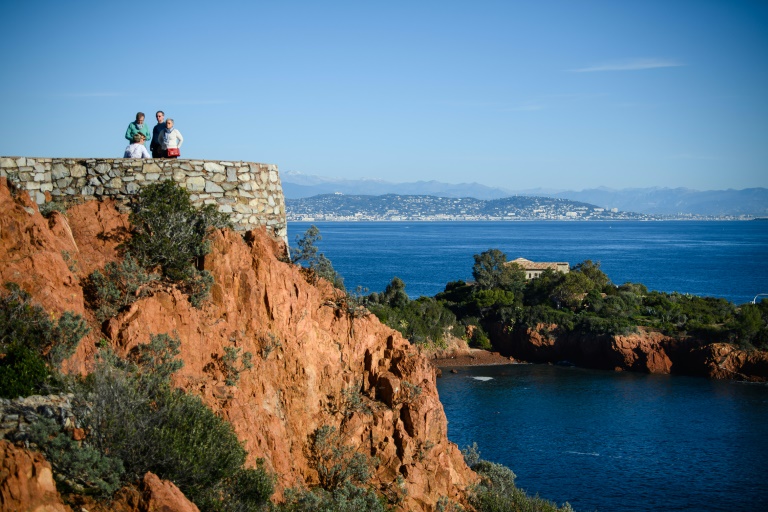
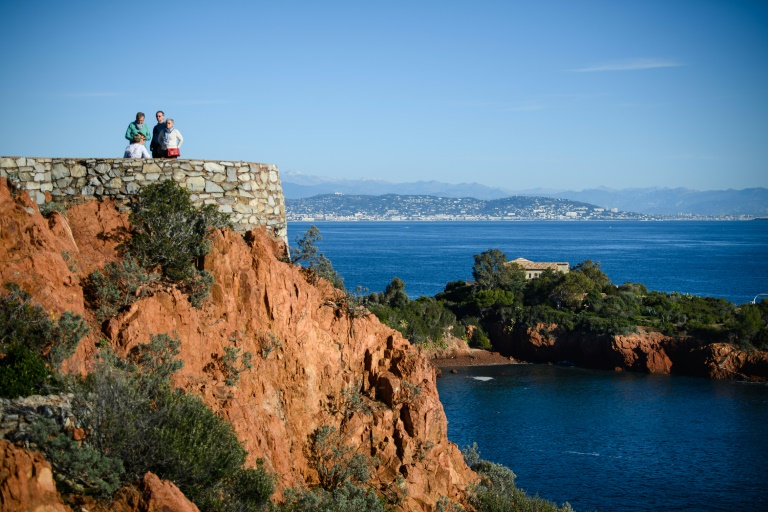
Almost two decades after the ban, Cap Roux, a coastal tip of the Esterel mountain range near the resort of Saint-Raphael on the Mediterranean coast, is a biodiversity haven. 

It stands in stark contrast to many other places on the Cote d’Azur where unbridled construction, overfishing and heavy shipping traffic have spoiled the once-pristine natural environment.

More than 80 species of marine life thrive off Cap Roux, attracted by meadows of seagrass and so-called “living rock” beneath the waves, a fusion of coral and algae.

Fishing here has been forbidden since 2004, a ban covering 450 hectares (1,112 acres).

Surprisingly to some, local fishermen called for the restriction, saying fish needed a safe place to breed and grow to renew stocks.

“Fishermen were worried about their future, and said ‘let’s find a space for a nursery that will replenish the surrounding waters,'” said Christian Decugis, Saint-Raphael’s first fishing mediator.

– ‘More fish, bigger fish’ –

The fish sanctuary lies in the heart of an EU-protected reserve, chosen because it is a relatively unspoilt natural spot, far from the coast’s commercial ports.

“There would have been no point creating a reserve in an area that’s already been messed up,” said Decugis.

The ban has resulted in “many more fish and bigger fish, and an abundance of species”, he said, an observation backed by scientific studies and experiments.

Evidence shows the haven status has helped protect populations of grouper and corb, with scorpion fish and sea bream doing particularly well.

A 2017 study by APAM, an association promoting sustainable fishing, said that income for fishermen was “significantly higher” near the sanctuary than in zones farther away.

Beyond financial benefits, the new system also improves the reputation of the fishing community, which is often accused of having little concern for the consequences of relentlessly exploiting the sea’s resources.

“The image of a profession that is getting a handle on things and that thinks about tomorrow is very motivating for the fishermen,” Decugis said.

– ‘Open treasure chest’ –

Not everyone is so protective of the restricted zone, with poachers tempted to plunder its healthy and plentiful fish supplies.

“It’s like an open treasure chest”, Decugis said.

Julia Toscano, co-manager of the reserve, regularly goes out on a boat between May and September to check the no-fishing zone.

She calls police if she notices anything suspicious. Soon, she hopes there will be cameras to make the job easier.

Many violations are carried out by tourists who go fishing unaware of the rules, but Toscano said this is “still poaching”.

Regular campaigns inform visitors of the regulations and explain why the rich fishing grounds are off-limits.

But it’s a growing challenge: the number of tourists has shot up over the last three years.

Many come on big pleasure boats, typically over 24 metres (79 feet) long.

The abundance of fish and colourful reefs also attract divers, who generate 500,000 euros ($516,000) in income each year for local diving clubs, according to Fabien Rozec, who runs the region’s marine life watchdog.

EU funds have allowed the clubs to get hold of eco-friendly buoys, so they no longer have to lower anchors on the fragile seabed.

Even pleasure boats have grown more cautious over the years, Rozec said, anchoring on patches of sand rather than underwater flora.

French fishing ban unites fishermen, biodiversity activists

A local fishing ban off the southern French coast has won praise from environmentalists and fishermen alike, a rare example of biodiversity protection dovetailing with business interests.

Almost two decades after the ban, Cap Roux, a coastal tip of the Esterel mountain range near the resort of Saint-Raphael on the Mediterranean coast, is a biodiversity haven. 

It stands in stark contrast to many other places on the Cote d’Azur where unbridled construction, overfishing and heavy shipping traffic have spoiled the once-pristine natural environment.

More than 80 species of marine life thrive off Cap Roux, attracted by meadows of seagrass and so-called “living rock” beneath the waves, a fusion of coral and algae.

Fishing here has been forbidden since 2004, a ban covering 450 hectares (1,112 acres).

Surprisingly to some, local fishermen called for the restriction, saying fish needed a safe place to breed and grow to renew stocks.

“Fishermen were worried about their future, and said ‘let’s find a space for a nursery that will replenish the surrounding waters,'” said Christian Decugis, Saint-Raphael’s first fishing mediator.

– ‘More fish, bigger fish’ –

The fish sanctuary lies in the heart of an EU-protected reserve, chosen because it is a relatively unspoilt natural spot, far from the coast’s commercial ports.

“There would have been no point creating a reserve in an area that’s already been messed up,” said Decugis.

The ban has resulted in “many more fish and bigger fish, and an abundance of species”, he said, an observation backed by scientific studies and experiments.

Evidence shows the haven status has helped protect populations of grouper and corb, with scorpion fish and sea bream doing particularly well.

A 2017 study by APAM, an association promoting sustainable fishing, said that income for fishermen was “significantly higher” near the sanctuary than in zones farther away.

Beyond financial benefits, the new system also improves the reputation of the fishing community, which is often accused of having little concern for the consequences of relentlessly exploiting the sea’s resources.

“The image of a profession that is getting a handle on things and that thinks about tomorrow is very motivating for the fishermen,” Decugis said.

– ‘Open treasure chest’ –

Not everyone is so protective of the restricted zone, with poachers tempted to plunder its healthy and plentiful fish supplies.

“It’s like an open treasure chest”, Decugis said.

Julia Toscano, co-manager of the reserve, regularly goes out on a boat between May and September to check the no-fishing zone.

She calls police if she notices anything suspicious. Soon, she hopes there will be cameras to make the job easier.

Many violations are carried out by tourists who go fishing unaware of the rules, but Toscano said this is “still poaching”.

Regular campaigns inform visitors of the regulations and explain why the rich fishing grounds are off-limits.

But it’s a growing challenge: the number of tourists has shot up over the last three years.

Many come on big pleasure boats, typically over 24 metres (79 feet) long.

The abundance of fish and colourful reefs also attract divers, who generate 500,000 euros ($516,000) in income each year for local diving clubs, according to Fabien Rozec, who runs the region’s marine life watchdog.

EU funds have allowed the clubs to get hold of eco-friendly buoys, so they no longer have to lower anchors on the fragile seabed.

Even pleasure boats have grown more cautious over the years, Rozec said, anchoring on patches of sand rather than underwater flora.

Crunch UN biodiversity meeting seeks to save 'planet in crisis'

Delegates from nearly 200 countries meet in Montreal next week to hammer out a new global biodiversity deal to protect ecosystems and species from further human destruction.

The meeting follows crucial climate change talks in Egypt in November, where leaders failed to forge any breakthroughs on scaling down fossil fuels and slashing planet-warming emissions.

Observers are hoping the COP15 biodiversity talks in Montreal will deliver a landmark deal to protect nature and reverse the damage humans have done to forests, wetlands, waterways and the millions of species that live in them. 

Around 50 percent of the global economy is dependent on nature, but scientists warn that humanity needs to drastically — and urgently — rethink its relationship with the natural world as fears of a sixth era of mass extinction grow.

“Our planet is in crisis,” said Elizabeth Maruma Mrema, the head of the UN Convention on Biological Diversity (CBD), at a briefing ahead of the talks, adding that a global agreement on biodiversity was “crucial to ensure that the future of humankind on planet Earth is sustained”. 

So far, humanity has proven woeful at this.   

The so-called post-2020 biodiversity framework, delayed by two years because of the pandemic, will map out an official plan for nature until mid-century for most countries, with the exception of the United States, which has not signed up. 

It will include key targets to be met by 2030. 

But it comes after countries failed to meet a single one of the targets set for the previous decade. 

With new rules affecting key economic sectors — including agriculture, forestry and fishing — and covering everything from intellectual property to pollution and pesticides, delegates are grappling with an array of sticking points.   

So far, only two out of the 22 targets in the new deal have been agreed upon.

“We have to admit that success is not guaranteed,” an EU source close to the talks said. “We have a very difficult situation ahead of us.”

– Finance fight – 

While China currently chairs COP15, it is not hosting this year’s meeting because of the ongoing pandemic. 

Instead, it will be held from December 7 to 19 in Montreal, home of the CBD, which oversees the negotiations. 

Canada’s Prime Minister Justin Trudeau is the only world leader attending. Chinese President Xi Jinping has not said he will join, and neither side has invited other leaders to come, with time quickly running out. 

Observers fear the leaders’ absence sucks the momentum out of the negotiations and could scupper an ambitious final deal. 

Divisions have already emerged on the key issue of financing, with wealthy countries under pressure to funnel more money to developing nations for conservation.

A group of developing nations, including Brazil, South Africa and Indonesia, this year called for rich countries to provide at least $100 billion annually –- rising to $700 billion a year by 2030 — for biodiversity. 

But many Western nations are reluctant to create a distinct fund for nature.

Currently, most biodiversity funds for the developing world come from existing funding mechanisms, which often also include climate finance.   

Another fight is brewing over the issue of “biopiracy”, with many mainly African countries accusing wealthy nations of pillaging the natural world for ingredients and formulas used in cosmetics and medicines, without sharing the benefits with the communities from which they came. 

– Indigenous rights – 

One cornerstone target that has received broad support is the 30 by 30 target — a pledge to protect 30 percent of land and seas by 2030. Only 17 percent of land and about seven percent of oceans were protected in 2020.

So far, more than 100 countries formally support the goal, according to the EU-backed High Ambition Coalition which tracks the target.

The new goal will rely heavily on the involvement of indigenous peoples, who steward land that is home to around 80 percent of Earth’s remaining biodiversity, according to a landmark UN report on climate change impacts this year.

“It’s not going to work if indigenous peoples are not fully included,” Jennifer Tauli Corpuz of the non-profit Nia Tero told AFP. 

“We completely lose the integrity of the document”, added Corpuz, who is part of the indigenous caucus to the talks. 

Other items in the framework: elimination or redirection of hundreds of millions of dollars in harmful government subsidies; promoting sustainable farming and fishing, reducing pesticides; tackling invasive species and reforestation.

But implementation is perhaps the most crucial agenda item to ensure the pledges made are actually carried out by governments.  

“We need goals and targets that are measurable and they need to be related to clear indicators,” the EU source said, calling for “robust monitoring, planning, reporting and review”. 

Crunch UN biodiversity meeting seeks to save 'planet in crisis'

Delegates from nearly 200 countries meet in Montreal next week to hammer out a new global biodiversity deal to protect ecosystems and species from further human destruction.

The meeting follows crucial climate change talks in Egypt in November, where leaders failed to forge any breakthroughs on scaling down fossil fuels and slashing planet-warming emissions.

Observers are hoping the COP15 biodiversity talks in Montreal will deliver a landmark deal to protect nature and reverse the damage humans have done to forests, wetlands, waterways and the millions of species that live in them. 

Around 50 percent of the global economy is dependent on nature, but scientists warn that humanity needs to drastically — and urgently — rethink its relationship with the natural world as fears of a sixth era of mass extinction grow.

“Our planet is in crisis,” said Elizabeth Maruma Mrema, the head of the UN Convention on Biological Diversity (CBD), at a briefing ahead of the talks, adding that a global agreement on biodiversity was “crucial to ensure that the future of humankind on planet Earth is sustained”. 

So far, humanity has proven woeful at this.   

The so-called post-2020 biodiversity framework, delayed by two years because of the pandemic, will map out an official plan for nature until mid-century for most countries, with the exception of the United States, which has not signed up. 

It will include key targets to be met by 2030. 

But it comes after countries failed to meet a single one of the targets set for the previous decade. 

With new rules affecting key economic sectors — including agriculture, forestry and fishing — and covering everything from intellectual property to pollution and pesticides, delegates are grappling with an array of sticking points.   

So far, only two out of the 22 targets in the new deal have been agreed upon.

“We have to admit that success is not guaranteed,” an EU source close to the talks said. “We have a very difficult situation ahead of us.”

– Finance fight – 

While China currently chairs COP15, it is not hosting this year’s meeting because of the ongoing pandemic. 

Instead, it will be held from December 7 to 19 in Montreal, home of the CBD, which oversees the negotiations. 

Canada’s Prime Minister Justin Trudeau is the only world leader attending. Chinese President Xi Jinping has not said he will join, and neither side has invited other leaders to come, with time quickly running out. 

Observers fear the leaders’ absence sucks the momentum out of the negotiations and could scupper an ambitious final deal. 

Divisions have already emerged on the key issue of financing, with wealthy countries under pressure to funnel more money to developing nations for conservation.

A group of developing nations, including Brazil, South Africa and Indonesia, this year called for rich countries to provide at least $100 billion annually –- rising to $700 billion a year by 2030 — for biodiversity. 

But many Western nations are reluctant to create a distinct fund for nature.

Currently, most biodiversity funds for the developing world come from existing funding mechanisms, which often also include climate finance.   

Another fight is brewing over the issue of “biopiracy”, with many mainly African countries accusing wealthy nations of pillaging the natural world for ingredients and formulas used in cosmetics and medicines, without sharing the benefits with the communities from which they came. 

– Indigenous rights – 

One cornerstone target that has received broad support is the 30 by 30 target — a pledge to protect 30 percent of land and seas by 2030. Only 17 percent of land and about seven percent of oceans were protected in 2020.

So far, more than 100 countries formally support the goal, according to the EU-backed High Ambition Coalition which tracks the target.

The new goal will rely heavily on the involvement of indigenous peoples, who steward land that is home to around 80 percent of Earth’s remaining biodiversity, according to a landmark UN report on climate change impacts this year.

“It’s not going to work if indigenous peoples are not fully included,” Jennifer Tauli Corpuz of the non-profit Nia Tero told AFP. 

“We completely lose the integrity of the document”, added Corpuz, who is part of the indigenous caucus to the talks. 

Other items in the framework: elimination or redirection of hundreds of millions of dollars in harmful government subsidies; promoting sustainable farming and fishing, reducing pesticides; tackling invasive species and reforestation.

But implementation is perhaps the most crucial agenda item to ensure the pledges made are actually carried out by governments.  

“We need goals and targets that are measurable and they need to be related to clear indicators,” the EU source said, calling for “robust monitoring, planning, reporting and review”. 

Asian stocks join global rally and dollar drops on Fed rate joy

Asian stocks extended a global rally Thursday and the dollar fell after Federal Reserve boss Jerome Powell flagged a slowdown in the pace of interest rate hikes and China opened the way for a softer approach to fighting Covid.

A growing sense of hope that months of sharp monetary tightening around the world is finally reining inflation back from its decades-long highs sent equities surging in November, even as policymakers warned more work had to be done.

And in a much-anticipated speech Wednesday, Powell said that the full effects of the Fed’s belt-tightening had yet to be felt but that it “makes sense to moderate the pace of our rate increases as we approach the level of restraint that will be sufficient to bring inflation down”.

He signalled the December gathering would likely see officials lift borrowing costs 50 basis points, having pushed them up by a bumper 75 points at the past four meetings.

However, he did say policy would need to remain tight “for some time” to restore price stability, echoing comments from other Fed officials who have suggested there might not be any cuts until 2024.

Analysts said the reaction to Powell’s remarks — which had been expected to be his most dovish in some time — highlighted a sense of relief among investors that a long-hoped-for pivot was in the cards.

All three main indexes on Wall Street surged, with the Nasdaq leading the way as rate-sensitive tech firms rocketed.

The gains extended November’s rally and helped claw back more of the hefty losses suffered for much of 2022.

The dollar was also suffering a sell-off, having soared across the board this year as Fed monetary policy diverged more and more from other central banks.

Investors were “putting those nasty thoughts of a bear market to bed as the December Santa Rally springs alive”, said Stephen Innes at SPI Asset Management.

“Indeed investors are revelling in the afterglow of moderating Fed signals. And with the Fed done with jumbo hikes, it’s seemingly  enough to mark the bottom in the bear market and could lead to a sustainable rally.”

He added that bets on rates topping five percent were fading and the advance in markets could push into the new year, with another slowdown in November inflation potentially fuelling a bull rally — when a market rises 20 percent from its recent low. 

“Still,” he warned. “Inflation will need to play along.”

In another sign of hope, data earlier showed that eurozone inflation eased for the first time in 17 months in November.

Hong Kong led the gains in Asia again, with tech giants including Alibaba and Tencent tracking massive gains in their US-listed stock, while Shanghai was also well up.

Those rallies were also helped by signs that China is edging towards a more pragmatic approach to fighting the coronavirus, having hammered the economy this year with its strict Covid-zero strategy of lockdowns and mass testing.

After widespread unrest against the measures — and calls for more political freedoms — authorities have announced moves aimed at loosening some restrictions.

On Wednesday, Vice Premier Sun Chunlan, who is heading China’s Covid campaign, told the National Health Commission that the fight was entering a new phase as Omicron weakens and more people are vaccinated.

Bloomberg News also noted that she did not refer to “dynamic Covid-zero”, the term used to explain Beijing’s strategy. 

“It is clear that the authorities are setting the stage for Covid measures to be relaxed,” Justin Tang, at United First Partners, said. “Equity prices will see a boost as China joins the rest of the world in living with Covid.”

– Key figures around 0300 GMT –

Tokyo – Nikkei 225: UP 1.1 percent at 28,281.04 (break)

Hong Kong – Hang Seng Index: UP 1.5 percent at 18,875.14

Shanghai – Composite: UP 0.9 percent at 3,180.22

Euro/dollar: UP at $1.0426 from $1.0408 on Wednesday

Dollar/yen: DOWN at 136.75 yen from 138.03 yen

Pound/dollar: UP at $1.2081 from $1.2052

Euro/pound: DOWN at 86.32 pence from 86.34 pence

West Texas Intermediate: FLAT at $80.55 per barrel

Brent North Sea crude: DOWN 0.1 percent at $86.89 per barrel

New York – Dow: UP 2.2 percent at 34,589.77 (close)

London – FTSE 100: UP 0.8 percent at 7,573.05 (close)

Close Bitnami banner
Bitnami