World

French baguettes get UNESCO heritage status

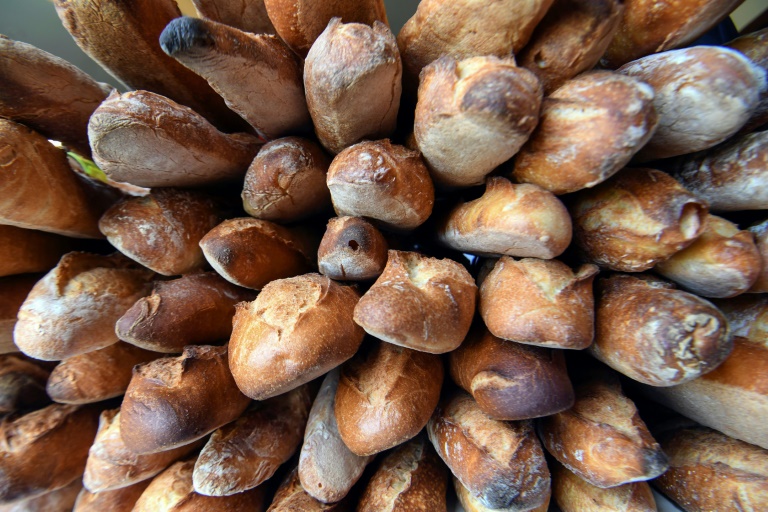
The French baguette — “250 grams of magic and perfection”, in the words of President Emmanuel Macron, and one of the abiding symbols of the nation — was given UNESCO heritage status on Wednesday.

The bread, with its crusty exterior and soft middle, has remained a quintessential part of French life long after other stereotypes like berets and strings of garlic have fallen by the wayside. 

More than six billion are baked every year in France, according to the National Federation of French Bakeries, and the UN agency’s “intangible cultural heritage status” honours the tradition.

“It celebrates a whole culture: the daily ritual, a structural element of a meal, synonymous with sharing and conviviality,” said UNESCO director-general Audrey Azoulay.

It comes at a challenging time for the industry.

France has been losing some 400 artisanal bakeries per year since 1970, from 55,000 (one per 790 residents) to 35,000 today (one per 2,000). 

The decline is due to the spread of industrial bakeries and out-of-town supermarkets in rural areas, while urbanites increasingly opt for sourdough, and swap their ham baguettes for burgers.

At least one artisan was unimpressed with the award at a time when his colleagues are struggling with spiking prices. 

“It’s a joke,” said Francois Pozzoli, an award-winning baker in the major city of Lyon.

“At a time when baking is in an unprecedented crisis, this feels poorly timed. Flour is up 10-15 percent, butter around 40 percent, eggs 50-60 percent… Bakers need support.”

– Honeycomb and cream –

Still, it remains an entirely common sight to see the French with a couple of sticks under their arm, ritually chewing off the warm end as they leave the bakery, or “boulangerie”.

There are national competitions, during which the bread is sliced down the middle to allow judges to evaluate the regularity of its honeycomb texture as well as the colour of the interior, which should be cream. 

But despite being a seemingly immortal fixture in French life, the baguette only officially got its name in 1920, when a new law specified its minimum weight (80 grams) and maximum length (40 centimetres).

“Initially, the baguette was considered a luxury product. The working classes ate rustic breads that kept better,” said Loic Bienassis, of the European Institute of Food History and Cultures, who helped prepare the UNESCO dossier. 

“Then consumption became widespread, and the countryside was won over by baguettes in the 1960s and 70s,” he said. 

Its earlier history is rather uncertain. 

Some say long loaves were already common in the 18th century; others that it took the introduction of steam ovens by Austrian baker August Zang in the 1830s for its modern incarnation to take shape.

One popular tale is that Napoleon ordered bread to be made in thin sticks that could be more easily carried by soldiers. 

Another links baguettes to the construction of the Paris metro in the late 19th century, and the idea that baguettes were easier to tear up and share, avoiding arguments between the workers and the need for knives.

France submitted its request to UNESCO in early 2021, with baguettes chosen over the zinc roofs of Paris and a wine festival in Arbois in the east of the country.
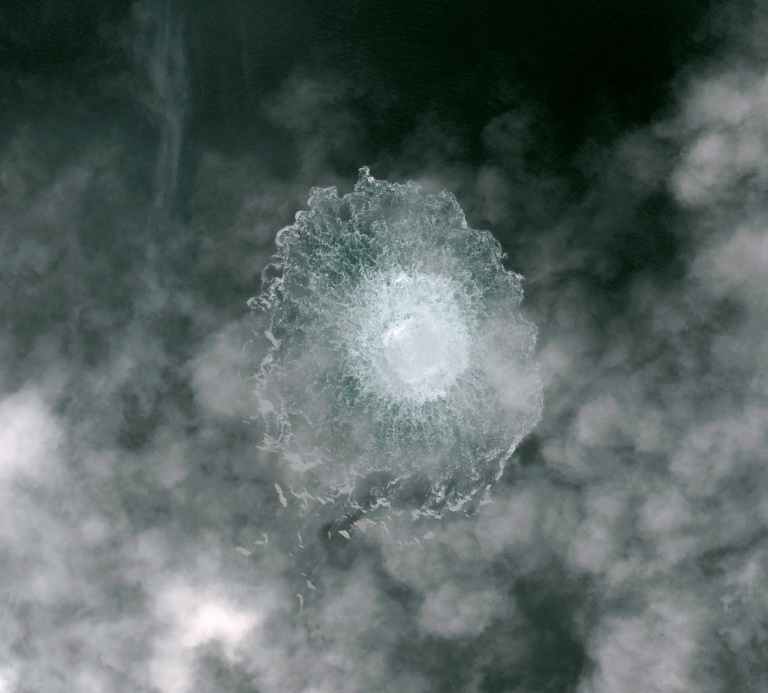
Germany, Norway seek NATO-led hub for key undersea structures

Germany and Norway want to start a NATO-led alliance to protect critical underwater infrastructure, their leaders said on Wednesday, weeks after explosions hit two key gas pipelines in the fallout from the war in Ukraine.

“We are in the process of asking the NATO Secretary General to set up a coordination office for the protection of underwater infrastructure,” German Chancellor Olaf Scholz told a press conference in Berlin.

“We take the protection of our critical infrastructure very seriously and nobody should believe that attacks will remain without consequences,” he said.

Norwegian Prime Minister Jonas Gahr Store said the alliance would be “an informal initiative to exchange between civilian and also military actors” with NATO providing “a centre, a coordination point”.

Underwater cables and pipelines were “arteries of the modern economy” and it was necessary to create “a coordinated joint effort to ensure security for this infrastructure”, he said.

Scholz said he and Store would propose the plan to NATO Secretary General Jens Stoltenberg, who is due in Berlin for a security conference.

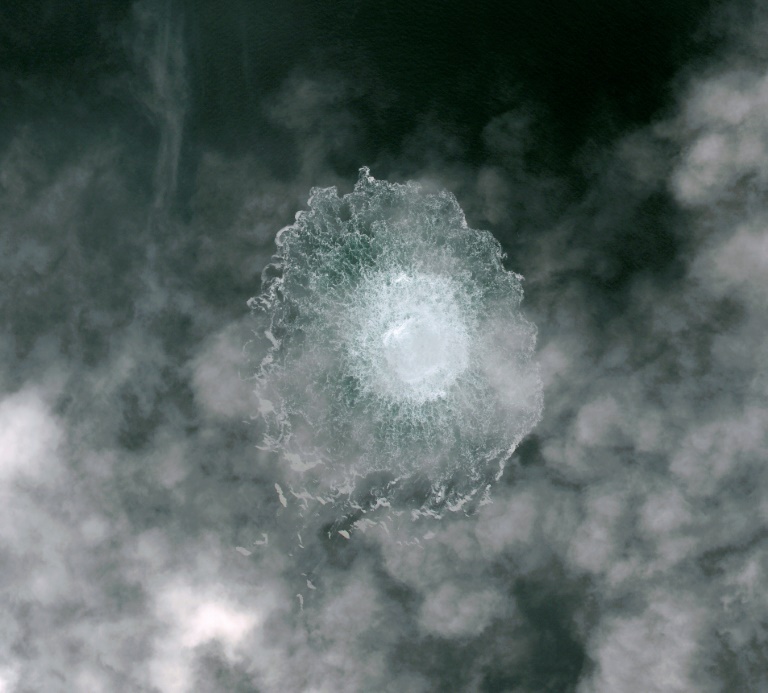
The Nord Stream 1 and 2 gas pipelines off the Danish island of Bornholm were targeted by two huge explosions at the end of September.

The pipelines, which connect Russia to Germany, had been at the centre of geopolitical tensions as Moscow cut gas supplies to Europe in suspected retaliation to Western sanctions over the invasion of Ukraine.

Although they were not in operation when the leaks occurred, they both still contained gas which spewed up through the water and into the atmosphere.

Russia and Western countries, particularly the United States, have traded bitter barbs over who is responsible for the blasts.

Several European countries have since taken steps to increase security around critical infrastructure.

The G7 interior ministers warned earlier this month at a meeting in Germany that the Nord Stream explosions had highlighted “the need to better protect our critical infrastructure”.

Germany, Norway seek NATO-led hub for key undersea structures

Germany and Norway want to start a NATO-led alliance to protect critical underwater infrastructure, their leaders said on Wednesday, weeks after explosions hit two key gas pipelines in the fallout from the war in Ukraine.

“We are in the process of asking the NATO Secretary General to set up a coordination office for the protection of underwater infrastructure,” German Chancellor Olaf Scholz told a press conference in Berlin.

“We take the protection of our critical infrastructure very seriously and nobody should believe that attacks will remain without consequences,” he said.

Norwegian Prime Minister Jonas Gahr Store said the alliance would be “an informal initiative to exchange between civilian and also military actors” with NATO providing “a centre, a coordination point”.

Underwater cables and pipelines were “arteries of the modern economy” and it was necessary to create “a coordinated joint effort to ensure security for this infrastructure”, he said.

Scholz said he and Store would propose the plan to NATO Secretary General Jens Stoltenberg, who is due in Berlin for a security conference.

The Nord Stream 1 and 2 gas pipelines off the Danish island of Bornholm were targeted by two huge explosions at the end of September.

The pipelines, which connect Russia to Germany, had been at the centre of geopolitical tensions as Moscow cut gas supplies to Europe in suspected retaliation to Western sanctions over the invasion of Ukraine.

Although they were not in operation when the leaks occurred, they both still contained gas which spewed up through the water and into the atmosphere.

Russia and Western countries, particularly the United States, have traded bitter barbs over who is responsible for the blasts.

Several European countries have since taken steps to increase security around critical infrastructure.

The G7 interior ministers warned earlier this month at a meeting in Germany that the Nord Stream explosions had highlighted “the need to better protect our critical infrastructure”.

Airbus pays 15.9 mn euros to close French corruption probe

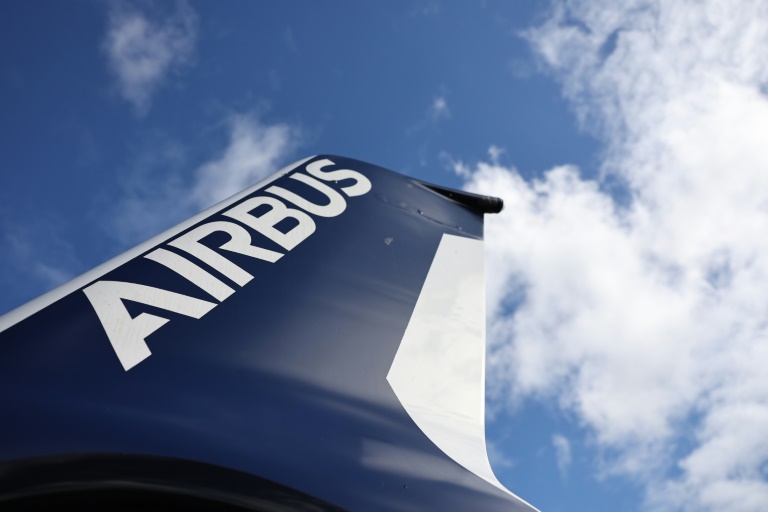
A French judge on Wednesday allowed European aerospace firm Airbus to pay 15.9 million euros ($16.4 million) to avoid a corruption probe into aircraft deals in Libya and Kazakhstan between 2006 and 2011.

Prosecutors from France’s national financial crime unit (PNF), which reached the deal with Airbus earlier this month, said the fine was “fair and appropriate”.

They had earlier highlighted the “repeated character of corrupt activities” by the plane giant, but said the firm had cooperated on the “dated” allegations.

Making the payment — the same amount paid to go-betweens during the suspect aircraft deals — allows Airbus to avoid acknowledging criminal activity, meaning it can continue to bid for public contracts.

The company in January 2020 reached a plea bargain to pay a total of 3.6 billion euros ($3.7 billion at current rates) in fines to Britain, France and the United States to settle corruption claims over several contracts involving middlemen.

But the company said earlier this month that the Libya and Kazakhstan probe had not been covered by that agreement “because of procedural issues”.

The payments dated back to a “bygone era” at Airbus, PNF chief Jean-Francois Bohnert said.

In one case, investigators looking into suspected illegal financing by Libya of Nicolas Sarkozy’s 2007 campaign for the French presidency noted a 2006 sale of 12 Airbus planes to the regime of Moamer Kadhafi.

Three weeks after the deal was closed, a transfer of two million euros was made to a known middleman, Alexandre Djouhri, by a former Airbus executive who was charged last March.

Sarkozy, who has faced a string of legal inquiries since leaving office in 2012, has denied any illegal campaign financing from Libya.

The other corruption inquiry involves suspected kickbacks for several contracts between France and Kazakhstan in 2009 and 2010, while Sarkozy was president.

The deals included the purchase of two satellites from Airbus’ former Astrium unit, where investigators discovered traces of an 8.8-million-euro payment to a Singapore account held by a Hong Kong-based offshore vehicle, Caspian Corp.

Caspian is linked to a Tunisian middleman, Lyes Ben Chedli, who was charged in July 2021 along with a former Airbus executive, Olivier Brun.

Airbus pays 15.9 mn euros to close French corruption probe

A French judge on Wednesday allowed European aerospace firm Airbus to pay 15.9 million euros ($16.4 million) to avoid a corruption probe into aircraft deals in Libya and Kazakhstan between 2006 and 2011.

Prosecutors from France’s national financial crime unit (PNF), which reached the deal with Airbus earlier this month, said the fine was “fair and appropriate”.

They had earlier highlighted the “repeated character of corrupt activities” by the plane giant, but said the firm had cooperated on the “dated” allegations.

Making the payment — the same amount paid to go-betweens during the suspect aircraft deals — allows Airbus to avoid acknowledging criminal activity, meaning it can continue to bid for public contracts.

The company in January 2020 reached a plea bargain to pay a total of 3.6 billion euros ($3.7 billion at current rates) in fines to Britain, France and the United States to settle corruption claims over several contracts involving middlemen.

But the company said earlier this month that the Libya and Kazakhstan probe had not been covered by that agreement “because of procedural issues”.

The payments dated back to a “bygone era” at Airbus, PNF chief Jean-Francois Bohnert said.

In one case, investigators looking into suspected illegal financing by Libya of Nicolas Sarkozy’s 2007 campaign for the French presidency noted a 2006 sale of 12 Airbus planes to the regime of Moamer Kadhafi.

Three weeks after the deal was closed, a transfer of two million euros was made to a known middleman, Alexandre Djouhri, by a former Airbus executive who was charged last March.

Sarkozy, who has faced a string of legal inquiries since leaving office in 2012, has denied any illegal campaign financing from Libya.

The other corruption inquiry involves suspected kickbacks for several contracts between France and Kazakhstan in 2009 and 2010, while Sarkozy was president.

The deals included the purchase of two satellites from Airbus’ former Astrium unit, where investigators discovered traces of an 8.8-million-euro payment to a Singapore account held by a Hong Kong-based offshore vehicle, Caspian Corp.

Caspian is linked to a Tunisian middleman, Lyes Ben Chedli, who was charged in July 2021 along with a former Airbus executive, Olivier Brun.

Islamic State group announces death of leader

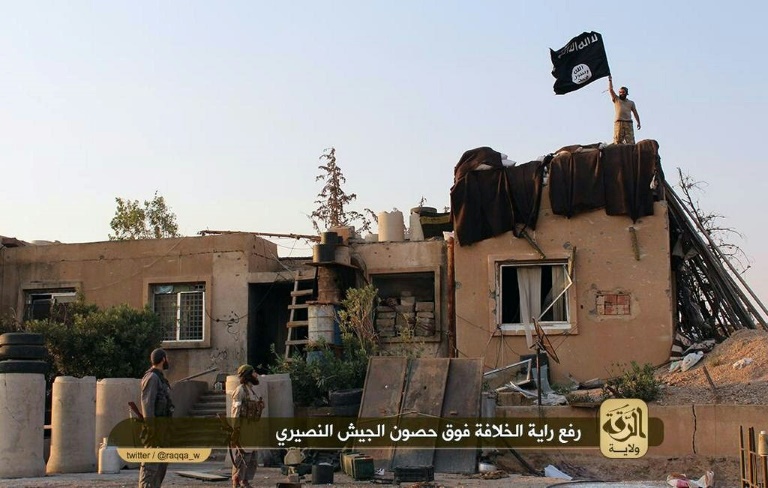
The Islamic State jihadist group said Wednesday that its leader Abu Hasan al-Hashimi al-Qurashi has been killed in battle and announced a replacement.

A spokesman for the group said Hashimi, an Iraqi, was killed “in combat with enemies of God”, without elaborating on the date or circumstances of his death.

Speaking in an audio message, the spokesman identified the group’s new leader as Abu al-Hussein al-Husseini al-Qurashi.

Qurashi refers to a tribe of the Prophet Mohammed, from whom IS leaders must claim descent.

After a meteoric rise in Iraq and Syria in 2014 that saw it conquer vast swathes of territory, IS saw its self-proclaimed “caliphate” collapse under a wave of offensives.

The Sunni Muslim extremist group’s austere and terror-ridden rule was marked by beheadings and shootings.

It was defeated in Iraq in 2017 and in Syria two years later, but sleeper cells still carry out attacks in both countries.

The group or its branches have also claimed attacks elsewhere this year, including in Afghanistan, Iran and Israel.

The spokesman did not provide details on the new leader, but said he was a “veteran” jihadist and called on all groups loyal to IS to pledge their allegiance to its fourth leader.

IS’s previous chief, Abu Ibrahim al-Qurashi, was killed in February this year in a US raid in Idlib province in northern Syria. 

His predecessor Abu Bakr al-Baghdadi was killed, also in Idlib, in October 2019.

– Killed ‘accidentally’? –

Hassan Hassan, who authored a book on IS, said one “unprecedented” but possible scenario was that Hashimi “was killed ‘accidentally’ during a raid or fighting without him being known to whoever killed him”.

But “jihadist groups have a long history of claiming leaders/commanders dead, just to get intelligence/security agencies off their backs,” he added on Twitter.

In October this year, US forces killed a “senior” IS member in a pre-dawn raid in northeastern Syria, the US military’s Central Command said at the time.

The US leads a military coalition battling IS in Syria.

The raid targeted “Rakkan Wahid al-Shammari, an ISIS official known to facilitate the smuggling of weapons and fighters”, CENTCOM said, using another acronym for IS.

It said a later air strike had killed two other senior IS members.

In July, the Pentagon said it had killed Syria’s top IS jihadist in a drone strike in the north of the country.

US Central Command said he had been “one of the top five” IS leaders.

Turkey said in September that security forces had arrested a “senior executive” of IS known as Abu Zeyd, whose real name was Bashar Khattab Ghazal al-Sumaidai.

Turkish media said there were some indications Sumaidai might have been the IS leader.

Analyst Hassan said another possible scenario was that Turkey had in fact captured the IS leader, but that the group had now announced his death in order to save face.

Thousands of suspected jihadists and their relatives are still detained in camps in Syria and prisons in Iraq.

In January, IS launched a major attack on a prison housing fellow jihadists in northeastern Syria, in a jailbreak attempt that triggered a week of deadly clashes.

Hundreds of IS prisoners, including senior leaders, were thought to have escaped, with some crossing to neighbouring Turkey or Turkish-held territory in northern Syria, the Britain-based Syrian Observatory for Human Rights said.

The Pentagon warned Tuesday that a threatened Turkish ground operation in Syria would “severely jeopardise” gains made in the war against IS.

Macron welcomed as 'vital ally' as US state visit ramps up

France’s President Emmanuel Macron underlined US-French cooperation with a tour of NASA headquarters Wednesday, but tough talks on trade and China are expected when he meets Joe Biden for the main part of a rare state visit.

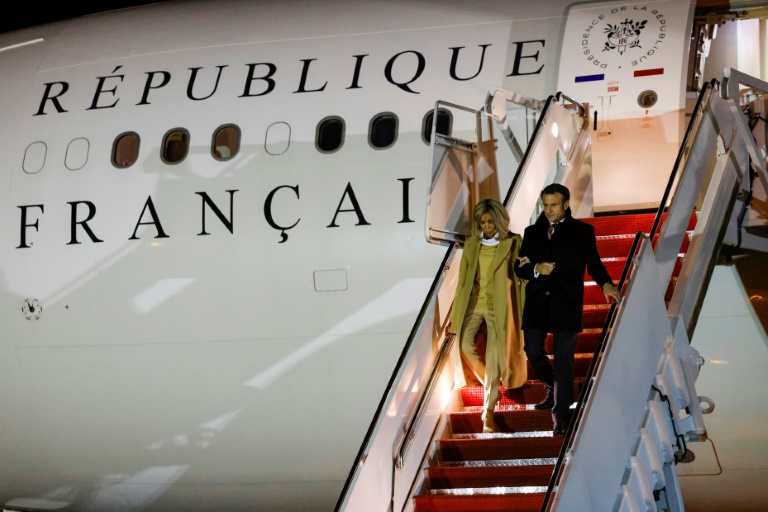
The French leader, who arrived late Tuesday with his wife Brigitte, joined Vice President Kamala Harris at the NASA facility in Washington to discuss cooperation in space.

“France is a vital ally to the United States and this visit demonstrates the strength of our partnership, our friendship…, one that is based on shared democratic principles and values,” Harris told Macron.

Macron will stay in the high-tech sphere later when he attends a meeting on civilian nuclear energy.

The busy schedule, which also includes a working lunch to discuss biodiversity and clean energy, and a visit to the historic Arlington National Cemetery, illustrates the ambitions set for the trip — the first formal state visit by a foreign leader to Washington since Biden took office nearly two years ago.

The core of the visit will be on Thursday, including a White House military honor guard, Oval Office talks with Biden, a joint press conference and a banquet where Grammy-award-winning American musician Jon Batiste will perform.

Compared to Macron’s awkward experience as the guest of Donald Trump in 2018, this trip will be a carefully choreographed display of transatlantic friendship.

– EU-US trade tensions –

Tensions, however, are rising over trade as Europeans nervously watch the rollout of Biden’s signature green industry policy — the Inflation Reduction Act.

The IRA is set to pump billions of dollars into climate-friendly technologies, with strong backing for American-made products. A similar effort is being put into microchip manufacturing.

Europeans fear an unfair US advantage in the sectors just as they are reeling from the economic consequences of the war in Ukraine and Western attempts to end reliance on Russian energy supplies.

Talk in Europe is now increasingly on whether the bloc should respond with its own subsidies and championing of homegrown products, effectively starting a trade war.

Another gripe in Europe is the high cost of US liquid natural gas exports — which have surged to help compensate for canceled Russian deliveries.

White House National Security Council spokesman John Kirby told reporters that the US side wants to defuse tensions, promising “transparent, forthright” discussions.

“We certainly will stay open to listening” to the EU concerns, he said.

– Strategizing on China, Ukraine –

The breadth of Macron’s entourage — including the foreign, defense and finance ministers, as well as business leaders and astronauts — illustrates the importance Paris has put on the visit.

At the White House, however, a senior official said the main goal is to nurture the “personal relationship, the alliance relationship” with France — and between Biden and Macron.

That more modest-sounding goal will include improving coordination on helping Ukraine to repel Russia and the even more vexing question of how to manage the rise of superpower China.

“We are not allies on the same page,” one adviser to Macron told AFP, forecasting “challenging” talks with Biden.

Despite his strong support for Kyiv, Macron’s insistence on continuing to maintain dialogue with Russian President Vladimir Putin has irked American diplomats.

The China question — with Washington pursuing a more hawkish tone and EU powers trying to find a middle ground — is unlikely to see much progress.

“Europe has since 2018 its own, unique strategy for relations with China,” tweeted French embassy spokesman Pascal Confavreux in Washington.

Kirby said China will be “very high on the agenda” this week but stressed that both countries share a broad approach.

“We believe that not only France, but every other member of the G7 — frankly, our NATO allies too — see the threats and challenges posed by China in the same way.”

Archeologists find ancient Peruvian fresco, lost for a century

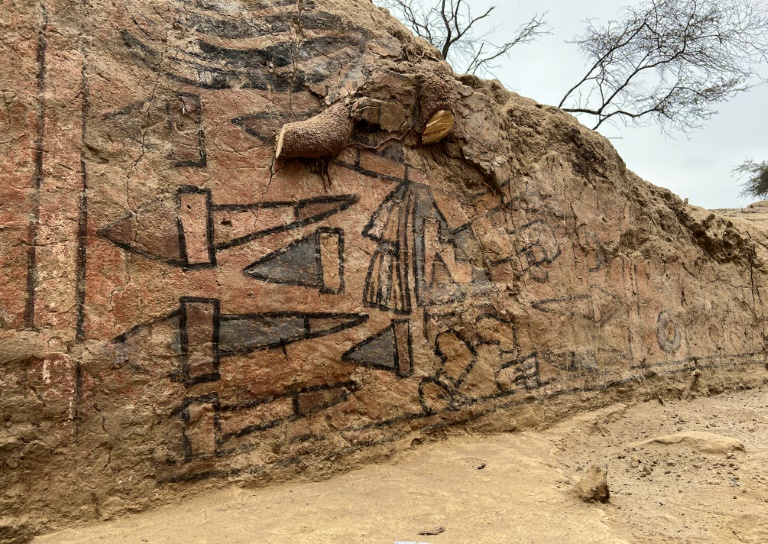
Archeologists have rediscovered a pre-Hispanic fresco depicting mythological scenes in northern Peru that they had only seen in black and white photographs that were more than a century old.

“It’s an exceptional discovery, first of all, because it is rare to unearth wall paintings of such quality in pre-Colombian archeology,” said Sam Ghavami, the Swiss archeologist who led excavations that uncovered the mural in October.

Ghavami spent four years looking for the rock painting, which he believes could be around 1,000 years old, with a team of Peruvian students.

“The composition of this painting is unique in the history of mural art in pre-Hispanic Peru,” added the archaeologist, who trained at the University of Freiburg in Germany.

The fresco forms part of the Huaca Pintada temple, which belonged to the Moche civilization that flourished between the 1st and 8th centuries, and venerated the Moon, the rain, iguanas, and spiders.

The uncovered mural is about 30 meters (98 feet) long, and its images in blue, brown, red, white, and mustard yellow paint remain extremely well preserved.

In one section, a procession of warriors can be seen heading toward a birdlike deity.

The painted images “appear to be inspired by the idea of a sacred hierarchy built around a cult of ancestors and their intimate links with the forces of nature,” said Ghavami.

He told AFP that deciphering the mural’s message would form part of his research, but he believes it “could be interpreted as a metaphorical image of the political and religious order of the region’s ancient inhabitants.”

The discovery is also unusual as it shows a mixture of styles and elements of two pre-Incan cultures: the Moche and the Lambayeque, who lived on Peru’s north coast between 900 and 1350 AD.

The mural’s existence was only known via black and white photos taken in 1916 by the German ethnologist Hans Heinrich Bruning, who was living in Peru when he heard of the site after treasure hunters tried to loot it, but found nothing of value.

As the years went on, thick foliage took over, and no one had tried to look for the paintings until it piqued Ghavami’s interest and he went in search of the long-lost fresco.

However, first he had a long battle to obtain permission from the family who own the land where the mural was found.

Stocks diverge ahead of next Fed rate signal

Stock markets fluctuated on Wednesday as eurozone inflation slowed for the first time in 17 months and investors awaited fresh signals about the US central bank’s interest rate plans.

Markets were also buoyed by hopes that China will further ease its strict Covid containment measures following widespread protests, though gains were tempered by leaders’ warnings of a crackdown on dissent.

Traders were awaiting a key speech by Federal Reserve chief Jerome Powell, with many expecting him to outline plans for future interest rate hikes to tackle high US consumer prices.

“Will he adopt a more hawkish-minded tone like he did after the last FOMC (Fed policy) meeting or will he have a less hawkish tone?” said Briefing.com analyst Patrick O’Hare.

“His tone is going to move the market’s thinking with respect to the path of monetary policy,” he said.

Powell was due to speak after government data on Wednesday showed that the US economy grew more than initially reported in the third quarter, reflecting upward revisions to retail spending and some forms of investment.

London, Paris and Frankfurt closed in the green, but the Down Jones lost around 0.4 percent.

Eurozone inflation eased to 10 percent in November, the first drop in 17 months, according to official data.

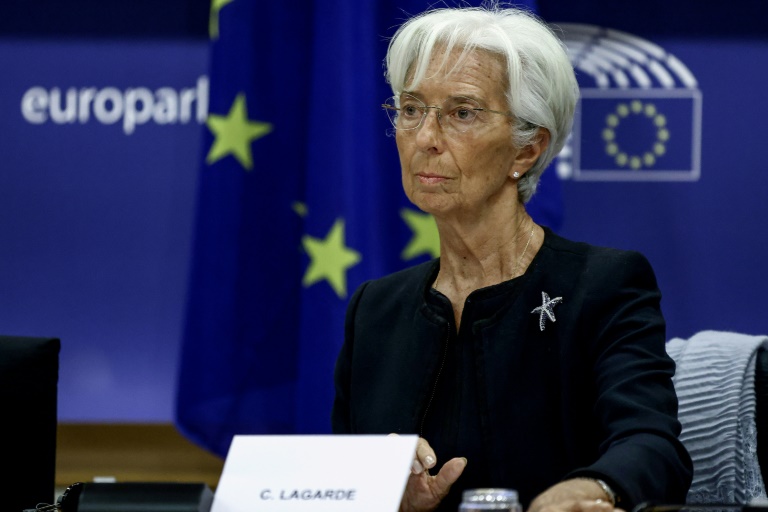
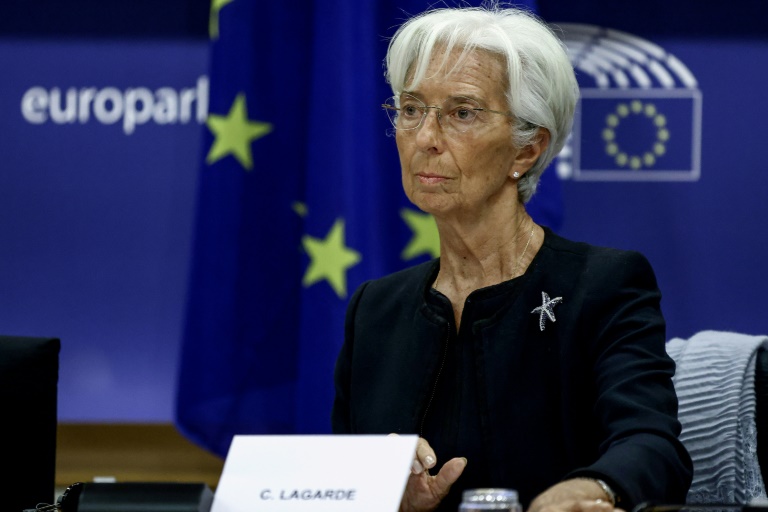
But this may not lead to an easing of European Central Bank policy as ECB president Christine Lagarde has expressed scepticism that inflation has peaked.

Inflation in the bloc had hit a record 10.6 percent in October, boosted also by soaring energy and food bills in the wake of Russia’s war in Ukraine.

“Euro area inflation figures surprised on the downside, providing an early indication that the record price pressures seen in recent months may have peaked,” said CEBR economist Karl Thompson.

However, he warned that “inflation is nonetheless likely to remain elevated throughout 2023” and forecast rising rates next month.

The inflation figure was still “extraordinarily high” but offered “hope that inflation may have peaked and the deceleration could be faster than anticipated”, said Craig Erlam, senior market analyst at OANDA.

Global central banks, including the Fed, have ramped up borrowing costs this year in a bid to dampen red-hot inflation that was fuelled also as economies reopened from the pandemic.

– ‘Intensifying headwinds’ –

In Asia, stocks mostly rebounded as investors looked past weekend demonstrations in China after officials announced moves aimed at softening the zero-Covid strategy.

But in a sign that the leadership was determined to maintain its authority, the country’s top security body called for a “crackdown” against “hostile forces”.

New clashes broke out in China’s southern city of Guangzhou on Tuesday night and into Wednesday, according to witnesses and social media footage verified by AFP.

Data showing China’s factory activity shrank further in November underscored the impact the zero-Covid approach has had on the world’s second-biggest economy.

“The headwinds facing China are intensifying and the protests of recent days could make it even more challenging to navigate… Even the best-case scenario is one of significant turbulence,” added Erlam.

Elsewhere, oil prices jumped by around three percent, with the international benchmark, Brent, reaching almost $87 per barrel.

– Key figures around 1630 GMT –

New York – Dow: DOWN 0.4 percent at 33,717.64 points

London – FTSE 100: UP 1.0 percent at 7,587.51 (close)

Frankfurt – DAX: UP 0.3 percent at 14,397.04 (close)

Paris – CAC 40: UP 1.0 percent at 6,738.55 (close)

EURO STOXX 50: UP 0.8 percent at 3,964.72

Tokyo – Nikkei 225: DOWN 0.2 percent at 27,968.99 (close)

Hong Kong – Hang Seng Index: UP 2.2 percent at 18,597.23 (close)

Shanghai – Composite: UP 0.1 percent at 3,151.34 (close)

Euro/dollar: DOWN at $1.0318 from $1.0330 on Tuesday

Dollar/yen: UP at 139.36 yen from 138.63 yen

Pound/dollar: DOWN at $1.1937 from $1.1952

Euro/pound: UP at 86.43 pence from 86.42 pence

Brent North Sea crude: UP 3.1 percent at $86.82 per barrel

West Texas Intermediate: UP 3.0 percent at $80.51 per barrel

Stocks diverge ahead of next Fed rate signal

Stock markets fluctuated on Wednesday as eurozone inflation slowed for the first time in 17 months and investors awaited fresh signals about the US central bank’s interest rate plans.

Markets were also buoyed by hopes that China will further ease its strict Covid containment measures following widespread protests, though gains were tempered by leaders’ warnings of a crackdown on dissent.

Traders were awaiting a key speech by Federal Reserve chief Jerome Powell, with many expecting him to outline plans for future interest rate hikes to tackle high US consumer prices.

“Will he adopt a more hawkish-minded tone like he did after the last FOMC (Fed policy) meeting or will he have a less hawkish tone?” said Briefing.com analyst Patrick O’Hare.

“His tone is going to move the market’s thinking with respect to the path of monetary policy,” he said.

Powell was due to speak after government data on Wednesday showed that the US economy grew more than initially reported in the third quarter, reflecting upward revisions to retail spending and some forms of investment.

London, Paris and Frankfurt closed in the green, but the Down Jones lost around 0.4 percent.

Eurozone inflation eased to 10 percent in November, the first drop in 17 months, according to official data.

But this may not lead to an easing of European Central Bank policy as ECB president Christine Lagarde has expressed scepticism that inflation has peaked.

Inflation in the bloc had hit a record 10.6 percent in October, boosted also by soaring energy and food bills in the wake of Russia’s war in Ukraine.

“Euro area inflation figures surprised on the downside, providing an early indication that the record price pressures seen in recent months may have peaked,” said CEBR economist Karl Thompson.

However, he warned that “inflation is nonetheless likely to remain elevated throughout 2023” and forecast rising rates next month.

The inflation figure was still “extraordinarily high” but offered “hope that inflation may have peaked and the deceleration could be faster than anticipated”, said Craig Erlam, senior market analyst at OANDA.

Global central banks, including the Fed, have ramped up borrowing costs this year in a bid to dampen red-hot inflation that was fuelled also as economies reopened from the pandemic.

– ‘Intensifying headwinds’ –

In Asia, stocks mostly rebounded as investors looked past weekend demonstrations in China after officials announced moves aimed at softening the zero-Covid strategy.

But in a sign that the leadership was determined to maintain its authority, the country’s top security body called for a “crackdown” against “hostile forces”.

New clashes broke out in China’s southern city of Guangzhou on Tuesday night and into Wednesday, according to witnesses and social media footage verified by AFP.

Data showing China’s factory activity shrank further in November underscored the impact the zero-Covid approach has had on the world’s second-biggest economy.

“The headwinds facing China are intensifying and the protests of recent days could make it even more challenging to navigate… Even the best-case scenario is one of significant turbulence,” added Erlam.

Elsewhere, oil prices jumped by around three percent, with the international benchmark, Brent, reaching almost $87 per barrel.

– Key figures around 1630 GMT –

New York – Dow: DOWN 0.4 percent at 33,717.64 points

London – FTSE 100: UP 1.0 percent at 7,587.51 (close)

Frankfurt – DAX: UP 0.3 percent at 14,397.04 (close)

Paris – CAC 40: UP 1.0 percent at 6,738.55 (close)

EURO STOXX 50: UP 0.8 percent at 3,964.72

Tokyo – Nikkei 225: DOWN 0.2 percent at 27,968.99 (close)

Hong Kong – Hang Seng Index: UP 2.2 percent at 18,597.23 (close)

Shanghai – Composite: UP 0.1 percent at 3,151.34 (close)

Euro/dollar: DOWN at $1.0318 from $1.0330 on Tuesday

Dollar/yen: UP at 139.36 yen from 138.63 yen

Pound/dollar: DOWN at $1.1937 from $1.1952

Euro/pound: UP at 86.43 pence from 86.42 pence

Brent North Sea crude: UP 3.1 percent at $86.82 per barrel

West Texas Intermediate: UP 3.0 percent at $80.51 per barrel

Close Bitnami banner
Bitnami