World

Details leak in South Africa's 'cash and cushions' scandal

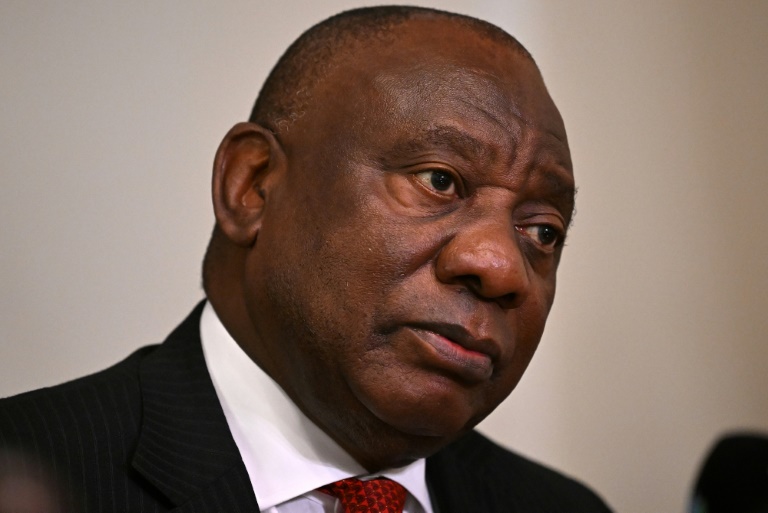
South African President Cyril Ramaphosa has told a probe into a burglary scandal enmeshing him that $580,000 in cash stolen from beneath sofa cushions at his ranch came from a cattle buyer, according to leaked documents on Wednesday.

The sum is part of what the media has reported as a cash haul of $4 million that was stolen at Ramaphosa’s farm — a burglary that he is accused of trying to cover up.

A three-person special panel investigating the affair submitted on Wednesday its report to parliament, which next week will decide whether to push ahead with a vote to impeach the president.

Ramaphosa told the inquiry that the accusations against him are “without any merit,” according to a leak of documents published by local media.

“This matter ought not to be taken any further,” he said in his submission.

However, the leak provided juicy insights into a scandal that has tarnished Ramaphosa’s clean image, imperilling his bid for a second term at the helm of the ruling African National Congress (ANC).

– ‘Cash and cushions’ –

The affair erupted in June after South Africa’s former national spy boss filed a complaint with the police.

It alleged that Ramaphosa had hidden a burglary at his farm at Phala Phala in northeastern South Africa from the authorities.

Instead, he allegedly organised for the robbers to be kidnapped and bribed into silence.

The president has denied any wrongdoing, and spelt out his position at length in the 138-page submission.

“I did not ‘hunt’ for the perpetrators of the theft, as alleged, nor did I give any instructions for this to take place,” he wrote.

Ramaphosa said that $580,000 stashed beneath the cushions was payment made by a Sudanese citizen who had bought buffaloes.

Before the sale, the farm’s manager and Ramaphosa had discussed disposing of buffaloes that were “substandard” and a “financial drain” due to high veterinary and feeding costs, he wrote. 

Staff at the farm initially locked the money in an office safe, Ramaphosa said. 

But the lodge manager then decided that the “safest place” to store it would be under the cushions of a sofa inside Ramaphosa’s residence at the farm, he said. 

– Re-election bid –

Ramaphosa, a 70-year-old former trade union boss who made a fortune in business in post-apartheid South Africa, has two farms.

In his submission, he described his passion for cattle — something that led him in 2017 to write a book called “Cattle of the Ages.” 

Ramaphosa came to power in 2018 on a promise to root out graft after the corruption-stained era of his boss, Jacob Zuma.

He faces elections on December 16 in his bid for a second term as president of the deeply-factionalised ANC.

That position, as head of the dominant party in parliament, is also key to his survival as national president.

Ramaphosa is facing a challenge from Zweli Mkhize, 66, an ex-health minister who resigned from government last year amid graft allegations. 

The special panel was set up in September following a clamour by the opposition.

It was tasked with ascertaining whether there was sufficient evidence to show that the president committed a serious violation of the constitution or the law or a serious misconduct.

Lawmakers will examine the report’s findings in a one-day sitting on December 6, and adopt a resolution, “through a simple majority vote, whether a further action by the House is necessary or not,” said National Assembly speaker Nosiviwe Mapisa-Nqakula.

If so, the next step could be a vote to remove the president, which to be successful would require approval by at least two-thirds of the seats in the assembly.

Mapisa-Nqakula described the handover of the report as “one of the indicative milestones in South Africa’s maturing constitutional democracy.”

It should be published within 24 hours, she said.
At least 19 killed, 24 wounded in north Afghanistan blast

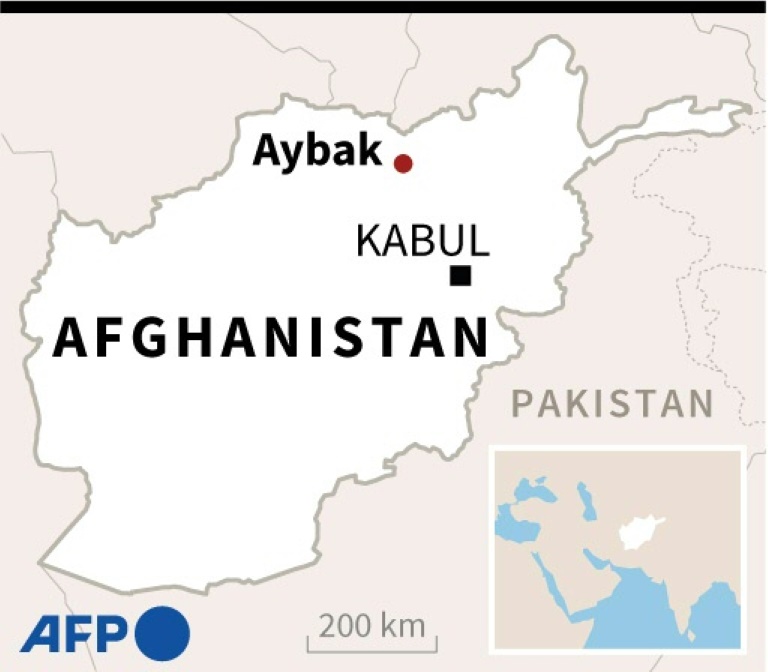
At least 19 people were killed and 24 others wounded Wednesday by a blast at a madrassa in Afghanistan’s northern city of Aybak, a doctor at a local hospital told AFP.

There have been dozens of blasts and attacks targeting civilians since the Taliban returned to power in August last year, most claimed by the local chapter of the Islamic State (IS) group.

The doctor in Aybak, about 200 kilometres (130 miles) north of the capital Kabul, said the casualties were mostly youngsters.

“All of them are children and ordinary people,” he told AFP, asking not to be named.

A provincial official confirmed the blast at Al Jihad madrassa, an Islamic religious school, but could not provide casualty figures.

The Taliban, which frequently plays down casualty figures, said 10 students had died and “many others” were injured.

“Our detective and security forces are working quickly to identify the perpetrators of this unforgivable crime and punish them for their actions,” tweeted Interior Ministry spokesman Abdul Nafay Takor.

Images and video circulating on social media — which could not immediately be verified — showed Taliban fighters picking their way through bodies strewn across the floor of a building.

Prayer mats, shattered glass and other debris littered the scene.

– Lull between blasts –

The Aybak doctor said some critically wounded patients had been moved to better-equipped hospitals in Mazar-i-Sharif, which is about 120 kilometres away by road.

“Those who are here… were mostly hurt by shrapnel and blast waves. They had some shrapnel on their body and face,” he said.

Aybak is a small but ancient provincial capital that came to prominence as a caravan stopping post for traders during the fourth and fifth centuries when it was also an important Buddhist centre.

There has been a lull of a few weeks between major blasts targeting civilians in Afghanistan, although several Taliban fighters have been killed in isolated attacks. 

In September, at least 54 people — including 51 girls and young women — were killed when a suicide bomber detonated a device at a hall in Kabul packed with hundreds of students sitting a practice test for university admissions.

No group claimed responsibility for that bombing, but the Taliban later blamed the Islamic State and said it had killed several ringleaders.

In May last year, before the Taliban’s return to power, at least 85 people — mainly girls — were killed and about 300 were wounded when three bombs exploded near their school in the neighbourhood

No group claimed responsibility, but a year earlier IS claimed a suicide attack on an educational centre in the area that killed 24.

The Taliban’s return to power brought an end to their insurgency, but IS continues to stage attacks across the country.

The Taliban movement — made up primarily of ethnic Pashtuns — has pledged to protect minorities and clamp down on security threats.

Amnesty International called the blast “disturbing”, adding in a tweet it was “yet another reminder to the world that the sufferings of Afghan people are far from over.”

China has room for further 'recalibration' of zero-Covid policy: IMF

China has room to adjust its strict zero-Covid policy, the IMF said Wednesday, while underlining that the country’s tough virus restrictions have been especially hard on its people.

Demonstrations against the measures have erupted across major Chinese cities in recent days, in a rare outpouring of public frustration not seen since pro-democracy rallies in 1989 were crushed with deadly force.

“Covid and Covid-related restrictions are hard on people… This has been the case everywhere, and even more so in China,” an IMF spokesperson told AFP in an emailed statement.

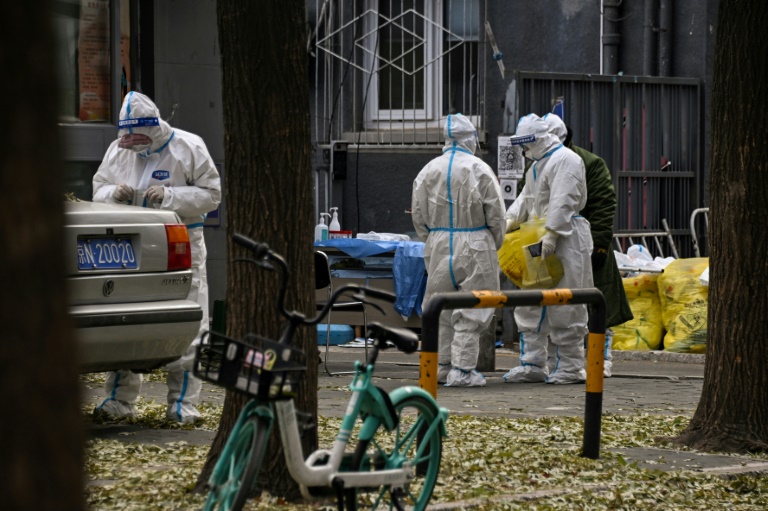
Almost three years into the pandemic, China still deploys strict virus containment policies including snap lockdowns of entire neighborhoods and cities to stamp out flare-ups, with the measures taking a heavy toll on consumers and businesses.

While authorities have made policies more targeted, “there is scope for further gradual, safe recalibration,” the Washington-based fund said.

The IMF spokesperson added that control measures after outbreaks, including major business hub Shanghai which was sealed off for months this year, weighed on domestic economic activity.

The zero-Covid policies have also had spillover effects outside China, interrupting regional and global supply chains.

With the country’s economy only “partially recovered so far,” an adjustment of its current policy could help growth pick up in 2023 and support the global economy at a difficult time, the IMF said.

On Tuesday, IMF managing director Kristalina Georgieva warned it might have to slash growth forecasts for China, saying this is a time of “high uncertainty.”

In October, the IMF cut its projection for the country’s economic growth to 3.2 percent this year.

Georgieva added on Tuesday that Beijing is looking into its zero-Covid approach “with a perspective to shift to more targeted response.”

For now, China continues to see clashes between police and protesters as a wave of demonstrations sparked by Covid-lockdowns expand into demands for greater freedoms.

UK unions announce ambulance strike as stoppages widen

Britain’s government on Wednesday rejected union pay demands after ambulance workers joined nurses in voting to go on strike.

“Our economic circumstances mean unions’ demands are not affordable,” Health Secretary Steve Barclay said, after the Unison and GMB unions confirmed the ambulance service faced its biggest strike in 30 years.

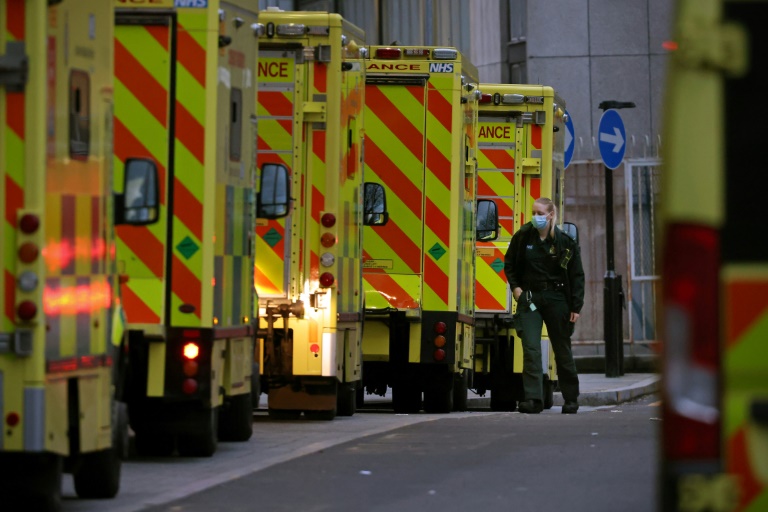
Paramedics, ambulance technicians and emergency call handlers will walk out for 24 hours before Christmas, Unison announced late Tuesday after its members held a strike ballot.

The strike will affect London and four other regions of England as the ambulance service joins nurses across most of Britain in striking over government pay offers, which fall well short of double-digit inflation.

The Royal College of Nursing is holding the first strike in its 106-year history on December 15 and 20.

Unison general secretary Christina McAnea said it was a “tough call” for ambulance workers to strike too.

“But thousands of ambulance staff and their NHS (National Health Service) colleagues know delays won’t lessen, nor waiting times reduce, until the government acts on wages,” she said.

The nurses’ strike will be sandwiched between the first of a series of two-day walkouts by national railway workers, while postal service employees will stage fresh stoppages in the run-up to Christmas.

The GMB union meanwhile on Wednesday said its members working in the ambulance service had also voted to strike across nine regions.

The union will meet in the coming days to discuss potential strike dates before Christmas.

“Ambulance workers –- like other NHS workers –- are on their knees,” said Rachel Harrison, GMB national secretary.

“No one in the NHS takes strike action lightly -– today shows just how desperate they are,” she added.

Numerous other public and private sector staff, from lawyers to airport ground personnel, have also held strikes this year as Britain contends with its worst cost-of-living crisis in generations.

France sees hottest year on record in 2022

France this year experienced the hottest year since records began, the country’s national weather service said Wednesday, as global warming stokes temperatures globally. 

A cascade of extreme weather exacerbated by climate change devastated communities across the globe this year, including sweltering heat and drought across Europe that wilted crops, drove forest fires and saw major rivers shrink to a trickle.

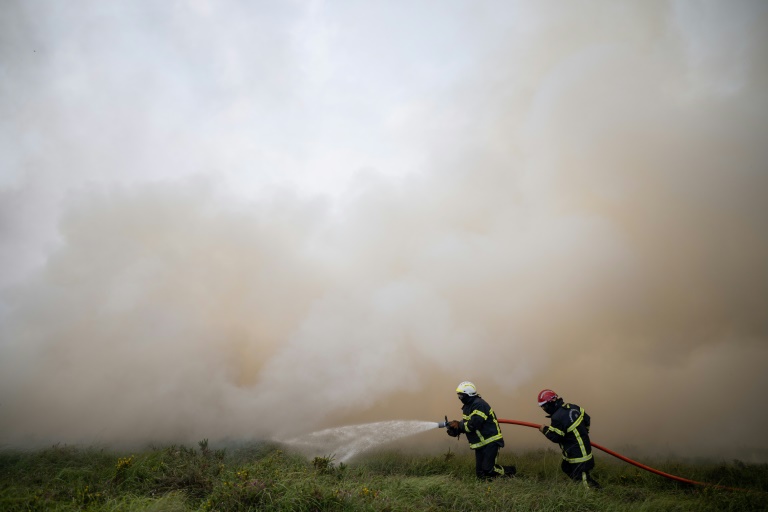
France saw temperatures surge repeatedly in successive heatwaves from May and into October, accompanied by extreme events like wildfires in areas like north-western Brittany, and damaging marine heat waves in the Mediterranean.   

“2022 will be the hottest year recorded in France since measurements began — so since at least 1900 — that is a certainty,” even if December is very cold, said Matthieu Sorel, a climatologist at Meteo France, in a briefing. 

It estimated the average temperature for the year as a whole would be between 14.2 degrees Celsius and 14.6C degrees depending on December temperatures. That is a significant increase from the previous record of 14.07C seen in 2020, and the highest since records began in 1990.   

Annual rainfall is expected to be as much as 25 percent lower than normal, with precipitation in July 85 percent below average. The driest year in France was 1989, which saw a 25 percent rainfall deficit.

Eight months of drought in France is already the country’s third longest dry spell on record, following 17 months in 1989 to 1990 and nine months in 2005.

Across Europe, exceptionally high summer temperatures led to the worst drought the continent has witnessed since the Middle Ages. 

Crops withered in European breadbaskets, as the historic dry spell drove record wildfire intensity and placed severe pressure on the continent’s power grid. 

China and North America also experienced unusually high temperatures and exceptionally low rainfall over the June-August period.

An analysis by an international team of climate scientists in October found that human-caused climate change made the drought across the Northern Hemisphere at least 20 times more likely, and warned such extreme dry periods will become increasingly common with global heating. 

Earth has warmed more than 1.1 degrees Celsius since the late 19th century, with roughly half of that increase occurring in the past 30 years, the World Meteorological Organization said in a report in November.

Globally, if projections for the rest of 2022 hold, the United Nations says that each of the last eight years will be hotter than any year prior to 2015. 

Greenhouse gases accounting for more than 95 percent of warming are all at record levels, the WMO’s annual State of the Global Climate found.

In the European Alps, glacier melt records have been shattered in 2022, with average thickness losses of between three and over four metres (between 9.8 and over 13 feet), the most ever recorded.

Switzerland has lost more than a third of its glacier volume since 2001.

HSBC shuts more UK branches as banking goes online

HSBC on Wednesday announced plans to permanently shut more than a quarter of its remaining bank branches in the UK as customers increasingly switch to making transactions online.

The global bank will from April close 114 branches, it said in a statement, having shut around 150 since last year.

Around 100 staff are expected to lose their jobs following the latest closures, mirroring action being taken by other high-street banks in the UK.

“People are changing the way they bank and footfall in many branches is at an all-time low, with no signs of it returning,” said the bank’s managing director of UK distribution, Jackie Uhi. 

“Banking remotely is becoming the norm for the vast majority of us.”

Consumer watchdog Which? said banks and building societies have closed or have scheduled to close more than 5,200 branches since the start of 2015 — at the rate of about 54 every month.

By the end of next year, the NatWest Group, which runs NatWest, Royal Bank of Scotland and Ulster Bank, will have shut more than 1,200.

More than 920 Lloyds, Halifax and Bank of Scotland branches — all part of the Lloyds Banking Group — will have gone in the next 12 months.

Barclays has closed or will have closed more than 960 branches by the end of this year, Which? said on Tuesday.

The closures have alarmed consumer groups who said the moves will hit those who predominantly still use cash, particularly the elderly.

The trend towards cashless payments and online banking has accelerated since the coronavirus pandemic.

German gas giant takes Gazprom to court over supply halts

German energy giant Uniper said Wednesday it was taking Gazprom to an international tribunal over the Russian company’s failure to deliver gas, saying it has so far cost them 11.6 billion euros ($12 billion).

After Moscow invaded Ukraine, Gazprom steadily dwindled pipeline supplies to Germany in apparent retaliation for Western sanctions on Russia, sending energy prices soaring. 

Germany’s biggest gas importer, Uniper was left facing bankruptcy, prompting the government to announce it would nationalise the firm over fears its failure could send shockwaves through Europe’s top economy.

The German company said it had begun legal action against Gazprom at a tribunal in Stockholm, claiming damages over gas that had not been delivered since June. 

“It is about gas volumes that were contractually agreed with Gazprom but not delivered and for which we had to procure replacements at extremely high market prices and still have to do so,” CEO Klaus-Dieter Maubach said in a statement.

Uniper has been forced to buy replacement gas at higher costs, which it said had so far cost 11.6 billion euros, with the figure set to continue growing until the end of 2024.

“We incurred these costs, but they are not our responsibility,” added Maubach.

Gazprom confirmed Uniper had launched legal action, adding that it “does not recognise the breach of contracts and the legitimacy of the claims for damages”, according to a statement carried by Russian news agencies.

Earlier this month, Uniper reported a 40-billion-euro net loss for the first nine months of the year, one of the biggest losses in German corporate history.

As part of the rescue deal, the government initially said it would pump eight billion euros into Uniper. 

But last week, the company said Berlin would need to spend an additional 25 billion euros to stave off the firm’s collapse.

The government will finance the rescue out of a 200-billion-euro fund designed to cushion the impact of the energy crisis on households and businesses.

Uniper will ask shareholders to formally approve the deal on December 19.

German gas giant takes Gazprom to court over supply halts

German energy giant Uniper said Wednesday it was taking Gazprom to an international tribunal over the Russian company’s failure to deliver gas, saying it has so far cost them 11.6 billion euros ($12 billion).

After Moscow invaded Ukraine, Gazprom steadily dwindled pipeline supplies to Germany in apparent retaliation for Western sanctions on Russia, sending energy prices soaring. 

Germany’s biggest gas importer, Uniper was left facing bankruptcy, prompting the government to announce it would nationalise the firm over fears its failure could send shockwaves through Europe’s top economy.

The German company said it had begun legal action against Gazprom at a tribunal in Stockholm, claiming damages over gas that had not been delivered since June. 

“It is about gas volumes that were contractually agreed with Gazprom but not delivered and for which we had to procure replacements at extremely high market prices and still have to do so,” CEO Klaus-Dieter Maubach said in a statement.

Uniper has been forced to buy replacement gas at higher costs, which it said had so far cost 11.6 billion euros, with the figure set to continue growing until the end of 2024.

“We incurred these costs, but they are not our responsibility,” added Maubach.

Gazprom confirmed Uniper had launched legal action, adding that it “does not recognise the breach of contracts and the legitimacy of the claims for damages”, according to a statement carried by Russian news agencies.

Earlier this month, Uniper reported a 40-billion-euro net loss for the first nine months of the year, one of the biggest losses in German corporate history.

As part of the rescue deal, the government initially said it would pump eight billion euros into Uniper. 

But last week, the company said Berlin would need to spend an additional 25 billion euros to stave off the firm’s collapse.

The government will finance the rescue out of a 200-billion-euro fund designed to cushion the impact of the energy crisis on households and businesses.

Uniper will ask shareholders to formally approve the deal on December 19.

Ukraine embassy employee in Madrid 'lightly' injured by letter bomb

A security guard at Ukraine’s embassy in Madrid was lightly injured Wednesday while opening a letter bomb addressed to the Ukrainian ambassador, prompting Kyiv to boost security at its embassies.

The letter, which arrived by regular post, exploded as the guard opened it in the embassy garden, said the central government’s representative in Madrid, Mercedes Gonzalez.

“Fortunately it was not serious, the person has a small injury to his right hand. The letter was addressed to the ambassador,” she said during an interview with TV station Telemadrid.

A police source said the man had been “lightly” injured and “went himself to a hospital” for treatment.

Spain’s National Police force were informed at around 1:00 pm (1200 GMT) of an explosion at the Ukranian embassy in Madrid, the source added.

Police have opened an investigation “which includes the participation of forensic police,” the source said without giving further details.

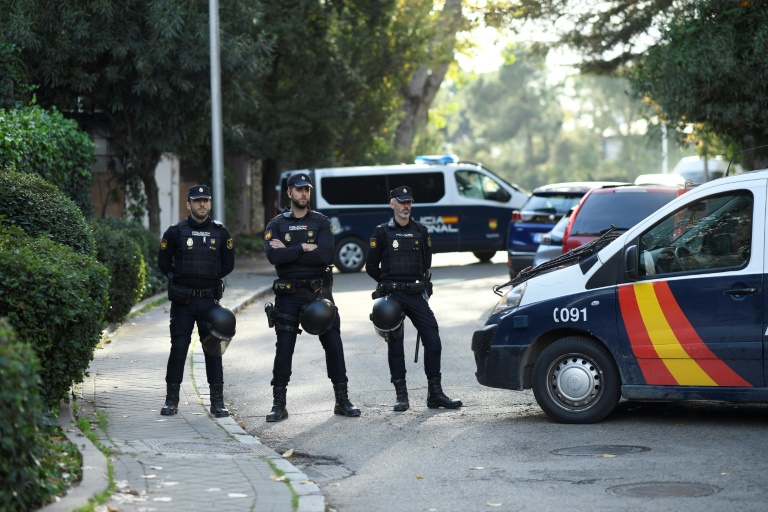
A security cordon was put in place by the police around the embassy, located in a leafy residential area in northern Madrid.

A man who lives in front of the embassy, who asked not to be identified, told AFP that he had stepped out to walk his dogs and now police where preventing him from returning home.

“I heard it, I thought it was gunshot. It was not too loud,” he said.

Ukrainian Foreign Minister Dmytro Kuleba ordered the strengthening of security at all Ukrainian embassies, Ukraine’s foreign ministry spokesperson Oleg Nikolenko said on social media after the letter bomb went off.

Spain’s Foreign Minister Jose Manuel Albares has spoken with Ukraine’s ambassador to Spain by telephone “to ask about the well-being of the Ukrainian worker who was injured,” the Spanish foreign ministry said in a statement.

Albares also contacted Kuleba by telephone to express his “support and solidarity”, it added.

EU commission recommends funding freeze for Hungary

The European Commission recommended on Wednesday that 13 billion euros ($13 billion) in EU funds for Hungary be frozen because Budapest is falling short on its commitments to meet European rule of law.

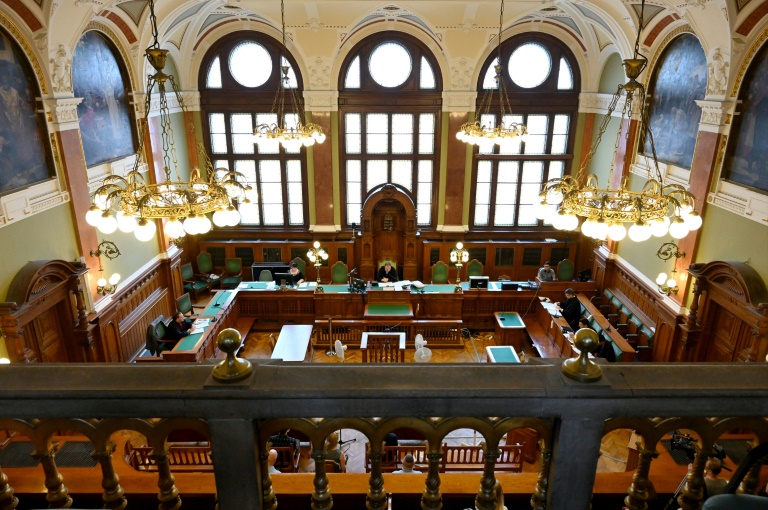
The EU executive said Hungary had in particular failed to make good on promised reforms to ensure a fair judicial system when it comes to prosecutorial decisions.

EU member states will now have until December 19 to vote on whether to back, reject or change the commission recommendation.

“Hungary has not progressed enough in its reforms,” the commission said in a statement, noting that it had “failed to adequately implement” parts of the 17 remedial measures it had pledged to carry out by a deadline that ran out on November 19.

As a result, the commission upheld an earlier warning that it would suspend 65 percent of EU budget funding earmarked for Hungary, amounting to 7.5 billion euros.

Also, 5.8 billion euros from an EU coronavirus recovery fund was frozen until Hungary showed it was meeting 27 “super milestones” for its reforms, particularly on the judiciary issue.

“The ‘essential milestones’ must all be met in full before Hungary can submit its payment request,” commission Vice President Valdis Dombrovskis told a news conference.

“If they are not met, the entire payment would be blocked, and all subsequent ones too. In short: no funds will flow until the ‘essential milestones’ are properly implemented.”

Hungary’s chief negotiator with the commission, Tibor Navracsics, gave a relatively muted response to the commission announcement.

“We trust that we will implement the remaining requirements, and in 2023 we can convince the commission… that continued suspension of funds won’t be needed and that we can access 100 percent of the funds in 2023,” he told journalists in Budapest.

– Blocking tactics –

The commission’s blunt recommendation was foreshadowed, with Hungary under repeated criticism by Brussels for perceived backsliding on principles and practices underpinning EU standards of democracy and law.

EU officials, however, indicated they were aware of the risk that Hungary might continue to employ blocking tactics to derail or delay EU decisions requiring member state unanimity, a form of “blackmail” to try to ease the pressure from Brussels.

Budapest has already been standing in the way of efforts to extend sanctions on Moscow — with which it has good ties and energy dependency — over Russia’s war in Ukraine.

It is also holding up EU adoption on a 15-percent corporate tax rate worked out in the OECD.

Hungary denies that its obstructionism is linked to the tussle over rule of law.

Yet those stakes — and tactics — will be on the table when EU ministers and leaders hold previously scheduled meetings over the coming weeks.

In a carrot-and-stick approach, the commission gave a positive assessment of Hungary’s plan for the coronavirus recovery money, so that it can be unblocked — but only if member states sign off on it before the end of December.

If that doesn’t happen, under rules for that fund, Hungary would lose 70 percent of the grants set aside for it.

Close Bitnami banner
Bitnami