World

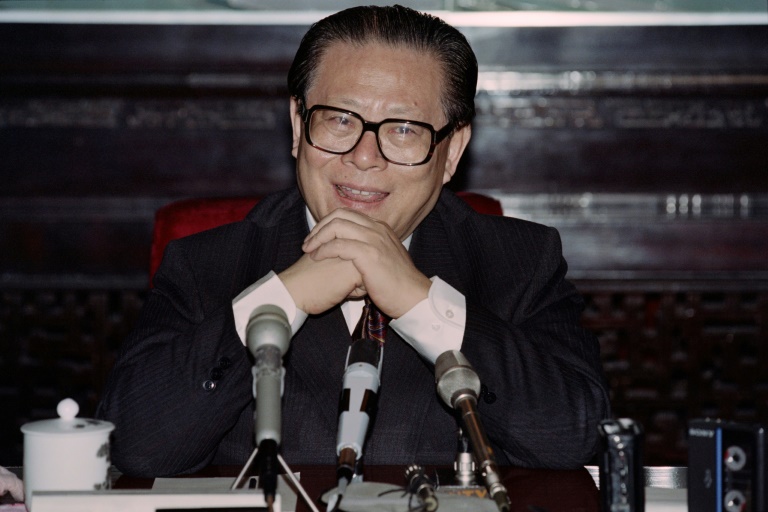
Former China leader Jiang Zemin dies, aged 96

Former Chinese leader Jiang Zemin died Wednesday at the age of 96, state media reported, hailing him as a great communist revolutionary who helped quell the 1989 pro-democracy protests.

Jiang took power in the aftermath of the Tiananmen Square crackdown, in which the military used deadly force to end peaceful demonstrations, and led China towards its emergence as a global economic powerhouse.

The major bodies of China’s ruling Communist Party announced his death through a letter that expressed “profound grief”. 

“Jiang Zemin passed away due to leukemia and multiple organ failure in Shanghai at 12:13 p.m. on Nov. 30, 2022, at the age of 96, it was announced on Wednesday,” news agency Xinhua said.

His death came after all medical treatments had failed, it added, citing the letter.

“Comrade Jiang Zemin was an outstanding leader… a great Marxist, a great proletarian revolutionary, statesman, military strategist and diplomat, a long-tested communist fighter, and an outstanding leader of the great cause of socialism with Chinese characteristics,” it said.

Jiang’s death comes as China sees a flare-up of anti-Covid lockdown protests that have morphed into calls for more political freedoms — the most widespread since the 1989 pro-democracy rallies. 

“During the serious political turmoil in China in the spring and summer of 1989, Comrade Jiang Zemin supported and implemented the correct decision of the Party Central Committee to oppose unrest, defend the socialist state power and safeguard the fundamental interests of the people,” state broadcaster CCTV said on Wednesday. 

– Flags at half-mast –

When Jiang replaced Deng Xiaoping as leader in 1989, China was still in the early stages of economic modernisation.

By the time he retired as president in 2003, China was a member of the World Trade Organization, Beijing had secured the 2008 Olympics, and the country was well on its way to superpower status.

Analysts say Jiang and his “Shanghai Gang” faction continued to exert influence over communist politics long after he left the top job, including in the selection of Xi Jinping as leader in 2012.  

Concerns over Jiang’s health had been raised when he did not attend the opening or closing ceremonies of last month’s Communist Party Congress, at which Xi was granted a historic third term.

CCTV said flags would be flown at half-mast at Chinese government buildings until the funeral, the date of which was not announced. 

State media websites turned black-and-white, and they posted a black-and-white photo of a chrysanthemum on their official accounts on social media platform Weibo. 

However, Jiang’s legacy remains mixed and his critics numerous.

He has been accused of failing to solve problems created by China’s economic rebirth: rampant corruption and inequality, environmental degradation and state sector reforms which caused mass layoffs.

In his former power base of Shanghai, one resident acknowledged Jiang had stewarded the city, and then China, through a period of intense economic development — but added that he “was not particularly capable”. 

The person, who declined to be named, criticised the “clear corruption” within the Communist Party that took root during his rule.

They added: “When something like this happens, the people know they have to say certain things on the outside, but we all keep our own impressions in our hearts.”

Most people approached by AFP in the city refused to comment, with one saying the death was “too sensitive”. 

– ‘Grandpa Jiang’ –

In recent years though, Jiang became an unlikely viral meme among millennial and Gen Z Chinese fans, who called themselves “toad worshippers” in thrall to his frog-like countenance and quirky mannerisms. 

Over half a million commenters flooded CCTV’s post on Weibo within an hour of the announcement, with many referring to the late leader as “Grandpa Jiang”.

“He was pretty good for the people,” a Shanghai resident in his 60s told AFP. 

“There were a lot of corruption problems at the time, but he was a lively and jovial person… Maybe that’s the image people will keep of him,” Beijing resident Wang Yi told AFP. 

“The media was also freer in his time to report critically on society’s problems.”  

Some used Jiang’s death to take veiled jabs at Xi.

“Toad… can you take Winnie the Pooh away?” one asked, using a banned nickname for Xi.

Others on the popular app WeChat posted links to songs titled “Shame it Wasn’t You” and “Wrong Man”, referencing Xi.

Many of the more irreverent posts were censored from Weibo searches within minutes, with the results for Jiang’s full name only showing state media accounts.

In a tweet, the University of Oxford’s Professor Patricia Thornton questioned whether public displays of grief could “open up space for the expression of new dissent and new demands from students and other protestors”. 

She referenced the deaths of two other former Communist Party leaders — reformer Hu Yaobang and popular premier Zhou Enlai –- whose deaths in 1989 and 1976 respectively provoked mourning events that evolved into student political rallies.

Jiang’s death “cannot but stir reflection on some stark differences between the not-so-distant past & the reality of life in Xi’s #China today”, she wrote.
Europe stocks, euro rise on elevated eurozone inflation

European equities and the euro rose Wednesday as eurozone inflation slowed but remained elevated on high energy costs.

Markets were also buoyed by hopes that China will further ease its strict Covid containment measures following widespread protests, though gains were tempered by leaders’ warnings of a crackdown on dissent.

Traders were awaiting a key speech by Federal Reserve chief Jerome Powell, with many expecting him to outline plans for future interest rate hikes to tackle high US consumer prices.

Eurozone inflation eased to 10 percent in November, the first drop in 17 months but holding in double figures, the EU statistics agency said.

– Focus on rising rates –

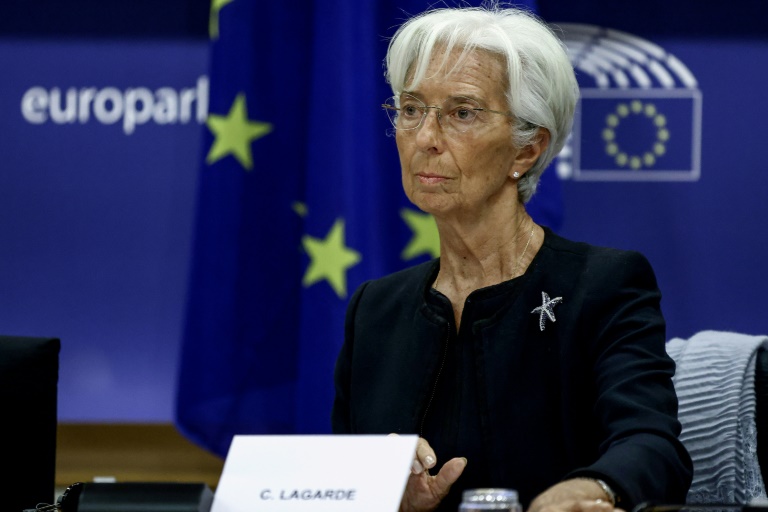
European Central Bank president Christine Lagarde has expressed scepticism that inflation has peaked.

“The ECB is still increasing (interest) rates and this is what traders are focused on,” AvaTrade analyst Naeem Aslam told AFP, in reference to market reaction following the data.

Inflation in the bloc had hit a record 10.6 percent in October, boosted also by soaring energy and food bills in the wake of Russia’s war in Ukraine.

“Euro area inflation figures surprised on the downside, providing an early indication that the record price pressures seen in recent months may have peaked,” added CEBR economist Karl Thompson.

However, he warned that “inflation is nonetheless likely to remain elevated throughout 2023” and forecast rising rates next month.

Global central banks, including the Fed, have ramped up borrowing costs this year in a bid to dampen red-hot inflation that was fuelled also as economies reopened from the pandemic.

Meanwhile on Wednesday, Asian stocks mostly rebounded as investors looked past weekend demonstrations in China after officials announced moves aimed at softening the zero-Covid strategy.

But in a sign that the leadership was determined to maintain its authority, the country’s top security body called for a “crackdown” against “hostile forces”.

Data showing China’s factory activity shrank further in November underscored the impact the zero-Covid approach has had on the world’s second-biggest economy. 

– Key figures around 1145 GMT –

London – FTSE 100: UP 0.7 percent at 7,563.21 points

Frankfurt – DAX: UP 0.4 percent at 14,411.52

Paris – CAC 40: UP 0.6 percent at 6,710.48

EURO STOXX 50: UP 0.6 percent at 3,958.81

Tokyo – Nikkei 225: DOWN 0.2 percent at 27,968.99 (close)

Hong Kong – Hang Seng Index: UP 2.2 percent at 18,597.23 (close)

Shanghai – Composite: UP 0.1 percent at 3,151.34 (close)

New York – Dow: FLAT at 33,852.53 (close)

Euro/dollar: UP at $1.0366 from $1.0330 on Tuesday

Dollar/yen: UP at 138.76 yen from 138.63 yen

Pound/dollar: UP at $1.2013 from $1.1952

Euro/pound: DOWN at 86.28 pence from 86.42 pence

Brent North Sea crude: UP 2.5 percent at $85.14 per barrel

West Texas Intermediate: UP 2.3 percent at $80.01 per barrel

Europe stocks, euro rise on elevated eurozone inflation

European equities and the euro rose Wednesday as eurozone inflation slowed but remained elevated on high energy costs.

Markets were also buoyed by hopes that China will further ease its strict Covid containment measures following widespread protests, though gains were tempered by leaders’ warnings of a crackdown on dissent.

Traders were awaiting a key speech by Federal Reserve chief Jerome Powell, with many expecting him to outline plans for future interest rate hikes to tackle high US consumer prices.

Eurozone inflation eased to 10 percent in November, the first drop in 17 months but holding in double figures, the EU statistics agency said.

– Focus on rising rates –

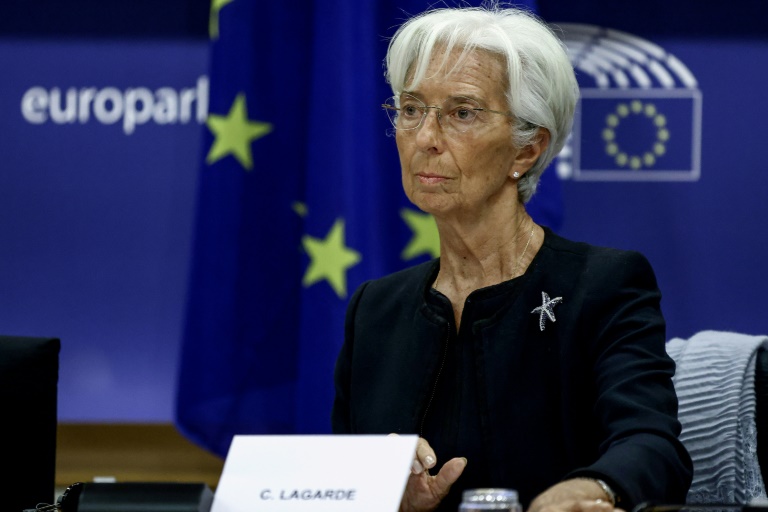
European Central Bank president Christine Lagarde has expressed scepticism that inflation has peaked.

“The ECB is still increasing (interest) rates and this is what traders are focused on,” AvaTrade analyst Naeem Aslam told AFP, in reference to market reaction following the data.

Inflation in the bloc had hit a record 10.6 percent in October, boosted also by soaring energy and food bills in the wake of Russia’s war in Ukraine.

“Euro area inflation figures surprised on the downside, providing an early indication that the record price pressures seen in recent months may have peaked,” added CEBR economist Karl Thompson.

However, he warned that “inflation is nonetheless likely to remain elevated throughout 2023” and forecast rising rates next month.

Global central banks, including the Fed, have ramped up borrowing costs this year in a bid to dampen red-hot inflation that was fuelled also as economies reopened from the pandemic.

Meanwhile on Wednesday, Asian stocks mostly rebounded as investors looked past weekend demonstrations in China after officials announced moves aimed at softening the zero-Covid strategy.

But in a sign that the leadership was determined to maintain its authority, the country’s top security body called for a “crackdown” against “hostile forces”.

Data showing China’s factory activity shrank further in November underscored the impact the zero-Covid approach has had on the world’s second-biggest economy. 

– Key figures around 1145 GMT –

London – FTSE 100: UP 0.7 percent at 7,563.21 points

Frankfurt – DAX: UP 0.4 percent at 14,411.52

Paris – CAC 40: UP 0.6 percent at 6,710.48

EURO STOXX 50: UP 0.6 percent at 3,958.81

Tokyo – Nikkei 225: DOWN 0.2 percent at 27,968.99 (close)

Hong Kong – Hang Seng Index: UP 2.2 percent at 18,597.23 (close)

Shanghai – Composite: UP 0.1 percent at 3,151.34 (close)

New York – Dow: FLAT at 33,852.53 (close)

Euro/dollar: UP at $1.0366 from $1.0330 on Tuesday

Dollar/yen: UP at 138.76 yen from 138.63 yen

Pound/dollar: UP at $1.2013 from $1.1952

Euro/pound: DOWN at 86.28 pence from 86.42 pence

Brent North Sea crude: UP 2.5 percent at $85.14 per barrel

West Texas Intermediate: UP 2.3 percent at $80.01 per barrel

At least 16 killed, 24 wounded in north Afghanistan blast

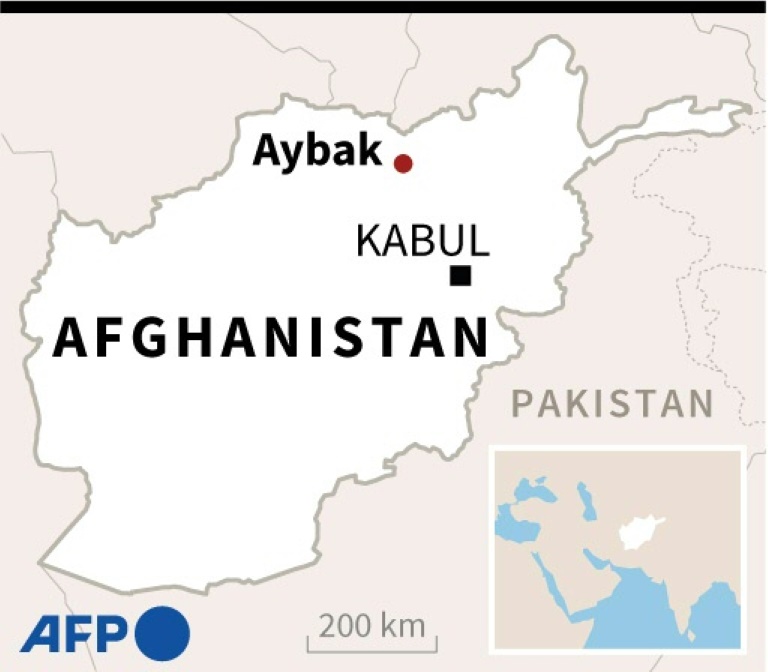
At least 16 people were killed and 24 others wounded Wednesday by a blast at a madrassa in Afghanistan’s northern city of Aybak, a doctor at a local hospital told AFP. 

There have been dozens of blasts and attacks targeting civilians since the Taliban returned to power in August last year, most claimed by the local chapter of the Islamic State (IS) group.

A doctor in Aybak, about 200 kilometres (130 miles) north of the capital Kabul, said the casualties were mostly youngsters.

“All of them are children and ordinary people,” he told AFP, asking not to be named.

A provincial official confirmed the blast at Al Jihad madrassa, an Islamic religious school, but could not provide casualty figures.

The Taliban, which frequently plays down casualty figures, said 10 students had died  and “many others” were injured.

“Our detective and security forces are working quickly to identify the perpetrators of this unforgivable crime and punish them for their actions,” tweeted Interior Ministry spokesman Abdul Nafay Takor.

Images and video circulating on social media — which could not immediately be verified — showed Taliban fighters picking their way through bodies strewn across the floor of a building.

Prayer mats, shattered glass and other debris littered the scene.

– Lull between blasts –

Aybak is a small but ancient provincial capital that came to prominence as a caravan stopping post for traders during the fourth and fifth centuries when it was also an important Buddhist centre.

There has been a lull of a few weeks between major blasts targeting civilians in Afghanistan, although several Taliban fighters have been killed in isolated attacks. 

In September, at least 54 people — including 51 girls and young women — were killed when a suicide bomber detonated a device at a hall in Kabul packed with hundreds of students sitting a practice test for university admissions.

No group claimed responsibility for that bombing, but the Taliban later blamed the Islamic State and said it had killed several ringleaders.

In May last year, before the Taliban’s return to power, at least 85 people — mainly girls — were killed and about 300 were wounded when three bombs exploded near their school in the neighbourhood

No group claimed responsibility, but a year earlier IS claimed a suicide attack on an educational centre in the area that killed 24.

The Taliban’s return to power brought an end to their insurgency, but IS continues to stage attacks across the country.

The Taliban movement — made up primarily of ethnic Pashtuns — has pledged to protect minorities and clamp down on security threats.

S.African parole for Hani's killer roiled by appeals, protests

The release from prison of the far-right killer of South African anti-apartheid hero Chris Hani hung in the balance on Wednesday, amid fierce bids to block the move. 

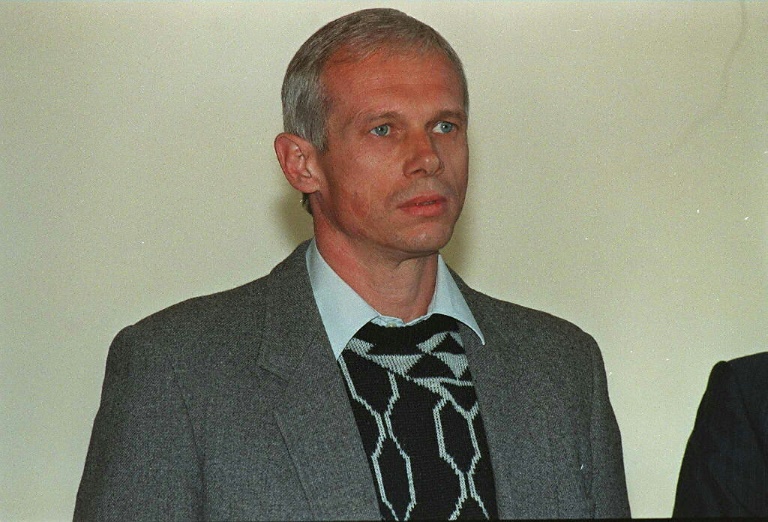
Janusz Walus, a 69-year-old immigrant from then-communist Poland, was to be released by Thursday after being controversially granted parole by the Constitutional Court.

But the decision has ignited angry protests. On Tuesday, Walus was stabbed inside prison.

On Wednesday, the South African Communist Party (SACP), which Hani used to head, said it was petitioning the court to go back on its ruling.

“Yesterday we filed our documents with the Constitutional Court as well as with the High Court, and against the minister of justice to oppose the release,” SACP Secretary-General Solly Mapaila told AFP.

He later explained they were seeking a so-called rescission order, which would “reverse this decision.” 

The party has asked Justice Minister Ronald Lamola to halt execution of the parole order until the petition is heard and concluded.

Mapaila spoke as he led hundreds of demonstrators in front of the Kgosi Mampuru II Correctional Centre in Pretoria where Walus is being held and receiving treatment following Tuesday’s incident.

He was allegedly attacked by another inmate, according to prison authorities which have launched an investigation. Details of his injuries have not been released.

The SACP, a political ally of the ruling African National Congress (ANC), has been leading rolling protests since the weekend. 

– ‘Struggle continues’ –

Protesters, including senior ANC politicians, wore black T-shirts bearing Hani’s portrait captioned “Don’t kill Chris Hani again: The struggle continues”.

Prison officials, armed with rifles and dogs, stood guard behind green metal prison gates as protesters chanted.

Hani, a hugely popular figure and fierce opponent of the apartheid regime was the SACP’s general secretary and chief of staff of Umkhonto we Sizwe, the armed wing of the ANC.

He was shot dead in the driveway of his house on April 10, 1993, in Boksburg, a suburb east of Johannesburg. 

The killing almost plunged South Africa into a race war. 

It occurred just as negotiations to end apartheid were entering their final phase, stoking protests and rioting in black townships that some feared would erupt into civil war.

Then-ANC president Nelson Mandela appeared on national television to appeal for calm, a move that helped ease tensions and open the way to South Africa’s first multi-racial elections the following year.

Walus was quickly arrested after the killing and handed the death sentence — a punishment that was commuted to life imprisonment after the death penalty was abolished in post-apartheid South Africa.

His accomplice Clive Derby-Lewis, who supplied the gun, was released in 2015 on medical parole after 22 years in jail. He died of lung cancer in 2016, aged 80.

Let them eat bread: the origins of the baguette

It is as much a part of French culture as the Eiffel Tower or Edith Piaf but the origins of the humble baguette, which UNESCO on Wednesday added to its List of Intangible Cultural Heritage, remain a mystery.

Here are some of the more popular theories:

– Napoleon’s bread of war –

The oldest tale has the baguette being kneaded by bakers in Napoleon’s army. Less bulky than a traditional loaf, the long slim shape of the baguette made it faster to bake in brick ovens hastily erected on the battlefield.

France’s most famous man of war was preoccupied with getting his men their daily bread.

During his Russian campaign in 1812, he toured the ovens daily to sample the day’s offering and ensure the crusty batons were being distributed regularly, according to historian Philippe de Segur. 

He also had portable bread mills sent to occupied Moscow, but the setbacks suffered by the Grande Armee in one of the deadliest military campaigns in history ended his bid to export the doughy staple.

– The Viennese connection –

Another theory has the baguette starting out in a Viennese bakery in central Paris in the late 1830s. 

Artillery officer and entrepreneur August Zang brought Austria’s culinary savoir-faire to Paris in the form of the oval-shaped bread that were standard in his country at the time.

According to the Compagnonnage des boulangers et des patissiers, the French bakers’ network, Zang decided to make the loaves longer to make them easier for the city’s breadwomen to pluck from the big carts they pushed through the city’s streets.

– Breaking bread –

Another theory has the baguette being born at the same time as the metro for the 1900 Paris Exposition.

People from across France came to work on the underground and fights would often break out on site between labourers armed with knives, which they used to slice big round loaves of bread for lunch.

According to the herodote.net history site, to avoid bloodshed, one engineer had the idea of ordering longer loaves that could be broken by hand.

– Early rising –

In 1919, a new law aimed to improve the lives of bakers by banning them from working from 10 pm to 4 am.

The reform gave them less time to prepare the traditional sourdough loaf for the morning, marked the widespread transition to what was called at the time the yeast-based “flute”, which rose faster and was out of the oven in under half an hour.

Standardised at 80 centimeters (30 inches) and 250 grams (eight ounces) with a fixed price until 1986, the baguette was initially the mainstay of wealthy metropolitans, but after World War II became the emblem of all French people.

French baguettes get UNESCO heritage status

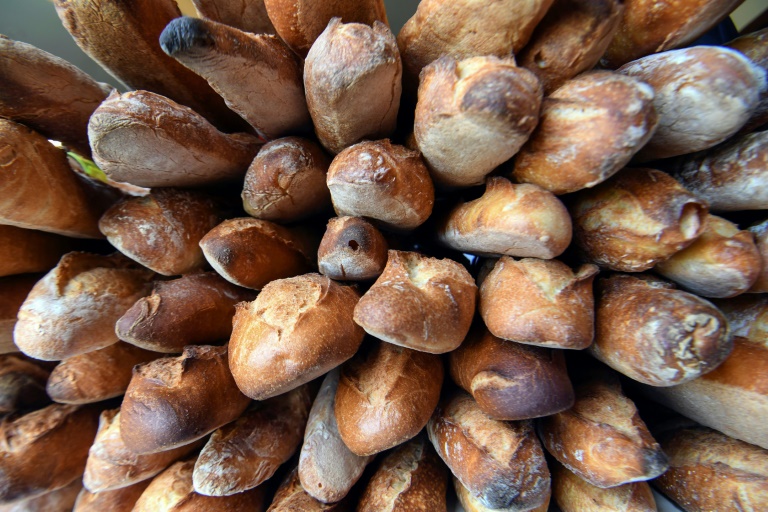
The French baguette — “250 grams of magic and perfection,” in the words of President Emmanuel Macron, and one of the abiding symbols of the nation — was given UNESCO heritage status on Wednesday.

The bread sticks, with their crusty exterior and soft middle, have remained a quintessential part of French life long after other stereotypes like berets and strings of garlic have fallen by the wayside. 

The UN agency granted “intangible cultural heritage status” to the tradition of making the baguette and the lifestyle that surrounds them.

More than six billion are baked every year in France, according to the National Federation of French Bakeries — but the UNESCO status comes at a challenging time for the industry.

France has been losing some 400 artisanal bakeries per year since 1970, from 55,000 (one per 790 residents) to 35,000 today (one per 2,000). 

The decline is due to the spread of industrial bakeries and out-of-town supermarkets in rural areas, while urbanites increasingly opt for sourdough, and swap their ham baguettes for burgers.

– Honeycomb and cream –

Still, it remains an entirely common sight to see people with a couple of sticks under their arm, ritually chewing off the warm end as they leave the bakery, or “boulangerie”.

There are national competitions, during which the candidates are sliced down the middle to allow judges to evaluate the regularity of their honeycomb texture as well as the the colour of the interior, which should be cream. 

But despite being a seemingly immortal fixture in French life, the baguette only officially got its name in 1920, when a new law specified its minimum weight (80 grams) and maximum length (40 centimetres). 

“Initially, the baguette was considered a luxury product. The working classes ate rustic breads that kept better,” said Loic Bienassis, of the European Institute of Food History and Cultures, who helped prepare the UNESCO dossier. 

“Then consumption became widespread, and the countryside was won over by baguettes in the 1960s and 70s,” he said. 

Its earlier history is rather uncertain. 

Some say long loaves were already common in the 18th century; others that it took the introduction of steam ovens by Austrian baker August Zang in the 1830s for its modern incarnation to take shape.

One popular tale is that Napoleon ordered bread to be made in thin sticks that could be more easily carried by soldiers. 

Another links baguettes to the construction of the Paris metro in the late 19th century, and the idea that baguettes were easier to tear up and share, avoiding arguments between the workers and the need for knives.

France submitted its request to UNESCO in early 2021, with baguettes chosen over the zinc roofs of Paris and a wine festival in Arbois.

“It is a recognition for the community of artisanal bakers and patisserie chefs,” said Dominique Anract, president of bakeries federation in a statement. 

“The baguette is flour, water, salt and yeast — and the savoir-faire of the artisan.”

A greener ride: West Africans switch on to electric motorbikes

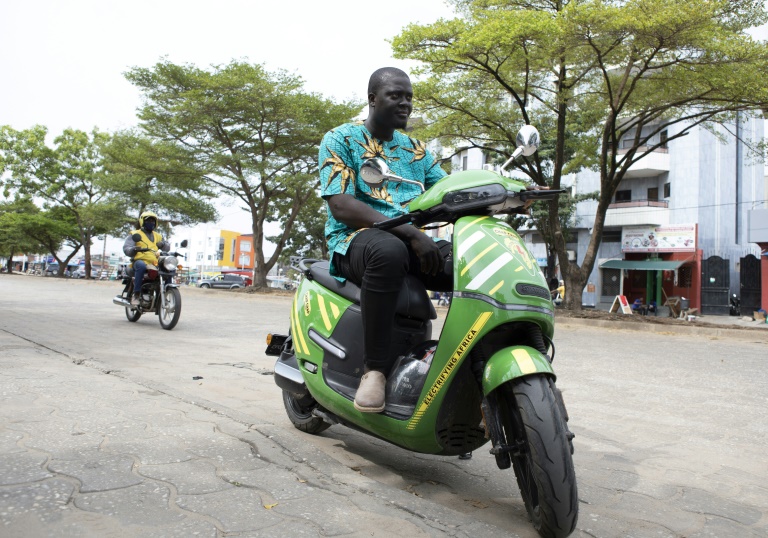
Beninese hairdresser Edwige Govi makes a point these days of using electric motorbike taxis to get around Cotonou, saying she enjoys a ride that is quiet and clean.

Motorcycle taxis are a popular and cheap form of transportation in West Africa. 

But in Benin and Togo, electric models are gaining the ascendancy over petrol-powered rivals.

Customers are plumping for environmentally-friendlier travel and taxi drivers are switching to machines that, above all, are less expensive to buy and operate. 

“They are very quiet and do not give off smoke,” says Govi, 26, who had just completed a half-hour run across Benin’s economic hub.

In African cities, road pollution is becoming a major health and environment issue, although for taxi drivers, the big attraction of electric motorcycles is the cost.

“I manage to get by,” said Govi’s driver, Octave, wearing the green and yellow vest used by Benin’s zemidjan taxis — a word meaning “take me quickly” in the local Fon language. 

“I make more money than with my fuel motorcycle.”

Local environmentalist Murielle Hozanhekpon said the electric motorbikes do have some disadvantages “but not on an environmental level”.

Alain Tossounon, a journalist specialising in environmental issues, said electric bikes were prized by taxi drivers as they were less expensive to maintain or run.

The cost factor has become more and more important in the face of an explosion of fuel prices this year triggered by Russia’s invasion of Ukraine.

– Credit carrot –

In Benin, an electric motorcycle costs between 490,000 CFA (750 euros) and 884,000 CFA (1,345 euros) depending on the model. 

But this price difference is only one factor which explains the trend towards “silent motorcycles,” said Tossounon. 

To allow these motorcycles to be competitive with gasoline motorcycles, Beninese authorities have decided to exempt electric vehicles and hybrids from VAT and customs duties. 

For a few months in Cotonou, at least two companies have been offering electric models. They say they are overwhelmed with requests and each shows strong sales in their own company figures. 

The manufacturer Mauto launched in mid-2022 in Benin and Togo, where it said it has already put 2,900 motorcycles into circulation.

Many taxi drivers are also lured by flexible credit deals — instead of making a hefty one-off purchase, many are able to get loans that they pay off monthly, weekly or even daily. 

“The queue here is from morning to evening. Every hour, at least two roll out of the shop,” said Anicet Takalodjou, a vendor from Mauto’s competitor Zed-Motors. 

Oloufounmi Koucoi, 38, director of the company delivering the models to Cotonou, said they had put thousands of e-motorcycles in circulation.

“The number is growing every day.” 

By assembling the motorcycles locally in Benin, his electric models are cheaper than if they had been imported. 

To attract customers, his company, Zed-Motors, offers solar panels to facilitate recharging for those who do not have electricity at home. 

For decades, Benin and its economy have struggled with power cuts. The situation has improved, but outages remain common.

In rural areas, especially, electricity remains largely inaccessible.

 – Battery change – 

In Lome, capital of neighbouring Togo, Octave de Souza parades proudly through the streets on his brand-new green electric motorcycle made by Mauto. 

One point in particular makes him and his wallet happy: no more fuelling up.

“All you need to do is change the battery,” he smiled. “There are sales outlets, you go there and it’s exchanged for you.” 

A recharge costs 1,000 CFA ($1.50 / euros) and can provide three days’ mobility. For the same price, Octave said, he would only be able to ride for one day using petrol, which is subsidised by the government.

Local authorities also are encouraging the switch to electric in a bid to replace old, highly polluting motorcycles. 

But some drivers remain wary of electric models, citing range anxiety — the worry of coming to a halt with a flat battery.

Taxi driver Koffi Abotsi said he struggled with the “stress” of having to quickly find a charging station so as not to break down. 

“This sometimes leads us to swap (the battery) even with 10 percent or 15 percent charge remaining so as not to have any unpleasant surprises along the way.”

S.African panel files report into Ramaphosa's cover-up scandal

A special panel investigating whether South African President Cyril Ramaphosa should face impeachment for allegedly covering up a crime submitted its findings to parliament Wednesday, two weeks before he faces a crucial party election.

The three-person team, led by an ex-chief justice, handed its report to National Assembly speaker Nosiviwe Mapisa-Nqakula at a televised ceremony in Cape Town.

“The handover of the report… marks one of the indicative milestones in South Africa’s maturing constitutional democracy,” Mapisa-Nqakula said upon receiving the two-volume report.

The panel was set up in September to probe the 2020 alleged cover-up of a theft at Ramaphosa’s farmhouse — a scandal that has tarnished the president’s reputation and overshadowed his bid for re-election at the helm of the ruling African National Congress (ANC) party.

It was tasked with ascertaining whether there was sufficient evidence to show that the president committed a serious violation of the constitution or the law or a serious misconduct, Mapisa-Nqakula said. 

Ramaphosa has denied any wrongdoing.

The head of the panel, retired chief Justice Sandile Ngcobo, explained the scope of its investigation was limited to the information submitted by lawmakers. 

“That’s how the process unfolded. It was done I hope without fear and prejudice,” he said. 

Speaker Mapisa-Nqakula said the report will be published within 24 hours. 

Lawmakers will then examine the findings in a one-day sitting on December 6, where it will adopt a resolution, “through a simple majority vote, whether a further action by the House is necessary or not,” said the speaker.

– ANC leadership election –

The outcome could lead to a potential vote to remove the president, which to be successful would require a two-thirds majority in the National Assembly, where the ANC holds most seats.

Earlier this month, presidential spokesman Vincent Magwenya told journalists that Ramaphosa would “gladly step aside” if he were to be criminally charged.

The report’s filing comes only two weeks before the ANC, which has been in power since the end of apartheid, and is now deeply factionalised, convenes to elect new leadership.

Ramaphosa, 70, is facing a challenge from Zweli Mkhize, 66, an ex-health minister who resigned from government last year amid graft allegations. 

Whoever wins is likely to be the head of state after the 2024 national elections, if the ANC – whose support has been declining in recent years — wins that vote.

The scandal erupted in June after South Africa’s former national spy boss filed a complaint with the police, alleging that in 2020 Ramaphosa had concealed a multi-million-dollar cash theft at his farm in the northeast of the country.

The complaint alleged that Ramaphosa hid the robbery from the authorities and instead organised for the robbers to be kidnapped and bribed into silence.

Ramaphosa came to power in 2018 on a promise of tackling graft. 

He succeeded Jacob Zuma, who was forced to resign by the ANC on the back of a string of corruption scandals.

UK union announces ambulance strike as stoppages widen

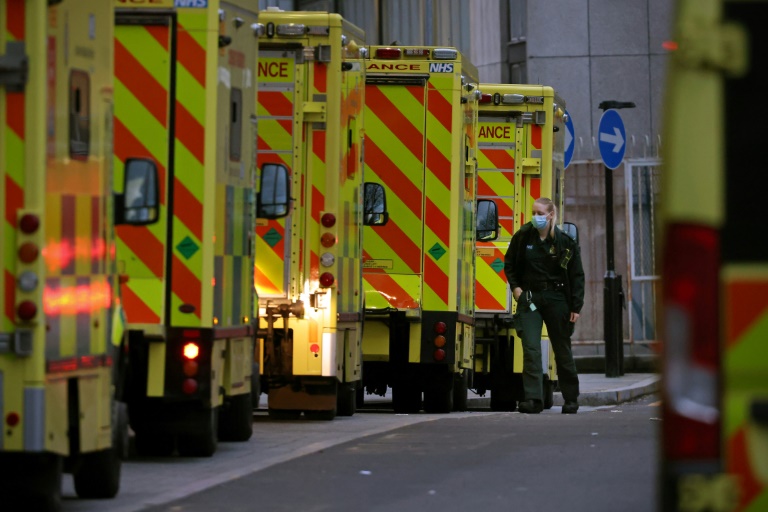
Britain’s government on Wednesday rejected union pay demands after ambulance workers joined nurses in voting to go on strike.

“Our economic circumstances mean unions’ demands are not affordable,” Health Secretary Steve Barclay said, after the Unison union confirmed the ambulance service faced its biggest strike in 30 years.

Paramedics, ambulance technicians and emergency call handlers will walk out for 24 hours before Christmas, Unison announced late Tuesday after its members held a strike ballot.

The strike will affect London and four other regions of England as the ambulance service joins nurses across most of Britain in striking over government pay offers, which fall well short of double-digit inflation.

The Royal College of Nursing is holding the first strike in its 106-year history on December 15 and 20.

Unison general secretary Christina McAnea said it was a “tough call” for the ambulance workers to also strike.

“But thousands of ambulance staff and their NHS (National Health Service) colleagues know delays won’t lessen, nor waiting times reduce, until the government acts on wages,” she said.

The nurses’ strike will be sandwiched between the first of a series of two-day walkouts by national railway workers, while postal service employees will stage fresh stoppages in the run-up to Christmas.

Numerous other public and private-sector staff, from lawyers to airport ground personnel, have also held strikes this year as Britain contends with its worst cost-of-living crisis in generations.

Close Bitnami banner
Bitnami