World

France sees hottest year on record in 2022

France this year experienced the hottest year since records began, the country’s national weather service said Wednesday, as global warming stokes temperatures globally. 

A cascade of extreme weather exacerbated by climate change devastated communities across the globe this year, including sweltering heat and drought across Europe that wilted crops, drove forest fires and saw major rivers shrink to a trickle.

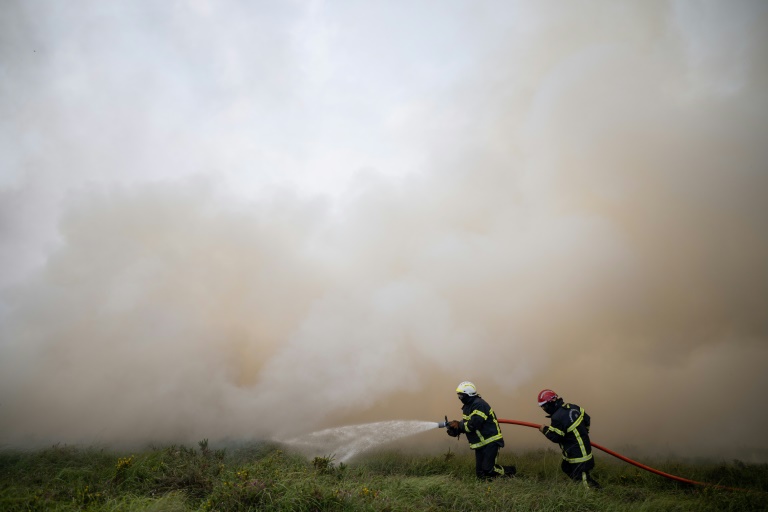
France saw temperatures surge repeatedly in successive heatwaves from May and into October, accompanied by extreme events like wildfires in areas like north-western Brittany, and damaging marine heat waves in the Mediterranean.   

“All the months of the year have been warmer than normal, except January and April,” said Meteo France in a statement.

It estimated the average temperature for the year as a whole would be between 14.2 degrees Celsius and 14.6C degrees depending on December temperatures. That is a significant increase from the previous record of 14.07C seen in 2020, and the highest since records began in 1990.   

Annual rainfall is expected to be as much as 25 percent lower than normal, with precipitation in July 85 percent below average. The driest year in France was 1989, which saw a 25 percent rainfall deficit.

Globally, if projections for the rest of 2022 hold, the United Nations says that each of the last eight years will be hotter than any year prior to 2015. 

Earth has warmed more than 1.1 degrees Celsius since the late 19th century, with roughly half of that increase occurring in the past 30 years, the World Meteorological Organization said in a report in November.

Greenhouse gases accounting for more than 95 percent of warming are all at record levels, the WMO’s annual State of the Global Climate found.

In the European Alps, glacier melt records have been shattered in 2022, with average thickness losses of between three and over four metres (between 9.8 and over 13 feet), the most ever recorded.

Switzerland has lost more than a third of its glacier volume since 2001.

US private hiring eases more than expected in November: survey

US employers eased their hiring pace in November, with job creation slowing the most since early 2021, as the central bank’s interest rate hikes trickle through the economy, payroll firm ADP said Wednesday.

Private employment rose by 127,000 jobs this month, much less than analysts expected and below the 239,000-job increase in October, with firms no longer in “hyper-replacement mode,” the survey showed.

As the Federal Reserve battles to tamp down surging inflation and cool the world’s biggest economy, one concern was an uptick in wages over the past year as companies competed to find and retain workers in a tight labor market.

But in November, job creation slowed by the most since January 2021, ADP said.

This was led by construction and other sectors sensitive to interest rate hikes, while consumer-facing segments such as health care and hospitality proved to be “bright spots.”

“Turning points can be hard to capture in the labor market, but our data suggest that Federal Reserve tightening is having an impact on job creation and pay gains,” said ADP chief economist Nela Richardson in a statement.

Richardson added that the post-pandemic recovery is also “stabilizing” with fewer people quitting their jobs.

Employees saw annual pay gains moderate further to 7.6 percent in November, according to ADP’s recently revamped report which includes wage data.

For those who changed jobs, the median change in annual pay was up 15.1 percent, but the report noted that job changers had the smallest increase in pay since January as well.

“Overall, the trend in job growth remains positive and the labor market remains tight. But there are some initial signs of softening,” said economist Rubeela Farooqi of High Frequency Economics in a note.

While she expects job growth to remain positive for now, the pace is “expected to slow further in response to Fed hikes, which will… slow demand and economic activity over time.”

The ADP data also comes before key employment figure is released by the Labor Department on Friday.

Clashes in south China as authorities warn of 'crackdown'

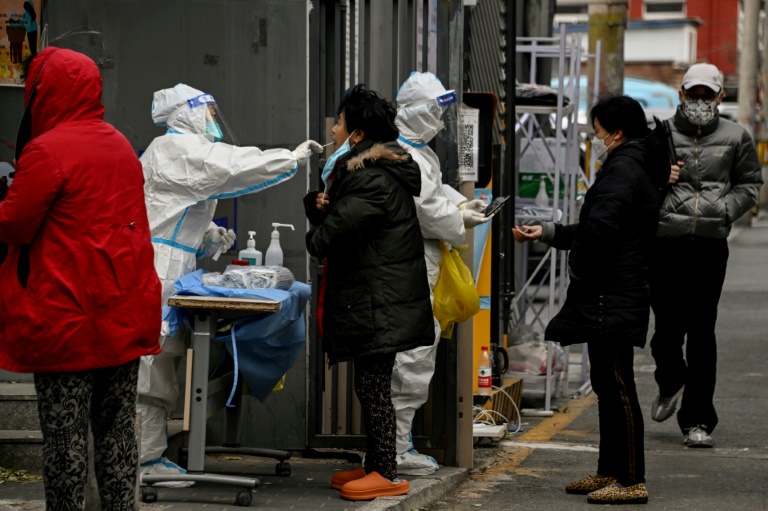
Clashes broke out between police and protesters in a southern Chinese city, part of a wave of Covid lockdown-sparked demonstrations across the country that have morphed into demands for political freedoms.

China’s top security body warned late on Tuesday night that authorities would “crack down” following the protests, which are the most widespread since pro-democracy rallies in 1989 that were crushed with deadly force.

The demonstrations erupted over the weekend across major cities, including Beijing and Shanghai, with China’s vast security apparatus moving swiftly to smother any further unrest.  

But new clashes broke out in China’s southern city of Guangzhou on Tuesday night and into Wednesday, according to witnesses and social media footage verified by AFP.

Security personnel in hazmat suits formed ranks shoulder-to-shoulder, taking cover under see-through riot shields, to make their way down a street in the southern city’s Haizhu district as glass smashed around them, videos posted on social media showed.

In the footage people could be heard screaming and shouting, with orange and blue barricades strewn across the ground.

People are seen throwing objects at police, and later nearly a dozen men are filmed being taken away with their hands bound with cable ties.

A Guangzhou resident surnamed Chen told AFP on Wednesday that he had seen around 100 police officers converge on Houjiao village in Haizhu district and arrest at least three men on Tuesday night.

Some students at Guangzhou’s universities said they were forced out of their dormitories overnight Wednesday, according to social media posts, as a growing number of universities nationwide ordered students home in the wake of campus demonstrations.

Multiple Guangzhou districts lifted restrictions on some or all locked-down neighbourhoods Wednesday afternoon, according to government announcements.

– ‘Crackdown’ looms –

Anger over China’s zero-Covid policy — which involves lockdowns of huge numbers of people and has strangled the economy — has been the trigger for the protests.

A deadly fire last week in Urumqi, the capital of the northwestern region of Xinjiang, was the catalyst for the outrage, with people blaming Covid curbs for trapping victims inside the burning building.

But demonstrators have also demanded wider political reforms, with some even calling for President Xi Jinping to stand down.

China’s strict control of information and continued travel curbs have made verifying protester numbers across the vast country very challenging.

However, the widespread rallies seen over the weekend are exceptionally rare in China.

The 1989 pro-democracy protests ended in bloodshed when the military moved in, most famously in Beijing’s Tiananmen Square and surrounding areas.

And the Wednesday news of the death of former Chinese leader Jiang Zemin — who came to power just after Tiananmen — saw state media emphasise his role in that crackdown.

“During the serious political turmoil in China in the spring and summer of 1989, Comrade Jiang Zemin supported and implemented the correct decision of the Party Central Committee to oppose unrest,” state broadcaster CCTV said.

Some internet users used Jiang’s death to juxtapose the more liberal 1990s with rule under Xi, China’s most hardline ruler in decades.

“The Jiang era, while not the most prosperous era, was a more tolerant one,” one Weibo user wrote.

Signalling its zero-tolerance approach to the protests, China’s top security body on Tuesday called for a “crackdown” on what it described as “hostile forces”.

The body —  which oversees all domestic law enforcement — also agreed at a meeting that it was time to “crack down on illegal criminal acts that disrupt social order” as well as “safeguard overall social stability”.

The warning came after a heavy police presence across Beijing and Shanghai on Tuesday appeared to have quelled protests in those cities.

– ‘Give me liberty’ –

Some rallies did go ahead elsewhere on Monday and Tuesday, however. 

At Hong Kong’s oldest university, over a dozen people led the crowd Tuesday in chanting slogans such as “give me liberty or give me death”. 

“We are not foreign forces, we are Chinese citizens. China should have different voices,” one woman shouted, while another held a placard mourning victims of the Urumqi fire.

In response, the semi-autonomous city’s security chief warned Wednesday that protesters may be falling foul of the territory’s national security law, imposed in 2020 by Beijing.

In Hangzhou, just over 170 kilometres (105 miles) southwest of Shanghai, there was heavy security and sporadic protests in the city’s downtown on Monday night. 

One witness told AFP that “maybe 200” policemen and security personnel had surrounded the protesters, before forcing a number of young women into a van. 

The latest unrest has drawn global attention, with solidarity protests springing up from Melbourne to Washington. 

And while China’s leaders are committed to zero-Covid, there have been some signs that central authorities may be seeking a path out of the rigid policy.

China’s National Health Commission announced Tuesday a renewed effort to expand low vaccination rates among the elderly — long seen as a key obstacle to relaxing the measures.

Turkey says Sweden's steps for NATO bid positive but not enough

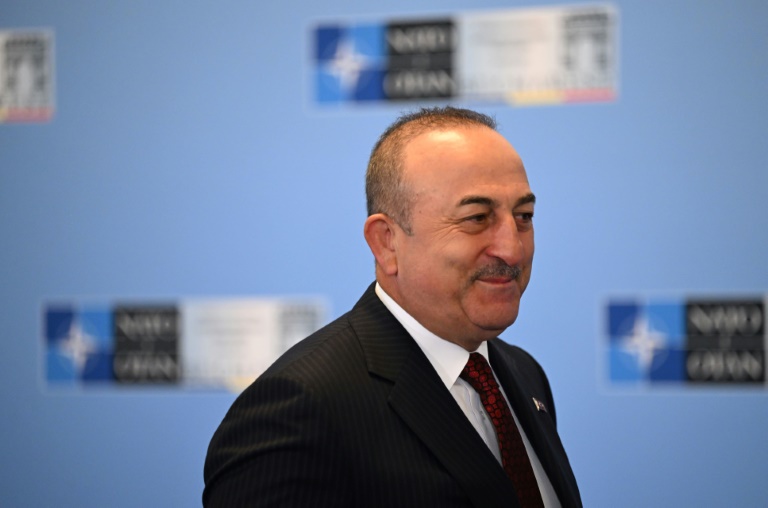
Turkey said on Wednesday Sweden’s new government was more determined to address Ankara’s security concerns in return for NATO membership but called for “concrete steps”. 

Foreign Minister Mevlut Cavusoglu met with his Swedish and Finnish counterparts on the sidelines of a NATO gathering in Bucharest on Tuesday.

Ankara has accused the two Nordic nations — especially Stockholm — of providing a safe haven for outlawed Kurdish groups it deems “terrorists” and held back on ratifying their NATO bids despite an agreement in Madrid in June. 

“The statements (coming out of Sweden) are good, the determination is good but we need to see concrete steps,” Cavusoglu told reporters in Bucharest. 

“We told them we haven’t seen concrete steps on these issues” including the extradition of criminals and freezing of terror assets, he said.  

Sweden’s Foreign Minister Tobias Billstrom spoke optimistically about Tuesday’s meeting.  

“And I have to say that I felt after this meeting that yes, there is progress in line,” he said. 

“We are moving forward with the implementation of a trilateral memorandum which was signed in Madrid.”

US Secretary of State Antony Blinken also sounded upbeat, saying he was confident that Sweden and Finland would “soon” join NATO.  

“Turkey, Sweden and Finland are engaging directly as well as with NATO to make sure that Turkey’s concerns are fully addressed, including concerns about its security,” he said. 

“That process has been moving, moving forward. And I’m very confident and again, based on what I’ve heard these last couple of days, that Finland Sweden will soon be formally new members of the alliance.”

Finland and Sweden dropped decades of military non-alignment and scrambled to become NATO members in May, after Russia invaded Ukraine.

The decision requires a consensus within the US-led defence alliance, but only Turkey and Hungary are yet to give consent to their membership. 

burs-fo/imm

H&M to cut 1,500 jobs worldwide

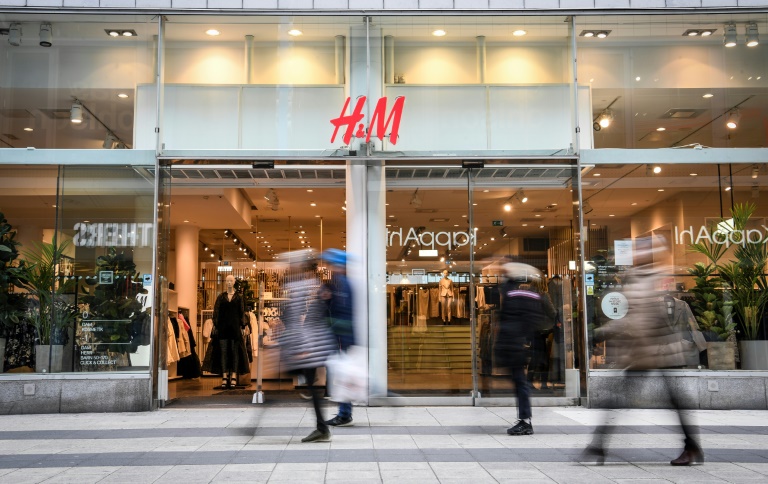
Swedish fashion retailer H&M said Wednesday it would cut some 1,500 jobs worldwide as a result of a cost-cutting programme launched following its decision to leave the Russian market.

“The programme relates to administrative and overhead costs, and also entails reducing the workforce by around 1,500 positions,” the company said in a statement.

The restructuring programme was announced in September, as the clothing giant announced a sizeable drop in third quarter profits, which was largely impacted by the company’s decision to “wind down the business in Russia” following the invasion of Ukraine.

“The cost and efficiency programme that we have initiated involves reviewing our organisation and we are very mindful of the fact that colleagues will be affected by this,” CEO Helena Helmersson said in the statement Wednesday.

According to H&M, the programme is expected to cost some 800 million Swedish kronor ($76 million) but would provide annual savings of around two billion kronor.

In September, H&M said it had closed just over 30 of its 172 shops in Russia.

Losses deepen at crisis-hit SAS airline

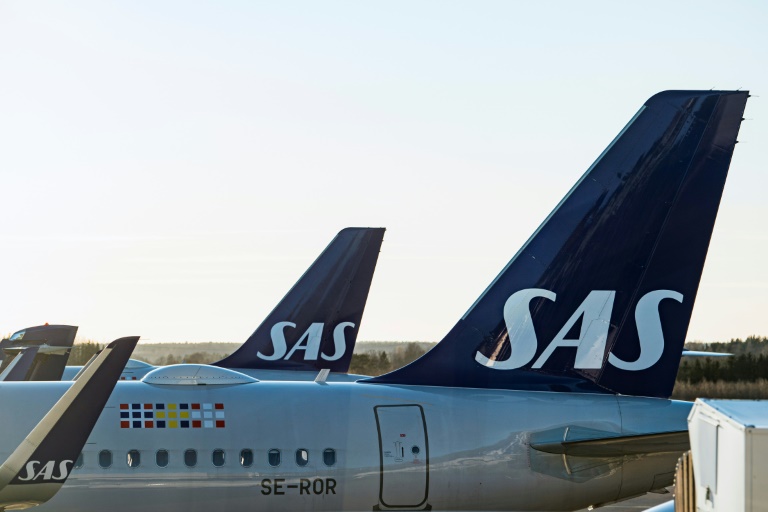
Troubled Scandinavian airline SAS, which has filed for bankruptcy in the United States, reported Wednesday deeper losses in the fourth quarter.

Net losses amounted to more than 1.2 billion Swedish kronor ($117 million) in the August-October period, compared to a loss of 744 million kronor a year earlier, the company said in a statement.

“As with previous quarters in 2022, the currencies (foreign exchange) and jet-fuel price have brought strong headwinds for our business,” said SAS chief executive Anko van der Werff.

The airline, however, saw the “highest number” of passengers since the beginning of the Covid pandemic, with healthy demand in the summer, van der Werff said.

The airline, which cut 5,000 jobs in 2020, is preparing for “substantial recruitments and rehirings” to meet the expected increase in demand next summer, he added.

SAS filed for Chapter 11 bankruptcy proceedings in the United States in July — a move allowing a company to restructure its debts under court supervision.

Van der Werff said the airline expected to complete the court-supervised process during the second half of 2023.

Kenya's Ruto launches flagship credit scheme for poor

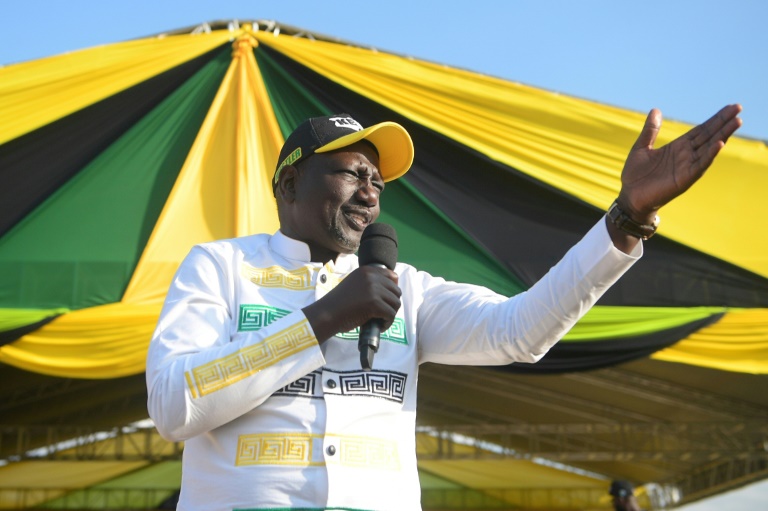
Kenyan President William Ruto on Wednesday launched a low-interest credit scheme to boost financial access for the country’s poorest citizens, fulfilling a key campaign promise made to voters. 

Ruto, who once sold chickens on the roadside, had painted the August 9 poll as a battle between ordinary “hustlers” and elite political dynasties and had vowed to lift the lives of Kenyans battling high inflation and unemployment.

The 50-billion-shilling ($408-million) “hustler fund” will offer personal loans of up to 50,000 shillings to any Kenyan with a cellphone and a mobile money account, with interest charged at eight percent a year.

Ruto said the fund was part of his government’s plan “to create opportunities for millions at the bottom of our economic pyramid to work their way up and fulfil their aspirations.”

“More affordable credit will promote borrower confidence and inject significant amounts of money into productive activity throughout the economy,” he told reporters.

The fund will eventually also offer small-scale enterprises and start-ups access to credit, with those loans set to be launched by the end of May next year.

The new fund will require borrowers to set up a savings account, with five percent of the loan amount automatically going into a personal savings scheme, to which the government will contribute a maximum of 6,000 shillings per year.

Since his inauguration in September, Ruto has struggled to implement his campaign promises in a country facing record drought, a cost of living crisis and a $70-billion debt mountain.

He has slashed food and fuel subsidies introduced by his predecessor Uhuru Kenyatta and pledged to overhaul Kenya’s income tax regime so high earners will have to pay more to help reduce inequality.

Kenya is the most dynamic economy in East Africa but many of its people endure financial hardship, with about a third of the population living in poverty. 

Prices for basic goods rocketed following the Covid pandemic and in response to the war in Ukraine, and unemployment remains a major problem, particularly among the young.

Inflation soared to a five-year high of 9.6 percent in October, while the currency is at record lows at around 122 shillings to the US dollar.

Mozambique court starts ruling on 'hidden debt' graft scandal

A court Wednesday begun handing down verdicts in Mozambique’s biggest corruption scandal, in which the government unleashed a financial earthquake by trying to conceal huge debts.

Judge Efigenio Baptista started reading out the verdicts for the 19 high-profile defendants, who include the son of a former president. The session is expected to last five days.

The scandal arose after state-owned companies in the impoverished country illicitly borrowed $2 billion (1.9 billion euros) in 2013 and 2014 from international banks to buy a tuna-fishing fleet and surveillance vessels.

The government masked the loans from parliament and the public.

When the “hidden debt” finally surfaced in 2016, donors including as the International Monetary Fund (IMF) cut off financial support, triggering a sovereign debt default and currency collapse.

An independent audit found $500 million of the loans had been diverted. The money remains unaccounted for. 

Former finance minister Manuel Chang — who signed off the loans — has been held in South Africa since 2018, pending extradition to the US for allegedly using the US financial system to carry out the fraudulent scheme. 

Former president Armando Guebuza, who was in office when the loans were contracted, testified at the trial. 

He was not been charged himself, but his eldest son Ndambi was in the dock along with 18 other defendants.

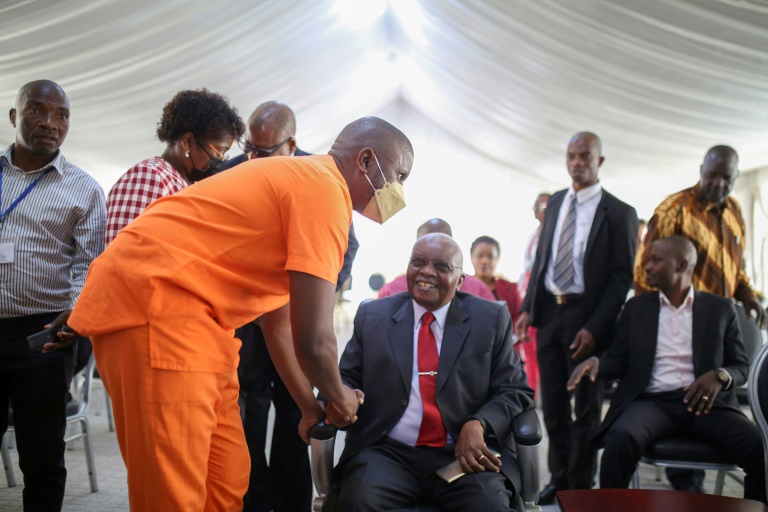
Appearing relaxed, the ex-president attended Wednesday’s proceedings and his son, dressed in orange prison garb and a face mask, walked up to him to greet him. They shook hands and the father smiled.

Judge Baptista listed some of the assets acquired by Guebuza’s son using the $33-million bribe he allegedly received.

They included luxury cars and a 10-million rand ($590,000) mansion in neighbouring South Africa.

Around a hundred people sat in the special courtroom, set up in a white marquee on the grounds of at a high-security jail in the capital Maputo to accomodate the large number of defendants, their lawyers and other parties.

Local civil society organisations and anti-corruption activists are calling for tough sentences.

“The conviction must be strong enough so that it is not annulled or significantly reduced in a second instance court,” said Borges Nhamirre, a researcher at the anti-corruption non-profit watchdog Public Integrity Center.

But Adriano Nuvunga, head of a rights group called the Centre for Democracy and Development, predicted the sentences would be “politically rigged.”

The 19 face charges that include blackmail, counterfeiting, embezzlement and money laundering.

The trial started in August last year and ran until March. It was broadcast live on local TV and radio stations.

In March the IMF awarded $456 million in credit to Mozambique, the first such aid awarded since the debt scandal erupted.

The funds are to help support economic recovery and policies to reduce public debt, according to the IMF.

EU eyes special court to try Russia for Ukraine war

European Union chief Ursula von der Leyen on Wednesday floated the idea of a “specialised court” to put Russia’s top officials on trial over the war in Ukraine.

“While continuing to support the International Criminal Court, we are proposing to set up a specialised court backed by the United Nations to investigate and prosecute Russia’s crime of aggression,” she said in a video statement.

Ukraine has long been pushing for such a specialised tribunal, with its president, Volodymyr Zelensky, saying Russia must be brought to justice for its “atrocities”.

But the initiative faces formidable legal and political obstacles.

The problem Ukraine and its Western allies butt up against is that the International Criminal Court (ICC) does not have jurisdiction over Russia’s “crimes of aggression” — its invasion and war in Ukraine — because Moscow is not a signatory to the court’s treaty.

That tribunal can therefore only judge specific cases of war crimes and crimes against humanity perpetrated in Ukraine, but even then Russian President Vladimir Putin and his prime minister and foreign minister enjoy immunity from prosecution while in office.

The only way the ICC can be called in to judge Russia’s war is through a decision by the UN Security Council — something that is impossible because Russia, with its permanent seat on the council, would veto it.

To get around that, von der Leyen is proposing to have a court set up in an EU country that could tackle Russia specifically on the crime of aggression, while leaving war crimes and crimes against humanity to the ICC.

The Netherlands, which already hosts the ICC in The Hague, has indicated its willingness to establish the mooted new court on its territory.

“It is our task, as the international community, to make sure that we do justice,” Dutch Foreign Minister Wopke Hoekstra told journalists in Romania, as he attended a NATO meeting.

He said that should be done “through the ICC — but also through other measures”.

– UN gambit –

A proposal text circulated by von der Leyen’s European Commission noted that 14 EU member states had already opened investigations into acts carried out in Ukraine “based either on personal or universal jurisdiction”.

It said that, where it came to crimes of aggression, “an alternative investigation mechanism could be considered” where EU countries’ interests or citizens were affected.

Commission officials said that path would run alongside the ICC — to which “the EU will continue to give its full support” — and would need UN support.

That would involve a procedural gambit where the proposal would submitted to the UN Security Council — where Russia is sure to shoot it down — and then to the wider UN General Assembly of all UN member states, where it stands a chance of passing.

The officials said there had been initial contact with the United States on the idea, but no indication as yet whether Washington would back the initiative. The United States, like Russia, is not party to the ICC.

In a separate “options paper” also circulated Wednesday, the commission was exploring ways to tap Russian assets frozen under sanctions to support the reconstruction of Ukraine.

Von der Leyen has said the aim was to confiscate the assets seized so far — which the commission says amounts to around 19 billion euros ($20 billion) in the EU.

But commission officials said legal barriers meant it was more likely only cash proceeds generated from management of those frozen assets could be taken, not the assets themselves.

After any future peace agreement to end the war in Ukraine, “eventually, the assets themselves would need to be returned to the owners,” one official said.

There, again, for that option to be realised, there would need to be support from the international community, “but we believe that it is doable,” the official said.

Cuban rum masters' tradition declared UNESCO cultural heritage

The traditional knowledge held by Cuba’s light rum masters was on Wednesday added to UNESCO’s list of intangible heritage, a prestigious designation that recognizes a tradition dating back eight generations on the island.

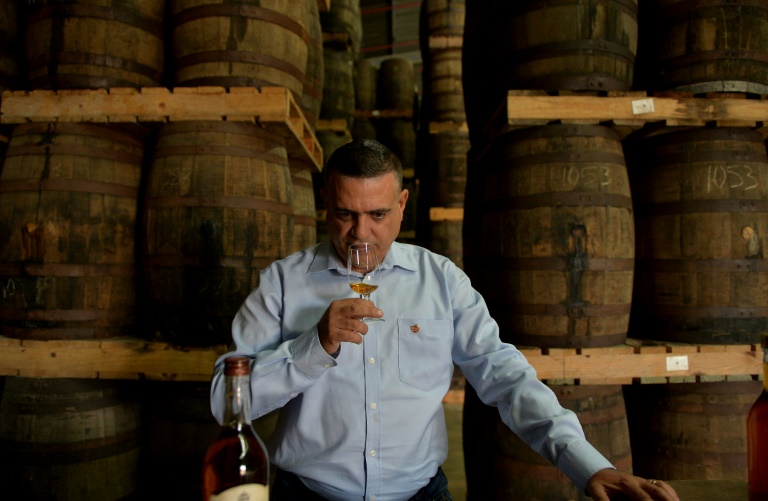
“It is a recognition of the generations of Cuban rum masters and… of the tradition of Cuban rum,” rum master Asbel Morales, 54, told AFP.

The island’s first master rum makers honed their skills near Santiago de Cuba in the eastern part of the island around 1862. Today, they are scattered throughout the Caribbean nation in local rum distilleries. 

Generation upon generation of light rum makers have transmitted the secrets of the distillation process to their successors.

Light rum, with an alcohol content of 40 percent, is made from molasses, the thick dark syrup derived from sugar cane, unlike agricultural rum made from cane juice. Light rum is the variety widely used for making cocktails.

In their submission to the United Nations’ culture body UNESCO, the Cuban distillers said “master knowledge is more than just a group of abilities,” and even incorporates moral strictures about public and private conduct.

Master rum makers also know “its history and its good practices, going beyond brand names and marketing.”

Today there are 14 master rum makers in Cuba: three “first masters,” seven “masters” and four apprentices.

For a long time an exclusively male domain, the craft has gradually become more feminine, today with two female “masters” and three female apprentices.

Almost all the members of this guild have studied chemistry, but they also must have rigorous taste and smell training, and long years of experience. In total, a decade of training and practice is required to become a master rum maker.

“Rum is not only a spirit, but also an important part of our cultural expression. It represents an important part of our culture,” said Morales, who has been a master since 1993.

Master rum makers know “the content and history of every cask, cask rotations or repairs, and (know) which mixes produce certain aroma, color and body,” the UNESCO submission said.

Cuba already has several traditions listed as intangible heritage of humanity by UNESCO.

The “tumba francesa” (French drum), songs and dances accompanied by percussion that arrived in Cuba with the French colonists and their Haitian slaves in the late 18th century, was recognized in 2008.

This was followed by the Cuban Rumba (2016), which blends song and popular dance, the Punto Cubano, (2017), a peasant music originating from the Canary Islands, and Las Parrandas (2018), popular festivities from the center of the island.

Close Bitnami banner
Bitnami