World

Self-driving lorries hit the road in Sweden

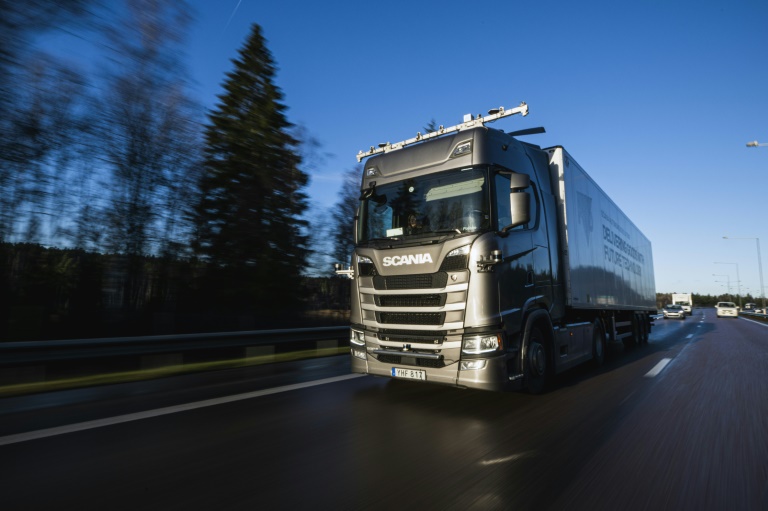
Barrelling down a motorway south of Stockholm in a 40-tonne lorry and trailer, the driver keeps a careful eye on the road but, jarringly, no hands on the wheel.

Instead, the truck drives itself, and veteran driver Roger Nordqvist is at the ready only in case of unexpected problems.

Swedish truck maker Scania is not the only auto manufacturer developing autonomous vehicles, but it recently became the first in Europe to pilot them while delivering commercial goods.

“We take their goods from point A, drive them to point B, fully autonomously,” Peter Hafmar, head of autonomous solutions at Scania, tells AFP outside the company’s transport lab in Sodertalje, south of Stockholm.

In the pilot project, the self-driving truck is manoeuvring a stretch of some 300 kilometres (186 miles) between Sodertalje and Jonkoping in Sweden’s south, delivering fast-food goods.

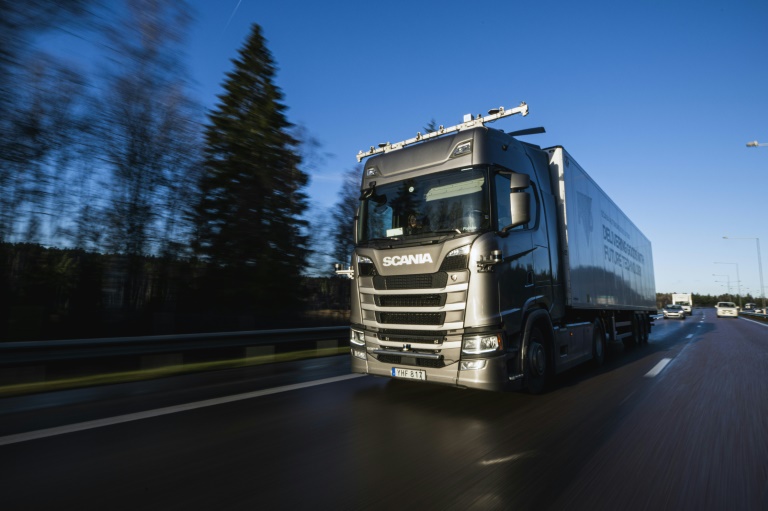
From the outside, the vehicle looks almost like any other lorry, save for a rail on the roof packed with cameras and two sensors resembling bug antennae on the sides.

Inside the cab, the wheel and seats are where you’d expect to find them, but small devices and screens dot the dashboard and a nest of wires run to the computer rack housed behind the passenger seat. 

– ‘Drives better by itself’ –

Engineer Goran Fjallid sits next to the safety driver in the passenger’s seat, eyes glued to his laptop as it receives video from the truck’s cameras and flickering text with information about what the vehicle is seeing.

A second screen shows a 3D-visualisation of the truck on the road and all nearby vehicles.

The lorry combines all the input from the various sensors with a GPS system, with the different technologies acting as back-ups for each other.

“If the road markings disappear for a while, then it will use the GPS and it stays perfectly in its lane,” Fjallid explains.

“It drives better by itself than when you drive it manually,” he adds.

But he acknowledges that a lot of trial and error has gone into getting the truck to that point.

They’ve had to tweak things like how the truck handles merging onto the motorway, and what to do when another car cuts in front of it.

Every time the truck does something unexpected, such as braking or slowing down for no apparent reason, Fjallid makes a note of the exact timing so the logs and data can be examined.

The lorry’s sensors are also calibrated daily before hitting the road.

Hafmar says there are still some hurdles to clear before driverless trucks — without safety drivers — become a common sight on roads, both in terms of technology and legislation.

They expect to have this ready by the end of the 2020s or the beginning of 2030s, Hafmar says.

– No more truck drivers? –

The advent of self-driving trucks can be seen as a threat to the jobs of truck drivers — one of the world’s most common professions.

But Hafmar insists autonomous vehicles are needed to address a global driver shortage.

And, he says, it will be a long time before artificial intelligence will be able to handle all aspects of logistics.

Initially, self-driving lorries will likely be used for long-haul trips, but the last-mile distribution to shops and customers “will happen with human drivers”, Hafmar adds.

According to a report from the International Road Transport Union (IRU) in June, there were some 2.6 million unfilled positions for truck drivers around the world in 2021.

Hafmar also points out other potential benefits: since computers don’t need to sleep or rest, the vehicles can be scheduled for trips at times when there is less traffic, or drive slower — but for longer — to save on fuel.

A host of other companies are also in the race to launch self-driving trucks.

Start-ups Aurora, Waymo, Embark, Kodiak and Torc (together with Daimler) are running tests in the United States, while China’s Baidu announced a self-driving truck in late 2021.

In Europe, IVECO is working with Californian start-up Plus, supported by Amazon, and recently announced the end of their first phase of circuit testing. They will also launch road tests.

Swedish company Einride also plans to launch road tests in Germany soon.
Self-driving lorries hit the road in Sweden

Barrelling down a motorway south of Stockholm in a 40-tonne lorry and trailer, the driver keeps a careful eye on the road but, jarringly, no hands on the wheel.

Instead, the truck drives itself, and veteran driver Roger Nordqvist is at the ready only in case of unexpected problems.

Swedish truck maker Scania is not the only auto manufacturer developing autonomous vehicles, but it recently became the first in Europe to pilot them while delivering commercial goods.

“We take their goods from point A, drive them to point B, fully autonomously,” Peter Hafmar, head of autonomous solutions at Scania, tells AFP outside the company’s transport lab in Sodertalje, south of Stockholm.

In the pilot project, the self-driving truck is manoeuvring a stretch of some 300 kilometres (186 miles) between Sodertalje and Jonkoping in Sweden’s south, delivering fast-food goods.

From the outside, the vehicle looks almost like any other lorry, save for a rail on the roof packed with cameras and two sensors resembling bug antennae on the sides.

Inside the cab, the wheel and seats are where you’d expect to find them, but small devices and screens dot the dashboard and a nest of wires run to the computer rack housed behind the passenger seat. 

– ‘Drives better by itself’ –

Engineer Goran Fjallid sits next to the safety driver in the passenger’s seat, eyes glued to his laptop as it receives video from the truck’s cameras and flickering text with information about what the vehicle is seeing.

A second screen shows a 3D-visualisation of the truck on the road and all nearby vehicles.

The lorry combines all the input from the various sensors with a GPS system, with the different technologies acting as back-ups for each other.

“If the road markings disappear for a while, then it will use the GPS and it stays perfectly in its lane,” Fjallid explains.

“It drives better by itself than when you drive it manually,” he adds.

But he acknowledges that a lot of trial and error has gone into getting the truck to that point.

They’ve had to tweak things like how the truck handles merging onto the motorway, and what to do when another car cuts in front of it.

Every time the truck does something unexpected, such as braking or slowing down for no apparent reason, Fjallid makes a note of the exact timing so the logs and data can be examined.

The lorry’s sensors are also calibrated daily before hitting the road.

Hafmar says there are still some hurdles to clear before driverless trucks — without safety drivers — become a common sight on roads, both in terms of technology and legislation.

They expect to have this ready by the end of the 2020s or the beginning of 2030s, Hafmar says.

– No more truck drivers? –

The advent of self-driving trucks can be seen as a threat to the jobs of truck drivers — one of the world’s most common professions.

But Hafmar insists autonomous vehicles are needed to address a global driver shortage.

And, he says, it will be a long time before artificial intelligence will be able to handle all aspects of logistics.

Initially, self-driving lorries will likely be used for long-haul trips, but the last-mile distribution to shops and customers “will happen with human drivers”, Hafmar adds.

According to a report from the International Road Transport Union (IRU) in June, there were some 2.6 million unfilled positions for truck drivers around the world in 2021.

Hafmar also points out other potential benefits: since computers don’t need to sleep or rest, the vehicles can be scheduled for trips at times when there is less traffic, or drive slower — but for longer — to save on fuel.

A host of other companies are also in the race to launch self-driving trucks.

Start-ups Aurora, Waymo, Embark, Kodiak and Torc (together with Daimler) are running tests in the United States, while China’s Baidu announced a self-driving truck in late 2021.

In Europe, IVECO is working with Californian start-up Plus, supported by Amazon, and recently announced the end of their first phase of circuit testing. They will also launch road tests.

Swedish company Einride also plans to launch road tests in Germany soon.
Cracking the covert app that exposed Europe's drug gangs

From torture and murder in the Netherlands and Serbia to an unprecedented web of corruption in Belgium, the Sky ECC investigation has shone a light into some of Europe’s darkest corners.

Sky ECC was a secure messaging app once prized by underworld drug barons. But, after it was cracked by investigators in 2021, it has brought some to their downfall.

Police from Belgium, France and the Netherlands are now sifting through a vast trove of messages sent within the secretive drug smuggling gangs, and they have begun to make arrests.

“It was as if we were sitting at the table with the criminals,” said Catherine De Bolle, executive director of Europol, the EU police coordination agency.

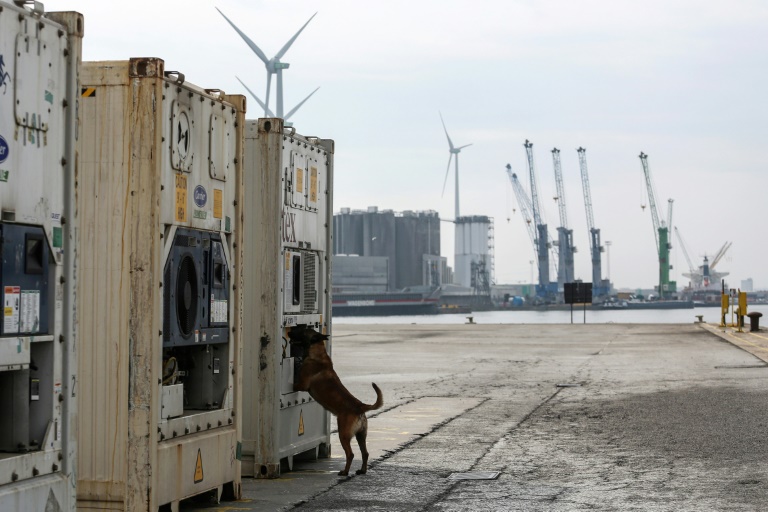
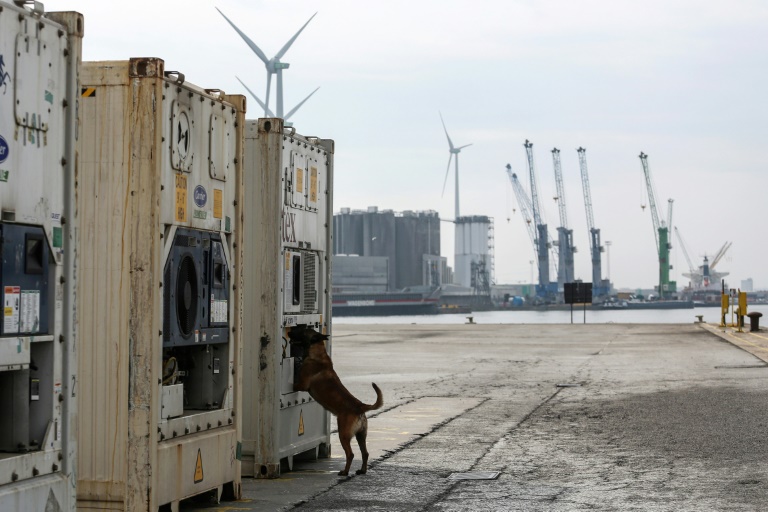
Last year, Belgian police tracking what was already reckoned to be a huge drug smuggling operation in the North Sea port of Antwerp noticed concentrated activity on the covert network.

More than 48 people were arrested in a series of raids on March 9, 2021 and 200 premises were searched, thanks in part to evidence in messages culled from the Sky ECC records.

Antwerp is reputed to be the principal port of entry to Europe for cocaine from Latin America — 90 tonnes were seized last year alone.        

In parallel, French investigators were examining an “undeclared” communications network hosted on servers in France, culling more criminal data.  

More than a year and a half later, detectives on both sides of the border agree that the Sky ECC probe marked a turning point in the war against the drug gangs.

– ‘House of horrors’ –


Eric Snoeck, director general of Belgium’s Federal Judicial Police, told AFP that authorities have their hands on more than one billion Sky ECC messages.

“We’ve made use of a relatively small proportion of the available evidence,” he said. “It’s work that is ongoing and will take years to complete.”   

Since the breakthrough, more than 1,200 people have been detained for questioning in Belgium and 510 criminal case files opened and informed by Sky ECC data.

This week, messages discovered on the covert network allowed police to launch a cross-border operation to dismantle a “super-cartel” thought to control a third of Europe’s cocaine trade.

Officers in five countries arrested 49 suspects, including six alleged drug barons based in Dubai. 

Antwerp police alone have opened 257 case files based on the new evidence.

The investigations are making progress tracking down drug dealers, but they have also shown how deeply gangs have penetrated Belgium’s society and economy.

In September, Belgian Prime Minister Alexander De Croo announced reinforcements for the police investigative service and warned that organised crime’s reach extends far beyond the country’s ports.      

And if the scale of the networks is vertiginous, their violence is disturbing.

“They have imported into Europe behaviour that we thought contained in Latin America,” said Remy Heitz, general prosecutor at the Paris court of appeals.

“Terror, murders, people being executed on live video and shared with laughing viewers. That is how they manage these businesses.”

Snoeck describes “a previously completely unheard-of level of violence” and cites the discovery of shipping containers equipped as torture chambers in the Netherlands.

“For a few thousand euros, for a contract that wasn’t fulfilled, they murder without hesitation — sometimes after hours of agony — people they were working with a few hours earlier,” Snoeck said.

Text messages exchanged on the encrypted network allowed investigators to find a “house of horrors” in Serbia near the capital Belgrade where victims were dismembered and fed into a meat grinder.

– Spreading violence –

While most senior figures arrested so far were living in Dubai, the Western Balkans has also proved a hotspot for the gangs.

After English, the most common language used on Sky ECC was Albanian, investigators found.

Data from Sky ECC, which was marketed by now-defunct Canadian firm Sky Global, has been shared with authorities in 22 countries, including Colombia and Brazil.

Investigators who were already confronted by the Moroccan-Dutch “Mocro-Maffia” and southern Italy’s ‘Ndrangheta Mafia now know that Latin American cartels are implanted on European soil.

“I’m very worried,” a French magistrate told AFP, speaking on condition of anonymity. 

“We’re underestimating the danger of these networks in terms of destabilising the state and spreading violence to all corners of society.”  

Cracking the covert app that exposed Europe's drug gangs

From torture and murder in the Netherlands and Serbia to an unprecedented web of corruption in Belgium, the Sky ECC investigation has shone a light into some of Europe’s darkest corners.

Sky ECC was a secure messaging app once prized by underworld drug barons. But, after it was cracked by investigators in 2021, it has brought some to their downfall.

Police from Belgium, France and the Netherlands are now sifting through a vast trove of messages sent within the secretive drug smuggling gangs, and they have begun to make arrests.

“It was as if we were sitting at the table with the criminals,” said Catherine De Bolle, executive director of Europol, the EU police coordination agency.

Last year, Belgian police tracking what was already reckoned to be a huge drug smuggling operation in the North Sea port of Antwerp noticed concentrated activity on the covert network.

More than 48 people were arrested in a series of raids on March 9, 2021 and 200 premises were searched, thanks in part to evidence in messages culled from the Sky ECC records.

Antwerp is reputed to be the principal port of entry to Europe for cocaine from Latin America — 90 tonnes were seized last year alone.        

In parallel, French investigators were examining an “undeclared” communications network hosted on servers in France, culling more criminal data.  

More than a year and a half later, detectives on both sides of the border agree that the Sky ECC probe marked a turning point in the war against the drug gangs.

– ‘House of horrors’ –


Eric Snoeck, director general of Belgium’s Federal Judicial Police, told AFP that authorities have their hands on more than one billion Sky ECC messages.

“We’ve made use of a relatively small proportion of the available evidence,” he said. “It’s work that is ongoing and will take years to complete.”   

Since the breakthrough, more than 1,200 people have been detained for questioning in Belgium and 510 criminal case files opened and informed by Sky ECC data.

This week, messages discovered on the covert network allowed police to launch a cross-border operation to dismantle a “super-cartel” thought to control a third of Europe’s cocaine trade.

Officers in five countries arrested 49 suspects, including six alleged drug barons based in Dubai. 

Antwerp police alone have opened 257 case files based on the new evidence.

The investigations are making progress tracking down drug dealers, but they have also shown how deeply gangs have penetrated Belgium’s society and economy.

In September, Belgian Prime Minister Alexander De Croo announced reinforcements for the police investigative service and warned that organised crime’s reach extends far beyond the country’s ports.      

And if the scale of the networks is vertiginous, their violence is disturbing.

“They have imported into Europe behaviour that we thought contained in Latin America,” said Remy Heitz, general prosecutor at the Paris court of appeals.

“Terror, murders, people being executed on live video and shared with laughing viewers. That is how they manage these businesses.”

Snoeck describes “a previously completely unheard-of level of violence” and cites the discovery of shipping containers equipped as torture chambers in the Netherlands.

“For a few thousand euros, for a contract that wasn’t fulfilled, they murder without hesitation — sometimes after hours of agony — people they were working with a few hours earlier,” Snoeck said.

Text messages exchanged on the encrypted network allowed investigators to find a “house of horrors” in Serbia near the capital Belgrade where victims were dismembered and fed into a meat grinder.

– Spreading violence –

While most senior figures arrested so far were living in Dubai, the Western Balkans has also proved a hotspot for the gangs.

After English, the most common language used on Sky ECC was Albanian, investigators found.

Data from Sky ECC, which was marketed by now-defunct Canadian firm Sky Global, has been shared with authorities in 22 countries, including Colombia and Brazil.

Investigators who were already confronted by the Moroccan-Dutch “Mocro-Maffia” and southern Italy’s ‘Ndrangheta Mafia now know that Latin American cartels are implanted on European soil.

“I’m very worried,” a French magistrate told AFP, speaking on condition of anonymity. 

“We’re underestimating the danger of these networks in terms of destabilising the state and spreading violence to all corners of society.”  

Belgian port city terrorised by drug violence

In Belgium’s port city of Antwerp, residents live in fear of eruptions of violence between the gangs that control Europe’s vast cocaine trade.

The city is the main port of entry into Europe for Latin American cocaine, a business controlled by transnational cartels with an increasing reputation for the most extreme violence.

This week investigators working off a database of criminal messages seized from a cracked communications app once favoured by gangs busted one major smuggling network.

But while illicit cargoes flow through Antwerp there will always be gangsters to fight over the spoils, in an underworld conflict that now spills onto the city’s residential streets.  

Steven De Winter, a 47-year-old bank employee from the city’s Deurne district, has counted three waves of violence since 2017, the latest starting in the spring of this year.

A house on his residential block was targeted over two nights by some sort of firework-style explosive projectile that triggered bomb-like explosions in the night.

– Grenade blasts –

According to his account, it began at 10:30 pm on a Friday while neighbours celebrated a marriage in their garden near the targeted house, reputedly the home of a person implicated in the drugs trade.

“It was panic,” De Winter said. “It can’t go on! That’s enough. Our neighbourhood must be protected.”

Several other districts have suffered similar eruptions, including the popular residential area of Wilrijk and even parks near the centre of a city of half a million people. 

In five years, the local prosecutor has recorded 200 incidents of drug-related violence, threats, beatings and explosive devices — including sometimes military grenades.

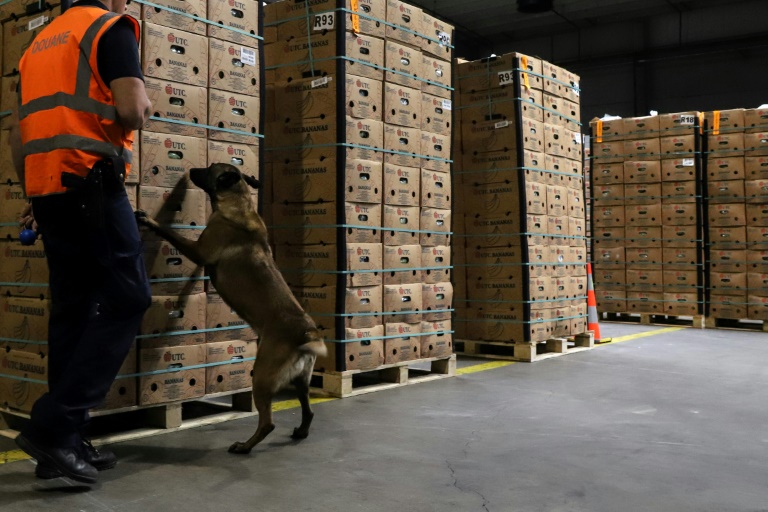
Last year, around 90 tonnes of cocaine were seized in the port. Customs agents expect to reach 100 tonnes by the end of the year, and estimate they are only halting a 10th of shipments.

A lot of money is at stake, sharpening the competition between gangs. 

The explosions are thought to be efforts to intimidate business rivals or to attract police attention to one group or place, diverting it from another.

After the weekend of the double explosion in May, De Winter and his neighbours wrote to city hall and demanded protection. He also led a reporter around Deurne, his neighbourhood of 14 years.

He pointed out several businesses that he suspects are linked to the drugs trade or money laundering.

In one, there have been frequent changes of proprietor. 

In another, prime space lies empty. 

At a third, a window that could have displayed wares on the corner of a busy street is bricked up.

“This bakery advertises croissants for breakfast, but it’s never open in the morning,” he said, with a confiding smile.  

Along with residential Deurne and Wilrijk, the bustling multicultural suburb of Borgerhout has also seen an increase in violence and tension.

– ‘Narco-terror’ –

The former working-class district now undergoing gentrification and the arrival of young families is represented by Green party mayor Marij Preneel.

“We were used to attacks at night, but gunfire at 6:30 pm? We’ve passed a milestone,” she said, recounting how in the middle of the year, a suspect house came under fire. 

Antwerp’s police defend their efforts, pointing out that they have made dozens of arrests since the latest round of explosions — “almost without exception of Dutch nationals”.

The Netherlands’ border is not far from Antwerp and just across it is another major port, Rotterdam.

Many in Belgium fear that rising criminality in Dutch-speaking Flanders comes from importing the so-called “Mocro-Maffia”, gangs from the Moroccan community reputed to dominate the drugs trade.

Four Dutch suspects arrested in the Netherlands earlier this month have been extradited to Belgium.

Belgium’s Justice Minister Vincent Van Quickenborne was himself a target for kidnapping from his home in the city of Kortrijk in September.

He does not single out the Mocro-Maffia by name, but warns that the drugs mafia has imported methods that amount to “narco-terrorism”. 

Belgian port city terrorised by drug violence

In Belgium’s port city of Antwerp, residents live in fear of eruptions of violence between the gangs that control Europe’s vast cocaine trade.

The city is the main port of entry into Europe for Latin American cocaine, a business controlled by transnational cartels with an increasing reputation for the most extreme violence.

This week investigators working off a database of criminal messages seized from a cracked communications app once favoured by gangs busted one major smuggling network.

But while illicit cargoes flow through Antwerp there will always be gangsters to fight over the spoils, in an underworld conflict that now spills onto the city’s residential streets.  

Steven De Winter, a 47-year-old bank employee from the city’s Deurne district, has counted three waves of violence since 2017, the latest starting in the spring of this year.

A house on his residential block was targeted over two nights by some sort of firework-style explosive projectile that triggered bomb-like explosions in the night.

– Grenade blasts –

According to his account, it began at 10:30 pm on a Friday while neighbours celebrated a marriage in their garden near the targeted house, reputedly the home of a person implicated in the drugs trade.

“It was panic,” De Winter said. “It can’t go on! That’s enough. Our neighbourhood must be protected.”

Several other districts have suffered similar eruptions, including the popular residential area of Wilrijk and even parks near the centre of a city of half a million people. 

In five years, the local prosecutor has recorded 200 incidents of drug-related violence, threats, beatings and explosive devices — including sometimes military grenades.

Last year, around 90 tonnes of cocaine were seized in the port. Customs agents expect to reach 100 tonnes by the end of the year, and estimate they are only halting a 10th of shipments.

A lot of money is at stake, sharpening the competition between gangs. 

The explosions are thought to be efforts to intimidate business rivals or to attract police attention to one group or place, diverting it from another.

After the weekend of the double explosion in May, De Winter and his neighbours wrote to city hall and demanded protection. He also led a reporter around Deurne, his neighbourhood of 14 years.

He pointed out several businesses that he suspects are linked to the drugs trade or money laundering.

In one, there have been frequent changes of proprietor. 

In another, prime space lies empty. 

At a third, a window that could have displayed wares on the corner of a busy street is bricked up.

“This bakery advertises croissants for breakfast, but it’s never open in the morning,” he said, with a confiding smile.  

Along with residential Deurne and Wilrijk, the bustling multicultural suburb of Borgerhout has also seen an increase in violence and tension.

– ‘Narco-terror’ –

The former working-class district now undergoing gentrification and the arrival of young families is represented by Green party mayor Marij Preneel.

“We were used to attacks at night, but gunfire at 6:30 pm? We’ve passed a milestone,” she said, recounting how in the middle of the year, a suspect house came under fire. 

Antwerp’s police defend their efforts, pointing out that they have made dozens of arrests since the latest round of explosions — “almost without exception of Dutch nationals”.

The Netherlands’ border is not far from Antwerp and just across it is another major port, Rotterdam.

Many in Belgium fear that rising criminality in Dutch-speaking Flanders comes from importing the so-called “Mocro-Maffia”, gangs from the Moroccan community reputed to dominate the drugs trade.

Four Dutch suspects arrested in the Netherlands earlier this month have been extradited to Belgium.

Belgium’s Justice Minister Vincent Van Quickenborne was himself a target for kidnapping from his home in the city of Kortrijk in September.

He does not single out the Mocro-Maffia by name, but warns that the drugs mafia has imported methods that amount to “narco-terrorism”. 

Trial in 2016 Ivory Coast attack set to get underway

Eighteen people go on trial in Ivory Coast on Wednesday accused of involvement in one of West Africa’s bloodiest jihadist attacks — a machine-gun assault on a beach resort in 2016 that left 19 dead.

But only four of the 18 will be physically present for the long-awaited proceedings in Abidjan, Ivory Coast’s economic hub.

The others are either on the run or being held in Mali, said Aude Rimailho, a lawyer for civilian plaintiffs.

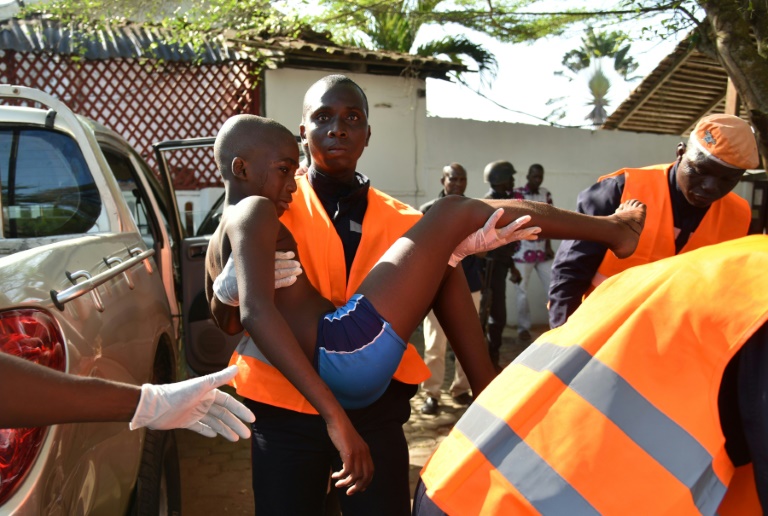
On March 13, 2016, three men wielding assault rifles attacked Grand-Bassam, a tourist complex 40 kilometres (25 miles) east of Abidjan popular with foreigners.

In an operation echoing a jihadist massacre the previous year in Tunisia, they stormed the beach and then attacked several hotels and restaurants.

The 45-minute bloodbath ended when the three were shot dead by Ivorian security forces.

Al-Qaeda’s North African affiliate, Al-Qaeda in the Islamic Maghreb (AQIM), claimed responsibility the same day.

It said the attack was in response to anti-jihadist operations in the Sahel by France and its allies, and targeted Ivory Coast for having handed over AQIM militants to Mali.

– Terrorism, murder charges – 

Several dozen people were arrested, including three suspected accomplices of the dead attackers, who were detained in Mali.

The charges against the 18 include acts of terrorism, murder, attempted murder, criminal concealment, illegal possession of firearms and ammunition “and complicity in these deeds,” Public Prosecutor Richard Adou said last week.

Nineteen people were killed — nine Ivorians, four French citizens, a Lebanese, a German, a Macedonian, a Malian, a Nigerian and a person who could not be identified.

Thirty-three people of various nationalities were wounded.

Rimailho, representing French plaintiffs, said those on trial were “small fry” and cautioned against seeing the proceedings as a chance for closure.

“The people who planned the operation are in Mali,” she said.

The prospects of seeing them on trial there are clouded by “the chill between France and Mali,” she said, referring to a breakdown in relations between Paris and the Malian ruling junta.

Mali is the epicentre of a decade-long jihadist revolt that has shaken the Sahel, claiming thousands of lives and forcing hundreds of thousands to flee their homes.

The attack on Grand-Bassam was the first and deadliest in a string of sporadic attacks on countries lying on the coast of the Gulf of Guinea, south of the Sahel.

In January 2017, members of France’s Barkhane anti-jihadist force captured a key suspect, Mimi Ould Baba Ould Cheikh.

He is described by Ivory Coast investigators as one of the instigators of the Grand-Bassam attack and by Burkina Faso as the “operation leader” in an assault on the Burkinabe capital Ouagadougou in January 2016 that claimed 30 lives.

Macron kicks off US state visit, with trade dispute looming

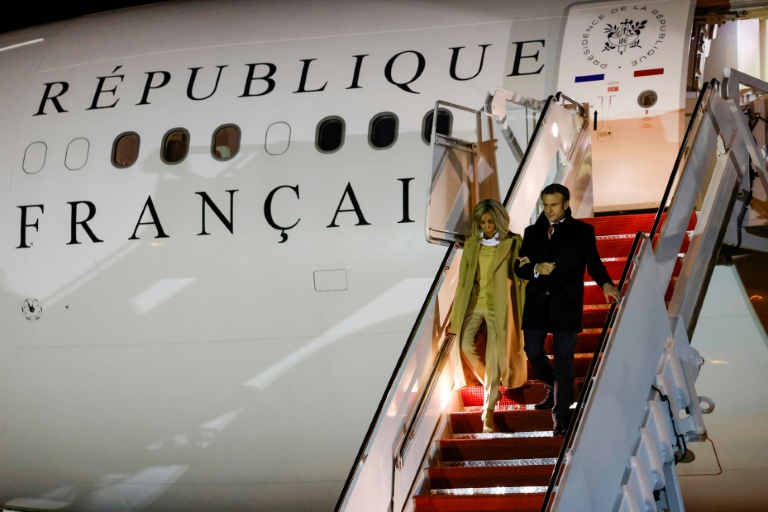
French President Emmanuel Macron was set to meet President Joe Biden on Wednesday, at the start of a state visit highlighting the countries’ strategic ties but also fears of a transatlantic trade war.

Macron and his wife Brigitte arrived late Tuesday for a two-day stay in Washington, before finishing up Friday with a trip to the once-French city of New Orleans in Louisiana.

Largely due to Covid disruptions, this is the first formal state visit to the White House during the Biden presidency. US officials said the choice of France for the honor reflects their historic links and also the crucial role played by Paris, within the European Union, in the alliance confronting Russia over Ukraine.

All the stops are being pulled out for Macron, starting Wednesday with him visiting Arlington National Cemetery, then discussing space cooperation with Vice President Kamala Harris at NASA headquarters in Washington. The first day will round off with a private dinner for Biden, Macron and their wives.

The core of the visit will be Thursday, including a White House military honor guard, Oval Office talks, a joint press conference and a banquet where Grammy-award-winning American musician Jon Batiste will perform.

Compared to Macron’s edgy experience as the guest of Donald Trump in 2018, this trip will be a carefully choreographed display of transatlantic friendship.

The diplomatic furor that erupted last year when Australia canceled a deal for French submarines and instead signed up for US nuclear submarines is now buried.

– Trade war? –

But tensions are rising over trade as Europeans nervously watch the rollout of Biden’s signature green industry policy — the Inflation Reduction Act, or IRA.

This is set to pump billions of dollars into climate-friendly technologies, with strong backing for American-made products. A similar effort is being put into microchip manufacturing.

Europeans fear an unfair US advantage in the sectors just as they are reeling from the economic consequences of the Ukraine war and Western attempts to end reliance on Russian energy supplies.

Talk in Europe is now increasingly on whether the bloc should respond with its own subsidies and championing of homegrown products, effectively starting a trade war.

Another gripe in Europe is the high cost of US liquid natural gas exports — which have surged to try and replace canceled Russian deliveries.

White House National Security Council spokesman John Kirby struck a cautious note, telling French reporters that “right now we’re in the mode of listening and making sure we understand concerns by our European partners.”

Kirby went out of his way to praise Macron, referring to his “experience and wisdom.”

– Strategizing on China, Ukraine –

The breadth of Macron’s entourage — including the foreign, defense and finance ministers, as well as business leaders and astronauts — illustrates the importance Paris has put on the visit.

At the White House, however, a senior official said the main goal is to nurture the “personal relationship, the alliance relationship” with France — and between Biden and Macron.

That more modest-sounding goal will include improving coordination on helping Ukraine to repel Russia and the even more vexing question of how to manage the rise of the Chinese superpower.

“We are not allies on the same page,” one adviser to Macron told AFP, forecasting “challenging” talks with Biden.

Despite his strong support for Kyiv, Macron’s insistence on continuing to maintain dialogue with Russian President Vladimir Putin has irked American diplomats.

The China question — with Washington pursuing a more hawkish tone and EU powers trying to find a middle ground — is unlikely to see much progress.

“Europe has since 2018 its own, unique strategy for relations with China,” tweeted French embassy spokesman Pascal Confavreux in Washington.

A senior US official said even if their approaches to China were “not identical,” they should be at least “speaking from a common script.”

Ukraine urges allies to speed up support for winter of war

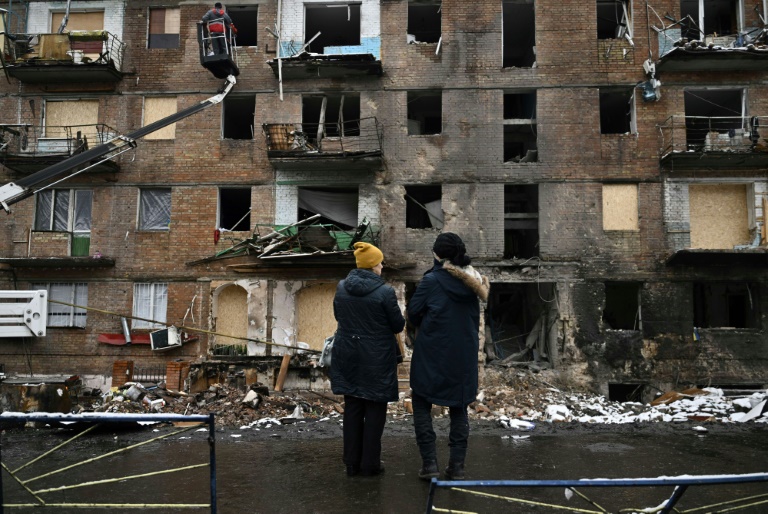
Ukraine urged NATO members Tuesday to speed up weapons deliveries and help restore its shattered power grid, as Western allies vowed to bolster support to aid Kyiv through winter in the face of Russia’s attacks.

Moscow has unleashed waves of strikes against Ukraine’s energy infrastructure as its troops are pushed back on the ground, plunging millions of people into darkness. 

Ukraine’s Foreign Minister Dmytro Kuleba called for supplies of weapons, especially advanced air defence systems, to come “faster, faster, faster” as he joined a two-day meeting of NATO foreign ministers in the Romanian capital Bucharest.

“When we have transformers and generators, we can restore our system, our energy grid, and provide people with decent living conditions,” Kuleba said.

“When we have air defence systems, we will be able to protect this infrastructure from the next Russian missile strikes.”

“In a nutshell, Patriots and transformers is what Ukraine needs the most”, he said, referring to the US-made Patriot missile defence system. 

The appeal came as NATO chief Jens Stoltenberg accused Russian President Vladimir Putin of targeting infrastructure in a bid to use the winter as “a weapon of war” against Ukraine.

Stoltenberg said NATO allies had pledged more support for Ukraine to fix its infrastructure and would keep on sending arms and air defences to help it better protect itself.

He said there was an “ongoing discussion” on supplying the Patriot systems that Washington and others have so far refused to give to Kyiv.

“NATO is not a party to the war. But we will continue to support Ukraine. For as long as it takes, we will not back down,” Stoltenberg said. 

He said he expected Russia to carry out more attacks on Ukraine’s grid as the Kremlin suffers defeats on the ground and warned Europe should “be prepared for more refugees”.

US Secretary of State Antony Blinken has announced a package worth $53 million “to support acquisition of critical electricity grid equipment” by Kyiv.

A senior US official said the assistance would not be the last and pointed out that the Biden administration had budgeted $1.1 billion for energy spending in Ukraine and neighbouring Moldova.

– ‘Keep calm, give tanks’ –

Allies have given arms worth billions of dollars to Ukraine, but Kyiv is pleading for more air defence, tanks and longer-range missiles to push the Kremlin’s forces back.

But there are growing concerns that weapon stores in some NATO countries are running low as stockpiles have been diverted to Ukraine.

Lithuanian Foreign Minister Gabrielius Landsbergis said his request to fellow NATO ministers was simple: “Keep calm and give tanks”. 

Germany, which currently chairs the G7, convened a meeting on the sidelines of the NATO gathering to discuss the energy crisis caused by the war in Ukraine.

Germany’s foreign minister Annalena Baerbock said the participants had looked to “better understand and prioritise the most urgent needs” ahead of an international conference in Paris on December 13.

Separately, German Chancellor Olaf Scholz spoke to Ukrainian President Volodymyr Zelensky and said Germany would dispatch 350 generators and provide financial assistance to repair energy infrastructure worth 56 million euros ($57 million).

Zelensky said they had discussed cooperation, both bilateral and in international institutions.

“The priorities are clear — protection against missile terror, energy restoration, food security,” Zelensky said in his daily video address late Tuesday, noting that “the situation at the front is difficult”.

“Despite extremely big Russian losses, the occupiers are still trying to advance in the Donetsk region, gain a foothold in the Luhansk region, move in the Kharkiv region, they are planning something in the south,” he said.

“But we are holding out.”

– ‘Door is open’ –

NATO said the meeting in Bucharest has showcased its unity on continuing to support Ukraine as Moscow’s war against its neighbour drags into its 10th month.

The alliance did not, however, make any progress on Ukraine’s request to join, despite reiterating it remained committed to its pledge made some 14 years ago that Kyiv would one day become a member.

Stoltenberg insisted the “door is open” to new members but said the focus now was on assisting Ukraine in its fight with Moscow.

Oleksiy Arestovych, an aide to the Ukrainian president, said “several concrete and important announcements were made” at the summit.

“Ukraine can become a member of the alliance after the end of hostilities” and “support to Ukraine will be expanded in terms of energy and military,” he noted in a statement.

Besides the war in Ukraine, the ministers will take stock of progress in the accession of NATO candidates Finland and Sweden, already ratified by 28 of the 30 member countries but which remains suspended awaiting a green light from Hungary and Turkey.

The Finnish, Swedish and Turkish foreign ministers met on the sidelines of the meeting, but Ankara did not signal that there had been any progress. 

Hawaii volcano shoots lava fountains 200 feet high: USGS

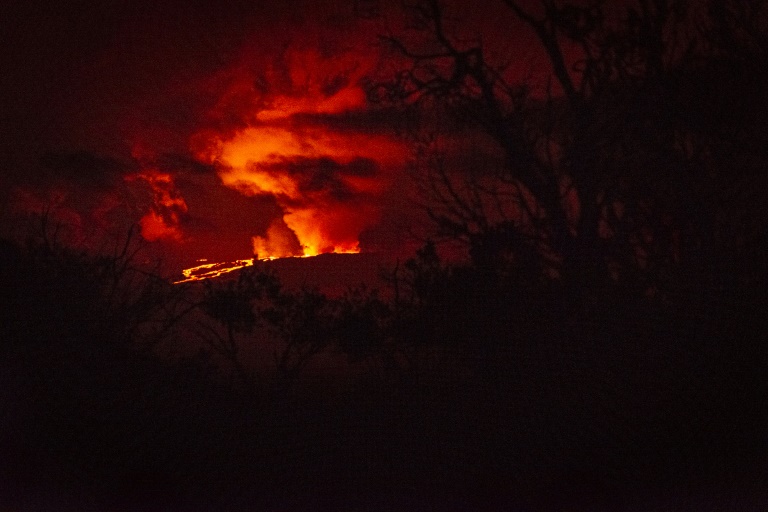
Fountains of lava up to 200 feet (60 meters) high have been fired into the air from Hawaii’s Mauna Loa, geologists say, generating rivers of molten rock from the world’s largest active volcano.

Four fissures have now opened up on the mammoth mountain, which burst into life on Sunday for the first time in almost 40 years.

Vast clouds of steam and smoke were billowing into the sky from the volcano, which makes up half of Hawaii’s Big Island.

“Estimates of the tallest fountain heights are between 100–200 feet” but most are much smaller, the United States Geological Survey said in an update Monday.

“There is a visible gas plume from the erupting fissure fountains and lava flows, with the plume primarily being blown to the Northwest.”

Geologists say there is currently no risk to people and property below the eruption.

“The longest and largest lava flow is issuing from fissure three,” the USGS said Tuesday.

“This lava flow crossed the Mauna Loa Weather Observatory Road… and the flow front was located approximately six miles (10 kilometers) from Saddle Road (the main road at the foot of the northern flank).”

The lava fountain from the newest fissure was up to 33 feet high, the agency said.

Everything is currently contained in the Northeast Rift Zone, the USGS said, but warned Mauna Loa is a dynamic volcano.

“Additional fissures could open along the Northeast Rift Zone below the current location, and lava flows can continue to travel downslope.”

Pressure has been building at Mauna Loa for years, the USGS said, and the eruption — which lit up the night sky — could be seen 45 miles (72 kilometers) away, in the west coast town of Kona.

While lava is not presently a risk to populations, scientists have said winds could carry volcanic gas and fine ash downslope, as well as Pele’s Hair — fine strands of volcanic glass formed when lava skeins cool quickly in the air.

Named after Pele, the Hawaiian goddess of volcanoes, the strands can be very sharp and pose potential danger to skin and eyes.

– ‘Long Mountain’ –

Authorities in Hawaii have not issued any evacuation orders, although the summit area and several roads in the region were closed, and two shelters have been opened as a precaution.

The largest volcano on Earth by volume, Mauna Loa, whose name means “Long Mountain,” is larger than the rest of the Hawaiian islands combined.

The volcano’s submarine flanks stretch for miles to an ocean floor that is in turn depressed by Mauna Loa’s great mass — making its summit some 11 miles above its base, according to the USGS. 

One of six active volcanoes on the Hawaiian islands, Mauna Loa has erupted 33 times since 1843.

Its most recent eruption, in 1984, lasted 22 days and produced lava flows reached to within about four miles of Hilo.

Kilauea, a volcano on the southeastern flank of Mauna Loa, erupted almost continuously between 1983 and 2019, and a minor eruption there has been ongoing for months.

Close Bitnami banner
Bitnami