World

Hawaii volcano shoots lava fountains 200 feet high: USGS

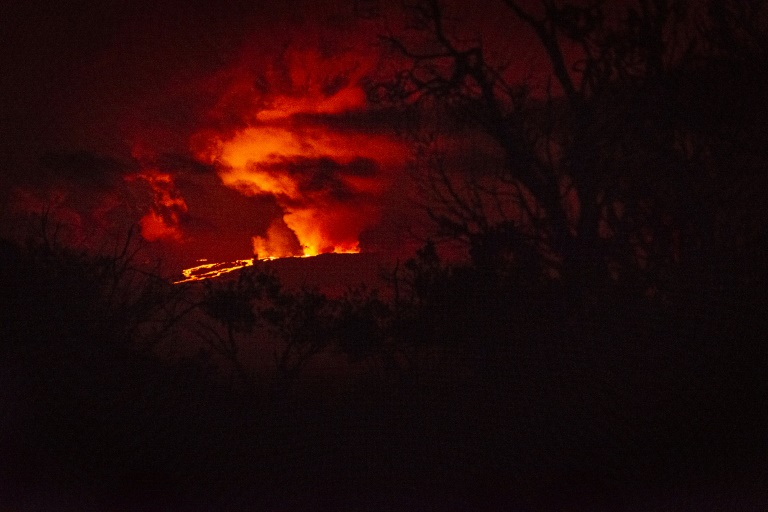
Fountains of lava up to 200 feet (60 meters) high have been fired into the air from Hawaii’s Mauna Loa, geologists say, generating rivers of molten rock from the world’s largest active volcano.

Four fissures have now opened up on the mammoth mountain, which burst into life on Sunday for the first time in almost 40 years.

Vast clouds of steam and smoke were billowing into the sky from the volcano, which makes up half of Hawaii’s Big Island.

“Estimates of the tallest fountain heights are between 100–200 feet” but most are much smaller, the United States Geological Survey said in an update Monday.

“There is a visible gas plume from the erupting fissure fountains and lava flows, with the plume primarily being blown to the Northwest.”

Geologists say there is currently no risk to people and property below the eruption.

“The longest and largest lava flow is issuing from fissure three,” the USGS said Tuesday.

“This lava flow crossed the Mauna Loa Weather Observatory Road… and the flow front was located approximately six miles (10 kilometers) from Saddle Road (the main road at the foot of the northern flank).”

The lava fountain from the newest fissure was up to 33 feet high, the agency said.

Everything is currently contained in the Northeast Rift Zone, the USGS said, but warned Mauna Loa is a dynamic volcano.

“Additional fissures could open along the Northeast Rift Zone below the current location, and lava flows can continue to travel downslope.”

Pressure has been building at Mauna Loa for years, the USGS said, and the eruption — which lit up the night sky — could be seen 45 miles (72 kilometers) away, in the west coast town of Kona.

While lava is not presently a risk to populations, scientists have said winds could carry volcanic gas and fine ash downslope, as well as Pele’s Hair — fine strands of volcanic glass formed when lava skeins cool quickly in the air.

Named after Pele, the Hawaiian goddess of volcanoes, the strands can be very sharp and pose potential danger to skin and eyes.

– ‘Long Mountain’ –

Authorities in Hawaii have not issued any evacuation orders, although the summit area and several roads in the region were closed, and two shelters have been opened as a precaution.

The largest volcano on Earth by volume, Mauna Loa, whose name means “Long Mountain,” is larger than the rest of the Hawaiian islands combined.

The volcano’s submarine flanks stretch for miles to an ocean floor that is in turn depressed by Mauna Loa’s great mass — making its summit some 11 miles above its base, according to the USGS. 

One of six active volcanoes on the Hawaiian islands, Mauna Loa has erupted 33 times since 1843.

Its most recent eruption, in 1984, lasted 22 days and produced lava flows reached to within about four miles of Hilo.

Kilauea, a volcano on the southeastern flank of Mauna Loa, erupted almost continuously between 1983 and 2019, and a minor eruption there has been ongoing for months.
China's factory activity contracts as Covid disruptions spread

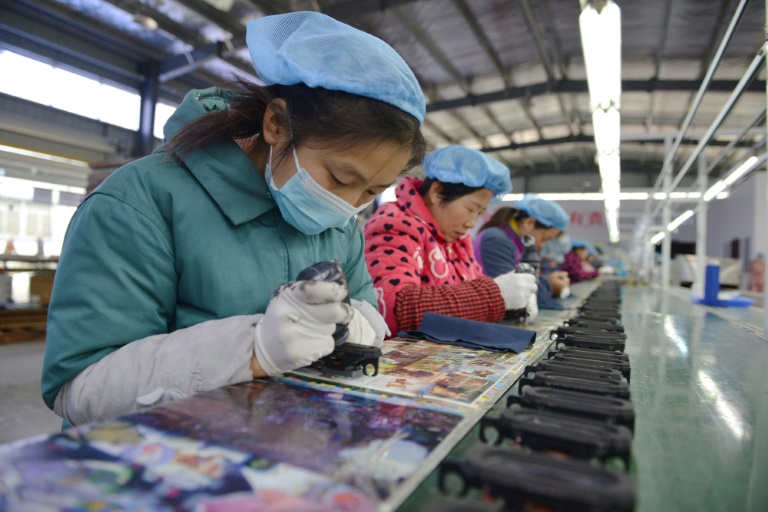
China’s factory activity shrank for a second straight month in November, official data showed Wednesday, as large swathes of the country were hit by Covid-19 lockdowns and transport disruptions.

The Purchasing Managers’ Index (PMI) — a key gauge of manufacturing in the world’s second-biggest economy — came in at 48.0, down from October’s 49.2 and well below the 50-point mark separating growth from contraction, according to data from the National Bureau of Statistics (NBS).

China is the last major economy welded to a zero-Covid strategy of eliminating outbreaks with strict quarantines and mass testing even as infections reached record highs this month, dragging down demand and business confidence.

“In November, impacted by multiple factors including the wide and frequent spread of domestic outbreaks, and the international environment becoming more complex and severe, China’s purchasing managers’ index fell,” NBS senior statistician Zhao Qinghe said in a statement.

November’s figure was lower than the 49.0 reading predicted by Bloomberg analysts.

The manufacturing PMI has been in contraction territory for all but four months of the year so far, as a summer of heat waves was bookended by Covid lockdowns in major cities during the spring and autumn.

Zhao said domestic outbreaks in November caused “production activity to slow down and product orders to fall”, noting “increased fluctuation in market expectations”.

Activity fell at businesses of all sizes during the month, with the PMI for small enterprises hit hardest at 45.6.

The non-manufacturing PMI came in at 46.7 points in November, also reflecting a contraction in activity and down from 48.7 points in October.

Zhao said that for transport, accommodation, catering and entertainment in particular “the total industry business volume fell significantly”, as “some regions saw a relatively large impact from the pandemic”.

Chinese leaders have set an annual economic growth target of about 5.5 percent, but many observers think the country will struggle to hit it, despite announcing a better-than-expected 3.9 percent expansion in the third quarter.

Meanwhile, rare nationwide protests have erupted among a population exhausted by almost three years of zero-Covid, while authorities have offered mixed messages on transitioning away from the strategy.

“The virus situation continues to cloud the economic outlook,” Sheana Yue, China economist at Capital Economics said in a note on Wednesday.

“Most cities have taken to implementing localised lockdowns, similar to the ones we saw in April, which will continue to weigh heavily on services activity,” Yue said.

She warned, “there is little upside that might offset the weakness,” with a global downturn putting pressure on export-focused businesses in China.

SpaceX postpones mission to put Japanese lander on Moon

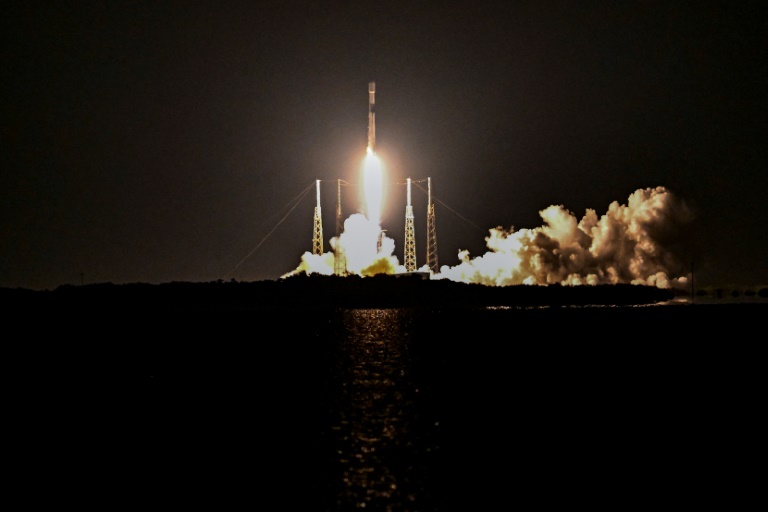
SpaceX on Wednesday postponed by one day a mission to launch the first private — and Japanese — lander to the Moon.

A Falcon 9 rocket is now scheduled to blast off at 3:37 am (0837 GMT) Thursday from Cape Canaveral, Florida. SpaceX said on Twitter that the delay was to carry out more pre-flight checks.

Until now, only the United States, Russia and China have managed to put a robot on the lunar surface.

The mission, by Japanese company ispace, is the first of a program called Hakuto-R. 

The lander would touch down around April 2023 on the visible side of the Moon, in the Atlas crater, according to a company statement.

Measuring just over 2 by 2.5 meters, it carries on board a 10-kilogram rover named Rashid, built by the United Arab Emirates. The oil-rich country is a newcomer to the space race but counts recent successes including a Mars probe in 2020. If it succeeds, Rashid will be the Arab world’s first Moon mission.

“We have achieved so much in the six short years since we first began conceptualizing this project in 2016,” said ispace CEO Takeshi Hakamada.

Hakuto was one of five finalists in the international Google Lunar XPrize competition, a challenge to land a rover on the Moon before a 2018 deadline, which ended without a winner. But some of the projects are still ongoing.

Another finalist, from the Israeli organization SpaceIL, failed in April 2019 to become the first privately-funded mission to achieve the feat, after crashing into the surface while attempting to land.

ispace, which has just 200 employees, says it “aims to extend the sphere of human life into space and create a sustainable world by providing high-frequency, low-cost transportation services to the Moon.”

Future missions are set to contribute to NASA’s Artemis program. Artemis-1, an uncrewed test flight to the Moon, is currently underway.

The US space agency wants to develop the lunar economy in the coming years by building a space station in orbit around the Moon and a base on the surface.

It has awarded contracts to several companies to develop landers to transport scientific experiments to the surface. 

Among them, the American companies Astrobotic and Intuitive Machines should take off in 2023, and could arrive at their destination before ispace by taking a more direct route, according to reports.

'It's always scary': medics in Ukraine's 'meat grinder'

As Russian forces poured across Ukraine’s borders, Palych knew that pain, suffering and injuries would follow in the ensuing war and his training as a paramedic would be needed.

“I could not sit on the sidelines, so I went to the front as a volunteer,” says Palych, the nom de guerre for the 35-year-old medic working near the frontline in the eastern Ukrainian city of Bakhmut.

Day after day, he and his team skirt the front, collecting the wounded and rushing them back to the main hospital in Bakhmut just a couple of kilometres away from the line of contact.

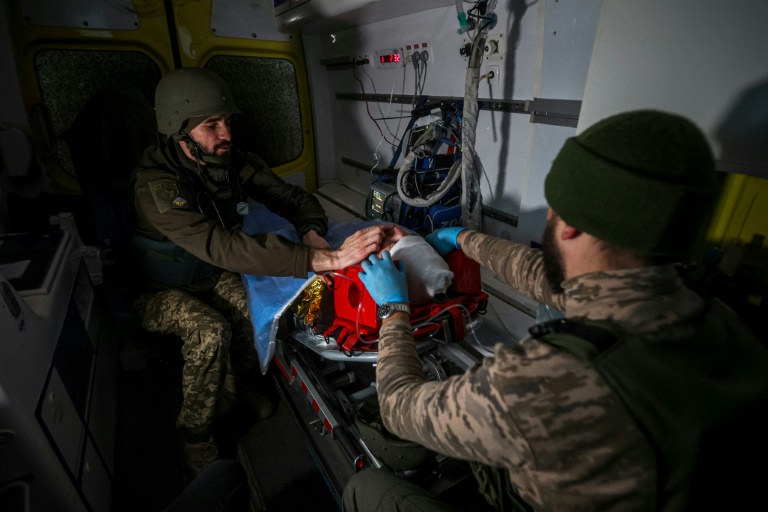
“It’s always scary,” he tells AFP during a recent trip transporting a wounded soldier suffering from a brain injury and a broken leg from Bakhmut to a nearby medical centre in the town of Chasiv Yar.

“You never feel relaxed. Every time we are afraid.”

Once known for its vineyards and cavernous salt mines, Bakhmut has been dubbed “the meat grinder” due to the brutal trench warfare, artillery duels and frontal assaults that have defined the fight for the city for the past six months.

On the Russian side, mercenaries, prison conscripts and newly mobilised troops are believed to comprise the fighting force that has launched waves of attacks on Bakhmut.

Ukrainian forces are largely positioned in and around the city, including in mud-soaked trenches bisecting shattered swathes of land pummelled by relentless shelling. 

“We can compare the fighting with the Second World War, as (both sides) use standard methods of conducting combat operations without any special technological means,” said Sergiy Zgurets, a military analyst at Defense Express Media & Consulting Company.

– ‘Destruction’ –

The goal however may not just be the capture of the city.

Yevgeny Prigozhin, founder of Russia’s Wagner mercenary group that is helping lead the fight, said his forces are mostly focusing their efforts on destroying the Ukrainian army.

“The Ukrainian army is well prepared and offers worthy resistance,” said the Kremlin-linked businessman in a recent statement released by his company, Concord.   

“Our task is not Bakhmut itself, but the destruction of the Ukrainian army and the reduction of its combat potential, which has an extremely positive effect on other areas, which is why this operation was dubbed the ‘Bakhmut meat grinder'”.

Nine months into the conflict, the medics working on the frontlines have been transformed into battle-hardened veterans, for many a vast departure from their former lives. 

Before the war, Malysh was a delivery driver — just an “ordinary” job that he left to join an ambulance team after the invasion in February. 

“I pray to the lord for things to slow down in the coming days. I wish we didn’t have work like this at all,” the ambulance driver says, while waiting outside Bakhmut’s main hospital. 

The facility is the first stop for many of the injured at the front. 

The explosion of artillery, mortars and Grad rocket volleys along with the lurching rattle of nearby tanks echo in the streets around the hospital as ambulances drop patients to waiting doctors. 

Blood-stained stretchers are stacked against the walls where at least two black body bags could be seen nearby during AFP’s visit. 

“The hardest thing for any doctor is when a 300 (an injured patient) turns into a 200 (a fatality),” Maryana, a 30-year-old anaesthesiologist, tells AFP during a shift break, using Soviet-era military code words.

“Our morale is high, but physically it can be tough when we have a lot of injured people during one shift,” she adds. 

“When I get back to our place, I’m hungry, but I’m just too tired to eat.”

– ‘Not in vain’ –

In recent days, a number of the new medics have arrived in Bakhmut after being redeployed from the southern front near Kherson, where a Ukrainian counter-offensive succeeded in liberating the city. 

For many, the fighting in Bakhmut is some of the worst they have seen yet.

“Before coming here we used to work in the Kherson area. It was tough but not this tough,” says an ambulance driver who goes by the call sign Octane.

Following Kherson’s liberation, the epicentre of the war firmly shifted to the eastern Donbas region where Bakhmut is located. 

The smaller frontline and a greater density of forces have paved the way for ferocious battles along the Donbas’s open steppe, pine forests and on the edges of cities like Bakhmut. 

Speculation has swirled on pro-Kremlin social media posts about continued Russian advancements around the city along with ultimatums issued to Ukrainian units at risk of encirclement. 

However, analysts have dismissed the claims. 

“Even if Russian forces have indeed succeeded in taking control of settlements south of Bakhmut, these gains do not threaten the critical” supply lines into the city used by Ukraine, said The Institute for the Study of War in an assessment published this week.

Holding the line will likely come at a steep cost, putting further pressure on the medical teams on the ground. 

But for Palych and other first responders the gruesome nature of the job provides them with a chance to bolster the front. 

“If it saves at least one life of a soldier who will later join the ranks, then my work was not in vain,” he says. 

ds-est-dg-sd/as/imm

Trial in 2016 Ivory Coast attack set to get underway

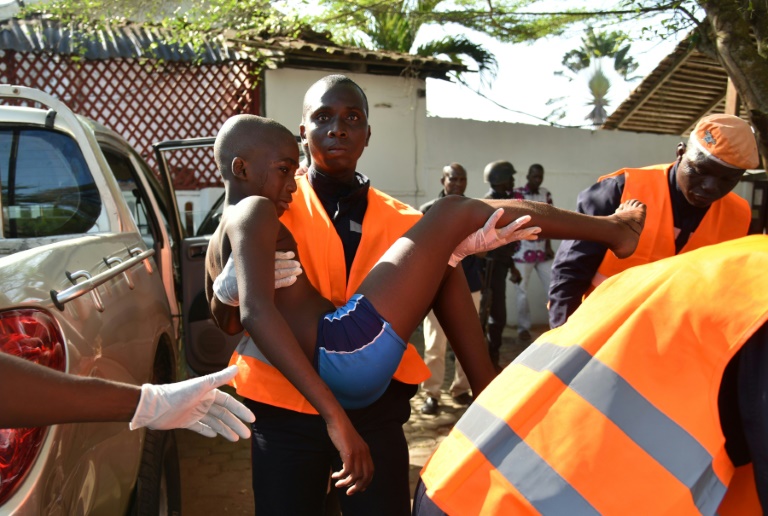
Eighteen people go on trial in Ivory Coast on Wednesday accused of involvement in one of West Africa’s bloodiest jihadist attacks — a machine-gun assault on a beach resort in 2016 that left 19 dead.

But only four of the 18 will be physically present for the long-awaited proceedings in Abidjan, Ivory Coast’s economic hub.

The others are either on the run or being held in Mali, said Aude Rimailho, a lawyer for civilian plaintiffs.

On March 13, 2016, three men wielding assault rifles attacked Grand-Bassam, a tourist complex 40 kilometres (25 miles) east of Abidjan popular with foreigners.

In an operation echoing a jihadist massacre the previous year in Tunisia, they stormed the beach and then attacked several hotels and restaurants.

The 45-minute bloodbath ended when the three were shot dead by Ivorian security forces.

Al-Qaeda’s North African affiliate, Al-Qaeda in the Islamic Maghreb (AQIM), claimed responsibility the same day.

It said the attack was in response to anti-jihadist operations in the Sahel by France and its allies, and targeted Ivory Coast for having handed over AQIM militants to Mali.

– Terrorism, murder charges – 

Several dozen people were arrested, including three suspected accomplices of the dead attackers, who were detained in Mali.

The charges against the 18 include acts of terrorism, murder, attempted murder, criminal concealment, illegal possession of firearms and ammunition “and complicity in these deeds,” Public Prosecutor Richard Adou said last week.

Nineteen people were killed — nine Ivorians, four French citizens, a Lebanese, a German, a Macedonian, a Malian, a Nigerian and a person who could not be identified.

Thirty-three people of various nationalities were wounded.

Rimailho, representing French plaintiffs, said those on trial were “small fry” and cautioned against seeing the proceedings as a chance for closure.

“The people who planned the operation are in Mali,” she said.

The prospects of seeing them on trial there are clouded by “the chill between France and Mali,” she said, referring to a breakdown in relations between Paris and the Malian ruling junta.

Mali is the epicentre of a decade-long jihadist revolt that has shaken the Sahel, claiming thousands of lives and forcing hundreds of thousands to flee their homes.

The attack on Grand-Bassam was the first and deadliest in a string of sporadic attacks on countries lying on the coast of the Gulf of Guinea, south of the Sahel.

In January 2017, members of France’s Barkhane anti-jihadist force captured a key suspect, Mimi Ould Baba Ould Cheikh.

He is described by Ivory Coast investigators as one of the instigators of the Grand-Bassam attack and by Burkina Faso as the “operation leader” in an assault on the Burkinabe capital Ouagadougou in January 2016 that claimed 30 lives.

'It's always scary': medics in Ukraine's 'meat grinder'

As Russian forces poured across Ukraine’s borders, Palych knew that pain, suffering and injuries would follow in the ensuing war and his training as a paramedic would be needed.

“I could not sit on the sidelines, so I went to the front as a volunteer,” says Palych, the nom de guerre for the 35-year-old medic working near the frontline in the eastern Ukrainian city of Bakhmut.

Day after day, he and his team skirt the front, collecting the wounded and rushing them back to the main hospital in Bakhmut just a couple of kilometres away from the line of contact.

“It’s always scary,” he tells AFP during a recent trip transporting a wounded soldier suffering from a brain injury and a broken leg from Bakhmut to a nearby medical centre in the town of Chasiv Yar.

“You never feel relaxed. Every time we are afraid.”

Once known for its vineyards and cavernous salt mines, Bakhmut has been dubbed “the meat grinder” due to the brutal trench warfare, artillery duels and frontal assaults that have defined the fight for the city for the past six months.

On the Russian side, mercenaries, prison conscripts and newly mobilised troops are believed to comprise the fighting force that has launched waves of attacks on Bakhmut.

Ukrainian forces are largely positioned in and around the city, including in mud-soaked trenches bisecting shattered swathes of land pummelled by relentless shelling. 

“We can compare the fighting with the Second World War, as (both sides) use standard methods of conducting combat operations without any special technological means,” said Sergiy Zgurets, a military analyst at Defense Express Media & Consulting Company.

– ‘Destruction’ –

The goal however may not just be the capture of the city.

Yevgeny Prigozhin, founder of Russia’s Wagner mercenary group that is helping lead the fight, said his forces are mostly focusing their efforts on destroying the Ukrainian army.

“The Ukrainian army is well prepared and offers worthy resistance,” said the Kremlin-linked businessman in a recent statement released by his company, Concord.   

“Our task is not Bakhmut itself, but the destruction of the Ukrainian army and the reduction of its combat potential, which has an extremely positive effect on other areas, which is why this operation was dubbed the ‘Bakhmut meat grinder'”.

Nine months into the conflict, the medics working on the frontlines have been transformed into battle-hardened veterans, for many a vast departure from their former lives. 

Before the war, Malysh was a delivery driver — just an “ordinary” job that he left to join an ambulance team after the invasion in February. 

“I pray to the lord for things to slow down in the coming days. I wish we didn’t have work like this at all,” the ambulance driver says, while waiting outside Bakhmut’s main hospital. 

The facility is the first stop for many of the injured at the front. 

The explosion of artillery, mortars and Grad rocket volleys along with the lurching rattle of nearby tanks echo in the streets around the hospital as ambulances drop patients to waiting doctors. 

Blood-stained stretchers are stacked against the walls where at least two black body bags could be seen nearby during AFP’s visit. 

“The hardest thing for any doctor is when a 300 (an injured patient) turns into a 200 (a fatality),” Maryana, a 30-year-old anaesthesiologist, tells AFP during a shift break, using Soviet-era military code words.

“Our morale is high, but physically it can be tough when we have a lot of injured people during one shift,” she adds. 

“When I get back to our place, I’m hungry, but I’m just too tired to eat.”

– ‘Not in vain’ –

In recent days, a number of the new medics have arrived in Bakhmut after being redeployed from the southern front near Kherson, where a Ukrainian counter-offensive succeeded in liberating the city. 

For many, the fighting in Bakhmut is some of the worst they have seen yet.

“Before coming here we used to work in the Kherson area. It was tough but not this tough,” says an ambulance driver who goes by the call sign Octane.

Following Kherson’s liberation, the epicentre of the war firmly shifted to the eastern Donbas region where Bakhmut is located. 

The smaller frontline and a greater density of forces have paved the way for ferocious battles along the Donbas’s open steppe, pine forests and on the edges of cities like Bakhmut. 

Speculation has swirled on pro-Kremlin social media posts about continued Russian advancements around the city along with ultimatums issued to Ukrainian units at risk of encirclement. 

However, analysts have dismissed the claims. 

“Even if Russian forces have indeed succeeded in taking control of settlements south of Bakhmut, these gains do not threaten the critical” supply lines into the city used by Ukraine, said The Institute for the Study of War in an assessment published this week.

Holding the line will likely come at a steep cost, putting further pressure on the medical teams on the ground. 

But for Palych and other first responders the gruesome nature of the job provides them with a chance to bolster the front. 

“If it saves at least one life of a soldier who will later join the ranks, then my work was not in vain,” he says. 

ds-est-dg-sd/as/imm

Equities mostly up as traders weigh China moves, await Fed's Powell

Markets mostly rose Wednesday on hopes that China will further ease its strict Covid containment measures following widespread political unrest, though gains were tempered by leaders’ warnings of a crackdown on dissent across the country.

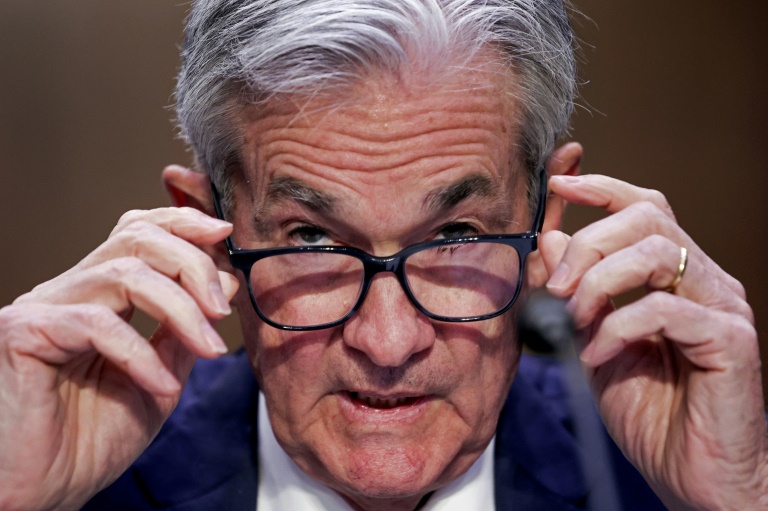
Traders were also nervously awaiting a key policy speech by Federal Reserve chief Jerome Powell later in the day that could outline the bank’s strategy for tackling inflation in light of a recent slowdown in price gains.

A spectacular rally in Hong Kong on Tuesday led gains across Asia as investors looked past weekend demonstrations in China after officials announced moves aimed at softening their zero-Covid strategy.

Leaders said they would step up their drive to vaccinate the elderly, while the National Health Commission appeared to blame local governments for instituting extreme measures such as tight lockdowns, one of the main reasons for the unrest.

However, in a sign that the leadership was determined to maintain its authority, the country’s top security body called for a “crackdown” against “hostile forces”.

The warning came after security services were sent out in force to prevent further demonstrations, the likes of which had not been seen in decades.

The developments saw Hong Kong stocks swing between gains and losses in the morning, having soared more than five percent Tuesday, while Shanghai fluctuated.

Data showing China’s factory activity shrank further in November highlighted Covid-zero’s impact on the country’s economy. 

“Due to a more reflective approach to the recent zero-Covid measures, Chinese stocks have taken substantial leaps and bounds this week,” said SPI Asset Management’s Stephen Innes.

“Still, the global investment community is keeping close tabs on China… Any antagonistic escalation risks a walk back of current positive momentum, especially with folks playing the trade-off thinking that a calming in protests might hasten a shift away from zero-Covid policies.”

There were also gains in most other Asian markets, with Sydney, Seoul, Wellington, Taipei and Jakarta in the green, though Tokyo dipped.

Focus is also on Fed boss Powell’s speech later Wednesday on the labour market, with many expecting him to outline the bank’s plans for future interest rate hikes.

After lifting borrowing costs 75 basis points for the past four meetings, officials are widely seen as taking their foot off the gas when they gather next month following a recent batch of weak data including a below-forecast inflation print for October

But a string of policymakers has lined up in recent weeks to ram home their intention to keep lifting until they are satisfied inflation has been slayed, with warnings there will not likely be any cuts until 2024.

The sharp lift in rates this year has fanned bets that the world’s top economy will tip into recession.

“The Fed has hiked enough — and quickly enough — to make recession a base-case scenario in our book,” Lauren Goodwin, at New York Life Investments, said. 

“Volatility and risk premia are likely to remain elevated as long as the Fed is fighting inflation in a growth slowdown.”

The remarks by Powell come just before the Friday release of US jobs data for November, which will provide the latest snapshot of the economy.

– Key figures around 0230 GMT –

Tokyo – Nikkei 225: DOWN 0.6 percent at 27,858.16 (break)

Hong Kong – Hang Seng Index: UP 0.3 percent at 18,251.79

Shanghai – Composite: UP 0.1 percent at 3,153.65

Euro/dollar: UP at $1.0346 from $1.0332 on Tuesday

Dollar/yen: UP at 138.69 yen from 138.67 yen

Pound/dollar: UP at $1.1977 from $1.1952

Euro/pound: DOWN at 86.38 pence from 86.42 pence

West Texas Intermediate: UP 0.8 percent at $78.81 per barrel

Brent North Sea crude: UP 1.0 percent at $83.88 per barrel

New York – Dow: FLAT at 33,852.53 (close)

London – FTSE 100: UP 0.5 percent at 7,512.00 (close)

LGBTQ Arabs fear backlash after World Cup 'spotlight'

With rainbow flags and “OneLove” armbands, World Cup fans have protested against host Qatar’s anti-LGBTQ policies, but many queer Arabs fear a Western solidarity push could do more harm than good.

Gestures in support of the local LGBTQ community have unleashed a torrent of homophobia, activists and community members say, creating new risks for people who have long relied on discretion to survive.

“It’s not great to live in the shadow, but it’s also not great to live under a spotlight,” said a 32-year-old entrepreneur from neighbouring Gulf nation Bahrain, who requested anonymity for safety concerns.

“The World Cup will end, FIFA will leave, and the hate will continue.”

LGBTQ rights in Qatar — where homosexuality is illegal — and concerns over the use of the rainbow flag during the World Cup have been a simmering issue ahead of the international tournament that kicked off on November 20.

Captains of seven European football teams had planned to wear rainbow-themed “OneLove” armbands as part of a campaign to embrace diversity, but backed down after a threat of disciplinary action from FIFA.

The well-meaning drive for LGBTQ rights has caused distress for some, the Bahraini entrepreneur said.

“No one from the queer community here has ever been asked about their opinion of what they think the rainbow flag does,” he said.

“I am worried about the future.”

– ‘Ruining a lot’ –

The clash playing out in Qatar is the latest example of the unintended backlash generated by Western LGBTQ initiatives in the Muslim majority region.

Earlier this year, US embassies in Bahrain, Kuwait and the United Arab Emirates raised the rainbow flag and posted solidarity messages on social media to mark Pride month.

For the Bahraini entrepreneur, it triggered a scathing response in a region where queer people, citizens and expats alike, prefer to stay under the radar.

“They’re ruining a lot of things for people,” he said, referring to the Western campaigns.

“I don’t necessarily hide who I am and I also don’t walk around flying a rainbow flag.”

Over the summer, authorities across the Gulf zeroed-in on what they perceived as attempts to encourage homosexuality.

In Saudi Arabia, where same-sex relations are punishable by death, authorities cracked down on rainbow-coloured toys and clothing.

In Bahrain, posters went up showing silhouettes of a family under an umbrella, taking shelter as a rainbow flag spilled over them like a downpour.

Meanwhile, Hollywood productions including Disney’s “Lightyear” were banned from theatres in several Gulf countries for supposedly promoting same-sex relations.

– ‘From bad to worse’ –

“Religion remains central in the Gulf, despite relaxing some laws and social restrictions,” Saudi researcher Eman Alhussein told AFP.

And the LGBTQ cause “is probably not up for local debate anytime soon”, she said.

Alhussein, a non-resident fellow at the Arab Gulf States Institute in Washington, said growing Western criticism of anti-LGBTQ policies in the region “has failed to produce change, and is unlikely to do so at least for the short term”.

“As many Gulf citizens remain conservative, maintaining some boundaries is seen as crucial to accommodate all segments of society.”

Tarek Zeidan, executive director of Lebanon-based Helem — the Arab world’s first officially registered LGBTQ organisation — lamented a “missed opportunity” to bring positive change to the region.

“Obviously we need to have a conversation about human rights despite the efforts of those trying to prevent it,” he told AFP.

But “if you care about human rights, lift up the voices of the people who are actually at the receiving end of violence”, as opposed to the overwhelming attention on what he called “Western outrage”.

Zeidan, who used to live in Qatar, noted a “hardening of positions” around the World Cup, which he said the LGBTQ community would ultimately pay for.

“It’s going from bad to worse,” said Zeidan.

“The backlash is probably going to be very, very harsh if not deadly,” the activist said.

“The coming years are going to be extremely punishing for LGBTQ people in the region.”

Jack Ma living in Japan after China tech crackdown: FT

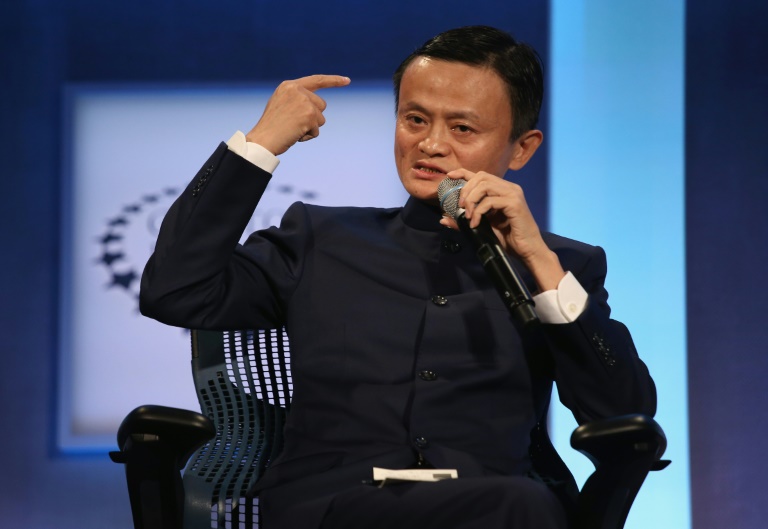
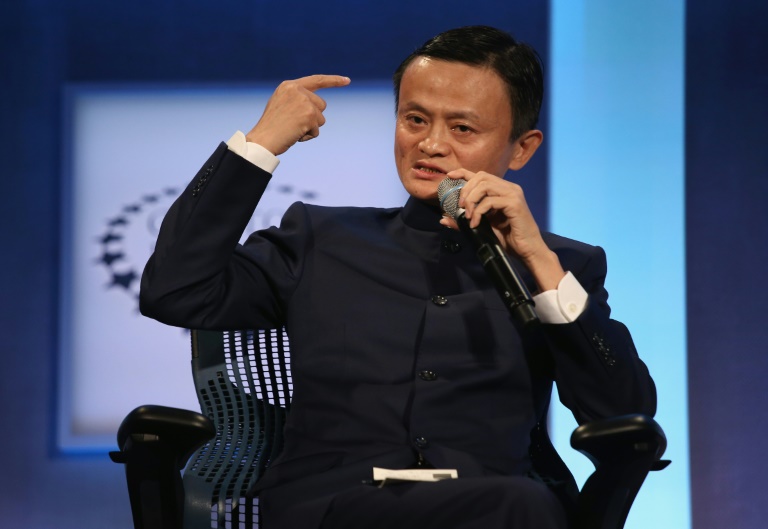
Alibaba founder Jack Ma has been living in Tokyo for almost six months after disappearing from public view following China’s crackdown on the tech sector, the Financial Times reported Wednesday, citing multiple unnamed sources.

The billionaire has kept a low profile since the crackdown, which has included Chinese regulators scrapping the IPO of Ma’s Ant Group and issuing Alibaba with record fines.

But the FT said he has spent much of the past six months with his family in Tokyo and other parts of Japan, along with visits to the United States and Israel.

The British newspaper said Ma has frequented several private members’ clubs in Tokyo, and become an “enthusiastic collector” of Japanese modern art, as well as exploring expanding his business interests into sustainability.

Ma has been spotted elsewhere since he effectively disappeared from public view in China, including on the Spanish island of Mallorca last year.

In recent years, Chinese officials have taken aim at alleged anti-competitive practices by some of the country’s biggest names, driven by fears that major internet firms control too much data and expanded too quickly.

This July, a report said Ma planned to hand over control of Ant Group to appease Chinese regulators and revive the digital payments unit’s initial public offering.

His e-commerce giant Alibaba reported flat revenue growth in August for the first time, as China battled an economic slowdown and resurgent Covid-19 cases.

US authorities have put the company on a watchlist that could see it delisted in New York if it does not comply with disclosure orders, causing its shares to slump.

Jack Ma living in Japan after China tech crackdown: FT

Alibaba founder Jack Ma has been living in Tokyo for almost six months after disappearing from public view following China’s crackdown on the tech sector, the Financial Times reported Wednesday, citing multiple unnamed sources.

The billionaire has kept a low profile since the crackdown, which has included Chinese regulators scrapping the IPO of Ma’s Ant Group and issuing Alibaba with record fines.

But the FT said he has spent much of the past six months with his family in Tokyo and other parts of Japan, along with visits to the United States and Israel.

The British newspaper said Ma has frequented several private members’ clubs in Tokyo, and become an “enthusiastic collector” of Japanese modern art, as well as exploring expanding his business interests into sustainability.

Ma has been spotted elsewhere since he effectively disappeared from public view in China, including on the Spanish island of Mallorca last year.

In recent years, Chinese officials have taken aim at alleged anti-competitive practices by some of the country’s biggest names, driven by fears that major internet firms control too much data and expanded too quickly.

This July, a report said Ma planned to hand over control of Ant Group to appease Chinese regulators and revive the digital payments unit’s initial public offering.

His e-commerce giant Alibaba reported flat revenue growth in August for the first time, as China battled an economic slowdown and resurgent Covid-19 cases.

US authorities have put the company on a watchlist that could see it delisted in New York if it does not comply with disclosure orders, causing its shares to slump.

Close Bitnami banner
Bitnami