World

Japan PM wants defence budget to reach 2% of GDP by 2027

Japanese Prime Minister Fumio Kishida has told his cabinet to increase defence spending to two percent of GDP by 2027, up from a longstanding level of around one percent.

Kishida announced the plan to his defence and finance ministers late Monday, as Japan overhauls its defence and security strategies to address growing threats from China as well as the changing geopolitical landscape after Russia’s invasion of Ukraine.

In August, the defence ministry submitted a $40 billion budget request, but the figure will not be finalised until the government completes updates to several defence policies.

“We’ll take budgetary measures to increase spending on defence and other outlays to two percent of current GDP by 2027,” Defence Minister Yasukazu Hamada told reporters after talks with Kishida.

Japan’s defence spending has been set at around one percent of GDP or less for decades, but Kishida’s Liberal Democratic Party has signalled plans to boost that figure closer to the NATO standard of two percent.

Growing pressure from China, including military exercises and the presence of boats around islands disputed with Japan, as well as Russia’s invasion of its neighbour, have helped build support for increased spending.

A series of missile launches by North Korea, including some that have travelled over Japan, have also sharpened views.

The issue has been controversial in Japan for several reasons, including the country’s pacifist post-war constitution, which limits its military capacity to ostensibly defensive measures.

Local media said one target of additional spending would be “counterstrike” capacity — weapons that can target enemy missile launch sites and are described by Tokyo as defensive.

A poll published by the Kyodo news agency on Monday found over 60 percent of respondents favoured obtaining a “counterstrike capability”.

Speaking in parliament on Tuesday, Kishida said counterstrike capacity was one of several options being weighed.

“This is being studied within the bounds of the constitution and international law,” he said, adding that a decision should be reached by the end of the year.

Another contentious issue is how to pay for additional defence spending, with higher taxes unpopular, including inside Kishida’s LDP.

Japan’s government is already saddled with enormous costs associated with an ageing and shrinking population, as well as the post-pandemic recovery and fallout from the war in Ukraine.

Hamada said Monday that Kishida told the government to find a way to boost spending, despite concerns about cost.

“(We will) secure the necessary budget by coming up quickly with various approaches, instead of just saying we can’t because there aren’t sufficient financial resources,” he quoted the prime minister as saying.

The Kyodo poll found around a third of respondents favour spending cuts elsewhere in the government’s budget to pay for increased defence spending.

Just over 22 percent backed increased corporate taxes, and 13 percent favour the issuing of government bonds.

'The dead keep coming': violence overwhelms Mexico's morgues

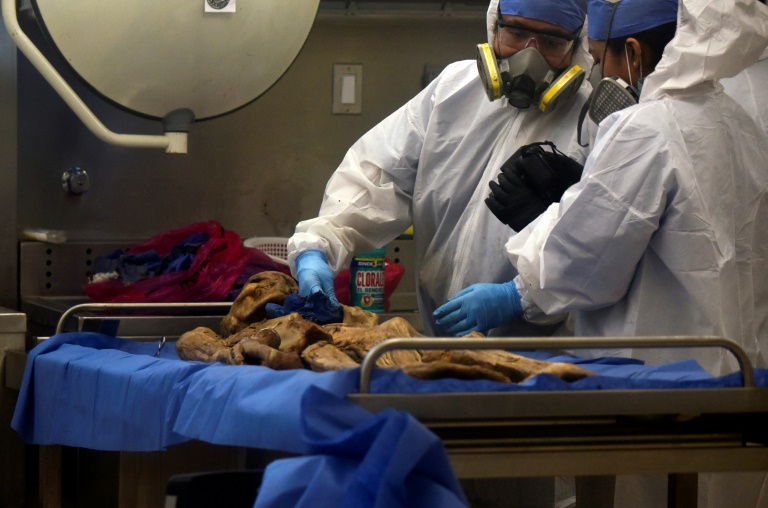
In a dark, windowless room with no air conditioning in southern Mexico, thousands of bones of unidentified people encapsulate the crisis of a forensic system overwhelmed by violent crime.

The morgue in Chilpancingo in Guerrero state is full of anonymous human remains — like many others in a country struggling to process a backlog of tens of thousands of bodies.

“The dead keep coming and people keep disappearing,” said Nuvia Maestro, 36, a forensic anthropologist in Mexico City.

On social media, Maestro declares her love for her cat Clementina — her “ray of light” — as well as cycling, wine and colorful jackets.

At work, the 36-year-old uses two electric cooktops that she and her colleagues bought themselves to boil ribs to remove tissue and carry out tests to determine the age of the deceased.

“You work and work and you don’t finish!” she said.

At the Chilpancingo morgue, incense burned by employees failed to mask the stench of death — or keep the flies away.

A forensic service worker browsed handwritten records of the remains, giving a shrug of the shoulders when asked why they are not digitized to facilitate relatives’ search for the missing.

The DNA studies “can take months,” frustrating families desperate to find their missing loved ones, said forensic service coordinator Alfonso Ramirez.

– Spiraling violence –

Mexico’s homicide rate has tripled since 2006 — when an intensification of the government’s war on drug cartels triggered a spiral of violence — from 9.6 murders per 100,000 inhabitants to 28 in 2021.

The number of people going missing has also increased sharply, from 265 in 2006 to 10,366 in 2021, and now totals 108,000 since records began in 1964.

Many victims are thought to have been buried by the authorities without being unidentified. The government blames most of the deaths on gang violence.

Experts say the forensic crisis is also explained by the lack of funds, personnel, rapid DNA testing laboratories and a single genetic database.

The United Nations Committee on Enforced Disappearances estimates that, under current conditions, it would take 120 years to process the 52,000 unidentified bodies documented by the Movement for Our Disappeared, a non-governmental organization.

Mexican authorities “do not have the institutional capacity to deal with the backlog” of unidentified bodies, Alejandro Encinas, a deputy minister responsible for human rights, said in October.

Adding to the work of the forensic services, some criminals burn their victims’ corpses or bury them in clandestine graves.

The killers know which body parts are most useful for identification, such as fingertips, and destroy them, said Maestro, noting that the most abused corpses are those of women.

Regional forensic services budgets rose from $110 million in 2015 to $122 million in 2020, according to official data.

Over the same period, the average number of murders jumped from around 17 to 28 per 100,000 people.

– ‘Ugly things’ –

Guadalupe Camarena, 62, cried clutching photos of her five missing children during an exhumation of remains at a graveyard in the western state of Jalisco.

Her daughter disappeared in the city of Guadalajara in 2016, followed by her four sons who vanished in 2019, allegedly after they were detained by police, the domestic worker said.

She hopes that giving a DNA sample will help her search for her five missing children.

“I don’t want to find them (dead) like this, but if I can’t find them alive…” she said, trailing off.

The psychological impact of the situation forces experts such as Dalia Miranda, a municipal coordinator of exhumations in Jalisco, to undergo therapy.

Forensic workers encounter “very ugly things,” she said.

It takes up to six months to compare DNA samples from remains with those of relatives of the missing, according to Alfonso Partida, a university researcher in Guadalajara, whose morgue, he said, contains “tons” of remains.

The government has taken steps such as the creation of two centers for identification and four to store corpses.

It is also working to establish a national identification center and a genetics laboratory to which the United States will contribute four million dollars.

But the attorney general’s office has yet to create a national forensic data bank stipulated by law.

In the meantime, Camarena visits the Guadalajara morgue every week to study pictures of the dead in her search for her children — a routine that she copes with using antidepressants.

US to release emergency aid for Ukraine energy infrastructure

The United States is expected to announce “substantial” financial aid to Ukraine on Tuesday to help it deal with the damage caused by Russian attacks on its energy infrastructure, senior US officials said.

The aid, which will be detailed by Secretary of State Antony Blinken on the sidelines of a NATO meeting in the Romanian capital Bucharest, “is substantial and it is not the end”, one senior official told journalists Monday, speaking on condition of anonymity and without giving further details.

However, he noted that the Biden administration had budgeted $1.1 billion for energy spending in Ukraine and Moldova.

It comes ahead of an international donors’ conference on support for the Ukrainian civil resistance to be held December 13 in France, he pointed out.

A Russian campaign of missile strikes targeting Ukraine’s energy infrastructure has damaged between 25 and 30 percent of the grid, according to figures cited by Kyiv.

“What the Russians have been doing is targeting these large transformer stations. They are high-voltage transformer stations”, not just power plants, the US official said, a move aimed at disrupting the entire energy network from production to distribution.

NATO foreign ministers are meeting Tuesday and Wednesday in Bucharest where the alliance’s support for Ukraine since the Russian invasion will be discussed.

Germany, which currently chairs the G7, has convened a meeting Tuesday afternoon on the sidelines of the NATO gathering to discuss the energy crisis caused by the war in Ukraine.

The United States will call on the other member countries to strengthen their aid in this area, according to the US official.

It will also be an opportunity to highlight the “remarkable cohesion and unity that is still there among all the allies” since the start of the war, assistant secretary of state for European and Eurasian affairs Karen Donfried told reporters on Monday.

Romania, as well as neighboring Moldova, has been hard hit by the war, and around two million people fleeing Ukraine have passed through the country.

Bucharest currently hosts nearly 80,000 refugees, according to figures cited by Washington.

Besides the war in Ukraine, the NATO ministers will take stock of progress in the accession of Finland and Sweden, already ratified by 28 of the 30 member countries but which remains suspended awaiting the green light from Turkey and Hungary.

They will also discuss the growing threat posed by China. This discussion, initiated at the NATO summit in June in Madrid, “is not about NATO going to China; it is reflecting the challenges really of the PRC having come to Europe”, said Donfried, citing the technological challenge in particular.

Congress must step in to prevent 'devastating' US rail strike: Biden

US President Joe Biden on Monday called on Congress to intervene urgently to prevent a strike by railroad workers that he warned would “devastate our economy.”

Biden asked Congress to deploy rarely used legislative powers to force adoption of a preliminary deal which freight rail companies and workers had struck in September before some of the trade unions backed off, returning to their threat to go on strike.

While noting his pro-union credentials, the Democratic party leader said there was no alternative to forcing through the contested deal, which covers wage increases and working conditions.

“Let me be clear: a rail shutdown would devastate our economy. Without freight rail, many US industries would shut down. My economic advisors report that as many as 765,000 Americans — many union workers themselves — could be put out of work in the first two weeks alone,” Biden said in a statement.

If an agreement is not reached by December 9, the world’s largest economy could see nearly 7,000 freight trains grind to a halt, at a cost of more than $2 billion a day, according to the American Association of Railroads.

Alluding to the crucial role played by trains in serving the continent-spanning country, Biden said a strike would mean that “communities could lose access to chemicals necessary to ensure clean drinking water. Farms and ranches across the country could be unable to feed their livestock.”

– December 9 deadline –

A dispute between workers and freight companies has been simmering for months. A strike was narrowly averted in September after Biden and his top aides intervened in marathon negotiations.

However four of the 12 unions involved later failed to ratify the deal, sparking the new crisis.

“As a proud pro-labor president, I am reluctant to override the ratification procedures and the views of those who voted against the agreement,” Biden said. “But in this case — where the economic impact of a shutdown would hurt millions of other working people and families — I believe Congress must use its powers to adopt this deal.”

Biden acknowledged union concerns over lack of sick leave in the deal but said now was not the time to try and fix an issue plaguing workplaces across the economy.

“I share workers’ concern,” he said, “but at this critical moment for our economy, in the holiday season, we cannot let our strongly held conviction for better outcomes for workers deny workers the benefits of the bargain they reached, and hurl this nation into a devastating rail freight shutdown.”

Biden urged Congress to pass the legislation “well in advance of December 9th so we can avoid disruption.”

Nancy Pelosi, the Democratic speaker of the House until January, when Republicans take over, said the bill would be put to a vote “this week.”

It will then go to the Senate, where the Democrats hold a narrow majority.

Canada to summon Russian envoy over 'hateful' LGBTQ tweets

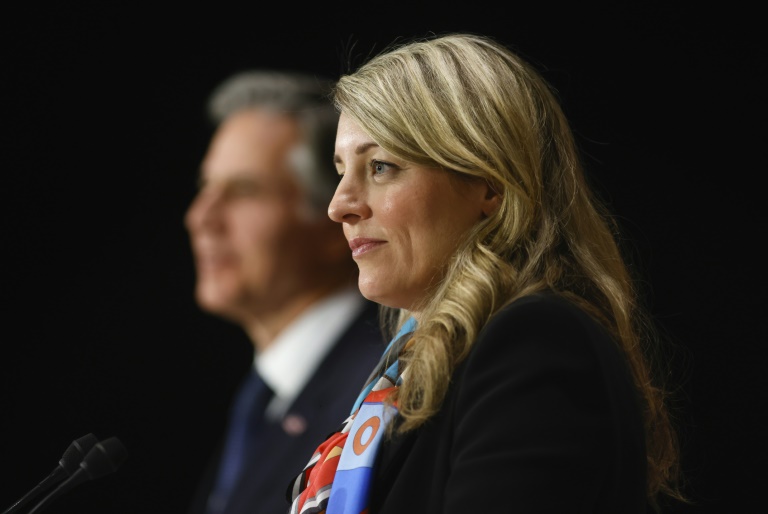
Canada’s foreign minister on Monday ordered her officials to summon Russia’s ambassador in Ottawa, Oleg Stepanov, over a series of “hateful” anti-LGBTQ tweets including one aimed at an openly lesbian federal minister.

The embassy posted the messages on Twitter in recent days after Russian lawmakers approved a bill banning all forms of LGBTQ “propaganda” that critics say ramps up a crackdown on “non-traditional” sexual relationships, affecting everything from books and films to social media posts.

“Unsurprisingly, the Russians have once again chosen hateful propaganda,” Foreign Minister Melanie Joly’s deputy director of communications, Emily Williams, said in a statement.

“This is an attack on the Canadian values of acceptance and tolerance. Minister Joly has directed Global Affairs Canada to summon the Russian ambassador to tell him as much,” she said.

The Russian tweets included a photo illustration of a pride flag overlaid with a red line inside a red circle, indicating it was banned, alongside remarks: “It is all about family. Family is a man and a woman and children.”

The embassy also hit back at Canadian Sports Minister Pascale St-Onge, who is openly lesbian, after she objected to the “Russian homophobic propaganda,” asking her to “explore and explain how you appeared in this world?”

“We absolutely can’t tolerate this rhetoric and even less the subsequent comments on Minister St-Onge’s response,” Williams said.

In an email to AFP, St-Onge said she was “profoundly offended by the Russian ambassador’s message against homosexuals while on Canadian soil,” calling it “an affront to the hard-earned rights of the whole LGBTQ2S+ community.”

She had written to the embassy to say: “Russian homophobic propaganda is not welcome here” and that “the treatment of LGBTQ2+ people in Russia is a disgrace and an attack on basic human rights.”

Russia has sought to present LGBTQ relationships as a product of dangerous Western influence, toughening its rhetoric as Moscow presses its military campaign in Ukraine.

Its embassy’s tweets also followed a deadly shooting at a Colorado LGBTQ club, and controversy over the rainbow logo at the World Cup in Qatar, where homosexuality is illegal.

Kim Kardashian 're-evaluating' Balenciaga ties after controversial ads

Reality show star and social media titan Kim Kardashian said she is “re-evaluating” her involvement with luxury fashion house Balenciaga, after it apologized for ads featuring children holding teddy bears wearing what critics called bondage gear.

The French brand, part of the luxury Kering group, last week withdrew the photos from the Spring/Summer 2023 advertising campaign. Two of them showed young children holding handbags in the shape of teddy bears, which were wearing black leather straps with silver studs.

Internet commentators noticed another photo from a Balenciaga-Adidas ad collaboration showed printed documents from a US Supreme Court ruling on child pornography.

After that revelation, Balenciaga filed a $25 million lawsuit against the company that produced the advertisements, according to reports. 

“As a mother of four, I have been shaken by the disturbing images,” Kardashian, a celebrity ambassador for the brand, wrote on Instagram Sunday night, adding that she had spent the last few days talking with the Balenciaga team “to understand for myself how this could have happened.”

“The safety of children must be held with the highest regard and any attempts to normalize child abuse of any kind should have no place in our society — period,” she wrote.

“As for my future with Balenciaga, I am currently re-evaluating my relationship with the brand,” the star posted to her account, which has 74 million followers.

Last week, Balenciaga posted an apology on its own Instagram account. 

“Our plush bear bags should not have been featured with children in this campaign. We have immediately removed the campaign from all platforms,” the post said. 

They then posted another apology, this time addressing the ad that featured the court documents referencing child pornography laws.  

“We apologize for displaying unsettling documents in our campaign. We take this matter very seriously and are taking legal action against the parties responsible for creating the set and including unapproved items for our Spring 23 campaign photoshoot,” the post said.

The New York Post reported that Balenciaga had filed a $25 million lawsuit against production company North Six and set designer Nicholas Des Jardins.

Amelia Brankov, a lawyer for Des Jardins, said there “certainly was no malevolent scheme going on.”

“As Balenciaga is aware, numerous boxes of documents simply were sourced from a prop house as rental items,” she told AFP.

“Moreover, representatives from Balenciaga were present at the shoot, overseeing it and handling papers and props, and Des Jardins as a set designer was not responsible for image selection from the shoot,” the lawyer added.

For Balenciaga, who apologized again on Monday following Kardashian’s comments, the controversy comes at a bad time.

It had ended its partnership with Kardashian’s ex-husband, rapper and designer Kanye West, last month after West, also known as Ye, posted an anti-Semitic tweet and appeared at a Paris fashion show wearing a shirt with the slogan “White Lives Matter,” a rebuke to the Black Lives Matter racial equality movement.

Global equities slide on China unrest

Global stocks fell Monday as protests across China in opposition to the government’s hardline zero-Covid policy fueled uncertainty about the world’s number-two economy.

Hundreds of people took to the streets in China at the weekend, in a wave of demonstrations not seen since pro-democracy rallies in 1989 were crushed.

China-linked stocks took the brunt of selling in Asia, with Hong Kong’s Hang Seng Index closing down more than one percent and Shanghai off 0.8 percent. 

Paris, London and Frankfurt all ended in the red Monday while Wall Street also began a heavy week of economic data releases deeply in negative territory.

After last week’s advance, all three major US indices lost at least 1.5 percent.

“Sentiment has turned sour as unrest across China grows,” said SPI Asset Management’s Stephen Innes.

“Risk of the situation escalating from here and short-term volatility remains high.”

A deadly fire in the Xinjiang region Thursday served as the catalyst for the public anger in China, with many blaming virus lockdowns for hampering rescue efforts.

People have taken to the streets in Beijing, Shanghai, Guangzhou and Chengdu, with many calling for an end to lockdowns after an easing of some measures had fueled hopes of a lighter pandemic approach.

Some demonstrators were even demanding the resignation of President Xi Jinping, who recently secured an unprecedented third term as the country’s leader.

The tightened containment measures were introduced as China battled record-high Covid infections.

Beijing’s zero-Covid policy means the threat of more growth-choking lockdowns, City Index analyst Fawad Razaqzada said in a note.

“This is going to hold back the yuan and Chinese stocks, and potentially risk assets outside of China,” added Razaqzada.

The prospect of a hit to demand in the world’s biggest crude importer also hammered oil prices early in the day. But the commodity later rebounded following a rumor that oil exporters could trim production.

– Eyes on Fed boss –

The weakness “isn’t just about China. The reports out of China have also become a good excuse to take some money off the table following a big run by the market,” Briefing.com analyst Patrick O’Hare said in a note.

The selling has taken a bit out of recent gains across markets, sparked by hopes of a slowdown in the Federal Reserve’s interest rate hikes, with US inflation finally showing signs of softening.

However, some observers said the protests might provide long-term benefits as they could force President Xi to shift away from his strict, economically damaging measures sooner.

Investors are also looking ahead to the release of US jobs data at the end of the week, which could provide clues about the Fed’s next moves, while watching for speeches by central bank boss Jerome Powell and other key policymakers.

– Key figures around 2130 GMT –

New York – Dow: DOWN 1.5 percent at 33,849.46 (close)

New York – S&P 500: DOW 1.5 percent at  3,963.94 (close)

New York – Nasdaq: DOWN 1.6 percent at 11,049.50 (close)

London – FTSE 100: DOWN 0.2 percent at 7,474.02 (close)

Frankfurt – DAX: DOWN 1.1 percent at 14,383.36 (close)

Paris – CAC 40: DOWN 0.7 percent at 6,665.20 (close)

EURO STOXX 50: DOWN 0.7 percent at 3,935.51 (close)

Tokyo – Nikkei 225: DOWN 0.4 percent at 28,162.83 (close)

Hong Kong – Hang Seng Index: DOWN 1.6 percent at 17,297.94 (close)

Shanghai – Composite: DOWN 0.8 percent at 3,078.55 (close)

Euro/dollar: DOWN at $1.0347 from $1.0395 on Friday

Dollar/yen: DOWN at 138.87 yen from 139.19 yen

Pound/dollar: DOWN at $1.1952 from $1.2092

Euro/pound: UP at 86.50 pence from 85.96 pence

West Texas Intermediate: UP 1.3 percent at $77.24 per barrel

Brent North Sea crude: DOWN 0.5 percent at $83.19 per barrel

UK start-up behind algae-based packaging bids for Earthshot glory

A British start-up founded by two ex-students from France and Spain, crafting biodegradable packaging from marine plants, is aiming to seal royal approval this week when Prince William unveils his latest Earthshot prizes.

Notpla — whose mantra is “we make packaging disappear” — is competing with 14 other firms for five prestigious awards, to be dished out by the prince and a star-studded cast at a ceremony in US city Boston on Friday.

In its second year, the initiative to reward innovative efforts to combat climate change will then be broadcast on UK and US television on Sunday and Monday, respectively, as well as online.

The five winners will each receive a £1 million ($1.2 million) grant. 

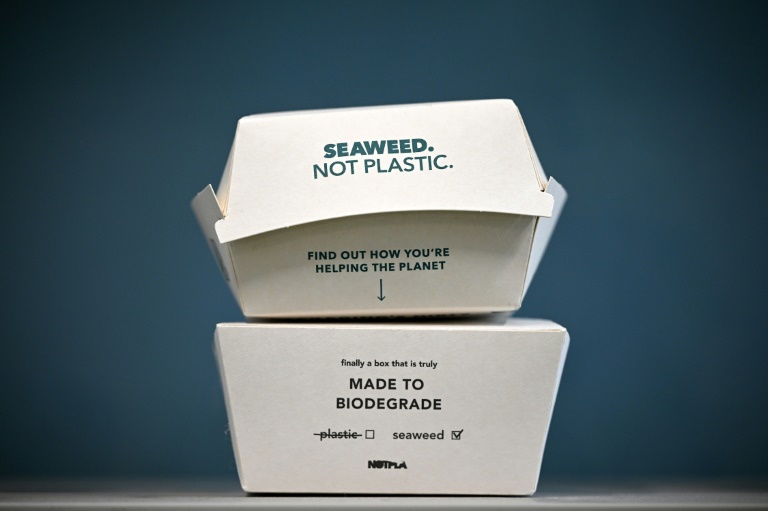
The co-creator of Notpla, which rather than using environmentally damaging plastics makes various naturally degrading — and even edible — packaging from seaweed and other marine plants, says they have already felt the competition’s benefits.

“Just being there is a massive boost to our visibility,” French co-founder Pierre Paslier, 35, told AFP.

“So that’s already a huge asset to be part of the finalists and I think that if we win, it’s just going to be that on a much larger scale.”

Together with fellow former Royal College of Art student and co-founder Rodrigo Garcia Gonzalez, 38, the duo began their eco-business adventure in a small London kitchen. 

They were intent on finding natural alternatives to petrochemicals-based packaging, sampling a variety of materials from tapioca seeds to other starches. 

– Seaweed ‘family’ –

“Eventually, we found seaweed,” explained Paslier, a former packaging engineer at French cosmetics giant L’Oreal who created Notpla with Gonzalez in 2014. 

“Now we have a flexible film, we make seaweed paper, we have rigid materials. So it’s really the beginning of a family of seaweed-based technologies that hopefully can help us stop using so much plastic.”

He said their early kitchen exploits had eventually led to the secretly-formulated “Ooho” creation.

An edible bubble membrane made from seaweed — holding water, sports drinks or other flavoured liquids including cocktails and sauces — it is marketed as a replacement for single-use plastic cups, bottles and sachets. 

Tasting like a gelatinous candy, it can be consumed whole — like a cherry tomato — or from a larger sachet, making it ideal at sporting events and festivals.

It has been widely used at marathons across the UK, including the 2019 London run.

Viral online interest has helped attract the attention of investors, with Notpla expanding rapidly to boast more than 60 employees and finding itself on the verge of manufacturing its products on an industrial scale.

Production of “Ooho” takes place at the firm’s offices in a large warehouse, a stone’s throw from the Queen Elizabeth Olympic Park in east London. 

Notpla’s growing young team also has laboratories there as it continues to develop new algae-based products.

– ‘Very renewable’ –

Among the more recent results: a naturally biodegradable coating protecting takeaway food boxes from grease and liquids. 

The company now supplies industry giant Just Eat in Britain and five other European countries. 

It also provided the packaging for all the food sold during the final of the women’s European football championships at London’s Wembley Stadium in July. 

Another of its new innovations is a transparent package for dry goods, such as pasta. 

Paslier noted that although his products may currently cost more than plastic alternatives, the latter’s sales price fails to account for “the impact on societal ecosystems, health for humans or for marine life”.

“This is basically going to be paid for [by] the next generations and that doesn’t come into the price of plastic that you buy on the market today,” he added.

“So what we want is to be the most affordable, sustainable packaging solution that takes into account its whole lifetime costs.”

Paslier believes seaweed can become the most affordable packaging option, in large part due to its fast growth rate which can top one metre (3.3 feet) a day in the lab.

“It’s a very, very renewable resource,” he added, noting it doesn’t require any fresh water or fertilisers.

Its emergence is undoubtedly timely.

A recent OECD report found, at the current rate, worldwide plastic waste will triple by 2060 to one billion tonnes per year, much of which will pollute the oceans and threaten many species. 

Italy landslide death toll rises to 8, warnings 'ignored'

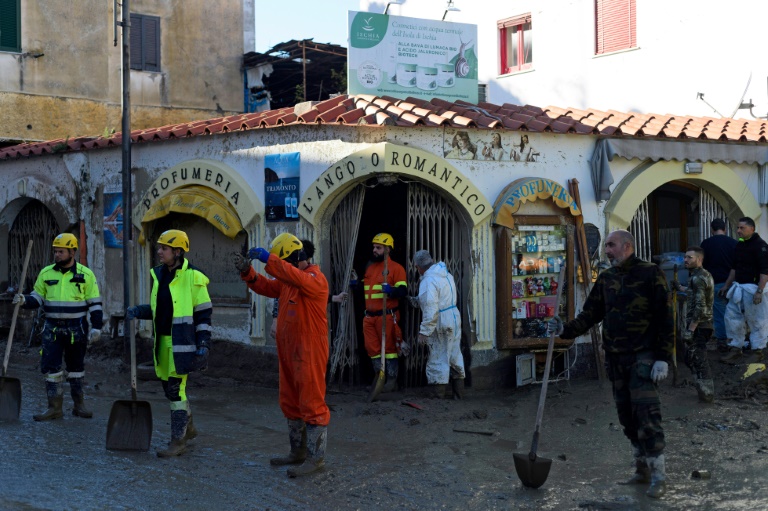
Search parties on Monday recovered the body of an eighth victim of a landslide on the small Italian island of Ischia, as a former mayor said his calls for an evacuation had been ignored.

A wave of earth and debris crashed through the small town of Casamicciola Terme amid heavy rains on Saturday, destroying houses and sweeping cars down to the sea.

The latest body to be recovered was a 15-year-old boy, killed along with his younger brother and sister. Four people are still missing, authorities said.

As the island mourned its dead, including a 21-day-old baby, it emerged Monday that former mayor Giuseppe Conte had called four days earlier for at-risk areas to be evacuated.

He sent 23 emails to authorities, but “nobody answered me,” he told the Corriere della Sera.

Geologist Aniello Di Iorio told the Corriere della Sera daily there were “high risks” of further landslides on parts of Ischia, a lush island near Capri that is thronged with tourists in summer.

Experts said the disaster was caused by a fatal mix of deforestation, overdevelopment, and a lack of mitigation strategies.

National Council of Architects head Francesco Miceli said it was “a tragedy foretold”.

“This is not an isolated case, the risk areas are numerous and affect many regions of our country,” he said.

Italy needs to “quickly define more incisive territorial control strategies (and) concrete intervention programmes, and disburse adequate resources”, he said.

The devastation in Ischia comes just weeks after 11 people died in heavy rain and flooding in the central Italian region of Marche.

Talks kick off on global plastic trash treaty

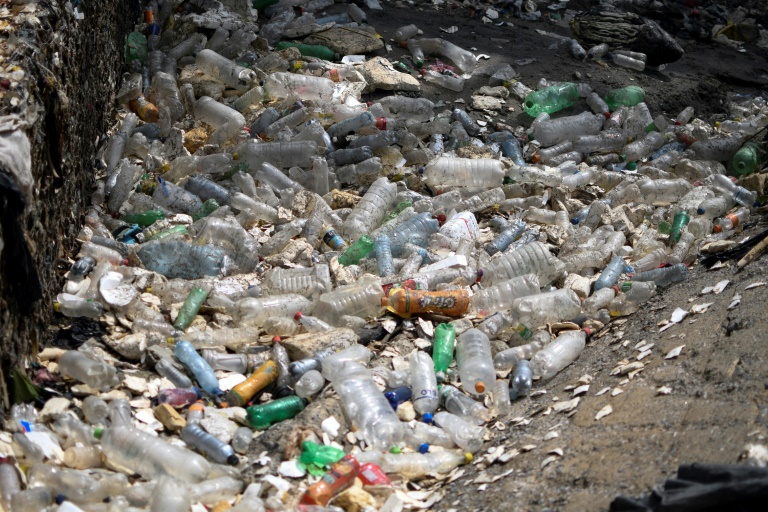
Despite decades of effort, plastic pollution is only getting worse — a gloomy fact that representatives of almost 200 nations meeting in Uruguay Monday are determined to change.

Delegates in the seaside city of Punta Del Este began charting a path to the first global treaty to combat plastic pollution.

“We know that the world has a significant addiction to plastic,” said Inger Andersen, Executive Director of the Nairobi-based United Nations Environment Programme, at the start of the talks.

“A plastic crisis is also a climate crisis. Plastic has a heavy carbon footprint and a heavy chemical footprint,” she said.

The Uruguay meeting comes after the parties at the UN Environment Assembly in Nairobi in March agreed to create an intergovernmental committee to negotiate and finalize a legally binding plastics treaty by 2024.

The decision was seen as the biggest environmental advance since the Paris Agreement to curb global warming was signed in 2015.

By some estimates, a garbage truck’s worth of plastic is dumped into the sea every minute. The amount of plastic entering the oceans is forecast to triple by 2040.

At the same time, microplastics have been found in human blood, lung, spleen, and kidney tissue, and even in fetal tissue.

Experts believe it is only an international, legally binding agreement that could truly begin to halt one of the worst environmental scourges on the planet — if there is enough political will.

The meeting in Uruguay will last for five days, and is only a first step in the negotiations process. Another four global meetings are planned to carry the process forward.

Technical matters, such as how to structure the two years of talks, or even what should be included in the treaty, are up for discussion.

“It is ambitious to end plastic pollution, but it is entirely doable,” said Andersen.

She said the delegates would work together to “transform the entire life cycle of plastic,” from the production of polymers, to the way brands and retailers use plastic, to the waste that emerges.

“That means working with the private sector, that means working with environmentalists, that means working with communities, that means strong political leadership,” said Andersen.

According to the World Wide Fund for Nature (WWF) the total plastic in the ocean has increased 50 percent in the past five years. This is despite a 60 percent increase in policies to fight plastic pollution on the country level.

“The unique potential of a global treaty is to hold all signatories to a high common standard of action,” the WWF said in a report on the treaty published this month.

Close Bitnami banner
Bitnami