World

Qatari World Cup streaming service partly inaccessible in Saudi

The official streaming platform of the World Cup is inaccessible in much of Saudi Arabia, subscribers told AFP on Saturday, saying they had received no explanation for the outage.

The platform, Tod TV, is owned by the Qatari broadcaster beIN Media Group, which was banned in Saudi Arabia for several years during a row between the two countries but was restored in October 2021. 

“Due to matters beyond our control, we are experiencing an outage in the Kingdom of Saudi Arabia, which is currently impacting TOD.tv, the official streaming partner of the FIFA World Cup Qatar 2022. Additional information will be provided as soon as it is available,” beIN said in a message sent to partners and subscribers. 

The Saudi government did not respond to a request for comment about the disruption, while beIN declined to comment. 

Tod TV is the official World Cup streaming service in 24 countries in the Middle East and North Africa. 

Several subscribers in Saudi Arabia told AFP on Saturday they had been unable to access the service since the World Cup began on November 20. 

One said the service cut out fully about an hour before the broadcast of the opening ceremony. 

Another said the service still works briefly but for no more than 10 minutes before an error message appears. 

“Sorry, the requested page is violating the regulations of Ministry of Media,” the error message says. 

“I want my money,” one subscriber told AFP, saying efforts to get a refund on the service, which costs about 300 Saudi riyals (roughly $80) per month, had been unsuccessful. 

beIN is broadcasting 22 World Cup matches for free in Saudi Arabia, including those of the Saudi Green Falcons, who stunned the world on Tuesday with their 2-1 defeat of Argentina.

The Saudi side were set to face Poland on Saturday afternoon.

– Mending ties –

Crown Prince Mohammed bin Salman, Saudi Arabia’s 37-year-old de facto ruler, orchestrated a regional boycott of Qatar beginning in June 2017, the same month he became first in line to the throne. 

Saudi Arabia, the United Arab Emirates, Bahrain and Egypt cut ties with Doha over allegations it supported extremists and was too close to arch-rival Iran — allegations Doha denied.

During the boycott, beIN Media Group was banned in Saudi Arabia. 

But Riyadh announced in October last year it was lifting the ban, smoothing the way for the takeover of England’s Newcastle United football club by a Saudi-backed consortium.

The kingdom’s sovereign wealth fund paid $408 million for an 80 percent stake in the Premier League club.

The Saudi purchase of Newcastle proved deeply controversial, with critics quick to deride it as an example of “sportswashing”, or using athletics to distract from human rights abuses. 

The sovereign wealth fund, known as the Public Investment Fund, is now considering investing in beIN, Bloomberg reported last month.

Media Minister Majid al-Qasabi is a member of the fund’s board. 

Prince Mohammed attended the World Cup opening ceremony where he posed with its emir, Sheikh Tamim bin Hamad Al Thani, while wearing a Qatar scarf. 

Prince Mohammed also ordered all government ministries and agencies “to provide any additional support or facilities required by Qatar” to host the event, according to a sports ministry statement.

Macau casino giants win licence renewals, Malaysia's Genting loses bid

Macau said Saturday it has renewed the licences of its six major casino operators, with the city aiming for terms that would help diversify its economy away from gambling.

The former Portuguese colony is the only territory in China where casinos are allowed, and it issues just six operating concessions for a multi-billion-dollar industry that, until the pandemic hit, was bigger than Las Vegas.

The six current operators — including the subsidiaries of Las Vegas giants MGM, Wynn and Sands — had submitted renewal applications but a firm linked with Malaysian gaming and resorts giant Genting challenged the long-running oligopoly with a surprise bid.

That attempt failed, however, as Macau’s leader Ho Iat-seng announced that the existing licence holders have been granted provisional concessions.

“Development of non-gaming businesses is the most important factor” in the government’s decision, Andre Cheong, Macau’s administration and justice minister, told reporters.

He did not provide details about what licence holders would be required to invest and where.

The government said it will negotiate details with the six operators and the new licences will take effect from the beginning of next year.

Macau has long been keen to diversify away from gambling into tourism and leisure.

The city’s casinos were battered by pandemic-era restrictions that drove away the mainland Chinese gamblers who made up the vast majority of customers.

“The source of our tourists is too concentrated,” Cheong said Saturday, describing the situation as “not healthy”.

Gross gaming revenue was down 98 percent from pre-pandemic levels and fell to a record low in July, officials earlier announced.

– Scrutiny and reform –

Even if pandemic measures are fully lifted, it is unlikely Macau’s casinos will see a return to their headiest, freewheeling days.

Chinese President Xi Jinping has spearheaded an anti-corruption campaign that has seen increased scrutiny of the high rollers and officials who travel to gamble in Macau, where cases of money laundering are common.

For decades, Macau’s gaming industry was run as a monopoly by casino magnate Stanley Ho, but in 2002 more operators were brought in and issued 20-year concessions as part of a liberalisation effort. 

In January, authorities slashed the concession period of gaming licences to 10 years and unveiled regulations seeking to increase local ownership and government supervision.

Those factors did not deter the bid from GMM, a company controlled by Malaysian tycoon and Genting chairman Lim Kok Thay.

Best known for its resort in the Malaysian highlands, Genting also operates in Las Vegas and Singapore. It backed a ski resort in China that hosted this year’s Winter Olympics.

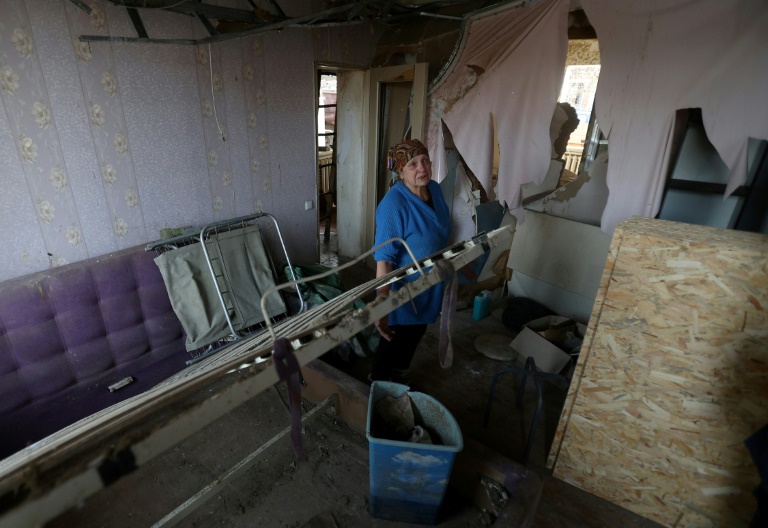
In a devastated Ukrainian village, winter brings more misery

As the temperatures plunge in eastern Ukraine, Sergiy Khmil says he has little choice but to use the stacks of ammunition boxes left by the retreating Russians forces as firewood this winter.

Without the wood, Khmil says he will probably freeze amid the ruins of his destroyed village of Kamyanka. 

“The most difficult thing is to get enough chopped wood,” Khmil explains. “There’s a huge queue to get the donated wood from volunteers.”

With his home largely destroyed by shelling, Khmil is still hard at work converting his summer kitchen into impromptu winter lodging — now filled with blankets, ammunition crates and a furnace pieced together from Russian shell casings.

“I need to cover the walls with another layer of insulation,” Khmil adds, while scanning the modest room that he hopes will see him through the winter.

In March, the village was shelled and strafed by helicopters before infantry and tanks stormed the area as Russian forces advanced south from Izyum during the early days of the invasion. 

After occupying the area, the Russians settled in — commandeering buildings, looting homes, stealing booze and driving drunk, according to residents.

“They started to break into garages and houses and partying drunk overnight,” says resident Volodymyr Tsybulya, 53, during a break from repairing the roof of his sister’s home. 

“They used to throw grenades for fun. I came to my place and found my bathroom destroyed by a grenade.”

And on it went for months, until a lighting offensive by Ukrainian forces in September crushed the Russian’s northeastern flank, routing its troops and sending them further east in disarray. 

In the retreating army’s wake, a trail of destroyed villages was left in ruin, including Kamyanka on the outskirts of Izyum. 

In the weeks since retaking control of the area, Ukrainian officials have scrambled to pick up the pieces, while uncovering mass graves and taking stock of the damage to the formerly occupied territories. 

– ‘War is chasing us’ –

Izyum deputy mayor Mykhaylo Ishyuk says the situation is stark at the onset of winter, with nearly 30 to 40 percent of the roofs in the city destroyed from the fighting. 

A lack of building materials and construction equipment, and a labour shortage has made the much-needed repairs all the more unlikely as the cold sets in. Temperatures are forecast to drop below freezing in the coming days. 

The situation in Kamyanka is even worse, he admits. Nearly all the roofs on the 550 homes and buildings in the village have been damaged or outright destroyed. 

“We’re watching the situation carefully,” he adds.

He points to the increase in power cuts following waves of Russian attacks on infrastructure sites across Ukraine that have left Izyum and surrounding areas with less and less electricity and heating. 

In Kamyanka, Lyubov Perepelytsya drifts between recounting the horrors experienced during the Russian occupation and sharing her fears about the coming winter. 

“They looted literally everything. It’s such vile behaviour,” the 65-year-old resident says through tears as she describes the destruction of her home and the looting of her valuables. 

“How could you treat people in such a bad manner?”

Most of the village’s 1,200 population have left the area but Perepelytsya and her ailing husband will join a few dozen others who are planning to hunker down for the winter in Kamyanka, come what may. 

“I have cried a river. This is our sixth place (during the war). It looks like the war is chasing us everywhere we go,” says Perepelytsya. 

“I just don’t know how we can make it through this. I don’t know.”

Three killed in twin school shootings in Brazil

At least three people including an adolescent girl were killed and 11 others wounded Friday when a 16-year-old shooter wearing Nazi symbols opened fire on two schools in southeastern Brazil, officials said.

Authorities in the city of Aracruz, in Espirito Santo state, said the shooter fired on a group of teachers at his former school, killing two people and leaving nine others wounded.

He then left that school — a public primary and secondary school — and went to a nearby private school where he killed an adolescent girl and wounded two other people, officials said.

Authorities have arrested the shooter, said Governor Renato Casagrande, who declared three days of mourning in the state.

“He was a student at (the first) school until June, a 16-year-old minor. His family then transferred him to another school. We have information he was undergoing psychiatric treatment,” Casagrande told a news conference.

He said some of the survivors’ lives remained at risk from their wounds.

“We are rooting and praying for them to recover,” he said.

Security camera footage aired on Brazilian media showed the shooter running into the school dressed in military-style camouflage and brandishing a gun. He then sprinted through the hallways, sending staff fleeing in terror as he began firing shots.

Investigators said he had a swastika on his fatigues and that they were looking into whether he had links to any extremist organisations. 

Officials said the shooter, a policeman’s son, used two handguns in the attack, both registered to his father — one his service firearm, the other a privately registered weapon.

Casagrande said the boy appeared to have planned the attack carefully, breaking in through a locked door and skirting the school’s security guard.

He then entered the teachers’ lounge — the first room he came to — and opened fire, the governor said.

“He was looking to shoot people. He opened fire on the first people he came across,” he said.

Civil police commissioner Joao Francisco Filho told reporters it appeared the suspect had been planning the attack for “two years,” and that he did not seem to have a “definite target.”

Investigators could be seen carrying victims’ bodies in coffins and loading them into police trucks outside the school, which was cordoned off with crime scene tape, an AFP photographer said.

The city has a population of around 100,000 people.

– ‘Absurd tragedy’ –

School shootings are relatively rare in Brazil, but have been increasing in recent years.

Brazil’s deadliest school shooting left 12 children dead in 2011, when a man opened fire at his former elementary school in the Rio de Janeiro suburb of Realengo, then killed himself.

In 2019, two former students shot dead eight people at a high school in Suzano, outside Sao Paulo, then also took their own lives.

Brazilian president-elect Luiz Inacio Lula da Silva called the latest shootings an “absurd tragedy.”

“I was saddened to learn of the attacks,” he wrote on Twitter.

“All my solidarity to the victims’ families… and my support to Governor Casagrande for the investigation and assistance to the two school communities.”

Lula, who was previously Brazil’s president from 2003 to 2010, will take office on January 1 after defeating far-right President Jair Bolsonaro in elections last month.

He has been sharply critical of Bolsonaro’s dramatic relaxation of gun-control laws.

Since ex-army captain Bolsonaro became president in 2019, the number of registered gun owners in Brazil has more than quintupled, from 117,000 to 673,000, boosted by a series of presidential decrees relaxing regulations on firearms and ammunition.

Public security expert Bruno Langeani of research institute Sou da Paz told AFP the outgoing administration’s policies had made such attacks more likely.

“The increase in availability of firearms in recent years promoted by the Bolsonaro government facilitates this kind of episode,” he said.

The latest attacks spurred calls for gun policy reform.

“Gun policy needs to be reviewed,” tweeted senator-elect Wellington Dias, a Lula ally.

Ukrainian Holocaust survivors find safe haven in Germany

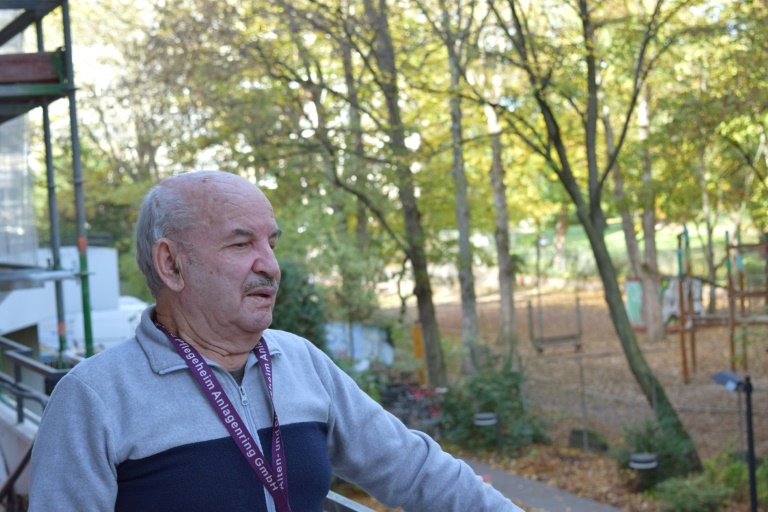
Borys Shyfrin fled as a young child, along with other members of his Jewish family, from the Nazis.

More than eight decades on, the Ukrainian Holocaust survivor has been forced from his home once more — but this time he’s found a safe haven in Germany.

Shyfrin is among a number of Ukrainian Jews who lived through the Nazi terror and have now fled to the country from which Adolf Hitler’s Third Reich launched its drive try to wipe Jews out.

He never wanted to leave Mariupol, where he had lived for decades. But Russia’s brutal assault on the Ukrainian port city made it impossible to stay.

“There was no gas, no electricity, no water whatsoever,” the 81-year-old told AFP from a care home in Frankfurt, recalling the relentless bombardment by Moscow’s forces.

“We were waiting for the authorities to come… We waited for a day, two days a week.”

Bodies of people killed by bombs and gunfire littered the streets, recalled Shyfrin, a widower who had lost contact with his only son.

“There were so many of them… no one picked them up. People got used to it — no one paid attention.”

People scraped by finding what food they could, with water supplied by a fire engine that made regular visits to his neighbourhood.

Shyfrin’s apartment was damaged during the fighting in Mariupol — defended so fiercely that it became a symbol of Ukrainian resistance — and he spent much time sheltering in the cellar of his building.

– ‘Became homeless’ –

The elderly man eventually left Mariupol with the aid of a rabbi, who helped the local Jewish population get out of the city.

He was evacuated to Crimea, and from there, travelled on a lengthy overland journey through Russia and Belarus, eventually arriving in Warsaw, Poland. 

After some weeks in Poland, a place in a care home was found in Frankfurt. In July, he was transported to Germany in an ambulance, with the help of the Claims Conference, a Jewish organisation that has been aiding the evacuation of Ukrainian Holocaust survivors.

Shyfrin, who walks with the aid of a stick, is still processing the whirlwind of events that carried him unexpectedly to Germany.

The outbreak of war was a “very big surprise”, he said.

“I used to love (Russian President Vladimir) Putin very much,” said Shyfrin, who is a native Russian speaker, did military service in the Soviet Union, and went on to work as a radio engineer with the military.

“Now I do not know whether Putin is right to be at war with Ukraine or not — but somehow, because of this war, I have become homeless.”

Shyfrin was born in 1941, in Gomel, Belarus.

When he was just three months old, his family fled to Tajikistan to escape German Nazi forces who were occupying the region.

Many of Belarus’s Jews died during the Holocaust, in which the Nazis killed a total of six million European Jews.

In neighbouring Ukraine, the once-large Jewish community was also almost completely wiped out.

After the war, his family returned to Belarus and Shyfrin completed his studies, did military service, and settled in Ukraine, then part of the Soviet Union, in the mid-1970s.

– ‘Traumatised’ –

The pensioner seemed philosophical about the twist of fate that has forced him to leave his home.

“Well, it’s not up to me,” he said, when asked about having to flee war for the second time in his life.

His most immediate concerns are more practical — such as how to access his money back home.

“I can’t even receive my honestly earned military pension,” he said.

He recently moved to a new care home run by the Jewish community, where there are more Russian speakers.

As well as helping Shyfrin on the final leg of his journey, the Claims Conference provided him with financial assistance.

It has evacuated over 90 Ukrainian Holocaust survivors to Germany since the outbreak of the conflict, a break from the organisation’s usual work of ensuring that survivors get compensation and ongoing support.

The body had long been helping to run care programmes for Holocaust victims in Ukraine.

But, as the conflict intensified, it became clear such care programmes could no longer be sustained, particularly in the east, said Ruediger Mahlo, the Conference’s representative in Germany.

“Because many of the survivors needed a lot of care and could not survive without this help, it was clear we had to try to do everything to evacuate (them),” he told AFP.

Getting them out involved huge logistical challenges, from finding ambulances in Ukraine to locating suitable care homes.

For many of the frail Holocaust survivors, it can be a struggle to grasp the fact that they have found refuge in Germany, said Mahlo.

They are fleeing to a country that “had in the past persecuted them, and done everything to kill them,” he said.

“Certainly, they are traumatised,” he said.

burs-sr/hmn/fg/mca

Deadly Xinjiang fire stirs anger at China's zero-Covid policy

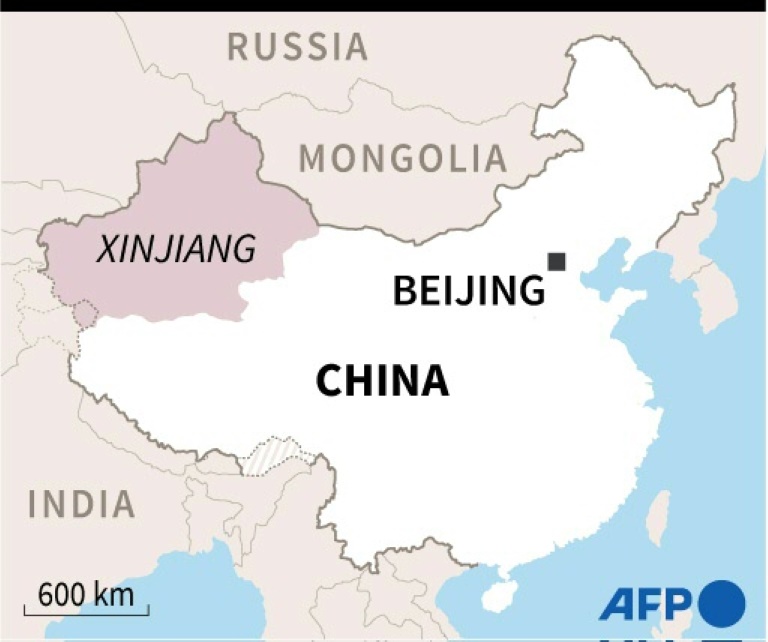
A deadly fire in China’s northwest Xinjiang region has spurred an outpouring of anger at the country’s zero-Covid policy, as Beijing fights growing public fatigue over its hardline approach to containing the coronavirus.

Ten people were killed and nine injured when the blaze ripped through a residential building in the regional capital Urumqi on Thursday night, according to state news agency Xinhua.

Online posts circulating on both Chinese and overseas social media platforms since Friday have claimed that lengthy Covid lockdowns in the city hampered rescue attempts.

Some videos appeared to show crowds of people taking to the streets of Urumqi to protest against the measures.

The action comes against a backdrop of mounting public frustration over the government’s zero-tolerance approach to Covid and follows sporadic protests in other cities.

China is the last major economy wedded to a zero-Covid strategy, with authorities wielding snap lockdowns, lengthy quarantines and mass testing to snuff out new outbreaks as they emerge.

Footage partially verified by AFP shows hundreds of people massing outside the Urumqi city government offices during the night, chanting: “Lift lockdowns!”

In another clip, dozens of people are seen marching through a neighbourhood in the east of the city, shouting the same slogan before facing off with a line of hazmat-clad officials and angrily rebuking security personnel.

AFP journalists were able to verify the videos by geolocating local landmarks, but were unable to specify when exactly the protests occurred.

A wave of anger simmered on the Weibo social media platform on Friday amid claims that parked electric vehicles left without power during lengthy lockdowns blocked fire engines from entering a narrow road to the burning building.

“I’m also the one throwing myself off the roof, trapped in an overturned (quarantine) bus, breaking out of isolation at the Foxconn factory,” read one comment referencing several recent incidents blamed on zero-Covid strictures.

Chinese authorities censor online content deemed politically sensitive and appeared to have scrubbed many posts and hashtags relating to the fire by Saturday morning.

Urumqi police said in a Friday post on Weibo that they had detained a woman surnamed Su for “spreading online rumours” relating to the number of casualties from the blaze.

– Rare apology –

An initial investigation showed the blaze to have been caused by a board of electric sockets in the family bedroom of one of the apartments, according to state broadcaster CCTV.

Rescue attempts were complicated by “a lack of parking spaces and a large number of private vehicles parked on both sides” of a narrow road to the building, city fire and rescue chief Li Wensheng told reporters late Friday, CCTV said.

Urumqi mayor Maimaitiming Kade offered a rare formal apology for the blaze at the briefing, according to the broadcaster.

But officials also pushed back against some of the online allegations, denying that residents’ doors had been clamped shut with iron wiring.

Covid controls have confined some communities in Urumqi — a city of four million people — to their homes for weeks on end.

But in the wake of the protests, officials on Saturday said the city “had basically reduced social transmissions to zero” and would “restore the normal order of life for residents in low-risk areas in a staged and orderly manner”.

Pandemic fatigue has been growing in China, with violent protests erupting at a vast Covid-hit factory in the central city of Zhengzhou in recent days due to a dispute over pay and labour conditions.

China recorded 34,909 new domestic infections on Saturday, the vast majority of which were asymptomatic, according to the National Health Commission.

Xi tells Kim China willing to work with N.Korea for 'world peace': KCNA

Chinese President Xi Jinping told North Korean leader Kim Jong Un that Beijing was willing to work with Pyongyang for world peace, North Korean state media said Saturday.

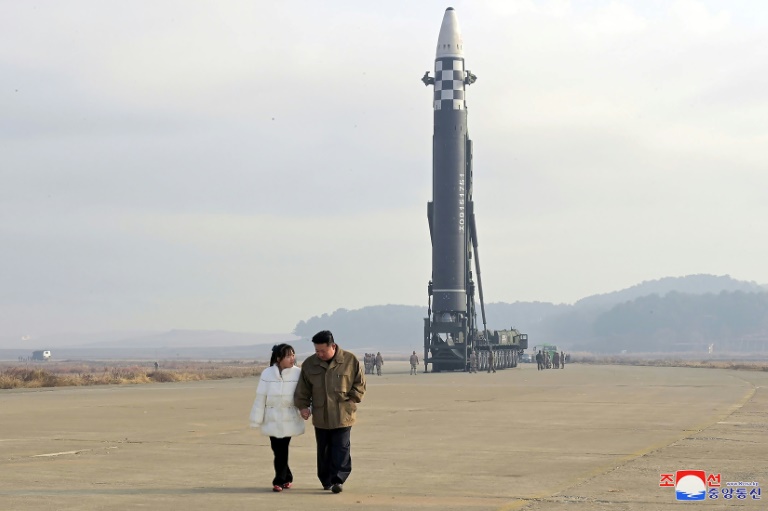
The message from Xi came days after North Korea fired an intercontinental ballistic missile in one of its most powerful tests yet, declaring it would meet perceived US nuclear threats with nukes of its own.

North Korea has conducted a record-breaking blitz of missile launches in recent weeks and fears have grown that it is building up to a seventh nuclear test, its first since 2017.

In his message to Kim, Xi said Beijing was ready to work with the North for “peace, stability, development and prosperity of the region and the world,” Pyongyang’s official Korean Central News Agency (KCNA) reported.

Xi said he was willing to collaborate with Pyongyang as “changes in the world, times, and history are taking place in unprecedented ways,” KCNA said, quoting from the message it said was received in response to congratulations from Kim after the Chinese Communist Party Congress last month handed Xi a third term.

Days before North Korea’s ICBM launch, Xi met on the sidelines of a Group of 20 summit in Bali with US President Joe Biden, who voiced confidence that Beijing does not want to see a further escalation by Pyongyang.

Washington has said it wants China, Pyongyang’s most important ally and economic benefactor, to use its influence to help rein in North Korea.

The November 18 missile launch appeared to be Pyongyang’s newest ICBM with the potential range to hit the US mainland.

The UN Security Council convened an open meeting over the launch, with the United States, Britain, France and India among 14 nations to “strongly condemn” Pyongyang’s actions.

But a Western diplomat told AFP that China and Russia had chosen not to put their names to Monday’s statement.

Earlier this month, the United States accused Beijing and Moscow of protecting Pyongyang from further punishment.

In May, China and Russia vetoed a US-led effort to tighten sanctions on North Korea in response to earlier launches.

Pyongyang is already under multiple sets of international sanctions over its nuclear and ballistic missile programmes, and China accounts for more than 90 percent of the impoverished country’s bilateral trade.

Russian shelling kills 15 in Kherson as Ukraine battles to restore power

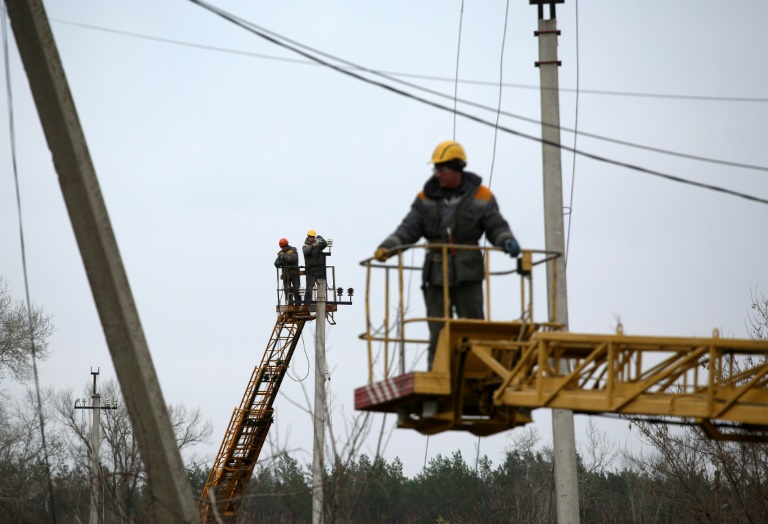
Russian shelling of the southern Ukrainian city of Kherson killed 15 civilians Friday, officials said, as engineers across the country sought to restore heat, water and power to major cities.

Throughout the country, Russian air strikes in recent weeks have brought Ukraine’s energy infrastructure to its knees as winter approaches and temperatures near freezing, spurring fears of a health crisis and a further exodus.

Ukrainian President Volodymyr Zelensky said more than six million households in the country were still affected by power cuts, two days after targeted Russian strikes on Ukraine’s energy infrastructure.

The country’s national energy company, Ukrenergo, said late Friday that the grid was still facing a 30 percent deficit, with its technicians working “around the clock” to restore power. But it said it expected to increase coverage over the weekend, boosted by additional nuclear power.

The attack on Kherson, a key southeastern city recently recaptured by Ukrainian forces, marked the deadliest Russian bombardment in recent days.

A total of “15 residents were killed and 35 injured, including one child, as a result of enemy shelling”, city official Galyna Lugova said. Several “private houses and high-rise buildings” had been damaged, she added.

“The Russian invaders opened fire on a residential area with multiple rocket launchers. A large building caught fire,” said Yarovslav Yanushovich, head of the Kherson military administration.

Earlier Friday, the region’s governor said patients in the city hospital and others from a psychiatric unit had been evacuated because of “constant Russian shelling”.

The Kherson city council said it was offering to evacuate civilians to other regions.

The attacks on power stations and other infrastructure resources throughout Ukraine are Russia’s latest attempt to force Ukrainian capitulation after Moscow’s forces failed to topple the government and capture Kyiv in the war’s early stages.

– Critical infrastructure –

In the capital, where about half of residents were still without power two days after Russian strikes hammered the country’s energy grid, engineers worked to restore services.

“We have to endure this winter, a winter that everyone will remember,” Zelensky said on social media, as UK Foreign Secretary James Cleverly visited to announce a new aid package.

Ukrainian Prime Minister Denys Shmygal told a government meeting, “Almost all Ukraine’s critical infrastructure has been reconnected.” 

Critical infrastructure includes water utilities, heat generation plants, hospitals and emergency services.

But Shmygal said ordinary consumers continued to face scheduled power cuts across every region of the country.

Ukraine’s Western allies have denounced the Russian attacks on energy infrastructure as a “war crime”. The strikes have come in the wake of a string of military setbacks for Russia on the frontlines.

Moscow insists it is targeting only military-linked infrastructure and has blamed Kyiv for the blackouts, saying Ukraine can end the suffering by agreeing to Russian demands.

– Putin meets mothers –

Meanwhile, for the first time since he launched the war in February, Russian President Vladimir Putin met the mothers of soldiers fighting in Ukraine, assuring those whose children had been killed that he and Russia’s elite “share this pain”.

“I want you to know I, personally, and the entire leadership of the country share this pain,” he told them.

He said that many reports about the conflict could not be trusted, describing them as “fake news, deceit and lies”.

Russia has introduced legislation that effectively bans public criticism of the war. 

Kremlin critics accuse authorities of concealing the real number of dead and wounded Russian troops.

Anger and concern have built across Russia since the Kremlin announced in September that hundreds of thousands of well-trained and well-equipped conscripts would be sent to the battlefield to bolster Moscow’s struggling campaign.

But chaos ensued, with widespread reports of exempted men — including the elderly and infirm — being dispatched to the front and conscripts dying after receiving nearly no training, forcing the Kremlin to concede “mistakes”.

Putin’s meeting with the soldiers’ mothers is a sign the Kremlin takes the growing malaise seriously.

Visiting Kyiv on Friday, Britain’s foreign minister announced new aid for Ukraine, including ambulances and support for victims of sexual violence by Russian soldiers.

“Russia is continuing to try and break Ukrainian resolve through its brutal attacks on civilians, hospitals and energy infrastructure,” Cleverly said.

“Russia will fail,” he said, vowing UK support “will continue for as long as it takes”.

Meanwhile, the head of Russian mercenary outfit Wagner, Yevgeny Prigozhin, said Friday that a former US Marine general and several British and Finnish fighters were operating with the group in Ukraine.

“(Finns) are fighting in a British battalion (as part of Wagner PMC), which is commanded by a US citizen, a former general of the Marine Corps,” Prigozhin’s press service said he told Finnish newspaper Helsingin Sanomat.

South Korean capital launches self-driving bus experiment

South Korea’s capital launched its first self-driving bus route on Friday, part of an experiment that engineers said aims to make people feel more comfortable with driverless vehicles on the roads.

The new vehicle does not look like a regular bus and has rounded edges as well as large windows that make it appear more like a toy than a technological breakthrough.

This design is intentional, said Jeong Seong-gyun, head of autonomous driving at 42 Dot, the start-up responsible for the self-driving technology that is now owned by auto giant Hyundai.

“This is the future,” he told AFP, adding that the bus required “a considerable new type of design”.

The bus looks a bit “like Lego” and is made of composite parts to help keep costs down and make it easy to replicate, he said.

It uses cameras and radar to navigate the way instead of expensive sensors, Seong-gyun added.

The company’s goal was to make the technology low-cost, safe and easily transferable to many types of vehicles in the future, for example, delivery trucks.

For now — with a safety driver monitoring closely — the bus will drive itself around a small 3.4-kilometre (2.1-mile) circuit in downtown Seoul that takes around 20 minutes.

The public can board at two designated stops after booking a free seat through an app.

“I feel like I’ve just hopped into a time machine to visit the future,” said Kim Yi hae-ran, 68, after her 20-minute ride during the launch of the bus Friday.

“I thought it might make me dizzy from a sudden acceleration but I didn’t feel any of it.”

The ride felt “very smooth and safe”, which she said made her feel proud of the technological progress the South Korean company has made.

South Korean capital launches self-driving bus experiment

South Korea’s capital launched its first self-driving bus route on Friday, part of an experiment that engineers said aims to make people feel more comfortable with driverless vehicles on the roads.

The new vehicle does not look like a regular bus and has rounded edges as well as large windows that make it appear more like a toy than a technological breakthrough.

This design is intentional, said Jeong Seong-gyun, head of autonomous driving at 42 Dot, the start-up responsible for the self-driving technology that is now owned by auto giant Hyundai.

“This is the future,” he told AFP, adding that the bus required “a considerable new type of design”.

The bus looks a bit “like Lego” and is made of composite parts to help keep costs down and make it easy to replicate, he said.

It uses cameras and radar to navigate the way instead of expensive sensors, Seong-gyun added.

The company’s goal was to make the technology low-cost, safe and easily transferable to many types of vehicles in the future, for example, delivery trucks.

For now — with a safety driver monitoring closely — the bus will drive itself around a small 3.4-kilometre (2.1-mile) circuit in downtown Seoul that takes around 20 minutes.

The public can board at two designated stops after booking a free seat through an app.

“I feel like I’ve just hopped into a time machine to visit the future,” said Kim Yi hae-ran, 68, after her 20-minute ride during the launch of the bus Friday.

“I thought it might make me dizzy from a sudden acceleration but I didn’t feel any of it.”

The ride felt “very smooth and safe”, which she said made her feel proud of the technological progress the South Korean company has made.

Close Bitnami banner
Bitnami