World

Ukrainian Holocaust survivors find safe haven in Germany

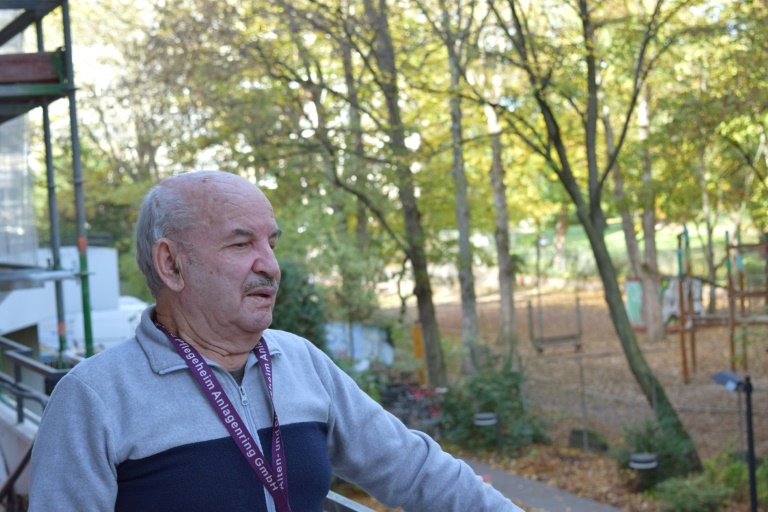
Borys Shyfrin fled as a young child, along with other members of his Jewish family, from the Nazis.

More than eight decades on, the Ukrainian Holocaust survivor has been forced from his home once more — but this time he’s found a safe haven in Germany.

Shyfrin is among a number of Ukrainian Jews who lived through the Nazi terror and have now fled to the country from which Adolf Hitler’s Third Reich launched its drive try to wipe Jews out.

He never wanted to leave Mariupol, where he had lived for decades. But Russia’s brutal assault on the Ukrainian port city made it impossible to stay.

“There was no gas, no electricity, no water whatsoever,” the 81-year-old told AFP from a care home in Frankfurt, recalling the relentless bombardment by Moscow’s forces.

“We were waiting for the authorities to come… We waited for a day, two days a week.”

Bodies of people killed by bombs and gunfire littered the streets, recalled Shyfrin, a widower who had lost contact with his only son.

“There were so many of them… no one picked them up. People got used to it — no one paid attention.”

People scraped by finding what food they could, with water supplied by a fire engine that made regular visits to his neighbourhood.

Shyfrin’s apartment was damaged during the fighting in Mariupol — defended so fiercely that it became a symbol of Ukrainian resistance — and he spent much time sheltering in the cellar of his building.

– ‘Became homeless’ –

The elderly man eventually left Mariupol with the aid of a rabbi, who helped the local Jewish population get out of the city.

He was evacuated to Crimea, and from there, travelled on a lengthy overland journey through Russia and Belarus, eventually arriving in Warsaw, Poland. 

After some weeks in Poland, a place in a care home was found in Frankfurt. In July, he was transported to Germany in an ambulance, with the help of the Claims Conference, a Jewish organisation that has been aiding the evacuation of Ukrainian Holocaust survivors.

Shyfrin, who walks with the aid of a stick, is still processing the whirlwind of events that carried him unexpectedly to Germany.

The outbreak of war was a “very big surprise”, he said.

“I used to love (Russian President Vladimir) Putin very much,” said Shyfrin, who is a native Russian speaker, did military service in the Soviet Union, and went on to work as a radio engineer with the military.

“Now I do not know whether Putin is right to be at war with Ukraine or not — but somehow, because of this war, I have become homeless.”

Shyfrin was born in 1941, in Gomel, Belarus.

When he was just three months old, his family fled to Tajikistan to escape German Nazi forces who were occupying the region.

Many of Belarus’s Jews died during the Holocaust, in which the Nazis killed a total of six million European Jews.

In neighbouring Ukraine, the once-large Jewish community was also almost completely wiped out.

After the war, his family returned to Belarus and Shyfrin completed his studies, did military service, and settled in Ukraine, then part of the Soviet Union, in the mid-1970s.

– ‘Traumatised’ –

The pensioner seemed philosophical about the twist of fate that has forced him to leave his home.

“Well, it’s not up to me,” he said, when asked about having to flee war for the second time in his life.

His most immediate concerns are more practical — such as how to access his money back home.

“I can’t even receive my honestly earned military pension,” he said.

He recently moved to a new care home run by the Jewish community, where there are more Russian speakers.

As well as helping Shyfrin on the final leg of his journey, the Claims Conference provided him with financial assistance.

It has evacuated over 90 Ukrainian Holocaust survivors to Germany since the outbreak of the conflict, a break from the organisation’s usual work of ensuring that survivors get compensation and ongoing support.

The body had long been helping to run care programmes for Holocaust victims in Ukraine.

But, as the conflict intensified, it became clear such care programmes could no longer be sustained, particularly in the east, said Ruediger Mahlo, the Conference’s representative in Germany.

“Because many of the survivors needed a lot of care and could not survive without this help, it was clear we had to try to do everything to evacuate (them),” he told AFP.

Getting them out involved huge logistical challenges, from finding ambulances in Ukraine to locating suitable care homes.

For many of the frail Holocaust survivors, it can be a struggle to grasp the fact that they have found refuge in Germany, said Mahlo.

They are fleeing to a country that “had in the past persecuted them, and done everything to kill them,” he said.

“Certainly, they are traumatised,” he said.

burs-sr/hmn/fg/mca
Colombia, rebels, seek US involvement in peace talks

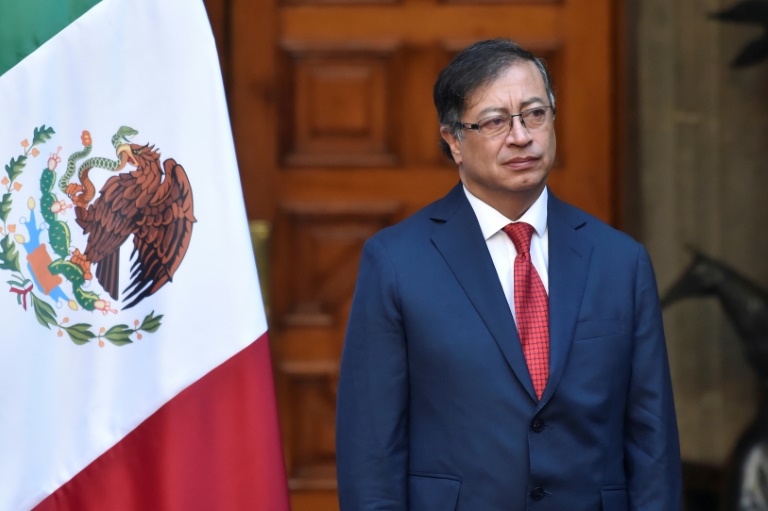
Colombia’s government and the National Liberation Army (ELN), the last recognized rebel group in the country, said Friday they would invite the United States to join their peace process.

The talks are an initiative by President Gustavo Petro, who in August became Colombia’s first-ever leftist leader and has vowed a less bellicose approach to ending violence wrought by armed groups, including leftist guerrillas and drug traffickers.

The parties resumed formal talks in Venezuela on Monday for the first time since 2019.

They agreed to reach out to the United States via diplomatic channels “to find out its willingness to participate in the process” and send a special envoy, according to a statement from Norway, one of the guarantors of the talks.

The statement said the talks had taken place in an environment of “trust and optimism.”

When asked by AFP, the US State Department did not confirm any eventual involvement in the talks by the United States.

“At this point we continue to engage the Petro administration to better understand plans to seek a total peace with the ELN, FARC dissidents, and other criminal organizations,” a State Department spokesperson told AFP, referring to the remaining still-armed members of the Revolutionary Armed Forces of Colombia rebel group, which subsequently laid down weapons and created a political party. 

“The ELN remains a designated Foreign Terrorist Organization under US law,” they added.

The parties also agreed to invite Brazil, Chile, and Mexico to join Norway, Cuba, and Venezuela as guarantors of the process.

Mexico agreed to take part in the talks during Petro’s visit Friday with Mexican President Andres Manuel Lopez Obrador, according to a government statement.

The two leaders discussed their “conviction to work together for peace in the region,” the statement said. 

– ‘Total peace’ –

Germany, Switzerland, and Spain would also be invited as “accompanying countries,” the Norway statement said.

Around 30 delegates are attending the talks which are expected to last three weeks.

Colombia has suffered more than half a century of armed conflict between the government and various groups of left-wing guerrillas, right-wing paramilitaries and drug traffickers.

The ELN started as a leftist ideological movement in 1964 before turning to crime, focusing on kidnapping, extortion of the oil industry, and drug trafficking in Colombia and neighboring Venezuela.

It has around 2,500 members, about 700 more than it did when negotiations were last broken off. The group is primarily active in the Pacific region and along the 2,200-kilometer (1,370-mile) border with Venezuela.

Dialogue with the group started in 2016 under ex-president Juan Manuel Santos, who signed a peace treaty with the larger Marxist Revolutionary Armed Forces of Colombia (FARC) rebel group that subsequently abandoned its weapons and created a political party.

But the talks with the ELN were called off in 2019 by conservative former president Ivan Duque following a car bomb attack on a police academy in Bogota that left 22 people dead.

Petro, himself a former guerrilla, reached out to the ELN shortly after coming to power, as part of his “total peace” policy.

Costa Rica crocodiles survive in 'most polluted' river

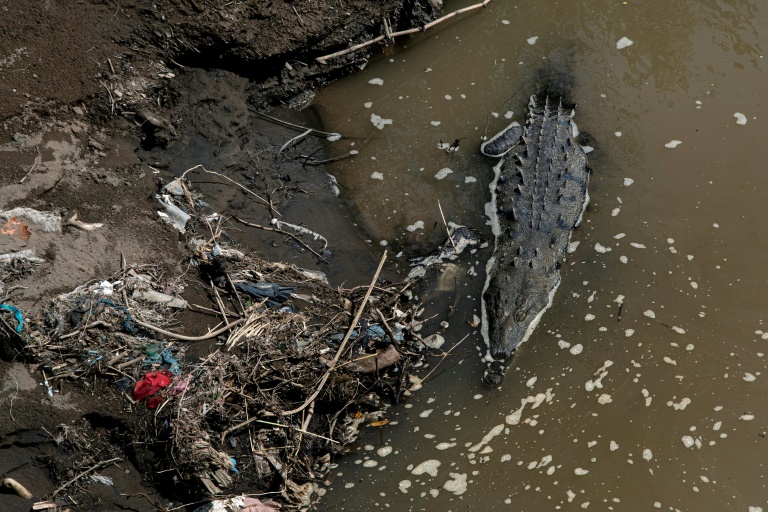
In one of the most polluted rivers in Central America, a vulnerable crocodile species is thriving despite living in waters that have become a sewer for Costa Rica’s capital, experts say.

Every day, trash and wastewater from San Jose households and factories flood into the Tarcoles River, which vomits tires and plastic into the surrounding mangroves.

Nevertheless, some 2,000 American Crocodiles have adapted to life in the toxic river that bears witness to the country’s decades-long battle with waste management.

“It is a super-contaminated area, but this has not affected the crocodile population,” said Ivan Sandoval, a biologist with the National University of Costa Rica.

“The Tarcoles River is the most polluted river in Costa Rica, and one of the most contaminated in Central America. Heavy metals, nitrites, nitrates, and a large amount of human waste can be found,” added the crocodile expert.

According to the International Union for Conservation of Nature (IUCN), there are only about 5,000 of the crocodile species — found in 18 countries — left in the world after decades of hunting and habitat loss.

The organization lists the Crocodylus acutus as “vulnerable,” but says its numbers have increased in recent years. The Costa Rica population is “healthy and robust.”

Indeed, the large reptiles — basking in the sun and occasionally feeding on fish that come up the channel from the sea — appear unphased by some 150 types of bacteria that Sandoval says have been detected in the river.

He describes the carnivores as “living fossils” with the capacity to survive very tough conditions. 

“They haven’t had to change anything in millions of years, they are perfectly designed.”

– Laws not applied –

Sandoval said that since 1980, Costa Rica’s population of the crocodiles “are recovering,” and warns of the threat of tourist activities.

The river’s crocodiles are a major draw for foreign visitors, who take boat tours to see the creatures up close.

Some feed the animals, which is prohibited, and Sandoval worries about them getting too used to being close to people. 

Juan Carlos Buitrago, 48, who captains one of the tour boats, says he and other locals regularly pull hundreds of tires and plastic waste from the water.

He delights in the fauna of the river, with macaws flying over ahead at sunset, but wishes his countrymen would stop polluting his “office.”

“We cannot hide the pollution,” he tells AFP.

Costa Rica has impressive environmental credentials, with a third of its territory marked for protection, 98 percent renewable energy, and 53 percent forest cover, according to the UN’s environmental agency.

However, the law is not always strictly applied, as in the case of the Tarcoles River.

Lawyer and environmentalist Walter Brenes, 34, said that all of Costa Rica’s rules and regulations “do not solve the problem.”

He said the country needs “real public policy that is completely aimed at protecting wildlife.”

Costa Rica crocodiles survive in 'most polluted' river

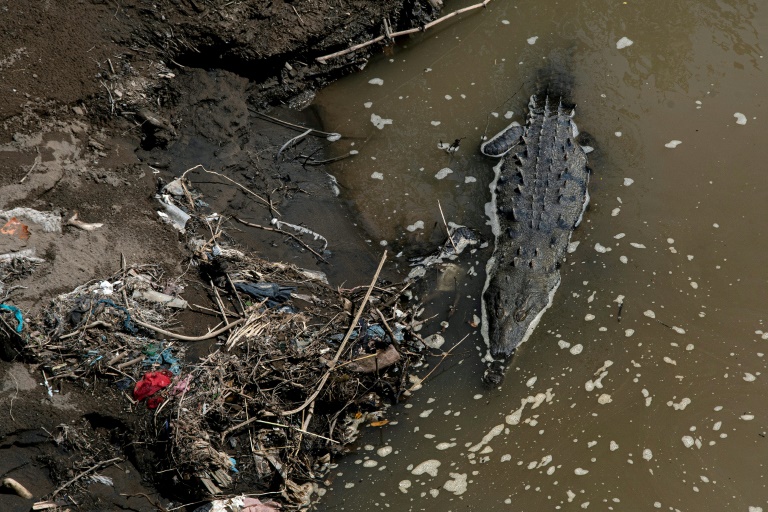
In one of the most polluted rivers in Central America, a vulnerable crocodile species is thriving despite living in waters that have become a sewer for Costa Rica’s capital, experts say.

Every day, trash and wastewater from San Jose households and factories flood into the Tarcoles River, which vomits tires and plastic into the surrounding mangroves.

Nevertheless, some 2,000 American Crocodiles have adapted to life in the toxic river that bears witness to the country’s decades-long battle with waste management.

“It is a super-contaminated area, but this has not affected the crocodile population,” said Ivan Sandoval, a biologist with the National University of Costa Rica.

“The Tarcoles River is the most polluted river in Costa Rica, and one of the most contaminated in Central America. Heavy metals, nitrites, nitrates, and a large amount of human waste can be found,” added the crocodile expert.

According to the International Union for Conservation of Nature (IUCN), there are only about 5,000 of the crocodile species — found in 18 countries — left in the world after decades of hunting and habitat loss.

The organization lists the Crocodylus acutus as “vulnerable,” but says its numbers have increased in recent years. The Costa Rica population is “healthy and robust.”

Indeed, the large reptiles — basking in the sun and occasionally feeding on fish that come up the channel from the sea — appear unphased by some 150 types of bacteria that Sandoval says have been detected in the river.

He describes the carnivores as “living fossils” with the capacity to survive very tough conditions. 

“They haven’t had to change anything in millions of years, they are perfectly designed.”

– Laws not applied –

Sandoval said that since 1980, Costa Rica’s population of the crocodiles “are recovering,” and warns of the threat of tourist activities.

The river’s crocodiles are a major draw for foreign visitors, who take boat tours to see the creatures up close.

Some feed the animals, which is prohibited, and Sandoval worries about them getting too used to being close to people. 

Juan Carlos Buitrago, 48, who captains one of the tour boats, says he and other locals regularly pull hundreds of tires and plastic waste from the water.

He delights in the fauna of the river, with macaws flying over ahead at sunset, but wishes his countrymen would stop polluting his “office.”

“We cannot hide the pollution,” he tells AFP.

Costa Rica has impressive environmental credentials, with a third of its territory marked for protection, 98 percent renewable energy, and 53 percent forest cover, according to the UN’s environmental agency.

However, the law is not always strictly applied, as in the case of the Tarcoles River.

Lawyer and environmentalist Walter Brenes, 34, said that all of Costa Rica’s rules and regulations “do not solve the problem.”

He said the country needs “real public policy that is completely aimed at protecting wildlife.”

Inflation clouds 'Black Friday' kickoff of US holiday shopping season

US retailers unveiled a trove of fresh promotions Friday, as they try to coax sales from reticent shoppers whose holiday cheer has been tempered by inflation and worries over a softening economy.

“Black Friday,” the unofficial start of the US holiday shopping season, announced itself with the annual day-after-Thanksgiving deluge of online deals and early store openings.

Traffic was steady at Macy’s flagship store in midtown Manhattan, where crowds braved drizzly, chilly weather to survey the mammoth department store and take in holiday windows that feature a Santa surrounded by disco balls and fox family of stuffed animals clad in plaid.

But industry experts have been cautious about this year’s prospects, in light of price pressures that have exacerbated concerns about an oversupply of goods.  

A year ago, retailers faced product shortfalls in the wake of shipping backlogs and factory closures related to Covid-19. To avert a repeat, the industry front-loaded holiday imports this year, leaving it vulnerable to oversupply at a time when consumers are cutting back.

“Today’s problem is having too much stuff,” said Neil Saunders, managing director for consultancy GlobalData Retail.

Saunders said retailers have made progress in reducing excess inventories, but oversupply will mean deep discounts in many categories, including electronics and apparel.

“This is a holiday season where retailers are going to have to work very hard for very small gains,” he said.

The dynamic has created opportunities for savvy shoppers like Carla Forbes, who began scouring for holiday discounts weeks ago. She nabbed a jacket Friday at Macy’s for $79, down from an original price of $225.

While promotions on watches and jewelry have got “better,” she noted that such deals are not available for staples like food, for which prices have soared.

“You just have to buy it if you want (it),” Forbes said.

– Diminishing savings –

Leading forecasts from Deloitte and the National Retail Federation project a single-digit percentage rise in sales, but this is unlikely to exceed the inflation rate.

Adobe expects an overall holiday sales increase of 2.5 percent, less than a third of last year’s level. Besides inflation, Adobe cited higher Federal Reserve interest rates and an uptick in brick-and-mortar shopping as factors.

Consumers spent  $7.28 billion up through 6:00 pm Eastern time (2300 GMT) for Black Friday, according to Adobe. The company anticipates that when the final tally is in, consumers will spend between $9 billion and $9.2 billion for the day, setting a new record for online sales on Black Friday.

Countries like Britain and France have been marking Black Friday too, but with soaring inflation, merchants there face a similar dilemma.

“The worry is that it could turn out to be more of a Bleak Friday,” said Hargreaves Lansdown analyst Susannah Streeter.

Anne Campbell, who was visiting New York from Scotland, said the mood felt very different from home, where worries about energy security and a weakening economy dominated.

“Things are very tight in the UK for a lot of people,” she said, contrasting this with spending in the US.

US shoppers have remained resilient throughout the pandemic, often spending more than expected even when consumer sentiment surveys suggested gloominess.

Part of the reason has been the unusually robust state of savings, with many households banking government pandemic aid payments at a time of reduced consumption due to virus restrictions.

But that cushion is starting to whittle away. After hitting $2.5 trillion in excess savings in mid-2021, the benchmark fell to $1.7 trillion in the second quarter, according to Moody’s.

Accompanying this drop has been a rise in credit card debt visible in Fed data and anecdotally described by chains that report more purchases made with food stamps.

– Mixed picture –

Recent earnings reports from retailers paint a mixed picture on consumer health.

Target stood on the downcast side, pointing to a sharp decline in shopping activity in late October, potentially portending a weak holiday season.

“We’ve had a consumer who has been dealing with very stubborn inflation for quarter after quarter now,” Chief Executive Brian Cornell told a conference call with analysts.

He added that customers are “shopping very carefully on a budget.”

But Lowe’s, another US chain specializing in home-improvement, described the same late-October period as “strong.”

Friday’s crowds in New York were more robust compared with a year ago, said shopper Marvin Thomas, who also ventured out for Black Friday in 2021.

Inflation is a “big problem,” he told AFP, catching his breath outdoors after finding a deal on a hat at Foot Locker.

“I’m not going to deny that it has affected me, but you gotta do what you gotta do.”

Honduras under state of emergency over gang activity

Police stepped up their presence on the streets of Honduras Friday after President Xiomara Castro declared a state of emergency to quash a rise in gang activity in the Central American nation.

The small country has long been plagued by poverty, gangs, and violence linked to drug trafficking. Gangs have recently been extorting ordinary citizens as they go about their business.

“To strengthen efforts to recover lawless areas in the neighborhoods, in villages, in departments, I declare a national state of emergency,” said Castro on Thursday.

An AFP photographer reported a heavy presence of special forces and other officers in the capital on Friday.

Police spokesman Mario Fu told AFP that first arrests were made Friday, with four suspected gang members detained across the country.

The state of emergency comes just days after hundreds of bus and taxi drivers protested in the capital Tegucigalpa to demand the government take steps to stop gangs from extorting a “war tax” from them.

Castro, elected the country’s first woman president in January, declared “war on extortion, just as we declared war on corruption, impunity, and drug trafficking.”

She urged the police to recover public spaces “assaulted and controlled by organized crime and its gangs.”

She asked police to identify hotspots where “the partial suspension of constitutional guarantees” would be necessary.

Police chief Gustavo Sanchez said he would dedicate more money and at least 20,000 officers to the efforts to stamp out gang activity.

Along with neighbors El Salvador and Guatemala, Honduras forms the so-called “triangle of death” plagued by the murderous gangs called “maras” that control drug trafficking and organized crime.

In 2020, there were 37.6 recorded homicides per 100,000 inhabitants.

High poverty and unemployment, mixed with gang and drug violence, forces nearly 800 Hondurans to leave the country every day, mainly headed for the United States, where more than a million already live, most of them undocumented.

Three killed in twin school shootings in Brazil

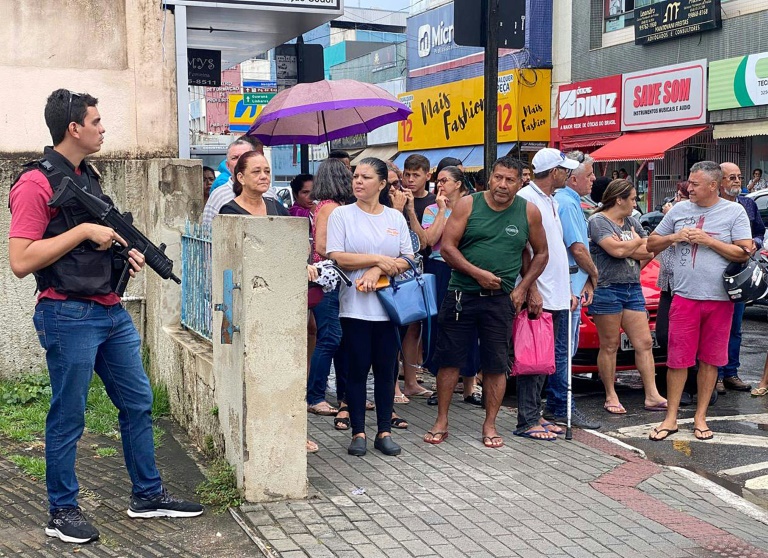
At least three people including an adolescent girl were killed and 11 others wounded Friday when a 16-year-old shooter opened fire on two schools in southeastern Brazil, officials said.

Authorities in the city of Aracruz, in Espirito Santo state, said the shooter had opened fire on a group of teachers at his former school Friday morning, killing two people and leaving nine others wounded.

He then left that school — a public primary and secondary school — and went to a nearby private school, where he killed an adolescent girl and wounded two other people, officials said.

Authorities have arrested the shooter, said Governor Renato Casagrande, who declared three days of mourning in the state.

“He was a student at (the first) school until June, a 16-year-old minor. His family then transferred him to another school. We have information he was undergoing psychiatric treatment,” Casagrande told a news conference.

He said some of the survivors’ lives remained at risk from their wounds.

“We are rooting and praying for them to recover,” he said.

Security camera footage aired on Brazilian media showed the shooter running into the school, dressed in military-style camouflage and brandishing a gun. He then sprinted through the hallways, sending staff fleeing in terror as he began firing shots.

Investigators said he had a swastika on his fatigues.

Officials said the shooter, a policeman’s son, used two handguns in the attack, both registered to his father — one his service firearm, the other a privately registered weapon.

Casagrande said the boy appeared to have planned the attack carefully, breaking in through a locked door and skirting the school’s security guard.

He then entered the teachers’ lounge — the first room he came to — and opened fire, the governor said.

“He was looking to shoot people. He opened fire on the first people he came across,” he said.

Civil police commissioner Joao Francisco Filho told reporters it appeared that the suspect had been planning the attack for “two years,” and that he did not seem to have a “definite target.”

Investigators could be seen carrying victims’ bodies in coffins and loading them in police trucks outside the school, which was cordoned off with crime scene tape, an AFP photographer said.

The city has a population of around 100,000 people.

– ‘Absurd tragedy’ –

School shootings are relatively rare in Brazil, but have been increasing in recent years.

Brazil’s deadliest school shooting left 12 children dead in 2011, when a man opened fire at his former elementary school in the Rio de Janeiro suburb of Realengo, then killed himself.

In 2019, two former students shot dead eight people at a high school in Suzano, outside Sao Paulo, then also took their own lives.

Brazilian president-elect Luiz Inacio Lula da Silva called the latest shootings an “absurd tragedy.”

“I was saddened to learn of the attacks,” he wrote on Twitter.

“All my solidarity to the victims’ families… and my support to Governor Casagrande for the investigation and assistance to the two school communities.”

Lula, who was previously Brazil’s president from 2003 to 2010, will take office on January 1 after defeating far-right President Jair Bolsonaro in elections last month.

He has been sharply critical of Bolsonaro’s dramatic curbs on gun-control laws.

Since ex-army captain Bolsonaro became president in 2019, the number of registered gun owners in Brazil has more than quintupled, from 117,000 to 673,000, boosted by a series of presidential decrees relaxing regulations on firearms and ammunition.

Public security expert Bruno Langeani of research institute Sou da Paz told AFP the outgoing administration’s policies had made such attacks more likely.

“The increase in availability of firearms in recent years promoted by the Bolsonaro government facilitates this kind of episode,” he said.

NASA Orion spacecraft enters lunar orbit: officials

NASA’s Orion spacecraft was placed in lunar orbit Friday, officials said, as the much-delayed Moon mission proceeded successfully.

A little over a week after the spacecraft blasted off from Florida bound for the Moon, flight controllers “successfully performed a burn to insert Orion into a distant retrograde orbit,” the US space agency said on its web site.

The spacecraft is to take astronauts to the Moon in the coming years — the first to set foot on its surface since the last Apollo mission in 1972. 

This first test flight, without a crew on board, aims to ensure that the vehicle is safe.

“The orbit is distant in that Orion will fly about 40,000 miles above the Moon,” NASA said.

While in lunar orbit, flight controllers will monitor key systems and perform checkouts while in the environment of deep space, the agency said.

It will take Orion about a week to complete half an orbit around the Moon. It will then exit the orbit for the return journey home, according to NASA.

On Saturday, the ship is expected to go up to 40,000 miles beyond the Moon, a record for a habitable capsule. The current record is held by the Apollo 13 spacecraft at 248,655 miles (400,171 km) from Earth.

It will then begin the journey back to Earth, with a landing in the Pacific Ocean scheduled for December 11, after just over 25 days of flight. 

The success of this mission will determine the future of the Artemis 2 mission, which will take astronauts around the Moon without landing, then Artemis 3, which will finally mark the return of humans to the lunar surface. 

Those missions are scheduled to take place in 2024 and 2025, respectively. 

EU ministers endorse new migrant plan after France-Italy spat

European interior ministers welcomed Friday an EU plan to better coordinate the handling of migrant arrivals, after a furious row over a refugee rescue boat erupted between Italy and France.

France has accused Italy of failing to respect the law of the sea by turning away the NGO vessel earlier this month, triggering crisis talks in Brussels to head off a new EU dispute over the politically fraught issue.

All sides described the meeting as productive, although Czech interior minister Vit Rakusan, whose country holds the EU presidency, later said all participants had agreed that “more can and must be done” to find a lasting solution.

The ministers will gather again at a pre-planned December 8 meeting to pursue the “difficult discussion”, he said. 

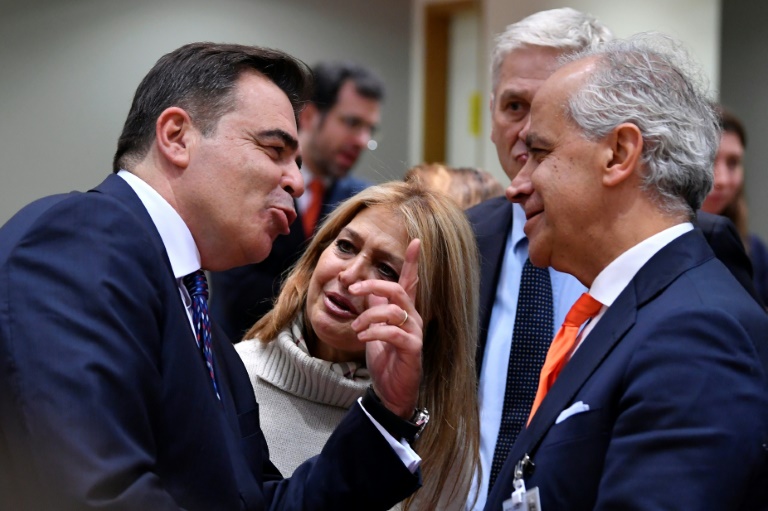
European Commission vice-president Margaritis Schinas, the commissioner charged with “promoting our European way of life”, said Europe could no longer settle for just another ad hoc solution.

“We cannot continue working event-by-event, ship-by-ship, incident-by-incident, route-by-route,” he said, recalling that previous crises had been seized upon by “populistic and europhobe forces”.

Numbers of asylum seekers are still far lower than the levels of 2015 and 2016, but the dispute has already undermined a stop-gap pact to redistribute arrivals more evenly around the 27-nation bloc.

– No more ‘ad hoc’ plans –

Brussels has been struggling for years to agree and implement a new policy for sharing responsibility for migrants and asylum seekers but the ugly row has brought the issue to the fore.

Earlier this month, Italy’s new government under far-right leader Georgia Meloni refused to allow a Norwegian-flagged NGO ship to dock with 234 migrants rescued from the Mediterranean.

The Ocean Viking eventually continued on to France, where authorities reacted with fury to Rome’s stance, suspending an earlier deal to take in 3,500 asylum seekers stranded in Italy.

The row undermined the EU’s interim solution and led to Paris calling Friday’s extraordinary meeting of interior ministers from the 27 member states.

“The Ocean Viking crisis was a bit of improvisation,” Schinas admitted, defending the new plan from his commission to better coordinate rescues and migrant and refugee arrivals.

“We have twenty specific actions, we have an important political agreement, everyone is committed to working so as not to reproduce this kind of situation.”

French Interior Minister Gerald Darmanin said there was no reason for France to accept migrants relocated from Italy if Rome “does not take the boats, does not accept the law of the sea”.

Darmanin’s Italian opposite number Matteo Piantedosi played down the Ocean Viking incident, saying the meeting was “not dealing with individual cases or operational management”.

He said he had shaken hands with the French minister and that there was a “convergence of positions” allowing the ministers to resume discussion at the December 8 meeting.

Belgian counterpart Nicole De Moor called for “solidarity,” saying that Belgium was taking in more than its fair share of migrants leaving its reception facilities overwhelmed.

The previous plan was drawn up after Mediterranean countries closer to North African shores, like Italy and Greece, complained that they were shouldering too much responsibility for migrants. 

A dozen EU members agreed to take in 8,000 asylum seekers — with France and Germany accepting 3,500 each — but so far just 117 relocations have actually happened.

– ‘Nothing new’ –

On Monday, the European Commission unveiled a new action plan to better regulate arrivals on the central Mediterranean sea route. 

It was not well-received by aid agencies. Stephanie Pope, an expert on migration for aid agency Oxfam, dubbed Brussels’ plan “just another reshuffle of old ideas that do not work”.  

And a European diplomat said that plan “contains nothing new, so it isn’t going to solve the migration issue.”

The ministers nevertheless accepted it and Schinas said it should prevent more crises as Europe once again attempts to negotiate a global migration plan that would have the force of EU law.

The plan would see Brussels work more closely with Tunisia, Libya and Egypt to try to stop undocumented migrants boarding smuggler vessels in the first place.

While France and Italy argue about high-profile cases of dramatic sea rescues in the central Mediterranean, other EU capitals are more concerned about land routes through the Balkans.

Almost 130,000 undocumented migrants are estimated to have come to the bloc since the start of the year, an increase of 160 percent, according to the EU border force Frontex.

Greek Interior Minister Notis Mitarachi, meanwhile, complained that Turkey is not complying with a 2016 migration agreement that includes taking back migrants who are not entitled to asylum.

Five key decisions at global wildlife summit

A global wildlife summit that ends Friday passed resolutions to protect hundreds of threatened species, including sharks, reptiles, turtles as well as trees.

Here are some highlights of the two-week meeting of the Convention on International Trade in Endangered Species (CITES) in Panama.

1) Sharks steal the show

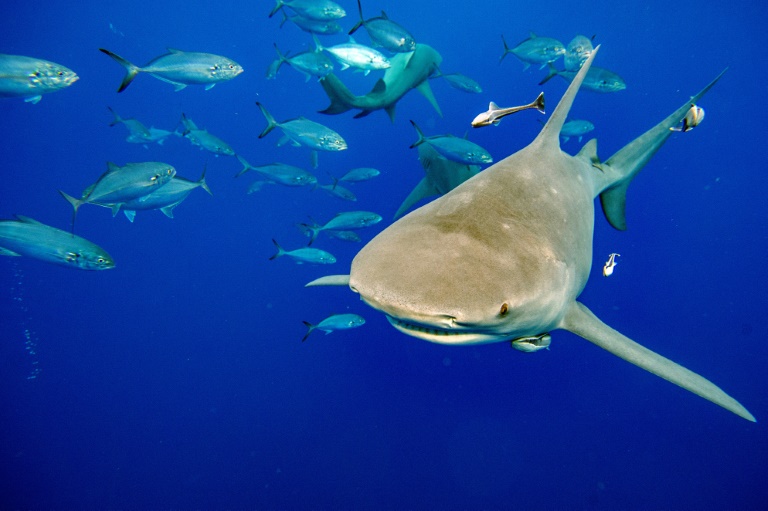
No longer just the villains of the deep, these ancient predators were the stars of the summit.

Delegates from more than 180 countries agreed to regulate the trade in 54 species of the requiem shark and hammerhead shark families.

These species are the most hunted for their shark fins — seen as a delicacy in some Asian countries — and their numbers have been decimated, putting the entire marine ecosystem at risk.

Only Japan grumbled over the resolution, arguing restrictions on the trade of the blue shark would be a blow to the livelihoods of its fishermen.

CITES also voted to restrict the trade of guitarfish rays and several other freshwater ray species.

2) See-through glass frogs

The skin of these nocturnal amphibians can be lime green or so translucent their organs are visible through their skin.

This has made them sought-after pets, and intense trafficking has placed the species in critical danger.

CITES also placed more than 160 species of glass frog, found in several rainforests in Central and South America, on its Appendix II, which places trade restrictions on threatened species.

The European Union and Canada withdrew early reservations about the resolution, which was adopted unanimously.

3) Weird and wonderful turtles

CITES approved varying levels of protection for around 20 turtle species from America and Asia.

These include the striking matamata turtles, with their prehistoric, beetle-like appearance, which have also become sought-after pets and are hunted for their meat and eggs.

They live in the Amazon and Orinoco basins, but scientists do not know how many there are.

Freshwater turtles are among the most-trafficked species in the world.

The unusual-looking North American Alligator Snapping Turtle was also granted trade protection.

4) Crocodile bans lifted

Brazil and the Philippines now will be able to export farm-raised crocodiles, after a total trade ban was lifted.

Delegates also allowed the export of skin and meat of the broad-snouted caiman — found in the wild in the Brazilian Amazon and Pantanal as well as wetlands, rivers, and lakes of neighboring countries.

“The population of these animals is very big. There has been a great reproductive success,” said researcher Miryam Venegas-Anaya, a crocodile expert with the University of Panama.

In the Philippines, a trade restriction was lifted on the saltwater crocodile that lives mainly on the islands of Mindanao and Palawan.

However, Thailand’s efforts to lift a ban on its Siamese crocodile was rejected.

5) Ivory ban stays, no luck for hippos

Zimbabwe and its southern African neighbors have seen their elephant populations soar in recent years, and pushed a drive to re-open the ivory trade which has been banned since 1989.

One-off sales were allowed in 1999 and 2008 despite fierce opposition.

However, in the rest of the continent poaching for ivory is still decimating elephant populations and the request was rejected.

Delegates also rejected a request by Botswana, Namibia and Eswatini (formerly Swaziland), to allow the sale of southern white rhino horn.

Meanwhile, after a fierce debate, a request by ten west African nations to ban the trade in hippopotamus, was rejected by delegates.

Illegal trade in the surly semi-aquatic mammal — for its meat, ivory tusks, teeth, and skull — rose after elephant ivory was banned. 

Close Bitnami banner
Bitnami