World

Protest scrutiny intensifies on Iran despite win

Iran’s football stars scored a famous victory with a last gasp World Cup win but scrutiny on the conduct of the team ahead of the decisive clash with the US will only intensify as its leaders press a crackdown on protests at home.

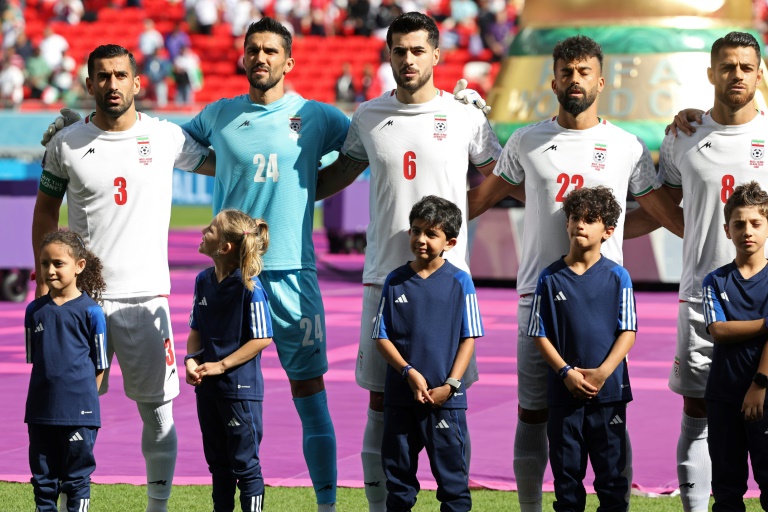
In a striking U-turn, the Iranian players sung their national anthem ahead of Friday’s match against Wales. Their silence when the song was played ahead of Monday’s match with England had been seen as a sign of solidarity with the protests.

Meanwhile there is no sign of a slackening of the protests or the crackdown, as Iran prepares for the already politically loaded match on Tuesday against the United States, which Iran’s clerical leadership likes to label “the great Satan”.

A prominent former international star from the last decade Voria Ghafouri was arrested in Iran on Thursday after he backed the protests and condemned the crackdown.

The protest movement that erupted 10 weeks ago after the death of Mahsa Amini who had been arrested by the morality police has created the most delicate of situations for the players who are household names in the football-mad country.

Many supporters of the movement have not forgiven the team for meeting ultra-conservative President Ebrahim Raisi before heading to Doha, with the anthem gesture ahead of the England match doing little to redeem them.

“Mullahs’ children” and “A return to factory settings” were some of the terms of abuse being used on social media against the players after they opted to sing the anthem this time.

“Dishonourable mercenaries,” tweeted Kasra Aarabi, lead Iran analyst at Tony Blair Institute in London.

There had also been speculation that the Iranian players would not celebrate the goals. But the team erupted into wild celebrations as two late goals were struck against Wales in the final minutes.

Former England player and prominent TV pundit Gary Lineker tweeted: “Given the duress Iran’s players are probably going through, that’s a spectacularly emotional victory.”

– ‘Incredibly painful’ –

Maziar Bahari, the founder of the Iran Wire news site, said the players had clearly been pressured into singing the anthem.

“The most half-hearted version of the Islamic Republic’s anthem. The players have been threatened that they had to sing the anthem or else,” he said.

It is not clear if the timing ahead of the game of the arrest of Ghafouri — who was picked up after training with his club Thursday — was intentional on the part of the authorities.

But the player, who is of Kurdish origin, has been one of the most outspoken prominent voices in Iran against the crackdown and particularly in the Kurdish-populated regions of western Iran where activists say dozens have been killed in the past week alone.

In another arrest, authorities also detained Pejman Rahbar, the editor of the widely followed varzesh3.com sports website, reports said.

The state’s response to the protests has led to questions over whether the team represents Iran or the regime that has ruled since the Islamic Revolution of 1979 that overthrew the shah.

The team is known in Persian as the “Tim Melli”, “The National Team”.

“Incredibly painful to watch this humiliation of #TeamMelli,” wrote the historian Roham Alvandi, associate professor at the London School of Economics and Political Science.

“This is how the Islamic republic denies us even the simple joy of supporting our national team on the world stage.”

– ‘Not our enemies’ –

Reports also suggested the Qatari authorities were not allowing some fans to carry alternative Iranian flags into the stadium.

An AFP photographer at the stadium on Friday witnessed security staff confiscating a flag from a fan with the protest slogan “Woman, life, freedom”.

The turbulence inside Iran has also proved testing for the team’s Portuguese coach Carlos Queiroz who has sought to argue his team should not step into politics and defend his players.

The vilification of some team members on social media even saw some suggesting the broken nose suffered by goalkeeper Alireza Beiranvand was karma for bowing to Raisi in the pre-Doha meeting.

“The players are not our enemies,” Queiroz wrote on Instagram this week.

Iran forward Mehdi Taremi denied on Thursday that his team had come under pressure from their government to sing the anthem, saying “I don’t like to talk about political issues, but we are not under any pressure.”

A video later went viral on social media showing Queiroz gently berating the BBC reporter who had asked Taremi for his views, saying “Why don’t you ask (England manager Gareth) Southgate about England and the United States that left Afghanistan?”
pst-sjw/dv

Benin opposition gets green light for legislative election

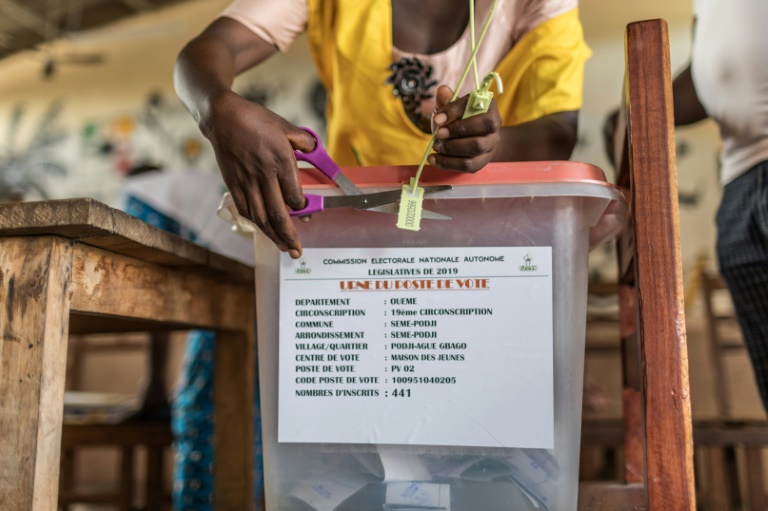
Benin’s opposition, weakened by arrests and the exile of its leaders, has been allowed to participate in January’s legislative elections, four years after they were excluded from taking part in the last vote.

Electoral authorities have authorised seven political parties, including three claiming to be opposition, to take part in the January 8 ballot for lawmakers.

Elected in 2016, then re-elected in 2021, Benin’s President Patrice Talon has launched all-out political and economic reforms to put his West African country on the path to development. 

But his modernization programme has also been accompanied by a significant erosion of democracy, according to the opposition, with its leaders prosecuted, jailed or exiled.

The opposition parties given the green light include the Democrats, who managed to win a last-minute constitutional court ruling on Saturday, allowing its candidates to run. 

“The Constitutional Court wanted to spare Benin a new tragedy by accepting that our party finally can go to the elections,” said Gandonou Eudes, an activist for the Democrats.

Legislative elections in 2019 ended in clashes that left several people dead, after the opposition was banned and security forces violently repressed its supporters who took to the streets in the centre of the country. 

Only the two political parties supporting Talon were allowed to take part. 

In 2021, the main opposition leaders also failed to participate in the presidential ballot that re-elected Talon, prompting more protests in opposition strongholds.

Two of the president’s main opponents are still in prison, sentenced to heavy sentences. 

Reckya Madougou was sentenced to 20 years in prison for “terrorism”, while Joel Aivo — an academic — was given 10 years in prison for “conspiracy against the authority of state” in December 2021.

“We tried to get on the ballot in 2019, 2020, 2021 — impossible,” said Democrats party chief Eric Houndete, during a meeting this week in the capital Porto-Novo.

Now “our time has come,” he said.

“You have the opportunity to choose, to avoid having a one-colour parliament.”

The Cauris Forces for an Emerging Benin or FCBE party and the Popular Liberation Movement or MPL party are the two other opposition movements that will take part.

All three will look to win as many seats as possible in the 109-member parliament, which is currently controlled by pro-Talon parties.

“If the legislative elections are transparent, the parties in power will not have an easy task,” said Beninese political scientist Expedit Ologou. 

For Marie Yaya, a young Democrats activist and former student of opposition leader Joel Aivo, the election should not make us “forget the fate of those who are still languishing in prison”.

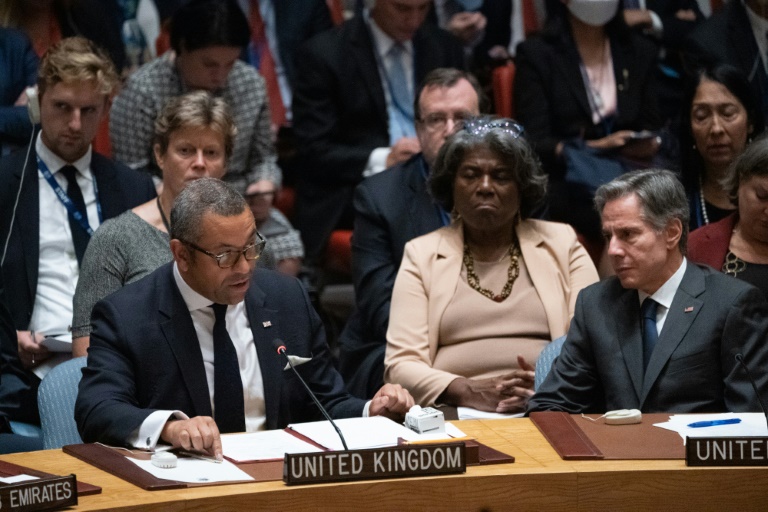
UK foreign minister brings new aid to Kyiv

UK Foreign Secretary James Cleverly announced new aid for Ukraine on a visit to Kyiv on Friday, including ambulances and support for victims of sexual violence by Russian soldiers.

After meeting President Volodymyr Zelensky, Cleverly tweeted: “President @ZelenskyyUa, the UK is supporting you with action — not just words. 

“I made you that promise today. The UK intends to keep it,” he said, after Prime Minister Rishi Sunak used a visit last weekend to the Ukrainian capital to set out a new package of military aid worth £50 million ($60 million).

Zelensky hailed the visit by Britain’s most senior diplomat just days after the latest Russian barrage of missiles against Ukraine’s energy grid leading to widespread blackouts.

“Your visit is taking place against the background of a large-scale Russian missile attack, which left all of Ukraine without electricity and water. But that didn’t stop you. Thank you,” Zelensky’s press service quoted him as saying.

The package announced by Cleverly includes 24 ambulances and six armoured vehicles, according to the foreign office.

He unveiled a further £3 million towards rebuilding infrastructure such as schools and shelters, and extra funding to support “survivors of the sexual violence carried out by the Russian military”, the ministry added.

“As winter sets in, Russia is continuing to try and break Ukrainian resolve through its brutal attacks on civilians, hospitals and energy infrastructure,” Cleverly said.

“Russia will fail,” he said, vowing UK support “will continue for as long as it takes”.

The UK government said it was also committing £5 million to a Ukraine-led initiative, delivered through the UN World Food Programme, to ship grain to countries most at risk of famine, including Sudan and Yemen.

“Global food security is in all our interests,” Environment Secretary Therese Coffey said.

“And helping Ukraine’s farmers and agricultural sector to continue producing and exporting food in these most difficult of circumstances is vital for that security,” she said.

On his visit, Sunak promised 125 anti-aircraft guns and equipment to help Ukraine counter Iranian-supplied drones, along with cold-weather winter kit to its armed forces.

On Wednesday, Britain’s defence ministry said it was sending helicopters to Ukraine for the first time since Russia’s invasion — three Sea Kings, along with an additional 10,000 artillery rounds.

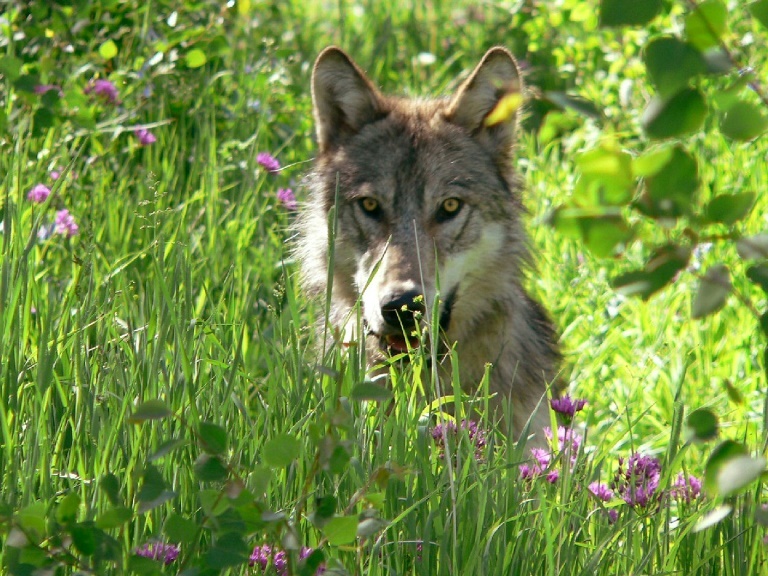
Wolves emboldened by parasite more likely to lead pack: study

Wolves infected with a common parasite are far more likely to become the leader of their pack, according to a new study, suggesting that the brain-dwelling intruder emboldens its host to take more risks.

The single-celled parasite, Toxoplasma gondii, only sexually reproduces in cats but can infect all warm-blooded animals.

Between 30-50 percent of people worldwide are estimated to be infected with the parasite, which remains for life as dormant tissue cysts. However people with a healthy immune system rarely have any symptoms.

While some studies have reported an association between people having the parasite in their brain and increased risk-taking, other research has disputed these findings and no definitive link has been proven.

The new study, published in the journal Communications Biology on Thursday, took advantage of 26 years’ worth of data on grey wolves living in the Yellowstone National Park in the United States to investigate how the parasite could affect their behaviour.

The researchers from the Yellowstone Wolf Project analysed the blood samples of nearly 230 wolves and 62 cougars — the big cats are known spreaders of the parasite.

They found that infected wolves were more likely to foray deeper into cougar territory than uninfected wolves.

Infected wolves were also 11 times more likely to leave their pack than wolves without the parasite, the study said, indicating a higher rate of risk-taking.

And an infected wolf is up to 46 times more likely to become pack leader, the researchers estimated, adding that the role is normally won by more aggressive animals. 

Study co-author Kira Cassidy told AFP that while “being bolder is not necessarily a bad thing,” it can “lower survival for the most bold animals as they might make decisions that put them in danger more often.”

“Wolves do not have the survival space to take too many more risks than they already do.”

Cassidy said it was only the second study on T. gondii’s effect on a wild animal, after research last year found increased boldness in infected hyena cubs made them more likely to get closer to — and killed by — lions in Kenya.

Laboratory research has also found that rodents with the parasite lose their instinctual fear of cats — driving them into the hands of the only host where T. gondii can reproduce.

William Sullivan, a professor of pharmacology and toxicology at the Indiana University School of Medicine who has been studying T.gondii for more than 25 years, called the wolf paper “a rare gem”.

However he warned that such an observational study could not show causation.

“A wolf that is a born risk-taker may simply be more likely to venture into cougar territory and contract Toxoplasma,” he said.

But “if the findings are correct, they suggest we may be underestimating the impact Toxoplasma has on ecosystems around the world,” he added.

– What about humans? –

“That’s the million-dollar question,” Sullivan said, adding that “no one knows for sure and the literature is mixed”.

Ajai Vyas, a T. gondii expert at Singapore’s Nanyang Technological University, warned against inferring that infection could increase risk-taking in people.

“There is a lot about human behaviour that is different from other animals,” he told AFP.

People often get infected by T. gondii from eating undercooked meat — or via their pet cat, particularly when cleaning out their litter boxes.

In some cases, especially in people with weakened immune systems, T. gondii can lead to toxoplasmosis, a disease that can cause brain and eye damage. 

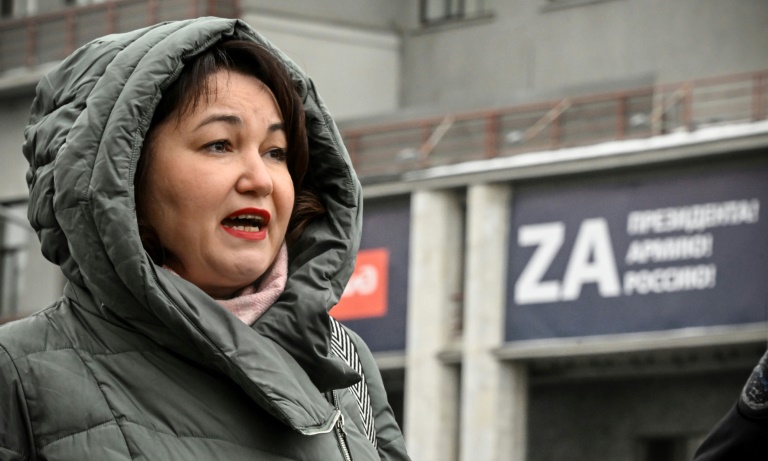
'Vladimir, answer us': Russian soldier mothers challenge Putin

Their videos are flooding Russian social media — mothers and wives of soldiers mobilised to fight in Ukraine, urgently demanding that the military make good on promises made by President Vladimir Putin.

Anger and concern have built across Russia since September, when the Kremlin announced that hundreds of thousands of well-trained and well-equipped men would be conscripted and sent to the battlefield to bolster Moscow’s struggling campaign in Ukraine.

But chaos ensued, with widespread reports of exempted men — the elderly or infirm — being dispatched to the front or conscripts dying after receiving nearly no training, forcing the Kremlin to concede “mistakes”.

In a sign that Putin takes the growing malaise seriously, he is expected on Friday to meet a group of military mothers and wives for the first time since ordering Russian forces into Ukraine nine months ago.

But some relatives have already dismissed the meeting as carefully choreographed and one that will not offer a platform for frank discussion.

“The president will meet with some mothers pulled out of his pocket, who will ask the right questions and thank him,” said Olga Tsukanova, an activist mother. 

“As usual.”

Her 20-year-old son is currently doing his military service and she wants to make sure he will not be sent to Ukraine.

Tsukanova travelled 900 kilometres (560 miles) from the city of Samara on the Volga river in the hope of being seen at the Kremlin.

– Sour memories –

“I’m not alone. Invite us, Vladimir Vladimirovich, answer our questions!” she said, referring to the president by his patronymic.

Anger over the fate of mobilised men, which risks degenerating into real discontent, has put the Kremlin in an uncomfortable position, analysts have said. 

While authorities have unleashed an unprecedented crackdown on political dissent while troops fight in Ukraine, the word of mothers is sacred in Russia. 

Imprisoning them is not an option. 

For Putin, the sight of angry relatives may bring back difficult memories from the start of his rule more than two decades ago. 

In August 2000, the Russian leader was criticised for responding too slowly when the Kursk submarine sank, killing all 118 crew onboard.

Two wars in Chechnya led to the rise of the mothers’ movement in Russia that became a thorn for the Kremlin.

But this time the climate is different, with no independent media left in the country and a de facto ban on public criticism of Putin’s offensive.

This means there has been little public questioning of the operation in Ukraine. But in Russia some are asking questions about the conditions in which relatives are sent to fight.

– ‘Hold power to account’ –

Mothers’ and wives’ status as relatives of mobilised men serving the country gives them a form of protection, rather than being considered ordinary opponents.

“There is a subconscious feeling that women have that right,” to hold power to account, sociologist Alexei Levinson of the independent Levada Centre said.

“But this is not a woman for peace movement,” he warned.

“They want the state to fulfil its responsibility as a ‘collective father’ towards the mobilised.”

For now, the soldiers mothers’ movement is uncoordinated and disparate, mainly consisting of worried relatives posting videos on social media, where some informal groups have formed.

This is how Tsukanova, who has links to controversial opposition figure Svetlana Peunova — accused in Russia of spreading political conspiracy theories — became involved in the mothers’ movement.

In a climate of suspicion not seen since the Soviet era, many women fear that complaining about the offensive could mean trouble and refrain from speaking to the foreign press.

“We have sent letters to authorities,” one woman told AFP anonymously. 

“It’s not the journalists that will take our guys out of the trenches and we do not want to harm them even more.”

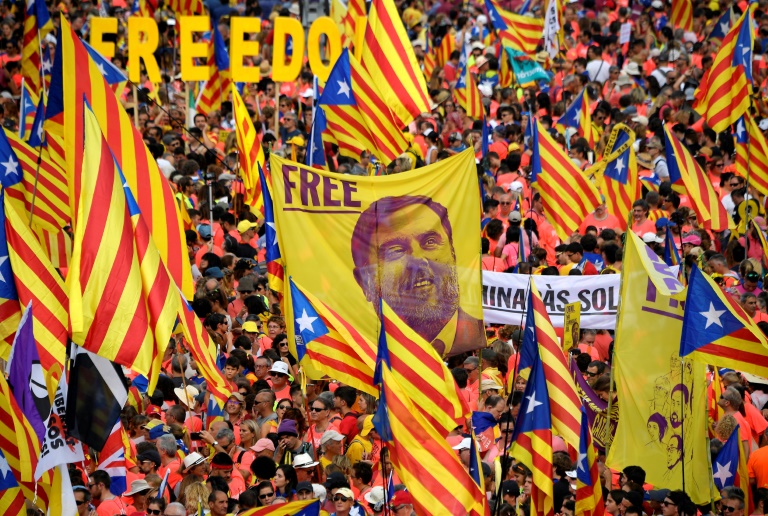
Spanish right on warpath over changes to sedition law

Spain’s right-wing opposition is infuriated over government plans to abolish sedition, the charge used against Catalan separatist leaders, decrying the move as a gift to pro-independence parties in exchange for parliamentary support.

Parliament on Thursday approved a bill to reform the criminal code to drop what Spain’s left-wing coalition government sees as an antiquated offence, replacing it with one better aligned with modern European norms.

And the change should be in place before the year’s end, Spanish media reports say.

In response, the far-right Vox party has called a protest in Madrid on Sunday, while the right-wing opposition Popular Party (PP) has convened rallies across the country to express its opposition. 

Right-wing parties say eliminating sedition — the charge used to convict and jail nine Catalan separatists over their involvement with a failed 2017 independence bid — will pave the way for another attempt to separate from Spain. 

Initially condemned to between nine and 13 years behind bars, the separatists were pardoned last year by the leftist government, drawing fury from the Spanish right. 

“Great for those in Catalonia who want to stage another coup!” PP lawmaker Edurne Uriarte told a parliamentary debate over the planned law changes. 

– Like European democracies –

The failed independence bid sparked Spain’s worst political crisis in decades, with then-Catalan leader Carles Puigdemont and several others fleeing abroad to escape prosecution.

Spain says its efforts to have them extradited have failed because many European countries simply don’t recognise sedition as a crime, with the bill seeking to reframe the offence as an “aggravated public disorder”. 

The bill aims “to reform the crime of sedition and replace it with an offence comparable to what they have in other European democracies,” Sanchez said earlier this month.

“The crimes committed in 2017 will continue to be present in our penal code, although no longer as crimes of sedition… but as a new type of crime called an aggravated public disorder,” he said. 

But even Puigdemont has expressed misgivings about the legal change, saying those separatists celebrating the move “have learned nothing from the last five years”. 

The new offence would carry a maximum penalty of five years behind bars, compared with 15 years for the crime of sedition.

Opposition leader Alberto Nunez Feijoo asked Sanchez to “clarify whether he is actually reforming the crime of sedition to protect Spanish democracy or whether he is just trying to politically survive” — implying the bill was payback for pro-independence party support in parliament. 

“The PP’s stance is clear: we will increase the penalties for sedition and rebellion, we will make them criminal offences and will make the holding of an illegal referendum a crime,” he said of his party’s position, with a general election on the horizon. 

– Some reluctance on the left –

The PP managed to ensure Thursday’s vote was vocal, a rare procedure in Spain in which lawmakers verbally declare their support or opposition for a bill, in a move forcing the more reluctant Socialists to lay their cards clearly on the table. 

Spain’s criminal code currently defines sedition as “publicly rising up and using mass disorder to prevent the implementation of laws, by force or through means outside the law”.

More succinctly, the Royal Academy of Spanish Language defines it as a “collective and violent uprising against authority, against public order or military discipline without reaching the gravity of rebellion”. 

The crime has survived various reforms of the legal code, the last of which was in 1995, but its critics say it dates back to the 19th century. 

“We are revising a crime that was enacted in 1822 in Spain, dating back 200 years to when there were still military uprisings,” Sanchez said earlier this month, pointing to Germany, where sedition was abolished in 1970. 

But reclassifying it as an aggravated public disorder hasn’t satisfied some on the left who fear it could be used against demonstrators. 

“It concerns us… (that the new offence) could have some limiting effect on the right to peaceful protest,” argued Pablo Echenique, spokesman for the hard-left Podemos, the Socialists’ junior coalition partner which was behind the moves to abolish sedition. 

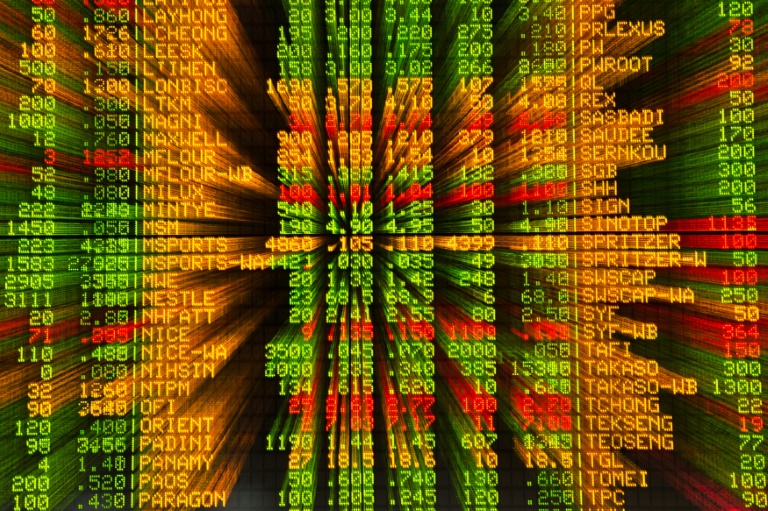
Stocks mixed as China Covid spike offsets rosier US rate outlook

Stock markets traded mixed Friday, as fresh Covid lockdown fears in China offset hopes that the Federal Reserve would tone down US interest-rate hikes.

With Wall Street closed for the Thanksgiving break, trading was light with few catalysts to drive action on trading floors and investors looking ahead to the release of US jobs data next week.

Europe’s major stock markets rose nearing the half-way mark after Asian indices closed mixed.

The euro was also mixed against main rivals, as official data showed Germany’s economy grew more than previously thought in the third quarter despite high inflation and an energy crisis.

Oil prices firmed after heavy losses earlier in the week.

The mood across markets has picked up this month as a series of indicators suggested the US economy, the world’s largest, was showing signs of weakness after the Fed ramped up interest rates.

The standout reports were consumer and wholesale inflation, which came in much lower than forecast and provided the US central bank with room to row back on its hawkishness.

And while a selection of Fed officials lined up to warn there was more tightening to come, there is an expectation that the days of bumper 75 basis-point increases are gone.

That has slightly eased worries that the sharp rise in borrowing costs could tip the US economy into recession, though many observers still see a contraction coming.

SPI Asset Management’s Stephen Innes said there was a “market consensus bias to believe that US headline inflation will continue to ease substantially over the next month or two and that the tail risks around (more than five percent interest rates) have dropped sharply”.

“After all, a step down to 50 basis points in December would be an unambiguous signal that peak hawkishness has passed.”

Focus was also on fears about the spike in Covid cases in China, which authorities are trying to contain with a series of targeted measures in big cities including Beijing and Shanghai, though they are short of full-on lockdowns.

Still, Innes said there appeared to be less concern about the government’s reaction as it looks to ease parts of its strict Covid-zero strategy.

“Stock and currency market investors are tentatively looking through the current lockdown regime while betting on the more optimistic interpretation that China is hitting the limits of ‘Covid-zero’ and the authorities’ efforts to loosen restrictions will continue,” he added.

– Key figures around 1130 GMT –

London – FTSE 100: UP 0.3 percent at 7,487.76 points

Paris – CAC 40: UP 0.2 percent at 6,720.44

Frankfurt – DAX: UP 0.1 percent at 14,551.88

EURO STOXX 50: UP 0.2 percent at 3,969.84

Tokyo – Nikkei 225: DOWN 0.4 percent at 28,283.03 (close)

Hong Kong – Hang Seng Index: DOWN 0.5 percent at 17,573.58 (close)

Shanghai – Composite: UP 0.4 percent at 3,101.69 (close)

New York – Dow: Closed for a holiday

Euro/dollar: DOWN at $1.0401 from $1.0411 on Thursday

Dollar/yen: UP at 139.31 yen from 138.39 yen

Pound/dollar: DOWN at $1.2106 from $1.2131

Euro/pound: UP at 85.95 pence from 85.82 pence

Brent North Sea crude: UP 1.7 percent at $86.80 per barrel

West Texas Intermediate: UP 2.1 percent at $79.56 per barrel

India's Adani defends media bid after press freedom fears

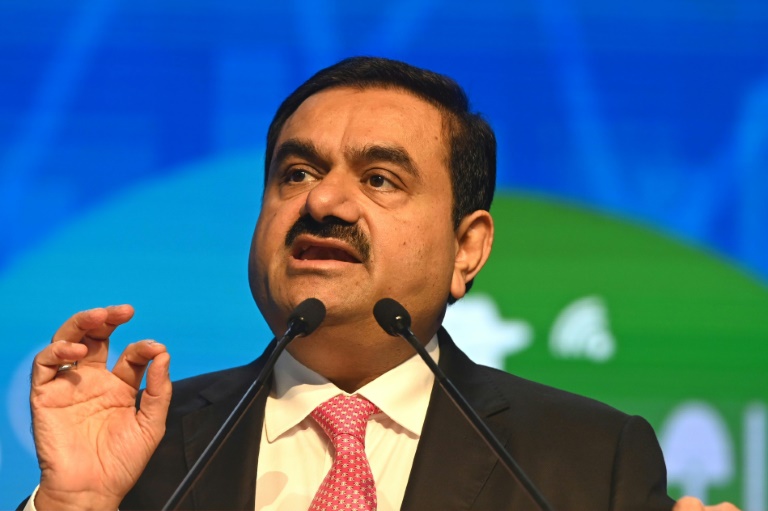
Indian tycoon Gautam Adani said Friday that media should have the “courage” to support the government when warranted, after his hostile takeover bid for one of the country’s top broadcasters sparked press freedom fears.

Adani, 60, is the world’s third-richest person, with an estimated net worth of $134 billion and interests ranging from Australian coal mines to India’s busiest ports.

He is also seen as a close acolyte of Hindu nationalist Prime Minister Narendra Modi, often publicly supporting his policies.

A company from his Adani Group revealed in August that it had indirectly bought 29 percent of NDTV, against the wishes of the broadcaster’s management, and is moving to buy a majority stake next month.

In a wide-ranging interview with the Financial Times, Adani said his foray into media was a “responsibility” rather than a business opportunity.

He added that it was time for India to have a global news conglomerate on par with Al Jazeera and said the channel should support the government when appropriate.

“Independence means if government has done something wrong, you say it’s wrong,” Adani told the British broadsheet.

“But at the same time, you should have courage when the government is doing the right thing every day. You have to also say that.”

NDTV’s two channels, one in Hindi and one in English, stand out among India’s myriad rolling news broadcasters for inviting on critics of the government as well as their hard-hitting reporting.

It has already been hit by a slew of legal cases that its owners said were a result of its reporting.

Under Modi, India has slipped 10 places in the Reporters Without Borders global press freedom ranking and is now 150 out of 180 surveyed countries. 

Critical reporters often find themselves behind bars and hounded on social media by supporters of Modi’s ruling Bharatiya Janata Party (BJP).

– Aggressive expansion –

Self-made billionaire Adani, 60, this year overtook fellow Indian Mukesh Ambani to become Asia’s richest man.

Like Modi, Adani hails from western Gujarat state, and his conglomerate has expanded aggressively in recent years, including into new areas like airports and renewable energy.

But its growth into capital-intensive businesses has raised alarm, with analysts from Fitch Group’s CreditSights warning in August that the group was “deeply overleveraged”.

On Friday, the group’s Adani Enterprises approved plans to raise $2.45 billion through a follow-on public offer — set to be India’s biggest ever, subject to regulatory approval.

The fresh funds will be key to reducing debt and fuelling further business expansion for the flagship entity, shares in which have surged nearly 1,000 percent over the past two years.

Musk announces gold, gray and blue badges for Twitter accounts

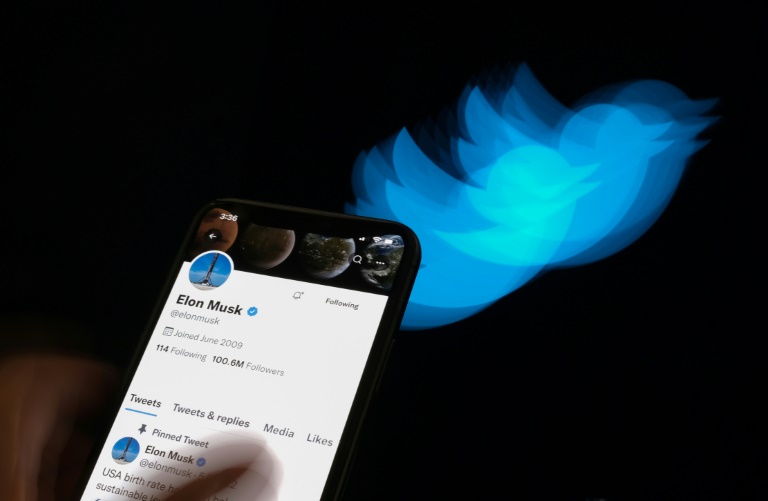
Twitter’s billionaire owner Elon Musk announced Friday that the platform would be launching differently colored badges to distinguish between accounts.

“Sorry for the delay, we’re tentatively launching Verified on Friday next week,” he tweeted. 

“Gold check for companies, grey check for government, blue for individuals (celebrity or not) and all verified accounts will be manually authenticated before check activates.”

In another tweet, Musk said that all verified individual accounts would have the same blue check, but some would eventually be able to display a “secondary tiny logo showing they belong to an org(anization) if verified as such by that org(anization)”.

The Tesla and SpaceX boss’ proposal for users to be able to pay to be “verified” and obtain a blue badge on their profiles has caused confusion since he acquired the social media giant last month.

Musk proposed a subscription fee of $8 a month to allow users to obtain the blue check — which was previously free but reserved for organizations and public figures in an attempt to avoid impersonation and misinformation. 

The first rollout of Musk’s subscription plan in early November quickly went south, with many accounts paying for the blue check and then impersonating world leaders, celebrities or companies.

Responding to the backlash, Musk initially postponed the launch date to November 29, before delaying it once more. It now appears the feature will launch on December 2. 

Musk has said that he wants to charge users for subscriptions to the social media platform to diversify its income stream. Twitter currently depends on advertising for 90 percent of its revenue.

Several major brands have withdrawn from advertising on the platform since Musk bought it, fearing that his promised relaxation of content moderation could open their companies up to being associated with objectionable content.

According to the NGO Media Matters, half of Twitter’s top 100 advertisers have announced that they are suspending or “have apparently suspended” their spending on the social network. 

Musk announces gold, gray and blue badges for Twitter accounts

Twitter’s billionaire owner Elon Musk announced Friday that the platform would be launching differently colored badges to distinguish between accounts.

“Sorry for the delay, we’re tentatively launching Verified on Friday next week,” he tweeted. 

“Gold check for companies, grey check for government, blue for individuals (celebrity or not) and all verified accounts will be manually authenticated before check activates.”

In another tweet, Musk said that all verified individual accounts would have the same blue check, but some would eventually be able to display a “secondary tiny logo showing they belong to an org(anization) if verified as such by that org(anization)”.

The Tesla and SpaceX boss’ proposal for users to be able to pay to be “verified” and obtain a blue badge on their profiles has caused confusion since he acquired the social media giant last month.

Musk proposed a subscription fee of $8 a month to allow users to obtain the blue check — which was previously free but reserved for organizations and public figures in an attempt to avoid impersonation and misinformation. 

The first rollout of Musk’s subscription plan in early November quickly went south, with many accounts paying for the blue check and then impersonating world leaders, celebrities or companies.

Responding to the backlash, Musk initially postponed the launch date to November 29, before delaying it once more. It now appears the feature will launch on December 2. 

Musk has said that he wants to charge users for subscriptions to the social media platform to diversify its income stream. Twitter currently depends on advertising for 90 percent of its revenue.

Several major brands have withdrawn from advertising on the platform since Musk bought it, fearing that his promised relaxation of content moderation could open their companies up to being associated with objectionable content.

According to the NGO Media Matters, half of Twitter’s top 100 advertisers have announced that they are suspending or “have apparently suspended” their spending on the social network. 

Close Bitnami banner
Bitnami