World

Spain PM takes over as Socialist International chief

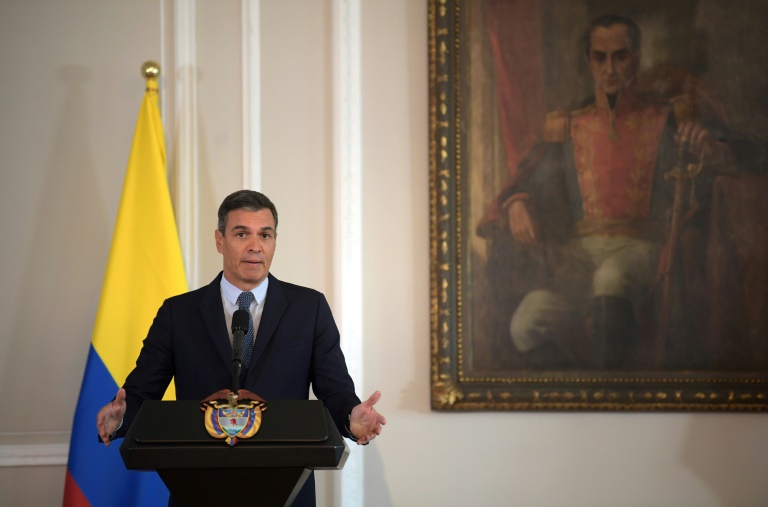
Spanish Prime Minister Pedro Sanchez was on Friday named head of the Socialist International (SI) as the movement of centre-left parties gathered in Madrid for a three-day congress. 

The telegenic 50-year-old takes over from former Greek prime minister George Papandreou as head of the SI, a movement grouping 132 political parties from around the world.

There was no vote for the appointment as Sanchez — who has led Spain’s Socialist Party since 2014 — was the only candidate running, with his nomination welcomed by a show of applause. 

Sanchez told the delegates he was taking over “with one intention: for this organisation to become a big ideological platform for the progressive international movement”. 

A self-described feminist whose cabinet is largely made up of women, Sanchez also reassured his female colleagues that as head of SI, he would “fight in favour of gender parity”.

The nomination could prove to be a springboard for Sanchez to take up a major post on the world stage. 

Former Portuguese prime minister Antonio Guterres led SI before going on to head the United Nations refugee agency in 2005 then later becoming UN secretary-general in 2017.

Sanchez’s appointment comes a year before Spain holds a general election which polls suggest he will struggle to win.

“While symbolic… this post could be a way (for Sanchez) to regain credit among (Spanish) voters by presenting himself as influential on the world stage,” Pablo Simon, a political scientist at Madrid’s Carlos III University, told AFP this week. 

“But it also could be that he plans on capitalising on this network of international contacts” which the post offers to “play a prominent role later” in a top global body, he added.

Putin tells Russian mothers he shares 'pain' of soldier deaths

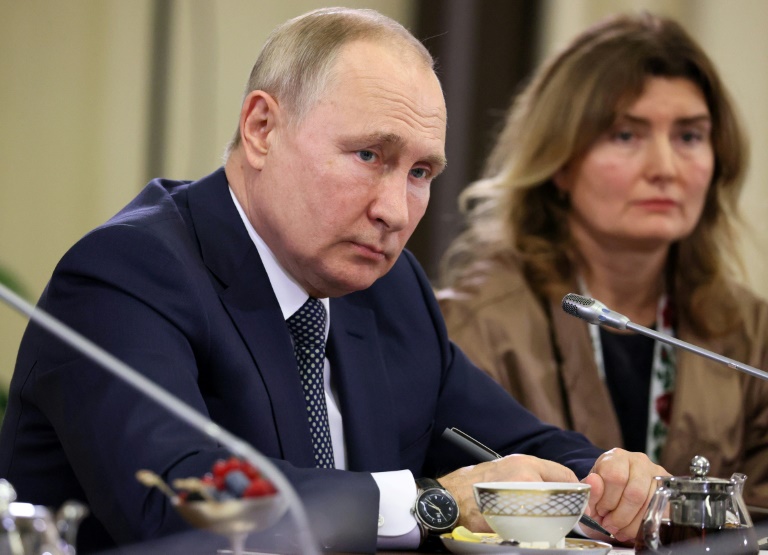
Russian President Vladimir Putin on Friday told a group of mothers whose sons are fighting in Ukraine that he shares the pain of those who have lost loved ones in the conflict.

The carefully choreographed meeting at Putin’s residence took place as anger simmers in Russia over a chaotic military draft and deaths of soldiers in Ukraine.  

At least one woman at the meeting wore a black headscarf, apparently marking a recent loss.

“I want you to know — I personally and the entire leadership of the country share this pain,” Putin told the group ahead of Mother’s Day, which is celebrated in Russia on Sunday.

“We understand that nothing can replace the loss of a son, a child,” Putin said.

He offered condolences to one of the women saying her son did not die “in vain” and reiterated his pledge to fulfil Moscow’s goals in Ukraine.

Russian authorities have introduced legislation that effectively bans any public criticism of the offensive. Kremlin critics accuse authorities of concealing the real number of dead and wounded Russian troops.

Putin told the 17 women that Moscow was fighting the “neo-Nazi regime” in Ukraine and warned that they should be wary of what they read on the internet.

“It is clear that life is more complex than what is shown on our TV screens or even on the internet, nothing can be trusted there,” he said. 

– ‘Answer our questions’ –

He also denounced what he called attempts by “the enemy” to “devalue (and) compromise” Moscow’s tactics in Ukraine. 

Anger and concern have built across Russia since September, when the Kremlin announced that hundreds of thousands of well-trained and well-equipped men would be conscripted and sent to the battlefield to bolster Moscow’s struggling campaign in Ukraine.

But chaos ensued, with widespread reports of exempted men — the elderly or infirm — being dispatched to the front or conscripts dying after receiving nearly no training, forcing the Kremlin to concede “mistakes”.

The meeting — the first of its kind since Putin launched the offensive on February 24 — is a sign that the Kremlin takes the growing malaise seriously. 

Ahead of Putin’s meeting, some activists said the get-together would not offer a platform for frank discussion.

“The president will meet with some mothers pulled out of his pocket, who will ask the right questions and thank him,” said Olga Tsukanova, an activist mother. 

“I’m not alone. Invite us, Vladimir Vladimirovich, answer our questions!” she told AFP ahead of the meeting.

Tsukanova was not invited to meet Putin.

– ‘Muddy trenches’ –

National television broadcast some critical comments from mothers who attended the meeting, however. 

One woman, whose husband and two sons went to fight in Ukraine, said there were not enough camouflage robes. 

“The uniform becomes unusable very quickly, the trenches are muddy and damp,” she added in televised remarks.

Another mother was shown on TV thanking Putin for “taking care” of the women.

Anger over the fate of mobilised men has put the Kremlin in an uncomfortable position, analysts say. 

While authorities have unleashed an unprecedented crackdown on political dissent, the word of mothers appears sacred in Russia. 

Imprisoning them is not an option, observers say.

Two wars in Chechnya led to the rise of the mothers’ movement in Russia that became a thorn in the Kremlin’s side.

But this time the climate is different, with no independent media left in the country.

– ‘Not a peace movement’ –

This means there has been little public questioning of the military campaign in Ukraine. But in Russia some are asking questions about the conditions in which their husbands and sons are sent to fight.

Mothers’ and wives’ status as relatives of mobilised men serving the country gives them a form of protection.

“There is a subconscious feeling that women have that right” to hold power to account, sociologist Alexei Levinson of the independent Levada Centre said.

“But this is not a women for peace movement,” he warned.

“They want the state to fulfil its responsibility as a ‘collective father’ towards the mobilised.”

For now, the soldiers’ mothers’ movement is uncoordinated and disparate, mainly consisting of worried relatives posting videos on social media.

In a climate of suspicion not seen since the Soviet era, many women fear that complaining about the offensive could mean trouble and refrain from speaking to the foreign press.

“We have sent letters to authorities,” one woman told AFP anonymously. 

“It’s not the journalists that will take our guys out of the trenches and we do not want to harm them even more.”

Global wildlife summit approves shark protections

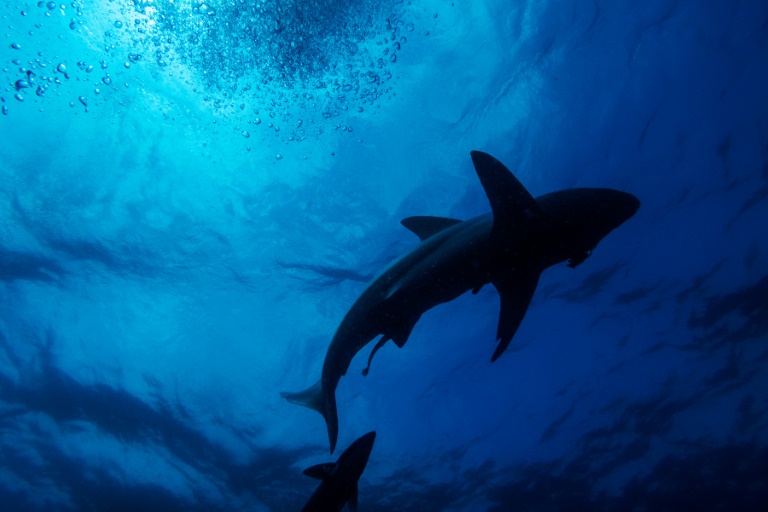
Delegates at a global summit on trade in endangered species on Friday approved a plan to protect 54 more shark species, a move that could drastically reduce the lucrative and cruel shark fin trade.

Members of the requiem shark and the hammerhead shark families will now have their trade tightly controlled under the Convention on International Trade in Endangered Species (CITES).

The binding resolutions were adopted by consensus on the final day of the two-week meeting by delegates from 183 countries and the European Union, which takes place every two or three years.

“Proposal 37 approved,” said Panamanian delegate and head of the plenary Shirley Binder of the requiem shark proposal, after Japan failed in getting the blue shark removed from the measure.

The proposal regarding the hammerhead shark passed without debate.

Binder earlier told AFP the “historic decision” would mean up to 90 percent of sharks in the market would now be protected. 

Insatiable appetite in Asia for shark fins, which make their way onto dinner tables in Hong Kong, Taiwan and Japan, has spurred their trade.

Despite being described as almost tasteless and gelatinous, shark fin soup is viewed as a delicacy and is enjoyed by the very wealthy, often at weddings and expensive banquets.

Shark fins, representing a market of about $500 million per year, can sell for about $1,000 a kilogram (2.2 pounds).

“This will be remembered as the day we turned the tide to prevent the extinction of the world’s sharks and rays,” said Luke Warwick, director of shark protection for the NGO Wildlife Conservation Society (WCS).

The shark species will now be listed on what is known as CITES Appendix II, which is for species that may not yet be threatened with extinction but may become so unless trade in them is closely controlled.

“The crucial next step will be to implement these listings, and ensure they result in stronger fisheries management and trade measures as soon as possible,” Warwick said.

– From villain to darling –

Sharks have long been seen as the villain of the seas they have occupied for more than 400 million years, drawing horror with their depiction in films such as “Jaws” and occasional attacks on humans.

However, these ancient predators have undergone an image makeover in recent years as conservationists have highlighted the crucial role they play in regulating the ocean ecosystem.

Joaquin de la Torre of the International Fund for Animal Welfare (IFAW), told AFP that more than 100 million sharks are killed every year.

“Sharks and rays are the most threatened species, more even than elephants and big cats.”

With many shark species taking more than 10 years to reach sexual maturity, and having a low fertility rate, the constant hunting of the species has decimated their numbers.

In many parts of the world, fisherman lop the shark’s fins off at sea, tossing the shark back into the ocean for a cruel death by suffocation or blood loss.

The efforts by conservationists led to a turning point in 2013, when CITES imposed the first trade restrictions on some shark species. 

– Ongoing over-exploitation –

Delegates have been considering 52 proposals to change the protection levels of more than 600 species. 

They also approved new protections for the guitarfish ray, crocodiles, frogs, and some turtle species.

“Many of the proposals adopted here reflect there is ongoing over-exploitation and unsustainable trade, and escalating illegal trade, and some are due to complex interactions of other threats reducing species populations in the wild, including climate change, disease, infrastructure development, and habitat loss,” said Susan Liberman of WCS.

CITES, which came into force in 1975, has set international trade rules for more than 36,000 wild species. 

Its signatories include 183 countries and the European Union. 

Half of Kyiv still without electricity after Russian strikes

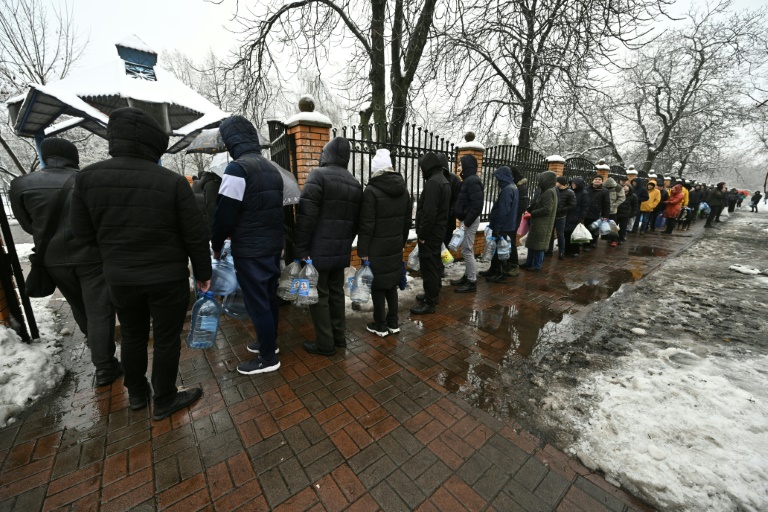
Nearly half of Kyiv residents were still without electricity on Friday as engineers battled to restore services two days after Russian strikes hammered the country’s energy grid.

After nine months of war, Russian President Vladimir Putin met for the first time with women whose children are fighting in Ukraine, assuring those who had lost sons that he and Russia’s elite “share this pain”.

And in the southern region of Kherson, the governor there said Russian shelling had forced the evacuation of patients from hospitals in the city of Kherson.

The systematic and targeted Russian attacks over recent weeks have brought Ukraine’s energy infrastructure to its knees as winter approaches, spurring fears of a health crisis and a further exodus.

Utility workers were still working Friday to reconnect the heating and water as temperatures in Kyiv approached freezing, as UK Foreign Secretary James Cleverly visited to announce a new aid package.

“We have to endure this winter –- a winter that everyone will remember,” Ukraine President Volodymyr Zelensky said on social media.

“We have to do everything so that we remember it — not because of what it threatened us with — but because of what we managed to do to protect ourselves from this threat.”

Ukraine Prime Minister Denys Shmygal told a government meeting that electricity providers were now providing 70 percent cover.

“Almost all Ukraine’s critical infrastructure has been reconnected,” he said.

But, he added: “On average, from 200,000 to 400,000 consumers are cut off power in each region at certain hours.”

Cars queued outside petrol stations in Kyiv on Friday to stock up, AFP journalists said. Mobile networks in some areas were still experiencing disruption.

– ‘We live like this now’ –

Millions of Ukrainians have endured the cold without power since Russia fired dozens of missiles and launched drone attacks at water and electricity facilities on Wednesday.

“Yes, this is a difficult situation and yes, it can happen again,” presidential advisor Mykhailo Podolyak said on television.

“But Ukraine can cope.”

With gas for cooking and heating disconnected in her Kyiv apartment, Albina Bilogub told AFP that she and her children all slept in the same room to stay warm.

“In our building, very few people have gas, so we go to the woman that I work for — I change her clothes because she is disabled — and we cook there,” she said.

“This is our life. One sweater, a second, a third. We live like this now.”

In northern Kyiv, a vet in blue scrubs and a face mask shone a light over an operating table in a darkened clinic as colleagues operated on an ailing dog late Thursday.

“We were in the middle of an operation and our lights turned off because a rocket fell not far away, so there was a power cut,” said Oleksiy Yankovenko.

“I had to finish the operation under the flashlights,” he added.

– ‘Brutal attacks’ –

Putin meanwhile met the mothers of soldiers fighting in Ukraine at his residence near Moscow.

“I want you to know: I personally and the entire leadership of the country share this pain,” he told them.

He warned them that a lot of news reports about the conflict could not be trusted, describing them as “fake news, deceit and lies”.

But Russia would achieve its goals in Ukraine, he added.

On Thursday, Ukraine’s presidency said Russian shelling had killed 11 people and wounded nearly 50 across the southern Kherson region Thursday.

On Friday, the region’s governor said hospital patients in the city of Kherson had been evacuated to nearby regions because of “constant Russian shelling”. Patients at a psychiatric facility in the region also had to be evacuated.

Ukraine’s forces recaptured the city from Russian forces earlier this month.

Ukraine’s Western allies have denounced the Russian attacks on energy as a “war crime”, coming in the wake of a string of military setbacks for Russia on the frontlines.

Moscow insists it targets only military linked infrastructure and has blamed Kyiv for the blackouts, saying Ukraine can end the suffering by agreeing to Russian demands.

Britain’s foreign minister announced new aid for Ukraine during his visit to Kyiv, including ambulances and support for victims of sexual violence by Russian soldiers.

“As winter sets in, Russia is continuing to try and break Ukrainian resolve through its brutal attacks on civilians, hospitals and energy infrastructure,” Cleverly said.

“Russia will fail,” he said, vowing UK support “will continue for as long as it takes”.

The attacks on Ukraine’s grid are Russia’s latest strategy designed to force Ukrainian capitulation after Moscow’s forces failed to topple the government and capture Kyiv nine months after launching their invasion.

Although they have captured swathes of territory in the south and east and the Kremlin claimed to annex four regions, Ukrainian troops are clawing back territory.

Macron denies being main target of campaign financing probe

French President Emmanuel Macron on Friday denied being the main target of a judicial investigation into the government’s use of management consultants and their role in recent election campaigns.

The French financial crime prosecutor’s office revealed late Thursday that it had opened a probe which was thought to be focused on Macron and his 2017 and 2022 presidential campaigns.

“I’m not scared of anything,” the 44-year-old head of state told reporters during a trip to the town of Dijon. 

“I believe that your servant is not at the heart of the investigation,” he added, referring to himself. 

“It’s normal that the justice system does its work. It does it freely and will shine a light on this issue.” 

The prosecutor’s statement did not name Macron or his election campaign, but said investigators were looking into allegations of favouritism and hidden campaign financing in relation to management consultancies.

The probe began after complaints following the publication of a Senate report in March which showed government spending on consultants had more than doubled during Macron’s first term from 2017-22.

The favouritism allegation could relate to US-based consultancy firm McKinsey, which was the biggest beneficiary of these contracts and reportedly provided staff to Macron’s 2017 campaign team for free.

– KcKinseygate? –

“I tell you, no,” Macron replied when asked about the allegation, adding that he had explained himself “hundreds of times” already.

The Senate’s revelations about spending on consultants — which reached a billion euros ($1.1 billion) last year — were seized on by Macron’s opponents during his campaign for a second term this April.

The scandal, dubbed “McKinseygate” by the French media, became a debating point, with many French people shocked by the use of expensive and foreign firms which specialise in strategic advice and IT services.

Macron has repeatedly defended the recourse to consultants.

“When you want to go very quickly and very strongly with a policy, you need to make use of outside contractors occasionally,” he told reporters in late March.

The investigation is significant because it could be the first that risks personally implicating the president.

Several of his allies, including his current chief of staff, face legal investigations over a range of charges.

– ‘Slow poison’ –

The most damaging incident involved his former bodyguard who was filmed beating up protesters in 2018 and was later convicted of assault.

“For the moment, this issue is going completely over the head of French people who are obsessed with economic, energy and social considerations,” Frederic Dabi, the director of polling group Ifop, told AFP.

“It remains to be seen if it will become a slow poison for Macron’s camp if there are a series of judicial developments,” he added.

France has strict rules on the financing of election campaigns and political parties, which have led to many convictions in recent decades.

Right-wing ex-president Nicolas Sarkozy received a one-year prison sentence in September 2021 for illegal financing of his 2012 re-election bid.

Judges concluded that Sarkozy spent nearly twice the legal limit on his doomed quest for a second term.

He has appealed.

“Let’s stop imagining that because an investigation has been opened that there’s something outrageous,” MP Sylvain Maillard, interim leader of Macron’s party in parliament, told Europe 1 on Friday.

Global wildlife summit approves shark protections

Delegates at a global summit on trade in endangered species on Friday approved a plan to  protect 54 more shark species, a move that could drastically reduce the lucrative and cruel shark fin trade.

Members of the requiem shark and the hammerhead shark families will now have their trade tightly controlled under the Convention on International Trade in Endangered Species (CITES).

The proposal was adopted by consensus on the final day of the two-week meeting by delegates from 183 countries and the European Union.

Delegates have been considering 52 proposals to change species’ protection levels. Other species debated were glass frogs, crocodiles, guitarfish, and some turtle species.

Panamanian delegate Shirley Binder told AFP the “historic decision” would mean a large number of sharks making up 90 percent of the market would now be protected. 

Insatiable appetite in Asia for shark fins, which make their way onto dinner tables in Hong Kong, Taiwan and Japan, has spurred their trade.

Despite being described as almost tasteless and gelatinous, shark fin soup is viewed as a delicacy and is enjoyed by the very wealthy, often at weddings and expensive banquets.

Shark fins, representing a market of about $500 million per year, can sell for about $1,000 a kilogram (2.2 pounds).

“This will be remembered as the day we turned the tide to prevent the extinction of the world’s sharks and rays,” said Luke Warwick, director of shark protection for the NGO Wildlife Conservation Society (WCS).

“The crucial next step will be to implement these listings, and ensure they result in stronger fisheries management and trade measures as soon as possible.”

– From villain to darling –

Sharks have long been seen as the villain of the seas they have occupied for more than 400 million years, drawing horror with their depiction in films such as “Jaws” and occasional attacks on humans.

However, these ancient predators have undergone an image makeover in recent years as conservationists have highlighted the crucial role they play in regulating the ocean ecosystem.

According to the Pew Environment Group, between 63 million and 273 million sharks are killed every year, mainly for their fins and other parts.

With many shark species taking more than 10 years to reach sexual maturity, and having a low fertility rate, the constant hunting of the species has decimated their numbers.

In many parts of the world, fisherman lop the shark’s fins off at sea, tossing the shark back into the ocean for a cruel death by suffocation or blood loss.

The efforts by conservationists led to a turning point in 2013, when CITES imposed the first trade restrictions on some shark species. 

“We are in the middle of a very large shark extinction crisis,” said Warwick earlier in the summit.

The decision follows heated debate after Japan and Peru tried to reduce the number of species that would be protected.

However, their suggestions were rejected.

CITES, which came into force in 1975, has set international trade rules for more than 36,000 wild species. 

Its signatories include 183 countries and the European Union. 

Inflation clouds 'Black Friday' kickoff of US holiday shopping season

Retailers unveiled a trove of fresh seasonal promotions Friday, as they try to coax sales from reticent shoppers whose holiday cheer has been tempered by inflation and worries over a softening economy.

“Black Friday,” the unofficial start of the US holiday shopping season, announced itself with the annual day-after-Thanksgiving deluge of online promotions and early store openings.

But industry experts have been cautious about this year’s prospects, in light of price pressures that have exacerbated concerns about an oversupply of goods.  

A year ago, retailers faced product shortfalls in the wake of shipping backlogs and factory closures related to Covid-19. To avert a repeat, the industry front-loaded its holiday imports this year, leaving it vulnerable to oversupply at a time when consumers are cutting back.

“Supply shortages was yesterday’s problem,” said Neil Saunders, managing director for GlobalData Retail, a consultancy. “Today’s problem is having too much stuff.”

Saunders said retailers have made progress in reducing excess inventories, but oversupply will mean deep discounts in many categories, including electronics, home improvement and apparel.

Online shoppers spent $5.3 billion on Thanksgiving Day itself, according to an Adobe report early Friday, up 2.9 percent from a year ago.

Higher costs for gasoline and household staples like meat and cereal are a nationwide issue, and they do not burden everyone equally.

“The lower incomes are definitely hit worst by the higher inflation,” said Claire Li, senior analyst at Moody’s. “People have to spend on the essential items.” 

– Diminishing savings –

Leading forecasts from Deloitte and the National Retail Federation project a single-digit percentage rise in sales, but this is unlikely to exceed the inflation rate.

Adobe has forecast an overall holiday sales increase of 2.5 percent, less than a third of the level from last year. Besides inflation, Adobe cited higher Federal Reserve interest rates and an uptick in brick-and-mortar shopping as factors.

European countries like Britain and France have been marking Black Friday for a few years now too, but with soaring inflation, merchants there face a similar dilemma.

“Retailers are desperate for some spending cheer but the worry is that it could turn out to be more of a Bleak Friday,” said Hargreaves Lansdown analyst Susannah Streeter.

US shoppers have remained resilient throughout the pandemic, often spending more than expected even when consumer sentiment surveys suggest they are in a gloomy mood.

Part of the reason has been the unusually robust state of savings, with many households banking government pandemic aid payments at a time of reduced consumption due to virus restrictions.

But that cushion is starting to whittle away. After hitting $2.5 trillion in excess savings in mid-2021, the benchmark fell to $1.7 trillion in the second quarter, according to Moody’s.

Accompanying this drop has been a rise in credit card debt visible in Federal Reserve data and anecdotally described by chains that also report more purchases made with food stamps.

– Mixed picture –

Recent earnings reports from retailers paint a mixed picture on consumer health.

Target stood on the downcast side, pointing to a sharp decline in shopping activity in late October, potentially portending a weak holiday season.

The big-box chain expects a “very promotional” holiday season, said Chief Executive Brian Cornell.

“We’ve had a consumer who has been dealing with very stubborn inflation for quarter after quarter now,” Cornell said on a conference call with analysts.

He added that customers are “shopping very carefully on a budget.”

But Lowe’s, another big US chain specializing in home-improvement, offered a different view, describing the same late-October period as “strong.”

“We are not seeing anything that feels or looks like a trade down or consumer pullback,” said Lowe’s Chief Executive Marvin Ellison.

Consumers like Charmaine Taylor, who checks airline websites frequently, are staying vigilant.

Taylor, who works in child care, has had her travel plans thwarted due to exorbitant plane ticket prices — and she is unsure of how much she can spend on family this year.

“I’m trying to give them some little gifts,” she said at a park in Harlem earlier this week. “I don’t know if I’ll be able to. Inflation is hitting pretty hard.”

Putin tells Russian mothers he 'shares' pain of soldier deaths in Ukraine

Russian President Vladimir Putin on Friday told a group of mothers whose sons are fighting in Ukraine that he shares the pain of those who have lost their loved ones in the conflict.

The carefully-choreographed meeting at Putin’s residence took place as anger simmers in Russia over a chaotic military draft and deaths of soldiers in Ukraine. 

“I want you to know: I personally and the entire leadership of the country share this pain,” Putin told a group of soldiers’ mothers ahead of Mother’s Day, which Russia will mark on Sunday. 

“We understand that nothing can replace the loss of a son, a child,” Putin said in his opening remarks which lasted just a few minutes.

The Russian leader, who has introduced legislation that effectively bans any public criticism of the offensive, also told the 17 women they should be wary of what they read on the internet.

“It is clear that life is more complex than what is shown on our TV screens or even on the internet, nothing can be trusted there,” he said. 

At least one woman at the meeting wore a black headscarf, apparently marking a recent loss.

Anger and concern have built across Russia since September, when the Kremlin announced that hundreds of thousands of well-trained and well-equipped men would be conscripted and sent to the battlefield to bolster Moscow’s struggling campaign in Ukraine.

But chaos ensued, with widespread reports of exempted men — the elderly or infirm — being dispatched to the front or conscripts dying after receiving nearly no training, forcing the Kremlin to concede “mistakes”.

The meeting — the first of its kind since Putin launched the offensive on February 24 — is a sign that the Kremlin takes the growing malaise seriously. 

Ahead of Putin’s meeting some activists said the Kremlin meeting would not offer a platform for frank discussion.

“The president will meet with some mothers pulled out of his pocket, who will ask the right questions and thank him,” said Olga Tsukanova, an activist mother. 

“As usual.”

Her 20-year-old son is currently undergoing his military service and she wants to make sure he will not be sent to Ukraine.

Last week Tsukanova travelled around 900 kilometres (560 miles) from the city of Samara on the Volga river in the hope of being seen at the Kremlin.

– ‘Invite us, Vladimir’ –

“I’m not alone. Invite us, Vladimir Vladimirovich, answer our questions!” she told AFP ahead of the Kremlin meeting, referring to the president by his patronymic.

Tsukanova was never invited to attend the meeting with Putin.

Anger over the fate of mobilised men, which risks degenerating into real discontent, has put the Kremlin in an uncomfortable position, analysts say. 

While authorities have unleashed an unprecedented crackdown on political dissent while troops fight in Ukraine, the word of mothers appears sacred in Russia. 

Imprisoning them is not an option, observers say.

For Putin, the sight of angry relatives may bring back difficult memories from the start of his rule more than two decades ago. 

In August 2000, the Russian leader was criticised for responding too slowly when the Kursk submarine sank, killing all 118 crew onboard.

Two wars in Chechnya led to the rise of the mothers’ movement in Russia that became a thorn in the Kremlin’s side.

But this time the climate is different, with no independent media left in the country and an effective ban on public criticism of Putin’s offensive.

This means there has been little public questioning of the military campaign in Ukraine. But in Russia some are asking questions about the conditions in which their husbands and sons are sent to fight.

– ‘Not a peace movement’ –

Mothers’ and wives’ status as relatives of mobilised men serving the country gives them a form of protection.

“There is a subconscious feeling that women have that right” to hold power to account, sociologist Alexei Levinson of the independent Levada Centre said.

“But this is not a woman for peace movement,” he warned.

“They want the state to fulfil its responsibility as a ‘collective father’ towards the mobilised.”

For now, the soldiers mothers’ movement is uncoordinated and disparate, mainly consisting of worried relatives posting videos on social media, where some informal groups have formed.

This is how Tsukanova, who has links to controversial figure Svetlana Peunova — accused in Russia of spreading political conspiracy theories — became involved in the mothers’ movement.

In a climate of suspicion not seen since the Soviet era, many women fear that complaining about the offensive could mean trouble and refrain from speaking to the foreign press.

“We have sent letters to authorities,” one woman told AFP anonymously. 

“It’s not the journalists that will take our guys out of the trenches and we do not want to harm them even more.”

Carrefour still sells beef tied to Brazil deforestation: NGO

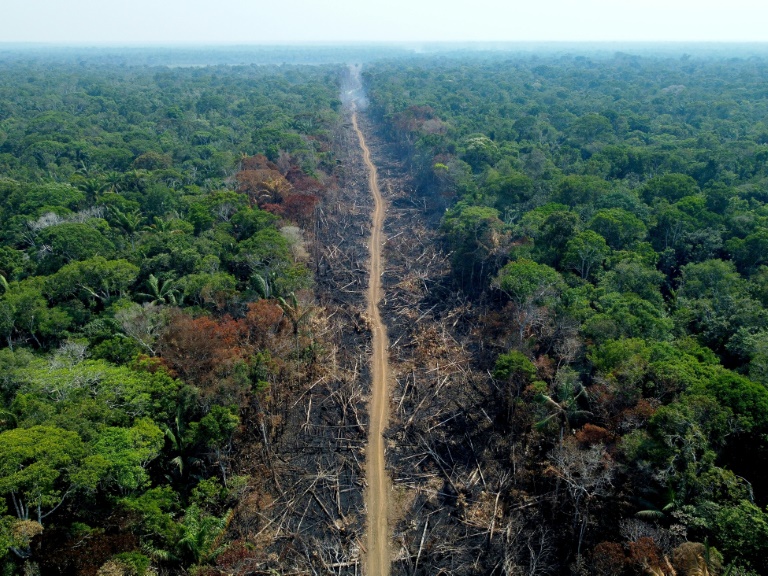
French retail giant Carrefour is still selling Brazilian beef products linked to destruction of the Amazon rainforest despite committing to end such sales, the US activist group Mighty Earth said Friday.

Carrefour suspended beef supplies from two slaughterhouses owned by the JBS company that were linked to deforestation in the Amazon after the NGO called on the supermarket chain to clean up its supply chains in September.

It said JBS would no longer supply its stores in Brazil.

Mighty Earth sought to verify this by analysing 310 products sold in the chain’s 10 stores in seven Brazilian cities in October.

“The results are implacable, Carrefour has not applied this suspension in all of its stores. Mighty Earth identified 12 products sold that came from the two slaughterhouses in four of the group’s shops”, including the Atacadao brand, the group said in a statement.

Carrefour acknowledged there had been a “failure in the suspension instructions”, in particular those relating to two stores that were transferred from the Maxxi brand belonging to Brazilian retailer Grupo BIG to Atacadao. Carrefour acquired Grupo Big earlier this year.

“We regret this and we are checking whether other stores, which source their supplies directly at the local level, are affected,” a Carrefour spokeswoman said.

She added that the retail giant was “making an enormous effort to resolve the issues on a case-by-case basis”.

Carrefour renewed its vow earlier this month to make sure the beef it sells is “deforestation-free” by 2026.

Mighty Earth said that after leftist Luiz Inacio Lula da Silva won the presidential election last month, Carrefour must commit to “zero deforestation and ensure the robustness of its implementation”, especially in its supply chains.

According to Brazil’s INPE space research institute, which measures the level of Amazon deforestation, 2022 is already a record year.

So far this year almost 9,500 square kilometres (2.3 million acres) have been destroyed, compared to 9,200 square kilometres in 2021.

Carrefour still sells beef tied to Brazil deforestation: NGO

French retail giant Carrefour is still selling Brazilian beef products linked to destruction of the Amazon rainforest despite committing to end such sales, the US activist group Mighty Earth said Friday.

Carrefour suspended beef supplies from two slaughterhouses owned by the JBS company that were linked to deforestation in the Amazon after the NGO called on the supermarket chain to clean up its supply chains in September.

It said JBS would no longer supply its stores in Brazil.

Mighty Earth sought to verify this by analysing 310 products sold in the chain’s 10 stores in seven Brazilian cities in October.

“The results are implacable, Carrefour has not applied this suspension in all of its stores. Mighty Earth identified 12 products sold that came from the two slaughterhouses in four of the group’s shops”, including the Atacadao brand, the group said in a statement.

Carrefour acknowledged there had been a “failure in the suspension instructions”, in particular those relating to two stores that were transferred from the Maxxi brand belonging to Brazilian retailer Grupo BIG to Atacadao. Carrefour acquired Grupo Big earlier this year.

“We regret this and we are checking whether other stores, which source their supplies directly at the local level, are affected,” a Carrefour spokeswoman said.

She added that the retail giant was “making an enormous effort to resolve the issues on a case-by-case basis”.

Carrefour renewed its vow earlier this month to make sure the beef it sells is “deforestation-free” by 2026.

Mighty Earth said that after leftist Luiz Inacio Lula da Silva won the presidential election last month, Carrefour must commit to “zero deforestation and ensure the robustness of its implementation”, especially in its supply chains.

According to Brazil’s INPE space research institute, which measures the level of Amazon deforestation, 2022 is already a record year.

So far this year almost 9,500 square kilometres (2.3 million acres) have been destroyed, compared to 9,200 square kilometres in 2021.

Close Bitnami banner
Bitnami