World

Indonesian girl, 7, found dead after day-long quake rescue effort

A seven-year-old Indonesian girl who was the subject of a day-long rescue effort after an earthquake killed hundreds in West Java has been found dead, rescuers told AFP Friday.

Emergency workers found the body of Ashika Nur Fauziah, also known as Cika, under rubble in the worst-hit district of Cianjur town, the epicentre of the quake that triggered landslides, collapsed roofs, walls and buried victims in mounds of earth on Monday.

“The body was immediately handed over to the family,” 28-year-old rescuer Jeksen Kolibu told AFP. “The family… was very sad.”

Dozens of rescuers had spent most of Thursday using digging tools, hammers and their bare hands to clear debris in the delicate mission, which was suspended overnight.

Cika was found under three layers of concrete on Friday morning, said Kolibu. Workers found her face-down, encased by debris, with little space to breathe.

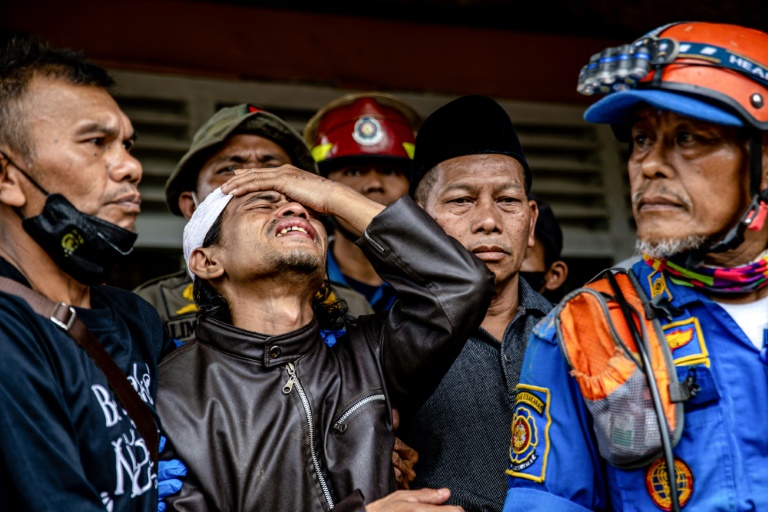
Rescuers covered her face and put her into a bodybag as her father Ahmad watched on, holding his head in despair. He did not utter a word as she was handed over to him.

Cika was buried at a nearby cemetery less than an hour after being found.

At the funeral, a cleric tried to calm a visibly emotional Ahmad.

Cika was then wrapped in a white sheet and lowered into the ground by three men as exhausted volunteers and firefighters watched.

– ‘Makes me sad’ –

The focus of the search had been the girl’s grandmother’s house, across the road from the family home, where her mother believed she had been playing when the earthquake struck.

“She was playing outside, I was cooking in the kitchen, suddenly the earthquake happened, so fast, only two seconds, my house collapsed,” her mother Imas Masfahitah, 34, told AFP at the scene on Thursday.

“Whatever happens, I will try to accept it,” she added, crying as she held her daughter’s sandals.

Hopes of a happy outcome had been raised following the dramatic rescue of a six-year-old boy, Azka, on Wednesday evening, which was described as a “miracle” after he survived more than two days in the rubble without food or water.

“The mother was very hopeful. Azka survived, while Cika didn’t. That’s what makes me sad,” rescuer Kolibu said.

The most recent official death toll for the quake was 272.

Before Cika was found, authorities said 39 people were still missing, as hammering rain and potentially deadly aftershocks hampered the rescue effort.

But Henri Alfiandi, head of the national search and rescue agency, said 13 bodies were recovered on Friday.

“The problems are the unstable soil, the thickness of the landslide pile aggravated by continuous rain, and the concerns of aftershocks,” he told broadcaster Kompas TV.

He said the emergency period for the search and rescue effort would last a week until Monday and authorities would evaluate if it needed to be extended if all the missing had not been found.

Many of those killed in the quake were children, some in classes at school, according to officials.

More than 2,000 people were injured, 56,000 houses were damaged and more than 62,000 people were forced to evacuate to shelters, leaving many homeless without adequate supplies.

Indonesia experiences frequent seismic and volcanic activity due to its position on the Pacific “Ring of Fire”, where tectonic plates collide.
South Korean capital launches self-driving bus experiment

South Korea’s capital launched its first self-driving bus route on Friday, part of an experiment which engineers said aims to make people feel more comfortable with driverless vehicles on the roads.

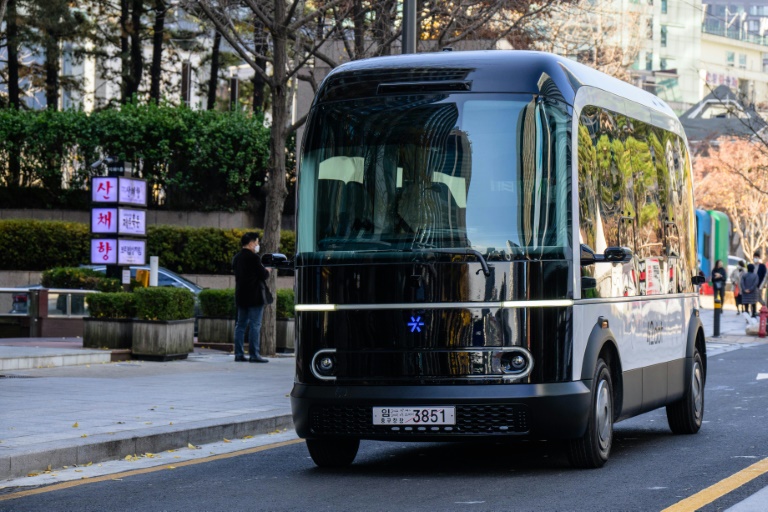
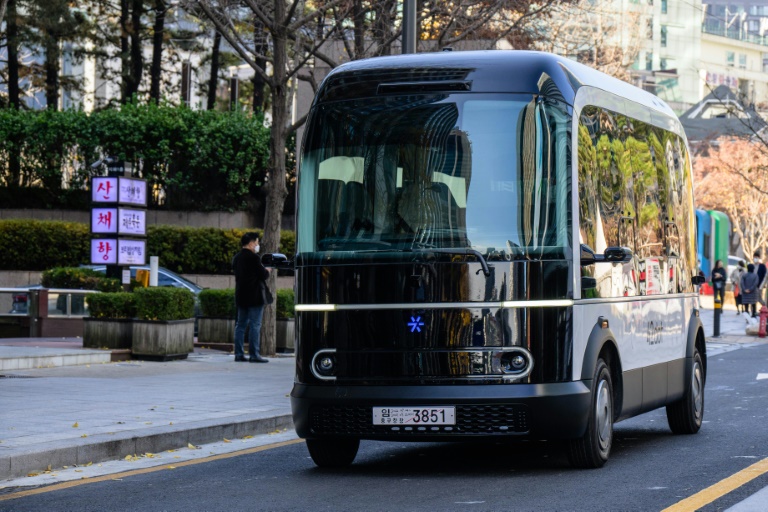
The new vehicle does not look like a regular bus and has rounded edges along with large windows that make it appear more like a toy than a technological breakthrough.

This design is intentional, said Jeong Seong-gyun, head of autonomous driving at 42dot, the start-up responsible for the self-driving technology that is now owned by auto giant Hyundai.

“This is the future,” he told AFP, adding that the bus required “a considerable new type of design”.

The bus looks a bit “like Lego” and is made of composite parts to help keep costs down and make it easy to replicate, he said.

It uses cameras and lasers to navigate the way instead of expensive sensors, Seong-gyun added.

The company’s goal was to make the technology low-cost, safe and easily transferable to many types of vehicle in the future, for example delivery trucks.

For now — with a safety driver monitoring closely — the bus will drive itself around a small 3.4-kilometre (2.1-mile) circuit in downtown Seoul that takes around 20 minutes.

The public can board at two designated stops after booking a free seat through an app.

“I feel like I’ve just hopped into a time machine to visit the future,” said Kim Yi hae-ran, 68, after her 20-minute ride during the launch of the bus Friday.

“I thought it might make me dizzy from a sudden acceleration but I didn’t feel any of it.”

The ride felt “very smooth and safe”, which she said made her feel proud of the technological progress the South Korean company has made.

South Korean capital launches self-driving bus experiment

South Korea’s capital launched its first self-driving bus route on Friday, part of an experiment which engineers said aims to make people feel more comfortable with driverless vehicles on the roads.

The new vehicle does not look like a regular bus and has rounded edges along with large windows that make it appear more like a toy than a technological breakthrough.

This design is intentional, said Jeong Seong-gyun, head of autonomous driving at 42dot, the start-up responsible for the self-driving technology that is now owned by auto giant Hyundai.

“This is the future,” he told AFP, adding that the bus required “a considerable new type of design”.

The bus looks a bit “like Lego” and is made of composite parts to help keep costs down and make it easy to replicate, he said.

It uses cameras and lasers to navigate the way instead of expensive sensors, Seong-gyun added.

The company’s goal was to make the technology low-cost, safe and easily transferable to many types of vehicle in the future, for example delivery trucks.

For now — with a safety driver monitoring closely — the bus will drive itself around a small 3.4-kilometre (2.1-mile) circuit in downtown Seoul that takes around 20 minutes.

The public can board at two designated stops after booking a free seat through an app.

“I feel like I’ve just hopped into a time machine to visit the future,” said Kim Yi hae-ran, 68, after her 20-minute ride during the launch of the bus Friday.

“I thought it might make me dizzy from a sudden acceleration but I didn’t feel any of it.”

The ride felt “very smooth and safe”, which she said made her feel proud of the technological progress the South Korean company has made.

Nurses join other striking UK staff in two December walkouts

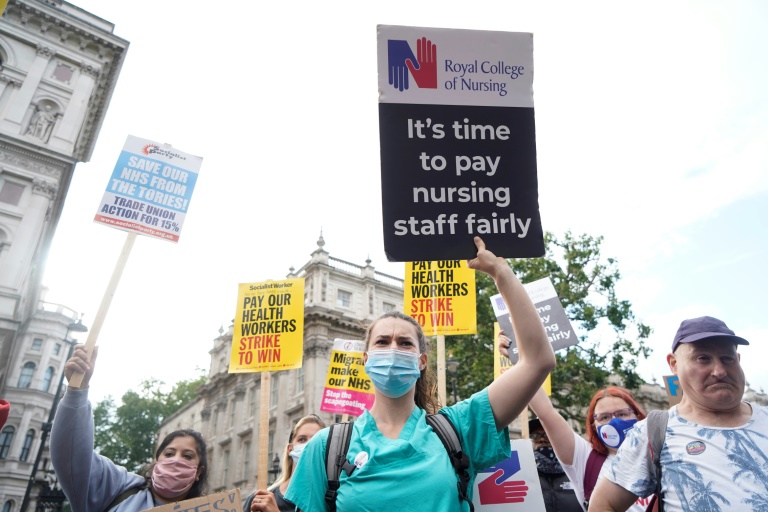
Nurses across most of Britain will next month hold the first strikes in their union’s 106-year history, joining a host of other UK workers taking industrial action over pay.

Staff in England, Wales and Northern Ireland — but not Scotland — will walk out on December 15 and 20, after the Royal College of Nursing (RCN) union said the government had turned down an offer of negotiations.

It will be the latest industrial action in Britain, where decades-high inflation and a cost-of-living crisis have prompted staff in various sectors to demand pay rises to keep up with spiralling prices.

RCN England director Patricia Marquis on Friday apologised to patients who would have operations or treatments cancelled, and said it was about “nurses standing up for themselves but also critically for patients”.

“We are sorry for any disruption that’s caused but actually, unless we do this, we don’t see any prospects of things changing any time soon,” she told Sky News. 

The nurses’ strike will be sandwiched between the first of a series of two-day walkouts by national railway workers, while postal service employees will stage fresh stoppages in the run-up to Christmas.

Numerous other public and private sector staff, from lawyers to airport ground personnel, have also held strikes this year.

“Nursing staff have had enough of being taken for granted, enough of low pay and unsafe staffing levels, enough of not being able to give our patients the care they deserve,” said RCN head Pat Cullen.

The union, which wants a pay rise significantly above inflation, announced earlier this month that a ballot of its more than 300,000 members had found a majority in favour of strikes.

“Ministers have had more than two weeks since we confirmed that our members felt such injustice that they would strike for the first time,” Cullen said, adding that an offer of formal negotiations was declined.

“They have the power and the means to stop this by opening serious talks that address our dispute.”

– ‘Challenging times ‘ –

Amid the waves of industrial action, British inflation has continued its recent surge, reaching a 41-year high of 11.1 percent in October on soaring energy and food bills.

Bosses in the NHS said in September that nurses were skipping meals to feed and clothe their children and struggling to afford rising transport costs.

One in four hospitals had set up foodbanks to support staff, according to NHS Providers, which represents hospital groups in England.

The government says it has accepted independent pay recommendations, and given over one million NHS workers a pay rise of at least £1,400 ($1,590) this year. 

That follows on from a three percent increase last year when public sector pay was frozen.

But the RCN says this leaves experienced nurses worse off by 20 percent in real terms due to successive below-inflation awards since 2010.

In Scotland, the union has paused announcing strike action after the devolved government in Edinburgh, which has responsibility for health policy, reopened pay talks.

UK health minister Steve Barclay said he was “hugely grateful for the hard work and dedication” of nurses and regretted the strikes.

The NHS has “tried and tested plans” to minimise disruption and ensure emergency services continue, he added.

“These are challenging times for everyone and the economic circumstances mean the RCN’s demands, which on current figures are a 19.2 percent pay rise, costing £10 billion a year, are not affordable,” he said.

His door remained open to the RCN to discuss “way we can improve nurses’ working lives”, he added in a tweet.

The RCN has questioned the UK government’s economic rationale, noting it spends billions of pounds on agency staff to plug workforce gaps.

It points to independent research it commissioned indicating that the finance ministry would recoup 81 percent of the initial outlay of a significant pay rise through higher tax receipts and savings on future recruitment and retention costs.

In the last year, 25,000 nursing staff left the Nursing and Midwifery Council (NMC) register, it said. 

Other UK health unions are also balloting workers for industrial action, while ambulance staff in Scotland are due to walk out on Monday.

Meanwhile, across the wider economy, numerous sectors look set to continue their strikes into the new year.

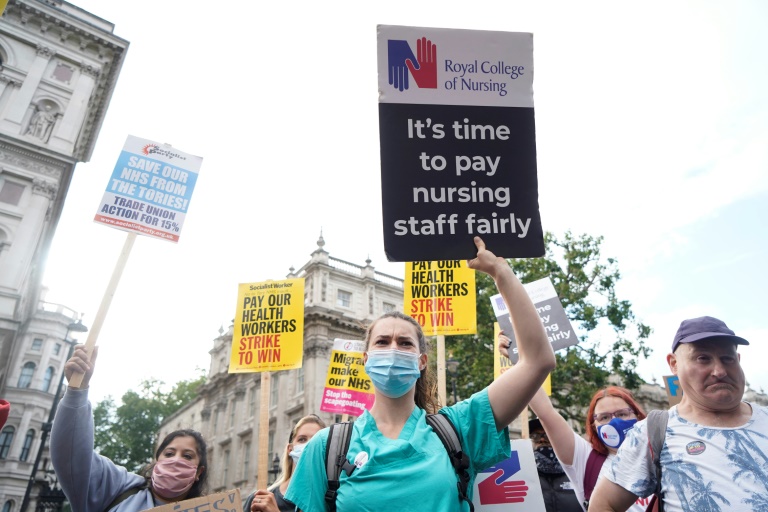
Nurses join other striking UK staff in two December walkouts

Nurses across most of Britain will next month hold the first strikes in their union’s 106-year history, joining a host of other UK workers taking industrial action over pay.

Staff in England, Wales and Northern Ireland — but not Scotland — will walk out on December 15 and 20, after the Royal College of Nursing (RCN) union said the government had turned down an offer of negotiations.

It will be the latest industrial action in Britain, where decades-high inflation and a cost-of-living crisis have prompted staff in various sectors to demand pay rises to keep up with spiralling prices.

RCN England director Patricia Marquis on Friday apologised to patients who would have operations or treatments cancelled, and said it was about “nurses standing up for themselves but also critically for patients”.

“We are sorry for any disruption that’s caused but actually, unless we do this, we don’t see any prospects of things changing any time soon,” she told Sky News. 

The nurses’ strike will be sandwiched between the first of a series of two-day walkouts by national railway workers, while postal service employees will stage fresh stoppages in the run-up to Christmas.

Numerous other public and private sector staff, from lawyers to airport ground personnel, have also held strikes this year.

“Nursing staff have had enough of being taken for granted, enough of low pay and unsafe staffing levels, enough of not being able to give our patients the care they deserve,” said RCN head Pat Cullen.

The union, which wants a pay rise significantly above inflation, announced earlier this month that a ballot of its more than 300,000 members had found a majority in favour of strikes.

“Ministers have had more than two weeks since we confirmed that our members felt such injustice that they would strike for the first time,” Cullen said, adding that an offer of formal negotiations was declined.

“They have the power and the means to stop this by opening serious talks that address our dispute.”

– ‘Challenging times ‘ –

Amid the waves of industrial action, British inflation has continued its recent surge, reaching a 41-year high of 11.1 percent in October on soaring energy and food bills.

Bosses in the NHS said in September that nurses were skipping meals to feed and clothe their children and struggling to afford rising transport costs.

One in four hospitals had set up foodbanks to support staff, according to NHS Providers, which represents hospital groups in England.

The government says it has accepted independent pay recommendations, and given over one million NHS workers a pay rise of at least £1,400 ($1,590) this year. 

That follows on from a three percent increase last year when public sector pay was frozen.

But the RCN says this leaves experienced nurses worse off by 20 percent in real terms due to successive below-inflation awards since 2010.

In Scotland, the union has paused announcing strike action after the devolved government in Edinburgh, which has responsibility for health policy, reopened pay talks.

UK health minister Steve Barclay said he was “hugely grateful for the hard work and dedication” of nurses and regretted the strikes.

The NHS has “tried and tested plans” to minimise disruption and ensure emergency services continue, he added.

“These are challenging times for everyone and the economic circumstances mean the RCN’s demands, which on current figures are a 19.2 percent pay rise, costing £10 billion a year, are not affordable,” he said.

His door remained open to the RCN to discuss “way we can improve nurses’ working lives”, he added in a tweet.

The RCN has questioned the UK government’s economic rationale, noting it spends billions of pounds on agency staff to plug workforce gaps.

It points to independent research it commissioned indicating that the finance ministry would recoup 81 percent of the initial outlay of a significant pay rise through higher tax receipts and savings on future recruitment and retention costs.

In the last year, 25,000 nursing staff left the Nursing and Midwifery Council (NMC) register, it said. 

Other UK health unions are also balloting workers for industrial action, while ambulance staff in Scotland are due to walk out on Monday.

Meanwhile, across the wider economy, numerous sectors look set to continue their strikes into the new year.

Markets mixed as easing Fed fears tempered by China Covid spike

Asian markets were mixed on Friday at the end of a week in which hopes that the Fed will tone down its monetary tightening campaign were offset by fresh Covid lockdown fears in China.

With Wall Street closed for the Thanksgiving break, trading was light with few catalysts to drive action on trading floors and investors looking ahead to the release of US jobs data next week.

The mood across markets picked up this month as a series of indicators suggested the US economy, the world’s largest, was showing signs of weakness after the Federal Reserve ramped up interest rates.

The standout reports were consumer and wholesale inflation, which came in much lower than forecast and provided the central bank with room to row back on its hawkishness.

And while a selection of Fed officials lined up to warn there was more tightening to come, there is an expectation that the days of bumper 75 basis-point increases are gone.

That has slightly eased worries that the sharp rise in borrowing costs could tip the US economy into recession, though many observers still see a contraction coming.

SPI Asset Management’s Stephen Innes said there was a “market consensus bias to believe that US headline inflation will continue to ease substantially over the next month or two and that the tail risks around (more than five percent interest rates) have dropped sharply”.

“After all, a step down to 50 basis points in December would be an unambiguous signal that peak hawkishness has passed.”

Asian equities struggled at end of the week, however, with Tokyo, Hong Kong, Singapore, Seoul, Taipei, Mumbai, Bangkok and Jakarta all down.

There were gains in Shanghai, Sydney, Wellington and Manila.

London rose at the open while Paris and Frankfurt were flat.

Regional sentiment was sapped by ongoing fears about the spike in Covid cases in China, which authorities are trying to contain with a series of targeted measures in big cities including Beijing and Shanghai, though they are short of full-on lockdowns.

Still, Innes said there appeared to be less concern about the government’s reaction as it looks to ease parts of its strict Covid-zero strategy.

“Stock and currency market investors are tentatively looking through the current lockdown regime while betting on the more optimistic interpretation that China is hitting the limits of ‘Covid-zero’ and the authorities’ efforts to loosen restrictions will continue,” he added.

Meanwhile, Jun Bei Liu, at Tribeca Investment Partners, was upbeat about the outlook for Chinese markets.

“In the next 12 months things will get better,” she told Bloomberg TV.

“We have seen this playbook before across other economies. We’ll begin to see outperformance very soon in the next few quarters.”

– Key figures around 0820 GMT –

Tokyo – Nikkei 225: DOWN 0.4 percent at 28,283.03 (close)

Hong Kong – Hang Seng Index: DOWN 0.5 percent at 17,573.58 (close)

Shanghai – Composite: UP 0.4 percent at 3,101.69 (close)

London – FTSE 100: UP 0.1 percent at 7,470.36

Euro/dollar: UP at $1.0420 from $1.0411 on Thursday

Dollar/yen: UP at 138.65 yen from 138.39 yen

Pound/dollar: DOWN at $1.2110 from $1.2131

Euro/pound: UP at 86.05 pence from 85.82 pence

West Texas Intermediate: UP 1.0 percent at $78.68 per barrel

Brent North Sea crude: UP 0.7 percent at $85.97 per barrel

New York – Dow: Closed for a holiday

China's 'iPhone city' under Covid lockdown after violent clashes

Six million people were on Friday under Covid lockdown in a Chinese city home to the world’s largest iPhone factory, after clashes between police and workers furious over pay.

Authorities have ordered residents of eight districts in Zhengzhou, in the central province of Henan, not to leave the area for the next five days, building barriers around “high-risk” apartment buildings and setting up checkpoints to restrict travel.

There have been only a handful of coronavirus cases in the city.

The orders follow protests by hundreds of employees over conditions and pay at Foxconn’s vast iPhone factory on the outskirts of the city, with fresh images of rallies emerging Friday.

Video footage published on social media and geolocated by AFP showed a large group of people walking down a street in the east of the city, some holding signs.

“So many people,” a man can be heard saying. AFP was unable to verify precisely when the protests took place. 

And after scores of workers left the plant Thursday with payouts of 10,000 yuan ($1,400) from Foxconn, posts on Chinese short-video apps Douyin and Kuaishou said the Taiwanese tech giant was turning away many of the thousands of people that had answered its hiring ads after a raft of departures in October.

Many of those who have arrived to take up newly vacant posts at the factory are now stuck in quarantine hotels outside the plant, multiple workers told AFP.

“We are in a quarantine hotel, and have no way of going to the Foxconn campus,” one worker who asked to remain anonymous said.

Another employee said those turned away had been promised 10,000 yuan in compensation for being forced to quarantine, but received only a fraction of that amount.

“They are not letting us start the job and we cannot return home, Zhengzhou is under lockdown,” one worker forced to quarantine in nearby Ruzhou city, after being promised employment at Foxconn, told AFP.

He added that there were multiple small-scale protests in other Henan cities by Foxconn workers made to quarantine and unable to start work.

The unrest in Zhengzhou comes against the backdrop of mounting public frustration over the government’s zero-tolerance approach to Covid, which compels local authorities to impose gruelling lockdowns, travel restrictions and mass testing.

With China’s daily caseload at 33,000 on Friday — a record for the country of 1.4 billion — the unrelenting zero-Covid push has sparked sporadic protests and hit productivity in the world’s second-largest economy.

In the southeastern manufacturing hub of Guangzhou, millions of people have been ordered not to leave their homes without a negative virus test.

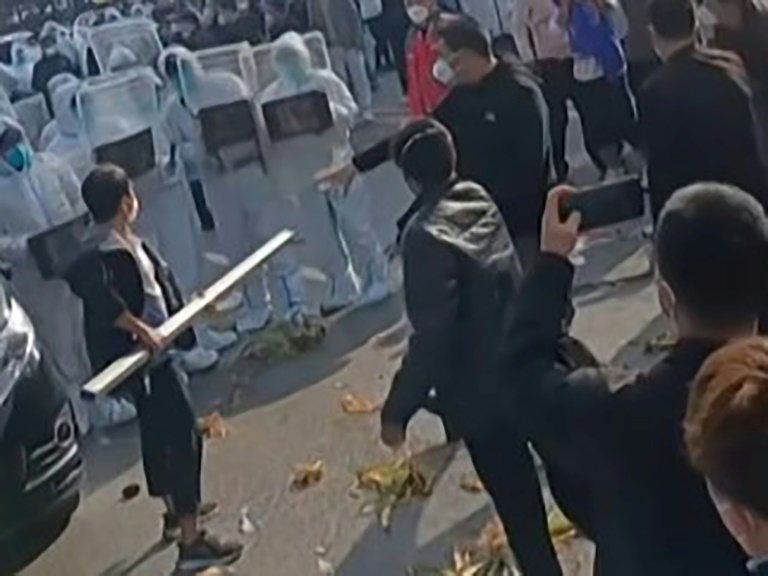
Social media footage published on Friday and geolocated by AFP showed residents of the city’s Haizhu district dismantling barricades and throwing objects at police in hazmat attire.

“What are you doing? What are you doing?” one police officer holding a shield can be heard asking as he and his colleagues back away from the projectiles.

China's 'iPhone city' under Covid lockdown after violent clashes

Six million people were on Friday under Covid lockdown in a Chinese city home to the world’s largest iPhone factory, after clashes between police and workers furious over pay.

Authorities have ordered residents of eight districts in Zhengzhou, in the central province of Henan, not to leave the area for the next five days, building barriers around “high-risk” apartment buildings and setting up checkpoints to restrict travel.

There have been only a handful of coronavirus cases in the city.

The orders follow protests by hundreds of employees over conditions and pay at Foxconn’s vast iPhone factory on the outskirts of the city, with fresh images of rallies emerging Friday.

Video footage published on social media and geolocated by AFP showed a large group of people walking down a street in the east of the city, some holding signs.

“So many people,” a man can be heard saying. AFP was unable to verify precisely when the protests took place. 

And after scores of workers left the plant Thursday with payouts of 10,000 yuan ($1,400) from Foxconn, posts on Chinese short-video apps Douyin and Kuaishou said the Taiwanese tech giant was turning away many of the thousands of people that had answered its hiring ads after a raft of departures in October.

Many of those who have arrived to take up newly vacant posts at the factory are now stuck in quarantine hotels outside the plant, multiple workers told AFP.

“We are in a quarantine hotel, and have no way of going to the Foxconn campus,” one worker who asked to remain anonymous said.

Another employee said those turned away had been promised 10,000 yuan in compensation for being forced to quarantine, but received only a fraction of that amount.

“They are not letting us start the job and we cannot return home, Zhengzhou is under lockdown,” one worker forced to quarantine in nearby Ruzhou city, after being promised employment at Foxconn, told AFP.

He added that there were multiple small-scale protests in other Henan cities by Foxconn workers made to quarantine and unable to start work.

The unrest in Zhengzhou comes against the backdrop of mounting public frustration over the government’s zero-tolerance approach to Covid, which compels local authorities to impose gruelling lockdowns, travel restrictions and mass testing.

With China’s daily caseload at 33,000 on Friday — a record for the country of 1.4 billion — the unrelenting zero-Covid push has sparked sporadic protests and hit productivity in the world’s second-largest economy.

In the southeastern manufacturing hub of Guangzhou, millions of people have been ordered not to leave their homes without a negative virus test.

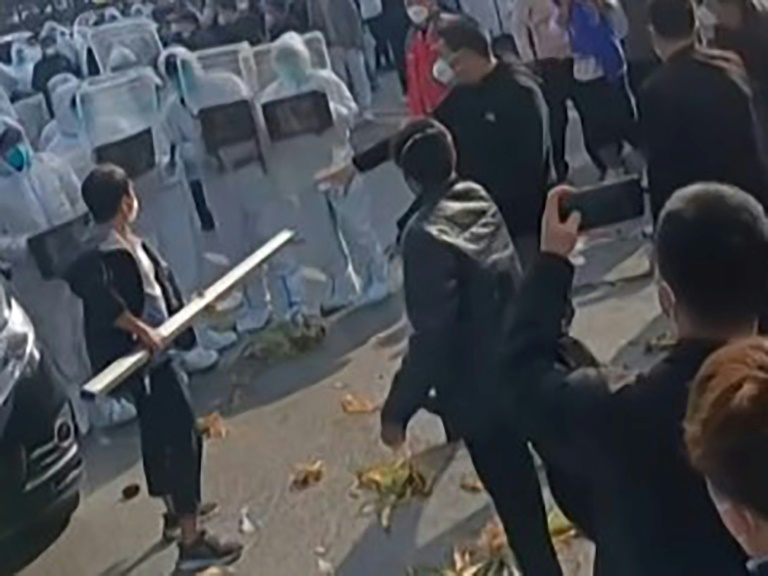
Social media footage published on Friday and geolocated by AFP showed residents of the city’s Haizhu district dismantling barricades and throwing objects at police in hazmat attire.

“What are you doing? What are you doing?” one police officer holding a shield can be heard asking as he and his colleagues back away from the projectiles.

Hong Kong cardinal among activists convicted over protest fund

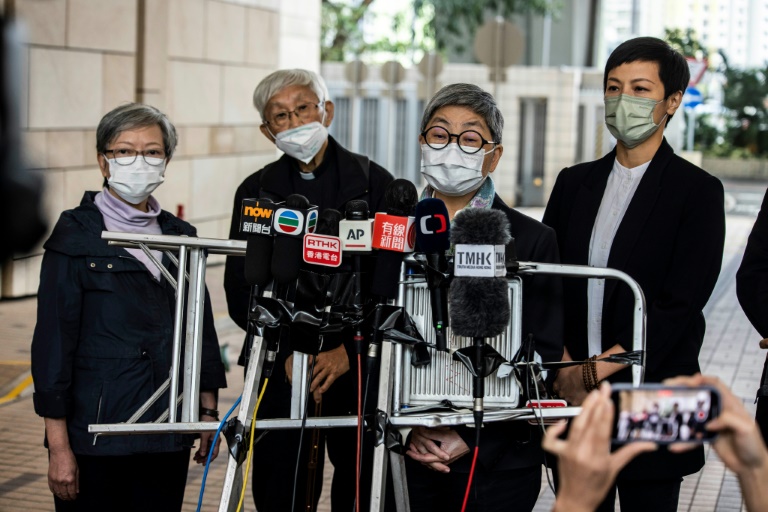
A 90-year-old Hong Kong cardinal was among six dissidents convicted on Friday over their running of a multi-million-dollar defence fund for arrested anti-government protesters.

Five of the group were fined HK$4,000 (US$500) for the crime of failing to properly register the fund as a society, while a sixth got a smaller fine.

Cardinal Joseph Zen, one of Asia’s highest-ranking Catholics, is among the scores of veteran activists facing legal threats as China stamps out protest in the former British colony.

The six were arrested under sweeping national security legislation that Beijing imposed in 2020, a year after the outbreak of huge and often violent protests.

They are yet to face charges under that law, which can carry a sentence of up to life in jail.

Among Zen’s co-convicted on Friday were activist and singer Denise Ho, and veteran human rights barrister Margaret Ng.

All had pleaded not guilty, setting up a two-month trial.

On Friday, magistrate Ada Yim found “the only and irresistible inference” was that the fund was a “local society” and so subject to the rules.

“Considering the social and political events in recent years, if a society has connections with political groups… the society’s operations may affect public order, public peace and national security,” Yim said.

Speaking outside the court, Ng said it was the first time anyone had been convicted for failing to register a society, adding that it was “extremely important in relation to the freedom of association in Hong Kong”.

Cardinal Zen’s arrest earlier this year, for “colluding with foreign forces”, shocked the city’s Catholic community and renewed criticism of the Vatican’s warming ties with Beijing, including from fellow senior clerics.

Also outside the court, Zen noted the concern overseas but insisted he was acting in his role as a humanitarian, not a cardinal, adding that “Hong Kong has not seen any damage to its religious freedom”.

Zen’s group acted as trustees and secretary of the now-defunct “612 Humanitarian Relief Fund”, which helped pay legal and medical costs for people arrested during the 2019 unrest.

The fund disbanded last October after national security police demanded it hand over operational details, including information about its donors and beneficiaries.

Prosecutors revealed in court that the fund had raised as much as HK$270 million from more than 100,000 separate donations.

They said “part of the fund was used for political activities and non-charity events”, including donations to protest groups and activists overseas.

The defence argued that the fund was “merely a name given to a sum of money” and the defendants did not form any society. 

It also challenged the law’s vagueness, saying it imposed disproportionate restrictions on the freedom of association.

“The criminalisation for failure to register is undoubtedly a curb on these important freedoms for civil society,” defence counsel Gladys Li said.

'Army of orphans': The price of S.Africa's AIDS scourge

At the age of 13, Ndumiso Gamede was orphaned when his parents died at the peak of the AIDS epidemic in South Africa.

He was left to raise his two young brothers — a gruelling battle against isolation, stigma and poverty.

Gamede, now aged 28, points to pictures of his parents hanging on the wall in a low-lit boxy garage he calls home.

“They were both HIV positive,” he said. 

He said he had no-one to guide him during his most vulnerable teenage years and “almost did crime” just to survive, and “drugs” to cope.

As World AIDS Day looms on December 1, the plight of South Africa’s AIDS orphans remains a stain on a country that has otherwise made huge inroads into epidemic.

National prevalence of the human immuno-deficiency virus (HIV) that causes AIDS is still among the highest on the globe, at 13.7 percent.

But deaths have dramatically fallen, thanks to a rollout of anti-retrovirals (ARVs) — drugs that, through a tragic combination of cost and political denial, were not available to poor South Africans when the disease was at its zenith.

More than 5.4 million out of an estimated 8.2 million infected people take ARVs in South Africa, which has one of the world’s biggest HIV treatment programmes.

The lifesaving drugs also mean that the number of infected AIDS orphans has declined, said Agnes Mokoto, who runs an orphan programme at the Cape Town-based charity Networking HIV and AIDS Community of Southern Africa.

– ‘Army of orphans’ –

According to UNAIDS, there were 960,000 AIDS orphans in South Africa, compared to 1.9 million in 2009. Any child who has lost one or both parents to HIV is defined as an orphan.

The gap in the country’s population pyramid due to the epidemic created a lost generation, particularly of young parents.  

“(In) the dark days at the beginning of the millennium, people were dying in droves, and that created an army of orphans,” said Professor Linda-Gail Bekker, head of the Desmond Tutu HIV Foundation.

Gamede’s parents died at a particular painful time, when AIDS denialism was rooted in South Africa’s government, starting with the then president, Thabo Mbeki. 

According to a Harvard University study, misguided policies and the promotion of quack cures caused more than 330,000 deaths. 

Discrimination against people with HIV was intense, and those orphaned by the disease felt it most. 

Gamede and his two brothers had to fight to survive after they were shunned by his extended family.

“After my parents died, they turned their back on us, they did not want to know… what we lacked,” he said deep in thought.

He lives in Vosloorus, a township 30 kilometres (18 miles) southeast of Johannesburg, filled with dusty streets and makeshift dwellings. 

– Identity papers –

Even getting documented is an added battle for some orphans. 

Nonhlanhla Mazaleni who heads a shelter for AIDS orphans in Johannesburg says she cares for 21 young people who are living with HIV and don’t have IDs” because they were abandoned after being orphaned.

“One of the kids is deaf, he came to us when he was two years old, he’s now 24 with no job and because he has no ID, he can’t claim for a disability grant,” she said.

Now a new father of one, Gamede looks proudly at his computer screen as he plays his music video, singing along as he nods to the beat.

A grey baby crib stands next to Gamede’s bed, a foam mattress placed on the floor. 

He finds solace in rap music while looking for employment, which he says has proven difficult because he could not further his studies. 

He also hosts groups of young people orphaned by HIV/AIDS and offers gardening classes as a form of therapy.

But his life is hard.

Had AIDS not ravaged his family, Gamede believes “opportunities… would have been easy. Life would not be like this.”

Close Bitnami banner
Bitnami