World

'Where are the mackerel?' Alarm as Bosphorus fish stocks crash

Despondent Sunday anglers watch crestfallen as a trawler winches an enormous net out of the waters of the Bosphorus.

“Clear off!” they shout from the shore, impatient to get their hooks back into the depths of the strait that runs through Istanbul.

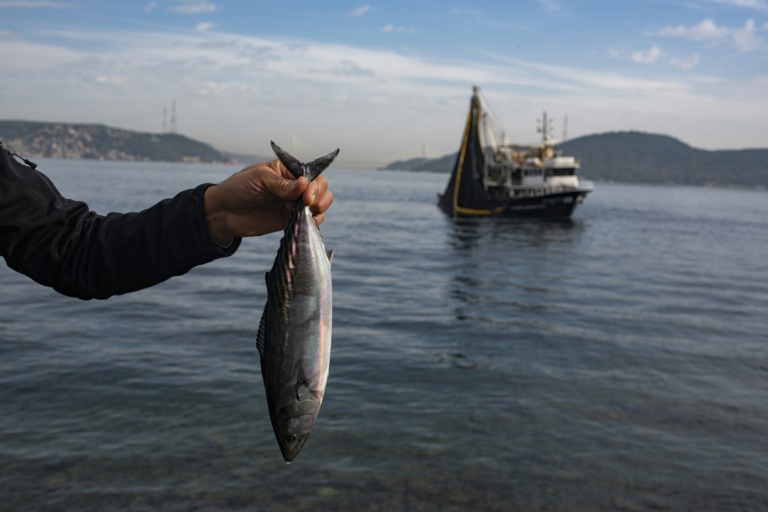
“I have been here since 6 am but a trawler came and dropped its nets. That blocked us completely,” grumbled Mehmet Dogan, fed-up at only having caught one fish all day, a 40-centimetre (16-inch) bonito.

It is high season for the popular variety of tuna, with shoals teeming through the Bosphorus on their way from the Black Sea to the Mediterranean.

But pulled taut across the strait are fishing nets more than a kilometre (3,280 feet) long.

Anglers like Dogan who cram shoulder to shoulder along the banks say the nets leave them with little chance — and the fish with even less.

Fish stocks in the Bosphorus have plummeted, according to Saadet Karakulak of Istanbul University. In the space of a few years, hauls have fallen from 500,000 to 600,000 tonnes a year to 328,000 tonnes, she said, saying it is “proof that stocks are diminishing”.

“Because of these boats, the fish can’t enter the Bosphorus,” rued angler Murat Ayhanoglu, standing at Kirecburnu cove on the European side. “They can’t leave their eggs here.”

Nearby on the Gorenler II, a 35-metre trawler, the crew heaved in a net weighed down with fish.

There’s no chance of catching anything when boats like that are here, said Ayhanoglu, as he reeled off a list of fish getting ever rarer in the Bosphorus — horse mackerel, anchovy, picarel and bluefish.

– ‘Race to overfish’ –

But the dramatic fall in stocks didn’t stop the government trying to close the strait to traffic for half a day this month to give free rein to commercial fishing boats. 

The transport ministry later backed down after protests from scientists and campaigners about the “race to overfish” what they term is a biologically important “corridor”.

“You can’t do that. Stocks are in danger… We need sustainability,” said Bayram Ozturk, head of the marine biology department at Istanbul University.

He said it was high time for quotas on some species, with the anchovy currently threatened.

Plastic waste, pollution and heavy maritime traffic are also blighting fish stocks in one of the world’s business shipping lanes, warned Ozturk, who is also director of the Turkish Marine Research Foundation.

From container ships to tankers to bulk carriers transporting badly needed Ukrainian cereals to world markets, more than 200 ships a day pass through the Bosphorus.

With the strait only 760 metres wide at its narrowest point, Ozturk said fish stocks need to be managed by the region’s nations.

“Fish don’t have a passport. They spawn on the Ukrainian side (of the Black Sea), travel to the Turkish side”, he said, and might end up being eaten on Greek island.

– ‘We have to make sacrifices’ –

Competition between trawlers is “ferocious”, said captain Serkan Karadeniz as his boat waited to leave the quay to fish for bonito, having chased them all the way from its home port of Samsun on Turkey’s northern coast. 

The Gorenler has come from all the way from Canakkale on the Aegean Sea.

“October to November is when the fish migrate the most, to the Marmara and Aegean” seas, said Erdogan Kartal, head of Istanbul’s fishery cooperative.

The 60-year-old, who has been fishing since he was a lad, said fish “are getting smaller and smaller. 

“We have started to catch fish that have never had the chance to spawn, which is dangerous.”

He no longer sees the mackerel that were once so abundant.

“Where are the beautiful mackerel that we used to eat every day?” Kartal lamented, saying quota and size limits had to be set.

“We have to make some sacrifices,” he said. “If we let the fish pass, they will return.”
French-Lebanese architect seeks pro-climate construction transformation

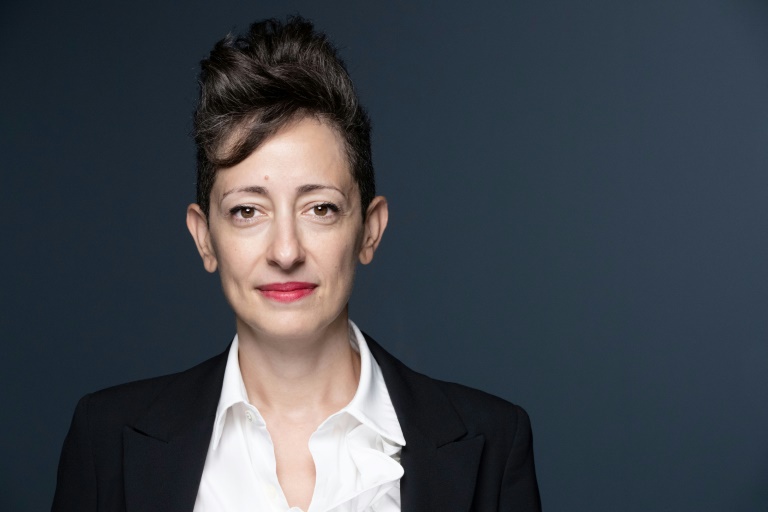
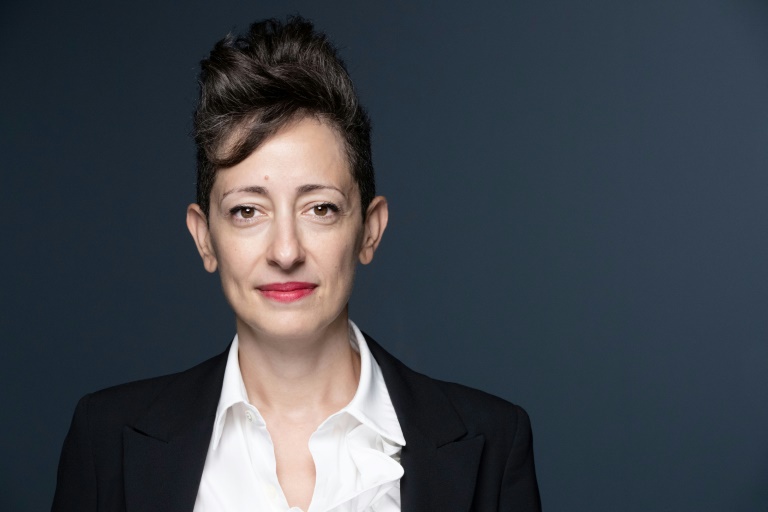
Lina Ghotmeh has pegged her career on sustainable construction.

The French-Lebanese architect wants to see her industry transformed by drastically reducing the use of concrete — a major CO2 contributor — using more local materials and reusing existing buildings and materials.

“We need to change our value system,” the 42-year-old told AFP last month.

The aim is to reduce the carbon footprint of the construction industry and create buildings that can better resist the impacts of climate change.

But it’s not an easy battle.

The industry accounts for almost 40 percent of global greenhouse gas emissions, according to the United Nations.

Ghotmeh, who designed the Estonian National Museum and taught at Yale University, doesn’t advocate for fewer buildings — she knows that’s an unrealistic goal in a world with a growing population.

“That would be like saying ‘stop eating,'” she said.

– ‘Don’t demolish’ –

Instead, we should “keep what already exists, don’t demolish,” but refurbish and retrofit old buildings in a sustainable way where possible.

Building a new detached house consumes 40 times more resources than renovating an existing property, and for a new apartment complex that rises to 80 times more, according to the French Agency for Ecological Transition (Ademe).

And where new constructions are needed, local materials and design should be used in a way that incorporates natural surroundings and saves energy.

Ghotmeh used more than 500,000 bricks made from local dirt for a new Hermes building in France, expected to open early next year.

The bricks also regulate the building’s temperature and reduce energy needs.

The building will produce as much energy as it consumes, by being made energy efficient and using geothermal power.  

– ‘Circular thinking’ –

Architects must, early in the project process, “think in a circular way,” Ghotmeh said, choosing reusable organic or natural materials like wood, hemp, linen or stone.

This shouldn’t stymie the design process either, she insists.

“In Canada, we build wooden towers, in Japan too. It’s a material that is quite capable of being used for tall buildings,” added Ghotmeh, who will build a wooden tower in Paris in 2023.

Another key approach is to build lighter, using less material and fewer toxins.

And then there’s concrete, the main material in so many modern buildings and perhaps the most challenging to move away from.

“We must drastically reduce the use of concrete”, she said, insisting it should only be used for essential purposes, such as foundations and building in earthquake-prone areas. 

Some 14 billion cubic metres of concrete are used every year, according to the Global Cement and Concrete Association.  

It emits more CO2 than the aviation industry, largely because of the intense heat required to make it. 

Alternatives to concrete already exist, such as stone, or making cement — a component of concrete — from calcium carbonate. There are also pushes for low-carbon cement made from iron and steel industry waste.

– Beirut inspiration –

Building more sustainably often comes with a higher price tag — it costs more to double or triple glaze windows and properly insulate a house — but the long-term payoff is lower energy costs.

For Ghotmeh, it’s an imperative investment in our future. 

It was her birthplace of Beirut that inspired her to become an architect, spurring a desire to rebuild the so-called “collapsed city” ravaged by war.

In 2020, she completed the “Stone Garden” apartment tower in the city, built with concrete covered with a combed coating, a technique often used by local craftsmen. She used concrete in the construction because of earthquake risks.

The building was strong enough to survive the port explosion in 2020 that destroyed a large part of the city.

And the city continues to inspire her today, even when it comes to climate sustainability.   

“Since there is practically only an hour of electricity per day, all the buildings have solar panels now. There is a kind of energy independence which is beginning to take place, by force,” she said. 

“Does it take a catastrophe like the one in Lebanon to make this transition?”

French-Lebanese architect seeks pro-climate construction transformation

Lina Ghotmeh has pegged her career on sustainable construction.

The French-Lebanese architect wants to see her industry transformed by drastically reducing the use of concrete — a major CO2 contributor — using more local materials and reusing existing buildings and materials.

“We need to change our value system,” the 42-year-old told AFP last month.

The aim is to reduce the carbon footprint of the construction industry and create buildings that can better resist the impacts of climate change.

But it’s not an easy battle.

The industry accounts for almost 40 percent of global greenhouse gas emissions, according to the United Nations.

Ghotmeh, who designed the Estonian National Museum and taught at Yale University, doesn’t advocate for fewer buildings — she knows that’s an unrealistic goal in a world with a growing population.

“That would be like saying ‘stop eating,'” she said.

– ‘Don’t demolish’ –

Instead, we should “keep what already exists, don’t demolish,” but refurbish and retrofit old buildings in a sustainable way where possible.

Building a new detached house consumes 40 times more resources than renovating an existing property, and for a new apartment complex that rises to 80 times more, according to the French Agency for Ecological Transition (Ademe).

And where new constructions are needed, local materials and design should be used in a way that incorporates natural surroundings and saves energy.

Ghotmeh used more than 500,000 bricks made from local dirt for a new Hermes building in France, expected to open early next year.

The bricks also regulate the building’s temperature and reduce energy needs.

The building will produce as much energy as it consumes, by being made energy efficient and using geothermal power.  

– ‘Circular thinking’ –

Architects must, early in the project process, “think in a circular way,” Ghotmeh said, choosing reusable organic or natural materials like wood, hemp, linen or stone.

This shouldn’t stymie the design process either, she insists.

“In Canada, we build wooden towers, in Japan too. It’s a material that is quite capable of being used for tall buildings,” added Ghotmeh, who will build a wooden tower in Paris in 2023.

Another key approach is to build lighter, using less material and fewer toxins.

And then there’s concrete, the main material in so many modern buildings and perhaps the most challenging to move away from.

“We must drastically reduce the use of concrete”, she said, insisting it should only be used for essential purposes, such as foundations and building in earthquake-prone areas. 

Some 14 billion cubic metres of concrete are used every year, according to the Global Cement and Concrete Association.  

It emits more CO2 than the aviation industry, largely because of the intense heat required to make it. 

Alternatives to concrete already exist, such as stone, or making cement — a component of concrete — from calcium carbonate. There are also pushes for low-carbon cement made from iron and steel industry waste.

– Beirut inspiration –

Building more sustainably often comes with a higher price tag — it costs more to double or triple glaze windows and properly insulate a house — but the long-term payoff is lower energy costs.

For Ghotmeh, it’s an imperative investment in our future. 

It was her birthplace of Beirut that inspired her to become an architect, spurring a desire to rebuild the so-called “collapsed city” ravaged by war.

In 2020, she completed the “Stone Garden” apartment tower in the city, built with concrete covered with a combed coating, a technique often used by local craftsmen. She used concrete in the construction because of earthquake risks.

The building was strong enough to survive the port explosion in 2020 that destroyed a large part of the city.

And the city continues to inspire her today, even when it comes to climate sustainability.   

“Since there is practically only an hour of electricity per day, all the buildings have solar panels now. There is a kind of energy independence which is beginning to take place, by force,” she said. 

“Does it take a catastrophe like the one in Lebanon to make this transition?”

Wartime Beckmann portrait poised for auction record

A remarkable wartime self-portrait of painter Max Beckmann will be auctioned in Germany next week, valued at a record-setting estimate of up to 30 million euros.

“Selbstbildnis gelb-rosa” (Self-Portrait Yellow-Pink), widely considered a masterpiece and in private hands since it was painted in 1943, features the artist during his Dutch exile from Nazi Germany.

It was initially a gift to his wife Mathilde, known as Quappi, who kept it until her death in 1986. The picture has been in a private Swiss collection for decades, and not shown in public since the mid-1990s.

“No comparable artwork has been offered on the German auction market since 1945,” said Micaela Kapitzky, director and partner of Berlin’s Grisebach auction house, which is handling the sale on December 1.

Its potential selling price has been valued at a whopping 20-30 million euros ($21-31 million) — the highest pre-sale estimate for an artwork ever offered in Germany and for a Beckmann work worldwide, according to Grisebach.

The painting was displayed behind glass at a public preview this week to guard against vandalism by climate activists who have been targetting artworks.

Private collections, museums and other institutions around the world have expressed interest in acquiring the painting. Its historical and social significance have sent its value soaring, amid a booming German art market profiting from Brexit woes.

Beckmann’s time in Holland was marked by relief at escaping Nazi Germany but frustration at being unmoored — an ambivalence that surfaced in striking ways in his work, Kapitzky told AFP.

“He flees the Nazis and then is surrounded by them again (in occupied Holland) and yet somehow he manages to find this surprising inner peace,” she said of the picture at auction.

“He knows of his importance as a painter. There’s even a subtle smile that you can see.”

– ‘Still I live’ –

Kapitzky said the self-portrait was also a testament to the “intimate” love story between Beckmann and Quappi against the backdrop of World War II’s horrors.

“Quappi always kept it, until her death. She never separated from it,” Kapitzky said. “Max Beckmann was a very self-confident man but he needed Quappi at his side.”

Beckmann (1884-1950) enjoyed massive acclaim in Germany during his lifetime, with top dealers placing his work with private collectors and major institutions.

That was until the Nazi regime labelled his daring, politically charged art “degenerate” and removed them from German museums in 1937.

Professionally thwarted and increasingly under threat, Beckmann left for Amsterdam, where he lived in self-exile for a decade before moving to the United States.

“Silent death and conflagration all around me and yet still I live,” Beckmann wrote in his diary after German troops overran Holland in 1940.

In Amsterdam, Beckmann did not face poverty, as many of his 20,000 fellow German refugees did, nor was he under threat of deportation to a concentration camp like his Jewish friends.

It proved a prolific decade, accounting for roughly one-third of his total output. 

But unlike the sombre black tones of many paintings created there, a sunnier palate dominates the self-portrait going under the hammer.

His clothing, perhaps a dressing gown, is trimmed with bright fur in what could be seen as an expression of tenacious defiance.

“When it first arrived, I thought ‘wow, it is amazing what power this picture exudes’,” Markus Krause, who will conduct the auction, told AFP.

– Anti-Nazi statements –

Beckmann would ultimately die in New York at the age of 66, of a heart attack on a sidewalk on his way to the Metropolitan Museum of Art where his “Self-Portrait in Blue Jacket” was exhibited.

Paintings by Beckmann, now considered one of the most important artists of the 20th century, have exploded in value in recent decades.

His “Bird’s Hell”, ranked among Beckmann’s most important anti-Nazi statements, sold at Christie’s in London in 2017 for 36 million pounds ($46 million, 41 million euros at the time) and set a new auction record for German Expressionism.

Its pre-sale estimate was significantly lower than Self-Portrait Yellow-Pink, Kapitzky noted.

She said many art buyers and sellers were now turning their backs on London in the wake of Brexit due to complications with shipments and customs clearance.

“And so yes, the German market is beginning to benefit from it.”

Pakistan Taliban racketeering hits borderlands

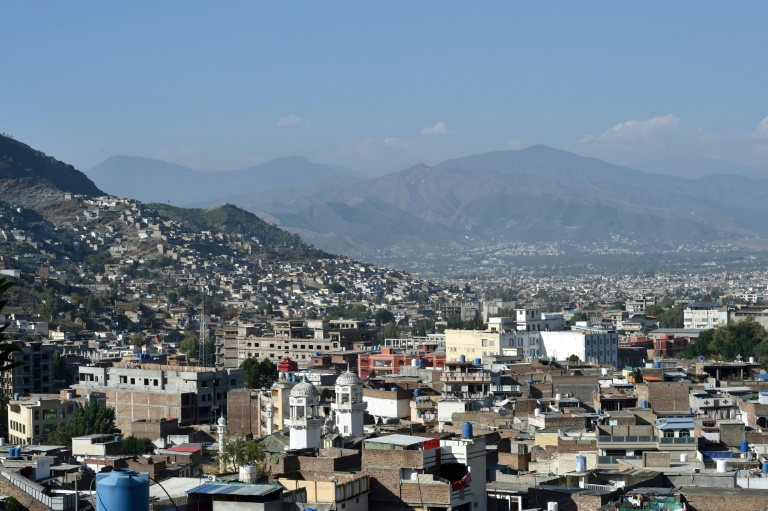
A lawmaker in Pakistan’s rugged northwest was sipping tea with voters when his phone chirped to life — the Taliban were calling with a demand for “donations”.

“We hope you won’t disappoint,” read the chilling text from a shady go-between of the Pakistan chapter of the Islamists, known as Tehreek–e-Taliban Pakistan (TTP).

A second message pinged on-screen: “Refusal to provide financial support will make you a problem,” it warned.

“We believe a wise man will understand what we mean by that.”

After the Taliban takeover in neighbouring Afghanistan, TTP racketeering has infested Pakistan’s borderlands, locals say, with the group emboldened by its sister movement’s success.

Since July, the provincial lawmaker — who asked to remain anonymous — has been cowed into sending the TTP sums totalling 1.2 million rupees (over $5,000).

“Those who don’t pay have to face the consequences. Sometimes they throw a grenade at their door. Sometimes they shoot,” he told AFP.

“Most of the elites pay the extortion money. Some pay more, some pay less. But nobody talks about it.

“Everyone is scared for their life.”

– ‘Open shelter’ –

The TTP share lineage with the Afghan Taliban, but were most potent from 2007 to 2009, when they spilled out of the jagged belt splitting Pakistan and Afghanistan and overran the Swat Valley just 140 kilometres (85 miles) north of Islamabad.

The Pakistani military came down hard in 2014, after militants raided a school for children of army personnel and killed nearly 150 people, mostly pupils.

The TTP were largely routed, their fighters fleeing to Afghanistan where they were hunted by US-led forces.

With Afghanistan back under Taliban rule, it has become an “open shelter” for the TTP, according to Imtiaz Gul, an analyst with Islamabad’s Center for Research and Security Studies.

“They now have freedom of action while living in Afghanistan,” he said.

“That’s a simple explanation for why the TTP attacks rose.”

In the year since the Taliban’s return, militant activity in Pakistan has spiked, according to the Pak Institute for Peace Studies, with around 433 people killed.

– ‘The same old game’ –

“They started the same old game: target killings, bomb blasts, kidnappings — and making calls for extortion,” Swat community activist Ahmad Shah said.

The blackmail network bankrolls the TTP, but also sows a crisis of confidence in local government the militants seek to usurp in favour of Islamist rule.

Provincial MP Nisar Mohmand estimates 80 to 95 percent of well-off residents in surrounding districts are now blackmail victims.

Fellow legislators have been targeted for refusing to pay out, and some are too fearful to visit their precincts.

“They have their own system of reward and punishment,” said Mohmand. “They have established an alternate government, so how are people supposed to resist?”

–  ‘Days of cruelty’ –

The Afghan Taliban have long-standing differences with their Pakistani counterparts, and since capturing Kabul have pledged not to host international jihadist groups.

But the first telltale sign of a TTP blackmail attempt is the phone number — starting with the +93 international code indicating an Afghan SIM card.

Then comes a suggestive text, or voice message in Pashto — spoken with a Pakistani lilt.

AFP heard one message threatening an “action squad” would be despatched to a landlord if he declined to pay.

“The days of cruelty are near. Don’t think we are a spent force,” it warns.

The sum “owed” is then hashed out, generally through an intermediary, before it is sent to the ragged bands of TTP fighters whose silhouettes haunt the mountain steeps.

Victims expect to be “tapped up” up to five times a year, the anonymous MP said.

Since the 2014 school slaughter, which horrified Pakistanis even marginally sympathetic to their cause, the TTP has pledged to avoid civilian targets, and claims extortion is done by criminals borrowing their brand.

But a civilian intelligence official in the area insisted they were “the root cause of the menace”.

– ‘Life at a standstill’ –

Swat — a snow-capped mountain valley split by turquoise running waters — is one of Pakistan’s most famed beauty spots, but its reputation has a dark side.

In 2012 then 15-year-old Malala Yousafzai was shot in the head by the TTP while campaigning for girls’ education, a campaign that later earned her the Nobel Peace Prize.

This summer things seemed to have slipped irredeemably back towards those dark days.

After a decade-long hiatus, the anonymous MP started receiving blackmail texts once again.

“The situation was so bad that many people were thinking of migration,” said Shah. “Life was at a standstill.”

But there has been pushback, and several protests against the TTP have been held since the group’s high-profile kidnapping of three officials in August.

Businesses shut and thousands spilled into the streets in rallies up and down the valley.

Pakistan’s military claimed reports of strong TTP in the area were “grossly exaggerated and misleading”.

Still, in Pakistan’s borderlands, attacks and extortion continue unchecked — despite a professed negotiation truce between the TTP and Islamabad.

The Taliban’s return in Kabul, despite being pounded for 20 years by the world’s strongest armies, shows military might will not end the ordeal.

“We have to search a solution which is acceptable to both sides,” said government negotiator Muhammad Ali Saif.

“A lasting settlement will have to be found.”

Hong Kong cardinal among activists convicted over protest fund

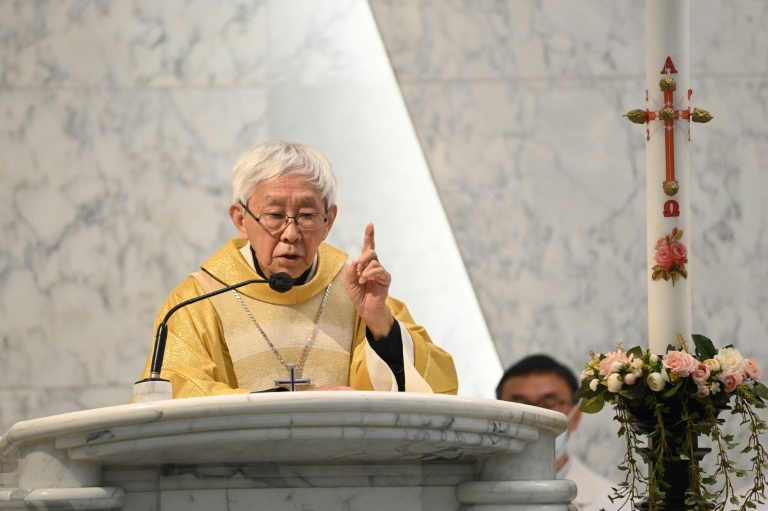
A 90-year-old Hong Kong cardinal was among six dissidents convicted on Friday over their running of a multi-million-dollar defence fund for arrested anti-government protesters.

Five of the group were fined HK$4,000 (US$500) for the crime of failing to properly register the fund as a society, while a sixth got a smaller fine.

Cardinal Joseph Zen, one of Asia’s highest-ranking Catholics, is among the scores of veteran activists facing legal threats as China stamps out protest in the former British colony.

The six were arrested under sweeping national security legislation that Beijing imposed in 2020, a year after the outbreak of huge and often violent protests.

They are yet to face charges under that law, which can carry a sentence of up to life in jail.

Among Zen’s co-convicted on Friday were activist and singer Denise Ho, and veteran human rights barrister Margaret Ng.

All had pleaded not guilty, setting up a two-month trial.

On Friday, magistrate Ada Yim found “the only and irresistible inference” was that the fund was a “local society” and so subject to the rules.

“Considering the social and political events in recent years, if a society has connections with political groups… the society’s operations may affect public order, public peace and national security,” Yim said.

Speaking outside the court, Ng said it was the first time anyone had been convicted for failing to register a society, adding that it was “extremely important in relation to the freedom of association in Hong Kong”.

Cardinal Zen’s arrest earlier this year, for “colluding with foreign forces”, shocked the city’s Catholic community and renewed criticism of the Vatican’s warming ties with Beijing, including from fellow senior clerics.

Also outside the court, Zen noted the concern overseas but insisted he was acting in his role as a humanitarian, not a cardinal, adding that “Hong Kong has not seen any damage to its religious freedom”.

Zen’s group acted as trustees and secretary of the now-defunct “612 Humanitarian Relief Fund”, which helped pay legal and medical costs for people arrested during the 2019 unrest.

The fund disbanded last October after national security police demanded it hand over operational details, including information about its donors and beneficiaries.

Prosecutors revealed in court that the fund had raised as much as HK$270 million from more than 100,000 separate donations.

They said “part of the fund was used for political activities and non-charity events”, including donations to protest groups and activists overseas.

The defence argued that the fund was “merely a name given to a sum of money” and the defendants did not form any society. 

It also challenged the law’s vagueness, saying it imposed disproportionate restrictions on the freedom of association.

“The criminalisation for failure to register is undoubtedly a curb on these important freedoms for civil society,” defence counsel Gladys Li said.

Twitter aims to diversify beyond advertising, but can it be done?

Is it a pipe dream or possibility? Elon Musk wants to diversify Twitter’s revenue stream beyond advertising, a feat none of the biggest social networks have yet pulled off.

Something of a gold standard, social media ads can be fine-tuned and tailored to individual users on a mass scale, and have been particularly lucrative for Meta’s Facebook and Instagram, as well as Google.

“Facebook pretty much set the standard for having an ad model for social networks,” said Jasmine Enberg, an analyst at Insider Intelligence. “But that doesn’t necessarily have to be the way that social platforms monetize.”

Social networks are facing budget cuts from inflation-afflicted advertisers and increased regulations on the use of lucrative personal data, so it makes sense for them “to be exploring new, non-ad monetization techniques,” she said.

The issue is delicate for Twitter, whose turnover is 90 percent dependent on advertising. Advertisers, on the other hand, do not necessarily need Twitter and can turn to other social networks.

The advertising situation at Twitter has been particularly dire since Musk took over the company in late October.

In recent weeks, half of Twitter’s 100 top advertisers have announced they are suspending or have otherwise “seemingly stopped advertising on Twitter,” an analysis conducted by nonprofit watchdog group Media Matters found.

They fear being associated with toxic content as Musk, who describes himself as a “free speech absolutist,” advocates for laxer moderation.

– Alternate solutions –

Social media sites are testing two alternate solutions in particular: charging everyday users and charging content creators. 

The forum platform Reddit has deployed a hybrid model, making money via advertising, paid subscriptions and digital coins that allow users access to special privileges.

That said, “It’s always hard to charge for something that used to be free,” said Carolina Milanesi of research firm Creative Strategies. 

“Unless you give something different or create a different product, you can’t go from not charging to charging,” she said.

While Twitter has been offering a paid subscription with additional features since last year, Musk aimed to raise the price to $8 a month and include account verification in the plan’s perks. 

A partial launch was chaotic, however, and prompted the proliferation of so many fake accounts that the rollout of so-called Twitter Blue has now been paused.

“Figuring out a way to charge users for premium features and make money off of users is not a bad idea,” Enberg said.

But she said the benefits Twitter offered may not have been enticing enough, and that the verification aspect should be more of a security feature than a monetizable feature.

Finally, because paid subscribers — arguably the most active on the network — would see 50 percent less advertising than non-paying users, the plan would “dilute the quality and the size of the addressable audience for advertisers.”

Some newer platforms are trying to do without advertising altogether, with no guarantee of long-term viability.

For example, on Discord, a live-discussion social network, subscribers have access to more emoticons.

And on the fledgling photo-sharing app BeReal, users can escape ads with in-app purchases for extra features, according to the Financial Times.

– ‘Big-name influencers’ –

Twitter had some 230 million daily active users as of June, and Musk continues to congratulate himself on growing that number since taking over.

But increased users do not necessarily translate into dollars.

Snapchat, which also launched a paid version in June, has gained more and more users, but not necessarily money.

Faced with this reality, platforms are competing for content creators to attract and retain audiences — and either taking commission or making them pay for the promotion of their messages and videos.

This represents “a really big opportunity” for Twitter, Enberg said. 

Twitter “does have a lot of celebrities and big-name influencers, politicians and journalists” with whom it could form a mutually financially beneficial relationship, she said.

Milanesi added that while the network already offers some promotional tools, they are “quite expensive, and not very effective.”

Indonesian girl, 7, found dead after day-long quake rescue effort

A seven-year-old Indonesian girl who was the subject of a day-long rescue effort after an earthquake killed 272 people in West Java has been found dead, rescuers told AFP on Friday.

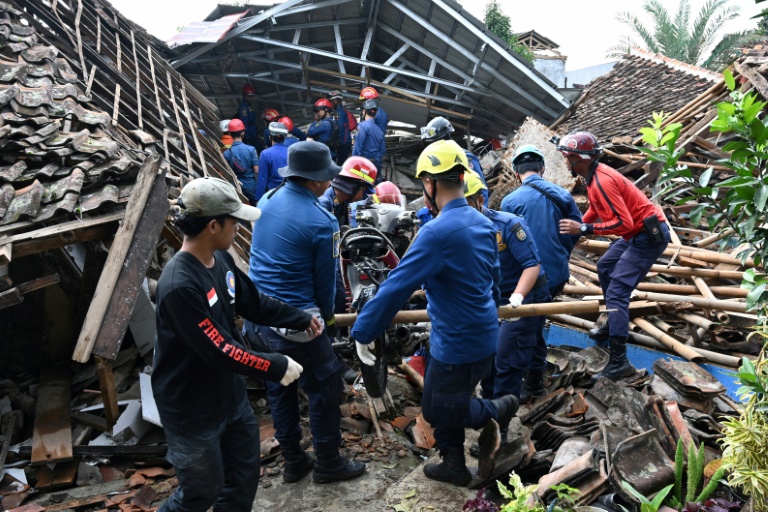
Emergency workers found the body of Ashika Nur Fauziah, also known as Cika, under rubble in the worst-hit district of Cianjur town, epicentre of the quake that triggered landslides, collapsed roofs, walls and buried victims in mounds of earth Monday.

“The body was immediately handed over to the family. The family accepted and she was then buried,” 28-year-old rescuer Jeksen Kolibu told AFP.

“The family was very hysterical. They were very sad. The mother was the one who received the body.”

Dozens of rescuers had spent most of Thursday using digging tools, hammers and their bare hands to clear debris in the delicate mission, which was suspended overnight until Friday morning.

Cika was found under three layers of concrete, said Kolibu.

The focus of the search had centred on her grandmother’s house, across the road from the family home, where her mother believed she had been playing when the earthquake struck.

“She was playing outside, I was cooking in the kitchen, suddenly the earthquake happened, so fast, only two seconds, my house collapsed,” her mother Imas Masfahitah, 34, told AFP at the scene on Thursday.

“Whatever happens, I will try to accept it,” she added, crying as she held on to her daughter’s sandals.

Hopes of a happy outcome had been raised following the dramatic rescue of a six-year-old boy, Azka, on Wednesday evening, which was described as a “miracle” after he survived more than two days in the rubble without food or water.

“The mother was very hopeful. Azka survived, while Cika didn’t. That’s what makes me sad,” Kolibu said.

Before Cika was found, authorities said 39 people were still missing as the rescue effort continued to be hindered by hammering rain and potentially deadly aftershocks.

Twin crises: experts say nature and climate can't be siloed

Experts and activists were hoping UN climate talks would end last week with a prominent mention of biodiversity in the final text. They walked away disappointed.

Some say delegates at the COP27 summit missed a key opportunity to acknowledge the connection between the twin climate and nature crises, which many believe have been treated separately for too long.

Failing to address both could mean not only further decimating Earth’s life support systems, but also missing the key climate target of limiting warming to under 1.5 degrees Celsius, they warn.

“We’re doomed if we don’t solve climate, and we’re doomed if we don’t solve biodiversity,” Basile van Havre, co-chair of the UN biodiversity negotiations, told AFP.

At the COP15 UN biodiversity talks next month, dozens of countries will meet to hammer out a new framework to protect animals and plants from destruction by humans.

The meeting comes as scientists warn that climate change and biodiversity damage could cause the world’s sixth mass extinction event.

Such destruction of nature also risks worsening climate change.

The oceans have absorbed most of the excess heat created by humanity’s greenhouse gas emissions and, along with forests, are important carbon sinks.

“(Nature) is up to a third of the climate solution. And it is a proven technology,” Brian O’Donnell, director of Campaign for Nature, told AFP.

He said oceans in particular are unsung “superheroes”, which have absorbed carbon and heat, at the cost of acidification and coral-killing heatwaves.

As the world warms, species and ecosystems can also play a crucial role in building resilience. Mangroves, for example, can protect against coastal erosion caused by rising seas linked to a warming planet.

– ‘Missed opportunity’ –

Perhaps the most attention on the natural world at COP27 came during a visit by Brazil’s president-elect Luiz Inacio Lula da Silva, who will take office in January.

He has vowed to halt the rampant deforestation of the Amazon seen under incumbent Jair Bolsonaro and announced during the climate talks plans to create a ministry for indigenous people, custodians of the rainforest.

The crucial “30 by 30” biodiversity target also got a boost when a bloc of West African nations vowed to adhere to the goal of protecting 30 percent of the natural world by 2030. 

Biodiversity received a nod in the final COP27 text, including in a paragraph calling for “the urgent need to address, in a comprehensive and synergetic manner, the interlinked global crises of climate change and biodiversity loss”.

But the upcoming COP15 meeting in Montreal — tasked with setting out an ambitious plan for humanity’s relationship with nature for the coming decades — did not get the encouragement many were hoping for.

“It is a missed opportunity that COP15, taking place just in two weeks’ time, did not get a highlight by COP27,” Li Shuo, senior global policy adviser at Greenpeace East Asia, told AFP.

But he cautioned it “should not be a deal-breaker, this should not be the end of the world”. 

For Zoe Quiroz Cullen, head of climate and nature linkages at Fauna & Flora International, it was “deeply concerning” that the text “fails to recognise the crucial linkage to COP27’s sister convention on nature,” the UN Convention on Biological Diversity (CBD).

“The twin climate and biodiversity crises are at risk from being considered and treated in silos,” she told AFP.

– ‘Subcategory’ –

While energy policy has dominated the climate talks, and plastic and pesticide pollution are more the preserve of the biodiversity talks, other issues — food production, indigenous land rights, protections of oceans and forests — are entwined with both.

The United Nations has traditionally treated the climate and biodiversity crises distinctly, each getting their own COP meetings (Conference of the Parties), and each managed by its own institution: climate by the UN Framework Convention on Climate Change and biodiversity by the CBD.

Most experts say the two crises are serious enough to warrant this separate treatment. But some complain that biodiversity has been seen as “just a subcategory of climate”, as O’Donnell put it.

“Decades of approaching these things in isolation still continues, unfortunately, too much to this day.”

In the long term, neglecting nature could mean the unabated destruction of ecosystems and species — and missing the Paris Agreement climate goals.

“We cannot meet the 1.5 degree target for climate without bold action on nature,” O’Donnell said.

“We need to solve them both if we want to have a liveable planet for future generations.”

Twin crises: experts say nature and climate can't be siloed

Experts and activists were hoping UN climate talks would end last week with a prominent mention of biodiversity in the final text. They walked away disappointed.

Some say delegates at the COP27 summit missed a key opportunity to acknowledge the connection between the twin climate and nature crises, which many believe have been treated separately for too long.

Failing to address both could mean not only further decimating Earth’s life support systems, but also missing the key climate target of limiting warming to under 1.5 degrees Celsius, they warn.

“We’re doomed if we don’t solve climate, and we’re doomed if we don’t solve biodiversity,” Basile van Havre, co-chair of the UN biodiversity negotiations, told AFP.

At the COP15 UN biodiversity talks next month, dozens of countries will meet to hammer out a new framework to protect animals and plants from destruction by humans.

The meeting comes as scientists warn that climate change and biodiversity damage could cause the world’s sixth mass extinction event.

Such destruction of nature also risks worsening climate change.

The oceans have absorbed most of the excess heat created by humanity’s greenhouse gas emissions and, along with forests, are important carbon sinks.

“(Nature) is up to a third of the climate solution. And it is a proven technology,” Brian O’Donnell, director of Campaign for Nature, told AFP.

He said oceans in particular are unsung “superheroes”, which have absorbed carbon and heat, at the cost of acidification and coral-killing heatwaves.

As the world warms, species and ecosystems can also play a crucial role in building resilience. Mangroves, for example, can protect against coastal erosion caused by rising seas linked to a warming planet.

– ‘Missed opportunity’ –

Perhaps the most attention on the natural world at COP27 came during a visit by Brazil’s president-elect Luiz Inacio Lula da Silva, who will take office in January.

He has vowed to halt the rampant deforestation of the Amazon seen under incumbent Jair Bolsonaro and announced during the climate talks plans to create a ministry for indigenous people, custodians of the rainforest.

The crucial “30 by 30” biodiversity target also got a boost when a bloc of West African nations vowed to adhere to the goal of protecting 30 percent of the natural world by 2030. 

Biodiversity received a nod in the final COP27 text, including in a paragraph calling for “the urgent need to address, in a comprehensive and synergetic manner, the interlinked global crises of climate change and biodiversity loss”.

But the upcoming COP15 meeting in Montreal — tasked with setting out an ambitious plan for humanity’s relationship with nature for the coming decades — did not get the encouragement many were hoping for.

“It is a missed opportunity that COP15, taking place just in two weeks’ time, did not get a highlight by COP27,” Li Shuo, senior global policy adviser at Greenpeace East Asia, told AFP.

But he cautioned it “should not be a deal-breaker, this should not be the end of the world”. 

For Zoe Quiroz Cullen, head of climate and nature linkages at Fauna & Flora International, it was “deeply concerning” that the text “fails to recognise the crucial linkage to COP27’s sister convention on nature,” the UN Convention on Biological Diversity (CBD).

“The twin climate and biodiversity crises are at risk from being considered and treated in silos,” she told AFP.

– ‘Subcategory’ –

While energy policy has dominated the climate talks, and plastic and pesticide pollution are more the preserve of the biodiversity talks, other issues — food production, indigenous land rights, protections of oceans and forests — are entwined with both.

The United Nations has traditionally treated the climate and biodiversity crises distinctly, each getting their own COP meetings (Conference of the Parties), and each managed by its own institution: climate by the UN Framework Convention on Climate Change and biodiversity by the CBD.

Most experts say the two crises are serious enough to warrant this separate treatment. But some complain that biodiversity has been seen as “just a subcategory of climate”, as O’Donnell put it.

“Decades of approaching these things in isolation still continues, unfortunately, too much to this day.”

In the long term, neglecting nature could mean the unabated destruction of ecosystems and species — and missing the Paris Agreement climate goals.

“We cannot meet the 1.5 degree target for climate without bold action on nature,” O’Donnell said.

“We need to solve them both if we want to have a liveable planet for future generations.”

Close Bitnami banner
Bitnami