World

Credit Suisse expects Q4 pre-tax loss of $1.6 bn

Credit Suisse predicted a surprise fourth-quarter pre-tax loss of up to $1.6 billion as the beleaguered bank undertakes a radical overhaul, sending stocks tumbling again on Wednesday.

Shaken by repeated scandals, Switzerland’s second-biggest bank unveiled a rejig in late October but accepted its accounts would take a hit of up to 1.5 billion Swiss francs ($1.6 billion) in the final three months of the year.

At an extraordinary general meeting, shareholders approved capital increases worth around four billion Swiss francs in order to fund the restructuring plan.

Chairman Axel Lehmann called it an “important step in our journey to build the new Credit Suisse”.

“This vote confirms confidence in the strategy, as we presented it in October, and we are fully focused on delivering our strategic priorities to lay the foundation for future profitable growth,” he said.

The increase in share capital is expected to boost Credit Suisse’s CET1 ratio, which compares a bank’s capital to its risk-weighted assets.

At 1200 GMT, the group’s shares were down 4.8 percent at 3.67 Swiss francs, while the Swiss stock exchange’s main SMI index was up 0.2 percent.

The bank suffered a net loss of 273 million Swiss francs in the first quarter, then nearly 1.6 million in the second quarter and four billion in the third.

The scale of fourth-quarter losses “will depend on a number of factors including the investment bank’s performance for the remainder of the quarter, the continued exit of non-core positions, any goodwill impairments, and the outcome of certain other actions, including potential real-estate sales”, the Zurich-based bank said in a statement.

Credit Suisse said in October that it expected to incur restructuring charges and software and property impairments of around 250 million Swiss francs in the fourth quarter as part of its overhaul.

– Question of trust –

The bank’s reorganisation is aimed at dramatically reducing the scale of its investment bank, in a bid to repair the damage following a series of scandals.

In addition to revamping its investment banking unit, the announced measures include slashing 9,000 jobs and a capital injection from the Saudi National Bank.

However, the restructuring takes place in an unfavourable context for the banking sector.

Its investment bank suffered the backlash of the “substantial industry-wide slowdown” in capital markets and reduced activity in the sales and trading markets, it said.

“The bank expects these market conditions to continue in the coming months.”

Andreas Venditti, an analyst at Swiss investment managers Vontobel, said the “massive net outflows” in wealth management — the bank’s core business alongside its Swiss domestic banking — “are deeply concerning — even more so as they have not yet reversed.

“Credit Suisse needs to restore trust as fast as possible — but that is easier said than done.”

Flora Bocahut, an analyst at the US investment bank Jefferies, added: “Today’s update confirms our concerns that the Credit Suisse ship is yet to stabilise, and it’ll get worse before it potentially gets better.”

– Archegos, Greensill shocks –

Credit Suisse’s capital-guzzling investment banking arm has been the source of heavy losses which plunged its accounts into the red — eclipsing its more stable activities such as wealth management or its Swiss domestic banking services.

Credit Suisse’s investment bank suffered a loss of 3.7 billion Swiss francs in 2021 and backed that up with a 992 million Swiss franc loss in the first half of 2022.

It was hit by the implosion of US fund Archegos, which cost Credit Suisse more than $5 billion.

Meanwhile its asset management branch was rocked by the bankruptcy of British financial firm Greensill, in which some $10 billion had been committed through four funds.

Credit Suisse is one of 30 banks globally deemed too big to fail, forcing it to set aside more cash to weather a crisis.

While many industry experts think a bankruptcy highly improbable, these rumours helped drag its share price down to a low of 3.158 Swiss francs on October 3.

At least six killed in US Walmart shooting

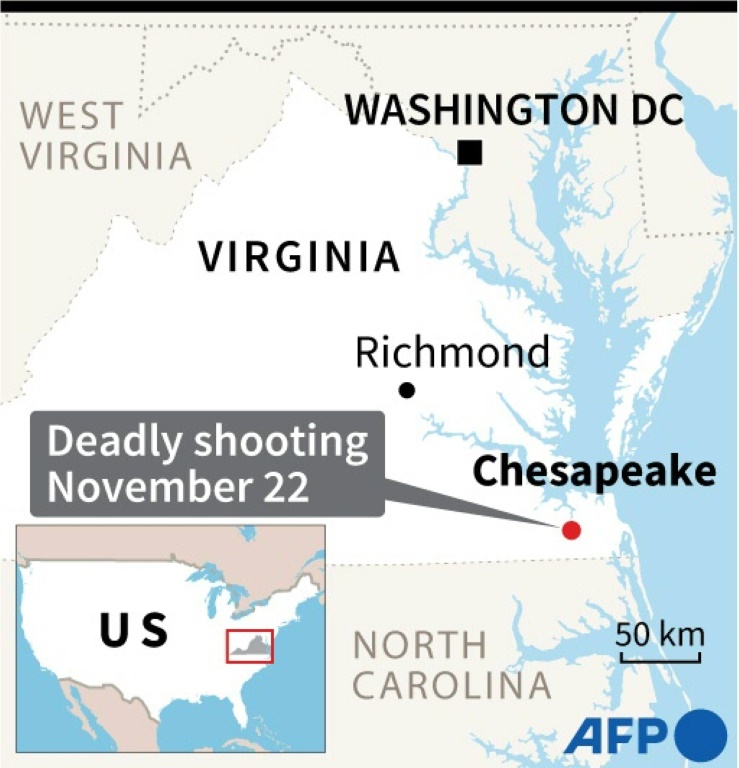
A gunman killed at least six people at a Walmart store Tuesday just ahead of the Thanksgiving holiday in the second mass shooting in the United States in four days.

Police said the shooter was also dead after the late-night assault in Chesapeake in the state of Virginia that followed a weekend gun attack at an LGBTQ club in Colorado that killed five people.

“Chesapeake Police confirm 7 fatalities, including the shooter, from last night’s shooting at Walmart on Sam’s Circle,” the city confirmed on its Twitter account.

Chesapeake Police Department officer Leo Kosinski earlier told reporters that there had been multiple fatalities at the megastore, which local media reported was busy with holiday shoppers.

CNN quoted a law enforcement source as saying the attacker was believed to be an employee or former employee of the store who started shooting other workers in a room used for staff breaks.

At some point the shooter turned the gun on himself, CNN quoted the source as saying.

Emergency calls were first made just after 10:00 pm Tuesday (0300 GMT Wednesday) while the store was still open, with rapid response officers and tactical teams entering immediately after arriving on the scene, Kosinski said.

US media reported that witnesses said the shooting began at the back of the store and that at least five wounded had been rushed to the hospital. 

“We believe it is a single shooter and that single shooter is deceased at this time,” Kosinski said, adding he did not believe any shots had been fired by police.

In the hours afterwards, news footage showed a major police presence around the Walmart, which is located about 150 miles (240 kilometers) southeast of the US capital Washington.

– ‘Senseless violence’ –

Kosinski said officers and investigators were carefully sweeping the store and securing the area.

Walmart, the largest retailer in the United States, issued a statement early Wednesday saying: “We are shocked at this tragic event.” 

The company added that it was “praying for those impacted, the community and our associates. We’re working closely with law enforcement, and we are focused on supporting our associates.”

Virginia state Senator Louise Lucas, who represents the Chesapeake region, said she was “heartbroken that America’s latest mass shooting took place… in my district.”

“I will not rest until we find the solutions to end this gun violence epidemic in our country that has taken so many lives,” she wrote on Twitter.

The shooting occurred at a major retailer less than 48 hours before Americans nationwide celebrate Thanksgiving.

“Tragically, our community is suffering from yet another incident of senseless gun violence just as families are gathering for Thanksgiving,” tweeted Congressman Bobby Scott of Virginia.

The incident occurred three nights after a gunman opened fire inside an LGBTQ nightclub in Colorado Springs, killing five people and injuring at least 18, in what is being investigated as a possible hate crime.

Authorities said that suspect, identified as 22-year-old Anderson Lee Aldrich, had used a long rifle at the club, where partygoers were marking the Transgender Day of Remembrance, which pays tribute to trans people targeted in violent attacks.

Gun violence occurs at an alarming rate in the United States, where more than 600 mass shootings have occurred so far in 2022, according to the Gun Violence Archive website.

European equities waver on economic gloom

European stock markets wavered on Wednesday on news that the eurozone and UK economies shrank in November, but by less than the prior month.

In midday deals, Frankfurt equities fell 0.2 percent and Paris flatlined, while London won 0.3 percent.

Oil prices slid on fears of more painful Covid lockdowns in China that could ravage the Asian giant’s energy demand. 

The euro steadied against the dollar and yen.

– ‘Grim picture’ –

The eurozone’s composite purchasing managers index (PMI), a key economic indicator, improved from 47.3 in October to 47.8 in November, S&P Global said.

However, activity languished under 50 — signifying the fifth consecutive month of economic contraction as inflation spikes.

“The latest macroeconomic data from Europe continues to paint a grim picture,” said City Index analyst Fawad Razaqzada.

“Flash manufacturing and services PMIs for France and Germany, and eurozone as a whole, remain in contraction territory.

“Although the PMI data still managed to beat expectations, that’s only because we are seeing improvement from a very low base.”

Britain’s composite PMI was also fractionally higher, from 48.2 to 48.3 in November, but that marked the fourth straight contraction.

The news comes after the UK government recently confirmed that the nation’s economy was in recession, with inflation sitting at a 41-year high.

The reading is “consistent with our view that the (British) economy is probably already in recession”, noted Capital Economics analyst Ashley Webb.

Elsewhere, Asian stocks rose on hopes that the Federal Reserve will carry out smaller US rate hikes at its next few meetings after inflation cooled in the world’s biggest economy.

But there is growing concern that a surge in China’s Covid-19 cases will see officials impose more economically-damaging restrictions.

Wall Street on Tuesday enjoyed a timely rally thanks to healthy retailer earnings amid signs US consumers — the economy’s key driver — remain resilient to higher borrowing costs and inflation.

Minutes from the Fed’s policy meeting this month will be pored over when they are released Wednesday, with traders hoping for some insight into the bank’s thinking on rates.

However, US trading volumes are likely to be muted ahead of Thanksgiving on Thursday.

Traders were also keeping tabs on protests at the world’s largest iPhone factory as Foxconn workers grow increasingly angry at long-running Covid curbs.

– Key figures around 1200 GMT –

London – FTSE 100: UP 0.3 percent at 7,473.95 points

Paris – CAC 40: FLAT at 6,659.70

Frankfurt – DAX: DOWN 0.2 percent at 14,401.20

EURO STOXX 50: UP 0.1 percent at 3,935.38

Hong Kong – Hang Seng Index: UP 0.6 percent at 17,523.81 (close)

Shanghai – Composite: UP 0.3 percent at 3,096.91 (close)

Tokyo – Nikkei 225: Closed for a holiday

New York – Dow: UP 1.2 percent at 34,098.10 (close)

Euro/dollar: UP at $1.0315 from $1.0304 on Tuesday

Dollar/yen: UP at 141.45 yen from 141.23 yen

Pound/dollar: UP at $1.1938 from $1.1886

Euro/pound: DOWN at 86.39 pence from 86.69 pence

West Texas Intermediate: DOWN 2.1 percent at $79.22 per barrel

Brent North Sea crude: DOWN 2.3 percent at $86.32 per barrel

burs-rfj/bcp/kjm

Teen killed in twin Jerusalem bus stop bombings

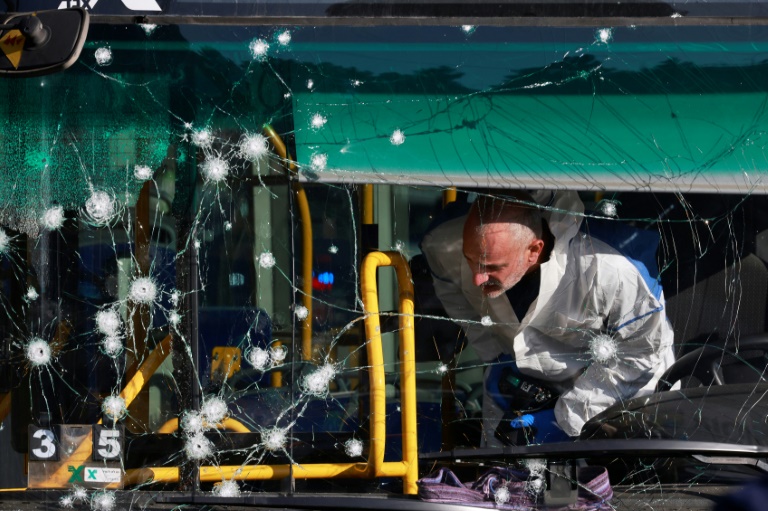
Explosions hit two bus stops in Jerusalem Wednesday, killing a teen and wounding 14, in unclaimed attacks cheered by Palestinian militant group Hamas.

The first bombings to hit Jerusalem since 2016, according to security officials, targeted an area frequented by ultra-Orthodox Jews at the western exit from Jerusalem.

A 16-year-old boy was killed and 11 other people wounded in the first blast, before a second hit a stop nearby, wounding three people, hospitals treating the casualties said.

An AFP photographer said the blast had ripped a hole through a metal fence behind the bus stop, with an electric scooter and a hat lying on the ground.

The photographer heard the second blast, which he said tore through the side of a bus.

The twin blasts struck half an hour apart, police said. Explosives experts were at the scene with police and forensic scientists collecting evidence.

Jerusalem’s Shaare Zedek hospital said a 16-year-old Israeli boy died of his wounds from the first explosion. 

Doctors at the hospital were treating five people wounded in the blasts, while Hadassah medical centre said it had admitted nine wounded.

The Israeli foreign ministry named the boy killed as Aryeh Shchoupik. A local source told AFP the teen held Canadian nationality.

The driver whose bus was damaged in the second explosion said the stop was “very full” when the blast hit.

“As I was leaving it, I heard a loud explosion. I opened the doors, people ran out. A miracle happened to us,” Motty Gabai told army radio.

– Coalition talks –

As the search for suspects got underway, a security source told AFP the bombs were detonated remotely.

Israeli police described the blasts as “a combined terror attack” and said explosive charges were planted at the two bus stops.

“I call on the population, despite these difficult events, to return to normal routine life,” Jerusalem police spokesman Idan Ilouz told public broadcaster Kan.

Palestinian militant group Hamas, which controls the Gaza Strip, praised the bombings.

“We congratulate our Palestinian people and our people in the occupied city of Jerusalem on the heroic special operation at the bus stop,” Hamas spokesman Abd al-Latif al-Qanua said.

The bombings hit amid talks on the make-up of a right-wing coalition government being formed by prime minister-designate Benjamin Netanyahu, a veteran hawk.

A key ally in the proposed alliance, far-right lawmaker Itamar Ben-Gvir, visited the scene of the blasts.

“We must form a government as soon as possible. The terror is not waiting,” he said.

Outgoing premier Yair Lapid briefed Netanyahu following a meeting with security chiefs.

– ‘Horrific’ –

The United Nations Middle East peace envoy condemned the “horrific terrorist attacks”.

“Terrorism and violence against civilians can never be justified,” Tor Wennesland wrote on Twitter.

The Shin Bet domestic security agency told AFP the blasts were the first in Jerusalem since 2016, with 34 bombings thwarted this year.

During the second intifada, or uprising, in the early 2000s, Palestinian militants repeatedly planted bombs at urban bus stops, including in Jerusalem.

Violence has flared in recent months, particularly in the occupied West Bank, where Israeli forces have launched often deadly raids following a series of fatal attacks on Israeli targets.

After Wednesday’s bomb attacks, the Israeli military announced two checkpoints near the flashpoint West Bank city of Jenin had been closed.

An Israeli Druze teenager involved in a car accident in the Jenin area was abducted by Palestinian militants and died as a result, his father said on Wednesday.

“He was still alive, they took him in front of my eyes and I couldn’t do anything,” Hossam Fero told Ynet radio.

Israelis abducted dead or alive have been used in the past as bargaining chips by Palestinian militant groups to secure the release of prisoners or the return of bodies of Palestinians killed in clashes by Israel.

mk-jjm/rsc/kir

Indonesia quake survivors appeal for supplies as rain hampers rescue

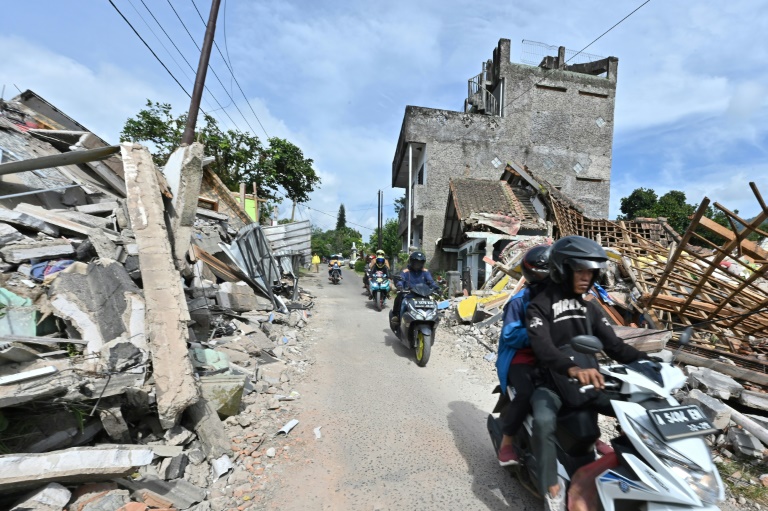
Survivors of an Indonesian earthquake that killed at least 271 people, many of them children, appealed for food and water Wednesday as heavy rain and aftershocks hampered rescue efforts among the rubble of devastated villages.

The calls for help came as authorities warned that debris from landslides caused by the strong quake near the town of Cianjur in West Java needed to be cleared as rains forecast for the coming weeks threatened a second disaster.

Two days after the quake flattened their homes, residents were still trying to retrieve priceless belongings including family photos, religious books and marriage certificates.

“Although some supplies have arrived, it is not enough. We got rice, instant noodles, mineral water but it’s not enough,” Mustafa, a 23-year-old resident of Gasol village, told AFP. 

Mustafa had just dug through the rubble of an elderly neighbour’s house at her request, appearing from the destroyed facade carrying a pile of clothes before returning to collect rice, a gas stove, canisters and frying pans.

In Talaga village, some residents put signs on the windows of damaged houses and the front of tents that read “We need help!” 

In the streets, at least three people held up cardboard boxes, asking for donations. Evacuees crammed under flimsy tents, unable to move inside from the rain in case buildings collapse from an aftershock.

A shallow 3.9-magnitude aftershock sent panicked evacuees running from shelters on Wednesday, according to an AFP reporter at the scene. Authorities had recorded 171 aftershocks as of Wednesday evening.

More than 61,000 people have been displaced by the quake, around 2,000 are injured and 40 missing, the national disaster mitigation agency (BNPB) said Wednesday. 

Around a third of those found dead so far are believed to be children, BNPB chief Suharyanto, who like many Indonesians goes by one name, told a press conference, without providing an exact figure.

The government has dispatched tents and other supplies to Cianjur for the displaced, and the military deployed 12,000 personnel on Wednesday, officials said.

Heavy rain was hampering those efforts in about a dozen villages where more than 22,000 houses had been destroyed.

“For the refugees… their basic life necessities must be guaranteed — water, food, that’s non-negotiable,” Suharyanto said.

– Hamlet buried –

Two villages remain isolated, said Henri Alfiandi, head of Indonesia’s search and rescue authority Basarnas, in a video posted to social media. 

He said he had received reports of villagers trapped without food and water, and some forced to sleep alongside dead bodies.

“The people there can’t even ask for help,” he said, adding that three helicopters were being sent to drop aid.

Another hamlet in Cugenang district, the worst-hit by the quake, was buried by a landslide, Muhammad Wachyudin, an official from the Cianjur disaster mitigation agency, told AFP.

Rescuers believed some bodies were buried in Kampung Pos but they have not been able to reach them.

Indonesia is vulnerable to landslides and flash floods in the rainy season, which has already begun and peaks in December in West Java. 

The country’s meteorology agency warned that Cianjur is prone to another catastrophe.

“We have to be vigilant over a potential second disaster, such as a landslide,” Dwikorita Karnawati, head of the meteorology, climatology and geophysics agency told a press conference Tuesday.

Karnawati said rivers could be blocked by landslides or rubble and spark a flash flood in Cianjur.

“We urgently need to clear materials and rubble that block river flows in the upper hills,” she said.

– ‘Praise God!’ –

On Tuesday, Cianjur’s residents began mourning loved ones, laying them to rest in accordance with their Islamic faith after authorities released them from morgues.

Some searched the wreckage for belongings. For one couple, there was a glimmer of hope.

Mimin, 52, and her husband Rosyid, 67, scrabbled through their destroyed home looking for one item only — a treasured two-gram gold ring. 

They pulled clothes from the concrete, patting and shaking them, until the gleaming piece of jewellery that represented their savings popped out.

“Praise God! I found the ring!” Mimin yelled.

Indonesia experiences frequent seismic and volcanic activity due to its position on the Pacific “Ring of Fire”, where tectonic plates collide.

Monday’s tremor was the deadliest in the archipelago nation since a 2018 quake and resulting tsunami killed more than 4,000 people on the island of Sulawesi.

Indonesia quake survivors appeal for supplies as rain hampers rescue

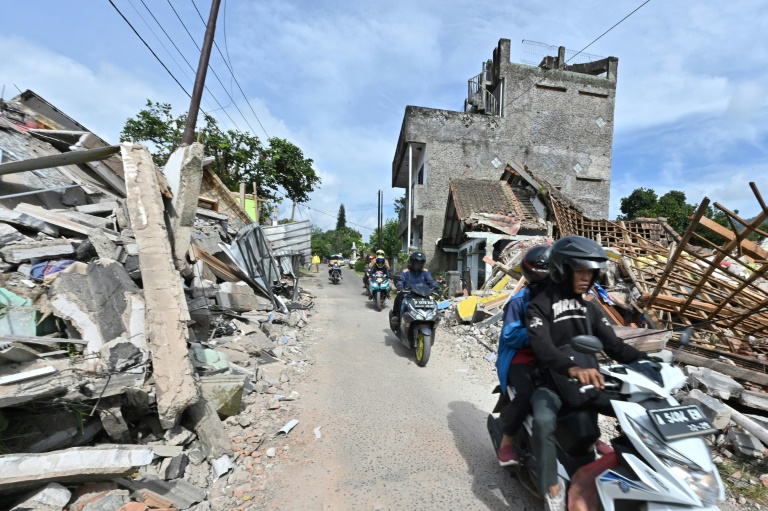
Survivors of an Indonesian earthquake that killed at least 271 people, many of them children, appealed for food and water Wednesday as heavy rain and aftershocks hampered rescue efforts among the rubble of devastated villages.

The calls for help came as authorities warned that debris from landslides caused by the strong quake near the town of Cianjur in West Java needed to be cleared as rains forecast for the coming weeks threatened a second disaster.

Two days after the quake flattened their homes, residents were still trying to retrieve priceless belongings including family photos, religious books and marriage certificates.

“Although some supplies have arrived, it is not enough. We got rice, instant noodles, mineral water but it’s not enough,” Mustafa, a 23-year-old resident of Gasol village, told AFP. 

Mustafa had just dug through the rubble of an elderly neighbour’s house at her request, appearing from the destroyed facade carrying a pile of clothes before returning to collect rice, a gas stove, canisters and frying pans.

In Talaga village, some residents put signs on the windows of damaged houses and the front of tents that read “We need help!” 

In the streets, at least three people held up cardboard boxes, asking for donations. Evacuees crammed under flimsy tents, unable to move inside from the rain in case buildings collapse from an aftershock.

A shallow 3.9-magnitude aftershock sent panicked evacuees running from shelters on Wednesday, according to an AFP reporter at the scene. Authorities had recorded 171 aftershocks as of Wednesday evening.

More than 61,000 people have been displaced by the quake, around 2,000 are injured and 40 missing, the national disaster mitigation agency (BNPB) said Wednesday. 

Around a third of those found dead so far are believed to be children, BNPB chief Suharyanto, who like many Indonesians goes by one name, told a press conference, without providing an exact figure.

The government has dispatched tents and other supplies to Cianjur for the displaced, and the military deployed 12,000 personnel on Wednesday, officials said.

Heavy rain was hampering those efforts in about a dozen villages where more than 22,000 houses had been destroyed.

“For the refugees… their basic life necessities must be guaranteed — water, food, that’s non-negotiable,” Suharyanto said.

– Hamlet buried –

Two villages remain isolated, said Henri Alfiandi, head of Indonesia’s search and rescue authority Basarnas, in a video posted to social media. 

He said he had received reports of villagers trapped without food and water, and some forced to sleep alongside dead bodies.

“The people there can’t even ask for help,” he said, adding that three helicopters were being sent to drop aid.

Another hamlet in Cugenang district, the worst-hit by the quake, was buried by a landslide, Muhammad Wachyudin, an official from the Cianjur disaster mitigation agency, told AFP.

Rescuers believed some bodies were buried in Kampung Pos but they have not been able to reach them.

Indonesia is vulnerable to landslides and flash floods in the rainy season, which has already begun and peaks in December in West Java. 

The country’s meteorology agency warned that Cianjur is prone to another catastrophe.

“We have to be vigilant over a potential second disaster, such as a landslide,” Dwikorita Karnawati, head of the meteorology, climatology and geophysics agency told a press conference Tuesday.

Karnawati said rivers could be blocked by landslides or rubble and spark a flash flood in Cianjur.

“We urgently need to clear materials and rubble that block river flows in the upper hills,” she said.

– ‘Praise God!’ –

On Tuesday, Cianjur’s residents began mourning loved ones, laying them to rest in accordance with their Islamic faith after authorities released them from morgues.

Some searched the wreckage for belongings. For one couple, there was a glimmer of hope.

Mimin, 52, and her husband Rosyid, 67, scrabbled through their destroyed home looking for one item only — a treasured two-gram gold ring. 

They pulled clothes from the concrete, patting and shaking them, until the gleaming piece of jewellery that represented their savings popped out.

“Praise God! I found the ring!” Mimin yelled.

Indonesia experiences frequent seismic and volcanic activity due to its position on the Pacific “Ring of Fire”, where tectonic plates collide.

Monday’s tremor was the deadliest in the archipelago nation since a 2018 quake and resulting tsunami killed more than 4,000 people on the island of Sulawesi.

Ukraine says seized 'pro-Russian literature' from monasteries

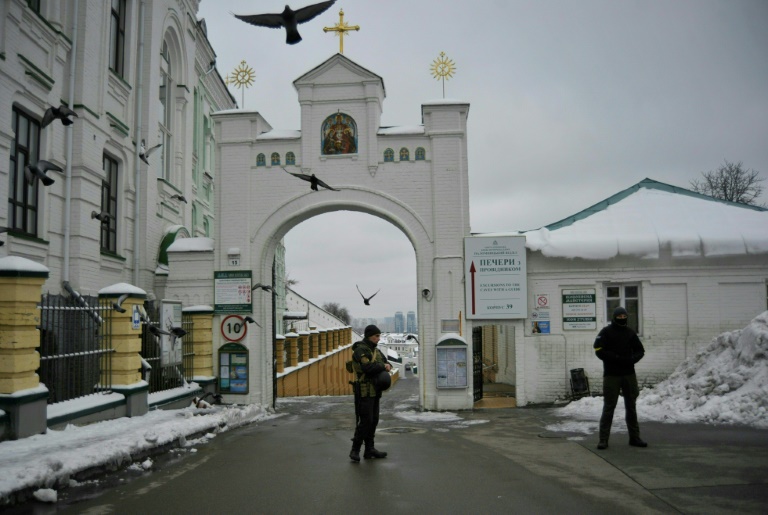
Ukraine’s security service said Wednesday it had seized “pro-Russian literature”, cash and interrogated dozens during raids of several Orthodox monasteries that spurred a backlash from the Kremlin.

The Ukrainian security service (SBU) said Tuesday it had conducted raids at locations including the 11th century Pechersk Lavra monastery in the capital Kyiv, a UNESCO Heritage site, over suspected links to Russian agents.

It is also the seat of a branch of the Ukraine Orthodox Church that was previously under Moscow’s jurisdiction but severed ties after Russia invaded Ukraine in February.

After searches in more than 350 church-linked facilities, the SBU said Wednesday it had turned up “pro-Russian literature, which was being used in seminary and parish schools, including for ‘Russian world’ propaganda”.

This terminology has been used to promote Russia’s political influence in ex-Soviet countries and President Vladimir Putin launched the Ukraine invasion claiming to protect Russian speakers there.

The SBU also said it had seized “more than two million Ukrainian hryvnias ($55,000), more than $100,000 and several thousand Russian rubles”.

Its statement said it had probed 850 people including Russian and Ukrainian citizens and that “more than 50 underwent in-depth counterintelligence interviews”.

“Some of them presented passports and Soviet-era military IDs or did not have original documents at all, but only copies of them, or had Ukrainian passports with indications of forgery or damage. In-depth checks are underway,” the SBU said in its statement.

The SBU also searched two monasteries and the local diocese in the region of Rivne in northwestern Ukraine.

A spokesman for the Russian Orthodox Church called the coordinated raids an “act of intimidation” against Ukrainian believers.

The Kremlin meanwhile denounced the searches as the latest chapter of Kyiv’s “war” against the Russian church.

Russia lost many Ukrainian parishes in 2019, when a historic schism fuelled by the Kremlin’s land grab of Crimea and backing of a separatist insurgency in eastern Ukraine led to the creation of the Kyiv Patriarchate of the Orthodox Church.

Turkey vows intent 'stronger than ever' to secure Syrian border

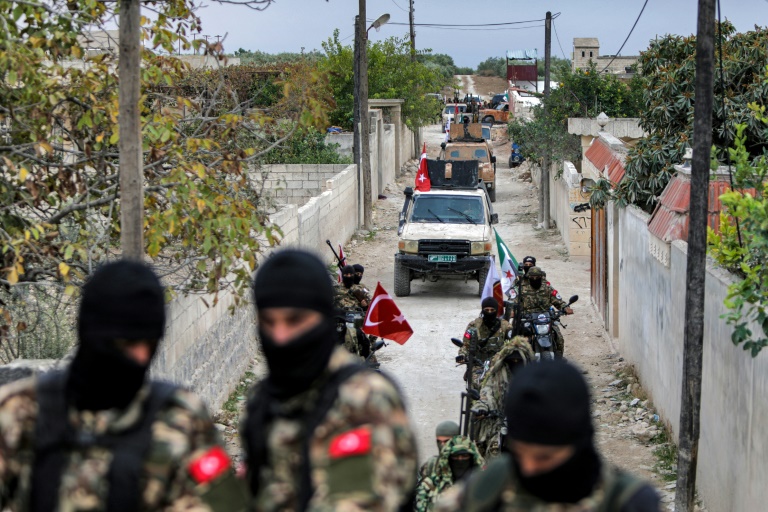
Turkey said Wednesday it was more determined than ever to secure its Syrian border from attacks by Kurdish forces, threatening a ground operation “at the most convenient time.”

Ankara launched an air strikes campaign across Iraq and Syria on Sunday as part of Operation Claw-Sword following a bombing in Istanbul on November 13 that killed six people.

“Our operations with planes, cannons and drones are only the beginning. Our determination to secure all our southern border… with a safe zone is stronger today than ever before,” President Recep Tayyip Erdogan told lawmakers in parliament.

“While we press ahead with air raids uninterrupted, we will crack down on terrorists also by land at the most convenient time for us,” he told lawmakers from his AKP party.

Turkey blamed the Istanbul attack on the Kurdistan Workers’ Party (PKK), which is blacklisted as a terror group by the European Union and the United States.

The PKK, which has waged an insurgency against the Turkish state since 1984, denied any role in the bombing — the deadliest in five years after a spate of attacks in Turkey between 2015 and 2017.

Turkey has intensified air raids and artillery fire on the PKK and the Kurdish People’s Protection Units (YPG) targets in northern Iraq and Syria.

Ankara considers the YPG a terror group linked to the PKK. But the YPG — the dominant force within the US-led Syrian Democratic Forces (SDF) is seen as crucial in the fight against the Islamic State (IS) extremist group.

– ‘Can’t keep their word’ –

The YPG denied a role in this month’s attack.

A Kurdish military official told AFP that a Turkish drone strike hit a Kurdish position inside a Russian base in northeastern Syria on Wednesday killing one Kurdish fighter and wounding three.

The casualties were all fighters of the Kurdish-led SDF, the SDF officer said. 

Erdogan accused Western states backing Kurdish forces in Syria of failing to deliver on their promise of no attacks on Turkish soil, pointing to the Istanbul bombing.

“If they can’t keep their word,” he said, “then we have the right to take care of ourselves.”

“Turkey has the power to catch and punish terrorists inside and outside our borders who are involved in attacks against our country and nation,” he said. 

Erdogan has repeatedly called for a 30-kilometre (19-mile) “safe zone” to protect Turkey against cross-border attacks from Syrian territory.

On Wednesday, he vowed Turkey would complete the zone “step by step” starting from the towns of Tal Rifaat, Manbij and Ayn al-Arab, also known as Kobane in Kurdish, which are all located in northern Syria.

Kobane, a Kurdish-majority town near the Turkish border, was captured by IS in late 2014 before Syrian Kurdish forces drove them out early the following year.

– Gas plant –

Turkish Defence Minister Hulusi Akar said the military had hit nearly 500 Kurdish targets across Iraq and Syria as part of its offensive. 

“So far 471 targets have been struck and 254 terrorists were neutralised in the operation,” Akar said. 

A British-based monitoring group and Kurdish authorities have reported Turkish drone strikes on many locations in Hassakeh province including a domestic gas plant and an oil pumping station.

Turkish artillery fire also hit near the Jerkin prison in Qamishli, which holds IS group detainees, according to both sources.

Ankara insisted Wednesday that its campaign targeted only “terrorists.”

“I repeat that the only target of the Turkish armed forces are the terrorists and the structures belonging to these terrorists,” Erdogan said. 

“We have no problem with any ethnic or religious group, with our Kurdish or Arab brothers.”

Turkish border towns have come under rocket fire from Syria in recent days. At least three people, including a child, were killed in a Turkish border town on Monday.

burs-fo/jm

Afghan capital gets 400 new loudspeakers to encourage prayers

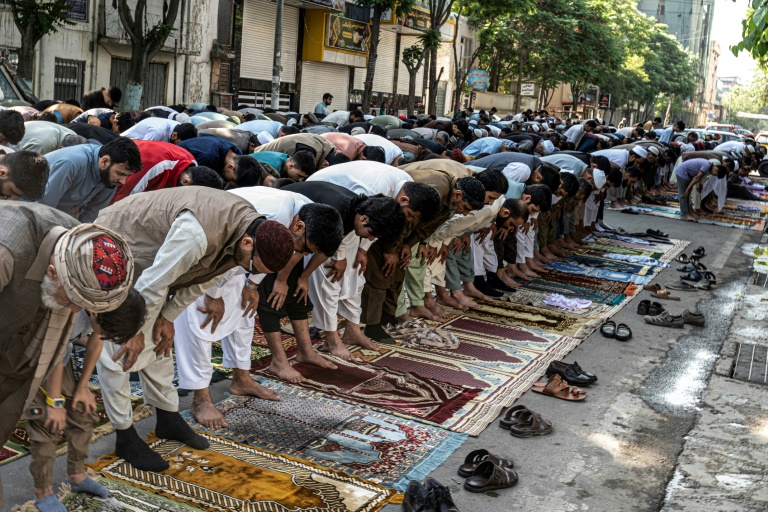
Hundreds of loudspeakers have been installed in the Afghan capital to encourage worshippers to attend prayers, the Taliban’s religious enforcers said Wednesday.

The Ministry for the Promotion of Virtue and Prevention of Vice also said that hundreds of empty shops and other disused buildings had been recently converted into mosques to give everyone the opportunity to pray communally.

“During the previous government, some of the loudspeakers were removed and people were not able to listen to the Azan (call to prayer),” the ministry tweeted.

It said 400 loudspeakers had been installed in different parts of Kabul “so the people could listen to the Azan at the same time”.

Since returning to power in August last year, the Taliban have gradually introduced strict rules and regulations they say are in accordance with Islamic sharia law.

Women have largely been squeezed out of public life, with most women government workers having lost their jobs — or paid a pittance to stay at home.

They must cover up with a burqa or hijab when out of the home, are barred from travelling without a male relative and are banned from visiting parks, gyms or public baths.

Schools for teenage girls have also been shuttered across most of the country since the Taliban’s August 2021 return.

Earlier this month, supreme leader Hibatullah Akhundzada ordered judges to fully enforce aspects of Islamic law that include public executions, stonings and floggings, and the amputation of limbs for thieves.

Local media also reported Wednesday that the vice ministry has ordered shops in certain parts of the capital to shut for Friday prayers, the most important of the week.

The Azan is a familiar sound across Afghanistan — particularly in cities, where hundreds of mosques sound the call to prayer five times a day.

Prayer is one of the five pillars of Islam and although Muslims can do it alone at home, communal worship is considered worthy of higher reward.

Violent protests at largest iPhone factory in China

Violent protests have broken out around Foxconn’s vast iPhone factory in central China, as workers clashed with security personnel over pay and living conditions at the plant.

In videos shared on Weibo and Twitter that AFP has verified, hundreds of workers can be seen marching on a road in daylight. Some were confronted by riot police and people in hazmat suits.

Foxconn confirmed the unrest later on Wednesday.

A night-time video showed a man with a bloodied face as someone off-camera says: “They’re hitting people, hitting people. Do they have a conscience?”

Another at the same scene showed dozens of workers confronting a row of police officers shouting, “Defend our rights! Defend our rights!”, while another voice talks of “smoke bombs” and “tear gas”. 

AFP verified those videos partly through geolocation that showed distinctive features, including a building and barricades near staff living quarters on the factory compound.

In a daytime video, several fire trucks surrounded by police in hazmat suits were parked near residential blocks while a voice on a loudspeaker was heard saying: “All workers please return to their accommodation, do not associate with a small minority of illegal elements.”

China’s unrelenting zero-Covid policy has caused fatigue and resentment among wide swaths of the population, some of whom have been locked down for weeks at factories and universities or been unable to travel freely. 

The Weibo hashtag “Foxconn riots” appeared to be censored by Wednesday noon but some text posts referring to large protests at the factory remained live.

Foxconn said workers had complained about pay and conditions at the plant but denied it had housed new recruits with Covid-positive staff at the Zhengzhou factory, the world’s largest producer of iPhones.

“Regarding any violence, the company will continue to communicate with employees and the government to prevent similar incidents from happening again,” the Taiwanese tech giant said in a statement.

Apple did not respond to requests for comment.

– Hotbed of unrest –

Foxconn, also known by its official name Hon Hai Precision Industry, is the world’s biggest contract electronics manufacturer, assembling gadgets for many international brands.

The Taiwanese tech giant, Apple’s principal subcontractor, recently saw a surge in Covid-19 cases at its Zhengzhou site, leading the company to shut the vast complex in a bid to keep the virus in check.

The huge facility of about 200,000 workers — dubbed “iPhone City” — has since been operating in a “closed loop” bubble.

Footage emerged this month of panicking workers fleeing the site on foot in the wake of allegations of poor conditions at the facility.

Multiple employees later recounted to AFP scenes of chaos and disorganisation at the complex of workshops and dormitories.

In the place of the fleeing workers, the firm has offered large bonuses and other incentives for employees who stayed as the local government bussed in fresh labourers in a bid to keep the factory afloat. 

Apple this month acknowledged the lockdown had “temporarily impacted” production ahead of the holiday season at the Zhengzhou factory, the Taiwanese company’s crown jewel that churns out iPhones in quantities not seen anywhere else. 

Foxconn is China’s biggest private sector employer, with more than a million people working across the country in about 30 factories and research institutes.

China is the last major economy wedded to a strategy of extinguishing Covid outbreaks as they emerge, imposing lockdowns, mass testing and lengthy quarantines despite the widespread disruption to businesses and international supply chains. 

The policy has sparked sporadic protests throughout China, with residents taking to the streets in several major Chinese cities to vent their anger against snap lockdowns and business closures.

Close Bitnami banner
Bitnami