World

Malaysia's Mahathir says will focus on writing after poll defeat

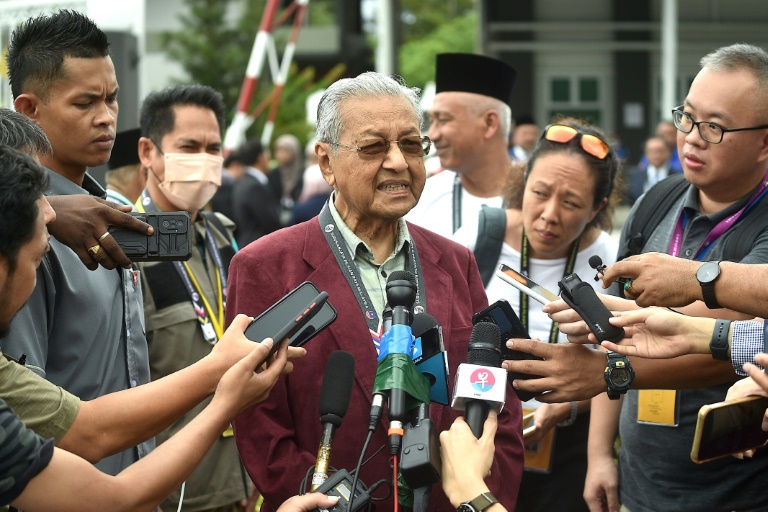
Malaysia’s nonagenarian former prime minister Mahathir Mohamad, one of the world’s longest-serving politicians, said Wednesday he will focus on writing after he suffered his first electoral defeat in more than half a century.

The 97-year-old statesman came fourth in a five-way fight for his long-held constituency on the resort island Langkawi in Saturday’s election.

Commenting for the first time since his defeat, Mahathir accepted his loss but did not say whether he would quit politics.

For the moment, he said he would write about the country’s history.

“Many events that happened in the country have not yet been recorded, including what happened during British rule,” he wrote on his Facebook page.

During his first year in power in 1981, Mahathir restricted the entry of British imports and contracts in a policy known as “Buy British Last” over certain “aggravations” by the former colonisers.

However, he also mourned the recent death of Queen Elizabeth II, saying “she was a good example of a constitutional monarch”.

A maverick known for his acerbic language and anti-Western tirades, Mahathir is a prolific writer with a blog and numerous book titles to his name. 

He held the Guinness World Record for being the “world’s oldest current prime minister” when he became premier for a second time in 2018 just two months shy of his 93rd birthday.

During his first stint in power from 1981 to 2003, he was criticised for ruling the Southeast Asian nation with an iron fist, but he was also hailed for transforming Malaysia from a sleepy backwater into one of the world’s top exporters of high-tech goods.

He came out of his 15-year retirement to lead the opposition Pakatan Harapan (Alliance of Hope) coalition in the 2018 contest amid public anger over then-incumbent Najib Razak’s role in the massive embezzlement scandal at state fund 1MDB.

The reformist bloc won and Mahathir became prime minister for a second time but his government collapsed in less than two years due to infighting.

A greener ride: West Africans switch on to electric motorbikes

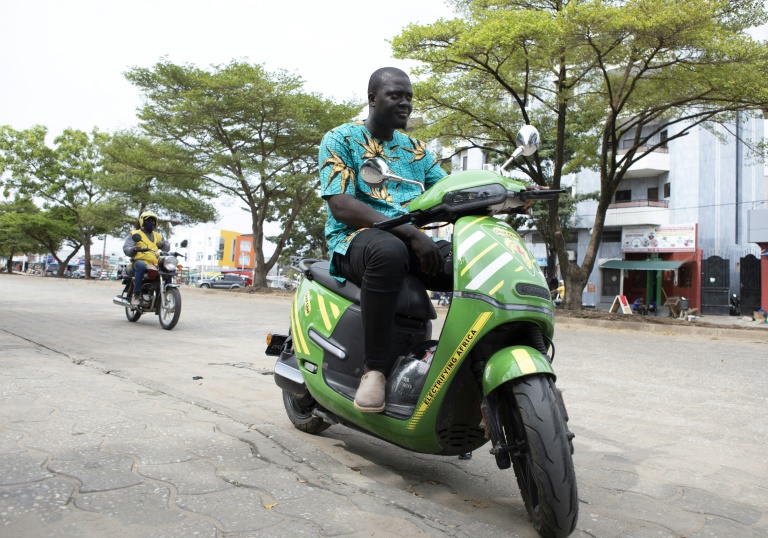
Beninese hairdresser Edwige Govi makes a point these days of using electric motorbike taxis to get around Cotonou, saying she enjoys a ride that is quiet and clean.

Motorcycle taxis are a popular and cheap form of transportation in West Africa. 

But in Benin and Togo, electric models are gaining the ascendancy over petrol-powered rivals.

Customers are plumping for environmentally-friendlier travel and taxi drivers are switching to machines that, above all, are less expensive to buy and operate. 

“They are very quiet and do not give off smoke,” says Govi, 26, who had just completed a half-hour run across Benin’s economic hub.

In African cities, road pollution is becoming a major health and environment issue, although for taxi drivers, the big attraction of electric motorcycles is the cost.

“I manage to get by,” said Govi’s driver, Octave, wearing the green and yellow vest used by Benin’s zemidjan taxis — a word meaning “take me quickly” in the local Fon language. 

“I make more money than with my fuel motorcycle.”

Local environmentalist Murielle Hozanhekpon said the electric motorbikes do have some disadvantages “but not on an environmental level”.

Alain Tossounon, a journalist specialising in environmental issues, said electric bikes were prized by taxi drivers as they were less expensive to maintain or run.

The cost factor has become more and more important in the face of an explosion of fuel prices this year triggered by Russia’s invasion of Ukraine.

– Credit carrot –

In Benin, an electric motorcycle costs 480,000 CFA ($737 / euros) against 490,050 CFA ($752 / euros) for a petrol-driven equivalent.

But this significant price difference is only one factor which explains the trend towards “silent motorcycles,” said Tossounon. 

Many taxi drivers are also lured by flexible credit deals — instead of making a hefty one-off purchase, many are able to get loans that they pay off monthly, weekly or even daily. 

Two companies in Cotonou have been offering electric models and say they are overwhelmed by demand. 

“The queue here is from morning to evening. Every hour, at least two roll out of the shop,” said vendor Anicet Takalodjou. 

Oloufounmi Koucoi, 38, director of another company delivering the models to Cotonou, said they had put thousands of e-motorcycles in circulation.

“The number is growing every day.” 

By assembling the motorcycles locally in Benin, his electric models are cheaper than if they had been imported. 

To attract customers, his company, Zed-Motors, offers solar panels to facilitate recharging for those who do not have electricity at home. 

For decades, Benin and its economy have struggled with power cuts. The situation has improved, but outages remain common.

In rural areas, especially, electricity remains largely inaccessible.

 – Battery change – 

In Lome, capital of neighbouring Togo, Octave de Souza parades proudly through the streets on his brand-new green electric motorcycle. 

One point in particular makes him and his wallet happy: no more fuelling up.

“All you need to do is change the battery,” he smiled. “There are sales outlets, you go there and it’s exchanged for you.” 

A recharge costs 1,000 CFA ($1.50 / euros) and can provide three days’ mobility. For the same price, Octave said, he would only be able to ride for one day using petrol, which is subsidised by the government.

Local authorities also are encouraging the switch to electric in a bid to replace old, highly polluting motorcycles. 

But some drivers remain wary of electric models, citing range anxiety — the worry of coming to a halt with a flat battery.

Taxi driver Koffi Abotsi said he struggled with the “stress” of having to quickly find a charging station so as not to break down. 

“This sometimes leads us to swap (the battery) even with 10 percent or 15 percent charge remaining so as not to have any unpleasant surprises along the way.”

European Space Agency to vote on record budget, name new astronauts

The European Space Agency will vote on Wednesday on whether to spend billions more euros to keep up with rising competition in space, as well as unveiling its much-anticipated new crop of astronauts.

The ESA’s 22 member states, whose ministers charged with space duties have been meeting in Paris since Tuesday, will decide on meeting the agency’s request for a record 18.7 billion euros for new programmes over the next three years.

The figure is more than 25 percent higher than the 14.5 billion euros agreed at the ESA’s last ministerial council in 2019.

ESA director-general Josef Aschbacher told AFP that Europe risks “falling out of the race” in space if it does not expand the budget. 

Europe faces an increasingly crowded market in space, with competition coming not just from the long-dominant United States but also from rising powers such as China and private companies like billionaire Elon Musk’s SpaceX.

However the request for countries to open their purse strings comes as Europe struggles against high inflation and an energy crisis.

France called for a united Europe in space on Tuesday.

“At the end of these discussions, there must be a single Europe, a single European space policy and unfailing unity in the face of Chinese ambitions and American ambitions,” France’s economy minister Bruno Le Maire said at the meeting.

“If we want to be independent, we have to put money on the table.”

At the opening of the council, Aschbacher stressed that nations would reap a huge economic benefit from their investments.

Each country can choose how much it contributes to the budget, which includes three billion euros for monitoring climate change, 3.3 billion to the Ariane 6 rocket launcher system and three billion to robotic exploration missions, among others projects.

– Rocket launcher boost –

Some of the most difficult negotiations have been about rocket launchers, which are crucial for Europe to be able launch missions into space without outside help.

The ESA has struggled to get off the ground since Russia withdrew its Soyuz rockets earlier this year in response to European sanctions over Moscow’s invasion of Ukraine.

The job has been made more difficult by delays to the next-generation Ariane 6, which was supposed to have its maiden flight in 2020 but will now blast off at the end of next year.

The ESA has even had to resort to using the Falcon 9 rockets of its rival SpaceX to launch two upcoming scientific missions.

The subject of launchers is regularly a source of “friction” between European countries, said Philippe Baptiste, head of France’s National Centre for Space Studies.

But the talks were given a boost on Tuesday when the ESA’s biggest contributors France, Germany and Italy announced their support for Ariane 6 as well as the small Vega-C launcher.

The agreement indicated that the countries recognised their “interdependence” in space and paved the way for the launchers to be paid for, said ESA’s director of space transportation Daniel Neuenschwander.

Expected to be less controversial are projects that help monitor the impact of climate change back on Earth.

A poll released by the ESA last week showed that nine of 10 European citizens “want to see space used even more to monitor and mitigate climate change,” Aschbacher said.

But trickier could be the ESA’s 750-million-euro contribution to the European Union’s satellite constellation project Iris, which is planned to provide secure communication throughout the bloc from 2027.

The project is mostly funded by the EU, which has different member states than the ESA — most notably the UK. 

– New astronauts –

Once the budget is adopted, the ESA plans to unveil its latest crop of astronauts — the agency’s first new recruits since 2009. 

Between four and six people have been chosen out of more than 22,500 applicants after a long selection process.

One of the new recruits could eventually head to the International Space Station.

Training for the new recruits will begin in April 2023 at the European Astronaut Centre in Cologne, Germany, the facility’s head Frank De Winne said.

Additionally, the ESA is also expected to announce one or more astronauts with a physical disability — a first in the history of space travel. 

More than 250 people applied for the role after the ESA conducted a “parastronaut feasibility study”.

Grief-stricken goodbye for Indonesia father killed in quake

When Husein’s body arrived to be lowered into the ground, his grief-stricken relatives broke down, some in wails so loud they echoed through the undulating hills of West Java’s Cianjur.

The 48-year-old construction worker and father of four, who like many Indonesians goes by one name, was building a house with three others when a strong earthquake shook the town’s foundations on Monday.

It caused buildings to collapse on residents, landslides to bury locals and forced families to reckon with the trauma of losing those closest to them. One of Husein’s co-workers also died.

“This is a disaster,” said Husein’s 30-year-old niece Yunisa Yuliani at his funeral in the village of Gasol near Cianjur, one of the hardest hit by the quake that has killed 268 people.

“It’s so hard to even look at his children, they are so young. They keep asking about their father. How do I explain it to them?”

Staring at his body, which had been carried for the duration of a five-minute walk from the construction site, his sister who lived next door to him became inconsolable. 

Several of his nieces hugged each other tightly. A tearful man was so heartbroken he had to be held up by two of his friends.

“I just lost a brother 10 days ago. He died of appendicitis and now I lost another brother,” said Husein’s 43-year-old sister Siti Rohmah.

– ‘Uncle! Uncle!’ –

Husein left behind a three-year-old daughter who does not fully understand that she has lost her father.

His eldest son, in his 20s, watched the digging of his grave quietly as his seven-year-old son cried in a relative’s arms and neighbours began a cleaning ritual for his body.

His wife could not be at the funeral as she was working in Saudi Arabia.

It was a scene replicated across the Cianjur area as families retrieved their loved ones from morgues to bury them in hastily arranged ceremonies in accordance with their Islamic beliefs.

“I still held on to hope that he was the last person who was still missing. I pray God will accept his good deeds and give him an easy journey,” said Rohmah.

His body was laid on a tarpaulin spread out on a dirt road, wrapped in a white cloth and covered by a traditional orange Indonesian batik shawl. A dozen men stood and prayed over him.

As Husein was lowered into a makeshift grave, men chanted a prayer while others looked at the ground solemnly.

His body was covered with a stack of bamboo and large banana leaves before bystanders covered the grave with soil.

Neighbours then began to recite Islamic verses for the departed.

“I just hope my uncle died in peace,” said Yuliani.

Before Husein’s body was collected for burial, it was placed in a red and white tent where it could be cleaned, and where the family could get one last look at his face.

His family’s wails broke an eery silence that had descended on the town in the quake’s aftermath.

“Uncle! Uncle!” is all that could be heard from the enclosed marquee.

'Sick of everything': Beijingers fed up with tightening restrictions

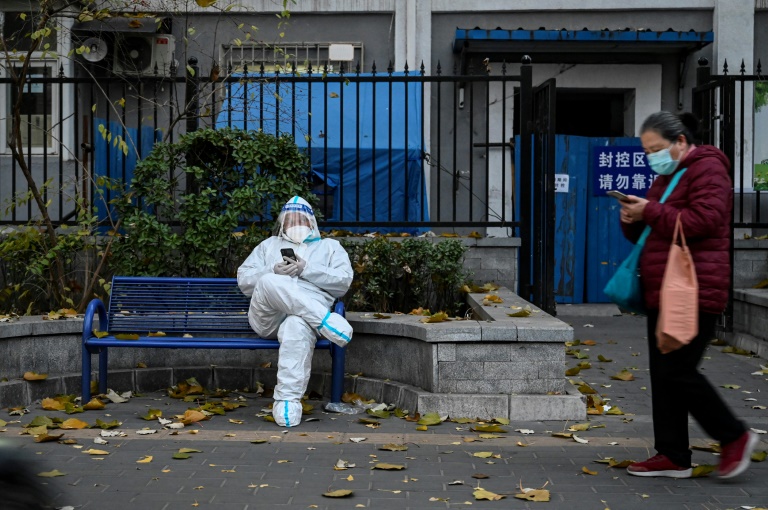
Schools and businesses closed, restaurants empty, and the fear of being locked down at any moment – the Chinese capital is a cauldron of dread and fatigue as Covid curbs tighten nearly three years into the pandemic.

As infections in Beijing surge, residents are increasingly fed up with navigating vague, shifting restrictions and exhausted by the uncertainty of how long they might last.

“I’m sick of everything now, there is no one on the street,” Elaine, an office worker in her twenties, said.

“I want to eat out and socialise with friends, but it’s impossible,” she told AFP.

One French expat living in Beijing was unexpectedly locked down in her boyfriend’s apartment Monday morning after staying the night — one of his neighbours got infected, causing the entire building to be sealed for five days.

“Every time we go to sleep, we’re not sure whether the next morning we’ll be trapped in our own apartment,” the woman, who asked to remain anonymous, said.

“The only thing we have left is the freedom to walk down the street and breathe fresh air.”

Testing queues now routinely stretch around blocks, while businesses struggle to manage often unclear red lines.

The fact that information often comes by word of mouth — oral instructions to close restaurants and businesses that are filtered through the sub-district or neighbourhood committee level — has only compounded the misery.

– Empty streets –

Beijing’s tightening restrictions come as the city is reporting its highest-ever number of daily infections, but at around 1,500 cases, the figures remain low by international standards.

And almost three years into the pandemic, the reaction by health officials appears out of proportion as the rest of the world has learned to live with the virus.

Residents fear a similar shutdown to the one that was imposed on China’s biggest city, Shanghai, in the spring, which led to food shortages, protests and scenes of chaos as people fled snap lockdowns. 

Beijing’s downtown shopping hub of Sanlitun, with its now-closed malls and Western boutiques, and the densely populated central business district of Chaoyang are deserted.

Hairdressers, spas and other services deemed not essential for daily living have also been closed.  

One former staffer at a Chaoyang gym left Beijing after her workplace closed down during an outbreak in May, the last time restrictions were this strict.

“The latest Covid wave has had a big impact on people’s lives, especially those working in the service sector and fitness enthusiasts,” the woman surnamed Xu told AFP.

“Random closures of some PCR testing booths have also affected people who need a 24-hour test result to go to work,” she added.

“Many of my former gym colleagues have left Beijing due to lack of salary.”

Meanwhile, in Dongcheng district, the capital’s historical heart, chock-full of imperial monuments and government ministries, restaurants are barricaded by tables laden with takeout bags.

A staffer at a noodle shop in the district surnamed Wang told AFP that profits had gone down “by 99 percent” since restaurants were ordered to offer only food for takeaway.

“We now only make a few hundred yuan through takeout deliveries per day,” he said.

“I hope the city reopens soon, otherwise we won’t be able to recoup the losses.”

Report lays bare Australia's 'sobering' climate challenge

Rising temperatures are fuelling widespread environmental degradation across Australia and supercharging natural disasters, according to a government report released Wednesday in the wake of flash floods on the country’s east coast.

The State of the Climate report found global warming was also slowly melting Australia’s fragile alpine regions while contributing to ocean acidification and rising sea levels. 

Climate researcher Ian Lowe said the report was a “frightening” wake-up call for Australia, which relies heavily on coal and gas exports for economic growth.  

“The scale of changes demonstrates that cleaning up our energy use is an urgent priority,” Lowe said. 

“We also need to reduce our exports of coal and gas.” 

The report, a joint effort between the government’s weather bureau and national science agency, found Australia’s climate had warmed by an average of 1.47 degrees Celsius since records began in 1910. 

Environment Minister Tanya Plibersek said it was “sobering” reading. 

“For our environment, for our communities, this report reinforces the urgent need for climate action,” she said. 

– ‘Record-breaking extremes’ –

Australia has in recent years experienced a series of extreme weather events linked to rising global temperatures. 

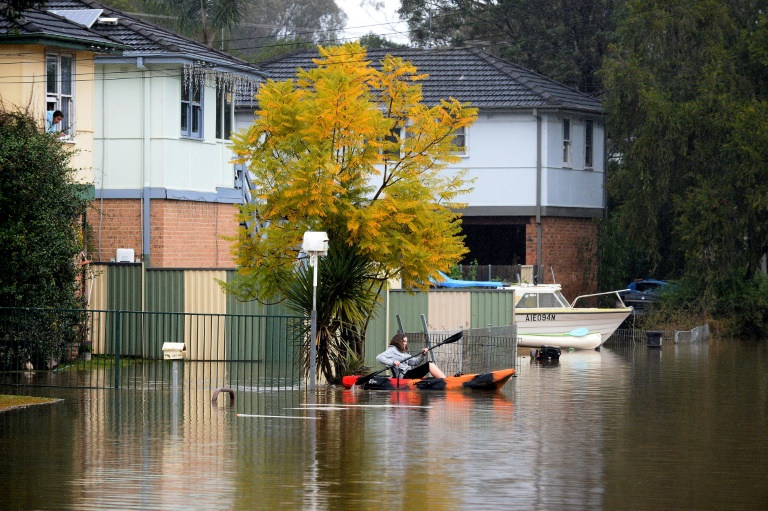
Flash floods swept through parts of inland New South Wales earlier this month, tearing entire homes from their foundations in some country towns.

Tens of thousands of Sydney residents were ordered to evacuate in July when floods swamped the city’s fringe.

An east coast flooding disaster in March — caused by heavy storms in Queensland and New South Wales — claimed more than 20 lives.

Catastrophic bushfires swept through huge chunks of New South Wales in the “Black Summer” of 2019 and 2020, while the Great Barrier Reef has suffered four separate mass coral bleaching events since 2016. 

“These changes are happening at an increased pace,” the State of the Climate report found. 

“The past decade has seen record-breaking extremes leading to natural disasters that are exacerbated by anthropogenic (human-caused) climate change.”

Prime Minister Anthony Albanese last week unveiled a bid to host the 2026 COP summit, seeking to repair Australia’s international reputation as a climate change laggard. 

Albanese’s centre-left government introduced a 2050 net zero emissions target following its election earlier this year but has faced calls domestically to do more. 

University of Melbourne climate scientist Andrew King said Australia needed to rapidly cut its carbon emissions. 

“The consequences of our continued use of fossil fuels are clear in Australia like elsewhere,” he said. 

“We must act quickly to decarbonise our economy to limit further damages from worsening extreme events.” 

Ailie Gallant from the Australia Centre of Excellence for Climate Extremes said the deterioration in the country’s climate would “continue without deep and aggressive cuts to carbon emissions”.

In US, inflation sparks tough Thanksgiving meal sacrifices

Sandra White normally has turkey for Thanksgiving dinner. But on Thursday, due to soaring inflation, she’s going to have fried chicken instead.

“It’s too expensive, too expensive,” the 70-year-old White, a resident of East Harlem, says of the traditional holiday bird. 

She asked her guests to bring other parts of the meal.

It’s the same story for fellow shopper Yeisha Swan, but she got lucky: one of her loved ones bought the family fowl, and she was able to cut costs on the side dishes, which for many are just as important as the main course.

“This is way less than what I would buy. I couldn’t get my ham…. I’m using canned collard greens. It’s different,” Swan, 42, tells AFP outside a New York supermarket.

Inflation is red-hot in the United States, reaching the highest levels in decades this year. And while some prices have eased in recent months, consumers say they are straining to handle their grocery bills — a tough blow at the holidays.

Compounding that problem is a bird flu outbreak that forced the culling of about 50 million poultry, including eight million turkeys, according to calculations based on US Department of Agriculture data.

Turkey costs 21 percent more in the United States than it did last year, according to the American Farm Bureau.

– ‘Had to really cut back’ –

The turkey is not the only component of a classic Thanksgiving meal that is more pricey. A Farm Bureau survey showed that cubed stuffing mix was 69 percent more expensive as compared with last year.

The only must-have with a price drop? Cranberries.

An average meal for 10 this year — including turkey, stuffing, peas, sweet potatoes, cranberries, carrots, rolls and pumpkin pie — will cost $64.05, or 20 percent more than in 2021, the Farm Bureau said.

“I just had to really cut back…. We used to have a party and we couldn’t do that for Thanksgiving,” says chef Jose Rodriguez. Instead of an open house for all of his loved ones, he will eat with his wife and their two dogs.

Although turkey prices have jumped, demand has not completely collapsed.

At Wendel’s Poultry Farm near Buffalo, New York — which emerged unscathed from the bird flu crisis — all 1,100 Thanksgiving turkeys were sold out. Customers can already place an order for a Christmas bird.

In order to make up for increasing costs of raw materials, Wendel’s hiked its prices by 22 percent, explains manager Cami Wendel.

Retail giant Walmart went in the opposite direction, offering its Thanksgiving basket, including a turkey, for the same price as last year. Its low prices have allowed it to make inroads in the grocery market since inflation took off.

Medical community frets over fate of Twitter

For days, doctors, scientists and public health experts have been telling their Twitter followers where to find them on other platforms if Elon Musk’s newly-acquired company tanks.

The social media giant symbolized by the blue bird has laid off half of its 7,500 employees, while several hundred others have resigned, creating doubts over its future.

Even if it survives, the unpredictability of the new boss has raised fears his policies could profoundly alter the character of the so-called digital town square.

That would be a deep loss for medical experts, who have used Twitter since the start of the Covid pandemic as a tool to quickly gather information, share their research, communicate public health messages and forge new collaborations.

The pandemic was a “tipping point for the use of social media as a primary resource for researchers,” Jason Kindrachuk, a virologist at the University of Manitoba in Canada, told AFP.

As the coronavirus began its global march in January 2020, researchers embarked on studies to understand how the virus spreads, its health effects, and how best to protect oneself. 

They shared findings immediately on Twitter to assist the wider medical community and an anxious public, often in the form of “preprints” — early versions of scientific papers before they are submitted to a journal.

“In the middle of a pandemic, the ability to rapidly share information is critical for knowledge translation and dissemination, and Twitter is able to do this in a way that is typically not feasible for textbooks or journals,” said a commentary published in the Canadian Journal of Emergency Medicine.

The process of peer review effectively took place in real time on Twitter, with scientists publicly sharing their interpretations and critiques of each new study.

Of course, there was also a downside: unworthy work received outsized attention, and non-specialists held forth on subjects far from their areas of expertise.

– International collaborations –

On the other hand, it was thanks to Twitter that experts from around the world were able to find one another easily and team up.

“There are people that I collaborate with now that have been based on interactions that were born out of Twitter,” said Kindrachuk, who has around 22,000 followers. 

“To think that that could change in the very near future, that to me does kind of bring some feelings of concern and regret.”

For example, it was the vital work of researchers from South Africa and Botswana that alerted the world to the dangerous Omicron variant in late 2021.

The loss of Twitter would be compounded by the fact it has long been frequented by experts of another profession: journalism.

“Because Twitter is a platform that is followed by a lot of journalists, it helps, there’s a feedback loop. It gets amplified,” explained Celine Gounder, an infectious disease specialist and epidemiologist with 88,000 followers.

She added she had moved a private Twitter discussion with a dozen colleagues to Signal, and started once more posting her thoughts to LinkedIn as well as the Post News platform.

Many experts have now put their handles on rival service Mastodon on their Twitter bios, or directed their followers to their newsletters on Substack.

If Twitter doesn’t work out, “we will all adapt, we will find other social media platforms,” said Kindrachuk. 

“But it will take time and unfortunately, infectious diseases don’t wait for us to find new mechanisms to communicate.”

Manchester United owners consider sale as Ronaldo exits

Manchester United’s owners said Tuesday they were ready to sell the club, potentially bringing down the curtain on an acrimonious 17 years under the Glazer family.

On a tumultuous day for the English giants, it was earlier revealed that star player Cristiano Ronaldo has left the club with “immediate effect.”

Weeks of turbulence appeared to have come to an end when United announced Ronaldo’s contract had been terminated by mutual agreement to bring to an end his second spell at Old Trafford.

That dramatic announcement was eclipsed just hours later by the news the US-based Glazer family could also be on their way out.

“The board will consider all strategic alternatives, including new investment into the club, a sale, or other transactions involving the company,” United said in a statement.

The Glazers have been unpopular with supporters ever since a £790 million ($934 million) leveraged takeover in 2005 burdened the club with huge debts.

Frustration towards the Americans has only grown during a nine-year decline in results on the pitch since Alex Ferguson’s retirement as manager in 2013.

The Red Devils have not won the Premier League title since Ferguson’s final campaign in 2012/2013 and have failed to win any trophy since 2017.

United currently sit fifth in the Premier League, 11 points behind leaders Arsenal.

“We will evaluate all options to ensure that we best serve our fans and that Manchester United maximizes the significant growth opportunities available to the club today and in the future,” added Avram and Joel Glazer, the club’s executive co-chairmen and directors.

The statement also recognised the need for investment in stadium redevelopment.

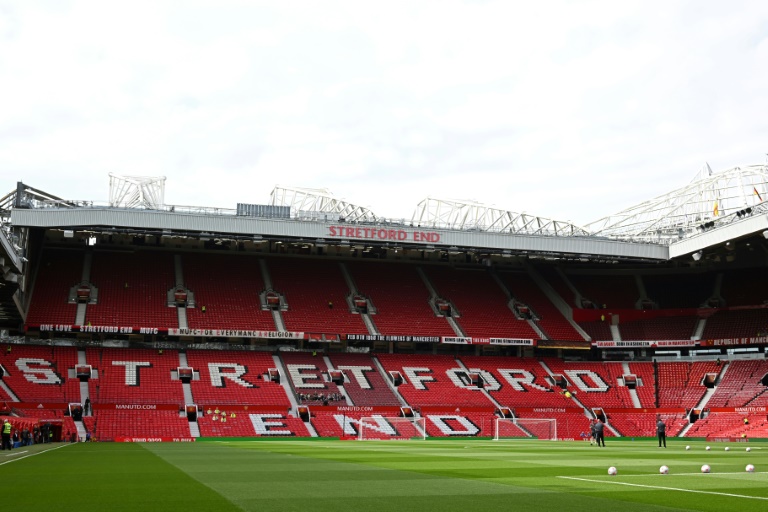
Old Trafford remains the largest club stadium in England with a capacity of 74,000 but has not had a significant upgrade since 2006.

– Ronaldo departs –

Erik ten Hag is the fifth permanent manager at Old Trafford in the past nine years and his early months in charge have been dominated by debate over Ronaldo’s place in the team.

The five-time Ballon d’Or winner had been used sparingly by the former Ajax boss in the Premier League.

Ronaldo reacted with an explosive interview on TalkTV last week in which he said he felt “betrayed” by the club and had no respect for Ten Hag.

The Portugal captain, who is currently competing in his fifth World Cup, also took aim at the Glazers, claiming they “don’t care about the club”.

“Cristiano Ronaldo is to leave Manchester United by mutual agreement, with immediate effect,” United said in an earlier statement.

“The club thanks him for his immense contribution across two spells at Old Trafford, scoring 145 goals in 346 appearances, and wishes him and his family well for the future.”

News of the Glazers inviting investment comes just weeks after Liverpool’s American owners, the Fenway Sports Group, indicated they were willing to sell.

Both United and Liverpool were involved in the failed European Super League (ESL) project that sought to create a US-style closed league format for Europe’s elite clubs without the need to qualify or promotion and relegation.

Amid a furious backlash to the ESL, a match between United and Liverpool was abandoned in May 2021 after supporters stormed the pitch at a time when fans were shut out of stadiums due to coronavirus restrictions.

Protests against the Glazers have continued to be common on matchdays at Old Trafford despite huge spending on player transfer fees and wages, including on Ronaldo’s homecoming.

In May, Premier League rivals Chelsea were sold for £2.5 billion ($3 billion), a record for a football club, to another American consortium led by Todd Boehly, with a further investment of £1.75 billion promised on the playing squad and infrastructure.

Looming freight train strike could derail Biden political momentum

Joe Biden faces the prospect of a crippling strike by railroad unions that could stall transport of fuel, corn and drinking water, dramatically complicate holiday season train travel, and dent the US president’s political standing.

If an agreement is not reached by December 9 at the latest, the world’s largest economy could see nearly 7,000 freight trains grind to a halt, at a cost of more than $2 billion a day, according to the American Association of Railroads.

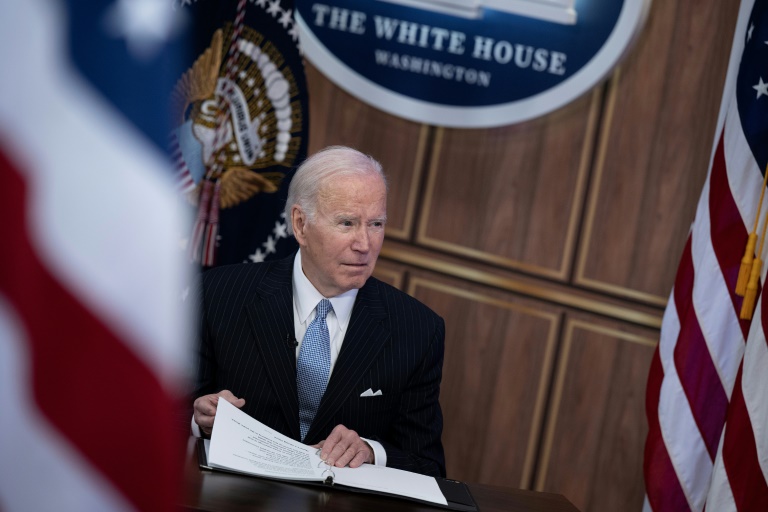
Biden himself has got “involved directly” in the negotiations aimed at averting a work stoppage, White House spokeswoman Karine Jean-Pierre said Tuesday.

“I don’t want to get into details at this time, but he has been involved,” she said.

In a country where some 28 percent of all goods are transported by rail, according to 2019 statistics, “a shutdown is unacceptable because of the harm… imposed on jobs, families, farms, businesses, and communities” nationwide, Jean-Pierre added.

A large-scale strike would affect multiple sectors, even the supply of drinking water, given than many of the chemicals used in treatment plants are transported by train.

A freight freeze would also impact passenger service, because some passenger trains run on tracks owned by freight companies.

The stoppage threat is the result of a complex negotiation involving members of 12 unions and their employers, with Biden weighing in to flex his political muscle.

– Too soon? –

The risk of a major labor dispute actually has existed for months, with the White House narrowly averting a strike in September.

In a self-congratulatory move, the president welcomed labor leaders to the Oval Office on September 15 to celebrate an agreement in principle, after hours of intense negotiations that had stalled in particular on the issue of sick leave.

Biden at the time went as far as to hail “a big win for America” during a speech in the Rose Garden.

The presidential celebration now appears premature. That agreement still required the ratification from members of the 12 unions in question, but four of the labor groups do not support it.

There are still two weeks to reach a deal. In the end, if only one of the unions goes on strike, the others will follow suit.

The impasse is a difficult one for Biden. He is a huge supporter of rail transportation who as a US senator traveled by train daily between Washington and his family living in the state of Delaware, and throughout his career has rarely missed an opportunity to express support for labor unions.

But with US inflation sky high, and holidays fast approaching, he can hardly afford such transport woes.

As the 79-year-old Democrat mulls a re-election bid in 2024, a rail strike could jeopardize the political momentum he has earned since the November 8 midterm elections, when his party averted major losses to Republicans.

One possibility is the intervention of Congress, which has the power under the 1926 Railway Labor Act to keep the railroads operating. 

Close Bitnami banner
Bitnami