World

Gazprom says Ukraine diverting Moldova gas supplies, threatens cuts

Russian energy giant Gazprom said Tuesday that Ukraine was diverting natural gas supplies transiting to Moldova and threatened to curtail deliveries through a key pipeline to Europe in response.

The allegations are the latest point of tension over energy deliveries between Kyiv, European capitals and Moscow, which has reduced consignments to Europe in response to Western sanctions over the conflict in Ukraine.

“The volume of gas supplied by Gazprom… for transit to Moldova via Ukraine is more than the physical volume transmitted at the border of Ukraine with Moldova,” Gazprom said in a statement.

The Saint Petersburg-based company said Ukraine had obstructed 52.52 million cubic metres from being delivered to Moldova and threatened cuts in response.

“If the transit imbalance through Ukraine for Moldovan consumers persists, on November 28, from 10:00, Gazprom will begin reducing gas supply” through a key transit point for deliveries to Europe, the company said.

Ukraine denied the allegations, saying that all the gas volumes bound to Moldovan consumers have been transferred “in the full amount”.

“By threatening to reduce the volumes of gas transportation to Moldova, Gazprom is trying to deprive this country of the opportunity to use the Ukrainian gas transmission system (GTS),” Ukraine GTS operator official Olga Bielkova said in a statement.

“This is not the first time Russia has resorted to using gas as an instrument of political pressure,” she said. 

“It manipulates facts to justify its decision to limit further the volume of gas supplies to European countries.”

The threats come at a precarious moment for energy security in Europe, which scrambled to fill gas storage sites ahead of winter.

Ukraine is suffering a severe energy crisis in the wake of weeks of persistent Russian strikes on its energy grid, which has also led to blackouts in neighbouring Moldova.

Chisinau’s pro-European president, Maia Sandu, has warned that her country of 2.6 million people nestled between Romania and conflict-scarred Ukraine risks running out of gas and electricity this winter.

Prince Andrew heckler will not be prosecuted: Crown Office

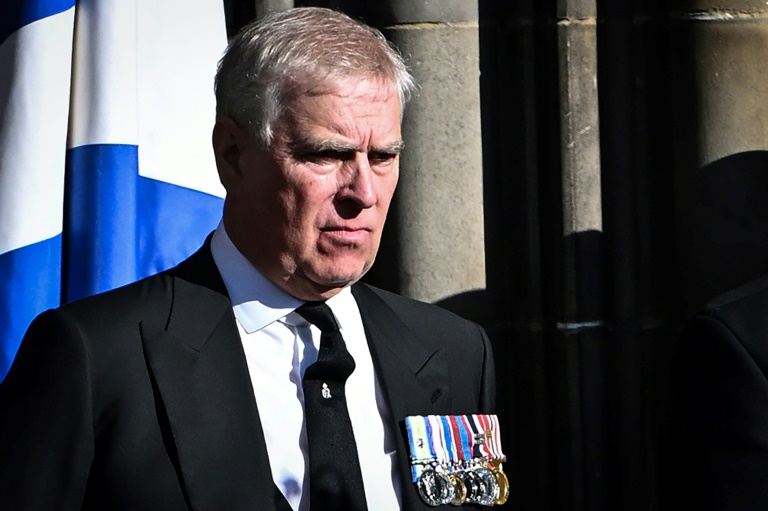
A 22-year-old man who heckled Prince Andrew as he walked behind his mother Queen Elizabeth II’s coffin in Edinburgh will not be prosecuted, the Crown Office said on Tuesday.

“After full and careful consideration of all facts and circumstances, the case was dealt with by way of an offer of an alternative to prosecution,” a spokesman said.

The incident occurred as Andrew, the queen’s second son, walked in the procession from the Palace of Holyroodhouse in Edinburgh to St Giles’ Cathedral on September 12. 

As it passed, a heckler called Andrew a “sick old man” in reference to his links to the American paedophile financier Jeffrey Epstein and claims of sex with a minor.

Andrew, who denied the claims, settled a US civil lawsuit over the allegations in February for an undisclosed sum.

The protester was then seen being bundled away by police. He was arrested shortly afterwards and charged with public order offences. 

Alternatives to prosecution can include warnings, work orders, fines and compensation orders.

But the Crown Office, which brings prosecutions in Scotland, said it could not say what alternative was used in this case.

Prosecutors also said no action would be taken against a woman who held an anti-monarchy sign before the formal declaration in Edinburgh that the queen’s son Charles was now king.

The woman, also aged 22, was arrested outside St Giles’ Cathedral on September 11.

“After careful consideration of the facts and circumstances of the case, including the available admissible evidence, the procurator fiscal decided that there should be no proceedings taken at this time,” the Crown Office said.

“The Crown reserves the right to proceed in the future if it is appropriate and in the public interest to do so.”

British police faced criticism from civil liberties groups for their treatment of anti-monarchy protesters challenging Charles’s automatic accession to the throne.

Other demonstrators during the official 10-day national mourning period for the queen were moved on and threatened with arrest.

The queen died aged 96 on September 8 at her Scottish Highland retreat of Balmoral after a year of declining health.

Suspended sentence sought for German ex-Nazi camp secretary

German prosecutors on Tuesday demanded a suspended sentence for a 97-year-old former Nazi concentration camp secretary in what they described as one of the country’s last trials over the Holocaust.

Public prosecutor Maxi Wantzen told a court in the northern town of Itzehoe that Irmgard Furchner was guilty of complicity in the “cruel and malicious murder” of more than 10,000 people at the Stutthof camp in occupied Poland.

She asked the judges to hand down a two-year suspended sentence, the longest possible without jail time. 

“This trial is of outstanding historical importance,” Wantzen said, adding that it was “potentially, due to the passage of time, the last of its kind”.

The first woman to be tried in Germany for Nazi-era crimes in decades, Furchner sat impassively in a wheelchair in the courtroom, wearing a red beret and jacket.

The court requested that media images of the defendant be blurred to protect her privacy.

She had tried to abscond as the trial was set to begin in September 2021, fleeing the retirement home where she lives and heading to a metro station.

Furchner managed to evade police for several hours before being apprehended in the nearby city of Hamburg and held in custody for five days.

The defendant was a teenager when her alleged crimes were committed and is hence being tried in juvenile court.

Lawyer Wolf Molkentin told AFP the sentencing request was “no surprise” and said his client did not plan to speak to the court before the verdict is announced.

– ‘Absolute hell’ –

The pensioner has declined to testify since her trial began last October, but several Stutthof camp survivors have offered wrenching accounts of their suffering.

Wantzen thanked the witnesses, many of whom are also serving as co-plaintiffs, saying they had told of the “absolute hell” of the camp.

“They feel it is their duty, even though they had to summon the pain again and again to fulfil it,” she said.

Between June 1943 and April 1945, Furchner worked in the office of camp commander Paul Werner Hoppe. According to the case against her, she took dictation of the SS officer’s orders and handled his correspondence.

An estimated 65,000 people died at the camp near today’s Gdansk, including “Jewish prisoners, Polish partisans and Soviet Russian prisoners of war”, Wantzen said in the indictment read out at the start of proceedings.

The prosecutor told the judges the defendant’s clerical work “assured the smooth running of the camp” and gave her “knowledge of all occurrences and events at Stutthof”.

Moreover, “life-threatening conditions” such as food and water shortages and the spread of deadly diseases including typhus were intentionally maintained and immediately apparent, she said.

Although the camp’s abysmal conditions and hard labour claimed the most lives, the Nazis also operated gas chambers and execution-by-shooting facilities to exterminate hundreds of people deemed unfit for labour.  

Wantzen said that despite the defendant’s advanced age, it was “still important today to hold such a trial”, and to complete the historical record as survivors die off.

– Hitler’s killing machine –

Seventy-seven years after the end of World War II, time is running out to bring to justice criminals linked to the Holocaust.

In recent years, several cases have been abandoned as the accused died or were physically unable to stand trial.

The 2011 conviction of former guard John Demjanjuk, on the basis that he served as part of Hitler’s killing machine, set a legal precedent and paved the way for several trials.

Since then, courts have handed down several guilty verdicts on those grounds rather than for murders or atrocities directly linked to the individual accused.

In June, a court in the eastern city of Brandenburg an der Havel sentenced a 101-year-old former Nazi concentration camp guard, the oldest person so far to go on trial for complicity in war crimes.

Josef Schuetz was found guilty of being an accessory to murder in at least 3,500 cases while working as a prison guard at the Sachsenhausen camp in Oranienburg, north of Berlin, between 1942 and 1945.

He was sentenced to five years in prison.

Migrant boat docks in Crete after dramatic rescue

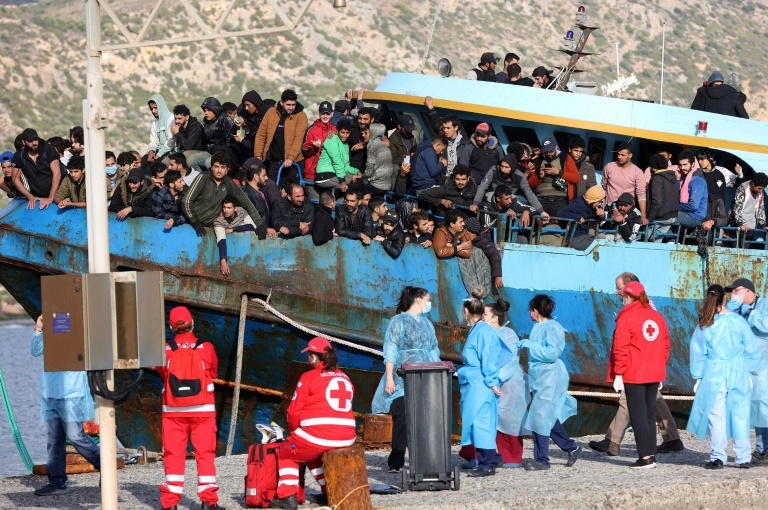
A rusty fishing boat carrying around 500 migrants docked at the Greek island of Crete on Tuesday after being dramatically rescued during near gale-force winds. 

An AFP photographer saw the banged-up vessel crammed with men, some of whom peered from holes cut into the hull, apparently to keep those in the hold from suffocating.

Hellenic Red Cross rescuers and health workers readied to help the passengers disembark and take them to the nearest hospital after the boat reached the small Cretan coastal town of Palaiochora.

“Approximately 500 migrants” were on board, tweeted Greek Migration Minister Notis Mitarachi.

“I will be asking the European Commission to activate relocations to other member states as part of EU solidarity,” the minister said.

State television ERT said the boat carried mostly asylum seekers from Egypt and Syria. A hundred children on board were allowed to disembark first for medical tests, it said.

The Greek coastguard said the migrants were safe and that the fishing boat had sent a distress call after midnight on Monday whilst sailing south of Crete. 

– Earlier rescue abandoned –

A Greek navy frigate, two cargo ships, a tanker and two Italian fishing boats were dispatched to assist the vessel that was adrift in winds of over 30 kilometres (19 miles) an hour, the coastguard said.

An earlier attempt to rescue the asylum seekers while the boat was still at sea had to be abandoned because of the weather conditions, it added.

Because of bolstered patrols by the Greek coastguard and EU border agency Frontex in the Aegean Sea, migrant smugglers embark increasingly on a longer and more perilous route south of Crete, Greek officials say.

“Eighty percent of flows from Turkey go straight to Italy,” Mitarachi told Skai TV last week.

Last month, a sailboat believed to have 95 people on board sank at the island of Kythira, south of the Peloponnese peninsula.

The boat went down beneath a huge vertical cliff. At least eight people died and survivors — mainly from Afghanistan, Iran and Iraq — were hauled to safety with ropes and a construction crane in a frantic pre-dawn operation.

Greece, Italy and Spain are among the countries used by people fleeing Africa and the Middle East in search of safety and better lives in the European Union. 

The Greek coastguard has said it has rescued about 1,500 people in the first eight months of the year, compared with less than 600 last year.

Dozens more have perished in sinkings over the last month.

The International Organization for Migration has recorded nearly 2,000 migrants killed and missing in the Mediterranean Sea this year.

hec-yap/jph/jm

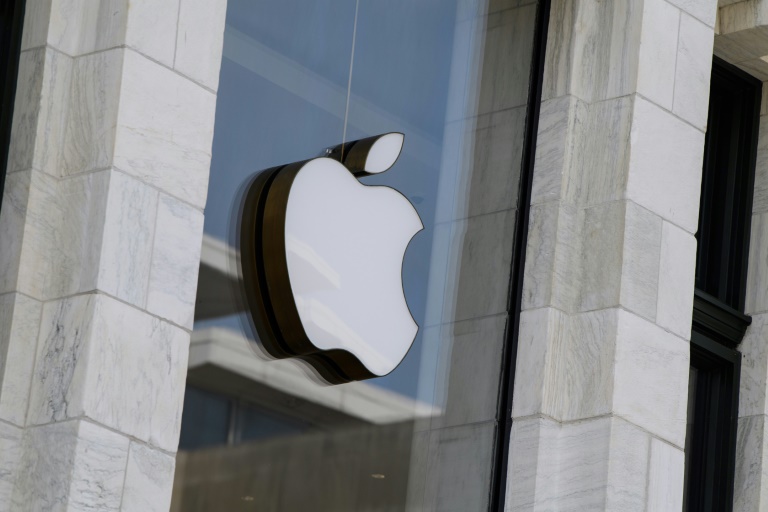
UK probes Apple, Google over cloud gaming, browsers

Britain launched Tuesday an in-depth competition probe into the domination of US tech giants Apple and Google of cloud gaming and mobile internet browsers.

The Competition and Markets Authority (CMA) regulator will investigate whether consumer choice is limited by the behaviour of the Silicon Valley pair, it said in a statement after an initial study earlier this year.

Apple and Google “have an effective duopoly on mobile ecosystems that allows them to exercise a stranglehold over operating systems, app stores and web browsers on mobile devices” to the detriment of competition, it said.

An overwhelming 97 percent of all mobile internet browsing in Britain took place using Apple or Google technology in 2021, the CMA added.

The watchdog will investigate “the way that Apple and Google dominate the mobile browser market and how Apple restricts cloud gaming through its App Store”.

Many UK companies and web developers argue that the status quo is harming their businesses, holding back innovation and adding costs, the regulator said.

“Ultimately, these restrictions limit choice and may make it more difficult to bring innovative new apps to the hands of UK consumers,” it added.

“At the same time, Apple and Google have argued that restrictions are needed to protect users.”

In reaction, an Apple spokesperson said it would “engage constructively” with the CMA probe but insisted that its approach “promotes competition and choice”.

Google stressed that it was committed to “thriving, open platforms that empower consumers and help developers build successful businesses”.

Charles III welcomes S.Africa's Ramaphosa in first state visit as king

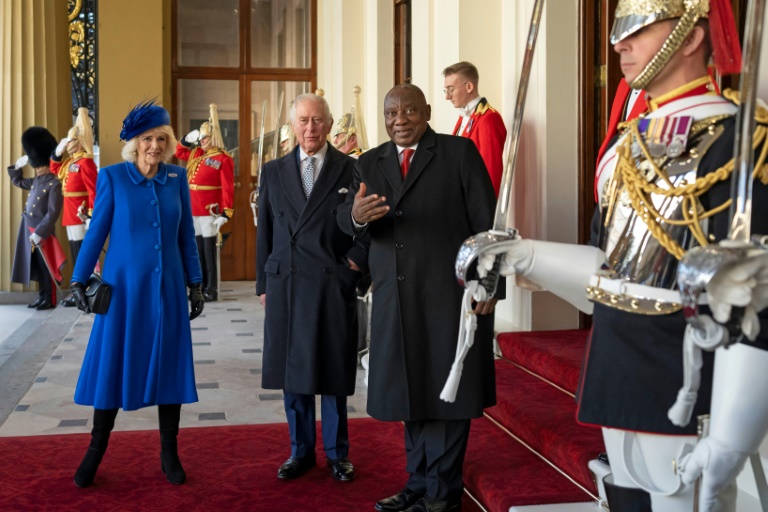
King Charles III on Tuesday welcomed South African President Cyril Ramaphosa to London for a milestone first state visit of his reign.

Gun salutes were fired across London as Charles and Queen Consort Camilla were joined by heir to the throne Prince William and his wife Catherine to greet Ramaphosa for a ceremonial welcome at Horse Guards Parade.

The monarch and Ramaphosa, both dressed in dark overcoats against the November chill, inspected the guard of honour together.

The parties then travelled to Buckingham Palace in a carriage procession escorted by mounted soldiers from the Household Cavalry.

The route along The Mall was decorated with the British and South African flags with the band of the Scots Guards playing the national anthems of both countries as the king and his guest arrived at the palace.

The two-day visit sees Charles finally presiding over proceedings after decades playing a supporting role to his mother Queen Elizabeth II, who died in September.

For Ramaphosa, a protege of anti-apartheid icon Nelson Mandela, however, it comes amid political difficulties and a threat of impeachment at home.

In the last state visit of Elizabeth’s record-breaking 70-year reign, the queen hosted US president Donald Trump and his wife Melania in June 2019.

Later in the day, Ramaphosa will visit parliament for an address to both the upper and lower houses.

A tour of Westminster Abbey will include the memorial stone for Mandela, who served as president of South Africa between 1994 and 1999. 

In the evening, Ramaphosa will attend a state banquet at Buckingham Palace.

Ramaphosa is also due to visit Downing Street for talks with Prime Minister Rishi Sunak.

– ‘Turbocharge growth’ –

At the start of the visit, the UK and South Africa governments announced the launch of the next phase of the UK-South Africa Infrastructure Partnership.

“South Africa is already the UK’s biggest trading partner on the continent, and we have ambitious plans to turbocharge infrastructure investment and economic growth together,” Sunak said.

Trade with South Africa, the continent’s second biggest economy, is worth £10.7 billion ($12.7 billion) a year.

Foreign Secretary James Cleverly said the choice of Ramaphosa for Charles’s first state visit was a sign of the UK’s “enduring commitment” to Africa, even as it eyes new partners in Asia post-Brexit.

But he added: “It’s important… that we also show that it’s not going to be at the expense of the incredibly important partnerships we have through the Commonwealth, through international fora, as well as the bilateral relationship (with South Africa).”

As well as trade, climate change and Charles’s vision for the Commonwealth are also expected to be discussed during the visit.

But political problems in South Africa threaten to cast a shadow over the ceremonial pomp and splendour of the state visit.

Ramaphosa is at risk of impeachment for allegedly covering up a crime, accused of concealing a multi-million-dollar cash theft.

He faces an accusation that he failed to report a heist at his luxury cattle farmhouse in which robbers took four million dollars in cash, and instead organised for the robbers to be kidnapped and bribed into silence.

He has faced calls to resign and the deeply divided ruling African National Congress (ANC) is due to hold a vote on its leadership in December.

The president has acknowledged a burglary but denies kidnapping and bribery, saying he reported the break-in to the police. 

South African lawmakers will discuss next month the findings of a special panel tasked with establishing whether Ramaphosa should face impeachment.

Charles III welcomes S.Africa's Ramaphosa in first state visit as king

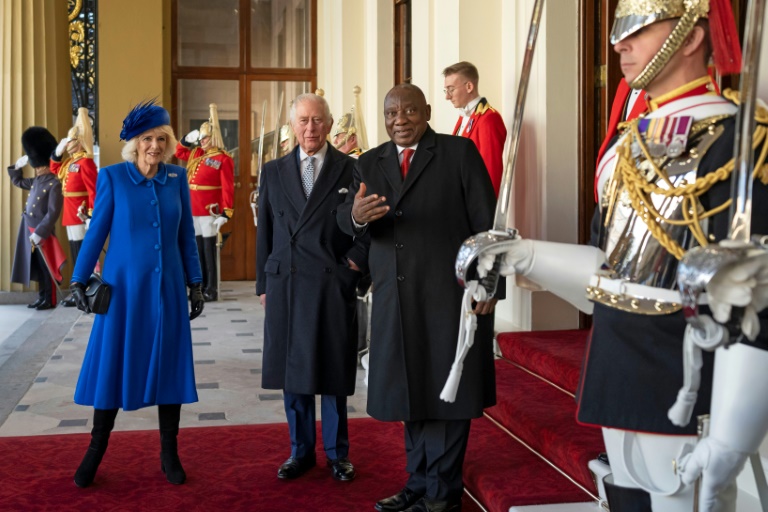
King Charles III on Tuesday welcomed South African President Cyril Ramaphosa to London for a milestone first state visit of his reign.

Gun salutes were fired across London as Charles and Queen Consort Camilla were joined by heir to the throne Prince William and his wife Catherine to greet Ramaphosa for a ceremonial welcome at Horse Guards Parade.

The monarch and Ramaphosa, both dressed in dark overcoats against the November chill, inspected the guard of honour together.

The parties then travelled to Buckingham Palace in a carriage procession escorted by mounted soldiers from the Household Cavalry.

The route along The Mall was decorated with the British and South African flags with the band of the Scots Guards playing the national anthems of both countries as the king and his guest arrived at the palace.

The two-day visit sees Charles finally presiding over proceedings after decades playing a supporting role to his mother Queen Elizabeth II, who died in September.

For Ramaphosa, a protege of anti-apartheid icon Nelson Mandela, however, it comes amid political difficulties and a threat of impeachment at home.

In the last state visit of Elizabeth’s record-breaking 70-year reign, the queen hosted US president Donald Trump and his wife Melania in June 2019.

Later in the day, Ramaphosa will visit parliament for an address to both the upper and lower houses.

A tour of Westminster Abbey will include the memorial stone for Mandela, who served as president of South Africa between 1994 and 1999. 

In the evening, Ramaphosa will attend a state banquet at Buckingham Palace.

Ramaphosa is also due to visit Downing Street for talks with Prime Minister Rishi Sunak.

– ‘Turbocharge growth’ –

At the start of the visit, the UK and South Africa governments announced the launch of the next phase of the UK-South Africa Infrastructure Partnership.

“South Africa is already the UK’s biggest trading partner on the continent, and we have ambitious plans to turbocharge infrastructure investment and economic growth together,” Sunak said.

Trade with South Africa, the continent’s second biggest economy, is worth £10.7 billion ($12.7 billion) a year.

Foreign Secretary James Cleverly said the choice of Ramaphosa for Charles’s first state visit was a sign of the UK’s “enduring commitment” to Africa, even as it eyes new partners in Asia post-Brexit.

But he added: “It’s important… that we also show that it’s not going to be at the expense of the incredibly important partnerships we have through the Commonwealth, through international fora, as well as the bilateral relationship (with South Africa).”

As well as trade, climate change and Charles’s vision for the Commonwealth are also expected to be discussed during the visit.

But political problems in South Africa threaten to cast a shadow over the ceremonial pomp and splendour of the state visit.

Ramaphosa is at risk of impeachment for allegedly covering up a crime, accused of concealing a multi-million-dollar cash theft.

He faces an accusation that he failed to report a heist at his luxury cattle farmhouse in which robbers took four million dollars in cash, and instead organised for the robbers to be kidnapped and bribed into silence.

He has faced calls to resign and the deeply divided ruling African National Congress (ANC) is due to hold a vote on its leadership in December.

The president has acknowledged a burglary but denies kidnapping and bribery, saying he reported the break-in to the police. 

South African lawmakers will discuss next month the findings of a special panel tasked with establishing whether Ramaphosa should face impeachment.

Battling inflation 'priority' as global growth slows: OECD

World economic growth is slowing due to decades-high inflation, the OECD said Tuesday, calling for “essential” further monetary policy tightening and “more targeted” government support.

Global GDP is set to grow 3.1 percent this year — nearly half the rate for last year, the Organization for Economic Co-operation and Development said.

The slide is due to continue next year, with global growth falling to 2.2 percent before rebounding “to a relatively modest 2.7 percent in 2024”, the Paris-based organisation said.

Amid the effects of Russia’s war in Ukraine, “growth has lost momentum, high inflation is proving persistent, confidence has weakened, and uncertainty is high”, it said in its latest forecasts.

“An end to the war and a just peace for Ukraine would be the most impactful way to improve the global economic outlook,” OECD secretary general Mathias Cormann said during a press conference.

OECD chief economist Alvaro Santos Pereira said in the report that the global economy was “reeling from the largest energy crisis since the 1970s”.

The energy shock has pushed inflation up “to levels not seen for many decades” and is hitting economic growth around the world, he added.

Inflation had already been on the rise before the conflict due to bottlenecks in the global supply chain after countries emerged from Covid lockdowns.

But the OECD said that inflation was set to reach eight percent in the fourth quarter of this year in the Group of 20 top economies, falling to 5.5 percent in 2023 and 2024.

Cormann said that inflationary pressure was decreasing, but urged central banks to press on with interest rates hikes.

– ‘Top policy priority’ – 

“We do expect inflation to gradually moderate as tighter monetary policy takes effect, demand and energy price pressures diminish over time and transport costs and delivery times continue to normalise,” he told reporters.

However, he stressed there remained the possibility that “economic activity may become even weaker if energy prices rise further or if energy disruptions affect gas and electricity markets in Europe and Asia”.

Fighting inflation is a “top policy priority”, the OECD said, as soaring prices erode people’s purchasing power worldwide.

“Our central scenario is not a global recession but a significant growth slowdown for the world economy in 2023, as well as still high, albeit declining, inflation in many countries,” Santos Pereira said.

The OECD recommended tightening monetary policy in countries where price rises remained high.

It also advocated targeted support for families and firms to avoid exacerbating inflationary pressures, with energy costs “likely to remain high and volatile for some time”.

“In these difficult and uncertain times, policy has once again a crucial role to play: further tightening of monetary policy is essential to fight inflation, and fiscal policy support should become more targeted and temporary,” the OECD said.

Cormann acknowledged that government support had helped cushion the impact of high energy costs for households and businesses.

But he said support needed to be “temporary and better targeted”.

“This would allow to minimise fiscal costs, focus on the most vulnerable and preserve the incentives to reduce energy consumption and boost investment in additional supplies,” he said.

The OECD called for such aid to be better targeted notably in France and Germany.

Europe’s biggest economy is expected to grow by just 1.8 percent this year, while for France, the OECD forecasts growth of 2.6 percent.

And in Britain, after the economic havoc under short-lived ex-prime minister Liz Truss, the OECD called on her successor Rishi Sunak’s government to ensure future budgetary targets were well defined and transparent to reduce concern about debt sustainability.

The 38-member group called for an acceleration in investment in adopting and developing clean energy sources and technology to help diversify supply.

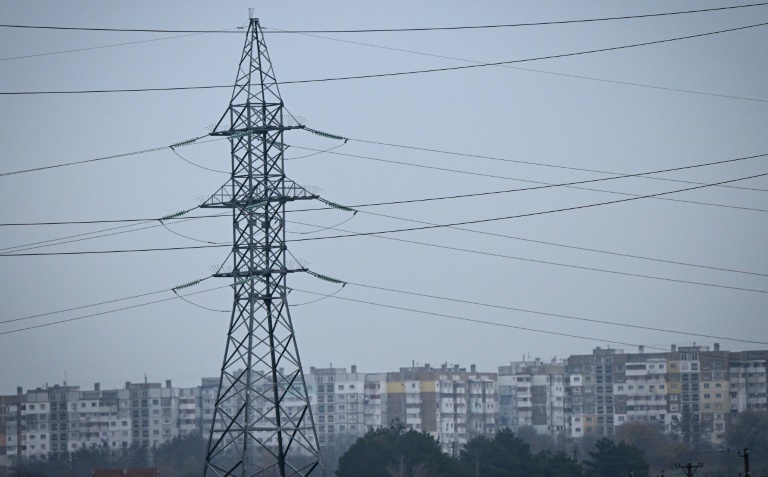
Gas and oil deliveries from major producer Russia have been severely disrupted following its invasion of Ukraine. Western allies sanctioned its energy exports and Russia slashed supplies in the stand-off over the conflict.

The upheaval has sent energy costs spiralling and fuelled decades-high inflation in major economies, leading central banks to hike interest rates in a bid to tame runaway prices.

Battling inflation 'priority' as global growth slows: OECD

World economic growth is slowing due to decades-high inflation, the OECD said Tuesday, calling for “essential” further monetary policy tightening and “more targeted” government support.

Global GDP is set to grow 3.1 percent this year — nearly half the rate for last year, the Organization for Economic Co-operation and Development said.

The slide is due to continue next year, with global growth falling to 2.2 percent before rebounding “to a relatively modest 2.7 percent in 2024”, the Paris-based organisation said.

Amid the effects of Russia’s war in Ukraine, “growth has lost momentum, high inflation is proving persistent, confidence has weakened, and uncertainty is high”, it said in its latest forecasts.

“An end to the war and a just peace for Ukraine would be the most impactful way to improve the global economic outlook,” OECD secretary general Mathias Cormann said during a press conference.

OECD chief economist Alvaro Santos Pereira said in the report that the global economy was “reeling from the largest energy crisis since the 1970s”.

The energy shock has pushed inflation up “to levels not seen for many decades” and is hitting economic growth around the world, he added.

Inflation had already been on the rise before the conflict due to bottlenecks in the global supply chain after countries emerged from Covid lockdowns.

But the OECD said that inflation was set to reach eight percent in the fourth quarter of this year in the Group of 20 top economies, falling to 5.5 percent in 2023 and 2024.

Cormann said that inflationary pressure was decreasing, but urged central banks to press on with interest rates hikes.

– ‘Top policy priority’ – 

“We do expect inflation to gradually moderate as tighter monetary policy takes effect, demand and energy price pressures diminish over time and transport costs and delivery times continue to normalise,” he told reporters.

However, he stressed there remained the possibility that “economic activity may become even weaker if energy prices rise further or if energy disruptions affect gas and electricity markets in Europe and Asia”.

Fighting inflation is a “top policy priority”, the OECD said, as soaring prices erode people’s purchasing power worldwide.

“Our central scenario is not a global recession but a significant growth slowdown for the world economy in 2023, as well as still high, albeit declining, inflation in many countries,” Santos Pereira said.

The OECD recommended tightening monetary policy in countries where price rises remained high.

It also advocated targeted support for families and firms to avoid exacerbating inflationary pressures, with energy costs “likely to remain high and volatile for some time”.

“In these difficult and uncertain times, policy has once again a crucial role to play: further tightening of monetary policy is essential to fight inflation, and fiscal policy support should become more targeted and temporary,” the OECD said.

Cormann acknowledged that government support had helped cushion the impact of high energy costs for households and businesses.

But he said support needed to be “temporary and better targeted”.

“This would allow to minimise fiscal costs, focus on the most vulnerable and preserve the incentives to reduce energy consumption and boost investment in additional supplies,” he said.

The OECD called for such aid to be better targeted notably in France and Germany.

Europe’s biggest economy is expected to grow by just 1.8 percent this year, while for France, the OECD forecasts growth of 2.6 percent.

And in Britain, after the economic havoc under short-lived ex-prime minister Liz Truss, the OECD called on her successor Rishi Sunak’s government to ensure future budgetary targets were well defined and transparent to reduce concern about debt sustainability.

The 38-member group called for an acceleration in investment in adopting and developing clean energy sources and technology to help diversify supply.

Gas and oil deliveries from major producer Russia have been severely disrupted following its invasion of Ukraine. Western allies sanctioned its energy exports and Russia slashed supplies in the stand-off over the conflict.

The upheaval has sent energy costs spiralling and fuelled decades-high inflation in major economies, leading central banks to hike interest rates in a bid to tame runaway prices.
European, US stocks up despite China Covid fears

European and US stocks rose and oil prices recovered from heavy losses on Tuesday despite fresh concern that China’s latest Covid-19 outbreaks could herald a global recession.

London, Paris and Frankfurt made modest progress in early afternoon deals after a mixed opening, while Wall Street opened in the green.

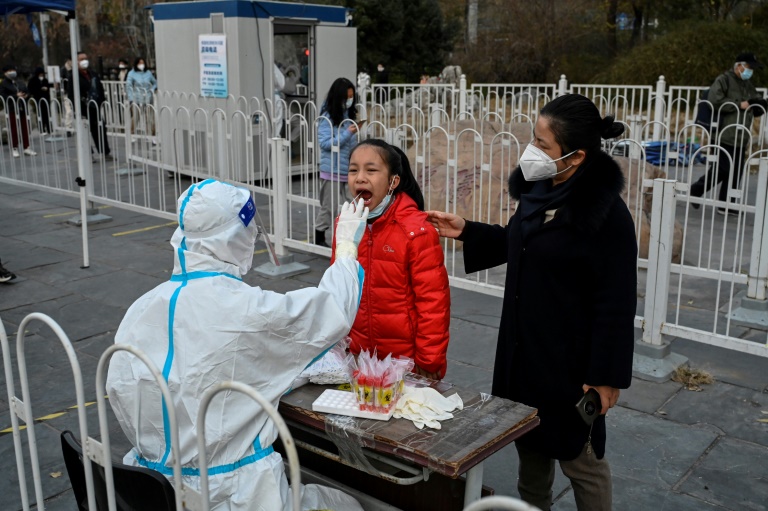
The optimism came after a mixed Asian showing, as worries grew over the economic fallout of Beijing’s efforts to contain rising infections in the world’s second-largest economy.

“China remains entirely polarising,” noted Stephen Innes of SPI Asset Management.

“Some investors are convinced that China’s reopening is a formality and will be catalysed by the WHO downgrading Covid to an endemic. We know China’s reopening will be laced with fits and starts,” he added.

“You cannot rule out more intermittent lockdowns in the near term, but in a more targeted way instead of widespread.”

Traders are fearful that Chinese authorities will revert to highly restrictive Covid containment measures that have already dealt a chilling blow to its economy this year.

“This isn’t just about China,” City Index analyst Fiona Cincotta told AFP. 

“Renewed crackdowns in the world’s second largest economy raise the prospect of a global recession.”

World oil prices also clawed back ground, having tumbled on Monday to lows unseen since January on forecasts of a hit to Chinese demand, although analysts warned the recovery could be limited.

“The upside potential is being limited by a general sense of uncertainty brought by China’s unclear demand prospects while also being impacted by the ongoing Russia-Ukraine conflict,” said Walid Koudmani, chief market analyst at XTB.

The dollar slid against main rivals ahead of minutes from the Federal Reserve’s latest policy meeting that saw it carry out another big hike to US interest rates.

Hopes that the central bank will begin to take its foot off the pedal were boosted earlier this month by figures showing US inflation slowed more than expected, suggesting a series of hikes were beginning to bite.

– ‘Serious headwinds’ –

The OECD forecast Tuesday that world economic growth will slow sharply from 3.1 percent this year to 2.2 percent next year on high inflation.

And it warned of “serious headwinds” including rising interest rates, surging energy prices and Russia’s war on Ukraine.

Global stock markets began November with a rally on easing inflation concerns and signs China was edging towards a looser approach to the disease.

However, the optimism has been given a massive jolt since the country announced its first virus deaths in six months.

Case numbers have surged across China, with residents in Beijing worried that a record number of new infections will lead to lockdown measures similar to those seen earlier in the year in Shanghai, which lasted for months.

The flare-ups came just a week after China said it would begin rolling back some of the strict Covid rules that have been in place since the pandemic started in 2020, even as the rest of the world has moved on.

– Key figures around 1430 GMT –

London – FTSE 100: UP 0.6 percent at 7,419.67 points

Paris – CAC 40: UP 0.2 percent at 6,649.79

Frankfurt – DAX: UP 0.3 percent at 14,421.25

EURO STOXX 50: UP 0.4 percent at 3,923.14

New York – Dow: UP 0.6 percent at 33,910.82

Tokyo – Nikkei 225: UP 0.6 percent at 28,115.74 (close)

Hong Kong – Hang Seng Index: DOWN 1.3 percent at 17,424.41 (close)

Shanghai – Composite: UP 0.1 percent at 3,088.94 (close)

Euro/dollar: UP at $1.0264 from $1.0242 on Monday

Dollar/yen: DOWN at 141.41 yen from 142.14 yen

Pound/dollar: UP at $1.1878 from $1.1823

Euro/pound: DOWN at 86.43 pence from 86.63 pence

Brent North Sea crude: UP 1.5 percent at $88.79 per barrel

West Texas Intermediate: UP 1.5 percent at $81.25 per barrel

Close Bitnami banner
Bitnami