World

European, US stocks up despite China Covid fears

Global stocks mostly rose Tuesday, shrugging off worries about inflation and the potential reinstatement of severe China Covid-19 restrictions ahead of the kickoff of the holiday shopping season.

London, Paris and Frankfurt closed in the green while Wall Street secured solid gains following a rally in beaten-down tech shares such as Facebook parent Meta and Google parent Alphabet that have lagged the broader market for much of 2022.

Briefing.com analyst Patrick O’Hare said Tuesday’s rally reflected “the vicissitudes of a holiday market” two days before the Thanksgiving break when there were few major economic indicators.

Analysts also cited good results from Best Buy and some other retailers which offered hope that a resilient American consumer will keep spending during the critical shopping season that begins on “Black Friday.”

But analysts continued to monitor the state of play in China, which over the weekend reported its first Covid-19 fatalities in months.

“Some investors are convinced that China’s reopening is a formality and will be catalysed by the WHO downgrading Covid to an endemic. We know China’s reopening will be laced with fits and starts,” said Stephen Innes of SPI Asset Management.

Traders are fearful that Chinese authorities will revert to highly restrictive Covid containment measures that have already dealt a chilling blow to its economy this year. 

“Renewed crackdowns in the world’s second largest economy raise the prospect of a global recession,” City Index analyst Fiona Cincotta told AFP.

World oil prices also clawed back ground, having tumbled on Monday to lows unseen since January, with the rebound attributed in part to the Saudi Arabian denial of a report of a possible OPEC production boost.

The dollar slid against main rivals ahead of minutes from the Federal Reserve’s latest policy meeting that saw it carry out another big hike to US interest rates.

Hopes that the central bank will begin to take its foot off the pedal were boosted earlier this month by figures showing US inflation slowed more than expected, suggesting a series of hikes were beginning to bite.

The OECD forecast Tuesday that world economic growth will slow sharply from 3.1 percent this year to 2.2 percent next year on high inflation.

And it warned of “serious headwinds” including rising interest rates, surging energy prices and Russia’s war on Ukraine.

Among individual companies, Manchester United soared 14.7 percent following a Sky News report that the team’s US-based owners, the Glazer family, could sell the venture.

The report came as the team announced that Portuguese star Cristiano Ronaldo was leaving the club immediately following a broadcast interview in which he sharply criticized the Glazer family.

Late Tuesday, Manchester United released a statement saying its board is “commencing a process to explore strategic alternatives for the club,” including a possible sale.

– Key figures around 2200 GMT –

New York – Dow: UP 1.2 percent at 34,098.10 (close)

New York – S&P 500: UP 1.4 percent at 4,003.58 (close)

New York – Nasdaq: UP 1.4 percent at 11,174.84 (close)

London – FTSE 100: UP 1.0 percent at 7,452.84 (close)

Paris – CAC 40: UP 0.4 percent at 6,657.53 (close)

Frankfurt – DAX: UP 0.3 percent at 14,422.35 (close)

EURO STOXX 50: UP 0.5 percent at 3,929.90 (close)

Tokyo – Nikkei 225: UP 0.6 percent at 28,115.74 (close)

Hong Kong – Hang Seng Index: DOWN 1.3 percent at 17,424.41 (close)

Shanghai – Composite: UP 0.1 percent at 3,088.94 (close)

Euro/dollar: UP at $1.0305 from $1.0242 on Monday

Dollar/yen: DOWN at 141.20 yen from 142.14 yen

Pound/dollar: UP at $1.1886 from $1.1823

Euro/pound: UP at 86.66 pence from 86.63 pence

Brent North Sea crude: UP 1.0 percent at $88.36 per barrel

West Texas Intermediate: UP 1.1 percent at $80.95 per barrel
French regulator approves state bid to renationalise power giant

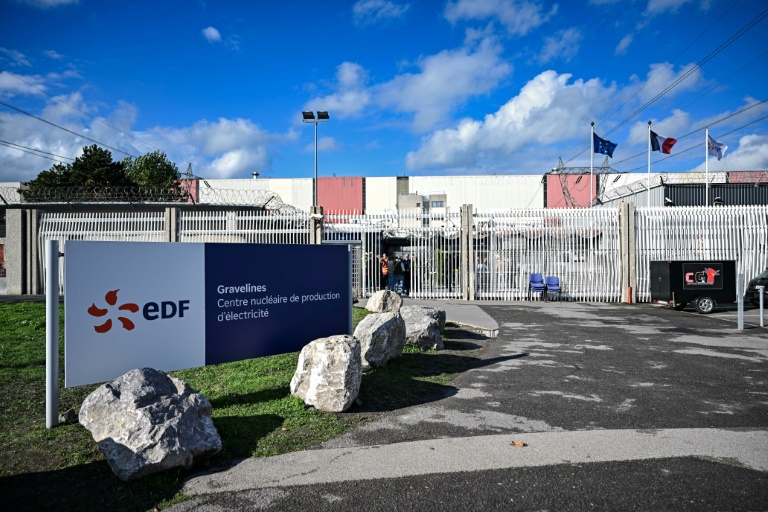
France’s financial markets regulator on Tuesday approved the state’s plan to fully control heavily indebted national power utility EDF that is to spearhead efforts to relaunch the French nuclear industry.

The French state, which already owns 84 percent of EDF, filed a takeover offer with the regulator in October with a view to acquiring the remaining capital at 12 euros ($12) per share.

The Financial Markets Authority (AMF) in a Tuesday statement said the offer complied with stock market rules.

The acquisition of the shares is due to take place up to December 8. If the French state takes its holding to 90 percent, it can force other shareholders to sell.

The entire takeover operation is expected to cost 9.7 billion euros.

The French government in July signalled its intention to fully reabsorb EDF, which could be saddled with a record debt of 60 billion euros by the end of the year.

It wants to build six new-generation nuclear reactors with an option to acquire eight others, with the strategic full acquisition of EDF aiming to send a signal of confidence.

France relies heavily on nuclear power for its electricity generation, but its oldest reactors are reaching the end of their service lives.

EDF’s efforts to build a new generation of nuclear power plants have faced massive delays and cost overruns, with some of its facilities unavailable due to corrosion problems, scheduled maintenance and strikes.

A price shield that protects French consumers from excessively high energy price hikes has also contributed to its financial struggles.

Small shareholders, mostly former and current staff, have disputed the takeover bid, asking for at least 15 euros per share, but their legal action has so far been unsuccessful.

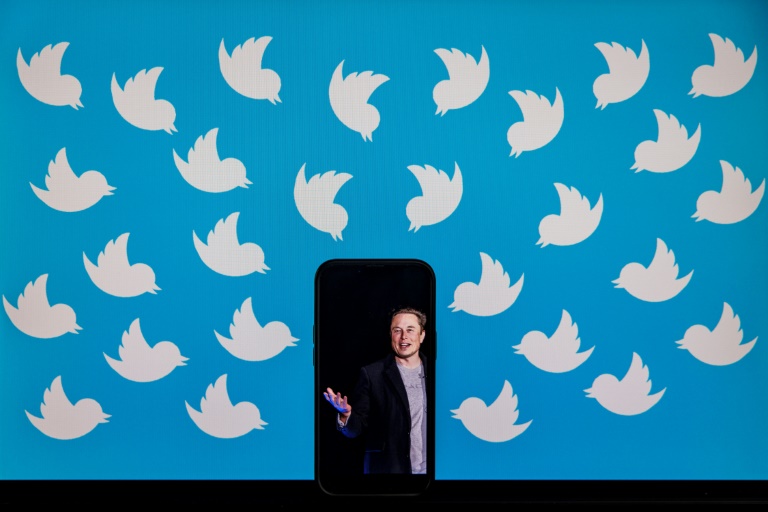
'Hardcore' Musk drives into a culture clash at Twitter

After snapping up Twitter, one of Silicon Valley’s most iconic companies, Elon Musk swiftly introduced his no-holds-barred work ethic, setting up a bitter culture clash with thousands of workers who still believed in the platform’s higher mission.

In less than a month, Musk sacked half the company’s 7,500 employees, axed executives and engineers who disagreed with him and finally imposed an ultimatum: work “extremely hardcore” or leave. 

The style is reminiscent of what Musk pushed through at Tesla, SpaceX and his other companies, where the multi-billionaire drove his teams hard, seeing their personal sacrifice as the key to success. 

After an initial willingness to wait and see, Musk’s style has proved disconcerting in a company culture that valued ethics and a strong sense of community, even when worked hard.

“I have the impression that Musk really likes humanity but not so much humans,” said Emmanuel Cornet, a software engineer who was among the first to be fired from the social media company after the acquisition on October 27.

Before that, he’d been one of the many employees genuinely curious to see the successful entrepreneur at work, despite his propensity for provocation that has delighted so many of his fans.

“I think we had blinkers on. Most of the employees tried to give him the benefit of the doubt for as long as possible, and also because finding another job is not necessarily easy,” he said.

But Musk, beyond the big smiles and enthusiastic declarations, has lived up to his reputation, with those remaining having no choice but to give their job their all.

“His behavior is still of the bully on the playground, firing anyone who tells him he’s wrong,” said Sarah Roberts, a social media professor at UCLA. “Any kind of criticism with his wildly inaccurate … statements gets you fired.”

– No ‘respect’ –

Cornet was particularly shocked by what he called a lack of respect from the richest man in the world. 

“In the long term, objectively, he seems to be trying to help the planet, with electric cars, in particular,” he said. “But the people around him seem disposable.”

Musk brings “this kind of swashbuckling bravado from being an entrepreneur interested in things like rockets and cars and big hardware that has impressive performance and really wows people,” said John Wihbey, a media professor at Northeastern University.

“The Twitter culture is much more low key. It has a politically progressive, geeky, pro-social vibe,” he said.

The libertarian entrepreneur has long had close ties with Silicon Valley, where he co-founded Tesla.

But he has since disavowed politically liberal California, railing against health restrictions during the pandemic and becoming a hero to conservative libertarians online. 

At the end of 2021, he moved the headquarters of his flagship company to Texas, a majority conservative state. 

Twitter was founded by Jack Dorsey, who “is very much this kind of Zen guru, sort of a spiritual seeker vibe,” said Wihbey.

Employees of the network were “proud to work there”, he said. “They really believed in the product.”

Cornet worked 14 years at Google before going to Twitter, two groups which, at the time, did not seem “obsessed with profits.” 

“The sense of community at Twitter is so strong it continues after” the layoffs, he said with admiration. Ex-employees gather on Discord, WhatsApp, signal and other platforms to support each other and be nostalgic.

– ‘Badge of honor’ –

Many former “tweeps” said they were okay with working hard, but not just for bombastic promises, like “building a revolutionary Twitter 2.0”, and at the mercy of brutal decision-making. 

When an employee asked during a meeting about the risk of attrition, Musk replied that he had no “great answer.” 

“I can tell you what works at Tesla is people being in the office and being hardcore,” he said.

The mercurial leader abhors work from home –- which is very popular with computer engineers –- and loves to tell how he slept on site at Tesla when his company was “on the verge of bankruptcy.” 

“He was able to drive things hard at Neuralink, Tesla, or Solar City because they had technologies that were on the frontier or, in the case of Tesla, far enough ahead of most other commercial automakers. He has a highly committed workforce there,” said Jeffrey Sonnenfeld, professor at Yale University. 

At Twitter, on the other hand, the massive layoffs, the new culture of coercion and Musk’s “whims” are not likely to rally the staff, said Sonnenfeld, a specialist in corporate governance. 

“At this stage,” said Sarah Roberts, “for many it’s a badge of honor to have been fired by Elon.”

'A bucket of ice water': Argentina cries after World Cup defeat

Gasps gave way to stony expressions of disbelief, and then tears, as Argentina fans gathered in Buenos Aires watched the humiliation of their football team unfold at the World Cup in Qatar.

“It was a walloping, a bucket of ice-cold water,” Carlos Cuera, 26, said of the 2-1 loss to Saudi Arabia. 

He was still seated in front of a cafe television where fans decked out in their team’s white-and-blue colors gathered from before 7:00 am for the breakfast match in the Argentine capital.

“Nobody expected this. We thought the first three matches would be easy victories, and now it has become more complicated,” he said, adding the loss had ramped up pressure ahead of Saturday’s duel with Mexico.

It was one of the greatest upsets in World Cup history for Lionel Messi’s Argentina side, ending a winning streak that included last year’s Copa America championship.

The proud, football-crazed nation entered the World Cup among the favorites, eight years after they reached the final.

But Buenos Aires quickly resumed its normal hustle and bustle as desolate fans headed to their offices.

In central Corrientes Street, not far from the city’s towering Obelisk, one cafe had set up a screen on the sidewalk, prompting deliverymen, taxis, and even bus drivers to slow as they passed — hoping for another goal.

Pilates instructor Lena Widgren, 50, said she had heard it would be “an easy game.”

But she had noticed that whenever Argentina is faced with a tie or a loss in a World Cup match, “their energy levels drop a bit, they lack fire.”

The day started better than it ended. Fans leaped from their chairs, screaming with joy, when Messi scored from the penalty spot in the 10th minute.

“I feel very sad, really. The game started with such euphoria, with so much desire to win, and suddenly the game turned around,” said Llanca Salvi, a 26-year-old plastic artist, who added that she did not know much about football. 

But it was about “the emotion of being Argentine, of going out to celebrate”.

– Second half of ‘terror’-

Fans joined in with a cascade of insults when three first-half goals were canceled for being offside, with VAR involved. Norberto Protzmann told AFP he sat in “terror” during the second half.

“We underestimated them a little too much and they dominated us in the second half,” he said.

“The players were too confident, whereas the rival team put their lives into each move, because they knew they were facing a great team. And it worked well for them.”

Gustavo Leal, 75, complained about the use of VAR, saying, “football with technology is no longer football”. 

“This World Cup needs (Diego) Maradona,” he said, referring to the Argentine great who died in 2020.

But he remained optimistic.

“The first match is as hard as the last. I trust him,” he said of coach Lionel Scaloni, adding he was a “measured guy who knows how to lead the team”.

Now, all eyes are on Saturday’s game against Mexico, to see whether the team can turn their fortunes around.

“Mexico is a very difficult team and it has always been difficult for Argentina,” said Protzmann.

“If we don’t put our lives into each play, we won’t win, especially against Mexico.”

UK says monkeypox vaccine is '78% effective'

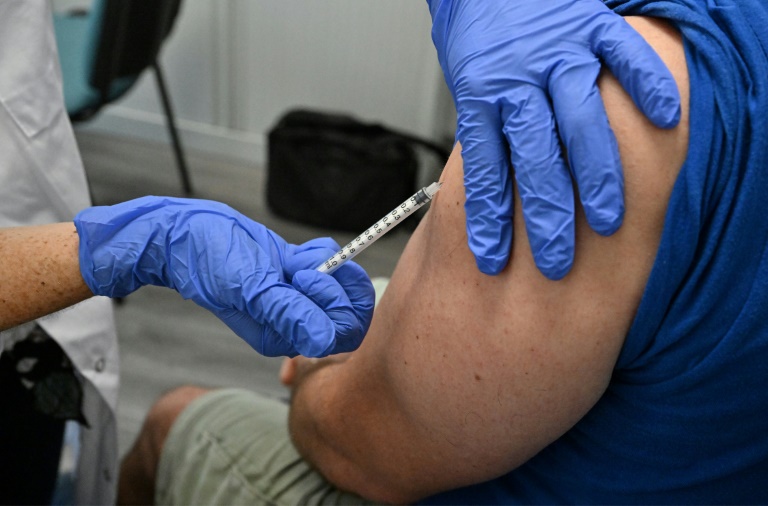
UK public health officials on Tuesday said the monkeypox vaccine was 78 percent effective, urging men who have sex with men to take up the jab.

The UK Health Security Agency said its latest analysis “gives an estimate of vaccine effectiveness for a single dose of 78 percent 14 or more days after vaccination”.

It described the findings as “the strongest UK evidence yet” for the jab’s effectiveness.

Denmark’s Bavarian Nordic is the only laboratory manufacturing a licensed vaccine against monkeypox, called MVA-BN. 

It said last week it had signed a deal to supply European nations with up to two million doses of the jab.

More than 55,000 vaccine doses have been administered in England, NHS national director of vaccinations and screening Steve Russell said.

“We now know just how effective the vaccine is, offering 78 percent protection against the virus from just one dose.”

The latest monkeypox outbreak started spreading around the world in May and peaked in July.

The UKHSA said its findings were based on analysis of 363 monkeypox cases between July and November in England. 

Most cases have been among gay and bisexual men and others who have sex with men. Of those who caught the virus, 323 had not been vaccinated.

“We now know that a single vaccine dose provides strong protection against monkeypox, which shows just how important vaccination is to protect yourself and others,” said Jamie Lopez-Bernal, a consultant epidemiologist at UKHSA.

“A second dose is expected to offer even greater and longer lasting protection,” he added.

The UK has had 3,570 confirmed cases of monkeypox, which causes fever, muscular aches and large boil-like skin lesions.

European, US stocks up despite China Covid fears

European and US stocks rose and oil prices recovered from heavy losses on Tuesday despite fresh concern that China’s latest Covid-19 outbreaks could herald a global recession.

London, Paris and Frankfurt closed in the green while Wall Street was also up even as worries grew over the economic fallout of Beijing’s efforts to contain rising infections in the world’s second-largest economy.

“China remains entirely polarising,” noted Stephen Innes of SPI Asset Management.

“Some investors are convinced that China’s reopening is a formality and will be catalysed by the WHO downgrading Covid to an endemic. We know China’s reopening will be laced with fits and starts,” he added.

“You cannot rule out more intermittent lockdowns in the near term, but in a more targeted way instead of widespread.”

Traders are fearful that Chinese authorities will revert to highly restrictive Covid containment measures that have already dealt a chilling blow to its economy this year. 

“Renewed crackdowns in the world’s second largest economy raise the prospect of a global recession,” City Index analyst Fiona Cincotta told AFP.

Craig Erlam, senior market analyst at OANDA trading platform, cautioned that this week “may just be a void in an otherwise turbulent year” thanks to a lack of major events and the US Thanksgiving public holiday.

World oil prices also clawed back ground, having tumbled on Monday to lows unseen since January on forecasts of a hit to Chinese demand, although analysts warned the recovery could be constrained.

“The upside potential is being limited by a general sense of uncertainty brought by China’s unclear demand prospects while also being impacted by the ongoing Russia-Ukraine conflict,” said Walid Koudmani, chief market analyst at XTB.

Erlam added that the rejection by OPEC+ members of reports they would boost oil production aided the commodity’s rally.

The dollar slid against main rivals ahead of minutes from the Federal Reserve’s latest policy meeting that saw it carry out another big hike to US interest rates.

Hopes that the central bank will begin to take its foot off the pedal were boosted earlier this month by figures showing US inflation slowed more than expected, suggesting a series of hikes were beginning to bite.

– ‘Serious headwinds’ –

The OECD forecast Tuesday that world economic growth will slow sharply from 3.1 percent this year to 2.2 percent next year on high inflation.

And it warned of “serious headwinds” including rising interest rates, surging energy prices and Russia’s war on Ukraine.

Global stock markets began November with a rally on easing inflation concerns and signs China was edging towards a looser approach to the disease.

However, the optimism has been given a massive jolt since the country announced its first virus deaths in six months.

Case numbers have surged across China, just a week after it said it would begin rolling back some of the strict Covid rules that have been in place since the pandemic started in 2020.

– Key figures around 1630 GMT –

London – FTSE 100: UP 1.0 percent at 7,452.84 points (close)

Paris – CAC 40: UP 0.4 percent at 6,657.53 (close)

Frankfurt – DAX: UP 0.3 percent at 14,422.35 (close)

EURO STOXX 50: UP 0.5 percent at 3,929.90

New York – Dow: UP 0.8 percent at 33,959.30

Tokyo – Nikkei 225: UP 0.6 percent at 28,115.74 (close)

Hong Kong – Hang Seng Index: DOWN 1.3 percent at 17,424.41 (close)

Shanghai – Composite: UP 0.1 percent at 3,088.94 (close)

Euro/dollar: UP at $1.0271 from $1.0242 on Monday

Dollar/yen: DOWN at 141.43 yen from 142.14 yen

Pound/dollar: UP at $1.1865 from $1.1823

Euro/pound: DOWN at 86.55 pence from 86.63 pence

Brent North Sea crude: UP 1.5 percent at $88.80 per barrel

West Texas Intermediate: UP 1.5 percent at $81.22 per barrel

European, US stocks up despite China Covid fears

European and US stocks rose and oil prices recovered from heavy losses on Tuesday despite fresh concern that China’s latest Covid-19 outbreaks could herald a global recession.

London, Paris and Frankfurt closed in the green while Wall Street was also up even as worries grew over the economic fallout of Beijing’s efforts to contain rising infections in the world’s second-largest economy.

“China remains entirely polarising,” noted Stephen Innes of SPI Asset Management.

“Some investors are convinced that China’s reopening is a formality and will be catalysed by the WHO downgrading Covid to an endemic. We know China’s reopening will be laced with fits and starts,” he added.

“You cannot rule out more intermittent lockdowns in the near term, but in a more targeted way instead of widespread.”

Traders are fearful that Chinese authorities will revert to highly restrictive Covid containment measures that have already dealt a chilling blow to its economy this year. 

“Renewed crackdowns in the world’s second largest economy raise the prospect of a global recession,” City Index analyst Fiona Cincotta told AFP.

Craig Erlam, senior market analyst at OANDA trading platform, cautioned that this week “may just be a void in an otherwise turbulent year” thanks to a lack of major events and the US Thanksgiving public holiday.

World oil prices also clawed back ground, having tumbled on Monday to lows unseen since January on forecasts of a hit to Chinese demand, although analysts warned the recovery could be constrained.

“The upside potential is being limited by a general sense of uncertainty brought by China’s unclear demand prospects while also being impacted by the ongoing Russia-Ukraine conflict,” said Walid Koudmani, chief market analyst at XTB.

Erlam added that the rejection by OPEC+ members of reports they would boost oil production aided the commodity’s rally.

The dollar slid against main rivals ahead of minutes from the Federal Reserve’s latest policy meeting that saw it carry out another big hike to US interest rates.

Hopes that the central bank will begin to take its foot off the pedal were boosted earlier this month by figures showing US inflation slowed more than expected, suggesting a series of hikes were beginning to bite.

– ‘Serious headwinds’ –

The OECD forecast Tuesday that world economic growth will slow sharply from 3.1 percent this year to 2.2 percent next year on high inflation.

And it warned of “serious headwinds” including rising interest rates, surging energy prices and Russia’s war on Ukraine.

Global stock markets began November with a rally on easing inflation concerns and signs China was edging towards a looser approach to the disease.

However, the optimism has been given a massive jolt since the country announced its first virus deaths in six months.

Case numbers have surged across China, just a week after it said it would begin rolling back some of the strict Covid rules that have been in place since the pandemic started in 2020.

– Key figures around 1630 GMT –

London – FTSE 100: UP 1.0 percent at 7,452.84 points (close)

Paris – CAC 40: UP 0.4 percent at 6,657.53 (close)

Frankfurt – DAX: UP 0.3 percent at 14,422.35 (close)

EURO STOXX 50: UP 0.5 percent at 3,929.90

New York – Dow: UP 0.8 percent at 33,959.30

Tokyo – Nikkei 225: UP 0.6 percent at 28,115.74 (close)

Hong Kong – Hang Seng Index: DOWN 1.3 percent at 17,424.41 (close)

Shanghai – Composite: UP 0.1 percent at 3,088.94 (close)

Euro/dollar: UP at $1.0271 from $1.0242 on Monday

Dollar/yen: DOWN at 141.43 yen from 142.14 yen

Pound/dollar: UP at $1.1865 from $1.1823

Euro/pound: DOWN at 86.55 pence from 86.63 pence

Brent North Sea crude: UP 1.5 percent at $88.80 per barrel

West Texas Intermediate: UP 1.5 percent at $81.22 per barrel

UK public finances worsen, as OECD warns on outlook

UK state borrowing jumped last month, official data showed Tuesday, as the government cushions consumers from soaring energy bills which the OECD said could further push up inflation.

Public sector net borrowing hit £13.5 billion ($16 billion) in October, up from £9.2 billion a year earlier, the Office for National Statistics said in a statement.

It came as the Organisation for Economic Co-operation and Development forecast the UK economy would contract more than any of the world’s seven most advanced nations next year.

The organisation added that the government’s cap on energy bills could have been better targeted, placing the focus on the poorest.

“Better targeting of measures to cushion the impact of high energy prices would lower the budgetary cost, better preserve incentives to save energy, and reduce the pressure on demand at a time of high inflation,” the OECD concluded.

The organisation added that the UK economy would contract 0.4 percent next year.

This was a more positive verdict, however, compared to the UK government which predicts output to shrink 1.4 percent in 2023 in a recession it says is already underway.

– Inflation fallout –

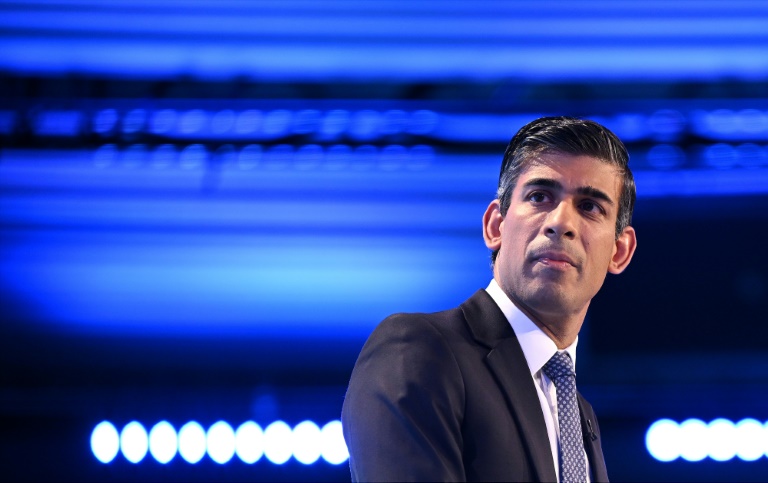
Despite the bleak outlook, Prime Minister Rishi Sunak’s spokesman on Tuesday said that UK growth this year would be the highest of the Group of Seven countries.

The government and OECD both see UK growth of above four percent this year.

Current economic challenges “are affecting different countries at slightly different times”, the spokesman said.

“We emerged from the pandemic faster than many other countries in Europe. But some of these challenges are shared… You only have to look at inflation.”

Official data released Tuesday showed “October’s high borrowing figure largely is a consequence of the government’s decision to shield households from most of the surge in energy prices”, noted Pantheon Macro analyst Samuel Tombs.

Sunak’s Conservative government has maintained subsidies for household energy bills introduced by his predecessor Liz Truss after prices rocketed in the wake of Ukraine’s invasion by key producer Russia.

UK inflation stands at a four-decade high above 11 percent, resulting in more higher interest repayments for the government.

Data Tuesday showed that total UK debt rose in October to almost £2.46 trillion, or 97.5 percent of gross domestic product.

“It is right that the government increased borrowing to support millions of businesses and families,” finance minister Jeremy Hunt said in response to the latest release on public finances.

“But to tackle inflation and ensure the economic stability needed for long-term growth, it is vital that we put the public finances back on a more sustainable path.”

In a budget last week, Hunt hiked taxes and slashed spending to reverse Truss’s unfunded tax cuts that had sent the pound sliding and UK borrowing costs surging.

Keir Starmer, leader of Britain’s main opposition party Labour, told business leaders Tuesday that his party would “give Britain the clear economic leadership it needs” if elected in the next general election not due until 2024.

“We will inherit an economy that’s been damaged by the last 12 weeks and the last 12 years, and we need to fundamentally accept that,” he told the annual conference of the Confederation of British Industry.

Shock in France over murder of tax inspector

The French government on Tuesday expressed shock after a tax inspector was stabbed to death as he was trying to audit the books of a business owner in the north of the country. 

The murder victim, a 43-year old civil servant for the tax authorities, was found dead on Monday, killed “most likely by repeated stabbing”, the prosecutors’ office in the northern French city of Arras said.

The suspected killer, a 46-year-old antiquities dealer, was then believed to have killed himself with a firearm, it said.

The suspect, described by the local mayor as “an ordinary guy”, locked up the tax inspector and a female colleague during a tax audit of his business, and tied them up, it said.

The Arras chief prosecutor, Sylvain Barbier Sainte-Marie, told reporters Tuesday that the presumed killer may have planned the murder well ahead of the agents’ visit.

Police had found clamps used to tie up the agents “which were probably purchased before the act”, according to the prosecutor.

“Early evidence seems to point to a premeditated act,” he said.

Budget Minister Gabriel Attal said earlier that “the republic is weeping for one of its own”, calling it “revolting” that a public servant was killed “because he did his job”.

The inspector arrived Monday afternoon at the antique dealer’s home, accompanied by a colleague, to check his accounts.

Attal said usually agents were sent on tax check missions on their own, but this time there was backup because there had been tensions during previous visits to the antique dealer’s business.

Prosecutors said the businessman tied them up and stabbed the inspector, leaving the colleague “terribly shocked” but otherwise unharmed.

A union for tax officials said the case showed that its members had a “potentially dangerous” job.

The dealer, a divorced father of two, moved four years ago to the hamlet of Bullecourt, its mayor Eric Bianchin told AFP.

He bought a farm from where he sold bric-a-brac which he picked up at auctions and yard sales around the area.

He was “an ordinary guy”, the mayor said, describing him as “helpful, and well-integrated in the village” of some 250 people.

A neighbour, Geoffrey Fournier, described the presumed killer as “discreet” and “apparently hard-working”, whose business “seemed to be doing OK”.

The French parliament observed a minute of silence in memory of the tax inspector.

On Wednesday there will be ceremonies in regional tax centres in his honour, Attal said.

burs/jh/rox

Gazprom says Ukraine diverting Moldova gas supplies, threatens cuts

Russian energy giant Gazprom said Tuesday that Ukraine was diverting natural gas supplies transiting to Moldova and threatened to curtail deliveries through a key pipeline to Europe in response.

The allegations are the latest point of tension over energy deliveries between Kyiv, European capitals and Moscow, which has reduced consignments to Europe in response to Western sanctions over the conflict in Ukraine.

“The volume of gas supplied by Gazprom… for transit to Moldova via Ukraine is more than the physical volume transmitted at the border of Ukraine with Moldova,” Gazprom said in a statement.

The Saint Petersburg-based company said Ukraine had obstructed 52.52 million cubic metres from being delivered to Moldova and threatened cuts in response.

“If the transit imbalance through Ukraine for Moldovan consumers persists, on November 28, from 10:00, Gazprom will begin reducing gas supply” through a key transit point for deliveries to Europe, the company said.

Ukraine denied the allegations, saying that all the gas volumes bound to Moldovan consumers have been transferred “in the full amount”.

“By threatening to reduce the volumes of gas transportation to Moldova, Gazprom is trying to deprive this country of the opportunity to use the Ukrainian gas transmission system (GTS),” Ukraine GTS operator official Olga Bielkova said in a statement.

“This is not the first time Russia has resorted to using gas as an instrument of political pressure,” she said. 

“It manipulates facts to justify its decision to limit further the volume of gas supplies to European countries.”

The threats come at a precarious moment for energy security in Europe, which scrambled to fill gas storage sites ahead of winter.

Ukraine is suffering a severe energy crisis in the wake of weeks of persistent Russian strikes on its energy grid, which has also led to blackouts in neighbouring Moldova.

Chisinau’s pro-European president, Maia Sandu, has warned that her country of 2.6 million people nestled between Romania and conflict-scarred Ukraine risks running out of gas and electricity this winter.

Close Bitnami banner
Bitnami