World

Kosovo pauses controversial Serbian car plate scheme

Kosovo’s prime minister, accused by Brussels of scuppering talks to resolve a row over a scheme to replace Serbian numberplates, said on Tuesday he had delayed the plan for two days.

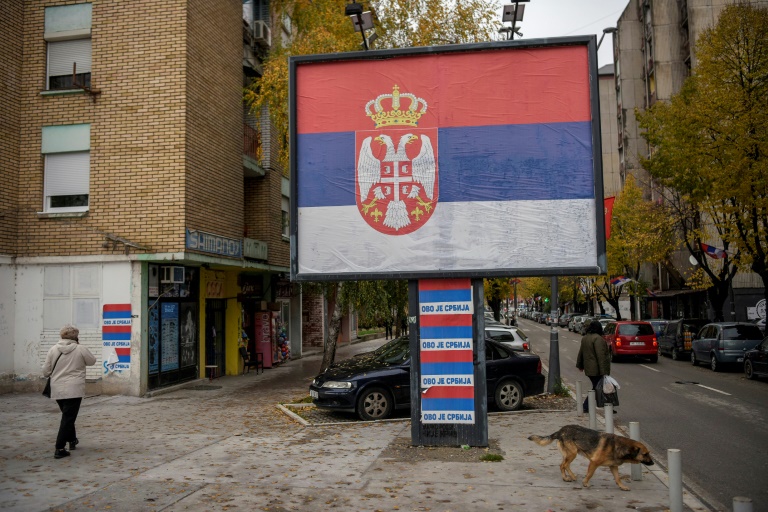
The dispute erupted after Kosovo said the country’s ethnic Serbs would be penalised if they did not swap vehicle licence plates issued by Serbia for registration numbers issued by Pristina.

The underlying source of tension is Kosovo’s 2008 declaration of independence from Serbia. The latter does not recognise the move and has encouraged Kosovo’s Serb minority to remain loyal to Belgrade.  

Kosovar Prime Minister Albin Kurti said on Twitter early on Tuesday he had accepted a request from Washington “for a 48-hour postponement of the introduction of fines” for cars with Serbian plates.

The delay helped calm tensions in northern Kosovo, a day after EU-mediated negotiations between Belgrade and Pristina over the potentially explosive scheme failed to produce results.

“I am happy to work with the US and the EU to find a solution during the next two days,” Kurti tweeted.

The dispute has sounded alarm bells in the European Union, which has been seeking to normalise ties between Serbia and Kosovo and wants both to refrain from provocative gestures.

The US ambassador to Kosovo, Jeffrey Hovenier, also voiced concern over the failure to resolve the number plate row, which has the potential to trigger a regional crisis.

In the latest development this month, Serbs in northern Kosovo resigned from public institutions in protest over the scheme. 

Of Kosovo’s 120,000-strong minority, around 10,000 have Serbia-issued car registrations.

– Cooling-off period –

Washington had requested the two-day delay “to allow the EU and the United States to further engage the parties to find a solution”, Hovenier tweeted.

Police had been due to start issuing 150-euro ($154) fines to cars with Serbian plates from 8:00 am (0700 GMT) on Tuesday. A total ban is to come into force in April 2023.

The EU’s top diplomat, Josep Borrell, on Monday hosted negotiations in Brussels between Kurti and Serbian President Aleksandar Vucic.

Afterwards, Borrell said Vucic had been ready to accept an EU compromise proposal “that could have avoided this risky situation” but Kurti had not.  

Returning to Belgrade, Vucic said the situation was on the “verge of conflict”.

“There is an enormous anger among the Serbs in northern Kosovo,” he said in a public address. He added he would ask the latter to “try to preserve peace”.

Borrell urged Pristina not to implement its licence plate law and Belgrade not to issue new plates bearing Kosovar city initials. He said a cooling-off period would allow time and space for diplomacy to resume.  
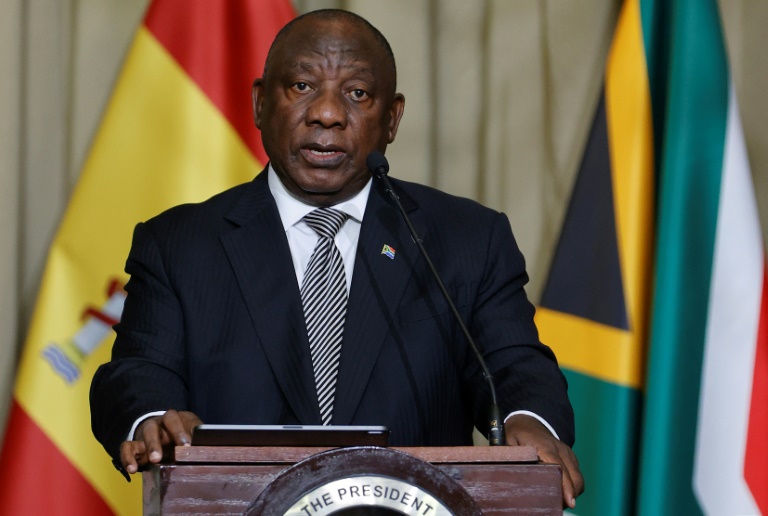
S.Africa's Ramaphosa leads in two-horse race for ANC president

South African President Cyril Ramaphosa is firmly ahead in the race for head of the ruling African National Congress (ANC), garnering more than twice as many party nominations as his challenger, according to a tally issued Tuesday.

Ramaphosa, 70, has polled 2,037 nominations from party branches against 916 for his rival Zweli Mkhize, 66, an ex-health minister who resigned amid graft allegations, the party said.

“These are the two names nominated for position of (party) president,” Kgalema Motlanthe, former president of South Africa and head of the ANC’s electoral panel, told a news conference in Johannesburg.

The ANC, the party of Nelson Mandela, spearheaded the fight against apartheid and has governed South Africa since the advent of democracy in 1994.

It is due to hold a conference between December 16 and 20 to elect the party’s top leadership.

Whoever wins is likely to be the head of state after the 2024 national elections, if the ANC wins that vote.

Party branch nominations are indicative of the outcome, as the votes will be cast in person by branch representatives on the first day of the conference.

Ramaphosa is seeking a second term at the helm after succeeding his scandal-tainted boss, former president Jacob Zuma, in 2018.

His bid comes despite the risk of possible impeachment for allegedly covering up a 2020 crime.

Parliament will debate on December 6 as to whether he should answer allegations that he concealed a multi-million-dollar cash theft at his farm.

Analysts have said Ramaphosa stands a reasonable chance of staying on as ANC leader despite the controversy.

Iran says starts enriching uranium to 60% at Fordo plant

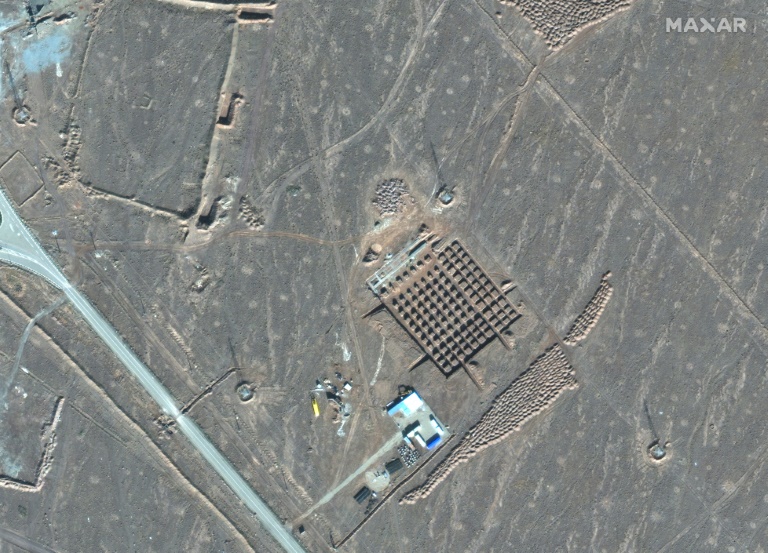
Iran said Tuesday it had begun producing uranium enriched to 60 percent at its Fordo plant, an underground facility that reopened three years ago amid the breakdown of its nuclear deal with major powers.

The move was part of Iran’s response to the UN nuclear watchdog’s adoption last week of a censure motion drafted by Western governments accusing it of non-cooperation.

“Iran has started producing uranium enriched to 60 percent at the Fordo plant for the first time,” Iran’s ISNA news agency reported, a development then confirmed by Atomic Energy Organisation of Iran chief Mohammad Eslami.

An atomic bomb requires uranium enriched to 90 percent, so 60 percent is a significant step towards weapons-grade enrichment.

Iran has always denied any ambition to develop an atomic bomb, insisting its nuclear activities are for civilian purposes only.

Under a landmark deal struck in 2015, Iran agreed to mothball the Fordo plant and limit its enrichment of uranium to 3.67 percent, sufficient for most civilian uses, as part of a package of restrictions on its nuclear activities aimed at preventing it covertly developing a nuclear weapon.

In return, major powers agreed to relax sanctions they had imposed over Iran’s nuclear programme.

But the deal began falling apart in 2018 when then US president Donald Trump pulled Washington out of the agreement and reimposed crippling economic sanctions.

– Protests cloud nuclear talks –

The following year, Iran began stepping away from its commitments under the deal. It reopened the Fordo plant and starting enriching uranium to higher levels. 

In January 2021, Iran said it was working to enrich uranium to 20 percent at Fordo. Several months later another Iranian enrichment plant reached 60 percent.

President Joe Biden has expressed a desire for Washington to return to a revived deal and on-off talks have been underway since April last year.

Secretary of State Antony Blinken said late last month that he saw little scope to restore the deal, as Iran battles nationwide protests sparked by the September death in morality police custody of Mahsa Amini, a 22-year-old Kurdish woman.

The heavily protected Fordo plant around 180 kilometres (110 miles) south of Tehran was built deep underground in a bid to shield it from air or missiles strikes by Iran’s enemies.

Arch foe Israel has never ruled out military action if it deems it necessary to prevent Iran developing a nuclear weapons capability.

Israel is widely suspected to hold the region’s sole if undeclared nuclear arsenal, although it has consistently refused to confirm or deny that it is nuclear-armed.

– Response to IAEA censure –

The implementation of the 2015 deal was overseen by the International Atomic Energy Agency but the UN watchdog’s relations with Iran have declined sharply in recent months.

The IAEA board of governors passed a resolution on Thursday criticising Iran for its lack of cooperation.

“We warned that political pressure and resolutions wouldn’t change anything and that the adoption of a resolution would draw a serious response,” said Eslami.

“That’s why the production of uranium enriched to 60 percent began at Fordo from Monday.”

The ISNA news agency said that the step at Fordo was one part of Iran’s response.

“As well, in a second action in response to the resolution, Iran injected (uranium hexafluoride) gas into two IR-2m and IR-4 cascades at the Natanz plant,” it said, referring to an older enrichment facility.

The UN watchdog has been pressing Iran to explain the discovery of traces of nuclear material at three sites it had not declared, a key sticking point that led to the adoption of an earlier censure motion by the IAEA in June.

In a report seen by AFP earlier this month, the IAEA said Iran’s stockpile of enriched uranium stood at 3,673.7 kilogrammes as of October 22, a decrease of 267.2 kilogrammes from the last quarterly report.

This included significant stockpiles of uranium enriched to higher levels — 386.4 kilogrammes to 20 percent and 62.3 kilogrammes to 60 percent.

The IAEA complains that the ability of its inspectors to monitor Iran’s stepped up nuclear activities has been hampered by restrictions imposed by Iran.

Ukraine raids monastery over suspected Russia links

Ukraine’s security service said Tuesday it had raided a historic Orthodox monastery in Kyiv over suspected links to Russian agents.

The Kremlin denounced the searches as the latest chapter in Kyiv’s “war” against the Russian church.

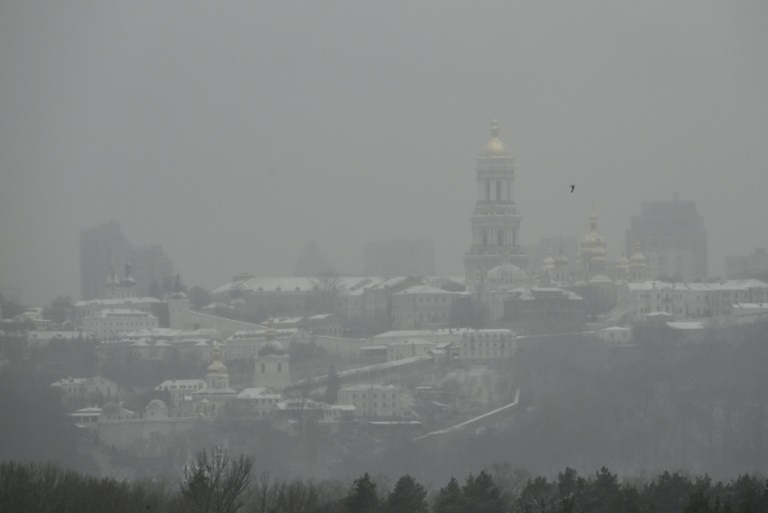
Located south of the city centre, the 11th century Kyiv Pechersk Lavra is a UNESCO World Heritage site and seat of a branch of Ukraine’s Orthodox Church that was formerly under Moscow’s jurisdiction.

It cut ties with Russia soon after President Vladimir Putin invaded Ukraine.

The SBU security service said in a statement that “counter-intelligence measures” were carried out as part of work to “counter the subversive activities of the Russian security services in Ukraine”.

The intention was to prevent the site being a “centre of the ‘Russian world'” or used to hide “sabotage and intelligence groups” and to store weapons, the statement added.

Early Tuesday, a police car was parked outside the Lavra, its roof and glistening golden domes covered with snow, an AFP reporter saw.

Armed officers were seen carrying out ID checks and searching the bags of worshippers before letting them inside.

“Ukraine has long been at war with the Russian Orthodox Church,” Kremlin spokesman Dmitry Peskov told reporters.

“We could see this as yet another link in the chain of these military actions against Russian Orthodoxy.”

A spokesman for the Russian Orthodox Church denounced the searches as an “act of intimidation” against Ukrainian worshippers.

“We pray for our fellow believers… who are becoming victims of lawlessness and we call on all sympathetic people to do everything possible to stop this persecution,” Vladimir Legoyda said on social media.

The SBU said in a separate statement that “security measures” were carried out Tuesday at two other monasteries and the diocese in the region of Rivne in northwest Ukraine.

Russia lost multiple Ukrainian parishes in 2019, when a historic schism fuelled by the Kremlin’s land grab of Crimea and backing of a separatist insurgency in eastern Ukraine led to the creation of the Kyiv Patriarchate of the Orthodox Church.

W.Africa, European partners strengthen ties against Sahel jihadists

West African nations met with European leaders on Tuesday for talks on preventing jihadist conflict in the Sahel from spilling over into countries on the Gulf of Guinea.

Coastal states Ghana, Benin, Togo and Ivory Coast face increasing threats and attacks from Islamist militants across their northern borders in Burkina Faso and Niger.

The summit in Ghana’s capital Accra comes as more Western nations have withdrawn peacekeepers from Mali after its military junta strengthened cooperation with Russia.

Under the so-called Accra Initiative, heads of state from the Gulf of Guinea, Niger and Burkina Faso are meeting with representatives from the West African bloc ECOWAS, the EU, Britain and France.

“This is basically strengthening our efforts to be able to fight against terrorism and terror-related activities,” Palgrave Boakye-Danquah, Ghana’s government spokesman on governance and security, told AFP.

The Sahel conflict began in northern Mali in 2012, spread to Burkina Faso and Niger in 2015 and now states on the Gulf of Guinea are suffering sporadic attacks.

Ghana has beefed up security along its northern frontier and has so far escaped any cross-border attacks.

But Benin and Togo in particular have faced threats from across northern borders with Burkina Faso.

Benin has recorded 20 incursions since 2021 while Togo has suffered at least five attacks, including two deadly assaults, since November 2021.

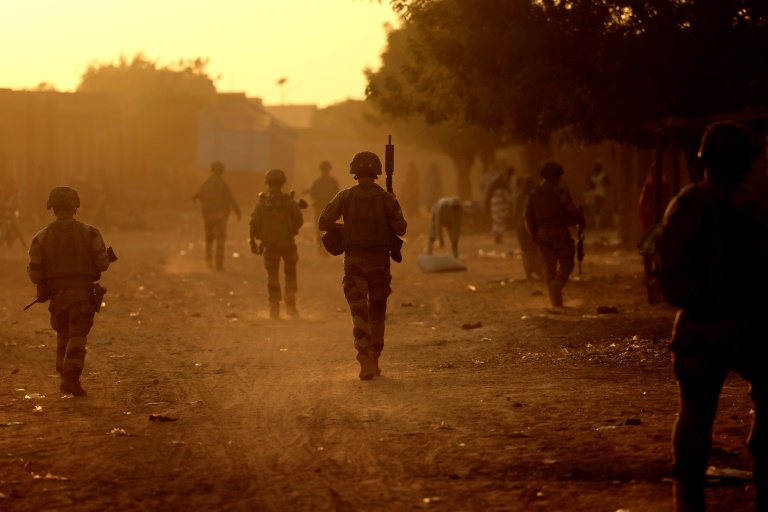
French and other peacekeeping missions had been operating in Mali for almost a decade as a bulwark against the spread of violence.

But after two coups in Mali, the military junta increased cooperation with Moscow and allowed what Western countries call Russian mercenaries into the country.

That prompted France to pull out its troops under its Barkhane anti-jihadist mission. Britain and Germany last week said they would also end peace-keeping missions.

British Armed Forces Minister James Heappey last week said the UK would be “rebalancing” its deployment though he did not give details about what form that would take.

He said Accra Initiative countries would likely need different capabilities than the British long-range reconnaissance forces currently in Mali.

But partners are aiming to increase the capacity of Gulf of Guinea nations to “guard against further contagion”.

Across the three Sahel nations, thousands of people have been killed, more than two million displaced and devastating damage has been inflicted to three of the poorest economies in the world.

Russian, US pressure mounts on Turkey over Syria threat

International pressure mounted Tuesday on Turkish President Recep Tayyip Erdogan not to launch a threatened ground offensive against Kurdish fighters in Syria.

Ankara launched a series of air strikes in Operation Claw-Sword on Sunday — hitting dozens of Kurdish militant targets across Iraq and Syria — and announcing that its military was once again “on the top of the terrorists”. 

The air raids followed a bombing in Istanbul that killed six people and wounded 81. Ankara blamed the attack on the Kurdistan Workers’ Party (PKK), which is blacklisted as a terror group by the European Union and the United States.

The Turkish leader has threatened a new military operation into northern Syria since May and upped those threats in the wake of this month’s bomb attack.

“There is no question that this operation be limited to only an aerial operation,” Erdogan told reporters while returning home from the opening of the World Cup in Qatar.

The PKK, which has waged an insurgency against the Turkish state since 1984, denied any role in the November 13 bombing, which was the deadliest in five years after a spate of attacks in Turkey between 2015 and 2017.

The United States late Monday urged de-escalation and Russia said Tuesday it hoped Turkey would exercise “restraint” and refrain from “excessive use of force” in Syria.

“We urge de-escalation in Syria to protect civilian life and support the common goal of defeating ISIS,” US State Department spokesperson Ned Price said in a statement, referring to the fight against the jihadist Islamic State (IS) group.

“We understand and respect Turkey’s concerns regarding its own security… We still call on all parties to refrain from steps that could lead to seriously destabilising the situation,” Kremlin spokesman Dmitry Peskov told reporters.

-‘Robust campaign’-

“We hope to convince our Turkish colleagues to refrain from resorting to excessive use of force on Syrian territory,” Alexander Lavrentyev, Russian President Vladimir Putin’s special envoy on Syria, told reporters in the Kazakh capital Astana.

“Russia has for months… done everything possible to prevent any large-scale ground operation,” Lavrentyev added. 

In return, Turkey asked its allies to stop supporting fighters from the Kurdish People’s Protection Units (YPG) who assisted the US-led campaign against IS.

“We tell all our interlocutors especially the United States that the PKK is equivalent to the YPG and we insistently demand that all support to the terrorists be stopped,” Turkish Defence Minister Hulusi Akar told lawmakers.

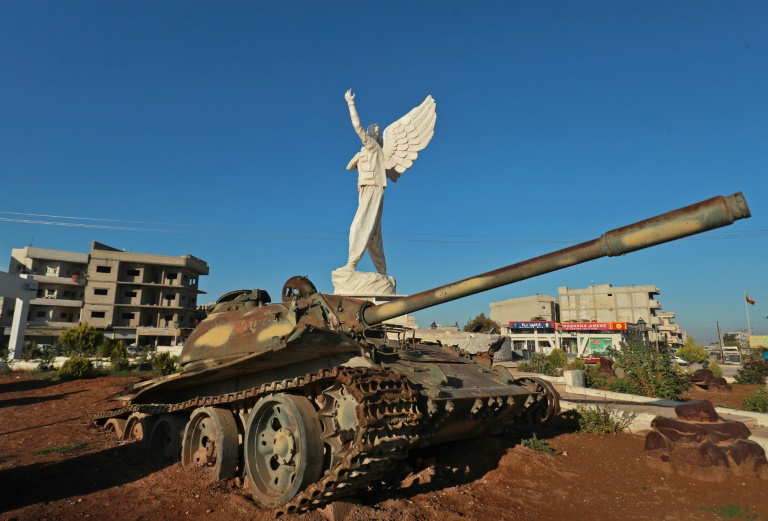
Turkey has launched three offensives into Syria since 2016 aimed at crushing Syrian Kurdish fighters, whom it charges are allied to the PKK.

Erdogan has repeatedly called for a 30-kilometre (19-mile) “safe zone” to protect southern Turkey against cross-border attacks from Syrian territory.

At least three people, including a child, were killed in a Turkish border town on Monday by a rocket strike fired from Syria.

Anthony Skinner, a Turkey expert and a political risk consultant, told AFP that conditions “are in place for a particularly robust campaign” against Kurdish militants ahead of Turkish presidential and parliamentary elections in June.

“Erdogan wants to bolster support for his AKP and its (nationalist) MHP allies, so he is playing the nationalist and security card. Hence the noise,” he said.

“Erdogan effectively used the security and stability cards in the run up to the rerun of the general election in 2015. But his work is cut out now because of economic and socioeconomic pressures.”

Indonesia quake toll jumps to 268, rescuers hunt for survivors

The death toll from an earthquake on Indonesia’s main island of Java jumped to 268 on Tuesday, as rescuers searched for survivors in the rubble and relatives started to bury their loved ones.

As body bags emerged from crumpled buildings in Indonesia’s most populous province, West Java, rescue efforts turned to any survivors still under debris in areas made hard to reach by the mass of obstacles thrown onto the roads by the quake.

The epicentre of the shallow 5.6-magnitude quake on Monday was near the town of Cianjur where most of the victims were killed, hundreds were injured and dozens feared trapped as buildings collapsed and landslides were triggered.

The death toll jumped dramatically again later on Tuesday from 162 to 268, Suharyanto, the head of Indonesia’s national disaster mitigation agency, or BNPB, told a press conference. 

At least 151 people remain missing and more than 1,000 have been injured, said the official, who like many Indonesians goes by one name.

“The focus is still on the search and evacuation of victims. That’s the priority,” he said. “When the emergency response ends, hopefully everyone has been found.”

At a burial in a village near Cianjur, relatives of 48-year-old victim Husein, who was killed while building a house when the quake struck, broke into hysterical wails before his body was lowered into the ground.

“I just lost a brother 10 days ago. Now I’ve lost another brother,” said his sister Siti Rohmah as she sobbed uncontrollably. 

“I kept waiting, hoping he would survive and that nothing bad would happen to him.”

One of the dozens of rescuers, 34-year-old Dimas Reviansyah, said teams were using chainsaws and excavators to break through piles of felled trees and debris to find survivors.

“I haven’t slept at all since yesterday, but I must keep going because there are victims who have not been found,” he said.

Drone footage taken by AFP showed the extent of a quake-triggered landslide where a wall of brown earth was only punctuated by workers using heavy machinery to clear a road.

President Joko Widodo visited the area on Tuesday, offering compensation for victims and ordering disaster and rescue agencies to “mobilise their personnel”.

– ‘State of shock’ –

Many of those killed were children, according to the head of Indonesia’s national rescue agency Basarnas.

“They were at school, at 1 pm, they were still studying,” Henri Alfiandi told a press conference.

Some of those dead were students at an Islamic boarding school, while others were killed in their homes when roofs and walls caved in on them.

The search operation on Tuesday was made more challenging because of severed road links and temporary power outages in parts of the largely rural, mountainous region.

Those who survived camped outside in near-total darkness surrounded by fallen debris, shattered glass and chunks of concrete.

Doctors treated patients outdoors at makeshift wards after the quake, which was felt as far away as the capital Jakarta. 

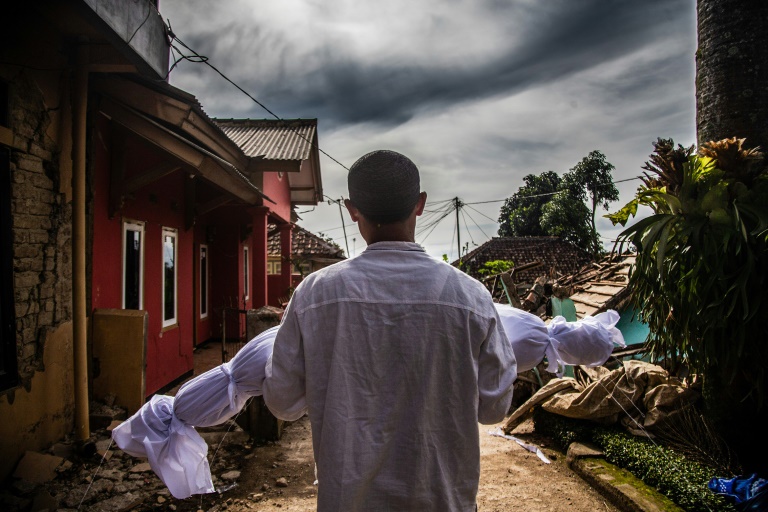
One father carried his dead son wrapped in white cloth through the streets of his village near Cianjur.

Others searched for their missing relatives in the chaos.

Rahmi Leonita’s father was riding a motorbike to Cianjur when the quake struck.

“His phone is not active. I am in a state of shock now. I am very worried but I am still hopeful,” said the 38-year-old, tears falling down her face as she spoke.

– ‘Nothing I could save’ –

At a shelter in Ciherang village near Cianjur, evacuees sat on tarpaulins stretched over the cold morning ground.

Nunung, a 37-year-old woman, had pulled herself and her 12-year-old son out of the rubble of their collapsed home.

“I had to free us by digging. Nothing is left, there is nothing I could save,” she told AFP from the shelter, her face covered in dried blood.

The devastation caused by the quake was made worse by a wave of 62 smaller aftershocks that relentlessly shook Cianjur, a town of about 175,000 people.

The Geological Agency of the Indonesian Ministry of Energy and Mineral Resources said in an analysis posted online Monday that the soil make-up of the area could have exacerbated the impact of the quake.

It said the area’s “undulating to steep hills” were made up of “weathered” and “young” volcanic debris.

“These… deposits are generally soft, loose, unconsolidated and strengthen the effects of shocks, making them prone to earthquakes,” it said.

Australian Prime Minister Anthony Albanese and Russian President Vladimir Putin on Tuesday joined Canadian and French leaders in offering their condolences.

Indonesia experiences frequent seismic and volcanic activity due to its position on the Pacific “Ring of Fire”, where tectonic plates collide.

A 6.2-magnitude quake that shook Sulawesi island in January 2021 killed more than 100 people and left thousands homeless.

38 killed in central China fire

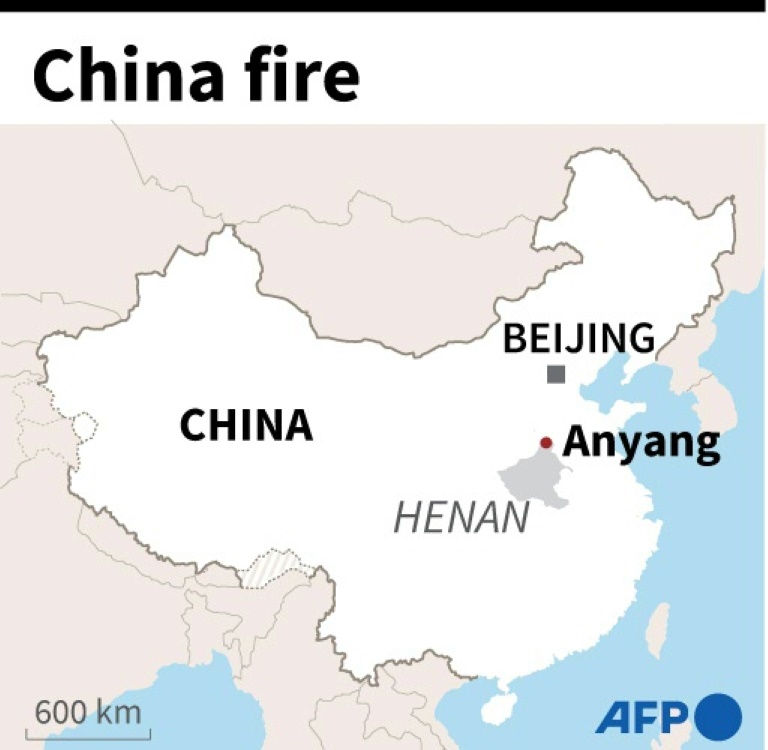
Thirty-eight people were killed and two were injured in a fire at a factory in central China, state media said Tuesday, with authorities blaming workers for illegal welding.

The fire broke out at a plant in Anyang city in Henan province on Monday afternoon, news agency Xinhua reported.

Rescue services first received reports of a fire at 4:22 pm (0822 GMT) at Anyang Kaixinda Trading Co., Ltd, according to state media.

“After receiving the alarm, the municipal fire rescue detachment immediately dispatched forces to the scene,” state broadcaster CCTV said.

It added that the fire was extinguished by around 11 pm local time.

Footage from the scene shared by CCTV showed thick plumes of black smoke from the fire, with at least two trucks in position to battle the flames.

In addition to the dead, two were sent to hospital with injuries that were not life-threatening, the state-run People’s Daily said.

Authorities said “criminal suspects” had been taken into custody in connection with the fire.

CCTV then reported, citing local officials, that a preliminary investigation had found the fire was caused by “electric welding in which workers violated safety measures”.

Chinese President Xi Jinping issued a directive later Tuesday, ordering officials to “go all-out in treating the injured… (and) strictly pursue accountability in accordance with the law”.

He added that officials must “comprehensively investigate and rectify hidden risks to firmly prevent and curb the occurrence of major accidents”, noting a recent string of accidents in Henan and neighbouring Shanxi province.

According to data provider Tianyancha, Anyang Kaixinda Trading Co. is a wholesale trader dealing in machinery, building materials, non-hazardous chemicals, clothing and fire-fighting equipment.

– Weak safety standards –

Industrial accidents are common in China due to weak safety standards and corruption among officials tasked with enforcing them.

News of the Anyang fire followed reports of an explosion at a chemical factory in nearby Taiyuan, the capital of Shanxi province, on Monday.

Videos posted on social media showed a fire at the industrial site spewing dense grey smoke into the sky.

Other images showed nearby buildings strewn with shards of glass, and frightened locals fleeing the blast.

“Personnel were dispatched to the scene, the fire was extinguished, and the human toll is not yet known,” Dahebao — an official daily based in Henan — reported on the Twitter-like Weibo platform, citing authorities.

In June, one person was killed and another injured in an explosion at a chemical plant in Shanghai.

And last year, a gas blast killed 25 people and reduced several buildings to rubble in the central city of Shiyan.

In 2015, a giant explosion in northern Tianjin at a chemical warehouse killed 165 people, in one of China’s worst-ever industrial accidents.

Baidu revenue up 2% amid cost-cutting drive

Chinese internet giant Baidu reported on Tuesday third-quarter revenues of 32.5 billion yuan ($4.6 billion), representing a year-on-year increase of 2 percent.

Its earnings report showed Baidu posted a net loss of 146 million yuan for the three months through September as it reined in costs and trimmed back far deeper losses from the equivalent quarter last year.

Chinese technology majors have struggled in recent months amid an economic slowdown, Covid-19 curbs that have hammered consumer sentiment, and tighter regulatory scrutiny.

Earnings reports from internet titans, including Alibaba and JD.com, have presented a mixed picture in recent weeks.

“Baidu Core delivered a solid set of financial and operational results in the third quarter, despite the continued challenges posed by the Covid-19 resurgence,” said CEO Robin Li.

The core business “resumed positive growth, driven by a gradual recovery of our online marketing business and the steady growth of our AI Cloud revenue”, Li said, hailing “significant progress in intelligent driving”.

“Looking ahead, we expect our mobile ecosystem to continue generating strong cash flow and fund our investment in AI Cloud and intelligent driving, which will help … drive long-term business growth,” he said.

Beijing-based Baidu reported a third-quarter loss of 16.6 billion yuan last year, despite revenues rising 63 percent year-on-year to 31.9 billion yuan at the time.

The company, which operates China’s biggest online search engine, has diversified in recent years into artificial intelligence, cloud computing and autonomous driving technologies as advertising revenue has remained sluggish.

– Mixed bag –

Beijing has wrought a sweeping crackdown on the tech industry since late 2020 as part of an effort to curb monopolistic practices and promote competition between internet platforms.

But the strategy of record fines, torched IPOs and probes into major firms have hit revenues and placed further strain on the ailing economy.

E-commerce titan Alibaba announced last week a third-quarter loss of 20.6 billion yuan, which it partly blamed on a “decrease in market prices of our equity investments in publicly traded companies”.

Rival JD.com reported a sales rise of 11 percent year-on-year, although neither platform released full revenue figures for the “Singles’ Day” shopping bonanza this month, considered a barometer of Chinese consumer sentiment.

Despite recently announcing the loosening of coronavirus policies, some Chinese authorities are persisting with a zero-tolerance strategy of snap lockdowns that have disrupted business operations in some areas. 

Hunt for buried survivors after Indonesia quake kills 252

Rescuers searched for survivors buried under rubble on Tuesday as relatives started to bury their loved ones after an earthquake on Indonesia’s main island of Java killed 252 people.

As body bags emerged from crumpled buildings in Indonesia’s most populous province, West Java, rescue efforts turned to any survivors still under debris in areas made hard to reach by the mass of obstacles thrown onto the roads by the quake.

The epicentre of the shallow 5.6-magnitude quake on Monday was near the town of Cianjur where most of the victims were killed, hundreds were injured and dozens feared trapped as buildings collapsed and landslides were triggered.

The death toll jumped dramatically again later on Tuesday, from 162 to 252, a spokesman for the Cianjur administration said.

At a burial in a village near Cianjur, relatives of 48-year-old victim Husein, who was killed while building a house when the quake struck, broke into hysterical wails before his body was lowered into the ground.

“I just lost a brother 10 days ago. Now I’ve lost another brother,” said his sister Siti Rohmah as she sobbed uncontrollably. 

“I kept waiting, hoping he would survive and that nothing bad would happen to him.”

One of the dozens of rescuers, 34-year-old Dimas Reviansyah, said teams were using chainsaws and excavators to break through piles of felled trees and debris to find survivors.

“I haven’t slept at all since yesterday, but I must keep going because there are victims who have not been found,” he said.

Drone footage taken by AFP showed the extent of a quake-triggered landslide where a wall of brown earth was only punctuated by workers using heavy machinery to clear a road.

President Joko Widodo visited the area on Tuesday, offering compensation for victims and ordering disaster and rescue agencies to “mobilise their personnel”.

“On behalf of myself, on behalf of the government, I would like to express my deepest condolences,” he said.

Indonesia’s national disaster mitigation agency, or BNPB, said at least 25 people were still buried under the rubble in Cianjur as darkness fell Monday. 

“There’s a possibility there are still more victims,” Rudy Saladin, a local military chief, told AFP.

The BNPB offered a lower death toll of 103 on Tuesday morning and said 31 people remain missing.

Many of those killed were children, according to the head of Indonesia’s national rescue agency Basarnas.

“They were at school, at 1 pm, they were still studying,” he told a press conference.

Some of those dead were students at an Islamic boarding school, while others were killed in their homes when roofs and walls caved in on them.

– ‘State of shock’ –

The search operation on Tuesday was made more challenging because of severed road links and power outages in parts of the largely rural, mountainous region.

By Tuesday morning, 89 percent of power to Cianjur had been recovered by state-owned electricity company PLN, according to state news agency Antara.

Kamil said more than 300 people had been injured and over 13,000 taken to evacuation centres. 

Those who survived camped outside in near-total darkness surrounded by fallen debris, shattered glass and chunks of concrete.

Doctors treated patients outdoors at makeshift wards after the quake, which was felt as far away as the capital Jakarta. 

One father carried his dead son wrapped in white cloth through the streets of his village near Cianjur.

Others searched for their missing relatives in the chaos.

Rahmi Leonita’s father was riding a motorbike to Cianjur when the quake struck.

“His phone is not active. I am in a state of shock now. I am very worried but I am still hopeful,” said the 38-year-old, tears falling down her face as she spoke.

– ‘Nothing I could save’ –

At a shelter in Ciherang village near Cianjur, evacuees sat on tarpaulins stretched over the cold morning ground.

Nunung, a 37-year-old woman who like many Indonesians goes by one name, had pulled herself and her 12-year-old son out of the rubble of their collapsed home.

“I had to free ourselves by digging. Nothing is left, there is nothing I could save,” she told AFP from the shelter, her face covered in dried blood.

The devastation caused by the quake was made worse by a wave of 62 smaller aftershocks that relentlessly shook Cianjur, a town of about 175,000 people.

Australian Prime Minister Anthony Albanese on Tuesday joined Canadian and French leaders in offering their condolences.

Indonesia experiences frequent seismic and volcanic activity due to its position on the Pacific “Ring of Fire”, where tectonic plates collide.

A 6.2-magnitude quake that shook Sulawesi island in January 2021 killed more than 100 people and left thousands homeless.

Close Bitnami banner
Bitnami