World

'It's all ruined': Friends, relatives face Indonesia quake trauma

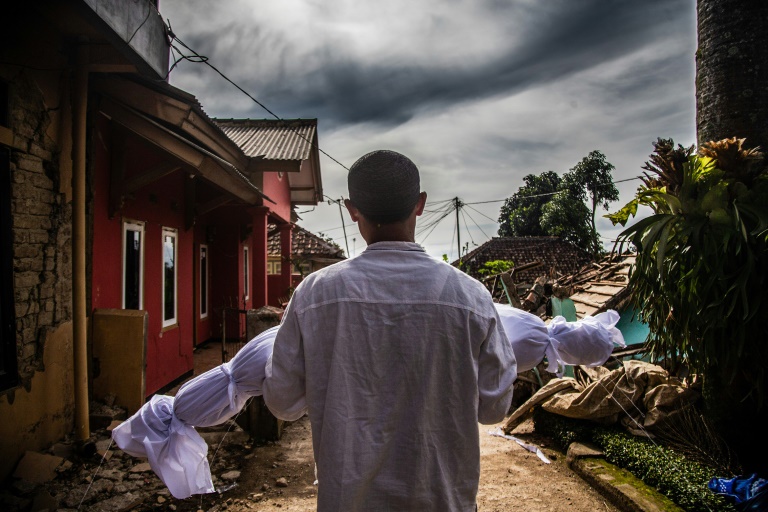
Iwan Gunawan was forced to leave his gravely injured wife buried under rubble to run outside and save his daughter after a strong earthquake rocked Indonesia’s largest province.

As he rushed to pull the girl from under debris, a wall fell on the fish trader leaving him unable to breathe.

“I kept chanting ‘God save me’. I tried to protect my daughter and I tried to be strong,” he said.

“I wanted to save my wife too, but if I insisted we all would have died.”

The tremor that killed 252 people near the worst-hit town of Cianjur on Monday ripped families and friends from one another in a few seconds and forced people to make gut-wrenching decisions in the moment. 

Roofs and walls caved in on locals without notice while landslides on the town’s undulating hills wiped out vehicles and buried residents. 

Standing in front of his destroyed home the next day, Gunawan wiped a tear from his eye as he recalled the death of his wife.

“It’s all ruined,” said the 41-year-old resident of Ciputri village in West Java.

Moments later two men brought his daughter on a stretcher and laid her down in front of the house next door. Gunawan rushed over to console her as she whimpered in pain.

“Dad is here now, don’t cry,” he told her, kissing her forehead.

– ‘Still traumatised’ –

Aprizal Mulyadi woke up on a normal Monday to study at his Islamic boarding school. 

Hours later he was being pulled from the rubble and mourning a close friend who sacrificed his life to save him.

The 14-year-old’s legs were trapped under concrete as the room collapsed around him. 

Twelve-year-old Muhammad Zulfikar performed the ultimate act of friendship, pulling Mulyadi alive from the carnage. Then, as he went to help another friend, the roof fell in and buried him.

“I could not help him because my legs and back were injured. When he was trapped, he told me to go and save myself,” he said, sitting on a tarpaulin behind the damaged school. 

“I am still traumatised, I could not sleep because I kept thinking about what happened,” he added, grabbing his ankle, which was still swollen and bleeding from the crush of debris.

– ‘I am devastated’ –

The rescue mission carried on into Tuesday to find those trapped by the disaster while residents tried to retrieve their pets and belongings.

Indonesian President Joko Widodo visited the area and offered some compensation for those whose homes were destroyed.

Others offered prayers at funerals and burials around the town, choking back tears.

For some, none of that seemed to matter in comparison with the trauma. 

Gunawan began to sob as he remembered the day before the quake, when his wife was cooking local staple cassava in the kitchen for the family.

“I am devastated. My house is destroyed and I lost my wife,” he said, choking on tears.

“God please grant me strength.”
Strong quake rattles Solomon Islands

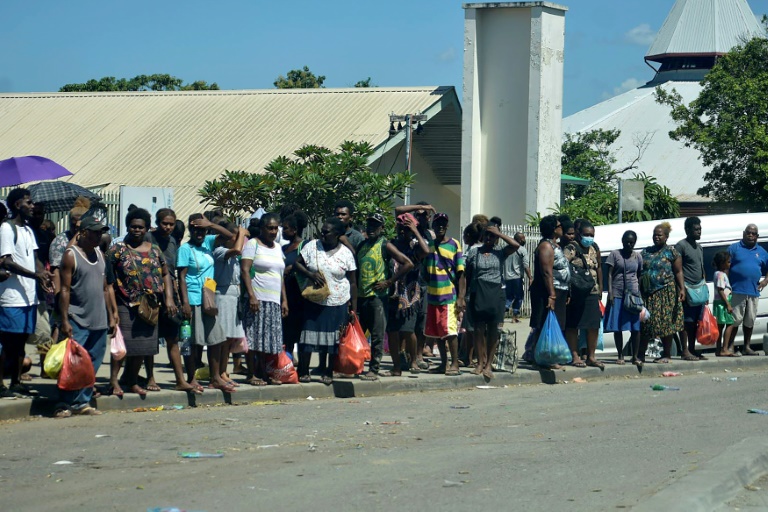
A 7.0-magnitude earthquake struck the Solomon Islands on Tuesday, swaying buildings, hurling items off shelves and briefly knocking out power in parts of the capital Honiara.

There were no reports of serious injuries or major structural damage.

“This was a big one,” Joy Nisha, a receptionist with the Heritage Park Hotel in the capital, told AFP.

“Some of the things in the hotel fell. Everyone seems OK, but panicky.”

At one recently built mall, chunks of cladding were shaken loose, crushing the bonnet of a car and breaking the windshield.

The roof of an annexe at the Australian High Commission also collapsed, Prime Minister Anthony Albanese told parliament in Canberra, stating “there are no known injuries”.

Australian Defence Minister Richard Marles said damage assessments were ongoing and it was too early to know what military assistance might be sent to help.

“We always stand ready to support our Pacific neighbours,” he told AFP by phone from Siem Reap, Cambodia.

“We will no doubt look at what the needs are… and go from there.”

An AFP reporter in Honiara said the shaking lasted for around 20 seconds.

Power was immediately knocked out in some areas of the capital and phone lines were also down.

Across the city, people fled their homes and workplaces for higher ground, fearing a tsunami.

“I was really scared because this is the first time I felt this kind of earthquake,” said a manager at the Pacific Casino Hotel, who asked not to be named.

“The building was really violently shaking… It was really strong, it made you move side to side.”

Dozens of staff and guests fled the building to the relative safety of the car park, hoping not to be hit by debris on the way out.

The nation’s attorney general, John Muria, posted images on social media of office files that had spilled from several large metal cabinets.

– Aftershocks –

The quake struck at a relatively shallow depth of 15 kilometres, just off the southwest coast of Guadalcanal island, according to the US Geological Survey.

A tsunami warning was issued for an area of the Solomons coast within 300 kilometres (185 miles) of the epicentre, but the UN-backed Pacific warning centre later said the threat had “largely” passed.

As nightfall approached, power was starting to return to Honiara, but local authorities urged caution.

“We expect aftershocks so people should stay alert around buildings and tall structures because of the size of the earthquake,” said David Hiba Hiriasia, director of the Solomon Islands Meteorological Service.

Staff at one hospital were readying to evacuate patients if needed.

According to UN data, about 20,000 people live within 50 kilometres of the epicentre.

The Solomons — a sprawling archipelago in the South Pacific — are home to about 800,000 people.

Iran says starts enriching uranium to 60% at Fordo plant

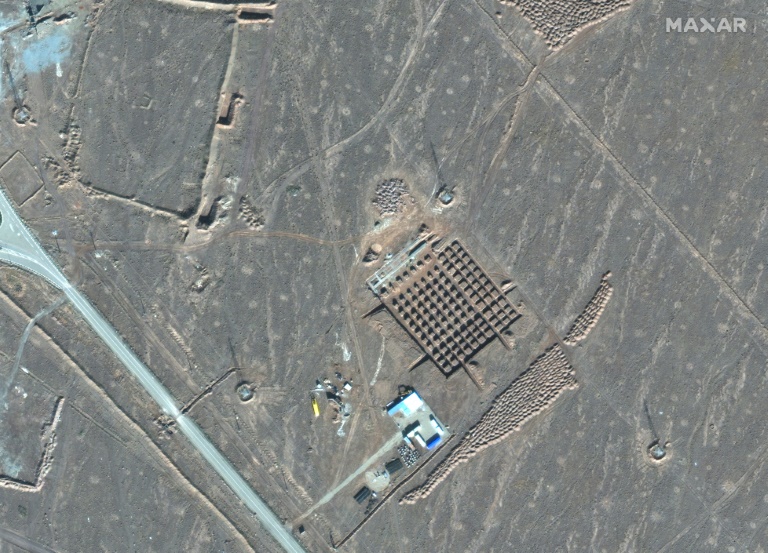
Iran has begun producing uranium enriched to 60 percent at its Fordo plant, which was reopened in 2019 amid the breakdown of a nuclear agreement with major powers, reports said Tuesday.

“Iran has started producing uranium enriched to 60 percent at the Fordo plant for the first time,” Iran’s ISNA news agency reported.

An atomic bomb requires uranium enriched to 90 percent, so 60 percent is a significant step towards weapons-grade enrichment.

Iran has always denied any ambition to develop an atomic bomb, insisting its nuclear activities are for civilian purposes only.

Under a landmark deal struck in 2015, Iran agreed to mothball the Fordo plant and limit its enrichment of uranium to 3.67 percent, sufficient for most civilian uses, as part of a package of restrictions on its nuclear activities aimed at preventing it covertly developing a nuclear weapon.

In return, major powers agreed to relax sanctions they had imposed over Iran’s nuclear programme.

But the deal began falling apart in 2018 when then US president Donald Trump pulled Washington out of the deal and reimposed crippling economic sanctions.

The following year, Iran began stepping away from its commitments under the deal. It reopened the Fordo and starting enriching uranium to higher levels. 

In January 2021, Iran said it was working to enrich uranium to 20 percent at Fordo. Several months later another Iranian enrichment plant reached 60 percent enrichment.

US President Joe Biden has expressed a desire for Washington to return to a revived deal and on-off talks have been underway since April last year.

US Secretary of State Antony Blinken said late last month that he saw little scope to restore the deal, as Iran battles nationwide protests sparked by the September death in morality police custody of Mahsa Amini, a 22-year-old Kurdish woman.

The heavily protected Fordo plant around 180 kilometres (110 miles) south of Tehran was built deep underground in a bid to shield it from air or missiles strikes by Iran’s enemies.

Arch foe Israel has never ruled out military action if it deems it necessary to prevent Iran developing a nuclear weapons capability.

Israel is widely suspected to hold the region’s sole if undeclared nuclear arsenal, although it has consistently refused to confirm or deny that it is nuclear-armed.

The implementation of the 2015 deal was overseen by the International Atomic Energy Agency but the UN watchdog’s relations with Iran have declined sharply in recent months.

The IAEA board of governors passed a resolution on Thursday criticising Iran for its lack of cooperation.

Iran said Monday it was taking retaliatory measures against the International Atomic Energy Agency over a resolution criticising Tehran’s lack of cooperation with the nuclear watchdog.

The ISNA news agency said that the upgrade at Fordo was part of Iran’s response.

“As well, in a second action in response to the resolution, Iran injected (uranium hexafluoride) gas into two IR-2m and IR-4 cascades at the Natanz plant,” it said, referring to an older enrichment facility.

Italy's draft budget centres on energy aid

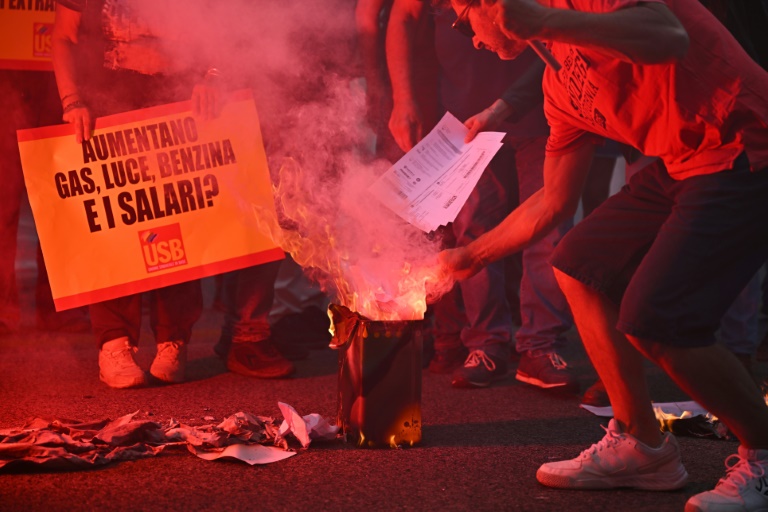
Italy’s new far-right government unveiled its 2023 draft budget on Tuesday, with most of the nearly 35 billion euros in spending going on the energy crisis rather than flashy electoral promises.

More than 21 billion euros will go towards supporting households and businesses in the face of soaring utility bills, leaving little left over for voter-pleasing pledges, such as large tax cuts.

The budget is “prudent and realistic” and “sustainable for public finances”, taking into account the economic situation, especially international, the government said. 

Among the measures are aid for the payment of electricity bills and fatter tax credits for companies whose energy costs have been rising steadily.

Prime Minister Giorgia Meloni, keen to dissociate her government from Italy’s 2018 experience of populist rule, has largely adopted the prudent approach of her predecessor, Mario Draghi.

The League party, Meloni’s coalition partner, has pressed for big spending. But Economy Minister Giancarlo Giorgetti — who hails from the party’s moderate wing — opted for fiscal responsibility.

Italy raised its 2023 public deficit forecast earlier this month to 4.5 percent of gross domestic product (GDP), above the 3.4 percent forecast in September by Draghi’s government.

But the deficit is forecast to fall to 3.7 percent in 2024 and three percent in 2025, according to an economic roadmap adopted by Rome.

The draft budget now heads to parliament, where it can be amended. It must then be adopted by both chambers by December 31.

“With the global economy slowing down and interest rates rising, it is forced to remain cautious” and carry out what electoral promises it can, a bit at a time, the former chief economist at the Treasury, Lorenzo Codogno, told AFP on Monday.

– Poverty relief –

The right-wing coalition’s flagship measure — the raising of the ceiling for a 15-percent flat-tax rate for the self-employed — does not go as far as initially expected.

Instead of upping the yearly salary cut-off point from 65,000 euros ($66,700) to 100,000 euros, it stops at 85,000 euros.

Employees will benefit from tax reductions of two percent for income up to 35,000 euros per year, as under Mario Draghi, and three percent for those salaries below 20,000 euros. 

In addition, companies hiring women aged under 36 will benefit from tax exemptions. 

Tax amnesties, another election promise, will be offered to people with tax debts of under 1,000 euros that were incurred before 2015. 

On cash payments, the government raised the limit from 2,000 euros to 5,000 euros — despite warnings from opposition parties that the move would favour corruption.

It also adjusted pension rules so people with 41 years of service can retire at 62 years old, a move affecting an estimated 48,000 people that is likely to be frowned upon in Brussels due to Italy’s ageing population.

The retirement age had been set to rise from 64 to 67 in 2023.

The new measures will be financed in part by reforming the so-called citizens’ income, a poverty relief scheme that Meloni has said will no longer go to adults able to work.

Those deemed fit to work will receive this income for only eight months in 2023, compared to 12 months for the others, and the system will be completely overhauled in 2024.

The government is also set to raise new revenues from a windfall tax on energy companies.

Asian markets mixed as China Covid worries grow

Growing fears about China’s latest Covid-19 outbreak on Tuesday rattled investors, who fear authorities will revert to highly restrictive containment measures that have already dealt a chilling blow to the world’s number two economy this year.

After starting November with a rally thanks to easing inflation concerns and signs China was edging towards a looser approach to the disease, the optimism has been given a massive jolt since the country announced its first virus deaths in six months.

Case numbers have surged across China, with residents in Beijing worried that a record number of new infections will lead to lockdown measures similar to those seen earlier in the year in Shanghai, which lasted for months.

The flare-ups came just a week after China said it would begin rolling back some of the strict Covid rules that have been in place since the pandemic started in 2020, even as the rest of the world has moved on.

Analysts said the latest developments highlight the long road ahead for China in emerging from the crisis as President Xi Jinping sticks solidly to a zero-Covid strategy that is widely blamed for the country’s economic troubles.

“Risk sentiment has been under pressure on questions around China reopening,” said SPI Asset Management’s Stephen Innes.

“Some investors are convinced that China’s reopening is a formality and will be catalysed by the (World Health Organization) downgrading Covid to an endemic (disease),” he added.

“We know that China’s reopening will be laced with fits and starts as the two-step-forward-one-step-back routine becomes the norm.”

Hong Kong, which thundered more than 10 percent higher in a three-day surge earlier this month, fell for a fifth straight day, while Seoul was also lower along with Wellington, Bangkok and Jakarta.

Still, there were gains in Tokyo, Shanghai, Sydney, Singapore, Taipei, Manila and Mumbai.

London and Paris rose but Frankfurt fell.

– Eyes on Fed minutes –

That came after a drop on Wall Street, where trading was lighter than usual owing to the Thanksgiving break at the end of the week.

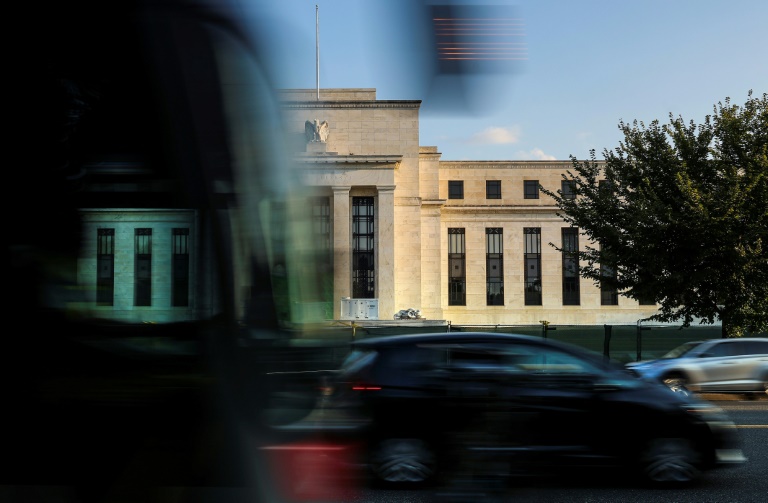
Wednesday sees the release of minutes from the US Federal Reserve’s most recent policy meeting, which will be pored over for insight into officials’ thinking against the backdrop of four-decade-high inflation and signs of a slowing economy.

Hopes that the bank will begin to take its foot off the pedal were boosted earlier this month by figures showing inflation slowed more than expected, suggesting a series of hikes were beginning to bite.

Still, several members of the Fed’s top brass have warned against getting carried away and said more increases were needed to get on top of prices.

But JPMorgan Chase & Co’s Marko Kolanovic said markets would likely stumble into the new year and only pick up once the US central bank takes a more dovish stance on borrowing costs.

JPMorgan saw risk assets to trade “rangebound with a more pronounced downside risk”.

– Key figures around 0815 GMT –

Tokyo – Nikkei 225: UP 0.6 percent at 28,115.74 (close)

Hong Kong – Hang Seng Index: DOWN 1.3 percent at 17,424.41 (close)

Shanghai – Composite: UP 0.1 percent at 3,088.94 (close)

London – FTSE 100: UP 0.5 percent at 7,412.83

Euro/dollar: UP at $1.0261 from $1.0245 on Monday

Dollar/yen: DOWN at 141.86 yen from 142.10 yen

Pound/dollar: UP at $1.1844 from $1.1823

Euro/pound: UP at 86.64 pence from 86.58 pence

West Texas Intermediate: UP 0.7 percent at $80.62 per barrel

Brent North Sea crude: UP 0.9 percent at $88.22 per barrel

New York – Dow: DOWN 0.1 percent at 33,700.28 (close)

— Bloomberg News contributed to this story —

US, China defence chiefs meet in Cambodia

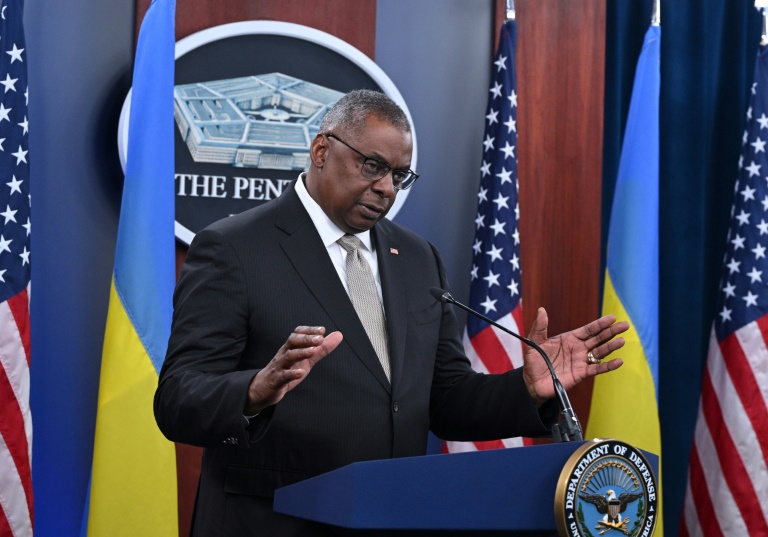
US Defense Secretary Lloyd Austin met his Chinese counterpart Wei Fenghe in Cambodia on Tuesday, with both sides describing the talks as productive without backing away from their core positions.

The rival powers have clashed over a host of issues including Taiwan, security and human rights, but there have been attempts to lower the temperature since a rare summit between the leaders of both countries last week.

US President Joe Biden and Chinese leader Xi Jinping tried to cool the rhetoric but the differences were clear — and the exchange between their defence chiefs was similar.

A senior US defence official said the talks between Austin and Wei on the sidelines of a conference of defence ministers in Siem Reap were “productive” and “professional”.

“Both sides agreed that it’s important that our countries work together to ensure that competition does not veer into conflict”, but “competition remains the defining feature of the relationship”, the official told journalists.

Austin sought the “reopening of a number of military-to-military dialogues and mechanisms to help manage that competition responsibly”, the official added.

That was a reference to procedures and exchanges that were scrapped after US House Speaker Nancy Pelosi visited Taiwan in August despite furious warnings and threats from Beijing.

The US official said Austin and Wei had a “lengthy exchange” on Taiwan during the meeting, which lasted for an hour and a half.

A Chinese defence ministry spokesman described the meeting as “sincere, in-depth, practical and constructive”.

“Both sides acknowledged that both militaries should earnestly implement the important consensus reached by both heads of state, maintain communication and contact, strengthen crisis management, and work hard to uphold regional peace and stability,” the spokesman said.

“China attaches importance to developing bilateral military relations, but the US must respect China’s core interests.”

– Red line –

China claims Taiwan is a part of its territory to be taken one day, by force if necessary.

Wei said in the meeting that Taiwan is a red line for China, the spokesman said.

“Taiwan is China’s Taiwan, it is a matter to be resolved by the Chinese people alone, and no external forces have the right to interfere.”

Beijing lashes out at any diplomatic action that might lend Taiwan legitimacy and has responded with growing anger to visits by Western officials and politicians.

It reacted to Pelosi’s Taiwan visit with its largest and most aggressive exercises around the island since the 1990s.

Austin told Wei that US policy towards Taiwan has not changed and that Washington still opposes unilateral changes to the status quo on the island.

– Russia, North Korea –

Austin and Wei also discussed other issues including Russia’s invasion of Ukraine and North Korea, according to a readout by Pentagon Press Secretary Brigadier General Pat Ryder.

“Secretary Austin discussed Russia’s unprovoked war against Ukraine and underscored how both the United States and (China) oppose the use of nuclear weapons or threats to use them,” Ryder said.

Austin also expressed concern about “increasingly dangerous” behaviour by Chinese warplanes in the Asia-Pacific region, the readout added.

Austin called on China — Pyongyang’s main diplomatic backer — to “fully enforce” UN Security Council resolutions against North Korea over its weapons programmes.

The defence chiefs’ meeting followed a brief exchange between Xi and US Vice President Kamala Harris at an Asia-Pacific summit in Bangkok

That was followed by a meeting between Xi and US Vice President Kamala Harris at an Asia-Pacific summit in Bangkok on Saturday. 

US VP Harris visits Philippine island near China-claimed waters

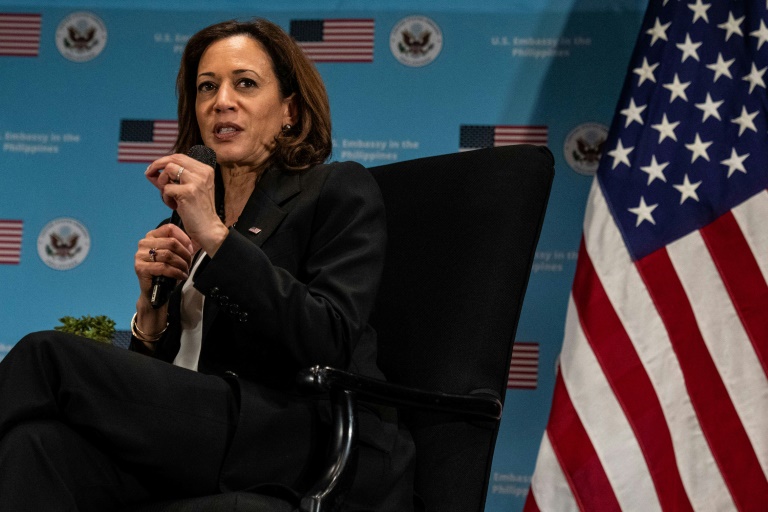
US Vice President Kamala Harris on Tuesday visited a Philippine island near waters claimed by China to show support for the longtime US ally and counter Beijing’s growing influence in the region.

Harris is the highest-ranking US official ever to visit the western island of Palawan, the closest Philippine landmass to the Spratly archipelago in the hotly contested South China Sea.

Beijing claims sovereignty over almost the entire sea and has ignored an international court ruling that its claims have no legal basis.

The Philippines, Vietnam, Malaysia and Brunei have overlapping claims to parts of it.

Harris met with fisherfolk in a coastal village and members of the Philippine Coast Guard.

In a speech, Harris said “international rules and norms” must be upheld and the UN-backed tribunal decision rejecting China’s claims over the South China Sea respected.

“The United States — and the broader international community — have a profound stake in the future of this region,” she said, on board a Philippine Coast Guard vessel.

“As an ally, the United States stands with the Philippines in the face of intimidation and coercion in the South China Sea.”

Harris’s trip to Palawan comes a day after she held talks with Philippine President Ferdinand Marcos in Manila.

She reaffirmed the United States’ “unwavering” commitment to defending the Philippines if its vessels or aircraft were attacked in the South China Sea.

Washington has a decades-old security alliance with the Philippines that includes a mutual defence treaty and a 2014 pact, known by the acronym EDCA, which allows for the US military to store defence equipment and supplies on five Philippine bases.

It also allows US troops to rotate through those military bases.

EDCA stalled under former president Rodrigo Duterte, but the United States and the Philippines have expressed support for accelerating its implementation as China becomes increasingly assertive.

– Rebuilding relations – 

As regional tensions rise, fuelled by China’s recent wargames around Taiwan, Washington is seeking to repair ties with Manila, whose cooperation would be critical in the event of a conflict.

Relations between the two countries fractured under the mercurial Duterte, who favoured China over his country’s former colonial master.

Marcos has sought to strike more of a balance between his superpower neighbours, insisting he will not let China trample on Manila’s maritime rights.

Harris’s visit conveyed a “stronger sense of commitment” to the Philippines’ position on maritime claims, but also underscored the need for EDCA’s continued implementation, said Jay Batongbacal, director of the University of the Philippines’s Institute for Maritime Affairs and Law of the Sea.

“The US cannot adequately carry out its obligations if it is forced to stay several thousand kilometres away in Japan or Guam,” he said.

Of all the claimants to the South China Sea, Beijing has in recent years pressed its stance most aggressively.

Hundreds of Chinese coast guard and maritime militia vessels prowl the waters, swarming reefs, harassing and attacking fishing and other boats, and interfering in oil and gas exploration as well as scientific research.

Chinese state outlet Global Times on Tuesday accused Harris of “fanning the flames of the South China Sea issue”.

“The Philippines has the right to receive any foreign visitor. What we want to emphasize is that any bilateral exchanges should not be at the expense of the interests of any third country as well as regional peace and stability,” it said in an editorial.

On the eve of Harris’s visit to Palawan, a senior Philippine navy official accused the Chinese coastguard of “forcefully” seizing parts of a rocket that landed in the Spratlys.

Beijing — which has built militarised artificial islands in the archipelago — insisted the handover took place after “friendly consultation”.

Tensions between Manila and Beijing flared last year after hundreds of Chinese vessels were detected at Whitsun Reef in the Spratlys.

Last November, Chinese coastguard ships fired water cannon at Philippine boats delivering supplies to marines at Second Thomas Shoal in the same archipelago.

Who will become history's first 'parastronaut'? 

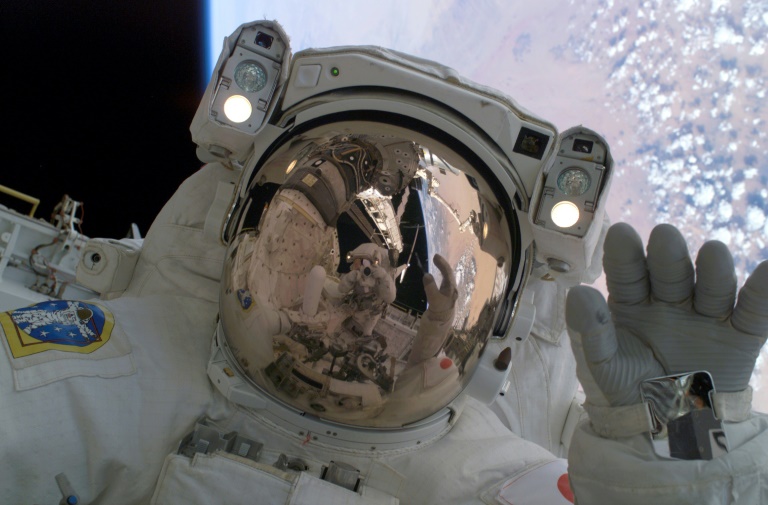
The first astronaut — or astronauts — with a physical disability could be announced as soon as Wednesday, according to the European Space Agency.

People with physical disabilities have previously been excluded from one of the most exclusive and demanding jobs on Earth — and beyond — due to strict selection requirements.

Guillaume Weerts, the ESA’s head of space medicine, told AFP that the agency’s “parastronaut project” required “a complete change in philosophy” about the concept of medical aptitude, which originally came from the military and the selection of fighter pilots.

After carrying out a feasibility study, the ESA said potential candidates could include people who have deficiencies in their lower limbs, whether from amputation or congenital defects.

Shorter people of up to 1.3 metres (4.3 feet) tall or those with different leg lengths were also eligible to apply.

The educational and psychological requirements for the candidates remained the same as for any other astronaut. Applications closed in June 2021.

The ESA is expected to name between four to six new European astronauts — without disabilities — during its ministerial council in Paris on Wednesday.

While Weerts said the parastronaut project runs somewhat separately, “there is a real possibility that as part of the announcement one or more people with disabilities” will also be presented.

– ‘Disability is not a limitation’ – 

In the extremely precise world of space travel, even small alterations can become extremely complicated — and expensive.

For example, the existing systems are designed for people of a certain height, Weerts said.

“What does that mean for someone who is a shorter size? How can we make sure that person can just reach the buttons?”

The ESA plans to work with those who are selected to find the best way to overcome such potential challenges.

As a member of the selection panel, Weerts could not reveal details about particular candidates.

But he said “a really great group of people” had applied and worked their way through the selection process.

“We have encountered absolutely marvellous individuals,” he said.

The process was an excellent “demonstration that disability is not a limitation”, he added.

“It’s really something that we all believe in,” he said, adding that there was a high level of commitment to the project from ESA’s partners.

So when could the first astronauts with a disability blast off?

“Space is a not a business for people who are in a hurry,” Weerts said.

The timeline is difficult to predict because “it really depends on what we encounter”, he said, adding that plenty more work would be carried out once the ESA has selected its candidates.

But he did say that an astronaut with a disability could launch into space “potentially in the next 10 years”.

– ‘Incredibly exciting’ – 

Kamran Mallick, the chief executive of the charity Disability Rights UK, said the project was “incredibly exciting”.

“Disabled people are excluded (from) large aspects of everything that we do in the world,” he told AFP.

“If we are truly to explore the universe, we have to accept that we can’t just have it solely for a particular group of individuals.”

Mallick praised the ESA’s plan to work with the astronauts to figure exactly what they need. 

“I’m a wheelchair user, and it is far better that people ask me what works for me, what I would need, rather than making assumptions of what someone can or cannot do,” he said.

Mallick said that while watching a space shuttle launch as a teenager, he dreamt of becoming an astronaut.

“Of course, I was quickly told that was not going to happen. Don’t aspire to be an astronaut,” he said.

“I wish I’d pursued it now.”

Who will become history's first 'parastronaut'? 

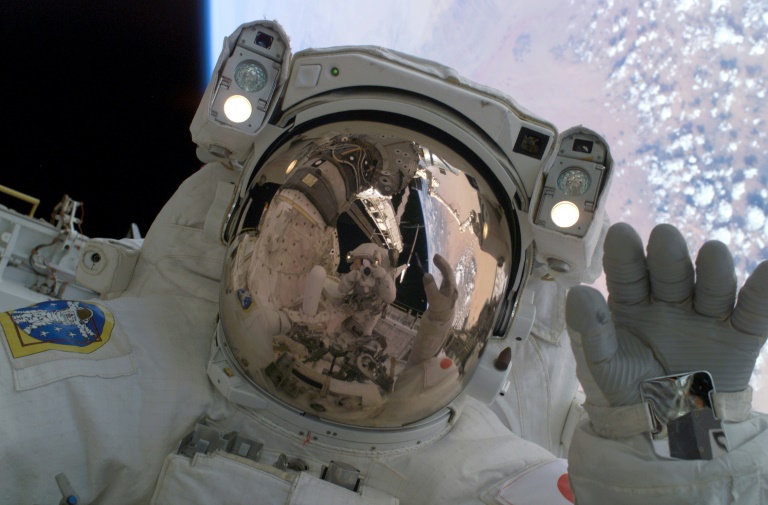
The first astronaut — or astronauts — with a physical disability could be announced as soon as Wednesday, according to the European Space Agency.

People with physical disabilities have previously been excluded from one of the most exclusive and demanding jobs on Earth — and beyond — due to strict selection requirements.

Guillaume Weerts, the ESA’s head of space medicine, told AFP that the agency’s “parastronaut project” required “a complete change in philosophy” about the concept of medical aptitude, which originally came from the military and the selection of fighter pilots.

After carrying out a feasibility study, the ESA said potential candidates could include people who have deficiencies in their lower limbs, whether from amputation or congenital defects.

Shorter people of up to 1.3 metres (4.3 feet) tall or those with different leg lengths were also eligible to apply.

The educational and psychological requirements for the candidates remained the same as for any other astronaut. Applications closed in June 2021.

The ESA is expected to name between four to six new European astronauts — without disabilities — during its ministerial council in Paris on Wednesday.

While Weerts said the parastronaut project runs somewhat separately, “there is a real possibility that as part of the announcement one or more people with disabilities” will also be presented.

– ‘Disability is not a limitation’ – 

In the extremely precise world of space travel, even small alterations can become extremely complicated — and expensive.

For example, the existing systems are designed for people of a certain height, Weerts said.

“What does that mean for someone who is a shorter size? How can we make sure that person can just reach the buttons?”

The ESA plans to work with those who are selected to find the best way to overcome such potential challenges.

As a member of the selection panel, Weerts could not reveal details about particular candidates.

But he said “a really great group of people” had applied and worked their way through the selection process.

“We have encountered absolutely marvellous individuals,” he said.

The process was an excellent “demonstration that disability is not a limitation”, he added.

“It’s really something that we all believe in,” he said, adding that there was a high level of commitment to the project from ESA’s partners.

So when could the first astronauts with a disability blast off?

“Space is a not a business for people who are in a hurry,” Weerts said.

The timeline is difficult to predict because “it really depends on what we encounter”, he said, adding that plenty more work would be carried out once the ESA has selected its candidates.

But he did say that an astronaut with a disability could launch into space “potentially in the next 10 years”.

– ‘Incredibly exciting’ – 

Kamran Mallick, the chief executive of the charity Disability Rights UK, said the project was “incredibly exciting”.

“Disabled people are excluded (from) large aspects of everything that we do in the world,” he told AFP.

“If we are truly to explore the universe, we have to accept that we can’t just have it solely for a particular group of individuals.”

Mallick praised the ESA’s plan to work with the astronauts to figure exactly what they need. 

“I’m a wheelchair user, and it is far better that people ask me what works for me, what I would need, rather than making assumptions of what someone can or cannot do,” he said.

Mallick said that while watching a space shuttle launch as a teenager, he dreamt of becoming an astronaut.

“Of course, I was quickly told that was not going to happen. Don’t aspire to be an astronaut,” he said.

“I wish I’d pursued it now.”

Colombia resumes talks with powerful ELN guerrilla group

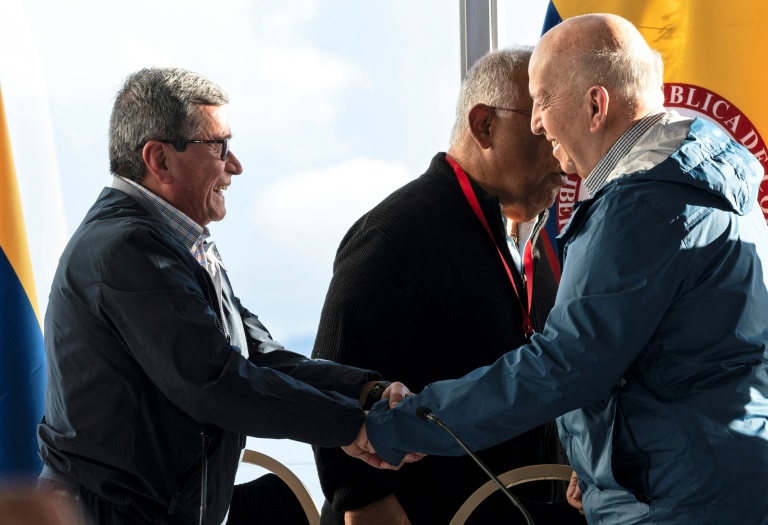
Colombia’s government and the National Liberation Army (ELN), the last recognized rebel group in the country, resumed formal peace talks in Venezuela Monday for the first time since they were suspended in 2019.

The talks are a push by President Gustavo Petro, who in August became Colombia’s first-ever leftist leader, and has vowed a less bellicose approach to ending violence wrought by armed groups, including leftist guerrillas and drug traffickers.

In their first meeting, the parties agreed to “resume the dialogue process with full political and ethical will,” according to a joint statement.

They added that the talks aim to “build peace” and make “tangible, urgent, and necessary” changes, highlighting the need for “permanent compromises.”

The first round of talks will last 20 days.

Colombia has suffered more than half a century of armed conflict between the state and various groups of left-wing guerrillas, right-wing paramilitaries and drug traffickers.

The ELN started as a leftist ideological movement in 1964 before turning to crime, focusing on kidnapping, extortion, attacks and drug trafficking in Colombia and neighboring Venezuela.

It has around 2,500 members, about 700 more than it did when negotiations were last broken off. The group is primarily active in the Pacific region and along the 2,200-kilometer (1,370-mile) border with Venezuela.

Dialogue with the group started in 2016 under ex-president Juan Manuel Santos, who signed a peace treaty with the larger Marxist Revolutionary Armed Forces of Colombia (FARC) rebel group that subsequently abandoned its weapons and created a political party.

But the talks with the ELN were called off in 2019 by conservative former president Ivan Duque following a car bomb attack on a police academy in Bogota that left 22 people dead.

Petro — himself a former guerrilla — reached out to the ELN shortly after coming to power, as part of his “total peace” policy.

The ELN peace talks delegation spent four years based in Cuba, as they had been barred from returning to Colombia by the previous government.

They traveled to Venezuela last month, where the fresh round of talks was announced.

Colombian Defense Minister Ivan Velasquez warned that the negotiations do not imply a “suspension of operations” against the ELN. 

“If there is an encounter with someone who has an arrest warrant, they must be captured… There is no ceasefire,” he said.

– ‘We all have to change’ –

Colombian peace commissioner Ivan Danilo Rueda hailed a “historic moment” for the country after the meeting.

“We are here honoring life, the lives of so many beings who are no longer here,” Rueda said. “Murdered, disappeared.”

ELN delegate Pablo Beltran said he hoped the dialogue would be “an instrument of change… and we hope we won’t fail.”

“In Colombia, we all have to change” and “overcome the dynamic of death,” he said.

Caracas is hosting the first meeting, and the talks will rotate between the other guarantors Cuba and Norway.

A statement from the guarantor nations said Monday’s meeting was “an important step to achieve peace.”

UN chief Antonio Guterres’s special envoy in Colombia, Carlos Ruiz Massieu, called on “the parties and Colombian society to take advantage of this historic opportunity.”

“I reiterate the support of the Secretary General @antonioguterres to this process,” he wrote on Twitter.

Venezuela’s President Nicolas Maduro hailed the process as “a message of hope for a peaceful Latin America and Caribbean,” at a rally in the capital.

Close Bitnami banner
Bitnami