World

Stocks rally but oil prices tumble

Stock markets in the United States and Europe rallied on Friday as investors fished for bargain shares and shrugged off losses elsewhere, but oil prices dropped as concerns over the global economy persist.

London stocks were lifted by official data showing UK retail sales rose 0.6 percent in October, rebounding from a 1.5-percent slump in September.

The news boosted the pound, which had fallen the previous day on a harsh government budget and confirmation Britain was in recession.

The main European indices closed in the green.

London was up 0.5 percent, while Frankfurt and Paris jumped 1.2 and 1.0 percent in value respectively.

The pound also rebounded after a sharp fall against the dollar on Thursday.

But others cautioned against getting too excited by the UK retail data since the country is in the grip of a worsening cost-of-living crisis.

“It is not the start of a promising trend,” said Craig Erlam at OANDA online trading platform.

The Dow Jones was also up 0.6 percent, buoyed by earnings reports from retail companies including Gap and Foot Locker.

“Their good news/better-than-feared news has mitigated some of the weakness seen earlier this week following Target’s (TGT) disappointment,” said Briefing.com analyst Patrick J O’Hare.

But with worries about the world’s economy and rising coronavirus cases in China, the price of the main US crude oil contract, WTI, tumbled on Friday below $80 per barrel for the first time since the end of September.

The main international oil contract, Brent crude, also fell by nearly three percent Friday around 1630 GMT.

– Fears abound –

Asian equities experienced mixed fortunes on Friday as cautious investors tried to gauge the outlook for Federal Reserve monetary policy, after several officials tempered optimism over signs that inflation is slowing in the world’s biggest economy.

While the week has been broadly positive for global equities following softer-than-expected US consumer and wholesale price figures, a strong reading on retail sales and jobless claims showed plenty of resilience to higher interest rates.

With that in mind, St Louis Fed President James Bullard warned more hikes were needed to bring inflation down from four-decade highs, adding that US interest rates might need to go as high as seven percent.

That was followed by Minneapolis Fed boss Neel Kaskari saying he had not witnessed much evidence that underlying demand was cooling and did not want to forecast when the tightening would end.

The comments came after a similar message from other policymakers, who have sought to calm markets, which soared in the wake of last Thursday’s consumer prices reading.

They also fuelled fears among traders that the sharp rate-hiking campaign — including four bumper 0.75-point increases in a row — would tip the US economy into recession.

“Investors seem continually surprised by the Fed merely repeating its mantra,” said Interactive Investor analyst Richard Hunter.

“Rates are likely to continue rising… and may well stay higher until such time as a sustained slowdown in inflation is evident.”

– Key figures around 1630 GMT –

New York – Dow: UP 0.6 percent at 33,746.54 points

EURO STOXX 50: UP 1.2 percent at 3,924.84

London – FTSE 100: UP 0.5 percent at 7,385.52 (close)

Paris – CAC 40: UP 1.0 percent at 6,644.46 (close)

Frankfurt – DAX: UP 1.2 percent at 14,431.86 (close)

Tokyo – Nikkei 225: DOWN 0.1 percent at 27,899.77 (close)

Hong Kong – Hang Seng Index: DOWN 0.3 percent at 17,992.54 (close)

Shanghai – Composite: DOWN 0.6 percent at 3,097.24 (close)

Pound/dollar: UP at $1.1931 from $1.1864 on Thursday

Euro/dollar: UP at $1.0368 from $1.0362

Dollar/yen: DOWN at 139.87 yen from 140.20 yen

Euro/pound: DOWN at 86.88 from 87.34 pence

Brent North Sea crude: DOWN 2.7 percent at $87.31 per barrel

West Texas Intermediate: DOWN 2.8 percent at $79.34 per barrel

burs-raz/gil
Twitter fate in doubt as employees defy Musk ultimatum

The future of Twitter seemed to hang in the balance Friday after its offices were locked down and key employees announced their departures in defiance of an ultimatum from new owner Elon Musk.

Fears grew that the fresh exodus would threaten the very existence of one of the world’s most influential internet platforms, which serves as a key communication tool for the world’s media, politicians, companies and celebrities.

Musk, also the CEO of Tesla and SpaceX, has come under fire for radical changes at the California-based firm, which he bought less than a month ago for $44 billion.

In an internal memo sent this week, Musk had told workers that they must choose to be “extremely hardcore” or lose their jobs.

He had already fired half of the company’s 7,500 staff, scrapped a work-from-home policy and imposed long hours, all while his attempts to overhaul Twitter face backlash and delays.

“I may be #exceptional, but gosh darn it, I’m just not #hardcore,” tweeted one former employee, Andrea Horst, whose LinkedIn profile still reads “Supply Chain & Capacity Management (Survivor) @Twitter.” 

His stumbling attempts to revamp user verification with a controversial subscription service have led to a slew of fake accounts and pranks, and prompted major advertisers to step away from the platform.

– ‘Not super worried’ –

Fevered talk of the site’s imminent demise was driving record high engagement on Twitter, according to Musk.

He noted the irony by posting the popular meme of an actor jokingly posing over a grave. Both the man and the tombstone were overlaid with Twitter’s logo. The post was “liked” by more than 1.3 million users.

In a later tweet, sent during Friday’s early hours on the West Coast, the South African-born billionaire said: “Record numbers of users are logging in to see if Twitter is dead, ironically making it more alive than ever!”.

Musk added that the “best people are staying, so I’m not super worried.”

Despite Musk’s assurances, entry to Twitter’s offices were temporarily closed until Monday, even with a badge, according to an internal message seen on US media.

In the internal memo sent Wednesday, Musk had asked staff to follow a link to affirm their commitment to “the new Twitter” by 5:00 pm New York time (2200 GMT) on Thursday.

If they did not do so, they would have lost their jobs, receiving three months of severance pay.

Twitter did not respond to AFP requests for comment on the new measure.

Signs that government regulators were becoming impatient with Musk’s handling of Twitter also grew on Friday, especially over the platform’s ability to moderate content with a severely reduced headcount.

A group of US senators on Thursday said Musk’s plans for the site “undermined the integrity and safety of the platform… despite clear warnings those changes would be abused for fraud, scams, and dangerous impersonation.”

A top regulator for the European Union meanwhile said that Musk should be increasing the number of moderators in Europe, not reducing them.

Musk “knows perfectly well what the conditions are for Twitter to continue operating in Europe,” EU commissioner Thierry Breton said.

A spokesman for German Chancellor Olaf Scholz said the government was watching developments at Twitter “with growing concern” and reviewing its presence on the platform.

Ukraine says 'nearly half' of energy grid battered by Russia

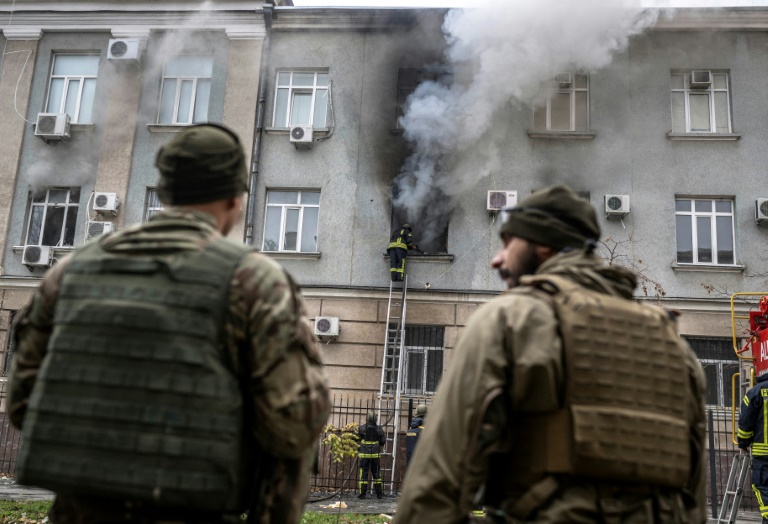
Ukraine said Friday that almost half of its power infrastructure was in need of repair after weeks of Russian attacks that have disrupted electricity supplies to millions as temperatures plunge.

Russia meanwhile accused Kyiv’s forces of executing a group of its soldiers who were surrendering to Ukraine in what Moscow described as a “massacre” that amounted to a war crime.

The assessment by Prime Minister Denys Shmygal of the widespread damage to Ukraine’s grid comes after weeks of sustained Russian attacks on Ukraine’s energy infrastructure.

“On November 15 alone, Russia fired about 100 missiles at Ukrainian cities. Nearly half of our energy system has been disabled,” Shmygal said, appealing to European allies for support.

Ukrainian President Volodymyr Zelensky told the nation on Thursday that some 10 million people were suffering blackouts as a result.

But the Russian defence ministry said Friday it was only targeting military-linked facilities, and said a series of long-range and precision strikes the day before had “hit exactly the designated objects”.

And the Kremlin this week blamed the blackouts and their civilian impact on Kyiv’s refusal to negotiate with Moscow, not on Russian missile attacks.

Ukraine’s description of the damage to its power industry came after Russia said Friday it was strengthening positions in Crimea, which Kyiv’s forces are battling towards.

– Crimea boosts defences –

Moscow annexed Crimea in 2014 after nationwide pro-democracy demonstrations led to the ouster of Ukraine’s former Kremlin-friendly president. 

Moscow used the peninsula, which hosts several important Russian military bases, as a launching pad for its February.

“Fortification work is being carried out… with the aim of guaranteeing the security of all Crimeans,” the Moscow-aligned governor of territory, Sergei Aksyonov, said.

His announcement comes as Ukraine forces are pushing a counter-offensive in the south towards Crimea and last week reclaimed Kherson, the capital of the region that borders Crimea.

With electrical and water supplies cut to the city following the destruction of key utilities by the retreating Russians, residents have been moving to stockpile basic supplies.

The presidency said it was doing everything possible to improve conditions there and that neighbouring territories — also battered by Russian forces — would provide help. 

“Our people there need a lot of help. Russians not only killed, mined but also robbed towns and cities. There is nothing left there in fact,” the deputy head of the presidency Kyrylo Tymoshenko said.

Kherson regional deputy governor Sergiy Khlan meanwhile announced Friday that the city’s rail link was being restored with a first train leaving later in the day.

– ‘Brutal’ killings –

Russia claimed to have also annexed the Kherson region along with three more in September, vowing to defend them with all available military means.

Ukraine President Volodymyr Zelensky has said his forces intend to recapture the peninsula as well.

There have been several explosions at or near Russian military installations in Crimea since February, including a coordinated drone attack on a key Russian naval port at Sevastopol. 

In October, the Kerch bridge connecting the peninsula to the Russian mainland was partially destroyed in an attack attributed to Ukraine by Moscow.

Russia announced on Friday that it was making gains too in the eastern Donetsk region, which its forces have partially controlled since 2014.

“The settlement of Opytnoe was liberated,” defence ministry spokesman Igor Konashenkov said on Friday.

Moscow’s forces, alongside troops from two breakaway regions in east Ukraine and mercenaries from Russia’s Wagner group have been trying for months to capture the nearby town of Bakhmut.

Nearly nine months of brutal fighting between Ukraine and Russia has spurred credible allegations of war crimes from both sides.

The last accusations came Friday when Russia accused Ukrainian troops of executing some ten prisoners of war in what Moscow said was a “massacre”.

“No one will be able to paint the deliberate and methodical murder of more than ten restrained Russian soldiers… who were shot in the head, as a ‘tragic exception,'” the ministry said in a statement.

The statement refers to videos circulating on Russian-language social media that purport to show the bodies of Russian servicemen who had surrendered and were then killed.

The Ukrainian prosecutor general’s office said Friday that the death toll from strikes earlier in the week on Vilniansk in the Zaporizhzhia region, which Moscow also said annexed, had left 10 people dead, including two children.

Tymoshenko meanwhile said six civilians were killed in four different regions of Ukraine following strikes Thursday.

Ivory Coast, Ghana throw down gauntlet on cocoa price

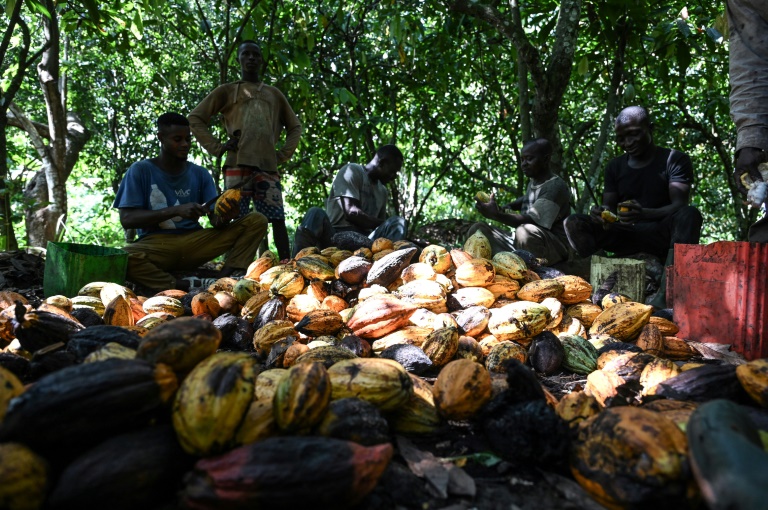
The world’s chocolate industry could be in for a turbulent ride as the two biggest cocoa producers set down demands for manufacturers to pay higher prices for their growers.

The quarrel focuses on the Living Income Differential (LID) — a policy that Ivory Coast and Ghana introduced in 2019 to fight poverty among cocoa farmers in the global $130-billion chocolate market.

Under it, Ivory Coast and Ghana vowed to charge a premium of $400 per tonne on all cocoa sales, starting with the 2020/21 harvest.

But trade boards in the countries — the Ivorian Coffee-Cocoa Council (CCC) and the Ghana Cocoa Board (Cocobod) — say the scheme is being undermined as cocoa traders depress the price of another premium that operates in parallel.

“We’ve introduced the Living Income Differential as a means of improving the farmer income,” said Fiifi Boafo, Cocobod’s spokesperson.

“You have these companies circumventing these processes to ensure that the Living Income Differential effect is not felt in (their) lives.” 

The two countries together account for 60 percent of the world’s cocoa but their farmers earn less than six percent of the industry’s global revenue.

They boycotted a bridge-building meeting in Brussels late last month and set November 20 as a deadline for bringing buyers into line.

They are threatening to punish corporations by barring them from visiting plantations to estimate harvests — a key factor in cocoa price forecasting.

They are also threatening to suspend sustainability programmes that chocolate giants use to enhance their image with fast-growing ethnic consumers.

“This boycott and also ultimatum is to draw attention to the fact that inasmuch as it is important for us to talk about deforestation, it is important to talk about child labour, it is equally important to talk about the farmer income,” said Boafo.

– Premium pressure –

The LID premium is being completed by a price stabilisation fund to help buffer the international price of cocoa in the event of big market fluctuations.

Some experts say the chocolate giants have factored the LID into their costs but claw back some of this by exerting pressure on another premium based on the quality of cocoa beans.

This premium, known as the origin differential, has plunged below zero in recent years, effectively cancelling out part of the LID.

Covid is being used as “a pretext not to pay,” CCC President Yves Brahima Kone told AFP. “The thing is, the multinationals have increased their profits — they are able to pay.”

The World Cocoa Foundation, an umbrella group of public entities and corporations aimed at supporting sustainability in the sector, declined to comment on the faceoff.

Among corporations, Nestle said it strongly backed efforts for growers to maintain a decent standard of living and had been paying the LID since its inception.

Some experts say that time may weigh against Ivory Coast and Ghana if the row escalates.

Virtually all of Ivory Coast’s crop is purchased by roughly half a dozen majors. Of this, around 80 percent heads to Europe, the wealthy market where sustainability factors — environmental and labour criteria — count most for consumers.

“Ivory Coast’s economy is heavily dependent on cocoa income,” said one specialist. “It needs to sell its beans.”

“Stopping sustainability programmes is difficult to explain to the general public, and Ivory Coast’s image could (also) suffer.” 

'European California' Portugal woos Americans seeking better life

Nathan Hadlock moved to Portugal to escape the violence and lack of social welfare he saw in the United States, while still enjoying the sun and sea he had loved in California.

“Lisbon checked all the boxes,” the 40-year-old American entrepreneur told AFP.

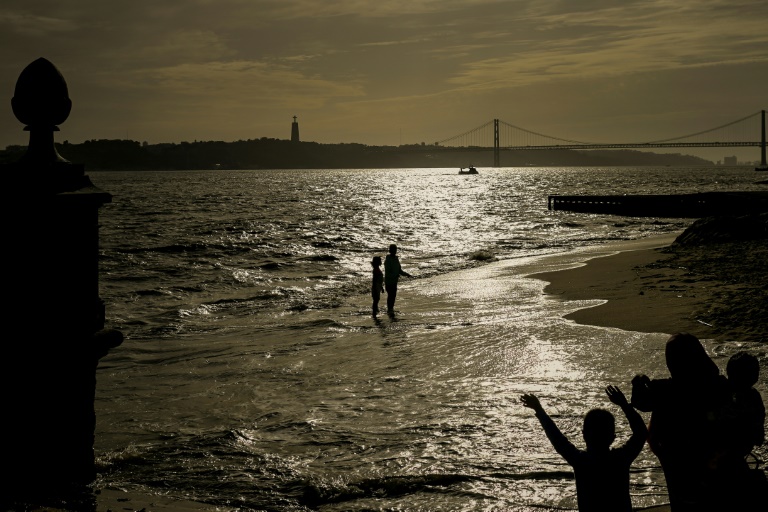
It even has a suspension bridge that is almost a dead ringer for San Francisco’s Golden Gate.  

“My partner and I were looking to slow life down and enjoy things more. And so we made a list of the top 10 places in the world and Lisbon quickly made it to the top.”

The couple, who started a family when they moved to the Portuguese capital in 2020, were drawn by the weather, the good food, the cheaper lifestyle and the ease of travelling to other parts of Europe. 

They also wanted to escape the darker sides of US society.

“One of the main reasons (US) investors are looking to move here, is their kids’ safety. They often say, ‘I don’t want my kid to go to school and get shot,'” Hadlock insisted.

“And that’s a real thing in the United States that just no one here in Europe has to experience.” 

Jen Wittman, who uprooted from the Golden State to Lisbon during the pandemic with her husband and teenage son, said the United States was “really kind of falling apart at the seams”.

“The George Floyd incident and the pandemic, the political division, the racism… Everything was just getting overwhelming in America.”

Having a European social net made a big difference too.

“America is terrible with health care. And it’s terrible if you’re a retiree and you have a health condition. Essentially in America you can be bankrupted by an illness,” the 47-year-old said.

At around 7,000, the number of US citizens living in Portugal remains tiny compared to the 42,000 British expats who had made the country their home.

But while the influx of Brits — the largest expat community from western Europe — has begun to tail off, incomers from the States have doubled since 2018.

This year Americans are jostling with the Chinese for top spot among overseas investors lured by Portugal’s “golden visas” — residents permits issued for foreigners prepared to buy property or transfer capital to the Iberian country.

But most come on a D7 visa, which demands they have a regular “passive income” from pensions, rents or investments.

– ‘Different mentality’ –

Joana Mendonca, a lawyer for migration consultancy Global Citizen Solutions, speaks “almost every day” to US clients.

“Some come because they’re digital nomads and want to work from home by the sea,” she said. 

“There are also entire families, who dream of one day getting their children into European universities.

“And there are retired people who sell everything in the States so they can enjoy a good retirement in Portugal.”

Mendonca said Americans had “a different mentality” from other foreign investors, who were drawn to Portugal essentially by residency permits and tax exemptions.

“They really want to come and live here and adopt a different lifestyle,” she said, even though the introduction of the golden visa scheme in 2012 has contributed to an unwelcome surge in property prices.

Hadlock started off as a digital nomad in Portugal. Now he works for an investment fund that buys up land for olive and almond groves in the rolling hills of the Alentejo.

The region south of Lisbon reminds him of California’s Napa and Sonoma valleys.

– ‘Surf and good wine’ –

In Lisbon, Hadlock runs get-togethers to develop business ties between California and Portugal. The group calls itself Red Bridge, in a nod to the red suspension bridges spanning San Francisco Bay and the Tagus estuary.

Jonathan Littman, one of the co-founders, still lives in California but is learning Portuguese.

He got to know Portuguese start-ups in Silicon Valley when Lisbon started organising yearly international web summits in 2016.

“We sort of see this as the California of Europe,” he said.

“The surfing, the coast… We both have great wine. We both have a love of seafood and healthy cuisine. We both can be a little laid back.”

Like her compatriots, Wittman and her family left the States to escape a “divisiveness” that Hadlock said is “pulling the US apart” and is palpable “as soon as you get off the plane”.

But Portugal was not their first choice.

“We tried to move to Italy but they were not accepting American visa applicants at all,” she recalled. “And so, we were like, ‘Who in Europe will take Americans?’ And it was Croatia and Portugal.”

She and her husband run their own digital marketing company and have no plans to move back.

“It’s safe. It’s inclusive. We feel safe walking around, we feel safe at night. We do things that we could never do in America without being in constant fear,” she said.

Climate activists pour paint on Charles Ray sculpture in Paris

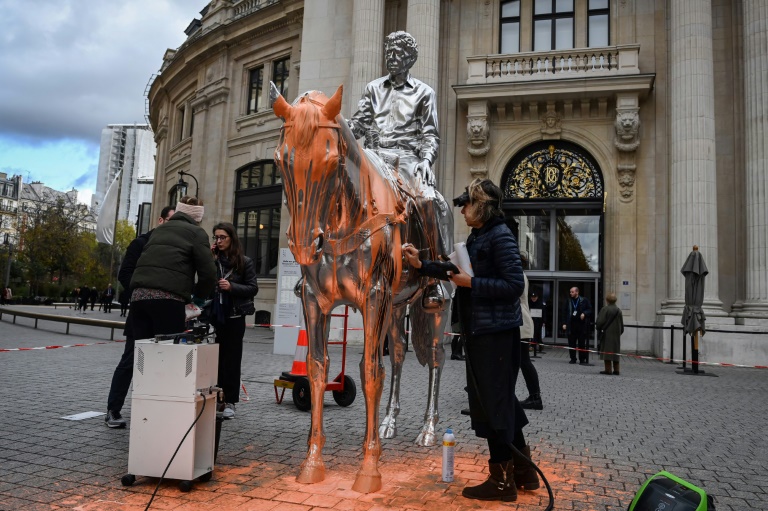
Environmental activists on Friday dumped orange paint over an outdoor sculpture by the American artist Charles Ray in central Paris, the latest in a string of artwork defacements aimed at spurring greater government efforts to fight climate change.

The lifesize “Horse and Rider” stands in front of the Bourse de Commerce contemporary art museum, which houses part of the collection of French fashion billionaire Francois Pinault.

The action was claimed by Derniere Renovation (“Last Renewal”), which showed two activists kneeling and holding hands in front of the doused sculpture on its website.

They had also put a white T-shift over the rider with the phrase “We have 858 days left”, apparently a reference to studies that say carbon emissions must peak by 2025 if the planet is to have a viable future.

“Eco-vandalism is taken up a notch,” Culture Minister Rima Abdel Malak, who visited the site as workers cleaned up the paint, wrote on Twitter.

“Art and ecology are not incompatible. It’s the opposite, they are common causes,” she said.

The incident came as climate activists targeted an Andy Warhol work in Milan on Friday, covering a car repainted by the American pop artist with flour — two weeks after the same group threw pea soup at a Van Gogh painting in Rome.

Vermeer’s “Girl with a Pearl Earring” in The Hague and Van Gogh’s “Sunflowers” in London have also been targeted, drawing widespread condemnation from officials.

US home sales drop for record ninth straight month on high prices

US existing home sales slid for a record ninth straight month in October, industry data showed Friday, as rising mortgage rates squeeze affordability.

Inflation in the United States has soared to the highest levels in recent decades, leading the Federal Reserve to embark on an aggressive campaign to cool the world’s biggest economy.

Those rapid interest rate hikes have boosted borrowing costs, with immediate impacts on the key housing market, which has exploded in recent years amid the pandemic.

Sales of all types of homes and condos slid 5.9 percent last month compared to September, the National Association of Realtors (NAR) said in its latest report.

This marks the ninth straight month of declines, the longest string in figures dating back to 1999.

The sales pace slowed to an annual rate of 4.4 million, seasonally adjusted, 28.4 percent below October 2021.

“More potential homebuyers were squeezed out from qualifying for a mortgage in October as mortgage rates climbed,” NAR chief economist Lawrence Yun said.

The median home price was $379,100 last month, down from a record high in June but still well above the same period a year ago as prices rose in all regions.

Yun said the impact is greater in expensive areas and in markets that saw significant home price gains in recent years.

“Looking at October of 2019, pre-Covid, and the latest figure, home prices are up a whopping 40 percent, and that’s really hurting affordability,” he told reporters on Friday.

“We know that most families’ incomes, most households’ incomes, have not risen by 40 percent,” he added.

With the inventory of homes on the market still tight, nearly a quarter sales were for more than the asking price, according to the NAR.

The US housing market took off during the pandemic as Americans flush with savings capitalized on bargain lending rates, helping buoy the economy.

But average mortgage costs jumped to 6.9 percent last month, according to home loan finance company Freddie Mac, more than double the rate in 2021.

“Affordability has been crushed by the surge in mortgage rates,” Ian Shepherdson of Pantheon Macroeconomics said in a recent analysis.

While sales have slumped, prices have only recently started to drop and “home prices have much further to fall… given the scale of the collapse in demand,” he said.

Existing home sales comprise 90 percent of the US real estate market.

All four major regions in the country saw sales declines last month, NAR said.

Iran's 'civil war' warning may presage bloodier crackdown: analysts

Iran has accused foreign foes of trying to spark “civil war” by stoking the protests over Mahsa Amini’s death — harsh language that, analysts warn, could presage an even bloodier crackdown. 

Fears that Iran is sliding into deeper violence have grown since Wednesday, when assailants on motorcycles gunned down nine people — including a woman and two boys aged nine and 13 — in two mysterious attacks.

Officials in Iran were quick to accuse “terrorists” backed by its Western enemies of being behind the attacks in the southern cities of Izeh and Isfahan, which authorities said also left dead two security personnel.

It was the second attack Iran has blamed on what it labels terrorists since the protests erupted, after at least 13 people were killed at a shrine in Shiraz, another city in southern Iran, in an October 26 mass shooting claimed by the Islamic State group.

Analysts say however that, regardless of who carried out the latest attacks, they could result in an even bloodier response to the protests that erupted after Amini’s death on September 16, following her arrest for an alleged breach of Iran’s dress code for women.

“We don’t have a good sense of what happened in Izeh and Isfahan — was it a terrorist group, or potentially the regime itself?” said Henry Rome, an Iran expert at the Washington Institute.

“Either way, the government will probably use the attacks to send the message that the protests are undermining national security and opening the door for Western-backed terrorism,” he told AFP.

“The government is likely attempting to tap into fears that Iran could be on the path to civil war and that stronger action is needed.”

– ‘Regime to exploit attacks’ –

Following Wednesday’s twin attacks, Iran’s Foreign Minister Hossein Amir-Abollahian accused Israel and its Western allies of plotting a “civil war” in the Islamic republic.

Security services, Israel and Western politicians had “made plans for a civil war and the destruction and disintegration of Iran”, he tweeted, adding that they “must know that Iran is not Libya or Sudan”.

Fars news agency, which is close to Iran’s authorities, said Wednesday’s attacks showed “those who want to dismantle the country are aiming to incite a civil war”.

At least 342 people, including 43 children and 26 women, have been killed in the crackdown since Amini’s death, the Norway-based group Iran Human Rights said Wednesday.

Protesters had been killed in 22 of Iran’s 31 provinces, it said, including 123 in Sistan-Baluchistan and 32 in Kurdistan — among the few provinces with a Sunni Muslim majority in the predominantly Shiite country.

The regime’s crackdown in the wake of the attack in Izeh, a city in ethnically diverse Khuzestan province, “follows a broader trend line of greater police brutality in historically restive provinces, particularly those with large populations of marginalised ethnic minorities”, said Kita Fitzpatrick, an Iran analyst at the Critical Threats Project of the American Enterprise Institute.

“Groups like the Islamic State… may very well be attempting to capitalise on protests to carry out attacks within Iranian borders,” she told AFP.

But, she added, “some analysts are observing inconsistencies between recent attacks in Iran and typical IS attacks.

“The regime will likely seek to exploit these attacks, regardless, and leverage them to justify cracking down on ongoing unrest.”

– ‘Anger and rage’ –

By adopting an even bloodier response, the regime risks radicalising a protest movement that until now has been led by women and has remained largely peaceful.

This week has seen an uptick in protesters fighting back, with an increasing number of videos posted on social media showing them clashing with security forces and torching their vehicles and bases.

“It’s the state security forces that start the violence, but increasingly people respond… and try to defend themselves,” said Omid Memarian, senior Iran analyst at Democracy for the Arab World Now (DAWN).

“The government’s strategy has been to create an environment of fear and terror so that people go back home,” he told AFP.

“They use violence on the streets and harsh sentences through the judiciary to stop the protests,” but that approach had “intensified the anger and rage” of the people, Memarian said.

Independent researcher Mark Pyruz said the attacks on security forces on motorbikes, mob beatings of pro-government Basij paramilitary forces and close-quarter stoning of police officers “reminds me of the initial phase of the Syrian civil war”.

“We don’t have enough info yet on what’s taking place in Iran” with respect to the shootings in Izeh and Isfahan, he said, adding however that “it’s something to watch for, closely, during days ahead”.

World stocks rally but oil prices tumble

Global main stock markets rallied Friday as investors fished for bargain shares and shrugged off losses elsewhere, but oil prices fell as concerns over the global economy persist.

London stocks were lifted by official data showing UK retail sales rose 0.6 percent in October, rebounding from a 1.5-percent slump in September.

The news boosted the pound, which had fallen the previous day on a harsh government budget and confirmation Britain was in recession.

London stocks gained 0.6 percent, while Frankfurt and Paris jumped 1.1 and 1.0 percent in value respectively.

The pound also rebounded after a sharp fall against the dollar Thursday.

But others cautioned against getting too excited by the UK retail data since the country is in the grip of a worsening cost-of-living crisis.

“It is not the start of a promising trend,” said Craig Erlam at OANDA online trading platform.

The Dow Jones was also up 0.7 percent after opening in New York buoyed by earnings reports from retail companies including Gap and Foot Locker.

But with worries about the world’s economy and rising coronavirus cases in China, the price of the main US crude oil contract, WTI, fell Friday below $80 per barrel for the first time since the end of September.

The main international oil contract, Brent crude, also tumbled by nearly four percent Friday around 1430 GMT.

– Fears abound –

Asian equities experienced mixed fortunes Friday as cautious investors tried to gauge the outlook for Federal Reserve monetary policy after several officials tempered optimism over signs that inflation is slowing in the world’s biggest economy.

While the week has been broadly positive for global equities following softer-than-expected US consumer and wholesale price figures, a strong reading on retail sales and jobless claims showed plenty of resilience to higher interest rates.

With that in mind, St Louis Fed President James Bullard warned more hikes were needed to bring inflation down from four-decade highs, adding that US interest rates might need to go as high as seven percent.

That was followed by Minneapolis Fed boss Neel Kaskari saying he had not witnessed much evidence that underlying demand was cooling and did not want to forecast when the tightening would end.

The comments came after a similar message from other policymakers, who have sought to calm markets, which soared in the wake of last Thursday’s consumer prices reading.

They also fuelled fears among traders that the sharp rate-hiking campaign — including four bumper 0.75-point increases in a row — would tip the US economy into recession.

“Investors seem continually surprised by the Fed merely repeating its mantra,” said Interactive Investor analyst Richard Hunter.

“Rates are likely to continue rising… and may well stay higher until such time as a sustained slowdown in inflation is evident.”

– Key figures around 1430 GMT –

London – FTSE 100: UP 0.6 percent at 7,387.76 points

Paris – CAC 40: UP 1.0 percent at 6,645.38

Frankfurt – DAX: UP 1.1 percent at 14,419.46

EURO STOXX 50: UP 1.2 percent at 3,926.21

New York – Dow: 0.7 percent at 33,792.59 points 

Tokyo – Nikkei 225: DOWN 0.1 percent at 27,899.77 (close)

Hong Kong – Hang Seng Index: DOWN 0.3 percent at 17,992.54 (close)

Shanghai – Composite: DOWN 0.6 percent at 3,097.24 (close)

Pound/dollar: UP at $1.1888 from $1.1864 on Thursday

Euro/dollar: DOWN at $1.0348 from $1.0362

Dollar/yen: DOWN at 139.77 yen from 140.20 yen

Euro/pound: DOWN at 87.05 from 87.34 pence

Brent North Sea crude: DOWN 3.9 percent at $86.27 per barrel

West Texas Intermediate: DOWN 4.5 percent at $77.93 per barrel

burs-raz/cdw

Angry funerals spark new protests in Iran

Funerals for young Iranians, including a small boy who families say were killed in a state crackdown, sparked a new wave of anti-regime protests on Friday in the Islamic republic.

Iran’s clerical leadership under Ayatollah Ali Khamenei is facing its biggest challenge since the Islamic Revolution of 1979 in the now two months of protests sparked by the death of Mahsa Amini.

The authorities have responded with a crackdown that according to a rights group has left 342 dead, half a dozen already sentenced to death and thousands more arrested.

The turbulence also comes with intense attention on the response of Iran’s team at the football World Cup in Qatar, which is due to play its first match against England on Monday.

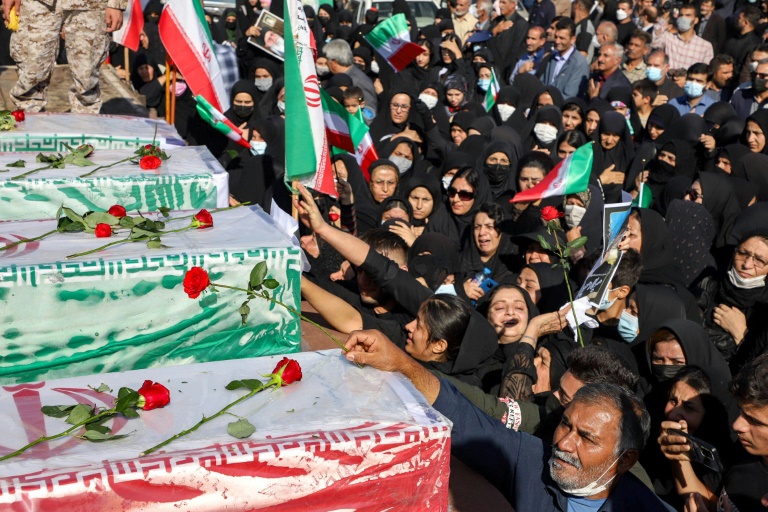
Scores flocked to the southwestern city of Izeh for the funeral of Kian Pirfalak, aged nine, according to pictures published by Iran’s ISNA news agency.

His mother told the funeral ceremony that Kian was shot on Wednesday by the security forces although Iranian officials have insisted he was killed in a “terrorist” attack carried out by an extremist group.

“Hear it from me myself on how the shooting happened, so they can’t say it was by terrorists because they’re lying,” his mother told the funeral according to a video posted by the 1500tasvir monitor.

“Maybe they thought we wanted to shoot or something and they peppered the car with bullets… Plainclothes forces shot my child. That is it.”

Ridiculing the official version of events, the protesters chanted: “Basij, Sepah — you are our ISIS!” according to a video posted by Norway-based group Iran Human Rights (IHR).

The Basij is a pro-government paramilitary force and Sepah is another name for Iran’s feared Revolutionary Guards. ISIS is an alternative name for the extremist Islamic State (IS) group.

– Khomeini house torched –

“Death to Khamenei,” they shouted in another video posted by 1500tasvir.

Opposition media based outside of Iran said that another minor, Sepehr Maghsoudi, 14, was also shot dead in similar circumstances in Izeh on Wednesday. Funerals have repeatedly become flashpoints for protests.

State television said seven people had been buried, including a nine-year-old boy, adding they had been killed by “terrorists” on motorbikes.

“Kian Pirfalak, nine, and Sepehr Maghsoudi, 14, are among at least 56 kids killed by Iranian forces working to crush Iran’s 2022 revolution,” said Hadi Ghaemi, director of the New York-based Center for Human Rights in Iran.

IHR also said anti-regime slogans were chanted at the funeral in the northern city of Tabriz for Aylar Haghi, a young medical student who activists say was killed in a fall from a building blamed on the security forces.

Meanwhile the Norway-based Hengaw rights group said large numbers turned out for the funeral in the Kurdish-populated northwestern city of Mahabad for Azad Hassanpour who it said was killed by security forces on Thursday.

Chanting anti-regime slogans, mourners then marched through the city, the group added.

Protesters also set on fire the ancestral home of the Islamic republic’s late founder Ayatollah Ruhollah Khomeini in the western town of Khomein, according to images posted on social media, verified by AFP.

But Iran’s Tasnim news agency later denied there had been a fire, saying the “door of the historic house is open to visitors”.

Khomeini is said to have been born at the house in Khomein — from where his surname derives — at the turn of the century. The house was later turned into a museum commemorating him.

– New Sistan-Baluchistan protests –

The nationwide protests — which have cut across ethnicities and social classes — were initially fuelled by anger over the obligatory headscarf for women imposed by Khomeini but have turned into a movement calling for an end to the Islamic republic itself.

According to IHR, at least 342 people including 43 children and 26 women have been killed by security forces in the crackdown on the protests.

Its figures include 123 people killed in Sistan- Baluchistan province where the protests had a distinct initial spark but have fed into the nationwide anger.

Mainly Sunni Sistan-Baluchistan is Iran’s poorest region whose ethnic Baluch inhabitants feel discriminated against by the Tehran Shiite elite.

New protests took place in the main city of Zahedan, where rights groups say dozens were killed by security forces on September 30, with people removing Islamic republic flags from buildings, IHR said.

In the port city of Chabahar, people also tore down a billboard of Khomeini, it added.

Images posted on social media showed security forces seemingly shooting at protesters in the town of Iranshahr in the province.

Meanwhile in Doha, Iran captain Alireza Jahanbakhsh insisted the side was concentrating on football and declined to be drawn on how it would mark goals.

“Every single player has a different celebration and you ask about national anthem and that’s something that also has to be decided in the team which we already talked about,” he said.

Close Bitnami banner
Bitnami