World

Swedish prosecutor confirms Nord Stream pipeline sabotage

The blasts which destroyed sections of the Nord Stream pipelines carrying natural gas from Russia to Germany under the Baltic Sea in September were acts of sabotage, Swedish officials confirmed Friday.

The Nord Stream 1 and 2 pipelines have been at the centre of geopolitical tensions as Russia cut gas supplies to Europe in suspected retaliation against Western sanctions following Moscow’s invasion of Ukraine.

Four large gas leaks were discovered on Nord Stream’s two pipelines off the Danish island of Bornholm at the end of September, with seismic institutes recording two underwater explosions just prior.

Investigators had already said preliminary inspections had reinforced suspicions of sabotage.

Russia and Western countries, particularly the United States, have traded bitter barbs over who is responsible for the blasts.

“The analyses conducted found traces of explosives on several foreign objects” at the sites of the blasts, prosecutor Mats Ljungqvist, who is leading the preliminary investigation, said in a statement Friday.

Ljungqvist added technical analyses were continuing in order to “draw more reliable conclusions regarding the incident”.

Sweden’s prosecution authority said the “continued investigation will show if anyone can be formally suspected of a crime”.

The Swedish Security Service (SAPO) — which is conducting the investigation under the prosecutors’ leadership — confirmed the findings in a separate statement but both authorities declined to comment further.

The closely watched investigation has also been supported by Sweden’s coast guard, the Swedish armed forces and the police.

– Trading blame –

While the leaks were in international waters, two of them were in the Danish exclusive economic zone and two in Sweden’s.

At the end of October, Nord Stream sent a Russian-flagged civilian vessel to inspect the damage in the Swedish zone. 

The same week the prosecution authority announced it was conducting a second probe of the damage to complement the first done in early October.

In early November, the operator said roughly 250 metres (820 feet) of the of the Nord Stream 1 pipeline had been destroyed and that craters with a depth of three to five metres had been found on the seabed.

Although the pipelines were not in operation when the leaks occurred, they both still contained gas which spewed up through the water and into the atmosphere.

Moscow has accused Western countries of being behind the explosions of the pipelines, but has not provided any firm proof. 

In early November, the Kremlin accused Britain of “directing and coordinating” the explosions.

The accusation was rejected as “distractions which are part of the Russian playbook” by a spokesman for British Prime Minister Rishi Sunak.

Ukraine and some Western countries have meanwhile pointed the finger at Russia.

In mid-October, Russia said it was ready to resume deliveries of gas through the parts of the pipeline not affected by the leaks, with President Vladimir Putin saying “the ball was in the EU’s court”.

Swedish prosecutor confirms Nord Stream pipeline sabotage

The blasts which destroyed sections of the Nord Stream pipelines carrying natural gas from Russia to Germany under the Baltic Sea in September were acts of sabotage, Swedish officials confirmed Friday.

The Nord Stream 1 and 2 pipelines have been at the centre of geopolitical tensions as Russia cut gas supplies to Europe in suspected retaliation against Western sanctions following Moscow’s invasion of Ukraine.

Four large gas leaks were discovered on Nord Stream’s two pipelines off the Danish island of Bornholm at the end of September, with seismic institutes recording two underwater explosions just prior.

Investigators had already said preliminary inspections had reinforced suspicions of sabotage.

Russia and Western countries, particularly the United States, have traded bitter barbs over who is responsible for the blasts.

“The analyses conducted found traces of explosives on several foreign objects” at the sites of the blasts, prosecutor Mats Ljungqvist, who is leading the preliminary investigation, said in a statement Friday.

Ljungqvist added technical analyses were continuing in order to “draw more reliable conclusions regarding the incident”.

Sweden’s prosecution authority said the “continued investigation will show if anyone can be formally suspected of a crime”.

The Swedish Security Service (SAPO) — which is conducting the investigation under the prosecutors’ leadership — confirmed the findings in a separate statement but both authorities declined to comment further.

The closely watched investigation has also been supported by Sweden’s coast guard, the Swedish armed forces and the police.

– Trading blame –

While the leaks were in international waters, two of them were in the Danish exclusive economic zone and two in Sweden’s.

At the end of October, Nord Stream sent a Russian-flagged civilian vessel to inspect the damage in the Swedish zone. 

The same week the prosecution authority announced it was conducting a second probe of the damage to complement the first done in early October.

In early November, the operator said roughly 250 metres (820 feet) of the of the Nord Stream 1 pipeline had been destroyed and that craters with a depth of three to five metres had been found on the seabed.

Although the pipelines were not in operation when the leaks occurred, they both still contained gas which spewed up through the water and into the atmosphere.

Moscow has accused Western countries of being behind the explosions of the pipelines, but has not provided any firm proof. 

In early November, the Kremlin accused Britain of “directing and coordinating” the explosions.

The accusation was rejected as “distractions which are part of the Russian playbook” by a spokesman for British Prime Minister Rishi Sunak.

Ukraine and some Western countries have meanwhile pointed the finger at Russia.

In mid-October, Russia said it was ready to resume deliveries of gas through the parts of the pipeline not affected by the leaks, with President Vladimir Putin saying “the ball was in the EU’s court”.
Russia says 'fortifying' annexed Crimean peninsula

Russia said Friday it was strengthening positions on the Crimean peninsula, annexed from Ukraine in 2014, as Kyiv’s forces reclaim territory in the neighbouring Kherson region.

Moscow annexed Crimea in the wake of nationwide pro-democracy demonstrations that led to the ouster of Ukraine’s former Kremlin-friendly president. 

And it was used as a launching pad in February for Russian invasion, with Moscow’s troops pushing north and swiftly capturing towns and cities in southern Ukraine.

“Fortification work is being carried out on the territory of Crimea under my control with the aim of guaranteeing the security of all Crimeans,” the Moscow-appointed governor of the region, Sergei Aksyonov, said.

He added that the military and law enforcement were already working in such a way to make sure Crimeans “feel safe”.

His announcement comes as Ukraine forces in recent months have been pushing a counter-offensive in the south towards Crimea and last week reclaimed Kherson, the capital of the bordering the annexed peninsula.

With electrical and water supplies cut to the city following the destruction of key utilities by the retreating Russians, residents moved fast to stockpile basic supplies in the southern Ukrainian city.

The deputy head of the Kherson region Sergiy Khlan announced Friday that Kherson city’s rail link was being restored with a first train leaving later in the day.

– ‘There is nothing left’ – 

“For now, we are launching just one train, and later we will see whether the route becomes regular,” a spokeswoman for the national railway operator told AFP.

The Ukraine presidency said it was doing everything possible to improve conditions in Kherson and that neighbouring territories, also battered by Russian forces, would aid the liberated territory. 

“Our people there need a lot of help. Russians not only killed, mined but also robbed towns and cities. There is nothing left there in fact,” the deputy head of the presidency Kyrylo Tymoshenko said.

Russia claimed to have also annexed the Kherson region along with three more in September, vowing to defend them with all available military means.

Ukraine President Volodymyr Zelensky has said his forces intend to recapture the peninsula as well.

There have been several explosions at or near Russian military installations in Crimea since February, including a coordinated drone attack on a key Russian naval port at Sevastopol. 

In October, the Kerch bridge connecting the peninsula to the Russian mainland was partially destroyed in an attack attributed to Ukraine by Moscow.

Russia announced on Friday that it was making gains too in the eastern Donetsk region, which its forces have partially controlled since 2014.

– Donbas battles –

“As a result of offensive work carried out by Russian troops, the settlement of Opytnoe was liberated,” defence ministry spokesman Igor Konashenkov said on Friday.

Moscow’s forces, alongside troops from two breakaway regions in east Ukraine and mercenaries from Russia’s Wagner group have been trying for months to capture the nearby town of Bakhmut.

Russia has responded with a fresh barrage of missile and drone attacks across Ukraine, crippling its power grid, after its troops withdrew from Kherson.

Ukrainian President Volodymyr Zelensky said Thursday that some 10 million people were suffering blackouts as a result.

The Russian defence ministry said Friday it had launched “long-range, precision” weapons against military targets, specifically fuel and energy infrastructure.

“The goals of the attack have been achieved. All rockets hit exactly the designated objects,” Konashenkov said.

The Ukrainian prosecutor general’s office said Friday that the death toll from strikes earlier in the week on Vilniansk in the Zaporizhzhia region, which Moscow also said annexed, had left 10 people dead, including two children.

Tymoshenko meanwhile said six civilians were killed in four different regions of Ukraine following strikes Thursday.

15 killed in Iraq after gas tank blast triggers building collapse

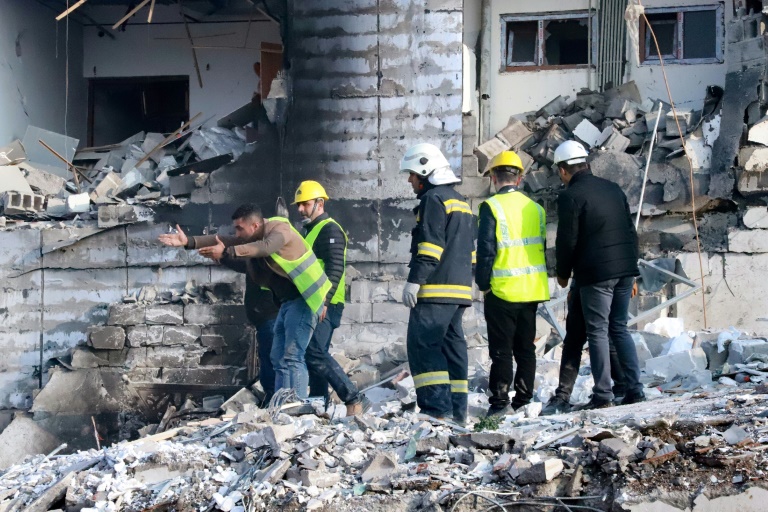
Fifteen people died and around a dozen were injured in northern Iraq when a fuel tank exploded, causing a building to collapse, authorities said Friday as search operations ended.

Provincial governor Haval Abu Bakr provided the final toll for Thursday evening’s blast in Sulaimaniyah, the second-largest city of Iraq’s autonomous Kurdistan region, and declared a day of mourning in the province.

“Most of the victims are women and children,” Abu Bakr said, adding that “there are no more bodies under the rubble of the house”.

Authorities said the three-story building collapsed after a leak from a liquefied petroleum gas tank used for heating triggered a blast.

Emergency services still searching for survivors had given an earlier toll of 11, but several hours later the city’s emergency response chief Saman Nader announced “the end of operations”, with 15 bodies found in total.

Local residents had watched on Friday morning as rescue workers, assisted by a backhoe, searched among collapsed bricks and twisted metal.

The explosion shattered the windows and blackened the facade of a neighbouring building. 

Bafel Jalal Talabani, head of the Patriotic Union of Kurdistan (PUK) in power in Sulaimaniyah, said he would finance the reconstruction of the building and those nearby.

He also said he would cover medical bills of any injured needing care abroad, his party’s website said.

Much of war-ravaged Iraq’s infrastructure is dilapidated and tragedies are common.

The country also suffers from poorly enforced safety standards, particularly in the transport and construction sectors.  

In late October, at least nine people were killed and 13 others injured when a tanker transporting gas accidentally exploded in Baghdad, the Iraqi capital. 

In April 2021, more than 80 people died in a Baghdad hospital fire when improperly stored oxygen cylinders exploded. 

Earth now weighs six ronnagrams: New metric prefixes voted in

Say hello to ronnagrams and quettametres: International scientists gathered in France voted on Friday for new metric prefixes to express the world’s largest and smallest measurements, prompted by an ever-growing amount of data.

It marks the first time in more than three decades that new prefixes have been added to the International System of Units (SI), the agreed global standard for the metric system.

Joining the ranks of well-known prefixes like kilo and milli are ronna and quetta for the largest numbers — and ronto and quecto for the smallest.

The change was voted on by scientists and government representatives from across the world attending the 27th General Conference on Weights and Measures, which governs the SI and meets roughly every four years at Versailles Palace, west of Paris.

The UK’s National Physical Laboratory, which led the push for the new prefixes, confirmed that the resolution had passed in a statement.

The prefixes make it easier to express large amounts — for example, always referring to a kilometre as 1,000 metres or a millimetre as one thousandth of a metre would quickly become cumbersome.

Since the SI was established in 1960, scientific need has led to a growing number of prefixes. The last time was in 1991, when chemists wanting to express vast molecular quantities spurred the addition of zetta and yotta.

A yottametre is a one followed by 24 zeroes. 

But even the mighty yotta is not enough to handle the world’s voracious appetite for data, according to Richard Brown, the head of metrology at the UK’s National Physical Laboratory.

“In terms of expressing data in yottabytes, which is the highest prefix currently, we’re very close to the limit,” Brown told AFP.

“At the bottom end, it makes sense to have a symmetrical expansion, which is useful for quantum science, particle physics — when you’re measuring really, really small things.”

– New weight of the world –

The new prefixes can simplify how we talk about some pretty big objects.

“If we think about mass, instead of distance, the Earth weighs approximately six ronnagrams,” which is a six followed by 27 zeroes, Brown said.

“Jupiter, that’s about two quettagrams,” he added — a two followed by 30 zeros.

Brown said he had the idea for the update when he saw media reports using unsanctioned prefixes for data storage such as brontobytes and hellabytes. Google in particular has been using hella for bytes since 2010.

“Those were terms that were unofficially in circulation, so it was clear that the SI had to do something,” he said.

However metric prefixes need to be shortened to just their first letter — and B and H were already taken, ruling out bronto and hella.

“The only letters that were not used for other units or other symbols were R and Q,” Brown said.

Convention dictates that the larger prefixes end in an A, and the smaller ones in an O.

And “the middle of the words are very, very loosely based on the Greek and Latin for nine and 10,” Brown said.

The new prefixes should “future proof the system” and satisfy the world’s need for higher numbers — at least for the next 20 to 25 years, he added.

Twitter exodus begins after Musk 'hardcore' ultimatum

Employee departures multiplied at Twitter on Thursday after an ultimatum from new owner Elon Musk, who demanded staff choose between being “extremely hardcore” and working long hours, or losing their jobs.

“I may be #exceptional, but gosh darn it, I’m just not #hardcore,” tweeted one former employee, Andrea Horst, whose LinkedIn profile still reads “Supply Chain & Capacity Management (Survivor) @Twitter.” 

She added the hashtag “#lovewhereyouworked,” as did many other employees announcing their choice. 

Musk, also the CEO of Tesla and SpaceX, has come under fire for radical changes at the social media company, which he bought for $44 billion late last month.

He had already fired half of the company’s 7,500 staff, scrapped a work-from-home policy and imposed long hours, all while his attempts to overhaul Twitter have faced chaos and delays.

His stumbling attempts to revamp user verification with a controversial subscription service have led to a slew of fake accounts and pranks, and prompted major advertisers to step away from the platform.

– Is Twitter dead? –

Much of the fevered talk driving engagement on Twitter late on Thursday was concerning the possibility of the site’s imminent demise.

Musk noted the irony by posting the popular meme of an actor jokingly posing over a grave. Both the man and the tombstone were overlaid with Twitter’s logo. The post was “liked” by more than 1 million users.

In a later tweet, sent during Friday’s early hours on the West Coast, the billionaire said: “Record numbers of users are logging in to see if Twitter is dead, ironically making it more alive than ever!”

The troubled social media network’s management told employees Thursday that offices were temporarily closed and inaccessible, even with a badge, according to Zoe Schiffer, a journalist for the tech industry newsletter Platformer. 

“Going forward, to build a breakthrough Twitter 2.0 and succeed in an increasingly competitive world, we will need to be extremely hardcore,” Musk wrote in the ultimatum, an internal memo sent Wednesday and seen by AFP. 

“This will mean working long hours at high intensity. Only exceptional performance will constitute a passing grade,” he added.

Staff had been asked to follow a link to affirm their commitment to “the new Twitter” by 5:00 pm New York time (2200 GMT) on Thursday.

If they did not do so, they lost their jobs, receiving three months of severance pay — an unusual method even in the United States, where labor laws are less protective for employees than in many other developed countries. 

Twitter did not respond to AFP requests for comment on the new measure.

“No words just grateful to say I was able to get my dream job and do more than I ever thought possible. It’s been a wild ride,” Deanna Hines-Glasgow, who was a senior client account manager at Twitter, tweeted Thursday, according to her LinkedIn profile.  

Esther Crawford, the platform’s director of product development and one of the few managers who have not been fired, who have not resigned and who still publicly support the new leader, tweeted: “To all the Tweeps who decided to make today your last day: thanks for being incredible teammates through the ups and downs. 

“I can’t wait to see what you do next.” 

Iran's 'civil war' warning may presage bloodier crackdown: analysts

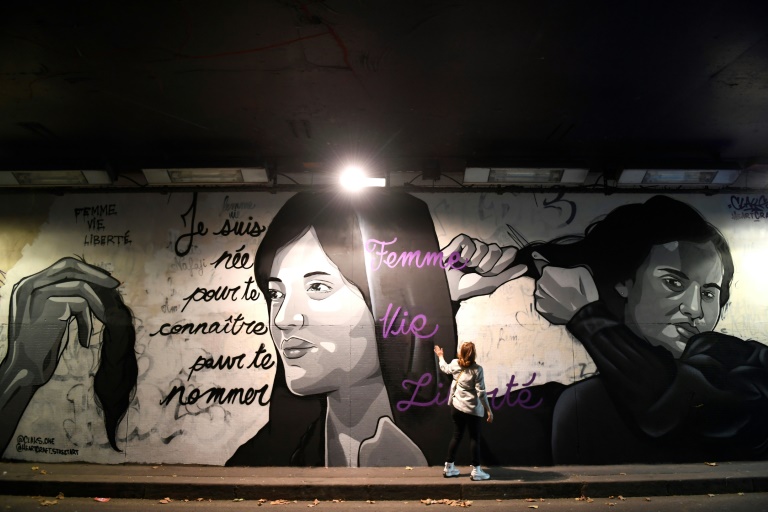
Iran has accused foreign foes of trying to spark “civil war” by stoking the protests over Mahsa Amini’s death — harsh language that, analysts warn, could presage an even bloodier crackdown. 

Fears that Iran is sliding into deeper violence have grown since Wednesday, when assailants on motorcycles gunned down nine people — including a woman and two boys aged nine and 13 — in two mysterious attacks.

Officials in Iran were quick to accuse “terrorists” backed by its Western enemies of being behind the attacks in the southern cities of Izeh and Isfahan, which authorities said also left dead two security personnel.

It was the second attack the authorities have blamed on what they labelled terrorists since the protests erupted, after at least 13 people were killed at a shrine in Shiraz, another city in southern Iran, on October 26.

Analysts say however that, regardless of who carried out the latest attacks, they could result in an even bloodier response to the protests that erupted after Amini’s death on September 16, following her arrest for an alleged breach of Iran’s dress code for women.

“We don’t have a good sense of what happened in Izeh and Isfahan — was it a terrorist group, or potentially the regime itself?” said Henry Rome, an Iran expert at the Washington Institute.

“Either way, the government will probably use the attacks to send the message that the protests are undermining national security and opening the door for Western-backed terrorism,” he told AFP.

“The government is likely attempting to tap into fears that Iran could be on the path to civil war and that stronger action is needed.”

– ‘Regime to exploit attacks’ –

Following Wednesday’s twin attacks, Iran’s Foreign Minister Hossein Amir-Abollahian accused Israel and its Western allies of plotting a “civil war” in the Islamic republic.

Security services, Israel and Western politicians had “made plans for a civil war and the destruction and disintegration of Iran”, he tweeted, adding that they “must know that Iran is not Libya or Sudan”.

Fars news agency, which is affiliated with Iran’s powerful Islamic Revolutionary Guard Corps, said Wednesday’s attacks showed “those who want to dismantle the country are aiming to incite a civil war”.

At least 342 people, including 43 children and 26 women, have been killed in the crackdown since Amini’s death, the Norway-based group Iran Human Rights said Wednesday.

Protesters had been killed in 22 of Iran’s 31 provinces, it said, including 123 in Sistan-Baluchistan and 32 in Kurdistan — among the few provinces with a Sunni Muslim majority in the predominantly Shiite country.

The regime’s crackdown in the wake of the attack in Izeh, a city in ethnically diverse Khuzestan province, “follows a broader trend line of greater police brutality in historically restive provinces, particularly those with large populations of marginalised ethnic minorities”, said Kita Fitzpatrick, an Iran analyst at the Critical Threats Project of the American Enterprise Institute.

“Groups like the Islamic State — which the regime blamed for the Izeh attack — may very well be attempting to capitalise on protests to carry out attacks within Iranian borders,” she told AFP.

But, she added, “some analysts are observing inconsistencies between recent attacks in Iran and typical IS attacks.

“The regime will likely seek to exploit these attacks, regardless, and leverage them to justify cracking down on ongoing unrest.”

– ‘Anger and rage’ –

By adopting an even bloodier response, the regime risks radicalising a protest movement that until now has been led by women and has remained largely peaceful.

This week has seen an uptick in protesters fighting back, with an increasing number of videos posted on social media showing them clashing with security forces and torching their vehicles and bases.

“It’s the state security forces that start the violence, but increasingly people respond… and try to defend themselves,” said Omid Memarian, senior Iran analyst at Democracy for the Arab World Now (DAWN).

“The government’s strategy has been to create an environment of fear and terror so that people go back home,” he told AFP.

“They use violence on the streets and harsh sentences through the judiciary to stop the protests,” but that approach had “intensified the anger and rage” of the people, Memarian said.

Independent researcher Mark Pyruz said the attacks on security forces on motorbikes, mob beatings of pro-government Basij paramilitary forces and close-quarter stoning of police officers “reminds me of the initial phase of the Syrian civil war”.

“We don’t have enough info yet on what’s taking place in Iran” with respect to the shootings in Izeh and Isfahan, he said, adding however that “it’s something to watch for, closely, during days ahead”.

Europe stocks rally on bargain hunting

Europe’s main stock markets rallied Friday as investors fished for bargain shares and shrugged off losses elsewhere.

London stocks were lifted by official data showing UK retail sales rose 0.6 percent in October, rebounding from a 1.5-percent slump in September.

The news boosted the pound which had fallen the previous day on a harsh government budget and confirmation Britain was in recession.

London stocks gained 0.8 percent, while Frankfurt and Paris each jumped 1.1 percent in value.

“There’s a strong argument that European markets look undervalued, and have suffered more this year, so there is still plenty of bargain hunting going on,” IG analyst Chris Beauchamp told AFP.

“There appears to be hope that European inflation might cool early next year.”

The pound rebounded after a sharp fall against the dollar Thursday.

Asian equities experienced mixed fortunes on Friday as cautious investors tried to gauge the outlook for Federal Reserve monetary policy after several officials tempered optimism over signs that inflation is slowing in the world’s biggest economy.

While the week has been broadly positive for global equities following softer-than-expected US consumer and wholesale price figures, a strong reading on retail sales and jobless claims showed plenty of resilience to higher interest rates.

With that in mind, St Louis Fed President James Bullard warned more hikes were needed to bring inflation down from four-decade highs, adding that US interest rates might need to go as high as seven percent.

That was followed by Minneapolis Fed boss Neel Kaskari saying he had not witnessed much evidence that underlying demand was cooling and did not want to forecast when the tightening would end.

The comments came after a similar message from other policymakers, who have sought to calm markets, which soared in the wake of last Thursday’s consumer prices reading.

They also fuelled fears among traders that the sharp rate-hiking campaign — including four bumper 0.75-point increases in a row — would tip the US economy into recession.

“Investors seem continually surprised by the Fed merely repeating its mantra,” said Interactive Investor analyst Richard Hunter.

“Rates are likely to continue rising… and may well stay higher until such time as a sustained slowdown in inflation is evident.”

– Key figures around 1130 GMT –

London – FTSE 100: UP 0.8 percent at 7,405.88 points

Paris – CAC 40: UP 1.1 percent at 6,649.57

Frankfurt – DAX: UP 1.1 percent at 14,419.01

EURO STOXX 50: UP 1.3 percent at 3,928.78

Tokyo – Nikkei 225: DOWN 0.1 percent at 27,899.77 (close)

Hong Kong – Hang Seng Index: DOWN 0.3 percent at 17,992.54 (close)

Shanghai – Composite: DOWN 0.6 percent at 3,097.24 (close)

New York – Dow: FLAT at 33,546.32 points (close)

Pound/dollar: UP at $1.1910 from $1.1864 on Thursday

Euro/dollar: UP at $1.0378 from $1.0362

Dollar/yen: DOWN at 139.82 yen from 140.20 yen

Euro/pound: DOWN at 87.12 from 87.34 pence

Brent North Sea crude: DOWN 0.6 percent at $89.21 per barrel

West Texas Intermediate: DOWN 0.4 percent at $81.32 per barrel

North Korea fires ICBM, lands near Japan

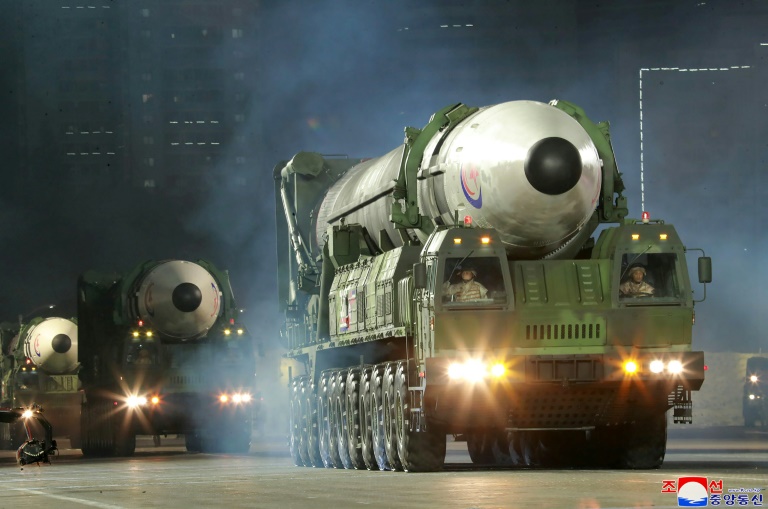
North Korea fired an intercontinental ballistic missile Friday in one of its most powerful tests ever, with Japan saying the weapon may have had the range to hit the United States mainland.

The missile was believed to have landed in Japan’s exclusive economic zone (EEZ), Prime Minister Fumio Kishida said as he blasted the launch as “absolutely unacceptable”.

The launch is Pyongyang’s second in two days and part of a record-breaking blitz in recent weeks, which North Korea — and some allies including Moscow — blame on the US boosting regional security cooperation, including joint military exercises.

The missile flew 1,000 km (621 miles) at an altitude of 6,100 km, South Korea’s military said, only slightly less than the ICBM Pyongyang fired on March 24, which appeared to be the North’s most powerful such test yet.

Later on Friday, Tokyo and Washington held joint military drills in the airspace over the Sea of Japan.

“Japan Self-Defense Forces and US armed forces conducted a bilateral exercise… amid an increasingly severe security environment surrounding Japan,” a joint staff statement distributed by the Japanese defence ministry said.

“This bilateral exercise reaffirms the strong will between Japan and the United States to respond to any situation.”

US Vice President Kamala Harris convened a meeting on the sidelines of an Asia-Pacific summit in Bangkok to discuss the launch with regional leaders.

“We strongly condemn these actions and we again call for North Korea to stop further unlawful, destabilising acts,” Harris said.

North Korea, led by Kim Jong Un, has fired scores of ballistic missiles this year — far more than any other year on record — and recent launches have been increasingly provocative, including firing a missile over Japan last month, triggering a rare air-raid warning.

On November 2, Pyongyang fired 23 missiles, including one which crossed the de facto maritime border and landed near the South’s territorial waters for the first time since the end of hostilities in the Korean War in 1953. Seoul called it “effectively a territorial invasion”.

The next day, North Korea fired an ICBM — although Seoul said it appeared to fail mid-flight.

Friday’s ICBM was fired at a “lofted trajectory”, Tokyo’s Defence Minister Yasukazu Hamada said, meaning the missile is fired up and not out, typically to avoid overflying neighbouring countries.

He said their calculations indicated that the missile “could have had a range capability of 15,000 km, depending on the weight of its warhead, and if that’s the case, it means the US mainland was within its range”.

The launch comes a day after North Korea fired a short-range ballistic missile in what Pyongyang said was a response to Sunday’s talks between Seoul, Tokyo and Washington.

The North’s foreign minister, Choe Son Hui, had warned that Pyongyang would take “fiercer” military action if the US followed through on plans to strengthen its “extended deterrence” commitment to regional allies.

– ‘A clear message’ –

In addition to speaking to Seoul and Tokyo’s leaders, US President Joe Biden discussed North Korea’s recent missile tests with Chinese counterpart Xi Jinping earlier this week, as fears grow that the reclusive regime will soon carry out its seventh nuclear test.

The launches are “a clear message to the US and Japan”, said Han Kwon-hee, manager of the Missile Strategy Forum, adding the launches were “part of the North’s response to recent talks”.

Pyongyang is trying to show the South and America that its “missiles can easily break through their defence systems, no matter how much the two try to improve them”, Han added.

Washington has responded to North Korea’s sanction-defying missile tests by extending exercises with South Korea, including deploying a strategic bomber, and by moving to boost the protection it offers Seoul and Tokyo.

China, Pyongyang’s main diplomatic and economic ally, joined Russia in May in vetoing a US-led bid at the UN Security Council to tighten sanctions on North Korea.

Experts say North Korea is seizing the opportunity to conduct banned missile tests, confident of escaping further UN sanctions due to Ukraine-linked gridlock at the United Nations.

“I primarily see these types of lofted ICBM tests as having a developmental purpose,” said Ankit Panda, Stanton senior fellow at the Carnegie Endowment for International Peace.

“Kim will test a nuclear weapon at a time of his choosing. North Korea can carry out such a test with little notice.”

US and allies vow pressure on North Korea after new missile launch

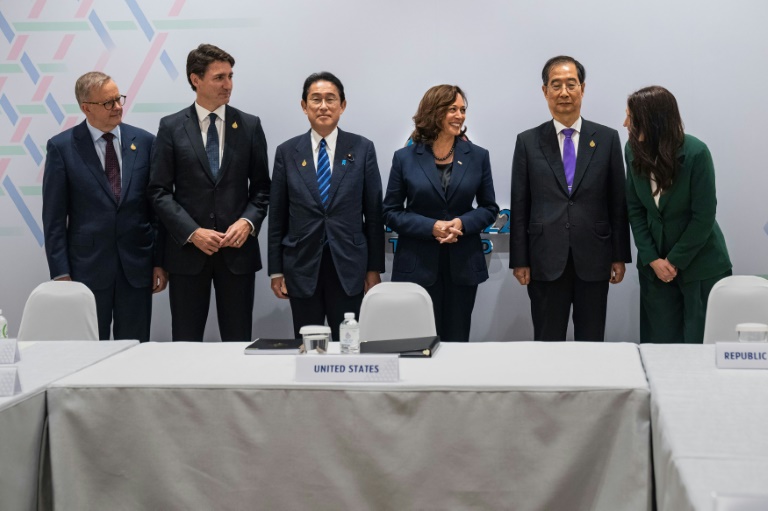
US Vice President Kamala Harris and leaders from Japan, South Korea, Australia, New Zealand and Canada vowed to pressure North Korea as they held urgent talks Friday on Pyongyang’s launch of an intercontinental ballistic missile.

Hours after North Korea launched the missile, which Japan said landed in its waters but was capable of striking the US mainland, Harris met the leaders of close US partners on the sidelines of an Asia-Pacific summit in Bangkok.

“We strongly condemn these actions and we again call for North Korea to stop further unlawful, destabilising acts,” Harris told reporters at the start of the talks.

“On behalf of the United States, I reaffirm our ironclad commitment to our Indo-Pacific alliances,” she said, using another term for the Asia-Pacific region.

The launch follows weeks of spiralling tensions with North Korea, which US intelligence believes is preparing a seventh nuclear test. 

A White House statement on the Bangkok talks said that the six leaders also warned of a “strong and resolute response” if North Korea — officially the Democratic People’s Republic of Korea — carries out the nuclear test.

The leaders agreed “that the path to dialogue remains open for the DPRK, and they called on the DPRK to abandon needless provocation and to return to serious and sustained diplomacy”, the statement said.

In a veiled reference to China, the primary backer of the isolated and impoverished country, the statement also called on all members of the United Nations to “fully implement” Security Council resolutions, which imposed broad sanctions on North Korea.

Australian Prime Minister Anthony Albanese said that the leaders also wanted an emergency session of the UN Security Council — where China and Russia in May vetoed a US-led bid to tighten sanctions on North Korea.

“This is about the globe coming together to condemn the actions of North Korea, to stand up for peace and security in our region,” Albanese told Australian reporters.

But Japanese Prime Minister Fumio Kishida, speaking at the meeting, acknowledged concerns that North Korea is ignoring pressure.

“There is the possibility that North Korea will launch further missiles,” Kishida said.

South Korean Prime Minister Han Duck-soo said that the “brazen” missile launch must “never be tolerated”.

“The international community must respond in a resolute manner,” Han said.

– Raising pressure –

It was the latest meeting on North Korea after US President Joe Biden met Sunday with Kishida and South Korean President Yoon Suk-yeol on the sidelines of a Southeast Asian summit in Cambodia.

They issued a similar warning against a nuclear test — prompting North Korea to denounce the three-way meeting as evidence of US hostility.

Friday’s meeting showed no backing down by the allies, which added three more countries to their common front.

Canadian Prime Minister Justin Trudeau called the missile launch “reckless”.

“This is completely unacceptable and must not continue,” Trudeau told reporters.

He said that Canada planned to boost its military engagement in Asia as part of an upcoming regional strategy.

New Zealand’s Prime Minister Jacinda Ardern promised her country’s “ongoing response and strength of response”, saying she understood the “anxiety” of Japan and South Korea.

Despite the pressure campaign, the Biden administration believes that China ultimately is the country with the greatest chance of pressuring North Korea.

Biden met Monday with Chinese President Xi Jinping on the sidelines of the G20 summit in Bali and voiced confidence that Beijing was “not looking for North Korea to engage in further escalation”.

Harris is participating in the Asia-Pacific Economic Cooperation (APEC) meeting after Biden flew home for his granddaughter’s wedding.

Biden has offered to begin a working-level dialogue with North Korea but has seen no interest from Pyongyang.

North Korean leader Kim Jong Un held three made-for-television meetings with Biden’s predecessor, Donald Trump, succeeding in easing tensions but reaching no lasting agreement.

The United States says it will never recognise North Korea as a nuclear power, while most experts believe Pyongyang will never give up its arsenal.

Close Bitnami banner
Bitnami