World

Asian markets mixed as caution over rate outlook dulls sentiment

Asian markets were mixed Friday as caution permeated trading floors and investors tried to gauge the outlook for Federal Reserve monetary policy after several officials tried to temper optimism over signs that inflation is slowing.

While the week has been broadly positive for equities following softer-than-expected US consumer and wholesale price figures, a strong reading on retail sales and jobless claims showed plenty of resilience to higher interest rates.

With that in mind, St Louis Fed President James Bullard warned more hikes were needed to bring inflation down from four-decade highs, adding that they might need to go as high as seven percent.

That was followed by Minneapolis Fed boss Neel Kaskari saying he had not witnessed much evidence that underlying demand was cooling and did not want to forecast when the tightening would end.

The comments came after a similar message from other policymakers, who have sought to calm markets, which soared in the wake of last Thursday’s consumer prices reading.

They also fuelled fears among traders that the sharp tightening campaign — including four straight bumper 0.75-point increases in a row — would tip the world’s top economy into recession.

On Wednesday, Kansas City Fed chief Esther George said it was unclear how the bank can douse inflation “without having some real slowing” or even a contraction.

“Bullard’s comments are all the more surprising given that there is clear evidence that inflationary pressure is starting to slow more than expected,” said CMC Markets analyst Michael Hewson.

“Consequently, Bullard’’s views may well be a minority view at this point, but it still shows how sensitive markets can be when it comes to the eventual destination of the terminal rate.”

– ‘Fundamental disconnect’ –

Wall Street’s three main indexes ended in the red, and Asia struggled to hold on to the morning’s momentum.

Hong Kong turned negative after a strong start, even as tech firms rallied and after China indicated it would ease back on some of its strict Covid restrictions and help its troubled property sector.

Tokyo, Shanghai, Singapore, Taipei and Mumbai were also down, though Sydney, Seoul, Wellington, Manila, Bangkok and Jakarta edged up.

London, Paris and Frankfurt all rose at the open.

There was a fear among analysts that the recent rally may have run a little ahead of itself.

“The market believes that inflation is on the downtrend. We also believe that, but the fact of inflation having peaked is not a reason for the Fed to turn and cut rates,” Paul Christopher, at Wells Fargo Investment Institute, told Bloomberg Radio.

“That’s the fundamental disconnect that still exists between the Fed and the market.”

And SPI Asset Management’s Stephen Innes added: “Things can turn on a dime, primarily when the fear of missing (out) drives sentiment.

“However, the odds of a pre-Thanksgiving rally are giving way to the hawkish Fed drumbeat and pushback on China reopening plays.”

The pound clawed back some of the losses suffered Thursday after Britain unveiled a budget with 55 billion pounds ($65 billion) of tax hikes and spending cuts that traders fear will deepen a cost-of-living crisis and a recession that could last two years.

– Key figures around 0810 GMT –

Tokyo – Nikkei 225: DOWN 0.1 percent at 27,899.77 (close)

Hong Kong – Hang Seng Index: DOWN 0.3 percent at 17,992.54 (close)

Shanghai – Composite: DOWN 0.6 percent at 3,097.24 (close)

London – FTSE 100: UP 0.4 percent at 7,372.20

Pound/dollar: UP at $1.1910 from $1.1867 on Thursday

Euro/dollar: UP at $1.0373 from $1.0370

Dollar/yen: DOWN at 140.00 yen from 140.20 yen

Euro/pound: DOWN at 87.08 from 87.34 pence

West Texas Intermediate: UP 0.5 percent at $82.01 per barrel

Brent North Sea crude: UP 0.3 percent at $90.01 per barrel

New York – Dow: FLAT at 33,546.32 points (close)
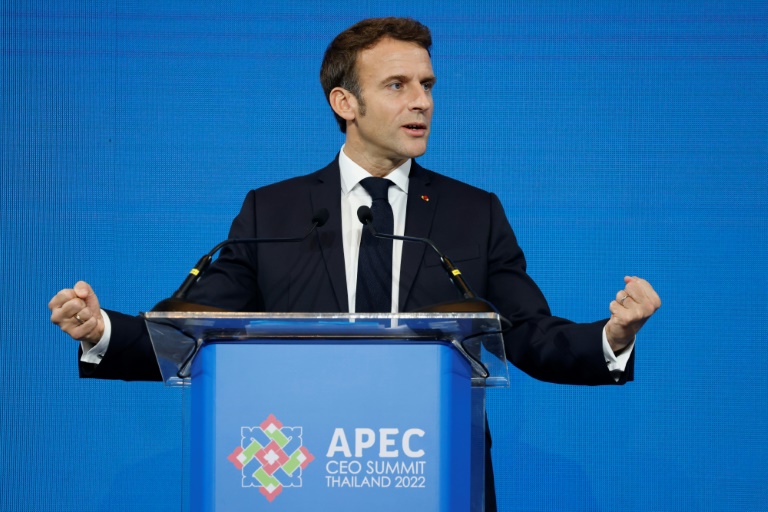
Macron rejects 'confrontation' as he relaunches Asia strategy

French President Emmanuel Macron urged an end to “confrontation” Friday as he relaunched his strategy for the Asia-Pacific region after a bitter row over a cancelled submarine contract with Australia.

In a speech on the sidelines of the Asia-Pacific Economic Cooperation (APEC) summit, Macron cast France as a balancing power in a region long dominated by the superpower tussle between China and the United States.

The APEC summit comes days after a high-stakes meeting between US President Joe Biden and Chinese leader Xi Jinping took some heat out of their escalating rivalry.

Tensions between Washington and Beijing have risen sharply in recent years over the future of self-governing Taiwan, human rights, trade and China’s increasing assertiveness.

“We don’t believe in hegemony, we don’t believe in confrontation, we believe in stability,” Macron said.

Regional powers including Paris — which has overseas territories in the Indian and Pacific oceans, including Reunion, New Caledonia and French Polynesia — should play a role, he said.

“We are in the jungle and we have two big elephants, trying to become more and more nervous,” Macron said in his speech, which he gave in English.

“If they become very nervous and start war it will be a big problem for the rest of the jungle. You need cooperation of a lot of other animals: tigers, monkeys, and so on.”

Friday’s summit talks were dramatically overshadowed by North Korea’s latest long-range missile launch, which saw US Vice President Kamala Harris convene urgent talks with allies Japan, South Korea, Australia, New Zealand and Canada.

– ‘Dynamic balance’ –

Macron said a coordinated response was needed to tackle the overlapping crises facing the international community — from climate change to economic turmoil triggered by Russia’s war in Ukraine.

“Our Indo-Pacific strategy is how to provide dynamic balance in this environment,” he said.

“How to provide precisely a sort of stability and equilibrium which could not be the hegemony of one of those, could not be the confrontation of the two major powers.”

France’s vocal engagement in the region comes after a rocky period last year, when Australia’s previous prime minister Scott Morrison abruptly torpedoed a French contract to provide Canberra with submarines and announced a deal to buy US or British nuclear-powered subs instead.

The row capsized relations and threatened to sink an EU-Australia trade agreement, but the two sides have made up since Prime Minister Anthony Albanese took power.

The delivery of the new nuclear submarines could take years, potentially leaving Australia short of capacity at a time when China is increasing its assertiveness in the region.

Speaking in Bangkok on Thursday, a day after meeting Albanese on the sidelines of a G20 summit in Indonesia, Macron said France was still willing to help fill the capability gap.

But Albanese reiterated Friday that Australia was pressing ahead with its deal under a security pact with the United States and Britain, saying “there’s nothing ambiguous about it”.

Australia has a “very good cooperative relationship” with France, he said, adding that Macron was “entitled to make whatever comments he wants as the leader of France”.

Closer to home, Macron identified Russia’s war in Ukraine as a major source of global instability, and said all Asian nations needed to recognise their duty to act.

France was working to build “an increasing consensus in order to say this war is also your problem because it will create a lot of destabilisation”, Macron said.

India's Modi says digital currencies being used to fund terror

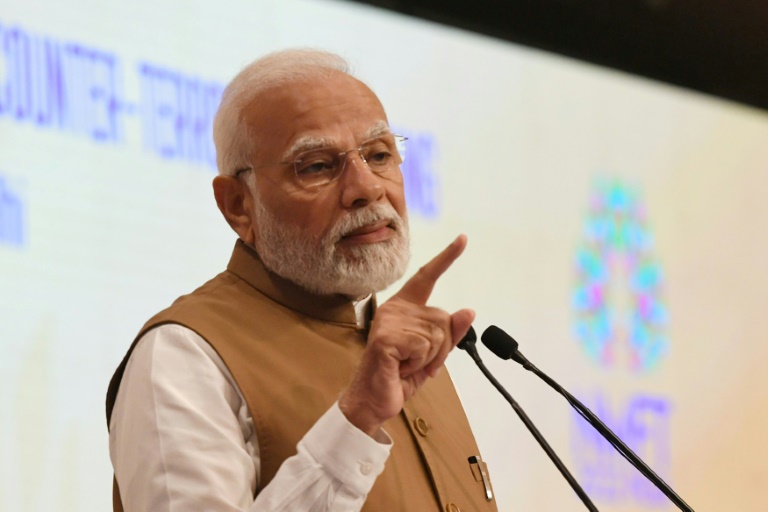
Digital currencies need more regulation to stamp out funding for terror operations, India’s Prime Minister Narendra Modi said Friday at a major international forum to combat financing of extremist groups.

India has laboured to rein in cryptocurrency transactions after years of phenomenal growth, backed by burgeoning local trading platforms and glitzy celebrity endorsements.

Modi last year said that bitcoin presented a risk to younger generations and could “spoil our youth” if it ended up “in the wrong hands”.

On Friday, he went further and told delegates at the Conference on Countering Financing of Terrorism that “private currencies” posed a grave security risk. 

“New kinds of technology are being used for terror funding and recruitment. Challenges from the dark net, private currencies and more are emerging,” Modi said. 

“There is a need for a uniform understanding for new finance technologies,” he added. 

“From a uniform understanding, a unified system of checks and balances and regulation can emerge.”

Delegates from dozens of countries are in the capital New Delhi for the two-day conference, which follows a special session of the UN’s Counter Terrorism Committee held in India last month.

Cryptocurrencies have been under the scrutiny of Indian regulators since first entering the local market nearly a decade ago, with a surge in fraudulent transactions leading to a central bank ban in 2018.

India’s Supreme Court lifted the restrictions two years later and the market surged, growing by nearly 650 percent in the year to June 2021 — second only to Vietnam, according to research by Chainalysis.

The government also proposed banning “all private cryptocurrencies”, but ultimately held back and later taxed profits from “private currencies” at 30 percent.

Globally, the crypto market has been thrown into upheaval by this month’s collapse of FTX, a major exchange used for digital transactions. 

Once valued at $32 billion, FTX filed for bankruptcy last week.

Its downfall sent major cryptocurrencies plunging and further undermined investor confidence in the young and turbulent sector.

VP Harris tells Asia the US is 'here to stay'

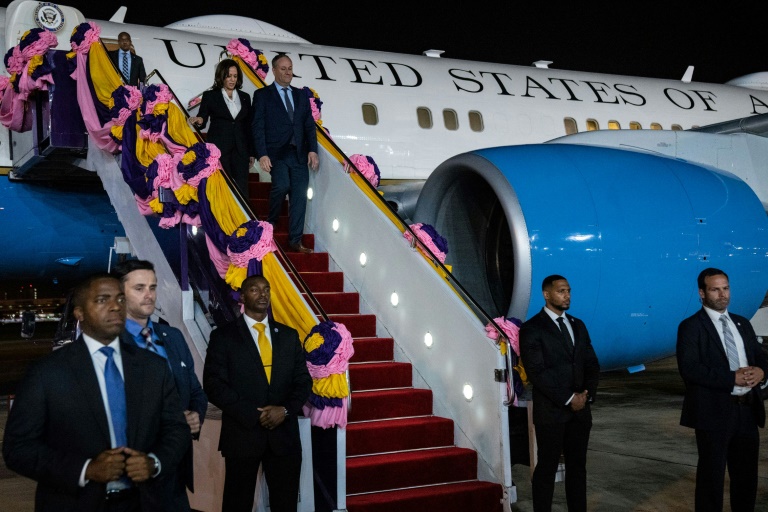
Vice President Kamala Harris told Asian leaders on Friday that the United States is committed to the region for the long haul, rejecting doubts about its engagement as China expands its clout.

Addressing a summit in Bangkok, Harris called the United States a “proud Pacific power” and said that the longstanding US network of security alliances has allowed Asia to prosper.

“The United States is here to stay,” Harris told business leaders on the sidelines of the Asia-Pacific Economic Cooperation (APEC) summit, also attended by Chinese President Xi Jinping.

“Our message is clear: The United States has an enduring economic commitment to the Indo-Pacific, one that is measured not in years, but in decades and generations,” she said, using the preferred US term for the Asia-Pacific region.

President Joe Biden’s administration has focused on rallying behind allies and Harris will head from Thailand to the Philippines, where she will visit an island near waters increasingly contested by Beijing.

While the United States has taken a firm tone on China, some Asian officials have questioned the level of US economic engagement.

Biden has largely followed his predecessor Donald Trump in turning the page on the era of free-trade agreements, seeing them as unpopular among working-class US voters.

Harris insisted that economic partnerships in Asia were “a top priority” for the Biden administration and pointed out that the US private sector invests around $1 trillion a year in the region.

“America is a strong partner to the economies and companies of this region because America is and will remain a major engine of global growth, reinforced by our administration’s approach,” she said.

She said that goal had bipartisan support, with Washington set for greater gridlock after the rival Republican Party won control of the House of Representatives in elections last week.

Biden on a trip to Tokyo earlier this year launched the Indo-Pacific Economic Framework, which brings together countries to set common standards on technology and trade in the face of China’s rapid advances but stops short of lifting tariffs like a traditional free-trade deal.

“We are all feeling the discomfort and the anxiety of the global economy today,” US Trade Representative Katherine Tai told reporters Thursday.

“We need different outcomes, and that means that we also need to be innovating in how we engage each other in trade and economics and across the board,” she said.

Despite US vows of engagement, Biden skipped the APEC summit to attend his granddaughter’s wedding at the White House on Saturday.

He attended two other summits in Asia over the past week, however, in Cambodia and Indonesia.

VP Harris tells Asia the US is 'here to stay'

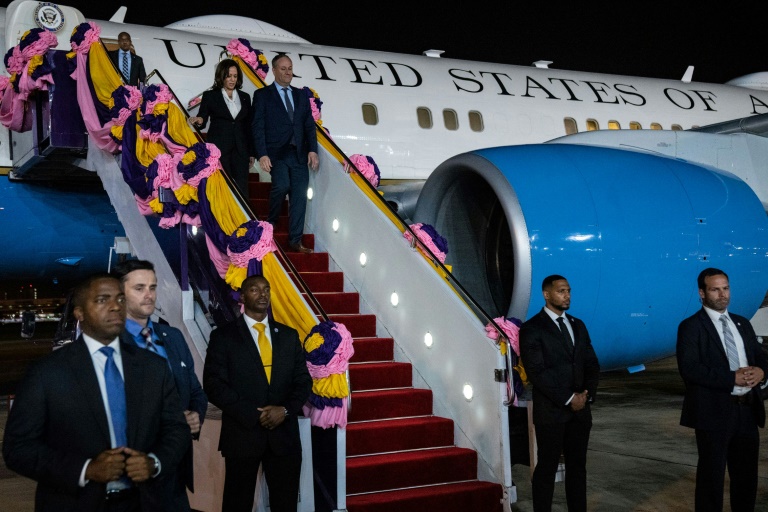
Vice President Kamala Harris told Asian leaders on Friday that the United States is committed to the region for the long haul, rejecting doubts about its engagement as China expands its clout.

Addressing a summit in Bangkok, Harris called the United States a “proud Pacific power” and said that the longstanding US network of security alliances has allowed Asia to prosper.

“The United States is here to stay,” Harris told business leaders on the sidelines of the Asia-Pacific Economic Cooperation (APEC) summit, also attended by Chinese President Xi Jinping.

“Our message is clear: The United States has an enduring economic commitment to the Indo-Pacific, one that is measured not in years, but in decades and generations,” she said, using the preferred US term for the Asia-Pacific region.

President Joe Biden’s administration has focused on rallying behind allies and Harris will head from Thailand to the Philippines, where she will visit an island near waters increasingly contested by Beijing.

While the United States has taken a firm tone on China, some Asian officials have questioned the level of US economic engagement.

Biden has largely followed his predecessor Donald Trump in turning the page on the era of free-trade agreements, seeing them as unpopular among working-class US voters.

Harris insisted that economic partnerships in Asia were “a top priority” for the Biden administration and pointed out that the US private sector invests around $1 trillion a year in the region.

“America is a strong partner to the economies and companies of this region because America is and will remain a major engine of global growth, reinforced by our administration’s approach,” she said.

She said that goal had bipartisan support, with Washington set for greater gridlock after the rival Republican Party won control of the House of Representatives in elections last week.

Biden on a trip to Tokyo earlier this year launched the Indo-Pacific Economic Framework, which brings together countries to set common standards on technology and trade in the face of China’s rapid advances but stops short of lifting tariffs like a traditional free-trade deal.

“We are all feeling the discomfort and the anxiety of the global economy today,” US Trade Representative Katherine Tai told reporters Thursday.

“We need different outcomes, and that means that we also need to be innovating in how we engage each other in trade and economics and across the board,” she said.

Despite US vows of engagement, Biden skipped the APEC summit to attend his granddaughter’s wedding at the White House on Saturday.

He attended two other summits in Asia over the past week, however, in Cambodia and Indonesia.

Uruguay's Jorge Drexler eclipses Bad Bunny at Latin Grammys

Uruguay’s top musical export Jorge Drexler overshadowed megastar Bad Bunny’s hype at Thursday’s Latin Grammys, scoring seven trophies including Best Record during the gala that saw Spain’s Rosalia take home the coveted top album award.

The Puerto Rican reggaeton phenom Bad Bunny had been tipped as the favorite coming in with 10 nominations, though he was unable to attend the 23rd edition of the awards held in Las Vegas as he continues his massively popular world tour.

The 28-year-old — currently the highest-grossing and most streamed artist on the planet following the release of his album “Un Verano Sin Ti” — did nab five trophies but fell short of the night’s most prestigious prizes.

“Are you sure?” asked a surprised Drexler as he took the stage to accept the award for Song of the Year for “Tocarte,” a track that also featured Spanish rapper C. Tangana.

Along with Bad Bunny — whose smash “Titi Me Pregunto” ultimately scored two awards in the “urban” categories — the 58-year-old was up against stacked competition including Rosalia, who won four awards including for her critically acclaimed album “Motomami,” and Colombia’s Karol G. 

In his speech Drexler acknowledged the massive reach of Latin urban music including reggaeton, dedicating the award “to everyone who does urban music in Spanish because you’ve taken our music to places it was never in before.”

Drexler was the big winner but in some respects it was Cuban Angela Alvarez who stole the show: at 95 years old the singer scored a gramophone for Best New Artist.

“It’s never too late,” said Alvarez, bringing the auditorium to tears in accepting the award that she shared in a tie with the Mexican artist Silvana Estrada.

“I want to dedicate this award to God, and to my beloved Cuba, which I will never forget. And to those who have yet to make their dreams come true, know that although life is hard, there’s always a way out and with faith and love everything can be achieved,” Alvarez said. 

“With faith and love you can make it, I promise you.”

– Anitta, Bad Bunny head to Grammys –

Rosalia was visibly surprised in accepting the night’s top award for her genre-fusing masterpiece “Motomami,” telling the cheering crowd that it was “the album I had to fight the hardest to make.”

“But I put it out there and that has given me the most joy.”

Colombian crooner Sebastian Yatra — who made a splash last year with the Oscar-nominated song “Dos Oruguitas” from the film “Encanto” — notched two awards in the pop categories including Best Pop Song for “Tacones Rojos,” which he performed during the gala with John Legend.

Brazil’s Anitta left the show empty-handed — she was up for two awards for her booty-grinding reggaeton hit “Envolver” — but delivered a show-stopping performance of that hit and a twerk-heavy mashup of Brazilian dance tracks.

The 29-year-old is among the contenders for Best New Artist at February’s Grammys to be held in Los Angeles.

Bad Bunny’s work will also feature at the forthcoming Grammy gala, with “Un Verano Sin Ti” in the running for Album of the Year.

It’s the first time an all-Spanish album has a chance at that coveted award, and the Puerto Rican reggaeton megastar’s first time landing a solo nomination in the major Grammy categories.

UK's remote Pitcairn islanders see no Brexit bounty

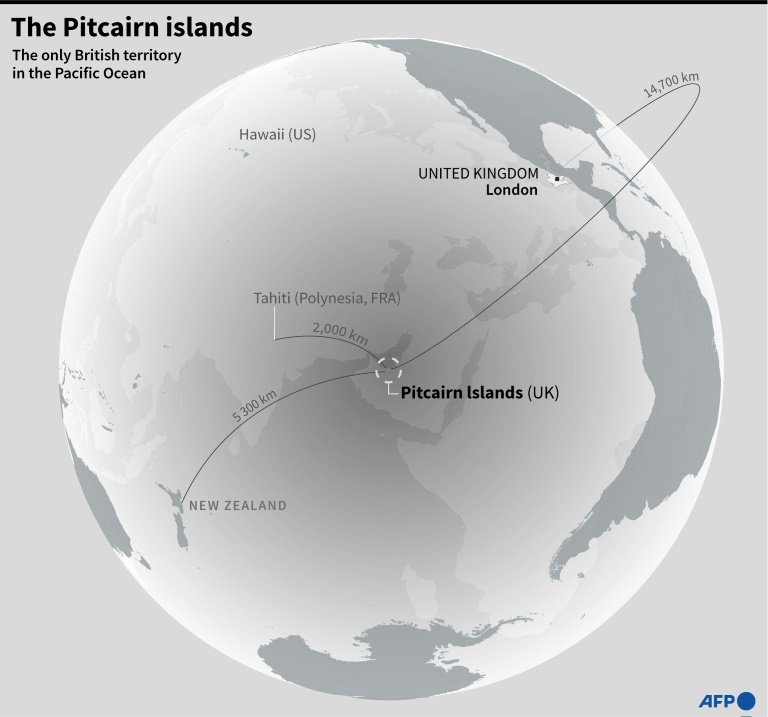
The Pitcairn Islands, a volcanic outcrop halfway between South America and New Zealand, is the UK’s only overseas territory in the Pacific Ocean and home to only 46 people.

One of the most remote places on Earth, all its inhabitants live in the capital Adamstown.

But even here, islanders have not escaped the drama that has dominated British politics since 2016 — Brexit.

Pitcairn has its own well-equipped medical facility and a resident doctor.

For emergencies and longer-term conditions, however, the nearest hospitals are in French Polynesia, some 1,350 miles (2,170 kilometres) to the northwest, and New Zealand, 3,300 miles southwest.

With no access to the islands by air, that can mean at least two days’ sailing, depending on weather conditions.

Pitcairn’s mayor Charlene Warren fears vulnerable islanders could fall foul of restrictions usually associated with the length of time UK holidaymakers and those with second homes can stay in European Union member states.

“Brexit has definitely affected us for going to Tahiti (the largest island in French Polynesia) because we’re no longer in the European Union,” she told AFP.

“We’re now only limited to three months in Tahiti, which with some medical issues that we have can roll over three months.”

For Pitcairn’s ageing population healthcare is a pressing concern, even with recent support from the government in London, particularly through Covid.

Next month, there will be no minors left on the island when the last three schoolchildren, their mothers and their teacher leave Adamstown for New Zealand.

More than half of the remaining population will be aged over 60.

– Proud heritage –

The Pitcairn Islands were colonised in 1790 by the mutinous crew of the Royal Navy ship HMS Bounty, led by the master’s mate Fletcher Christian.

Their actions, casting adrift the ship’s captain William Bligh, have been immortalised in books and film.

Its people are descended from the mutineers and their Tahitian companions, whose history since has been one of hardy self-sufficiency.

On Pitcairn — the only inhabited island of four scattered hundreds of miles across the ocean — there is only one grocery store, open three times a week for two hours at a time.

Supplies come every three months by cargo ship. There are only two metalled roads and no hotels.

King Charles III is head of state and the UK government is responsible for defence and foreign relations, controlling the 830,000 square kilometres (320,000 square miles) of sea around the islands.

The islanders have British passports, govern through an elected mayor and an island council, with a governor based in New Zealand.

But they are not part of the UK.

The islanders are proud of their Polynesian heritage, speak English and local language Pitkern. 

“For me, I’m a Polynesian because I was born here,” said policewoman Brenda Lupton Christian, 69, adding that she is a descendant of Fletcher Christian.

“This is my home, I wasn’t born in England.”

– Cast adrift –

Pitcairn depends on trade with the EU, especially the sale of rich, fruity island honey — and wants access to EU markets.

But selling honey, stamps — once so popular among philatelists that they supported two-thirds of the islands’ budget — and souvenirs to cruise ship passengers is no longer enough.

The islands were never part of the EU but like the 260,000 British nationals in 10 other inhabited overseas territories, they were eligible for some EU funding and access to the single market.

The territories, however, were not part of the Brexit trade and cooperation deal that cemented the UK’s departure from the EU in January 2021.

That sparked concern about tariffs and the effect on the economies of the 14 British Overseas Territories scattered across the world.

Six were eligible for £69 million ($82 million) in European Development Fund cash to support infrastructure, tourism and education until 2014.

Pitcairn’s share to support tourism was £2.2 million, according to a UK parliament report published in August into the effect of Brexit on British Overseas Territories.

Discussions are ongoing to substitute funding. Pitcairn will receive £8.6 million in UK budget assistance from March 2021 to March 2023.

But the territory does not have the right to negotiate or agree its own deal with the EU without the UK government’s approval.

“We used to get some financial funds from the European Union. That has stopped as well with our ageing community,” said Warren.

“It is a shame because it does affect us, but what can we do? 

“We’re only 46 people living in Pitcairn and our vote doesn’t even count.”

Battle to save ghostly Balkan lynx from extinction

In mountains overlooking an azure lake in southeast Albania, wildlife experts are tracking the Balkan lynx as part of last-gasp efforts to save the species from extinction.

The “forest ghost” which lives in tree-covered mountains straddling Albania, Kosovo and North Macedonia, is now among the world’s most endangered mammals, scientists warn.

The victim of deforestation and poaching, there are less than 40 of these solitary wild cats in the three Balkan countries, analysis last year showed.

Albania is home to fewer than 10, down sharply from more than 200 in the 1980s.

“We are very much concerned that if we do not manage to raise its numbers and distribution very soon, we will lose it forever,” said Manuela von Arx of the Swiss foundation Kora, which is a part of the Balkan lynx recovery programme.

For the past 15 years, the NGO Protection and Preservation of Natural Environment in Albania (PPNEA) has been trying to save the animal also known locally as the “Balkans tiger”.

– Timid and elusive –

On the Mali i Thate mountain overlooking Lake Prespa, two experts taking part in the Balkan lynx recovery programme carefully install automated cameras at lynx height on oak trees.

They hope to capture the images of the timid and elusive carnivore that sleeps during the day and hunts at night for deer, hare, chamois and rabbit.

“It is difficult to get a good image,” forest engineer Ilir Shyti said as he and colleague Melitjan Nezaj checked the cameras’ positions.

The camera must be positioned well to cover the path used by the lynx.

In November 2021, cameras in the area caught a lynx arriving from North Macedonia, which experts hailed as a good sign for the resilience of the species.

“We are hoping that it will pass through again this year and, if we are lucky, we will be able to take a photo of another lynx,” said Nezaj, a biologist.

Subtle differences on the animal’s spotted coat and tufts of hair on the tips of its ears enable experts to identify them individually.

The meticulous tracking of the lynx is a key part of its protection, said Blendi Hoxha, a coordinator of the PPNEA lynx project.

“You have to observe it and understand its movements,” he told AFP.

“Any documented evidence of the presence of the lynx is watched for since it gives hope for (its) survival.”

The almond-eyed animal is threatened by the degradation of its habitat and significant deforestation, which are depleting the game they feed on and fragmenting its population.

Although it is strictly protected, the lynx has been the victim of poaching despite a hunting ban  in Albania since 2014.

At least 14 lynx have been killed in Albania since 2006, according to the PPNEA.

– Stuffed trophies –

The last one, shot in 2020, was stuffed and mounted in a bar in Elbasan, south of the capital Tirana, displayed alongside the stuffed skins of other wild animals.

Trade in poached animals is punishable by up to seven years in jail, but the justice system is completely uninterested in the problem, said PPNEA lawyer Gentian Rumano.

The NGO filed a complaint against the bar but the case was dropped due to “lack of evidence” despite what it said was a report proving that it was the same Balkan lynx killed in 2020.

But the PPNEA has carried on with the fight, filing a complaint against the prosecutors in a bid to have the investigation relaunched.

Albania, Kosovo and North Macedonia have joined forces within the Balkan lynx recovery programme, funded by foreign foundations like Kora, Euronatur and Mava. 

The three countries created “new zones of protection where the lynx is present and where it can breed,” PPNEA chief Aleksander Trajce said.

They also try to educate hunters and the general population about the threat of extinction.

An information centre, which serves as a summer school for the region, was opened in 2020 in Gorica.

But the battle is far from being won, especially since the animal’s low population has left it with an impoverished genetic pool.

Their shrinking numbers and isolation undermine genetic diversity which leads to health and breeding problems, warned Hoxha from the PPNEA lynx project.

“Small population equals inbreeding,” echoed Dime Melovski, of the Macedonian Ecological Society.

One way to ease the problem, he said, could be to bring males from other lynx populations to breed in the Balkans.

'European California' Portugal woos Americans seeking better life

Nathan Hadlock moved to Portugal to escape the violence and lack of social welfare he saw in the United States, while still enjoying the sun and sea he had loved in California.

“Lisbon checked all the boxes,” the 40-year-old American entrepreneur told AFP.

It even has a suspension bridge that is almost a dead ringer for San Francisco’s Golden Gate.  

“My partner and I were looking to slow life down and enjoy things more. And so we made a list of the top 10 places in the world and Lisbon quickly made it to the top.”

The couple, who started a family when they moved to the Portuguese capital in 2020, were drawn by the weather, the good food, the cheaper lifestyle and the ease of travelling to other parts of Europe. 

They also wanted to escape the darker sides of US society.

“One of the main reasons (US) investors are looking to move here, is their kids’ safety. They often say, ‘I don’t want my kid to go to school and get shot,'” Hadlock insisted.

“And that’s a real thing in the United States that just no one here in Europe has to experience.” 

Jen Wittman, who uprooted from the Golden State to Lisbon during the pandemic with her husband and teenage son, said the United States was “really kind of falling apart at the seams”.

“The George Floyd incident and the pandemic, the political division, the racism… Everything was just getting overwhelming in America.”

Having a European social net made a big difference too.

“America is terrible with health care. And it’s terrible if you’re a retiree and you have a health condition. Essentially in America you can be bankrupted by an illness,” the 47-year-old said.

At around 7,000, the number of US citizens living in Portugal remains tiny compared to the 42,000 British expats who had made the country their home.

But while the influx of Brits — the largest expat community from western Europe — has begun to tail off, incomers from the States have doubled since 2018.

This year Americans are jostling with the Chinese for top spot among overseas investors lured by Portugal’s “golden visas” — residents permits issued for foreigners prepared to buy property or transfer capital to the Iberian country.

But most come on a D7 visa, which demands they have a regular “passive income” from pensions, rents or investments.

– ‘Different mentality’ –

Joana Mendoca, a lawyer for migration consultancy Global Citizen Solutions, speaks “almost every day” to US clients.

“Some come because they’re digital nomads and want to work from home by the sea,” she said. 

“There are also entire families, who dream of one day getting their children into European universities.

“And there are retired people who sell everything in the States so they can enjoy a good retirement in Portugal.”

Mendoca said Americans had “a different mentality” from other foreign investors, who were drawn to Portugal essentially by residency permits and tax exemptions.

“They really want to come and live here and adopt a different lifestyle,” she said, even though the introduction of the golden visa scheme in 2012 has contributed to an unwelcome surge in property prices.

Hadlock started off as a digital nomad in Portugal. Now he works for an investment fund that buys up land for olive and almond groves in the rolling hills of the Alentejo.

The region south of Lisbon reminds him of California’s Napa and Sonoma valleys.

– ‘Surf and good wine’ –

In Lisbon, Hadlock runs get-togethers to develop business ties between California and Portugal. The group calls itself Red Bridge, in a nod to the red suspension bridges spanning San Francisco Bay and the Tagus estuary.

Jonathan Littman, one of the members, still lives in California but is learning Portuguese.

He got to know Portuguese start-ups in Silicon Valley when Lisbon started organising yearly international web summits in 2016.

“We sort of see this as the California of Europe,” he said.

“The surfing, the coast… We both have great wine. We both have a love of seafood and healthy cuisine. We both can be a little laid back.”

Like her compatriots, Wittman and her family left the States to escape a “divisiveness” that Hadlock said is “pulling the US apart” and is palpable “as soon as you get off the plane”.

But Portugal was not their first choice.

“We tried to move to Italy but they were not accepting American visa applicants at all,” she recalled. “And so, we were like, ‘Who in Europe will take Americans?’ And it was Croatia and Portugal.”

She and her husband run their own digital marketing company and have no plans to move back.

“It’s safe. It’s inclusive. We feel safe walking around, we feel safe at night. We do things that we could never do in America without being in constant fear,” she said.

UK's remote Pitcairn islanders see no Brexit bounty

The Pitcairn Islands, a volcanic outcrop halfway between South America and New Zealand, is the UK’s only overseas territory in the Pacific Ocean and home to only 46 people.

One of the most remote places on Earth, all its inhabitants live in the capital Adamstown.

But even here, islanders have not escaped the drama that has dominated British politics since 2016 — Brexit.

Pitcairn has its own well-equipped medical facility and a resident doctor.

For emergencies and longer-term conditions, however, the nearest hospitals are in French Polynesia, some 1,350 miles (2,170 kilometres) to the northwest, and New Zealand, 3,300 miles southwest.

With no access to the islands by air, that can mean at least two days’ sailing, depending on weather conditions.

Pitcairn’s mayor Charlene Warren fears vulnerable islanders could fall foul of restrictions usually associated with the length of time UK holidaymakers and those with second homes can stay in European Union member states.

“Brexit has definitely affected us for going to Tahiti (the largest island in French Polynesia) because we’re no longer in the European Union,” she told AFP.

“We’re now only limited to three months in Tahiti, which with some medical issues that we have can roll over three months.”

For Pitcairn’s ageing population healthcare is a pressing concern, even with recent support from the government in London, particularly through Covid.

Next month, there will be no minors left on the island when the last three schoolchildren, their mothers and their teacher leave Adamstown for New Zealand.

More than half of the remaining population will be aged over 60.

– Proud heritage –

The Pitcairn Islands were colonised in 1790 by the mutinous crew of the Royal Navy ship HMS Bounty, led by the master’s mate Fletcher Christian.

Their actions, casting adrift the ship’s captain William Bligh, have been immortalised in books and film.

Its people are descended from the mutineers and their Tahitian companions, whose history since has been one of hardy self-sufficiency.

On Pitcairn — the only inhabited island of four scattered hundreds of miles across the ocean — there is only one grocery store, open three times a week for two hours at a time.

Supplies come every three months by cargo ship. There are only two metalled roads and no hotels.

King Charles III is head of state and the UK government is responsible for defence and foreign relations, controlling the 830,000 square kilometres (320,000 square miles) of sea around the islands.

The islanders have British passports, govern through an elected mayor and an island council, with a governor based in New Zealand.

But they are not part of the UK.

The islanders are proud of their Polynesian heritage, speak English and local language Pitkern. 

“For me, I’m a Polynesian because I was born here,” said policewoman Brenda Lupton Christian, 69, adding that she is a descendant of Fletcher Christian.

“This is my home, I wasn’t born in England.”

– Cast adrift –

Pitcairn depends on trade with the EU, especially the sale of rich, fruity island honey — and wants access to EU markets.

But selling honey, stamps — once so popular among philatelists that they supported two-thirds of the islands’ budget — and souvenirs to cruise ship passengers is no longer enough.

The islands were never part of the EU but like the 260,000 British nationals in 10 other inhabited overseas territories, they were eligible for some EU funding and access to the single market.

The territories, however, were not part of the Brexit trade and cooperation deal that cemented the UK’s departure from the EU in January 2021.

That sparked concern about tariffs and the effect on the economies of the 14 British Overseas Territories scattered across the world.

Six were eligible for £69 million ($82 million) in European Development Fund cash to support infrastructure, tourism and education until 2014.

Pitcairn’s share to support tourism was £2.2 million, according to a UK parliament report published in August into the effect of Brexit on British Overseas Territories.

Discussions are ongoing to substitute funding. Pitcairn will receive £8.6 million in UK budget assistance from March 2021 to March 2023.

But the territory does not have the right to negotiate or agree its own deal with the EU without the UK government’s approval.

“We used to get some financial funds from the European Union. That has stopped as well with our ageing community,” said Warren.

“It is a shame because it does affect us, but what can we do? 

“We’re only 46 people living in Pitcairn and our vote doesn’t even count.”

Close Bitnami banner
Bitnami