World

Starbucks staff go on strike in US stores over labor talks

Starbucks workers in the United States went on strike at multiple unionized locations Thursday, a move planned to affect over 100 stores in protest against the coffee giant’s approach in negotiating union contracts.

Dubbed the “Red Cup Rebellion,” the one-day strike led by Starbucks Workers United coincides with a popular event in which stores hand out reusable cups with certain purchases.

Instead of the branded cups, staff gave out red union cups to interested customers.

Employees could be seen protesting in the cold near Times Square in New York, chanting and holding signs of Starbucks Workers United, which represents nearly 7,000 employees across the United States.

“It’s something that is worth fighting for,” one of the staff, 18-year-old Jay Tosa, told AFP.

The action takes place in “response to Starbucks’ union-busting tactics and refusal to bargain,” Starbucks Workers United said in a statement.

The group added that workers wanted the right to organize a union free of intimidation.

“Unless Starbucks comes to the table and bargains in good faith for a fair contract, we can count on this to happen again,” the union said, raising concerns over salaries and a lack of consistent schedules.

– ‘A lot of support’ –

“During the morning rush hour, we got a lot of support from our regulars,” said another New York-based employee Hal Battjes.

Some commuters chose to give up their morning coffee, added the 21-year-old, who had been on the sidewalk with a megaphone since 5:30 am.

A Starbucks spokesperson said the company is “aware that union demonstrations are scheduled at a small number of our US company-owned stores.”

“We respect their right to engage in lawful protest activity,” the spokesperson said, adding that Starbucks continues to urge the union to meet representatives at the bargaining table.

Workers at two Starbucks cafes in Buffalo, New York, voted to set up a union in late 2021, marking the first at the coffee chain’s company-owned shops in the United States.

Now, Starbucks Workers United represents more than 260 locations — a fraction of around 10,200 stores that Starbucks manages in North America.

The company’s management has been accused of intimidation and being slow to start negotiations on collective agreements.

The National Labor Relations Board has issued dozens of complaints against Starbucks, according to Starbucks Workers United.

Beyond efforts at Starbucks, there has been a spread of union drives to a growing slate of corporations, including Apple, REI, Chipotle and Trader Joe’s.

Blizzard to pull popular games from China after license spat

US gaming giant Blizzard Entertainment will suspend most of its services in China from January, the company said Thursday, after it failed to reach a licensing deal with local firm NetEase.

Producer of some of the best-known titles in video gaming, including “World of Warcraft” and “Overwatch”, Blizzard has operated since 2008 in China — the world’s biggest gaming market.

But the firm said it had failed to reach an agreement with Chinese publisher NetEase over an extension to their 14-year partnership.

“We will suspend new sales in the coming days and Chinese players will be receiving details of how this will work soon,” Blizzard Entertainment, a subsidiary of California-based Activision Blizzard, said in a statement.

Microsoft in January offered to buy Activision Blizzard for $69 billion, but the deal has yet to be finalised as anti-trust authorities examine it.

Negotiations with NetEase fell apart, the company said, after the two sides failed to strike a deal that is “consistent with Blizzard’s operating principles and commitments to players and employees”. It did not share further details.

Foreign companies require a license with Chinese publishers in order to sell their games. 

Activision Blizzard, for example, distributes its “Call of Duty” franchise through Tencent, the worlds’ biggest gaming company by revenue.

The break-up comes as Chinese gaming giants are expanding abroad, buying promising studios or expanding their ownership in major publishers in Europe.

– ‘Love and support’ –

Analysts said that the row with NetEase did not mean that Blizzard was leaving China and that the company was expected to find new ways to stay in the market, including through a possible tie-up with Tencent.

“It’s worth noting that this isn’t the first time that Blizzard has done something like this in China,” said Daniel Ahmad, a senior analyst at Niko Partners.

Before working with NetEase, Blizzard had a similar deal with a company called The9, before ending the partnership.

Ahmad said the news was reverberating across the gaming world in China and was a trending topic on Weibo, the Chinese version of Twitter.

Reactions poured in from gamers who were born in the 80s or 90s that grew up playing Blizzard video games as well as younger ones who had discovered the company on mobile, said Ahmad. 

Blizzard thanked local players for their “love and support”, saying it “sincerely looked forward to bringing Blizzard games back to you in the future”.

Upcoming releases for “World of Warcraft: Dragonflight”, “Hearthstone: March of the Lich King”, and season two of “Overwatch 2” will go ahead later this year, the company added.

NetEase’s Hong Kong-listed shares fell more than 9 percent on Thursday.

The Chinese gaming giant said the expiration of the licenses would have “no material impact on NetEase’s financial results”, in a stock exchange filing Thursday.

S. Korea, Saudi Arabia agree to boost energy and defence ties

The leaders of South Korea and Saudi Arabia agreed Thursday to boost ties in key sectors such as energy and defence, with the oil-rich kingdom signing a slew of deals including a $6.7 billion petrochemical agreement.

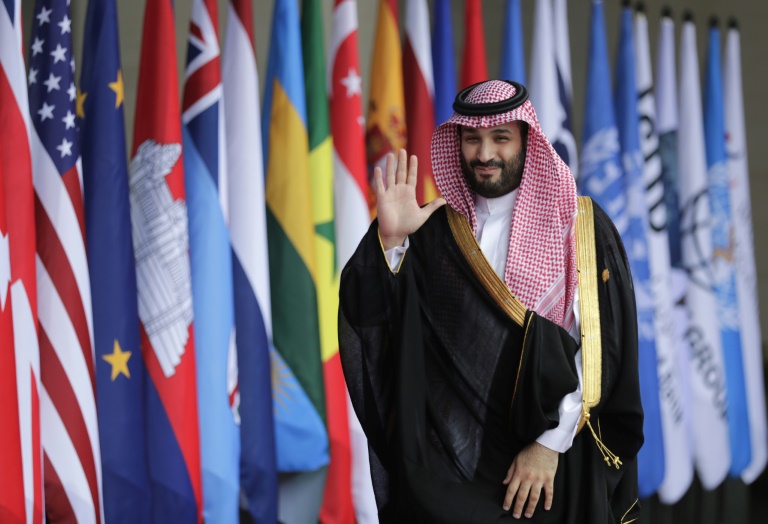
President Yoon Suk-yeol met with Saudi Arabia’s Crown Prince Mohammed bin Salman in the South Korean capital Thursday, announcing a plan to transform bilateral ties into a “strategic partnership”.

Bin Salman, the kingdom’s 37-year-old de facto ruler, often referred to as MBS, arrived in Seoul late Wednesday after attending the Group of 20 summit in Bali, Indonesia. 

Yoon and bin Salman agreed to elevate ties into a “future oriented strategic partnership,” Yoon’s office said in a statement.

The South Korean president wants to see local companies join key Saudi projects such as the futuristic mega-city known as NEOM, and boost cooperation in the defence and energy sectors.

Bin Salman “especially expressed his wish for a significant increase in cooperation in energy, defence and construction industries,” Yoon’s office said.

During the visit, the two governments and companies from both countries — including some of Seoul’s top conglomerates — signed about 20 deals in areas from agriculture to railways.

The Saudi investment ministry said the agreements were worth roughly $30 billion and covered sectors including energy, manufacturing, financial services and pharmaceuticals.

Among the agreements was Saudi investment for South Korean refiner S-OIL’s Shaheen project, which would build petrochemical production facilities in South Korea worth $6.7 billion, Yoon’s office said.

Bin Salman has tried to jumpstart efforts to diversify the economy of Saudi Arabia, the world’s biggest crude exporter, away from oil and to grow the private sector, and Saudi officials look to South Korea as a possible model. 

“Driven by the private sector, Korea’s successful economy and the global positioning of so many Korean companies, which are household names, are testament to Korea’s strategy’s success,” Saudi investment minister Khalid al-Falih said.

“The Korean model has been a benchmark for Saudi Arabia’s Vision 2030 and National Investment Strategy, which aim to increase the private sector’s contribution to the economy to 65 percent of GDP by the end of this decade.”

– Asia tour –

Bin Salman is on a multi-stop Asian tour in a bid to shore up the Gulf nation’s ties with its biggest energy market.

He left South Korea on Thursday for Bangkok, where he is scheduled to attend the Asia-Pacific Economic Cooperation (APEC) forum.

The trip comes as Riyadh feuds with Washington over the OPEC+ oil cartel’s October decision to cut production by two million barrels per day.

Bin Salman, who was officially made prime minister in September, has shaken up the ultraconservative oil titan with economic, social and religious reforms since his meteoric rise to power.

He gained global notoriety in connection with the 2018 killing of dissident Saudi journalist Jamal Khashoggi in the kingdom’s Istanbul consulate.

Last year, US President Joe Biden declassified an intelligence report that found bin Salman had approved the operation against Khashoggi, an assertion Saudi authorities deny.

France's Mendy branded 'predatory serial rapist' at UK trial

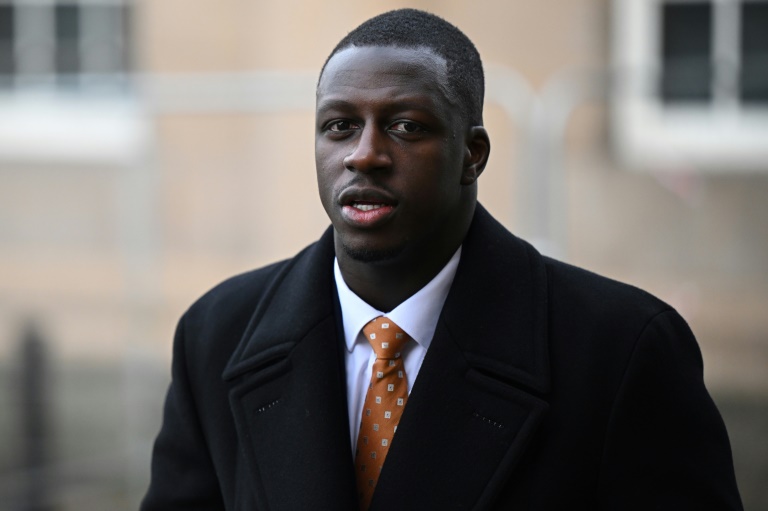
France international Benjamin Mendy was on Thursday branded a “predatory serial rapist”, as the prosecution wound up its case against the Manchester City star.

Mendy, 28, is on trial in northwest England, charged with seven counts of rape, one of attempted rape, and another of sexual assault against six young woman.

His co-accused, Louis Saha Matturie, 41, faces six counts of rape and three  of sexual assault against seven young women.

Both men deny the charges.

Prosecutor Timothy Kray told a jury at Chester Crown Court that defender Mendy lured young women into “toxic and dangerous” situations at parties.

Mendy and Matturie assumed the women were “good for sex” and “never heard the word ‘no'”, the lawyer alleged.

Their trial has been told the alleged assaults took place at a flat Mendy rented in Manchester city centre and at “after parties” at his home in leafy Cheshire.

Matturie is said by the prosecution to have been the “fixer” who identified and invited women to the parties from VIP lounges of nightclubs in the city.

In evidence, Mendy has denied lying to “save his own skin”, despite admitting having sex with women “within seconds and minutes” of meeting them.

He acknowledged that he had sex with many women but insisted he always stopped if they said “no”.

Character witnesses for Mendy at the trial have included his boss, Manchester City manager Pep Guardiola.

But Cray said despite that, “there’s this dangerous streak which makes him a predatory serial rapist”.

“We all know that celebrity is absolutely no guarantee of true good character, is it?” he told the jury.

“In fact, celebrity in general is really good cover for people to hide the dark side of your life and get away with it.”

Mendy’s lawyer Eleanor Laws, however, said each of the charges hinged on “one word against another”, claiming connections between the complainants.

“People do make untrue allegations,” she said, highlighting the case of one woman, aged 19, who accused both Mendy and Matturie of raping her.

Mobile phone footage emerged of the woman having “enthusiastic” sex with Matturie on an occasion she alleged she was being raped.

Jurors were directed by the judge to find both men not guilty of those charges.

The trial was adjourned until Friday.

Hope and chaos as Kherson adjusts to new life after Russia exit

After eight months of occupation, Kherson residents were slowly adjusting to their new lives without the Russian army as many braced for a tough, uncertain winter ahead. 

With electrical and water supplies cut to the city following the destruction of key utilities by the retreating Russians, residents moved fast to stockpile basic supplies in the southern Ukrainian city. 

In the city’s main Svoboda Square where only days earlier residents had gathered to celebrate the Russian defeat by the Ukrainian military, residents now queued waiting to collect SIM cards, pensions, and bits of humanitarian aid trickling into Kherson. 

The earlier waves of euphoria at times gave way to frustration as residents of all ages elbowed to the front of surging crowds desperate for donated food and winter clothing, with shouting matches and shoving erupting as volunteers tossed supplies into the masses. 

At one ad-hoc disruption site, volunteers attempted to keep a crowd of hundreds waiting for hours in the freezing rain from descending into chaos by compiling a waiting list filled with more than 600 names. 

“Yesterday was a disastrous mess here,” said Maksym, 27, a railway worker, who was volunteering at the distribution centre and also listed as the 235th person in line on Thursday.

“It’s first come, first served… some of them are not happy with it.”

Here, the crowd was collecting sleeping bags, batteries, and diapers from a local aid organisation partnering with the UN. 

As the crowds waited for the arrival of a shipment of blankets and solar-powered lamps, few appeared to acknowledge the outgoing artillery rounds as the concussions from the blasts echoed through the city’s streets. 

“This is the first time we’ve received any aid,” said resident Tatiana Bozhko, 62. “We are happy. We know someone is thinking about us.” 

Other scenes were more chaotic as people rushed to vans handing out aid, with residents scrambling to collect basic provisions like cooking oil, pasta and an assortment of canned food from the backs of vehicles.

“This is bringing shame to the city of Kherson,” shouted one resident at a rowdy crowd clamouring for donated supplies in the city’s Svoboda Square during an AFP trip to the city.

But despite the desperate rush for supplies, others continued to embrace their new found freedom just days after the Russian exit, with many walking through the streets wrapped in the blue and yellow Ukrainian flag. 

Others were thrilled the Russians had left and the city was still largely intact following a steady targeting of their supply lines and troops by Ukrainian forces.

“I live right next to a police school where the Russians were living that was hit by HIMARS. I only had two cracks in one of my windows,” boasted Artem Zeytullayev, 37, referring to the precision artillery supplied by the United States.

But for Bozhko the relentless strikes on the nearby Antonivskyi Bridge were terrifying, even if they were necessary in her eyes.

“These measures were inevitable to bring peace to the area,” said Bozhko, whose father helped build the bridge decades ago. “I was really scared.” 

Canada police lay charges in alleged Haiti coup plot

Canadian federal police said Thursday they have charged a man in Quebec province for allegedly plotting to sow violence in Haiti and overthrow its government.

Gerald Nicolas, a 51-year-old resident of Levis, Quebec, is alleged to have “planned a terrorist act to overthrow the Haitian government of Jovenel Moise,” the Royal Canadian Mounted Police (RCMP) said in a statement.

The RCMP said an investigation started in July 2021 revealed that Nicolas actively planned “to stage an armed revolution in Haiti and ultimately seize power.”

Those “concrete actions,” it said, included traveling to Haiti to coordinate a group that was to take part in the coup.

The RCMP noted, however, that the plot was unrelated to the assassination of Moise, who was shot dead in his bedroom by a commando group at his Port-au-Prince house in July 2021.

Police Sergeant Charles Poirier said the RCMP had been alerted about the suspect’s “suspicious activity” by local authorities, and that led to Nicolas’s arrest in November 2021 and a search of his home.

He was subsequently released as the investigation continued.

In addition to going to Haiti, Nicolas “visited multiple countries in South and Central America to recruit fighters, and secure financing and weapons,” Poirier told AFP.

“However, he was unsuccessful in acquiring those weapons,” he added.

No further information was immediately available about Nicolas’s alleged motives in wanting to topple the Haitian government.

The close timing of his alleged coup plot and Moise’s assassination “might be a coincidence,” said Poirier, adding that police found “no evidence to suggest a link between the two.”

Haitian police had quickly arrested about 20 people at the time of Moise’s murder, including 18 former Colombian soldiers presumed to be hired as mercenaries.

But their investigation has since stalled.

Canadian media said Nicolas is originally from Haiti, and Poirier confirmed that “he has some very strong connections with Haiti and with people there.”

The Caribbean island nation’s presidency has been vacant since Moise’s death, with no date set for a vote to fill the office.

Haiti is now gripped by instability provoked by armed gangs terrorizing the population, and is again dealing with a cholera outbreak — after stamping out a previous epidemic of the diarrheal disease that killed more than 10,000.

Nicolas is scheduled to appear in a Canadian court on December 1 to face charges of funding and facilitating terrorist activity, and travelling abroad to do so.

FBI probing cases of bomb-laden drones in US

FBI Director Christopher Wray said Thursday the agency is investigating several cases in which people sought to fly drones equipped with home-made bombs within the United States.

“We are investigating, even as we speak, several instances within the US of attempts to weaponize drones with homemade IEDs,” Wray told a Senate hearing, referring to improvised explosive devices.

Wray said the threat of widely available drones has risen quickly with rapid technological advances “in terms of their visibility, the speed with which they can move, the distance with which they can move, and also the loads that they can carry.”

“These are extraordinarily sophisticated tools that can carry drugs that can launch weaponry, and we must be able to counter it,” he said. 

Wray, speaking in a hearing on domestic threats by the Senate Homeland Security Committee, did not provide any detail on the armed drone cases.

But the rapid increase in the use of armed unmanned aerial vehicles in the Ukraine war, including cheap hobbyist drones jury-rigged with grenades and mortar shells, has demonstrated how easy they are to make and deploy.

“That is the future that is here now,” Wray said, urging legislation to expand the powers of the FBI and other authorities to counter the security threat of private drones.

Three sentenced to life for flight MH17 downing

A Dutch court on Thursday sentenced three men to life imprisonment over the downing of Malaysia Airlines flight MH17 over Ukraine in 2014, in the early stages of a war that eight years later would put the world on edge.

Russians Igor Girkin and Sergei Dubinsky and Ukrainian Leonid Kharchenko were found guilty in absentia of murdering all 298 people on board and of bringing down the Boeing 777 with a Russian-supplied missile. A fourth man was acquitted.

Moscow slammed the “scandalous” verdict as politically motivated, while Ukraine’s President Volodymyr Zelensky — battling a full-scale Russian invasion after years of low-level fighting in the east — praised it as “important”.

Relatives of MH17 victims blinked away tears as the verdicts were read out in a courtroom packed with families who had travelled from around the world for the end of the two-and-a-half-year trial.

“The court calls the proven charges so severe that it holds that only the highest possible prison sentence would be appropriate,” head judge Hendrik Steenhuis said.

“Imposing these sentences cannot take away the pain and suffering, but there’s hope that today clarity has been provided about who is to blame.”

But none of the suspects was at the high-security court on the outskirts of Schiphol Airport, where the doomed plane took off, after Russia refused to extradite them.

– ‘Justice has spoken’ –

The trial represents the end of a long search for justice for the victims of the disaster, who came from 10 countries, including 196 Dutch, 43 Malaysians and 38 Australians.

“Justice has spoken. We wanted justice to be done and that happened, in a very well-balanced verdict,” Piet Ploeg, chairman of the MH17 foundation, who lost his brother, sister-in-law and nephew, told AFP.

“The role of Russia has been very clearly confirmed by the court.”

Flight MH17 from Amsterdam to Kuala Lumpur was cruising at 33,000 feet (10,000 metres) over war-torn eastern Ukraine when a BUK missile exploded near the cockpit on July 17, 2014, tearing the plane apart.

The crash triggered global outrage and sanctions against Moscow, with Ukraine’s famed sunflower fields littered with bodies and wreckage. Some victims, including children, were still strapped into their seats.

Judges found Girkin, Dubinsky and Kharchenko could all be held responsible for the transport of the missile from a military base in Russia and deploying it to the launch site — even if they did not pull the trigger.

There was not enough evidence to show the involvement of Oleg Pulatov, the only suspect to have legal representation during the trial, they said.

All the suspects were members of the Donetsk People’s Republic, an armed group fighting Ukraine’s government that judges ruled was directly controlled by Russia. 

– ‘Ample evidence’ –

Girkin, 51, a former Russian spy who became the so-called defence minister of the DPR, was in regular contact with Moscow, particularly over the return of the missile after the tragedy, the court ruled.

Kharchenko, 50, who allegedly led a separatist unit, received direct orders from Dubinsky, 60, who has also been tied to Russian intelligence, to escort the missile to the final launch site, the court ruled.

The defendants had apparently intended to shoot down a Ukrainian military plane rather than a civilian jet but that did not affect their guilt, the judges said.

Russia’s continued denials that it controlled the DPR meanwhile meant the defendants could not claim immunity from prosecution as formal combatants, they added.

The court ruled there was “ample evidence” to show the plane was brought down by the missile, and ruled out “alternative scenarios” suggested by the defence, including that it was shot down by a Ukrainian fighter jet.

The BUK missile had been identified as coming from the 53rd Anti-Aircraft Missile Brigade from Kursk in Russia, prosecutors said.

– ‘Unprecedented pressure’ –

Moscow has denied all involvement in the crash, and on Thursday it accused the Dutch court of giving its verdict under “unprecedented pressure” from politicians and the media.

The Russian foreign ministry said the trial could go down history as “one of the most scandalous in the history of legal proceedings with its extensive list of oddities, inconsistencies and dubious arguments of the prosecution”.

Ukraine’s Zelensky said on Twitter that “holding the instigators to account is crucial too because a sense of impunity leads to new crimes”.

The United States welcomed the verdict as “an important moment in ongoing efforts to deliver justice for the 298 individuals who lost their lives”.

Dutch Prime Minister Mark Rutte said the convictions were “not the end”, while NATO chief Jens Stoltenberg they were an “important day for justice and accountability”.

burs-dk/ah

Fury as loophole in Spain rape law used to cut sentences

A landmark law to fight sexual violence in Spain has come under fire over a loophole used by lawyers to get reduced sentences for some convicted offenders.

The controversy erupted barely six weeks after the law came into force when it emerged that it had led to the jail sentences of some 15 offenders being cut.

One was a man who sexually assaulted his teenage step-daughter. His jail term was reduced from eight years to six. 

A teacher who paid for sex with his pupils was released after his sentence was reduced. Four men have since walked out free, according to Spanish media reports. 

Known as the “Only yes means yes” law, the new legislation reformed the criminal code to define all non-consensual sex as rape.

Although the new law raises the sentence for gang rape or chemical submission, it reduces both the maximum and minimum sentences in cases with no aggravating circumstances.

Hundreds of convicted offenders have applied to have their sentences revised since the law came into effect on October 7. 

In Spain, a jail term can be retroactively modified if changes to the penal code benefits the convicted offender. 

Until now, rape victims had needed to prove they were subjected to violence or intimidation.

Without that the offence was considered “sexual abuse” and carried lighter penalties than rape. 

The legal change was driven by the notorious 2016 gang rape of an 18-year-old woman by five men at a bull-running festival in the northern city of Pamplona.

The men were initially convicted of sexual abuse and not rape, sparking mass nationwide protests.

The Supreme Court eventually overturned the verdict in 2019 and convicted all five of rape. 

– ‘Male chauvinist judges’ –

With the lesser charge of “sexual abuse” dropped from the reformed criminal code and a much wider range of offences grouped under “sexual assault”, a broader range of penalties was required to ensure proportionality.

Anyone previously convicted of sexual assault and handed the minimum sentence of eight years, can now benefit from the minimum being reduced to six. 

The result has been a major backlash — which has put the left-wing government of Prime Minister Pedro Sanchez on the back foot with Spain’s legal watchdog hitting back at the flagship legislation as fundamentally flawed.

Equality Minister Irene Montero of the hard-left Podemos party, Sanchez’s junior coalition partner, has accused those judges who have rubber-stamped such reductions of “breaking the law” on grounds of “male chauvinism”.

Podemos lawmaker Javier Sanchez Serna went further, calling them “fascists in robes”. 

The General Council of the Judiciary — which is responsible for ensuring the judiciary’s independence — lashed out at such “intolerable attacks”, saying they had warned months ago the legislation could see convictions revised.

The Judges for Democracy association accused the ministry of “not foreseeing such (an undesired) consequence” saying it “in no way justified attacking judges”.

– Wolf Pack to benefit? –

The biggest concern is that the changes could affect the sentences of the Pamplona gang rapists, the case which drove efforts to toughen the law. 

Known as the “Wolf Pack”, the men are serving 15-year sentences, with a lawyer confirming he will seek a reduction for one of them. 

With just a year left until the next general elections, Sanchez came out in defence of the law, recalling its aim was to “give more guarantees to women in the face of any kind of sexual aggression”.

“Let’s wait to see what the courts and prosecutors say about this,” he said on Wednesday, with the Supreme Court set to rule on certain cases within the coming month. 

Even if the new law was modified, it would not undo the sentence revisions that have already been approved because legislation that toughens penalties is not applicable retroactively. 

Pelosi to step down as top Democrat after Republicans take House

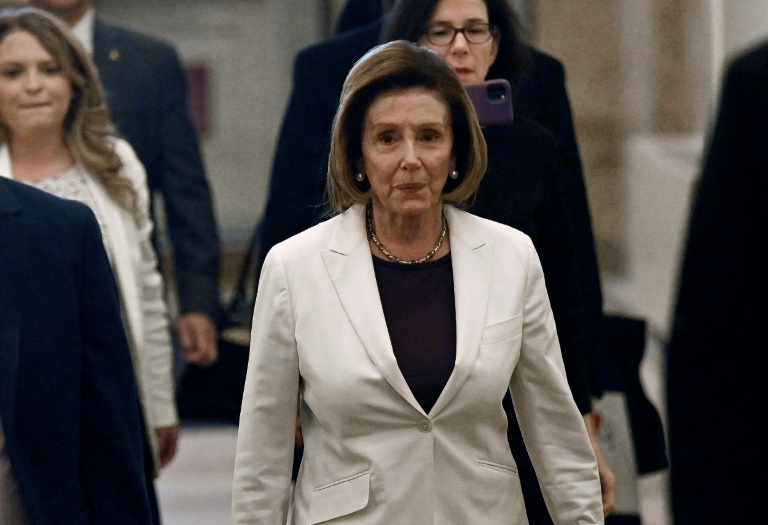
Democrat Nancy Pelosi, the trailblazing first female speaker of the US House of Representatives, said Thursday that she will step down as party leader when Republicans take control of the chamber in January. 

“I will not seek reelection to Democratic leadership in the next Congress,” the 82-year-old Pelosi said in an emotional speech on the House floor. “The hour has come for a new generation to lead the Democratic caucus.”

Republicans secured a slim majority in the House in last week’s midterm elections while Democrats retained control of the Senate.

Pelosi’s departure as party leader will mark the end of an era in Washington.

Elected to Congress in 1987, she first became speaker in 2007. Known for keeping a tight grip on party ranks, she presided over both impeachments of Donald Trump during her second stint in the role.

Currently second in the line of succession to President Joe Biden, Pelosi said last week that her decision on the future would be influenced by the brutal attack on her elderly husband in the runup to the November 8 midterms.

Paul Pelosi, who is also 82, was left hospitalized with serious injuries after an intruder — possibly looking for the speaker — broke into their San Francisco home and attacked him with a hammer.

Pelosi said she would continue to represent her San Francisco district in the next Congress and praised Democrats’ better-than-expected performance in the midterm contest.

“Last week, the American people spoke and their voices were raised in defense of liberty, of the rule of law and of democracy itself,” she said. “The people stood in the breach and repelled the assault on democracy.”

In a statement earlier in the week, she said “House Democrats will continue to play a leading role in supporting President Biden’s agenda — with strong leverage over a scant Republican majority.”

In congratulating top House Republican Kevin McCarthy, Biden said he was “ready to work with House Republicans to deliver results for working families.”

McCarthy, who has his eye on the speaker’s gavel, said for his part that “Americans are ready for a new direction, and House Republicans are ready to deliver.”

And House Republicans immediately signaled they would wield their new power to make Biden’s life more difficult — convening a press conference to announce plans to investigate the “national security” implications of the president’s family business connections.

– Speaker vote looms –

With inflation surging and Biden’s popularity ratings cratering, Republicans had hoped to see a “red wave” wash over America, giving them control of both houses and hence an effective block over most of Biden’s legislative plans.

But instead, Democratic voters — galvanized by the Supreme Court’s overturning of abortion rights and wary of Trump-endorsed candidates who openly rejected the result of the 2020 presidential election — turned out in force.

And Republicans lost ground with candidates rejected by moderate voters as too extreme.

Biden’s party secured an unassailable majority in the upper chamber with 50 seats plus Vice President Kamala Harris’ tie-breaking vote, and a Senate runoff in Georgia could yet see the Democrats improve their majority in the upper house.

The Senate oversees the confirmation of federal judges and cabinet members, and having the 100-seat body in his corner will be a major boon for Biden.

McCarthy won the Republican Party’s leadership vote by secret ballot on Tuesday, putting him in prime position to be the next speaker.

But potential far-right defections could yet complicate the 57-year-old’s path when the House’s 435 newly elected members — Democrats and Republicans — choose their new speaker in January.

Close Bitnami banner
Bitnami